Cardiovascular outcomes with etoricoxib and diclofenac in
patients with osteoarthritis and rheumatoid arthritis in the
Multinational Etoricoxib and Diclofenac Arthritis Long-term
(MEDAL) programme: a randomised comparison
Christopher P Cannon, Sean P Curtis, Garret A FitzGerald, Henry Krum, Amarjot Kaur, James A Bolognese, Alise S Reicin, Claire Bombardier, Michael E Weinblatt, Désirée van der Heijde, Erland Erdmann, Loren Laine, for the MEDAL Steering Committee*
Summary
Background Cyclo-oxygenase-2 (COX-2) selective inhibitors have been associated with an increased risk of thrombotic cardiovascular events in placebo-controlled trials, but no clinical trial has been reported with the primary aim of assessing relative cardiovascular risk of these drugs compared with traditional non-steroidal anti-infl ammatory drugs (NSAIDs). The MEDAL programme was designed to provide a precise estimate of thrombotic cardiovascular events with the COX-2 selective inhibitor etoricoxib versus the traditional NSAID diclofenac.
Methods We designed a prespecifi ed pooled analysis of data from three trials in which patients with osteoarthritis or rheumatoid arthritis were randomly assigned to etoricoxib (60 mg or 90 mg daily) or diclofenac (150 mg daily). The primary hypothesis stated that etoricoxib is not inferior to diclofenac, defi ned as an upper boundary of less than 1·30 for the 95% CI of the hazard ratio for thrombotic cardiovascular events in the per-protocol analysis. Intention-to-treat analyses were also done to assess consistency of results. These trials are registered at http://www. clinicaltrials.gov with the numbers NCT00092703, NCT00092742, and NCT00250445.
Findings 34 701 patients (24 913 with osteoarthritis and 9 787 with rheumatoid arthritis) were enrolled. Average treatment duration was 18 months (SD 11·8). 320 patients in the etoricoxib group and 323 in the diclofenac group had thrombotic cardiovascular events, yielding event rates of 1·24 and 1·30 per 100 patient-years and a hazard ratio of 0·95 (95% CI 0·81–1·11) for etoricoxib compared with diclofenac. Rates of upper gastrointestinal clinical events (perforation, bleeding, obstruction, ulcer) were lower with etoricoxib than with diclofenac (0·67 vs 0·97 per 100 patient-years; hazard ratio 0·69 [0·57–0·83]), but the rates of complicated upper gastrointestinal events were similar for etoricoxib (0·30) and diclofenac (0·32).
Interpretation Rates of thrombotic cardiovascular events in patients with arthritis on etoricoxib are similar to those in patients on diclofenac with long-term use of these drugs.
Introduction
Nonsteroidal anti-infl ammatory drugs (NSAIDs) are among the most widely used medications in the world and are often taken long term by patients with osteoarthritis and rheumatoid arthritis. A major factor limiting use of NSAIDs is concern for the development of gastrointestinal complications such as bleeding. Cyclo-oxygenase-2 (COX-2) selective inhibitors were developed to decrease the risk of gastrointestinal tract injury and avoid the anti-platelet eff ect of traditional NSAIDs, and large outcome trials have shown a decrease in upper gastrointestinal complications with COX-2 selective inhibitors as compared with traditional NSAIDs.1–3
However, randomised trials have shown an increased risk of thrombotic cardiovascular events with COX-2 selective inhibitors compared with placebo.4–8 Comparable
long-term, placebo-controlled trials in patients with arthritis assessing the risk of thrombotic cardiovascular events with traditional NSAIDs are not available, although results of observational studies suggest that some traditional NSAIDs (eg, diclofenac, ibuprofen) also
increase cardiovascular risk compared with no NSAID therapy.9–11 These safety data for COX-2 selective inhib itors
and traditional NSAIDs raise con cerns for patients with arthritis taking NSAIDs long term, and add a new element to decisions about the choice of therapy in these patients. Large, long-term prospective trials specifi cally designed to assess the cardiovascular risk with diff erent agents have been called for to help inform these choices.12,13 We
designed the MEDAL (Multinational Etoricoxib and Diclofenac Arthritis Long Term) programme to assess the relative cardiovascular safety of two long-term
anti-infl ammatory treatments for patients with
osteoarthritis and rheumatoid arthritis.14 The aim was to
estimate precisely the relative risk of thrombotic cardiovascular events with etoricoxib compared with the widely used traditional NSAID diclofenac, using a non-inferiority trial design. We sought to study a broad range of patients to simulate the general population of individuals with arthritis, enrolling patients with a range of cardiovascular risk factors (including pre-existing cardiovascular disease) and gastrointestinal risk factors.
Lancet 2006; 368: 1771–81
Published Online
November 13, 2006 DOI:10.1016/S0140-6736(06)69666-9
See also Comment page 1745
*Listed at end of paper Thrombolysis in Myocardial Infarction (TIMI) Study Group, Cardiovascular Division
(C P Cannon MD), and Division
of Rheumatology, Immunology, and Allergy
(M E Weinblatt MD),Brigham
and Women’s Hospital, Harvard Medical School, Boston, MA 02115, USA; Division of Gastrointestinal and Liver Diseases, Department of Medicine, University of Southern California Keck School of Medicine, Los Angeles, CA, USA (L Laine MD); Institute for Translational Medicine and Therapeutics, University of Pennsylvania, Philadelphia, PA, USA
(G A FitzGerald MD);
Departments of Epidemiology and Preventive Medicine and Medicine, Monash University, Melbourne, Australia
(H Krum MBBS); Department of
Medicine, Division of Rheumatology, University of Toronto, and University Health Network, Ontario, Canada
(C Bombardier MD); Department of Internal Medicine, Division of Rheumatology, University Hospital Maastricht, Maastricht, Netherlands
(D van der Heijde MD); Medical
Clinic III of the University of Cologne, Köln, Germany
(E Erdmann MD); and Merck
Research Laboratories, Rahway, NJ, USA (S P Curtis MD, J A Bolognese MStats, A Kaur PhD, A S Reicin MD) Correspondence to: Dr Christopher P Cannon [email protected]
Methods
Study design and patients
The design of the MEDAL programme has been presented in detail elsewhere.14 In brief, this study was done between
June, 2002, and May, 2006, at 1 380 sites in 46 countries. The MEDAL programme was prospectively designed to pool data from three randomised, double-blind clinical trials: the MEDAL study, the Etoricoxib versus Diclofenac Sodium Gastrointestinal Tolerability and Eff ectiveness (EDGE) study, and the EDGE II study. Similar entry criteria, including the same diseases and doses, across these three long-term studies made them suitable for pooling. The ethics committee for each study site approved the trial at that site and all patients provided written informed consent before participation. Worldwide regulatory agency review of the safety profi le of COX-2 selective inhibitors and traditional NSAIDs occurred during the course of the EDGE II and MEDAL studies, resulting in changes in product labelling to point out the potential increased cardiovascular risk with use of these drugs. Hence, the written informed consent forms for MEDAL programme trials in progress at that time (EDGE II and MEDAL studies) were revised with reference to this potential increased risk, and patients resupplied consent.
The MEDAL programme’s primary objective was to compare thrombotic cardiovascular events with etoricoxib and diclofenac during the long-term treatment of patients with osteoarthritis and rheumatoid arthritis. The pre-specifi ed primary analysis was based on pooling events from all three trials (91% power) and the prespecifi ed secondary analysis was based on thrombotic cardiovascular events from the MEDAL study alone (83% power).14
Patients with osteoarthritis or rheumatoid arthitis aged 50 years or older were eligible for enrolment if they had a clinical diagnosis of osteoarthritis of the knee, hip, hand, or spine, or a clinical diagnosis of rheumatoid arthritis that satisfi ed at least four of seven of the American Rheumatism Association 1987 revised criteria,15 and in
the judgment of the investigator, would need chronic treatment with an NSAID. These patients were not candidates for paracetamol as fi rst-line therapy because of the severity of their symptoms. Patients with a history of myocardial infarction, coronary artery bypass graft surgery, or percutaneous coronary intervention more than 6 months preceding enrolment were allowed to participate.
Procedures
Patients meeting entry criteria were randomly assigned with concealed allocation to treatment in equal pro-portions in each study site, using a diff erent computer generated randomisation schedule for each of the three-component trials. In the MEDAL study, the fi rst 4 333 patients with osteoarthritis and all patients with rheumatoid arthritis received etoricoxib 90 mg once a day or diclofenac 75 mg twice a day. Subsequent patients
with osteoarthritis enrolled in this study received etoricoxib 60 mg once a day or diclofenac 75 mg twice a day. In EDGE and EDGE II, patients received etoricoxib 90 mg once a day, diclofenac 50 mg three times a day (EDGE), or diclofenac 75 mg twice a day (EDGE II). A matching placebo design along with coded study medications provided blinding to treatment assignment.
Low-dose aspirin (≤100 mg per day) was recommended for prophylaxis in patients with established cardiovascular, peripheral arterial, or cerebrovascular disease.16 Use of
low-dose aspirin was also strongly encouraged for patients with diabetes.17 Use of anti-ulcer medication
(proton pump inhibitors or misoprostol) was recom-mended for patients at high risk of upper gastrointestinal clinical events (age >65 years; history of gastrointestinal ulcer or haemorrhage; concurrent use of corticosteroid, anticoagulant, or antiplatelet therapy).18,19 Antihypertensive
drugs were recommended as per the seventh report of the Joint National Committee on prevention, detection, evaluation, and treatment of high blood pressure guidelines in the MEDAL study.20 For the MEDAL study,
omeprazole and low-dose aspirin were prescribed free of charge; low-dose aspirin alone was provided free of charge in the EDGE and EDGE II trials.
Patients returned for visits every 4 months and a scheduled telephone contact was made between visits. Compliance with study medication was assessed by pill count. Patients who did not continue in the study were contacted every 6 months by telephone until the end of the study they had been enrolled in. All potential thrombotic cardiovascular events from the three trials were identifi ed through active surveillance of reported adverse events, and were adjudicated by an independent blinded committee of clinical experts in cardiology, neurology, and peripheral vascular disease. Electro-cardiograms done on all patients at randomisation, along with any electrocardiograms done during the trial, were compared to the electrocardiogram at the end of the study to look for evidence of silent myocardial infarction; these cases were also adjudicated.
The primary composite thrombotic cardiovascular endpoint was the fi rst occurrence of the following fatal and non-fatal events: myocardial infarction (including silent infarction), unstable angina pectoris, intracardiac thrombus, resuscitated cardiac arrest, thrombotic stroke, cerebrovascular thrombosis, transient ischaemic attack, peripheral venous thrombosis, pulmonary embolism, peripheral arterial thrombosis, and sudden or un-explained death. This composite primary endpoint14 was
inclusive of all thrombotic cardiovascular events, both venous and arterial, to be as comprehensive as possible. Myocardial infarction and ischaemic stroke are clinical events of great interest in this context21,22 and accordingly,
we prespecifi ed secondary cardiovascular endpoints consisting of the subset of confi rmed arterial events only and the Anti-Platelet Trialists’ Collaboration endpoint (APTC; myo cardial infarction, stroke, vascular death).14,23
In addition to cardiovascular events, prespecifi ed safety endpoints also included discontinuations due to hyper-tension, oedema, renal dysfunction, gastro intestinal adverse events, and liver test abnormalities or other hepatic events. The cardiology adjudication subcommittee used prespecifi ed criteria to adjudicate all episodes of congestive heart failure resulting in admission or emergency room visits. Results for these prespecifi ed safety endpoints are presented by trial (ie, MEDAL study, EDGE, EDGE II). At all visits, patients were asked to rate their overall arthritis disease status (patient-reported global assessment of disease status) on a fi ve-point scale (0=very well to 4=very poor) to assess the effi cacy of the study medications.
Potential upper gastrointestinal clinical events were identifi ed through active surveillance of reported adverse events, and were adjudicated by an independent blinded committee as previously described.1,24 These events
included bleeding from the oesophagus, stomach, or duodenum; perforation or obstruction from a non-malignant gastric or duodenal ulcer; or an ulcer documented on clinically indicated workup. They were confi rmed by endoscopy, contrast radiography, surgery, or autopsy. Perforation, obstruction, and witnessed ulcer or sig nifi cant bleeding were categorised as complicated events.1 Potential lower gastrointestinal clinical events
(bleeding, perforation, obstruction) were also identifi ed through active surveillance of reported adverse events, and were adjudicated by the same independent blinded committee.24 An independent data and safety monitoring
board monitored emerging safety data from all three trials at regular intervals.14
Sample size and data analysis
The prespecifi ed primary analysis was a comparison of all thrombotic cardiovascular events confi rmed by the adjudication committee in the etoricoxib and diclofenac groups from the per-protocol populations of the three component studies combined. The defi nition of non-inferiority was an upper limit of the 95% CI of the hazard ratio (HR) for etoricoxib versus diclofenac of less than 1·30. As prespecifi ed, to account for the interim analysis, the CI was adjusted to 95·87% to preserve the overall type I error of 0·05.25 Assuming a true underlying
HR of 1·0, 635 confi rmed throm botic cardiovascular events were needed to provide 91% power to yield the 95% CI upper limit of less than 1·30 for the primary endpoint HR. The Lachin-Foulkes method was used to calculate the number of events needed.26
The per-protocol population was used for the primary analysis, as recommended, to provide the more con-servative approach for this non-inferiority assessment.27–29
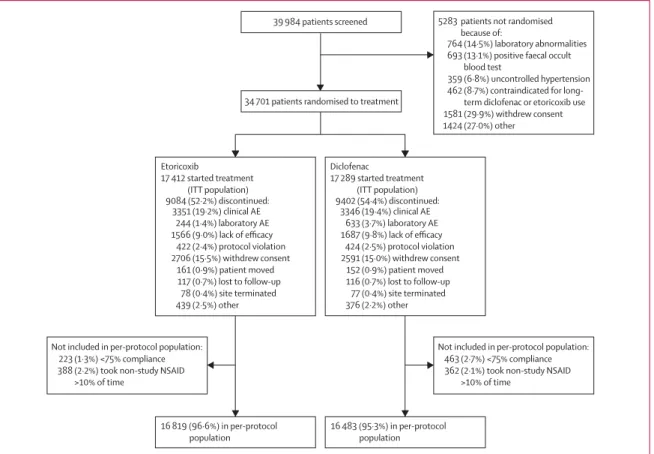
39 984 patients screened
764 (14·5%) laboratory abnormalities
693 (13·1%) positive faecal occult
blood test
359 (6·8%) uncontrolled hypertension 462 (8·7%) contraindicated for
term diclofenac or etoricoxib use 1581 (29·9%) withdrew consent 1424 (27·0%) other
5283 patients not randomised
because of:
463 (2·7%) <75% compliance
362 (2·1%) took non-study NSAID >10% of time
Not included in per-protocol population: 223 (1·3%) <75% compliance
388 (2·2%) took non-study NSAID >10% of time
Not included in per-protocol population:
34 701 patients randomised to treatment
Diclofenac 17 289 started treatment (ITT population) 9402 (54·4%) discontinued: 3346 (19·4%) clinical AE 633 (3·7%) laboratory AE 1687 (9·8%) lack of efficacy 424 (2·5%) protocol violation 2591 (15·0%) withdrew consent 152 (0·9%) patient moved 116 (0·7%) lost to follow-up 77 (0·4%) site terminated 376 (2·2%) other Etoricoxib 17 412 started treatment (ITT population) 16 819 (96·6%) in per-protocol population 16 483 (95·3%) in per-protocol population 9084 (52·2%) discontinued: 3351 (19·2%) clinical AE 244 (1·4%) laboratory AE 1566 (9·0%) lack of efficacy 422 (2·4%) protocol violation 2706 (15·5%) withdrew consent 161 (0·9%) patient moved 117 (0·7%) lost to follow-up 78 (0·4%) site terminated 439 (2·5%) other
Figure 1: Distribution of patients AE=adverse event.
It included observations for individual patients from the fi rst day of therapy to14 daysafter the last dose of study drug, and excluded patients if they took less than 75% of their study medication or took non-study NSAIDs more than 10% of the time while on study medication. As also recommended,21,27 to evaluate the consistency of the
results and provide greater confi dence in the conclusions, we prespecifi ed three supporting analyses for the primary endpoint. These included two modifi ed intention-to-treat (ITT) analyses (all randomised patients who received at least one dose of study medication); one included all events that occurred from the fi rst day of study treatment to 14 days after the last dose; the second included all eventsuntil 28 daysafter the last dose of study drug; the third was an ITT analysis that included all events from all patients from the fi rst day of therapy until the end of each trial, including events in patients who discontinued study drug early and who might have been exposed to non-study interventions following discontinuation. The eligibility date for a thrombotic cardiovascular event to be included in this ITT analysis was 28 days after the last patient’s last dose of study medication for each respective trial. The ascertainment date for potential thrombotic cardiovascular events to be submitted to the adjudication committee in order to be included in the ITT analysis was 42 days after the last patient’s last dose of study drug.
The HR for confi rmed thrombotic events for etoricoxib compared with diclofenac was calculated with a Cox proportional hazards model.30 Treatment served as an
explanatory factor and low-dose aspirin use at baseline as a stratifi cation factor. Kaplan-Meier time-to-event curves were generated. Kaplan-Meier curves31,32 were truncated
when the number of patients remaining at risk was less than 500. This truncation did not aff ect statistical analysis or the Cox model results. The HR of thrombotic events was also assessed across a range of prespecifi ed subgroup factors, which were checked for consistency of HR by testing the subgroup factor-by-treatment interaction with the Cox proportional hazards model. Subgroup analyses might have less power than an analysis based on the full dataset.
For analyses of discontinuations due to hypertension, oedema, renal dysfunction, gastrointestinal adverse events, and liver test abnormalities or other hepatic events, and for confi rmed congestive heart failure, pair-wise comparisons by dose and disease (osteoarthritis or rheumatoid arthritis) were computed using Fisher’s exact test, and the associated 95% CIs for the diff erences were calculated by Wilson’s score method. Comparisons for the MEDAL study osteoarthritis data were made between the patients randomised to 60 mg etoricoxib and the group of patients randomised to diclofenac during the same period, and between patients randomised to 90 mg etoricoxib and its time-coincident diclofenac group, to account for the time and location of randomisation.
The rates of clinical upper gastrointestinal events, complicated upper gastrointestinal events, and lower gastrointestinal clinical events based on the MEDAL programme were prespecifi ed endpoints, with post-hoc Cox model applied to clinical upper gastrointestinal events. In each individual study, anti-arthritic effi cacy was expressed as the average change from baseline in
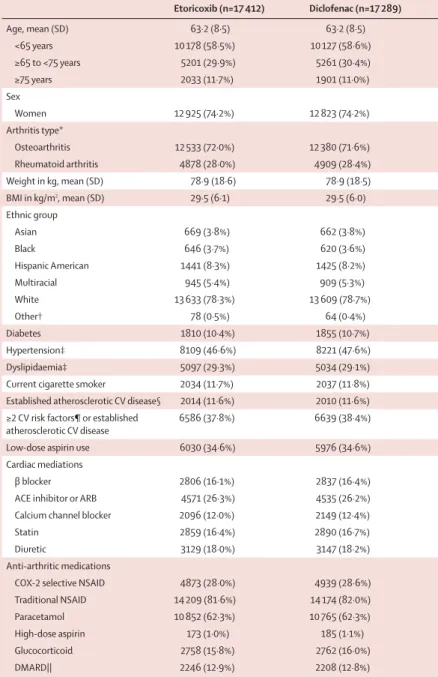
Etoricoxib (n=17 412) Diclofenac (n=17 289) Age, mean (SD) 63·2 (8·5) 63·2 (8·5) <65 years 10 178 (58·5%) 10 127 (58·6%) ≥65 to <75 years 5201 (29·9%) 5261 (30·4%) ≥75 years 2033 (11·7%) 1901 (11·0%) Sex Women 12 925 (74·2%) 12 823 (74·2%) Arthritis type* Osteoarthritis 12 533 (72·0%) 12 380 (71·6%) Rheumatoid arthritis 4878 (28·0%) 4909 (28·4%) Weight in kg, mean (SD) 78·9 (18·6) 78·9 (18·5) BMI in kg/m2, mean (SD) 29·5 (6·1) 29·5 (6·0) Ethnic group Asian 669 (3·8%) 662 (3·8%) Black 646 (3·7%) 620 (3·6%) Hispanic American 1441 (8·3%) 1425 (8·2%) Multiracial 945 (5·4%) 909 (5·3%) White 13 633 (78·3%) 13 609 (78·7%) Other† 78 (0·5%) 64 (0·4%) Diabetes 1810 (10·4%) 1855 (10·7%) Hypertension‡ 8109 (46·6%) 8221 (47·6%) Dyslipidaemia‡ 5097 (29·3%) 5034 (29·1%)
Current cigarette smoker 2034 (11·7%) 2037 (11·8%)
Established atherosclerotic CV disease§ 2014 (11·6%) 2010 (11·6%) ≥2 CV risk factors¶ or established
atherosclerotic CV disease
6586 (37·8%) 6639 (38·4%)
Low-dose aspirin use 6030 (34·6%) 5976 (34·6%)
Cardiac mediations
β blocker 2806 (16·1%) 2837 (16·4%)
ACE inhibitor or ARB 4571 (26·3%) 4535 (26·2%)
Calcium channel blocker 2096 (12·0%) 2149 (12·4%)
Statin 2859 (16·4%) 2890 (16·7%)
Diuretic 3129 (18·0%) 3147 (18·2%)
Anti-arthritic medications
COX-2 selective NSAID 4873 (28·0%) 4939 (28·6%)
Traditional NSAID 14 209 (81·6%) 14 174 (82·0%)
Paracetamol 10 852 (62·3%) 10 765 (62·3%)
High-dose aspirin 173 (1·0%) 185 (1·1%)
Glucocorticoid 2758 (15·8%) 2762 (16·0%)
DMARD|| 2246 (12·9%) 2208 (12·8%)
Data are number (%) unless otherwise specifi ed. BMI=body-mass index. CV=cardiovascular.
ACE=angiotension-converting enzyme. ARB=angiotensin-receptor blocker. *Data missing for one patient. †Includes Australoid, European, Indian, Melanesian, Native American, and Polynesian. ‡Clinical history at time of screening. §Includes clinical history of myocardial infarction, angina pectoris, cerebral vascular accident, transient ischaemic attack, angioplasty, carotid artery disease, peripheral vascular disease, or coronary artery bypass surgery. ¶Includes two or more of the following risk factors: history of hypertension, diabetes, dyslipidaemia, family history of CV disease, current cigarette smoking. ||Disease-modifying antirheumatic drug.
patient global assessment of disease status (scale 0–4), using an analysis of covariance model.33,34
This trial is registered at http://www.clinicaltrials.gov with the numbers NCT00092703 (EDGE), NCT00092742 (EDGE II), and NCT00250445 (MEDAL study).
Role of the funding source
The MEDAL programme was designed cooperatively by the sponsor (Merck Research Laboratories) and the programme steering committee, which consisted of experts in cardiovascular medicine, gastroenterology, rheumatology, pharmacology, statistical sciences, and epidemiology. The sponsor monitored the study, collected data, and did statistical analysis. An independent confi rmation of the statistical analyses was done by Frontier Science Foundation (Madison, WI, USA), under the supervision of C Morton Hawkins and David DeMets (MEDAL programme steering committee member). The authors had full access to data and statistical analyses and drafted the manuscript. The corresponding author had fi nal responsibility for the decision to submit for publication.
Results
Figure 1 shows the overall trial profi le for the 34 701 patients in the MEDAL programme. 23 504 patients were random ised in the MEDAL study, 7111 in EDGE, and 4086 in EDGE II, including 24 913 (72%) patients with osteoarthritis and 9 787 (28%) with rheumatoid arthritis. Baseline character istics were similar in both treatment groups (table 1). 14 396 (41%) patients were aged 65 years or older; 3665 (11%) had diabetes; 10 131 (29%) had dyslipidaemia; 16 330 (47%) had hypertension; 4024 (12%) had established atherosclerotic cardiovascular disease, and 13 225 (38%) had established atherosclerotic cardiovascular disease or two or more cardio vascular risk factors (hypertension, diabetes, dyslipid aemia, family history of cardiovascular disease, smoking); 12 006 (35%) patients were using low-dose aspirin at base line.
6769patients were assigned to etoricoxib 60 mg once a day, 10 643 to etoricoxib 90 mg once a day, and 3518 to diclofenac 50 mg three times a day, and 13 771 to diclofenac 75 mg twice daily. The mean (SD) duration of exposure to study drug was 18·2 (11·7) months for etoricoxib and 17·7 (11·9) months for diclofenac; 21 395 patients took the drug for 12 months or longer and 12 854 for 24 months or longer. All patients randomised to treatment received at least one dose of study medication, so the predefi ned modifi ed ITT population included all patients randomised (ie, a true ITT population). Overall mean treatment com-pliance was 98% (SD 7·4) for etoricoxib, and 96% (8·2) for diclofenac; compliance was less than 75% for 223 (1%) patients in the etoricoxib group and 463 (3%) in the diclofenac group. 1399 (4%) patients were excluded from the per-protocol population (fi gure 1), but included in all other analyses.
Numbers and rates of thrombotic cardiovascular events, with HRs, are shown in table 2. The HR for the per-protocol comparison of thrombotic events in the two groups was 0·95 (95% CI 0·81–1·11), showing non-inferiority of etoricoxib to diclofenac according to the prespecifi ed criterion (table 2). We noted consistency across the three diff erent prespecifi ed endpoints and across the per-protocol and ITT analyses. The pre-specifi ed secondary analysis, assessing confi rmed thrombotic cardiovascular events in the per-protocol population of the MEDAL study alone, gave an HR of 0·96 (95% CI 0·81–1·15).
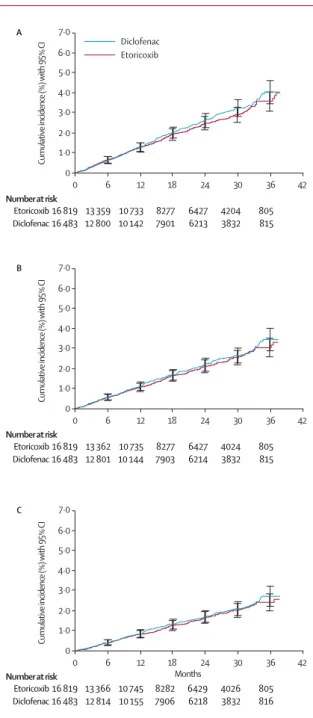
The Kaplan-Meier estimates over 36 months are shown in fi gure 2. The cumulative incidence of primary and secondary endpoints with etoricoxib compared with diclofenac satisfi ed the proportional hazard assumption, indicating a constant HR over time.
The HR for etoricoxib versus diclofenac for cardiac events, cerebrovascular events, and peripheral vascular events did not show any discernible diff erence between treatment groups (table 3). The most common thrombotic cardiovascular event was nonfatal or fatal myo -cardial infarction, with rates of 0·43 per 100 patient-years
Treatment n n/PYR Rate (95% CI)* HR (95% CI) Thrombotic events
Per-protocol Etoricoxib 16 819 320/25 836 1·24 (1·11–1·38) 0·95 (0·81–1·11) Diclofenac 16 483 323/24 766 1·30 (1·17–1·45)
ITT (within 14 days) Etoricoxib 17 412 345/26 384 1·31 (1·17–1·45) 0·96 (0·83–1·11) Diclofenac 17 289 345/25 394 1·36 (1·22–1·51)
ITT (within 28 days) Etoricoxib 17 412 366/27 036 1·35 (1·22–1·50) 0·98 (0·85–1·14) Diclofenac 17 289 357/26 042 1·37 (1·23–1·52)
ITT (to end of studies) Etoricoxib 17 412 495/39 654 1·25 (1·14–1·36) 1·05 (0·93–1·19) Diclofenac 17 289 468/39 413 1·19 (1·08–1·30)
Arterial thrombotic events
Per-protocol Etoricoxib 16 819 272/25 839 1·05 (0·93–1·19) 0·96 (0·81–1·13) Diclofenac 16 483 272/24 771 1·10 (0·97–1·24)
ITT (within 14 days) Etoricoxib 17 412 297/26 386 1·13 (1·00–1·26) 0·97 (0·83–1·14) Diclofenac 17 289 293/25 399 1·15 (1·03–1·29)
ITT (within 28 days) Etoricoxib 17 412 305/27 040 1·13 (1·00–1·26) 0·98 (0·83–1·15) Diclofenac 17 289 300/26 049 1·15 (1·03–1·29)
ITT (to end of studies) Etoricoxib 17 412 407/39 767 1·02 (0·93–1·13) 1·03 (0·89–1·18) Diclofenac 17 289 394/39 513 1·00 (0·90–1·10)
APTC events
Per-protocol Etoricoxib 16 819 216/25 851 0·84 (0·73–0·95) 0·96 (0·79–1·16) Diclofenac 16 483 216/24 787 0·87 (0·76–1·00)
ITT (within 14 days) Etoricoxib 17 412 231/26 402 0·87 (0·77–1·00) 0·96 (0·80–1·15) Diclofenac 17 289 232/25 416 0·91 (0·80–1·04)
ITT (within 28 days) Etoricoxib 17 412 237/27 059 0·88 (0·77–0·99) 0·95 (0·80–1·14) Diclofenac 17 289 239/26 068 0·92 (0·80–1·04)
ITT (to end of studies) Etoricoxib 17 412 332/39 894 0·83 (0·75–0·93) 1·02 (0·87–1·18) Diclofenac 17 289 325/39 623 0·82 (0·73–0·91)
PYR=patient-years at risk. *Per 100 PYR.
in the etoricoxib group and 0·49 per 100 patient-years in the diclofenac group (per-protocol analysis). Rates of fatal thrombotic cardiovascular events were similar between the groups (0·17 per 100 patient-years in both groups). All-cause mortality rates were 0·48 per 100 patient-years for etoricoxib and 0·50 per 100 patient-patient-years for diclofenac in the ITT population through 14 days after study drug dis continuation.
Analyses of thrombotic cardiovascular events by subgroups in the per-protocol population are shown in fi gure 3. We noted no signifi cant treatment-by-subgroup interactions, including study, suggesting that the thrombotic cardiovascular risk of etoricoxib versus diclofenac did not diff er across the subgroups analysed, including varying baseline cardiovascular risk and etoricoxib dose. Additionally, HRs were similar in patients with (HR 0·85, 95% CI 0·64–1·12) and without (1·00, 95% CI 0·83–1·20) previous use of COX-2 selective NSAID (treatment-by-subgroup interaction, p=0·344). Cardio vascular event rates varied on the basis of cardiovascular risk. For example, rates ranged from less than one event per 100 patient-years for patients with no established atherosclerotic cardiovascular disease and one or no cardiovascular risk factors, to more than three events per 100 patient-years in patients with established atherosclerotic cardiovascular disease. Incidences of congestive heart failure and discon-tinuations for pre-specifi ed adverse events are shown in fi gure 4 by study, etoricoxib dose, and disease (ITT analyses including events within 14 days of last dose of study drug). In the MEDAL study, a higher rate of con-gestive heart failure was seen with etoricoxib 90 mg than with diclofenac, but the diff erence was not signifi cant; no diff erence was seen with etoricoxib 60 mg. Dis continuations because of oedema were signifi cantly more frequent with 90 mg of etoricoxib than with diclofenac, but rates were similar for 60 mg of etoricoxib and diclofenac. Discontinuations because of hypertension were more frequent with both doses of etoricoxib than with diclofenac. Discontinuations due to gastrointestinal adverse events were signifi cantly less frequent with etoricoxib than diclofenac, as were discontinuations due to liver test abnormalities or other hepatic events. Results for EDGE and EDGE II were consistent with the results of the MEDAL study (fi gure 4).
Rates of upper gastrointestinal clinical events were 0·67 (95% CI 0·57–0·77) per 100 patient-years with etoricoxib and 0·97 (0·85–1·10) per 100 patient-years with diclofenac, yielding an HR of 0·69 (0·57–0·83). However, rates of complicated upper gastrointestinal clinical events did not diff er between the groups (0·30 etoricoxib vs 0·32 diclofenac per 100 patient-years). The rates of lower gastrointestinal clinical events were 0·32 per 100 patient-years (95% CI 0·25–0·39) for etoricoxib and 0·38 per 100 patient-years (0·31, 0·46) for diclofenac, yielding an HR of 0·84 (0·63–1·13).
Etoricoxib and diclofenac showed similar effi cacy for treatment of arthritis. In the MEDAL study, the average changes from baseline (Likert units) in patient-reported global assessment of disease status were –0·67 (SD 1·02) for etoricoxib and –0·61 (1·02) for diclofenac. Effi cacy results for EDGE and EDGE II were similar (data not shown). Discontinuations because of lack of effi cacy were also similar between the groups (fi gure 1).
1·0 2·0 3·0 4·0 5·0 6·0 0 7·0 Etoricoxib Diclofenac 16 819 16 483 0 13 359 12 800 6 10 733 10 142 12 8277 7901 18 6427 6213 24 4204 3832 30 805 815 36 42 Number at risk Diclofenac Etoricoxib A 1·0 2·0 3·0 4·0 5·0 6·0 0 7·0 Etoricoxib Diclofenac 16 819 16 483 0 13 362 12 801 6 10 735 10 144 12 8277 7903 18 6427 6214 24 4024 3832 30 805 815 36 42 Number at risk B Cumulative incidence (%) with 95% CI Cumulative incidence (%) with 95% CI 1·0 2·0 3·0 4·0 5·0 6·0 0 7·0 Etoricoxib Diclofenac 16 819 16 483 0 13 366 12 814 6 10 745 10 155 12 8282 7906 18 6429 6218 24 4026 3832 30 805 816 36 42 Number at risk C Cumulative incidence (%) with 95% CI Months
Figure 2: Time-to-event per-protocol analysis
(A) Cumulative incidence of thrombotic cardiovascular events. (B) Cumulative incidence of arterial thrombotic events. (C) Cumulative incidence of APTC23 events (myocardial infarction, stroke, or vascular death).
Etoricoxib (N=16 819, 25 836 PY)* Diclofenac (N=16 483, 24 766 PY) HR (95% CI)
n (%)† Rate‡ n (%)† Rate‡
Patients with fatal thrombotic cardiovascular events 43 (0·26) 0·17 (0·12–0·22) 43 (0·26) 0·17 (0·13–0·23) 0·96 (0·63–1·46) Patients with cardiac events 183 (1·09) 0·71 (0·61–0·82) 194 (1·18) 0·78 (0·68–0·90) 0·90 (0·74–1·10)
Non-fatal myocardial infarction 105 (0·62) 0·41 (0·33–0·49) 105 (0·64) 0·42 (0·35–0·51) Fatal myocardial infarction 6 (0·04) 0·02 (0·01–0·05) 17 (0·10) 0·07 (0·04–0·11)
Sudden cardiac death 29 (0·17) 0·11 (0·08–0·16) 23 (0·14) 0·09 (0·06–0·14)
Unstable angina pectoris 42 (0·25) 0·16 (0·12–0·22) 51 (0·31) 0·21 (0·15–0·27) Resuscitated cardiac arrest 2 (0·01) 0·01 (0·00–0·03) 1 (0·01) 0·00 (0·00–0·02)
Cardiac thrombus 4 (0·02) 0·02 (0·00–0·04) 3 (0·02) 0·01 (0·00–0·04)
Patients with cerebrovascular events 89 (0·53) 0·34 (0·28–0·42) 79 (0·48) 0·32 (0·25–0·40) 1·08 (0·80–1·46) Non-fatal ischaemic cerebrovascular stroke 53 (0·32) 0·21 (0·15–0·27) 55 (0·33) 0·22 (0·17–0·29)
Fatal ischaemic cerebrovascular stroke 6 (0·04) 0·02 (0·01–0·05) 2 (0·01) 0·01 (0·00–0·03) Cerebrovascular venous thrombosis 1 (0·01) 0·00 (0·00–0·02) 1 (0·01) 0·00 (0·00–0·02) Transient ischaemic attack 31 (0·18) 0·12 (0·08–0·17) 22 (0·13) 0·09 (0·06–0·13)
Patients with peripheral vascular events 53 (0·32) 0·20 (0·15–0·27) 55 (0·33) 0·22 (0·17–0·29) 0·92 (0·63–1·35) Non-fatal pulmonary embolism 17 (0·10) 0·07 (0·04–0·11) 25 (0·15) 0·10 (0·07–0·15)
Fatal pulmonary embolism 1 (0·01) 0·00 (0·00–0·02) 0 (0·00) 0·00
Non-fatal peripheral arterial thrombosis 5 (0·03) 0·02 (0·01–0·05) 4 (0·02) 0·02 (0·00–0·04) Fatal peripheral arterial thrombosis 1 (0·01) 0·00 (0·00–0·02) 1 (0·01) 0·00 (0·00–0·02) Peripheral venous thrombosis 29 (0·17) 0·11 (0·08–0·16) 27 (0·16) 0·11 (0·07–0·16)
Patients with several events were listed for each of their specifi c diagnoses. PY=patient-years. *Etoricoxib combined 60 mg and 90 mg. †Crude incidence (n/Nx100); ‡Events per 100 patient-years.
Table 3: Incidence of thrombotic cardiovascular event types in per-protocol population
0·96 0·99 0·81 0·83 1·04 1·21 0·91 0·94 0·96 1·04 0·85 0·89 1·00 0·95 0·94 0·92 0·97 Age <65 ≥65 to <75 ≥75 Sex Male Female Diabetes Yes No Established ASCVD Yes No Established ASCVD or ≥2 CV risk factors Yes No
Low-dose aspirin use at baseline Yes No Disease OA RA Etoricoxib dose 60 mg 90 mg HR 0·85 1·63 2·51 1·94 1·00 2·12 1·14 3·12 1·02 2·00 0·81 1·67 1·01 1·16 1·40 1·00 1·43 Rate* Rate* 134/15 761 123/7567 63/2508 129/6646 191/19 190 54/2552 266/23 285 85/2723 235/23 113 186/9285 134/16 552 147/8789 173/17 047 207/17 793 113/8044 115/11 550 205/14 286 Etoricoxib n/PYR 0·88 1·64 3·10 2·32 0·95 1·75 1·25 3·33 1·06 1·93 0·95 1·87 1·01 1·22 1·49 1·07 1·49 135/15 261 120/7309 68/2196 147/6333 176/18 433 44/2514 279/22 252 89/2674 234/22 092 174/9039 149/15 727 157/8375 166/16 391 206/16 902 117/7864 118/11 003 205/13 763 Diclofenac n/PYR Etoricoxib lower Diclofenac lower
0·5 1 1·5 2
HR (etoricoxib vs diclofenac)
Figure 3: Incidence of thrombotic cardiovascular (CV) events in prespecifi ed subgroups, per-protocol population ASCVD=atherosclerotic cardiovascular disease. PYR=patient-years at risk. *Events per 100 patient-years.
Discussion
Our results show that patients with arthritis treated with the COX-2 selective NSAID etoricoxib and those given the traditional NSAID diclofenac have nearly identical rates of thrombotic cardiovascular events. The robustness of this fi nding was supported by consistency of results across several prespecifi ed analyses. Furthermore, the similarity in rates was consistent across all subgroups assessed. The results of subgroup analyses suggest that cardiovascular risk factors and low-dose aspirin use do not aff ect the absence of diff erence in the relative risk of cardiovascular events for etoricoxib and diclofenac.
The MEDAL programme was designed with the pri-mary aim of assessing thrombotic cardiovascular events with a COX-2 selective NSAID compared with a traditional NSAID. Enrolment of 34 701 patients with treatment duration up to 3·5 years (mean duration 18 months, SD 11·8)
allowed us to provide estimates of thrombotic cardiovascular events in patients with arthritis taking chronic NSAID therapy with greater precision than previous clinical trials. In addition to the large size, the worldwide distribution of patients and the inclusion of patients with a broad range of cardiovascular risk factors should simulate a real-world population of patients with arthritis. The annual incidence of thrombotic cardio-vascular events in the overall MEDAL programme population was about 1·25%, and the absolute diff erence in event rates between treatments was less than one patient per 1000 treated for a year (–0·07 events per 100 patient years; 95% CI –0·26 to 0·13). On the basis of the 95% CI for this diff erence in the primary analysis, etoricoxib could be associated with at most an increase of 1·3 events (or a decrease of 2·6 events) per 1000 patients treated for a year compared with diclofenac.
Figure 4: Diff erence in incidences of prespecifi ed renovascular and gastrointestinal (GI) endpoints from MEDAL study, EDGE, and EDGE II, by dose and disease Symbol areas represent the relative size of each group. OA=osteoarthritis. RA=rheumatoid arthritis.
0·3 0·7 0·6 0·1 0·3 0·8 1·9 1·0 0·9 1·1 2·2 2·5 2·4 2·3 2·5 0·8 2·3 1·0 0·4 0·7 4·7 8·6 5·1 7·0 5·9 0·3 0·4 0·4 0·3 0·3 0·2 0·3 0·3 0·1 0·2 0·7 0·8 0·6 0·7 0·4 1·6 1·1 1·6 0·7 1·5 0·8 1·8 1·0 0·4 0·7 7·1 11·2 8·3 9·0 7·5 1·8 4·1 1·7 5·0 1·5 Incidences of congestive heart faliure
MEDAL OA 60 mg MEDAL OA 90 mg MEDAL RA 90 mg EDGE I OA 90 mg EDGE II RA 90 mg Discontinuations due to oedema
MEDAL OA 60 mg MEDAL OA 90 mg MEDAL RA 90 mg EDGE I OA 90 mg EDGE II RA 90 mg Discontinuations hypertension MEDAL OA 60 mg MEDAL OA 90 mg MEDAL RA 90 mg EDGE I OA 90 mg EDGE II RA 90 mg
Discontinuations due to renal dysfunction MEDAL OA 60 mg
MEDAL OA 90 mg MEDAL RA 90 mg EDGE I OA 90 mg EDGE II RA 90 mg Discontinuations due to clinical GI adverse events MEDAL OA 60 mg MEDAL OA 90 mg MEDAL RA 90 mg EDGE I OA 90 mg EDGE II RA 90 mg Discontinuations due to hepatic adverse events MEDAL OA 60 mg MEDAL OA 90 mg MEDAL RA 90 mg EDGE I OA 90 mg EDGE II RA 90 mg
Etoricoxib lower Diclofenac lower Etoricoxib Diclofenac
4 2 0 –2 –4 –6
Absolute difference in incidences (% [95% CI])
The question of the relative cardiovascular and gastrointestinal safety of long-term treatment with COX-2 selective and traditional NSAIDs is important to patients, doctors, public-health offi cials, and regulatory agencies. The evidence that treatment with COX-2 selective NSAIDs is associated with an increased risk of cardio vascular events compared with placebo,4–7 and the
suggestion from observational studies and a meta-analysis of randomised clinical trials8,10,35 of possible
diff erences among traditional NSAIDs with respect to cardiovascular risk, raise the clinical issue of the diff erent risk between COX-2 selective and traditional NSAIDs. Although randomised clinical trials have established that COX-2 selective NSAIDs reduce the risk of upper gastrointestinal clinical events,1,3 large long-term
outcome studies, such as the MEDAL programme, are needed to ascertain the relative risk of cardiovascular and gastrointestinal events of diff erent agents in the NSAID class.
We chose to compare the COX-2 selective inhibitor etoricoxib and the traditional NSAID diclofenac. Etoricoxib is a highly selective COX-2 inhibitor, which does not inhibit COX-1 at clinical doses, causes signifi cantly fewer gastroduodenal ulcers than traditional NSAIDs, is eff ective for the treatment of osteoarthritis and rheumatoid arthritis, and is currently approved in over 60 countries.36–39 Diclofenac was selected as the
traditional NSAID comparator in the MEDAL programme for several reasons.14 First, diclofenac is the most widely
prescribed NSAID in the world.40 Additionally, unlike
ibuprofen and naproxen,41–45 diclofenac does not interfere
with the antiplatelet eff ects of low-dose aspirin, which was used by about a third of patients in the MEDAL programme. Thus, diclofenac should not inhibit the cardioprotective eff ect of aspirin, although this notion has not been assessed in randomised clinical trials. Unlike etoricoxib or celecoxib, diclofenac inhibits COX-1 at clinical doses, although to a lesser degree than ibuprofen and naproxen.36 Clinical evidence for COX-1
inhibition by diclofenac in the gastrointestinal tract is provided by endoscopic studies showing that diclofenac is associated with gastroduodenal ulcers at rates similar to those seen with ibuprofen and higher than those with COX-2 selective inhibitors.46–48
Diclofenac, like many traditional NSAIDs, does not provide sustained inhibition of COX-1 derived thrombo-xane-dependent platelet function.42 Greater than 95%
inhibition of thromboxane is necessary to aff ect platelet function.49 Diclofenac achieves 87% inhibition of
thromboxane at 2 h (time of peak plasma concentration), which decreases to 55% 6 h after dosing.42 Etoricoxib, a
COX-2 selective NSAID, produces no inhibition of thromboxane and thus has no eff ect on platelet aggregation over its clinical dose range.38Daily low-dose
aspirin, by contrast, achieves long-term inhibition of thromboxane due to irreversible binding to COX-1,42
making it an eff ective cardioprotective agent.16,17
Prostacyclin is a prostanoid that acts as a restraint on mediators of platelet activation, hypertension, and atherogenesis, including thromboxane A2, which is
generated in the platelet by COX-1.50 Suppression of
prostacyclin (and prostaglandin E2) is the most thoroughly
developed explanation for the cardiovascular hazard associated with NSAIDs.50 Coincident inhibition of
platelet COX-1-derived thromboxane would be expected to mitigate this hazard,50,51 although clinical trials to
directly address this question are not available.
Although the degree of COX-1 inhibition with diclofenac may not be enough to inhibit platelet aggregation, results of endoscopic studies suggest that it is suffi cient to inhibit the gastrointestinal tract mucosal prostaglandins that protect the mucosa.46–48 The diff erence in the extent
of COX-1 inhibition52 between etoricoxib and diclofenac
presumably explains our fi nding of a signifi cant dif-ference in rates of upper gastrointestinal clinical events between the groups (even with 50% of patients receiving gastroprotective agents)—although this fi nding was driven by a diff erence in uncomplicated upper gastro-intestinal events, not complicated gastro gastro-intestinal events. By contrast, the diff erence in COX-1 mediated thromb-oxane inhibition between diclofenac and etoricoxib is unlikely to translate into a diff erence in eff ective inhibition of platelet aggregation, and was not associated with a diff erence in rates of thrombotic cardio vascular events.
In clinical practice, the choice of anti-infl ammatory agent needs to take into consideration the risk for thrombotic cardiovascular and gastrointestinal events, as well as congestive heart failure and other renovascular eff ects (eg, blood pressure, fl uid retention), gastro-intestinal tolerability (eg, dyspepsia), and effi cacy. As shown in fi gure 4, the incidence of clinically important renovascular endpoints such as congestive heart failure (90 mg) and discontinuations because of hypertension (60 mg and 90 mg) was higher with etoricoxib than with diclofenac. We noted no diff erence in the incidence of discontinuation due to renal dysfunction, and a lower incidence of discontinuations due to gastrointestinal and hepatic adverse events was observed with etoricoxib than with diclofenac.
The MEDAL programme had some limitations. For example, it did not include a placebo group; long-term placebo-controlled trials in arthritic patients are not possible, because many patients in the placebo group would have breakthrough symptoms on placebo, and thus would require some type of anti-infl ammatory treatment. Therefore, the absolute cardiovascular risks associated with etoricoxib and diclofenac cannot be ascertained from this trial. Another limitation is that the results observed with these two drugs cannot necessarily be extrapolated to other COX-2 selective or traditional NSAIDs. Only studies that directly compare drugs can provide defi nitive information on diff erences in cardio-vascular and gastro intestinal outcomes. Such studies are
needed because an idiosyncratic absence or loss of NSAID eff ectiveness is a leading cause of patients switching treatment from one NSAID to another.53
The data from this large randomised clinical trial should help clinicians and patients, and will hopefully encourage guideline committees to continue developing recom mendations for optimum treatment of patients with arthritis.
MEDAL programme steering committee—Christopher P Cannon (Co-Chair), Brigham and Women’s Hospital, Boston, MA, USA; Loren Laine (Co-Chair), USC School of Medicine, Los Angeles, CA, USA; Claire Bombardier, Institute for Work and Health, Toronto, Canada; Craig Brater, Indiana University School of Medicine, Indianapolis, IN, USA; Alain Castaigne (on steering committee until 2005), Hopital Henri Mondor, Creteil, France; Byron Cryer, University of Texas Southwestern, Dallas, TX, USA; David DeMets, University of Wisconsin, Madison, WI, USA; Paul Emery, Leeds General Infi rmary, Leeds, UK; Erland Erdmann, Medical Clinic III of the University of Cologne, Koeln, Germany; Garret A FitzGerald, UPenn School of Medicine, Philadelphia, PA, USA; Robert L Jesse, McGuire VA Medical Center, Richmond, VA, USA; Henry Krum, Monash University, Melbourne, Australia; Désirée van der Heijde, University Hospital Maastricht, Maastricht, The Netherlands; and Michael Weinblatt, Brigham and Women’s Hospital, Boston, MA, USA.
Independent data and safety monitoring board—Howard C Herrmann (Chair), Hospital of the University of Pennsylvania, Philadelphia, PA, USA; David J Schneider, University of Vermont College of Medicine, Burlington, VT, USA; Michel Bertrand, University of Lille France, Lambersart, France; Barry Davis, University of Texas, Houston, TX, USA; Steven Haff ner, University of Texas Health Services, San Antonio, TX, USA; Francis K L Chan, Prince of Wales Hospital, Shatin, Hong Kong.
Cardiovascular event adjudication committee—Cardiology:
Bernard Chaitman, St Louis University School of Medicine, St Louis, MO, USA; Leonard S Dreifus, University of South Florida/Tampa, Lake Mary, FL, USA; George Vetrovec, Medical College of VA, Richmond, VA, USA. Neurology: Harold Adams, University of Iowa Hospitals and Clinics, Iowa City, IA, USA; Jay P Mohr, Columbia University, New York, NY, USA; Justin A Zivin, University of California, San Diego School of Medicine, LaJolla, CA, USA. Peripheral vascular: Jeff rey Ginsberg, McMaster University, Hamilton, Canada; Clive Kearon, McMaster University Clinic, Hamilton, Canada; Thom Rooke, Mayo Clinic, Rochester, MN, USA.
Gastro-intestinal Event Adjudication Committee—Marie Griffi n, Vanderbilt University, Nashville, TN, USA; Michael Langman, University of Birmingham, Birmingham, UK; Dennis Jensen, University of California Los Angeles, Los Angeles, CA, USA.
For the full list of participating investagators see webappendix. Contributors
All authors read and approved the manuscript and contributed to its design, analysis or interpretation of data, and drafting and revision of the manuscript. H Krum joined the Steering Committee after the design of the programme but contributed to all other subsequent aspects as stated above. S P Curtis was the clinical leader of the programme and A Kaur was the programme’s statistical science leader.
Confl ict of interest statement
C P Cannon receives research grant support from Accumetrics, AstraZeneca, Merck, Merck/Schering-Plough Partnership, and Schering-Plough, and has spoken at symposia sponsored by and served on scientifi c advisory boards for Alnylam, AstraZeneca, Bristol-Myers Squibb, Eisai, GlaxoSmithKline, Merck, Merck/Schering-Plough Partnership, Pfi zer, Sanofi -Aventis, Schering-Plough, and Vertex. G A FitzGerald receives fi nancial support for investigator-initiated research from Bayer, Boehringer Ingelheim, and Merck, and serves as a consultant for Bayer, Boehringer Ingelheim, Cardiovascular Therapeutics, Genentech, Genome Institute of the Novartis Foundation, GlaxoSmithKline, Logical Therapeutics, Merck, NicOx, Novartis, Portala, and VIA Pharmaceuticals. H Krum has received research grant support, spoken at symposia, and served on scientifi c advisory boards for Merck,
Pfi zer, and Novartis in the area of COX-2 selective inhibitors. C Bombardier has received research support from Abbott, Amgen, Bristol-Myers Squibb, and Schering Canada, and served as a consultant for AstraZeneca, Hoff mann LaRoche, Merck, and Pfi zer, and served on an advisory board for Merck. M E Weinblatt has received research support from Amgen, Abbott, Bristol-Myers Squibb, Genentech, and Millennium Pharmaceuticals, and served as a consultant for Abbott, Alza, Amgen, AstraZeneca, Biogen, Bristol-Myers Squibb, Canfi te, Celgene, Centocor, Critical Therapeutics, Entremed, Human Genome Sciences, Genetech, Gilead, Eli Lilly, Merrimack, Merck, Millennium Pharmaceuticals, Novartis, Pfi zer, Praecis, Rigel, Hoff mann LaRoche, Sanofi -Aventis, Serona, Scios, Synta, Wyeth, and VBL. D van der Heijde has received research support from Wyeth and served as a consultant for Abbott, Amgen, Centocor, Merck, Schering-Plough, and Wyeth. E Erdmann has received research support from Bayer and has served as a speaker, consultant, or advisory board member for Bayer, E Merck Germany, Merck, and Takeda. L Laine has received research support and served as a consultant for Pfi zer, Novartis, Bayer, and Merck. S P Curtis, A Kaur, J A Bolognese, and A S Reicin are employees of Merck and own stock and/or hold stock options in the company.
Acknowledgments
We thank all the patients who participated, along with the doctors, nurses, coordinators, and staff who made the MEDAL programme clinical studies possible. We also thank Laurine Connors and Gary Swergold of Merck Research Laboratories for their signifi cant contributions to the conduct and monitoring of the component clinical trials; Xiaohui Wang of Merck Research Laboratories for providing statistical programming support; and Paul Cavanaugh of Merck Research Laboratories for serving as the medical writer for this manuscript. Finally, we acknowledge the substantial contributions of the late Murray Selwyn of Merck Research Laboratories to statistical science support for this clinical trials programme.This research was supported by Merck and Co, Whitehouse Station, NJ, USA.
References
1 Bombardier C, Laine L, Reicin A, et al. Comparison of upper gastrointestinal toxicity of rofecoxib and naproxen in patients with rheumatoid arthritis. N Engl J Med 2000; 343: 1520–28.
2 Singh G, Fort JG, Goldstein JL, et al. Celecoxib versus naproxen and diclofenac in osteoarthritis patients: SUCCESS-I study. Am J Med
2006; 119: 255–66.
3 Schnitzer TJ, Burmester GR, Mysler E, et al. Comparison of lumiracoxib with naproxen and ibuprofen in the Therapeutic Arthritis Research and Gastrointestinal Event Trial (TARGET), reduction in ulcer complications: randomised controlled trial. Lancet 2004; 364:
665–74.
4 Bresalier RS, Sandler RS, Quan H, et al. Cardiovascular events associated with rofecoxib in a colorectal adenoma chemoprevention trial. N Engl J Med 2005; 352: 1092–102.
5 Bertagnolli MM, Eagle CJ, Zauber AG, et al. Celecoxib for the prevention of sporadic colorectal adenomas. N Engl J Med 2006;
355: 873–84.
6 Nussmeier NA, Whelton AA, Brown MT, et al. Complications of the COX-2 inhibitors parecoxib and valdecoxib after cardiac surgery.
N Engl J Med 2005; 352: 1081–91.
7 Ott E, Nussmeier NA, Duke PC, et al. Effi cacy and safety of the cyclooxygenase 2 inhibitors parecoxib and valdecoxib in patients undergoing coronary artery bypass surgery. J Thorac Cardiovasc Surg
2003; 125: 1481–92.
8 Kearney PM, Baigent C, Godwin J, Halls H, Emberson JR, Patrono C. Do selective cyclo-oxygenase-2 inhibitors and traditional non-steroidal anti-infl ammatory drugs increase the risk of atherothrombosis? Meta-analysis of randomised trials. BMJ 2006; 332: 1302–08. 9 Garcia Rodriquez LA, Gonzalez-Perez A. Long-term use of
non-steroidal anti-infl ammatory drugs and the risk of myocardial infarction in the general population. BMC Med 2005; 3: 17. 10 Hernandez-Diaz S, Varas-Lorenzo C, Garcia Rodriguez LA.
Non-steroidal antiinfl ammatory drugs and the risk of acute myocardial infarction. Basic Clin Pharmacol Toxicol 2006; 98: 266–74. 11 McGettigan P, Henry D. Cardiovascular risk and inhibition of
cyclooxygenase: a systematic review of the observational studies of selective and nonselective inhibitors of cyclooxygenase 2. JAMA.
2006; 296: 1633–44. See Online for webappendix
12 Mukherjee D, Topol EJ. Cyclooxygenase-2: where are we in 2003?
Arthritis Res Ther 2003; 5: 8–11.
13 Okie S. Raising the safety bar—the FDA’s coxib meeting.
N Engl J Med 2005; 352: 1283–85.
14 Cannon CP, Curtis SP, Bolognese JA, Laine L. Clinical trial design and patient demographics of the Multinational Etoricoxib and Diclofenac Arthritis Long-term (MEDAL) study program: cardiovascular outcomes with etoricoxib vs. diclofenac in patients with osteoarthritis and rheumatoid arthritis. Am Heart J 2006; 152:
237–45.
15 Arnett FC, Edworthy SM, Bloch DA, et al. The American rheumatism association 1987 revised criteria for the classifi cation of rheumatiod arthritis. Arthritis Rheum 1988; 31: 315–24.
16 Smith SC Jr, Allen J, Blair SN, et al. AHA/ACC guidelines for secondary prevention for patients with coronary and other
atherosclerotic vascular disease: 2006 update endorsed by the National Heart, Lung, and Blood Institute. J Am Coll Cardiol 2006; 47: 2130–39. 17 Nobles-James C, James EA, Sowers JR. Prevention of cardiovascular
complications of diabetes mellitus by aspirin. Cardiovasc Drug Rev
2004; 22: 215–26.
18 Guidelines for the management of rheumatoid arthritis: 2002 update. Arthritis Rheum 2002; 46: 328–46.
19 Recommendations for the medical management of osteoarthritis of the hip and knee: 2000 update. American College of Rheumatology subcommittee on osteoarthritis guidelines. Arthritis Rheum 2000;
43: 1905–15.
20 Chobanian AV, Bakris GL, Black HR, et al. Seventh report of the Joint National Committee on Prevention, Detection, Evaluation, and Treatment of High Blood Pressure. Hypertension 2003; 42: 1206–52. 21 Furberg CD. The COX-2 inhibitors—an update. Am Heart J 2006;
152: 197–99.
22 Mukherjee, D, Nissen SE, Topol EJ. Risk of cardiovascular events associated with selective cox-2 inhibitors. JAMA 2001; 286: 954–59. 23 Antiplatelet Trialists’ Collaboration. Collaborative overview of
randomised trials of antiplatelet therapy-I: prevention of death, myocardial infarction, and stroke by prolonged antiplatelet therapy in various categories of patients. BMJ 1994; 308: 81–106.
24 Laine L, Connors LG, Reicin A, et al. Serious lower gastrointestinal clinical events with nonselective NSAID or Coxib Use.
Gasteroenterology 2003; 124: 288–92.
25 Hwang IK, Shih WJ. Group sequential designs using a family of type I error probability spending functions. Statist Med 1990; 9:
1439–45.
26 Lachin JM, Foulkes MA. Evaluation of sample size and power for analyses of survival with allowance for nonuniform patient entry, losses to follow-up, noncompliance, and stratifi cation. Biometrics
1986; 42: 507–19.
27 Piaggio G, Elbourne DR, Altman DG, Pocock SJ, Evans SJ. Reporting of noninferiority and equivalence randomized trials: an extension of the CONSORT statement. JAMA 2006; 295: 1152–60. 28 European Medicines Agency. ICH harmonised tripartite guideline
topic E9: statistical principles for clinical trials. http://www.emea. eu.int/pdfs/human/ich/036396en.pdf (accessed February 22, 2006). 29 Armitage P, Colton T, eds. Encyclopedia of Biostatistics. New York:
John Wiley, 1998: 1367–72.
30 Cox DR. Regression models and life-tables. In: Barton DE, Barnett VD, Bather JA, et al, eds. J R Stat Soc Ser B Methodol 1972; 34: 187–220. 31 Pocock SJ, Clayton TC, Altman DG. Survival plots of time-to-event
outcomes in clinical trials: good practice and pitfalls. Lancet 2002;
359: 1686–89.
32 Kaplan EL, Meier P. Nonparametric estimation from incomplete observations. J Am Stat Assoc 1958; 53: 457–81.
33 Matsumoto AK, Melian A, Mandel DR, et al. A randomized, controlled, clinical trial of etoricoxib in the treatment of rheumatoid arthritis. J Rheumatol 2002; 29: 1623–30.
34 Leung AT, Malmstrom K, Gallacher AE, et al. Effi cacy and tolerability profi le of etoricoxib in patients with osteoarthritis: a randomized, double-blind, placebo and active-comparator controlled 12-week effi cacy trail. Curr Med Res Opin 2002; 18: 49–58.
35 Garcia Rodriguez LA, Varas-Lorenzo C, Maguire A, Gonzalez-Perez A. Nonsteroidal antiinfl ammatory drugs and the risk of myocardial infarction in the general population.
Circulation 2004; 109: 3000–06.
36 Van Hecken A, Schwartz JI, Depré M, et al. Comparative inhibitory activity of rofecoxib, meloxicam, diclofenac, ibuprofen and naproxen on COX-2 versus COX-1 in healthy volunteers.
J Clin Pharmacol 2000; 40: 1–12.
37 McAdam BF, Catella-Lawson F, Mardini IA, Kapoor S, Lawson JA, FitzGerald GA. Systemic biosynthesis of prostacyclin by cyclooxygenase (COX)-2: the human pharmacology of a selective inhibitor of COX-2. Proc Natl Acad Sci USA 1999; 96: 272–77. 38 Dallob A, Hawkey CJ, Greenberg H, et al. Characterization of
etoricoxib, a novel, selective COX-2 inhibitor. J Clin Pharmacol
2003; 43: 573–85.
39 Matsumoto AK, Cavanaugh PF Jr. Etoricoxib. Drugs Today (Barc)
2004; 40: 395–414.
40 IMS Health. IMS MIDAS®, MAT/Q2/2006. http://www.imshealth.
com (Sept 1, 2006).
41 Capone ML, Sciulli MG, Tacconelli S et al. Pharmacodynamic interaction of naproxen with low-dose aspirin in healthy subjects.
J Am Coll Cardiol 2005; 45: 1295–301.
42 Catella-Lawson F, Reilly MP, Kapoor SC, et al. Cyclooxygenase inhibitors and the antiplatelet eff ects of aspirin. N Engl J Med 2001;
345: 1809–17.
43 Ouellet M, Riendeau D, Percival MD. A high level of
cyclooxygenase-2 inhibitor selectivity is associated with a reduced interference of platelet cyclooxygenase-1 inactivation by aspirin.
Proc Natl Acad Sci 2001; 98: 14583–88.
44 Food and Drug Administration. Concomitant use of ibuprofen and aspirin: potential for attenuation of the anti-platelet eff ect of aspirin. http://www.fda.gov/cder/drug/infopage/ibuprofen/ science_paper.htm (accessed Sept 8, 2006).
45 Renda G, Tacconelli S, Capone ML, et al. Celecoxib, ibuprofen, and the antiplatelet eff ect of aspirin in patients with osteoarthritis and ischemic heart disease. Clin Pharmacol Ther 2006; 80:
264–74.
46 Emery P, Zeidler H, Kvien KT, et al. Celecoxib versus diclofenac in long-term management of rheumatoid arthritis: randomised double-blind comparison. Lancet 1999; 354: 2106–11. 47 Sikes DH, Agrawal NM, Zhao WW, Kent JD, Recker DP,
Verburg KM. Incidence of gastroduodenal ulcers associated with valdecoxib compared with that of ibuprofen and diclofenac in patients with osteoarthritis. Eur J Gastroenterol Hepatol 2002; 14:
1101–11.
48 Pavelka K, Recker DP, Verburg KM. Valdecoxib is as eff ective as diclofenac in the management of rheumatoid arthritis with a lower incidence of gastroduodenal ulcers: results of a 26-week trial. Rheumatology (Oxford) 2003; 42: 1207–15.
49 Reilly IAG, FitzGerald GA. Inhibition of thromboxane formation in vivo and ex vivo: implications for therapy with platelet inhibitory drugs. Blood 1987; 69: 180–86.
50 Grosser T, Fries S, FitzGerald GA. Biological basis for the cardiovascular consequences of COX-2 inhibition: therapeutic challenges and opportunities. J Clin Invest 2006; 116: 4–15. 51 Cheng Y, Austin SC, Rocca B, et al. Role of prostacyclin in the
cardiovascular response to thromboxane A2. Science 2002; 296:
539–41.
52 Riendeau D, Percival MD, Brideau C, et al. Etoricoxib (MK-0663): preclinical profi le and comparison with other agents that selectively inhibit cyclooxygenase-2. J Pharmacol Exp Ther 2001;
296: 558–66.
53 Langman M, Kahler KH, Kong SX, et al. Drug switching patterns among patients taking non-steroidal anti-infl ammatory drugs: a retrospective cohort study of a general practitioners database in the United Kingdom. Pharmacoepidemiol Drug Saf 2001; 10: