THE IMPACT OF AN INFLUENZA VACCINE CLINIC ON VACCINATION RATES AND COLD AND FLU SYMPTOMS IN A CLINIC FOR THE HOMELESS
Daria D. Lewis
A project submitted to the faculty at the University of North Carolina at Chapel Hill in partial fulfillment of the requirements for the degree of Doctor of Nursing Practice in the Department of
Nursing.
Chapel Hill 2015
Approved by: Debra Barksdale
Carrie Palmer
iii ABSTRACT
Daria D. Lewis: The Impact of an Influenza Vaccine Clinic on Vaccination Rates and Cold and Flu Symptoms in a Clinic for the Homeless
(Under the direction of Debra Barksdale)
PROBLEM STATEMENT: The homeless population is often sicker when compared to people with stable housing. Respiratory viruses are common and have an increased rate of spread in homeless shelters due to the close proximity in which people live. Increased influenza (flu) vaccine administration among the homeless may lead to a reduction in not only influenza but also in cold and flu-like symptoms.
PURPOSE: The purpose of this quality improvement project was to determine if an onsite flu vaccine clinic in a homeless shelter in 2014-2015 increased flu vaccination rates and reduced cold and flu-like symptoms when compared to previous years (2010 to 2013) when there was not a designated flu vaccine clinic onsite.
METHODS: Chart reviews were conducted to assess the number of flu vaccines administered from October through December 2010-2013, before an onsite flu vaccine clinic and from
October 2014 to January 8, 2015 when there was an onsite flu vaccination clinic. These numbers were compared. Record review indicated that 26 African American, 19 Caucasian and 5
iv
conditions when flu vaccine rates were increased. Descriptive statistics were used to determine mean age and smoking prevalence among flu vaccine recipients. Microsoft Excel 2010 was used to analyze data for: 1) number of vaccinated and non-vaccinated patients; 2) number of clinic visits with and without cold and flu-like symptoms; 3) the number of clinic visits by age; 4) most common cold and flu-like symptoms; 5) flu vaccine recipients based on race and average age, and 6) comparison of number of smokers and non-smokers who received the flu vaccine.
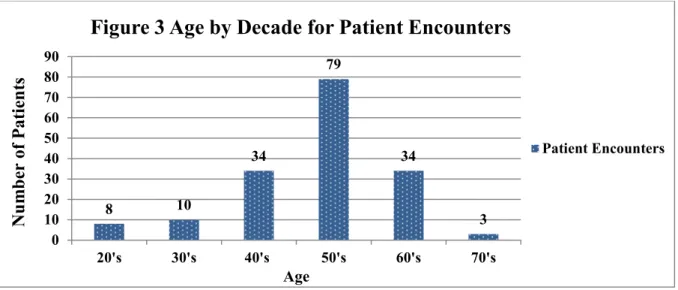
RESULTS: Summary statistics revealed that an average of 17 patients received a flu vaccine from October through December 2010-2013 and 34 people received a vaccine from October 2014 through January 8, 2015. Altogether a total of 101 people received a flu vaccine, 94 people did not. There were also fewer cold and flu-like symptoms clinic visits (4) after an onsite flu vaccine clinic when compared to before a flu vaccine clinic was onsite (average 11 per the specified time period). People 50-59 years of age had the most clinic visits (79). The most common cold and flu-like symptom was cough/sneeze. The mean age of vaccine recipients was 52 (sd=10) years of age and older patients had the highest uptake of vaccines. African
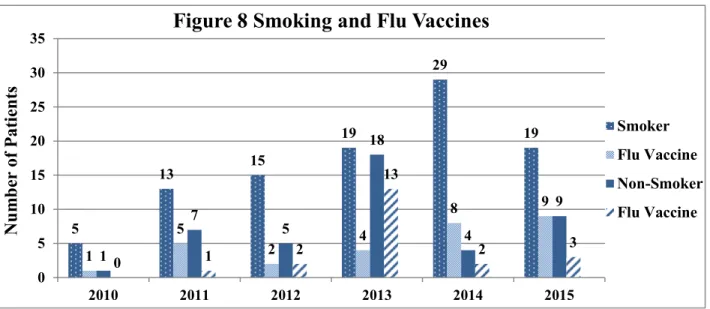
Americans also received the most flu vaccinations. Findings indicated that from the 100 smokers, 29 of them received a flu vaccine as compared to 44 non-smokers from which 21 people received a vaccination.
v
vi
ACKNOWLEDGEMENTS
vii
TABLE OF CONTENTS
LIST OF FIGURES ...x
LIST OF ABBREVIATIONS ... xi
CHAPTER 1: HOMELESSNESS, INFLUENZA, AND INFLUENZA VACCINES ...1
Introduction ...1
Problem Statement ...5
Purpose of Project ...6
Clinical Question ...6
Review of the Literature ...6
Recommendations for Flu Vaccines ...6
Flu-Related Complications ...7
Flu Vaccinations and the Homeless ...7
Hart-to-Reach Populations and Improving Flu Vaccination Rates...10
Non-Traditional Outlets for Flu Vaccine Administration ...10
Risk Perceptions and Barriers to Influenza Vaccines ...13
Protecting High Risk Populations Against Influenza ...15
CHAPTER 2: CONCEPTUAL AND THEORETICAL FRAMEWORK...16
CHAPTER 3: METHODOLOGY ...19
Design ...19
Sample...19
viii
Tools/Measures ...20
Demographic Data ...20
Cold and Flu Symptom Data...20
Procedures ...21
CHAPTER 4: DATA ANALYSIS ...24
CHAPTER 5: RESULTS ...25
Characteristics of the Sample...25
Impact of a Flu Vaccine Clinic on Vaccination Rates ...25
Reported Cold and Flu-Like Symptoms ...27
Relationship Between Race and Flu Vaccinations ...28
Major Findings in Project ...30
CHAPTER 6: DISCUSSION ...31
Impact of a Flu Vaccine Clinic in a Homeless Shelter ...31
Impact of Smoking, Cough, and Flu Vaccine ...33
Flu Vaccine and Race ...33
Potential Significance of Age ...34
Focus on Smoking Population ...35
Implications...35
Limitations ...36
Conclusion ...37
APPENDIX A: OCTOBER-DECEMBER _____ PEOPLE WHO RECEIVED FLU VACCINES WHEN NO FLU VACCINE ONSITE ...38
ix
APPENDIX C: JANUARY AND FEBRUARY _____ COLD AND FLU-LIKE
SYMPTOMS WHEN NO FLU VACCINE CLINIC ONSITE ...40 APPENDIX D: JANUARY AND FEBRUARY 2015 COLD AND FLU-LIKE
SYMPTOMS WHEN FLU VACCINE CLINIC ONSITE ...41 APPENDIX E: DEMOGRAPHICS OCTOBER-DECEMBER _____ WHO
RECEIVED FLU VACCINES WHEN NO FLU VACCINE CLINIC ONSITE...42 APPENDIX F: DEMOGRAPHICS OCTOBER 2014-JANUARY 8, 2015 WHO
x
LIST OF FIGURES
FIGURE 1 - Vaccinated and non-vaccinated patients from October
2010-2013 and October 2014 –January 8, 2015 ...26
FIGURE 2 - Clinic visits January and February 2011-2015 ...26
FIGURE 3 - Age by decade for patient encounters ...27
FIGURE 4 – Most common cold and flu-like symptoms ...28
FIGURE 5 - Flu vaccine recipients ...28
FIGURE 6 - Average age flu vaccine recipient 2010-2015 ...29
FIGURE 7 - Age by decade for flu vaccine recipients ...29
xi
LIST OF ABBREVIATIONS AND SYMBOLS BHCHP Boston’s health care for the homeless program
BMI Body Mass Index
CDC Centers for disease control and prevention FLU Influenza
HIV/AIDS Human immunodeficiency virus/Acquired immunodeficiency syndrome HbA1c Hemoglobin A1c
HTR Hard-to-reach
HUD Housing and urban development IFC Inter-faith council
IIV Inactivated influenza vaccine LAIV Live attenuated influenza vaccine M; N M=mean; N=total number
PCOC Project connect Orange County PHS Piedmont health services RNFC Robert Nixon free clinic VA Veteran’s administration
VIVA Venue-intensive vaccination for adults WHO World health organization
& And
° Degrees
≥ Greater than or equal to ≤ Less than or equal to < Less than
1
CHAPTER 1: HOMELESSNESS, INFLUENZA, AND INFLUENZA VACCINES
Introduction
Homelessness is an issue plaguing areas all across the United States. A Point-In-Time snapshot from January 29, 2014 showed that the homeless population in North Carolina consisted of 11,448 people (North Carolina, 2014). To bring context to the homeless issue within the state, the overall population of North Carolina consists of approximately 9,500,000 (US Census, 2014). Thus 12% of the people in North Carolina are homeless, which is no trivial issue. More specifically, Chapel Hill, North Carolina has approximately108 homeless
individuals inclusive of adults and children (North Carolina, 2014).
2
More accessibility to influenza vaccinations for homeless individuals can have a great impact on their health and those in their surrounding environment. When local health
departments and other organized community initiatives provide flu vaccines, morbidity and mortality caused by the yearly influenza virus and its complications are reduced (DiBiase, Davis, Rosselli, & Horney, 2011).
Within the past 40 years, the easy spread of influenza has constituted a yearly public health concern due to the annual number of flu-related deaths (Grohskopf et al., 2013). The flu is transmitted by respiratory droplets via coughing and sneezing as well as by contaminated hands from poor hand hygiene. In addition to hand washing and covering one’s mouth when sneezing and coughing, the World Health Organization (WHO) indicates that the flu vaccine is the most effective preventative measure for reducing the flu and its complications (WHO, 2014).
For homeless individuals, there are several predisposing factors that increase contraction and spread of the influenza virus, such as cigarette smoking and living within close proximity in shelters. When comparing the homeless population to the general United States (US) population who are ≥18 years old, nearly 75% of homeless people smoke as compared to 18.1% of the US population (Warner et al., 2014, CDC; 2014b). When a smoker contracts influenza, there is an increased risk that this virus could lead to systemic complications such as pneumonia, bronchitis, sinusitis, and asthma and exacerbate symptoms associated with these conditions due to damage from irritants in cigarettes. Even though shelters benefit those who temporarily rely on them for housing, viruses may spread more easily due to the close living proximity of residents (Notaro, Khan, Kim, Nasaruddin, & Desai, 2012).
3
health, the WHO defines health as a complete state of physical, mental, or social well-being and not merely the absence of disease or infirmity (Huber et al., 2011). Healthier individuals
typically do not require as much medical attention as those with poorer health (New Jersey, 2014).
The WHO describes people with baseline cardiovascular, pulmonary, metabolic and immunocompromised conditions as high risk populations (Littmann, 2014). Children ≥6 months of age, pregnant women, and those living in nursing homes are specific groups of people
considered high risk. The WHO also considers people who smoke or are obese (BMI ≥35) at increased risk of having flu-related complications. These criteria provided by WHO do not constitute an exhaustive list of high risk populations. The homeless population, however, is not considered a high-risk group by the WHO, but instead, a vulnerable population.
4
Some racial and ethnic minority groups are at an increased risk for both homelessness and contracting the flu. Hutchins, Fiscella, Levine, Ompad, and McDonald (2009) found that African Americans, Asians, Native Hawaiians, Pacific Islanders, Latinos, American Indians and Alaska Natives are at increased risk for contracting the flu and displaying flu-related
complications. Hutchins et al. (2009) found that when compared to Caucasians, the racial majority in the US, minority groups may be more affected by the flu due to underlying health issues, working multiple jobs that limit time for medical appointments, living in poorer conditions in the home and community and having lower vaccination rates. The ability to
recognize susceptibility and complications of the flu is especially important since minorities tend to make up the majority of the homeless population living in shelters (National Alliance, 2015).
Although the flu vaccine has helped curtail hospitalizations and flu-related deaths in people ≥65 years of age and ≤ 2 years of age, thousands of people still die every year due to severe complications that arise from the flu (Woolf, Jonas, & Liss, 2008). Despite the fact that the flu vaccine cannot provide 100% protection from the respiratory virus, vaccination remains the best preventative method for lowering contraction rates when the virus in circulation is well matched to the vaccine (CDC, 2014d).
5
who had the virus but never got tested; 5) or death resulted weeks after the virus could no longer be detected from respiratory secretions (CDC, 2013a).
The use of primary prevention methods, like the annual flu vaccination, can reduce flu- related complications such as pneumonia. Although there are other complications of the flu, symptoms of pneumonia (productive cough, fever, dyspnea, and pulmonary consolidation) that remain 1to 2 weeks after flu resolution are concerning. Therefore, flu vaccines should be advocated for in the homeless, people ≥65 years of age and people with chronic diseases to help minimize their risk of flu contraction (Bucciere et al., 2013).
Problem Statement
Although flu vaccination rates in the U.S. are low for adults, they are even lower in the homeless population (Mechcatie, 2010; Metcalfe et al., 2013). Homeless shelters with organized flu vaccine clinics provide more opportunities to administer vaccines and may reduce the risk of contracting and spreading the flu to people in surrounding environments (Metcalfe et al., 2013). An unsettled, migratory lifestyle can potentiate flu transmission to others in the community. Therefore, it is important to provide more convenient flu vaccine access, which may increase vaccination rates in the homeless.
Most flu symptoms improve within a week; however, there can be complications that may exacerbate chronic illnesses. The homeless are susceptible to poor outcomes from the flu and tend to have more complications from chronic illnesses when compared to individuals who are stably housed (Rabiner & Weiner, 2012). Though the CDC reports fewer flu-related
6
Flu vaccines have the greatest impact when administered before the flu season peaks, which is typically December through February (Khazeni, Hutton, Garber, Hupert, & Owens, 2009). Vaccine protection can last the entire flu season, which can span from October to May (CDC, 2014d). Projects developed to protect the homeless against the flu should focus on methods to increase vaccination rates, which may help to decrease short and long-term complications. Research has shown the benefits of receiving annual flu vaccinations include reduction in the number of flu illnesses, clinic visits, flu-related hospitalizations and deaths (CDC, 2013b). Therefore, an accessible flu vaccine clinic for residents in community shelters can help increase vaccination rates, which may help lessen symptoms of the cold and flu-like symptoms in the homeless population.
Purpose of Project
The purpose of this project was to determine if implementing a flu vaccine clinic in a homeless shelter would increase flu vaccination rates and reduce the number of patients seen in the medical clinic with cold and flu-like symptoms when compared to previous years when a flu vaccine clinic not onsite.
Clinical Question
Does having an accessible flu vaccine clinic for residents in a homeless shelter improve vaccination rates and decrease the number of patients seen in the clinic with cold and flu-like symptoms as compared to previous years when a flu vaccine clinic was not onsite?
Review of the Literature
Recommendations for Flu Vaccinations
7
have any extenuating circumstances, which can include those individuals with
immunosuppression, are caring for someone who is immunocompromised, women who are not pregnant, or people who have not been taking antiviral flu medication within the past 48 hours but wish to receive the LAIV (Grohskopf et al., 2014). The two options for the vaccine are the trivalent influenza vaccines (contains three of the most common strains for a particular flu season) or quadrivalent influenza vaccines (contains four of the most common strains for a particular flu season) (CDC, 2014d).
Flu-Related Complications
The severity of chronic conditions is often worse in the homeless as compared to the general population with housing (Johnston & Kunkel, 2014). Although the flu is oftentimes known for its acute manifestations, several chronic conditions can be exacerbated by the flu virus including asthma, cardiovascular disease, chronic obstructive pulmonary disease, diabetes
mellitus, cancer and HIV/AIDS. Pneumonia can sometimes be a deadly repercussion of the flu while bronchitis, sinusitis and ear infections can be annoyances that coexist in many populations, including the homeless (CDC, 2014a). In addition to health conditions worsened by the flu for people who are relatively healthy, people ≥65 years of age, ≤5 years of age or pregnant can be more negatively affected (CDC, 2014e).
Flu Vaccinations and the Homeless
The ability to increase vaccination rates in the homeless population improves
8
Schwarz et al. (2008) showed the significance of using shelter-based vaccine programs (videos and brief educational sessions) in children and adolescents. Education included
awareness about hepatitis B, complications of acquiring this disease and benefits of receiving the vaccine. Over the three-visit period (months 0, 1 and 3), there was a greater percentage of children/adolescents ≥10 years old that received and completed the hepatitis B vaccine series versus children <10 years old. However, the greatest increase in vaccinations involved 13-to-18 year-olds (31% pre-education intervention and 68% post-education intervention). Altogether, there was an increase of vaccination rates from 68% pre-education intervention to 85% post-education intervention for children ≤18 years old, demonstrating that the shelter-based hepatitis B vaccination program was a success (Schwarz et al., 2008).
Another study examined interventions to improve Hepatitis A and Hepatitis B
vaccination rates in the homeless (Poulos et al., 2010). The results revealed that clinic programs where vaccine convenience and location were prioritized had the best vaccination and series completion rates. Also, vaccination rates increased when patients were made aware that it was time for their follow-up vaccine to help complete the hepatitis series. Out of 100 people who needed the Hepatitis A vaccine, 73% completed the vaccination series when clinic programs that promoted the vaccine were initiated. In a second group of 92 people (75%) completed their Hepatitis B vaccine series with clinic-run vaccine programs.
Research by Vlahov, Coady, Ompad, and Galea (2007) showed that homeless individuals may not receive the flu vaccine due to lack of health insurance, lack of a consistent health care provider, uncertainty about the constructs of the vaccine, and sometimes legal status
9
B vaccines, were due to the 6 month time frame for series completion, transient lifestyles in this population which led to lack of follow-up. However, Poulos et al. (2010) demonstrated that organizing vaccine programs for vulnerable populations could yield good results when
conveniently located, vaccines are a part of routine care, staff turnover is low, and when rapport is built with returning patients.
The homeless population has more chronic illness, morbidity and mortality than the general population and can benefit from receiving vaccines to help reduce health complications (Wiersma et al., 2007). However, uptake levels of vaccines are typically much lower in
homeless individuals as compared to people who are stably housed. For example, a study in the United Kingdom (UK) involving flu vaccines investigated different variables contributing to the lack of this vaccine in the public and in the homeless population during the 2011-2012 cold and flu season. In this study, Story, Aldridge, Gray, Burridge, and Harway (2014) found that among homeless 16-64 years of age with at least one risk factor for having complications of the flu, only 23.7% were vaccinated as compared to 53.2% of the general population. For homeless
individuals ≥65 years of age, 42.9% received the vaccination as compared to 74% of the overall population.
10
community helped improve access for homeless individuals to receive flu vaccinations. When flu vaccinations were offered, flu administration rates increased.
Previous studies have found that morbidity is increased in the homeless population when there are suboptimal flu vaccination rates (Metcalfe et al., 2013). Homelessness can also result in higher mortality and morbidity rates that are 3-4 times higher than for those who are stably housed (Johnston et al., 2014). Lack of regular access to health care also perpetuates poor health outcomes in the homeless (Hauff & Turner, 2014).
Hard-to-Reach Populations and Improving Flu Vaccination Rates
A hard-to-reach population denotes people who typically do not seek medical attention in traditional primary care settings or clinics (Vlahov, Coady, Ompad, & Galea, 2007).
Although there are limited studies in the US involving hard-to-reach (HRT) populations and their accessibility to flu vaccines (particularly the homeless), Vlahov et al. (2007) found the best strategies to improve flu vaccination rates were to have more involvement from the community. This population also has increased susceptibility to transmittable diseases due to
cleanliness concerns inside and outside of shelters as well as the close proximity of many individuals (Badiaga et al., 2008). Issues such as increased disease exposure and lack of
accessibility to this population emphasize the importance of seizing opportunities to provide and administer flu vaccines to the homeless within their communities. The homeless can be a
difficult population to reach due to inconsistent housing and nomadic lifestyles. Non-traditional Outlets for Flu Vaccine Administration
11
encourage and increase vaccination efforts in the homeless population, nurses and pharmacists can assist with educating members in the community. Nontraditional locations in the community may help increase access to flu vaccinations in hard-to-reach populations, stress the importance of receiving flu vaccines to help minimize contraction and transmission rates in both shelters and in the community and help reduce flu-related complications.
Homeless individuals living in shelters are at risk for contracting communicable diseases due to crowded living conditions (Raoult, 2012). Flu vaccination programs have been successful for reaching this hard-to-reach population by offering flu clinics in shelters or on street corners (Metcalfe et al., 2013). The possibility of reducing contraction and spread of the flu by shelter residents not only protects their environment, but helps protect the public’s health as well. Due to the migratory lifestyle of some homeless individuals, receiving flu vaccinations at community vaccine programs and clinics help protect the public as the homeless often traverse within their communities. Therefore, more public health initiatives for flu administration in community medical clinics, health departments and health fairs could help curtail the flu and its
complications.
When providing influenza vaccines outside of traditional locations (pharmacies and primary care practices), community health fairs and other outreach programs help expand vaccine coverage. Duncan, Taitel, Zhang, and Kirkham (2012) define vaccine coverage as the percentage of people in a population who have received at least one influenza vaccine within a given year. The ability to provide primary prevention education to the homeless regarding short- and long-term flu complications can encourage flu vaccinations (Metcalfe et al., 2013).
12
lessening flu rates, flu-related complications and both inpatient and outpatient care can decrease health care utilization when the flu vaccine is administered (Castilla et al., 2013). The benefits of giving flu vaccinations can continue to help encourage and motivate volunteer efforts in flu vaccine clinics.
Several programs have been implemented throughout the country to increase vaccination rates in the homeless. For example, Boston’s Health Care for the Homeless Program (BHCHP) is the largest and most comprehensive freestanding health care program for the homeless in the country. This program was originated in 1985 to provide high quality care and focus on primary prevention for homeless in Boston. Since its inception, numerous preventative initiatives
(including administration of flu vaccines) have helped contribute to the greater good for healthier communities (O’Connell et al., 2014).
The BHCHP’s Street Teams (consisting of a psychiatrist, social worker and other medical personnel) allow more access to the homeless by patrolling the streets to build a better rapport as well as tabulate a headcount of the homeless in the community. The use of Street Teams affords more coverage for reaching and educating people regarding primary prevention measures
(educating and vaccinating against the flu) and secondary preventative measures (health screenings for blood pressure, tuberculosis and HbA1C ) for homeless individuals who do not rely on protection of shelters.
13
high-volume areas throughout the community notifying when and where flu vaccines would be administered. Presentations were also given at community meetings to inform the public about the intentions of Project VIVA, and there were door-to-door and street-based surveys to gain perspective about people’s understanding of flu vaccinations.
Project VIVA exceeded its expectations for flu vaccine participants. Street corners allowed the most accessibility for HTR populations, which increased flu vaccinations rates. Due to the great success of this project, it was recommended that community initiatives be undertaken yearly to educate the public prior to the 10-day flu vaccination effort. Although Project VIVA was an important community outreach program to improve flu vaccine access in HTR
populations, it was believed that this project would have its greatest benefit during flu pandemic seasons when non-traditional settings, such as street corners, could be better utilized (Coady et al., 2007).
The Project Connect Orange County (PCOC) program in North Carolina delivers many services to the homeless as well, which includes flu vaccine administration. This program was originated in 2007 and is now a one-day event with medical professionals and volunteers in the community that provide free services for underserved populations who live in Orange County (Project Connect, 2014). Some of these services include preventative health screenings, health consultations, medical referrals, and hair care services. Two of the program’s many goals are to educate the homeless about the flu and administer vaccinations. Project Connect provided 125 flu vaccinations in 2013 and 95 vaccines in 2014 to those in need in Orange County (P. McCall, personal communication, July 15, 2014; J. Butler, personal communication, November 3, 2014). Risk Perceptions and Barriers to Influenza Vaccines
14
harm if no action is taken (Brewer et al., 2007). This concept can be especially important for people when contemplating if the flu vaccine should be received as a preventative health measure during cold and flu seasons. For those who have no recollection of contracting the flu, receiving a flu vaccine or being subjected to potential side effects of the flu vaccine may not seem worth the risk.
A barrier can be anything that limits progress, which is important to acknowledge when people are considering whether they should receive the flu vaccine. Barriers deterring people from getting annual flu vaccinations may consist of believing vaccines have side effects
comparable to the flu, thinking that the flu contraction rate is low when people view themselves as healthy, discomfort related to needles and vaccine injection, arm discomfort after receiving the vaccine or the relevance of getting the flu vaccine when the flu was previously contracted post- vaccination (Chen, Fox, Cantrell, Stockdale, & Kagawa-Singer, 2007).
Language barriers can also present problems when education is needed to inform patients about flu vaccinations. Inability to speak the same language or having limited understanding of the health care provider’s or patient’s language can be problematic when the provider needs to convey information about the flu and the flu vaccine. Examples of information that may be shared with the patient are incubation periods of the flu prior to onset of symptoms, how one can still be susceptible to the flu despite not having contracted it in the past, how long it takes to develop a full immune response to the flu vaccine and vaccine side effects (CDC, 2014d). The inability to understand and comprehend this information regarding the flu and flu vaccinations can lead to mistrust and decreased vaccination rates.
15
today due to past experiences from the Tuskegee Syphilis Study. In this study, US government researchers withheld treatment for syphilis while they watched the natural progression of the disease in African American males (Scharff et al., 2010). The risk perception of health care systems is still suspect for some African Americans, even when health care providers have good intentions (Scharff et al., 2010).
Hesitancy in the African American population to receive flu vaccines may also be present in homeless shelters as well as the general population. The 2012 Annual Homeless Report to Congress: Volume II Estimates of Homelessness in the United States indicates that, in 2012, there were a higher percentage of African Americans in homeless shelters (36%) as compared to the U.S. population (11%) (HUD Exchange, 2014).
Protecting High Risk Populations against Influenza
Outside of community outreach efforts to increase accessibility to the flu vaccine, policy makers decide who should receive flu vaccinations when supplies become limited. Known as the utility principle, health care workers caring for flu-infected patients are prioritized to receive vaccinations due to their high risk of contracting the flu. This principle is based on giving the most benefit to those in position for saving the most lives (Bucciere et al., 2013). When people who are most likely to spread the flu are vaccinated, transmission greatly decreases.
16
CHAPTER 2: CONCEPTUAL AND THEORETICAL FRAMEWORK
Abraham Maslow’s Theory of Human Motivation guided this practice improvement project. The theory describes why human beings prioritize needs most valued in their lives at a particular point in time. The five hierarchical human needs from most basic to most complex are: 1) physiological; 2) safety; 3) love/belongingness; 4) esteem; and 5) self-actualization (McLeod, 2007). Once a need has been satisfied, people desire to fulfill another need and tend to progress to the next level. However, advancement does not always have to be sequential and one does not have to aim to meet the most complex need last. According to Maslow, striving for the final need can be a daily journey throughout one’s life without attaining the four needs that precede it (Maslow, 1998). Although there are now eight levels to Maslow’s Hierarchy of Needs, his five original levels were utilized for this practice improvement project.
Physiological needs include breathing, sexual activity, homeostasis and excretion (McLeod, 2007). These needs can be viewed as deficiencies when dissatisfaction leads to sickness or suboptimal living. When there are concerns about meeting basic daily needs, preventive health care maintenance can often be a low priority (Poulos et al., 2010). Some examples of basic needs of the homeless that should be met to promote wellness are water, food, sleep and shelter (McLeod, 2007).
17
When one feels unsafe, a person regresses to a level where safety is not the priority (Maslow, 1998).
Love/belongingness is in the middle between the most basic and highest ranking in Maslow’s Hierarchy of Needs. This need can be fulfilled with friendships, intimacy, affection and love which can be received from family, friends, co-workers or romantic partners (McLeod, 2007). In Maslow’s Toward a Psychology of Being, love, even if it occurs a few times in a lifetime, is enough to make living life worthwhile. Also, when love is expressed, the power that is felt when humanness is accepted can solve many social, local and emotions of racial superiority (Maslow, 1998).
Esteem incorporates the mastery of a challenge, prompting feelings of self-fulfillment. There is often a feeling of independence that occurs from completing a challenge, which usually results in a higher level of self-respect. When a challenge is not mastered, stagnation can result or the person can regress to prior categories when trying to determine a solution to overcome the challenge (Maslow, 1998).
Self-actualization is the last need for human fulfillment. Maslow refers to self-actualization as “the person’s desire for self-fulfillment, namely, to the tendency for him to become actualized in what he is potentially” (McLeod, 2007). Self-actualization is viewed as reaching one’s highest level of maturation, health and self-fulfillment (Maslow, 1998). When people reach this level, it is thought that giving back through teachings should create the impression that they are conducting themselves from a higher platform.
18
when a person is homeless. However, for someone who has stable housing, adhering to recommended exercise regimens or seeking health care for preventive maintenance may be considered priorities. When people are so heavily focused on acquiring basic needs, they may not recognize the importance of other health promoting interventions, and opportunities can be missed that may impede overall wellness. Therefore, homeless individuals who attain both physiological needs and safety may be more motived to focus on their health as compared to the three other levels of Maslow’s Hierarchy of Needs: love/belongingness, esteem and
self-actualization. Even though health may not be viewed as a priority for some homeless individuals, it is important to understand that circumstances resulting from poor health can prevent people from acquiring every day necessities. Therefore, instead of focusing on
recovering from illness, maybe it is more feasible to reduce health complications (e.g., receive flu vaccinations) that can keep homeless individuals healthier. The possibility of contributing to overall health may fulfill some aspects of well-being and allow other levels in Maslow’s
19
CHAPTER 3: METHODOLOGY
Design
This was a descriptive, practice improvement project. This type of project helps to identify problems with current practice, justify current practice, and make judgments to affect practice (Burns, Grove, & Gray, 2013). Data were gathered from medical records for 2010 to 2015. The project was deemed exempt by the UNC Office of Human Research Ethics (IRB). Sample
The participants in this project were homeless males who resided in a shelter who received flu vaccines and/or were seen in the clinic for medical care. The sample consisted of patients who did and did not receive a flu vaccine from October through December 2010-2013 prior to the onsite flu vaccine clinic and October 2014 through January 8, 2015 after
implementation of a flu vaccine clinic. Shelter residents who also received a flu vaccine at other community locations were included in the sample if it was recorded in the medical records.
20 Setting
The Robert Nixon Free Clinic (RNFC) served as the location for data collection. The RNFC has provided free health care services for residents of the shelter since 1989 (IFC, 2001). This clinic is located in the Community House in Chapel Hill, NC, which originated as an emergency shelter for homeless males in 1990 (IFC, 2001). The shelter can accommodate 50 residents, but there can often be overflow due to inclement weather during the fall and winter months. For purposes of this project, medical records from the clinic were accessed.
Tools/Measures
Demographic Data. Demographic data included age, race, and smoking status from October through December 2010-2013 and October 2014 through January 8, 2015. Age was taken from the medical records and recorded in as years of age. Race was recorded from the medical record and included: African American, White, Hispanic, and other. When a patient’s smoking history was indicated in the medical chart, data were recorded.
Cold and Flu Symptom Data. Cold and flu-like symptoms were recorded on data collection forms (see Appendix A, B, C & D); these data included: 1) symptom onset; 2) myalgia; 3) fatigue; 4) headache; 5) cough or sneeze; 6) sore throat; and 7) nasal congestion. When patients’ medical charts documented at least one of the symptoms from a medical visit, an ‘X’ was placed in the corresponding field. Fields were left blank when a patient did not have cold and flu-like symptoms listed in the data collection forms. The “other” field contained signs and symptoms of cold and flu-like symptoms not listed in the data collection forms. Cold and flu-like symptoms consisted of fever ≥100.4°F (flu does not always involve a high fever), chills, myalgia, fatigue, headache, coughing and sneezing, sore throat and runny nose or nasal
21
There were instances where patients described their symptoms differently from the terminology used for this project (i.e., tired versus fatigued or sniffles versus nasal congestion). When different terminology existed in the provider’s documentation and presented the same or similar phenomenon as language used in data collection forms, these details were added and placed in the ‘other’ category.
Procedures
A study number was assigned to each patient encounter to protect the patient’s identity. Patient charts were kept in a filing cabinet in the RNFC by patient’s last names in alphabetical order. Each chart was reviewed manually since there was no electronic health record within the RNFC. A chart review captured retrospective data for patients who received flu vaccines from October through December of 2010-2013 when there was no flu vaccine clinic and from flu vaccine slips which served as documentation for patients who received a vaccine.
Another process for chart reviews involved reviewing folders labeled, “Flu Vaccines, No Patient Charts.” These folders contained flu vaccine slips and maintained a record of people who were not seen in clinic for medical conditions but did receive a flu vaccine. They were not seen in the clinic for any other medical conditions. These flu vaccine slips were counted and
contributed to the total number of people who received a flu vaccine before and after implementation of a flu vaccine clinic.
22
appropriately be placed in the “cold and flu-like symptoms” category. For example, there were patients who presented with symptoms listed, but patient charts did not indicate other symptoms associated with a respiratory illness. Symptoms experienced were related to issues from their past medical history. For example, when a patient had a chief complaint of nasal congestion but also had a history of allergies, these patients were excluded and symptoms were considered not related to cold or flu-like symptoms. Headaches are another symptom that can be associated with cold and flu-like symptoms. However, when patients presented to clinic with headache and also had a history of migraines, a review of past was performed to determine if those patients should be included or excluded from the category “cold and flu-like symptoms.”
When there was no association between a patient’s presentation during clinic and cold or flu-like symptoms, that patient was placed in the “no cold and flu-like symptoms” category. A record of these patients was kept separately from patients with cold and flu-like symptoms and combined with other patients who did not have cold and flu like symptoms (i.e., hypertension evaluation, skin issues or pain).
23
24
CHAPTER 4: DATA ANAYSIS
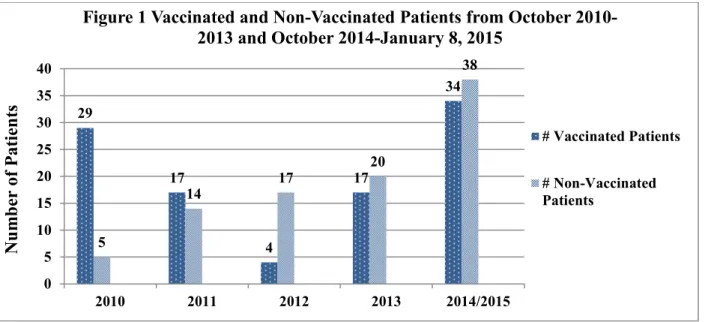
The clinical questions were: “does having an accessible flu vaccine clinic for residents in a homeless shelter a) improve vaccination rates, and b) decrease the number of cold and flu-like symptoms as compared to previous years when a flu vaccine clinic was not onsite?” To answer question a, the average number of patients from 2010 to 2013 who received a flu vaccine in the clinic were compared to the number of patients who received a flu vaccine after implementation of a flu vaccine clinic during the 2014-2015 flu season.
To answer question b, the number of patients who presented with cold and flu-like symptoms was compared across each year in January and February from 2011 through 2015. In addition, the specific cold and flu-like symptoms recorded for each year were documented.
25
CHAPTER 5: RESULTS
Characteristics of the Sample
For this project 195 medical records flu were reviewed. This included charts and flu slips. Of these, 101 people (51.8%) received a flu vaccine and 94 people (48.2%) did not receive a flu vaccine. The age range for flu vaccine recipients was 24 to 67 years (m=52 years) and the age range for those not receiving a flu vaccine was 23 to 71 years (m=51). Of those who received a flu vaccine (n=101), 50 (26 African Americans, 19 Caucasians, and 5 Hispanics) had medical charts that contained flu vaccine slips and 51 people had flu vaccine slips in the “Flu Vaccines, No Patient Chart” folders which did not contain race.
There were a total of 168 patient encounters in the RNFC. The ages of patients seen in the clinic ranged from 23 to 71 years. Forty-six patients (27.4%) had cold and flu-like symptoms (m=52 years) and 122 patients (72.6%) had no cold and flu-like symptoms (m=52 years). Also, 29 patients who received a flu vaccine were smokers and 21 were non-smokers.
Impact of a Flu Vaccine Clinic on Vaccination Rates
26
Despite a steady increase in the number of unvaccinated patients who were seen in the clinic from January and February 2011-2015, data revealed that there were still more patients who had clinic visits unrelated to cold and flu-like symptoms as compared to visits when cold and flu-like symptoms were the reason for clinic visits (Figure 2).
Findings also showed that fewer patients (n=4) presented with cold and flu-like
symptoms (Figure 2) when the most vaccines were administered (n=34) after implementation of a flu vaccine clinic (Figure 1). There average number of clinic visits (n=11) related to cold and
29 17 4 17 34 5 14 17 20 38 0 5 10 15 20 25 30 35 40
2010 2011 2012 2013 2014/2015
N u m b er of P at ie n ts
Figure 1 Vaccinated and Non-Vaccinated Patients from October 2010-2013 and October 2014-January 8, 2015
# Vaccinated Patients
# Non-Vaccinated Patients
10 9 12 11
4 15 15 29 30 33 0 5 10 15 20 25 30 35
2011 2012 2013 2014 2015
N u m b er of C li n ic V is it s
Figure 2 Clinic Visits January and February 2011-2015
Cold and Flu-Like Symptoms
27
flu-like symptoms in January and February from 2011-2014 has higher than the 4 clinic visits related to cold and flu-like symptoms in January and February 2015. Findings also revealed a 200% increase in clinic visits (n=12) during January and February 2013 for cold and flu-like symptoms (Figure 2) when the fewest flu vaccines (n=4) were administered from October through December 2012 (Figure 1). Data also revealed that older patients had more clinic visits when compared to younger patients (Figure 3).
Reported Cold and Flu-Like Symptoms
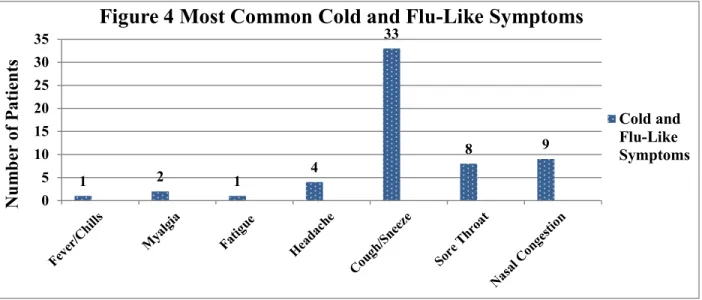
The most common cold and flu-like symptom from data collection forms was cough/sneeze in January and February from 2011-2015. The least common symptoms were fever/chills and fatigue (Figure 4). The most prevalent cold and flu-like symptoms reported were runny nose and congestion (chest or sinus). Other complaints from patients were: 1) post nasal drip; 2) nausea and vomiting; 3) decreased appetite; 4) feeling tired; 5) lightheaded; 6) wheezing; 7) scratchy throat; 8) clogged ears; 9) dizziness; and 10) night sweats.
8 10 34 79 34 3 0 10 20 30 40 50 60 70 80 90
20's 30's 40's 50's 60's 70's
N u m b er of P at ie n ts Age
Figure 3 Age by Decade for Patient Encounters
28 Relationship between Race and Flu Vaccinations
Of the 101 patients who received flu vaccines between October-December 2010-2013 and October 2014-January 8, 2015, 50 charts contained flu vaccine slips that displayed race. The remaining 51 people who received a flu vaccine did not have medical charts, but had flu vaccine slips in the folders. For those cases, race was labeled as “unknown” since medical charts were not available to identify race. Records that included race were identified (Figure 5) as follows: African American (n=26, 25.7%), Caucasian (n=19, 18.8%), Hispanic (n=5, 5%) and unknown race (n=51, 50.5%).
1
4 4
7
10
0 2 0
9 8
0 0 0 1
4 28 11 0 0 12 0 5 10 15 20 25 30
2010 2011 2012 2013 2014/2015
N u m b er of P at ie n ts
Figure 5 Flu Vaccine Recipients
African American Caucasian Hispanic Unknown
1 2 1
4 33 8 9 0 5 10 15 20 25 30 35 N u m b er of P at ie n ts
Figure 4 Most Common Cold and Flu-Like Symptoms
29
The average age of patients who received a flu vaccine before and after an onsite flu vaccine clinic was also determined (Figure 6). The mean age for all flu vaccine recipients was 52 years. The age distribution revealed that people between 50-59 years of age received the most flu vaccines compared to any other decade (Figure 7).
There were a total of 144 medical charts that indicated a patient’s smoking status (Figure 8). From those charts, 100 patients were smokers (69.4%) and 44 were non-smokers (30.6%). Although smokers received the most vaccines after the flu vaccine clinic was started onsite, there
51.3 46.4 55.8 52.8 51.5 0 10 20 30 40 50 60
2010 2011 2012 2013 2014/2015
A ge i n D ec ad es
Figure 6 Average Age of Flu Vaccine Recipients 2010-2015
Age 2 10 29 39 21 0 10 20 30 40 50
20's 30's 40's 50's 60's
N u m b er of P at ie n ts Age
Figure 7 Age by Decade For Flu Vaccine Recipients
30 were still many smokers who remained unvaccinated.
Major Findings from Project
This project sought to determine if the addition of a flu vaccine clinic increased
vaccination rates in a homeless shelter due to increase accessibility. Findings from chart reviews indicated that more people received flu vaccines after an onsite flu vaccine clinic was established in a shelter between October 2014 and January 8, 2015 as compared to October-December from 2010-2013 when an onsite flu vaccine clinic had not been established. Results showed that the fewest cold and flu-like symptoms were documented in January and February 2015 after flu vaccine clinic implementation.
The majority of flu vaccine recipients were African American for all but one year. During 2014/2015, African Americans received the greatest number of flu vaccines. The large number of African Americans may have been due to the fact that they tend to compose the largest number of shelter residents. Also, chart reviews indicated that the average age of flu vaccine recipients during the project was 52 years. Lastly, data revealed a majority of patients were smokers. There was a considerable difference each year for the number of people who smoked and also did not receive a flu vaccine.
5 13 15 19 29 19 1 5 2 4 8 9 1 7 5 18 4 9 0 1 2 13 2 3 0 5 10 15 20 25 30 35
2010 2011 2012 2013 2014 2015
N u m b er of P at ie n ts
Figure 8 Smoking and Flu Vaccines
Smoker
Flu Vaccine
Non-Smoker
31
CHAPTER 6: DISCUSSION
Impact of a Flu Vaccine Clinic in a Homeless Shelter
Findings showed that fewest flu vaccines were administered from October through December 2012, and thus, the most cold and flu-like symptoms were observed in January and February of 2013. This project showed the benefits of having an accessible flu vaccine clinic in a homeless shelter. Most vaccines were administered when a flu clinic was implemented onsite for the 2014-2015 cold and flu season. Results also indicated that the fewest number of cold and flu-like symptoms were recorded in 2014-2015 when the most vaccines were administered.
These findings echoed a previous study when a shelter-based immunization program improved vaccine accessibility to hepatitis B, leading to higher rates of immunization (Schwarz et al., 2008). After interventions, which included educational videos, printed material and free vaccines, 85% of children and adolescents had completed the series as compared to 68% prior to the intervention (Schwarz et al., 2008). Increased vaccination rates were also noted when an accessible shelter-based flu vaccine program, the intervention, allowed more vaccines to be administered in the Community House. Therefore, shelter-based vaccine programs can assist in increasing vaccination rates.
32
and flu-like symptoms. Therefore, more education about the benefits of the flu vaccine and increasing vaccine accessibility may help reduce the number of patients seen in the RNFC for cold and flu-like symptoms.
Results involving increased hepatitis A & B vaccination rates in a study by Poulos et al. (2008) had similar outcomes. When patients were made aware that the timing to receive a vaccine was appropriate, vaccination rates increased. The important factor of timing,
accessibility, and convenience in the study may have also been the same factor that may have increased vaccination rates in this practice improvement project.
In this practice improvement project, the fewest number of cold and flu-like symptoms were recorded in 2014-2015 when the most vaccines were administered. Conversely, findings also revealed that the most cold and flu-like symptoms resulted in 2013 when the fewest number of flu vaccines were administered. Although there was an increase in unvaccinated patients from 2010-2015, there were an even greater number of patients RNFC for conditions unrelated to cold and flu-like symptoms.
33 Impact of Smoking, Cough and Flu Vaccine
Cough/sneeze was the most common cold and flu-like symptom in chart reviews from 2011-2015. Smoking may contribute to coughing episodes, which can be caused by COPD, asthma exacerbations, emphysema and bronchitis (CDC, 2014f). One of the most basic needs in the first stage (Physiological) of Maslow’s Theory of Human Motivation is breathing. However, coughing caused by a history of smoking can sometimes prohibit the ease of breathing.
Therefore, more education about the benefits of receiving flu vaccines in the smoking population may help to reduce the cough associated with respiratory illnesses and further complications.
Results also indicated that a majority of patients (69%) seen in the clinic were smokers. Previous studies have shown that current smokers do not get flu vaccines as often as previous smokers and non-smokers (Pearson, Dube, Ford, & Mokdad, 2009). Damage caused to the respiratory tract can increase the risk of respiratory infections caused by smoking (Pearson et al., 2009). Therefore, increased flu vaccination rates in the smoking population may help to reduce the risk of respiratory infections.
Flu Vaccine and Race
34
Spanish-speaking volunteers to provide education and administration of flu vaccines for the Hispanic people should be investigated.
Although flu vaccines were available to anyone residing in the shelter, cold and flu-like symptoms may be reduced when a majority of people is vaccinated. This phenomenon, known as herd immunity, can protect people who receive a vaccination in addition to indirectly protect others who were not vaccinated (Smith, 2010). Fifty-one people who received a flu vaccine, but did not have a patient chart to document their race, impacted data that would have given more information on the relationship between race and vaccination rates although the majority of residents of the shelter are African American. Conversations were held with the medical
coordinator about including race on flu documentation slips for potential projects and flu vaccine clinics in the future.
Potential Significance of Age
Despite age ranging from 24 to 67 years for flu vaccine recipients, older patients had the highest uptake of vaccines. There were more people 50 to 59 years of age who received a flu vaccine when compared to any other decade (n=39). People 40 to 49 years of age received the second most flu vaccines (n=29) and people 60 and 69 years of age received the third highest number of flu vaccinations (n=21). People 20 to 29 years of age received the fewest flu vaccines (n=2) and people 30 to 39 years of age received the second lowest (n=10). It is not clear if this might simply be a representation of the demographics in the shelter. Perhaps there are fewer younger people in the shelter on any given night.
35
may increase exposure to illness for which they wanted to reduce, or younger populations may not be as health conscious as older residents to preserve their health. Or, there could have just been a larger amount of older people in the shelter. Although there are benefits when
administering flu vaccines to any age group, focusing on the older population in homeless shelters may yield higher vaccinations rates and reduce contraction and spread of the flu virus through the concept of herd immunity or target efforts to get more of the youth to participate. Focus on Smoking Population
Slightly less than a third of patients included in this project smoked and also received a flu vaccine (29%). Due to this low percentage, one potential goal for a shelter that provides flu vaccines is to vaccinate 100% of residents who are smokers. When people seek the aid of the Community House for shelter, an intake assessment is performed that includes an evaluation of smoking status. Access to this information in patient charts allows the opportunity to identify patients with a smoking history and to educate them about the benefits of receiving a flu vaccine. Cold and flu-like symptoms can be complicated by smoking (Mayo Clinic, 2015). Therefore, focusing on this population for flu vaccine administration may yield fewer complications from the common cold, flu-like symptoms and influenza.
Implications
36
Findings indicated a wide range of cold and flu-like symptoms during clinic visits. Although there was no reduction in a specific symptom, data continued to support fewer cold and flu-like symptoms following the implementation of a flu vaccine clinic. Because the flu is spread by respiratory droplets and contaminated hands, education can be provided about the importance of keeping hands as clean as possible. Therefore, the simplistic act of washing hands with soap and water or an alcohol-based hand cleanser can be emphasized to help mitigate the spread of cold and flu-like symptoms (CDC, 2013c).
Piedmont Health Services (PHS) donates flu vaccines to the Community House so
residents can get vaccinated, if they choose. However, when an individual is not a resident of the shelter, he will not be able to receive a vaccine. Although PHS cannot donate an unlimited supply of flu vaccines, having a large enough supply may provide the opportunity to offer flu vaccines to the homeless population outside of the shelter, increase vaccination rates, serve as an important public health initiative and may contribute to better community health.
Limitations
There were several limitations involved with this practice improvement project. The flu vaccines recommended for the 2014-2015 cold and flu season were not the most effective for lowering flu risk due to genetically, mutated viruses already in circulation (CDC, 2015). Therefore, people may have been more reluctant to receive a flu vaccine for this cold and flu season as compared to other seasons, which could have hindered vaccination rates. In addition, the vaccine may not have reduced cold and flu symptoms.
37
revealed only one patient who received a flu vaccine at this community event. Also, some VA clinics and health departments in the surrounding community offer flu vaccines, but chart reviews did not capture this information. If patients were asked during clinic visits if they had already received a flu vaccine elsewhere, this information could be placed on the intake sheet or elsewhere in the chart to adequately reflect the number of patients who received a vaccine at an offsite location.
Another limitation is that all patients with cold and flu-like symptoms may not have elected to be seen in the RNFC clinic for various reasons. There is a reasonable chance that more people actually had cold and flu-like symptoms in January and February from 2011-2015, but chart reviews only captured patients that signed up for clinic appointments.
Also, challenges were presented when patients did not have medical charts, which made it difficult to obtain demographic data such as smoking status and race. Flu vaccine
documentation slips listed the patient’s date of birth, but no other demographic information Conclusion
38
APPENDIX A: OCTOBER–DECEMBER _____ PEOPLE WHO RECEIVED FLU VACCINES WHEN NO FLU CLINIC ONSITE
Patient # Vaccine in RNFC (Yes) Vaccine outside RNFC (Yes) Vaccine (No) 1
39
APPENDIX B: OCTOBER 2014–JANUARY 8, 2015 PEOPLE WHO RECEIVED FLU VACCINES WHEN FLU VACCINE CLINIC ONSITE
Patient # Vaccine in RNFC (Yes) Vaccine outside RNFC (Yes) Vaccine (No) 1
40
APPENDIX C: JANUARY AND FEBRUARY ____ COLD AND FLU-LIKE SYMPTOMS WHEN NO FLU VACCINE CLINIC ONSITE
Fever/ Cough or Sore Nasal Times Pt. # Chills Myalgia Fatigue Headache Sneeze Throat Congestion Other Seen
1
2
3
4
5
6
7
8
9
10
11
12
13
14
41
APPENDIX D: JANUARY AND FEBRUARY 2015 COLD AND FLU-LIKE SYMPTOMS WHEN FLU VACCINE CLINIC ONSITE
Fever/ Cough or Sore Nasal Times Pt. # Chills Myalgia Fatigue Headache Sneeze Throat Congestion Other Seen
1
2
3
4
5
6
7
8
42
APPENDIX E: DEMOGRAPHICS OCTOBER-DECEMBER _____ WHO RECEIVED FLU VACCINES WHEN NO FLU VACCINE CLINIC ONSITE
Age Race Smoker _________________________________ _____________________________ ____________
43
APPENDIX F: DEMOGRAPHICS OCTOBER 2014-JANUARY 8, 2015 WHO RECEIVED FLU VACCINES AT ONSITE FLU VACCINE CLINIC
Age Race Smoker __________________________________ ____________________________ ___________
44
APPENDIX G: RNFC CLINIS VISITS AND VLU VACCINES PER YEAR
#Jan & Feb 2011 #Flu Vaccine #Cold and Flu-Like #Other Patient Total Visits Oct-Dec 2010 Patient Visits Visits
#Jan & Feb 2012 #Flu Vaccine #Cold and Flu-Like #Other Patient Total Visits Oct-Dec 2011 Patient Visits Visits
#Jan & Feb 2013 #Flu Vaccine #Cold and Flu-Like #Other Patient Total Visits Oct-Dec 2012 Patient Visits Visits
#Jan & Feb 2014 #Flu Vaccine #Cold and Flu-Like #Other Patient Total Visits Oct-Dec 2013 Patient Visits Visits
Above data prior to flu vaccine clinic
______________________________________________________________________________
#Jan & Feb 2015 #Flu Vaccine #Cold and Flu-Like #Other Patient Total Visits Oct-Dec 2014 Patient Visits Visits
Above data after implementation of a flu vaccine clinic
45
REFERENCES
Badiaga, S., Raoult, D., & Brouqui, P. (2008). Preventing and controlling emerging and
reemerging transmissible diseases in the homeless. Emerging Infectious Diseases, 14(9), 1353-1359. doi: 10.3201/eid1409.080204
Brewer, N. T., Chapman, G. B., Gibbons, F. X., Gerrard, M., McCaul, M. D., & Weinstein, N. D. (2007). Meta-Analysis of the relationship between risk perception and health behavior: The example of vaccination. Health Psychology, 26(2), 136-145. doi: 10.1037/0278-6133.26.2.136
Buccieri, K., & Gaetz, S. (2013). Ethical vaccine distribution planning for pandemic influenza: Prioritizing homeless and hard-to-reach populations. Public Health Ethics, 6(2), 185-196. doi: 10.1093/phe/pht005
Bucher, S. J., Brickner, P. W., & Vincent, R. L. (2006). Influenzalike illness among homeless persons. Emerging Infectious Diseases, 12(7), 1162-1163. doi: 10.3201/eid1207.060217 Burns, N., Grove, S. K., & Gray, J. R. (2013). The Practice of nursing research: Appraisal,
synthesis, and generation of evidence (7th ed.). St. Louis, MI: Elsevier Inc.
Castilla, J., Godoy, P., Dominguez, A., Martinez-Baz, I., Astray, J., Martin, V., … Pumaralo, T. (2013). Influenza vaccine effectiveness in preventing outpatient, inpatient, and severe cases of laboratory-confirmed influenza. Clinical Infectious Diseases, 57(2), 167-175. doi: 10.1093/cid/cit194
Centers for Disease Control and Prevention. (2013a). Estimating Seasonal Influenza-Associated Deaths in the United States: CDC Study Confirms Variability of Flu. Retrieved from
http://www.cdc.gov/flu/about/disease/us_flu-related_deaths.htm
Centers for Disease Control and Prevention. (2014a). Flu Severity & Symptoms. Retrieved from
http://www.cdc.gov/flu/about/disease/symptoms.htm
Center for Disease Control and Prevention. (2013b). Health & Beauty- Close Up. Retrieved from
http://search.proquest.com.libproxy.lib.unc.edu/docview/1468741080?pq-origsite=summon
Centers for Disease Control and Prevention. (2014f). Health Effects of Cigarette Smoking. Retrieved from
http://www.cdc.gov/tobacco/data_statistics/fact_sheets/health_effects/effects_cig_smokin g/
46
Centers for Disease Control and Prevention. (2014e). Information for Specific Groups. Retrieved from http://www.cdc.gov/flu/groups.htm
Centers for Disease Control and Prevention. (2014d). Key Facts about Influenza (Flu) & Flu Vaccine. Retrieved from http://www.cdc.gov/flu/keyfacts.htm
Centers for Disease Control and Prevention. (2014b). Smoking & Tobacco Use. Retrieved from
http://www.cdc.gov/tobacco/data_statistics/fact_sheets/fast_facts/
Centers for Disease Control and Prevention. (2013c). Wash Your Hands. Retrieved from
http://www.cdc.gov/features/handwashing/
Centers for Disease Control and Prevention. (2015). What You Should Know for the 2014-2015 Influenza Season. Retrieved from http://www.cdc.gov/flu/about/season/flu-season-2014- 2015.htm
Chen, J. Y., Fox, S. A., Cantrell, C, H., Stockdale, S. E., Kagawa-Singer, M. (2007). Health disparities and prevention: Racial/ethnic barriers to flu vaccinations. Journal of Community Health, 32(1), 5-20. doi: 10.1007/s10900-006-9031-7
Coady M. H., Weiss, L., Galea, S., Ompad, D. C., Glidden, K., & Vlahov, D. (2007). Rapid vaccine distribution in nontraditional settings: Lessons learned from project VIVA.
Journal of Community Health Nursing, 24(2), 79-85. doi: 10.1080/07370010701316163 DiBiasea, L. M. Davis, S, E, H., Rosselli, R., & Horney, J. (2011). Evaluation of the
implementation of the H1N1 pandemic influenza vaccine in local health departments (LHDs) in North Carolina. Vaccine, 29(23), 3969-3976.
doi:10.1016/j.vaccine.2011.03.085
Duncan, I. G., Taitel, M. S., Zhang, J., & Kirkham, H. S. (2012). Planning influenza vaccination programs: A cost benefit model. Cost Effectiveness and Resource Allocation, 10(10), 2-11. doi:10.1186/1478-7547-10-10
Grohskopf, L. A., Olsen, S. J., Sokolow, L. Z., Bresee, J. S., Cox, N. J., Broder, K. R., … Walter, E. B. (2014). Prevention and Control of Seasonal Influenza with Vaccines: Recommendations of the Advisory Committee on Immunization Practices (ACIP) — United States, 2014–15 Influenza Season. Retrieved from
http://www.cdc.gov/mmwr/preview/mmwrhtml/mm6332a3.htm
Grohskopf, L. A., Shay, D. K., Shimabukuro, T. T., Sokolow, L. Z., Keitel, W. A., Bresee, J. S., Cox, N. J. (2013). Prevention and control of seasonal influenza with vaccines
47
Hauff, A. J., & Turner, M. S. (2014). Homeless health needs: Shelter and health service provider perspective. Journal of Community Health Nursing, 31(2), 103-117.
doi: 10.1080/07370016.2014.901072
HUD Exchange. (2013). 2012 AHAR: Volume 2 - Estimates of Homelessness in the U.S. (Section 2). Retrieved from https://www.hudexchange.info/resource/3297/2012-ahar-volume-2-estimates-of-homelessness-in-the-us/
Huber, M., Knottnerus, J. A., Green, L., Horst, H., Jadad, A. R., Kromhout, D., … & Smid, H. (2011). How should we define health. The British Medical Journal, 343(7817), 1-3. doi: 10.1136/bmj.d4163
Hutchins, S. S., Fiscella, K., Levine, R. S., Ompad, D. C., & McDonald, M. (2009).
Protection of racial/ethnic minority populations during an influenza pandemic. American Journal of Public Health, 99(S2), S261-S270.
Inter-Faith Council, (2001). Inter-Faith Council for Social Service. [Brochure]. Chapel Hill, NC: IFC Inc.
Johnston, M., & Kunkel, L. (2014). What will it take to end homelessness. World Medical and Health Policy, 6(2), 112-117. doi: 10.1002/wmh3.91
Khazeni, N., Hutton, D. W., Garber, A. M., Hupert, N., & Owens, D. K. (2009). Effectiveness and cost-effectiveness of vaccination against pandemic influenza (H1N1) 2009. Annals of Internal Medicine, 151(12), 829-840. doi: 10.7326/0000605-200912150-00157
Littman, J. (2014). How high is a high risk? Prioritising high-risk individuals in an influenza pandemic. Vaccines, 32(52), 7167-7170. doi: 10.1016/j.vaccine.2014.10.020
Maslow, A. H. (1998). Towards a psychology of being (3rd ed.). New York, NY: John Wiley & Sons.
Mayo Clinic. (2015). Diseases and Conditions: Nicotine Dependence. Retrieved from
http://www.mayoclinic.org/diseases-conditions/nicotine-dependence/basics/complications/con-20014452
McLeod, S. A. (2007). Maslow's Hierarchy of Needs. Retrieved from
http://www.simplypsychology.org/maslow.html
Mechcatie, E. (2010). Report finds low vaccination rates in U.S. adults. Internal Medicine News, 43(4), 24. doi: 10.1016/S1097-8690(10)70212-2
Metcalfe, S. E., & Sexton, E. H. (2013). An academic-community partnership to address the flu vaccination rates of the homeless. Public Health Nursing, (31)2, 175-182.