R E S E A R C H
Open Access
Blood eosinophil count, a marker of inhaled
corticosteroid effectiveness in preventing
COPD exacerbations in post-hoc RCT and
observational studies: systematic review
and meta-analysis
Timothy H. Harries
1*, Victoria Rowland
1, Christopher J. Corrigan
2, Iain J. Marshall
1, Lucy McDonnell
1,
Vibhore Prasad
1, Peter Schofield
1, David Armstrong
1and Patrick White
1Abstract
Background:Blood eosinophil count has been proposed as a predictor of response to inhaled corticosteroid (ICS) in the prevention of acute exacerbations of COPD. An optimal threshold of blood eosinophil count for prescribing ICS has not been agreed. Doubt has been cast on the role by observational studies. The role of inhaled
corticosteroids in this relationship, independent of long-acting bronchodilators, has not been examined.
Methods:We conducted a systematic review of post-hoc analyses of randomised controlled trials (RCTs) and
observational studies examining three blood eosinophil thresholds and the independent role of ICS. Included studies were categorised by the form (relative or absolute count) and cut point of eosinophil threshold used. Thresholds assessed were relative eosinophil count of 2%, and absolute counts of 150 cells/μL and 300 cells/μL. Three meta-analyses of the effect of ICS use in post-hoc analyses of RCTs based on these counts were carried out. Initial analysis included all studies of ICS vs. any non-ICS regimen. Further analysis examined the effect of ICS, independent of the effect of long-acting bronchodilators.
Results:Sixteen studies examined the association between blood eosinophil count and response of exacerbation
risk to ICS, in COPD patients. Eleven studies (25,881 patients) were post-hoc analyses of RCTs. Five studies (109,704 patients) were retrospective observational studies. The independent effect of ICS on the reduction of exacerbation risk was 20% at≥2% blood eosinophil threshold (RR, 0.80; 95% CI, 0.74–0.85), 35% at≥150 cells/μL blood eosinophil threshold (RR, 0.65; 0.52–0.79), and 39% at≥300 cells/μL blood eosinophil threshold (RR, 0.61; 0.44–0.78). No association was found in four out of five observational studies.
Conclusion:This is the first systematic review to assess, in post-hoc analyses of RCTs, the independent effect of ICS in reducing the risk of COPD exacerbation across a range of blood eosinophil thresholds. Association between ICS prescription and reduced exacerbation risk at these thresholds was confirmed. The lack of association found in the observational studies questions the relevance of these observations to a“real world”COPD population. To clarify the clinical utility of this biomarker, the association should be tested in prospective effectiveness studies.
Keywords:Pulmonary disease, chronic obstructive, Eosinophils, Inhaled corticosteroids, Randomised controlled trials, Observational studies
© The Author(s). 2020Open AccessThis article is distributed under the terms of the Creative Commons Attribution 4.0 International License (http://creativecommons.org/licenses/by/4.0/), which permits unrestricted use, distribution, and reproduction in any medium, provided you give appropriate credit to the original author(s) and the source, provide a link to the Creative Commons license, and indicate if changes were made. The Creative Commons Public Domain Dedication waiver (http://creativecommons.org/publicdomain/zero/1.0/) applies to the data made available in this article, unless otherwise stated.
* Correspondence:[email protected]
1Department of Public Health and Primary Care, School of Population Health
& Environmental Sciences, King’s College London, 3rd floor Addison House, Guys Campus, London SE1 1UL, UK
Introduction
Inhaled corticosteroid (ICS) therapy has been reported to be associated with a reduction in the risk of moderate and severe exacerbations in a subgroup of patients with chronic obstructive pulmonary disease (COPD) [1]. Those COPD patients with predominantly eosinophilic airways inflammation [2] may derive the most benefit from ICS use [3–7]. International guidelines reflect this targeted approach to ICS prescription [8]. The periph-eral blood eosinophil count, absolute and relative, has high correlation with sputum eosinophils [9] and has gained increased recognition as a proxy of eosinophilic airways inflammation [10]. In one stable state COPD population 37.4% of patients had a blood eosinophil
count of ≥2% [11]. This threshold may predict response to ICS treatment with respect to modification of exacer-bation risk in COPD patients [12]. Evidence for this as-sociation has been derived from post-hoc analyses of randomised controlled trials (RCTs) [10]. High rates of prescription of ICS, outside guidelines, highlight the im-portance of targeted prescribing for patients with COPD. In primary care in England, 24% of COPD patients were prescribed ICS and long-acting beta-agonists (LABA) outside of the 2011 Global Initiative for Chronic Ob-structive Lung Disease (GOLD) guidelines [13]. Between 2007 and 2010, large increases in ICS prescribing were not associated with expected impact on the incidence of admissions for exacerbations [14,15].
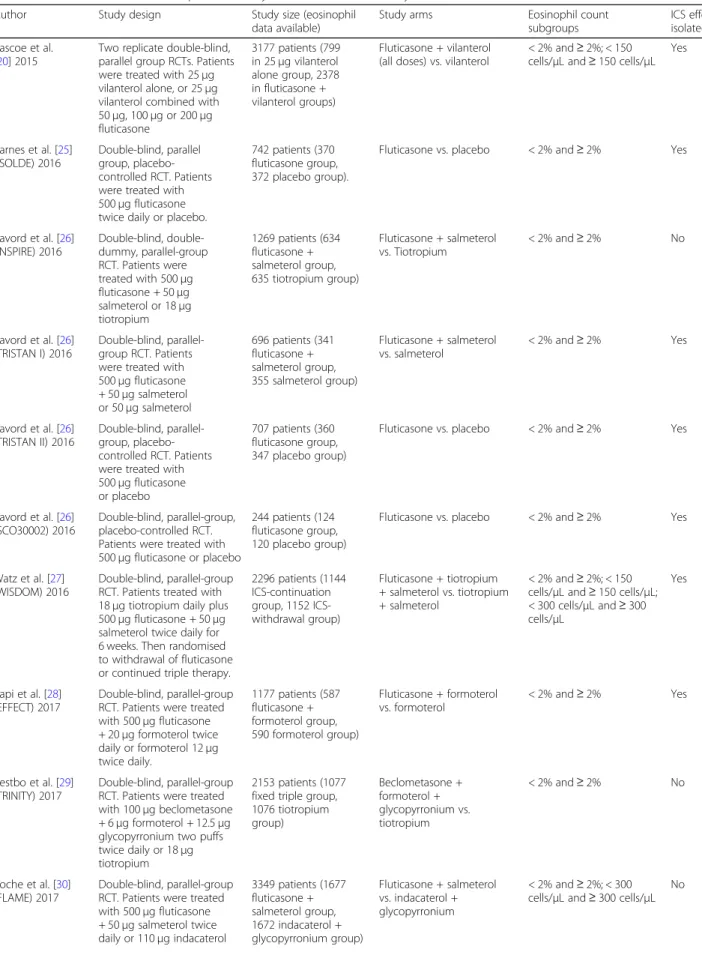
Table 1Characteristics of included post-hoc analyses of RCTs for meta-analysis
Author Study design Study size (eosinophil data available)
Study arms Eosinophil count subgroups
ICS effect isolated Pascoe et al.
[20] 2015
Two replicate double-blind, parallel group RCTs. Patients were treated with 25μg vilanterol alone, or 25μg vilanterol combined with 50μg, 100μg or 200μg fluticasone
3177 patients (799 in 25μg vilanterol alone group, 2378 in fluticasone + vilanterol groups)
Fluticasone + vilanterol (all doses) vs. vilanterol
< 2% and≥2%; < 150 cells/μL and≥150 cells/μL
Yes
Barnes et al. [25] (ISOLDE) 2016
Double-blind, parallel group, placebo-controlled RCT. Patients were treated with 500μg fluticasone twice daily or placebo.
742 patients (370 fluticasone group, 372 placebo group).
Fluticasone vs. placebo < 2% and≥2% Yes
Pavord et al. [26] (INSPIRE) 2016
Double-blind, double-dummy, parallel-group RCT. Patients were treated with 500μg fluticasone + 50μg salmeterol or 18μg tiotropium
1269 patients (634 fluticasone + salmeterol group, 635 tiotropium group)
Fluticasone + salmeterol vs. Tiotropium
< 2% and≥2% No
Pavord et al. [26] (TRISTAN I) 2016
Double-blind, parallel-group RCT. Patients were treated with 500μg fluticasone + 50μg salmeterol or 50μg salmeterol
696 patients (341 fluticasone + salmeterol group, 355 salmeterol group)
Fluticasone + salmeterol vs. salmeterol
< 2% and≥2% Yes
Pavord et al. [26] (TRISTAN II) 2016
Double-blind, parallel-group, placebo-controlled RCT. Patients were treated with 500μg fluticasone or placebo
707 patients (360 fluticasone group, 347 placebo group)
Fluticasone vs. placebo < 2% and≥2% Yes
Pavord et al. [26] (SCO30002) 2016
Double-blind, parallel-group, placebo-controlled RCT. Patients were treated with 500μg fluticasone or placebo
244 patients (124 fluticasone group, 120 placebo group)
Fluticasone vs. placebo < 2% and≥2% Yes
Watz et al. [27] (WISDOM) 2016
Double-blind, parallel-group RCT. Patients treated with 18μg tiotropium daily plus 500μg fluticasone + 50μg salmeterol twice daily for 6 weeks. Then randomised to withdrawal of fluticasone or continued triple therapy.
2296 patients (1144 ICS-continuation group, 1152 ICS-withdrawal group)
Fluticasone + tiotropium + salmeterol vs. tiotropium + salmeterol
< 2% and≥2%; < 150 cells/μL and≥150 cells/μL; < 300 cells/μL and≥300 cells/μL
Yes
Papi et al. [28] (EFFECT) 2017
Double-blind, parallel-group RCT. Patients were treated with 500μg fluticasone + 20μg formoterol twice daily or formoterol 12μg twice daily.
1177 patients (587 fluticasone + formoterol group, 590 formoterol group)
Fluticasone + formoterol vs. formoterol
< 2% and≥2% Yes
Vestbo et al. [29] (TRINITY) 2017
Double-blind, parallel-group RCT. Patients were treated with 100μg beclometasone + 6μg formoterol + 12.5μg glycopyrronium two puffs twice daily or 18μg tiotropium
2153 patients (1077 fixed triple group, 1076 tiotropium group) Beclometasone + formoterol + glycopyrronium vs. tiotropium
< 2% and≥2% No
Roche et al. [30] (FLAME) 2017
Double-blind, parallel-group RCT. Patients were treated with 500μg fluticasone + 50μg salmeterol twice daily or 110μg indacaterol
3349 patients (1677 fluticasone + salmeterol group, 1672 indacaterol + glycopyrronium group)
Fluticasone + salmeterol vs. indacaterol + glycopyrronium
< 2% and≥2%; < 300 cells/μL and≥300 cells/μL
The stability of the blood eosinophil count has been questioned, raising doubts about the appropriateness of using a single measurement as a reliable predictor of ICS response [16]. A cohort study of COPD patients with moderate airflow limitation did not find a relation-ship between numbers of tissue eosinophils in the air-ways and lung parenchyma and blood eosinophils [17]. Studies examining the role of blood eosinophils as a bio-marker of ICS sensitivity have selected different thresh-olds of relative and absolute counts in their analyses. Previous reviews, in their comparisons of the impact on exacerbation risk of ICS vs. non-ICS, have not isolated the effect of the ICS from that of bronchodilators [7, 12]. A recent systematic review examined the impact of triple therapy vs. dual bronchodilator therapy among pa-tients with blood eosinophilia but did not stratify the studies by eosinophil threshold [6]. An assessment of blood eosinophil count as a marker of the independent
effect of ICS on reduction of exacerbation frequency would help to clarify the value of this biomarker as a guide to the prescription of these drugs.
We have chosen three thresholds as likely markers of corticosteroid-responsive disease. An association has been found between blood eosinophil counts of≥2% and an increased risk of severe exacerbations and mortality from exacerbations among patients with COPD [18]. The benefits of oral corticosteroids have been found only in those patients with blood eosinophils of ≥2% [19]. A correlation has been reported between a relative blood eo-sinophil count of 2% and an absolute blood eoeo-sinophil count of 150 cells/μL [20]. The GOLD guidelines recom-mend the use of an absolute blood eosinophil count of
≥300 cells/μL to identify patients with COPD who should
escalate their treatment from use of long-acting beta-agonist + long-acting muscarinic antbeta-agonist (LABA+-LAMA) to use of LABA+ICS [8]. This systematic review Table 1Characteristics of included post-hoc analyses of RCTs for meta-analysis(Continued)
Author Study design Study size (eosinophil data available)
Study arms Eosinophil count subgroups
ICS effect isolated + 50μg glycopyrronium
once a day Chapman et al. [31]
(SUNSET) 2018
Double-blind, triple-dummy, parallel-group RCT. Patients were treated with 18μg tiotropium once daily plus 500μg fluticasone + 50μg salmeterol twice daily or 110μg indacaterol + 50μg glycopyrronium once a day
1051 patients (526 fluticasone + salmeterol + tiotropium group, 527 indacaterol + glycopyrronium group)
Fluticasone + tiotropium + salmeterol vs. indacaterol + glycopyrronium
< 2% and≥2%; < 300 cells/μL and≥300 cells/μL
Yes
Papi et al. [32] (TRIBUTE) 2018
Double-blind, double-dummy, parallel-group RCT. Patients were treated with 87μg beclometasone + 5μg formoterol + 9μg glycopyrronium two puffs twice daily or 85μg indacaterol + 43μg glucopyrronium once a day
1532 patients (764 BDP/FF/G, 768 IND/GLY)
Beclometasone/formoterol/ glycopyrronium vs. indacaterol/ glycopyrronium
< 2% and≥2% Yes
Ferguson et al. [33] (KRONOS) 2018
Double-blind, parallel-group RCT. Patients were treated with 320μg budesonide + 18μg glycopyrolate + 9.6μg formoterol two puffs twice daily or 18μg glycopyrolate + 9.6μg formoterol two puffs twice daily
1267 patients (640 BGF, 627 GFF)
Budesonide/glycopyrolate/ formoterol vs. glycopyrolate/ formoterol
< 150 cells/μL and
≥150 cells/μL
Yes
Lipson et al. [34] (IMPACT) 2018
Double-blind, parallel-group RCT. Patients were treated with 100μg fluticasone + 62.5μg umeclidinium + 25μg vilanterol once daily or 62.5μg umeclidinium + 25μg vilanterol once daily
6221 patients (4151 triple therapy, 2070 umeclidinium + vilanterol)
Fluticasone furoate/ umeclidinium/ vilanterol vs. umeclidinium/vilanterol
< 150 cells/μL and
≥150 cells/μL
provides an up-to-date analysis of the predictive value of three blood eosinophil thresholds (2%, 150 cells/μL, and 300 cells/μL) as biomarkers of the independent impact of ICS use on the risk of moderate and severe exacerbations in COPD patients. These findings are compared to those of real-world observational studies.
Methods
The population of this review were patients with COPD stratified by blood eosinophil count. Blood eosinophil thresholds of 2%, 150 cells/μL, and 300 cells/μL were examined. The intervention was the use of inhaled cor-ticosteroids at any dosage. The comparison was the use of ICS with any non-ICS combination inhaler or pla-cebo (all association studies). A separate analysis exam-ined the independent effect of ICS by comparing use of ICS monotherapy vs. placebo, or ICS + LABA vs. LABA, or ICS + LABA+LAMA vs. LABA+LAMA (ICS-inde-pendent association studies). The outcome was the risk of moderate or severe exacerbations of COPD. The re-port follows the Preferred Reporting Items for
Systematic Reviews and Meta-analyses Statement (PRISMA) guidelines [21].
Search strategy
Searches were made of five electronic databases from in-ception to 10/7/19: Medline, Cochrane Central Register of Controlled Trials, CINAHL, Embase, Web of Science. Literature search strategies were developed using med-ical subject headings (MeSH) and free text correspond-ing to obstructive airways disease, COPD, inhaled corticosteroids and eosinophils.
The web-based software Covidence was used to facili-tate the screening and selection of studies. The first au-thor (THH) conducted the database searches, removed duplicates and screened titles and abstracts of retrieved papers with respect to the eligibility criteria. Two re-viewers (THH, VR) independently assessed the full text articles for eligibility. Any disagreements were resolved by discussion. If consensus was not reached, a third re-viewer (PW) moderated the decision. Reasons for exclu-sion of full text articles were clearly recorded. Two reviewers (THH & PW) independently conducted a
quality appraisal of the included studies and created the final quality appraisal by consensus.
Inclusion criteria
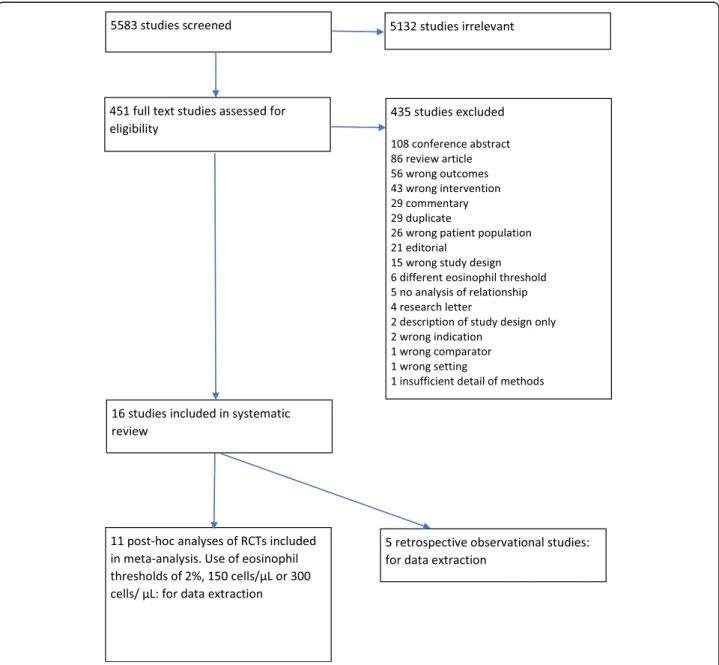
Data derived from published post-hoc analyses of rando-mised controlled trials (RCTs) and observational studies in primary or secondary care that reported the association, presented as a hazard ratio with confidence intervals, be-tween blood eosinophil count, and the frequency of moder-ate or severe exacerbations in patients with COPD were included. Exacerbations were defined as COPD symptoms for which antibiotics or oral steroids were prescribed (mod-erate) or COPD symptoms for which hospital admission was recommended (severe). Included inhaled corticoste-roids were beclometasone, budesonide, fluticasone (propi-onate and furoate), mometasone, ciclesonide, triamcinolone and flunisolide. Three blood eosinophil thresholds, 2%, 150 cells/μL and 300 cells/μL, were examined. Studies which exclusively examined other blood eosinophil thresholds were excluded, as were conference abstracts, reviews, re-ports and correspondence articles (Fig.1).
Data extraction
Data were extracted from the relevant articles and in-cluded title and authors, year of publication, treat-ment regimens in each study arm, annual rate of moderate and severe exacerbations and blood eosino-phil threshold used.
Quality assessment
The Cochrane Risk of Bias Tool [22] was used to as-sess the RCTs. The Newcastle-Ottawa scale [23] was used to assess the non-randomized observational studies. Two reviewers independently applied the risk of bias assessments to each included study. Any dis-agreement was resolved through discussion. We used the GRADE approach (grading of recommendations assessment, development, and evaluation) to assess the quality of the evidence for each outcome across the included studies [24].
Meta-analysis
The meta-analysis analysed the association between ICS prescription and risk of exacerbation for each of
three blood eosinophil thresholds: 2%, 150 cells/μL, 300 cells/μL. Our initial meta-analysis included stud-ies of ICS vs. any non-ICS regimen. The comparison group may have included the effect of additional bronchodilator. Our further analysis examined the in-dependent effect of ICS. It included studies of ICS vs. placebo or ICS + LABA vs. LABA or ICS + LABA+-LAMA vs. LABA+LABA+-LAMA.
We tested for between-study heterogeneity, where the true underlying effect varies between trials, using Cochran’s Q. This was quantified using the I2statistic, giving the proportion of overall variation accounted for by between-study heterogeneity. We also assessed clinical and methodological heterogeneity by discus-sion between authors. Where we judged there was im-portant heterogeneity, we used a random effects analysis. Otherwise, we used a fixed-effects model that assumed each study measured the same underlying effect. The protocol for this review was registered with PROSPERO, with registration ID 2019 CRD42019134833.
Results
Five thousand five hundred eighty-three studies were identified and screened (Fig. 1PRISMA flow chart). The
full texts of 451 studies were assessed for eligibility. 16 studies fulfilled the inclusion criteria. Eleven of these stud-ies [20,25–34], comprising 25,881 patients, were post-hoc analyses of data from 13 RCTs (Table1). The remaining 5 studies [35–39], comprising 109,704 patients, were retro-spective observational studies (Table 2). Relevant data published from two post-hoc analyses of four RCTs were not presented in a form that could be incorporated in this review [5,40]. The data were sought from the companies holding the data but had not been received in time for in-clusion in this review. Search strategies are included see Additional file1: Tables S3, S4, S5, S6, S7 and S8.
The post-hoc analyses of RCTs were divided into those which had balanced treatment arms except for ICS, and those where one arm received an additional treatment (typically a LAMA). The independent effect of the ICS on risk of moderate or severe exacerbation was isolated in the RCTs which had balanced treat-ment arms [20, 25–28, 31–34] but not in those which did not [26, 29, 30]. One study [26] reported the re-sults of three different RCTs: INSPIRE, TRISTAN and SCO30002. The INSPIRE study did not isolate the independent effect of the ICS whereas the TRISTAN and SCO30002 studies did. The TRISTAN study
comprised five different drug comparisons. Two of these, Fluticasone propionate (FP) + Salmeterol (SAL) vs. SAL and FP vs. placebo, isolated the independent effect of the ICS. The patient groups in these two drug comparisons were mutually exclusive. These have been labelled here as TRISTAN I (FP/SAL vs. SAL) and TRISTAN II (FP vs. placebo) and treated as two separate investigations in the meta-analysis.
Association between impact of ICS and blood eosinophil threshold
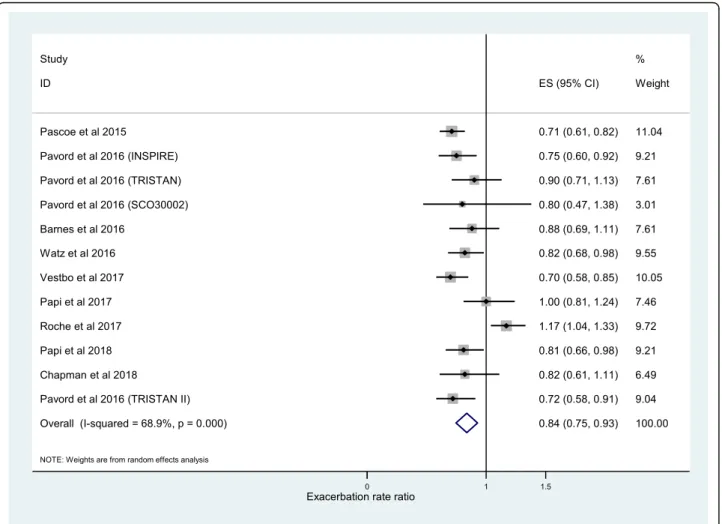
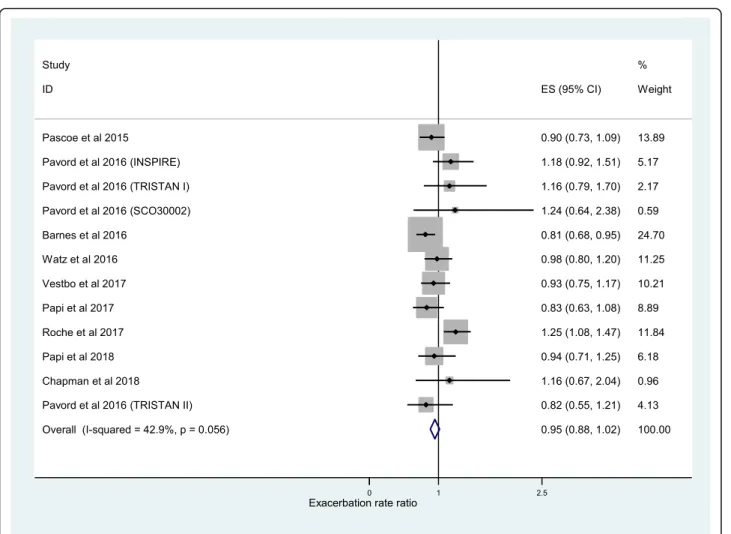
The results of 11 studies taken from the post-hoc analyses of 13 RCTs were pooled for meta-analysis of the association between frequency of moderate or severe exacerbations and ICS use. We found that ICS treatment reduced exacerbations compared with no ICS for pa-tients with ≥2% blood eosinophils (RR, 0.84; 95% CI, 0.75–0.93) (Fig.2). For patients with < 2% blood eosino-phils we found no significant difference (RR, 0.95; 95% CI, 0.88–1.02) (Fig. 3). A significant difference was also observed at ≥150 cells/μL blood eosinophil threshold (RR, 0.65; 95% CI, 0.52–0.79) (Fig.4) and at < 150 cells/
μL blood eosinophil threshold (RR, 0.87; 95% CI, 0.79– 0.95) (Fig. 5) but not at≥300 cells/μL blood eosinophil
threshold (RR, 0.76; 95% CI, 0.43–1.09) (Additional file1: Figure S1).
The further analysis, among the studies that described the independent association between exacerbation fre-quency and ICS, demonstrated a significant difference between ICS treatment and non-ICS treatment at < 2% blood eosinophil threshold (RR, 0.89; 95% CI, 0.81–0.97) (Fig. 6) and < 150 cells/μL blood eosinophil threshold (RR, 0.87; 95% CI, 0.79–0.95) (Fig. 5). The independent effect of ICS on reduction in frequency of moderate or severe exacerbations was 20% at ≥2% blood eosino-phil threshold (RR, 0.80; 95% CI, 0.74–0.85) (Fig. 7), 35% at ≥150 cells/μL blood eosinophil threshold (RR, 0.65; 95% CI, 0.52–0.79) (Fig. 4), and 39% at ≥300 cells/μL blood eosinophil threshold (RR, 0.61; 95% CI, 0.44–0.78) (Fig. 8). No difference was seen at < 300 cells/μL blood eosinophil threshold (RR, 0.98; 95% CI, 0.82–1.14) (Fig. 9).
At the 2% blood eosinophil threshold we have pre-sented the results of the pooled analysis of all studies and the further analysis of those studies which show the independent effect of ICS. We have presented only the results of the further analysis at the blood eosinophil thresholds of 150 cells/μL and 300 cells/μL. The results
of the meta-analysis of all studies at≥300 cells/μL blood eosinophil threshold, including those that did not isolate the independent effect of ICS, are given in the Add-itional file 1: Figure S1. The positive association and strength of the effect size was greatest when the inde-pendent effect of ICS was examined at the blood eosino-phil thresholds of 150 cells/μL and 300 cells/μL. We used a random-effects model, to calculate the pooled es-timate accounting for heterogeneity, where we judged there was important heterogeneity. In each of these cases p< 0.1 or I2> 50%. Funnel plots from each ana-lysis are presented in Additional file 1: Figures S2, S3, S4, S5, S6, S7, S8, S9 and S10.
Observational studies
Suissa et al. reported that patients with blood eosino-phils of ≥4% who were initiated on LABA+ICS had 21% fewer moderate or severe exacerbations noted in the record compared to those patients initiated on a LAMA (RR, 0.79; 95% CI, 0.70–0.88) [36]. In the same study, in patients with blood eosinophils of
≥300/μL the risk of an exacerbation noted in the
record was 24% (RR, 0.76; 95% CI, 0.67–0.85) lower. No association was found between blood eosinophil count and impact of ICS on exacerbation frequency in any of the other observational studies [35, 37–39].
Quality assessment
presented in Additional file 1: Table S3. The stud-ies were of a uniform high quality.
Discussion
Our meta-analysis has identified a positive association between use of ICS and risk of moderate or severe COPD exacerbations when stratified by blood eosinophil threshold. When all studies were examined the positive association was present at ≥2% and≥150 cells/μL eo-sinophil thresholds, but not at the≥300 cells/μL thresh-old. When the independent effect of ICS was isolated the association was positive at each of the three thresh-olds and the degree of the association/effect size had in-creased. The evidence for the association at each of these thresholds was low or very low.
A lack of association between use of ICS and risk of moderate or severe COPD exacerbations was found in 4 of the 5 observational studies [35, 37–39]. Reasons for the difference in results between the two types of studies may include differences in patient demographics, or dif-ferences between bronchodilator use by participants of the RCTs compared to those of the observational
studies. The results of the observational studies may be less reliable than those of the RCTs due to differences in quality between the two types of studies. It has been es-timated that those patients with COPD selected for clin-ical trials are representative of about 7% of the entire COPD population [41].
50% [35, 39]. The severity of airflow limitation of pa-tients in the RCTs is likely to have been greater and their baseline exacerbation prevalence higher than those in the observational studies. The effect of ICS use is likely to be more apparent within the RCTs in compari-son to the observational studies.
One potential explanation of the disparity in results could be a higher rate of undiagnosed asthma among the participants of the RCTs compared with the observa-tional studies. Patients with a current diagnosis of asthma were excluded in all but one of the RCTs [20, 26–34]. Three RCTs recruited patients who may have had a past diagnosis of asthma [20,28,34]. Eleven RCTs undertook reversibility testing [20, 25,26, 29–34] and 4 of these RCTs excluded patients with a reversibility of > 10% [25, 26]. The remaining 7 RCTs [20, 29–34] in-cluded patients with reversibility, an indicator of asthma, their prevalence ranging from 10 to 25%. In 4 of 5 obser-vational studies participants with an asthma diagnosis were excluded [35,37–39]. The one observational study that did not exclude patients with asthma found a posi-tive association at blood eosinophil thresholds≥4% and≥ 300 cells/μL between use of LABA+ICS and a decrease in exacerbation frequency, compared to use of LAMA [36]. It is probable that both the RCTs and observational
studies included a proportion of patients with asthma/ reversibility, in whom the association between ICS use and reduction in exacerbation risk would be strongest. A baseline blood eosinophil count of ≥500 cells/μL has been identified in 30% of patients with asthma [42] but in only 3.3% of patients with COPD [17]. The FLAME study, one of the few RCTs which failed to find an asso-ciation between eosinophil count and impact of ICS in COPD patients, excluded those patients with blood eo-sinophils≥600 cells/μL [30].
effectiveness of ICS using the eosinophil threshold of 2% (or 150 cells/μL) in a real-world setting cannot be as-sumed from efficacy trials. An effectiveness trial, which excludes patients with asthma, may help in answering this question. A limitation of the observational studies is the lack of consistency in the reporting of concurrent bronchodilator use among participants. However, it is exactly these factors together with differences in clinical and demographic characteristics that make effectiveness trials so important in testing the applicability of efficacy trials which have such tight inclusion and exclusion cri-teria as drug trials in COPD.
This review has examined the predictive value of blood eosinophils on the impact of ICS when patients are stratified by both relative and absolute blood eo-sinophil counts. The relative blood eoeo-sinophil count will be altered by the numbers of other cells within the white blood cell population. This suggests that the relative blood eosinophil count is inherently less reliable than the absolute blood eosinophil count. Despite this we have identified a positive association at raised thresholds of both the relative and absolute blood eosinophil counts.
GOLD guidelines recommend escalation from dual LABA+LAMA therapy to LABA+ICS in patients with
blood eosinophil counts ≥300 cells/μL or in those with blood eosinophils of ≥100 cells/μL and a history of ≥2 exacerbations or 1 severe exacerbation [8]. The meta-analysis by Oshagbemi et al. identified a positive associ-ation between ICS use and reduction in exacerbassoci-ation risk at blood eosinophil thresholds of ≥100 to ≥340 cells/μL [7]. They did not stratify the results into nar-rower eosinophil ranges, nor did they differentiate by past exacerbation history. The effect, or lack of effect of ICS on exacerbation risk at low eosinophil thresholds may have been over-ridden by the effect seen at higher eosinophil thresholds. Their findings confirm the GOLD recommendation for use of ICS at eosinophil threshold ≥300 cells/μL but do not directly justify use at eosinophil threshold≥100 cells/μL accompanied by a history of≥2 exacerbations or 1 severe exacerbation. Bafadhel et al. described a continuous relationship between blood eo-sinophil count and the impact of budesonide on reduc-tion in exacerbareduc-tion risk [5]. At eosinophil counts of < 200 cells/μL the confidence intervals were broad and the upper limit close to one.
exacerbations. The eosinophil count may be elevated for other reasons including allergies, inflammatory condi-tions and malignancies. In addition, a single blood eo-sinophil count may be an unsatisfactory basis upon which to prescribe ICS.
Conclusion
This meta-analysis has demonstrated a positive associ-ation and a strong effect size, across three blood eosino-phil thresholds – 2%, 150 cells/μL and 300 cells/μL, between ICS, independently assessed, and the risk of an exacerbation of COPD. The strength of the association was less when the contributory effects of the bronchodi-lators were not excluded. The strength of the association increased as the blood eosinophil threshold increased. The quality of the evidence for these associations was low or very low. Data from the post-hoc RCTs may not justify extrapolation to the general COPD population. The lack of association found in the observational stud-ies suggests that this relationship may not be present within the“real world”COPD population. A prospective effectiveness study which differentiates patients accord-ing to past exacerbation history and reversibility of lung function and stratified by ranges of eosinophil counts ra-ther than eosinophil thresholds should be conducted.
Supplementary information
Supplementary informationaccompanies this paper athttps://doi.org/10. 1186/s12931-019-1268-7.
Additional file 1: Figure S1.Forest plot of risk ratio exacerbations COPD patients receiving ICS vs. non-ICS treatment≥300cells/μL eosinophils (all association studies).Figures S2 to S10.Funnel plots of all studies for each of the outcomes at the three eosinophil thresholds.
Table S1.Risk of bias summary of post-hoc RCTs.Table S2.GRADE assessment of outcomes from post-hoc RCTs.Table S3. Newcastle-Ottawa Quality Assessment Scale for Observational Cohort Studies.
Tables S4 to S8.Database search results.
Abbreviations
COPD:Chronic obstructive pulmonary disease; FP: Fluticasone propionate; GOLD: Global Initiative for Chronic Obstructive Lung Disease;
GRADE: Grading of recommendations assessment, development, and evaluation; ICS: Inhaled corticosteroids; LABA: Long-acting beta-agonist; LAMA: Long-acting muscarinic antagonist; MeSH: Medical Subject Heading; PRISMA: Preferred Reporting Items for Systematic Reviews and Meta-Analysis; RCT: Randomised controlled trial; SAL: Salmeterol
Acknowledgements
Not applicable.
Authors’contributions
THH, PW, CC, DA, IJM devised the study. LM and VP assisted in devising and reviewing the search strategies. THH, PW, VR undertook the searching and review of papers. PS and DA provided statistical assistance and advice. All authors contributed to the review and approval of the final manuscript.
Funding
THH is supported by a National Institute for Health Research (NIHR) Doctoral Research Fellowship. VP is supported by a National Institute for Health Research (NIHR) Clinical Lectureship. LM is supported by a National Institute
for Health Research (NIHR) In-Practice Fellowship. IJM is supported by the UK Medical Research Council (MRC) through its Skills Development Fellowship program, grant MR/N015185/1.
Availability of data and materials
All data generated or analysed during this study are included in this published article [and its supplementary information files].
Ethics approval and consent to participate
Not applicable.
Consent for publication
Not applicable.
Competing interests
The authors declare that they have no competing interests.
Author details
1Department of Public Health and Primary Care, School of Population Health
& Environmental Sciences, King’s College London, 3rd floor Addison House, Guys Campus, London SE1 1UL, UK.2Department of Asthma Allergy &
Respiratory Science, King’s College London, London, UK.
Received: 28 September 2019 Accepted: 23 December 2019
References
1. Yang IA, Clarke MS, Sim EHA, Fong KM. Inhaled corticosteroids for stable chronic obstructive pulmonary disease. Cochrane Database Syst Rev Online. 2012;7:CD002991.
2. Bafadhel M, McKenna S, Terry S, Mistry V, Reid C, Haldar P, et al. Acute exacerbations of chronic obstructive pulmonary disease. Am J Respir Crit Care Med. 2011;184(6):662–71.
3. Siva R, Green RH, Brightling CE, Shelley M, Hargadon B, McKenna S, et al. Eosinophilic airway inflammation and exacerbations of COPD: a randomised controlled trial. Eur Respir J. 2007;29(5):906–13.
4. Pavord ID, Bafadhel M. Exhaled nitric oxide and blood eosinophilia: independent markers of preventable risk. J Allergy Clin Immunol. 2013; 132(4):828–9.
5. Bafadhel M, Peterson S, De Blas MA, Calverley PM, Rennard SI, Richter K, et al. Predictors of exacerbation risk and response to budesonide in patients with chronic obstructive pulmonary disease: a post-hoc analysis of three randomised trials. Lancet Respir Med. 2018;6(2):117–26.
6. Cazzola M, Rogliani P, Calzetta L, Matera MG. Triple therapy versus single and dual long-acting bronchodilator therapy in COPD: a systematic review and meta-analysis. Eur Respir J. 2018;52(6):1801586.
7. Oshagbemi OA, Odiba JO, Daniel A, Yunusa I. Absolute blood eosinophil counts to guide inhaled corticosteroids therapy among patients with COPD: systematic review and meta-analysis. Curr Drug Targets. 2019;20(16):1679–0. 8. Global Initiative for Chronic Obstructive Pulmonary Disease. Global strategy
for the diagnosis, management, and prevention of chronic obstructive pulmonary disease: Global Initiative for Chronic Obstructive Pulmonary Disease, Inc; 2019.www.goldcopd.com
9. Schleich F, Corhay J-L, Louis R. Blood eosinophil count to predict bronchial eosinophilic inflammation in COPD. Eur Respir J. 2016;47(5):1562–4. 10. Bafadhel M, Pavord ID, Russell REK. Eosinophils in COPD: just another
biomarker? Lancet Respir Med. 2017;5(9):747–59.
11. Singh D, Kolsum U, Brightling CE, Locantore N, Agusti A, Tal-Singer R, et al. Eosinophilic inflammation in COPD: prevalence and clinical characteristics. Eur Respir J. 2014;44(6):1697–700.
12. Cheng S-L. Blood eosinophils and inhaled corticosteroids in patients with COPD: systematic review and meta-analysis. Int J Chron Obstruct Pulmon Dis. 2018;13:2775–84.
13. White P, Thornton H, Pinnock H, Georgopoulou S, Booth HP. Overtreatment of COPD with inhaled corticosteroids - implications for safety and costs: cross-sectional observational study. PLoS One. 2013;8(10):e75221. 14. Harries TH, Seed PT, Jones S, Schofield P, White P. Chronic obstructive
15. Harries TH, Thornton H, Crichton S, Schofield P, Gilkes A, White PT. Hospital readmissions for COPD: a retrospective longitudinal study. NPJ Prim Care Respir Med. 2017;27(1):31.
16. Schumann DM, Tamm M, Kostikas K, Stolz D. Stability of the Blood Eosinophilic Phenotype in Stable and Exacerbated COPD. Chest. 2019;156(3): 456–65.
17. Turato G, Semenzato U, Bazzan E, Biondini D, Tinè M, Torrecilla N, et al. Blood Eosinophilia Neither Reflects Tissue Eosinophils nor Worsens Clinical Outcomes in Chronic Obstructive Pulmonary Disease. Am J Respir Crit Care Med. 2018;197(9):1216–9.
18. Hospers JJ, Schouten JP, Weiss ST, Rijcken B, Postma DS. Asthma attacks with eosinophilia predict mortality from chronic obstructive pulmonary disease in a general population sample. Am J Respir Crit Care Med. 1999; 160(6):1869–74.
19. Bafadhel M, Davies L, Calverley PMA, Aaron SD, Brightling CE, Pavord ID. Blood eosinophil guided prednisolone therapy for exacerbations of COPD: a further analysis. Eur Respir J. 2014;44(3):789–91.
20. Pascoe S, Locantore N, Dransfield MT, Barnes NC, Pavord ID. Blood eosinophil counts, exacerbations, and response to the addition of inhaled fluticasone furoate to vilanterol in patients with chronic obstructive pulmonary disease: a secondary analysis of data from two parallel randomised controlled trials. Lancet Respir Med. 2015;3(6):435–42. 21. Moher D, Liberati A, Tetzlaff J, Altman DG, PRISMA group. Preferred
reporting items for systematic reviews and meta-analyses: the PRISMA statement. BMJ. 2009;339:b2535.
22. Higgins JPT, Altman DG, Gøtzsche PC, Jüni P, Moher D, Oxman AD, et al. The Cochrane Collaboration’s tool for assessing risk of bias in randomised trials. BMJ. 2011;343:d5928.
23. Wells G, Shea B, O’Connell D, Peterson J, Welch V, Losos M, et al. The Newcastle-Ottawa Scale (NOS) for assessing the quality if nonrandomized studies in meta-analyses. [Internet]. Available from:http://www.ohri.ca/ programs/clinical_epidemiology/oxford.htm
24. Guyatt G, Oxman AD, Akl EA, Kunz R, Vist G, Brozek J, et al. GRADE guidelines: 1. Introduction-GRADE evidence profiles and summary of findings tables. J Clin Epidemiol. 2011;64(4):383–94.
25. Barnes NC, Sharma R, Lettis S, Calverley PMA. Blood eosinophils as a marker of response to inhaled corticosteroids in COPD. Eur Respir J. 2016;47(5): 1374–82.
26. Pavord ID, Lettis S, Locantore N, Pascoe S, Jones PW, Wedzicha JA, et al. Blood eosinophils and inhaled corticosteroid/long-actingβ-2 agonist efficacy in COPD. Thorax. 2016;71(2):118–25.
27. Watz H, Tetzlaff K, Wouters EFM, Kirsten A, Magnussen H, Rodriguez-Roisin R, et al. Blood eosinophil count and exacerbations in severe chronic obstructive pulmonary disease after withdrawal of inhaled corticosteroids: a post-hoc analysis of the WISDOM trial. Lancet Respir Med. 2016;4(5):390–8. 28. Papi A, Dokic D, Tzimas W, Mészáros I, Olech-Cudzik A, Koroknai Z, et al.
Fluticasone propionate/formoterol for COPD management: a randomized controlled trial. Int J Chron Obstruct Pulmon Dis. 2017;12:1961–71. 29. Vestbo J, Papi A, Corradi M, Blazhko V, Montagna I, Francisco C, et al. Single
inhaler extrafine triple therapy versus long-acting muscarinic antagonist therapy for chronic obstructive pulmonary disease (TRINITY): a double-blind, parallel group, randomised controlled trial. Lancet. 2017;389(10082):1919–29. 30. Roche N, Chapman KR, Vogelmeier CF, Herth FJF, Thach C, Fogel R, et al.
Blood Eosinophils and Response to Maintenance Chronic Obstructive Pulmonary Disease Treatment. Data from the FLAME Trial. Am J Respir Crit Care Med. 2017;195(9):1189–97.
31. Chapman KR, Hurst JR, Frent S-M, Larbig M, Fogel R, Guerin T, et al. Long-term triple therapy De-escalation to Indacaterol/Glycopyrronium in patients with chronic obstructive pulmonary disease (SUNSET): a randomized, double-blind, triple-dummy clinical trial. Am J Respir Crit Care Med. 2018; 198(3):329–39.
32. Papi A, Vestbo J, Fabbri L, Corradi M, Prunier H, Cohuet G, et al. Extrafine inhaled triple therapy versus dual bronchodilator therapy in chronic obstructive pulmonary disease (TRIBUTE): a double-blind, parallel group, randomised controlled trial. Lancet. 2018;391(10125):1076–84. 33. Ferguson GT, Rabe KF, Martinez FJ, Fabbri LM, Wang C, Ichinose M, et al.
Triple therapy with budesonide/glycopyrrolate/formoterol fumarate with co-suspension delivery technology versus dual therapies in chronic obstructive pulmonary disease (KRONOS): a double-blind, parallel-group, multicentre, phase 3 randomised controlled trial. Lancet Respir Med. 2018;6(10):747–58.
34. Lipson DA, Barnhart F, Brealey N, Brooks J, Criner GJ, Day NC, et al. Once-daily single-inhaler triple versus dual therapy in patients with COPD. N Engl J Med. 2018;378(18):1671–80.
35. Song JH, Lee C-H, Kim JW, Lee W-Y, Jung JY, Park JH, et al. Clinical implications of blood eosinophil count in patients with non-asthma-COPD overlap syndrome COPD. Int J Chron Obstruct Pulmon Dis. 2017;12:2455–64. 36. Suissa S, Dell’Aniello S, Ernst P. Comparative effectiveness of LABA-ICS
versus LAMA as initial treatment in COPD targeted by blood eosinophils: a population-based cohort study. Lancet Respir Med. 2018;6(11):855–62. 37. Oshagbemi OA, Franssen FME, Braeken DCW, Henskens Y, Wouters EFM.
Maitland-van der zee A-H, et al. blood eosinophilia, use of inhaled corticosteroids, and risk of COPD exacerbations and mortality. Pharmacoepidemiol Drug Saf. 2018;27(11):1191–9.
38. Oshagbemi OA, Franssen FME, van Kraaij S, Braeken DCW, Wouters EFM, Maitland-van der Zee AH, et al. Blood Eosinophil Counts, Withdrawal of Inhaled Corticosteroids and Risk of COPD Exacerbations and Mortality in the Clinical Practice Research Datalink (CPRD). COPD. 2019;16(2):152–9. 39. Suissa S, Dell’Aniello S, Ernst P. Comparative effectiveness and safety of
LABA-LAMA vs LABA-ICS treatment of COPD in real-world clinical practice. Chest. 2019;155(6):1158–65.
40. Siddiqui SH, Guasconi A, Vestbo J, Jones P, Agusti A, Paggiaro P, et al. Blood Eosinophils: a biomarker of response to Extrafine Beclomethasone/ Formoterol in chronic obstructive pulmonary disease. Am J Respir Crit Care Med. 2015;192(4):523–5.
41. Herland K, Akselsen J-P, Skjønsberg OH, Bjermer L. How representative are clinical study patients with asthma or COPD for a larger‘real life’population of patients with obstructive lung disease? Respir Med. 2005;99(1):11–9. 42. Ortega HG, Yancey SW, Mayer B, Gunsoy NB, Keene ON, Bleecker ER, et al.
Severe eosinophilic asthma treated with mepolizumab stratified by baseline eosinophil thresholds: a secondary analysis of the DREAM and MENSA studies. Lancet Respir Med. 2016;4(7):549–56.
Publisher’s Note