Abstract:
According to the Centers for Disease Control, excessive alcohol use cost the United States nearly 249 billion dollars in 2010 and binge drinking accounted for 77% of these costs. Repeated episodes of binge drinking may increase the risk of alcohol use disorder and thus, it is important to understand the neurobiological changes that occur with excessive alcohol drinking. Individuals struggling with alcohol substance-use disorder have an upregulation of the
neuropeptide, dynorphin, in the hippocampus. Dynorphin, the endogenous ligand for the Kappa Opioid Receptor, is known to produce negative affective states in humans. Due to the likely presence of dynorphin upregulation following binge drinking, alcohol drinking experiments were conducted via the drinking in the dark (DID) paradigm. Dynorphin knockout was performed in a model of binge-like drinking to gain insight on the role of dynorphin in mediating alcohol consumption behaviors. Since a history of alcohol drinking can increase anxiety, and knockout animals consumed less ethanol than control animals, an elevated plus maze (EPM) was used to examine whether the knockout alters anxiety-levels in ethanol treatment and naïve
Introduction:
The CDC estimates that one in six adults engages in binge drinking (Centers for Disease Control and Prevention, 2015). Binge drinking has serious and oftentimes fatal repercussions such as car accidents, cancers, and the risk of alcohol dependence. Episodes of repeat binge drinking may lead to Alcohol Use Disorder (AUD) which is characterized by loss of control over alcohol intake and affective dysregulation that propels individuals to continue using. Currently, only three drugs have been approved by the FDA for the treatment of alcohol use disorders and alcohol dependence (Winslow et al., 2016). These medications are not for individuals who are currently using, instead they are prescribed to individuals in recovery who are working to
maintain sobriety. One such medication is naltrexone, an opioid receptor antagonist, which helps maintain abstinence from drinking (Winslow et al., 2016). Repeated episodes of binge drinking may increase the risk of alcohol use disorder and thus, it is important to understand the
neurobiological changes that occur with excessive alcohol drinking that may predispose individuals for future alcohol abuse.
fear and anxiety induction in the presence of a threat. Specifically, the central amygdala (CeA) plays a role in the negative affective states experienced by an individual undergoing withdrawal symptoms (Roberto et al., 2012). The CeA transduces sensory stimuli (including alcohol and other substance stimuli) into physiological responses. Neuropeptides in the CeA play a role in modulating the emotional dysregulation of withdrawal symptoms (Roberto et al., 2012).
Ethanol has been found to stimulate Dynorphin (Dyn) and the Kappa Opioid Receptor (KOR) system (Kissler et al., 2013). Dynorphin is the endogenous ligand for KOR and is known to produce dysphoria and negative affective states in humans (Kissler et al., 2013). Though Dyn and KORs are found throughout the brain, there is a large population of KORs in the central amygdala (Kang-Park et al., 2013). Dynorphin upregulation may be present in binge drinking which can lead to further alcohol seeking and consumption behaviors. Studies with knockout of KOR in mice have demonstrated that KOR activation increases ethanol consumption (Van’t Veer et al., 2013) Thus, positing the link between ethanol consumption and the upregulation of
dynorphin expression.
Dynorphin upregulation may be present in binge drinking which can lead to a
predicted. In addition, these experiments will examine if a decrease in consumption levels are motivated by lower anxiety levels in the dynorphin knockout mice via an ethanol treatment and a naive (non-drinking) treatment.
The drinking in the dark (DID) paradigm is a model for binge drinking (ethanol
consumption) patterns in mice (Rhodes et al., 2005). Mice are given limited (2-4 hour) access to ethanol and their consumption in this paradigm typically leads to intoxicating blood ethanol concentrations greater than 80 mg/dL (Rhodes et al., 2005). Conducting experiments using the DID paradigm will help investigate the relationship between binge-drinking and dynorphin signaling. The dynorphin knockout animals had lower ethanol consumption levels and did not demonstrate significant changes in anxiety-like behavior in the elevated plus maze.
Materials and Methods: Model System & Subjects
Transgenic mice were used as subjects by inserting loxP sites around the PDYN gene. This line has not been published yet, but was generated with similar methods to the Flox/KOR line (Chefer, Vladimir I., et al., 2013). Flox/PDYN line has not been published, but was validated prior to use in these experiments (Daniel Bloodgood, unpublished results). The cre/loxP system facilitated dynorphin knockout in said mice lines. Male mice of 8 to 10 weeks of age were selected as subjects as this was the sex/age of mice used in previous literature.
The cre/loxP system was used to generate the transgenic mice lines and serves the purpose of controlling gene expression both spatially and temporally and in this case, for conducting the knockout of the dynorphin (PDYN gene). The cre-recombinase is an enzyme that cuts out genetic sequences that are specifically located between two loxP sites. LoxP has the ability to catalyze the deletion, inversion, or translocation of said gene sequence. If both loxP sites are flanking the gene sequence in the same direction, a gene sequence deletion can be achieved. Male mice were used with loxP sites that flanked the PDYN gene in the same direction, a graduate student, Daniel Bloodgood, injected an adeno associated virus (AAV) carrying Cre Recombinase into the mice. The virus construct for the control was: AAV5-CamKII-eGFP and the construct for the knockout was: AAV5-CamKII-Cre-GFP. Though the line is unpublished, it was generated via similar techniques to the Flox KOR line (Chefer, Vladimir I., et al., 2013).
Stereotaxic Surgeries
Viral constructs of the cre/loxP system were bilaterally injected into male mice by Dan Bloodgood, in order to facilitate the dynorphin knockout. Isoflurane was used as an anesthetic. The region of interest was targeted using a stereotaxic frame with coordinates of medial/lateral +/- 2.90, anterior/posterior -1.20, dorsal/ventral -4.70. There was 400 nl of the vector injected bilaterally into the central amygdala region using a 1 microliter Hamilton syringe (Crowley et al., 2016).
The drinking experiments were conducted via the drinking in the dark (DID) paradigm over the course of four weeks. One cycle of the DID paradigm was conducted over four days as described previously (Rhodes et al. 2005). Lights in the animal facility go off at 7 am and lights turn on at 7 pm. Approximately three hours into the dark cycle, water bottles were replaced with bottles containing a 20% ethanol solution. Mice were single housed and had access to the ethanol solution for 2 hours after which the bottles were replaced with water. These conditions were repeated on days 1 to 3. On day 4, the mice were given extended access to the ethanol solutions for four hours instead of the usual two hours.
Elevated Plus Maze
An elevated plus maze (EPM) is used as a behavioral assay to examine the anxiety-like behaviors of the experimental manipulations. An EPM was created with the following regions: the two open arms (75 x 7 cm), two closed arms (75 x 7 x 25 cm), with a central area (7 x 7 x 25 cm) and was raised to a 75-cm height. Arms of the same type, open or closed, were arranged in the opposite direction of each other to form a plus-shape configuration (Crowley et al., 2016). The mice were initially placed in the central area of the EPM and behavior was measured as entries and time spent in each arm. Rodents have a natural proclivity towards dark spaces (closed arm) and an inherent motivation to explore new regions (open arm), presenting a
ethanol. Video movements of the mice were analyzed using Ethovision 9.0 (Noldus Information Technology).
Tissue Prep & Microscopy
After extraction, slicing of the cohort brains was conducted on a vibratome (VT 1000S Leica, Jena, Germany) at 45 mm thickness. Slices along the anterior and posterior range of the central amygdala were collected. Completion of the slicing protocol was followed by mounting said slides with Vectashield mounting medium containing DAPI (Vector Labs, Burlingame, CA). The slices were then examined under a fluorescent microscope (BX43 Olympus, Japan) with 10X (NA=0.3) or 20X (NA=0.5) objectives to observe the concentration of GFP which indicated the degree of dynorphin knockout.
Counting Methods
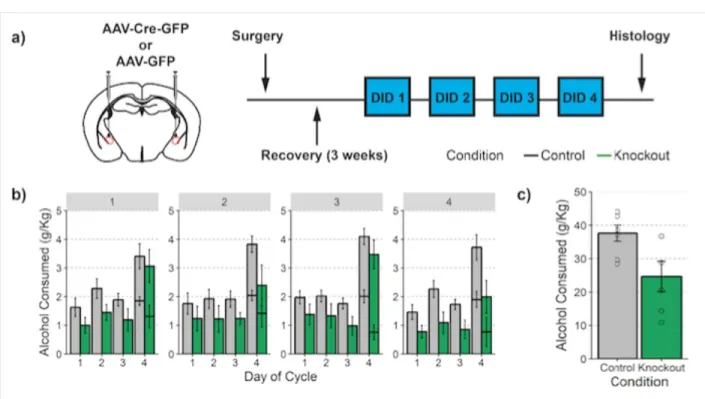
Figure 1. Dynorphin Knockout Decreases Ethanol Consumption
Source: Daniel Bloodgood, Kash Lab
(A) The injection site of the adeno-associated virus carrying Cre Recombinase into the region of interest, the central amygdala. The timeline of experiment conduction highlights the time
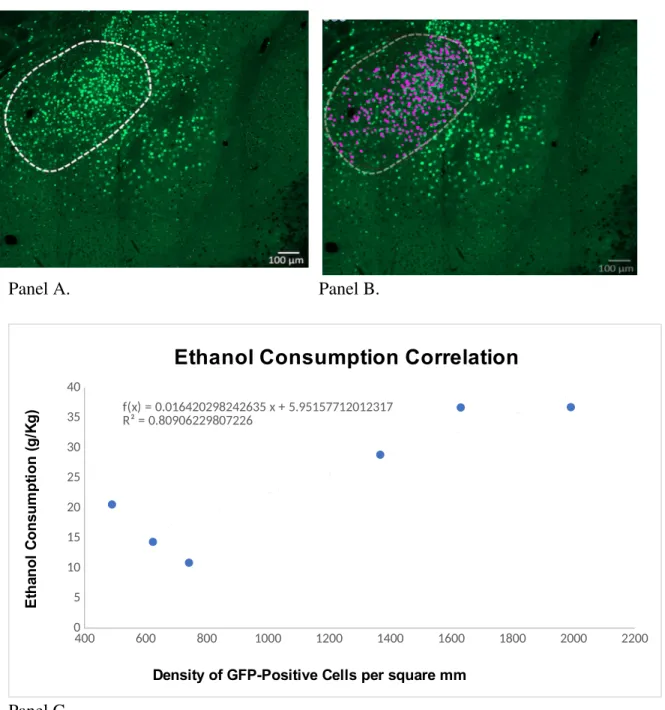
Figure 2. Ethanol Consumption Increases with Dynorphin Knockout as Defined by
GFP-Positive Cell Density per square mm
Panel A. Panel B.
400 600 800 1000 1200 1400 1600 1800 2000 2200
0 5 10 15 20 25 30 35 40
f(x) = 0.016420298242635 x + 5.95157712012317 R² = 0.80906229807226
Ethanol Consumption Correlation
Density of GFP-Positive Cells per square mm
E th an o l C o n su m p ti o n ( g /K g ) Panel C.
GFP-positive cell detection. (C) Ethanol consumption increases with the density of GFP-positive cells per square mm (R2 = 0.809, p = 0.015).
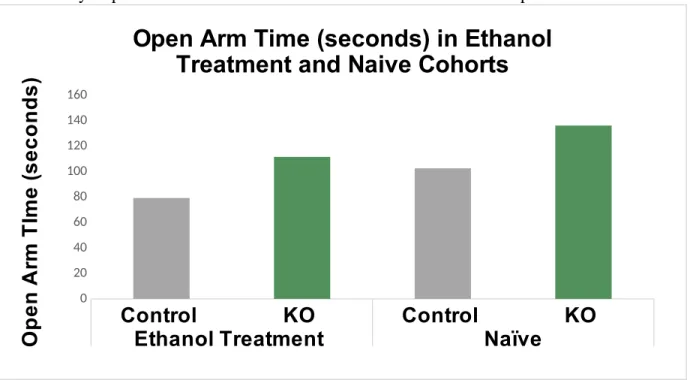
Figure 3. The Effects of Dynorphin Knockout on Anxiety-like Behavior and Arousal in the Elevated Plus Maze
Panel A: Dynorphin Knockout and Ethanol Treatment Does Not Alter Open Arm Time
Control
KO
Control
KO
Ethanol Treatment
Naïve
0 20 40 60 80 100 120 140 160
Open Arm Time (seconds) in Ethanol
Treatment and Naive Cohorts
O
p
e
n
A
rm
T
Im
e
(
s
e
c
o
n
d
s
)
Control
KO
Control
KO
Ethanol Treatment
Naïve
0 200 400 600 800 1000 1200 1400 1600
Distance Traveled (cm) in Ethanol Treatment &
Naive Cohorts
D
is
ta
n
c
e
T
ra
v
e
le
d
(
c
m
)
(A) Knockout mice had no significant increase in time spent in the open arm of the EPM compared to control mice in the naïve and ethanol treatment conditions. (B) Ethanol treatment mice had increased distance traveled. The gray bars represent the control cohorts and the dark green bars represent the dynorphin knockout cohorts in the elevated plus maze. The error bars represent the standard error of the mean (SEM); n = 6 for the naïve control cohort, n = 6 for the naïve knockout cohort, n = 7 for the ethanol treatment knockout cohort, and n = 7 for the ethanol treatment control cohort.
Results:
Decreased Ethanol Consumption by the Knockout Cohort during the DID Paradigm
Previously it has been shown that ethanol has been found to stimulate the Dyn and KOR system (Kissler et al. 2013). However, we do not know whether dynorphin knockout will lead to decreased ethanol consumption levels. We predicted that the variable of interest, ethanol
knockout mice (F (1,11) = 5.27, p = 0.042) over each of the four days of the cycle and the complete four weeks of the DID model (Figure 1, Panel B). The cumulative consumption per individual mouse is lower for the knockout mice compared to the control mice (Figure 1, Panel C). Together, these results demonstrate that mice with the dynorphin knockout manipulation had consistently lower ethanol consumption levels.
Ethanol Consumption Increases with Dynorphin Knockout as Defined by GFP-Positive Cell Density
Dynorphin knockout reduced ethanol consumption (Figure 1, Panel C), but there may be variability from mouse to mouse in terms of virus expression and therefore in the effectiveness of the Dyn knockout as defined by GFP-positive cell density. We are interested in examining whether the variation in ethanol consumption is explained by the extent of the dynorphin knockout (Figure 2, Panel C). The density of GFP-positive cells in the central amygdala was used as an indirect measure of the percentage of dynorphin knockout. We predicted that animals with the greatest density of GFP-positive cells would have the lowest ethanol consumption levels. Detection of the GFP-positive cells was conducted via an automatic cell detection program (Figure 2, Panel B). A significant positive correlation was observed between ethanol consumption and the density of GFP-positive cells per square millimeter (R2 = 0.809, p = 0.015).
These results demonstrate that ethanol consumption increases with the density of GFP-positive cells.
Dynorphin Knockout and Ethanol Treatment Does Not Alter Open Arm Time
As described in Walf et al., 2007, reduced anxiety-like behavior in rodents is quantified as increased time spent in the open arm and an increased number of entries into the open arm of an elevated plus maze. We wanted to examine whether alterations in consumption levels were motivated by anxiety-like behavior and since the genetic knockout affected the level of ethanol consumption, we also included naïve (non-drinking animals). We predicted that the dynorphin knockout cohorts would have an increased open arm time in comparison to the control cohorts in both the naive and ethanol treatment conditions. An elevated plus maze was used to examine whether anti-anxiety behavior stemmed indirectly or directly from the dynorphin knockout manipulation. The knockout cohorts demonstrated an increase in open arm time in both the naive and ethanol treatment conditions, but it was not significant (Figure 3, Panel A). Overall, the results demonstrated no significant change between time spent in the open arm of the EPM by ethanol treatment mice and naïve mice.
Increased Distance Traveled in Ethanol Treatment Mice Compared to Naïve Mice
effects on anxiety-like behavior and not on general arousal. Likewise, we predicted that the knockout animals would not have a difference in arousal compared to control animals. An elevated plus maze was used to test the manipulation’s effects on arousal. The ethanol treatment mice demonstrated greater distance traveled compared to the naïve mice (Figure 3, Panel B). Discussion:
In sum, the dynorphin knockout mice demonstrated lower ethanol consumption levels and no significant changes in anxiety-like behavior with respect to control mice. The dynorphin knockout, as determined by GFP-positive cell density, demonstrated a significant positive correlation with ethanol consumption levels. As for the effects on anxiety-like behavior, the ethanol treatment mice experienced higher levels of general arousal as indicated by a greater distance traveled in the EPM compared to naïve mice. Since the ethanol treatment animals traveled a greater distance than the naïve animals, there was probably a difference in the behavior of ethanol treatment knockout mice, but it manifested itself as an altered behavioral state of arousal and not of anxiety.
The correlation of the density of GFP-positive cells to consumption levels, does not support our hypothesis. We expected to see a decrease in ethanol consumption per density of GFP-positive cells because the density of GFP-positive cells corresponds to the percentage of knockout. One limitation of the current study is that GFP expression is an indirect method of measuring dynorphin knockout. Though these mice had high GFP expression, GFP expression may not correspond to the actual percentage of dynorphin knockout. In addition, there is also mouse to mouse variability in terms of how much ethanol they consume. Thus, it is possible that the positive correlation between GFP expression and ethanol consumption observed, may be due to individual differences in ethanol consumption rather than the percentage of dynorphin
knockout. Furthermore, an automatic counting method was used to provide a fast and
approach are potential issues with optimizing parameter settings including less cell detection in certain regions and detecting GFP neurons that are not actually cells.
Since rodents have a natural proclivity towards dark spaces, we predicted that the dynorphin knockout animals would have a reduction in anxiety-like behavior and thus, be more likely to explore open spaces. Therefore, we expected to see dynorphin knockout mice have an increased time spent in the open arm of the EPM compared to control mice in both the naïve and ethanol treatment groups, but found no significant change between them. However, we found the knockout manipulation to have an effect on arousal, not on anxiety-like behavior, suggesting that the manipulation of these specific neurons in the CeA are not involved in regulating anxiety-like behaviors.
In terms of limitations, our research focused on modeling binge-like drinking through the DID paradigm, but perhaps we may consider modeling dependence and researching KOR
Acknowledgements:
I would like to thank Dr. Thomas Kash for the opportunity to join his lab as a research assistant in 2016 and for allowing me to continue my journey through Biol 395 and Biol 692H by advising my research project. I am grateful for the mentorship of Daniel Bloodgood, a graduate student in Dr. Kash’s lab, who has mentored me for the past three years. In regards to this project, Dan performed the brain surgeries and conducted the drinking experiments. In addition, I would like to thank Dan for taking time to revise my thesis and offer meaningful feedback.
Literature Cited:
Chefer, V. I., Bäckman, C. M., Gigante, E. D., & Shippenberg, T. S. (2013). Kappa opioid receptors on dopaminergic neurons are necessary for kappa-mediated place aversion. Neuropsychopharmacology, 38(13), 2623.
Crowley, N. A., Bloodgood, D. W., Hardaway, J. A., Kendra, A. M., McCall, J. G., Al-Hasani, R., ... & Lowell, B. B. (2016). Dynorphin controls the gain of an amygdalar anxiety circuit. Cell reports, 14(12), 2774-2783.
Franklin, K. B., & Paxinos, G. (2008). The mouse brain in stereotaxic coordinates, compact. The coronal plates and diagrams. Amsterdam: Elsevier Academic Press.
Kissler, J. L., Sirohi, S., Reis, D. J., Jansen, H. T., Quock, R. M., Smith, D. G., & Walker, B. M. (2013). The one-two punch of alcoholism: role of central amygdala dynorphins/kappa-opioid receptors. Biological psychiatry, 75(10), 774-82.
Lowery-Gionta, E. G., Navarro, M., Li, C., Pleil, K. E., Rinker, J. A., Cox, B. R., Sprow, G. M., Kash, T. L., … Thiele, T. E. (2012). Corticotropin releasing factor signaling in the central amygdala is recruited during binge-like ethanol consumption in C57BL/6J mice. The
Journal of neuroscience: the official journal of the Society for Neuroscience, 32(10),
3405-13.
Rhodes, J. S., Best, K., Belknap, J. K., Finn, D. A., & Crabbe, J. C. (2005). Evaluation of a simple model of ethanol drinking to intoxication in C57BL/6J mice. Physiology & behavior, 84(1), 53-63
Roberto, M., Gilpin, N. W., & Siggins, G. R. (2012). The central amygdala and alcohol: role of γ-aminobutyric acid, glutamate, and neuropeptides. Cold Spring Harbor perspectives in medicine, a012195.
Salzman, C. D., & Fusi, S. (2010). Emotion, cognition, and mental state representation in amygdala and prefrontal cortex. Annual review of neuroscience, 33, 173-202.
Van’t Veer, A., & Carlezon, W. A. (2013). Role of kappa-opioid receptors in stress and anxiety-related behavior. Psychopharmacology, 229(3), 435-452.
Walf, A. A., & Frye, C. A. (2007). The use of the elevated plus maze as an assay of anxiety-related behavior in rodents. Nature protocols, 2(2), 322.
Winslow, B. T., Onysko, M., & Hebert, M. (2016). Medications for Alcohol Use Disorder.