1
„An exploratory study of parent and Educational
Psychologist perceptions of dual educational placements‟
Sarah-Jayne Burton 2008 – 2011
University of East London
2 STUDENT DECLARATION
UNIVERSITY OF EAST LONDON
SCHOOL OF PSYCHOLOGY
PROFESSIONAL DOCTORATE IN EDUCATIONAL
AND CHILD PSYCHOLOGY
Declaration
This work has not previously been accepted for any degree and it is not being concurrently submitted for any degree.
The research is being submitted in partial fulfillment of the requirements of the professional Doctorate in Educational and Child Psychology.
The thesis is the result of my own work and investigation, except where otherwise stated. Other sources are acknowledged by explicit references in the text. A full reference list is included.
I hereby give my permission for my thesis, if accepted, to be available for photocopying and for inter-library loans, and for the title and summary to be made available to outside organisations.
Name: ...
3 Acknowledgements
I would like to thank the people in my life whose support and commitment made the completion of this thesis endurable and possible.
I am grateful to the parents and Educational Psychologists who took part in my research as without their time, co-operation and interest I could not have obtained the relevant data for this research. My gratitude goes to my university supervisor, Dr Mary Robinson; without her encouragement and constructive criticisms it would have been next to impossible to have completed this thesis. I would like to thank the 2008-2011 university cohort for giving me much needed humour and empathy in what otherwise could have been a more stressful time. I am especially grateful to Dr Hannah Green and Dr Susan Wilkinson for their advice and friendship.
The decision to embark on this thesis and the journey to completion has been life changing not only for me but also for those closest to me, my parents, fiancé and friends. I am eternally grateful for the patience, understanding and support they have shown me. I am very thankful for my lifelong friends, Mrs Helen Turrell and Mrs Jennifer Bush, for helping to keep me sane through these difficult years. I value your friendships and am grateful for the happiness that being part of your lives has given me. My sincere appreciation goes to my fiancé, Mr Jarus Clark, who has experienced every high and low this thesis has brought into our lives. Thank you for your strength, support, tolerance and unwavering love. My heartfelt gratitude goes to my dad, Mr Stephen Burton, for instilling me with a diligent approach, having faith in my ability and the capacity to make me laugh throughout.
Most importantly, none of this would have been possible without my mum, Mrs Christine Keeble, who has selflessly supported, encouraged and believed in me throughout my life and has been an unfailing pillar of strength during this process. You are an amazing person and I am blessed to be your daughter. I cannot thank you enough.
4 Abstract
This research explores the perceptions of dual educational placements held by parents who have experience of their child receiving this category of education and the perceptions of dual educational placements held by Educational Psychologists who have encountered this type of education during their practice. The aim of the research was an initial investigation into this area, which has experienced minimal previous research, to obtain an overview of aspects considered important in dual educational placements. This was conducted using a qualitative methodology, involving interviews with seven parents and eight Educational Psychologists to collect data; this data was subsequently thematically analysed.
The research findings suggested that, despite much governmental legislation promoting inclusive education, parents and Educational Psychologists expressed that a dual educational placement can, at times, meet a child‟s special educational needs
more effectively than a mainstream or an alternative placement alone. The research findings indicate that systemic factors are important for determining the effectiveness of a dual educational placement, as well as consideration of individual characteristics of a child‟s special educational needs. Participants noted various benefits and
limitations of mainstream and alternative educational placements. As such, this research claims that a dual educational placement may be able to overcome tensions between the benefits and limitations found at individual placements, and provide a balanced placement which could cater for a child‟s needs holistically. The findings
from this research may have implications of supporting existing and future evidence-based practice of educational placement of children with SEN.
5 Table of Contents
Section Page
Student Declaration 2
Acknowledgements 3
Abstract 4
Table of Contents 5
List of Tables 10
List of Diagrams 11
Chapter One: Introduction 12
1.0 Introduction 13
1.1 Outline of Research 13
1.2 Special Educational Needs (SEN) and Provision 15
1.3 Context and Location of the Research 16
1.4 Origin of Interest in Dual Educational Placements 16
1.5 Research Aims 18
1.6 Epistemology and Theoretical Underpinnings 19 1.7 Historical Overview of Placement of Children with SEN in Britain 21
1.8 Summary of Chapter 1 26
Chapter Two: Literature Review 27
2.0 Literature Review 28
2.1 Approach to the Review of Relevant Literature 28
2.2 Inclusion 30
6 2.4 Inclusion Policy and Practice After the Warnock report (1978) 34
2.5 Theories of Special Educational Needs and Inclusion 41 2.6 Parent‟s Views on Inclusion and Alternative Placements 44 2.7 Educational Psychologist‟s Views on Inclusion and 46
Alternative Placements
2.8 Mainstream and Alternative Educational Placements 47 2.8.1 Strengths of a Mainstream Placement 50 2.8.2 Limitations of a Mainstream Placement 50 2.8.3 Strengths of an Alternative Placement 52 2.8.4 Limitations of an Alternative Placement 53 2.8.5 Implications of Research Literature on 54
Educational Placement
2.9 Dual Educational Placements 56
2.10 Summary of Chapter 2 63
Chapter Three: Methodology 64
3.0 Methodology 65
3.1 Role of the Researcher 65
3.2 Research Paradigm and Methodological Framework 66
3.3 Participants and Sampling Framework 66
3.4 Interview 69
3.4.1 Interview Investigation – Stage one: Thematisising 70 3.4.2 Interview Investigation – Stage Two: Designing 71 3.4.3 Interview Investigation – Stage Three: Interviewing 73 3.4.4 Interview Investigation – Stage Four: Transcription 75 3.4.5 Interview Investigation – Stage Five: Analysing Data 76 3.4.6 Interview Investigation – Stage Six: Verifying 85
3.5 Reflexivity 86
3.6 Ethical Considerations 87
7
Chapter four: Results 90
4.0 Results 91
4.1 Phase Three – Searching for Themes 91
4.2 Phase Four – Reviewing Themes 94
4.3 Phase Five – Defining and Naming Themes 97
4.4 Phase Six – Producing the Report 98
4.5 Analysis of findings 99
4.6 Educational Psychologist involvement with Dual Educational 99 Placements
4.6.1 As Identified by Parents 99
4.6.2 As Identified by Educational Psychologists 100 4.6.3 Similarities and Differences Between Perspectives 102 4.7 Factors Important for Shaping Perceptions of Dual 103
Educational Placements
4.7.1 As Identified by Parents 103
4.7.2 As Identified by Educational Psychologists 105 4.7.3 Similarities and Differences Between Perspectives 107 4.8 Influence of a Child‟s Special Educational Need on Perceptions 107
of the Appropriateness of a Dual Educational Placement
4.8.1 As Identified by Parents 107
4.8.2 As Identified by Educational Psychologists 108 4.8.3 Similarities and Differences Between Perspectives 109 4.9 Perceived Benefits and Limitations of Dual Educational 109
Placements
4.9.1 As Identified by Parents 109
4.9.2 As Identified by Educational Psychologists 116 4.9.3 Similarities and Differences Between Perspectives 122 4.10 Increasing the Effectiveness of Dual Educational Placements 123
4.10.1 As Identified by Parents 123
4.10.2 As Identified by Educational Psychologists 125 4.10.3 Similarities and Differences Between Perspectives 126
8
Chapter five: Discussion 130
5.0 Discussion 131
5.1 Commentary on Findings 131
5.1.1 Educational Psychologist Involvement with 132 Dual Educational Placements
5.1.2 Factors Important for Shaping Perceptions of Dual 134 Educational Placements
5.1.3 Influence of a Child‟s SEN on Perceptions of 135 Appropriateness of a Dual Educational Placement
5.1.4 Perceived Benefits and Limitations of a Dual Educational 136 Placement
5.1.5 Increasing the Effectiveness of Dual Educational 141 Placements
5.1.6 Overall Perceptions of Dual Educational Placements 142 5.1.7 Similarities and Differences Between Parent and 144
Educational Psychologist Perceptions of Dual Educational Placements
5.2 Findings in Theoretical and Epistemological Context 145
5.3 Critique of Methodology 152
5.4 Implications for Further Research 155
5.5 Implications for Dual Educational Placements 156
5.6 Stakeholders and Participants 158
5.7 Implications for Educational Psychologists 159
5.8 Research Reflections 159
5.9 Concluding Comments 161
Chapter six: References 164
9
Chapter seven: Appendices 176
7.0 Appendix 1 – Exclusion and Inclusion Criteria of the 177 Systematic Literature Review of Dual Educational Placements
7.1 Appendix 2 - Exclusion and Inclusion Criteria of the 182 Systematic Literature Review of Parents Views on Inclusion
and Alternative Placements
7.2 Appendix 3 - Exclusion and Inclusion Criteria of the 184 Systematic Literature Review of Educational Psychologists‟
Views on Inclusion and Alternative Placements
7.3 Appendix 4 – Email to Educational Psychologists 186 Inviting them to Participate in the Research
7.4 Appendix 5 – Letter to Parents Inviting them to 187 Participate in this Research
7.5 Appendix 6 – Parent Interview Schedule 188 7.6 Appendix 7 – Educational Psychologist Interview Schedule 189 7.7 Appendix 8 – Participant Handout Information 190 7.8 Appendix 9 -Participant Consent Form 193
7.9 Appendix 10 – Example Transcript 194
10 List of Tables
Table 1: Handicapped Pupils and School Health Regulations 25 (1945) Guidance on Category of Need and Placement.
Table 2: Systematic Literature Review Search Terms and Number 29 of Articles Found
Table 3: Topics of Journal Articles Identified in Systematic Literature 29 Review
Table 4: Continuum of Special Education Provision (Norwich, 2008) 33
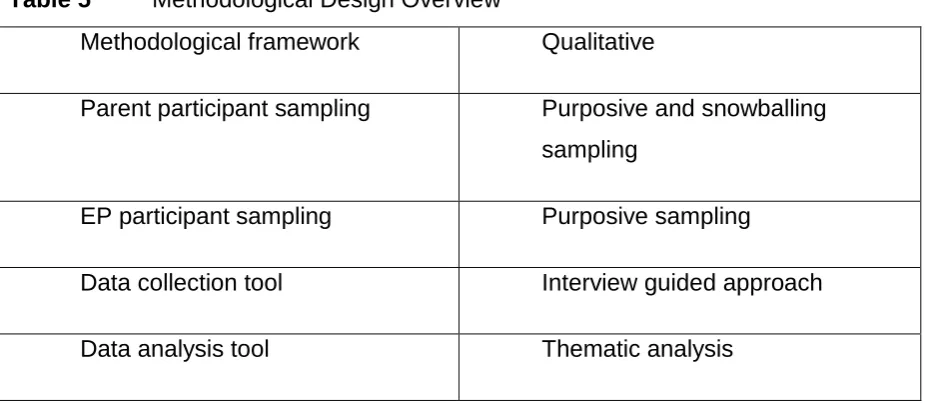
Table 5: Methodological Design Overview 89
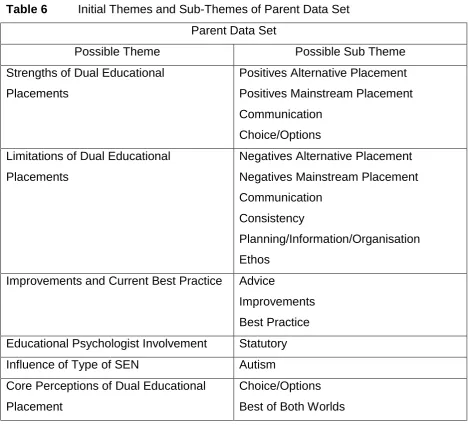
Table 6: Initial Themes and Sub-Themes of Parent Data Set 92
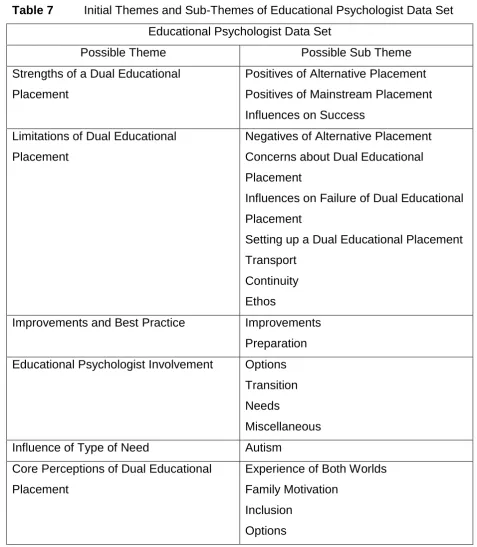
Table 7: InitialThemes and Sub-Themes of Educational Psychologist 93 Data Set
Table 8: Candidate Themes and Sub-Themes of Parent Data Set 95
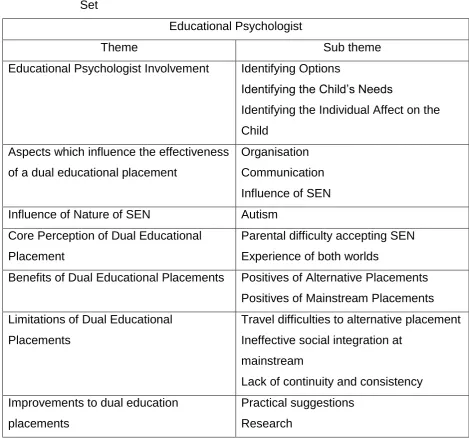
Table 9: Candidate Themes and Sub-Themes of Educational 96 Psychologist Data Set
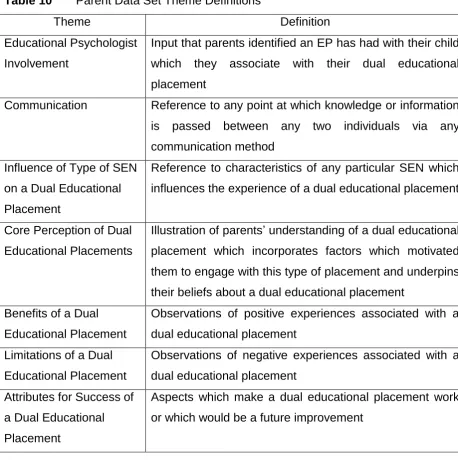
Table 10: Parent Data Set Theme Definitions 97
Table 11: Educational Psychologist Data Set Theme Definitions 98
11 List of Diagrams
Diagram 1: Initial Thematic Map – Parent Date 81
Diagram 2: Initial Thematic Map – Educational psychologist Data 82
Diagram 3: Candidate Thematic Map – Parent Data 83
12
Chapter 1
13 1.0 Introduction
This chapter begins with an outline of the research and highlights frequently used terms. Following this, it considers a dual educational placement in some detail. It then places the research in the context in which it was conducted and explains how it originated. Next, the aims of the research, including the distinctive contribution which it makes, are stated. Finally the epistemological position of the researcher and theoretical frameworks of the research are detailed.
1.1 Outline of research
This research investigates the perceptions of dual educational placements held by parents who have had experience of their child receiving this category of education. It also explores the perceptions of dual educational placements held by Educational Psychologists (EPs) who have encountered this type of education during their practice. In line with the description given by the Department of Education and Skills, in the statutory guidance „Inclusive Schooling: Children with Special Educational Needs‟, dual educational placements refer to instances where „a child can attend more than one school‟ (DfES, 2001, p23). This is the description of a dual
educational placement adopted for this research. A further requirement for participation in this research is that the parents and EPs will have had experience of a child who attends more than one school on a weekly basis; those who do not meet this criterion will be excluded from participation. It is proposed that the experience of a dual educational placement may present unique challenges and opportunities. The focus of this research is on pupils whose dual educational placement comprises a mainstream educational placement alongside an „alternative‟ educational placement. Mainstream educational placement refers to any which is „not a special school or an independent school‟ (DfES, 2001, p8). An „alternative‟ educational placement refers to a provision aimed to take into consideration a pupil‟s special educational need
(SEN), such as an Autistic Spectrum Disorder (ASD) provision, Speech and Language provision, Moderate and/or Severe Learning Difficulties special schools, and Pupil Referral Units (PRU). To obtain a placement at an „alternative‟ educational
14 refers to a physically separate building and institute from the mainstream school. It is acknowledged that there are many other placement options considered to be similar to dual educational placements: for example, a six week placement within a PRU during a single school year, whilst the pupil remains on role at a mainstream school; attendance at a mainstream school during which a pupil is regularly withdrawn to the school‟s attached Specialist Resource Base or attendance at mainstream and
alternative placements situated on a co-located site; or a pupil being educated at home for part of the week alongside a placement within a school. The type of dual educational placement focused on in this research was narrowed to attendance at two physically separate settings on a weekly basis because this experience may present particular limitations and benefits. Additionally, by narrowing the placement variables, findings may be more relevant when considering the validity future dual educational placements within the research context.
To clarify: the researcher considers a dual educational placement to be an instance where a child attends both a mainstream and alternative placement within one school week, which are situated at physically separate locations. Through preliminary informal discussion with EPs in the research context and within a London local authority, it appears that many EPs have encountered a dual educational placement within their careers; however, they were a more common occurrence in the rural setting where the research was conducted. In this research context, the drive to dual educate a child often came from parental preference and was supported by the child‟s caseworker. A caseworker had responsibility for overseeing a child‟s statement of
SEN through a number of methods: by attending yearly reviews of this document; by considering information about the child from parents, school and sometimes other professionals, such as Speech and Language Therapists, Paediatricians, Child and Adolescent Mental Health workers and EPs about a child‟s SEN and the provision
they received; and evaluating if their SENs were being met by the placement and provision. Parents and caseworker appear to have the primary responsibility for the decision of a dual educational placement. EPs were sometimes requested to provide an assessment of a child‟s SEN which often included giving information about the child‟s current needs and the type of environment and experiences that they would
15 1.2 Special Educational Needs (SEN) and Provision
In accordance with the Department for Education and Skills‟ Special Educational Needs Code of Practice, „a child has SEN if he or she has a learning difficulty which
calls for special educational provision to be made for him or her' (DfES, 2001, p6). In the SEN Code of Practice (DfES, 2001), the term „special educational provision‟ is believed to mean additional requirements to facilitate access to education: not necessarily a separate place of education. As this would indicate, SEN can be met in mainstream and alternative placements. The 1978 Warnock Report suggested that a child who has a SEN is likely to have one or more of the following additional requirements:
- the provision of special means of access to the curriculum through special equipment, facilities or resources, modification of the physical environment or specialist teaching techniques;
- the provision of a special or modified curriculum;
- attention to the social structure and emotional climate in which education takes place.
It might be argued that what SENs are and how they can be met will differ between people and organisations, depending on their constructs (understanding and experience) of the SEN label, and this is likely to influence their perceptions about appropriate „provision‟ for this varied group of children.
Professionals, such as EPs, and parents have a responsibility for identifying a child‟s
16 1.3 Context and Location of the Research
This research was conducted in a large East Anglian County Council in the United Kingdom, in which the researcher was employed. This region, from which the population sample was taken, has a mix of city, suburban, coastal and rural habitats. It includes several pockets of deprivation as well as some affluent wealthy areas, particularly in the agricultural habitats aspects. The researcher anticipated that, because of the range of habitats, parent and EP participants would be drawn from different contexts - this may result in greater breadth of experience of dual educational placements. Each context may provide difference between culture of a family, school and Educational Psychology Specialist Support Service. The researcher expected that these variations would provide greater depth to the information obtained in the research. Within the research context were pockets of ethnic diversity, particularly in the city and coastal regions of the County Council. Information on the Council‟s website, gathered in 2009, states 92.43% of the
population were white British. The most common ethnic minority communities in the County Council were reported to be Portuguese, Lithuanian and Latvian.
1.4 Origin of Interest in Dual Educational Placements
Whilst employed as an SEN Officer (this involved writing Statements of Special Educational Needs, making decisions pertaining to the level of financial support a child would receive in their placement and being involved in making decisions about placement), the researcher was introduced to the concept of a dual educational placement. During this time, the researcher came to understand the importance of the professional advice supplied by an EP in influencing placement decisions. As an Assistant Educational Psychologist within an Educational Psychology Service, which involved working within a variety of mainstream and alternative settings, the researcher developed insight into the logistical challenges of a dual educational placement.
17 Educational and Child Psychology Doctorate at the University of East London, cohort 2008-2011, and this research was completed as part of the requirements for qualification.
Dual educational placements became of interest to the researcher whilst employed as a TEP. At this point, the researcher undertook joint casework involving a child experiencing a dual educational placement. The pupil in question was attending a mainstream placement one day a week and an alternative placement four days a week. The researcher attended a multi-agency meeting, involving the child‟s parents
and several professionals, including staff from the alternative placement and mainstream placement, speech and language therapist, paediatrician, caseworker and Senior EP (SEP), to discuss the pupil‟s future educational placement. Subjects
the researcher found of particular interest, which were discussed during the meeting, included: the academic and social functions of each placement; the responsibility a school has to encourage development of an inclusive society; access to specialist resources and trained professionals; communication between the two placements; perception of professional competence; the meaning of inclusion; the SEN Code of Practice; and other government legislations. In addition to this, the concept of „labelling‟ and the potential stigma attached to attending an alternative educational
placement was explored. The researcher perceived that the EP played an effective, objective role in providing evidence-based information relating to topics of discussion in this meeting.
During a debriefing discussion with the SEP, the researcher learnt that dual educational placements were a relatively common option for meeting the needs of children with SEN in the County Council. However, the SEP was not aware of research relating to this type of placement but indicated that it would be something that would be welcomed by the County Council‟s Educational Psychology and
18 authority, indicated that they were not aware of any formally specified criteria for receipt of a dual educational placement. It was believed by the EPs the researcher spoke to informally that there are a variety of reasons from which a dual educational placement originates and they often described these as “a grey area”. The researcher perceived that exploration of the topic of dual educational placement would provide a unique contribution to research pertaining to the placement of children with SEN. Also, it was anticipated that research in this area would highlight the need for guidance and instruction written into government policies and followed by Children‟s Services staff to be evidence-based.
1.5 Research Aims
This research was an initial exploration into the SEN provision of dual educational placements. The broad aims of the research were to investigate the variety of views held by research participants about dual educational placements. The main research questions were:
What are parent and EP perceptions of a dual educational placement?
What are the differences and similarities between parent and EP perceptions of dual educational placements?
As stated previously, it is hoped that the research findings will provide a unique contribution to an area in which research is lacking. It endeavours to bring attention to and stimulate further investigation of dual educational placements, and develop knowledge and future practice in this area. It is anticipated that the benefits and limitations of a dual educational placement and the aspects which influence its success will be explored. It is thought that information from this research may allow for improvement in the evidence-based advice given by EPs and enable parents to make informed decisions about the educational placement of their child. It is also hoped that this research will support parental choice of educational placement for their child should a dual educational placement appear to be a viable option.
19 1.6 Epistemology and Theoretical Underpinnings
The epistemological position which the researcher has taken in this research is constructivist, which focuses on a constructed rather than an ontological reality. Constructivist epistemology holds the belief that reality is independent of human thought, but meaning or knowledge is constructed (Miller, Vandome and McBrewster, 2010). The philosopher-historian and social constructivist, Foucault (1969), postulated that knowledge is a product of cultural, institutional, professional and personal histories, and the intellectual environments within those histories. When reflecting on the history of educational provision for children with SEN, it can be postulated that there is evidence for a relationship between the most dominant construct of SEN at a point in time/history and educational placement of children with SEN. Thus, it could be argued that the leading cultural belief of the most appropriate educational placement for children with SEN changes in line with popular academic thinking. Kincheloe (2005), a Critical Constructivist identified four characteristics of critical constructivism, which were: (1) Knowledge is socially constructed; (2) political power plays an exaggerated role in the production of knowledge; (3) unification of logic and emotion is important in the process and production of knowledge; and (4) multiple realities exist. These beliefs form a basis for approaching this research and will be explored further in Chapter 2: Literature Review.
The establishment of the epistemology of constructivism has, in itself, been an academic construct. It has influenced knowledge of child development, learning and teaching practices. Jean Piaget‟s (1950) stage theory of cognitive development has
been recognised as the formalisation of the constructivist learning theory. Piaget highlighted the role of children in actively constructing an understanding of the world themselves and the influence of culture on their development. Piaget suggested, through cognitive processes labelled accommodation and assimilation, that thoughts and feelings about individual experience can be internalised by learners as knowledge. Vygotsky (1962; 1978) also supported the constructive nature of development. He focused on the relationship between a child‟s experience with
20 argue that only when a child has understood and given meaning to their experiences has knowledge been imparted to a child (Jean Piaget, 1950).
Through taking a constructivist epistemological position, an emphasis is put on the importance of placing a child with SEN in the most appropriate educational placement as environment, experience and social interaction are believed to be tools for learning. In line with a constructivist epistemological position, the researcher perceives that, predominantly, educational placement decisions made for children with SEN are products of social and political frameworks: these reflect the understanding of SEN held by a society‟s political and, at times, religious leaders.
In this research, the relationships between perception of dual educational placement held by parents and EPs, and prominent thinking reflected in political frameworks about educational placement of children with SEN will be examined. It is proposed that individual constructs will have been influenced to varying degrees by cultural, political, institutional, professional and personal histories. The researcher assumes that, from a constructivist standpoint, there is likely to be multiple perspectives on the topic of dual educational placement and acknowledges that individual perspectives evolve over time and are affected by context. The researcher will aim to examine the dual educational placements through the eyes of the participants, rather than the eyes of the researcher (Cohen, Manion and Morrison, 2008). However, the researcher acknowledges that their own individual constructs are likely to influence interpretation of research evidence.
The researcher‟s epistemological and empirical position was also influenced by systemic psychology. The latter relates to Bronfenbrenner‟s (1979) ecological model
of human development in particular. Bronfenbrenner (1979) stated the importance of studying development in context and identified four ecological environments to take into consideration. These are:
21 Mesosystem: this refers to links between miscrosystems, such as the influence
that experiences in the context of the home may have in school;
Exosystem: this refers to environments separate from the individual‟s immediate
environment which still impact upon the individual;
Macrosystem: this refers to the wider environment, such as society, culture and political agendas.
The researcher considers that Bronfenbrenner‟s (1979) ecological model of human
development may be able to address, in particular, the relationship of the macrosystems of dominant political agenda and the microsystems of a child‟s
educational placement. It may also be a useful model when considering how the mesosystems which link the child‟s three primary microsystems of mainstream
placement, alternative placement and home affect the success of a dual educational placement.
1.7 Historical Overview of Placement of Children with SEN in Britain
A difficulty encountered in this research is the existence of differences in terminology for SEN throughout time and between writers/researchers. The researcher decided that the term SEN will be used throughout this document, despite the original authors‟
choice of term. Exceptions to this will be when the history of SEN is examined,where original terminology will be used as it is perceived by the researcher that it reflects the dominant attitude of society at the time. Governing principles held by society are deemed important to explain the basis on which decisions about placement for children with SEN were made. It is acknowledged that by present society values this will involve the use of contentious language, likely to be regarded as offensive.
22 time, specified by leaders of society, will be reflected in social and political frameworks. These would affect the placement afforded to those children with SEN.
This refers to the impact of the macrosystems on the microsystems (Bronfenbrenner, 1979).
Historically, educational or non-educational placement for children with SEN presents as a complex issue. The past response towards education for children with SEN was one of segregation and/or isolation, for example in asylums. Placement in an asylum meant a child had little or no contact with children not considered to have SEN or with children with SEN different to their own. The education provided in the asylums was limited and the majority of attendants failed to secure employment once they had left (Warnock, 1978). The type of placement a child with SEN attended often depended upon the category of need in which they were placed and the label applied to them.
In the early 1700s, children with visual and hearing SEN were commonly placed in asylums which focused on making a profit; by the late 1700s, they also offered a minimal education (Warnock, 1978). Emergence of less segregated placements for children with a visual SEN came in the late 1800s. The 1893 Elementary Education (school attendance) Act stated that it was compulsory for blind children to be in educational placement from 5 to 16 years. It was advised that, where possible, they should be placed in a mainstream school until the age of 12 and thereafter follow a training or academic course. This Act also stated that it was compulsory for deaf children to be in an educational placement from 7 to 16 years but advised that this should be separate from mainstream education. At this time, some children with visual and hearing SEN were placed in „special classes‟ within a mainstream school and, to varying degrees, the children were socialised into the mainstream section of the school (Warnock, 1978).
In the 1700s, those children whose SEN were mental health-related were placed in workhouses, in inhumane conditions, if they were deemed able to work or, if not, in infirmaries. In the late 1800s, three categories of mental health SEN arose which were „feeble-minded, imbeciles and idiots‟ (Royal Commission Report on the Blind
23 education‟; those categorised as „imbeciles‟ should be placed in a separate provision
which concentrated upon sensory, physical and speech development; and those categorised as „idiots‟ were not thought to be „educable‟ and it appears that no
placement recommendation was provided. Subsequently, in the 1899 Elementary Education (Defective and Epileptic Children) Act, and then the Balfour Education Act (1902), it was recommended that those categorised as „feeble-minded‟ should be placed in „special classes‟ in mainstream schools on the condition that a medical
officer, appointed by the mainstream school, could conduct a physical examination of a child to determine if the child‟s needs could be met in the placement.
In the mid 1800s, the first placements, then called institutions, were offered to children whose SEN was physical disability and these focused on trade (Warnock, 1978). By the late 1800s, children who were physically „handicapped‟ with „normal intelligence‟ were placed in a mainstream school. Children who had epilepsy, who fitted at intervals of a month or more, were placed in mainstream schools and those who fitted more frequently were placed in residential special schools (Defective and Epileptic Children Act, 1896; Elementary Education, 1899; The Balfour Education Act, 1902).
It could be argued that the regular change in government legislation pertaining to placement of children with SEN reflects the complexity and subjectivity of the issue. The dominant thoughts about placement of children with SEN during the 1700s - 1800s, reflected in government legislation, seem to stem from a medical model of disability. At the time, SEN was deemed to be predominantly physical in origin and sometimes „treatable‟ or curable through medical intervention but, if not, the child was
segregated from their peers. SEN was seen as intrinsic to a child and context adaptation was not considered.
The 1913 Mental Deficiency Committee advocated a change in attitude towards „special classes‟ by suggesting that they were a helpful variation of mainstream
24 In the early 1900s, category of „maladjusted‟ was identified (behavioural, social and emotional difficulties). In 1913, the London County Council appointed the first Educational Psychologist, Cyril Burt, to „examine‟ children who were categorised as „maladjusted‟. However, this category was not recognised by local authorities at the
time as an SEN; as a result, minimal provision was made for them.
The 1918 Education Act made educational placement compulsory for all recognised categories of SEN; however, at this time, provision for these children was often run by charities and included open air schools, schools in hospitals and trade schools (Warnock, 1978). Subsequently, the 1944 Education Act and the 1948 Human Rights Declaration both advocated that all children have a right to an education. The 1944 Education Act stated that local authorities were required to meet the needs of children with SEN through special educational „treatment‟, meaning provision. It stated that those children with „less serious‟ SEN could be educated in mainstream classes and
the local authority was given the duty of deciding which children required special educational provision, and to provide placements for those who were considered „educable‟. This was reported to have lead to a dramatic increase in the number of
special schools and pupils in them between 1945 and 1955. In this period, several new boarding homes were made available for „maladjusted‟ pupils (Warnock, 1978).
25 Table 1 Handicapped Pupils and School Health Regulations (1945) Guidance on
Category of Need and Placement
SEN Placement
Blind Segregated residential special school. Deaf Segregated residential special school. Partially
Blind
Segregated residential/day special school or a mainstream school with support.
Partially Deaf Segregated residential/day special school or a mainstream school with support.
Delicate Temporarily segregated in hospital, open air day schools or residential boarding schools.
Diabetic Mainstream school with the option of being accommodated in a hospital to receive treatment.
Educationally Subnormal
Majority attend mainstream schools and were taught in small groups with sympathetic teachers. It stated that these children should not be isolated from their mainstream peers.
Epileptic Segregated residential special school.
Maladjusted Placement determined by assessment by an EP or appropriate professional. Placement may be a mainstream school with specialist advice given to the teacher, periods of specialist teaching in a separate setting, attendance at another mainstream setting, segregated specialist school or a residential specialist school.
Physically handicapped
Segregated special school
Speech Defect
Treated in clinics whilst attending a mainstream school.
(Warnock, 1978, chapter 2, 2.45 – 2.48)
In 1955, the government appointed committee reported upon medical, educational and social aspects of children categorised as „maladjusted‟, and advocated that they
should lead a life as similar to those in mainstream schools as possible. These requirements lead to the government supporting an increase in the number of „special day schools‟ and „special classes‟ within mainstream schools. The 1971 Education
26 children who had mental health-related SEN. These children, previously placed in training centres, transferred to be educated in „special schools‟ and „special classes‟.
During the 1970s, an increased importance was placed on multi-agency assessment of a child with SEN, as well as parental involvement, to decide on placement and provision. By 1974, EPs were employed in Child Guidance Clinics in multi-professional teams, providing assessment, diagnosis, consultation, treatment and help as needed by the child, their parents or other professionals supporting the child.
Much government legislation from 1900–1974 appeared to operate in a medical model of disability and saw SEN as „problems‟ within the child, ignoring the effects of
the systems around the child. Further information pertaining to this is detailed in Chapter 2: Literature Review. When examining the historical placement experiences of children with SEN, the connection between the dominant thinking behind government commissioned reports/research, political legislation, and the treatment of children with SEN is evident.
1.8 Summary of Chapter 1
27
Chapter 2
28 2.0 Literature Review
In this chapter, an explanation of the literature review process and the discoveries from it are provided. Following this, Inclusion is discussed and theories about it offered. Knowledge with regards to educational placement of children with SEN and dual educational placements are then presented and evaluated, including the findings of the systematic literature reviews.
2.1 Approach to the Review of Relevant Literature
A systematic literature review pertaining to the area of dual educational placements was conducted. A systematic literature review has been defined as „a systematic,
explicit and reproducible method of identifying, evaluating and synthesizing the existing body of completed and recorded work produced by researchers, scholars and practitioners‟ (Frink, 2005, p3). This became problematic for the researcher as
29 criteria, search terms used, number of abstracts read and titles of articles identified as most relevant and read in full. Here is a summary table of the most successful search terms and number of relevant articles found:
Table 2 Systematic Literature Review Search Terms and Number of Articles Found
Search Term Number of full-text articles read
Combination educational placement 1
Split school provision 1
Split educational provision 1
Split educational placement 4
Total 7
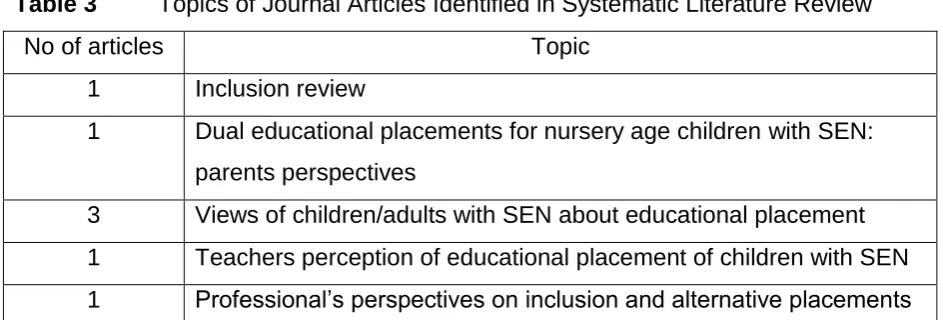
The table below depicts how the researcher categorised the eight articles into topics which broadly related to educational placement of children with SEN:
Table 3 Topics of Journal Articles Identified in Systematic Literature Review
No of articles Topic
1 Inclusion review
1 Dual educational placements for nursery age children with SEN: parents perspectives
3 Views of children/adults with SEN about educational placement 1 Teachers perception of educational placement of children with SEN 1 Professional‟s perspectives on inclusion and alternative placements
As highly relevant results were limited using the systematic literature review method, a Google scholar search was also undertaken using the search terms „dual educational placement‟ and „split educational placement‟. This provided one
unpublished undergraduate dissertation pertaining to dual educational placements.
[image:29.595.78.550.412.572.2]30 Again, the results of this literature search were minimal and the majority of the findings related to evaluation of inclusion programmes within a specific local authority context or a specific SEN: therefore, they did not report the broad participant perspectives about inclusion and alternative educational placements that were of interest and relevance to this research. It is possible that, by extending the search criteria to outside the UK and prior to 2000, a greater number of journals would be available. However, the researcher felt that this would compromise its relevance to the research being undertaken. Using the same selection process as described above, two parent journal articles and one EP journal article relating to their perspectives of inclusion and alternative education were identified. It is acknowledged by the researcher that parent and EP perceptions of a child with SEN‟s
experience of attending either a mainstream or alternative educational placement alone may not be usefully comparable with perceptions of them attending a dual educational placement as the key „dual‟ aspect is missing. Therefore, this aspect will
be considered briefly. Please refer to appendices 2 and 3 for full details of the exclusion and inclusion criteria, search terms used, number of abstracts read and titles of articles identified as most relevant and read in full.
2.2 Inclusion
Inclusion is critical to the debate regarding appropriate educational placement for children with SEN. It is likely that the values that a person holds about inclusion, their interpretation of what it is and the belief in its achievability will influence where they perceive a child with SEN is best placed to receive an education (Croll and Moses, 2000). However, inclusion appears to be a multi-dimensional and subjective concept (Dyson, 2005). Inclusion has also been posited as a process (Barton, 1998). The Education and Skills Committee (2006) stated that there is considerable confusion over the term inclusion, with a wide range of meanings applied to it. .
In line with the constructivist epistemological position the researcher has taken here, it might be claimed that one‟s perception about whether or not a child with SEN is experiencing inclusion will vary, depending on an individual‟s construct of inclusion. A
31
„Inclusion involves educating children with SEN in mainstream schools with „normally‟ developing peers, rather than in separate special schools or classes‟ (Fredrickson, Miller and Cline, 2008, p.67).
It appears that inclusion has and continues to concern political leaders and, in turn, Children‟s Services. Following sections of this chapter will discuss this issue in
greater detail because, in line with the constructivist epistemological position taken in this research, it is thought that individual constructs about inclusion will have been influenced by dominant constructs at a point in time.
2.3 Warnock Report (1978) and Education Act (1981)
The Warnock Report, commissioned by the government, was published in 1978. This committee was set up due to concern that segregated education placements for children with SEN was not affording them effective social and educational opportunities commonly found in inclusive/mainstream placements (Shah, 2007). The Warnock Report (1978) noted that in 1977, in England and Wales, 1.8% of the school population were placed in education facilities segregated from mainstream settings. Also, approximately 40% of mainstream schools incorporated „special classes‟ where
children with SEN spent the majority of their time and were not being incorporated into the mainstream section of the school.
The Warnock Report (1978) is reported to have been influential in initial thinking about an inclusive education system; it coined the term „integration‟ which was
defined as children with SEN being educated alongside their peers in a mainstream educational environment (Shah, 2007). The Warnock Report (1978) made 225 recommendations: the most relevant to educational placement of children with SEN are highlighted here. The Warnock Report advocated the abolition of the categories of handicaps and proposed to replace them with the now commonly-used term „special educational need‟ (SEN). SEN was viewed as a continuum which aimed to
afford greater attention to the provision a child requires to access education successfully, in relation to a child‟s individual needs. The Warnock Report (1978) attempted to „normalise‟ SEN by stating that up to 1 in 5 children, at some point
32 provision. It is posited that a focus of the Warnock Report (1978) was to de-escalate the division between pupils with SEN and others and brought inclusion to the forefront of the political agenda (Wedell, 2008). Warnock (1978) emphasises that, when catering for the educational needs of children classified as having SEN, placement in itself, be it alternative or mainstream school, is not the key. Instead focus should be on the conditions which are required for the child to receive education successfully, regardless of the setting in which they are placed. The report states that:
„The purpose of education for all children is the same; the goals are the same. But the help that individual children need in progressing towards them will be different‟
It continued by elaborating that:
„special education. . . extends beyond the idea of education provided in special schools, special classes or units for children with particular types of disability, and embraces the notion of any form of additional help. . . to overcome educational difficulty‟ (Warnock, 1978, Chapter 1, 1.10).
The Warnock Report (1978) also advocated maximum educational and social interaction between a child with SEN and mainstream peers when attending a mainstream school, and for firm links between special and mainstream schools in the same area.
The 1981 Education Act followed the Warnock Report (1978) and was considered the legislative backbone to the report. These documents acted as catalysts for debate relating to educational placement for children with SEN, and as a framework for the further development of inclusion. The 1981 Education Act advised that, where possible, children with SEN should be educated in mainstream schools (DfES, 1981). This was then referred to as an „integrative approach‟ and is now referred to as
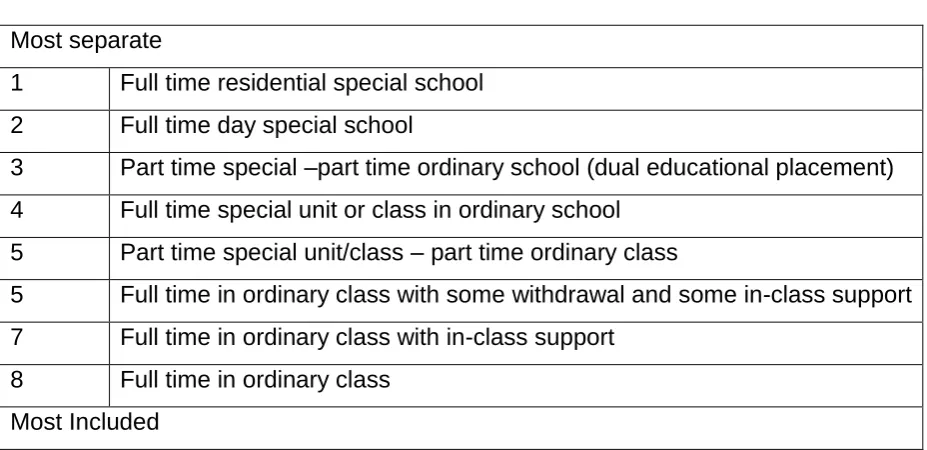
33 Table 4 Continuum of Special Education Provision (Norwich, 2008)
Most separate
1 Full time residential special school 2 Full time day special school
3 Part time special –part time ordinary school (dual educational placement) 4 Full time special unit or class in ordinary school
5 Part time special unit/class – part time ordinary class
5 Full time in ordinary class with some withdrawal and some in-class support 7 Full time in ordinary class with in-class support
8 Full time in ordinary class Most Included
(Source: Adapted from, Norwich, 2008, p.136)
In line with the recommendations in the Warnock Report (1978) and the 1981 Education Act, the Statement of Special Educational Needs was introduced, with one aim of supporting an „integrative approach‟. This allowed LEAs to develop a system of recording children‟s category of SEN, following assessment by a multi agency team
of professionals, so that the LEA could determine appropriate educational placement for them. Advice from EPs to contribute to this multi-agency assessment process has been an integral part of their professional role since that time.
It has been suggested that „in reality the „integration‟ of students deemed to have
SEN, into the mainstream schools, was not pursued even to the limited extent envisaged by the designers of the 1981 Education Act legislation‟ (Jones, 2003).
Lack of expected change in the education of those with SEN has been associated with lack of finance: the 1981 Education Act did not provide additional funding for the statement process or additional training for teachers in mainstream schools, despite the closures of many special educational provisions (Jones, 2003). Norwich (2008) reported that, from 1983–2000, there had been a decrease in the percentage of
34 2.4 Inclusion Policy and Practice After the Warnock Report (1978)
Policies about „integration‟ and subsequently about „inclusion‟ have been the subject
of much debate (Wedell, 2008). After the Warnock Report (1978), several policy developments and amendments preceded influencing practice to varying degrees. Dyson and Slee (2001) perceived an increase in consideration among professionals and policy makers of the „rights of the child‟ to an inclusive education. This was
reflected in the 1988 Education Act which established the National Curriculum and emphasised the importance of „access‟ to the curriculum for children with SEN (Dyson
and Slee, 2001). This was later endorsed in general terms by the United Nations Universal Declaration of Human Rights in 1990 which stated the right to education for all.
The 1993 Education Act further supported inclusion and, additionally, the involvement of parents in decisions about placement of their child. The 1993 Education Act is reported to have stated that:
„Children with SEN should – where this is what parents wanted – normally be educated at mainstream schools‟ (DfES, Inclusive Schooling: Children with Special Educational Needs, 2001, p.1).
The 1993 Education Act also established SEN tribunals, which were intended to be independent of both local and national government, to enable parents to appeal against decisions made by LEAs in England about their child‟s education, including which educational placement. The importance of parents‟ involvement in, and
contribution to, identification and assessment of their child‟s needs, as well as placement decisions, began to receive greater recognition.
35 Following this, in 1994, the right to education for all was elaborated on at the world conference on SEN, specifically by the UNESCO Salamanca Statement. This presented the need to work towards „schools for all‟, where a single institution can
include everybody, celebrate differences, support learning and respond to individual needs. Here, it was considered that fundamental policy shifts were required to achieve this. The Salamanca Statement (1994) called on governments to:
„Adopt, as a matter of law or policy, the principles of inclusive education enrolling all children in regular schools, unless there are compelling reasons for doing otherwise‟ (UNESCO, 1994, p.9)
It is perceived by the researcher that, between the 1978 Warnock Report and the 1994 UNESCO Salamanca Statement, there was a fundamental shift in the underlying thinking behind the concept of „integration‟ or inclusion. The Warnock Report (1978) suggested that, if a mainstream placement provides the optimum conditions for meeting a child‟s SEN, the children should be educated there; by 1994,
in the UNESCO Salamana Statement, the concept was placed in the emotive framework of human rights.
In 1997, the government published the Green Paper named „Excellence for All Children: Meeting Special Educational Needs‟ which called on LEAs to:
„Adopt the principle of inclusive education‟
and
„A progressive extension of the capacity of mainstream schools to provide for children with a wide range of needs‟ (DfEE, 1997, p.45)
After the Warnock Report (1978), a decline in the number of children attending special schools and an increase in the numbers of children identified as having SEN and a Statement of Special Educational Need was observed. This continued until 1999–2000 when it is reported to have stabilised (Education and Skills Committee:
36 The Special Educational Needs Code of practice was subsequently amended in 2001 in light of the Special Educational Needs and Disability Act (SENDA, 2001). This aimed to reinforce the government‟s commitment to the inclusion of children with SEN
in mainstream schools, and to ensure protection against discrimination on the grounds of disability in schools and other educational establishments. SENDA (2001) prohibited schools from discriminating against disabled children in their admission arrangements and in relation to exclusions from school. It stated the requirement for schools to make reasonable adjustments to ensure that a child‟s SEN are met and to
ensure they can be included within the mainstream school environment. DfES (2001) statutory guidance, called Inclusive Schooling: Children with SEN, stated that:
„Where parents want mainstream education for their child, everything possible should be done to provide it. Equally, where parents want a special school place, their wishes should be listened to and taken into account‟ (DfES, 2001, p.3).
This document also advocated dual educational placement. It stated:
„The appropriate use of dual placements – where a child can attend more than one school – can support inclusion. It can help prepare pupils for mainstream and prepare schools to meet the child‟s needs. Dual placements can also allow children time away from their mainstream school for specialist or catch up support‟ (DfES, 2001, p.25).
In 2003, the government published a green paper called „Every Child Matters‟. Although the catalyst for the paper was not directly related to placement of children with SEN, the details targeted relevant issues. It suggested that all Children‟s
37 Child Matters: Next Steps‟ and „Every Child Matters: Change for Children‟, the latter of which contained the government‟s ten year SEN strategy, „Removing Barriers to Achievement‟. These documents set out the government‟s vision for education of
children with SEN and disability, as well as increased financial investment in SEN. The documents stated that all teachers should expect to teach children with SEN and schools should play their part in the education of children from their local community, whatever their background or ability. Some of the most relevant aims of this framework were to ensure that inclusive practice is embedded in all schools, and that teachers have the skills and strategies to meet the needs of children with SEN. It also encouraged sections of Children‟s Services to work collaboratively to meet the needs
of children and their families. The „Removing Barriers to Achievement‟ (2004) document stated that:
„We want to break down the divide between mainstream and special schools to create a unified system, where all schools and their pupils are included within the wider community of schools‟ (DfES, 2004, p38).
Education policy has also been subject to disability discrimination legislation, namely the Disability Discrimination Acts 1995 and 2005 and subsequently the Disability and Equality Act 2010. These Acts broadly aim to protect disabled people and prevent disability discrimination. With specific regard to children with SEN, they required schools not to treat disabled pupils less favourably than others and to take reasonable steps to avoid putting disabled pupils at a substantial disadvantage.
In 2005, Baroness Warnock published Special Educational Needs: A New Look, which has been described by some critics as a u-turn in her strategy on inclusion (Barton, 2005). In this document, Warnock stated that the „government‟s policy on
inclusion and SEN was not working and the concept of inclusion and provision for children labelled as having SEN needed reviewing‟. Some other points relevant to
this research, made by Warnock (2005), were:
38 inclusion in practice often means being physically included but emotionally
excluded;
children with SEN should only be catered for in mainstream schools when they can be supported from schools‟ own resources;
small specialist school provision is needed.
In a document entitled „Government‟s response to the Education and Skills Committee Report of SEN‟ (2006), a reaction to Warnock‟s (2005) recommendations
and opinions were given. This document stated that the government perceived it was not in the best interests of children with SEN to review the SEN education system at the time. It recommended that Children‟s Service workers persevere with the
previously recommended strategies given by the government in the document Removing Barriers to Achievement of 2004. In the Education and Skills Committee Report of SEN (2006), the government did, however, place greater responsibility on local authorities to meet the educational needs of children with SEN. They stated that they considered inclusion to be about quality of experience which enabled progress in learning and full participation in school and community activities - thereby providing no further detail about the placement in which inclusion can be achieved. The details of the document did, however, provide support for dual educational placements as a means of meeting the needs of children with SEN, by suggesting that this could be achieved through:
„Local authorities developing a flexible continuum of provision to meet the wide range of children‟s SEN and use of the flexibilities.... to facilitate dual placements in mainstream and special provision where appropriate, to meet the needs of individual children with statements of SEN‟ (Government response to the Education and Skills Committee report on SEN, 2006, p.26)
In March 2011, the Conservative and Liberal Democrat coalition government published the SEN Green Paper entitled „Support and Aspiration: A New Approach to
39 most basic sense (educating children with SEN in mainstream schools with „normally‟
developing peers, rather than in separate special schools or classes) may have been counterproductive to providing individually appropriate placement options for children and their parents. The Green Paper (DfE, 2011) proposes:
„...to give parents a real choice of school, either mainstream or special. We will
remove the bias towards inclusion and propose to strengthen parental choice by improving the range and diversity of schools from which parents can choose, making sure they are aware of the options available to them.‟ (DfE, 2011, p.8 and p.18)
Proposals in the Green Paper (DfE, 2011) suggest that parents should have the choice of having their child placed in a mainstream or special school. Additional information in the paper clarified that the education system should be able to respond flexibly to parental choice through delivery of a diverse and dynamic school system. It would therefore appear that there is continued opportunity for dual educational placements to remain as a valuable option available to parents if they believed that it would meet their child‟s SEN. The option of dual educational placement seemed to
have secured support, although not stated explicitly in the Green Paper (2011), seen from the following section:
„Flexible placements in more than one type of provision, over time or simultaneously, can be beneficial for children with SEN‟ (DfE, 2011, p.71)
Criticism has been voiced over governmental policies on inclusion, past and present, for being based predominantly on value- and moral-driven constructs, rather than research evidence of its success (Croll and Moses, 2000; Lindsay, 2007). Lindsay (2007) proposed that the government‟s drive for inclusion is based on a concern that children‟s human rights are being breached by attending alternative placements;
40 focused only on educational outcomes of children with SEN and was taken from just fourteen journal articles, questions are raised regarding the evidence base on which the government are basing their policies on inclusion and educational placement. However, some academics appear unconcerned that inclusion may not be research driven but is instead a product of human rights. It has been proposed that any research evidence of negative outcomes of inclusion should be rejected as a fault of the current education system and/or used to develop policy to improve inclusion (Rustemier, 2002).
Despite government legislation previously advocating inclusion, accusation has been made that there is minimal existing information, for those who have the duty to implement inclusion, about how to put it into practice (Croll and Moses, 2000). Croll and Moses (2000) conducted a qualitative, interview investigation into the thoughts of professionals, including local education officers and head teachers from mainstream and special schools, about educational placement of children with SEN, inclusion/mainstream and alternative placement. In line with the findings from Lindsay‟s (2007) literature review presented above, Croll and Moses (2000) found
that participants perceived inclusion as being a morally correct educational option for children with SEN. However, Croll and Moses (2000) stated that they regularly found tension in participant‟s responses to placement decisions, in that inclusion was what
participants desired but currently saw as a distant aspiration and, in the meantime, pragmatic influences, such as accessibility and access to resources, were taken into consideration alongside the ideology of inclusion. Croll and Moses (2000) concluded that, overall, their professional participants demonstrated support for inclusion as an ideal but expressed reservations about feasibility. They noted that, at the time of the research, the overriding factor influencing perspectives about educational placements was a child‟s individual needs and a desire to meet those needs with the resources
currently available, be it in a mainstream or alternative placement (Croll and Moses, 2000). It is claimed by Croll and Moses (2000) that one benefit of having special school provision is that it responds to the deficits of mainstream educational placements.
41 between government policy on inclusion, and research evidence to inform delivery of an effective inclusive education. However, it should be noted that Croll and Moses‟
(2000) research was conducted approximately ten years ago and it could be that many of the tensions experienced by participants have been resolved by guidelines published by the government since this time. The next section will further explore how beliefs and models of thinking about SEN can influence perception about the value of inclusion and alternative placements. Then, professional and stakeholder accounts of the benefits and limitations of inclusive and segregated educational placements over the last ten years will be considered.
2.5 Theories of Special Educational Needs and Inclusion
A lot can be learnt about day-to-day practice from exploring theories of SEN and inclusion, presented by influential academics and politicians. It is suggested, in this research, that leading constructs of SEN will affect treatment of children with SEN, such as placement decisions and placement choices for children with SEN. Oliver (1988) thought that, initially, disability was perceived as an individual problem; it then came to be seen as a social construction and, finally, it is beginning to be perceived as a social creation.
It would appear that, prior to the Warnock Report (1978), the medical model was the dominant construct affecting the attitudes of society towards children with SEN. The medical model, as it is currently understood, views SEN as a result of a physical condition or sensory and/or neurological impairment due to damage or disease, which is intrinsic to an individual and can be diagnosed (Runswick-Cole, 2008). It is suggested that children were assessed using a deficit model which determined how „deviant‟ they were from the norms of society (Runswick-Cole, 2008). The medical
model advocates curing or managing SEN through surgery or drug treatment to „normalise‟ the individual to fit societal expectations (Runswick-Cole, 2008). At this