Educational Psychologist and Special Educational Needs Co-ordinator
Constructions of Effective Collaborative Working:
An Exploratory Study
Doctorate in Educational Psychology (DEdPsy) 2017
i Declaration
This work has not been submitted in substance for any other degree or award at this or any other university or place of learning, nor is being submitted concurrently in candidature for any degree or other award.
Signed (candidate) Date: 26.04.17
STATEMENT 1
This thesis is being submitted in partial fulfilment of the requirements for the degree of DEdPsy.
Signed: (candidate) Date: 26.04.17 STATEMENT 2
This thesis is the result of my own independent work/investigation, except where otherwise stated. Other sources are acknowledged by explicit references. The views expressed are my own.
Signed: (candidate) Date: 26.04.17
STATEMENT 3
I hereby give consent for my thesis, if accepted, to be available online in the University’s Open Access repository and for inter-library loan, and for the title and summary to be made available to outside organisations.
Signed: (candidate) Date: 26.04.17
STATEMENT 4: PREVIOUSLY APPROVED BAR ON ACCESS I hereby give consent for my thesis, if accepted, to be available online in the
University’s Open Access repository and for inter-library loans after expiry of a bar on access previously approved by the Academic Standards & Quality Committee.
ii
Acknowledgements
Thank you to the SENCos and educational psychologists who so generously gave their time to participate in this study. Without you this research would not have been
possible.
I would like to express my sincere gratitude to my supervisor, Andrea Higgins, for all the time you have given in supporting me through this process, and the invaluable knowledge and humour shared with me along the way.
Thank you to my close friends and family for your constant encouragement and belief in me. Finally, thank you to my partner, David, whose support, words of encouragement and understanding I have valued more than I can say.
iii Abstract
The current educational and legislative reforms in the United Kingdom have placed effective multi-agency collaboration at the forefront of the professional agenda e.g., the Special Educational Needs and Disability (SEND) Code of Practice (DfE, 2014) in England; and the draft Additional Learning Needs (ALN) Code of Practice in Wales (Welsh Government, 2015; 2017).
Central to this process is a shared understanding of the roles and responsibilities of each multi-agency professional. A wealth of research has illustrated incongruities in the perceptions of the role and practice of educational psychologists (EP) between EPs themselves and school professionals e.g. teachers (Kelly & Gray, 2000; Farrell, Jimerson, Kalambouka & Benoit, 2005). Fewer papers have explored barriers and/or facilitators to effective collaboration between the two professional groups (Davies, Howes, & Farrell, 2008). Fewer papers still have focused on comparing Special Educational Needs Co-ordinators’ (SENCo) and EPs’ perceptions of the role in
particular (Ashton & Roberts, 2006). As SENCos are important link colleagues for EPs, responsible for co-ordinating support for children and young people with additional learning needs in their educational setting, a clear understanding of the EP role is integral to effective collaborative working.
The current study aims: first, to compare and contrast EP and SENCo perceptions of the effectiveness of roles and/or functions of the EP; and second, to explore perceived facilitators and barriers to effective collaborative working between the two professional groups. A mixed-methods approach was used to collect data using questionnaires and focus groups. Forty-two EPs and seventy-two SENCos returned questionnaires
representing data from a variety of geographical locations across Wales. Seven EPs and eleven SENCos took part in four focus groups in both rural and urban regions of Wales. Seven superordinate themes were identified including: (1) Interpersonal Relationships; (2) Understanding of Roles; (3) Value of EP involvement; (4) Clarity of the EP role; (5) The School System; and (6) The Wider Context. The final theme (7) Dream and Design includes EP and SENCo suggestions for future practice. These are discussed in relation to perceived facilitators and barriers and key areas of difference and/or similarity between responses. Implications of the present study for the role of EPs are discussed, together with the future directions for research.
iv Summary
This thesis is split into three parts: a literature review, an empirical research study and a critical appraisal. Part A, the literature review, provides a detailed overview of the role of the educational psychologist (EP) in the United Kingdom. Attention is drawn to the key challenges EPs have faced working within an ever-changing professional context since the role was established in the early nineteen-hundreds. The review begins with the historical context of the role and considers in turn external and internal change drivers that have influenced the direction of the profession. The impact these changes may have had on school professionals’ expectations of the EP role are considered. Research demonstrates that school professionals and EPs hold different views of what they consider to be the most important and valuable roles and/or functions of the EP. Existing research suggests that school professionals perceive direct work with pupils (e.g. therapeutic or assessment work) to be the most valuable use of EP time (Ashton & Roberts, 2006). EPs, on the other hand, report more indirective methods of working as more valuable (e.g., working consultatively with schools/families, delivering training) (Boyle & Lauchlan, 2009; Fallon, Woods & Rooney, 2010). The research studies presented are critiqued and research questions are proposed for the current study. Part B is an account of the empirical study, which aimed to evaluate SENCo and EP perceptions of effective EP practice and explore SENCo and EP perceived facilitators and barriers to collaborative working. Participants completed a questionnaire and were invited to return for a follow-up focus group. Perceptions of the effectiveness of EP practice were statistically analysed to compare mean results across the two groups. Facilitators and barriers to effective working, and key differences and similarities between EPs’ and SENCos’ perceptions were identified using thematic analysis. The results are presented and implications for future practice are discussed.
Part C, the critical appraisal, is presented in two sections. The first section comprises a critical account of the researcher, providing a reflective account of each stage of the research process, from the inception of the research to data analysis. The second section consists of an exploration of the contribution to knowledge, including key findings, future directions for research and the wider implications of the research for professional practice.
v Table of Contents Declaration ... i Acknowledgements ... ii Abstract ... iii Summary ... iv Table of Contents ... v List of Figures ... ix List of Tables ... ix List of Abbreviations ... x
Part A: Literature Review ... 1
1. Introduction ... 2
1.1. Significance of Study for Practice ... 3
1.2. Overview of the Literature Review ... 5
1.3. Search Terms and Sources ... 7
1.4. Inclusion / Exclusion Criteria ... 9
1.5. Definitions and Terminology ... 10
1.5.1. Special Educational Needs Co-ordinator ... 10
1.5.2. Individual and Systemic Working ... 10
2. The Changing Role of the Educational Psychologist: External Drivers ... 11
2.1. The Historic Context ... 11
2.2. Approaches to Practice ... 12 2.2.1. Systemic Approaches ... 12 2.2.2. Individual-level Approaches ... 14 2.3. A Statutory Role ... 16 2.4. Multi-Agency Working... 17 2.5. Current Context... 19 2.5.1. English Context ... 19 2.5.2. Welsh Context ... 20 2.5.3. Traded Services ... 20
2.6. External Drivers: Summary ... 21
3. The Changing Role of the Educational Psychologist: Internal Drivers ... 21
vi
3.2. Within-profession Diversity ... 24
3.2.1. Methods of Service Delivery ... 24
3.2.2. Frameworks for Practice ... 25
3.3. Expectations of School Professionals: A Collaborative Approach ... 26
3.5. Internal Drivers: Summary ... 28
4. Constructions of Educational Psychology practice ... 28
4.1. Teaching Staff ... 29
4.2. Senior Management Staff ... 31
4.3. Special Educational Needs Co-ordinators ... 32
5. Summary ... 34
6. Study Rationale ... 35
6.1. Research Aims ... 36
6.2. Research Questions and Hypotheses ... 36
7. References ... 38
Part B: Empirical Study ... 46
Abstract ... 47
1. Introduction ... 48
1.1. The Role of the Educational Psychologist ... 48
1.2. The Importance of Collaborative Working ... 49
1.3. School Professionals’ Constructions of the EP role ... 50
1.4. The Current Study ... 51
1.5. Research Questions and Hypotheses ... 51
2. Methodology ... 53
2.1. Epistemology, Ontology and Design ... 53
2.2. Participants... 54
2.2.1. Educational Psychologists ... 54
2.2.2. Special Educational Needs Co-ordinators ... 54
2.3. Methods ... 55 2.3.1. Questionnaire ... 55 2.3.2. Pilot Study ... 56 2.3.3. Focus Group ... 56 2.4. Procedure ... 57 2.5. Ethical Considerations ... 58 2.6. Data Analysis ... 59 2.6.1. Statistical Analysis ... 59 2.6.1. Thematic Analysis ... 60
vii
3. Results and Analysis ... 61
3.1. Participant Information ... 61
3.2. Questionnaire Results ... 61
Q1: How would you describe the role of the EP? ... 62
3.3. Qualitative Analysis ... 69
3.3.1. Interpersonal Factors ... 69
3.3.2. Understanding of Roles ... 70
3.3.3. The Value of EP involvement ... 71
3.3.4. Clarity of the EP role... 72
3.3.5. The School Context ... 73
3.3.6. The Wider System ... 74
3.3.7. Dream and Design ... 75
4. Discussion ... 77
4.1. Overview ... 77
4.2. Research Question 1 ... 77
4.3. Research Questions 2 and 3 ... 78
4.3.1. Facilitators ... 78
4.3.2. Barriers ... 79
4.4. Research Question 4 ... 80
4.5. Summary ... 81
4.6. Strengths of the Current Study ... 82
4.7. Limitations of the Current Study ... 82
4.8. Future Directions ... 83
4.9. Implications for Educational Psychology Practice ... 83
4.10. Conclusion ... 84
5. References ... 86
Part C: Critical Appraisal ... 91
1. Introduction ... 92
2. Critical Account of the Research Practitioner ... 92
2.1. Inception of the Research Topic ... 92
2.3. Research Paradigm ... 92
2.1. Research Design ... 94
2.2. Methods ... 95
2.2.1. Designing the Questionnaires ... 95
2.2.2. Pilot Study ... 96
viii 2.2.4. Alternative Methodologies ... 99 2.3. Ethical Issues ... 100 2.4. Data Analysis ... 101 2.4.1. Qualitative Analysis ... 101 2.4.2. Quantitative Analysis ... 102
2.5. Contribution to the Professional Development of the Researcher ... 102
3. Contribution to Knowledge ... 103
3.1. Summary of Gaps in the Literature... 103
3.2. Contribution to Knowledge ... 104
3.2.1. Research Question 1 ... 105
3.2.2. Research Question 2 and 3 ... 106
3.2.3. Research Question 4 ... 107
3.3. Limitations and Future Directions ... 108
3.4. Implications for EP Practice ... 109
3.5. Wider Implications ... 110
3.6. Contribution to the Professional Development of the Researcher ... 111
5. References ... 113
Appendices ... 118
Appendix A: Gatekeeper Letter – Principal Educational Psychologists ... 118
Appendix B: Gatekeeper Letter – Head Teachers (of primary schools in Wales) ... 120
Appendix C: Information Sheet – Educational Psychologists ... 121
Appendix D: Information Sheet – Special Educational Needs Co-ordinators ... 123
Appendix E: Informed Consent Form (EPs) ... 125
Appendix F: Informed Consent Form (SENCos) ... 126
Appendix G: Informed Consent form – Focus Groups (EPs and SENCos) ... 127
Appendix H: Questionnaire for Educational Psychologists ... 128
Appendix I: Questionnaire for Special Educational Needs Co-Ordinators ... 132
Appendix J: Focus group prompts ... 136
Appendix K: Debrief Form ... 138
Appendix L: Phases of Thematic Analysis ... 140
ix List of Figures
Figure 1: Pie Charts to Show Years of Experience in Role for EPs and SENCos ... 61
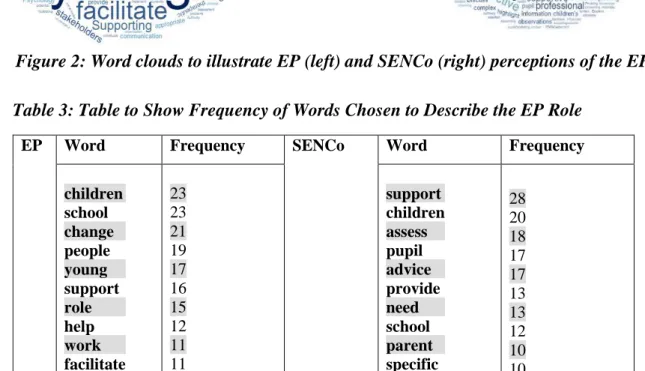
Figure 2: Word Clouds to Illustrate SENCo and EP Perceptions of the EP Role... 62
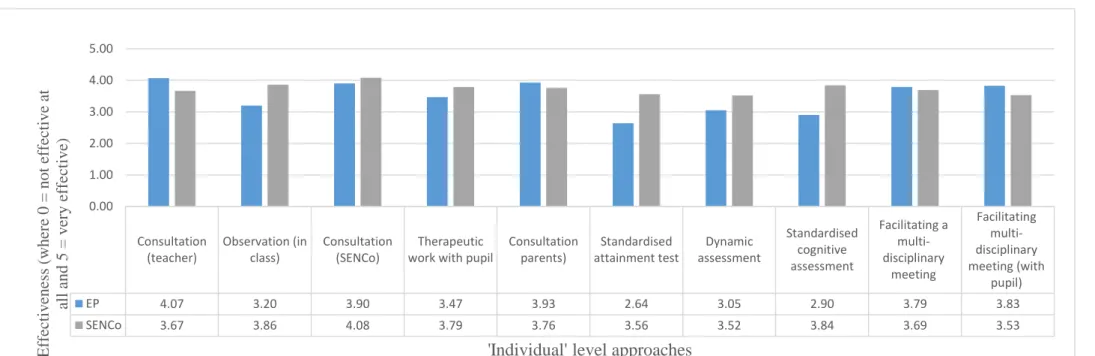
Figure 3: Bar Chart to Show SENCo and EP Mean Responses re: Effectiveness of ‘Individual’ Level Approaches ... 64
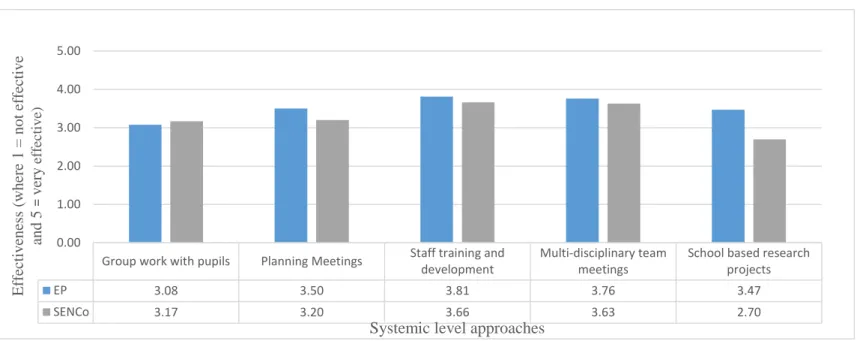
Figure 4: Bar Chart to Show SENCo and EP Mean Responses re: Effectiveness of ‘Systemic' Level Approaches ... 65
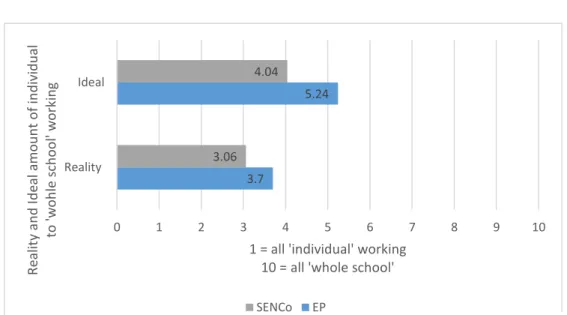
Figure 5: Bar Chart to Show Mean EP and SENCo Responses of Perceptions of Individual to Whole-School Working Completed by the EP in a ‘Reality’ and ‘Ideal’ Scenario ... 68
Figure 6: Final Thematic Map ... 76
List of Tables Table 1: Search Terms and Results Generated... 7
Table 2: Overview of Ethical Issues and Researcher Actions ... 58
Table 3: Table to Show Frequency of Words Chosen to Describe the EP Role ... 62
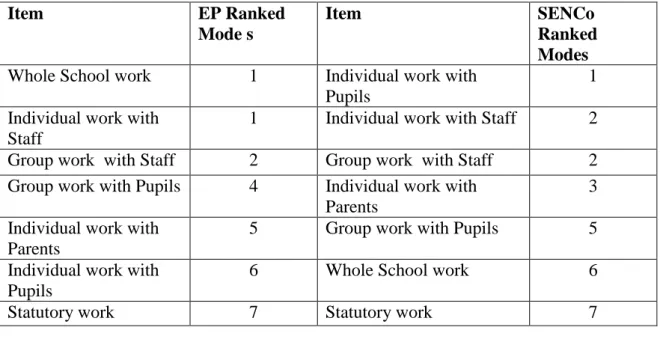
Table 4: Ranked Modal Responses or Items ... 63
Table 5: Table to Show Mean and Mode of Individual/Systemic Items (EP sample) ... 66
Table 6: Table to Show Mean and Mode of Individual/Systemic Items s (SENCo sample) ... 66
Table 7: Type and Frequency of Responses in the ‘Other’ Category ... 67
Table 8: Theme 1. Interpersonal Factors ... 69
Table 9: Theme 2: Understanding of roles ... 70
Table 10: Theme 3 Value of EP involvement ... 71
Table 11: Theme 4: Clarity of the EP role ... 72
Table 12: Theme 5: The School Context ... 73
Table 13: Theme 6: The Wider Context ... 74
x List of Abbreviations
ALN = Additional Learning Needs
ALNCo = Additional Learning Needs Co-ordinator BPS = British Psychological Society
CoP = Code of Practice
CYP = Children and Young People DfE = Department for Education
DfES = Department for Education and Skills EP = Educational Psychologist
EPS = Educational Psychology Service LA = Local Authority
LEA = Local Education Authority
PEP = Principal Educational Psychologist SEN = Special Educational Needs
SENCo = Special Educational Needs Co-ordinator SSI = Semi-Structured Interview
WAG = Welsh Assembly Government WG = Welsh Government
1
Educational Psychologist and Special Educational Needs Co-ordinator
Constructions of Effective Collaborative Working:
An Exploratory Study
2
1. Introduction
The current political climate of educational reform and the revised Special Educational Needs and Disability (SEND) Code of Practice in England (DfE, 2014) has placed specific emphasis on increased cohesion between multi-agency professional groups (Farrell, Jimerson, Kalambouka & Benoit, 2005; Fallon, Woods & Rooney, 2010; Buck, 2015). In preparation for legislative reform in Wales, the Welsh Government (WG) also released an Additional Learning Needs Educational Tribunal (ALNET) Bill in 2016. This outlined that a more contemporary method of multi-agency co-ordination was required to provide optimal support for children and young people (CYP) with additional learning needs (ALN). Central to this change is the ability of professionals across different agencies to engage in effective collaborative working.
An important aspect of the role of the educational psychologist (EP) is to work collaboratively with a myriad of professionals from other agencies including (but not limited to): school professionals e.g., special educational needs co-ordinators (SENCos), head teachers, class teachers; social and health care professionals e.g., medical
practitioners, professionals from Child and Adolescent Mental Health Services
(CAMHS), and social workers; and stakeholders e.g., families and CYP. It is expected that each individual, including EPs themselves, will hold his/her own constructions of the EP role, and that his/her own understanding of effective practice will vary based on personal agendas or expectations (Gameson, Rhydderch, Ellis & Carroll, 2005; Burr, 2015). Constructions of the role will also impact on EP practice, and in turn, further influence professional and stakeholder expectations and understandings of the role of the EP (Love, 2009). Therefore, in light of current educational reform in England and Wales, it is vital to explore perceptions of the EP role itself and what is considered effective working by professionals in different agencies to ensure cohesion, particularly those perceptions held by school professionals with whom EPs work closely. For the
3
purposes of the current study, the term ‘effective’ will be defined as useful for EP and service-user, to inform effective intervention and in turn facilitate positive change for CYP in educational settings (Wicks, 2013).
Much research has been devoted to investigating EP and school professional
perceptions of the EP role in both UK-based and multi-national contexts (e.g., Ahtola & Kiiski-Maki, 2014; Farrell et al., 2005; Bell & McKenzie, 2013). However, few studies have discussed facilitators and/or barriers to effective working between EP and school professionals (Davies, Howes & Farrell, 2008; Atkinson, Squires, Bragg, Muscutt, & Wasilewski, 2014). Far fewer studies have specifically compared the views of EP and special educational needs co-ordinators (SENCos; e.g. Ashton & Roberts, 2006). This is of specific significance because EP and SENCo effective collaborative working is central to ensuring best outcomes for CYP, as referenced in the legislative changes in England and Wales (e.g., WG, 2017). These call for a professional relationship based on co-operation, delegation and working towards shared goals.
1.1. Significance of Study for Practice
EPs spend approximately half (48%) of their working time in schools (with the majority of this time spent in mainstream primary schools; Kelly & Gray, 2000). As a profession, EPs are well placed to support schools provide appropriate support for pupils with additional learning needs (Kelly & Gray, 2000). In 2015, there were 105,000 reported learners with SEN/ALN in Wales, 12,530 of whom had a statement of SEN (Welsh Government, 2015). There is a legal requirement for each school to have a designated additional learning needs co-ordinator (Wales) responsible for coordinating the
provision of support for pupils with ALN in their setting. As such, SENCos are one of the main professional groups with whom EPs work and may be participating at each stage of EP involvement, from requesting EP input, collaborative working through
4
Consultation, and supporting staff with the implementation of appropriate intervention (Cole, 2005; Kelly & Gray, 2000). It is apparent that SENCos and EPs require realistic and shared expectations of EP input to enable effective EP involvement (Ashton & Roberts, 2006; Farrell et al.,2005; Wagner, 2000).
The introduction of the Additional Learning Needs Education Tribunal (ALNET) Bill (WG, 2016) has created changes to practice and legislation for professionals working with learners with ALN in Wales. A core element of this change will be a revision of the role of SENCo to ‘additional learning needs co-ordinator’ (ALNCo1). This will further emphasise the importance of the role (WG, 2016). The draft Code of Practice (WG, 2015; 2017) also states that the ALNCo will act as the key point of contact with local authority inclusion and support services, including educational psychology services (EPSs).
The outlined legislative changes in place support the view that collaborative working between EPs and SENCos is paramount, suggesting a need for a unified vision of effective practice and mutual understanding of roles (Farrell, 2009). Without this, effective EP involvement could be challenging and could lead to decreased satisfaction with EP service delivery from schools and a decrease in commissioned EP services which could have a negative impact on outcomes for schools (Farrell et al., 2005) and the longevity of the EP role (Ashton & Roberts, 2006). This is particularly relevant in the current context of traded services whereby EP services are purchased by schools. There is now the potential for school professionals to select a provider for services, and in doing so they will have a clear expectation of what they want delivered and
implemented. Moreover, the purchaser may require further clarity regarding what services EPs can deliver (MacKay, 2002), and effective involvement may be hindered if
1 The Bill replaces the terms ‘special educational needs’ (SEN) and ‘learning difficulties and/or disabilities’ (LDD) with the new term Additional Learning Needs (ALN).
5
there are unrealistic expectations of the service being commissioned. Therefore, as a profession, EPs need to work collaboratively with those who commission their service to ensure shared expectations of EP involvement.
Existing research suggests a disparity between school staff expectations of EP input and the reality of EP service delivery, both in the United Kingdom (e.g., Farrell et al.,2005; Ashton & Roberts, 2006; Atkinson, Regan, & Williams, 2006) and in multi-national contexts (Ahtola & Kiiski-Mäki, 2014; Bell & McKenzie, 2013; Wang, Ni & Ding, 2015). The existing literature suggests that discordant views of EP practice between EPs and school professionals could be a result of a variety of external and internal change drivers influencing and guiding the development of the profession (Stobie, 2002; Farrell, 2009). However, there is a comparative scarcity of literature exploring SENCo perspectives on effective EP practice in England and Wales, and to the researcher’s knowledge, there are no published studies based in Wales exploring these perspectives. This is a crucial distinction given different models of service delivery and different legislation in the Welsh context (Smith, 2012; WG, 2015).
1.2. Overview of the Literature Review
Throughout the literature review, theoretical and empirical research exploring
perceptions of the role of the EP will be presented and critically discussed with a focus on the changes occurring within the EP role in England and Wales. The review will be structured into three sections.
Whilst focusing on the external drivers for change, the first section will locate the development of the EP role (and the profession as a whole) within its historical context, including the implementation and impact of socio-political and legislative change. The second section will review internal drivers which have impacted upon the EP role including: a perceived within-profession “identity crisis” (Love, 2009, p 3);
6
inconsistency in practice models and theoretical perspectives; and school professional constructions of the EP role. The review of the emerging role, including changes to legislation, was limited to England and Wales to allow deeper exploration of the development of the EP profession within the context in which the current study is set. While this study focussed only on exploring the socio-political development of the role in England and Wales, it is important to note other issues beyond the confines of one national setting (Maliphant, 1997). Therefore, recent international research (published within the last 5 years) was included to assist in contextualising current issues regarding school professionals’ understanding of the role of the school psychologist/EP more widely. Within other national contexts, the role of the EP would be equivalent to a ‘school psychologist’; it is understood that these roles are broadly similar to the EP role in England and Wales (Farrell et al., 2005).
The third section will provide a review of literature exploring school professionals’ perceptions of the role of the EP. Particular emphasis is given to studies focusing on SENCo perceptions of the EP role, however, given the comparative lack of literature in this area, the search was widened to include teaching staff and senior management perceptions of EPs. This included research in a variety of educational provisions including primary, secondary, specialist, early years and post-16 settings. A lack of studies conducted within post-16 settings could be a consequence of the relatively recent increase in age range from 19 to 25 of CYP with which an EP may work, covered by the recent SEN legislation implemented in England (DfE, 2014) and ALN reform soon to be implemented in Wales (WG, 2015).
Finally, research exploring SENCos and EPs perceptions of the EP role will be reviewed, and the context for the current research focus described. Given the limited scale of the current research, it was felt that exploring the views of other professionals outside schools, or stakeholders such as parents or CYP, would not be feasible within
7
the current review. The review will conclude by defining the research questions for the current study.
1.3. Search Terms and Sources
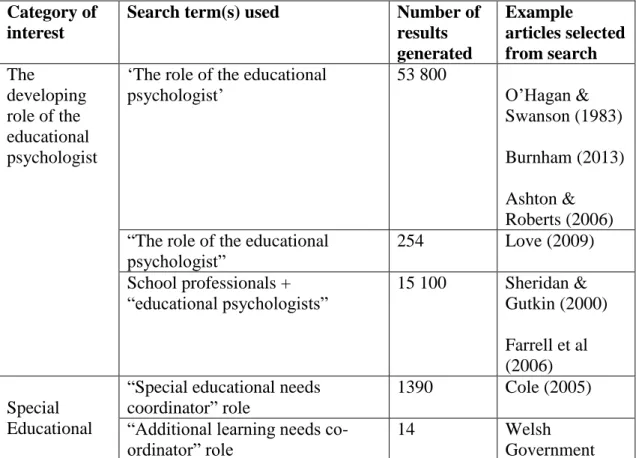
The electronic search engines PsychInfo, British Education Index, Applied Social Science and Index Abstracts and Google Scholar were used to conduct a review of the literature. Search terms were divided into four areas relating to (1) the developing role/profession of the EP / educational psychology (2) the role of SENCos/ALNCos in England and Wales (3) perceptions of the EP role; and (4) collaborative working. Use of the database Google Scholar allowed a comprehensive search to be conducted through of the adoption of a variety of phrases and utilisation of cited sources. A comprehensive list of search terms used during the literature review is presented in table 1. Articles, books and relevant papers were sourced during June 2016 – January 2017.
Table 1: Search Terms and Results Generated Category of
interest
Search term(s) used Number of
results generated Example articles selected from search The developing role of the educational psychologist
‘The role of the educational psychologist’ 53 800 O’Hagan & Swanson (1983) Burnham (2013) Ashton & Roberts (2006) “The role of the educational
psychologist” 254 Love (2009) School professionals + “educational psychologists” 15 100 Sheridan & Gutkin (2000) Farrell et al (2006) Special Educational
“Special educational needs coordinator” role
1390 Cole (2005) “Additional learning needs
co-ordinator” role
14 Welsh
8 Needs co-ordinators documentation (2015; 2017) School professional perceptions of
+ educational psychologist/y 3335 Gilman & Gabriel (2004) Farrell et al (2005) Perceptions of
the EP role ‘Educational Psychologists role’ + Joined up/collaborative working
629 Ashton & Roberts (2006) Fallon, Woods & Rooney (2010) “teachers and educational
psychologists” + collaboration 702 Davies, Howes and Howes, (2008) Collaborative working Collaboration + “school professionals” + “educational psychologists” 7186 Guva & Hylander (2012) "Multi-agency working" + "educational psychologists" 603 Farrell, Woods, Lewis and Rooney (2006) The range of references included in the literature review were reduced through initial examination of the abstract for particular relevance to the EP role in England and Wales, and included both theoretical texts exploring the development of the EP role and empirical studies exploring perceptions of school professionals of the EP role. Studies were excluded if they focused on the EP role in a particular area e.g. supporting school professionals to work with pupils with autism spectrum condition. This ensured that the review retained a general overview of school professional and EP perceptions of EP involvement within schools.
A vast number of studies were completed in the UK and in America, therefore only studies published within the period 1970 – 2017 were included. If a relevant article was identified with an older publication date (e.g. O’Hagan & Swanson, 1983), the ‘cited by’ function was used which allowed the exploration of more recently published articles which may have made reference to the identified relevant article. Key dated references were included within the review to gain an historical overview of the context in addition to more recent research to ensure relevance to the current context.
9
Studies conducted within international settings were included if they had specific relevance to school professional perceptions or expectations of the involvement of school psychologists. Articles focusing solely on an international setting (e.g. Bell & McKenzie, 2013) were selected and perused in further depth if published within the last 5 years to allow exploration and comparison of perceptions of the EP role within other international contexts.
1.4. Inclusion / Exclusion Criteria
Throughout the searching process relevant literature was filtered by using the following inclusion criteria.
Published in the English language
Published within the period 1970-2017
Relevant to the developing role of EPs in England and Wales, including EP perceptions of their own changing role
Research exploring school professionals’ perceptions of working with EPs, or of the EP profession
Research based in primary, secondary, specialist, early years or post-16 setting and
Recent research (within the last 5 years) conducted in multi-national contexts.
Conversely, studies were not included if they met the following exclusion criteria
Published in a language other than English
Published outside of the period 1970-2017
Included other stakeholder perceptions of the EP role (e.g., other multi-agency professionals, CYP, families) and
Theoretical literature relevant to the developing role of school psychologists in other multi-national contexts.
10 1.5. Definitions and Terminology
1.5.1. Special Educational Needs Co-ordinator
Although the term ‘additional learning needs’ is becoming increasingly used in place of ‘special educational needs’ in Wales, at the time of writing, the term ALNCo is not consistently used across all educational settings in Wales (WG, 2016). As the most commonly used term within the research literature, the professional title ‘SENCo’ will be used throughout this literature review and the subsequent research study to retain consistency.
1.5.2. Individual and Systemic Working
Developed by Mackay in 1989, and incorporated into official documentation, Munro (2002) outlined five core functions of the role of the EP including: consultation, assessment, intervention, training and research. These are expected to be conducted at three levels: individual, organisation and local authority level (Munro, Scottish Executive, 2002). Although developed in Scotland, the items are considered appropriate to describe the role across England and Wales (Munro, 2002). For the purposes of the current literature review, the terms ‘individual-based approaches’ and ‘individual assessment’ are interchangeable and refer to any work conducted by an EP on an individual level rather than at an organisation or local authority level, e.g., consultation regarding, or direct work with, a pupil (Woods & Farrell, 2006; Boyle & Lauchlan, 2009).
The ‘systemic’ aspect of the EP role has been defined by Norwich (2005) as the influencing of organisational structures e.g., through research or policy development, staff training and development, and the management and support of learning or
behaviour issues at a wider level. For the current review, this term will refer to any work conducted by an EP at a school or organisational level which may create positive
11
2. The Changing Role of the Educational Psychologist: External Drivers The EP profession has experienced significant change over the last century since its inception in the early nineteen-hundreds (Farrell, 2010). The role of the EP has been a subject of ongoing discussion within the literature described as “perhaps the most enduring debate within educational psychology” (MacKay, 1997, p. 165), With recurring themes in the literature of “reconstruction, reformulation and refocusing” (Fallon, Woods & Rooney, 2010, p. 2), it is suggested that there may be a lack of
confidence within the profession regarding the distinct contribution and directions of the profession (Love, 2009). Social, political and legislativechange can create a challenging environment for any profession seeking to maintain its identity and this may be
especially relevant for EPs due to the complex and changing context in which they work (Cameron, 2006). The role of the EP continues to be debated and reformed in England and Wales (Buck, 2015; Children and Families Act, (H.M.Gov., 2014); SEND Code of Practice (DfE, 2014); draft ALN Code of Practice (WG, 2017).
2.1. The Historic Context
In order to understand the current context for EPs, it is important to first consider the historical context that informed the past development of the profession. The Education Act in 1870 implemented legal schooling for all children in the UK and thus a need was identified to support all CYP to achieve optimal educational outcomes (Education Act, 1870). Specifically, psychometric testing was considered necessary to inform placement of CYP within appropriate educational provisions (Boyle, 2014; Farrell, 2009; Arnold & Hardy, 2013). In 1913, Cyril Burt was appointed as the first EP working in London; through his use of psychometric testing, research, and the provision of psychological advice, Burt contributed to guiding educational policy across the capital (Boyle & Lauchlan, 2009; Lindsay & Miller, 1991). As more EPs were appointed, they were
12
placed within child guidance clinics and initially worked under the supervision of psychiatrists. This model of working embedded the concept of EPs as assessors, as this fitted within the context of psychiatry as a profession (Fallon, Woods & Rooney, 2010). It has been since argued that this historical context had a profound impact on the
subsequent direction(s) of the profession (Farrell, 2009). 2.2. Approaches to Practice
2.2.1. Systemic Approaches
In the late 1970s, individual and assessment-based approaches became increasingly criticised within the theoretical literature for overlooking relevant information about the systems around the child and obscuring the influence or contribution of individuals within the home or school environments (Gillham, 1978). As part of the
‘reconstructing’ movement, Gillham (1978) pioneered the view that new methods of practice had to be adopted to meet adequately the new complexities that EPs
encountered; this was considered to be a significant text which is argued to have influenced future directions of the field of educational psychology (Farrell, 2010). It was argued that continued use of a ‘within-child’ or ‘deficit’ model i.e. a model with a focus on individual assessment or therapeutic work (Buck, 2015) gave “insufficient attention to external environmental influences” (Maliphant, 1997 p. 105). This was suggested to possibly result in poor progression in empowering educational
establishments to become more inclusive (Farrell et al., 2009). During this era, EPs were encouraged to work more systemically in the pursuit of change within the systems and establishments in which they worked and reduce their clinical role (Norwich, 2005). This occurred in line with the development of General Systems Theory in many
scientific spheres, which may explain the drive for this approach (Bertalanffy & Sutherland, 1974). It has since been argued that a shift towards systemic approaches was a cause for concern and could have had a negative impact on the future of the
13
profession. Stanley (2010) argued that, by embarking on a theoretical shift from an individual assessment-based approach to a more systemic focus, EPs have “challenged their own existence” (p. 82) by curtailing their key roles of assessing children for appropriate educational placements and working in a more collaborative systemic way to empower school staff.
Despite attempts to work more systemically with schools, financial and time restraints on resources can mean that systemic working has not always been a priority for schools (Greig, 2007). Historically, school professionals have held the view that EPs should not have a role in systemic school improvement work such as policy formulation or
evaluation of teaching methods (O’Hagan & Swanson, 1983). However, these findings might be outdated and a new perspective may be found if this study was repeated in the contemporary context. More recently, Ashton and Roberts (2006) found that only 2 of 58 SENCos expressed an interest in EPs engaging in increased systemic working which could suggest a continuation of the historic view that EPs should not work systemically, held by school professionals (O’Hagan and Swanson, 1989). Furthermore, MacKay (2002) wrote that the “traditional role of individual assessment and counselling” (p. 250) were most highly valued by schools, suggesting that they might advocate for continued individual level involvement. At the time, this assertion indicated that EPs may be met with resistance within their own profession to retain their traditional roles and external resistance from adjacent professions when attempting to expand the
parameters of their role (Bell & McKenzie, 2013). The EP profession placed significant pressure on itself to engage in more systemic and preventative work, described by Leadbetter (2000) as “project work – good, casework – bad” (p. 458 ). It is suggested that SENCos may also have a sense of anxiety about allocating EP time to systemic issues, perceiving them to be less of a priority than individual based casework (Cole,
14 2005).
2.2.2. Individual-level Approaches
Despite a shift in theoretical approaches towards a more systemic method of working within the EP profession, over the last 30 years individual approaches have remained a central aspect of the EP role (Farrell, 2010; Rees, Farrell & Rees, 2003). Valued by both EPs and school professionals, researchers argue that individual level work is essential in the identification of a pupil’s needs and in implementing effective interventions, with the potential to evolve and inform change at a school or local authority level (e.g. MacKay and Boyle, 1997; 2007). However, Norwich (2005)
warned that the more frequently a child-focused perspective is adopted, the less EPs can effectively intervene in wider systemic factors impacting on the school as a whole. There has been much debate about the term ‘individual assessment’ and the various forms this may take within EP practice, for example, psychometric assessment, formative assessment, or iterative testing (Woods & Farrell, 2006).
In a study involving 142 EPs, Woods and Farrell (2006) found that many EPs perceived value in working with individuals, with results from their study indicating that
‘individual interview with the child’ was deemed most commonly used by 97% of EPs, and rated as most useful by 63% of the same sample. Considering psychometric testing in particular, the authors found that 40-46% of participants reported ‘commonly using’ psychometric testing in their practice, however, this item was rated as ‘most useful’ by only 6-13% of the same sample (Woods & Farrell, 2006). This supports the assertion that there is a persistence of individual based working, although this response could reflect an experience of cognitive dissonance for EPs given discord between their perceptions of most commonly used, and most useful, approaches (Festinger, 1962).
15
However, this study focussed only on assessment measures and therefore did not
include more systemic methods of working. It would be informative to explore how EPs would rate individualised ways of working when also asked to rate systemic
approaches.
Farrell (2009) suggested that the frequency with which EPs carry out certain methods of working may be indicative of responses to expectations of service users, rather than resulting from their own views. This may be a consequence of EPs moving towards more service delivery-focussed models of practice and therefore more focus being placed on ‘customer’ expectations. Alternatively, this could reflect the professional pressures EPs may experience from organisational expectations (e.g., local strategies and school professionals). Local authority administration staff have been shown to hold the view that EPs carry out such assessments as a fundamental aspect of their role, a finding which also suggests a top-down basis for this narrative about the EP profession (Gilman & Gabriel, 2004). Topping and Lauchlan (2013) argue that LA strategies and/or approaches may dictate certain requirements such as assessment data. Systemic or local factors such as these could perpetuate expectations of the EP as ‘assessor’ that the profession itself may be attempting to move away from, and further create
disconnect between EP approaches and SENCo expectations. This may be a cyclical process contributing towards a continued understanding that individual assessment remains a central element of EP work and could be an element of the perceived identity crisis within the profession (Love, 2009). This, in turn, could influence service delivery to schools, which has implications for both service quality and service-user satisfaction (Woods & Farrell, 2006). The research suggests there remains a current dilemma for EPs regarding the benefits of individual and systemic working (Pellegrino, 2009). In a context where EPs were otherwise being encouraged to work more systemically, the introduction of a statutory role (taking place at an individual-assessment level) may
16
have generated a sense of internal conflict and uncertainty surrounding the identity, professional values and the direction of the profession (Buck, 2015; Leadbetter, 2000). 2.3. A Statutory Role
The release of the Summerfield Report in 1968 and the Warnock Report in 1978 laid the foundations for the introduction of Statements of SEN in England and Wales. The Warnock Report gave rise to the Education Act (1981) which introduced the legal duty of identification and assessment of pupils who may require additional resources from LAs to have their special educational needs met. Within legislation that followed, a legal duty was highlighted for EPs to be involved in making distinct psychological contributions to support CYP with SEN and ensure a person-centred focus (Arnold & Hardy, 2013). This input remains central to the EP role in the present day, having been recently included in the Children and Families Act 2014 and argued to be a local authority’s (LA) main motive for employing EPs, thereby increasing longevity and security for the profession (Buck, 2015).
Described as "perhaps the single greatest disaster for educational psychology services” (Faupel & Norgate, 1993 p. 52), it was warned that EPs would be viewed as
‘gatekeepers’ to additional resources if they contributed towards statutory assessments. Warnock herself reflected that the emphasis had shifted away from identifying and supporting individuals’ needs and instead had become focused on resource allocation (Warnock & Norwich, 2010; Shaw, 2008). Atkinson, Regan and Williams (2006) suggested that EPs should continue to develop new ways of working that shift the focus of the role from statutory work to systemic work, to continue to promote the range of skills on offer as a profession. This is particularly noteworthy in light of the increasing emergence of commissioned services across England and Wales (Lee & Woods, 2017).
17 2.4. Multi-Agency Working
Over the past 20 years, legislative change and Government directives have also introduced increased multi-agency working for EPs forming part of an integrated Children’s Service in England (Every Child Matters 2003; Children and Families Act 2014) and Wales (Children and Young People: Rights to Action 2003) ). These changes emerged as a result of criticism that the systems responsible for organising support for families and children with SEN were poorly co-ordinated (Maddern, 2012). It was deemed essential for multi-agency professionals to work together more cohesively and share a common understanding of best outcomes, and with this, develop clarity
regarding roles and responsibilities (Arnold & Hardy, 2013). It was a widely held view that more effective joined-up services would mean better services for families and CYP, acknowledging the interrelatedness of family needs across multiple fields such as education, health and social care (Hutchings & Williams, 2014). Multi-agency working ensures that all work carried out by particular professionals complements the work conducted by other professionals, in both depth and detail (Fox, 2015). An increase in multi-agency working may have contributed to a decrease in understanding of the EP role, not only for stakeholders but for EPs themselves (MacKay, 2007; Farrell, et al., 2006).
Large scale governmental reviews have highlighted a lack of certainty about the EP role from school professionals. Specifically, school professionals reported that the nature of support service available and how these agencies worked in collaboration were areas of uncertainty (Kelly & Grey, 2000). It may therefore be challenging for stakeholders to understand the unique yet complementary roles of professionals in multi-agency teams. A lack of clarification of the EP role is noted by the release of a document in Wales co-written by the WG and the Association of Educational Psychologists (AEP) in 2016. Designed to assist in informing parents/carers and professionals about the role of EPs
18
and their distinctive contribution, the identified need for this document suggests a current lack of clarity regarding the role of the EP within Wales.
The coming together of different professional ‘knowledges’ and ways of working could have contributed to a sense of insecurity for EPs regarding their distinctive contribution (Love, 2009; Guvå & Hylander, 2012). For example, Stanley (2010) suggests that the introduction of the educational advisory teacher role has led to expectations from service users that an aspect of the EP role will include the recommendation of practical strategies to support children and young people with special educational needs. If this is not delivered, this could be a cause for concern and reduce stakeholder satisfaction with the EP role, particularly within a traded context where commissioners are purchasing EP service involvement and could be deterred if they feel their expectations of the service are not met (Fallon, Woods & Rooney, 2010; Ashton & Roberts, 2006). Miller (2008, cited in Law, 2008) felt that EPs may not communicate their roles effectively to multi-agency professionals until they have clarity about the role themselves (Cameron, 2006).
Farrell et al. (2006) reported that some EPs in smaller Welsh local authorities worked more effectively with multi-agency professionals due to having established rapport with them. However, others indicated that the smaller sizes of the local authorities stifled changes, new initiatives and continued professional development opportunities. Gaskell and Leadbetter (2009) interviewed ten senior EPs across six English LAs who reported that multi-agency working was a positive experience in reaffirming their positions, roles and contributions within a multi-agency team. The authors speculated whether an increase in multi-agency working in recent years helped define the parameters of each professional role. Alternatively, this outcome could be a result of senior EPs holding more years of experience of working alongside professionals from other agencies and having increased confidence in their personal roles and responsibilities. Perhaps it
19
would be helpful for this study to be replicated with trainee or newly qualified EPs to explore perceptions of working within multi-agency teams from EPs at different stages of their professional journey.
2.5. Current Context
The current educational reforms have been described as the biggest changes
experienced in a generation (Maddern, 2012). Legislative changes regarding SEN do not occur frequently and the last major change occurred in the 1980s with the
introduction of a statutory role in relation to the formal assessment of SEN through the process of development a Statement. Therefore, it could be interpreted that the present political context continues to be one of great change in both England and Wales which will influence the direction of the EP profession for the foreseeable future. This
highlights the current need to explore the views of EPs and SENCos regarding
facilitators and barriers to working effectively and ensure this information is utilised to inform future practice.
2.5.1. English Context
In England, the reforms including the new SEND Code of Practice (DfE, 2014) were approved in 2014 and were predicted to effect more change than had occurred in the last 30 years (Tutt & Williams, 2015). This Code of Practice advocates an increase in
integrated working between education, health and social care service professionals. Statements of SEN were replaced by Education and Health Care Plans (EHCPs), designed to create a cohesive and multi-agency support plan, putting the CYP and family at the centre of the process. The age range for EP involvement also increased from 0-19 to 0-25. Fox (2015) suggests that the introduction of EHCPs was a positive change due to its promotion of multi-agency working. It could be argued that a recent increase in multi-agency working within the statutory context has assisted with effective
20
collaboration and improved understanding of roles between professional groups, as suggested by the findings of Gaskell and Leadbetter (2000).
2.5.2. Welsh Context
In the Welsh context, similar changes are emerging. The proposed changes include the introduction of a single legal framework re: ALN from age 0-25 and the replacement of Statements of SEN with Individual Development Plans (IDP), ensuring that families and CYP remain central to the process of developing appropriate support. The key aspects of the legislative changes include a commitment to increased multi-agency working and the involvement of young people more explicitly in the process. This suggests a need for further cohesion between multi-agency professionals in Wales. Furthermore, the importance of raising awareness of the EP role has been highlighted by the provision of governmental guidance on the roles and functions of EPs in Wales (WG, 2016). This could suggest that the WG recognise that a deeper understanding of the EP role is required. This lack of clarity may be a factor impairing effective
collaborative working.
2.5.3. Traded Services
The emergence of traded services, where EPSs offer schools an opportunity to purchase EP time, has been reported to have greatly influenced the nature of the EP role. Lee and Woods (2017) explored perceptions of trading across two local authorities in North-West England by EPs and commissioners. They report that successful trading has seen the commissioning of more creative and innovative ways of working for EPs by schools. The authors found that, within a traded model, commissioners held a better understanding of the costs of the EP, and with it an increased appreciation of the value and distinctiveness of the EP’s contribution. Although this study only involved two local authorities in one geographical area which may not be representative of trading/funding implications country-wide, it is indicative that EPs can be
21
commissioned to engage in more creative methods of working reliant on good marketing of the broad range of skills and services available for purchase. Naturally, this requires EPs to work in strong collaborative partnerships with those who purchase the service to understand what commissioners want and expect and to ensure this is delivered.
2.6. External Drivers: Summary
The literature suggests that a large number of legislative, social and political changes have influenced the direction of the development of the EP profession and how EPs are viewed by stakeholders and those professionals who work closely alongside them. The EP profession has been influenced by a number of external drivers for change including: a historic individual assessment focus, an aspiration to work systemically to broaden the role; a blurring of professional boundaries; pressures to preserve an assessment focus while also delivering new services, changes to legislation and to service delivery (i.e., a progression towards commissioned services). These factors may have influenced the role in different ways, contributing towards a lack of certainty of the role amongst both EPs themselves and their school colleagues (Woods, 2012).
3. The Changing Role of the Educational Psychologist: Internal Drivers Internal drivers for change have existed in parallel to the external drivers of change due to within-profession reflection and subsequent modifications to executive frameworks and practice models (Wagner, 2000; Norwich, 2000; Buck, 2015; Farrell, 2010). Ashton and Roberts (2006) suggest factors that may have contributed to difficulty in defining the EP role, including: a lack of clarity in defining who the client is;
inconsistency within the profession in relation to practice (Ashton & Roberts, 2006), uncertainty about the unique contribution of the EP within a multi-agency context; and
22
‘conflict’ about what educational psychology services offer and what schools
professionals, or other stakeholders, may expect.However, the authors outline that their research derived from discussions between newly qualified EPs, whose experiences may differ greatly from those experiences of more experienced EPs. It is also
noteworthy that less research has been published on the role of the EP in the UK within the last 5 years, which may be an indication that EPs are more certain within their roles and professional identities (WG, 2016; SEND Code of Practice; DfE, 2014). Boyle and MacKay (2007) argued that the change process within a profession is inevitably slow and requires frequent review to ensure positive change is taking place and continuity established.
3.1. Defining the Role
Defining the client is a responsibility outlined in the most recent Code of Conduct and Ethics for Psychological Practitioners (BPS, 2009). Put broadly, the ‘client’ for the EP may include the CYP, families, school professionals, and in some cases, the local authority. The expectations of EP service delivery from these stakeholders can add further complication to defining the role due to difficulties in identifying to whom the EP is an advocate for (Ashton & Roberts, 2006). Each individual/group may present a conflicting demand that the EP is expected to manage (MacKay, 2002; Kelly & Gray, 2000). Furthermore, EPs themselves will hold their own view of what EP service delivery should look like. Norwich (2000) identified a separation between applied and academic educational psychologies and argued that the EP’s adoption of a humanist approach, rather than a scientific one, may have resulted in diminished confidence in professional identify for some practitioners.
As a result of difficulty defining the client and the role, Love (2009) speculated whether the EP profession had experienced an “identity crisis” (p. 3) caused by a lack of
23
confidence in both their unique contribution and the direction of the profession. This has been echoed in literature produced by EPs themselves (e.g., Buck, 2015; Stobie, 2002; Fallon, Woods & Rooney, 2010; Tarrant & Cook, 2008; Evans, Grahamslaw, Henson & Price, 2012) and for those working closely with the profession (e.g. Farrell et al., 2005; Woods, 2012; and Akinson, Regan & Williams, 2006). It has been speculated that this was caused by external drivers with the profession attempting to redefine their role from an individual-based role to a more systemic role, contrary to the expectations of those around them (Fallon, Woods & Rooney, 2010). Boyle and Lauchlan (2009) argued that in 2009, the profession had not yet recovered and that these insecurities continue to permeate throughout EP services.
Conversely, recent research indicates that EPs report improved professional
effectiveness as a consequence of traded services allowing the profession to expand beyond previous parameters and negotiate the offer of services within a traded context (Lee & Woods, 2017). This may be indicative that traded models are supporting the clarification of the parameters of the EP role for schools and EPs. However, although the introduction of traded services appears to have had a positive effect, the authors specify that their study may be limited by searching for the positive outcomes and may therefore have overlooked any negative outcomes of the introduction of traded services. An example of which might be that the reliance on schools to commission local
authority rather than private EP services could lead to further dependence on a service dictated by customer expectations (Ashton & Roberts, 2006). This highlights a further need for clarity of EP services purchased when considering that more of the profession may move towards a traded model of service.
24 3.2. Within-profession Diversity
3.2.1. Methods of Service Delivery
There are reported discrepancies in perceptions of optimum methods of service delivery throughout the EP profession. As outlined above, some EPs argue that there is
significant psychological worth and benefit to be found in individual casework (Boyle & Lauchlan, 2009; Leadbetter, 2000; Atkinson et al, 2014). Others may place more value on focusing on systemic or preventative work (Topping & Laughlan, 2013; Jimerson, Oakland & Farrell, 2006). Burnham (2013) argued that a consensus on the optimum role and working practice of EPs remains elusive, since there is such a sheer diversity of accepted practice models and theoretical stances. It could be argued that uniformity of accepted practice models in EP practice is necessary to avoid differing expectations of the role from professionals working alongside the profession. Although diversity of working approaches may not itself be an issue, professional inconsistency in relation to practice (Ashton & Roberts, 2006) between EPs may have a detrimental impact on those who require adequate understanding of the EP roles and functions. Clarification of school professional expectations of the role is impossible if there is a lack of agreement about the role within the profession itself (Farrell et al, 2005). Researchers have suggested that teachers still have a limited understanding of the broad roles and functions of the EP (Gilman & Medway, 2007). Even though a diverse toolkit is required within the EP role, it could be argued that significant inconsistency within the profession in relation to practice may lead to confusion when school professionals work with multiple EPs and the diversity of working methods is amplified.
However, with external legislative change creating modifications to the way EPs practise, such as changes to Codes of Practice in England and Wales and the
25
firm understanding and definition of the role both for EPs themselves and colleagues of an EP. Therefore, self-reflection is vital to ensuring professional identity and consistent service delivery both within and between EPSs (Fallon, Woods & Rooney, 2010). The research literature emphasises a need for EPs to have clearer guidance on their role before they can be assured of their unique contributions to schools.
Within the field of clinical psychology, the British Psychological Society (BPS) released a document which provides a detailed account of the principles and processes for formulation within the profession (BPS, 2011). BPS guidance for the EP profession, in addition to the document published by the WG (2016b), would be beneficial to provide clearer guidance for school colleagues but also for other colleagues in
education, health and social care who may require further clarity on the EP role, and for EPs themselves.
3.2.2. Frameworks for Practice
Divergent views remain within the profession itself regarding professional duties, role responsibilities and appropriate activities. Internal reflection within the EP profession caused a shift from working at an individual level to a wider systemic level, in response to the external drivers of change. Given this, frameworks for practice have changed over time, which may reflect the development of the role (Wicks, 2013).Examples of
commonly used frameworks include the Constructionist Model of Informed Reasoned Action (COMOIRA; Gameson & Rhydderch, 2008), the Monsen et al. Problem-Solving Model (Monsen & Fredrickson, 2008) and the Woolfson et al. Integrated Framework (Woolfson, 2008).
COMOIRA is a flexible framework underpinned by four core elements: social constructionism, systemic thinking, enabling dialogue and informed and reasoned
26
action. Utilising an executive framework for practice such as COMOIRA can be effective in managing complex work at different levels, which could enable
practitioners to work creatively with a variety of situational factors within an individual or systemic context. However, given that there is such variation between executive frameworks, this suggests potential difficulty for the EP role in terms of developing an agreed view of practice, as each practitioner may practise in a different way. The variety of frameworks available may make comprehension of the role more challenging for school professionals as they themselves take differing views on the EP role and current inconsistency in working approaches between individuals (Wicks, 2013).
3.3. Expectations of School Professionals: A Collaborative Approach
EPs work primarily with school professionals, such as SENCos and class teachers, to create positive change for CYP and inform effective intervention (Farrell et al., 2005). Gillham states: “…by the very nature of their trade, educational psychologists can only really be effective through other people” (1978 p. 15.). Adults actively control the environment around a child and are thus in an optimal position to create consistent change in that environment. Researchers have argued that expectations of school professionals are the most influential factor affecting an EP’s work (Guvå & Hylander, 2012). Multiple studies have highlighted the need for school staff and EPs to have a clear approach to collaborative working to ensure the best outcomes for CYP (Farrell et al 2005; Beaver 2011). Farrell et al. (2005) argued that teaching staff and EPs must have aligned expectations of EP involvement in order to ensure that the EP work is valued. Farrell et al. argue that if their work is not valued, and as a result, EP involvement is not sought in the future, then “services to children and families will be impoverished as a result” (p. 15).
27
Although MacKay (2002) argued that EPs should not respond to the expectations of those around them but rather create their own expectations, Fox (2015) argues that the role of any profession is construed from perceptions of colleagues, service users and those within the profession alike. It is therefore essential that school professionals have a mutual and aligned understanding of the roles and functions of an EP and value the work that they do, deeming EP input to be both effective and worthwhile (Gilman & Medway, 2007; Atkinson, Regan & Williams, 2006). Farrell (2010) suggest a shortage of EPs leading to an inability to respond quickly to request for involvement and a fear of losing their distinctive role, could lead EPs to continue to respond as the customer expects. Rothì, Leavey and Best (2008) highlighted a need within the literature to discover how school professionals envisage ‘good’ working relationships with multi-agency professionals. Research into these areas should aid in the bridging of service boundaries and promote more collaborative working in future (Wagner, 1995). This could be an example of circular causality whereby EPs attempt to fulfil school
professional expectations of the role, which influences their expectations of the EP role further, and could ultimately lead to little change within the profession.
Research has shown that individuals are less likely to implement change if they do not have a sense of ownership and collaboration throughout the process (Blase, Van Dyke, Fixsen, & Bailey, 2012). In a sample of 1533 teachers and special education teachers, Gilman and Medway (2007) found that teachers felt they were not active collaborative partners, with participants reporting that they only sometimes utilise the strategies developed in consultation, suggesting a perception of a partial involvement in the collaborative process.Gilman and Medway (2007) theorised that this perspective may negatively influence school professional perceptions of school psychologists. The development of the Consultation Model (Wagner, 2000) as a practice model has
28
supported the process of shifting towards more collaborative working through joint problem solving approaches (Cording, 2011).
3.5. Internal Drivers: Summary
The literature suggests that the prevalence of speculation and self-reflection as a profession has sparked change for the EP. The questions posed by this literature regarding the nature of the client and the nature of the EP role itself are frequently framed in terms of how a lack of definite guidelines impact upon the expectations of school professionals about EP working. Again, a further need is emphasised for EPs to receive clearer guidance on their role in order to guide effectively the expectations of those with whom they work closely, e.g. guidelines provided by a professional body, and perhaps consistent use of one executive framework by all EPs.
The different perspectives portrayed within the theoretical literature are authored by practising EPs and may be a testament to the internal conflict with the role. However, throughout the literature, a select few researchers were active commentators within the field and provided a representation of the voice of the entire EP profession. Caution must be applied to avoid over-generalisation and assume that these issues exist for the entire profession.
4. Constructions of Educational Psychology practice
A wealth of research has illustrated discrepancies in expectations, and perceived effectiveness, of the broad roles and functions of the EP between school professionals and EPs themselves (Gilman & Medway, 2007; Kelly & Gray, 2000). Trends within the research indicate that school professionals value the more ‘traditional’ EP roles of the EP (e.g., direct work with pupils; MacKay & Boyle, 1994; MacKay, 2007). Research has also shown that systemic working approaches were preferred by EPs, as suggested within existing studies (O’Hagan & Swanson, 1983; Norwich, 2005). It is perceived that
29
disparities between EP and school staff expectations is an international phenomenon, with replicated findings observed in America (Farrell et al., 2010; Gilman & Gabriel, 2004), Australia (Bell & McKenzie, 2013), across a variety of countries in Europe (Ahtola & Kiiski-Maki, 2014; Farrell et al., 2005), and in China (Wang, Ni & Ding, 2016).
4.1. Teaching Staff
Research has suggested that school professionals and EPs have expectations that EPs will engage in direct work with pupils and focus on assessment work (Kelly & Gray, 2000; Farrell et al., 2005). Atkinson, Regan and Williams (2006) presented a case study of three Year 5 class teachers, who reported addressing problems, assessment and work with parents as central roles of the EP. The authors suggest that these teachers had a lack of awareness of the broader range of services the EP could offer the wider school. Furthermore, Kelly and Gray (2000) also reported that from a sample of 500 school professionals did not consistently perceive there to be an EP role in systemic working based in school improvement. EP involvement in wider-school issues could be considered a form of unnecessary duplication from school professional perspectives (O’Hagan & Swanson, 1983).
Similar outcomes have also been noted in multi-national studies. Ahtola and Kiiski-Mäki (2014) conducted a study in Finland exploring how school professionals,
including teachers and head teachers, construed what they needed from the EP service. It was found that consultation was deemed important by teachers but not as important as direct therapeutic approaches with the pupils, with systemic work viewed as the least valued approach. Again, schools reported that they would prefer EPs to undertake further individual therapeutic work with pupils and take on a more ‘expert’ role than EPs were willing to do (Ahtola & Kiiski-Mäki, 2014).