https://doi.org/10.5194/hess-22-5403-2018 © Author(s) 2018. This work is distributed under the Creative Commons Attribution 4.0 License.
Analysis of the streamflow extremes and long-term water balance
in the Liguria region of Italy using a cloud-permitting grid
spacing reanalysis dataset
Francesco Silvestro, Antonio Parodi, Lorenzo Campo, and Luca Ferraris CIMA Research Foundation, Savona, Italy
Correspondence:Francesco Silvestro ([email protected]) Received: 15 June 2017 – Discussion started: 14 August 2017
Revised: 28 August 2018 – Accepted: 14 September 2018 – Published: 19 October 2018
Abstract.The characterization of the hydro-meteorological extremes, in terms of both rainfall and streamflow, and the es-timation of long-term water balance indicators are essential issues for flood alert and water management services. In re-cent years, simulations carried out with meteorological mod-els are becoming available at increasing spatial and tempo-ral resolutions (both historical reanalysis and near-real-time hindcast studies); thus, these meteorological datasets can be used as input for distributed hydrological models to drive a long-period hydrological reanalysis. In this work we adopted a high-resolution (4 km spaced grid, 3-hourly) meteorologi-cal reanalysis dataset that covers Europe as a whole for the period between 1979 and 2008. This reanalysis dataset was used together with a rainfall downscaling algorithm and a rainfall bias correction (BC) technique in order to feed a continuous and distributed hydrological model. The resulting modeling chain allowed us to produce long time series of dis-tributed hydrological variables for the Liguria region (north-western Italy), which has been impacted by severe hydro-meteorological events.
The available rain gauges were compared with the rainfall estimated by the dataset and then used to perform a bias cor-rection in order to match the observed climatology. An anal-ysis of the annual maxima discharges derived by simulated streamflow time series was carried out by comparing the lat-ter with the observations (where available) or a regional sta-tistical analysis (elsewhere). Eventually, an investigation of the long-term water balance was performed by comparing simulated runoff ratios (RRs) with the available observations. The study highlights the limits and the potential of the con-sidered methodological approach in order to undertake a hy-drological analysis in study areas mainly featured by small
basins, thus allowing us to overcome the limits of observa-tions which refer to specific locaobserva-tions and in some cases are not fully reliable.
1 Introduction
The estimation of the magnitude and the probability of occur-rence of a certain streamflow is an important task for a num-ber of purposes: risk assessment, design of structural protec-tions against flooding, civil protection and early warning.
The standard approach based on the use of streamflow observations to carry out a statistical analysis on a specific outlet (Kottegoda and Rosso, 1997) is not always possible because of the lack of measurements: this problem can be tackled by means of a frequency regionalization approach (De Michele and Rosso, 2002) exploiting both observed and modeled streamflow (Boni et al., 2007).
al. (2009) investigated the feasibility of temperature and pre-cipitation data of the North American Regional Reanalysis (NARR, about 32 km grid spacing) for hydrological mod-eling in northern Manitoba watersheds, while Bastola and Misra (2014) showed that reanalysis products outperformed four other meteorological datasets when used as a large-scale precipitation proxy for hydrological response simulations.
Furthermore, Krogh et al. (2015) used the ECMWF in-terim reanalysis (ERA-Inin-terim, about 70 km grid spacing) as input to model the hydrological response of one of the largest rivers in Patagonia; similarly, Nkiaka et al. (2017) investi-gated the potential of using global reanalysis datasets in the data-scarce Sudan–Sahel region.
The CORDEX (Coordinated Regional Climate Downscal-ing Experiment, Giorgi et al., 2009) initiative aims to produce regional climate change projections worldwide to be fed into impact, adaptation and disaster risk reduction studies using fine-scale regional climate models (RCMs) forced by differ-ent global climate models (GCMs) of the CMIP5 (Coupled Model Intercomparison Project Phase 5, CMIP5) archive. Along these lines, Kotlarski et al. (2014) confirmed, with simulations on grid resolutions up to about 12 km (0.11◦), the capability of RCMs to correctly reproduce the main features of the European climate for the period 1979–2008. How-ever, they also exhibit relevant modeling errors concerning some metrics, certain regions and seasons: as an example, precipitation biases are in the ±40 % range while season-ally and regionseason-ally averaged temperature biases are gener-ally smaller than 1.5◦C. Building on these findings, Pieri et al. (2015) moved one step further, in the framework of the EXtreme PREcipitation and Hydrological Climate Sce-nario Simulations (EXPRESS-Hydro) project, by dynami-cally downscaling at a finer spatiotemporal resolution (4 km, 3-hourly) the ERA-Interim dataset using the state-of-the-art non-hydrostatic Weather Research and Forecasting (WRF) regional climate model.
In this work the high-resolution (1t=3 h, 1x=4 km) EXPRESS-Hydro regional dynamical downscaling of his-torical climate scenarios is used as input to a hydro-meteorological chain including a rainfall downscaling algo-rithm (Rainfall Filtered Autoregressive Model, RainFARM; Rebora et al., 2006a, b) and a continuous distributed hy-drological model (Continuum, Silvestro et al., 2013). As a result, a 30-year-long high-resolution (1t=1 h, 1x= <500 m) hydrological dataset (e.g., Streamflow and Evap-otranspiration) was generated for a reference Mediterranean region. It is noteworthy to highlight that both the Continuum model and RainFARM downscaling algorithm have been al-ready widely employed and tested in the very same study area (Gabellani et al., 2008; Silvestro et al., 2014; Laiolo et al., 2014; Davolio et al., 2017).
The distributed nature of the variables allowed us to in-vestigate the possibility of using the hydrological modeling chain for extreme streamflow statistical analysis (e.g., dis-tribution of annual discharge maxima, ADM) and long-term
water balance (e.g., long-term runoff ratio, RR) with a fully distributed approach. Furthermore, the fine spatiotemporal resolution of the forcings, together with the use of a rain-fall downscaling model, allowed us to evaluate such a high-resolution reanalysis in regions featured with small hydro-logical watersheds (Silvestro et al., 2011), complex topogra-phy and frequent flash floods (Altinbilek et al., 1997; Cassola et al., 2016). The aforementioned elements, together with the analysis of the distribution of flood extremes, are the main novel contributions of the presented analysis with respect to other works that employ a similar modeling cascade: it is in fact mandatory to use a high-resolution reanalysis since coarser ones cannot reproduce the small-scale rainfall struc-tures that usually trigger such local hydro-meteorological processes (Buzzi et al., 2014; Marta-Almeida, 2016; Pontop-pidan et al., 2017; Schwitalla et al., 2017).
The study shows the capabilities and the limits of the con-sidered modeling chain to reproduce low-frequency stream-flow and long-term water balance as an alternative to obser-vations in a data-scarce environment or whenever a finer spa-tial distribution of hydro-meteorological processes is essen-tial.
The paper is organized as follows: Sect. 2 describes the study area, the hydro-meteorological dataset and the models; Sect. 3 shows the results; and in Sect. 4 the discussion and conclusions are reported.
2 Materials and methods 2.1 Study area and case study
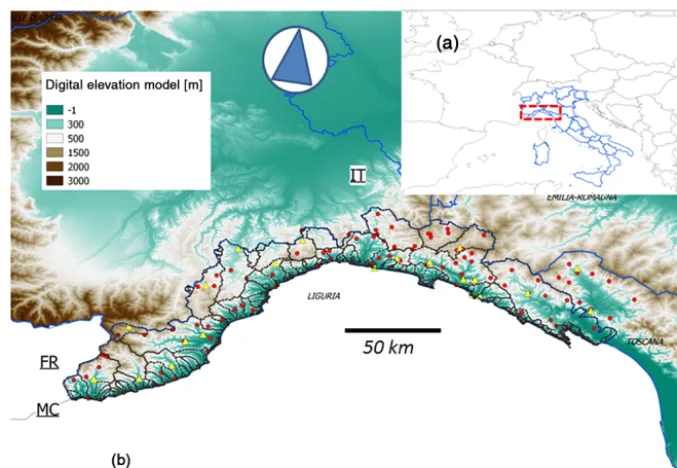
The Liguria region is located in northern Italy (Fig. 1) and it is characterized by small- and medium-sized (drainage area in the range 10–1000 km2) and steep-slope (10 %–20 %) basins (Table 1). The response time to precipitation is short, ranging between 0.5 and 10 h (Maidment, 1992; Giannoni et al., 2005). The maximum elevation of mountains is around 2500 m, and most of the region is covered with forest or other types of vegetation like meadows and shrubs; usually the catchments mouths are densely urbanized. The hydrolog-ical regime is prevalently torrential and the entire study area is frequently hit by flash floods (Rebora et al., 2013); as a consequence, the variability of annual discharge maxima is high. Winter seasons are generally not very cold, being in a Mediterranean environment but, as the elevation varies from sea level to more than 2000 m, below-zero temperatures are rare (a few days a year) along the coast and at low altitude but they can easily drop even below−10◦C inland. Snow occurs only few days a year and normally does not reach the coastal areas.
Lig-Figure 1.Study area geolocation at a large scale(a)and zoomed in(b). Blue lines represent the regional boundaries of Italy, the dashed line shows the main catchments of the study region, red dots represent the meteorological rain gauge stations of the Liguria region of Italy where 32 years (1978–2010) of daily data are available and yellow triangles are the level gauge sections. The digital elevation model highlights the morphology of the region. FR: France, MC: Monte Carlo and IT: Italy.
Table 1.Availability of discharge data used for model validation, ADM analysis, and long-term mass balance analysis. The characteristics of the basins upstream of each measurement station are reported.
Basin Gauge station ADM 30-year Hourly discharge Runoff Area Mean slope Mean height
time series data ratio (km2) (%) (m)
Magra Calamazza X X 936 18 503
Magra Piccatello X X 78 21 590
Vara Nasceto X X X 202 23 651
Petronio Riva Trigoso X 55 19 401
Graveglia Caminata X 43 24 590
Entella Panesi X X X 364 21 535
Lavagna San Martino X 163 23 570
Bisagno Passerella Firpo X 92 20 398
Bisagno La Presa X 34 25 520
Sansobbia Ponte Poggi X 33 21 470
Neva Cisano X X X 123 25 670
Arroscia Pogli X X X 204 27 650
Impero Rugge X 73 19 480
Argentina Merelli X X X 188 26 883
Nervia Isolabona X 123 22 690
Tanaro Ponte Nava X 147 23 1350
Bormida Murialdo X 134 19 820
Bormida Piana Crixia X 273 15 550
Orba Tiglieto X 76 21 560
[image:3.612.82.517.447.703.2]uria (ARPAL) and is quite dense (more than 150 gauges; 1 rain gauge/40 km2on average), with a 5–10 min resolution and a homogeneous distribution with respect to the eleva-tion. Temperature, radiation, wind and air humidity gauges are also part of the observational network, even though their density is lower, about 1/50, 1/200, 1/200 and 1/60 km2 respectively. Data from 2011 to 2014 were collected for calibrating–validating the hydrological model.
Besides, for a subset of 95 rain gauge stations (see Fig. 1), ARPAL hosts a web-based free-access validated database of historical (1978–2010) daily precipitation measurements (ARPAL, 2010) that were used in the present study for the bias correction (BC) of the EXPRESS-Hydro reanalysis rain-fall estimation.
For 11 level gauge stations seamless hourly data are available from 2011 to 2014 together with rating curves, while annual discharge maxima time series longer than 30 years are available for 15 level gauges (Fig. 1); the latter ones cover sub-periods which are not continuous from 1950 to recent years. Moreover, in the Hydrologic Annual Survey (http://www.arpal.gov.it/homepage/meteo/ pubblicazioni/annali-idrologici.html, last access: 12 Octo-ber 2017), an official document published by ARPAL, annual basin-scale runoff ratios (defined as runoff vol-ume/precipitation) are available for six stations.
In Table 1 the availability of the discharge and discharge-related data is summarized together with hydro-geomorphic characteristics of the basins upstream of each station.
All the data are checked by ARPAL in compliance with WMO recommendations so as to flag errors and unphysical values.
2.2 Bias correction of rainfall fields (BC)
Before being used as input for the hydrological simulations, the EXPRESS-Hydro reanalysis rainfall dataset was com-pared with the climatological precipitation data of the Lig-uria rain gauge dataset (ARPAL, 2010). The observational dataset is constituted by validated time series of about 95 rain gauges homogeneously distributed on the Liguria region ter-ritory, covering the whole EXPRESS-Hydro dataset (not for all gauges, though) with a daily time step.
In order to provide a hydrological model with the most reliable input data, the EXPRESS-Hydro reanalysis precipi-tation data were bias corrected with the actual rain gauges so as to assure an accurate reproduction of the local climatol-ogy in terms of monthly accumulation. As rainfall was the only available data in the Liguria climatological atlas, the bias correction was not applied to the other variables of the EXPRESS-Hydro dataset.
Nevertheless, several methods are available in the litera-ture to perform a bias correction on different variables (e.g., rainfall, temperature; Fang et al., 2015): among many, in this study a cumulative distribution function (CDF)-matching ap-proach was selected (Fang et al., 2015).
In order to preserve the seasonality and the inter-annual variability, which can be found in the observational data as well as in the EXPRESS-Hydro data, the correction was based on the monthly accumulations computed for both datasets. This led to the generation of 12×N (whereN is the number of years of the dataset) maps of monthly cumu-lated rainfall for EXPRESS-Hydro and 12×Nobs(withNobs
being the number of years of the observed dataset) time se-ries representing the actual cumulated rainfall for each month and for each of the available rain gauges.
To allow for a direct comparison between the observed data and the modeled dataset, the monthly cumulated data from the rain gauges were previously interpolated on the EXPRESS-Hydro spatial grid by using a kriging technique with a spherical variogram. No regression with other spatial-ized variables (e.g., elevation) was performed because previ-ous tests showed no significant correlation. Due to the high density of the rain gauge network and since the interpola-tion was applied only to the monthly accumulainterpola-tion, possi-ble errors introduced by the interpolation are assumed to be negligible as short-lived and small-scale rainfall events were addressed (see Boni et al., 2007 and Rebora et al., 2013).
For each celli, the empirical cumulative distribution func-tions of both observed and modeled values were computed with the purpose of minimizing the distortions; these CDFs were calculated separately for each month of the year.
In the CDF-matching process the observations CDF was applied to the EXPRESS-Hydro time series of a given celli
in order to obtain the corrected time series of the cumulative monthly rainfall:
PM0i,m=FOSS−1,i FMOD,i PMi,m, (1) where PM is the EXPRESS-Hydro monthly accumulated rainfall, PM0is the bias-corrected monthly accumulated rain-fall,m is the index of the month of the native series, and
FMOD,iandFOSS,i are respectively the CDF of the modeled and observed monthly rainfall in the celli.
Given these corrected monthly time series, the 3 h accu-mulated rainfall (pin mm) was corrected as follows:
p0i,t=pi,t PM0i,m
PMi,m
, (2)
wherepi,t is the 3-hourly accumulated rainfall modeled in the celli at time t,p0i,t is the bias-corrected 3-hourly ac-cumulated rainfall modeled in the celliat timet, PMi,m is the monthly accumulated rainfall modeled in the celli for the monthm(in which the instantt falls) and PM0
i,mis the monthly accumulated rainfall modeled in the celli for the monthm(in which the time t is) corrected with the CDF-matching approach.
procedure allows us to avoid alterations of possible temporal trends, at both the full-domain and single-cell spatial scale.
The CDF approach allows maintaining the most possi-ble quantity of information furnished by the observations, namely the distribution of the monthly cumulative rainfall; this is not possible with simpler methods (like the simple correction of the average). On the other hand, the temporal structure of the rainfall events at the sub-monthly scale is the one derived from the model, which can bring some kind of distortion with respect to the actual meteorology of the re-gion; the latter constitutes the main limitation of the method-ology.
2.3 Downscaling the rainfall with the RainFARM model
RainFARM (Rebora et al., 2006a, b) is a stochastic math-ematical model that can be exploited for generating down-scaled rainfall fields consistent with the large-scale forecasts provided by either numerical weather prediction systems as in Laiolo et al. (2014) or by expert forecasters (Silvestro and Rebora, 2014). The model takes into account the vari-ability of precipitation at small spatial and temporal scales (e.g., L≤1 km, t≤1 h), preserving the precipitation vol-ume at the scales considered reliable (Lr, and tr) for
quan-titative precipitation forecasts. In other wordsLrandtr are
those scales where we expect, on average, a reliable fore-cast of precipitation volume. RainFARM is able, on the one hand, to preserve spatial and temporal patterns atLr,trbut,
on the other hand, to produce small-scale structures of rain-fall which are consistent with detailed remote sensor ob-servations as meteorological-radar estimation (Rebora et al., 2006a).
In the model, the spatiotemporal Fourier spectrum of the precipitation is estimated using the rainfall patterns predicted by a meteorological model and it is mathematically described as follows:
g(kˆ x, ky, ω)
2
∝(kx2+k2y)−α/2ω−β, (3) wherekxandky are thex andy spatial wavenumbers,ωis the temporal wavenumber (frequency), andαandβ are two parameters that are calibrated fitting the power spectrum of rainfall derived by a NWP system on the frequencies corre-sponding to the spatiotemporal scalesLrandtr. By extending
the spectrum defined by Eq. (3) to the larger wavenumbers (frequencies) it is possible to generate a spatiotemporal rain-fall pattern at high resolution (Rebora et al., 2006b). Since the Fourier phases related with the power spectrum (3) are randomly generated before the backwards transformation in real space, RainFARM provides an ensemble of equiproba-ble high-resolution fields that are consistent with the large-scale precipitation forecasted by a NWP system. RainFARM was designed to feed flood forecasting systems in small- and medium-sized basins (drainage area < 103–104km2) and it
was widely tested on the study area (Rebora et al., 2006a; Silvestro et al., 2012; Silvestro and Rebora, 2014).
In this study the algorithm is used to downscale the bias-corrected EXPRESS-Hydro reanalysis; the nominal grid spacing and temporal resolution of EXPRESS-Hydro precip-itation (4 km and 3 h, von Hardenberg et al., 2015 and Pieri et al., 2015) are assumed to be reliable spatial and temporal scales. The downscaling algorithm is not used in probabilis-tic configuration, but it is instead used to build a possible rainfall spatiotemporal pattern at 1 km and 1 h resolution that is compatible with the runoff at small scales, since most of the catchments in the study area are small sized (often<100– 200 km2) with a response time ranging from 1 to 6 h. 2.4 The hydrological model and its
calibration–validation 2.4.1 The model: Continuum
The hydrological model used in this study is Continuum (Sil-vestro et al., 2013), a distributed and continuous model that relies on a space-filling approach and uses a robust way for the identification of the drainage network components (Gi-annoni et al., 2005). Though all the main hydrological pro-cesses are mathematically described in a distributed way, Continuum was designed to be a trade-off between complex physically based models (which describe the physical phe-nomena with high detail, often introducing complex param-eterization) and models with an empirical approach (easy to implement but not accurate enough). The basin or domain of interest is represented through a regular grid, derived by a digital elevation model (DEM), while the flow directions are defined with an algorithm that calculates the maximum slope using the DEM. An algorithm classifies each cell of the drainage network as hillslope or channel flow depending on the main flow regime; a morphologic filter is defined by the expressionASk=C, whereAis the drainage area up-stream of each cell (L2),Sis the local slope (–), andkandC
are constants related to the geomorphology of the catchment (Giannoni et al., 2000) – and it is used to determine whether a cell is a hillslope or a channel. The surface flow scheme treats channel and hillslope flows differently: the overland flow (hillslopes) is described by a linear reservoir schemati-zation, while an approach derived by kinematic wave (Wood-ing, 1965; Todini and Ciarapica, 2001) models the channel flow.
Subsurface flows and infiltration are modeled through an adaptation of the Horton equations (Bauer, 1974; Disikin and Nazimov, 1994) that accounts for soil moisture evolution even in conditions of intermittent and low-intensity rainfall as in Gabellani et al. (2008). Curve number maps are used to estimate some of the subsurface flow parameters (Gabellani et al., 2008).
informa-Table 2.Ranges of parameter values considered for the calibration–validation process.
Parameter uc(m0.5s−1) uh(s−1) ct(–) cf(–) VWmax(mm) Rf(–)
Range 20–150 0.0001–0.001 0.1–0.7 0.005–0.1 200–1500 0.5 10
tive layers of vegetation type or leaf area index (LAI) data; the flow in deep soil and the water table evolution are mod-eled with a distributed linear reservoir schematization and a simplified version of the Darcy equation.
The energy balance uses the force–restore equation (Dick-inson, 1988) that allows us to explicitly model the soil sur-face temperature and to estimate the evapotranspiration from the latent heat flux (Silvestro et al., 2013).
Snow melting and accumulation is simulated with sim-ple equations forced with air temperature and solar radiation (Maidment, 1992) as in Silvestro et al. (2015).
Continuum needs the following input variables: rainfall, air temperature, shortwave incoming solar radiation, wind velocity and relative humidity. When the EXPRESS-Hydro reanalyses are used to feed the model the input variables are 2 m temperature, 10 m wind, rain depth, downward short wave flux at ground surface and 2 m relative humidity.
The parameters that require calibration in the Continuum model are six; they are often estimated at the basin or sub-basin scale: two for the surface flow (uh, m0.5s−1; anduc,
s−1), two for the subsurface flow (ct, –; andcf, –), and two
for the deep flow and water table (VWmax, mm; andRf, –)
processes.
The parameter uh affects those hydrograph components
which are related to fast surface flow as well asuc but the
impact of the latter depends on the length of the channeled paths; cf is related to saturated hydraulic conductivity and
controls the subsurface flow rate;ctidentifies the part of the
water volume in the soil that can be extracted through evapo-transpiration only and is thus related to the soil field capacity, while bothctandcfregulate the dynamics of the saturation
of the root zone. The two parametersVWmaxandRfcontrol
the flow in the deep soil and the dynamic of the water ta-ble, yet they impact recession curves and influence flood hy-drographs only when large-sized catchments are taken into account (Silvestro et al., 2013).
2.4.2 Implementation on the study area
In the present work, Continuum was implemented with a time resolution of 60 min and a spatial resolution of 0.005◦ (about 480 m). The Shuttle Radar Topography Mis-sion (SRTM) DEM was employed as a terrain model.
Model calibration was performed using observed input and output data without considering reanalysis. This is in the authors’ opinion the best approach for several reasons: (i) EXPRESS-Hydro reanalysis data are not involved be-cause they are affected by errors larger than observations
ones; (ii) meteorological data at high time resolution are available; (iii) EXPRESS-Hydro reanalysis are too uncertain in terms of geolocation, timing and magnitude of real events – as a consequence streamflow simulations cannot be com-pared with observations; and (iv) no reliable streamflow data are available for the period covered by the reanalysis.
The model was calibrated on 11 basins where streamflow observations were available at hourly time resolution (see Ta-ble 1); the hourly measurements of rainfall, air temperature, solar radiation and air relative humidity provided by the re-gional weather stations network were interpolated on a 1 km regular grid through a Kriging method to feed the model. The two parametersVWmax andRfwere estimated at the
re-gional scale based also on Davolio et al. (2017), since they are less sensitive than the other four parameters (Silvestro et al., 2013). The observed streamflow data at 60 min time resolution were compared with the model output in order to evaluate its performance. The validation period spanned from 1 January 2013 to 31 December 2014, and the model perfor-mance was evaluated through the skill scores, also used in the calibration process (Davolio et al., 2017), as reported in the following.
The Nash–Sutcliffe (NS) coefficient (Nash and Sutcliffe, 1970):
NS=1− tmax
X
t=1
(Qm(t )−Qo(t ))2
Qm(t )−Qo
2 , (4)
where Qm(t ) and Qo(t ) are the modeled and observed
streamflows at timet.Qois the mean observed streamflow.
Relative error of high flows (REHF):
REHF= 1 tmax
"tmax X
t=1
|Qm(t )−Qo(t )|
Qo(t )
#
Q>Qth
, (5)
whereQth is chosen as the 99th percentile of the observed
hydrograph along the calibration period.
While the NS coefficient has the purpose of evaluating the general reproduction of streamflow, the REHF score aims to give more weight to the highest flows, thus leading the cali-bration to better reproduce the flood events.
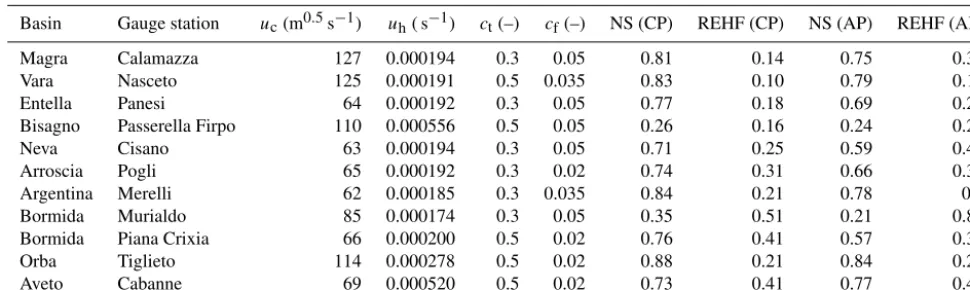
[image:6.612.117.476.86.120.2]Table 3.Hydrological model validation (1 January 2013 to 31 December 2014); skill score values obtained for the calibrated basins with calibrated (CP) and average (AP) parameters. The values of calibrated parameters are also reported.VWmax(mm) andRf(–) have values of
500 mm and 1 for all the basins.
Basin Gauge station uc(m0.5s−1) uh( s−1) ct(–) cf(–) NS (CP) REHF (CP) NS (AP) REHF (AP)
Magra Calamazza 127 0.000194 0.3 0.05 0.81 0.14 0.75 0.34
Vara Nasceto 125 0.000191 0.5 0.035 0.83 0.10 0.79 0.17
Entella Panesi 64 0.000192 0.3 0.05 0.77 0.18 0.69 0.28
Bisagno Passerella Firpo 110 0.000556 0.5 0.05 0.26 0.16 0.24 0.21
Neva Cisano 63 0.000194 0.3 0.05 0.71 0.25 0.59 0.47
Arroscia Pogli 65 0.000192 0.3 0.02 0.74 0.31 0.66 0.39
Argentina Merelli 62 0.000185 0.3 0.035 0.84 0.21 0.78 0.3
Bormida Murialdo 85 0.000174 0.3 0.05 0.35 0.51 0.21 0.87
Bormida Piana Crixia 66 0.000200 0.5 0.02 0.76 0.41 0.57 0.35
Orba Tiglieto 114 0.000278 0.5 0.02 0.88 0.21 0.84 0.29
Aveto Cabanne 69 0.000520 0.5 0.02 0.73 0.41 0.77 0.45
isprambiente.it/it/progetti/corine-land-cover-1, last access: 10 July 2017). The parameter range values considered during the calibration process were defined considering their physi-cal meaning, the mathematiphysi-cal constraints and the experience – they are reported in Table 2 (Silvestro et al., 2015; Cenci et al., 2016) – the final parameter configuration is similar to the one used in Davolio et al. (2017). Parameter values not involved in calibration are reported in the Appendix.
The values of the skill scores were calculated for the vali-dation period and turned out to be satisfactory, as reported in Table 3.
For those basins where the calibration was not possible, the parameters are assumed to be equal to the average values obtained by the calibration. This assumption was then ver-ified by carrying out a run of the model using the average parameters even for calibrated basins; the statistics maintain good values supporting the significant assumption done. Ta-ble 3 reports the skill scores.
Even if the calibration of the model did not encompass all the study region due to the lack of data, the hydrologi-cal model (as well) was proven to give good performances as well as similar models specifically developed for the same study area (Giannoni et al., 2000, 2005; Gabellani et al., 2008; Silvestro et al., 2013, 2015; Cenci et al 2016), even in not-calibrated basins (Regione Marche, 2016). In fact, when the basins have similar characteristics, especially regarding the surface response to intense rainfall and the main gene-sis of the rainfall–runoff process, the parameters often have similar values (Boni et al., 2007).
In order to reduce the warm-up impacts on the 1979 (first year of EXPRESS-Hydro) simulation, a first run was started with a predefined initial condition setup and the state vari-ables simulated on 31 December of every year (from 1979 to 2008) were averaged to estimate a reasonable initial condi-tion for 1 January 1979 to be used in the final simulacondi-tion.
The hydrological model run for the period 1979–2008 pro-vided a streamflow time series for each pixel of the
calcula-tion domain which was, ideally, equivalent to having a gauge every1x along the hydrological network. Since the spatial resolution of the hydrological model is 480 m, basins smaller thanAth=15 km2were not taken into account, because the
surface water motion processes cannot be modeled with suf-ficient detail (Giannoni et al., 2005).
2.5 Distribution of the annual discharge maxima
The results of the modeling chain were firstly compared with observations using a typical station-wise comparison approach: 15 gauge stations with at least 30 years of annual discharge maxima (ADM) were identified along the Ligurian territory from east to west.
It was not possible to ensure a perfect overlapping be-tween the simulated and the observational time series; often observed data are not seamless and they may cover longer periods (in some case 50–60 years) with large time spans of missing data (see the table uploaded as additional material). However, on the basis of the conclusions drawn in the Liguria climatological atlas, major climate-change-related trends for the meteorological variables are not evident, thus allowing for the use of the database despite the data gaps.
The comparison between observed and reanalysis-driven ADM is firstly based on the analysis of the respective cumu-lative density function distributions.
the Kolmogorov–Smirnov test with a 5 % significance level, in order to verify if they belonged to the same distribution. 2.6 Regional analysis of the annual discharge maxima In order to carry out a comparison following a distributed ap-proach we referred to Boni et al. (2007), which is one of the operational reference methods in the Liguria region (used by both public authorities and private engineers) to estimate the ADM quantiles (Provincial Authority of Genoa, 2001; Sil-vestro et al., 2012). The method was conceived and tested especially for the Tyrrhenian catchments of the Liguria re-gion, so the present analysis was carried out only for this area, 45 %–50 % of which is located upstream of the cali-brated basins. The method defines a hierarchical approach based on the analysis of the non-dimensional random vari-ableX0=X/µx, obtained by grouping together all the avail-able data and making them non-dimensional with respect to each local (gauging station) sample mean,µx, taken as the index flood for gauged sites. Index flood is estimated even where observations were not available by taking advantage of the rainfall regional frequency analysis and rainfall–runoff modeling to allow quantile estimation in each point of the re-gion.
The final result is a methodology to estimate the index flood that can be formalized as follows:
Qindex=f (Arealongitude), (6)
while the quantile is
Q (T )=K(T )·Qindex, (7)
whereT is the return period andK(T)is defined by the non-dimensional regional growth curve, uniquely defined for the whole studied region (Boni et al., 2007).
In the case of the modeling chain analyzed in this work a large number of reanalysis-driven time series are available because a 30-year-long ADM series for each pixel of the model grid can be accessed for basins bigger than Ath. In
practice, using a distributed hydrological model, on the one hand, allows the index flood estimation to be a simple mean of a time series in each point of the domain; on the other hand, this provides a large amount of data to build the non-dimensional regional curve.
3 Results
3.1 Precipitation analysis
The comparison between EXPRESS-Hydro reanalysis and precipitation climatology over Liguria derived from observa-tional data was undertaken at annual, seasonal, monthly and daily scales.
Pieri et al. (2015), using the EURO4M-APGD reference observational dataset (Isotta et al., 2013, with about 50 daily
[image:8.612.306.549.65.348.2]Figure 2. (a)shows the average annual rainfall map over the Lig-uria area,(b)shows the average observed annual rainfall map and (c)shows their difference in mm.
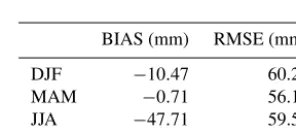
Table 4.Comparison between seasonal rainfall observations and EXPRESS-Hydro. Skill scores estimated on a seasonal timescale.
BIAS (mm) RMSE (mm)
DJF −10.47 60.21
MAM −0.71 56.13
JJA −47.71 59.58
SON −89.55 120.73
rain gauge stations in Liguria), already showed an overall underestimation of the WRF rainfall depths on an annual basis, which is more evident on the eastern side of the re-gion (Fig. 3, panels e–f of Pieri et al., 2015), with differences in the range between−2 and−1 mm day−1 on the eastern coastal part and between−1 and 0 mm day−1on the eastern Apennines side.
The same analysis was repeated and extended in this study, using 95 rain gauges in Liguria: results on annual rainfall depth confirm the findings of Pieri et al. (2015) both on the eastern and western Liguria sides (Fig. 2).
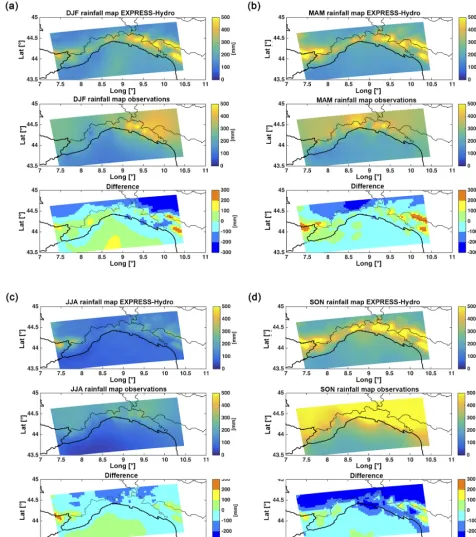
[image:8.612.355.503.441.507.2]Figure 3.The figure shows the average DJF(a), MAM(b), JJA(c)and SON(d)rainfall maps over Liguria. For each season three maps are shown: the EXPRESS-Hydro rainfall map, observed rainfall map and difference map in mm.
instead, EXPRESS-Hydro underestimation ranges between 0 and 100 mm over both the western and eastern sides, while it ramps up to 100–200 mm over the center. The underesti-mation deepens over eastern Liguria during SON (Fig. 3), with values between −100 and 200 mm inland and up to
Figure 4. Scatter plots of seasonal precipitation built using data on EXPRESS-Hydro spatial resolution (pixel to pixel comparison). The Xaxis reports observed interpolated rainfall, and theYaxis reports EXPRESS-Hydro estimation.
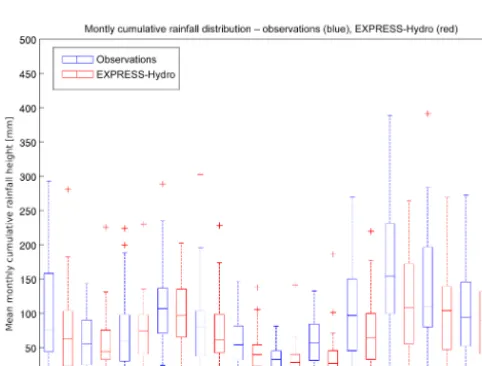
Figure 5.Box plot of monthly precipitation averaged at the regional scale. Blue box plots are built with observations while red ones are built with the EXPRESS-Hydro reanalysis.
while in Table 4 we reported the values of the bias and root mean square error (RMSE).
Figure 5 shows the box plot of monthly precipitation aver-aged at the regional scale for both EXPRESS-Hydro and ob-servations, obtained by averaging the maps of accumulated rainfall. The comparison highlights that EXPRESS-Hydro satisfyingly reproduces the variability along the 30 years, but often underestimates the rainfall amount, particularly in Jan-uary, September and October.
[image:10.612.47.288.471.654.2]Figure 6.Box plot of monthly precipitation averaged at the basin scale for four test catchments. Blue box plots are built with observations while red ones are built with the EXPRESS-Hydro reanalysis.
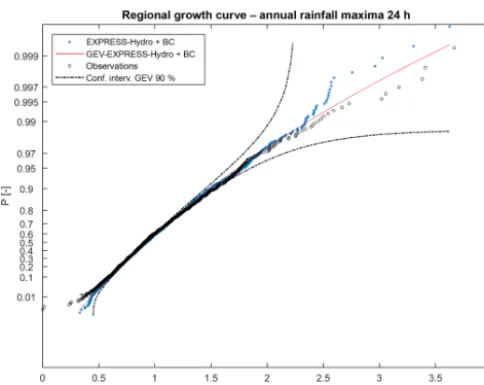
A further analysis was carried out in order to understand how EXPRESS-Hydro reanalysis reproduces the rainfall an-nual maxima, especially after the application of bias cor-rection; ADM of the region are in fact generally driven by very intense rainfall events that have a duration lower than or equal to 24 h. We thus compared the annual maxima of 24 h accumulated rainfall (ARM) derived by observations with those derived by the reanalysis (with BC) again following the approach described in Boni et al. (2007): each series of ARM, observed and modeled, was normalized with its aver-age and a regional non-dimensional distribution function was built. The result is reported in Fig. 7, which shows a very good fit between observations and reanalysis; this confirms a general good reproduction of the climatology even in terms of ARM.
3.2 Distribution of the annual discharge maxima In Figs. 8 to 10 a selection of observed and reanalysis-driven ADM CDF distributions, the GEV and the corresponding
95 % confidence intervals are shown. Six basins were chosen in order to evidence the variability of results, showing either good and poor performances; moreover, the comparisons are referred to hydrological gauging stations where reliable and long-time series of observed ADM are available. For each station the results obtained with and without rainfall BC are both reported.
The cases in Fig. 8 show a shift in the observed distribution with respect to the modeled one, especially without BC. Low ADM observed values lay outside of the confidence intervals of the reanalysis-driven ADM GEV distribution, while the most extreme values fall inside the confidence intervals. The distributions without bias correction show an underestima-tion of ADM; BC led to very good results for Entella closed at Panesi and to an overestimation for Bisagno closed at La Presa case.
Figure 7. Growth curve obtained by annual maxima of 24 h accumulated rainfall. Observations (blue dots) compared with EXPRESS-Hydro reanalysis (black dots). The red line is the GEV distribution fitted on EXPRESS-Hydro values, while dotted lines are the confidence intervals with a 95 % significance.
at Merelli benefits from BC, especially regarding the extreme ADM values.
Arroscia closed at Pogli shows an improvement of reanalysis-driven ADM, once BC is performed, while Nervia ADM without BC fits the observations well and BC leads to an overestimation (Fig. 10).
The Kolmogorov–Smirnov test with a 5 % significance level on ADM was applied to all the selected stations and the corresponding results are summarized in Table 5. It is in-teresting that bias correction does not allow us to increase the number of null hypotheses (data belong to the same dis-tribution), yet 9 stations out of 15 pass the test with either BC applied or not applied. Changing the significance level does not affect the final findings in a significant way: with a 1 % significance, 12 stations pass the test with BC and 11 without BC; with a 10 % significance, 7 stations pass the test with BC and 7 without BC. This fact could derive on how the BC – acting on the monthly volume – affects the short-lived and severe rainfall events that usually are responsible for the ADM in many parts of the study area.
The poor reproduction of ADM in some basins may be due to various causes; on the one hand, it was not possible to calibrate the model over the whole study region, but, on the other hand, in some periods and in some subregions the rainfall reanalysis is probably poorly representative of actual rainfall and BC does not correct it enough. Moreover, ob-served peaks and simulated peaks often referred to different time periods: this, together with the typical hydro-climatic regime of the study region (flash floods with high variabil-ity of ADM) could have a significant impact on final re-sults. There are other sources of uncertainty that can explain
the mismatches; the hydrological model can lead to errors (Walker et al., 2003; Liu and Gupta, 2007) due to both its internal structure and to those parameters which are not cal-ibrated but set by literature or by territorial information; fur-thermore, the input variables are affected by uncertainty, not only rainfall, so they can be causes of errors.
We would like also to highlight the fact that simulated ADM distributions often have similar shapes to the observed ones and suffer a sort of bias (for example Bisagno closed at La Presa, Fig. 8), while in other cases the simulated ADM distribution is only partially out of the confidence intervals (example Argentina closed at Merelli, Fig. 9). The average hydrologic regime on the study region could be only partially affected by the local bad fittings of ADM.
3.3 Regional analysis of the annual discharge maxima Figure 11 shows the comparison between the non-dimensional regional growth curve obtained by fitting a GEV on simulated ADM computed with and without BC, the ob-servations (available ADM on the Liguria region) and the simulated ADM. The results are quite good even if it seems that the modeling chain without BC leads to a small underes-timation of high-frequency events (lowT) and a small over-estimation of low-frequency events (highT) with respect to the observations. In any case, both observed and modeled ADM lay inside the confidence intervals (95 %) for a large part of the curve.
In the Fig. 11 we reported the curves built using simula-tions of all the sub-basins with a drainage area larger than
Ath=15 km2 together with those obtained using only the
basins where the hydrological model was calibrated. The curves that used only calibrated basins are really similar to the others, proving that the latter configuration enhances the robustness of the regional curve estimation without introduc-ing evident errors.
The main differences in the case of BC configuration are that observations lay always inside the confidence intervals and there is a better matching between simulated and ob-served sample curves. This is a significant finding; in fact the regional curve is an important ingredient to deal with quan-tile estimation in ungauged basins. It is important to highlight that the regional approach allows us to reduce the errors that can be found for single basins (Boni et al., 2007) and which are shown in Sect. 3.2; on the one hand, the normalization of each ADM series with its average reduces the effects of bias (due for example to a bad hydrological model calibration and other sources of error), but, on the other hand, the ADM time series of each outlet section (or grid point) is only a small subsample of the entire sample used to build the regional curve. It is in any case important to highlight that good re-sults in terms of the growth curve could be also partially due to the effect of error compensation.
Figure 8.Distribution of ADM for Entella closed at Panesi (364 km2) and Bisagno closed at La Presa (34 km2). The blue dots are the simulated ADM, black dots are the observed ADM, red line is the GEV fitted on simulated ADM and dotted lines are the confidence intervals with a 95 % significance. Panels(a)and(b)show results without rainfall bias correction, while(c)and(d)show results with rainfall bias correction.
considered:
Ratio(T )=Q(T )Model Q(T )Reg
, (8)
where “Model” and “Reg” respectively stand for modeling chain and regional analysis, T is the return period andQ
is the ADM. Ideally, if the modeling chain provided ex-actly the same results of the benchmark regional analysis, the Ratio(T) value should be around 1; Ratio(T)>1 (<1) means overestimation (underestimation).
Figure 12 shows Ratio(T) forT =2.9 years (index flow) as a function of the drainage area (Ain km2), while Fig. 13 shows the maps of Ratio(T) for T =2.9 years and T = 50 years.
The first consideration is that a relation between Ratio(T) and A appears to exist even if it is supposedly biased be-cause the size of the sample is biased: the number of small basins is significantly higher than the number of large ones;
the chain is not able to reproduce in detail the meteorologi-cal and hydrologic processes at very fine temporal and spatial scales (Siccardi et al., 2005) – in fact forA<30–50 km2the underestimation seems quite systematic even if BC improves results. Ratio(T) is generally underestimated also forA>30– 50 km2, but BC generally leads to a better balance between over- and underestimation. BC enhances overestimation on larger basins (A>200–300 km2). From Fig. 13 a general im-provement driven by BC stands out especially in those ar-eas where the model chain without BC underestimatesQ(T ). Areas where the modeling chain is really close to the bench-mark are in green and light blue, whereas dark blue and pur-ple point out where under- or overestimation is high (abso-lute difference larger than 70–100 %); noticeably, Ratio(T) forT =50 years andT =2.9 years (Fig. 13) have a similar pattern.
Figure 9.Same as Fig. 8 but for Magra closed at Piccatello (78 km2) and Argentina closed at Merelli (188 km2).
Table 5.Kolmogorov–Smirnov (K–S) test with 5 % significance.P values are reported together with verification of the null hypothesis (data can belong to or not belong to the same distribution). Results are reported for the two cases: with (BC) and without (No BC) rainfall bias correction.
Basin Gauge station P value K–S test P value K–S test
(No BC) (No BC) (BC) (BC)
Magra Calamazza 0.008 NO 0.855 Yes
Magra Piccatello 0.036 NO 0.021 NO
Vara Nasceto 0.632 Yes 0.012 NO
Petronio Riva Trigoso 0.780 Yes 0.023 NO
Graveglia Caminata 0.030 NO 0.065 Yes
Entella Panesi 0.002 NO 0.990 Yes
Lavagna San Martino 0.062 Yes 0.701 Yes
Bisagno La Presa 0.056 Yes 0.022 NO
Sansobbia Ponte Poggi 0.350 Yes 0.005 NO
Neva Cisano 0.420 Yes 0.110 Yes
Arroscia Pogli 0.172 Yes 0.820 Yes
Impero Rugge 0.003 NO 0.860 Yes
Argentina Merelli 0.078 Yes 0.218 Yes
Nervia Isolabona 0.206 Yes 0.449 Yes
[image:14.612.158.438.503.701.2]Figure 10.Same as Fig. 8 but for Neva closed at Cisano (123 km2) and Nervia closed at Isolabona (122 km2).
regardless the use of BC, while simulations with BC are affected by overestimation. This could be due to differ-ent causes: (i) EXPRESS-Hydro is likely to well reproduce the events at small temporal and spatial scales (3–6 h, 10– 100 km2) in that part of the region as well as generally under-estimates monthly accumulation – in this case BC could lead to streamflow overestimation; (ii) the hydrological model may need a better calibration, but it does not seem the most probable option – in fact BC leads to the overestimation of ADM even in calibrated basins, which arose even in the site comparison (Bisagno creek, see Sect. 3.2); (iii) the quan-tiles in this area may have been underestimated by Boni et al. (2007). It has to be noticed that overestimation is larger for T =2.9 years than forT =50 years (see Fig. 13; some basins are in purple forT =2.9 years and in yellow-orange for T =50 years); this is probably due to the fact that the shape of the growing curve in the BC case leads to a reduc-tion of the overestimareduc-tion as T increases; the behavior on western Liguria is similar to the center even if less stressed and evident for larger basins only.
The underestimation on smaller catchments (A<30– 50 km2) could be partially due to a non-optimal parameter-ization of the hydrological model (especially where calibra-tion was not possible), but it appears more reasonable that the errors related to parameterization would lead to a uniform-like distribution between over- and underestimation. How-ever, the model spatial resolution could play a role since the representativeness of the catchment morphology decreases for small drainage areas with a general smoothing effect that affects the results: this degradation effect is clearly contin-uous from large to small drainage areas, though a threshold for the analysis (i.e., basins with area<16 km2are neglected) was set.
trig-Figure 11.Sample growth curve obtained by the model chain (blue dots) compared with observations (black dots). The red line is the GEV distribution fitted on modeled values while dotted lines are the confidence intervals with a 95 % significance.(a)Results without and with rainfall bias correction using the sections where the hydrological model was calibrated.(b)Results without and with rainfall bias correction using all the grid points with drainage area larger thanAth=15 km2.
ger such very small catchments are not properly modeled (Siccardi et al., 2005).
The combination of the aforementioned factors leads us to conclude that the underestimation of quantiles for very small catchments (i.e., A<30–50 km2) is a structural problem of the modeling chain.
This fact is supported by the analysis shown in Fig. 14, left panel. The Ratio(T) averaged on the target area is plot-ted as a function of T for all the sub-basins with drainage area≥16 km2. Ratio increases withT especially for the BC case, meaning that the growth curve valuesK(T) obtained by EXPRESS-Hydro partially balance the underestimation of average ADM (used as index flow) in the estimation of higher quantiles; Ratio(T) forT =2.9 years changes from 0.47 to 0.71 and Ratio(T) forT =50 years from 0.45 to 0.66. If the threshold area is increased from 16 to 50 km2(Fig. 14,
right panel) the underestimation drops for both cases, with and without BC
[image:16.612.62.534.67.442.2]Figure 12.Ratio(T) as a function of drainage area.T =2.9 years, which corresponds to the index flow.(a)shows results without rainfall bias correction and(b)(BC) with rainfall bias correction.
Figure 13.Maps of Ratio(T) forT =2.9 and 50 years.(a, b)shows results without rainfall bias correction and(c, d)(BC) with rainfall bias correction. The BC increases the percentage of drainage net-work points that have values around 1.
3.4 Effects of the rainfall downscaling on simulated ADM
In order to assess the influence of the rainfall downscaling, the modeling chain was applied without it. In this way for each pixel of the domain a 30-year-long time series of ADM was computed by the hydrological model driven with the bias-corrected rainfall reanalysis at the EXPRESS-Hydro na-tive resolution. The rainfall field was assumed to have a con-stant intensity over a 3-hourly time step and resampled from 4 to 1 km.
The 30-year average ADM was computed and compared to the ones obtained by the complete chain by estimating the following ratio for each grid cell:
RatioDS=QMeanNoDS QMeanDS
, (9)
whereQMeanNoDS(QMeanDS) is the average ADM obtained
[image:17.612.47.289.373.638.2]Figure 14.Mean Ratio(T) over the considered domain as a function ofT. The continuous line (no BC) is the case without rainfall bias correction, and the dotted line (BC) is the case with rainfall bias correction.(a)is the case where points with drainage area lower than 16 km2 are discarded;(b)is the case where points with drainage area lower than 50 km2are discarded.
Figure 15.Ratio between mean flow estimated without and with downscaling as a function of drainage area. The graph shows that the impact of rainfall downscaling increases when basin drainage area decreases.
3.5 Water balance and runoff ratio
In this section some considerations about the long-term water balance are shown in order to evaluate how the applied
sys-tem can reproduce the hydrological cycle and the variables related to water balance and water resources management.
Taking advantage of the modeled evapotranspiration maps, the distributed runoff ratio (RR) at the cell scale is estimated as
RR(xy)=Rain(x, y)−Evt(x, y)
Rain(x, y) , (10)
[image:18.612.47.289.386.580.2]where Rain(x, y) and Evt(x, y) are the modeled total rainfall and evapotranspiration in the cell with coordinates (x, y) over the 30 years of simulation. The maps of RR are shown in Fig. 16, together with the maps of mean annual rainfall for both cases with and without BC
The spatial pattern of RR is strongly correlated to the pre-cipitation one, and the latter is in turn evidently related with orography, especially for the case without BC
When a single cell has a large number of upstream cells, it tends to be frequently saturated because of the contributions of the subsurface flow of the upstream cells: the values in the cells that belong to the channel network as simulated by the hydrological model (Giannoni et al., 2005) are not shown because they are hardly representative (generally, the values are very low or even negative).
Figure 16. Distributed runoff ratio and mean annual rain-fall.(a)shows the model estimation without BC while(b)with BC.
station S is computed by
Rs(s)= V Q(s)
Rain(s), (11)
where Rain(S) is the accumulated rainfall over the basin ly-ing upstream of the gauge station S and VQ(s) is the in-tegral on time of the streamflow volume passed through the gauge station S. We considered some gauge sections where the runoff ratio estimated by observations (rainfall and streamflow) is available (see Table 1) from the Hydrologic Annual Survey (http://www.arpal.gov.it/homepage/meteo/ pubblicazioni/annali-idrologici.html, last access: 12 Octo-ber 2017.), an official document published by the Regional Environmental Protection Agency of Liguria. The observed runoff ratios are not available for the simulation period (1979–2008) but they are estimated as an average of the val-ues measured in non-continuous periods since the 1940s to present, thus providing a possible benchmark to assess the performance of the modeling chain.
Modeled RRs are compatible with the hydro-climatology of the target area (Barazzuoli and Rigati, 2004; Provincia di Imperia, 2017) but at the same time a general underestima-tion in the western part of the region is evident (basins Neva, Arroscia, Argentina); BC improves results and RRs are more similar to the benchmark (Table 6).
The rainfall BC introduces only small variations in terms of runoff ratio, thus meaning that when the long-term water balance is addressed the increasing or decreasing of rainfall lead on similar percent variation on both runoff and evapo-transpiration.
For example, in the central and eastern parts of Liguria, BC generally increases the precipitation and reduces the oro-graphic features of the spatial pattern, but at the same time the evapotranspiration increases too; consequently, the RRs’ rise is small. As shown in Sect. 3.2 and 3.3 the increase in rainfall leads to larger values of ADM, but the RRs do not change significantly; this could be due to the fact that other EXPRESS-Hydro variables that influence the energy balance (and the long-term water balance) like solar radiation or wind speed may benefit from a correction. Nevertheless, no reli-able and dense data are availreli-able for the entire simulation period. Another approach could be to perform a calibration more focused to preserve long-term runoff. In any case, we could say that generally the results are good and they high-light the potential of using such a modeling chain even for water balance purposes.
4 Discussion and conclusions
This work explores the possibility of using EXPRESS-Hydro, a high-resolution regional dynamical downscaling of the ERA-Interim dataset by means of the state-of-the-art non-hydrostatic Weather Research and Forecasting (WRF) regional climate model for hydrological purposes on small catchments. This was done by feeding a distributed contin-uous hydrological model with a subset of the EXPRESS-Hydro meteorological variables to produce streamflow sim-ulations; the rainfall fields were downscaled from the native spatiotemporal resolution (4 km, 3 h) to a finer one (1 km, 1 h) before they were used to feed a hydrological model. All the analyses were conducted by either applying or not ap-plying a bias correction to rainfall fields. The study area is Liguria, a region in northwestern Italy, with a particular fo-cus on its Tyrrhenian coast.
Firstly we evaluated the performance of the modeling chain in reproducing extreme streamflow statistics by follow-ing two methods: (i) by comparfollow-ing the statistical distribution of ADM with observations in some gauging points and (ii) by using as a benchmark the regional analysis presented in Boni et al. (2007) that allows a comparison with a distributed ap-proach.
We then evaluated how the modeling chain reproduces the long-term water balance by analyzing the modeled runoff ra-tios and using as a benchmark the estimations based on ob-servations.
Table 6.Runoff ratios (RR) obtained by the modeling chain (with and without the rainfall bias correction) compared to those estimated by observations. Results are reported for the two cases: with (BC) and without (No BC) rainfall bias correction.
Basin Gauge station Area Obs. RR. Model RR Model RR
(km2) (No BC) (BC)
Magra Piccatello 78 0.61 0.62 0.63
Vara Nasceto 202 0.7 0.64 0.66
Entella Panesi 364 0.73 0.64 0.67
Neva Cisano 123 0.59 0.47 0.49
Arroscia Pogli 204 0.55 0.48 0.51
Argentina Merelli 188 0.65 0.51 0.53
A single-site comparison of modeled and observed ADM shows that, for a large number of the gauging sites, the time series belong to the same distribution with a 5 % significance; the fitting of modeled ADM with GEV distributions is gen-erally good; and often the observations lay inside the 95 % confidence interval, especially for low-frequency quantiles. It must be noted that, in any case, in some sites the GEV fitting without BC is better than that with BC
A comparison with the regional analysis shows interesting results as the behavior remarkably drifts in some parts of the region, depending on how EXPRESS-Hydro generates the spatiotemporal patterns of precipitation and how much rain-fall bias correction is effective.
Both point and distributed analyses show that there is a general underestimation for basins with drainage area smaller than 30–50 km2but BC is able to tackling it largely. This is probably due to structural problems of the modeling chain under the aforementioned size: for those basins it is necessary to further refine the temporal and spatial scales of the meteorological input (precipitation chiefly, Siccardi at al., 2006; Silvestro et al., 2016), and likely of hydrological model too (Yang et al., 2001). A possible way to deal with very small basins is to better exploit the potential of the downscal-ing algorithm (RainFARM) that is here used in a determin-istic way to generate a possible time (1 h) and space (1 km) pattern with the constraint of maintaining the precipitation volumes and structures generated by EXPRESS-Hydro at its native resolution (3 h, 4 km).
The runoff ratio was used to evaluate long-term water bal-ance. The RR coefficient evaluated on a 30-year-long sim-ulation period at the cell scale reasonably meets the clima-tology of the region (Barazzuoli and Rigati, 2004; Provincia di Imperia, 2017) and its pattern is highly correlated with annual mean rainfall distribution. RR at the basin scale was compared with observation-based estimates for some gaug-ing points and the values are of the same order of magni-tude; however, the modeling chain generally underestimates both configurations even if BC results are slightly better. This could be due to the fact that also the variables related to en-ergy balance (for example the solar radiation and wind) mod-eled by EXPRESS-Hydro probably need a correction, but
Table 7.Vegetation classes and LAI values used to build the LAI map.
Vegetation class LAI (m2m−2)
Broad leaved 4
Needle leaved 5
Grasslands 3.6
Crops 5.5
Shrublands 2.3
Urban area 0.5
this analysis was not carried out, mainly for the lack of re-liable and sufficiently dense data.
To summarize this work, the present modeling chain was proven to reliably simulate the hydro-meteorological statis-tics in the study area, even if some difficulties and gaps were emphasized by the study. The fully distributed approach al-lows us to reproduce the hydro-climatic characteristics and features in a seamless way over the whole territory. Rain-fall BC, by helping the system to better model some charac-teristics not completely captured even by a high-resolution meteorological reanalysis, contributes in a relevant way to the improvement of the results even in very small basins (area<30–50 km2) generally affected by structural underes-timation.
[image:20.612.360.494.255.343.2]Appendix A
The leaf area index was estimated using a map of veg-etation cover (https://geoportal.regione.liguria.it/catalogo/ mappe.html, last access: 3 June 2017) and by linking the veg-etation types with literature values (Asner et al., 2003) using the classes reported in Table 7. In this application values do not change in time.
In the following we report the values used for those pa-rameters not involved in the calibration, defined in reference to the literature.
Values used to estimate the soil thermal inertia are listed as follows.
– Soil density: 2700 (kg m−3). – Soil specific heat: 733 (J kg−1K−1). – Soil porosity: 0.4 (–).
The values of the neutral component of the bulk heat trans-fer coefficient were derived by Caparrini et al. (2004) and assigned differently for each season as follows.
Supplement. The supplement related to this article is available online at: https://doi.org/10.5194/hess-22-5403-2018-supplement.
Author contributions. FS and AP has planned, coordinated and col-lected data needed for this research. All the co-authors contributed to analyzing data and writing and revising the paper.
Competing interests. The authors declare that they have no conflict of interest.
Acknowledgements. This work is supported by the Italian Civil Protection Department, by the Regional Environmental Protection Agency of Liguria, Italy (ARPAL), and by the administration of the Italian region of Liguria. We are grateful to Luca Molini for his suggestions in reviewing the quality of the writing.
Edited by: Patricia Saco
Reviewed by: three anonymous referees
References
Altinbilek, D., Barret, E. C., Oweis, T., Salameh, E., and Sic-cardi, F.: Rainfall Climatology on the Mediterranean, EU-AVI 080 Project ACROSS – Analyzed climatology rainfall obtained from satellite and surface data in the Mediterranean basin, EC Rep. A VI2-CT93-080, 32 pp., 1997.
ARPAL: Atlante climatico della liguria, available at: http: //www.arpal.gov.it/homepage/meteo/analisi-climatologiche/ atlante-climatico-della-liguria.html (last access: 12 October 2017), 2010.
Asadieh, B. and Krakauer, N. Y.: Global change in streamflow ex-tremes under climate change over the 21st century, Hydrol. Earth Syst. Sci., 21, 5863–5874, https://doi.org/10.5194/hess-21-5863-2017, 2017.
Asner, G. P., Scurlock, J. M. O., and Hicke, J. A.: Global synthe-sis of leaf area index observations: implications for ecological and remote sensing studies, Global Ecol. Biogeogr., 12, 191–205, 2003.
Barazzuoli, P. and Rigati, R.: studio per la definizione del bilancio idrogeologico del bacino del fiume Magra, available at: http:// www.adbmagra.it/Pdf/UNISI_Bil_Idr_Magra_Rel_Fin.pdf (last access: 2 March 2017) Università degli studi di Siena, 2004. Bastola, S. and Misra, V.: Evaluation of dynamically downscaled
reanalysis precipitation data for hydrological application, Hy-drol. Process., 28, 1989–2002, https://doi.org/10.1002/hyp.9734, 2014.
Bauer, S.: A modified Horton equation during intermittent rainfall, Hydrol. Sci. Bull., 19, 219–229, 1974.
Boni, G., Ferraris, L., Giannoni, F., Roth, G., and Rudari, R.: Flood probability analysis for un-gauged watersheds by means of a sim-ple distributed hydrologic model, Adv. Water Resour., 30, 2135– 2144, https://doi.org/10.1016/j.advwatres.2006.08.009, 2007. Boni, G., Parodi, A., and Siccardi, F.: A new parsimonious
method-ology of mapping the spatial variability of annual maximum
rain-fall in mountainous environments, J. Hydrometeorol., 9, 492– 506, 2008.
Buzzi, A., Davolio, S., Malguzzi, P., Drofa, O., and Mastrangelo, D.: Heavy rainfall episodes over Liguria in autumn 2011: numer-ical forecasting experiments, Nat. Hazards Earth Syst. Sci., 14, 1325–1340, https://doi.org/10.5194/nhess-14-1325-2014, 2014. Calanca, P., Roesch, A., Jasper, K., and Wild, M.: Global
warm-ing and the summertime evapotranspiration regime of the Alpine region, Clim. Change, 79, 65–78. 2006.
Caparrini, F., Castelli F., and Entekhabi, D.: Estimation of surface turbulent fluxes through assimilation of radiometric surface tem-perature sequences, J. Hydrometeorol., 5, 145–159, 2004. Cassola, F., Ferrari, F., Mazzino, A., and Miglietta, M. M.: The role
of the sea on the flash floods events over Liguria (northwestern Italy), Geophys. Res. Lett., 43, 3534–3542, 2016.
Cenci, L., Laiolo, P., Gabellani, S., Campo, L., Silvestro, F., Del-ogu, F., Boni, G., and Rudari, R.: Assimilation of H-SAF Soil Moisture Products for Flash Flood Early Warning Systems, Case Study: Mediterranean Catchments, IEEE J. Sel. Top. Appl., 9, 5634–5646, https://doi.org/10.1109/JSTARS.2016.2598475, 2016.
Choi, W., Kim, S. J., Rasmussen, P. F., and Moore, A. R.: Use of the North American Regional Reanalysis for hydrological modelling in Manitoba, Can. Water Resour. J., 34, 17–36, 2009.
CIMA Foundation: Improvement of the Global Flood model for the GAR 2015, Input Paper prepared for the Global Assessment Re-port on Disaster Risk Reduction 2015, available at: https://www. unisdr.org/we/inform/publications/49737 (last access: 2 Novem-ber 2017), 2015.
Davolio, S., Silvestro, F., and Gastaldo, T.: Impact of rain-fall assimilation on high-resolution hydro-meteorological fore-casts over Liguria (Italy), J. Hydrometeor., 18, 2659–2680, https://doi.org/10.1175/JHM-D-17-0073.1, 2017.
De Michele, C. and Rosso, R.: A multi-level approach to flood frequency regionalisation, Hydrol. Earth Syst. Sci., 6, 185–194, https://doi.org/10.5194/hess-6-185-2002, 2002.
Dickinson, R.: The force-restore method for surface temperature and its generalization, J. Climate, 1, 1086–1097, 1988.
Diskin, M. H. and Nazimov, N.: Linear reservoir with feedback reg-ulated inlet as a model for the infiltration process, J. Hydrol., 172, 313–330, 1994.
Döll, P. and Müller, S.: How is the impact of climate change on river flow regimes related to the impact on mean annual runoff? A global-scale analysi, Environ. Res. Lett., 7, 1–11, 2012. Fang, G. H., Yang, J., Chen, Y. N., and Zammit, C.: Comparing bias
correction methods in downscaling meteorological variables for a hydrologic impact study in an arid area in China, Hydrol. Earth Syst. Sci., 19, 2547–2559, https://doi.org/10.5194/hess-19-2547-2015, 2015.
Fu, G., Charles, S. P., Viney, N. R., Chen, S. L., and Wu, J. Q.: Impacts of climate variability on stream-flow in Yellow River, Hydrol. Process., 21, 3431–3439, 2007.
Gabellani, S., Silvestro, F., Rudari, R., and Boni, G.: General cal-ibration methodology for a combined Horton-SCS infiltration scheme in flash flood modeling, Nat. Hazards Earth Syst. Sci., 8, 1317–1327, https://doi.org/10.5194/nhess-8-1317-2008, 2008. Giannoni, F., Roth., G., and Rudari, R.: A Semi – Distributed
Giannoni, F., Roth, G., and Rudari, R.: A procedure for drainage network identification from geomorphology and its application to the prediction of the hydrologic response, Adv. Water Resour., 28, 567–581, https://doi.org/10.1016/j.advwatres.2004.11.013, 2005.
Giorgi, F., Jones, C., and Asrar, G. R.: Addressing climate informa-tion needs at the regional level: the CORDEX framework, World Meteorological Organization (WMO) Bulletin, 58, 175, 2009. Hosking, J. R. M. and Wallis, J. R.: Some statistics useful in
re-gional frequency analysis, Water Resour. Res., 29, 271–281, 1993.
Isotta, F. A., Frei, C., Weilguni, V., Percec Tadic, M., Lassègues, P., Rudolf, B., Pavan, V., Cacciamani, C., Antolini, G., Ratto, S. M., Munari, M., Micheletti, S., Bonati, V., Lussana, C., Ronchi, C., Panettieri, E., Marigo, G., and Vertacnik, G.: The climate of daily precipitation in the Alps: Development and analysis of a highres-olution grid dataset from pan-Alpine rain-gauge data, Int. J. Cli-matol., 34, 1657–1675, https://doi.org/10.1002/joc.3794, 2013. Kotlarski, S., Keuler, K., Christensen, O. B., Colette, A., Déqué,
M., Gobiet, A., Goergen, K., Jacob, D., Lüthi, D., van Meij-gaard, E., Nikulin, G., Schär, C., Teichmann, C., Vautard, R., Warrach-Sagi, K., and Wulfmeyer, V.: Regional climate model-ing on European scales: a joint standard evaluation of the EURO-CORDEX RCM ensemble, Geosci. Model Dev., 7, 1297–1333, https://doi.org/10.5194/gmd-7-1297-2014, 2014.
Kottegoda, N. T. and Rosso, R.: Statistics, Probability, and Reliabil-ity for Civil and Environmental Engineers, McGraw-Hill Com-panies, New York, 1997.
Krogh, S., Pomeroy, J. W., and Mcphee, J. P.: Physically based mountain hydrological modeling using reanalysis data in patag-onia, J. Hydrometeorol., 16, 172–193, 2015.
Laiolo, P., Gabellani, S., Rebora, N., Rudari, R., Ferraris, L., Ratto, S., Stevenin, H., and Cauduro, M.: Validation of the Flood-PROOFS probabilistic forecasting system, Hydrol. Process., 28, 3466–3481, https://doi.org/10.1002/hyp.9888, 2014.
Liu, Y. and Gupta, H. V.: Uncertainty in hydrologic modeling: To-ward an integrated data assimilation framework, Water Resour. Res., 43, W07401, https://doi.org/10.1029/2006WR005756, 2007.
Madsen, H.: Automatic calibration of a conceptual rainfall–runoff model using multiple objectives, J. Hydrol., 235, 276–288, 2000. Maidment, D.: Handbook of Hydrology, McGraw-Hill, Inc, New
York, 1992.
Marta-Almeida, M., Teixeira, J. C., Carvalho, M. J., Melo-Gonçalves, P., and Rocha, A. M.: High resolution WRF climatic simulations for the Iberian Peninsula: model validation, Phys. Chem. Earth Parts A/B/C, 94, 94–105, 2016.
Nkiaka, E., Nawaz, N. R., and Lovett, J. C.: Evaluating Global Reanalysis Datasets as Input for Hydrological Modelling in the Sudano-Sahel Region, Hydrology, 4, 1–19, 2017.
Nash, J. E. and Sutcliffe, J. V.: River flood forecasting through con-ceptual models I: a discussion of principles, J. Hydrol., 10, 282– 290, 1970.
Pieri, A. B., von Hardenberg, J., Parodi, A., and Provenzale, A.: Sensitivity of Precipitation Statistics to Resolution, Micro-physics, and Convective Parameterization: A Case Study with the High-Resolution WRF Climate Model over Europe, J. Hy-drometeorol., 16, 1857–1872, 2015.
Piras, M., Mascar, G., Deidda, R., and Vivoni, E. R.: Im-pacts of climate change on precipitation and discharge ex-tremes through the use of statistical downscaling approaches in a Mediterranean basin, Sci. Total Environ., 543, 952–964, https://doi.org/10.1016/j.scitotenv.2015.06.088, 2015.
Pontoppidan, M., Reuder, J., Mayer, S., and Kolstad, E. W.: Downscaling an intense precipitation event in complex terrain: the importance of high grid resolution, Tellus A, 1271561, https://doi.org/10.1080/16000870.2016.1271561, 2017. Provincia di Imperia: Piano di bacino stralcio sul bacino idrico
del torrente Arroscia, available at: http://pianidibacino.provincia. imperia.it/Portals/_pianidibacino/Documents/Cap_4.pdf, last ac-cess: 2 March 2017.
Provincial Authority of Genoa: River basin planning of the Bisagno creek, available at: http://cartogis.provincia.genova.it/cartogis/ pdb/bisagno (last access: 4 April 2007), 2001.
Rebora, N., Ferraris, L., von Hardenberg, J., and Provenzale, A.: Rainfall downscaling and flood forecasting: a case study in the Mediterranean area, Nat. Hazards Earth Syst. Sci., 6, 611–619, https://doi.org/10.5194/nhess-6-611-2006, 2006a.
Rebora, N., Ferraris, L., Hardenberg, J. H., and Provenzale, A.: The RainFARM: Rainfall Downscaling by a Filtered Auto Regressive Model, J. Hydrometeorol., 7, 724–738, 2006b.
Rebora, N., Molini, L., Casella, E., Comellas, A., Fiori, E., Pignone, F., Siccardi, F., Silvestro, F., Tanelli, S., and Parodi, A.: Extreme Rainfall in the Mediterranean: What Can We Learn from Obser-vations?, J. Hydrometeorol., 14, 906–922, 2013.
Regione Marche: Regionalizzazione delle portate massime an-nuali al colmo di piena per la stima dei tempi di ritorno delle grandezze idrologiche, available at: http://www.regione.marche. it/Regione-Utile/Protezione-Civile/Progetti-e-Pubblicazioni/ Studi-Meteo-Idro#Studi-Idrologici-e-Idraulici (last access: 19 October 2017), 2016.
Rossi, F., Fiorentino, M., and Versace, P.: Two component extreme value distribution for flood frequency analysis, Water Resour Res., 20, 847–856, 1984.
Schwitalla, T., Bauer, H.-S., Wulfmeyer, V., and Warrach-Sagi, K.: Continuous high-resolution midlatitude-belt simulations for July–August 2013 with WRF, Geosci. Model Dev., 10, 2031– 2055, https://doi.org/10.5194/gmd-10-2031-2017, 2017. Siccardi, F., Boni, G., Ferraris, L., and Rudari, R.: A
hydro-meteorological approach for probabilistic flood forecast, J. Geo-phys. Res, 110, D05101, https://doi.org/10.1029/2004jd005314, 2005.
Silvestro, F. and Rebora, N.: Impact of precipitation forecast un-certainties and initial soil moisture conditions on a probabilistic flood forecasting chain, J. Hydrol., 519, 1052–1067, 2014. Silvestro, F., Rebora, N., and Ferraris, L.: Quantitative flood
fore-casting on small and medium size basins: a probabilistic ap-proach for operational purposes, J. Hydrometeorol., 12, 1432– 1446, 2011.
Silvestro, F., Gabellani, S., Giannoni, F., Parodi, A., Rebora, N., Rudari, R., and Siccardi, F.: A hydrological analysis of the 4 November 2011 event in Genoa, Nat. Hazards Earth Syst. Sci., 12, 2743–2752, https://doi.org/10.5194/nhess-12-2743-2012, 2012.