ScholarWorks @ Georgia State University
ScholarWorks @ Georgia State University
Anthropology Theses Department of Anthropology
Spring 5-7-2011
The Lacy Hotel Site: Gender Ideologies and Domestic Activities in
The Lacy Hotel Site: Gender Ideologies and Domestic Activities in
a 19th Century Boardinghouse Context
a 19th Century Boardinghouse Context
melissa scharffenberg
Georgia State University
Follow this and additional works at: https://scholarworks.gsu.edu/anthro_theses
Part of the Anthropology Commons
Recommended Citation Recommended Citation
scharffenberg, melissa, "The Lacy Hotel Site: Gender Ideologies and Domestic Activities in a 19th Century Boardinghouse Context." Thesis, Georgia State University, 2011.
https://scholarworks.gsu.edu/anthro_theses/53
19 CENTURY BOARDINGHOUSE CONTEXT
by
MELISSA SCHARFFENBERG
Under the Direction of Dr. Jeffrey Glover
ABSTRACT
The Lacy Hotel was a part of the "Great Locomotive Chase", a significant historical event
in Kennesaw, Georgia during the Civil War (AD 1861-1864), yet little is known of this site. The
Lacy Hotel was a boardinghouse that operated for roughly six years until General William
Tecumseh Sherman burned it in 1864. This research utilizes historical records along with
archaeological fieldwork in order to provide a more detailed analysis of daily life within the
Lacy household. Dominant ideologies influence the roles of women concerning their activities
and choices of consumption within the household. Although the results show that the
boardinghouse is not a typical household, the social dynamics and consumption are still
constrained by the culture and ideology of the time period. In conclusion, this research offers a
case study about the role of women on the eve of turmoil and contends that the boardinghouse is
emblematic of broader changes within the rural South during the 19th century.
INDEX WORDS: Historical archaeology, Boardinghouse, Nineteenth-century,
19 CENTURY BOARDINGHOUSE CONTEXT
by
MELISSA SCHARFFENBERG
A Thesis Submitted in Partial Fulfillment of the Requirements for the Degree of
Master of Arts
in the College of Arts and Sciences
Georgia State University
Copyright by
19TH CENTURY BOARDINGHOUSE CONTEXT
by
MELISSA SCHARFFENBERG
Committee Chair: Dr. Jeffrey Glover
Committee: Dr. Zachary Hruby
Dr. Cassandra White
Electronic Version Approved:
Office of Graduate Studies
College of Arts and Sciences
Georgia State University
DEDICATION
ACKNOWLEDGEMENTS
First of all, I would like to thank my committee members, Dr. Hruby and Dr. White, for
their ongoing support and advice during this process. You have helped me to become a better
student and archaeologist. I also extend my thanks to my advisor Dr. Glover for his patience and
time in guiding me through my fieldwork and academic work while encouraging me along the
way. Thank you for continuously motivating me through this difficult process of producing such
a lengthy project. Your guidance has allowed me to pursue my academic goals and expand my
knowledge within the field of archaeology. In addition, I will never underestimate archaeological
theory ever again.
I would like to thank the Southern Museum of Civil War and Locomotive Museum for
their endless support over these past few years. To Mike Bearrow, I have gained a great amount
of knowledge from you and hope to continue to do so in the future. The Lacy Hotel project was
an idea that you envisioned and I brought to life. Thank you for your ongoing encouragement
and always believing in me. I hope this research assists the museum in their interpretation of this
lost piece of history.
I am grateful to the City of Kennesaw for granting me permission to excavate on their
property. The information gathered was invaluable to my research and to the history of this site. I
give special thanks to Kennesaw historians, Joe Bozeman and Colonel James Bogle for
providing me with support and assisting me in my research. Also, thank you to KSU professor
Dr. Betty Smith for meeting with me on the site to share knowledge and wisdom. I appreciate
you taking the time to assist me in gaining access to your field notes and research. I only hope to
perspective. Also, thank you to Dr. Powis for taking the time to come out to the excavation and
offer archaeological advice. Also, I appreciate the help, knowledge and support from local
Marietta curators Maryellen Higginbotham and Amy Reed.
I give special thanks to the one person that stood by me from day one, fellow graduate
student Jennifer Weber. We started this program together and we finished it together! You have
always had faith in me and my abilities as a student, even when I did not believe in myself. Your
insights and advice these two years have helped me stay focused on this difficult journey. I look
forward to our many adventures and projects in the near future, most likely in Europe. Ich geb‟
Dir gleich eine!
Lastly, a thank you is much needed for the students of Dr. Glover‟s 2010 archaeological
methods class, who made the excavation possible. Your hard work and time have helped this
research immensely and it is much appreciated. Also, I would like to extend my gratitude to
Gretchen Eggiman and Richard Moss, who took the time out to do the resistivity testing in horrid
weather. I appreciate your help immensely and wish you two the best of luck in the future.
Special thanks to Jason Brooks and Brian Reece for helping out every day on the site and loving
every minute of it. Both of you provided me with much needed support and stuck by me for the
entire duration of the excavation. Thank you for keeping my spirits up and showing me the
humor in every situation. Last but not least, thank you to Randall Bach and Stacey Booysen for
TABLE OF CONTENTS
ACKNOWLEDGEMENTS ... v
1 INTRODUCTION ... 1
1.1 Purpose of Study ... 3
2 THEORETICAL APPROACH ... 6
2.1 Marxist Theory ... 6
2.1.1 Marxist Theory in Historical Archaeology ... 7
2.2 Agency Theory in Archaeology ... 9
2.3 Gender Archaeology ... 11
2.3.1 Marxist-Feminist Theory ... 13
2.4 Gendered Places ... 17
2.5 Consumption ... 18
2.6 Theory of Proposed Research ... 19
3 HISTORICAL BACKGROUND ... 22
3.1 Big Shanty Beginnings ... 22
3.2 Pre-Lacy Hotel ... 24
3.3 Lacy Hotel in Business ... 25
3.4 Big Shanty during the Civil War ... 30
3.6 Life after the Lacy Hotel ... 35
4 PAST ARCHAEOLOGICAL EXCAVATIONS ... 38
5 METHODOLOGY ... 43
5.1 Datasets within Historical Archaeology ... 43
5.2 Archival Research ... 46
5.3 Determining the Location of the Lacy Hotel ... 48
5.4 The Lacy Hotel Project ... 50
5.4.1 Survey Areas ... 52
5.4.2 Electrical Resistivity ... 54
5.4.3 Resistivity Results ... 56
5.4.4 Excavation ... 58
6 LABORATORY ANALYSIS OF ARTIFACT ASSEMBLAGE ... 62
6.1 Kitchen ... 63
6.1.1 Earthenwares ... 63
6.1.2 Stonewares... 67
6.1.3 Porcelain ... 68
6.1.4 Glass ... 69
6.2 Architecture ... 74
6.2.1 Nails ... 74
6.2.3 Window Glass ... 79
6.3 Other ... 80
6.3.1 Coal ... 80
6.3.2 Slag ... 80
6.4 Personal ... 81
6.5 Pre-Historic Artifacts ... 82
6.6 Modern ... 83
6.7 Conclusion ... 84
7 ANALYSIS ... 85
7.1 Feature Analysis ... 85
7.2 Artifact Analysis ... 93
7.3 Gender Analysis on Use of Space and Consumption ... 99
8 CONCLUSION AND RECOMMENDATIONS... 107
8.1 Recommendations ... 109
REFERENCES ... 111
APPENDICES ... 121
Appendix A: Unit and shovel test data...121-220
LIST OF TABLES
Table 4.1: 1997 Artifact types by count... 42
Table 4.2: Artifact depth based upon 1997 field notes ... 42
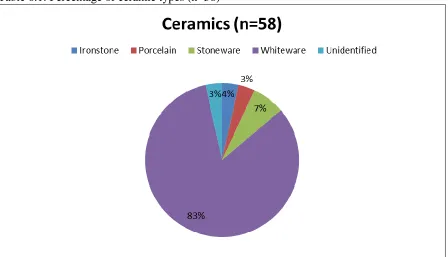
Table 6.1: Percentage of ceramic types (n=58) ... 65
Table 6.2: Ceramic counts ... 66
Table 6.3: Ceramic weights in grams ... 66
Table 6.4: Date ranges for glass color (Lindsey 2011) ... 71
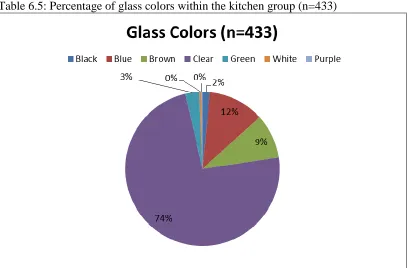
Table 6.5: Percentage of glass colors within the kitchen group (n=433)... 72
Table 6.6: Date ranges of glass ... 73
Table 6.7: Nail length and pennyweight system (Sutton and Arkush 2006:164) . 75 Table 7.1: 1997 vs. 2010 Kitchen assemblage ... 95
LIST OF FIGURES
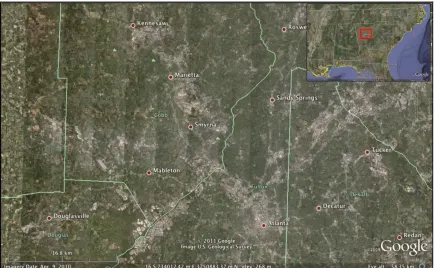
Figure 1.1: Reference map of Kennesaw, Georgia ... 4
Figure 3.1: Sketch of Lacy Hotel ... 27
Figure 3.2: Sketch of Lacy Hotel and rail line, ... 28
Figure 3.3: Reproduction of the floor plan for the Lacy Hotel ... 28
Figure 3.4: Camp McDonald... 31
Figure 4.1: 1997 Excavation (courtesy of Dr. Smith) ... 39
Figure 4.2: Map of GPR areas (courtesy of Dr. Smith)... 40
Figure 5.1: GPR results (courtesy of Dr. Smith)... 50
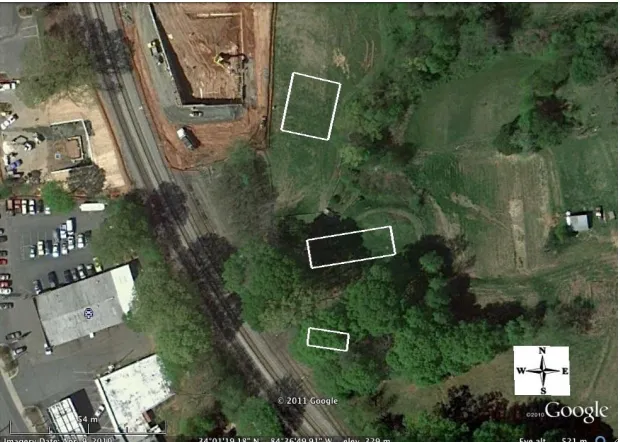
Figure 5.2: Three areas of investigation ... 52
Figure 6.1: Transfer-print whiteware, (Lot 33) ... 66
Figure 6.2: Stoneware rim, (Lot 3) ... 68
Figure 6.3: Stoneware with salt-glaze, (Lot 39) ... 68
Figure 6.4: Black glass, (Lot 13) ... 70
Figure 6.5: Unique colors of glass; olive green, pink, aquamarine, (Lot 12) ... 73
Figure 6.6: Medium cobalt blue glass, (Lot 14)... 74
Figure 6.7: Round nails, (Lot 37)... 76
Figure 6.8: Brick from Unit 10, (Lot 17) ... 78
Figure 6.9: Close-up of linear striations on the brick from Unit 10 ... 78
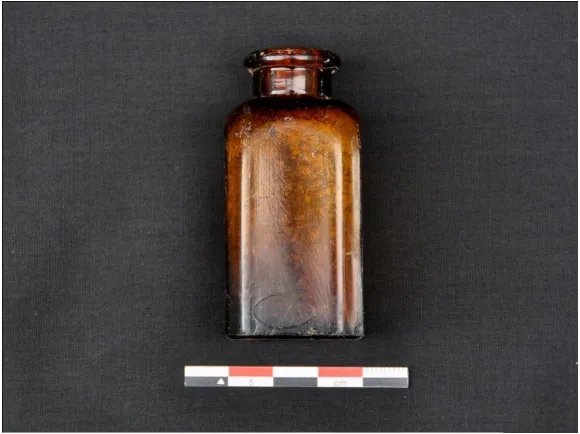
Figure 6.10: Bitter bottle (Lot 3) ... 82
1 INTRODUCTION
This thesis examines the Lacy Hotel, a 19th century boardinghouse located in
Kennesaw, Georgia, the town formally known as Big Shanty. Even though the hotel is
often associated with “The Great Locomotive Chase” and General Sherman‟s occupation
of Big Shanty, little is actually known about this important institution. There is a limited
amount of research done on boardinghouses in the Deep South, especially with a focus on
gender, and I hope to begin to fill this gap with this thesis. This research will add to our
understanding of gender ideologies and domestic activities concerning choices in
consumption in a boardinghouse context during the Civil War period. My investigation of
the site led to an excavation that I carried out there in 2010; artifacts were recovered
along with those recovered by an earlier excavation that aided in my interpretation of
what life was like at this boardinghouse.
I begin with a discussion of social theories often used in historical archaeology.
Theoretical approaches such as Marxist theory, Agency theory, and Gender archaeology
helped me conceptualize my own approach towards interpreting the materials associated
with the Lacy Hotel. My theory addresses gender roles and how they play a critical role
in defining the use of space through domestic activities and choices in consumption. This
approach frames my thesis research and allows me to interpret the Lacy Hotel data.
After the theory chapter, I describe the historical background of the Lacy Hotel
based on archival documentation. This chapter begins with a description of Big Shanty
before the Lacy Hotel and is followed by a discussion of the impact this business had on
describe the physical building along with details of the family that occupied it. The
historical background will be concluded with a description of how the Civil War
impacted the hotel and subsequently led to its destruction.
Next I review past archaeological investigations of the site. An overview of an
excavation performed in 1997 is discussed along with how the results prompted my own
archaeological investigation. The methods portion begins with an explanation of the
variety of datasets within historical archaeology and how they are employed as part of my
own methodology. The last portion this chapter describes the methods used for my
excavation performed in the fall of 2010, and how the process of excavation was actually
carried out.
The next step following the archaeological excavation was to categorize and
analyze the artifact assemblage in a lab. The artifacts recovered at the site were divided
by functional groups and described. The artifacts were placed in a database and were
separated by unit and shovel tests (see Appendix A). The information gathered from the
lab analysis was then employed to interpret past activities and choices of consumption on
the Lacy Hotel site.
This thesis concludes with a discussion and synthesis of the results of analysis. I
discuss how my theoretical approach helped me interpret the historical and artifact data.
This chapter begins with my analysis of the brick feature and artifacts recovered during
the excavation and what this can tell us about the site. This is followed by an analysis of
gender ideologies and their influence on domestic activities in a hotel context and my
1.1 Purpose of Study
The property that the Lacy Hotel occupied is currently in the center of a five acre
city-owned parcel situated in downtown Kennesaw, GA, 27 miles north-northwest of
Atlanta (Figure 1.1). It is located east of the CSX rail line near the current depot.My
initial interest in the Lacy Hotel began from a past internship at The Southern Museum of
Civil War in 2007. The Lacy Hotel is most known for its association with the “Great
Locomotive Chase” which was one of the greatest events during the Civil War. Other
than that, little was known about this site, not even its location, and there had been no
in-depth interpretation regarding this boardinghouse. Previous archaeological excavations
had taken place in the late 1990‟s, but they did not locate the foundations of the hotel.
The results, however, did provide us with a fair bit of data. For this research, I combined
historical documents with data collected during my archaeological excavations in 2010
and the 1997 excavation to investigate the dialectic between past behaviors, activities of
the individuals within the built environment and the material culture. The purpose of this
study is to explore the history of the hotel and its occupants by examining how social
structures constrained the actions of the Lacy family through gendered places and choices
in consumption. This hotel is also a unique type of household and a locale of change for
Figure 1.1: Reference map of Kennesaw, Georgia (GoogleEarth 2011)
In order to this examine this structure, research begins with an overview of
household archaeology. There is a great deal of variability in how archaeologists have
defined households (e.g., Bonine 2004, Hendon 1996). I consider the boardinghouse as a
type of household, although I recognize that it has a different function and organization.
All households do not have the same composition, thus research in this field should focus
less on the “household as a single social unit and bring attention towards the individuals
doing the housework” (Bonine 2004:16). The key point in studies of household
archaeology is the dialectic between social structures/cultural influence, the built
environment, and the material culture. The domestic relations and household activities
within the household are important to “our understanding of social and economic
production activities often associated with and performed by women, in many cultures
(Rosaldo 1974). When analyzing households, it is important to keep in mind the
organization and function for interpretation as they vary cross-culturally.
The purpose of this research is to learn more about the construction of gender
roles in a boardinghouse context in which the women working there outnumber the men.
My work within the field of household archaeology will contribute to our understanding
of the domestic relations and activities in a boardinghouse context. The boardinghouse is
a unique type of household as it represents an arena of economic activity and living
space. All households are involved in some form of economic activity, but not to this
scale. The analysis of the Lacy Hotel fits into other studies of 19th century households,
done by Margaret Wood (2004) and Suzanne Spencer-Wood (2004), with a focus on
dominant ideologies influencing the behaviors of women in certain spaces of the
household. The Lacy Hotel, given its unique situation, was a place for change for gender
relations with Mrs. Lacy performing domestic activities on a larger scale and
participating in the economics of the household, not typically seen during the 19th
century. Even though the Lacy Hotel only operated for a short time span, the behaviors of
women expressed through domestic activities and choices in consumption will be
2 THEORETICAL APPROACH
Archaeological theory provides a broader understanding of social relations that
constitute societies, past and present, and allows us to interpret the material record
produced. Throughout the history of the discipline, archaeologists have developed and
reacted to theories that explain past cultural processes. For the present study, it is
important to understand theory in historical archaeology, in particular Marxist theory,
Agency theory, and gender archaeology. I begin with a brief discussion of theoretical
approaches used in historical archaeology and then present the framework I employ to
interpret the Lacy Hotel data.
2.1 Marxist Theory
Marxism is the term used to describe multiple strains of social theory originally
developed by Karl Marx in the 19th century. Humans influence the growth of society not
by their consciousness, but by the production of material things. According to Marx, the
mode and means of production creates class distinctions that began with ancient societies
(Trigger 2006:297). There is a focus on individual societies with an emphasis on the
production process and who controls the means of production which are the machines
and tools. Marx argued that society went through transitional phases of primitive
communism to feudalism to capitalism. He first explained this transition as a reaction to
the “rise of trade, competition, and involved the structural differentiation of roles within
the labor process” (Patterson 2009:92). Marx also argued that societies change through a
historical-dialectical model with a focus on the variability in how societies are developed
into two dominant social classes, proletariat (workers) and the bourgeois (owners). These
two social classes are participants in the capitalist mode of production, and they work
together, not happily, to produce a living from their environment (Marx 1844).
2.1.1 Marxist Theory in Historical Archaeology
For the past 30 years in historical archaeology, certain themes have become more
central to research: power, ideology, inequality, and capitalism (Little 1994). These
themes have impacted how archaeologists approach past cultures within historical
archaeology and how they understand the role politics played in hindering our
understanding of those that have been exploited throughout history. Leone‟s (1995) A
Historical Archaeology of Capitalism, follows the key point of Neo-Marxism and argues
for politics in the present to be thoroughly incorporated into archaeology as “such
involvement will provide a more coherent justification for our concern with forgotten,
anonymous, and unknown peoples and groups, who are the exploited and suppressed
members of classes” (Leone 1995:251). He emphasizes that it is the politics of class that
have been ignored in history. Therefore, it is historical archaeology that must shed light
on these neglected groups, slaves, women, children and the poor of our past (Leone
1995). Leone refers to a statement made by Georg Lukacs, that historical archaeologists
must examine the ideologies of the past that maintained subordinated groups in order to
reveal and understand modern political conditions (Leone 1995:253). These past social
relations play an active role in reinforcing current inequalities.
Recently, historical archaeologists like Mark Leone and Charles Orser followed
capitalism (Patterson 2003). Marxists all shared the same view that people within a
society were seen as “active agents who worked within culturally imposed constraints to
provide for the material conditions of life rather than adapting passively to the world
around them” (Patterson 2003:122). The utility of Marxism for historical archaeology is
that all postindustrial societies studied have been impacted by capitalism.
Critical theory is an approach rooted in Neo-Marxist principles that deals with
connecting the past and the present, looking at the politics within archaeology, and
focusing on the oppression of people (Shanks and Tilley 1992). The ideologies that
control the past and present overshadow the social and economic inequalities that are
really occurring in a society. Within this paradigm, “archaeology is a political practice,
and the purpose of representing it as an activity that recovers the truth about the past is a
political purpose” (Palus 2006:86). Archaeology is seen as becoming politically involved
since it is about the knowledge of power, governmental control, and money (Palus 2006).
The objective of archaeology “is not merely to interpret the past but to change the manner
in which the past is interpreted in the service of social reconstruction in the present”
(Shanks and Tilley 1992:195). Critical theory examines the core of social relations to
reveal the inequalities that exists between people.
Randall McGuire‟s (2006) Marxism and Capitalism in Historical Archaeology
argues that the notion of class is embedded in the study of modern capitalist class
exploitation. Historical archaeologists with a Marxist focus want to examine all forms of
oppression and domination within society and critique our knowledge of the past. The
archaeology of capitalism employs the Marxist concept of class to elucidate dominant
(McGuire 2006). Some historical archaeologists argue that it is essential to focus on the
struggles of people, one of which is memory: “social groups tussle over what will be
remembered and what will be forgotten in order to define themselves and advance their
interests” (McGuire 2006:137). McGuire (2006) emphasizes that Marxist archaeology is
embedded in praxis and can incorporate political action and be integrated when
researching diverse communities of working people which allows them to voice their
struggles and their values.
2.2 Agency Theory in Archaeology
Marxist thought is similar to agency theory as they both share the concept of
development in cultural and symbolic capital through social relations. Pierre Bourdieu
and Anthony Giddens created theories of social action and focused on the dialectic
between agent and structure through practice (Hodder and Hutson 2003). Giddens (1984)
is known for his theory of structuration, and he assumes a “recursive relation between
social structure and agency” with a focus on individuals (Trigger 2006:469). Giddens
examined the active individual‟s strategies in determining and performing their daily
actions to negotiate the world (Johnson 2010:108). People are seen to actively “negotiate
social rules, creating and transforming the social structure that is constructed by the
individual” (Hodder 1985:2), but people are not all knowing so often there are unintended
consequences to their actions.
Bourdieu developed practice theory to study how people‟s behavior shaped their
culture and in turn their culture shaped their behavior. He focused on people‟s habitual
agents (Trigger 2006). Habitus involves operating with a nondiscursive knowledge
within society where an individual has unconscious dispositions based on past
experiences and dominant social structures. This has been described as “Practice Theory
Dark” by Lopiparo (2005), which emphasizes structure and constraint. It is important to
understand choices made from the individual perspective and what forces influence
human behavior (Trigger 2006). Individuals act based on an enculturation of conscious
and unconscious knowledge and these actions are constantly constituting the structures
that they may or may not transform (Lopiparo 2005). Bourdieu wanted to remove the
wall between structure and agency in what he saw as a dialectical relationship, as his
theory suggests that “practice is neither the result of unconstrained free will nor entirely
coerced by some outside force” (Ritzer 2005:5). Bourdieu was interested in the
relationship between the mental structures of the actor and how they are constrained by
social structures (Ritzer 2005).
In Paul Shackel‟s Craft to Wage Labor (2000), he uses an agent-based approach
to interpret the material culture of industrial-era domestic sites, describing active agents
as they react to the new industrial system as evidenced in the material culture. For
example, some women on the domestic front in 19th century Harpers Ferry, VA resisted
the emergence of the industrial revolution and its association with ideologies surrounding
consumption by resisting the purchase of the latest ceramics that were available to them
in order to save money (Shackel 2000). Some of the factory workers also resisted the
changes in the new class structure or discipline, which was reflected in the archaeological
record; some working in the brewery factory consumed the company‟s product on the job
behavior, and this loss of product took away from the owner‟s earnings (Shackel 2000).
Agency theory allows “us to explain material culture differences in terms of tensions and
social conflict within a society” (Shackel 2000:243). Thus, cultural systems are
constantly negotiated by human actors and agency theory exposes the role of agents as
some express conflict with the dominant social system through the creation of their
material world in more or less conscious ways (Shackel 2000:243).
I agree that the concept of habitus is useful in describing conscious/unconscious
behavior constrained by social norms. Behavior within the household and the division of
labor reinforces what household members have learned from society in the first place.
The Lacy family‟s daily actions utilized specific spaces within the household and
consciously/unconsciously used the built environment as a symbol to show their
relationship to society. Social norms place women within certain spaces of the household
in order to perform domestic activities. As Mrs. Lacy performed these activities, she was
reinforcing the dominant social ideologies, in terms of performing domestic activities
within the household. On the other hand, this is also a site of change for gender relations
since she was performing these typical activities on a much larger scale for money.
2.3 Gender Archaeology
In the 1980s, many critiqued archaeology claiming that the knowledge of history
is androcentric and they questioned how women fit into this discipline both in the past
and present (Kelly and Thomas 2010). The seminal publication on gender and
archaeology by Joan Gero and Margaret Conkey (1997 [1984]) addressed these issues of
of research about the past were not explored, such as the role of women in the household
(Conkey 2003). They felt that female archaeologists were getting less prestigious jobs
and were not well-represented in the discipline. Their groundbreaking study of gender led
to an examination of this topic vis-a-vis the formation of social identity as socially
constructed, performative categories (Butler 1990). Performativity is not a deliberate act
but a “rehearsal of a „norm‟ or „set of norms‟ that acquires an „act-like status‟”
(Kirtsoglou 2004:33). Judith Butler emphasizes this idea of performativity in building
identity as, to a certain extent, determined by biology but also as a dynamic relationship
between individual and institutions (Butler 1990). Sherry Ortner‟s (1972) Is Female to
Male as Nature is to Culture? attempts to explain the subordination of women by men
looking at the dichotomy between nature and culture. Women have a strong connection
with nature and the natural processes of reproduction while men are associated with
cultural processes which are seen to be superior in power to nature (Ortner 1972). If
women want to be associated with culture, they must collaborate with men in daily
projects (Ortner 1972).
The archaeology of identity is another perspective to interpret material culture.
Identity is created through the actions we take to present ourselves in a certain way to
others through our body using materials such as a brush, make-up and jewelry (Johnson
2010). Our performance is influenced by these materials used, and we can manipulate our
bodies through these personal items (Johnson 2010). It is important to analyze the context
in which the artifacts were found to determine their use by individuals aiding in the
construction of their identity, but this is not possible in this study due to the disturbed
Gender is the main theme in my research. The roles of women in the Lacy Hotel
are influenced by society through activities performed in certain spaces that are in turn
critical to creating their social identity. The spaces of the house are divided by activities,
which in turn are typically based on gender roles and a gendered division of labor. A
woman can resist these social norms with social repercussions or choose to follow them
which will be investigated in the Lacy Hotel. I will investigate the role of women in the
daily activities of the Lacy Hotel and examine how this is a site of change for gender
relations.
2.3.1 Marxist-Feminist Theory
Marxist-Feminist theory examines “(1) the exploitation and devaluation of
women‟s unpaid household labor by men as a capitalist class, and (2) analyzes how
women‟s unpaid housework is essential to the capitalist system” (Spencer-Wood
2009:37). This theory further argues that a woman‟s performance in labor is traded for
food and housing that is controlled by men (Spencer-Wood 2009). As early as Friedrich
Engels Origins of the Family (1884), he helped develop a Marxist theory in his
description of social relations between men (bourgeois) and women as unpaid workers
(proletariat). Although this did not actually happen, he claimed that if women got paid
professions for instance in a factory, then they could earn money outside the household,
and thus be equal to a men (Engles 1884). He went on to state that “the modern
individual family is founded on the open or concealed domestic slavery of the wife and
modern society is a mass composed of these individual families as its molecules” (Engles
century, but it is hard to believe that a woman as established as Mrs. Lacy would consider
herself to participate in „domestic slavery‟, but possibly in a different form, and yet that is
the essence of power relations. Mrs. Lacy‟s servants certainly assisted her in the kitchen
but historical documents describe her as the main cook. Mrs. Lacy‟s household labor kept
the boardinghouse thriving by creating profit. I believe Mrs. Lacy resisted such
domination by having control over the production of her own labor and influence in the
decision-making process. Mrs. Lacy‟s domestic realm extended into Mr. Lacy‟s
economic sphere in because her labor was his profit. This division of labor between men
and women in the household is typically reinforced in a capitalist society (Delle 2000). In
the 19th century, society did not allow women in the economic and political sphere of the
community thus they had to maintain the household based on these social norms. Yet
Mrs. Lacy was able to be a „working woman‟ by cooking for paying customers with the
benefit of it being within her own household which could have made it more acceptable
within society.
With the Lacy Hotel, I follow Marx‟s theory of division of labor but with a focus
on gender rather than class, as well as Durkheim‟s power differential of specialized tasks
(Marx 1844, Durkheim 1933). I argue that the woman of this household had a much
more active role in the success of the business then in a “normal” business. I agree with
Marx and Engels regarding this constant struggle between the exploitation of workers and
power of the owners over control of the production, yet I believe that Mrs. Lacy had
control over the production of food for her customers. Mrs. Lacy would have bought the
food from the grocery keeper in Big Shanty since women in the 19th century were
came from the Lacy‟s vegetable garden, chickens under the servant‟s house laying eggs,
and meat taken from the hogs running around the property which would have been kept
in the smokehouse.
Most households share “a common goal of survival, in both a physical and social
sense they do not all necessarily follow the same strategy or have the same degree of
success” (Hendon 1996:5). Domestic activity can be seen as this ongoing cycle within the
household, but in the case of the Lacy Hotel, the household was also where they earned
their income similar to a farmer. The members of the hotel collaborated in performing
activities in order to meet the demand placed upon the unit by society. Gender was a key
player in the division of labor within the Lacy household. With middle-class ideology
reinforcing gender inequality by keeping women in the home, I plan to expand on the
research that has been done by archaeologists regarding households and the experiences
of the women associated with them (e.g., Nelson 2004). Gender is constructed based on
“learning to behave accordingly to the norms of a particular culture” (Nelson 2004:3), yet
there is some flexibility. The behavior of those living in the unit was heavily influenced
by the gender ideology enforced by society. The role of women in the domestic sphere
has become the standard enforced by social norms and they unconsciously operated in
this system.
It is important to discuss how women in this time period were viewed and what
was seen as socially acceptable. Mrs. Lacy‟s behavior was well-received by society as
she was often described by visitors as a kind, elegant woman, who helped boost the
success of the hotel through her skills as a cook and an engaging hostess (Kurtz 1909).
were not allowed in business endeavors and the political realm. This value depended on
the level of skill performed within the household. The majority of middle-class women
had to do everything from the ground up such as obtain the knowledge to cook, make
soap, sew, and clean often with the assistance of servants (Fox-Genovese 1988).
Middle-class women were expected to maintain a neat and stylish household, as well as be
approachable and able to entertain guests. In effect, a woman‟s role in the household was
that of a mother, entertainer, wife, tailor, and a cook (Fox-Genovese 1988). Women were
to accept their predestined role in societyand to embrace the social norms
(Fox-Genovese 1988). In order to be a “lady”, one would need to behave in a way that was
socially acceptable, to be elegant and refined as well as dedicated to their family and
household.It was not until the Civil War, when woman were demanded for other
important duties, that they achieved a higher status in society. The concept of class did
influence gender roles, but the focus for this thesis will remain on social norms. Women
whose husbands were in the war had to take over the business aspect to bring in money.
They cared for wounded soldiers and assisted in making items for war, such as bullets
(Fox-Genovese 1988). At the end of the day pre-Civil War, Southern women “lived in a
discrete social system and political economy within which gender....shaped their lives”
(Fox-Genovese 1988:37). External factors affected the social dynamics within the Lacy
Hotel which in turn influenced domestic activities and created gendered places that in this
2.4 Gendered Places
A sense of place is created when gender roles limit the activities and in turn the
types of social interactions that help redefine that space. A specific space within a
structure often serves a particular purpose, and is limited to certain activities, and defined
through social interactions. These spaces also vary across cultures and time ranging
“from public-private, sacred-profane, and to ours-theirs” (Kent 1990:2). The use of space
can be determined to a certain degree by how much room that an activity needs and
access to these areas, whether it is a closed, open, public, or private space (Rapoport
1990). Each room in the house has been labeled based on function: dining room,
bedroom, kitchen but they can be transformed if the furniture was moved thus changing
the function of the room; but certain activities and their associated material culture seem
more appropriate in certain spaces like cooking in the kitchen or sleeping in a bedroom
(Rapoport 1990). Activities are a part of a larger social system in the house that functions
as a whole and is organized by daily practices (Rapoport 1990). In theory, the patterning
of material culture reflects routinized behaviors. Dominant ideologies are the major factor
in creating gendered places and the activities that occur within specific spaces (Kent
1990). Therefore, I argue that the behavior and values of women are a result of dominant
ideologies that are, in part, defined by the domestic activities that they perform in specific
areas. The activities within ascribed spaces create a sense of place that is continually
reinforced through routinization of activities.
The activities in the Lacy Hotel were separated into discrete areas that were
created and maintained through dominant ideologies. It is important to examine the
together at the table with boarders or visitors was a ritual with social significance. Mrs.
Lacy prepared dinner in a distinct space in the house. The activity of preparation and
eating dinner was associated with other activities in the household, choices in
consumption of ceramics and food, which are not limited to the kitchen but directly
impact the patrons and the Lacys social status.
2.5 Consumption
Choices in consumption can be viewed through a Marxist lens and these choices
differentiate individuals based on wealth, access and quality of goods. As discussed
above, consumptive patterns and decisions are influenced by dominant social structures
and, in turn, often reinforce those structures. Artifact assemblages, in historical
archaeology, containing glassware and ceramics are typically associated with domestic
goods and are normally those used by women in the process of food production. In
contrast men are known to “consume” these goods (Wall 2000). Within the Lacy Hotel,
decisions made about consumption were based on satisfying their needs and how this
might affect their activities within the household, e.g. buying a spatula in order to cook
eggs.
Scholars have used methods to correlate “ceramic assemblages with their historic
owners, enabling them to correlate patterns of consumption with a variety of social
factors, primarily socioeconomic status” (Claney 1996:106). A comparison of ceramics
may reveal the socioeconomic status of the Lacy family as it is based on “the assumption
that types of wares have basic cost differences and/or status significance” (Worthy
but by many, such as the structure and size of the household along with its life cycle
(Claney 1996).Commonly used ceramics can reveal what that household could afford.
The type of ceramic and decoration pinpoints the price range and even the function of the
item. For example, porcelain is more costly than whiteware, thus porcelain is typically
used for special events. The shape, the type of ceramic, and its decoration tell us not only
the function of the vessel but can reveal what actions took place within a household
(Claney 1996). Stoneware for example was quite accessible and affordable during this
time since it was produced locally and was typically used in hotels as a dinner plate. We
also use historical documentation to learn about these wares which help us understand
their function. Ceramics found on the Lacy Hotel site reveal the choices in consumption
within a boardinghouse context and hint towards activities that were performed on the
site.
2.6 Theory of Proposed Research
There is no universal definition of what constitutes a household and many
archaeologists construct their own definition based on social organization and function
(Brandon and Barile 2004). Richard Blanton describes a household as “a group of people
co-residing in a dwelling or residential compound, and who, to some degree, share
householding activities and decision making” (Blanton 1994:5). For the Lacy Hotel, I
define a household as a socioeconomic unit with a nuclear or extended family that also
accommodates non-kin members. In order to understand the household, one must
understand the social dynamics among its members and the utilization of space. This
study analyzes the role of gender in creating gendered places that influence consumer
analyzing the use of space and domestic activities within the layout of multiple structures
using historical data. I use archaeological evidence to analyze choices in consumption by
looking at the quantity and quality of the material culture in combination with historical
documentation. These rich, microscale datasets help us understand the broader society as
a whole by looking at the relationship between social norms and behavior. Households
and artifacts play an active role in constituting people‟s identities, which is an ongoing
process. The boardinghouse is interesting because it is a traditional place, but as a
business it created a place for gender relations to change. Society influenced the behavior
of the Lacy family and also created gendered spaces within the household that affect
decisions in consumption, a topic that is further examined from a Marxist-feminist
perspective.
In conclusion, the role of gender, influenced by dominant social ideologies, is
one factor that influenced the activities performed in specific spaces, the division of
labor, and the choices in consumption within the Lacy Hotel. The activities performed in
these spaces set-up expectations for appropriate behavior. Ideology influences the spatial
segregation of gender through gender-specific areas as evident in kitchens. Mrs. Lacy
was not forced to work in the kitchen but chose to do so for monetary purposes. Mrs.
Lacy controlled the output of her labor and became an active participant in the capitalist
sphere along with Mr. Lacy. Her control over the domestic activities influenced her
decisions in the consumption of ceramics. Although all households have their own
particular function and organization, they all operate based on their relationship with
relationship amongst its members and a change in gender relations associated with
3 HISTORICAL BACKGROUND
The Lacy family was well-known for their success in the town of Big Shanty with
the Lacy Hotel. Civil War historians know the hotel as the starting point for the “Great
Locomotive Chase” but little else is historically known regarding the structure or the
family who operated it. Historical research is imperative in any archaeological project in
order to understand the individuals who had the occupied the site. The history of the Lacy
Hotel is linked with the beginning of the development of Big Shanty and the arrival of the
Western and Atlantic Railroad to the town. This chapter provides an overview of the
development and descriptions of the Lacy Hotel along with its owners, and the impact of
the Civil War on both.
3.1 Big Shanty Beginnings
In 1830, President Jackson ordered the removal of the Cherokee Indians from
Georgia. Shortly after, this now unoccupied land was ready to be given to the citizens of
Cobb County who qualified for the land and gold lottery. In order to be qualified for the
drawing, one must be a “white man over eighteen years of age who was a citizen of the
United States and, for the three years past, a citizen of Georgia” (Temple 1935:32).
Permanent homes were beginning to be developed in the Cobb County area along with
the new roads that were needed to improve transportation. There were no roads in Big
Shanty before people had settled there and the Peachtree trail was one of the first roads to
be made. It ran along the Big Shanty spring, an important source of fresh water for the
community. In 1836, Georgia legislation approved the Western and Atlantic Railroad to
with other states by transporting goods (Cotterhill 1939:183). The impact of the railroad
on Georgia‟s economy has been well documented by historians (e.g., Aaron Marrs 2009
book Railroads in the Old South). For example, the railroad allowed items to be shipped
with more efficiency which resulted in a wide variety of goods sold locally and a general
increase in trade (Cotterhill 1939:217). The railroads went into the remote areas of
Georgia and encouraged more industries to prosper such as lumber, cotton, and wheat
(Cotterhill 1939). The rail line reached what is now known as Kennesaw in 1838 and was
the first sign of economic activity, which in this area, led to the name of Big Shanty.
During the construction of the rail line, Irish laborers set up shanties, also known as
shacks, on the summit of a high grade. This was known as „big grade to the shanties‟ and
was later shortened to Big Shanty (Cobb County Times [CCT], 7 July 1938:1).
As the construction of railroads increased so did the demand for boardinghouses
to be built near the rail line for the traveling public. In the late 1840s, before the Lacy
Hotel was established, hotels such as the Marietta Hotel, Kennesaw Hotel, and the
Howard House were seen as the architectural centerpieces of near-by Marietta and they
accommodated tired travelers from the Western and Atlantic Railroad (Temple 1935).
These establishments were considered luxurious and stood out amongst other buildings
and homes in the area. These hotels were quite accommodating with elaborate furniture,
warm beds, good Southern breakfast and excellent hospitality. Some would be used as
entertainment venues for balls, banquets, and dance classes (Temple 1935). The Western
and Atlantic Railroad company soon planned the development of a boardinghouse in Big
3.2 Pre-Lacy Hotel
The Western and Atlantic railroad desired to purchase all land on which the line
was built to increase the building of depots and boardinghouses. On November 2, 1858 in
Big Shanty, the property on which the Lacy Hotel would sit was purchased from two
residents, one piece for $28 from William Elliot and the other for $8.40 from Dr. Lewis
(Atlanta Weekly Intelligencer [AWI], 8 September 1859:2). The hotel was financed with
the state‟s money since the Western and Atlantic Railroad was owned by the state of
Georgia. The hotel was rented to Lemuel Kendrick for $180 a year (AWI, 22 September
1859:2).
Lemuel Kendrick, a railroad contractor, was the wealthiest citizen of Big Shanty
and the first proprietor of the hotel in 1859. Kendrick managed the hotel with the
assistance of Miss Sallie Kilbie. Kendrick‟s wealth was estimated by real estate and
personal property, as well as his 15 slaves, nine of which were female (1860 Slave
Schedules). In 1859, he placed a message in the newspaper for the hotel, requesting it to
be managed by any honest man who “will obligate himself to keep a good house” and
desire to make profit (AWI, 15 September 1859:2). Someone had offered Kendrick
$2,500 for the hotel but that individual has remained unidentified (AWI, 22 September
1859:2). A few months later, Kendrick transferred his lease of the hotel to George Lacy.
George Moody Lacy was the son of James William Lacy and Nancy Mary
Moody, born in Grainger, Tennessee in 1818. He married his first wife Rebecca Austin
on December 4, 1838 in Tennessee. The marriage only lasted a few years. Shortly after,
he remarried Edna Austin, the sister of Rebecca, on November 23, 1843 (Tennessee State
Federal Census). He moved to Whitfield, Georgia in 1857 and two years later moved to
Big Shanty to become a hotel keeper (1860 Federal Census). By 1860, George and Edna
Lacy had four daughters and one son living in the hotel: Sarah age 16, Nancy age 13,
Mary Catherine age 10, Alice age 4, and Henry age 7 (1860 Federal Census), who would
later pass away at the age of 21 from consumption (Marietta Daily Journal [MDJ], 9
October 1874). The children would soon learn how to help out the family business by
entertaining the guests. The daughters were known to serve the food to the customers.
One of the daughters also provided rich oral histories about life at the hotel after its
demise.
The Lacy family satisfied the demand for domestic service that the hotel required
through labor performed by “colored servants”(The Constitution [TC], 7 May 1911).
These servants were most likely freed slaves as Mr. Lacy was not listed in the 1860
schedules as owning any slaves. The servants cleaned house and washed clothes. An
individual who could afford a servant to do manual labor “reinforced their position in the
class structure by income and ethnicity” (Aron 2001:181). “Colored servants” were
alienated from their work, but did it as a means of survival during a time when they were
seen as property. Middle-class people typically worked inside the household while the
servants did all the outside chores (Fox-Genovese 1988).
3.3 Lacy Hotel in Business
As mentioned, George Lacy took over the lease for the Lacy Hotel from Kendrick
in 1860. The W&ARR cash journals recorded Mr. Lacy‟s first rent payment of
and Atlantic Railroad, Cash journals, 1856-1866).The payments made by Mr. Lacy for
rent and other bills tripled in 1862 and were the highest in 1864, most likely as a result of
high inflation caused by the Civil War. The Lacys were able to withstand the price
inflation during these harsh economic times and still could afford the increased rate of
transporting goods to and from the hotel providing a glimpse into their economic
standing.
Many of the details regarding the hotel have been provided by Georgia
artist-historian Wilbur Kurtz. In the early 1900s, Kurtz obtained information regarding the
hotel by interviewing the eldest daughter of George Lacy and a frequent visitor of the
hotel, Major Hiriam Butler. According to Kurtz, the Lacy Hotel was a Greek revival,
T-shape, two story building that dominated the shanties that occupied the area in 1859
(Figure 3.1). Many accounts regarding the construction of the hotel claim that the
“structure was prefabricated at the Western and Atlantic Railroad shops in Atlanta and
then shipped to Big Shanty and assembled at the site” (Atlanta Constitution [AC], 30
January 1972). The hotel was built on the east side of the tracks and faced west to
welcome passengers arriving on the rail line (Figure 3.2). Its architecture was quite a
wonder in a rural town such as Big Shanty. The hotel had a brick foundation and it was
painted off-white with green wooden shutters (Kurtz 1909). It had a small two-level
porch, followed by the main hallway dividing two rooms above and below. The
children‟s bedrooms were upstairs while Mr. and Mrs. Lacy had the bedroom downstairs
across the hall from the parlor (Figure 3.3). The L-shaped dining room began on the north
side of the building and curved east down the main hall. The dining room was built to fit
the hall sat a card-table and to the south was the parlor that held the town‟s most popular
piano. The east end of the dining room led into a boarding room, and there were stairs
leading to another boarding room on the second floor. East of the main portion of the
house was a kitchen which shared a wall with the servant‟s rooms. Near the servant‟s
quarters was a smokehouse, dairy, two covered wells, outhouse, and a servant‟s quarter.
The smokehouse had iron bars over the windows and the dairy had a small frame with no
windows. There was a bench located in the south yard where the servants would sit and
wash clothes. The hotel was enclosed with the traditional white picket fence to keep the
hogs out. The Lacy ducks sat outside the fence where there was low ground and standing
water. Unfortunately, these ducks were occasionally stolen by the starving soldiers at
Camp McDonald (Kurtz 1909). Instead of stealing and eating the ducks, other soldiers
[image:40.612.95.515.431.687.2]from the Camp would have stopped by the hotel to purchase a fresh, hot meal.
Figure 3.2: Sketch of Lacy Hotel and rail line, Wilbur Kurtz, Atlanta and the Old South, p.27
The W&ARR traveled daily from Atlanta at 4am and reached the Lacy Hotel
promptly at 6am, where if the passengers desired a hot breakfast one had already been
prepared inside. The stop only lasted 20 minutes but was well needed since the dining
car had not yet been established.In case of a delay, the hotel provided benches located on
either side of the front porch. As Mr. Lacy was a deeply religious man, it was customary
for visitors to complete a „spiritual cleanse‟ before entering, in which pans of water, soap,
and towels were provided at the front door (Kurtz 1909). Mr. Lacy would sit right within
the door to collect payment. The hotel charged 25 cents per meal ($5.99 today) and 10
cents per night ([AC], 30 January 1972). It seems likely that the meal was more costly
than the room due to the fact that it was their main specialty and brought in more
customers. The price for the breakfast was quite reasonable given the outstanding
cooking performed by Mrs. Lacy, which included:ham, waffles, grits, gravy, fried
chicken, hot coffee, fresh vegetables, biscuits, and flap jacks with sorghum syrup (Kurtz
1909). The customers of the Hotel were not limited to people coming off the train but
attracted people from the community and also people from out of town who would visit
the soldiers at Camp McDonald. Mr. Lacy would say grace before every meal as he was
a devout Methodist. Being a religious man, he had also acted as a justice of the peace
being affiliated with at least five marriages (Whitfield County, GA, Marriage book A
1865-1876).
In 1860, the business at the Lacy Hotel was expanding along with Big Shanty.
Many people began settling in this town after the rail line had been established and this
increased amount of people traveling through the area. Big Shanty had a population of
day laborers, 38 farm laborers, three teachers, two carpenters, one merchant, two
waggoners, and one harness maker (Martin 1987). The Lacy Hotel was the only boarding
and eating house in Big Shanty during the 1860s, thus there was no competition. In
addition, Big Shanty remained a quiet town until Camp McDonald was established in
1861 attracting many visitors.
3.4 Big Shanty during the Civil War
Only a year after the Lacy Hotel had opened its doors, the Civil War began in
1861. On June 11, 1861, Camp McDonald was established in Big Shanty, west of the rail
line across from the Lacy Hotel (Figure 3.4). The area was also chosen for its access to
the Big Shanty spring, which served as an important water source for the soldiers. Camp
McDonald brought many relatives and curious visitors, who would also stop by the hotel.
On June 31, 1861, Georgia Governor Joseph Brown gave a speech at Camp McDonald
before the soldiers were sent out to war and this attracted many people from all over
(Temple 1935). In addition to Governor Brown, the Lacy Hotel attracted many important
visitors and dignitaries over the course of its brief history including William T. Sherman,
Confederate President Jefferson Davis, and Major General Joseph Johnston. By 1862, the
The war negatively affected the citizens of Big Shanty with demands by soldiers
for food and clothing, yet there was not enough supply for this demand. During the
winter months of the war, the prices were extremely high and barricades were placed on
the ports that limited goods like sugar and salt from coming in to the state. The restricted
access to goods marked the beginning of the economic disaster as a direct result of the
war. Women and slaves worked incessantly to make clothes and other goods to send but
had to keep enough for their own family (Temple 1935). The community had to resort to
trading goods, e.g. in many cases, some traded with the rich in which services, performed
by doctors or teachers, were paid for in food. Merchants would withhold basic goods
from the public until the price went up and then these goods were sold with a high
inflation rate to gain profit. The government would also sell food at a fixed price since
they knew the citizens had to purchase the goods due to their desperate need for basic
goods (Wagner 2002).
A year later, the war continued to impact the people of Big Shanty and brought
chaos to the Lacy Hotel. In 1862, the Lacy Hotel was the starting point for one of the
greatest events in Civil War history, “The Great Locomotive Chase”. The General, the
name of the locomotive, made its usual stop one Saturday morning and hungry
passengers went inside for breakfast. As the crew sat at the table, they looked out the
window and saw the train “running off”. Conductor Fuller came outside and noticed that
the mail car and two passenger cars had been unhitched and left (Bonds 2007). This event
involved union soldiers, led by Union spy James J. Andrews, stealing “The General” with
a plan to interfere with the confederate rail supply network. The Lacy Hotel stop was
soldiers could not be warned of a hijacked locomotive while the soldiers at Camp
McDonald were unaware of what was about to occur. After being chased by Captain
Fuller and his men, the Union soldiers abandoned the General and ran into the woods.
The Union raiders were captured, many of whom were executed.
3.5 General Sherman’s Occupation of Big Shanty
As the Civil War continued, it made its way to Big Shanty and eventually the
Lacy Hotel. June 9, 1864 was a day that the Lacy family would never forget. Sarah Lacy,
later known as Sallie Seawell, described the day that her family was removed from their
home by Union soldiers. At around noon, Sallie was on her bed leaning against the
bedpost going through her old love letters. She heard the dinner bell ring and she went
downstairs, walking past her sister, Nannie who was playing cards with three confederate
soldiers (AC, 23 October 1938:SM1). She claims that Mrs. Lacy had told her that she had
cooked the last chicken, which was sitting under the servant‟s quarters. The family and
boarders sat down for a meal when all of a sudden, a shot was fired into the house and
went through the bedpost that Sallie had previously been leaning on upstairs. The bullet
went out into the yard where the servants were washing clothes under a big chestnut tree
in the southern portion of the yard ([TC], 7 May 1911). Everyone in the hotel scattered as
Union soldiers approached. Under these dangerous conditions, the Lacy family was
removed from the hotel, and they headed south to Marietta.
Prior to and during the Battle of Kennesaw Mountain fought on June 27-30, 1864,
Big Shanty served as the rail head for Sherman‟s army consisting of over one hundred
while he set up his military headquarters at the Lacy Hotel (AC 30 January 1972). He had
turned one of the upstairs bedrooms of the Lacy house into a “telegraph station in full
operation” (AC 30 January 1972). Sherman‟s men had built a stockade of logs around the
establishment during federal occupation (AC 30 January 1972). Sherman would soon
make the Lacy Hotel another casualty of war.
Another event that occurred at the hotel during Sherman‟s occupation involved
the most beloved piano. Nannie Lacy‟s grandmother had sent her a piano on her sixteenth
birthday in 1863. The piano brought much attention to the hotel as many wanted to listen
to it and even take lessons on it (Atlanta Journal Magazine [AJM], 18 September 1927).
It was a heavy mahogany made by Jennys and Son, New York, No. 4490 (AJM, 18
September 1927). When the Lacys were removed from the hotel by Sherman‟s troops, the
daughters tried to locate a wagon in order to take the piano with them, but they were told
to leave urgently (AJM, 18 September 1927). When Sherman had made the hotel his
headquarters, neighbors reported hearing the piano played at night (AJM, 18 September
1927). As Sherman continued his campaign to Atlanta, he ordered the piano to be
removed with a cotton wagon that was bought from an old “colored servant”. This
“colored man” knew Miss Lacy and told her what had occurred. She began the search to
get her piano back. Knowledge of the piano soon reached Nannie through an old friend
that learned the piano was being held in an attic in Marietta and was to be sent to
Sherman‟s home after the war ended. She found some men and a wagon to go steal the
piano back. They entered the soldiers‟ home and found only women present, which made
unequal fight. After Miss Lacy passed away, her heir no longer wanted the piano, and in
1914, it was sold to W.H.Benson, a resident of Marietta (AJM, 18 September 1927).
After Sherman was done with his excursions in Big Shanty, he ordered his
soldiers to burn the Lacy Hotel on November 14, 1864. As Big Shanty slowly started to
rebuild itself in the wake of the war‟s destruction, a new boardinghouse was desired by
the town and the Western and Atlantic railroad for the traveling public. It was announced
in 1870 that a railroad eating house was built in Big Shanty to replace the Lacy Hotel
with Gasper Carrie as the landlord (AC, 15 May 1870:3). It was actually built on the
other side of the rail line from where the Lacy Hotel had sat. In the 1870s, Big Shanty
officially became Kennesaw, named after Kennesaw Mountain, as the Western and
Atlantic Railroad was rebuilt and more retail stores were established increasing the
population and revenue for the town.
3.6 Life after the Lacy Hotel
After their removal from Big Shanty, the Lacy family re-settled in Marietta and
opened a new boarding house on Lacy street (named after them) on Campbell Hill. The
desirable Queen Anne house was 2-stories, had 12 rooms, with a servant‟s house, stable,
large lawn, garden, extra land for cultivation and was located ¾ miles from the depot
(MDJ, 21 May 1896:1). It held ten boarding rooms and the rate was $7/week or
$25/month (Kennesaw Gazette [KG], 1886). In 1870, Mr. Lacy was living in Marietta
and was still listed as a hotel keeper, while his wife was keeping house, his son was a
baggage master with one of the rail lines, and Alice was at school as all the daughters
County, which means being an official having jurisdiction over a territory (MDJ, 12 July
1872:2). The daughters kept up with social events in town and once attended an
engineer‟s ball in Big Shanty in 1872. Miss Alice Lacy was noted to be the most
desirable at the event “judging from the continual calls made upon her for company in the
dance” (AC, 18 May 1872:3). The Lacy daughters utilized their social relations gained
from visitors at the Lacy Hotel in order to become more involved in the community and
social events.
After years of living off of a farmer‟s wages, the Lacys had acquired a
comfortable lifestyle through the success of the hotel in Big Shanty. Before the Lacy
family moved to Georgia, their personal estate was $700; after the success of the hotel, it
had risen to $2000 (1870 U.S. Federal Census). In 1892, at the age of 75, after battling a
long unknown illness George Lacy passed away and he was regarded “one of our most
esteemed citizens whose life has been one of uprightness and spotless integrity” (MDJ,
13 October 1892). He was claimed to have been a successful proprietor and manager of
popular hotels in his two known locations. In the end, George Lacy thrived as a
proprietor and was able to make a great profit through his dealings in the hotel business.
He was seen by the community as an excellent manager who knew how to satisfy
customers by serving exceptional food. The Lacy family now resides in the Marietta
Cemetery on an exceptional plot, but their legacy in the hotel business lives on.
In conclusion, the historical background of the Lacy Hotel provides critical
information needed in order to interpret a site that was only occupied for a few years. The
information gained reveals the individuals and past activities that took place on the site
family and the hotel, it is possible to properly assess artifacts recovered from the site to
see if they match the lifestyle of the Lacys in the 1860s as described in the historical
texts.
4 PAST ARCHAEOLOGICAL EXCAVATIONS
Before the 2010 excavation had taken place, I gathered as much information as
possible regarding the past archaeological investigation undertaken in 1997. After
examining the 1997 field notes and archaeological report, it was clear to me that the
location of the Lacy Hotel had never been determined. As this research continued, I
surmised that a final effort of excavation should occur on the site to attempt to locate the
hotel and gather archaeological evidence associated with the structure. The 1997
excavation provided information on the methods and findings employed in the past to
develop plans for the 2010 excavation program.
In 1996, Dr. Betty Smith, an archaeology professor at Kennesaw State University,
obtained permission from the City of Kennesaw to resume excavation on the Lacy Hotel
site, which had been approved in 1978, but was stopped due to complications. Dr.
Smith‟s excavation involved students from Kennesaw State University and was
conducted during the summer of 1997 and the spring of 1998 (Figure 4.1). The
archaeological testing on the depot property east of the parking lot led to inconclusive
results regarding the hotel‟s location. Dr. Smith hoped to expose features such as trash
pits or outbuildings that were associated with the hotel (Smith 1998). The excavations
revealed a heavily disturbed site with a mixture of different time periods ranging from
Archaic (8000 years old), Civil War era (AD 1861-1864), early twentieth century, and
recent debris (Smith 1998). Dr. Smith made an observation of plow scars eight to nine
inches below ground surface located within the northern portion of her excavation area
along with evidence of sheet erosion. Further south, she encountered a cement structure