THE EFFECTS OF PROBLEM-BASED LEARNING ON
COGNITIVE AND GENERIC SKILLS DEVELOPMENT IN
MECHANICAL ENGINEERING
THE EFFECTS OF PROBLEM-BASED LEARNING ON
COGNITIVE AND GENERIC SKILLS DEVELOPMENT IN
MECHANICAL ENGINEERING
Hasanul Hadi bin M. Saleh
Politeknik Kementerian Pendidikan Tinggi Malaysia
012-9815081
hhmsa911 @vahoo.com
Maizam Bti Alias
Kolej Universiti Teknologi Tun Hussein Onn Batu Pahat, Johor
607-4537901
[email protected]
ABSTRACT
Although a well established method in training medical doctors, the problem-based learning (PBL) method is still relatively new in engineering education. Therefore, only limited empirical data are available on the effectiveness of PBL in the teaching and learning of engineering students. The purpose of this study was to evaluate the effectiveness of PBL in developing subject specific knowledge and generic skills in mechanical engineering. The quasi-experimental design method was used with two intact classes of first year students from the Mechanical Engineering Diploma programme in the Tun Hussein Onn University College of Technology; ne = 28 for the experimental group and nc= 52 for
the control group. The experimental group was asked to use a prescribed PBL method in completing their group assignments while the control group used the conventional method. Data were gathered on students' learning of Fluid Mechanics I, a core subject in mechanical engineering. Two data gathering instruments were used namely, an achievement test as the cognitive measure and a self-assessment questionnaire as the generic skills measure. The results showed that the mean of the PBL group is higher than the conventional group on the cognitive measure as well as the generic skills measure with significant effect sizes ranging from 0.56 to 1.1. It was concluded that PBL is effective at developing cognitive as well as generic skills in mechanical engineering.
Keywords
Problem-based learning, cognitive skills, generic skills, mechanical engineering
1. INTRODUCTION
Present engineering has become a profession that has to cope to the future need of the society. Thus, the demand exist for the multi skills engineers who are very good in communication skills, innovative, creative, able to manage people as well as the system, with potentials in lifelong education, adaptable to new situation, able to make correct decisions in the broad scope of economic, politic, social, environment and ethics.
A new educational approach is needed to meet these changing requirements. A broader more general approach is required that
not only helps students to understand basic engineering principles but also gives them the ability to acquire more specialist knowledge as the need arises. But beyond this there is also a need to provide young engineers with an understanding of the social context within which they will work, together with skills in critical analysis and ethical judgments, and an ability to assess the long term consequences of their work [4],
Comparing to the present engineering education system, of course there is an urgent need for some innovation in order to achieve future engineering goals. According to Felder, Woods, Stice, Rugarcia [8] although their content has changed in some ways, many engineering classes are taught in exactly the same way that engineering classes in 1959 were taught. The teaching and learning method in engineering education in the past 50 years are similarly "chalk and talk" that is teachers centred learning [14], To achieve the future engineering education, teaching and learning methods should be changed from teacher-centered to student-centered, thus needing more active participation from students. Problem-Based Learning (PBL) is one of the student centered learning which fulfill the requirement of future engineering education. The main difference between PBL and other types of student-centered learning process is its emphasis in introducing concepts to students by means of challenges in the form of problems relevant to their future practice [18], Thus, contrary to the conventional model which uses problems after the contents has been introduced, PBL uses the problem to challenge, motivate, focus and initiate learning [7],
2. PROBLEM STATEMENT
Not much applications in engineering and therefore not much information on how
According to Albanese the main reason is that the students chosen for medic have already achieved excellence through conventional system and is possible to improve better in PBL. Another set back in PBL is that improvement in cognitive skills are not parallel to generic skills (Mona Dahms, 2005). Students undergoing PBL have low cognitive skills but achieve high generic skills. Nevertheless, the existence of this phenomenon in engineering field is yet to be determined. At KUiTTHO, Norsyahidan [16] had done a research in civil engineering and founded a few flaws
in the design used. Therefore, this research is carried out on mechanical engineering by considering those factors.
2.1 Aim and objectives
The objective of the study was to determine the effectiveness of PBL in developing subject specific knowledge and generic skills in engineering education.
i. To determine whether the PBL method is better in developing subject specific knowledge compared to the conventional method
ii. To determine whether the PBL method is better at developing generic skills compared to the conventional method
2.2 Theoretical Framework
The theoretical framework of this study is shown as Figure 1 where PBL is the independent variables; where as the cognitive and generic achievements are the dependent variables. This study is based on Barrows [3] theoretical framework on PBL that stating that the characteristics of PBL are student-centered learning, collaborative learning in small groups, the teacher are facilitators, problems are the tools for the development of clinical problem-solving skills and new knowledge is acquired through self-directed learning. The execution of PBL method is expected to improve the cognitive and generic skills of the students. The definition of cognitive skills is based on the Blooms Taxonomy and generic skills based on attribute of Canberra University (UC), Australia (2002).
P B L
Learning is student-centered
Learning occurs in small student groups Teachers are facilitators or guides
Problems are the vehicle for the development of clinical problem-solving skills
New information is acquired through self-directed learning
Cognitive Skills
Knowledge Understanding Application
Generic Skills
• Collaboration
• Communication
• Research
• Problem-solving
• Self management
F i g u r e 1 Theoretical F r a m e w o r k
3. PROBLEM-BASED LEARNING
CONCEPTS
Problem-Based Learning (PBL) is the learning that results from the process of working toward the understanding or resolution of a problem where the problem is an important element in the learning process. Barrows [3] identified the following features of PBL:
Learning is student-centred
Learning occurs in small student groups
iii. Teachers are facilitators or guides
iv. Problems are the vehicle for the development of clinical problem-solving skills
v. New information is acquired through self-directed learning
The fundamental difference between PBL and subject-based learning (SBL) according to Woods [17] is the starting point of the learning process. In PBL students are given a problem and they identify what they need to know to solve the problem. In SBL, students are given what they need to know to solve a problem and then given the problem. Figure 2 illustrates the difference as given by Woods [17].
P r o b l e m - B a s e d L e a r n i n g
Apply it
START
Learn it
Problem posed
identify what we need to know
Subject-Based L e a r n i n g
Given problem to illustrate how to use it
START
Told what we need to know
v •> Learn it
Figure 2 P r o b l e m - B a s e d L e a r n i n g contrasted w i t h Subject-B a s e d L e a r n i n g [17]
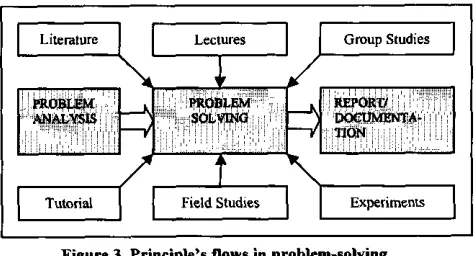
[image:3.596.59.521.259.585.2]Literature Lectures
/
Group Studies
\
i/
ANALYSIS
PROBLEM
SOLVING r - N - V
REPORT/ DOCUMENTA-TION
/
ii
\
Tutorial Field Studies Experiments
F i g u r e 3 Principle's f l o w s in problem-solving
These concepts allows the students to develop excellent analitical skills and they add up with good experiences in coping with and attacking complex engineering problems. Problem-based learning derives from the theory that learning is a process in which the learner actively constructs knowledge. Learning results from a learner's actions; instruction plays a role only to the extent that it enables and fosters constructive activities [13]. Three major theoretical principles support the practice of PBL:
i. Learning is a constructive process ii. Knowing about knowing (metacognition)
affects learning
iii. Social and cultural factors affect learning. Constructivism is a process where the students actively construct their own knowledge from their experiences. Learning occurs when students are able to make connections of new information with knowledge and experiences they have already assimilated. Learning becomes an act of discovery as students examine the problem, research its background, analyse possible solutions, develop a proposal, and produce a final result. Not only is this active learning more interesting and engaging for students, it also develops a greater understanding of the material since students find the information for them and then actively use the information and their skills to complete the project.
Metacognition is the process of knowing how one knows or learns. Good students can detect when they understand - or do not understand - new information, and know when to use different strategies to decipher new knowledge and experiences. They are able to judge the difficulty of problems and assess their own progress in resolving them.
The emphasis is on learning in the context in which students make a greater attempt to understand and remember when they see connections between the materials they study and their own lives. Problem-based learning deals with problems that are as close to real life situations as possible.
Learners Gardner [11] mengatakan bahawa pelajar-pelajar menggunakan daya intelek mereka menerusi perbincangan dan kajian untuk menentukan isu sebenar sesuatu masalah. Kemudian mereka akan bekerjasama dalam menafsir masalah, mengumpul fakta-fakta, menjana persoalan, hipotesis, mengjangkakan maklumat-maklumat yang diperlukan, menghuraikan masalah dengan lebih terperinci, menjana alternatif-alternatif penyelesaian masalah dan seterusnya menjustifikasikan cadangan. Albanese [1] dalam satu kajian perubatan mengatakan bahawa pelajar-pelajar
dapat menimba ilmu pengetahuan dan juga dapat mengekalkan ingatan mereka dalam tempoh 2 tahun hasil proses penyelesaian masalah yang dilalui daripada aktiviti PBL.
4. CONSTRAINTS IN ENGINEERING
EDUCATION
Considering a broader perspective of the question "does problem-based learning work in engineering?" it is clear from the application of problem-based learning in engineering to date, that there appear to be obstacles to its implementation across a whole engineering programme [14]. This issue may relate to the nature of engineering knowledge and practice compared with medicine, where problem-based learning has been widely adopted. Its application in medicine is appropriate, involving various new problems. Almost all institution of medicine in all parts of the world use PBL curriculum successfully. Apart from that the University Aalborg has posed a challenge to other institutions because it has successfully applied PBL in other field besides medicine. This brings forth another issue on how the implementation should be, about the curriculum system and syllabus content that appropriate to PBL implementation in engineering field.
The most important aspect is to construct the content of the subject in term of theory and formula. The professionalism of an engineer is associated with sound basic knowledge of theory, concepts and formula. If the basic knowledge is not firmly understood the students will lack the ability to cope not only with new problems but also the old working problems. Without such understanding how would the students using the PBL method acquire new knowledge? This would falter the objectives of PBL. The other constraints would be timeframe, the role and involvement of the students, the role of lecturers, the construction of the appropriate problems and assessment itself. The students who are new to PBL will require longer period of orientation to solve problems. Compared to the conventional method, the students will have a calmer intermission for learning activities. Most of the students are of the opinion that the teacher is the source of knowledge thus the change to self directed learning sort of narrows down the thinking ability of the students besides having to compete for high academic achievement. The role of the lecturers will increase in observation and assessment of the students. Besides that the lecturers will need to prepare real problems for the students in order to be more effective. It is important for the lecturers and students to know ones own role to benefit PBL.
[image:4.596.60.297.116.244.2]5. METHODOLOGY
5.1 Research design
The quasi experimental method was used to evaluate the effectiveness of PBL. The quasi-experimental method involves static group comparison design. In this design there are two groups which are subjected to manipulation and the other is control. Both groups will be given pretest before learning session started to determine their academic level. From that we derive that their cognitive ability are at par and that the student's intelligence factors do not have any obvious influence on the group achievement.
The students undergoing PBL are given a longitudinal study to observe the level of improvement in the generic skills acquired (Figure 4) in every sessions. The assessment is only carried out in the first and third of the PBL session to measure the long-term improvement.
6.
7.
Documentation Assessment
PI P2
PBL (1)
K X
PBL (2) PBL (3)HO
Pl = Post-Test 1P2= Post-Test 2
F i g u r e 4 G e n e r i c skills m e a s u r e m e n t design
Measuring the level of mastering of the generic skills is done again twice after the first and third session of PBL so that the students would not be too used to the same questionnaire that might influence the result of the study.
In this study, PBL is carried out as a component together with the conventional method as in the principle flows of problem-solving in figure 3 [9], Where as the conventional components for teachers centered learning are lecture, tutorial, and experiment (lab-assignment). The components of PBL are problem analysis, literature, field study, group work, problem-solving and reports or documentation.
PBL that is used in this study is based on five models from McMaster University, Republic Polytechnic (RP) of Singapore, Melbourne University, Robin Fogarty's model, and Savin-Baden's model. Classifications of these models have been made that is the main characteristics of each PBL model must be based on Barrows McMaster. The model of Savin-Baden itself is an approach of PBL. The other models of PBL are the procedures in different modes.
Thus, the PBL model need in this study is model I by Savin-Baden that is PBL for epistemological competence because it is objectivist and reproductive [15] which is appropriate for the early stage of PBL. The working method of PBL in this study uses the RP's model with some addition from Robert Fogarty's model [10]. All of these three models have the similar steps that are grouped together as follows:
1. Meet the problems (triggers)-FILA table 2. Generate hypothesis
3. Research- KND chart 4. Problem-solving 5. Presentation
5.2 Place of Study
This study is carried out at the Mecahnical Engineering and Manufacturing Faculty of College University of Technology Tun Hussein Onn.
5.3 Sampling
The sampling in this study is the students from Diploma of Mechanical Engineering who were registered for the Fluid Mechanics I. They are from two different groups of 82 students in different section. 30 Students in the first section were chosen for the experimental group. The other 52 students from second section were controlled group.
5.4 Instruments
The Instruments used in this study were questionnaires, lecturer's assessment form, and test questions.
6. RESULTS:
The independent t-test that has been used to determine the cognitive achievement between both groups shows a significant difference. It means the null hypothesis for test I and II are rejected. Figure 5 shows the comparison of means score for test I and II between PBL and conventional group.
Mean Score of Fluid Mechanics Test 70.0
60.0
50.0
V u
S 40.0 g 30.0
Bh
20.0
10.0
0.0
I ^ ^ T e S
T e s t
F i g u r e S M e a n s score o f Fluid M e c h a n i c s Test
The analysis of effect size for measuring the alter effect by using PBL resulting the value as 1.113 for test I. based on Cohen [5], it shows that the mean of PBL group is at percentile 86 of the conventional group. It means that 86% of conventional students having scores below mean of PBL group. For test II, the effect size is 0.56 where as the size is moderate compared to the big size of test I. the resulting value 0.56 shows that the mean of PBL group is at percentile 71 of the conventional group. This means 71% of conventional students having scores below mean of PBL group.
better than the conventional. This regarded to short term effect. For long term effect, the generic skills of both groups seem to be nearly same. But, the independent t-test that has been carried out shows a statistical difference between PBL and conventional group. Nevertheless, from the same test shows the differences merely for communication, research and problem-solving aspects. This means the aspects of collaboration and self-management of PBL and conventional students are same in week 11.
Min Distribution of Generic Skills
4.5
4
g 3
--PBL - Conventional
1 -0.5
0 ,
w e e k 4 week 11 W e e k
Figure 6 M e a n distributions o f generic skills
7. DISCUSSION
The discussion is based on the objectives of the research:
7.1 Academic achievements
The analysis of independent t-test shows a statistically significant difference for the mean score of test 1 between students using PBL method and students using conventional method. The effect size 1.113 shows that the mean for PBL group is at the percentile 86 of the conventional group. This finding is in accordance with the Albanese [2] research in medicine, but the effect size surpasses 0.5. The effect size of 0.8-1.0 is impossible to achieve through PBL in his research, because he said that the medical students were already excellent in conventional curriculum and would be impossible to improve better. This is not the case among the students of engineering who are cognitively inferior to the medical students. Therefore, the effect size >1.0 is possible for the engineering students and thus showed that student's achievement can be improved through PBL.
The analysis of independent t test in test 2 shows a statistically significant difference in the mean score between the students using the PBL method and the conventional method. The analysis of effect size 0.56 shows that the mean of PBL group is at the percentile 71 of conventional group. This finding is in accordance with the Albanese research with almost the same effect size. Although the effect size diminish but the mean for the conventional group is much lower than the mean for the PBL group. That means the PBL group is much better than the conventional group.
A broad effect size acquired in this study compared to Albanese probably due to different situation and design. In this case PBL was carried out not to replace the existed curriculum but as an existing additional components in the teaching and learning curriculum. Students who are already used to the conventional curriculum would perform better through PBL which probably should not be a new curriculum but a complementary component.
If the PBL method is to replace entirely the teaching and learning method, the result would probably be the same as Albanese and Norsyahidan whereby the statistical difference between PBL students and conventional method failed to be proven. In fact, there are students of the conventional group scored higher than PBL's students. The researcher found out that the conventional students probably are already used to the examination orientation norms. Where as the students of PBL have to go through activities out of their usual norms but still have to face the examination. Besides this, students of PBL will probably get higher mean in the test because of the reproductive characteristic intrinsic to PBL approach for the epistemological competence used. It will become reproductive if the facilitator see themselves as the supplier of valid information, and teaching as the effective way of supplying information from the expert to students. Then, the constructive process is not entirely done by the students but with support from the facilitator in the context of generating ideas and problem-solving. Thus, these students are successful in achieving the objectives of learning as required by the facilitator.
7.2 Generic skills achievement for PBL and
conventional method
The overall mean score acquired from self assessment at the early stage shows that the students agree that the PBL method is capable of forming all the five generic skills and that the PBL is better than the conventional. This means, the PBL method is suitable for constructing student's generic skills in a short term. This result could also be the effect of novelty experienced by the students. The PBL is a new experience and is said to be a very effective teaching method, enjoyable and capable to generate generic competences. The overwhelming effect of such notes at the early stage will make the students feel that they have already achieved generic skills. But at the end of PBL session, the mean score declined. Probably in the long term, the novelty effect has diminished and the student's perception returned normal. The result of paired t-test used shows that the generic skills of PBL's students do not actually improved at the end. In other words after going through the early stage of PBL, the students acquirement of generic skills has come to the maximum level which in the long term there would be no more improvement. It would be probable if they are exposed to a higher varied generic competence they might acquire a higher level of such competences.
The effect of novelty has become an ordinary problem in teaching and learning study. Nevertheless, such effect in some aspect is good as stated by Hawthorn in Cohen and Manion [6]:
[image:6.594.59.297.213.458.2]This statement means that in teaching and learning; any 'new item' will attract attention and will become a catalyst for a better result even though only for a short period.
For the conventional group, the average mean score of the student's entire generic skills improved until the end of the learning period. Yet the mean maximum is still below the mean of PBL group. The result of the independent t-test covering the whole generic skills note a statistically significant difference between means score of the PBL and conventional group. But, it's founded that, there is no significant differences between both groups in the aspect of collaborative skill and self-management. This is probably due to the fact that the students of the conventional carried out their assignment in groups causing their skills to improve but the other skills such as communication, research and problem-solving skills are not seriously addressed. Overall, the mean difference of the PBL group is bigger than the conventional showing that the PBL method is much better. From the open ended questionnaire of PBL, the students stated their support that the generic skills are much higher in the PBL method than conventional:
i got more new ideas and information. I also give my ideas and proposals in the group discussion
" I understand my peer better. I learned that we have to be self independent and acquire the correct information from various sources ."
" i manage to determine and solve problems better."
" I learn to manage time and people."
Thus, the PBL method is successful in leveraging the generic skills i.e., the collaborative, communication, research, problem-solving and self management better than the conventional method.
8. CONCLUSION
This research successfully answers all research questions and fulfills the whole objectives. For the issue of the first test PBL managed to improve the student's cognitive skills better than the conventional. For the second issue, in the long-term PBL could not do so. But in the short term PBL improved the student's generic skills better than the conventional. PBL generally is a learning method that is capable to improve the cognitive and generic skills of KUiTTHO's Diploma students of Mechanical and Manufacturing Engineering to a better level.
9. REFERENCE
[1] Albanese, M. & Mitchell, S. (1993). "Problem-based learning: A reiew of the literature on its outcomes and implementation issues". Academic medicine. 68(1), 52-81. [2] Albanese, M. (2000). Problem-based learning: why curricula
are likely to show little effect on knowledge and clinical skills. Medical Education 34: 729-738.
[3] Barrows, H.S. (1996). "Problem-based learning in medicine and beyond: A brief overview." Dalam Wilkerson, L.A., dan Gijselaers, W.H. "Bringing Problem-Based Learning to Higher Education: Theory and Practice." San Francisco. Jossey-Bass Publisher. 1-10.
[4] Beder, S. (1999). "Beyond Technicalities: Expanding Engineering Thinking." Journal of Professional Issues in Engineering, 125(1), January 1999, pp. 12-18
[5] Cohen J. (1988). .Statistical power analysis for the behavioral sciences (2nd ed.). Hillsdale, NJ: Lawrence Earlbaum Associates.
[6] Cohen L. & Manion L. (1982) "Research methods in education." Croom Helm, London.
[7] Duch, B. (1996). "Problems: A Key Factor in PBL." About Teaching, Universiti of Delaware.
http://www.udel.edu/pbl/cte/spr96-phys.html. [8] Felder, Woods, Stice, Rugarcia (2000). The future of
engineering education II. Teaching methods that work. Chem. Engr. Education, 34(1), 26 39.
[9] Fink, F.K. (2001). "Problem Based Learning in Engineering Education- A Catalyst For Regional Industrial
Development." UICEE. Vol. 1, No.l. 35-38.
[10]Fogarty R. (1997). "Problem Based Learning and Other Curriculum Models For The Multiple Intelligence Classroom." Illionis: Skylight Training and Publishing Inc.
2-22
[11] Gardner, H. (1983). Frames ofMind: The Theory of Multiple Intelligences. New York: Basic Books, Inc. Publishers.
[12] O'Gardy, G. (2004). "The dangers of PBL (and other instructional fads): Beware the epistemological hole in the practice of PBL." Singapore: Republic Polytechnic Tanglin Campus.
http://www.rp.edu.sg/dangers_of_pbl_2004_cancun.pdf [13] Gijselaers, W. H. (1996). "Connecting Problem-Based
Practices with Educational Theory", in Wilkerson, L, and W. H. Gijselaers (Eds.), "Bringing Problem-Based Learning to Higher Education: Theory and Practice. New Directions for Teaching and Learning". San Francisco, California. [14] Mills, J.E. & Treagust, D.F.(2003). "Engineering Education
- Is Problem Based or Project-Based Learning The Answer?" Australasian Journal of Engineering Education. http://www.aaee.com.au/journal/2003/mills_treagust03.pdf [15]Maggi Savin-Baden (2003) "Facilitating Problem-Based
Learning. Illuminating Perspectives." Buckingham: SRHE/Open University Press.
[16]Norsyahidan Mohamad Yusof. (2004). "Keberkesanan Kaedah Pembelajaran Berasaskan Masalah Berbanding Kaedah Konvensional di KUiTTHO Bagi Subjek BTA 3043." Tesis Sarjana.
[17] Woods, D.R. (1994). "Problem-Based Learning: How to Gain the Most from PBL". Waterdown, Ontario.
![Figure 2 Problem-Based Learning contrasted with Subject-Based Learning [17]](https://thumb-us.123doks.com/thumbv2/123dok_us/8784079.905833/3.596.59.521.259.585/figure-problem-based-learning-contrasted-subject-based-learning.webp)