L
aw
Q
uadrangLe
n
otes
LQ
N
5
0
.
1 THE UNIVERSITY OF MICHIGAN
LAW SCHOOL B38 HUTCHINS HALL ANN ARBOR, MICHIGAN 48109-1215
L
aw
Q
uadrangLe
n
otes
NON-PROFIT ORGANIZATION U.S. POSTAGE PAID ANN ARBOR, MI PERMIT #144
5 0 . 1 • F A L L • 2 0 0 70
• A tradition of excellence: Branch Rickey, ‘11 and Jared Genser, ‘01
• New Environmental Law and Policy Program SPECIAL FEATURE:
BRIEFS:
• Insider trading rules can affect attractiveness of country’s stock markets– Laura N. Beny
• Criminal justice and the 1967 Detroit ‘riot’– Yale Kamisar
The University of Michigan Law School Volume 50, Number 1
FALL 2007
On the cover: Vibrant autumn color enhances the setting for reading on the Law Quadrangle. Cover photo by Philip Dattilo.
Copyright © 2007
The Regents of the University of Michigan. All rights reserved.
Law Quadrangle Notes (USPA #144) is issued by the University of Michigan Law School. Postage paid at Ann Arbor, Michigan. Publication office:
Law Quadrangle Notes, University of Michigan Law School, Ann Arbor, MI 48109-1215. Published two times a year.
Postmaster, send address changes to: Editor, Law Quadrangle Notes
University of Michigan Law School B38 Hutchins Hall
Ann Arbor, MI 48109-1215
Editorial Consultant: Catherine Cureton Editor/Writer: Tom Rogers
Writers: Shannon Cook, Becky Freligh, Richard D. Friedman, Jeff Mortimer, Alice Williams Vining
Director of Publications: Lisa Mitchell-Yellin Art Director: Laura Jarvis
Design: Dennis Liske, Phoenix Press Inc., Laura Jarvis
Photo Credits: Gregory Fox; Sam Hollenshead; University Photo Services (Lin Jones); Washington Post
The University of Michigan, as an equal opportunity/ affirmative action employer, complies with all applicable federal and state laws regarding nondiscrimination and affirmative action, including Title IX of the Education Amendments of 1972 and Section 504 of the Rehabilitation Act of 1973. The University of Michigan is committed to a policy of nondiscrimination and equal opportunity for all persons regardless of race, sex, color, religion, creed, national origin or ancestry, age, marital status, sexual orientation, gender identity, gender expression, disability, or Vietnam-era veteran status in employment, educational programs and activities, and admissions. Inquiries or complaints may be addressed to the Senior Director for Institutional Equity and Title IX/Section 504 Coordinator, Office of Institutional Equity, 2072 Administrative Services Building, Ann Arbor, Michigan 48109-1432, 734.763.0235, TTY 734.647.1388. For other University of Michigan information call 734.764.1817.
The Regents of the University of Michigan Julia Donovan Darlow, Ann Arbor Laurence B. Deitch, Bingham Farms Olivia P. Maynard, Goodrich Rebecca McGowan, Ann Arbor Andrea Fischer Newman, Ann Arbor Andrew C. Richner, Grosse Pointe Park S. Martin Taylor, Grosse Pointe Farms Katherine E. White, Ann Arbor Mary Sue Coleman (ex officio)
If you are a Law School graduate, please send your change of address to: Law School Development and Alumni Relations 109 East Madison
Suite 3000
Ann Arbor, MI 48104-2973 Phone: 734.615.4500 Fax: 734.615.4539
E-mail: [email protected]
Non-alumni readers and others should address: Editor
Law Quadrangle Notes
B38 Hutchins Hall Ann Arbor, MI 48109-1215 Phone: 734.647.3589 Fax: 734.615.4277
E-mail: [email protected]
www.law.umich.edu
EVENTS CALENDAR
December 21 ... Senior Day
2008
January 3 – 6 ... Association of American Law Schools annual meeting, New York City
February 8 – 9 ... Symposium — “From Proposition 209 to Proposal 2: Examining the
Effects of Anti-Affirmative Action Voter Initiatives
(Michigan Journal
of Race and Law)
March 7 – 8 ... National Federalist Society Student Symposium
March 13 ... Student Funded Fellowships Auction
March 27 ... Henry M. Campbell Moot Court Competition Final Arguments
May 2 ... Honors Convocation
May 3 ... Senior Day
May 21 – 23 ... Bergstrom Fellowship Training in Child Advocacy
You’re Invited...
To explore Michigan Law’s new Web site.
Time:
Open house is 24-7, so drop by any time. You’re always welcome.
Place:
www.law.umich.edu
—Same address, but with major interior
and exterior improvements. You’ll hardly know the place.
Your new Law School Home and inside pages are more colorful, easier to
navigate, and are constantly updated to give you the latest information.
There are more photos to better reflect the energy, variety of interests, and
collegiality that characterize Michigan Law. We’ve got Law School News,
Upcoming Events, information for alumni and friends as well as prospective
and current students. There are biographies and photos of faculty members,
the full information on the School’s centers, workshops, programs, and
initiatives—all these and more.
Drop by soon and come back often.
A message from Dean Caminker
On June 6 of this year, Professor Rich Friedman and I were honored to speak at the
National Baseball Hall of Fame in Cooperstown, New York, as part of a symposium on baseball’s legendary Branch Rickey. Rickey, you may know, was the Brooklyn Dodgers’ president, general manager, and part-owner—and the man responsible for signing Jackie Robinson, who broke the modern game’s color barrier in 1947. What you may not knowis that Branch Rickey earned his J.D. at Michigan Law in 1911. Elsewhere in this issue (see story on page 8) Professor Friedman provides detail about Rickey’s academic and athletic career here at the Law School and U-M, and his essay makes for fascinating reading.
My remarks at Cooperstown—an edited version of which follows—focused more on Rickey’s attitudes toward race, attitudes that informed his decision to sign Jackie Robinson but were established long before. In researching those remarks, it was impossible to refrain from drawing parallels between then and now. For us at Michigan Law, race is a particularly timely topic since we’ve recently modified our admissions policy to comply with passage of the Michigan Civil Rights Initiative. The newly amended Michigan Constitution prohibits state and local government from discriminating against or granting preferential treatment to any individual or group based on race, sex, color, ethnicity, or national origin in the areas of public employment, public contracting, and public education.
Our challenge today is to act in full compliance with the law—as we do—yet strive for the kind of diversity in its broadest sense that we believe is essential to educating the next generation of lawyers and shaping the leaders who will in turn shape society. So how can we find ways, within the letter and spirit of the law, to encourage minorities to attend this great law school? And recognizing the dangers of a segregated society, how can we continue to work toward integrating our spaces for work, study, and even play without taking race into account?
It’s clear there are no easy answers today, nor were there for Branch Rickey, but I find his humanity, intelligence, and courage inspiring. I hope something in this excerpt speaks similarly to you.
Of the University of Michigan Law
School’s many outstanding students— including three Supreme Court Justices and lawyers such as Clarence Darrow— perhaps none had a greater impact on American society, and the law, than Branch Rickey. In large part, Rickey’s contributions to civil rights and social change are reflective of an institutional tradition and ethos that are at the core of Michigan Law. This tradition began within the first decade of the Law School’s existence, when Gabriel Hargo, an African American, graduated fromthe Law School in 1870, becoming only the second African American to graduate from any law school in the country.
While most elite law schools remained all-white, Michigan Law continued to enroll minority students all through its early decades. One in particular, Moses Fleetwood Walker, deserves special mention because he, not Jackie Robinson, was the first African American to become a major league baseball player. Walker attended Michigan Law in 1881-82 and played for Michigan’s varsity baseball team before
graduation. He joined the Toledo Blue Stockings in 1883 when that team was part of the Northwest League. In 1884, the Blue Stockings joined the American Association, considered by baseball historians to be the first “major league.”
When Walker ended his career in 1889, he was the last black player in the league. By that time, the league’s directors had agreed not to offer any new contracts to African Americans. This agreement established the color line that was not broken for 58 years, until Branch Rickey brought Jackie Robinson
to the Dodgers. So Michigan Law produced both the first and last black ballplayer in the 1880s and the baseball executive who ended racial exclusion in the 1940s.
From early on, Rickey, who had several African American classmates while in Law School, saw integration as the key to reducing animosity between the races and breaking down barriers for African Americans. In the mid-1950s, he gave a TV interview in which he said: “The greatest challenge to our country today, since the Civil War, is civil rights. It takes time to break down prejudice [and] discrimination. That’s what we don’t like. It’s the long delay. A hundred years is too long to give a man full rights on paper and not to give it to him in reality. That’s not characteristic of the work of a democracy. …”
Right around that time, in 1957, Rickey gave a speech in Atlanta that rhetorically foreshadowed Martin Luther King Jr.’s famous “I Have a Dream” speech. In it Rickey said: “America is more interested in the grace of a man’s swing, in the dexterity of his cutting a base, and his speed afoot, in his scien-tific body control, in his excellence as a competitor on the field. America, wide and broad, and in Atlanta, and in Georgia, will become instantly more interested in those marvelous, beautiful qualities than they are in the pigmenta-tion of a man’s skin, or, indeed, in the last syllable of his name. Men are coming to be regarded as of value based upon
their merits, and God will hasten the day, when governors of our states will become sufficiently educated that they will respond to those views.”
Rickey‘s views and actions also foreshadow the most recent of Michigan Law’s interventions in the project of racial integration. As you are probably aware, Michigan Law was recently sued over its affirmative action program in admissions. We at Michigan care first and foremost about our applicants’ academic credentials, but we also care about enrolling a student body that is diverse across a wide range of characteristics, including undergraduate major, work experience, leadership and entrepre-neurial skills, geography, socioeconomic status, and also race. The Supreme Court of the United States held that our affirmative action program was fair and legal, fully consistent with the U.S. Constitution.
Indeed, Justice O’Connor’s opinion for the Court used language that sounds as though it could have been written by Branch Rickey. The Court said that diversity “promotes cross-racial under-standing, helps to break down racial stereotypes, and enables [students] to better understand persons of different races. These benefits are important and laudable. …” The Supreme Court also noted that “diminishing the force of [racial] stereotypes is both a crucial part of the Law School’s mission, and one that it cannot accomplish with only token numbers of minority students. Just as growing up in a particular region or having particular professional
experi-ences is likely to affect an individual’s views, so too is one’s own, unique experience of being a racial minority in a society, like our own, in which race unfortunately still matters.” The Court concluded that: “Effective participation by members of all racial and ethnic groups in the civic life of our Nation is essential if the dream of one Nation, indivisible, is to be realized.”
Of course, affirmative action remains a very controversial concept, including among our alumni, and many people who support the goal of racially inte-grating higher education wish there were a race-blind way to do it. I have no idea what Branch Rickey’s view of affirmative action would be. But I am confident he would applaud the goal of making sure that whites and blacks can study and work together, as well as play sports together, so they can, in his words, become interested in their mutual “marvelous, beautiful qualities” rather than their “pigmentation of . . . skin.”
In conclusion, let me end where I began: of all the many outstanding graduates of the Law School over the past 150 years, I think Branch Rickey had a greater impact on American society than any other. And he did it by contributing to a project in which Michigan Law has long been engaged—the project of racial equality. He is deservedly celebrated, and I am honored by this opportunity to acknowl-edge his contributions to baseball, to the University of Michigan, and to
L
aw
Q
uadrangLe
Groundbreaking
grads
Ninety years apart, Michigan
Law graduates Branch Rickey,
’11, and Jared Genser, ’01,
show that freeing major league
baseball from segregation and
prisoners of conscience from
oppressive regimes’ prison cells
have more in common than you
may think.
Branch Rickey, ’11
Page 8
F A L L 2 0 0 7
A MESSAGE FROM THE DEAN
6 SPECIAL FEATURE
Branch Rickey, ’11, and Jared Genser, ’01, may be 90 years apart in their graduation dates, but they are arm in arm as examples of the quality of students and graduates who pass through Michigan Law.
8 ALUMNI
• Beijing recognizes assistance from Ronald J. Allen, ’73– P. 18
• Edelman’s SportsJudge.com nears first anniversary– P. 19
• Janet K. Welch, ’88, Michigan State Bar’s first woman executive director– P. 20
• Jeffrey D. Jones, ’04: U.S. becoming an unaffordable nation – P. 21
• Gillian L. Thomas, ’96: Tradition should not limit women’s workplaces – P. 22
• Miriam Defensor Santiago, LL.M. ’75, S.J.D. ’76, nominated to UN court – P. 22
• Graduates in Europe named to prestigious positions – P. 23
• Students vote Michigan Law grads top professors — again – P. 23
• Commencement – P. 24
• Reunion-ing – P. 27
• Classnotes – P. 28
• In memoriam – P. 40
CAMPAIGN REPORT
• Building for the future – P. 45
• Jeffries, ’74, commits $5 million to building renovation and expansion project – P. 46
• Munger gift to brighten Hutchins, Legal Research – P. 47
• Pogue, ’53, creates new fund for faculty support – P. 48
• Hands join across borders to endow Stein Collegiate Professorship – P. 49
• Cook bequest to support scholarships – P. 50
• Lee leads Law School Fund to all-time high level – P. 50
• Class of 2006 sets record giving pace – P. 51
David Uhlmann used to
prosecute environmental
villains. Now he’s building
Michigan Law’s new
Environmental Law and Policy
Program into a magnet for law
students who want to keep a
touch of green about
them. –
Page 52
Little did Professor Joseph
Vining expect that his alert
border collie Puck would
become his co-teacher as
he brought his legal lessons
n
otes
Clearing the air
The professor
and his colleague
BRIEFS
• Green Clean Day – P. 52
• David Uhlmann, ELPP on the front line – P. 52
• New ELPP program enriches long tradition – P. 53
• Former EPA administrator: Climate change finally getting attention – P. 54
• Committing to integrity and professionalism – P. 55
• U.S. Senator delivers Constitution Day address – P. 55
• World’s judges gather at Michigan Law – P. 56
• Legal education and helping the community go hand in hand – P. 58
• Open house for public service – P. 59
• International Law Workshop – P. 59
60 FACULTY
• New faculty members strengthen IP lineup, add to depth of Law School offerings – P. 60
• Barr, co-editors examine how to build inclusive financial systems – P. 62
• Avi-Yonah’s new book posits, analyzes international tax regime – P. 63
• The animal’s right – P. 64
• Classes go to professors’ homes – P. 65
• Bruce Frier receives Harold R. Johnson Diversity Service Award – P. 66
• Sankaran, Vandervort train counsel for parents – P. 66
• Michigan Law leaders help identify new U-M general counsel – P. 67
• Vice president and general counsel – P. 67
• Activities – P. 68
7 ARTICLES
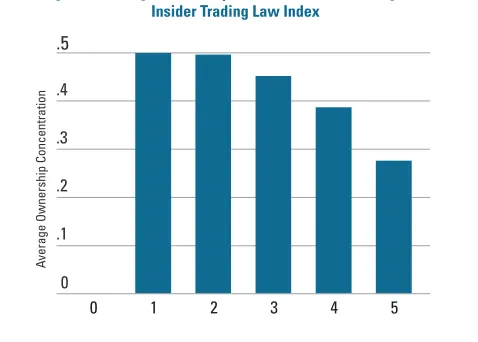
• Insider trading rules can affect attractiveness of country’s stock markets– P. 73
—Laura N. Beny
Essay based on testimony the author delivered to the U.S. Senate Judiciary Committee on September 26, 2006.
• Criminal justice and the 967 Detroit ‘riot’– P. 76 —Yale Kamisar
Excerpted from a report by Professor Emeritus Yale Kamisar filed
BRIEFS
A tradition of excellence
SPECIAL FEATURE
As the following pages show, Branch Rickey, ’11, and Jared Genser, ’01, may be 90 years apart in their graduation dates, but they are arm in arm as examples of the quality of students and graduates who pass through Michigan Law. Rickey integrated major league baseball when he brought Jackie Robinson to the Brooklyn Dodgers in 1947. Genser, founder of Freedom Now and a practicing attorney in Washington, D.C., is an internationally known champion of human rights who has won freedom for half a dozen prisoners of conscience in countries as different as China, Vietnam, Pakistan, and Myannmar.
Both reflect fulfillment of the promise of each year’s new class of incoming students. For nearly 150 years, Michigan Law annually has enrolled young people who are among the world’s best and brightest. And each year the Law School graduates a class equipped with the skills to move and shake their world, as Rickey did and Genser is doing. Each entering class brings with it the diversity, excitement, and promise that accompany unlimited potential. This year’s incoming class continues the tradition:
Six entering students have had Fulbright fellowships, seven served in the Peace Corps, five in Americorps, and 12 in Teach for America. One entering student grew up in a Kansas town with a population of 50, one is a physicist who worked at the Hubble Space Telescope Science Institute, and one helped map the mysteries of DNA.
The former general manager of the Detroit Symphony is in this class, as are the former head researcher at MSNBC and a former screenwriter for New Line Cinema. One new law student was a U.S. Marine sniper, and one was the U-M football team’s long snapper.
On the international scene, one was a staff writer for the Moscow Times, one worked with the UN in Peru and another worked with the international section of the U.S. Department of Justice’s criminal division.
Several have started or operated businesses or nonprofits.
Branch Rickey, ’11 PaGe 8
8 Branch Rickey, ’11
• Branch Rickey, ’11, may be best known as the Brooklyn Dodgers manager who brought Jackie Robinson into big league baseball in 1947, thus integrating a major American institution seven years prior to Brown v. Board of Education. But he also was an exceptional student at Michigan Law, where he illustrated the energy and enthusiasm that later characterized his professional life.
Jared Genser, ’01
PaGe 14
14 Jared Genser, ’01
Branch Rickey, ’11
|
much more than pioneering baseball leader
A TRADITION OF EXCELLENCE
Branch Rickey
is best known as the president and general
manager of the Brooklyn Dodgers who brought Jackie Robinson
into big league baseball in 1947, thus integrating a major
American institution seven years before
Brown v. Board of
Education.
Even apart from this heroic step, Rickey would
probably be known as the most significant baseball executive
ever, primarily for his work with the Dodgers and, earlier, the St.
Louis Cardinals; the modern farm system and extensive spring
training facilities are chief among his many innovations. Less
well known is the fact that Rickey was a 1911 graduate of the
University of Michigan Law School. This essay is drawn from a
presentation the author made at a symposium on Rickey held at
the Baseball Hall of Fame in Cooperstown, New York, on June 6,
2007. Dean Evan H. Caminker also discussed Rickey at the same
program; Caminker’s excerpted remarks appear in this issue in the
Dean’s Message that begins on page 2.
Michigan Law helps
integrate major league
baseball—twice
M
ichigan Law was a significant player in the racial integration of major league baseball—both times, according to Dean Evan H. Caminker.Law student Moses Fleetwood Walker, who attended Michigan Law in 1881-82, was the first African American player to have a career in major league baseball, but by the time he ended his career in 1889 the league’s directors had agreed to offer no more contracts to black players, Caminker told the Baseball and American Culture conference last June at the Baseball Hall of Fame in Cooperstown, New York. Major league baseball would not have a black player again until 1947, when Michigan Law graduate and baseball executive Branch Rickey, ’11, signed Jackie Robinson to the Brooklyn Dodgers.
“So that’s quite a coincidence— University of Michigan law students bracketed the era of Jim Crow in major league baseball,” Caminker said. “Our School produced the first and last African American ballplayer in the 1880s, then produced the baseball executive who brought about the end of racial exclusion in the 1940s.”
W
hen Wesley Branch Rickey of Lucasville, Ohio, applied to the University of Michigan Law School in 1909, the application process was very simple and informal. It is amusing to think of the personal statement he might have written if instead he had to deal with today’s much more imposing online application form:I have a combination of credentials that I suspect will make me unique not only in this year’s entering class, but among all the students you have ever admitted or ever will admit. I have not only one but two college degrees, both a B.A. and a B.Litt. from Ohio Wesleyan University. What is more, I have done a good deal of teaching, at both the preparatory and college levels, and among the wide variety of college courses I have taught has been a series in law, for when my law teacher at Ohio Wesleyan died, I took over the courses. I have read law on my own and have done extra class work in law at the Ohio State University—but of course I know that to be the kind of lawyer I want to be I must attend a stronger institution than that. I was an athlete in college. While still working towards my degrees, I began my coaching career, in baseball, football, and basketball, and I have served as athletic director both at Ohio Wesleyan and at Allegheny College. I have been a temper-ance and political campaigner. As administrator of our YMCA I have hosted speakers including Jane Addams, Jacob Riis, and Booker T. Washington. And for parts of four summers, I have had a job that would be the envy of just about any boy in America—I have been a big-league baseball player.
Rickey’s admission was not in doubt, but his ability to attend law school was; he was recovering from tuberculosis at a sanitarium in upstate New York. Discharged with a warning that his health was still vulnerable, Rickey arrived alone in Ann Arbor in the fall of 1909. His wife stayed for several months with family in Ohio.
Because Rickey had already studied some law, he hoped to be granted advanced standing. The matter was left to be determined later. Evidently, the school administration concluded that Rickey had most, but not all, of the credits necessary for him to begin as a second-year student, and so he took the full 30-credit second-year curriculum, supplemented by nine first-year credits, in contracts and torts. At some point the matter was resolved satisfactorily, and Rickey was admitted into the class of 1911, allowing him to graduate in just two years.
A TRADITION OF EXCELLENCE
W
hen Branch Rickey arrived in Ann Arbor in 1909 to begin his legal studies, William W. Cook of the class of 1882 had not yet made the huge gift that financed the magnificent set of buildings that the Law School still occupies. The School was then housed in a single building along State Street, northwest of the main university quadrangle; in what must be a rare anomaly in university development, the space occupied by a large building a century ago is now a grassy plot.The School—then technically referred to as a department—was much more closely integrated with the rest of the university than it is now. Most law students did not have an undergraduate degree, and they were treated on a par with undergraduates in other fields. They appeared in the university yearbook alongside students of literature and engineering, and some of them participated in varsity sports. The School was in the midst of a significant transition, however. It was beginning to institute more demanding admissions standards, and beginning with the class graduating in 1910 it instituted a new degree, the J.D., to go along with the traditional LL.B. The J.D. was reserved for students who had already received a bachelor’s degree in another field from a reputable college or university, or who were simultaneously working towards one from the University of Michigan, and who performed to a high standard in three quarters of their classes.
The dean, Harry B. Hutchins, would soon take over as University President upon the retirement of the venerable James B. Angell. The small law faculty was composed entirely of white males. But not so the student body. At least as a matter of theory, the Law School had always been integrated racially, and it had been open
to women for several decades. And in fact among Rickey’s more than 200 classmates
were at least two women and at least three African-Americans—not, to be sure, what would later be called a “critical mass,” but a genuine presence nonetheless. (One of those three black classmates, Austin T. Walden, became the most renowned civil rights lawyer of Georgia in the first half of the 20th century; while Branch Rickey was integrating baseball, Walden was working effectively to realize blacks’ right to vote in Atlanta, and so was of crucial importance in making that city the first major one in the South in which blacks gained political power.)
—Richard D. Friedman
Rickey was indeed a very capable student. To qualify for the J.D., a newly instituted degree more rigorous than the traditional LL.B., a student had to earn “+” marks in three-quarters of his classes. In Rickey’s first semester, though still feeling affected by his illness—he reported to his wife that he was exhausted after attending a U of M football game—he received a “+” mark for 13 of his 15 second-year credits. (The “make-up” first-year courses appear not to have been graded). And yet, he was not happy with himself or with his situation, and what others might regard as a most unusual record of varied accomplishments he now experienced as a sense of drift that plagued his stern conscience. In a remarkable letter to his parents of January 13, 1910, he wrote:
Yes I’m tired and sick of college. I’ve been around one too long & I want to get out and do some one thing and bend every effort—I may fizzle about for a while but if I get a good grip on some one thing—& have a purpose—well I guess I’ll do my best not to make God as ashamed of me as he has been these last few years.
Almost as an afterthought, though, the end of the letter revealed news that suggested that perhaps Rickey had found the one path that would offer his life’s mission:
I have secured the position of Baseball coach here—thanks to many good friends. It was really their victory for the odds were against me & I counted for very little. My greatest joy is not the paltry job or its incidents but the fact of being known by men of such standing and character that their commendation places me above the pull and push of the other fellow. It shall ever be my steadfast purpose to keep, increase and yet merit the esteem those men have expressed for me. No more time or space.
—Love to all Branch
Y
oung Branch Rickey didn’t have to write essays as part of his admissions application in 1909. But if he applied today he would have to think hard in choosing which optional essays to write. For fear of over-eagerness—and Rickeywas certainly eager—we limit students to two.
Rickey might have chosen to write in response to the request to “[d]escribe a failure or setback” in his life and state how he overcame it.
Even then he would have had a choice. He could have explained how when he first came to college his Latin was not up to the expected level, and how by hard work he had excelled. Perhaps better, he might have described how, to his bitter disappointment, he had lost his eligibility for college sports as a result of a misunderstanding involving a short stint with a semi-pro baseball team, and how the shutting of one door opened the door to becoming a coach and then athletic director at an extraordinarily early age.
But a more gripping story would have been how he was even then confronting and beating a life-threatening illness, tuberculosis, with treatments at the Trudeau Sanatorium at Saranac Lake, New York.
And if Rickey had not yet caught the attention of the dean of admissions, he could have done so with the optional essay describing a personal experience “that speaks to the problems and possibilities of diversity in an educational or work setting.” He might have written something like this:
When I coached the Ohio Wesleyan baseball team, we had a colored member of the team named Charles Thomas. At one point, the University of Kentucky refused to play us if Thomas played; I insisted vigorously that we would play with him or not at all, and the Kentuckians relented. Once, when we checked into a hotel in South Bend, Indiana, the hotel clerk would not let Thomas check in because he was black. I arranged for Thomas to share my room. When I came up to the room, he was tearing at his skin, saying he wished it was white. Confronted with such a blatant display of prejudice and the harmful consequences of it, I was reminded of the reaction of my great hero Abraham Lincoln when as a very young man he witnessed a slave auction: “{I]f ever I get a chance to hit that thing, I’ll hit it hard!” I felt the same way.
—Richard D. Friedman
If Rickey were my student . . .
I
think that if Rickey were my student in modern times, I might have kept him in law, at least for a while. (And what kind of accomplishment would that have been?) Here is an excerpt from the recommendation letter I imagine myself writing for him (with just a little benefit of hindsight):“Branch writes clearly and powerfully, and with great authority; he will draft excellent judicial opinions. He has been a highly capable student, who has earned a good, strong GPA. But his grades do not begin to tell the story. Rarely if ever have I met a student with such energy and intensity. When I take into account that he has done so well despite recovering from a life-threatening and exhausting illness, despite taking an overload in courses, and despite the rigorous demands of a highly visible and time- and energy-consuming part-time job, I find the whole picture quite astonishing.
Branch is a young man of unusually strong commitments and sound fundamental values. He is fiercely ambitious to achieve something notable. Whether that happens in the realm of law or outside it, I am confident Branch will make his mark, and the world will be a better place for it.
— Richard D. Friedman
Distressing as part of that letter may have been, in at least two respects Rickey’s reporting was accurate. The pay was rather paltry—$700 for the season, but with the University holding an option to deduct up to $100 from that amount to pay one or more assistant coaches; Rickey had gotten a better deal coaching at the much smaller Allegheny College. And it does appear that many friends had written in support of Rickey, though he did not mention to his parents that he had carefully orchestrated the campaign—which seems to have been persistent enough that the athletic director, Phil Bartelme, concluded that the only way to stop the flood of letters was to hire the young man behind them.
There was one other aspect of the incident that Rickey did not report. The consent of the law school was essential to the deal. The story has often been told that the dean and Rickey had a long meeting at the end of which the dean agreed contingent on a promise by Rickey that he would be in class and prepared every day. Even while throwing himself with characteristic vigor into his new job, and carrying an overload of courses, Rickey performed creditably, with 11 “+” credits and four “-” credits. He was not invited by the faculty to join the Law Review for the following year, at least not formally; though his grades were good enough that they might have made him a marginal candidate, it may well be that the time burdens of the coaching job rendered the question moot.
The Michigan baseball team had an excellent record under Rickey’s predecessor, Lewis “Sport” McAllister, but it had lost several key players, not only to graduation but also to charges of professionalism, the same factor that prematurely ended Rickey’s own college playing career. Rickey’s style was didactic—he limited scrimmage time and held evening lectures on the finer points of the game—but bolstered by his energy, enthusiasm, and deep knowledge it yielded favorable results. The team ended the season with a record of 17 wins and 8 losses—not outstanding for a Michigan team but very satisfactory given the low expectations for the season. In the University yearbook, the team manager wrote about Rickey:
He was the hardest worker on the squad, kept everybody working to correct this or that mistake, and taught the game from beginning to end. He had the “pep” and the head for the team, and without him there would have been no season to write up.
Clearly his superiors were pleased; in June, Rickey signed a contract to coach again in the 1911 season, this time for $1000.
Rickey and his wife spent the summer between his law school years in the Rockies, where he felt deeply refreshed by the mountain air. Returning to school for the fall semester, and without the distraction of his coaching job, Rickey earned 15 “+” credits and only one “-”. In the
spring, while coaching once again, the numbers were 13 and 3. One of the minus credits was for Practice Court; by now, there must have been some wiggle room in his deal with the dean, because the times for baseball practice and Practice Court were in direct conflict. Rickey easily satisfied the requirements for the J.D.
Meanwhile, the baseball team, beset with injuries, turned in a disap-pointing record of 16 wins, 10 losses, and one tie. But early in the season, Rickey was signed to contracts for the 1912 and 1913 seasons, with his salary rising to a relatively munificent $1200, plus $300 for expenses, for the latter one. He had not yet committed to baseball, though. He went back west, to Boise, Idaho, hanging up a shingle with two college class-mates, but they had very few clients.
Rickey returned with relief to Ann Arbor for the 1912 season. When practice began, George Sisler, a freshman engineering student from Ohio, turned out. Rickey said that the practice was for upperclassmen, but some of the returning players told him to take a look. Rickey complied. The great sportswriter Jim Murray said many years later that Rickey could spot talent from the window of a moving train, and that was true in this case—though in Rickey’s own account it took no special skill for him to realize, after a minute watching Sisler pitch to the upperclassmen, that he was a rare talent. Freshmen were not eligible to play on the varsity, which nearly duplicated the prior year’s performance with a 15-10-2 record. Rickey returned to the west for the winter and then to Ann Arbor for the 1913 season, the last of his contract. A sore arm limited Sisler’s pitching time, but it turned out that he could also hit, and the team posted the best record of Rickey’s tenure, 22 and 5.
As Rickey’s last season with the team ended, the Michigan Daily paid him a warm tribute:
[H]e leaves with a sterling record behind him, and a host of friends to remember him. . . . Above all he taught clean ball, gentlemanly tactics, and clean living. . . . A gentleman, a true sportsman, and a man, he will long be remembered by those who love and help Michigan athletics.
Rickey immediately took up a new job, in the front office of one of his old teams, the St. Louis Browns. He remained active in major league baseball for half a century, most successfully and significantly with the St. Louis Cardinals and the Brooklyn Dodgers. The Idaho bar was, no doubt, the long-term loser, for he never returned to the practice of law.
Richard D. Friedman, the Ralph W. Aigler Professor of Law, is an expert on evidence and Supreme Court history. He is the general editor of The New Wigmore, a multi-volume treatise on evidence. His
textbook, The Elements of Evidence, is now in
its third edition, and he has written many law review articles and essays. In Crawford v. Washington,
541 U.S. 36 (2004), the Supreme Court radically transformed the law in this area by adopting a “testi-monial” approach, which Professor Friedman had long advocated; he now maintains the Confrontation Blog (http://confrontationright.blogspot.com/, to comment on related issues and developments, and he successfully argued a follow-up case, Hammon v. Indiana, in
the Supreme Court. Professor Friedman earned a B.A. and a J.D. from Harvard, where he was an editor of the Harvard Law Review, and a D.Phil. in modern
history from Oxford University. He clerked for Chief Judge Irving R. Kaufman
A TRADITION OF EXCELLENCE
Human rights champion Jared Genser,
’01, is challenging two of the most repressive regimes on earth: Burma (Myanmar) and North Korea. Either alone is a daunting task; together they are monumental.Yet the relentless Genser, 35, if anyone, is up to the task. An associate in the government affairs group of DLA Piper in Washington, D.C., and founder of the nonprofit NGO Freedom Now (www.freedom-now.org), a volunteer organization that works to free political prisoners, Genser already has a finely honed tactical arsenal and an impres-sive track record. He and Freedom Now (U.S. Department of Commerce attorney and fellow Michigan Law graduate Glenn Kaminsky, ’00, sits on the seven-member board) already have won release for a half dozen political prisoners around the world (see page 15). And since 2003, when Genser joined DLA Piper, he has been strongly backed by the firm on a number of resource-intensive global pro bono projects.
No less a human rights worker than Nobel Peace Prize winner and South African anti-apartheid leader Archbishop Desmond M. Tutu nominated Genser for the ABA’s prestigious International Human Rights Award this year. “Working on behalf of both individuals and the oppressed peoples of entire nations, providing both direct representation and large-scale advocacy, Jared’s work is truly exceptional,” Tutu wrote. “He is an exemplar of outstanding public service. It is not an exaggeration to say that his pro bono work to win people their most basic human rights is having an impact that is both historic and truly global
Though Genser didn’t win, he may well someday soon. This year’s prize went to a Russian human rights lawyer, Elena Ezhova, whose well-deserved victory for her work with the Russian Justice Initiative, an organization providing legal assistance to victims of grave human rights abuse in Chechnya, signaled Russian President Vladimir Putin that his country’s human rights score is being tallied around the world.
Genser’s extensive involvement in pro bono activities is highly complementary with his thriving private practice that focuses on public international law and human rights. For example, he repre-sents a group of Lebanese Americans advocating for greater U.S. support
U.S. funding for the Global Fund to Fight AIDS, Tuberculosis, and Malaria; an oil company seeking to ensure it complies with international human rights, labor rights, and environmental rights standards in a project in Asia; and an African country facing substantial economic and political challenges.
In 2005 he led a pro bono team of 10 DLA Piper lawyers commissioned by Tutu and former Czech Republic President Václav Havel to produce the report “A Threat to the Peace: A Call for the UN Security Council to Act in Burma.” The exhaustive report detailed how Burma’s military junta has not only refused to honor its 1990 election results for 17 years, but also has burned down
Jared Genser, ’01:
THE BREADTH AND REACH OF THE LAW
cleansing campaign, used more than 800,000 people in forced labor, caused an outflow of more than one million refugees into neighboring countries, and created a terrible internal humani-tarian situation. The report argued that the external impact of this situation outside Burma was so severe that it constituted a threat to regional peace and security, thereby placing the situation within the jurisdiction of the UN Security Council.
Shortly after the report’s release, a Washington Post editorial endorsed the report and its recommendations stating “[a] humanitarian and human rights catastrophe; a threat to neighboring countries; a proposed peaceful and multilateral response. What objection could there be?” A year later, after a tremendous global lobbying campaign, Burma was formally voted onto the UN Security Council’s formal agenda for the first time. Progress in the Security Council remains slow, however, as China and Russia issued a double veto of a resolu-tion on Burma seeking naresolu-tional reconciliaresolu-tion in the country this past January.
Last year, Genser was asked to represent the world’s only imprisoned Nobel Peace Prize Laureate, Aung San Suu Kyi of Burma. Her National League for Democracy and its allies won more than 80 percent of the vote in Burma’s 1990 parliamen-tary elections. Burma’s miliparliamen-tary junta, however, has refused to recognize that vote. Instead of being president of her country, Suu Kyi has been held under house arrest for more than 12 of the past 17 years, and continuously since 2003.
Early this year, Genser worked closely with former
Norwegian Prime Minister Kjell Magne Bondevik, founder and president of the Oslo Center for Peace and Human Rights, to gather 59 former heads of state from Asia, Africa, Europe, and North and South America on to a single letter to the Burmese junta urging Suu Kyi’s release. Among the signatories were former U.S. presidents Jimmy Carter, William J. Clinton, and George H.W. Bush, the Czech Republic’s Havel, former British prime ministers John Major and Margaret Thatcher, former Canadian Prime Minister Brian Mulroney, and former Polish President Lech Walesa.
Suu Kyi, whom supporters affectionately call the Lady, was supposed to have her house arrest expire on May 27. But Burma’s rulers instead extended it for another year. Genser and Freedom Now volunteer attorney Meghan Barron fired back immediately, urging in the June 2-3 edition of the International
Herald Tribune that “we must persist. The injustice of the Lady’s ongoing detention and the suffering of her people remains a stain on our collective conscience.”
Freedom won for prisoners
of conscience
G
enser and Freedom Now have established an impressive record of winning freedom for prisoners of conscience around the world. The tally of those freed so far:• 2000: British national James Mawdsley freed from Burma, where he was sentenced to 17 years in solitary confinement for distributing democratic materials. Genser did the work that led to Mawdsley’s release while still a law student and he formed Freedom Now in 2001, shortly after his graduation.
• 2002: Ayub Masih, a Pakistani Christian who was sentenced to death for blasphemy for allegedly saying that Christianity was “correct” and suggesting that a Muslim neighbor should read Salman Rushdie’s Satanic Verses. Freedom Now won his case at the UN Working Group on Arbitrary Detention and a group of 12 U.S. Senators privately wrote to Pakistani President Pervez Musharraf urging the case be resolved. Masih’s conviction was reversed by the Supreme Court of Pakistan and Freedom Now helped get him to the United States where he has since been granted political asylum.
• 2003: Scholar and democracy advocate Saad Eddin Ibrahim, who had been twice sentenced to seven years in prison in Egypt for criticizing his government, registering people to vote, and supporting the rights of Egyptian minorities.
• 2005: Democracy activist Nguyen Dan Que after Vietnam sentenced him to 30 months imprisonment for “abusing democratic rights to jeopardize the interests of the state” after he sent an e-mail to his brother that criticized Vietnam for its lack of independent news media.
• 2006: Physician Pham Hong Son, sentenced to 13 years for “undermining national unity” in Vietnam after he translated the article “What is Democracy?” from the U.S. Embassy in Vietnam’s Web site and distributed it to friends.
• 2007: Chinese democracy activist Yang Jianli was released last April after spending five years in prison. One of those who fled China after the Tiananmen Square protests in 1989, Yang earned two doctorates in the United
States (he and Genser worked together in 1997 to organize a protest against the visit of then Chinese President Jiang Zemin to Harvard). He returned to China in 2002 to observe labor unrest and was arrested soon afterwards and charged with being a spy for Taiwan and illegal entry. Genser’s five-year
effort on his behalf began shortly after Yang’s arrest. Although Chinese authorities freed Yang last spring, they withheld permission to leave China for several months. He finally arrived in
In beginning that op-ed piece, Genser and Barron also exhibited the lawyer’s high art of humanizing their client: “Halfway around the world, a 61-year-old woman sits alone in her home, as she has for years. The telephone is forever silent, because the line is disconnected. The doorbell never rings, because visitors are forbidden. There is no mail, there is no news.”
“For Aung San Suu Kyi, the democratically elected leader of Burma and Nobel Peace Prize laureate, there is almost complete isolation.
“For more than 11 of the past 17 years, the military dictator-ship that rules Myanmar, also known as Burma, has held Suu Kyi under house arrest. The generals initially claimed the seclusion was for her own protection.
“Now they assert that this pacifist and devout Buddhist is a ‘threat to national peace and tranquility.’ When her dying husband requested entry to Myanmar to see her one last time, even that request was denied.”
Even as Genser has pursued a single-minded campaign against the brutal military dictatorship in Burma, a passion that was initially ignited while a law student, he has also recently turned his attention towards addressing the terrible suffering of the people of North Korea.
In 2006, Genser led the still larger DLA Piper team commis-sioned by Havel, Bondevik, and Nobel Peace Prize Laureate and Holocaust survivor Elie Wiesel that produced the report “Failure to Protect: A Call for the UN Security Council to Act in North Korea.”
In this initiative, Genser and his team are trying to persuade the international community to focus equal attention on the suffering of the North Korean people as it has on the isola-tionist communist country’s nuclear weapons goals. “Failure to Protect” details North Korea’s refusal to abide by the new inter-national law doctrine of the “responsibility to protect,” which Genser explains places on all countries “an obligation to protect their own citizens from genocide, crimes against humanity, war crimes, and ethnic cleansing.” And, he continues, “if they cannot or will not do so, then the UN has a responsibility to get involved up through and including Security Council action.”
“Failure to Protect” was released in October 2006 in the United Kingdom to widespread attention. “Starting the week was an op-ed from the co-commissioners printed in the New
York Times and then reprinted in the International Herald Tribune,” Genser wrote supporters the following month. “The impact was phenomenal. Both Debra Liang-Fenton (of the U.S. Committee for Human Rights in North Korea) and I heard from countless people around the world offering their positive views of
A TRADITION OF EXCELLENCE
Master tactician
J
ared Genser knows well the tactic of combining international law with the use of world media to spread your message and having internationally renowned leaders weigh in on your behalf. You might even say he perfected it.Take the successful Yang Jianli case, for example. Genser and Freedom Now unleashed a barrage of legal, political, and public relations advocacy, the likes of which is seldom seen: Genser filed and won a case before the UN Working Group on Arbitrary Detention on Yang’s behalf, published op-ed articles in newspapers in many countries, lectured about Yang’s captivity, and organized protests in front of Chinese embassies around the world.
Working closely with Yang’s wife, he persuaded 56 members of Congress to co-sponsor a resolution calling for Yang’s release, which the U.S. House of Representatives adopted unanimously. A similar resolution in the U.S. Senate followed. Genser organized letters that went out from Congress to President Bush and American and Chinese officials. One letter to Chinese President Hu Jintau was signed by 40 independent, Democratic, and Republican U.S. Senators, including fellow Michigan Law grad Ken Salazar, ’81, Joe Lieberman, Barack Obama, Arlen Spector, Charles Schumer, John McCain, Paul Sarbanes, Patrick Leahy, Barbara Boxer, Carl Levin, Hillary Rodham Clinton, Dianne Feinstein, and Elizabeth Dole.
Another letter, signed by an overwhelming 119 House members, went to President Bush urging he raise the case in an upcoming summit with President Hu Jintao, which he subsequently did. And Michigan Law graduate and U.S. Ambassador to China Clark Randt, ’75, raised the issue at least 60 times with Chinese officials in Beijing.
China ultimately blinked. Although Yang could have faced a death sentence or life in prison upon conviction, China ultimately gave him the minimum five-year sentence. This is the best Yang could have hoped for given that the conviction rate for “political” crimes is virtually 100 percent in China.
Bondevik, Genser, and Liang-Fenton participated in an event at the House of Lords to publicize the report and did a number of interviews with the BBC. AP, AFP, Reuters, and UPI reported on the document’s release and content. Genser and Liang-Fenton then headed to Asia, where they presented the report to the Foreign Correspondents Club of Japan in Tokyo. They then moved on to Seoul, South Korea, where they held a forum for NGOs, held a press conference at the Seoul Foreign Correspondents Club, and presented the report at Yonsei University. In November 2006, Genser appeared on a panel with Havel, Wiesel, and Bondevik together at the UN in New York to promote action on the report. Genser’s article “Stop Pyongyang’s Autogenocide” appeared in the November 2006 issue of Far Eastern Economic Review.
“The Failure to Protect” is “a damning new report” that says that “200,000 political prisoners are subjected to brutal work regimes, starvation-level rations, and torture or execution for perceived infractions,” an International Herald Tribune editorial stated. “Family members of alleged dissidents or political opponents are thrust into the North Korean gulag on the premise of guilt by association. According to the report, 400,000 people have perished in the gulag over the past 30 years.”
“For more than a decade, human rights concerns have been relegated to a second-class status for fear of driving North Korea from the nuclear talks,” Genser told UPI. “Now that its government has gone ahead with a nuclear test anyway, it is time to have a parallel-track strategy for alleviating the suffering of the North Korean people through Security Council action.”
Many observers fear, however, that South Korean Ban Ki Moon’s election as UN secretary-general will slow further progress because of South Korea’s reluctance to confront North Korea. Genser acknowledges the potential impediment, but feels that the international community’s opposition to North Korean human rights violations has gained an unstoppable momentum. Success is just a matter of time.
And his next project? He can cite cases of human rights abuses and political imprisonments in many countries. He leaves the obvious unsaid: He’ll be fighting the good fight on behalf of one or more of them.
‘One person can make a difference’
Jared Genser, ’01, who will be teaching at Michigan Law this winter, answers queries about why he works to win freedom for prisoners of conscience and the impact of such efforts.
Q: Why do you do this work, so much of which is pro bono and on your own time?
A: Simply put, it is the right thing to do. I feel really blessed to have been able to get a top-notch legal education and have found through experience that one person can make a difference. I find prisoner work highly compelling. I have always gotten back much more than I give in terms of personal satisfaction. Even years of work can become instantaneously worthwhile, [like it was in August in the Li Yang case] to be at the airport to see a family that had been separated reunited.
Q: There are many prisoners of conscience around the world. How do you decide whose case to take?
A: Freedom Now applies a basic set of selection criteria to each case. These include how compelling the case is from a factual perspective; the challenge of going up against a country detaining a person; how many others are already involved (e.g., we prefer to get involved in cases where we take a leading role); and how representative a case is of a broader set of abuses in a country.
Q: Does your work on behalf of one political prisoner help other political prisoners?
A: I think it does in several ways. First, the more cases we do, the greater experience base we have from which to draw prospective approaches to new cases. Second, our networks are ever growing, and the more work we do, the easier it is to leverage those contacts to secure support from government, the UN, other NGOs, and media. And lastly, by helping prisoners whose cases are indicative of a broader set of abuses, we have found a trickle down effect. For example, when Ayub Masih, who had a death sentence for blasphemy, was released from Pakistan, the Supreme Court of Pakistan identified numerous procedural flaws in his arrest, trial, and conviction. This ultimately led to a substantial revision of how the blasphemy laws were to be applied in future cases. While ultimately the blasphemy laws themselves need to be abolished, this was an important step forward to curb wrongful accusations, arrests, trials, and convictions.
Q: What prisoner of conscience will you be working with next? A:Right now, we are focusing our efforts on two difficult cases: Aung San Suu Kyi, the world’s only imprisoned Nobel Peace Prize Laureate who remains under house arrest in Burma, and Oscar Elias Biscet, who has a 25-year sentence in Cuba. (President Bush awarded Biscet the Presidential Medal of Freedom this fall.) We are actually focusing some of our other energies on securing financial assistance for Freedom Now so we are able to hire our first staff person this year.
IN DETAIL
8 Beijing recognizes assistance from Ronald J. Allen, ’73
9 Edelman’s SportsJudge.com nears first anniversary
0 Janet K. Welch, ’88, Michigan State Bar’s first woman executive director
Jeffrey D. Jones, ’04: U.S. becoming an unaffordable nation
Gillian L. Thomas, ’96: Tradition should not limit women’s workplaces
Miriam Defensor Santiago, LL.M. ’75, S.J.D. ’76, nominated to UN court
Graduates in Europe named to prestigious positions
Students vote Michigan Law grads top professors — again
Commencement
7 Reunion-ing
8 Classnotes
0 In Memoriam
ALUMNI
R
onald J. Allen, ’73, was one of his more promising students, so Yale Kamisar enthusiastically hired him as a research assistant. It was a prophetic move on the part of Kamisar, whose current emeritus status has done nothing to diminish his pride in former students’ accomplishments.So it was with obvious satisfaction that Kamisar called to let Law Quadrangle Notes know that Allen has become the first American lawyer and only the fourth American to be designated a Yangtze River Scholar by the Ministry of Education of the People’s Republic of China. The previous three American winners of the award, the highest academic honor given by the People’s Republic of China, have been Nobel Prize winners in economics.
Allen is the John Henry Wigmore Professor of Law at Northwestern University, where he has taught since 1984. He was a visiting professor at Michigan Law in summer 1982, and also has taught at the University of Nebraska, the State University of New York at Buffalo, and Duke University.
Author of a dozen books and some 100 journal articles, Allen is known worldwide as an authority on evidence, procedure, and constitutional law. For many years he has hosted and supervised Chinese law professors and students in their study and research at Northwestern and his research has been instrumental in legal system reform in China. He is the inaugural Fellow of the Procedural Law Research Center and chair of the Foreign Board of Advisors of the Evidence Law and Forensic Sciences Institute of China University of Political Science and Law in Beijing. He also is advising the institute’s writers on a universal evidence code for the People’s Republic.
Established in 1999, the Yangtze River Scholar Program secures the assistance of distinguished scholars and scientists like Allen and helps to ensure that China’s top scientists, scholars, and researchers maintain their residency in China.
Beijing recognizes
assistance from
Ronald J. Allen, ’73
F
antasy sports always have been a very real part of life for Marc Edelman, ’03— he was a fantasy sports reporter for Rotowire.com as well as a national semi-finalist in the Sports Law Moot Court while studying at Michigan Law—so it’s only fitting that soon he will celebrate the first anniversary of SportsJudge.com, his Web-based fantasy sports dispute resolution service.For years, Edelman had been receiving growing numbers of requests from doctors, bankers, and business people for help in solving their fantasy sports disputes. In response, last January he launched SportsJudge.com as “a
Web site devoted entirely to resolving fantasy sports disputes by using legal reasoning.”
Edelman’s SportsJudge.com offers a range of services, from resolution of a single dispute to a package that covers dispute resolution through the length of your fantasy sport’s full season. He’ll even develop a league constitution for you or run your entire draft.
“The SportsJudge venture has been very successful on many different levels,” according to Edelman. During this year’s baseball season, for example, SportsJudge.com resolved a variety of disputes, including many involving
Edelman’s SportsJudge.com
nears first anniversary
trades and/or major fantasy leagues in New York, Atlanta, and San Francisco. And although the thunks of footballers’ shoulder pads haven’t gone silent yet, the 2007 pigskin season promises to be equally successful.
The service also has been featured in The Wall Street Journal, Chicago Tribune,
Jacksonville Times-Union, Kansas City Star,
and New York Daily News, and Sporting
News named SportsJudge.com one of “7 things to make you an instant expert in sports.”
“The opportunity to build relationships with high-end fantasy sports owners adds another exciting element to my career,” says Edelman, who practices law as an associate in the Sports & Entertainment Practice Group of New York City-based Dewey Ballantine LLP. Edelman also teaches law at New York City schools such as Seton Hall University, Manhattanville College, Baruch College, and the Metropolitan College of New York. Two years ago he presented a lecture to Michigan Law faculty on “The Future of Single Entity Sports.”
Marc Edelman, ’03
Michigan State Bar Executive Director Janet K. Welch, ’88, was the subject of the cover story in the
Michigan Bar Journal in June.
J
anet K. Welch, ’88, has turned heranalytical and organizational skills to guiding the Michigan State Bar as the 38,000-member organization’s first woman executive director. Colleagues and observers expect that the nonpar-tisan and level-headed approach to thorny issues that she honed during a decade of service to the Michigan state legislature will serve her in good stead as she navigates the variety of issues and opinions that are part of daily life for Michigan Bar staffers and members alike.
“A unified bar is best served by an executive director who can instill trust across the political spectrum by virtue of his or her skills, fairness, balance, integrity, knowledge, and reputation,” Welch told writer Naseem Stecker for a cover profile in the June 2007 issue of
Michigan Bar Journal. “Personal agendas are simply not part of the picture in how the State Bar operates. My job is to see that the Bar achieves its strategic goals as efficiently and cost-effectively as possible.”
Fellow Michigan Law graduate and Michigan State Bar President Kimberly
Cahill, ’85, notes in the Journal profile that “Janet’s combination of experi-ence with the Supreme Court, the Michigan legislature, and the State Bar could not be surpassed. Add to that her intelligence, wonderful contemplative demeanor, and ability to include all points of view in decision making, and you have an executive director with unlimited potential.”
“Welch joined the State Bar as general counsel over six years ago,” writes profile author Stecker. “When Executive Director John Berry left to take up a post with the Florida Bar, she was appointed interim executive director while a nationwide search was launched for a new leader. During this time, events conspired to pose a series of challenges to her judgment and abilities. Organizational restructuring, Supreme Court controversy, a media fuss over the confidentiality of records, and a plan to tax legal services took up much of her attention. She responded well—so well that she was the obvious choice for the job.”
For the complete profile, go to www.michbar.org/journal/pdf/ pdf4article1169.pdf.
Jeffrey D. Jones, ’04: U.S. becoming
an unaffordable nation
Jeffrey D. Jones, ’04
W
e are awaking from “The AmericanDream”—owning a home and car, paying for college, living decently on what we earn—to a world of inadequate wages, soaring healthcare prices, escalating tuition, and other economic facts of life that are morphing the dream into an elusive, too often out-of-reach fantasy.
So says Lewis & Clark Law School Assistant Professor Jeffrey Jones, ’04, in his newly published book The Unaffordable
Nation: Searching for a Decent Life in America
(Prometheus Books, 2007).
“Often when Americans complain about unaffordability it is not taken seriously,” explains Jones. “We assume that people who struggle economically must not be working hard or have made other bad choices, such as drugs or gambling or just wasting money. Certainly, such people exist. However, there are also many Americans who are doing everything right—who have taken education, who work hard each day and take pride in their labor, and who are personally and financially responsible—yet who simply are failing while doing their economic best. In their gut, every American knows that there is something fundamentally wrong with the inability to afford basic things like healthcare, home ownership, or caring for an aging relative even though one is working full-time, but no one has fully explained what that is. The Unaffordable
Nation revisits what might be called the ‘American morality of labor’ in order to show that the inability to afford a decent life with reasonable labor is an unequivocal injustice.”
Says his publisher: “Transcending ordinary politics, Jones addresses every member of the American community, not as liberal or conservative or as Democrat or Republican, but in the most basic and equal of terms: in their capacities as working persons dependent upon their occupations, their employers, and the government regulation of both to earn a decent living. He uncovers the profound moral consensus among Americans from every walk of life regarding the entitlements that should follow from individual hard work.”
Jones comes to this issue from both academic and legal practice perspectives. As a law professor, he teaches
Property, The Concept of Property, and a Disability Law seminar, and his research interests focus on employment law, jurisprudence, and government ethics. Before joining the Lewis & Clark faculty this year, he practiced with Davis Wright Tremaine and then for Barran Liebman LLP, where he remains Of Counsel in employment law matters.
G
illian L. Thomas, ’96, always has advocated for women’s equality under the law and in the workplace. As a law student, she squeezed out time both to work as a contributing editor to theMichigan Journal of Race and Law and to teach a University of Michigan under-graduate course called Women and the Law.
Now she has become senior staff attorney with Washington D.C.-based Legal Momentum, where she is part of the pioneer advocacy organization’s Equality Works Program, which focuses on expanding women’s participation in high-paying but nontraditional employment in fields like firefighting and construction. The recent Oscar-nominated movie North Country, which told the story of women taking on work in the Minnesota mining pits, portrayed some of the difficulties women have found in entering work fields that previously had been nearly universally reserved for men.
“Women in nontraditional jobs face overwhelming obstacles of sex discrimination and sexual harassment. Yet because such jobs offer unparalleled economic opportunities, it is especially critical that they be welcoming environ-ments for women,” says Thomas, who is applying her skills on the Equality Works Program’s active litigation docket.
Gillian L. Thomas, ’96:
Tradition should not limit
women’s workplaces
Gillian L. Thomas, ’96
P
hilippines President Gloria Macapagal Arroyo has nominated Philippines Senator Miriam Defensor Santiago, LL.M. ’75, S.J.D. ’76, to an upcoming vacancy on the International Court of Justice (ICJ), the United Nations’ principal court.If Santiago is elected to the 15-member court, she will be the second member of the Michigan Law family to serve. Affiliated Overseas Faculty member Bruno Simma, of Germany, currently holds one of the ICJ’s five Western European seats.
Arroyo introduced Santiago at the 40th ministerial meeting of the Association of Southeast Asian Nations in Manila last July as “Senator Miriam Defensor Santiago, chairwoman of the Committee on Foreign Relations and our Philippine nominee to the International Court of Justice.”
Santiago, a longtime political ally of Arroyo, was a legal officer for the UN High Commissioner for Refugees in Geneva from 1979-80 and worked as a legal consultant to the Philippine Embassy in Washington in 1982. If chosen for the court, she said, she would leave the senate without difficulty.
The court, which hears legal disputes submitted by UN member states, will have a vacant post to be filled by an Asian country when Jordan’s term is completed in 2009.
For more on the ICJ, go to www.icj-cij.org.
Miriam Defensor Santiago,
LL.M. ’75, S.J.D. ’76,
nominated to UN court
Legal Momentum is happy to use Thomas’ experience, according to Vice President/Legal Director Jennifer K. Brown, who praised Thomas’ “years of accomplishment in the legal profession and her outstanding contributions to Legal Momentum’s work.”
Prior to joining Legal Momentum, Thomas practiced with Vladeck, Waldman, Elias & Englehard in New York City and Willig, Williams & Davidson in Philadelphia, where she represented workers in employment discrimination cases. Also in Philadelphia, she practiced with Schnader Harrison Segal & Lewis, where she concentrated on commercial litigation.
S
tudents again have named two Michigan Law graduates Professors of the Year at Wayne State University Law School in Detroit. Professor Janet E. Findlater, ’74, was voted the favorite teacher of first-year students and Professor David A. Moran, ’91, was selected by advanced students.Wayne State law students have held Findlater and Moran in high esteem for many years. Findlater has been named Professor of the Year 16 times, more than any other faculty member. Moran has been voted the honor nine times, including once when he was an adjunct professor.
Findlater teaches Contracts, Criminal Law, Family Violence, and Domestic Violence and the Law. She joined the Wayne State Law School faculty in 1976.
Moran, who also is associate dean at the school, is especially popular for his criminal procedure classes. He also has taught at Michigan Law as a visiting professor.
Students vote Michigan Law grads
top professors — again
David A. Moran, ’91 Janet E. Findlater, ’74
T
wo graduates who earned advanced degrees at Michigan Law and live in Europe have been named to high-level posts in Europe:• The European Commission (EC) has named Katarína Mathernová, LL.M. ’89, deputy director-general of the Directorate General for Regiona