Nursing Dissertations (PhD) School of Nursing
Spring 4-30-2018
Health-Seeking Behavior Among Older Adults
with Hearing Impairment
Mary Dioise Ramos
Follow this and additional works at:https://scholarworks.gsu.edu/nursing_diss
This Dissertation is brought to you for free and open access by the School of Nursing at ScholarWorks @ Georgia State University. It has been accepted for inclusion in Nursing Dissertations (PhD) by an authorized administrator of ScholarWorks @ Georgia State University. For more information, please [email protected].
Recommended Citation
Ramos, Mary Dioise, "Health-Seeking Behavior Among Older Adults with Hearing Impairment." Dissertation, Georgia State University, 2018.
ACCEPTANCE
This dissertation, HEALTH-SEEKING BEHAVIOR AMONG OLDER ADULTS WITH HEARING IMPAIRMENT, by Mary Dioise Ramos, was prepared under the direction of the candidate’s dissertation committee. It is accepted by the committee members in partial fulfillment of the requirements for the degree of Doctor of Philosophy in Nursing in the School of Nursing in the Byrdine F. Lewis College of Nursing and Health Professions, Georgia State University.
____________________________________ Martha Polovich, PhD, RN, AOCN
Committee Chairperson
____________________________________ Patricia Clark, PhD, RN, FAHA, FAAN Committee Member
____________________________________ Gabrielle Saunders, PhD
Committee Member
____________________________________ Date
This dissertation meets the format and style requirements established by the Byrdine F. Lewis College of Nursing and Health Professions. It is acceptable for binding, for placement in the University Library and Archives, and for reproduction and
distribution to the scholarly and lay community by University Microfilms International.
_______________________________ Regena Spratling, PhD, RN, CPNP Director, PhD Program
Byrdine F. Lewis College of Nursing and Health Professions
________________________________ Susan Kelley, PhD, RN, FAAN
ii
AUTHOR’S STATEMENT
In presenting this dissertation as a partial fulfillment of the requirements for an advanced degree from Georgia State University, I agree that the Library of the University shall make it available for inspection and circulation in accordance with its regulations governing materials of this type. I agree that permission to quote from, to copy from, or to publish this dissertation may be granted by the author or, in his/her absence, by the professor under whose direction it was written, or in his/her absence, by the Coordinator of the Doctoral Program in Nursing, Byrdine F. Lewis College of Nursing and Health Professions. Such quoting, copying, or publishing must be solely for scholarly purposes and will not involve potential financial gain. It is understood that any copying from or publication of this dissertation which involves potential financial gain will not be allowed without written permission from the author.
iii
NOTICE TO BORROWERS
All dissertations deposited in the Georgia State University Library must be used in accordance with the stipulations prescribed by the author in the preceding statement. The author of this dissertation is:
Mary Dioise M. Ramos 295 Meadow Path Drive Marietta, GA 30064
The director of this dissertation is: Martha Polovich, PhD, RN, AOCN Assistant Professor
Byrdine F. Lewis College of Nursing & Health Professions Georgia State University
P.O. Box 4019
Atlanta, GA 30302-4019
Users of this dissertation not regularly enrolled as students at Georgia State University are required to attest acceptance of the preceding stipulations by signing below. Libraries borrowing this dissertation for the use of their patrons are required to see that each user records here the information requested.
NAME OF USER ADDRESS DATE TYPE OF USE (EXAMINATION ONLY OR
iv VITA
Mary Dioise M. Ramos ADDRESS: 295 Meadow Path Drive
Marietta, GA 30064 EDUCATION:
Ph.D. 2018 Georgia State University Atlanta, GA
M.A.N. 2009 University of Santo Tomas Manila, Philippines
B.S.N. 2004 University of Santo Tomas Manila, Philippines
PROFESSIONAL EXPERIENCE:
2016 – 2018 Clinical Instructor, Georgia State University 2013 – 2016 Clinical Instructor, Georgia Southern University 2011 – 2012 Clinical Operations Manager, Outcomes Health Inc. 2011 – 2011 Dean, School of Nursing DMMMCI Institute of
Health Sciences
2010 – 2011 Training & Quality Officer, St. Jude Medical Center 2007 – 2010 Clinical Instructor, Course Coordinator
University of the East RMMMCI
2007 – 2008 Clinical Instructor, Jose Rizal University 2005 – 2007 Clinical Instructor, Lecturer
Centro Escolar University 2005 – 2011 Private Duty Nurse Practitioner
St. Lukes Medical Center
v PROFESSIONAL ORGANIZATIONS:
2018 – Present Sigma Theta Tau International 2015 – Present Southern Nursing Research Society 2013 – Present Philippine Nurses Association of America 2013 – Present Philippine Nurses Association of Georgia, Inc.
HONORS:
2016 Supporting Technologically Enhanced PhD Students (STEPS), Georgia State University ($15,000)
2016 Georgia Nursing Leadership Coalition Doctoral Symposium Poster Award
2016 Philippine Nurses Association of America Graduate Scholarship Award ($2,000)
2016 Philippine Nurses Association of Georgia, Inc. Graduate Nursing Scholarship Award ($1,000) 2015 Supporting Technologically Enhanced PhD
Students (STEPS), Georgia State University ($20,000)
vi ABSTRACT
HEALTH-SEEKING BEHAVIOR AMONG OLDER ADULTS WITH HEARING IMPAIRMENT
by
MARY DIOISE M. RAMOS
Hearing impairment is one of the most common issues that older adults’
experience. About 2% of adults aged 45 to 54 have disabling hearing impairment, and the rate increases to 8.5% for 55 to 64 years old. The incidence of hearing impairment tripled for those 65 to 74 years of age and is approximately 50% for those 75 and older
(NIDCD). Despite the fact that hearing impairment affects the lives of older adults, there is often a lengthy delay between the time individuals’ first notice that they are having hearing difficulties and when they seek help from a hearing professional. The purpose of the study was to examine the factors that are thought to influence the health-seeking intentions and health-seeking behavior of older adults with hearing impairment.
A prospective correlational design was used. Older adults were recruited in churches and senior centers located in Cobb County, Georgia and screened for hearing impairment by Shoebox Audiometry or the Hearing Handicap Inventory for the Elderly-Screening version with initial data collection and then followed up via telephone after eight weeks. There were 114 participants who enrolled and 103 completed the study. Instruments measured the knowledge and attitudes, stigma, self-efficacy, intention to seek professional help, and health-seeking behavior about hearing impairment.
vii
among this sample of older adults with hearing impairment. Social engagement was associated with negative coping strategies, denial of hearing loss, hearing loss stigma, and self-efficacy in seeking help about hearing impairment. Stigma about hearing loss was negatively correlated with self-efficacy in seeking help about hearing impairment. Social engagement in activities was associated with health-seeking behavior of older adults with hearing impairment (X(1) = 25.44, p= <.05)
The older adults’ reasons for not seeking professional help about hearing impairment were mostly related to negative attitudes towards hearing help-seeking. Understanding the various factors related to why such a large proportion of hearing impaired older adults do not seek professional help or consultation is needed so that appropriate screening and assessment programs can be culturally tailored or modified accordingly to the needs of this vulnerable population.
viii
ACKNOWLEDGEMENTS
This work would not have been possible without the assistance, guidance, and encouragement of several individuals and organizations. I am forever grateful to the financial support of the University System of Georgia STEPS Grant, the Philippine Nurses Association of America Scholarship Award, and the Philippine Nurses
Association of Georgia Graduate Nursing Scholarship Award. I am especially indebted to Dr. Joan Cranford and Dr. Sharon Radzyminski, who have been supportive of my career goals and who worked actively to provide me with the protected academic time to pursue those goals.
I am grateful to all those with whom I have had the pleasure to work on my dissertation. Each of the members of my Committee has provided me extensive personal and professional guidance and taught me a great deal about scientific research and life in general. I would especially like to thank Dr. Martha Polovich, the chairman of my
committee. The commitment and dedication she has shown me helped me to strive and be inspired to finish my work. Dr. Patricia Clark, as my teacher and mentor, she taught me more than I could ever give her credit for. Dr. Gabrielle Saunders who responded to my questions and queries so promptly, helping me every step of the way. Dr. Matt Hyatt provided statistical guidance and another lens to view the world.
HEALTH-SEEKING BEHAVIOR AMONG OLDER ADULTS WITH HEARING IMPAIRMENT
MARY DIOISE M. RAMOS
A DISSERTATION
Presented in Partial Fulfillment of Requirements for the Degree of Doctor of Philosophy in Nursing in the Byrdine F. Lewis College of Nursing and Health Professions
Georgia State University
x Copyright by Mary Dioise M. Ramos
xi
TABLE OF CONTENTS
Section Page
List of Tables ... xv
List of Figures ... xvi
List of Abbreviations ... xvii
Chapter I. INTRODUCTION………. 1
Purpose and Hypotheses of the Study………... 4
Research Questions………... 5
Theory of Planned Behavior………. 5
Assumptions……….. 10
II. REVIEW OF THE LITERATURE………... 12
Hearing Impairment in Older Adults……… 12
Impact of Hearing Impairment in Older Adults……… 14
Health-Seeking Behavior of Older Adults with Hearing Impairment……….. 17
Factors that Affect the Health-Seeking Behaviors of Older Adults with Hearing Impairment……….. 18
Knowledge of Older Adults about Hearing Impairment……….. 18
Attitudes of Older Adults towards Hearing Impairment……….. 18
Stigma Related to Hearing Impairment……… 21
Self-Efficacy in Seeking Professional Help about Hearing Impairment………. 23
xii
Chapter Page
Socio-Economic Status……… 26
Summary………... 27
III. METHODOLOGY……… 29
Study Design………. 29
Sample and Setting……… 29
Sample Size Calculation………... 30
Instruments……… 30
Hearing Handicap Inventory for the Elderly-Screening version………….. 31
Shoebox Audiometry………... 32
Actual Seeking Professional Help……… 34
Intention to Seek Professional Help………. 35
Attitudes about Hearing Impairment among Older Adults………….…….. 35
Knowledge about Hearing Impairment among Older Adults ……….. 36
Stigma about Hearing Impairment……….………... 37
Self-Efficacy in Seeking Help among Older Adults with Hearing Impairment……… 38
Social Engagement………..……….. 38
Participant Characteristics………. 39
Research Procedure………... 39
Data Analysis……… 41
Protection of Human Subjects………... 42
xiii
Chapter Page
Sample Characteristics……….. 45
Sample Hearing Health Characteristics………. 47
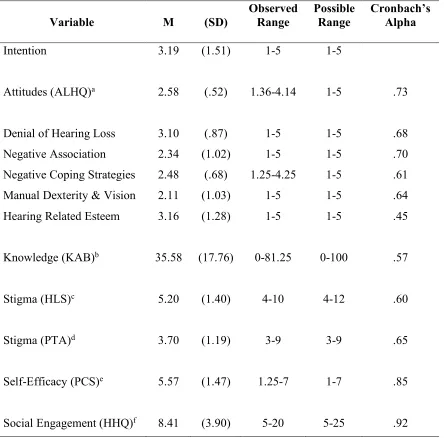
Descriptive Statistics for Major Study Variables……….. 50
Concepts of Theory of Planned Behavior………. 50
Intention to Seek Professional Help……….. 52
Knowledge and Attitudes about Hearing Impairment………... 53
Stigma about Hearing Impairment……… 53
Self-Efficacy about Hearing Impairment……….. 53
Relationships Among Participant Characteristics and Major Study Variables. 54 Relationships Among Theoretical Variables ……… 59
Hypothesis Testing……… 62
Research Questions………... 64
Eight-Week Follow Up After Hearing Screening and Initial Data Collection. 65 V. DISCUSSION AND CONCLUSIONS………. 69
Discussion………. 69
Limitations of the Study……… 81
Strengths of the Study………... 81
Implications for Theory Building……….. 82
Implications for Practice………... 83
Future Research………. 84
Conclusion………. 85
xiv
Section Page
APPENDICES………...
APPENDIX A: Institutional Review Board Approval……….. 101
APPENDIX B: Informed Consent……… 107
APPENDIX C: Letters of Support……… 111
APPENDIX D: Screening Tool………. 114
APPENDIX E: Demographic Form……….. 116
xv
LIST OF TABLES
Table Page
1. Overview of Study Instruments………... 33 2. Older Adults with Hearing Impairment Characteristics………... 45 3. Results of Screening Using Hearing Handicap Inventory for the Elderly……. 47 4. Results of Screening Using Shoebox Audiometry……….……..……….. 48 5. General Health Problems of Older Adults with Hearing Impairment……...…. 49 6. Descriptive Statistics and Cronbach’s Alpha for Theoretical Variables…….... 51 7. Relationships Among Older Adults Characteristics and Predictive Variables.. 56 8. Relationships Among Older Adults Characteristics and Predictive Variables
xvi
LIST OF FIGURES
Figure Page
1. Theory of Planned Behavior Adapted for Health-Seeking Behavior of
Older Adults with Hearing Impairment……… 10 2. Research Procedure………... 41 3. Screening, Enrollment and Attrition for Older Adults with Possible
xvii
LIST OF ABBREVIATIONS AAA American Academy of Audiology
ANSI American National Standards Institute
ALHQ Attitude towards Loss of Hearing Questionnaire ASHA American Speech-Language-Hearing Association BMHS Blue Mountains Hearing Study
CHC Center for Hearing and Communication ELSA English Longitudinal Study of Aging FDA Food and Drug Administration
HARQ Hearing Attitudes Rehabilitation Questionnaire HHIE-S Hearing Handicap Inventory-Screening version HHQ Hearing Handicap Questionnaire
HI Hearing Impairment HL Hearing Loss
HLS Hearing Loss Stigma HSB Health-Seeking Behavior IRB Institutional Review Board
KAB Knowledge, Attitudes and Behavior Questionnaire NCA National Council on Aging
NFO National Family Opinion
xviii
NIDCD National Institute on Deafness and Other Communication Disorders OSHA Occupational Safety and Health Administration
PBC Perceived Behavioral Control PCS Perceived Competence Scale PTA Pressure To be Assessed
SQRO Swedish Quality Register of Otorhinolaryngology T1 Initial Data Collection (Time 1)
T2 Follow-up Data Collection (Time 2) TPB Theory of Planned Behavior
1
CHAPTER I
INTRODUCTION
Hearing impairment is one of the most common issues that older adults
experience. There are an estimated 360 million people who have moderate to profound hearing impairment in the entire world (World Health Organization, 2017). According to the National Institute on Deafness and Other Communication Disorders (NIDCD, 2016) Epidemiology and Statistics Program using the data from 1999-2010 National Health and Nutrition Examination Survey (NHANES), about 2% of adults aged 45 to 54 have
disabling hearing impairment, and the rate increases to 8.5% for 55 to 64 years old. The incidence of hearing impairment tripled for those 65 to 74 years of age and continued to rise at approximately 50% for those 75 and older.
Hearing impairment has been shown to influence individuals’ health and well-being in various domains and multiple ways. The implications of hearing impairment differ from person to person. However, hearing impairment may lead to social,
poorer functional status, higher rates of fall, and higher mortality (Boi et al., 2012; Kiely et al., 2012).
The World Health Organization (WHO, 2012) projected that hearing impairment will become one of the top ten contributing factors to the burden of disease by 2030. This presents a growing problem because hearing impairment not only negatively affects the older adults’ personal lives and the lives of their family members (Davis et al., 2016; Green et al., 2005) it increases the chance of becoming a potential burden to the society and the government.
Despite the efforts to improve delivery of care for people with hearing
impairment, and negative health outcomes experienced by hearing impaired individuals, the Center for Hearing and Communication (CHC, 2017) estimated that 15 million people in the United States with hearing impairment avoid seeking help or engaging in hearing intervention. Many older adults do not engage in seeking help or delay seeking assistance for over five years (NIDCD, 2016). Despite the fact that hearing impairment affects the lives of older adults, there is often a lengthy delay between the time
individuals first notice that they are having hearing difficulties and when they seek help from a hearing professional.
Significance
changed and considering the low rates of help seeking among older adults with hearing impairment (NIDCD, 2016), it is important to learn what can be done. Awareness of an individual’s hearing status and determining factors affecting patients’ decisions in
seeking help are essential to providing successful nursing care. Nurses must advocate for patients’ well-being including hearing health and engaging in hearing intervention. Attending to the needs of hearing impaired individuals is an important role of the nurse to improve health outcomes and quality of life in those hearing impaired.
health-seeking behavior of older adults with hearing impairment beyond financial reasons.
Purpose of the Study
The purpose of this study was to examine the factors that are thought to influence the health-seeking intentions and seeking professional help of older adults with possible hearing impairment. Understanding the various factors related to why such a large proportion of hearing impaired older adults do not seek professional help or consultation is needed so that appropriate screening and assessment programs can be culturally tailored or modified accordingly to the needs of this vulnerable population.
The following hypotheses and research questions were proposed:
Hypothesis 1a: More positive attitudes and knowledge about hearing impairment will be associated with more health-seeking intention and seeking professional help among older adults with possible hearing impairment.
Hypothesis 1b: Less stigma about hearing impairment will be associated with more health-seeking intention and seeking professional help among older adults with possible hearing impairment.
Hypothesis 1c: Higherself-efficacy in seeking help about hearing impairment will be associated with more health-seeking intention and seeking professional help among older adults with possible hearing impairment.
Research Question 1d: What factors (knowledge and attitudes about hearing impairment, stigma about hearing impairment, and self-efficacy in seeking help about hearing impairment) are associated with health-seeking intention and seeking
Research Question 1e: What is the association between social engagement and self-efficacy in seeking help among older adults with possible hearing impairment?
Theory of Planned Behavior
The Theory of Planned Behavior (TPB) is a theory which links beliefs about a phenomenon and behavior. The concept was proposed by Ajzen (1985) to improve the predictive power of the Theory of Reasoned Action, also known as TRA (Ajzen & Fishbein, 1975). The TRA was derived from previous research that started out as the theory of attitude, such as learning theories, expectancy-value theories, consistency theories and attribution theory, which led to the study of attitude and behavior (Ajzen & Fishbein, 1975). According to the TRA, intention to perform a certain behavior precedes the actual behavior. Due to the criticisms of TRA, Ajzen (1985) extended the TRA to goal-directed behaviors over which an individual has only limited volitional control. The modified theory is called the “Theory of Planned Behavior.” The TPB differs from the TRA, in that it takes into account perceived as well as actual control over the behavior under consideration (Ajzen, 1985). The TPB assumes that rational considerations govern the choices and behaviors of individuals (Ajzen, 1985; Ajzen, 1991; Ajzen & Fishbein, 2005). Specifically, according to a precursor of this theory (TRA), behavior is determined by the intentions of individuals—their explicit plans or motivations to commit a specific act (Ajzen & Fishbein, 1975).
will support the behavior (subjective norms); and how the person perceives the ease or difficulty of executing the behavior (perceived behavior control) (Ajzen, 1985).
Theory of Planned Behavior in Seeking Help for Hearing Impairment
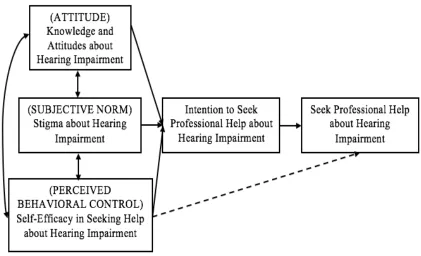
The Theory of Planned Behavior (TPB) guided the study in determining the factors that may contribute to the health-seeking intention and behavior of older adults with possible hearing impairment. The TPB explains the relationships among personal attitudes, subjective norms, perceived behavioral control, behavioral intentions, and actual behaviors (Ajzen, 1985).
influenced by all TPB constructs. The intention of the participants who already owned hearing aids was less influenced by subjective norms but more influenced by their attitude toward hearing aids (Meister et al., 2014).
The TPB model’s outcome depended on different subgroups that were established according to the stage of their seeking help for their hearing problem. Both studies (Meister et al., 2014; Wiesner & Tesch-Römer, 1996) focused on using hearing aids for hearing impairment and not the factors affecting health-seeking behavior of older adults with hearing impairment. Both studies were conducted outside the United States. The TPB is a useful theoretical framework to investigate the different factors associated with health-seeking intention and health-seeking behavior of older adults with hearing
impairment to consult audiologists or other health care professionals about their hearing problem. Understanding the factors associated with seeking help in hearing impairment among older adults may provide opportunities to target interventions to facilitate help-seeking for hearing impairment. The TPB guided the present study to determine the intention and behavior of older adults to seek professional consultation about their hearing impairment while considering various factors in seeking help.
Attitude toward a behavior in the TPB is defined as the degree to which
Chisolm, & Wallhagen, 2012). Measuring the knowledge and attitudes of older adults about their hearing impairment allowed for determining whether attitude about or
knowledge of hearing impairment are associated with older adults’ intention and seeking help from an audiologist or health care professionals.
Subjective norm is an individual’s perception about the particular behavior, which is influenced by the judgment of significant others (Ajzen, 2001). The subjective norm construct of TPB was operationalized as a perceived stigma about hearing impairment. The stigma about hearing impairment is the extent to which older adults are concerned about what others might think should they find out that the older adults were seeking professional help about their hearing problem or having a hearing impairment. Older adults often sought more help if they believed that their significant others were supportive of their seeking intervention for hearing impairment (Meyer & Hickson, 2012). Additional evidence suggested that older adults were more likely to seek help if they experienced more social pressure than those individuals who did not experience that social pressure (Meister et al., 2014). Therefore, the perception of what others in the older adults’ social network might think influences the seeking intention and actual behavior of older adults for audiological or professional consultation.
professional help for assessment of their hearing impairment. Efficacy beliefs can influence an individual to decide specific actions or choose alternatives regarding the issues or challenges that they experienced, which have implications for help-seeking for hearing impairment (Bandura, 1997). In a study of 153 older adults with hearing impairment, researchers found that self-efficacy in hearing intervention influenced the decision to consult healthcare professionals (Hickson et al., 2014). Meyer et al. (2014) had similar findings of the impact of self-efficacy in hearing intervention on the decision of 307 older adults to seek professional help and hearing aid adoption. However, more studies are needed to explore different factors that are related to self-efficacy in seeking help among older adults with hearing impairment. Researchers have become increasingly aware of the influence of self-efficacy on health behavior and healthcare outcomes (Hickson et al, 2014; Meyer et al., 2014; Saunders et al., 2016; Smith et al., 2011).
Figure 1. Theory of Planned Behavior Adapted for Health-Seeking Behavior of Older Adults with Hearing Impairment: Ajzen, 1985
Assumptions
The TPB provides insight into how individuals’ intention to perform a particular behavior depends on their beliefs about the behavior, the social norms and perceived control over the behavior. Intention is the cognitive representation of a person’s readiness to perform a given behavior, and it is considered to be the immediate antecedent of behavior.
The following assumptions are inherent in TPB: • All behaviors are motivated.
• Attitudes can change overtime. • Human beings are rational. • People are honest.
• Health is important for human beings.
• Human beings make systematic use of resources available to them. • Human beings consider the implications of their actions before they
decide to engage or not engage in certain behaviors.
Summary
Hearing loss is a common occurrence among aging population. Hearing loss is a growing problem that not only negatively affects the older adults’ personal lives; it also increases the chance of becoming a potential burden to the society. Despite the negative impact of the hearing problem, older adults delay seeking help or do not seek help about the hearing problem. The main purpose of the study was to determine the factors that are associated with health-seeking intentions and seeking professional help by older adults with possible hearing impairment. This study determined the association of social
12
CHAPTER II
LITERATURE REVIEW
This chapter provides a summary of the impact of hearing impairment on older adults, an overview of the health-seeking behavior of older adults with hearing
impairment, and factors that are thought to influence the health-seeking behavior of older adults with hearing impairment.
Hearing Impairment in Older Adults
Presbycusis is the loss of hearing that gradually occurs in most individuals as they grow older. Presbycusis is the most common cause of hearing impairment, which is typically gradual, progressive, and bilateral (Chou, Dana, & Bougatsos, 2011). This means that hearing impairment will get worse over time, and if a person loses the ability to hear, it will be permanent. Hearing impairment in older adults is multifactorial. Aside from degeneration due to aging, presbycusis occurs as a result of exposure to noise, heredity, certain medications, history of ear infections, and the presence of systemic diseases (Agrawal, Platz, & Niparko, 2009; Hull, 2011; Roland & Kutz, 2015). Hearing impairment initially affects higher frequencies and interferes with sounds such as /s/, /sh/, /f/, and /th/ (Hull, 2011; Chou, Dana, & Bougatsos, 2011). Problems in hearing can make it hard for older adults to communicate, such as talking with friends and family,
understanding and following doctors’ advice, and responding to warnings or alarms (Newton & Shah, 2013; Kamil & Lin, 2015; Hoffman & Cosetti, 2016). All of these can be frustrating, embarrassing, and even dangerous.
Impact of Hearing Impairment in Older Adults
The impact of hearing impairment in older adults is not simply determined by sensory loss or in physiological capacity. According to the American Speech-Language-Hearing Association (ASHA, 2016) hearing impairment is a unique personal experience, and how the person copes will depend on different factors that affect day-to-day
situations. Regardless of the contributory factors or the cause of hearing impairment, the interference with communication has profound negative effects on the lives of older adults. In addition to the threat to personal safety and well-being, hearing impairment has an adverse impact on physical, cognitive, emotional, social, and behavioral function (Ciorba et al., 2012; The National Council on the Aging, 1999).
Several studies have documented the impact of untreated hearing impairment (Baek et al., 2016; Kamil et al., 2014; Sogebi et al., 2015). Hearing impairment may exert a direct impact on mental health (Dewane, 2010). Depression and adjustment
compared to the general population. The results of the study are consistent with the analysis conducted using the Longitudinal Aging Study Amsterdam among 1,826 participants to find the association between hearing loss, depression, and loneliness. The researchers found that worse hearing status, living with a partner, and higher
socioeconomic status were associated with higher social and emotional loneliness (Pronk et al., 2013). The relationships between hearing impairment, depression, and loneliness are established. However, the specific component of the socioeconomic status was not explored in relation to the social and emotional loneliness level of older adults with hearing impairment. It was also counterintuitive that living with a partner and having higher socioeconomic status resulted in higher social and emotional loneliness scores.
impairment on health-related quality of life. Wong and Cheng (2012) found out that Chinese elderly with hearing impairment have poorer physical functioning, role
limitation due to physical problems, less vitality, lower social functioning, poorer mental health, and role limitations due to emotional problems compared to the general
population. In contrast to the BMHS study, the degree of hearing impairment was not related to poorer physical and mental outcomes.
The commissioned survey by the National Council on Aging (1999) is often cited in various research literature since it included 4,000 adult participants with hearing impairment and their significant others. Kochkin and Rogin (2000) revealed significantly higher rates of depression, anxiety, and other psychosocial disorders in individuals with hearing impairment who did not undergo hearing intervention. The findings were
consistent with the older large randomized controlled study among 194 hearing-impaired elderly veterans, which found that hearing impairment was associated with decreased social, communication, and cognitive function, and higher incidence of depression for subjects who did not use hearing aids (Mulrow et al., 1990). The evidence indicates that if hearing impairment remains untreated, it can lead to negative psychosocial outcomes.
poor health-related quality of life due to the nature of the cross-sectional study designs that have been frequently used. Therefore, it may require different methods of study to explain and determine the consequences of hearing impairment. Since most of the studies indicated that hearing impairment can result in negative health outcomes, more studies are needed to identify or determine the needs of older adults in relation to their hearing loss or hearing impairment that could lead to serious complications.
Health-Seeking Behavior
The broad nature of the process of health-seeking makes it challenging to develop a universal operational definition because of how diversely it has been investigated to date. Health-seeking behavior has been defined as:
a) Actions undertaken to care for, maintain, and uphold one’s health, regardless of current
health status (Bausell & Bausell, 1987);
b) A multi-dimensional concept which relies on time and context (Poortaghi et al., 2015); c) Decision making for healthcare at the household level where the decisions made
encompass all available options whether it will be public, private, modern, or traditional (Tipping, 2000);
d) A behavior of a person actively searching about different ways to be able to achieve higher-level wellness (Hampshire et al., 2011). Health-seeking is used interchangeably in other studies as help-seeking.
help-seeking in their qualitative study, which included: 1) perceiving hearing impairment, 2) seeking help for hearing, 3) using hearing aids, and 4) perspectives and knowledge about approach to hearing impairment, help-seeking, and hearing aid use. Participants in the qualitative study described hearing help-seeking and hearing intervention in the context of their daily lives, and rarely described to be connected during clinical encounter with healthcare professionals towards hearing help-seeking and hearing intervention. Understanding help-seeking in the context of decision-making of older adults with hearing impairment is important to identify the various interrelated factors that affect health-seeking. Health-seeking behavior was defined in this study as an action perform by older adults with possible hearing impairment to obtain or get treatment or
intervention about their possible hearing impairment from a healthcare professional.
Factors that Affect the Health-Seeking Behaviors of Older Adults with Hearing
Impairment
Knowledge and Attitude of Older Adults about Hearing Impairment.
cause a delay in seeking help or treatment that may bring about psychosocial implications that will affect the quality of life of older adults.
In a qualitative study conducted by Carson (2005) among seven participants that were all seeking help for hearing loss, one theme “contrasting/comparing” emerged: women contrasted or compared their hearing along dimensions related to self or about others or the environment. The comparing theme was the process relating the slow decrease in hearing ability to that of losing one’s sight or contracting a potentially life-threatening illness. When comparing hearing loss to a life-life-threatening illness, the degree of the loss is judged as a more serious situation that gradually affects day to day
functioning. These women contrasted their present hearing level to how they used to hear at different points in time. The contrasting/comparing approach was a way of placing hearing difficulties into context when it comes to help-seeking. In the early stages of hearing impairment, this process is likely to delay health-seeking for hearing impairment. As hearing ability declines, this process of comparing one’s hearing loss may facilitate the process of health-seeking (Carson, 2005).
There is evidence that understanding the degree of impairment that hearing loss brings to the lives of older adults influenced their decision to seek professional help or consultation. In a study conducted by Laplante-Levesque and colleagues (2011) of 139 older adults, hearing difficulties that were more complicated in nature, such as increased awareness of hearing sensitivity or asymmetry resulted in seeking a professional
consultation decreased as perceived hearing ability increased (Odds ratio = 0.47, p= <0.01). Likewise, in an older study conducted among 281 older adults by Duijvestin and colleagues (2003), 84% of the 115 participants who sought help from a professional about their hearing impairment perceived their hearing to be poor, while 57% of the 166 participants who did not seek professional help perceived that their hearing loss did not affect their daily lives. These studies did not include measures of how hearing loss affected functional ability, only the older adults’ perception of how hearing loss affected their lives.
In a recent retrospective study conducted among 307 Australian older adults by Meyer and colleagues (2014), participants were asked for their primary reason for not seeking help. Slight less than half (40%) of the 55 participants who did not seek help responded that they felt their hearing was not bad enough to consult a professional about it. The researchers also postulated that older adults were more likely to seek professional help if they perceived more potential benefit of hearing intervention and reported more activity limitations as a result of hearing impairment (Meyer et al., 2014).
Limited research has been conducted in determining the association of individual factors such as attitudes or knowledge of older adults about hearing loss and the degree of hearing impairment to their health-seeking behavior. Studies about hearing and
affect the likelihood of the older adults to engage in health-seeking behavior before their hearing impairment worsens.
Stigma Related to Hearing Impairment
Stigma has been described as a belief that a person has some attribute that carries a social identity that is devalued in a particular social perspective (Crocker, Major, & Steele, 1998). Individuals often have the tendency to negatively typecast older adults with hearing impairment that can lead to a detrimental effect on how others will perceive them. There is significant support to suggest that stigma is one of the salient reasons given that affects the decision of older adults in seeking professional help about hearing impairment (Kochkin, 2007; Meyer et al., 2014; Southall et al., 2010). Older adults with hearing impairment are often seen by others as dull, senile, and unfavorable partners for interaction (Heine & Browning, 2004). Perceived stigma is one of the most commonly reported factors in the literature for seeking professional help about the hearing problem (Meister et al., 2014; Southall et al., 2010; Wallhagen, 2010).
In a qualitative study of 91 older adult dyads, the stigma of seeking professional help for hearing impairment was associated with experiences of altered self-perception, ageism, and vanity that delayed the decision to seek professional help about the hearing impairment (Wallhagen, 2010). Older adults with age-related hearing loss were
individuals with hearing impairment experienced a climax of negative stress leading to an unmanageable situation due to stigma. Part of this stress was caused by denial of the hearing loss, in which most participants did not want to be labeled as “hard of hearing”
due to the stigma they felt they would experience when seeking for professional help. The participants narrated that it was easier to conceal their hearing loss from friends and family for fear of being labeled as old or stupid. If family and social networks have a negative attitude towards seeking professional help, the older adults with hearing impairment have the potential to delay the health-seeking process (Meister et al., 2014; Southall et al., 2010;).
In a cross-sectional study conducted among Indians aged 41-65 years old, the participants reported that they thought their family members and friends would not accept them if they wore hearing aids. The participants perceived that using a hearing aid was a sign of weakness/handicap (Archana et al., 2016). A short screening survey among 80,000 members of the National Family Opinion (NFO) panel about hearing loss, Kochkin (2007) revealed that participants chose not to seek professional help or consultation due to perceived stigma that hearing impairment was a disability and an embarrassment to the public.
individuals who did not experience that social pressure (Southall et al., 2010; Wallhagen, 2010;).
The evidence indicates that significant others can either facilitate or delay health-seeking for hearing impairment. These inconsistent findings show how the individual’s perceptions of their family members’ opinions and how their family members perceive stigma of hearing aids differ. The significant others role in the health-seeking behavior of older adults with a hearing impairment was explored to determine its influence on the decision making of aging individuals that could lead to timely or significant delay in seeking help about hearing impairment to healthcare professionals. Also, how older adults are influenced by their peers and family members was examined to determine the likelihood of the older adults to seek professional help about their hearing impairment.
Self-Efficacy in Seeking Professional Help about Hearing Impairment
Self-efficacy was found to be one of the factors that affected the older adults’
loss for a longer period, reported more positive support from significant others, and if they were not anxious about using hearing aids (Meyer, Hickson, & Fletcher, 2014).
Meyer, Hickson, and Fletcher (2014) found out that low levels of self-efficacy in seeking professional help could, in fact, be attributed to a more general fear of utilization of advanced technology for hearing intervention. Older adults with hearing impairment with greater confidence in their ability to communicate were less likely to opt for hearing intervention (Laplante-Levesque et al., 2011). Likewise, older adults with greater
communication skills and no issues interacting with others despite the difficulty of hearing did not participate in communication programs or interventions (Cornally et al., 2011). In contrast, older adults with hearing impairment who were curious and
imaginative were more likely to seek professional help than their counterparts (Cox et al., 2005). In a study conducted among 204 individuals aged 35 to 87 years old in Germany, Meister and colleagues (2014) found out that perceived barriers were a significant factor associated with the help-seeking behavior of older adults with hearing impairment: people who perceived fewer barriers such as attitude toward the behavior, subjective norm, and perceived behavioral control had a greater intention to seek professional help.
Social Engagement
engagement restrictions five years later (Gopinath et al., 2012). Older adults with hearing impairment who do not use hearing aids participated significantly less in social activities (Amieva et al., 2015). In addition, a review on behalf of the U.S. Preventive Services Task Force (Moyer, 2012) identified in a randomized controlled trial that older adults who engage in hearing rehabilitation had small improvements in social engagement (Mulrow et al., 1990). However, no improvements in social engagement were noted among older adults with hearing impairment who wear hearing aids (Stark & Hickson, 2004). Also, in a study cohort of 666 community-dwelling older adults with hearing impairment, there was no evidence that hearing rehabilitation promotes social engagement (Dawes et al., 2015).
In a cross-sectional survey conducted among 156 older participants about hearing loss, self-efficacy, and social engagement, results revealed that there was a direct effect of hearing-related activity limitations on participation restrictions and a direct effect of self-efficacy level on perceptions of hearing difficulties (Hefferly, 2009).
Few studies have investigated the relationship between social engagement related to hearing loss and seeking help for hearing impairment. Further exploration may be helpful in understanding the complex responses to the loss of function, health-seeking behaviors, impact on communication, social engagement and quality of life.
to address the connection between self-efficacy in health-seeking behaviors of older adults and social engagement in older adults with hearing impairment.
Socio-economic Status
Studies have shown that the socio-economic status of an individual was
associated with health-seeking behavior (Miles et al., 2011; Patel et al., 2007). Health-seeking behavior is one of the aspects through which socioeconomic status can influence health outcomes (Stowasser et al., 2011). Accessibility and affordability of health care services, alongside income distribution and educational opportunities, are important areas where health outcomes may be improved through intervention (Mackenbach et al., 2008). Ploubidis and colleagues (2011) found in the analysis of the English Longitudinal Study of Aging (ELSA), a nationally representative multi-purpose sample of the population aged 50 and over living in England, that behaviors and financial resources were
significantly associated with health outcomes rather than psychosocial factors. Fischer and colleagues (2011) had similar findings that higher educational level was linked with increased engagement in hearing intervention among older adults. Similarly, Benova and colleagues (2014) found out that higher socioeconomic status was associated with lower odds of self-reported hearing impairment (OR=0.87, p= <.001).
In a study conducted by Arnold, Hyer, and Chisolm (2017) about the Medicaid hearing aid coverage for older adults, they identified 28 states that provide Medicaid coverage for hearing aid assessment and associated services for eligible older adult beneficiaries. In the remaining 22 states, older adults with financial constraints have difficulty accessing hearing health care. Georgia is one of the states that ranked poor on Medicaid hearing aid policies for beneficiaries ages 21 and older. Only four states--Arkansas, Connecticut, New Hampshire, and Rhode Island--currently mandate health insurance companies to provide hearing aid coverage for adults (ASHA, 2017). Several states have pending legislation about hearing aid coverage. The United States
Department of Veterans Affairs provides assistance for hearing tests, examinations, and hearing aids among eligible veterans. The aging population, increase in life expectancy, and the focus on ill-health among the older age group in wealthy countries have
highlighted the importance of examining pathways leading to socioeconomic inequalities in later life health.
Gaps in Literature
The literature review shows that health-seeking behavior of older adults with hearing impairment is influenced by various factors, such as knowledge and attitudes about hearing impairment, stigma related to hearing impairment, self-efficacy in seeking professional help about hearing impairment, and socioeconomic status. Other factors or variables that limit the older adults with hearing impairment to seek professional help were explored in this study.
Most of the literature addresses only one factor affecting how older adults are influenced to seek professional help about their hearing impairment. This study examined the relationships among attitudes and knowledge about hearing impairment, stigma, self-efficacy, income and health-seeking intention and behavior of older adults with hearing impairment.
Further study is needed of older adults with hearing impairment from diverse backgrounds to determine the multi-factorial phenomena that may impact the health-seeking behavior of this vulnerable population. To understand the health-health-seeking behavior of older adults with hearing impairment, all potential influences need to be examined, and all factors should be examined together.
29
CHAPTER III
METHODOLOGY
This chapter describes the methods that were used in conducting the study. The following sections are included: research design, sample and setting, instruments, study procedures, data management and analysis plan, and methods used to protect human subjects.
Research Design
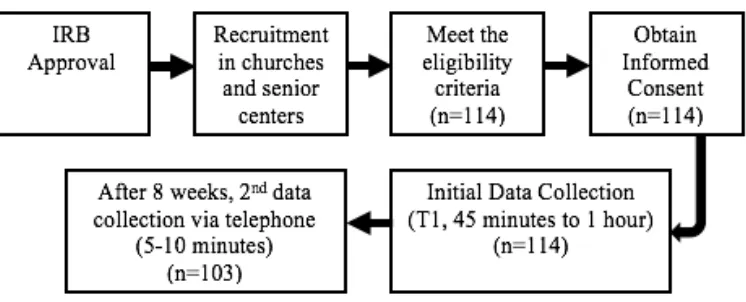
A prospective correlational design was used to examine the factors that are associated with health-seeking intentions and seeking professional help about hearing impairment among older adults with hearing problems. Standard questionnaires were administered at two-time points. Time 1 (T1) was the initial collection of data in person using a set of self-report questionnaires. The participants were contacted via telephone or mail at eight weeks, Time 2 (T2) after the initial interview to determine if they sought help for hearing impairment.
Sample and Setting
The target population was community dwelling older adults currently residing in the State of Georgia. Participants were recruited from churches and senior centers in Cobb County, Georgia.
(HHIE-S) questionnaire (Ventry & Weinstein, 1983), or having failed the hearing screening test using the Shoebox Audiometry.
Participants were excluded from the study if they: both passed the hearing screening test using Shoebox Audiometry and have no hearing handicap (0-8) based on HHIE-S, reported that they have owned a hearing aid, resided in a high-care facility or nursing home, and had dementia as determined by the medications they were taking. Details about the screening instruments are found in the instrument section.
Sample Size
A power analysis was conducted using a-priori statistical power calculator for multiple regression to determine the sample size (Soper, 2016). For a medium effect size of 0.15 using Cohen’s f2, an alpha level of 0.05, a statistical power level of 0.80, and six predictor variables, sample size of 97 was estimated as needed to address the study aims. A total of 114 participants were enrolled and 103 participants completed both data
collection time points.
Instruments
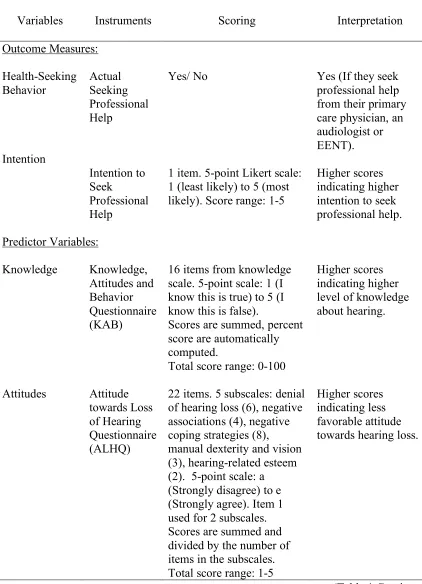
Instruments used to collect data are described below. Table 1 provides an overview of the instruments used in the study.
Screening Instruments.
emotional effects of hearing loss (Ventry & Weinstein, 1983). The response are Yes (4 points), Sometimes (2 points), and No (0 point). The HHIE-S items are summed for total scores ranging from 0 (no handicap) to 40 (maximum handicap), with higher scores indicating a greater handicapping effect of hearing loss. The interpretation of HHIE-S is as follows: a score of 0-8 suggests no hearing handicap, 10-24 suggests mild-moderate hearing handicap, and 26-40 suggests significant hearing handicap (Ventry & Weinstein, 1983; Greenberg, 2013). A moderate handicap score of 10 and above on the HHIE-S was the screening criterion for inclusion.
The HHIE-S has been widely used since the early 1980’s (ASHA, 1997; Milstein & Weinstein, 2007; Pacala & Yueh, 2012). The HHIE-S is available in many languages (Helfner-Mitchell, 2001; Lichtenstein & Hazuda, 1998; Oberg, 2016) and may be completed in a few minutes. It is effective at assessing the effect of the hearing loss on a person’s everyday function and may identify individuals more likely to accept
Audiometric screening was done using the Shoebox Audiometry. Shoebox Audiometry is the first clinically validated portable iPad audiometer (Rourke, Kong, & Bromwich, 2016). Shoebox is a class II medical device, listed with the Food and Drug Administration (FDA) and Health Canada. Shoebox conforms to current American National Standards Institute (ANSI) and the Occupational Safety and Health
Administration (OSHA) (Clearwater Clinical, 2016). There are two versions of Shoebox; the standard edition was used in the study. The standard edition can be self-administered to test at three or more hearing frequencies. This edition is ideal for use in settings where simple pass or fail is all that is needed to quickly assess if the person requires more detailed follow-up examinations. The Shoebox standard edition has an automated game play that provided automated audiogram output. Having a pure tone average of more than 25 dB HL requires further hearing assessment and testing indicating that they failed the Shoebox audiometry test. Participants were eligible if they failed the Shoebox
Table 1
Overview of Study Instruments
Variables Instruments Scoring Interpretation Outcome Measures: Health-Seeking Behavior Intention Actual Seeking Professional Help Intention to Seek Professional Help Yes/ No
1 item. 5-point Likert scale: 1 (least likely) to 5 (most likely). Score range: 1-5
Yes (If they seek professional help from their primary care physician, an audiologist or EENT). Higher scores indicating higher intention to seek professional help. Predictor Variables:
Knowledge Knowledge, Attitudes and Behavior Questionnaire (KAB)
16 items from knowledge scale. 5-point scale: 1 (I know this is true) to 5 (I know this is false).
Scores are summed, percent score are automatically computed.
Total score range: 0-100
Higher scores indicating higher level of knowledge about hearing.
Attitudes Attitude towards Loss of Hearing Questionnaire (ALHQ)
22 items. 5 subscales: denial of hearing loss (6), negative associations (4), negative coping strategies (8), manual dexterity and vision (3), hearing-related esteem (2). 5-point scale: a (Strongly disagree) to e (Strongly agree). Item 1 used for 2 subscales. Scores are summed and divided by the number of items in the subscales. Total score range: 1-5
Higher scores indicating less favorable attitude towards hearing loss.
(Table 1 Continued)
Variables Instruments Scoring Interpretation
Stigma Hearing Attitudes Rehabilitation Questionnaire (HARQ)
8 items. 2 subscales: hearing loss stigma (HLS) (5), perceived external pressure to be assessed (PTA) (3). 3-point scale: 3(true) to 1(not true).
Scores are summed. Score ranges: 5-15, 3-9
Higher scores indicating stronger stigma about hearing loss.
HLS: 5-8 (low), 9-11 (average), 12-15 (high) PTA: 3-4 (low), 5-7 (average), 8-9 (high). Self-Efficacy Perceived
Competence Scale (PCS)
4 items. 7-point scale: 1 (not at all true) to 7 (very true). Scores are summed and divided by 4 items. Total score range: 1-7
Higher scores
indicating higher self-efficacy for seeking professional help. Social Engagement Hearing Handicap Questionnaire (HHQ)
5 items. Social restriction subscale. 5-point scale: 1 (never) to 5 (almost always).
Total scores are summed. Score range: 5-25
Higher scores indicate a greater social limitation.
Actual seeking professional help.
Actual seeking professional help for hearing impairment was measured using self-report during the telephone interview eight weeks after the initial interview. Actual help seeking is a dichotomous outcome variable, with a “yes” or “no” response to the
The participants were also asked if they sought professional help from an audiologist or their primary care physicians.
Intention to seek professional help.
Intention to seek professional help was the outcome variable. This measure was a one-item question of the participants’ intention to seek professional help about hearing impairment from a previously used study using the TPB (Meister, Grugel, & Meis, 2014). A 5-point Likert-type scale was used for this question, with a rating of 1 (least likely) to 5 (most likely). The question was included at the beginning of the structured
questionnaires.
Attitudes about Hearing Impairment among Older Adults.
Attitudes about hearing impairment was defined as perceived beliefs about hearing loss by older adults due to old age and measured by Attitudes toward Loss of Hearing Questionnaire (ALHQ v2.1) (Saunders & Cienkowski, 1996). The ALHQ v2.1 is a 22-item questionnaire with five scales: Denial of Hearing Loss (six items), Negative Associations (four items), Negative Coping Strategies (eight items), Manual Dexterity and Vision (three items), and Hearing-Related Esteem (two items). Participants indicated the extent to which they agreed or disagreed with the statement on a five-point (1-5) scale ranging from “Strongly disagree” to “Strongly agree.” Two forms of the ALHQ are available; one for non-users of hearing aids and one for current users of hearing aids. The form for non-users of hearing aids was used. Item number one was both used for
score on any scale is indicative of a less favorable attitude towards hearing loss; that is, denial rather than acceptance of hearing loss, negative associations with hearing aids, poor coping strategies, poor manual dexterity and visual acuity, and low hearing-related esteem. The internal consistency values of the scales are adequate: four of the five scales have Cronbach’s α coefficients greater than 0.80. The test-retest reliability of the scales also is also adequate; r-values ranged from 0.88 to 0.65 (Saunders, Forsline, & Jacobs, 2007).
Knowledge about Hearing Impairment among Older Adults.
Each item response was scored from 1 (I know this is true) to 5 (I know this is false). A total correct score (16) and a percent correct score are automatically computed taking reverse scoring into account. Higher scores indicate higher knowledge about hearing impairment. The scale’s validity and reliability were initially examined in a sample of participants between the age of 18 and 80. Content validity was established; however, test-retest reliability was not formally examined (Saunders et al., 2014).
Stigma about Hearing Impairment.
Stigma related to hearing impairment was defined as the perception of what others might think should they find out that the older adult has a hearing impairment or is
seeking professional help about their hearing loss. This was measured by two subscales of the Hearing Attitudes Rehabilitation Questionnaire (HARQ) (Hallam & Brooks, 1996). The HARQ is a 40-item questionnaire which assesses perception of older adults about hearing impairment and provision of hearing aid use. Each item response is scored from 1 (true) to 3 (not true). Subscales are computed and interpreted separately. Two of the seven subscales of HARQ were used in the study, which include: Hearing loss stigma (5 items) and perceived external pressure to be assessed (3 items). For the hearing loss stigma subscale, the total scores are interpreted as follows: 5-8 (low), 9-11 (average), and 12-15 (high). For the pressure to be assessed subscale, the scores are interpreted as follows: 3-4 (low), 5-7 (average), and 8-9 (high). Cronbach’s alpha coefficient was satisfactory for most of the subscales ranging from 0.76 to 0.90. The test-retest reliability scores of 0.72 to 0.88 were also adequate for five subscales. However, reliability
Self-Efficacy in Seeking Help among Older Adults with Hearing Impairment.
Self-efficacy in seeking help for hearing impairment was measured using
Perceived Competence Scale (PCS) (Williams & Deci, 1996). The PCS is a short, 4-item Likert-type scale, designed to assess participants’ feelings of competence to engage in behavior, or following through on some commitment. Each item response is scored from 1 (not at all true) to 7 (very true). The four items were adapted for hearing loss and included (e.g. I feel confident in my ability to manage my hearing loss). Total score on the PCS is calculated by averaging responses on the four items and higher scores indicate higher self-efficacy in seeking help. This is a tool that has been used extensively and has been found to have favorable internal consistency and validity (Ryan & Deci, 2000; Williams et al., 2004; Williams et al., 2006). Cronbach’s alpha coefficients have consistently been above 0.80 in multiple studies (Williams & Deci, 1996; Williams, Freedman, & Deci, 1998)
Social Engagement.
reported in cochlear implant users (Noble, Tyler, Dunn, & Bhullar, 2008). The social limitation subscale of the HHQ has an adequate Cronbach’s alpha of 0.93 (Noble et al., 2008).
Participant Characteristics.
Socio-demographic background of participants was assessed using an
investigator-developed participant characteristics form (Appendix E). Data collected included the following: age in years, ethnicity, marital status, whether lives alone or with significant others, race, occupation, work status, education level, annual household income, and general health problems.
Procedures
The approval for the study was obtained from the Georgia State University Institutional Review Board (IRB). The participants were recruited using multiple recruitment strategies. Flyers were distributed at various sites where the hearing screening activities were conducted. The flyers included dates, times, and locations where the hearing screening were conducted for older adults.
Figure 2. Research Procedure
Data Analysis
Data were examined for missing data and standard error checking was completed before data analysis. All data were analyzed using SPSS 24.0. Each study variable was checked for outliers, missing data, and distribution by performing frequency distribution, residual scatter plots, and descriptive statistics. Descriptive statistics, including measures of central tendency and dispersion, were reported for each study variable. All analyses were performed using two-tailed tests and setting statistical significance at p < .05. An internal consistency reliability coefficient for instruments was calculated as appropriate. Frequencies and percentages were calculated for the categorical data. Bivariate
The independent variables (attitudes and knowledge about hearing impairment, stigma about hearing impairment, self-efficacy in seeking help, and social engagement) were examined for a relationship with intention to seek professional help and tested with Somers’ d. Cochran-Armitage test of trend was used with these variables to examine associations with actual seeking professional help which is the dichotomous outcome variable.
Protection of Human Subjects
information list. There were no more risks to the older adults of this study other than those they encounter in everyday life. However, participants might have experienced emotional distress from the ShoeboxAudiometry results or when answering the
44
CHAPTER IV
RESULTS
The results of this prospective correlational study of factors affecting health-seeking behavior among older adults with hearing impairment are presented in this chapter. A description of pre-analysis data screening procedures, description of sample characteristics, findings from the questionnaires, and hypothesis testing and research questions are reported.
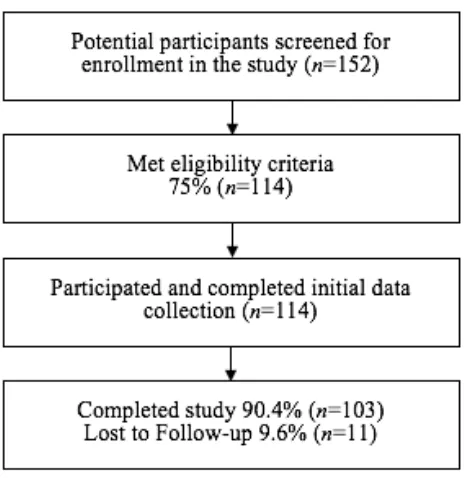
Figure 3. Screening, Enrollment and Attrition for older adults with possible hearing impairment.
Sample Characteristics
Characteristics of the total sample (n=114) and the two groups of those older adults who did seek professional help for possible hearing loss (n=24) were compared to those who did not seek professional help (n=79) are in Table 2.
Table 2
Older Adults with Hearing Impairment Characteristics (N=114)
Characteristics Total
Seek Help c2
Yes (n=24) No (n=79) Lost to
follow-up
Age in Years M(SD) 73.1 (7.7) 73.9 (7.0) 72.7 (8.4)
Gender (n) % .43
Female (93) 81.6 (18) 15.8 (65) 57.0 (10) 8.8 Male (21) 18.4 (6) 5.3 (14) 12.3 (1) 0.9
[image:64.612.106.546.555.698.2]Characteristics Total
Seek Help c2
Yes (n=24) No (n=79) Lost to
follow-up
Ethnicity (n) % .33
Hispanic or Latino (3) 2.6 (0) 0.0 (3) 2.6 (0) 0.0 Non-Hispanic or Latino (111) 97.4 (24) 21.1 (76) 66.7 (11) 9.6
Race (n) % .15
Black (36) 31.6 (11) 9.6 (20) 17.5 (5) 4.4 White (61) 53.5 (11) 9.6 (47) 41.2 (3) 2.6 Asian (17) 14.9 (2) 1.8 (12) 10.5 (3) 2.6
Marital Status (n) % .35
Single (13) 11.4 (2) 1.8 (10) 8.8 (1) 0.9 Married (42) 36.8 (7) 6.1 (33) 28.9 (2) 1.8 Divorced/Widowed/other (59) 51.8 (15) 13.2 (36) 31.6 (8) 7.0
Living with (n) % .53
Alone (39) 34.2 (9) 7.9 (27) 23.7 (3) 2.6 Spouse (42) 36.8 (7) 6.1 (33) 28.9 (2) 1.8 Others (33) 28.9 (8) 7.0 (19) 16.7 (6) 5.3
Employment (n) % .94
Retired (110) 96.5 (23) 20.2 (76) 66.7 (11) 9.6 Working (4) 3.5 (1) 0.9 (3) 2.6 (0) 0.0
Education (n) % .59
< HS Graduate 5.3 (6) 0.0 (0) 4.4 (5) 0.9 (1) High School Graduate 32.5 (37) 5.3 (6) 23.7 (27) 3.5 (4) Some College or > 62.3 (71) 15.8 (18) 41.2 (47) 5.3 (6)
Income (n) % .37
Less than $10,000 23.9 (22) 4.3 (4) 16.3 (15) 3.3 (3) $10,001-$20,000 16.3 (15) 4.3 (4) 10.9 (10) 1.1 (1) $20,001-$30,000 17.4 (16) 4.3 (4) 10.9 (10) 2.2 (2) $30,001-$40,000 10.9 (10) 1.1 (1) 8.7 (8) 1.1 (1) $40,001-$50,000 8.7 (8) 4.3 (4) 3.3 (3) 1.1 (1) Greater than $50,000 22.8 (21) 4.3 (4) 17.4 (16) 1.1 (1) (N= 92) (n=21) (n=67) (n=9) Note: Chi Square for nominal variables for group differences
In the total sample, the majority of participants were Caucasian, female, and currently in their 70s. The majority of participants were divorced, widowed, or
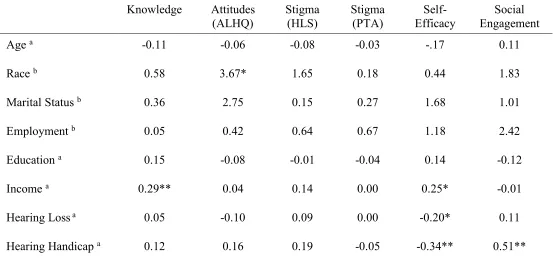
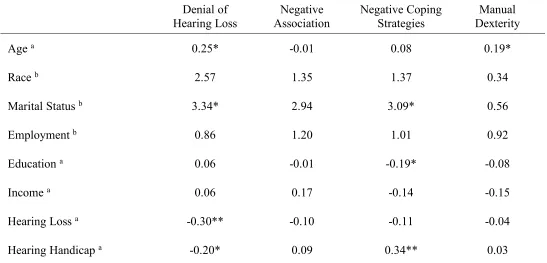
separated. Most of the participants were currently living with a spouse and were retired. Most participants were able to study for their college education and only six participants were not able to graduate from High School. Only 92 out of 114 participants who completed the initial data collection reported their income, and most of the participants reported an income of less than $10,000 followed by participants who reported an income of greater than $50,000. No statistical differences were noted between the characteristics of the participants who did seek help and who did not seek help among older adults with hearing impairment (Table 2).
Sample Hearing Health Characteristics
[image:66.612.108.547.543.696.2]The health characteristics of the sample are the results of the screening of older adults for hearing impairment during the initial data collection using the Hearing Handicap Inventory for the Elderly-Screening Version (HHIE-S) and the Shoebox Audiometry test.
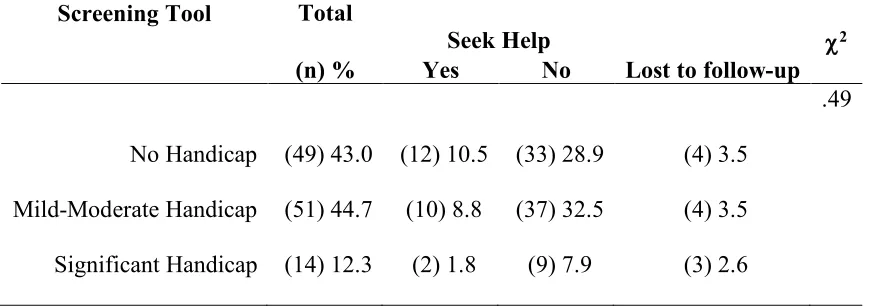
Table 3
Results of Screening Using Hearing Handicap Inventory for the Elderly (N=114)
Screening Tool Total
Seek Help c2
(n) % Yes No Lost to follow-up
.49 No Handicap (49) 43.0 (12) 10.5 (33) 28.9 (4) 3.5
Among the 114 participants screened for hearing impairment using HHIE-S most of the older adults had mild-moderate handicap (Table 3). There were 49 older adults who did not report hearing handicap, however they had mild hearing loss according to Shoebox Audiometry.
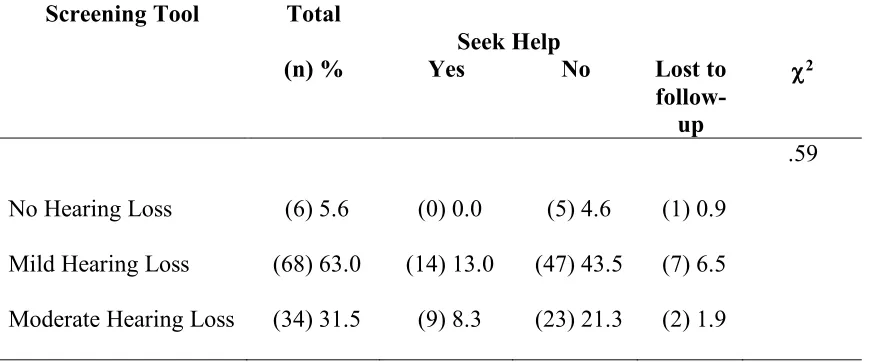
Table 4
Results of Screening Using Shoebox Audiometry (N=108)
Screening Tool Total
Seek Help
(n) % Yes No Lost to
follow-up
c2
.59 No Hearing Loss (6) 5.6 (0) 0.0 (5) 4.6 (1) 0.9
Mild Hearing Loss (68) 63.0 (14) 13.0 (47) 43.5 (7) 6.5 Moderate Hearing Loss (34) 31.5 (9) 8.3 (23) 21.3 (2) 1.9 Note: Chi-Square for group difference
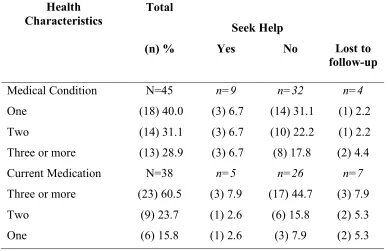
The general health problems reported by the participants are in Table 5. The participants were asked to list their general health problems with an open-ended question (Appendix E). A large number of participants who completed the second data collection did not list any health problems on the form.
Table 5
General Health Problems of Older Adults with Hearing Impairment
Health
Characteristics Total
Seek Help
(n) % Yes No Lost to
follow-up
Medical Condition N=45 n=9 n=32 n=4
One (18) 40.0 (3) 6.7 (14) 31.1 (1) 2.2 Two (14) 31.1 (3) 6.7 (10) 22.2 (1) 2.2 Three or more (13) 28.9 (3) 6.7 (8) 17.8 (2) 4.4 Current Medication N=38 n=5 n=26 n=7
Three or more (23) 60.5 (3) 7.9 (17) 44.7 (3) 7.9 Two (9) 23.7 (1) 2.6 (6) 15.8 (2) 5.3 One (6) 15.8 (1) 2.6 (3) 7.9 (2) 5.3
Among the 114 participants who completed the initial data collection, only 45 participants (40%) reported having other medical conditions, and 38 (27%) of the participants indicated that they were taking medications. Most of the participants only reported having one medical condition, and most of these participants did not seek professional help about their hearing impairment. The most commonly reported