SYNTHETIC APPLICATIONS AND METHODOLOGICAL DEVELOPMENTS OF DONOR–ACCEPTOR CYCLOPROPANES
Thesis by
Alexander Frederick Garber Goldberg
In Partial Fulfillment of the Requirements for the Degree of Doctor of Philosophy
California Institute of Technology Pasadena, California
2013
© 2013
ACKNOWLEDGEMENTS
In Pirkei Avot, a prominent collection of Jewish ethics and morals, Shimon ben Zoma is quoted: “Who is wise? He who learns from all people.” This phrase has been
somewhat of a guiding principle for me throughout my graduate studies, and throughout my time at Caltech I have been surrounded by an incredible group of people. These are
the many students, professors and staff who have contributed toward my development as a scientist and have provided me with plenty of lessons in life and in Chemistry. I have
resigned myself to the knowledge that this section will invariably be inadequate to address every manner in which I have been changed for the better by my interactions at
this singular institution.
Foremost, I must thank my supervisor, Prof. Brian Stoltz. From day one, Brian has challenged me, encouraged me to challenge myself, and supported my efforts every step
of the way. Brian is an endless source of knowledge and ideas; every time I’ve spoken to
him about my project, whether in subgroup or in one-on-one meetings, I have left reenergized and motivated. Brian is an exceptionally caring person, and I truly
appreciate the extent to which he will go to bat for his students. In addition, I’ve been privileged to spend time with his family, Erna, Harry, and Teddy at our group events.
I also thank my thesis committee members, Profs. Bob Grubbs, Jonas Peters, and Sarah Reisman. During our meetings and throughout my education at Caltech, they have
provided me with indispensable advice on my research and have served as formidable role models for their creativity, leadership, and collegiality. It has been a privilege to
The imprint that she has already made in the field of organic synthesis in her first five years is impressive, evidenced by the growing number of publications in the Schlinger
hallway and the number of Synfacts highlights outside her office door! I’ve also enjoyed interacting with Prof. Theo Agapie, whose exciting research ideas almost turned me into
an inorganic chemist in my first year. I’m also glad that he hasn’t held me to the 30 reactions I promised him at various recruitment events; I swear I would have done them
if he asked, but I am confident there’s a statute of limitations on things like this.
Many thanks also go out to my former academic supervisors, including Dr. Chaim Bell, Prof. Cathleen Crudden, Prof. Mark Lautens, and Prof. Ilan Marek, as well as the
graduate students and postdocs who have directly trained me: Kevin McEleney, Chris Lata, Dave Hulcoop, and Samah Simaan. I am forever indebted to all of them for the
indispensable guidance and training, and for stimulating my excitement for scientific
research. Several of my teachers in elementary school and high school are responsible for instilling my love of learning, in particular, Mme. Carmen Jessop, Mrs. Brenda
Silverberg, and Mr. Gary Levine.
As for my co-workers, so many deserve my thanks. For starters, far be it from me to
take advice from a bathroom wall, but one in Crellin needs special recognition. It says, “when in doubt, ask Mike Krout”. I had many doubts to ask about, and he was always
(and continues to be) willing to share his experience and wisdom. One of these pearls:
success as an undergrad is all about what you know; in graduate school, it’s about what you can do. Well, during my time in Brian’s lab, I’ve been surrounded by incredible
etc. From the late-nights in second-year writing our candidacy reports, to the epic billion-or-so reaction screen that we tag-teamed and that didn’t produce any tangible
results, the good times and the hard times, but particularly the hard times, Jonny has been through the rigors of grad school along my side, and has always had a way of putting
things in perspective for me that I’ve come to truly appreciate.
Chris Henry and Kristy Tran were among the most selfless individuals to have
graced our lab in my time here. If you asked Florian Vogt the question, “Have you tried
the _____ reaction?” you could be certain the answer would be an emphatic “Yes.” Thomas Jensen and Kathrin Höferl-Prantz were models for time-management and
efficiency, and are wonderful scientists and people all-around. Beyond the lab, I have fond memories of skiing weekends in Mammoth with Jan Streuff, Helene Kolding and
Corinne Baumgartner. It is beyond me how Josh Day managed to raise two and a half
children and complete an epic total-synthesis at the same time. After spending enough time in lab with Michele Gatti, it became clear why he was the one who set the record for
shortest time to publication in the Stoltz group: he kind of knows everything, and knows how to do everything. Though I may never forgive him for encouraging me to spend
days trying to find separation conditions on the chiral SFC for what turned out to be an achiral compound! I would be remiss if I did not mention the rest of team Germany,
including Christians Eidamshaus and Grünanger, Alex Marziale, and Hendrik “Jimi”
Klare. It is thanks to them that I know useful German phrases, including “Ich heisse Alex und komme aus Kanada” and “Du bist sehr hübsch, komm mit mir in mein iglu”. Thanks
It’s always a pleasure working around Boger Liu: his smile is contagious. I also had the fortune of working with Doug Behenna on his second tour of duty in the group; if
something was broken, he’d fix it, if you had a problem, he’d solve it. John Enquist, for teaching me the ropes on the computer, and for suprising me with his quiet and dry sense
of humor, JT Mohr, Kevin Allan, Chris Gilmore, and Pam Tadross were extremely helpful during my formative years in the Stoltz lab. I always admired Allen Hong’s quiet
perseverance, and was always a helpful, friendly person to be around. Hosea Nelson has
magic Chemistry hands that force the most gnarly molecules into submission. Yakup Gunes, my dear Turkish friend, probably learned as much English during his short stay
here as he did Chemistry. I remember one day when I asked how his Chemistry was going, and he showed me a vial containing about five grams of a well-advanced synthetic
intermediate as if it was no big deal at all. His modesty and his work ethic are extremely
admirable. In my latter years of grad school, I’m glad to have been able to tap into the energy and enthusiasm of the younger students in the lab, particularly my baymates Doug
Duquette, Chung Whan Lee, and Corey Reeves. Doug is outstandingly rigourous and methodical in his science, and generally a fun person to be around in spite of his musical
tastes (hah!). Corey holds himself to a very high standard, and his leadership by example has a way of improving the quality of research in the lab overall. And it’s always a
pleasure to talk with Chung Whan about his Chemistry as well as the finer details of
Korean liquor! Thanks are also due to Jeff Holder, Max Loewinger, Yiyang Liu, Christopher Haley, Kelly Kim, Seojung Han, Katerina Korch, Beau Pritchett, and Kelvin
I’ve had the fortune of collaborating with several talented scientists in and outside our group. Rob Craig and Nick O’Connor were excellent collaborators as part of
CyclopropaNation—though they won’t know I called our team that until they read this. Their hard work, creativity, eye for detail, and technical expertise was critical for our
project’s advancement. I’m excited to see what they have in store for the heterocumulene project; in addition, I look forward to seeing Nick’s creativity in C–H vinylation bear
fruit. I also greatly enjoyed working with Judith Su, a graduate student in the bioimaging
department, on the functionalization of microtoroid optical resonators. Together, we solved an array of technical problems that I would not have otherwise been exposed to in
synthetic organic chemistry. I had the opportunity to mentor two excellent undergraduate researchers, Aaron Levine and Chris Tonge. From Chris’s first Grignard reaction, it was
clear that organic synthesis would be second nature for him. He has done excellent work
on our ortho-quinone methide project, and has a bright future ahead of him in the field of Chemistry!
Many thanks go to those who took the time to proof-read my thesis, including Rob Craig, Nick O’Connor, Doug Duquette, Christopher Haley and Yiyang Liu, in addition to
Brian and my committee members. Their suggestions and edits have improved considerably the quality of this work.
I have made a number of friends since arriving at Caltech within the Chemistry
department and beyond. Foremost, thanks go out to my roommates past and present, Ethan Van Arnam, Judy Lattimer, and James McKone. Between Saturday brunches in
intelligence, kindness, and ambition; and I’ll predict he wins a Nobel prize of some sort—say, in 2030—you heard it here first. Thanks to Ariel Furst, a stellar chemist in the
lab and in the kitchen. And cheers to my cohorts in the Reisman lab, Roger, John, Jay, Lindsay, and Raul.
The technical and support staff in our department are unlike any other. Dr. Scott Virgil has been a tremendous resource during my time here. He has rarely hesitated to
set aside hours of his time to discuss technical or strategic problems that I’ve faced
throughout my graduate studies. Dr. Dave Vander Velde runs a top-notch NMR facility and has helped me with difficult experiments on numerous occasions. Rick Gerhart has
fixed more than my fair share of glassware, and it is always incredible to watch him in action—it exemplifies the interface between artistry and science. Joe Drew never fails to
track down missing packages, and is always good for a high-five or a fist-pound, which is
pretty much the epic combination necessary to improve my spirits. Agnes Tong is the greatest Graduate Program Administrator that a stressed-out graduate student could ask
for—she can always be counted on for words of encouragement, or candy, whichever the medicine happens to be that day. Lynne Martinez does an incredible job of keeping the
house in order, has just about all the answers to everything, and is a great person to talk about vacation plans with. Also, candy. And Allen Hong and Nick O’Connor for candy
too, and sometimes Jonny. Candy is great.
Beyond Caltech, several friends in Los Angeles deserve acknowledgement. Robin and Andy Mandell have been wonderful LA parents to me, inviting me into their home
Tim Aarons, Christine Hitchman, Seth Dallob, Kennedy Davey—all of the Canadian musicians who have passed through the city, and Grant Lawrence and the CBC hosts who
have provided me with a healthy dose of culture, and who all served as my primary link to home. And Michael van Vliet/Tall Michael/Motorcycle Michael, who served as a
constant reminder that normal people, with normal people problems and normal people occupations do exist outside the confines of academia!
I’d also like to thank the multitude of chemists with whom I have regularly interacted
via social media, in no particular order, including Paul Bracher (good luck with your academic appointment!), Carmen Drahl, Matt Hartings, Stu Cantrill, Vy Tran, Freda
Chio, Matt Katcher, anonymous bloggers “Organometallica”, “Chemjobber”, “BRSM”, “SeeArrOh”, and “Chemist Hulk”, of course (I hope to meet you all some day, if I
haven’t already! Except for Chemist Hulk).
I’m glad to have kept in touch with so many of my friends from Toronto and at Queen’s, who have been so supportive of my work, and so understanding of the sacrifices
I’ve had to make to progress through graduate school. These are people with whom it has been so easy to pick up where I’ve left off when I’ve seen them back in Canada, or
when they have visited me in LA. Huge thanks go out to Alexandra Der, Erin Weinberg, Noah Bonder, Michelle Edwards, Leah Dacks, Daniel Stober, Andrew Leung, Caroline
Cormier, Jordi Friese, Jon Goldberg, Robbie Agar, Mike Katz, Jeff Weiskopf, Joel
Arshoff, Joanna Giddens.
I’ve saved this last paragraph to thank the most important people in my life. First of
remember, my parents have nurtured my love of learning, and my sister has been my most important role model throughout my schooling. My parents have invested
tremendously in my education, and have been so supportive of me every step of the way, providing me with every opportunity they could. I look forward to spending the next two
years with my sister and my new brother-in-law Aviv in Israel, as well as my extended family there. To my grandparents, my aunts, my uncles and my many cousins, I thank
you all as well for your love and support. I fondly remember sitting down with Nonnie in
Detroit to study for Chemistry exams and competitions. I have also been greatly inspired by the other PhDs and MDs in my family, including my grandfather, Dr. Ben Goldberg,
my aunt Dr. Adele Goldberg and my uncle Dr. Joel Goldberg, my cousins Dr. Lynne Davis, Dr. David Weiner, and Dr. Shira Taylor and my cousin Yoni Weiner who is
completing a Chemistry PhD at Imperial College. Finally I thank Alyson who has, for
the last year and a half, made my life wonderful by sharing in the joys and rigors of grad school, laughing at my horrible jokes, and talking through science challenges with me.
Every day with her has been a new adventure, and she has been the most amazing person to share in every experience. As a scientist, her creativity, intellect, and breadth of
technical skill continues to be a tremendous source of inspiration for me.
Thanks to all who have been a part of my life, taught and sustained me, and brought
me to this important milestone in my life.
ABSTRACT
Donor–acceptor cyclopropanes are a versatile class of synthetic intermediates, compatible in a broad range of ring-opening reactions and formal cycloadditions, and employed in numerous natural product syntheses. We have developed new Lewis acid mediated cycloadditions for the synthesis of five-membered heterocycles, and applied existing a transition metal catalyzed cyclopropane cycloaddition method toward the synthesis of complex alkaloids.
First, described is the development of a Lewis acid mediated (3 + 2) cycloaddition of donor–acceptor cyclopropanes with isocyanates, isothiocyanates and carbodiimides. This reaction was found in certain cases to proceed with excellent stereochemical fidelity, providing access to an array of enantioenriched thioimidates and amidines.
TABLE OF CONTENTS
Acknowledgements ... iv
Abstract... xii
Table of Contents ... xiii
List of Figures...xvii
List of Schemes ...xxiii
List of Tables...xxvii
List of Abbreviations...xxx
CHAPTER 1...1
Lewis Acid Mediated (3 + 2) Cycloadditions of Donor–Acceptor Cyclopropanes with Heterocumulenes 1.1 Introduction... 1
1.2 Initial Efforts ... 5
1.3 Reaction Optimization of Isocyanate Cycloaddition ... 7
1.4 Isothiocyanate (3 + 2) Cycloadditions... 11
1.5 Carbodiimides (3 + 2) Cycloadditions... 15
1.6 Unreactive and Problematic Substrates... 17
1.7 Investigations on Transfer of Chirality ... 18
1.8 Discussion of Mechanism... 19
1.9 Future Directions ... 21
1.10 Conclusion ... 22
1.11 Experimental Section ... 23
1.11.1 Materials and Methods... 23
1.11.2 Preparative Procedures ... 24
1.11.2.1 General and Miscellaneous Experimental Procedures ... 24
1.11.2.2 Cyclopropane Characterization Data ... 30
1.11.2.3 Characterization Data for Lactams... 38
1.11.2.4 Thioimidate Characterization Data... 42
1.11.2.5 Characterization Data for Amidines ... 51
1.12 Notes and References ... 57
APPENDIX 1...63
A1.1 Ring Expansion Reactions of Aziridines ... 63
A1.1.1 Amidine and Guanidine Catalysis... 65
A1.2 Natural Product Synthesis... 65
A1.3 Conclusion ... 68
A1.4 Experimental Section ... 69
A1.4.1 Materials and Methods ... 69
A1.4.2 Preparative Procedures ... 70
A1.5 Notes and References ... 76
APPENDIX 2...78
Spectra Relevant to Chapter 1: Lewis Acid Mediated (3 + 2) Cycloadditions of Donor–Acceptor Cyclopropanes with Heterocumulenes APPENDIX 3...149
X-ray Crystallography Reports Relevant to Chapter 1 A3.1 Crystal structure analysis for compound 52... 149
A3.2 Crystal structure analysis for compound (R)-60•HBr ... 159
CHAPTER 2...191
Progress toward the Total Synthesis of Scandine and the Melodinus Alkaloids 2.1 Introduction and Synthetic Strategy ... 191
2.1.1 Introduction ... 191
2.1.2 Original Retrosynthetic Analysis... 193
2.1.2.1 Metal-Catalyzed Cyclopropane (3 + 2) Cycloadditions ... 194
2.1.2.2 Known 1,1-Divinylcyclopropanes ... 197
2.1.2.3 Divinylcyclopropane Retrosynthesis ...198
2.2 Toward the Synthesis of a Divinylcyclopropane ...199
2.2.1 gem-Dihalocyclopropane Substitution Route...199
2.2.2 Double Elimination Route...202
2.2.3 Alkylidenecyclopropane Route... 204
2.2.4 Claisen Rearrangement Route... 207
2.3 Investigation of (3 + 2) Cycloaddition ... 209
2.4 Revised Retrosynthesis... 211
2.5 Construction of the ABCD Ring System ... 213
2.6 Outlook ... 218
2.6.2 Derivatization of Scandine to Other Natural Products ... 220
2.7 Conclusion ... 221
2.8 Experimental Section ... 223
2.8.1 Materials and Methods...223
2.8.2 Preparative Procedures...224
2.9 Notes and References ... 249
APPENDIX 4...256
Additional Studies Related to Chapter 2: Progress toward the Total Synthesis of Scandine and the Melodinus Alkaloids A4.1 Alternative Approaches to D-Ring RCM ... 256
A4.1.1 Acrylamide Ring-Closing Metathesis Approach ... 256
A4.1.2 Allylamine Ring-Closing Metathesis Approach... 257
A4.1.3 Development of Reductive Amination Conditions ... 258
A4.1.4 Trifluoroacetamide-Protected RCM Substrate... 260
A4.1.5 Summary ... 261
A4.2 Initial Efforts for C(20) Functionalization ... 262
A4.2.1 Olefin Isomerization ... 262
A4.2.2 Alternative Cyclopropanes ... 263
A4.3 C(20) Functionalization via C–H Insertion... 264
A4.4 Experimental Section ... 266
A4.4.1 Materials and Methods ...266
A4.4.2 Preparative Procedures ...267
A4.5 Notes and References ... 284
APPENDIX 5...286
Synthetic Summary toward the Total Synthesis of Scandine and the Melodinus Alkaloids APPENDIX 6...290
Spectra Relevant to Chapter 2: Progress toward the Total Synthesis of Scandine and the Melodinus Alkaloids APPENDIX 7...326
X-ray Crystallography Reports Relevant to Chapter 2 A7.1 Crystal structure analysis of 240... 326
APPENDIX 8...357
Catalytic Asymmetric Alkylations of Ortho-Quinone Methides A8.1 Introduction... 357
A8.1.1 Asymmetric Alkylations of Halo-Oxindoles...357
A8.1.2 Ortho-Quinone Methides ... 359
A8.2 Development of a Base-Activated OQM Precursor ... 361
A8.2.1 Initial Efforts ... 361
A8.2.2 Nucleophilic OQM Generation ... 363
A8.3 Reactivity with N- and O-Based Nucleophiles ... 366
A8.4 Asymmetric Alkylation with Malonates ... 367
A8.4.1 Initial Discovery... 367
A8.4.2 Reaction Optimization ...369
A8.4.3 Discussion of Mechanism... 377
A8.5 Conclusion ... 379
A8.6 Experimental Section ... 380
A8.6.1 Preparative Procedures ...380
A8.7 Notes and References ... 383
Comprehensive Bibliography...386
Index... 403
LIST OF FIGURES
CHAPTER 1
Lewis Acid Mediated (3 + 2) Cycloadditions of Donor–Acceptor Cyclopropanes with Heterocumulenes
Figure 1.7.1. Determination of absolute configuration by single crystal X-ray diffraction. ... 19
APPENDIX 1
Future Directions for Lewis Acid Mediated (3 + 2) Cyclopropane Cycloadditions
Figure A1.1.1. Examples of chiral nucleophilic catalysts. ... 71 Figure A1.2.1. Natural products accessible via cyclopropane (3 + 2) cycloadditions... 72
APPENDIX 2
Spectra Relevant to Chapter 1: Lewis Acid Mediated (3 + 2) Cycloadditions of Donor–Acceptor Cyclopropanes with Heterocumulenes
Figure A2.1 1H NMR (300 MHz, CDCl
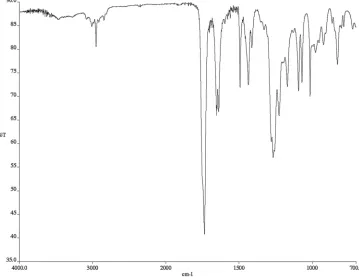
3) of compound 77... 79 Figure A2.2 Infrared spectrum (thin film/NaCl) of compound 77... 80 Figure A2.3 13C NMR (75 MHz, CDCl
3) of compound 77... 80 Figure A2.4 1H NMR (500 MHz, CDCl
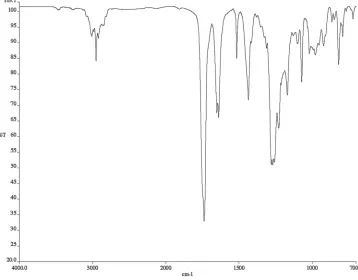
3) of compound 30... 81 Figure A2.5 Infrared spectrum (thin film/NaCl) of compound 30... 82 Figure A2.6 13C NMR (126 MHz, CDCl
3) of compound 30... 82 Figure A2.7 1H NMR (500 MHz, CDCl
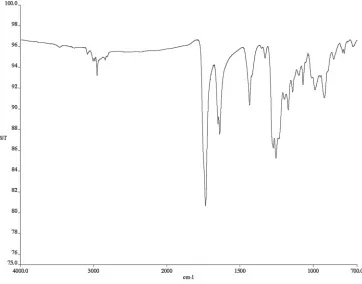
3) of compound 68... 83 Figure A2.8 Infrared spectrum (thin film/NaCl) of compound 68... 84 Figure A2.9 13C NMR (126 MHz, CDCl
3) of compound 68... 84 Figure A2.10 1H NMR (500 MHz, CDCl
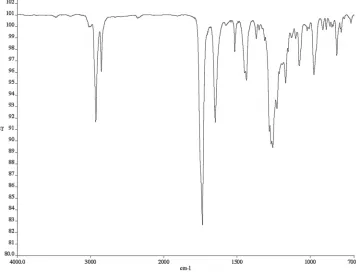
3) of compound 88... 85 Figure A2.11 Infrared spectrum (thin film/NaCl) of compound 88... 86 Figure A2.12 13C NMR (126 MHz, CDCl
3) of compound 88... 86 Figure A2.13 1H NMR (500 MHz, CDCl
3) of compound 69... 87 Figure A2.14 Infrared spectrum (thin film/NaCl) of compound 69... 88 Figure A2.15 13C NMR (126 MHz, CDCl
3) of compound 69... 88 Figure A2.16 1H NMR (500 MHz, CDCl
3) of compound 92... 89 Figure A2.17 Infrared spectrum (thin film/NaCl) of compound 92... 90 Figure A2.18 13C NMR (126 MHz, CDCl
3) of compound 92... 90 Figure A2.19 1H NMR (500 MHz, CDCl
Figure A2.20 Infrared spectrum (thin film/NaCl) of compound 93... 92 Figure A2.21 13C NMR (126 MHz, CDCl
3) of compound 93... 92 Figure A2.22 1H NMR (500 MHz, CDCl
3) of compound 34... 93 Figure A2.23 Infrared spectrum (thin film/NaCl) of compound 34... 94 Figure A2.24 13C NMR (126 MHz, CDCl
3) of compound 34... 94 Figure A2.25 1H NMR (500 MHz, CDCl
3) of compound 35... 95 Figure A2.26 Infrared spectrum (thin film/NaCl) of compound 35... 96 Figure A2.27 13C NMR (126 MHz, CDCl
3) of compound 35... 96 Figure A2.28 1H NMR (500 MHz, CDCl
3) of compound 36... 97 Figure A2.29 Infrared spectrum (thin film/NaCl) of compound 36... 98 Figure A2.30 13C NMR (126 MHz, CDCl
3) of compound 36... 98 Figure A2.31 1H NMR (500 MHz, CDCl
3) of compound 37... 99 Figure A2.32 Infrared spectrum (thin film/NaCl) of compound 37... 100 Figure A2.33 13C NMR (126 MHz, CDCl
3) of compound 37... 100 Figure A2.34 1H NMR (500 MHz, CDCl
3) of compound 38... 101 Figure A2.35 Infrared spectrum (thin film/NaCl) of compound 38... 102 Figure A2.36 13C NMR (126 MHz, CDCl
3) of compound 38... 102 Figure A2.37 1H NMR (500 MHz, CDCl
3) of compound 39... 103 Figure A2.38 Infrared spectrum (thin film/NaCl) of compound 39... 104 Figure A2.39 13C NMR (126 MHz, CDCl
3) of compound 39... 104 Figure A2.40 1H NMR (500 MHz, CDCl
3) of compound 45... 105 Figure A2.41 Infrared spectrum (thin film/NaCl) of compound 45... 106 Figure A2.42 13C NMR (126 MHz, CDCl
3) of compound 45... 106 Figure A2.43 1H NMR (500 MHz, CDCl
3) of compound 40... 107 Figure A2.44 Infrared spectrum (thin film/NaCl) of compound 40... 108 Figure A2.45 13C NMR (126 MHz, CDCl
3) of compound 40... 108 Figure A2.46 1H NMR (500 MHz, CDCl
3) of compound 47... 109 Figure A2.47 Infrared spectrum (thin film/NaCl) of compound 47... 110 Figure A2.48 13C NMR (126 MHz, CDCl
3) of compound 47... 110 Figure A2.49 1H NMR (500 MHz, CDCl
3) of compound 48... 111 Figure A2.50 Infrared spectrum (thin film/NaCl) of compound 48... 112 Figure A2.51 13C NMR (126 MHz, CDCl
3) of compound 48... 112 Figure A2.52 1H NMR (500 MHz, CDCl
3) of compound 49... 113 Figure A2.53 Infrared spectrum (thin film/NaCl) of compound 49... 114 Figure A2.54 13C NMR (126 MHz, CDCl
Figure A2.55 1H NMR (500 MHz, CDCl
3) of compound 50... 115 Figure A2.56 Infrared spectrum (thin film/NaCl) of compound 50... 116 Figure A2.57 13C NMR (126 MHz, CDCl
3) of compound 50... 116 Figure A2.58 1H NMR (500 MHz, CDCl
3) of compound 51... 117 Figure A2.59 Infrared spectrum (thin film/NaCl) of compound 51... 118 Figure A2.60 13C NMR (126 MHz, CDCl
3) of compound 51... 118 Figure A2.61 1H NMR (500 MHz, CDCl
3) of compound 52... 119 Figure A2.62 Infrared spectrum (thin film/NaCl) of compound 52... 120 Figure A2.63 13C NMR (126 MHz, CDCl
3) of compound 52... 120 Figure A2.64 1H NMR (500 MHz, CDCl
3) of compound 53... 121 Figure A2.65 Infrared spectrum (thin film/NaCl) of compound 53... 122 Figure A2.66 13C NMR (126 MHz, CDCl
3) of compound 53... 122 Figure A2.67 1H NMR (500 MHz, CDCl
3) of compound 54... 123 Figure A2.68 Infrared spectrum (thin film/NaCl) of compound 54... 124 Figure A2.69 13C NMR (126 MHz, CDCl
3) of compound 54... 124 Figure A2.70 1H NMR (500 MHz, CDCl
3) of compound 55... 125 Figure A2.71 Infrared spectrum (thin film/NaCl) of compound 55... 126 Figure A2.72 13C NMR (126 MHz, CDCl
3) of compound 55... 126 Figure A2.73 1H NMR (500 MHz, CDCl
3) of compound 56... 127 Figure A2.74 Infrared spectrum (thin film/NaCl) of compound 56... 128 Figure A2.75 13C NMR (126 MHz, CDCl
3) of compound 56... 128 Figure A2.76 1H NMR (500 MHz, CDCl
3) of compound 57... 129 Figure A2.77 Infrared spectrum (thin film/NaCl) of compound 57... 130 Figure A2.78 13C NMR (126 MHz, CDCl
3) of compound 57... 130 Figure A2.79 1H NMR (500 MHz, CDCl
3) of compound 44... 131 Figure A2.80 Infrared spectrum (thin film/NaCl) of compound 44... 132 Figure A2.81 13C NMR (126 MHz, CDCl
3) of compound 44... 132 Figure A2.82 1H NMR (400 MHz, CDCl
3) of compound 60... 133 Figure A2.83 Infrared spectrum (thin film/NaCl) of compound 60... 134 Figure A2.84 13C NMR (101 MHz, CDCl
3) of compound 60... 134 Figure A2.85 1H NMR (400 MHz, CDCl
3) of compound 61... 135 Figure A2.86 Infrared spectrum (thin film/NaCl) of compound 61... 136 Figure A2.87 13C NMR (101 MHz, CDCl
3) of compound 61... 136 Figure A2.88 1H NMR (500 MHz, CDCl
Figure A2.90 13C NMR (126 MHz, CDCl
3) of compound 62... 138
Figure A2.91 1H NMR (500 MHz, CDCl 3) of compound 63... 139
Figure A2.92 Infrared spectrum (thin film/NaCl) of compound 63... 140
Figure A2.93 13C NMR (126 MHz, CDCl 3) of compound 63... 140
Figure A2.94 1H NMR (500 MHz, CDCl 3) of compound 64... 141
Figure A2.95 Infrared spectrum (thin film/NaCl) of compound 64... 142
Figure A2.96 13C NMR (126 MHz, CDCl 3) of compound 64... 142
Figure A2.97 1H NMR (500 MHz, CDCl 3) of compound 65... 143
Figure A2.98 Infrared spectrum (thin film/NaCl) of compound 65... 144
Figure A2.99 13C NMR (126 MHz, CDCl 3) of compound 65... 144
Figure A2.100 1H NMR (500 MHz, CDCl 3) of compound 66... 145
Figure A2.101 Infrared spectrum (thin film/NaCl) of compound 66... 146
Figure A2.102 13C NMR (126 MHz, CDCl 3) of compound 66... 146
Figure A2.103 1H NMR (400 MHz, DMSO-d6, 80 °C) of compound 67. ... 147
Figure A2.104 Infrared spectrum (thin film/NaCl) of compound 67... 148
Figure A2.105 13C NMR (101 MHz, DMSO-d6, 100 °C) of compound 67... 148
CHAPTER 2 Progress toward the Total Synthesis of Scandine and the Melodinus Alkaloids Figure 2.1.1. Representative examples of the Melodinus Alkaloids... 201
APPENDIX 6 Spectra Relevant to Chapter 2: Progress toward the Total Synthesis of Scandine and the Melodinus Alkaloids Figure A6.1 1H NMR (300 MHz, CDCl 3) of compound 192... 291
Figure A6.2 Infrared spectrum (thin film/NaCl) of compound 192... 292
Figure A6.3 13C NMR (126 MHz, CDCl 3) of compound 192... 292
Figure A6.4 1H NMR (400 MHz, CDCl 3) of compound 201... 293
Figure A6.5 Infrared spectrum (thin film/NaCl) of compound 201... 294
Figure A6.6 13C NMR (100 MHz, CDCl 3) of compound 201... 294
Figure A6.7 1H NMR (400 MHz, CDCl 3) of compound 202... 295
Figure A6.8 Infrared spectrum (thin film/NaCl) of compound 202... 296
Figure A6.9 13C NMR (100 MHz, CDCl 3) of compound 202... 296
Figure A6.10 1H NMR (500 MHz, CDCl 3) of compound 205... 297
Figure A6.12 13C NMR (126 MHz, CDCl
3) of compound 205... 298 Figure A6.13 1H NMR (400 MHz, CDCl
3) of compound 215... 299 Figure A6.14 Infrared spectrum (thin film/NaCl) of compound 215... 300 Figure A6.15 13C NMR (100 MHz, CDCl
3) of compound 215... 301 Figure A6.16 1H NMR (500 MHz, CDCl
3) of compound 221... 301 Figure A6.17 Infrared spectrum (thin film/NaCl) of compound 221... 302 Figure A6.18 13C NMR (126 MHz, CDCl
3) of compound 221... 303 Figure A6.19 1H NMR (500 MHz, CDCl
3) of compound 222... 303 Figure A6.20 Infrared spectrum (thin film/NaCl) of compound 222... 304 Figure A6.21 13C NMR (126 MHz, CDCl
3) of compound 222... 304 Figure A6.22 1H NMR (400 MHz, CDCl
3) of compound 223a... 305 Figure A6.23 1H NMR (400 MHz, CDCl
3) of compound 223b... 306 Figure A6.24 1H NMR (500 MHz, CDCl
3) of compound 224... 307 Figure A6.25 Infrared spectrum (thin film/NaCl) of compound 224... 308 Figure A6.26 13C NMR (126 MHz, CDCl
3) of compound 224... 308 Figure A6.27 1H NMR (400 MHz, CDCl
3) of compound 238... 309 Figure A6.28 Infrared spectrum (thin film/NaCl) of compound 238... 310 Figure A6.29 13C NMR (100 MHz, CDCl
3) of compound 238... 310 Figure A6.30 1H NMR (400 MHz, CDCl
3) of compound 240... 311 Figure A6.31 Infrared spectrum (thin film/NaCl) of compound 240... 312 Figure A6.32 13C NMR (100 MHz, CDCl
3) of compound 240... 312 Figure A6.33 1H NMR (400 MHz, CDCl
3) of compound 241... 313 Figure A6.34 Infrared spectrum (thin film/NaCl) of compound 241... 314 Figure A6.35 13C NMR (100 MHz, CDCl
3) of compound 241... 314 Figure A6.36 1H NMR (400 MHz, CDCl
3) of compound 242... 315 Figure A6.37 Infrared spectrum (thin film/NaCl) of compound 242... 316 Figure A6.38 13C NMR (100 MHz, CDCl
3) of compound 242... 316 Figure A6.39 1H NMR (500 MHz, d6-DMSO) of compound 243... 317 Figure A6.40 1H NMR (300 MHz, CDCl
3) of compound 245... 318 Figure A6.41 Infrared spectrum (thin film/NaCl) of compound 245... 319 Figure A6.42 13C NMR (100 MHz, CDCl
3) of compound 245... 319 Figure A6.43 1H NMR (500 MHz, CDCl
3) of compound 246... 320 Figure A6.44 Infrared spectrum (thin film/NaCl) of compound 246... 321 Figure A6.45 13C NMR (126 MHz, CDCl
3) of compound 246... 321 Figure A6.46 1H NMR (500 MHz, CDCl
Figure A6.47 Infrared spectrum (thin film/NaCl) of compound 247... 323 Figure A6.48 13C NMR (126 MHz, CDCl
3) of compound 247... 323 Figure A6.49 1H NMR (500 MHz, d6-DMSO, 80 °C) of compound 248... 324 Figure A6.50 Infrared spectrum (thin film/NaCl) of compound 248... 325 Figure A6.51 13C NMR (126 MHz, d6-DMSO, 80 °C) of compound 248... 325
APPENDIX 8
Catalytic Asymmetric Alkylations of ortho-Quinone Methides
LIST OF SCHEMES
CHAPTER 1
Lewis Acid Mediated (3 + 2) Cycloadditions of Donor–Acceptor Cyclopropanes with Heterocumulenes
Scheme 1.1.1. Structural definition of donor–acceptor cyclopropanes ... 1 Scheme 1.1.2. Lewis acid activation of dimethoxycyclopropane 3... 2 Scheme 1.1.3 Stereoselective (3 + 2) cycloadditions of donor–acceptor cyclopropanes... 3 Scheme 1.1.4. Prevailing pathways for stereoselective cyclopropane cycloadditions ... 4 Scheme 1.1.5. Proposed (3 + 2) cycloaddition of heterocumulenes with cyclopropanes... 5 Scheme 1.2.1. Synthesis of oxazolidinones from epoxides ... 5 Scheme 1.2.2. Proposed synthesis of lactams using potassium cyanate... 6 Scheme 1.2.3. Reactivity attempts of potassium cyanate with cyclopropanes 26 and 27... 6 Scheme 1.2.4. Synthesis of lactam 29 from cyclopropane 27... 7 Scheme 1.3.1. Initial examination of alternative isocyanates. ... 9 Scheme 1.3.2. Scope of iron(III) chloride mediated (3 + 2) cycloadditions of isocyanates... 10 Scheme 1.4.1. Synthesis of thioimidate 40 using allyl isothiocyanate... 11 Scheme 1.4.2. Structural reassignment of Li’s arylisothiocyanate (3 + 2) products ... 12 Scheme 1.4.3. Study on isothiocyanate stoichiometry in (3 + 2) cycloadditions ... 12 Scheme 1.4.4. Substrate scope of isothiocyanate (3 + 2) reaction ... 14 Scheme 1.4.5. Confirmation of thioimidate structure by single crystal X-ray diffraction ... 15 Scheme 1.5.1. Synthesis of amidine 58 using diisopropylcarbodiimide... 15 Scheme 1.5.2. Substrate scope of carbodiimide (3 + 2) cycloaddition. ... 16 Scheme 1.6.1. Unreactive cyclopropanes in heterocumulene (3 + 2) cycloadditions ... 17 Scheme 1.6.2. Problematic heterocumulenes in (3 + 2) cycloadditions... 18 Scheme 1.7.1. Reactions of enantioenriched cyclopropane (S)-42 with heterocumulenes ... 19 Scheme 1.8.1. Mechanism of (3 + 2) cycloaddition with carbodiimides and isothiocyanates... 20 Scheme 1.8.2. Racemization of cyclopropane (S)-42 with catalytic tin(II) triflate3c... 21 Scheme 1.8.3. Proposed mechanism accounting for attenuated racemization ... 21
APPENDIX 1
Future Directions for Lewis Acid Mediated (3 + 2) Cyclopropane Cycloadditions
Scheme A1.2.1. Retrosynthetic analysis of alkaloid natural products 20, 21, 22... 72 Scheme A1.2.2. Failed Suzuki cross coupling with cyclopropyl boronate ester XX... 73 Scheme A1.2.3. Stille coupling of bromide 125 and proposed conversion to tricycle 116... 74
Scheme A1.2.4. Proposed synthesis of cyclopropane 131 via Stille coupling... 74
CHAPTER 2
Progress toward the Total Synthesis of Scandine and the Melodinus Alkaloids
Scheme 2.1.1. Proposed Biosynthesis of the Melodinus Alkaloids. ... 201
Scheme 2.1.2. Retrosynthetic analysis of scandine (135)... 203 Scheme 2.1.3. Tsuji’s palladium-catalyzed (3 + 2) cycloaddition of vinylcyclopropanes... 203 Scheme 2.1.4. Proposed mechanism of the palladium-catalyzed (3 + 2) cycloaddition... 204 Scheme 2.1.5. Iron-catalyzed (3 + 2) cycloaddition of vinylcyclopropanes... 205 Scheme 2.1.6. Enantio- and diastereoselective palladium-catalyzed (3 + 2) cycloaddition ... 205 Scheme 2.1.7. Synthesis and properties of 1,1-divinylcyclopropane (169)... 206
Scheme 2.1.8. Synthesis of 2-phenyl-1,1-divinylcyclopropane (174)... 207 Scheme 2.1.9. Retrosynthesis of divinylcyclopropane 143... 208 Scheme 2.2.1. Dialkylation of dihalocyclopropanes with dialkylcuprates... 209 Scheme 2.2.2. Proposed gem-dihalocyclopropane route toward 1,1-divinylcyclopropane 143... 209 Scheme 2.2.3. De Keyser’s synthesis of methylene dimethylmalonate (177)... 210 Scheme 2.2.4. Proposed conversion of model cyclopropane 192 to desired (3 + 2) substrate 143. 210 Scheme 2.2.5. Synthesis of a model gem-dihalocyclopropane (192)... 210 Scheme 2.2.6. Efforts to vinylate dibromocyclopropane 192... 211
Scheme 2.2.7. Synthetic approach to elimination substrate precursor ... 212 Scheme 2.2.8. Vinylcyclopropane synthesis via a protected diol (201)... 212 Scheme 2.2.9. Direct elimination of a silyl ether (206) to form an unsaturated nitrile (207) ... 213
Scheme 2.2.10. Allylic alkylation of cyclopropane derivatives ... 214 Scheme 2.2.11. Synthetic approach to alkylidenecyclopropane 216... 214 Scheme 2.2.12. Attempted SN2’ displacement with vinyl nucleophiles... 216 Scheme 2.2.13. Proposed Claisen-rearrangement approach to cyclopropane 143... 217 Scheme 2.2.14. Proposed selective derivatization of an Eschenmoser–Claisen product (219) ... 217 Scheme 2.2.15. Eschenmoser–Claisen rearrangement of alkylidenecyclopropane 221... 218
Scheme 2.4.2. Revised retrosynthesis for scandine (135)... 221 Scheme 2.4.3. Davies’ preliminary C–H vinylation results... 222 Scheme 2.5.1. Reduction of cyclopentane 238 to diastereomeric tricyclic lactams 240 and 241... 224
Scheme 2.5.2. Reductive amination of primary amine 240... 225 Scheme 2.5.3. Ring-closing metathesis of cinnamyl amine 242... 225 Scheme 2.5.4. Synthesis of tetracyclic secondary amine 246... 226
Scheme 2.5.5. Synthesis of diazoacetamide (248), proposed C–H insertion and lactam reduction . 227 Scheme 2.6.1. Mechanism of Trost’s enantioselective (3 + 2) cycloaddition... 228 Scheme 2.6.2. Proposed enantioselective (3 + 2) cycloaddition with nitrostyrene (226) ... 229 Scheme 2.6.3. Conversion of scandine (135) to meloscine (137)... 229 Scheme 2.6.4. Proposed synthesis of meloscandonine (136) from scandine (135) ... 230
APPENDIX 4
Additional Studies Related to Chapter 2: Progress toward the Total Synthesis of Scandine and the Melodinus Alkaloids
Scheme A4.1.1. Acylation/RCM sequence for D-ring synthesis... 268 Scheme A4.1.2. Allylation and RCM of primary amines 240 and 241... 269 Scheme A4.1.3. Initial reductive amination attempt with cinnamaldehyde... 269 Scheme A4.1.4. Reductive amination and acetylation of amine 241... 270 Scheme A4.1.5. Ring-closing metathesis of cinnamylamine 273... 270 Scheme A4.1.6. Ring-closing metathesis of TFA protected amine ... 271 Scheme A4.1.7. Attempt to cleave TFA group from tetracycle 276... 271 Scheme A4.1.8. TFA protection/RCM Sequence with cis-diastereomer 242... 272 Scheme A4.1.9. Amine deprotection under acidic conditions... 272 Scheme A4.2.1. Olefin Isomerization approach to C(20) functionalization... 273 Scheme A4.2.2. Unexpected elimination of HNO2 to form diene 281... 274 Scheme A4.2.3. Proposed application of doubly unsaturated cyclopropanes... 274 Scheme A4.2.4. Reactions of cyclopropane derivatives 282 and 284... 275 Scheme A4.3.1. Attempted formation and reaction of alkynyliodonium triflate 291... 275 Scheme A4.3.2. Attempted formal (3 + 2) cycloaddition of toluenesulfonamide 293... 276
APPENDIX 5
Synthetic Summary toward the Total Synthesis of Scandine and the Melodinus
Alkaloids
Scheme A5.2 Synthesis of dibromocyclopropane 192... 286 Scheme A5.3. Synthesis of bicyclic vinylcyclopropane 205... 287 Scheme A5.4. Synthesis of vinylcyclopropane 224... 287
Scheme A5.5. Revised retrosynthesis of scandine (135)... 288 Scheme A5.6. Synthesis of tetracycle 245... 288 Scheme A5.7. Synthesis of diazoacetamide 248... 289 Scheme A5.8. Proposed conversion of scandine (135) to meloscandonine (136)... 289
APPENDIX 8
Catalytic Asymmetric Alkylations of ortho-Quinone Methides
Scheme A8.1.1. Proposed key step toward the synthesis of communesin B (302) ... 367 Scheme A8.1.2. Discovery of the alkylation of 3-halooxindoles to form racemic products... 367 Scheme A8.1.3. Catalytic enantioselective stereoablative alkylation of 3-halooxindoles... 368 Scheme A8.1.4. Reactive intermediates analogous to cyclic ortho-azaxylylenes 304... 368 Scheme A8.1.5. Common reactions of ortho-quinone methides ... 369 Scheme A8.1.6. Common ortho-quinone methide (310) precursors... 369
Scheme A8.2.1. Attempts to prepare substituted o-hydroxybenzyl chlorides (321)... 370 Scheme A8.2.2. Synthesis and examination of several OQM precursors... 371 Scheme A8.2.3. Reaction of o-hydroxybenzyl alcohol with carbonyldiimidazole (CDI)... 371 Scheme A8.2.4. Grignard-promoted OQM generation via acyl-transfer/elimination... 372 Scheme A8.2.5. Cyclic carbonates as OQM precursors... 373 Scheme A8.2.6. Podraza synthesis of cyclic carbonates with phosgene... 373 Scheme A8.2.7. Synthesis of cyclic carbonates by iodination/cyclization sequence... 374 Scheme A8.3.1. Reaction of carbonate 345 with alcohols ... 376 Scheme A8.4.1. Initial observation of asymmetric alkylation with dimethylmalonate ... 377 Scheme A8.4.2. Proposed mechanism for OQM alkylation reaction ... 377 Scheme A8.4.3. Tunge’s Lewis acid catalyzed coupling of phenols and benzylidene malonates... 378 Scheme A8.4.4. Reproduction attempts for Symyx optimized conditions... 379 Scheme A8.4.5. Isolation of spirocyclic bis-OQM adduct ... 383 Scheme A8.4.6. Proposed mechanism for formation of spirocycle 375... 383
LIST OF TABLES
CHAPTER 1
Lewis Acid Mediated (3 + 2) Cycloadditions of Donor–Acceptor Cyclopropanes with Heterocumulenes
Table 1.3.1. Lewis acid and solvent screen for the (3 + 2) cycloaddition... 8 Table 1.3.2. Equivalence and concentration optimization... 9
APPENDIX 1
Future Directions for Lewis Acid Mediated (3 + 2) Cyclopropane Cycloadditions
Table A1.1.1. Preliminary Lewis acid optimization for guanidine synthesis ... 70
APPENDIX 3
X-ray Crystallography Reports Relevant to Chapter 1
Table A3.1.1. Crystal Data and Structure Analysis Details for 52. ... 2
Table A3.1.2. Atomic coordinates ( x 104) and equivalent isotropic displacement
parameters (≈2x 10³) for rac13. U(eq) is defined as one third of the trace of the
orthogonalized Uij tensor. ... 4 Table A3.1.3. Bond lengths [≈] and angles [∞] for 52. ... 5
Table A3.1.4. Anisotropic displacement parameters (≈2x 10⁴ ) for 52. The anisotropic
displacement factor exponent takes the form: -2π2 [ h2 a*2U 11 + ... + 2 h k a* b*
U12 ] ... 9
Table A3.1.5. Hydrogen coordinates ( x 103) and isotropic displacement parameters (≈2x
103) for 52. ... 10 Table A3.2.1. Crystal Data and Structure Analysis Details for (R)-60•HBr... 11
Table A3.2.2. Atomic coordinates ( x 104) and equivalent isotropic displacement
parameters (≈2x 10³) for (R)-60•HBr. U(eq) is defined as one third of the trace of
Table A3.2.4. Anisotropic displacement parameters (≈2x 10⁴ ) for (R)-60•HBr. The
anisotropic displacement factor exponent takes the form: -2π2 [ h2 a*2U 11 + ... +
2 h k a* b* U12 ] ... 35
Table A3.2.5. Hydrogen coordinates ( x 103) and isotropic displacement parameters (≈2x
103) for (R)-60•HBr... 39
CHAPTER 2
Progress toward the Total Synthesis of Scandine and the Melodinus Alkaloids
Table 2.2.1. Optimization of allene cyclopropanation... 215 Table 2.5.1. Optimization of (3 + 2) cycloaddition ... 223
APPENDIX 7
X-ray Crystallography Reports Relevant to Chapter 2
Table A7.1.1. Crystal data and structure refinement for 240 (CCDC 820779)... 338
Table A7.1.2. Atomic coordinates ( x 104) and equivalent isotropic displacement
parameters (Å2x 10³) for XXa (CCDC 820779). U(eq) is defined as the trace of the
orthogonalized Uij tensor. ... 341 Table A7.1.3. Bond lengths [Å] and angles [°] for 240 (CCDC 820779). ... 342
Table A7.1.4. Anisotropic displacement parameters (Å2x 10⁴) for 240 (CCDC 820779).
The anisotropic displacement factor exponent takes the form: -2π2[ h2a*2U11 + ...
+ 2 h k a* b* U12 ]... 345
Table A7.1.5. Hydrogen coordinates ( x 104) and isotropic displacement parameters (Å2x
103) for 240 (CCDC 820779)... 346 Table A7.1.6. Hydrogen bonds for 240 (CCDC 820779) [Å and °]. ... 347 Table A7.2.1. Crystal data and structure refinement for 241 (CCDC 820778)... 349
Table A7.2.2. Atomic coordinates ( x 104) and equivalent isotropic displacement
parameters (Å2x 10³) for 241 (CCDC 820778). U(eq) is defined as the trace of the
Table A7.2.4. Anisotropic displacement parameters (Å2x 10⁴) for 241 (CCDC 820778).
The anisotropic displacement factor exponent takes the form: -2π2[ h2a*2U11 + ...
+ 2 h k a* b* U12... 362
Table A7.2.5. Hydrogen coordinates ( x 104) and isotropic displacement parameters (Å2x
103) for 241 (CCDC 820778)... 364 Table A7.2.6. Hydrogen bonds for 241 (CCDC 820778) [Å and °]. ... 365
APPENDIX 8
Catalytic Asymmetric Alkylations of ortho-Quinone Methides
Table A8.2.1. Two-step synthesis of carbonate OQM precursors... 375 Table A8.3.1 Reaction of carbonate 345 with amine nucleophiles... 376 Table A8.4.1. Solvent and base screen for OQM alkylation reaction ... 378 Table A8.4.2. Catalyst screening for OQM alkylation reaction... 380 Table A8.4.3. Modifications to OQM alkylation conditions ... 382 Table A8.4.4. Change in enantiomeric excess of intermediate 379 and product 359 over
LIST OF ABBREVIATIONS
Å Ångstrom
[α]D specific rotation at wavelength of sodium D line
Ac acetyl
Anal. combustion elemental analysis
APCI atmospheric pressure chemical ionization
app apparent
aq aqueous
AIBN 2,2’-azobisisobutyronitrile
Ar aryl
atm atmosphere
BBN borabicyclononane
Bn benzyl
Boc tert-butyloxycarbonyl
bp boiling point
br broad
Bu butyl
i-Bu iso-butyl
n-Bu butyl
t-Bu tert-Butyl
Bz benzoyl
c concentration for specific rotation measurements
°C degrees Celsius
ca. about (Latin circa)
CAN ceric ammonium nitrate
cat catalytic
Cbz carbobenzyloxy
CCDC Cambridge Crystallographic Data Centre
CDI 1,1'-carbonyldiimidazole
cf. compare (Latin confer)
CI chemical ionization
CID collision-induced dissociation
cm–1
wavenumber(s)
comp complex
Cy cyclohexyl
d doublet
D deuterium
dba dibenzylideneacetone
DBU 1,8-diazabicyclo[5.4.0]undec-7-ene
DCE dichloroethane
dec decomposition
DIAD diisopropyl azodicarboxylate
DMA N,N-dimethylacetamide
DMAP 4-dimethylaminopyridine
dmdba bis(3,5-dimethoxybenzylidene)acetone
DMF N,N-dimethylformamide
DMSO dimethyl sulfoxide
DNA (deoxy)ribonucleic acid
dppb 1,4-bis(diphenylphosphino)butane
dppf 1,1'-bis(diphenylphosphino)ferrocene
EA activation energy
EC50 median effective concentration (50%)
EDC N-(3-dimethylaminopropyl)-N'-ethylcarbodiimide
ee enantiomeric excess
EI electron impact
e.g. for example (Latin exempli gratia)
equiv equivalent
ESI electrospray ionization
Et ethyl
FAB fast atom bombardment
FID flame ionization detector
g gram(s)
GC gas chromatography
gCOSY gradient-selected correlation spectroscopy
GlyPHOX 2-(2-(diphenylphosphino)phenyl)oxazoline
h hour(s)
HIV human immunodeficiency virus
HMDS 1,1,1,3,3,3-hexamethyldisilazane
HMPA hexamethylphosphoramide
HOBt 1-hydroxybenzotriazole
HPLC high-performance liquid chromatography
HRMS high-resolution mass spectroscopy
HSV herpes simplex virus
hν light
Hz hertz
IC50 median inhibition concentration (50%)
IR infrared (spectroscopy)
J coupling constant
kcal kilocalorie
KDA potassium diisopropylamide
KHMDS potassium hexamethyldisilazide
λ wavelength
L liter
LDA lithium diisopropylamide
lit. literature value
LTQ linear trap quadrupole
m multiplet; milli
m meta
m/z mass to charge ratio
M metal; molar; molecular ion
Me methyl
MHz megahertz
µ micro
µwaves microwave irradiation
min minute(s)
MM mixed method
mol mole(s)
MOM methoxymethyl
mp melting point
Ms methanesulfonyl (mesyl)
MS molecular sieves
n nano
nbd norbornadiene
NBS N-bromosuccinimide
NIST National Institute of Standards and Technology
NMO N-methylmorpholine N-oxide
NMR nuclear magnetic resonance
NOE nuclear Overhauser effect
NOESY nuclear Overhauser enhancement spectroscopy
Nu nucleophile
[O] oxidation
o ortho
p para
PA proton affinity
PCC pyridinium chlorochromate
PDC pyridinium dichromate
Ph phenyl
pH hydrogen ion concentration in aqueous solution
PhH benzene
PhMe toluene
PHOX phosphinooxazoline
Piv pivaloyl
pKa pK for association of an acid
PMB p-methoxybenzyl
pmdba bis(4-methoxybenzylidene)acetone
ppm parts per million
PPTS pyridinium p-toluenesulfonate
Pr propyl
Py pyridine
q quartet
ref reference
R generic for any atom or functional group
Rf retention factor
rt room temperature
s singlet or strong or selectivity factor
sat. saturated
SET single electron transfer
SN2 second-order nucleophilic substitution
sp. species
t triplet
TBAF tetrabutylammonium fluoride
TBHP tert-butyl hydroperoxide
TBS tert-butyldimethylsilyl
TCDI 1,1’-thiocarbonyldiimidazole
TCNE tetracyanoethylene
Tf trifluoromethanesulfonyl (trifyl)
TFA trifluoroacetic acid
TFE 2,2,2-trifluoroethanol
THF tetrahydrofuran
TIPS triisopropylsilyl
TLC thin-layer chromatography
TMEDA N,N,N’,N’-tetramethylethylenediamine
TMS trimethylsilyl
TOF time-of-flight
TON turnover number
tR retention time
Ts p-toluenesulfonyl (tosyl)
UV ultraviolet
v/v volume to volume
w weak
w/v weight to volume
X anionic ligand or halide
CHAPTER 1
Lewis Acid Mediated (3 + 2) Cycloadditions of
Donor–Acceptor Cyclopropanes with Heterocumulenes
†1.1 INTRODUCTION
Donor–acceptor cyclopropanes (1) are those which bear an electron-donating group
and an electron-withdrawing group with a vicinal relationship; these have found broad
use as building-blocks in organic synthesis (Scheme 1.1.1).1
Their reactivity is attributed
to the electronic nature of these compounds, bearing substituents that polarize the
cyclopropane C–C bond between them.
Scheme 1.1.1. Structural definition of donor–acceptor cyclopropanes
EDG EWG
EDG EWG
1 2
Historically, alkoxy or silyloxy substituents are among the most prevalent donor
groups used in these systems. A typical example of such a system is Saigo’s use of
†
tin(IV) bromide to activate dimethoxycyclopropane 3, which affords intermediate
zwitterion 4 (Scheme 1.1.2).2
Upon reaction with an aldehyde, followed by Brønsted
acid catalyzed cyclization, lactones such as 5 are formed. In cases such as these,
complete heterolysis of the reactive C-C bond results in loss of stereochemical
information at those centers and any control of absolute stereochemistry must result from
remote chiral centers or reagent control.
Scheme 1.1.2. Lewis acid activation of dimethoxycyclopropane 3
Me Me
OMe CO2Et
SnBr4
–78 °C
PhCH2CH2CHO, –78 °C
then TsOH
(50% yield)
3 4 5
MeO
O
MeO Me
Me Me OEt O
SnBr4 O
O
CH2CH2Ph
CO2Et
Me Me
More recently, aryl-substituted cyclopropane-1,1-diesters (6) have proven valuable in
Lewis acid promoted stereoselective 2, 3, or 4 atom ring-expansion reactions. By
reaction with aldehydes (7),3
imines (8),4
enol ethers (9),5
and nitrones (10),6
an array of
enantioenriched carbocycles and heterocycles (11–14) have been prepared (Scheme
Scheme 1.1.3 Stereoselective (3 + 2) cycloadditions of donor–acceptor cyclopropanes. Ar MeO O OMe O O Ar
CO2Me
MeO2C
R O R N R R' N R' Ar
CO2Me
MeO2C
R N R R' O O N R R' Ar
CO2Me
MeO2C RO
Ar
CO2Me
MeO2C
OR 6 7 8 12 11 9 10 14 13
There are two prevailing pathways toward enantioenriched products that have been
studied in this system. First, enantioenriched starting materials have been converted
stereospecifically to enantioenriched products with judicious choice of Lewis acid
(Scheme 1.1.4, Pathway A). For these systems, it is generally believed that the Lewis
acid activates the cyclopropane (6) toward nucleophilic attack without complete cleavage
of the polarized C–C bond. The malonate zwitterion (15) then undergoes ring-closure to
generate the product (17), with overall inversion of stereochemistry.3b,5a,6f
Alternatively,
racemic cyclopropanes have been converted to enantioenriched products by means of a
dynamic kinetic asymmetric transformation (DyKAT), wherein the starting material is
racemized under the reaction conditions, and one enantiomer reacts faster with a chiral
Lewis acid (Scheme 1.1.4, Pathway B). 3d,4c,5b,6h
planarized zwitterion (18) can react with the dipolarophile in the presence of a chiral
Lewis acid to effect facial selectivity.
Scheme 1.1.4. Prevailing pathways for stereoselective cyclopropane cycloadditions
Ar MeO O OMe O Ar MeO O OMe O [LA] !+ !– X Y
Ar Y X CO2Me CO2Me Y X Ar CO2Me MeO2C Pathway A Pathway B Ar MeO O OMe O Ar MeO O OMe O fast slow X Y X Y Y X Ar
CO2Me MeO2C
Y X Ar
CO2Me MeO2C Ar MeO O OMe O [LA]* !+ !– Ar MeO O OMe O [LA]* !+ !–
(R)-6 16 17
(R)-6 17 (S)-6 ent-17 MeO O OMe O [LA]* Ar 15 ent-15 18 15 Pathway C
Our research group has a long-standing interest in the asymmetric synthesis of chiral
heterocycles.7
We were therefore interested in examining the use of heterocumulenes
with this reaction platform toward the synthesis of chiral 5-aryl substituted lactam
derivatives, a structural motif found in several natural products including trolline 20,8
crispine A (21),9
Scheme 1.1.5. Proposed (3 + 2) cycloaddition of heterocumulenes with cyclopropanes
CO2Me CO2Me
Ar
N X
CO2Me CO2Me
Ar Lewis Acid
6
RN C X R
19 X = NR, O, S, etc.
N O HO HO N MeO MeO N X R R'
Trolline (20) Crispine A (21) Erythrina
Alkaloid Core (22)
1.2 INITIAL EFFORTS
Our initial attempts began with the investigation of potassium cyanate as a potential
dipolarophile toward the synthesis of secondary γ-lactams. Swern reported the use of
potassium cyanate in the synthesis of oxazolidinones from epoxides; heating of epoxides
(i.e. 23) with potassium cyanate, in the presence of a phase-transfer catalyst and water,
affords oxazolidinones (i.e. 24) in good yields (Scheme 1.2.1).12
Notably, the inclusion
of water was necessary for product formation; dimers were typically observed in the
absence of water.
Scheme 1.2.1. Synthesis of oxazolidinones from epoxides
O HN
O
C8H17 O
C8H17
N C
O K
(6 equiv) Et4NBr (4 mol%)
H2O (4 equiv) DMF, 120 °C, 5 h
(63% yield)
23 24
The use of potassium cyanate in reaction with cyclopropanes would bear certain
advantages: it is readily available at low expense, and would provide direct access to
acceptor cyclopropanes with potassium cyanate under comparable conditions to those
developed by Swern.
Scheme 1.2.2. Proposed synthesis of lactams using potassium cyanate
CO2Me
CO2Me
Ar 6
KNCO
NH
Ar MeO2C
MeO2C
O
25
Our studies began by treatment of para-tolyl substituted cyclopropane 26 with
potassium cyanate in several solvents in the presence of Lewis acids or phase-transfer
catalysts (Scheme 1.2.3). Unfortunately, none of the desired product (28) was observed
by LCMS. In our attempt to increase the reactivity of the cyclopropane, we examined
para-methoxyphenyl cyclopropane 27, and though the starting material was consumed in
this case, no lactam formation was observed.
Scheme 1.2.3. Reactivity attempts of potassium cyanate with cyclopropanes 26 and 27
CO2Me
CO2Me
R = Me, 26 R = OMe, 27
KNCO 50 to 140 °C
NH MeO2C MeO2C
O R R Additives: Bu4NBr 18-crown-6 Sn(OTf)2 Zn(OTf)2 Solvents: DMF THF CH2Cl2
R = Me, 28 R = OMe, 29
We considered that the cyclopropane may require Lewis acid activation, but the
cyanate anion deactivated the Lewis acid by coordination. Therefore, we examined
trimethylsilyl isocyanate as a potential alternative, using tin(II) triflate as a Lewis acid
additive, and we were pleased to observe the formation of lactam 29 in 10% yield, with
styrene 30 as the major side product. Having demonstrated proof-of-principle, we set out
Scheme 1.2.4. Synthesis of lactam 29 from cyclopropane 27
CO2Me
CO2Me
MeO
TMS–NCO (5 equiv)
Sn(OTf)2 (20 mol%) CH2Cl2, 23 °C
(10% yield) 27
NH MeO2C MeO2C
O
29
OMe
MeO
CO2Me
CO2Me
30
1.3 REACTION OPTIMIZATION OF ISOCYANATE CYCLOADDITION
Our first course of action was to examine an array of Lewis acids and solvents in the
(3 + 2) cycloaddition reaction (Table 1.3.1). In several organic solvents, the yield of
lactam 29 was unimproved (entries 1–6), and most of the starting material was
isomerized to styrene 30. The use of DMSO completely halted the reaction, likely due to
deactivation of the Lewis acid by coordination of solvent (entry 7). With the use of
unpurified ethyl acetate, we were pleased to observe a marked improvement to 56% yield
(entry 7); upon repetition of this experiment with dry, distilled ethyl acetate, the yield fell
to 18%, comparable to other dry organic solvents (entry 8), suggesting that water may
play a role in the reaction.13,14
Finally, the examination of several other Lewis acids
proved unfruitful in this exercise, either offering little reactivity (entries 10, 12) or
Table 1.3.1. Lewis acid and solvent screen for the (3 + 2) cycloaddition
CO2Me
CO2Me
MeO
TMS–NCO (5 equiv)
Lewis Acid (20 mol%) Solvent (0.2 M), 23 °C, 6 h 27
NH MeO2C
MeO2C
O
29
OMe
entry Lewis Acid Solvent Conversion (%) Yield of 29 (%)a,b
1 Sn(OTf)2 CH2Cl2 100 23
2 Sn(OTf)2 THF 56 15
3 Sn(OTf) 100c 25
2 Et2O
4 Sn(OTf)2 MeCN 97 20
5 Sn(OTf)2 PhMe 60 18
a Determined by LCMS, using 1,4-dichlorobenzene as an internal standard. b The major side-product was typically styrene 30. c 18 hour reaction time. d
Undistilled. e Other unreactive Lewis acids include Mg(OTf)
2, Ni(OTf)2,
MnCl2, Sm(OTf)3.
7 Sn(OTf)2 DMSO 0 0
8 Sn(OTf) 96c 56
2 EtOAcd
9 Sn(OTf) 100c 18
2 EtOAc
6 Sn(OTf)2 CHCl3d 100 0
10 Zn(OTf)2e CH2Cl2 0 0
11 Sc(OTf)3 CH2Cl2 100 0
12 MgBr2•Et2O CH2Cl2 40 15
We then sought to examine the effect of substrate concentration, isocyanate
equivalence and Lewis acid equivalence on the outcome of the reaction (Table 1.3.2).15
We found that lowering the equivalence of isocyanate lowered the yield of lactam 29
slightly (entries 1–3). In addition, lowering the cyclopropane concentration decreased the
yield (entry 4) and decreasing the Lewis acid loading to 5 mol% shut down reactivity
entirely (entry 5). However, increasing the concentration to 0.6 M at this catalyst loading
restored some measure of reactivity, providing lactam in 21% yield (entry 6). Increasing
the quantity of tin from our original conditions improved the yield, to the point where we