Neuropsychiatric Disease and Treatment 2018:14 813–824
Neuropsychiatric Disease and Treatment
Dove
press
submit your manuscript | www.dovepress.com 813
O r i g i N a l r e s e a r c h
open access to scientific and medical research
Open access Full Text article
Dysfunction of cortical synapse-specific
mitochondria in developing rats exposed to lead
and its amelioration by ascorbate supplementation
Faraz ahmad1,2
Mohammad salahuddin3
Widyan alamoudi2
sadananda acharya1
1Department of Public health, college of Public health, imam abdulrahman Bin Faisal University, Dammam, saudi arabia; 2Neuroscience Department, institute for research and Medical consultations, imam abdulrahman Bin Faisal University, Dammam, saudi arabia; 3animal house Department, institute for research and Medical consultations, imam abdulrahman Bin Faisal University, Dammam, saudi arabia
Background: Lead (Pb) is a widespread environmental neurotoxin and its exposure even in minute quantities can lead to compromised neuronal functions. A developing brain is particularly vulnerable to Pb mediated toxicity and early-life exposure leads to permanent alterations in brain development and neuronal signaling and plasticity, culminating into cognitive and behavioral dysfunctions and elevated risk of neuropsychiatric disorders later in life. Nevertheless, the underlying biochemical mechanisms have not been completely discerned.
Methods: Because of their ability to fulfill high energy needs and to act as calcium buffers in events of high intensity neuronal activity as well as their adaptive regulatory capability to match the requirements of the dynamicity of synaptic signaling, synapse-specific or synaptic mitochondria (SM) are critical for synaptic development, function and plasticity. Our aim for the present study hence was to characterize the effects of early-life Pb exposure on the functions of SM of prepu-bertal rats. For this purpose, employing a chronic model of Pb neurotoxicity, we exposed rat pups perinatally and postnatally to Pb and used a plethora of colorimetric and fluorometric assays for assessing redox and bioenergetic properties of SM. In addition, taking advantage of its ability as an antioxidant and as a metal chelator, we employed ascorbic acid (vitamin C) supplementation as an ameliorative therapeutic strategy against Pb-induced neurotoxicity and dysfunction of SM.
Results: Our results suggest that early-life exposure to Pb leads to elevated oxidative stress in cortical SM with consequent compromises in its energy metabolism activity. Ascorbate supplementation resulted in significant recovery of Pb-induced oxidative stress and functional compromise of SM.
Conclusion: Alterations in redox status and bioenergetic properties of SM could potentially contribute to the synaptic dysfunction observed in events of Pb neurotoxicity. Additionally, our study provides evi-dence for suitability of ascorbate as a significant ameliorative agent in tacking Pb neurotoxicity.
Keywords: synaptic, oxidative damage, heavy metal neurotoxicity, neuropsychiatric, mito-chondrial bioenergetics, mitomito-chondrial membrane potential
Introduction
Lead (Pb) is a naturally occurring toxic heavy metal, and its widespread use in recent decades has resulted in extensive environmental contamination and increased risk of exposure.1,2 Pb exposure can occur through contaminated air, water as well as food.
Moreover, exposure to almost all forms of Pb (metallic, organic and inorganic) can lead to toxicity making it a high-risk environmental toxin of significant concern.2 Despite
wide-spread efforts to contain its exposure, environmental Pb contamination is still a concern especially in urban areas of developing countries with emerging industrial production.1
Importantly, studies have shown that exposure to even low levels of Pb, previously thought to be permissible, can be neurotoxic and have deleterious cognitive and psychological
correspondence: Faraz ahmad Department of Public health, college of Public health, imam abdulrahman Bin Faisal University, Dammam 31441, saudi arabia
email [email protected]
Journal name: Neuropsychiatric Disease and Treatment Article Designation: Original Research
Year: 2018 Volume: 14
Running head verso: Ahmad et al
Running head recto: Pb-induced synaptic mitochondrial injury is rescued by ascorbate DOI: 148248
Neuropsychiatric Disease and Treatment downloaded from https://www.dovepress.com/ by 118.70.13.36 on 25-Aug-2020
For personal use only.
Dovepress
ahmad et al
outcomes.3,4 Thus, while blood Pb levels below 10 µg/dL was
considered safe, recent studies have provided evidence sug-gesting that exposure to Pb resulting in blood Pb levels even below this limit can account for irreversible neurotoxicity and detrimental behavioral and cognitive outcomes.5–7
While Pb affects virtually all organs and organ systems in the body including cardiovascular, renal and reproductive systems,2 its ability to act as a potent and pervasive neurotoxin
is well documented.8–10 Pb is permeable to the blood–brain
bar-rier, possibly through the action of Ca2+-ATPase, and rapidly
accumulates in neurons and astrocytes.11 In fact, the nervous
system is regarded as among the most vulnerable target of Pb toxicity, which is evident by behavioral abnormalities, neu-romuscular disabilities and cognitive deficits in events of Pb exposure.2,12 Along similar lines, several groups have shown
impairment of brain functions upon Pb exposure in both ani-mal and human studies.9 Proper maintenance, function and
plasticity of synaptic signaling are critical factors for sensory-motor, cognitive and behavioral functions.13 Not surprisingly,
Pb has been shown to induce alterations in both pre-synaptic and post-synaptic functions of neurons.5,9,14 While studies
have implicated oxidative stress, interference with calcium signaling and gene expression defects in synaptic dysfunc-tion induced by Pb,15 a complete understanding of molecular
mechanisms and targets involved has remained elusive. Immature nervous system is particularly susceptible to prenatal and postnatal lead exposure because of the pres-ence of a still developing blood–brain barrier.16 Alterations
in normal synaptic functions early in brain development can critically affect development, function and plasticity of the brain,5,16,17 in turn leading to permanent compromises in
higher order brain functions. Not surprisingly then, devel-opmental Pb neurotoxicity leads to permanent alterations in brain development culminating into irreparable deficits in sensory-motor, cognitive and behavioral functions as well as elevated risk of psychological disorders and stress.4,18–20
Hence, understanding the molecular and cellular factors involved in synaptic dysfunction induced by Pb in the devel-oping nervous system and devising therapeutic strategies against it are of prime importance.
Synapse-specific mitochondria (or synaptic mitochondria [SM]) play essential regulatory roles in the development and physiology of synapses because of their ability to fulfill high energy demands and to regulate redox and calcium signaling.21–24 Additionally, SM fractions are capable of
adap-tive reconfiguration to suit with the dynamic changes associated with synaptic activity and plasticity.22,25–27 Because of these
reasons, although sharing the same origin, SM are not identi-cal to free (non-synaptic) mitochondria.21,23 These differences
are in part governed by dissimilarities in their physical sizes, proteome, lipidome and enzyme profiles.21,24 Moreover,
syn-aptic mitochondrial pool is more vulnerable to pathological insults and calcium overload and swelling, and its dysfunc-tion is implicated in synaptic deficits commonly observed in pathologies like neurodegenerative conditions.21–23,26,28
Importantly, SM are important regulators of synaptic morpho-genesis during brain development and neuronal plasticity not only because of their bioenergetic functions but also because they modulate synapse pruning and immunoinflammatory functions.17,21,26,27,29 In light of these evidences, alterations in
proper functioning of cortical SM upon exposure to early-life stressors like Pb could potentially lead to critical disruptions in synaptic signaling, which could in turn have irreversible detrimental effect on high-order brain functions.
Ascorbic acid or vitamin C is a water-soluble vitamin with known neuromodulatory and neuroprotective properties in events of neurotoxicity and excitotoxicity30–33 as well as in
neuropsychiatric diseases.34 Of note, neuroprotective effects
of ascorbate supplementation in heavy metal toxicity is also well documented.35,36 Neuroprotective effects of ascorbate are
thought to involve a multifaceted array of therapeutic mecha-nisms involving metal chelation, antioxidant and anti-apop-totic actions and modulation of neurotransmitter signaling.34,35
In fact, therapeutic effects of ascorbate in alleviation of lead toxicity have been documented by a number of groups.37–41
Our aims for this study were 1) to analyze deleterious effects of early-life (prenatal and postnatal) Pb exposure on SM of pre-pubertal rat cerebral cortices, and 2) to observe if oral supple-mentation of ascorbic acid could ameliorate these effects.
Materials and methods
chemicals and reagents
All chemicals were of analytical grade and procured from EMD Millipore or Sigma-Aldrich Co.
animals and experimental paradigms
All experiments involving animals were carried out in accordance with the institutional guidelines for animal care and use for sci-entific research and were approved by the Institutional Review Board of Imam Abdulrahman Bin Faisal University. Female Wistar rats were housed in cages with sexually mature males (2:1, male to female ratio) under a light-dark 12/12 regime in rooms with a controlled temperature of 25°C with free access to food chow and drinking water. After separation from the males, each pregnant female was housed in a separate cage. Pregnant females (gestation day GD15) were separated and divided into four groups: Ctrl (control), Pb (lead), Asc (ascorbic acid) and Pb+Asc (lead and ascorbic acid). While dams of the Ctrl and
Neuropsychiatric Disease and Treatment downloaded from https://www.dovepress.com/ by 118.70.13.36 on 25-Aug-2020
Dovepress Pb-induced synaptic mitochondrial injury is rescued by ascorbate
Asc groups received normal drinking water, Pb and Pb+Asc groups were provided with 0.2% lead acetate (2,000 ppm or 6.15 mM) in drinking water from GD15 until weaning of pups at postnatal day P21.42,43 Drinking water to all dams was provided
ad libitum. Mothers of Asc and Pb+Asc dams were adminis-tered with 500 mg/kg body weight of ascorbic acid using an oral gavage from GD15 until weaning of pups at P21.37 After
weaning (at P21), lead acetate and ascorbic acid treatments were stopped for all pups, and male and female pups of each group were separated and maintained with free access to food chow and normal drinking water. Only male pups were selected for experiments and were sacrificed on P30. This paradigm of oral route of Pb administration in drinking water has been used previously and was chosen because it emulates environmental exposure to this heavy metal.42–44 No significant
difference in the volume of water consumed was observed between the groups.
Isolation of synapse-specific
mitochondrial fraction
Rats were decapitated under anesthesia and brain cortices were dissected out. Synapse-specific mitochondria from cere-bral cortices of P30 rats were isolated using Ficoll gradient-based ultracentrifugation as described previously.45 Briefly,
cerebral cortices were homogenized in 10 times volume of isolation buffer (10 mM Tris, 1 mM EDTA(K), 320 mM sucrose, pH 7.4) using a Potter Elvehjem pestle and glass tube on ice. The homogenate was then centrifuged at 1,300× g for 10 min at 4°C and resultant supernatant (post-nuclear super-natant [PNS]) was further centrifuged at 17,000× g for 10 min at 4°C to obtain supernatant (post-mitochondrial supernatant [PMS]) and crude mitochondrial pellet (CMP). CMP was resuspended in isolation buffer and loaded onto a discontinu-ous 7.5%–10% Ficoll medium gradient (ratio of CMP sus-pension: 7.5% Ficoll: 10% Ficoll was 5:7:7) and centrifuged at 99,000× g for 30 min at 4°C in a Sorvall MX150 micro-ultracentrifuge (Thermo Fisher Scientific, Waltham, MA, USA). This separated CMP into myelin (at first interface), synaptosomes (at second interface) and free (non-synaptic) mitochondria as a pellet. Synaptosomal fraction was then col-lected and lysed by homogenization in 6 mM Tris pH 8.1 and the homogenate was centrifuged at 11,800× g for 10 min at 4°C. The pellet obtained was washed with 6 mM Tris pH 8.1 and resuspended in 3% Ficoll medium and layered on top of a discontinuous 4.5%–6% Ficoll medium gradient (ratio of 3% Ficoll suspension: 4.5% Ficoll: 6% Ficoll was 3.3:5:10). The gradient tube was centrifuged at 11,300× g for 30 min at 4°C and the pellet obtained was enriched in synapse-specific mito-chondrial (SM) fraction and was washed twice with isolation
buffer at 10,000× g for 10 min at 4°C. SM were resuspended in isolation buffer, aliquoted and stored at −80°C. Purity and integrity of SM fractions were assessed by enrichment of suc-cinate dehydrogenase (SDH) activity and fumarase activity in presence and absence of Triton X-100, respectively (details are presented in following sections).
Mitochondrial enrichment assay
Enrichment of mitochondria was determined by assaying for the activity of SDH, a well-known mitochondrial marker protein. SDH activity in homogenate, PNS, PMS, CMP and enriched SM fractions was measured spectrophotometrically to verify enrichment at each stage of subcellular fraction-ation. Assay for SDH activity was performed essentially as described.46 Briefly, SM fraction or other subcellular fractions
(0.1 mg protein each) were suspended in 50 mM (K) phosphate buffer, pH 7.4 containing 3 mM potassium ferricyanide (III) acting as an exogenous electron acceptor. Decrease in absorp-tion (420 nm) upon addiabsorp-tion of 50 mM succinate was followed to measure the rate of reduction of potassium ferricyanide to potassium ferrocyanide (II) at 30°C for 2 min (ε420 for potas-sium ferricyanide =1,040 M−1⋅cm−1). Reaction rate was
calcu-lated as nmol ferrocyanide formed per min per mg protein and is represented with respect to reaction rate from homogenate. SM fraction pretreated with 500 mM malonate, a competitive inhibitor of SDH, was used as a negative control. All spec-troscopic measurements for this study were performed on an Infinite M200 PRO plate-reader (Tecan, Grodig, Austria).
Mitochondrial integrity assay
Integrity of inner membrane of SM pool isolated from rat cerebral cortices was measured using activity of fumarase, an enzyme localized in mitochondrial matrix as described previously.47 The assay is based upon formation of fumarate
from L-malate (fumarase catalyzes the reversible reaction of conversion of malate to fumarate). The enzymatic reaction was monitored as increase in absorbance at 240 nm upon addition of 50 mM malate to SM fraction (0.1 mg protein) resuspended in isolation buffer in presence or absence of 0.2% Triton X-100. The linear part of the kinetic curve was used to calculate the slope of fumarase activity and expressed as µmol fumarate formed/min/mg protein (ε240 for fumarate =2.44 mM−1⋅cm−1).
Integrity of SM pool was calculated as 1-(ν−TX/ν+TX), where
ν−TX and ν+TX represent fumarase reaction rates in absence and presence of Triton X-100 and is expressed as a percentage.
assays for reactive oxygen species
Reactive oxygen species (ROS) levels in SM samples isolated from cerebral cortical tissue of rat pups of the Ctrl, Pb and
Neuropsychiatric Disease and Treatment downloaded from https://www.dovepress.com/ by 118.70.13.36 on 25-Aug-2020
Dovepress
ahmad et al
Pb+Asc groups were measured using a fluorometric method employing 2′,7′-dichlorofluorescein diacetate (DCFH-DA). In presence of ROS, non-fluorescent DCFH-DA is converted to fluorescent dichlorofluorescein (DCF). For the assay, mitochondrial sample (0.5 mg protein) was incubated with 10 µM DCFH-DA for 15 min at 30°C. Formation of DCF was monitored fluorometrically (excitation at 495 nm; emis-sion at 530 nm). A standard curve of DCF was always used in all experiments, and ROS levels were calculated as µM DCF formed per mg protein and is represented with respect to Ctrl samples.
assay for reactive nitrogen species
Nitric oxide (NO•) end products, total nitrites and nitrates (NO x),
were measured using Griess reagent (0.2% N-(1-naphthyl) ethylenediamine dihydrochloride, 2% sulfanilamide and 10% phosphoric acid).48 SM samples (0.5 mg protein) were diluted
to a final volume of 100 µL in isolation buffer and incubated with an equal volume of Griess reagent at room temperature in dark for 10 min. Absorbance was measured at 548 nm, and concentration of NOx levels was determined using a sodium nitrite standard curve and is represented as pmol/µg protein.
Oxidative damage assays
Oxidative damage to cortical SM pool was assessed by assays for lipid peroxidation, protein sulfhydryl oxidation and protein carbonylation using thiobarbituric acid (TBA), 5,5′-dithio-bis-(2-nitrobenzoic acid) (DTNB, Ellman reagent) and 2,4-dinitrophenylhydrazine (DNPH), respectively.48,49
Because sucrose present in isolation buffer can interfere with TBA assay,50 synaptic mitochondrial samples (1 mg protein)
were washed twice with and resuspended in 100 µL of phos-phate-buffered saline (PBS), pH 7.4. SM were then incubated with 200 µL of TBA-TCA-HCl reagent (15% trichloroacetic acid [TCA], 0.375% TBA and 0.25 M HCl) at 80°C for 20 min. A blank comprising the reaction mixture without mitochondria was always included. The samples were subsequently centri-fuged at 17,000× g for 5 min and absorbance of the supernatant was measured at 535 nm. Lipid peroxides were determined as pmol thiobarbituric acid reactive substances (TBARS) per µg protein using an ε535 value of 1.56×10⁵ M−1⋅cm−1
after subtraction of the absorbance of the blank sample. Protein thiol oxidation was estimated indirectly using an assay that measures free protein thiols (reduced thiol groups).49 In brief, SM fractions (1 mg of protein) were
treated with TCA (final concentration 10% w/v) for 10 min on ice, and the protein pellet was obtained after centrifuga-tion at 17,000× g for 3 min. The pellets were then washed twice with 5% TCA and solubilized in 100 mM Tris, pH 8.8,
containing 5% SDS. Re-solubilized protein pellet was incubated with 10 mM DTNB for 30 min in dark at 30°C. 2-Nitro-5-thiobenzoate (TNB) ion formed upon reaction of thiols with DTNB provided an estimate of free thiols and is estimated at 412 nm (ε412 for TNB =14,150 M−1⋅cm−1). Free
(reduced) thiol groups in SM preparations were represented as µmol per µg protein after subtraction of the absorbance of the blank sample (lacking any mitochondria).
For quantification of protein carbonyls as another param-eter of protein oxidation, SM fractions (1 mg protein; diluted in isolation buffer to a final volume of 100 µL) were incu-bated with 100 µL of 10 mM DNPH (prepared in 2N HCl) with intermittent shaking in dark at room temperature for 1 h. Buffer blanks without mitochondria were always used in all experiments. Proteins in the reaction mixture were precipi-tated by TCA (final concentration of 10% w/v) and pelleted by centrifugation at 17,000× g for 5 min. Protein pellets were washed thrice with acetone and dissolved in 8 M urea, 20 mM KH2PO4 (pH 2.3). Protein carbonyls formed were measured at 370 nm and expressed as pmol per µg protein using an ε370 of 2.2×10⁻⁴ M−1⋅cm−1.
Measurement of mitochondrial
antioxidant capacity
Antioxidant power of SM preparations was analyzed follow-ing reduction (and consequent decolorization) of the radical cation form of ABTS (2,2′ -azino-bis(3-ethylbenzothiazoline-6-sulfonic acid)) (ABTS+•). The ABTS+• decolorization
method has been used previously for analyzing the antioxi-dant power of biological samples including mitochondria.51,52
ABTS+• was produced by incubation of 7 mM ABTS with
2.45 mM potassium persulfate for 12–16 h at room tempera-ture in dark. ABTS+• formed by this method is stable for at
least 2 days in dark at room temperature and has absorption maxima at 420, 660 and 734 nm.51 Rate of ABTS+•
decoloriza-tion at 734 nm upon addidecoloriza-tion of SM samples was measured for 20 min at 30°C. A blank without mitochondria was used in all experiments. Antioxidant capacities of SM samples are represented with respect to Ctrl group of animals.
safranin uptake assay
Cationic lipophilic dyes like safranin O have been used as a tool for measurement of mitochondrial membrane potential (MMP, ∆Ψm).47,53 The assay is based upon the principle that
mitochondrial uptake of safranin O depends on its ∆Ψm. For the assay, SM preparations (1 mg protein) were incubated in isolation buffer containing 10 µM safranin O for 15 min at 30°C in dark. Subsequently, the mitochondria were pelleted by centrifugation at 17,000× g for 5 min and fluorescence of
Neuropsychiatric Disease and Treatment downloaded from https://www.dovepress.com/ by 118.70.13.36 on 25-Aug-2020
Dovepress Pb-induced synaptic mitochondrial injury is rescued by ascorbate
mitochondrial pellet and supernatant was measured (excita-tion at 520 nm; emission at 570 nm). The ratio F(520 nm/570 nm)
intramitochondrial/F(520 nm/570 nm) extramitochondrial was calculated to estimate
relative mitochondrial uptake of safranin O and was used as an estimation of MMP.54 MMP of SM fractions is represented
with respect to values of samples from Ctrl animals.
Mitochondrial MMP generation
MMP (∆Ψm) generation in presence of energizing substrates (malate and glutamate) was assessed using the principle of reduction of fluorescence (quenching) of safranin O in pres-ence of energized mitochondria with a repolarized ∆Ψm.53
Briefly, SM preparations (0.5 mg protein) were suspended in isolation buffer containing 10 mM KCl, 1 mM MgCl2 and 10 µM safranin O. ∆Ψm generation was monitored by assess-ing the change in fluorescence of safranin O (excitation at 520 nm; emission at 570 nm) before and 15 min after addi-tion of 50 mM malate and 50 mM glutamate at 30°C. Extent of decrease in safranin O fluorescence upon mitochondrial energization was calculated and used for estimation of MMP repolarization. ∆Ψm generation of SM samples is represented with respect to values from Ctrl samples.
Mitochondrial complex assays
complex i (NaDh dehydrogenase) assay
Complex I activity assay was performed as described.55
Briefly, SM (0.1 mg protein) were suspended in isolation buffer containing 3 mM potassium ferricyanide (III). Reac-tion was initiated by addiReac-tion of 60 mM NADH, and rate was monitored as decrease in absorption at 420 nm at 30°C. Reaction rate was calculated as nmol ferrocyanide formed per min per mg protein using the linear part of the curve. A negative control employing mitochondria pretreated with 1 mM rotenone was used for each sample to obtain the rotenone-sensitive NADH oxidation, which is considered to represent the actual complex I activity.56 Complex I activity
is represented with respect to Ctrl values.
complex ii (succinate dehydrogenase) assay
Assay for complex II or SDH was performed essentially as described in the Mitochondrial enrichment assay section. Reaction rate of SM samples is represented with respect to rate of SM from Ctrl animals.
complex iii (coenzyme Q: cytochrome c oxidoreductase) assay
Assay for complex III activity was carried out as described elsewhere.56 SM samples (0.1 mg protein) suspended in
isola-tion buffer were preincubated with 5 mM KCN to block cyto-chrome oxidase activity. Reaction was initiated by addition
of 5 mM cytochrome c, and the rate of reaction (increase in amounts of reduced cytochrome c) was followed at 550 nm at 30°C (ε550 for reduced cytochrome c =21 mM−1⋅cm−1).
Reaction rate was calculated as µmol cytochrome c reduced per min per mg protein and is represented with respect to rate of complex III activity of SM from Ctrl animals.
complex iV (cytochrome c oxidase) assay
Reduction of cytochrome c and activity assay of complex IV (cytochrome c oxidase) was performed as described previously.56
Cytochrome c was reduced by addition of a few crystals of sodium dithionite, and reduction of cytochrome c was con-firmed by change in color of the solution from blood red to pink. Purification of reduced cytochrome c was performed by desalting using a Sephadex G-25 column (Amersham, Uppsala, Sweden). For the activity assay of complex IV, SM samples (0.1 mg protein) were resuspended in isolation buffer and incubated with 0.3 mM reduced cytochrome c. The rate of oxidation of cytochrome c was followed at 30°C as decrease in absorption at 550 nm.46 Reaction rate was calculated as
µmol cytochrome c oxidized per min per mg protein and is represented with respect to rate of SM from Ctrl animals.
aTP
synthesis assay
ATP synthesis was measured indirectly by following con-sumption of inorganic phosphate (Pi) in presence of ADP and substrates malate and glutamate, employing a glucose-hexokinase trap method.46 Reaction mixture contained SM
preparations (1 mg protein) resuspended in isolation buffer containing 50 mM glucose, 25 mM KH2PO4, 2 mM MgCl2, 5 units/mL of hexokinase (EC units, 1 µmol substrate/min), 2 mM ADP and 50 mM each of malate and glutamate. The reac-tion was allowed to proceed for 20 min at 30°C and terminated by addition of TCA (final concentration 10% w/v). The super-natant obtained after centrifugation at 10,000× g for 1 min was assayed for Pi using a phosphomolybdic acid-based protocol employing ascorbic acid as the reducing agent.57 A standard
curve (1–50 mM KH2PO4) was used in all experiments, and consumption of Pi is represented with respect to Ctrl values.
statistical analysis
All graphical representation of data and statistical analyses were performed using GraphPad Prism software. Data are represented as mean ± SEM as indicated in the figure leg-ends. Statistical comparisons were made by using unpaired two-tailed Student’s t-test. One-way analyses of variance followed by post hoc tests with Newman–Keuls correction was used to compare multiple groups. Data were considered significant if p,0.05.
Neuropsychiatric Disease and Treatment downloaded from https://www.dovepress.com/ by 118.70.13.36 on 25-Aug-2020
Dovepress
ahmad et al
Results
Purified synaptic mitochondrial fraction
obtained by Ficoll gradient-based
ultracentrifugation is enriched in sDh
activity and has high integrity
Activity of SDH, a mitochondrial marker enzyme, was measured in various cellular fractions to analyze the level of enrichment of the SM preparations isolated by the discontinuous gradient Ficoll medium-based ultracen-trifugation protocol. SDH activity in synaptic mitochon-drial preparation was found to be almost 7 times more than that in the starting homogenate material, indicating robust enrichment of mitochondria (Figure 1). Addition-ally, we assayed fumarase activity in presence or absence of detergent Triton X-100 to measure the integrity of SM fraction.47 Integrity of SM fraction was found to be
93.6%±3.2% (mean ± SD).
ascorbic acid supplementation
ameliorates oxidative damage and
reduction in antioxidant capacity of sM
induced by early-life Pb exposure
Oxidative stress in SM of rat cerebral cortices was measured using both DCFH-DA and Griess assays for the presence of ROS and reactive nitrogen species (RNS), respectively. Increase in ROS and NOx levels were observed in SM from rats of Pb group when compared to Ctrl group, indicating elevated oxidative stress. Pb-induced increase in oxida-tive stress was rescued by supplementation with ascorbate (Figure 2A and B).
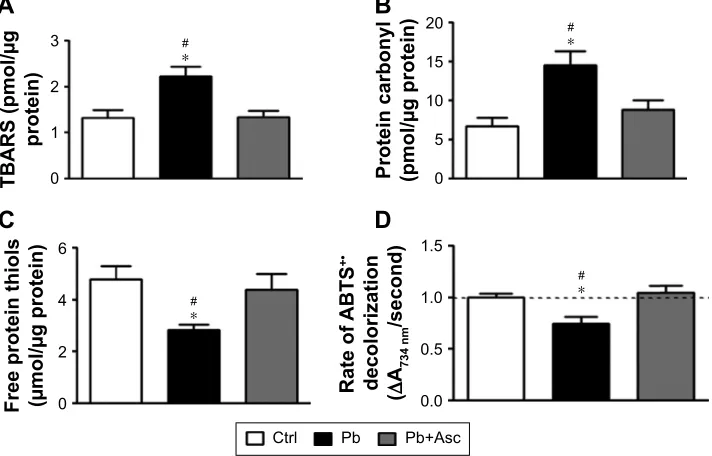
Increase in oxidative stress in SM of rats of Pb group was accompanied by elevated levels of lipid and protein oxidation markers, as measured by the presence of TBARS, and protein carbonyls and oxidized protein thiols, respec-tively. Moreover, ascorbic acid treatment prevented the increase in lipid and protein oxidation in Pb-exposed rats (Figure 3A–C).
Antioxidant capacity of SM fractions of rat cortices was measured by ABTS radical scavenging assay. Ability to scavenge ABTS+• was significantly reduced in SM fraction
of rats from Pb group when compared to Ctrl rats. Antioxi-dant power of SM from prepubertal rats developmentally exposed to Pb was recovered in rats from Pb+Asc group, highlighting the rescue effects of ascorbate supplementation (Figure 3D).
The data suggest that increase in oxidative stress in SM fraction from prepubertal rats developmentally exposed to Pb is due to both increase in generation of ROS and RNS levels as well as reduction in the capacity to scavenge free radicals. Moreover, high levels of free radicals in SM of Pb-exposed rats resulted in increased protein and lipid damage. Interestingly, elevated levels of RNS/ROS, reduced radical scavenging and increased protein and lipid oxidation are prevented by supplementation with ascorbic acid.
Pb induced alterations in MMP of sM
and its repolarization are rescued by
ascorbate
Transmembrane potential of mitochondria (inside nega-tive), also called as MMP (∆Ψm), is established by the proton pump of the mitochondrial respiratory chain and is a measure of functional state of mitochondria. ∆Ψm
is a critical regulator of several mitochondrial functions including bioenergetics (ATP production), mitochondrial dynamics (fusion and fission), redox homeostasis and apoptotic signaling.58 Using the cationic lipophilic probes,
safranin O, we found that ∆Ψm of SM isolated from Pb-exposed prepubertal rats was slightly but significantly reduced when compared to SM of aged matched controls (Figure 4A). Repolarization of energized SM (in presence of substrates glutamate and malate) was also assayed and found to be significantly reduced in SM isolated from rats developmentally exposed to Pb in comparison to Ctrl rats (Figure 4B), indicating compromises in mitochondrial bioenergetic enzyme functions. Deficits in both basal ∆Ψm
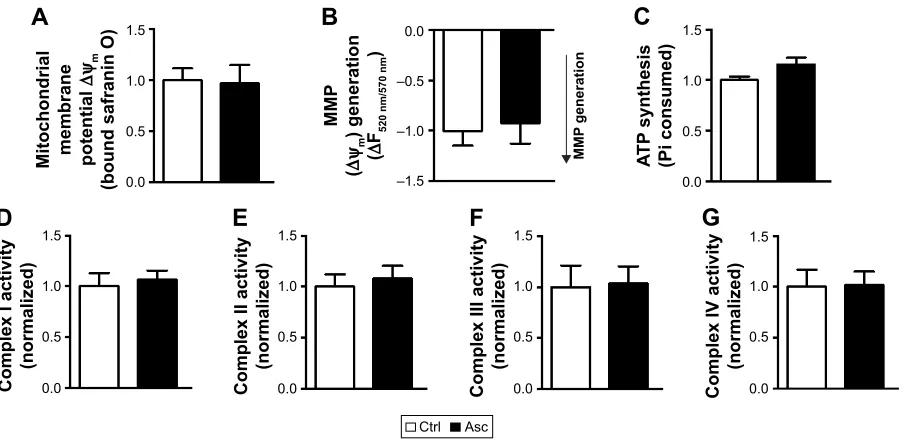
and repolarization of energized SM of Pb-exposed rats were recovered by supplementation with ascorbic acid (Figure 4A and B). However, ascorbic acid alone did not alter the basal or energized ∆Ψm (Figure S1A and B).
&RPSOH[,,6'+
DFWLYLW\QRUPDOL]HG
+RPRJHQDWH 316 306
60 &03
60PDOR
Figure 1 Isolation of purified synapse-specific mitochondrial fraction from rat brain cortices.
Notes: enrichment in activity of mitochondrial marker sDh was observed for sM fraction isolated by discontinuous Ficoll medium-based gradient ultracentrifugation method. sDh activity levels in sM fraction were increased by 7.2±0.4 (mean ± seM) times compared to homogenate. Negative control comprising sM fraction preincubated with malonate was used to confirm validity of the assay. Data are represented as mean ± seM (n=4 samples from 4 rats).
Abbreviations: SDH, succinate dehydrogenase; SM, synapse-specific mitochondria; malo, malonate; PNs, post-nuclear supernatant; PMs, post-mitochondrial supernatant; cMP, crude mitochondrial pellet.
Neuropsychiatric Disease and Treatment downloaded from https://www.dovepress.com/ by 118.70.13.36 on 25-Aug-2020
Dovepress Pb-induced synaptic mitochondrial injury is rescued by ascorbate
ascorbic acid supplementation rescues
compromised activities of electron
transport chain oxidoreductases and aTP
synthesis ability of cortical sM from rats
developmentally exposed to Pb
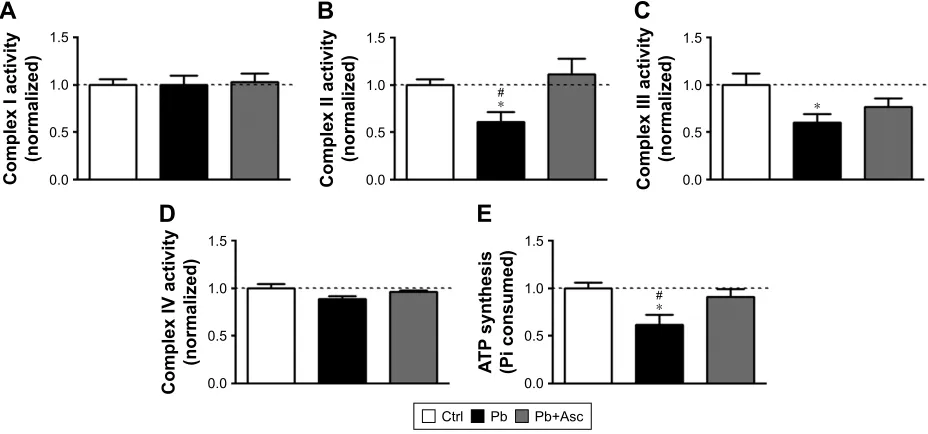
To observe any dysregulation in the bioenergetic proper-ties of SM of Pb-exposed prepubertal rats, we analyzed the activities of enzyme complexes I, II, III and IV of the electron transport chain. While activity levels of complex
I and complex IV in SM fraction of Pb-exposed rats were similar to those from aged matched controls (Figure 5A and D), activities of complexes II and III were found to be significantly reduced in SM of Pb-exposed rats (Figure 5B and C). Moreover, while ascorbic acid supple-mentation rescued the Pb-mediated loss of complex II activity (Figure 5B), it was unable to change complex III activity levels (Figure 5C).
We also observed a decrease in ATP synthesis in pres-ence of substrates malate and glutamate in SM fractions
526OHYHOV
'&)IOXRUHVFHQFH
$
12
[
SPROJSURWHLQ
%
&WUO 3E 3E$VF
Figure 2 sM of rats developmentally exposed to Pb have increased levels of rOs and rNs and the increase is ameliorated by ascorbate.
Notes: (A) DCFH-DA-based fluorometric analysis of ROS species show elevated ROS levels in SM of Pb-exposed rats. The increase is attenuated by ascorbic supplementation. (B) increase in levels of rNs was observed in sM from brain cortices of rats chronically exposed to Pb. This Pb-induced increase in rNs levels was not observed in rats supplemented with ascorbic acid. Data are represented as mean ± seM (n=5 pups from 3 litters) and * and # represent statistical significance (p,0.05) when compared to ctrl and Pb+asc groups, respectively (aNOVa with Newman-Keuls correction).
Abbreviations: SM, synapse-specific mitochondria; Pb, lead; ROS, reactive oxygen species; RNS, reactive nitrogen species; DCFH-DA, 2′,7′-dichlorofluorescein diacetate; ctrl, control; asc, ascorbic acid; seM, standard error of the mean; NOx, total nitrites and nitrates.
A
B
D
C
3
2
TBARS (pmol/µ
g
protein) 1 0
# *
6
4
2
Free protein thiols (µmol/µg protein) 0
# *
20
15
10
Protein carbony
l
(pmol/µg protein)
5
0
# *
1.5
1.0
0.5
Rate of
ABT
S
+•
decolorization (∆A
734 nm
/second)
0.0
# *
Ctrl Pb Pb+Asc
Figure 3 sM from cerebral cortices of rat pups exposed to Pb show increased oxidative damage to lipids and proteins and have reduced antioxidant capacity and their redox status is rescued by ascorbic acid supplementation.
Notes: increased oxidative damage to lipids and proteins was observed in sM fractions of Pb-exposed rats as evidenced from elevated TBars (A), increased protein carbonylation (B) and increased protein thiol oxidation (C). Moreover, ascorbic acid supplementation could rescue the oxidative damage in sM fraction induced by Pb exposure. (D) Antioxidant capacity of SM fraction, as measured by ABTS radical decolorization assay, was found to be significantly lowered upon chronic Pb exposure but was recovered to control levels upon ascorbate supplementation. Data are represented as mean ± seM (n=5 pups from 3 litters) and * and # represent statistical significance (p,0.05) when compared to ctrl and Pb+asc groups, respectively (aNOVa with Newman-Keuls correction).
Abbreviations: SM, synapse-specific mitochondria; Pb, lead; TBARS, thiobarbituric acid reactive substances; ABTS, 2,2′-azino-bis(3-ethylbenzothiazoline-6-sulfonic acid); ctrl, control; asc, ascorbic acid; seM, standard error of the mean.
Neuropsychiatric Disease and Treatment downloaded from https://www.dovepress.com/ by 118.70.13.36 on 25-Aug-2020
Dovepress
ahmad et al
isolated from Pb-exposed rats; however, complete recovery was observed in rats supplemented with ascorbic acid (Figure 5E). On the other hand, ascorbic acid alone did not have any effects on the bioenergetic properties of SM (Figure S1C–G).
The data suggest that reduction in bioenergetic activity of SM from prepubertal rats developmentally exposed to Pb is rescued with ascorbate supplementation.
Discussion
In the brain, Pb neurotoxicity is prominent in prefrontal cortex, hippocampus and cerebellum,10 where it results
in morphological, structural and pathological changes in neuronal cells and their synaptic connections.8,59,60
Mecha-nisms of lead neurotoxicity are complex. Many of the toxic mechanisms associated with Pb neurotoxicity are because of its ability to substitute for divalent Ca2+ and Zn2+ cations,6
which critically regulate important cellular processes including cell signaling and gene expression. Among the primary targets of Pb neurotoxicity are synaptic signaling and its maintenance and plasticity.5,9,14 In fact, both
elec-trophysiological and biochemical data point to a reduced efficiency of both pre-synaptic and post-synaptic machinery upon Pb exposure.8,14 While alterations in neurotransmitter
&WUO 3E 3E$VF
$
0LWRFKRQGULDO PHPEUDQH SRWHQWLDO
∆ψ
P
ERXQGVDIUDQLQ2
%
±
±
±
003
∆ψ
P
JHQHUDWLRQ ∆)QPQP
003
JHQHUDWLRQ
Figure 4 sM from cerebral cortices of rat pups exposed to Pb show alterations in basal mitochondrial membrane potential as well as energization-induced generation of mitochondrial membrane potential and ascorbic acid abolishes these alterations.
Notes: MMP at both basal states (A) and in presence of substrates (B) was reduced in sM fraction isolated from Pb-exposed rats. Pb-induced alterations in MMP and substrates-induced MMP generation were rescued upon ascorbate supplementation. Data are represented as mean ± seM (n=5 pups from 3 litters) and * and # represent statistical significance (p,0.05) when compared to ctrl and Pb+asc groups, respectively (aNOVa with Newman-Keuls correction).
Abbreviations: SM, synapse-specific mitochondria; Pb, lead; MMP, mitochondrial membrane potential; Ctrl, control; Asc, ascorbic acid.
$7
3V\QWKHVLV
3LFRQVXPHG
&RPSOH[,9DFWLYLW\
QRUPDOL]HG
&RPSOH[,DFWLYLW\ QRUPDOL]HG
&RPSOH[,,DFWLYLW\ QRUPDOL]HG
&RPSOH[,,,DFWLYLW\
QRUPDOL]HG
$
%
&
'
(
&WUO 3E 3E$VF
Figure 5 Pb induced alternations in the bioenergetic properties of cortical sM are mitigated by ascorbate supplementation.
Notes: While activities of complex i (A) and iV (D) of the eTc were unaltered in sM of Pb-exposed rats when compared to aged matched controls, activities of complex ii (B) and iii (C) were found to be significantly reduced in SM fraction isolated from Pb-exposed rats. However, ascorbate supplementation rescued the loss in activity of complex ii alone without affecting loss in activity of complex iii. (E) Significant decrease in the rate of ATP synthesis was observed for SM of Pb-exposed rats when compared to aged matched controls and the reduction was ameliorated by ascorbic acid supplementation. Data are represented as mean ± seM (n=5 pups from 3 litters) and * and # represent statistical significance (p,0.05) when compared to ctrl and Pb+asc groups, respectively (aNOVa with Newman-Keuls correction).
Abbreviations: SM, synapse-specific mitochondria; Pb, lead; ETC, electron transport chain; Ctrl, control; Asc, ascorbic acid.
Neuropsychiatric Disease and Treatment downloaded from https://www.dovepress.com/ by 118.70.13.36 on 25-Aug-2020
Dovepress Pb-induced synaptic mitochondrial injury is rescued by ascorbate
(glutamate) release and N-methyl-D-aspartate receptor physi-ology are the best studied mechanisms of Pb-induced synaptic dysfunction,5,9 an interplay of several factors is thought to
influence disruption of synaptic functions in Pb neurotoxicity. These include deleterious effects of Pb on redox and calcium homeostasis; cell signaling and death pathways; and mem-brane receptor trafficking and gene expression.15,16
Developing brain is particularly vulnerable to Pb neuro-toxicity because of its immature blood–brain barrier.16 In fact,
chronic early-life exposure to Pb is known to have permanent detrimental effects on development, maintenance and function of the synapses,16 leading to irreparable neurodevelopmental
deficits in sensory-motor and cognitive skills.3,4,61 This is
because neuronal signaling (both spontaneous and evoked) at the synapse in the developing brain critically affects synapse pruning and proper brain development and function,26,29 and any
alterations in synapse functions early in the brain development would lead to permanent cognitive and behavioral effects.
Synapse-specific mitochondria (SM) form a specialized class of mitochondria different from free neuronal mito-chondria because of their ability of acting as calcium buffers to prevent excitotoxicity and as energy providers for the compelling process of synaptic signaling.21–23,25 Indeed, SM
are smaller in size compared to free non-SM and have an altered enzyme profile as well as a modified proteome and lipidome, and metabolome.21,24 Additionally, SM population
has elevated vulnerability to pathological stresses and calcium overload and swelling.21–23 Alterations in proper functioning of
cortical SM in prepubertal rats upon Pb exposure as observed in our study could potentially lead to critical disruptions in synaptic signaling, which in turn would affect higher order brain functions. Although, Pb-induced mitochondrial dys-function has been observed earlier, most of the studies have been limited to in vitro cell culture systems62–65 or in vitro
mitochondrial preparations.66,67 Many in vivo studies using
rodent models have observed mitochondrial dysfunction in adult or aged rats.12,68 Few studies have reported the effects of
early-life Pb exposure on brain mitochondria in prepubertal rats. For example, ultrastructural morphological changes in hippocampal44 and retinal69 mitochondria have been observed
upon exposure of neonatal rats to Pb. Evidence for altered mitochondrial bioenergetic functions in primary cerebellar granular neurons of rats exposed to Pb70 and hippocampal
and cerebellar neurons71 has also been provided. Other studies
indicate that perinatal Pb exposure increases ROS levels in a calcium-dependent manner72 and reduces antioxidant system
of brain mitochondria.42,73 However, none of these studies
have specifically looked at the effects of Pb exposure on
synapse-specific mitochondria of brain cerebral cortex, which is an important regulator of synapse function and plasticity. In this study, we sought to assess the deleterious effects of early-life (prenatal and postnatal) exposure to Pb on synapse-local-ized mitochondrial population in the developing rat brain.
Our results suggest that early-life exposure to Pb leads to disruptions in redox homeostasis of SM quite early during development and consequent compromises in its membrane potential and energy metabolism activity. Given the critical importance of SM in the synapse physiology, this potentially constitutes as a major pathogenic event in synaptic dysfunc-tion leading to detrimental behavioral outcomes observed in events of Pb exposure. Because ascorbic acid (vitamin C) is capable of both reducing oxidative stress and chelating metal ions, it can potentially serve as a detoxifying agent for Pb toxicity. Use of ascorbic acid in amelioration of Pb poisoning has been elucidated previously.12,37–39 We used a
dose of 500 mg ascorbic acid per kg body weight because it reduces the number of degenerating neurons upon Pb exposure to levels comparable to control untreated rats.37 In
comparison, a dose of 100 mg/kg body weight could only slightly reduce the number of degenerating neurons, which still remained significantly higher than control rats.38,39 While
supplementation of ascorbic acid alone did not affect bioen-ergetic properties of SM, we observed appreciable recovery of Pb-induced oxidative stress and functional compromise of SM by ascorbic acid supplementation. Our results suggest that rescue of Pb-mediated disruptions in SM functions by ascorbate could potentially be used as a therapeutic strategy against early-life Pb exposure.
Acknowledgments
The study was partly funded by Deanship of Scientific Research, Imam Abdulrahman Bin Faisal University, Saudi Arabia (Project No. 2016-087-IRMC). The authors thank Dr Khaldoon Alsamman, Dr Hatem K Herzallah and Dr Sultan T Al-Otaibi for assistance in experiments and in the analysis and review of the results.
Disclosure
The authors report no conflicts of interest in this work.
References
1. Meyer PA, Brown MJ, Falk H. Global approach to reducing lead exposure and poisoning. Mutat Res. 2008;659(1–2):166–175.
2. Assi MA, Hezmee MN, Haron AW, Sabri MY, Rajion MA. The detri-mental effects of lead on human and animal health. Vet World. 2016;9(6): 660–671.
3. Chiodo LM, Jacobson SW, Jacobson JL. Neurodevelopmental effects of postnatal lead exposure at very low levels. Neurotoxicol Teratol. 2004;26(3):359–371.
Neuropsychiatric Disease and Treatment downloaded from https://www.dovepress.com/ by 118.70.13.36 on 25-Aug-2020
Dovepress
ahmad et al
4. Allen KA. Is prenatal lead exposure a concern in infancy? What is the evidence? Adv Neonatal Care. 2015;15(6):416–420.
5. Neal AP, Guilarte TR. Molecular neurobiology of lead (Pb2+): effects on synaptic function. Mol Neurobiol. 2010;42(3):151–160.
6. Garza A, Vega R, Soto E. Cellular mechanisms of lead neurotoxicity.
Med Sci Monit. 2006;12(3):RA57–RA65.
7. Bellinger DC, Bellinger AM. Childhood lead poisoning: the torturous path from science to policy. J Clin Invest. 2006;116(4):853–857. 8. White LD, Cory-Slechta DA, Gilbert ME, et al. New and evolving
concepts in the neurotoxicology of lead. Toxicol Appl Pharmacol. 2007; 225(1):1–27.
9. Toscano CD, Guilarte TR. Lead neurotoxicity: from exposure to molecular effects. Brain Res Brain Res Rev. 2005;49(3):529–554. 10. Sharma P, Chambial S, Shukla KK. Lead and neurotoxicity. Indian J
Clin Biochem. 2015;30(1):1–2.
11. Marchetti C. Molecular targets of lead in brain neurotoxicity. Neurotox
Res. 2003;5(3):221–236.
12. Flora G, Gupta D, Tiwari A. Toxicity of lead: a review with recent updates. Interdiscip Toxicol. 2012;5(2):47–58.
13. Sweatt JD. Neural plasticity and behavior – sixty years of conceptual advances. J Neurochem. 2016;139(Suppl 2):179–199.
14. Sadiq S, Ghazala Z, Chowdhury A, Büsselberg D. Metal toxicity at the synapse: presynaptic, postsynaptic, and long-term effects. J Toxicol. 2012;2012:132671.
15. Verstraeten SV, Aimo L, Oteiza PI. Aluminium and lead: molecular mechanisms of brain toxicity. Arch Toxicol. 2008;82(11):789–802. 16. Neal AP, Guilarte TR. Mechanisms of lead and manganese neurotoxicity.
Toxicol Res (Camb). 2013;2(2):99–114.
17. Hagberg H, Mallard C, Rousset CI, Thornton C. Mitochondria: hub of injury responses in the developing brain. Lancet Neurol. 2014;13(2): 217–232.
18. Winneke G. Developmental aspects of environmental neurotoxicology: lessons from lead and polychlorinated biphenyls. J Neurol Sci. 2011; 308(1–2):9–15.
19. Grandjean P, Herz KT. Trace elements as paradigms of developmental neurotoxicants: lead, methylmercury and arsenic. J Trace Elem Med
Biol. 2015;31:130–134.
20. Hsiang J, Díaz E. Lead and developmental neurotoxicity of the central nervous system. Curr Neurobiol. 2011;2(1):35–42.
21. Fedorovich SV, Waseem TV, Puchkova LV. Biogenetic and mor-phofunctional heterogeneity of mitochondria: the case of synaptic mitochondria. Rev Neurosci. 2017;28(4):363–373.
22. Vos M, Lauwers E, Verstreken P. Synaptic mitochondria in synaptic transmission and organization of vesicle pools in health and disease.
Front Synaptic Neurosci. 2010;2:139.
23. Du H, Guo L, Yan S, Sosunov AA, McKhann GM, Yan SS. Early defi-cits in synaptic mitochondria in an Alzheimer’s disease mouse model.
Proc Natl Acad Sci U S A. 2010;107(43):18670–18675.
24. Dubinsky JM. Heterogeneity of nervous system mitochondria: location, location, location! Exp Neurol. 2009;218(2):293–307.
25. Ly CV, Verstreken P. Mitochondria at the synapse. Neuroscientist. 2006;12(4):291–299.
26. Raefsky SM, Mattson MP. Adaptive responses of neuronal mitochon-dria to bioenergetic challenges: roles in neuroplasticity and disease resistance. Free Radic Biol Med. 2017;102:203–216.
27. Jeanneteau F, Arango-Lievano M. Linking mitochondria to synapses: new insights for stress-related neuropsychiatric disorders. Neural Plast. 2016;2016:3985063.
28. Cavallucci V, Ferraina C, D’Amelio M. Key role of mitochondria in Alzheimer’s disease synaptic dysfunction. Curr Pharm Des. 2013;19(36): 6440–6450.
29. Li Z, Okamoto K, Hayashi Y, Sheng M. The importance of dendritic mitochondria in the morphogenesis and plasticity of spines and syn-apses. Cell. 2004;119(6):873–887.
30. Ahmad A, Shah SA, Badshah H, et al. Neuroprotection by vitamin C against ethanol-induced neuroinflammation associated neurodegenera-tion in the developing rat brain. CNS Neurol Disord Drug Targets. 2016; 15(3):360–370.
31. Kim HJ, Song W, Jin EH, et al. Combined low-intensity exercise and ascorbic acid attenuates kainic acid-induced seizure and oxidative stress in mice. Neurochem Res. 2016;41(5):1035–1041.
32. de Freitas P, Zanoni JN, Alves AM, de Miranda Neto MH. Neuropro-tection and neurodegeneration in submucosal VIP-IR neurons in the jejunum of ascorbic acid supplemented aging Wistar rats. Nutr Neurosci. 2012;15(6):283–288.
33. Rice ME. Ascorbate regulation and its neuroprotective role in the brain.
Trends Neurosci. 2000;23(5):209–216.
34. Moretti M, Fraga DB, Rodrigues ALS. Ascorbic acid to manage psy-chiatric disorders. CNS Drugs. 2017;31(7):571–583.
35. Patrick L. Toxic metals and antioxidants: part II. The role of anti-oxidants in arsenic and cadmium toxicity. Altern Med Rev. 2003;8(2): 106–128.
36. Hsu PC, Guo YL. Antioxidant nutrients and lead toxicity. Toxicology. 2002;180(1):33–44.
37. Sadeghi A, Ebrahimzadeh Bideskan A, Alipour F, Fazel A, Haghir H. The effect of ascorbic acid and garlic administration on lead-induced neural damage in rat offspring’s hippocampus. Iran J Basic Med Sci. 2013;16(2):157–164.
38. Chang BJ, Jang BJ, Son TG, et al. Ascorbic acid ameliorates oxidative damage induced by maternal low-level lead exposure in the hippocam-pus of rat pups during gestation and lactation. Food Chem Toxicol. 2012;50(2):104–108.
39. Han JM, Chang BJ, Li TZ, et al. Protective effects of ascorbic acid against lead-induced apoptotic neurodegeneration in the developing rat hippocampus in vivo. Brain Res. 2007;1185:68–74.
40. Acharya UR, Rathore RM, Mishra M. Role of vitamin C on lead acetate induced spermatogenesis in swiss mice. Environ Toxicol Pharmacol. 2003;13(1):9–14.
41. Patra RC, Swarup D, Dwivedi SK. Antioxidant effects of alpha tocoph-erol, ascorbic acid and L-methionine on lead induced oxidative stress to the liver, kidney and brain in rats. Toxicology. 2001;162(2):81–88. 42. Gottipolu RR, Davuljigari CB. Perinatal exposure to lead: reduction
in alterations of brain mitochondrial antioxidant system with calcium supplement. Biol Trace Elem Res. 2014;162(1–3):270–277.
43. Harry GJ, Schmitt TJ, Gong Z, Brown H, Zawia N, Evans HL. Lead-induced alterations of glial fibrillary acidic protein (GFAP) in the developing rat brain. Toxicol Appl Pharmacol. 1996;139(1):84–93. 44. Baranowska-Bosiacka I, Strużyńska L, Gutowska I, et al. Perinatal
exposure to lead induces morphological, ultrastructural and molecular alterations in the hippocampus. Toxicology. 2013;303:187–200. 45. Lai JC, Walsh JM, Dennis SC, Clark JB. Synaptic and non-synaptic
mito-chondria from rat brain: isolation and characterization. J Neurochem. 1977;28(3):625–631.
46. Dua R, Gill KD. Effect of aluminium phosphide exposure on kinetic properties of cytochrome oxidase and mitochondrial energy metabolism in rat brain. Biochim Biophys Acta. 2004;1674(1):4–11.
47. Valenti D, Vacca RA, de Pinto MC, De Gara L, Marra E, Passarella S. In the early phase of programmed cell death in Tobacco Bright Yellow 2 cells the mitochondrial adenine nucleotide translocator, adenylate kinase and nucleoside diphosphate kinase are impaired in a reactive oxygen species-dependent manner. Biochim Biophys Acta. 2007; 1767(1):66–78.
48. Dutta M, Ghosh AK, Rangari V, et al. Silymarin protects against copper-ascorbate induced injury to goat cardiac mitochondria in vitro: involvement of antioxidant mechanisms(s). Int J Pharm Pharm Sci. 2014;6(8):422–429.
49. El-Masry TA, Emara AM, El-Shitany NA. Possible protective effect of propolis against lead-induced neurotoxicity in animal model. J Evol
Biol Res. 2011;3(1):4–11.
50. Buege JA, Aust SD. Microsomal lipid peroxidation. Methods Enzymol. 1978;52:302–310.
51. Katalinic V, Modun D, Music I, Boban M. Gender differences in antioxidant capacity of rat tissues determined by 2,2′-azinobis (3-ethylbenzothiazoline 6-sulfonate; ABTS) and ferric reducing antioxidant power (FRAP) assays. Comp Biochem Physiol C Toxicol Pharmacol. 2005;140(1): 47–52.
Neuropsychiatric Disease and Treatment downloaded from https://www.dovepress.com/ by 118.70.13.36 on 25-Aug-2020
Dovepress Pb-induced synaptic mitochondrial injury is rescued by ascorbate
52. Cherian E, Sudheesh NP, Janardhanan KK, Patani G. Free-radical scavenging and mitochondrial antioxidant activities of Reishi-Ganoderma lucidum (Curt: Fr) P. Karst and Arogyapacha-Trichopus zeylanicus Gaertn extracts. J Basic Clin Physiol Pharmacol. 2009;20(4): 289–307.
53. Valenti D, de Bari L, De Filippis B, Ricceri L, Vacca RA. Preservation of mitochondrial functional integrity in mitochondria isolated from small cryopreserved mouse brain areas. Anal Biochem. 2014;444:25–31. 54. Emaus RK, Grunwald R, Lemasters JJ. Rhodamine 123 as a probe of
transmembrane potential in isolated rat-liver mitochondria: spectral and metabolic properties. Biochim Biophys Acta. 1986;850(3):436–448. 55. Powell CS, Jackson RM. Mitochondrial complex I, aconitase, and
succinate dehydrogenase during hypoxia-reoxygenation: modulation of enzyme activities by MnSOD. Am J Physiol Lung Cell Mol Physiol. 2003;285(1):L189–L198.
56. Spinazzi M, Casarin A, Pertegato V, Salviati L, Angelini C. Assessment of mitochondrial respiratory chain enzymatic activities on tissues and cultured cells. Nat Protoc. 2012;7(6):1235–1246.
57. Katewa SD, Katyare SS. A simplified method for inorganic phosphate determination and its application for phosphate analysis in enzyme assays. Anal Biochem. 2003;323(2):180–187.
58. Iannetti EF, Willems PH, Pellegrini M, et al. Towards high-content screening of mitochondrial morphology and membrane potential in living cells. Int J Biochem Cell Biol. 2015;63:66–70.
59. Gąssowska M, Baranowska-Bosiacka I, Moczydłowska J, et al. Perinatal exposure to lead (Pb) induces ultrastructural and molecular alterations in synapses of rat offspring. Toxicology. 2016;373:13–29.
60. Wilson MA, Johnston MV, Goldstein GW, Blue ME. Neonatal lead exposure impairs development of rodent barrel field cortex. Proc Natl
Acad Sci U S A. 2000;97(10):5540–5545.
61. Hu H, Téllez-Rojo MM, Bellinger D, et al. Fetal lead exposure at each stage of pregnancy as a predictor of infant mental development. Environ
Health Perspect. 2006;114(11):1730–1735.
62. Dabrowska A, Venero JL, Iwasawa R, et al. PGC-1α controls mito-chondrial biogenesis and dynamics in lead-induced neurotoxicity. Aging
(Albany NY). 2015;7(9):629–647.
63. Geier DA, King PG, Geier MR. Mitochondrial dysfunction, impaired oxidative-reduction activity, degeneration, and death in human neuronal and fetal cells induced by low-level exposure to thimerosal and other metal compounds. Toxicol Environ Chem. 2009;91(3–4):735–749.
64. Ye F, Li X, Li F, et al. Cyclosporin A protects against Lead neurotoxicity through inhibiting mitochondrial permeability transition pore opening in nerve cells. Neurotoxicology. 2016;57:203–213.
65. Liu G, Wang ZK, Wang ZY, Yang DB, Liu ZP, Wang L. Mitochondrial permeability transition and its regulatory components are implicated in apoptosis of primary cultures of rat proximal tubular cells exposed to lead. Arch Toxicol. 2016;90(5):1193–1209.
66. Devi CB, Jyotsna V, Kumari KK, Indravathi G, Thakur A. In vitro effect of lead on cholinergic and bioenergetic systems in synaptosomal and mitochondrial fractions of rat brain regions. Int J Adv Life Sci. 2014;7(1):1–10.
67. Holtzman D, Shen Hsu J, Mortell P. In vitro effects of inorganic lead on isolated rat brain mitochondrial respiration. Neurochem Res. 1978;3(2):195–206.
68. Flora SJ, Saxena G, Mehta A. Reversal of lead-induced neuronal apop-tosis by chelation treatment in rats: role of reactive oxygen species and intracellular Ca(2+). J Pharmacol Exp Ther. 2007;322(1):108–116. 69. Perkins GA, Scott R, Perez A, Ellisman MH, Johnson JE, Fox DA.
Bcl-xL-mediated remodeling of rod and cone synaptic mitochondria after postnatal lead exposure: electron microscopy, tomography and oxygen consumption. Mol Vis. 2012;18:3029–3048.
70. Baranowska-Bosiacka I, Gutowska I, Marchetti C, et al. Altered energy status of primary cerebellar granule neuronal cultures from rats exposed to lead in the pre- and neonatal period. Toxicology. 2011; 280(1–2):24–32.
71. Lalith Kumar V, Muralidhara. Ameliorative effects of ferulic Acid against lead acetate-induced oxidative stress, mitochondrial dys-functions and toxicity in prepubertal rat brain. Neurochem Res. 2014;39(12):2501–2515.
72. Yang X, Wang B, Zeng H, et al. Role of the mitochondrial Ca(2+) uniporter in Pb(2+)-induced oxidative stress in human neuroblastoma cells. Brain Res. 2014;1575:12–21.
73. Sannadi S, Kadeyala PK, Gottipolu RR. Reversal effect of monoisoamyl dimercaptosuccinic acid (MiADMSA) for arsenic and lead induced perturbations in apoptosis and antioxidant enzymes in developing rat brain. Int J Dev Neurosci. 2013;31(7):586–597.
Neuropsychiatric Disease and Treatment downloaded from https://www.dovepress.com/ by 118.70.13.36 on 25-Aug-2020
Neuropsychiatric Disease and Treatment
Publish your work in this journal
Submit your manuscript here: http://www.dovepress.com/neuropsychiatric-disease-and-treatment-journal
Neuropsychiatric Disease and Treatment is an international, peer-reviewed journal of clinical therapeutics and pharmacology focusing on concise rapid reporting of clinical or pre-clinical studies on a range of neuropsychiatric and neurological disorders. This journal is indexed on PubMed Central, the ‘PsycINFO’ database and CAS,
and is the official journal of The International Neuropsychiatric Association (INA). The manuscript management system is completely online and includes a very quick and fair peer-review system, which is all easy to use. Visit http://www.dovepress.com/testimonials.php to read real quotes from published authors.
Dovepress
Dove
press
ahmad et al
Figure S1 supplementation of ascorbic acid alone does not affect the bioenergetics of cortical sM.
Notes: MMP at both basal states (A) and in presence of substrates (B) was not altered in sM fraction isolated from rat pups supplemented with ascorbic acid when compared to aged matched controls. ascorbic acid supplementation did not affect other mitochondrial functions, including aTP synthesis (C) and activities of complexes i–iV (D–G). Data are represented as mean ± seM (n=5 pups from 2 litters). Difference between the groups were assessed statistically using unpaired two-tailed student’s t-test. Abbreviations: SM, synapse-specific mitochondria; MMP, mitochondrial membrane potential; Ctrl, control; Asc, ascorbic acid; SEM, standard error of the mean.
0LWRFKRQGULDO PHPEUDQH SRWHQWLDO
∆ψ
P
ERXQGVDIUDQLQ2
$7
3V\QWKHVLV
3LFRQVXPHG
&RPSOH[,9DFWLYLW\
QRUPDOL]HG
&RPSOH[,,,DFWLYLW\
QRUPDOL]HG
&RPSOH[,,DFWLYLW\ QRUPDOL]HG
&RPSOH[,DFWLYLW\ QRUPDOL]HG
003
∆ψ
P
JHQHUDWLRQ
∆
)QPQP
±
±
±
003
JHQHUDWLRQ
$
%
&
*
)
(
'
&WUO $VF
Supplementary material
Neuropsychiatric Disease and Treatment downloaded from https://www.dovepress.com/ by 118.70.13.36 on 25-Aug-2020