Sensory Processing Sensitivity in the context of Environmental Sensitivity: a critical review and development of research agenda
Greven U. Greven1,2,3*#, Francesca Lionetti4*, Charlotte Booth5*, Elaine Aron6, Elaine Fox5, Haline E. Schendan7, Michael Pluess4, Hilgo Bruining8, Bianca Acevedo9*, Patricia Bijttebier10*, Judith
Homberg1*
*= joint first/last authors
# corresponding author
1Radboud University Medical Center, Donders Institute for Brain, Cognition and Behaviour,
Department of Cognitive Neuroscience, Nijmegen, The Netherlands
2Karakter Child and Adolescent Psychiatry University Center, Nijmegen, The Netherlands 3King's College London, Social, Genetic & Developmental Psychiatry Centre, Institute of
Psychiatry, Psychology & Neuroscience, London, UK
4Queen Mary University of London, Department of Biological and Experimental Psychology, London,
UK
5University of Oxford, School of Psychology, Department of Experimental Psychology, Oxford, UK 6Stony Brook University, Stony Brook, New York, USA
7Cognition Institute, University of Plymouth, Plymouth, UK
8University Medical Center Utrecht, Brain Center Rudolf Magnus, Department of Psychiatry, Utrecht,
The Netherlands
9University of California, Neuroscience Research Institute, Santa Barbara, USA 10 KU Leuven, School of Psychology and Development in Context, Leuven, Belgium
Correspondence to
Corina U. Greven│Radboud University Medical Center│Donders Institute for Brain, Cognition and Behaviour│Department of Cognitive Neuroscience│Kapi elweg 29│6525EN Nijmegen│The Netherlands│Tel: +31(0)243611757 | [email protected]
Abstract
Sensory Processing Sensitivity (SPS) is a trait describing inter-individual differences in sensitivity to environments, both positive and negative ones. SPS has attracted growing societal interest. However, (neuro)scientific evidence is lagging behind. We critically discuss how to measure SPS, how it relates to other theories of Environmental Sensitivity and other temperament and personality traits, how SPS interacts with environments to influence (a)typical development, what the underlying aetiologies and mechanisms are, and its relation to mental disorders involving sensory sensitivities. Drawing on the diverse expertise of the authors, we set an agenda for future research to stimulate the field. We conclude that SPS is a heritable, evolutionarily conserved trait, linked to increased risk for psychopathology and stress-related problems in response to negative environments, as well as to greater benefits (e.g. intervention responsivity, positive mood) in positive environments. We need advances in objective assessment of SPS, understanding mechanisms, differentiating it from (seemingly) related mental disorders, to exploit the potential of SPS to improve mental health, preserve human capital, and prevent adverse effects.
1. Introduction
To survive and thrive on planet earth it is essential for all organisms to draw on environmental resources, such as food, protection from predators and social support. Animals and humans are programmed to perceive, process, react and adapt to specific social and physical elements of the environment, both positive and negative ones. Of interest, there are substantial inter-individual differences in sensitivity and responsivity to the environment in animals and humans; some are much more sensitive and reactive compared to others (Belsky & Pluess, 2009; Ellis, Boyce, Belsky, Bakermans-Kranenburg, & van IJzendoorn, 2011). Across populations, a continuum from low to high sensitivity to the environment is observed. In recent years, Sensory Processing Sensitivity (SPS), which describes inter-individual differences in sensitivity to experiences people make, and which began as a barely known topic 20 years ago (Aron & Aron, 1997), has become a much discussed trait of
Environmental Sensitivity (Pluess, 2015). In this review, we discuss the knowns and unknowns in relation to the current conceptualisation of SPS, highlight the relevance and impact of the construct, and describe perspectives for future cross-disciplinary research.
1.1. Overview of SPS literature
about 15-20% of the population can be considered high on the SPS trait (Aron & Aron, 1997). The first measure to assess the SPS trait is the Highly Sensitive Person (HSP) Scale, a 27-item measure of positive and negative cognitive and emotional responses to various environmental stimuli including caffeine, art, loud noises, smells and fabrics.
SPS is related to other temperament and personality traits reflecting sensitivity to environments. For example, traits such as introversion (or low extraversion), neuroticism (or irritability/ negative emotionality), and openness to experience have been associated with increased reactivity to environmental influences (Asscher et al., 2016; Hentges, Davies, & Cicchetti, 2015; Pluess, Belsky, Way, & Taylor, 2010). Furthermore, the Behavioural Inhibition System (BIS) and a Behavioural Activation System (BAS) (Gray, 1982), which describe the extent of pausing activity for the processing of conflicting information (BIS) and the urge to approach and satisfy needs (BAS), have been related to heightened sensitivity to negative and positive environmental stimuli, respectively. Nonetheless, analyses show that SPS is a distinctive trait (Pluess et al., 2017).
Recent findings suggest that SPS is moderately heritable (Assary, Zavos, Krapohl, & Pluess, under review). Further, research has revealed associations between SPS and cognitive, sensory and emotional information processing in the brain (Acevedo et al., 2014; Acevedo, Aron, Pospos, & Jessen, 2018; Acevedo, Jagiellowicz, Aron, Aron, & Marhenke, 2017; Jagiellowicz, Aron, & Aron, 2016). This points towards a biological foundation for the SPS construct.
1.2. Shortcomings in the literature
Despite advances in SPS research, several shortcomings remain. SPS brings advantages in terms of capturing a global phenotype through questionnaire-based and behavioural/observational assessment, its weaker point is that biological research on the aetiology and mechanisms underlying SPS is still in its infancy. How the so-far identified neural processes interact and shape sensitivity to the environment is not well understood yet. What is more, the relationship of SPS to existing personality and temperament constructs reflecting sensitivity to environments needs to be further clarified conceptually and empirically. Lastly, sensory sensitivities are also observed in mental disorders, but the relevance of SPS to seemingly related disorders and well-being needs to be further studied. Finally, more work is needed on interventions to foster the potential of high SPS individuals and prevent negative consequences.
1.3. Importance of studying SPS
comes with risk for misinformation and potentially even harm to the public, and neglects the societal responsibility of science.
1.4. Aim of review
2. SPS and theories of Environmental Sensitivity
Individual differences in response to the environment have been seen across many species, with two different behavioural patterns consistently reported: one bold, proactive and more extraverted; and another more cautious, reactive and inhibited (Pennisi, 2016; Wolf, van Doorn, & Weissing, 2008). Similar individual differences have been described in humans in terms of extraversion and introversion, behavioural activation and behavioural inhibition, and low and high temperamental reactivity (Aron et al., 2012; Boyce & Ellis, 2005; Kagan, 1997). Though differing from one another, all these traits seem to capture, to some extent, inter-individual differences in response to the environment (Pluess, 2015), with a minority of the population reporting and showing greater sensitivity (Belsky & Pluess, 2009; Lionetti et al., 2018; Wolf et al., 2008). Since the late 1990s, several theoretical contributions, reviewed in this paragraph, have investigated such individual differences in sensitivity and they have been recently integrated within the broader Environmental Sensitivity meta-framework (Pluess, 2015).
Initially, sensitivity was primarily seen as a vulnerability. In line with the Diathesis-Stress
model, also known as Dual-Risk model, individuals characterised by individual risk factors (e.g., specific gene allele variant, or a higher emotional reactivity) have a predisposition to suffer the negative consequences of environmental adversities more than others (Ellis et al., 2011; Monroe & Simons, 1991; Pluess & Belsky, 2009). However, subsequent theories have proposed the idea that more sensitive individuals may experience stronger effects and responsivity to both negative and positive environmental conditions and stimuli. These theories include Differential Susceptibility (Belsky, 1997; Belsky & Pluess, 2009), Biological Sensitivity to Context (Boyce & Ellis, 2005), and Sensory Processing Sensitivity (Aron, 2002; Aron & Aron, 1997). The relation between the theories of Environmental Sensitivity is summarised in Figure 1.
perspective by positing that individual differences in sensitivity (low and high sensitivity) represent two alternative developmental strategies (low and high plasticity and adaptation) maintained by natural selection to increase diversity and fitness of the species (Belsky, Hsieh, & Crnic, 1998; Belsky & Pluess, 2009). More recently, the Vantage Sensitivity theory has been put forward, which concerns individual differences in response to positive stimuli, such as supportive psychological interventions without making claims about the potential response to adverse experiences (de Villiers, Lionetti, & Pluess, 2018; Pluess & Belsky, 2015). In essence, Differential Susceptibility integrates the Diathesis-Stress and Vantage Sensitivity frameworks, by suggesting responsivity to both positive and negative environments. Differential Susceptibility puts emphasis on phenotypic temperament characteristics, endophenotypic attributes and genetic variants that may act as plasticity factors that make people more malleable to environmental influences (Belsky et al., 1998; Belsky & Pluess, 2009).
In contrast, Biological Sensitivity to Context focuses specifically on physiological differences in reactivity (e.g. arterial pressure, cortisol production, immune reactivity) to environmental stimuli (Boyce & Ellis, 2005). It is defined as neurobiological susceptibility to cost-inflicting as well as benefit-conferring environments, and operationalised as an endophenotype reflecting heightened reactivity in one or more stress response systems (Boyce & Ellis, 2005). In other words, stress response systems increase susceptibility to negative environments, but also to resources and support (e.g. cooperative information, social opportunities) (Ellis et al., 2011; Pluess & Belsky, 2009). Biological Sensitivity to Context is based on the evolutionary notion of conditional adaptation, as high sensitivity is thought to develop in response to both extreme negative or positive environments (Del Giudice, Ellis, & Shirtcliff, 2011; Ellis & Boyce, 2011).
reactivity and empathy, greater awareness of environmental subtleties, and ease of overstimulation, thought to be driven by a more sensitive central nervous system (Aron et al., 2012; Homberg et al., 2016). Environments in the context of Sensory Processing Sensitivity are broadly defined and include any salient conditioned or unconditioned internal or external stimuli, including physical environments (e.g. food, caffeine intake), social environments (e.g. childhood experiences, other people’s moods, crowds), sensory environments (e.g. auditory, visual, tactile, olfactory), and internal events (e.g. thoughts, feelings, bodily sensations such as hunger, pain).
Each of these frameworks on Environmental Sensitivity provides a unique contribution to the study of individual differences in response to the environment. The frameworks agree that individuals differ in sensitivity to environments, and that only a minority of the population are highly sensitive, as if a minority is sensitive this holds an evolutionary advantage. Benefits of sensitivity are frequency-dependent in that sensitivity is advantageous when rare but disadvantageous when common (Aron & Aron, 1997; Belsky & Pluess, 2009; Jagiellowicz et al., 2012; Kagan, 2002; Suomi, 1997; Wolf et al., 2008). In essence, Differential Susceptibility proposes a mechanism (that is sensitivity to positive and negative environments), which is also underlying the Biological Sensitivity to Context and Sensory Processing Sensitivity frameworks. Unique to Sensory Processing Sensitivity is that it is the first framework to propose and develop a psychometric tool that captures sensitivity to environments directly as a phenotypic trait in adults and children (see section 3), with important theoretical and applied implications for the study of individual differences in response to the environment.
2.1. Future directions
underlying the Sensory Processing Sensitivity framework. We make suggestions as to how this can be achieved in section 7, and in Figure 1.
3. Assessment of SPS
3.1. SPS scales: The Highly Sensitive Person (HSP) and Highly Sensitive Child (HSC) scales
factorial structure of the scale indicated that the HSC scale has adequate internal consistency and good psychometric properties across independent samples (Pluess et al., 2017; Weyn et al., under review). Its criterion validity has been confirmed by showing that children scoring high on this scale are more sensitive and responsive to the positive influence of psychological interventions (Nocentini, Menesini, & Pluess, 2018; Pluess & Boniwell, 2015), as well as to both positive and negative parenting quality (Slagt et al., 2017).
There is also another 23-item parent-report questionnaire assessing SPS in children (Aron, 2002). This questionnaire includes items such as “My child is bothered by noisy places” or “My child seems very intuitive”, and has been used to examine its association with daily functioning in a Dutch-sample involving parents of children ages 3 to 16 (Boterberg & Warreyn, 2016). The items of this questionnaire partially overlap with the HSC questionnaire. However, this questionnaire scale has not yet been validated as to whether children scoring high on this measure are more sensitive to environmental influences and process information more deeply.
The HSP/HSC scales have been translated into several languages. Dutch (Weyn et al., under review), Italian (Nocentini, Menesini, Lionetti, & Pluess, 2017), German (Konrad & Herzberg, 2017; Tillmann, El Matany, & Duttweiler, 2018), Turkish (Şengül-İnal & Sümer, 2017), Japanese (Kibe, Suzuki, & Hirano, 2018) and Icelandic (Þórarinsdóttir, 2018) versions are available, and the HSC partial measurement invariance has been confirmed across age, gender, and country based on Dutch and UK versions (Weyn et al., under review). Both HSC and HSP scores tend to be normally distributed in the population (Booth et al., 2015; Pluess et al., 2017), although some authors have pointed out a slight trend towards a bimodal distribution (Aron et al., 2012; Lionetti et al., 2018).
3.2 SPS behaviour observation: The HSC Rating-System
The HSC Rating-System provides a behavioural observation assessment of SPS in pre-schoolers aged 3-5 years (Lionetti, Aron, Aron, Klein, & Pluess, 2017). The development of the measure was guided by a theory-driven approach inspired by the theoretical definition of SPS in children (Aron, 2002) and by the definition of the broader construct of Environmental Sensitivity (Pluess, 2015). The rating system, applied to a series of laboratory episodes derived from the Laboratory Temperament Assessment Battery procedure traditionally used for the coding of temperament (Goldsmith, Reilly, Lemery, Longley, & Prescott, 1999), and coded by external observers trained on this method, has been found to capture children’s sensitivity to the rearing environment, moderating the impact of both positive and negative parenting on positive and negative children’s outcomes (Lionetti, Aron, Aron, Klein, & Pluess, under review). The validation of the HSC Rating-System is currently limited to an American middle class population and to a single study. However, given that it provides a multi-modal, and a more objective behavioural measure, it promises to be a useful tool for future research on SPS in children. Proper administration and coding of behaviour observation is key as external observers may misinterpret a child’s signals and certainly may lack access to the child’s inner world.
3.3. Components of HSP and HSC scales, and HSC Rating-System
Initial factor analyses on the HSP scale suggested a unitary sensitivity factor captured by a variety of items (Aron & Aron, 1997). However, subsequent factor analyses exploring alternative solutions found convergence for different components (Smolewska, McCabe, & Woody, 2006). In recent years, they have been often adopted in SPS studies as a way for describing features characterising the SPS trait.
and AES have been found to relate differentially to affect variables. More specifically, EOE and LST were both found to be associated with a moderate effect size with self-reported negative emotionality, anxiety and depression, and LST, but not EOE, has been reported to correlate with self-rated sensory discomfort. Conversely, AES was reported to be associated with positive emotionality such as positive affect and self-esteem, but not with negative emotions, both in adulthood and childhood (Liss et al., 2005; Pluess et al., 2017; Smolewska et al., 2006; Weyn et al., under review). Importantly however, the LST, EOE and AES subscales were not designed, but emerged when analysing the scale, further their biological validity is unclear, and it is not clear what the components measure or mean when taken separately.
Recently, reconciling the apparently contradictory views of the existence of a unique, general, SPS factor or different components of sensitivity, psychometric data across childhood, adolescence and adulthood, provided evidence in support of a bifactor solution. This solution includes a general SPS factor and allows recognition of the multidimensionality of the HSC and HSP scales, as represented by the three sensitivity components of LST, EOE and AES (Lionetti et al., 2018; Pluess et al., 2017). These results are consistent with findings identifying the summary score of the HSP and HSC scales capturing an increased sensitivity to positive and negative stimuli (Slagt et al., 2017).
The 23-item parent-report HSP questionnaire for children (Aron, 2002; Boterberg & Warreyn, 2016) showed two factors: Overreaction to Stimuli, which comprised items associated with overstimulation, emotional intensity and sensory sensitivity (e.g. “My child is bothered by loud noises”) and Depth of Processing (e.g. “My child asks deep, thought-provoking questions”). Because this parent-report questionnaire includes additional (and partially distinct) items compared to the more extensively studied HSC scale for children (Nocentini et al., 2018; Pluess et al., 2017; Pluess & Boniwell, 2015; Slagt et al., 2017), this result may suggest that the inclusion of other items could allow one to capture specific SPS aspects not currently included in the HSC self-report questionnaire.
and negatively with assertiveness (which captures the degree to which the child makes requests or demands, offers suggestions, or draws attention to him/herself), and moderately and positively with constraint (which pertains to regulatory aspects as inhibitory/effortful control), and all temperament factors together explained only half of SPS variance. Overall, these results suggest that though SPS is associated with observed temperament to a moderate extent, it is not fully captured by other temperament factors (Dyson, Olino, Dunn, Goldsmith, & Klein, 2012).
3.4. Future directions
More objective assessment procedures for SPS would be a very valuable alternative or addition to questionnaire-report. For infants and children, this could take the form of observational measures similar to the HSC Rating-system developed for pre-schoolers. From middle childhood and in adulthood, a semi-structured interview on SPS, which remains to be developed, would be valuable. Such an interview would provide a richer and more nuanced assessment of sensitivity as it includes observer-rated observational data based on the trained interviewer’s judgments in interpreting responses (Trull et al., 1998). The assessment of SPS could also be made more objective by the addition of cognitive-, genetic- or bio-markers (see section 7).
the scale to capture the SPS construct fully, or whether the additional items on depth of information processing are needed.
Second, HSP/HSC scale items are mainly negatively phrased (with the exception with those on the AES component), and may therefore not adequately capture the experience of highly sensitive individuals without psychological problems. Indeed, many of the items on the HSC/HSC scales appear to describe negative consequences of greater depth of information processing (with the exception of the AES items). One of the authors of this manuscript (E. Aron) has developed a less negatively, and more neutrally worded version of the HSP scale, which is currently being validated (E. Aron, personal communication, July 8, 2018).
Lastly, regarding cultural differences, the analysis of the HSC scale invariance across cultures suggests that while the underlying structure of the scale is conceptualised similarly between Belgian and British people, and Belgian and British people attribute more or less the same meaning to the latent construct of the scale, the mean differences may not be comparable. That is, Belgians tend to score higher on some items (mainly to those belonging to the AES scale), a trend that has been reported also for Italian children (Nocentini et al., 2017). This suggests that some items may need to be adapted for cultural sensitivity, while retaining the pure assessment of SPS.
4. Evidence for SPS as a marker of Environmental Sensitivity
4.1. Association of SPS with negative and positive outcomes
autism spectrum disorders (ASD) and alexithymia (Liss et al., 2008). SPS has also been associated with lower levels of subjective happiness (Sobocko & Zelenski, 2015), and lower levels of life satisfaction (Booth et al., 2015). It is also related to factors associated with poor stress management including difficulties in emotion regulation (Brindle, Moulding, Bakker, & Nedeljkovic, 2015), a greater but more accurate perception of home chaos (Wachs, 2013), increased levels of stress (Bakker & Moulding, 2012; Benham, 2006), physical symptoms of ill health (Benham, 2006), and greater work displeasure and need for recovery (Andresen, Goldmann, & Volodina, 2017; Evers, Rasche, & Schabracq, 2008). Recently, SPS has also been proposed as a trait associated with frequent nightmares and vivid images in dreams (Carr & Nielsen, 2017), a hypothesis that has yet to be tested. Only part of these studies included interaction effects, but of those that did, most have supported the role of interaction with negative environments in predicting maladaptive outcomes, as reviewed in section 4.2.
Central to the conceptualisation of SPS as reflecting sensitivity to environmental factors, is that SPS is not only relevant to understanding maladaptation, but also optimal development or even flourishing in positive environments. As such, higher levels of SPS have been related to positive outcomes, including increased positive affect following positive mood induction (Lionetti et al., 2018), increased social competence in interaction with positive parenting styles (Slagt et al., 2017), reduced depression scores and bullying and victimisation following intervention (Pluess & Boniwell, 2015), as reviewed in section 4.2, and increased activation in the major reward centres of the brain in response to positive stimuli, such as smiling partner faces or generally positive emotional images (Acevedo et al., 2014)(section 7), as well as higher creativity (Bridges & Schendan, under review a and b). Further, the HSP scale correlates significantly (r = 0.27) with feelings of awe, which add to the pleasure and meaning in life, assessed using a standard 6-item Awe scale (N. E. Aron, Aron, & Tillmann, 2018; Shiota, Keltner, & Mossman, 2007).
me know;” “I stay calm with my child no matter what,” “One of my strengths is the creativity I bring to parenting”), whereas high SPS fathers scored significantly higher only on Attunement to Child (Aron, Aron, Nardone & Zhou, under review). Results remained after controlling for external stressors, negative affectivity, education, marital status, age, and children’s age. These findings suggest that for those high on SPS it is particularly important for their well-being to have ways to manage their perceived overstimulation of parenting, especially given that it could facilitate the expression of their self-reported benefit of the trait, their greater attunement to their children.
4.2. SPS as a marker of Differential Susceptibility
Three observational studies were more in line with SPS, assessed with the HSP scale, acting as a vulnerability factor, in line with Diathesis Stress rather than Differential Susceptibility. An early study on SPS and the quality of the environment found an interaction between parenting environment and SPS, such that high SPS adults reporting having had an unhappy childhood scored higher on negative emotionality and social introversion, whereas high SPS adults reporting a happy childhood differed little from the larger population of non-highly sensitive adults on these traits (Aron & Aron, 1997). Furthermore, in adults SPS was shown to moderate the effect of parental care on depression symptoms (Liss et al., 2005). Individuals scoring high on SPS reported the highest depression scores when parental care was low, while depression scores were unrelated to SPS when parental quality was high (Liss et al., 2005). A study on life satisfaction in adults showed that while individuals high in SPS reported lower life satisfaction when childhood experiences were particularly negative, no evidence was found for differential effects to positive experiences (Booth et al., 2015).
Differential Susceptibility. Furthermore, a six-month longitudinal study assessing SPS in kindergarten children, reported that SPS interacted with changes in positive and negative parenting in predicting externalizing behavioural problems (Slagt et al., 2017). Children scoring high on SPS were most responsive to changes in parenting behaviour in both directions, predicting increasing externalising problems when parenting became more negative, as well as predicting decreasing externalising problems when parenting improved, supporting Differential Susceptibility.
were driven primarily by children scoring high in SPS. Conversely, for children scoring low on SPS, no significant effect was reported.
Furthermore, the observational HSC Rating-system has been shown to moderate the impact of early negative parenting styles on behavioural problems, and of positive parenting styles on social competence at age three and six (Lionetti et al., under review), suggesting that is able to capture behavioural traits relating to sensitivity toward both positive and negative environmental stimuli. Overall, these findings provide evidence that SPS, as assessed by questionnaire or behavioural observation, is related to heightened responsivity to negative as well as positive environments.
4.3. Future directions
5. SPS and Temperament/Personality traits
Aron and Aron (1997) introduced SPS as a trait related to, but distinct from other temperament and personality constructs. Being developed based on extensive review of the animal literature, it has been suggested that SPS may relate to a general trait of sensitivity to the environment, or meta-personality trait of contextual sensitivity, which structures (animal) personality differences through determining the degree to which individual behaviour is guided by environmental influence (Aron et al., 2012). In light of this, we discuss here SPS within the context of temperament and personality constructs.
5.1. Eysenck’s personality theory
According to Eysenck (1967), individual differences in personality can be described in terms of two dimensions: introversion (vs extraversion) and neuroticism (vs emotional stability). Introversion relates to the optimal level of arousal at which an individual performs best: for those high in introversion, this level is way lower than for those high in extraversion. Neuroticism comprises proneness to distress and emotional instability. In a series of seven studies, Aron and Aron (1997) examined associations of SPS with introversion and neuroticism. They found low to moderate associations with introversion (Pearson’s r median correlation around .29) and fairly high associations with neuroticism (median .54). As to introversion, qualitative research by Aron and Aron (1997) shows that not all highly sensitive individuals display the profile of being socially introverted.
5.2. Gray’s Reinforcement Sensitivity Theory
reward or relief from punishment and underlie positive emotions. The FFS was thought to modulate responses to unconditioned aversive stimuli and to underlie fear and defensive aggression. In 2000, Gray and McNaughton (Gray & McNaugthon, 2000) published a revision of the RST. In this revised RST, the BAS still functions as a reward system, and modulates responses to all appetitive stimuli (unconditioned as well as conditioned). Similarly, the FFS was assumed to modulate responses to all aversive stimuli and renamed to Flight, Fight and Freezing System (FFFS). The BIS was now thought to be activated by stimuli that activate both the BAS and FFFS, and responsible for the inhibition of ongoing behaviour in the service of conflict detection and resolution. According to Aron and Aron (1997), SPS is especially related to BIS functioning, given the ‘pause-to-check’ function of this system. Consistent with this assumption, Smolewska et al. (2006) reported a positive association of BIS sensitivity with SPS as a global construct, as well as with its three components. In the same study, BAS sensitivity was found to be largely unrelated to SPS. If narrower facets of BAS are differentiated, i.e. positive affect vs approach motivation in response to incentive cues, only the former showed a small significant association with SPS as a global construct and with the components of EOE and EAS. More recently, Pluess et al. (2017) examined the association of SPS with BIS and BAS sensitivity in two samples of children. They found significant positive correlations of both BIS and BAS sensitivity with SPS as a global construct, as well as with EOE and EAS components. Only BIS sensitivity was also positively correlated with the LST component.
5.3. Rothbart’s temperament model
processes of executive attention and effortful control. Depending on the developmental stage, three to five broad temperament domains are distinguished. Positive affectivity/extraversion reflects one’s level of pleasurable engagement with the environment and the extent to which a person feels active, happy and enthusiastic; negative affectivity reflects subjective distress and an unpleasurable engagement with the environment; effortful control comprises processes that modulate reactivity, such as attentional control, inhibitory control and activation control. In some developmental stages, affiliative motivation (i.e., the desire for closeness with others) and/or orienting sensitivity/openness (i.e. automatic attention to both external sensory events and spontaneously occurring thoughts and images) are conceived as separate domains.
SPS are moderately negatively correlated with Rothbart’s extraversion/surgency (validating the association of SPS and introversion) but weakly positively correlated with Rothbart’s orienting sensitivity, and all components of SPS are weakly negatively related to Rothbart’s effortful control (consistent with less attentional filtering in SPS). Sobocko et al. (2015) also replicated the positive associations between the AES component of SPS and positive affectivity/extraversion in Rothbart’s model. Bridges and Schendan (under review a) also found the AES component of SPS to be positively associated with orienting sensitivity (defined using both the model and questionnaire of Rothbart and colleagues). Pluess et al. (2017) reported, in samples of 9-18 year olds, positive correlations of negative affectivity, positive affectivity and effortful control with SPS as a global construct as well as with EOE, LST and EAS (with the exception of the association of positive affectivity with LST, which was non-significant).
5.4. Mc Crae and Costa’s five-factor model of personality
under review a; Lionetti et al., 2018; Pluess et al., 2017; Smolewska et al., 2006; Sobocko & Zelenski, 2015).
When the three dimensions of SPS are examined separately, a differentiated picture emerges. Across studies, both EOE and LST were found to have a positive association with Neuroticism (Ahadi & Basharpoor, 2010; Bridges & Schendan, under review a; Listou Grimen & Diseth, 2016; Pluess et al., 2017; Smolewska et al., 2006; Sobocko & Zelenski, 2015). Also, both EOE and LST were found to be inversely related to Extraversion; these associations were, however, generally weaker and less consistent across studies than those with Neuroticism. In one study, in 15-19 year olds, EOE was inversely related to Conscientiousness (Pluess et al., 2017). In undergraduates, one study found both EOE and LST inversely relate to Openness (Lionetti et al., 2018), while another study in a diverse adult sample found a weak positive relation for LST (Bridges & Schendan, under review a). In another study, in undergraduates, both EOE and LST were inversely related to Openness (Lionetti et al., 2018). AES was consistently found to be positively associated with Openness to experience (Ahadi & Basharpoor, 2010; Bridges & Schendan, under review a; Lionetti et al., 2018; Listou Grimen & Diseth, 2016; Smolewska et al., 2006; Sobocko & Zelenski, 2015). In three studies, AES was also positively related to Conscientiousness (Ahadi & Basharpoor, 2010; Pluess et al., 2017; Sobocko & Zelenski, 2015) and in two studies AES was positively related to Neuroticism but much less so than to Openness in line with the greater relation between AES and positive than negative affect characteristics (Ahadi & Basharpoor, 2010; Bridges & Schendan, under review a; Lionetti et al., 2018). In most studies, none of the SPS components were found to be significantly associated with Agreeableness. As an exception, in Lionetti et al. (2018) and Bridges and Schendan (under review a), a positive association between AES and Agreeableness emerged, in relation to a shortened 12-item version of the HSP scale, while a weak negative relation was found for LST and Agreeableness.
year olds (N = 421) completed both the HSP and the NEO-PI-3 scales (P. Bijttebier, personal communication, April 5, 2018), and both domain- and facet-level associations were examined. At domain level, SPS was found to be positively associated with higher Neuroticism and Openness, negatively associated with Extraversion, whereas no significant association was shown with Agreeableness and Conscientiousness. At facet level, however, a more nuanced picture emerged showing that some of the associations at domain-level were driven by associations among some but not all facets. Also, it became clear that non-significant associations at the domain level resulted from opposite patterns of associations for facets with the same domain. These preliminary findings suggest that in order to comprehensively grasp the set of personality facets that characterize high SPS individuals, a facet-level analysis is needed.
A second pilot study (P. Bijttebier, personal communication, April 5, 2018) was conducted in a sample of 13 professionals who registered for a training programme “HSP for Professionals”. Prior to the training, they were asked to fill in the NEO-PI-3, which assesses the five-factor model, taking the perspective of a prototypical highly SPS individual. Mean raw scores were converted to stanines in order to identify domains and facets that pop up as ‘low’/’very low’ or ‘high’/’very high’ compared to population norms. At domain level, Neuroticism popped up as ‘very high’, Agreeableness and Openness as ‘high’ and Extraversion as ‘low’. Interestingly, above or below average domain scores were found to be driven by above or below average scores on only part of the facets. Also, an average domain score was found to be driven by the fact that within that domain, some facets popped up as ‘high’, whereas others popped up as ‘low’ or scored average. These preliminary findings suggest that high SPS might be considered as a blend of personality facets across domains. This opens opportunities to further extend and refine the set of tools available for the assessment of SPS, more specifically by constructing a five-factor model-based SPS compound consisting of all the facets that pop up as ‘high’ or ‘low’ in prototypical high SPS individuals.
In some studies, constructs from different personality theories are simultaneously related to SPS. For example, Smolewska et al. (2006) examined the relative contribution of Neuroticism and BIS sensitivity in predicting SPS (subscales). They found that both Neuroticism and BIS sensitivity positively predicted SPS as a global construct, as well as the SPS components EOE and LST. The associations with Neuroticism were remarkably stronger than those with BIS sensitivity. In addition, Neuroticism (but not BIS sensitivity) positively predicted AES, although that association was lower in magnitude than the associations with the other two subscales and with SPS as a global construct. In two recent studies in child samples, multiple regression analyses were used to examine associations of BIS and BAS sensitivity, positive and negative emotionality/affectivity and effortful control with SPS as a global construct as well as the EOE, LST and AES components (Pluess et al., 2017). The multivariate models predicted 26 to 34% of the variance of the SPS global score, and 15 to 35% of the variance of the SPS components. In the first study, BIS sensitivity and Neuroticism emerged as significant predictors of SPS as a global construct, as well as of EOE. BIS sensitivity (but not Neuroticism) also predicted LST. BAS sensitivity, positive emotionality/affectivity and – albeit to a lesser extent – BIS sensitivity predicted AES. In the second study, BIS sensitivity was unrelated to SPS (subscales), but Neuroticism was found to positively predict SPS as global construct, as well as EOE and LST. In addition, BAS sensitivity was inversely related to LST. And finally, positive emotionality positively predicted both SPS as global construct and AES. Across the two studies, EOE and LST were most consistently predicted by BIS sensitivity and negative emotionality, whereas AES was predominantly predicted by BAS sensitivity and positive emotionality. Nonetheless, these different personality constructs at best explained a modest proportion of the variance of SPS, suggesting that SPS is not fully explained or captured by existing temperament and personality constructs (Pluess et al., 2017).
5.6. Future directions
from these temperament and personality traits. There is therefore reasonably good evidence that SPS can be considered a distinct construct. Whether SPS reflects a more fundamental or meta-personality trait of sensitivity to environments remains a hypothesis.
Future research should furthermore continue to examine associations of SPS with traditional temperament and personality constructs, as this can aid the understanding of SPS based on what is already known regarding personality constructs. For example, normative data are available for the five-factor model, but are not (yet) available for SPS. One potential advice is to extend the above pilot research on associations between SPS and the five-factor model facets. Different approaches are informative here: (a) a facet-level analysis of associations between HSP or HSC scores and five-factor model traits; (b) a comparison of the five-factor model domain and facet scores of high SPS individuals to population norms in order to identify domains and facets on which these individuals’ children score either high or low.
6. SPS as a category or continuum?
reactive to visual, auditory and olfactory stimuli, with the remainder falling into a less reactive group (Woodward, Lenzenweger, Kagan, Snidman, & Arcus, 2000). Moreover, Kagan’s work, empirical studies, and computer-based simulation on other temperamental traits related to sensitivity to enviornments in human and animals also provided support for the existence of individual traits associated with heightened sensitivity to the environment (e.g. behavioural inhibition), as well as putative sensitivity gene variants (see section 7) with a relatively low population frequency of about 10–35% (Aron & Aron, 1997; Belsky & Pluess, 2009; Jagiellowicz et al., 2012; Kagan, 2002; Suomi, 1997; Wolf et al., 2008). This was also further supported in work from a dissertation on SPS using taxometric analyses on the HSP scale in N=898 individuals, which revealed a high sensitive taxonic group with a base rate of 15-20% (Borries, 2012).
Overall, taxometric research across personality and psychopathology, has yielded dimensional results more often than taxonic ones, and there is a strong trend that newer studies reveal dimensional results (Haslam, Holland, & Kuppens, 2012). This has been suggested to be primarily due to improvements in taxometric practice, rendering early influential taxonic findings spurious (Haslam et al., 2012). Hence, we expect similar findings to emerge for the HSP/HSC scales.
the adult study (Lionetti et al., 2018), the three-group categorisation was subsequently applied to an independent sample of 230 UK-based adults. This revealed that differences between the three detected sensitivity groups in response to a positive mood-induction task were more of quantitative rather than qualitative nature: Orchid individuals scored significantly higher in Neuroticism and emotional reactivity and lower in Extraversion than Dandelions and Tulips, with Tulips also significantly differing from Dandelions and scoring intermediate to Dandelions and Orchids (Lionetti et al., 2018). In both studies, the HSP/HSC scales were relatively normally distributed. Overall, these findings suggest that SPS is a continuously distributed trait but that people fall into three sensitivity groups along a sensitivity continuum.
6.1. Future directions
Whether SPS should be considered as a dimensional (also continuous, quantitative) or categorical (also taxonic, discrete, qualitative) trait is an important question. Dimensionality would suggest that individuals in the population differ merely quantitatively in level of SPS traits with normal variation from low to high (differences in degree). In contrast, categorisation would suggest that individuals in the population can be separated into non-arbitrary, qualitatively different sensitivity groups (differences in kind). Clarity about the categorical or dimensional nature of SPS has consequences for how SPS should be assessed, and for the selection of suitable research designs (Ruscio & Ruscio, 2004).
Overall, the more recent research on the HSP and HSC scales suggests that SPS is a continuous trait, along which individuals fall into different sensitivity classes. In terms of future work, taxometric analyses on the HSC/HSP scales would be a useful addition to the already conducted latent class analyses (Lionetti et al., 2018; Pluess et al., 2017), which would address the questions of distinguishing taxa from dimensions more directly (Ruscio & Ruscio, 2004).
7. Biological basis of SPS
Understanding the aetiology of any complex trait requires a vast effort culminating research from large-scale genetic databases. This often starts with twin data research, whereby the heritability of a trait is estimated by comparing twin correlations between monozygotic twins (who share 100% of their genetic make-up) and dizygotic twins (who share approximately 50% of their additive genes). This classical twin design can give an estimate of the proportion of variance in a trait that is explained by genetic, shared environmental and non-shared environmental factors (Boomsma, Busjahn, & Peltonen, 2002). While this method is useful for elucidating whether genes play a role in a given trait, it cannot specify which genetic variants are implicated in its ontogeny. For this, molecular genetic studies are needed to find associations between traits and specific variants. Candidate gene studies test for associations with genetic variants such as single nucleotide polymorphisms (SNPs) that have some known biological function, therefore a priori assumptions are made about the relevance of the gene for the given trait. Genome wide association studies (GWAS) search for associations across the entire genome and thereby represent a data-driven approach to find significant genetic variants. GWAS require data from huge samples of the population to account for statistical obstacles such as multiple comparisons.
modest extent to which SPS shares phenotypic overlap with the other personality traits, is due to shared genes.
Only two molecular genetic studies for SPS have been conducted. The first study included 169 individuals and reported an association between SPS and the serotonin transporter-linked polymorphic region (5-HTTLPR) (Licht, Mortensen, & Knudsen, 2011). 5-HTTLPR has been shown to increase sensitivity to environmental stimuli, specifically negative but also positive ones (Beevers et al., 2011; Homberg & Lesch, 2011; Pearson, McGeary, Maddox, & Beveers, 2016). High SPS was related to s/s homozygosity (Licht et al., 2011). However, results from the study need to be interpreted with caution given that the association between SPS and the s-allele was quite small and the study had a small sample size. The second molecular genetic study assessed the association between SPS and multiple candidate genes in the dopaminergic system in a sample of 480 college students (Chen et al., 2011). Ten polymorphisms were reported to show significant associations with SPS and were included in subsequent regression analyses, which revealed that these polymorphisms together explained as much as 15% of variance in SPS, with recent stressful life events explaining an additional 2%. Such large effect sizes are rather unusual in molecular genetic studies and require replication.
7.2. Human neural correlates and neurocognitive mechanisms
reactivity is enhanced in SPS. Furthermore, while studies have not yet directly addressed depth of processing, empathy, and overstimulation, findings point towards differences also in these. These behavioural studies will be discussed in the context of the associated neuroimaging findings.
Schendan, under review b). In one study using a standardized test that distinguishes different brain networks for attention, a high SPS or AES group made more errors only when the task involves incongruent flankers, supporting the association of SPS with greater attention to irrelevant information, which may promote greater depth of processing but can result in errors. In another study, high SPS individuals show both more interference and more facilitation effects for spatial congruency on an automatic exogenous attention orienting task, which is associated with neural activity in a default mode network including regions implicated in SPS effects on change detection. Consistent with the idea that greater automatic attention may support greater awareness of subtle information, another behavioural study suggests that high SPS groups have a greater ability to become more consciously aware of subtle higher-order, structured information during an implicit learning task that involves mediotemporal lobe and corticostriatal regions (Bridges, 2018, unpublished doctoral dissertation; Bridges & Schendan, under review b). Neurosensitivity mechanisms, especially lower inhibition and automatic attention, may contribute to creative abilities in individuals high in SPS (Bridges & Schendan, under review a, b). Altogether, these findings suggest that SPS is associated with differences in controlled and automatic attention neural processes that have implications for other aspects of cognition (e.g., memory, creativity), with some being beneficial and some not.
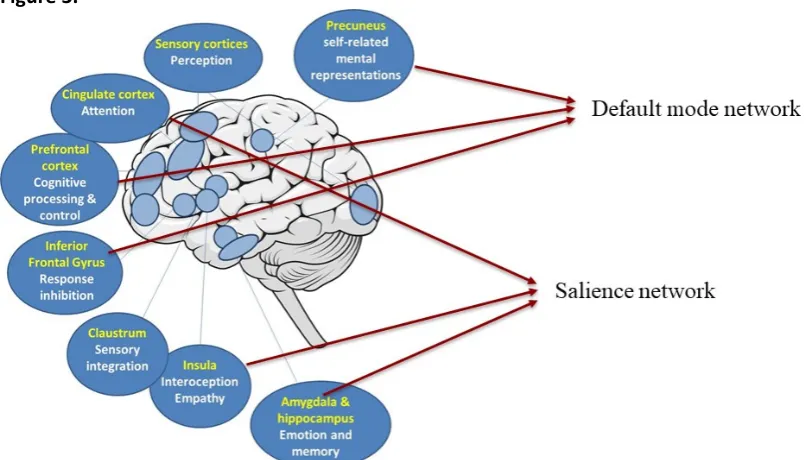
and inferior frontal gyrus), as well as preparation for action and cognitive self-control (i.e., premotor area, cingulate, medial and dorsolateral prefrontal cortex). The insula is particularly interesting with respect to SPS because it is responsible for perceiving and integrating interoceptive sensory stimuli, and has been thought to be the “seat of awareness”. Also activation of the inferior frontal gyrus was found, which is part of a Mirror Neuron System, a network of regions that are involved in empathic processing and facilitate rapid intuition of others’ goals (Van Overwalle & Baetens, 2009). Similarly, the cingulate cortex is involved in attention and the recognition of others' actions (Rizzolatti, Fadiga, Gallese, & Fogassi, 1996). The premotor area finding is also of interest in the context of response to others’ emotions as it is involved in unconscious behavioural control and action planning (Cross, Hamilton, & Grafton, 2006). Finally, the dorsolateral prefrontal cortex is involved in higher order cognitive processing, decision making, self-regulation and task performance (Dixon & Christoff, 2014), and is likely involved in depth-of-processing. Accordingly, these data suggest that high SPS individuals may readily intuit, “feel”, integrate information, and respond to others’ affective states, in particular to positive emotional states of a close partner (relative to a strangers’, and to neutral affect). The results are consistent with cardinal traits of SPS as they highlight depth of processing, awareness and being more affected by others’ moods and affective displays.
regions implicated in emotion-processing and self-regulation (i.e., the amygdala and prefrontal cortex), without diminished reward activity (which was seen for the simple correlation with SPS). These results provide a suggestion for how positive childhoods may have long-term impacts on individuals’ susceptibility to stimuli, namely through mechanisms related to self-regulation.
Finally, researchers investigated whether resting-state brain activity mediated the effects of dopamine-related genes on SPS (Chen et al., 2011). It was found that temporal homogeneity of regional spontaneous activity in the precuneus suppressed the effect of dopamine-related genes on SPS. The precuneus is involved in the integration of higher-order information such as visuo-spatial imagery, episodic memory, and emotional stimuli, especially when self-related mental representations and self-processing are involved. This finding indicates that the relation between SPS and dopamine genes is moderated by precuneus activity.
7.3. Animal models
Basic research on the neural and physiological mechanisms underlying SPS greatly advances the understanding of the construct. Since genetic evidence underlying personality traits, including SPS, is not yet conclusive, it is argued that basic neuroscience research on the neural basis of behaviour in experimental animals is needed to further advance mechanistic understanding (Robbins, 2018). Indeed, animal models allow control over environmental factors as is not possible in humans, as well as invasive and causal manipulations. Thus, animal models may provide critical advances on the role of neuromodulators in behaviour and cognition in relation to biologically based traits. Since sensitivity to environments is seen across many animal species (Pluess, 2015; Wolf et al., 2008), using animal models to understand the biology underlying SPS is sensible.
2016). For instance, the knockout animals exhibit faster sensory processing (Miceli et al., 2017), show reduced latent inhibition (Nonkes et al., 2012) which is indicative for increased openness to (irrelevant) environmental subtleties (Carson, Peterson, & Higgins, 2003), adapt better to changes in the environment (Nonkes, Maes, & Homberg, 2013), exhibit increased anxiety-related behaviour in response to novel or emotionally conflicting situations (Kalueff, Olivier, Nonkes, & Homberg, 2010), show increased responsivity to rewarding agents (Homberg et al., 2008; Nonkes et al., 2013), have a better memory for emotionally arousing events (Nonkes et al., 2012), and show depression-like phenotypes upon exposure to uncontrollable stress (Carola & Gross, 2011; Homberg & van den Hove, 2012). There is also evidence that 5-HTT knockout mice behave according to the Differential Susceptibility theory (Kaestner et al., 2015), as cohabitation of male mice with female mice reduced anxiety-like behaviour and increased exploratory locomotion in 5-HTT knockout but not control mice. Although the association between SPS and the serotonin system needs further replication (see section 7.1), the phenotypic overlap encourages the use of 5-HTT rodents as a model for Environmental Sensitivity approximating SPS, in order to increase the understanding of the neural mechanisms underlying SPS (Homberg et al., 2016).
7.4. Excitation-inhibition balance
it was found that faster sensory processing was associated with reduced inhibitory control over excitatory principal neurons in the somatosensory cortex, leading to increased excitability and sensory gating (Miceli et al., 2017). It is possible that the increased excitability extends to other regions beyond the somatosensory cortex, given that GABA system components are reduced in the somatosensory cortex, prefrontal cortex and hippocampus (Guidotti et al., 2012; Luoni et al., 2013; Miceli et al., 2017). Of interest, during brain maturation, GABA undergoes a switch from inducing depolarizing to hyperpolarizing responses in postsynaptic cells. This switch is dependent, amongst others, on increased expression of the K(+)/Cl(-) co-transporter (KCC2). In 5-HTT knockout rats, KCC2 expression is reduced in the cortex (Miceli et al., 2017), which would increase the membrane depolarization of postsynaptic cells receiving GABAergic inputs. This raises the possibility that the behavioural profile of 5-HTT knockout rats, and thereby Environmental Sensitivity, may relate to neuronal immaturity. As suggested by a group of neuroscientists, neuronal immaturity may be associated with increased plasticity and openness to the environment (Castrén, 2013).
7.5. Hypothalamus-pituitary-adrenal axis
It has been well-established that environmental factors have the ability to modify gene expression through epigenetic mechanisms. Epigenetic mechanisms refer to the changes in gene expression that do not involve changes in the DNA sequence. One type of epigenetic mechanism through which early life factors can alter gene expression later in life is DNA methylation, which involves the addition of methyl groups to the DNA, to convert cytosine to 5-methylcytosine. Highly methylated areas tend to be less transcriptionally active. Using 5-HTT knockout rats, it was found that DNA methylation of the corticotrophin releasing factor (CRF) was increased in the amygdala (but not the bed nucleus stria terminalis) of 5-HTT knockout rats exposed to early life stress, compared to wild-type control rats and rats not exposed to early life stress. This correlated significantly with reduced CRF mRNA levels. CRF mRNA levels were in turn found to correlate with improved stress coping behaviour, as a manifestation of sensitivity to environments (Van der Doelen et al., 2014) . Thus, while no evidence was found for changes in HPA-axis components in the brain to regulate HPA-axis reactivity to early life stress (Van der Doelen et al., 2014), environmental factors may influence HPA-axis reactivity through epigenetic mechanisms in the brain.
7.6. Future directions
Research on the genetic and environmental aetiologies of SPS is still in its infancy. As candidate gene studies have been criticised for their reliance on a priori assumptions about the biological function of specific genes, which is limited at present (Assary, Vincent, Keers, & Pluess, 2017), a multi-pronged approach is needed to investigate the aetiology underlying SPS. Also, common and complex phenotypes, such as SPS, are expected to result from multiple genetic variants of small effect size (Flint & Munafò, 2013), as well as from synergistic interactions with the environment (Keers & Pluess, 2017).
the laboratory does suggest strong links between serotonergic gene variants and enhanced attention to emotional stimuli, a key feature of SPS (Homberg et al., 2016). Thus, it will be very relevant to conduct large scale studies examining serotonin gene variants in humans. Second, twin studies should be conducted in order to extend initial findings regarding the aetiologies of SPS beyond adolescents to children and adults, and to study stability and change over time of genetic and environmental effects. Further, twin-based DeFries-Fulker extremes analyses would be useful (Rende & Slomkowski, 2005), in order to assess whether high levels of SPS are quantitatively similar (aetiological continuity) or qualitatively different (aetiological discontinuity) from normal aetiological variation in SPS (Shakeshaft et al., 2015), further addressing the continuum vs category question from an aetiological standpoint (see also section 6). Third, the genetic structure of SPS needs to be assessed in a GWAS of sufficient size, in order to develop a basic model for the specific genetic variants associated with SPS. Lastly, we recommend more novel molecular genetic approaches such genome-wide complex trait analyses and the identification of polygenic scores for SPS, which are created for individuals in a new target sample based on the number of trait-associated alleles weighted by their effect size from the discovery GWAS sample (Assary et al., 2017).
emotional reactivity as observed in SPS could be related to increased salience network activity. Likewise, deep cognitive processing could relate to increased activity of the default mode network. Understanding the highly sensitive brain in terms of large-scale brain networks would significantly advance our insight in the neural basis of SPS. Specifically, it would help in understanding how deep information processing and heightened emotionality reactivity in SPS are associated with each other. An open question is whether deep cognitive processing is the central facet of SPS, and other phenotypes are secondary. It is also possible that reduced ‘filtering’ of sensory information, leading to increased awareness of environmental subtleties, drives subsequent increased emotional and cognitive processing of the sensory information. Specialised large-scale brain network analyses (e.g. dynamic causal modelling) allow the identification of a central node by investigation of directionality of functional connectivity between networks. Of interest to further understand the function of the high SPS brain is the Embodied Predictive Interoception Coding (EPIC) model. This model postulates that the brain anticipates incoming sensory inputs by generating predictions through past experiences. Detection of a salient stimulus by comparing the predictions to actual sensory input can then be used as an alerting/reorienting signal, and relayed to the appropriate nodes that can implement a shift in attention or behaviour (Barrett & Simmons, 2015). This process involves the generation of predictions by agranular cortices (e.g. insula, anterior cingulate cortex) and prediction errors by granular cortices in the salience and default mode network. Since large-scale brain networks have also been identified in rodents (Becerra, Pendse, Chang, Bishop, & Borsook, 2011; Huang et al., 2016; Kleckner et al., 2017; Lu et al., 2012; Sierakowiak et al., 2015), it represents an excellent translational assay, to link data derived from animal studies to humans.
which may benefit SPS research. Depth of processing predicts differences in neurobehavioral characteristics of SPS in memory and attention reflecting greater semantic, elaborative, distinctive, and effortful information processing. For example, regarding memory, individuals high on SPS should perform better on episodic memory tests, which benefit from greater depth of processing. Consistent with this, groups with s- relative to l- allele of 5-HTTLPR and 5-HTT knockout rodents show higher episodic memory and attention (Roiser, et al., 2006; Homberg & Lesch, 2011). Furthermore, high SPS individuals show higher episodic memory and more details, even following implicit learning, suggesting that automaticity of processes leads to better memory (Bridges, unpublished doctoral dissertation, 2018; H. Schendan, personal communication, 13 August 2018).
8. SPS, psychopathology and intervention
8.1. SPS in the context of psychiatry
SPS is linked to increased risk for atypical development and subsequent mental disorder symptoms (see also section 4.1). Most work thus far has focused on links of SPS to symptoms of anxiety and depression in non-clinical samples. Borrowing from psychological models of depression, a recent theory explains the association between SPS and psychological distress (including depression and anxiety and somatic symptoms) as a secondary phenomenon of cognitive reactivity (i.e. maladaptive thought content and processes) to sensory information and related negative emotions (Bratholm
Wyller, Bratholm Wyller, Crane, & Gjelsvik, 2018). As such, it is not sensory stimuli per se or related
negative emotions that are hypothesised to lead to psychological distress, but the secondary cognitive
reactions of individuals to stimuli and emotions. This cognitive reactivity of individuals has been
suggested to distinguish healthy and unhealthy individuals with high SPS (Bratholm Wyller et al.,
2018). Such a model is trans-diagnostic as it explains psychological distress associated with SPS,
independent of specific diagnoses. In support of this, Brindle et al. (2015) found that difficulties in
emotion regulation partially mediate the link between SPS and depression. Further, Meyer et al. (2005) found that higher SPS is related to more negative cognitive and affective reactions to
ambiguous social scenarios, which is a cognitive risk factor associated with anxiety and depression
(Lau & Waters, 2017).
production/regulation and reward (to positive) social stimuli for SPS, but not ASD (Acevedo et al., 2018). Thus, although both SPS and ASD may show heightened sensory symptoms, a key area of divergence seems to be empathic and limbic brain responsivity to social stimuli (such as emotionally evocative face images) as well as general emotional stimuli. Likewise, schizophrenia and PTSD differentially involved brain regions involved in reward processing, memory, physiological homeostasis and self-other processing and empathy in relation to emotional and social stimulation (Acevedo et al., 2018).
A vibrant research area is the study of sensory symptoms in ASD, which have been added to the clinical symptoms of ASD in the DSM-5 (American Psychiatric Association, 2013). ASD is also associated with hypersensitivities (e.g. to smell, sound, touch), but unlike SPS it has also been linked to hyposensitivity (Marco, Hinkley, Hill, & Nagarajan, 2011), whereas hyposensitivity has neither been hypothesised nor examined for SPS. Furthermore, it is unclear whether sensory sensitivities in individuals with ASD reflect basic sensory differences (e.g. sensitivity to discriminate between or detect sensory stimuli), or differences in affective response to these stimuli. No studies so far have quantified SPS among individuals with ASD or other diagnoses in order to test the extent of overlapping architectures of sensory processing.
8.2. Intervention for high SPS individuals experiencing psychological distress
when mindfulness and acceptance were low (Bakker & Moulding, 2012), mindfulness and acceptance-based programmes may also be valuable. Mindfulness-acceptance-based interventions are increasingly shown to be effective in the reduction of stress, anxiety and depression relapse prevention (Khoury et al., 2013; Kuyken et al., 2016). Based on neuroimaging data showing greater responsivity to affective stimuli as a function of SPS in areas implicated in emotion (i.e., the amygdala), mindfulness-based trainings, and in fact different meditation types linked to deactivation of the amygdala (Acevedo, Pospos, & Lavretsky, 2016), may be useful for the enhancement of self-control and diminished emotional reactivity in high SPS individuals (Acevedo et al., 2017).
A randomised-controlled study in 47 highly sensitive individuals, identified using the Orienting Sensitivity scale of the Adult Temperament Questionnaire, which is related to SPS (Evans & Rothbart, 2008), found that mindfulness-based stress reduction had large effects on stress, social anxiety, personal growth and acceptance, and moderate effects on emotional empathy and self-transcendence (Soons, Brouwers, & Tomic, 2010). Recently, it has been proposed that mindfulness-based cognitive therapy (MBCT) may ameliorate psychological distress in individuals with high levels of SPS through addressing cognitive reactivity, and that MBCT may have transdiagnostic intervention effects through mediation by cognitive reactivity of individuals high in SPS (Bratholm Wyller et al., 2018).
8.3. Future directions
Associations between SPS and mental disorder need to be quantified further, also in relation to clinical
samples, longitudinal designs, mental health registries, objective and biological markers of physical
health and stress (e.g. cortisol reactivity, inflammation, allergies), and economic impact of SPS in terms
of expected occurred health-care costs.
An important line of future research is to examine the usefulness of SPS as a cross-disorder
heterogeneity and comorbidity and inform cross-disorder interventions, not achieved by the current diagnostic systems (DSM, ICD) (Rodriguez-Seijas, Eaton, & Krueger, 2015; Walkup, Mathews, & Green, 2017). SPS may be an ideal cross-disorder trait because it is: a) distributed normally in the general population, b) observed in humans and animals, c) heritable, and d) associated with mental disorder. Furthermore, there is evidence supporting that aetiological factors involved in SPS (see section 7) partially overlap with those in psychiatric disorders, for example serotonergic and dopaminergic genes are also involved in the aetiology of ADHD, anxiety and depression. SPS may be a suitable addition to the Research Domain Criteria (RDoC) (Insel, 2014), as the Sensory Processing Sensitivity framework has been established based on observing stimulus responsivity in >100 animal species (Aron et al., 2012), indicating a strong biological foundation. A logical progression is to use human neurocognitive measures, such as electro- or magneto-encephalography and event related potential studies, in particular to expand this field to the human counterpart of cognitive neuroscience. A critical need is to characterize basic sensorimotor, perceptual, socioemotional and neurocognitive function as a function of SPS, with learning and memory, attention, and emotional reactivity as the abilities that should vary most in SPS, but also other basic abilities (e.g., language, object and spatial processing, inhibition) and more complex abilities (e.g., meta-cognition, social perception and expression, deception, creativity) should be characterized as differences in basic abilities will affect more complex ones, and widespread neurobehavioral differences, which may affect large-scale brain networks, are predicted based on the neural and developmental mechanisms of SPS. Such neurobehavioral characteristics will be important for defining what SPS is, developing objective measures of SPS in addition to questionnaires, and tracking neurobehavioral characteristics in SPS across the lifespan and as a function of different kinds of environments.