R E S E A R C H A R T I C L E
HIV risk among young women who sell sex by whether they
identify as sex workers: analysis of respondent-driven sampling
surveys, Zimbabwe, 2017
Bernadette Hensen1,§ , Sungai T Chabata2 , Sian Floyd3, Tarisai Chiyaka2, Phillis Mushati2, Joanna Busza4,
Isolde Birdthistle3 , James R Hargreaves4and Frances M Cowan2,5
§
Corresponding author:Bernadette Hensen, Faculty of Infectious and Tropical Diseases, London School of Hygiene and Tropical Medicine, London, United Kingdom.
Tel: +44 207 299 4829. ([email protected])
Abstract
Introduction: Across sub-Saharan Africa, selling sex puts young women at high risk of HIV. Some young women who sell sex (YWSS) may self-identify as sex workers, while others may not, having implications for how to reach them with HIV prevention. We describe characteristics, sexual behaviours and health service use of YWSS in Zimbabwe, comparing women who identified as female sex workers (FSW) and women who did not (non-identifying-YWSS), and explore factors associated with HIV infec-tion.
Methods: We analysed data from respondent-driven sampling (RDS) surveys among YWSS aged 18 to 24 implemented in six sites in Zimbabwe from April to July 2017. RDS was used to enrol YWSS into an impact evaluation of the multi-country DREAMS (Determined, Resilient, Empowered, AIDS-free, Mentored and Safe) Partnership, which provides comprehensive HIV prevention programming to adolescent girls and young women. Women completed an interviewer-administered questionnaire and were offered HIV testing services. We used logistic regression (RDS-II-weighted, normalized by site) to identify factors associated with prevalent HIV infection.
Results: Forty-four seeds recruited 2387 YWSS. RDS-adjusted HIV prevalence was 24%; 67% of women identified as FSW. FSW were older and had lower educational attainment than non-identifying-YWSS. While 40% of FSW reported 10+clients in the previous month, 9% of non-identifying-YWSS did so. FSW were more likely to have accessed HIV-related services, includ-ing HIV testinclud-ing in the last six months (FSW: 70%; non-identifyinclud-ing-YWSS: 60%). Over half of all YWSS described sellinclud-ing sex as their main financial support (FSW: 88%; non-identifying YWSS: 54%). Increasing age, lower educational attainment, younger age of first selling sex and higher number of clients in the previous month were associated with prevalent HIV.
Conclusions: YWSS in Zimbabwe have a high prevalence of HIV, reported high numbers of sexual partners and depend finan-cially on selling sex. Non-identifying-YWSS differed socio-demographically to FSW, yet factors associated with HIV risk were similar for all women. Women not identifying as FSW were less likely to access services, suggesting they should be prioritized for HIV prevention. Network-based recruitment may enhance their inclusion in programmes, like DREAMS, which aim to reach young women at highest-risk with comprehensive health, HIV prevention and social protection services.
Keywords:female sex worker; adolescents and young women; HIV infection; HIV prevention; Zimbabwe; Sub-Saharan Africa
Received1 April 2019;Accepted25 September 2019
Copyright©2019 The Authors. Journal of the International AIDS Society published by John Wiley & Sons Ltd on behalf of the International AIDS Society.
This is an open access article under the terms of the Creative Commons Attribution License, which permits use, distribution and reproduction in any medium, provided the original work is properly cited.
1
|
I N T R O D U C T I O N
In sub-Saharan Africa, adolescent girls and young women aged 15 to 24 are more vulnerable to HIV infection than their male peers and older women [1]. At particularly high risk are young women who sell sex (YWSS) [2,3]. We define YWSS as women aged <25 years who consider themselves engaged in sex work, and may self-identify as female sex workers (FSW) or not. Evidence suggests that YWSS are less able to negotiate condom use than older FSW, are more likely to have age-dis-parate sexual partnerships, and have less access to available HIV prevention and other health services for fear of stigma
and discrimination from healthcare workers [2,4–8] The ille-gality of selling sex exacerbates vulnerabilities of YWSS and puts them at high risk of HIV [7].
sell sex occasionally. Unlike transactional sex, which has been associated with implicit exchanges within romantic relation-ships, and with agency and power [13,14], this period of sell-ing sex is likely, in part, driven by economic need [15]. YWSS may later begin to identify as FSW and only then recognize the period before this transition as sex work. During this tran-sition, YWSS may be particularly vulnerable to HIV, being harder to reach with programmes and less supported and skilled in, for example, negotiating condom use with clients. However, there are little empirical data on younger women who sell sex. A better understanding of the HIV risk of YWSS and whether and how risk differs between YWSS who con-sider themselves formally or not formally engaged in sex work would support developing programmes that meet the needs of these different women [16].
The DREAMS (Determined, Resilient, Empowered, AIDS-free, Mentored and Safe) Partnership seeks to deliver a pack-age of evidence-based HIV prevention interventions, including clinical services and social protection interventions, to adoles-cent girls and young women, including YWSS, in ten sub-Saha-ran African countries [17]. In Zimbabwe, DREAMS includes an offer of oral pre-exposure prophylaxis (PrEP) to young women at highest risk of HIV, including YWSS. Recognising that there are a sizeable number of YWSS, we used a network-based recruitment strategy to reach YWSS, including women who do not identify as FSW, as well as women who do, and enrolled these women in a cohort study as part of an impact evaluation of DREAMS. This evaluation of the impact of DREAMS on HIV incidence among YWSS aged 18 to 24 is ongoing in six sites in Zimbabwe [18]. In this analysis, we used data collected at enrolment to describe HIV prevalence, sociodemographic characteristics, risk behaviours and use of services among YWSS. We investigated whether these factors differed between YWSS who self-identified as FSW and those who did not, and investigated risk factors associated with prevalent HIV infection.
2
|
M E T H O D S
2.1
|
Study settingFrom April to July 2017, we conducted respondent-driven sampling (RDS) surveys in six sites across Zimbabwe, two sites where DREAMS was implemented and four non-DREAMS sites selected for comparison. RDS was used to enrol women into two cohorts to estimate the impact of DREAMS on HIV incidence among YWSS after two years of follow-up [18]. The two DREAMS sites were the largest cities in Zimbabwe; the non-DREAMS sites smaller urban towns. In all sites, the national HIV prevention and treatment pro-gramme for FSW,“Sisters with a Voice,” provides support and services, including HIV testing, community mobilization activi-ties and condoms [10]. Details of the impact evaluation, including site selection, are published elsewhere [18].
2.2
|
Study populationYWSS were eligible if they were aged 18 to 24, had sold sex (defined as sex in exchange for money and/or material sup-port, and that the sex act would not have happened in the absence of an exchange) in the past month, and were not
planning to move from the site within the next six months. Our definition of YWSS thus included women who did not self-identify as FSW, but who considered themselves involved in sex work.
2.3
|
Data collectionSimilar to other countries in the region, sex work in Zim-babwe predominantly occurs in bars and on the street, with FSW being well-networked, and brothels uncommon [19,20]. As such, and in the absence of a sampling frame, RDS is an appropriate method to recruit YWSS, assuming they are as well-networked as older FSW [20]. The RDS surveys used identical procedures across the six sites. In 2017, community mapping was conducted in each site to identify geographical locations where women sell sex and the socio-demographic characteristics of YWSS [21]. Mapping comprised informal discussions with outreach workers, young women, YWSS, members of the community and observations at locations where young women meet sexual partners. Details of the mapping process and RDS procedures are available else-where [18,21].
Through community mapping,“seed participants” represen-tative of the population of YWSS in each study site were invited to initiate RDS. Six seed participants were recruited in each of the four comparison sites and 10 in each of the two DREAMS sites. The number of seed participants aimed to achieve sample sizes of 1200 women in the non-DREAMS site and 1200 women in the DREAMS site, to have power to detect any impact of DREAMS at follow-up [18].
At survey launch, seeds were interviewed in a central location and given two coupons to recruit two further young women aged 18 to 24 years, whom they knew and who sold sex [18]. Upon completing survey procedures, par-ticipants were compensated USD$3 and given two coupons to continue the recruitment chain and informed that they would be compensated USD$2 for each young woman recruited to the study. Checks were in place to minimize repeat participation and assess that coupons were genuine, and young women were assessed for study eligibility [18]. The recruitment process was continued over six waves in each site to reach the sample size required for the impact evaluation and achieve equilibrium across characteristics of YWSS [18].
according to national guidelines [24], with test results returned to the women.
2.4
|
Key variablesKey variables were demographic and socio-economic charac-teristics, sexual behaviours and use of health services, whether women self-identified as FSW or not (non-identifying-YWSS), and HIV infection. We focused on factors hypothesized to be associated with acquiring HIV that DREAMS could address, including educational attainment, marital status, whether women ever felt unable to decline sex because of the finan-cial/material support offered in exchange for sex, women’s reported number of clients, whether women self-identified as FSW, risk of CMD, condom use and experience of physical vio-lence [17]. Although not modifiable by DREAMS among recruited women, we also explored whether age at first selling sex and years’ duration of selling sex were associated with HIV to better understand risk among this population.
2.5
|
Analysis strategyWe generated recruitment trees to visualize recruitment across the sites [25]. As more individuals are recruited through RDS, the sample should become more representative of the target population [25,26]. To assess this, we used com-bined convergence and bottleneck plots to visualize whether the proportion of selected outcomes appeared to stabilize over recruitment [25]. The variables plotted were: HIV preva-lence, age at time of the survey, whether women self-identi-fied as FSW, and years’selling sex (Appendix 1; Figures1–4).
Data were weighted using “RDS-II” (weighting women by the inverse degree of the reported size of their YWSS net-work, that is the number of women that they could have recruited to the survey) [27] and weights normalized by site. Seed participants were excluded from all analyses. We calcu-lated the RDS-II-weighted prevalence of characteristics, sexual behaviours and services use, including the site-level ranges of these factors, and explored whether they differed by whether women self-identified as FSW or not, adjusting for women’s age and recruitment site.
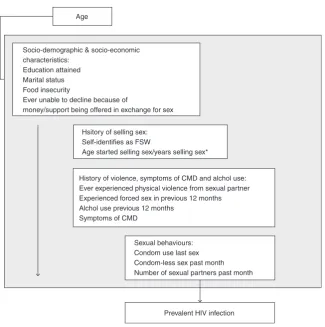
We used weighted logistic regression analyses to estimate the odds ratio of prevalent HIV infection by variables of inter-est. In adjusted analyses, we used a distal-proximal framework to avoid over-adjusting variables for those that might mediate their effect on HIV [28]. As such, we ran separate regression models with a different set of covariates for each variable, to avoid adjusting for covariates that may act as mediators. For example, in estimating an adjusted association between educa-tion and prevalent HIV infeceduca-tion, we did not adjust for sexual behaviours hypothesized to lie on any causal pathway between education on HIV (Figure 1). All models were adjusteda priorifor age and study site. In descriptive analyses, education was categorized as: no/incomplete primary, com-plete primary, completion of some or all secondary education (Form 1-3 and Form 4-6), college/certification/degree, or whether women were still in school. Marital status was cate-gorized as single/never married, currently married/cohabiting, divorced or widowed. In regression analyses, due to small numbers, complete secondary was combined with college/
certification/degree, and divorced/widowed combined (ever-married).
We hypothesized that whether women identified as FSW would modify the effect of factors found to be associated with prevalent HIV infection and explored whether there was sta-tistical evidence for effect modification by self-identification. Where there was evidence that identifying as FSW modified the association between factors and HIV infection in unad-justed analyses (p<0.1) we further explored evidence for effect modification in adjusted analysis.
2.6
|
EthicsThe Ethics Committee of the London School of Hygiene and Tropical Medicine (Ref 11835) and the Medical Research Council of Zimbabwe (Ref MRCZ/A/2085) approved the DREAMS impact evaluation. All women were given informa-tion about the study and asked for written informed consent to participate.
3
|
R ES U L T S
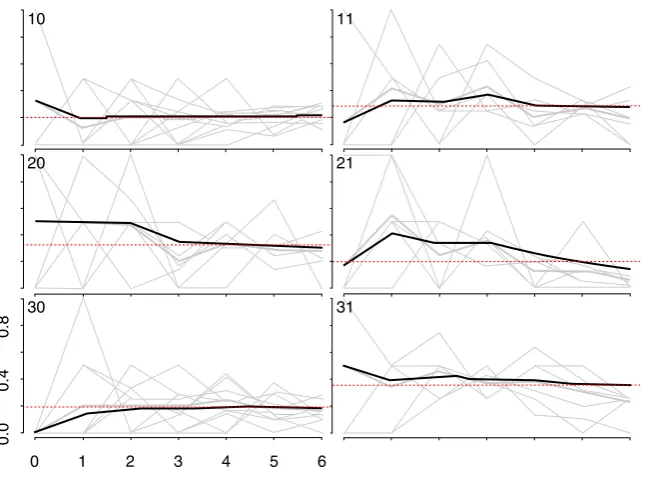
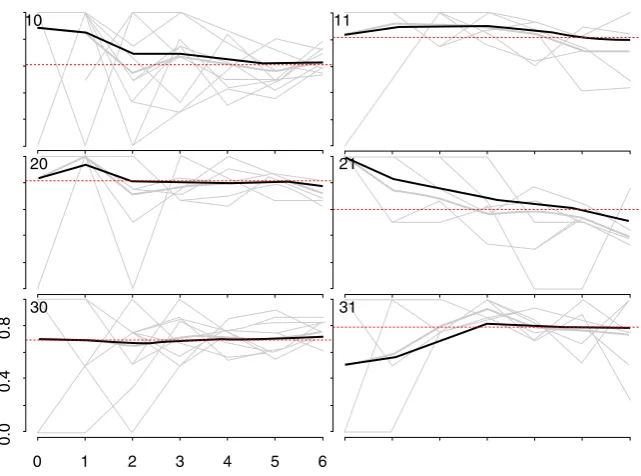
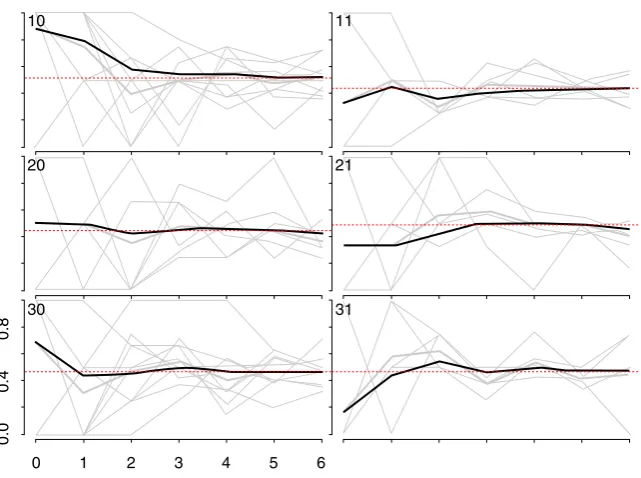
We recruited 44 seeds across six study sites. One seed did not initiate a recruitment chain and was replaced. The mean age of the seeds was 20.6 years, and most (71.4%) identified as FSW. One-third of seeds (33.1%) tested HIV-positive. Across the six sites, the 44 seeds recruited 2387 women over six waves (Figure2). HIV prevalence and age appeared to sta-bilize in all but one site, suggesting our sample was represen-tative of HIV prevalence and age distribution of YWSS in five of the six sites (Figures 3 and 4). For the proportion of women recruited who self-identified as FSW, equilibrium was reached in five sites suggesting the sample is representative of the proportion of YWSS who identify as FSW in all but one study site (Figure 5). The proportion reporting ≥3 years of selling sex stabilized in all sites (Figure6).
3.1
|
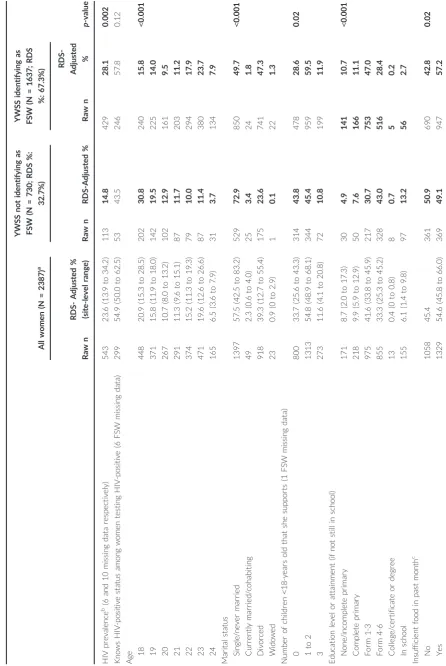
Characteristics of womenOver half of the YWSS were single or never married, 41.6% completed Form 1-3 of secondary school, and over half sup-ported at least one child aged <18 years (Table1). Forty-one percent (40.5%) started selling sex aged 15 to 17, and most (76.9%) reported that selling sex was the main way they sup-ported themselves. Insufficient food in the previous month was reported by 54.6% of women and 33.7% reported symp-toms of CMD. Fifty-six percent of women reported selling sex to≥4 men (clients) in the past month.
Sixty-seven percent (67.3%) of women self-identified as FSW. Adjusting for age and site, FSW and non-identifying YWSS differed. FSW were older, and by age, had lower levels of education, were more likely to be divorced/widowed and reported higher numbers of clients in the previous month (Table 1). A higher proportion of FSW reported that selling sex was the primary means by which they supported them-selves (88.1% vs. 54.0% respectively), and FSW reported sell-ing sex for more years, with 70.9% of FSW and 59.2% of non-identifying YWSS reporting selling sex for>2 years (Table1).
attended a Sisters clinic, had sought treatment when they last experienced symptoms of a sexually-transmitted infection and knew their HIV-positive status (Table1). More FSW reported an HIV test within the previous six months (70.1% vs. 59.7% respectively).
3.2
|
HIV prevalence and factors associated with prevalent HIVHIV prevalence was 23.6% overall: 28.1% among FSW and 14.8% among non-identifying YWSS (Table1). HIV prevalence was higher among women reporting no/incomplete primary education (40.0%) relative to women with incomplete sec-ondary education (Form 1-3; 25.2%. adjOR=1.79 95%CI 1.16, 2.75;p<0.001). Controlling for age and education, HIV prevalence was higher among FSW than non-identifying YWSS (adjOR=1.43 95%CI 1.04, 1.95; p=0.03). Women who started selling sex aged 10 to 14 had a higher prevalence of HIV (33.7%) relative to women who started selling sex aged 20 to 24 (29.4%; adjOR: 2.51 95%CI 1.42, 4.43;p=0.004).
We found little evidence that the association between vari-ables explored and HIV infection were modified by whether women self-identified as FSW. There was, however, strong evi-dence that identification as FSW modified the association between number of clients in the previous month and HIV infection (p-value for interaction=0.02). Among women who did not identify as FSW, reporting 10+clients was associated
with higher prevalence of HIV relative to women reporting 1 to 3 (41.2% vs. 10.9%). Although there was little evidence of an association among FSW (35.4% vs. 21.6%; Table 2), the trend was similar, with prevalence of HIV infection increasing with reported number of clients.
4
|
D I S C U S S I O N
Women recruited to our study had a high prevalence of HIV infection, rising sharply with age, and increasing with lower educational attainment and number of clients. Participants were socioeconomically vulnerable, and many relied on sex work to support themselves. Non-identifying-YWSS differed from FSW: FSW were older, reported more clients and were more engaged with services. YWSS who may be transitioning into sex work, or who do not perceive their sale of sex to be sex work, are also at high risk of HIV and perhaps more vul-nerable due to poorer engagement with services for FSW. They may benefit from less explicitly targeted services, such as those offered through the DREAMS Partnership. Such com-prehensive HIV prevention and social protection programmes need, however, to be cognizant of YWSS as a group in particu-lar need of being reached.
YWSS who do and do not self-identify as FSW were found to differ in important ways; understanding whether or not YWSS identify as FSW is an important foundation for
Age
Socio-demographic & socio-economic characteristics:
Education attained Marital status Food insecurity
Ever unable to decline because of
money/support being offered in exchange for sex
Hsitory of selling sex: Self-identifies as FSW
Age started selling sex/years selling sex*
History of violence, symptoms of CMD and alchol use: Ever experienced physical violence from sexual partner Experienced forced sex in previous 12 months Alchol use previous 12 months
Symptoms of CMD
Sexual behaviours: Condom use last sex Condom-less sex past month Number of sexual partners past month
Prevalent HIV infection
Figure 1. Conceptual framework for exploring the association between variables of interest and prevalent HIV infection.
delivering programming acceptable to all YWSS. This dichot-omy, however, provides little insight into nuanced motivations for selling sex or changes in women’s identification with sex
work overtime [13]. The literature on transactional sex shows a continuum between transactional sex and sex work [13,14]. As described, transactional sex has been associated with
Figure 2. Recruitment trees.
Blue circles represent women who do not identify themselves as FWS red circles represent women who identify themselves as FWS. The larger circles denote speed participants.
10
20
30
0 1 2 3 4 5 6
0.8
0.4
0.0
11
21
31
Figure 3. Convergence of the proportion of HIV positive YWSS.
agency and power; sex work with poverty, dependency and moral judgement [13,14]. The distinction between transac-tional sex and sex work can be vague [14], with distinctions between sex work among women who identify as FSW or not likely more vague and highly nuanced. Half the non-identify-ing-YWSS recruited to our study relied on selling sex to sup-port themselves and had experienced a time when they were unable to decline sex because of the support offered,
suggesting that, with time, these women may come to identify as FSW. Whether and how women’s identification with sex work changes overtime, the contextual factors that shape women’s transition into and out of formalized sex work, and the implications these transitions have on need for and access to HIV prevention and related services should be explored if programmes are to provide services appropriate to the needs of all YWSS throughout their lifecourse [14,21].
10
20
30
0 1 2 3 4 5 6
0.8
0.4
0.0
11
21
31
Figure 4. Convergence of the proportion of YWSS who reported to be aged 20 to 24 years.
The heavy black lines indicate the cumulative RDS-II weighted estimate overall for each site, while the grey lines are unweighted proportions for each seed, by sample wave.
10
20
30
0 1 2 3 4 5 6
0.8
0.4
0.0
11
21
31
Figure 5. Convergence of the proportion of YWSS who self-identify as FSW.
Non-identifying-YWSS in our study also differed from other adolescent girls and young women in Zimbabwe, reporting higher numbers of sexual partners. In the 2015 Demographic and Health Survey, 0.7% of women aged 18 to 19 and 2.0% of women aged 20 to 24 reported 2+partners in the previous 12-months [30] and their age-specific HIV prevalence was half that of these YWSS [31]. The factors associated with HIV in our study were similar among FSW and non-identifying-YWSS, underscoring the high risk of HIV among young women involved in sex work but who do not identify as FSW. Programmes aiming to prevent HIV should target these shared determinants of risk regardless of how women identify, including through an offer of PrEP, access to HIV-testing services, and support in condom use and negoti-ation skills. Yet, how these programmes are delivered should consider how women identify, with programmes not pro-moted as services for FSW but as non-stigmatising services for the health and well-being of adolescents and young peo-ple. Fear of disclosing engagement in selling sex to family/ friends and healthcare workers, compounded by age and competition with older FSW, likely limits use of available ser-vices by YWSS [8,21].
Our study is unique in that we used RDS to recruit YWSS, which proved successful to casting a“wide net” and reaching self-identifying FSW and other women involved in selling sex. To reach all YWSS, programmes should consider network-based approaches and use of incentivized referral vouchers, with feasibility of this approach among non-identifying -YWSS demonstrated by this study. Trained peer educators should also be engaged, as they may reach younger FSW [32–34], and may prove important to retain YWSS in programmes and develop social capital among non-identifying-YWSS, which has been associated with increased condom use [35].
Studies in Thailand, India and Kenya found that younger women and women who recently transitioned into sex work
were at high HIV risk [3,36–39]. Studies from Canada, India and Nepal, show a high risk of HIV among women who started selling sex aged <18 [40–42] Our study adds to this evidence, suggesting an increased HIV risk among women in Zimbabwe who start selling sex at younger ages. This increased risk may be related to vulnerabilities that push women to sell sex [1,43], including household poverty or death of an HIV-positive partner or parent, which are com-pounded by age through an influence on agency, resources, ability to negotiate condom use and physiological vulnerability of the genital tract [43,44] By reaching YWSS at younger ages, programmes could support building young women’s resi-lience and provide more livelihood options to prevent YWSS from transitioning into long-term sex work [45].
5
|
S TR E N G T H S A N D L I M I T A T I O N S
We used the same methods and an experienced team to implement RDS in all sites. Due to the nature of RDS, we can-not assess whether women recruited into the study are repre-sentative of all YWSS or whether participation was biased by how women identified. HIV prevalence and the characteristics of YWSS appeared to converge over waves in all but one of the smaller towns. In this site, bias may have been introduced by seed selection [25], and our study population may be slightly biased towards older women identifying as FSW. Com-munity mapping in the study sites identified tertiary institu-tions as locainstitu-tions where students sold sex [21]. Few women in this study reported being enrolled in college, the seed partici-pant that was replaced was a university student and the site where HIV prevalence and characteristics did not converge has a tertiary education institution. RDS may be less effective among these YWSS [21], or our strategy of recruiting through public clinics in some sites may have limited our reach to
10
20
30
0 1 2 3 4 5 6
0.8
0.4
0.0
11
21
31
Figure 6. Convergence of the proportion of YWSS who reported 3 or more years of selling sex.
Table 2. HIV prevalence and factors associated with HIV among non-seed participants recruited through respondent driven sam-pling, Zimbabwe 2017 (N = 2387)
Characteristics
HIV prevalence
(raw n)
RDS-weighted HIV prevalence (%)
Age- and site-adjusted OR
Fully adjusted ORa
Age at time of survey (years) 18 52 10.6 1.0
19 41 13.5 1.36 (1.27, 1.46)
(adjOR is for every year increase in 20 48 20.1
age) 21 66 23.3
22 106 30.8
23 158 32.7
p-value 24 72 52.1 <0.001
Education No education/primary
incomplete
68 40.0 1.79 (1.16, 2.75) 1.79 (1.16, 2.75)
Complete primary 67 31.1 1.07 (0.69, 1.64) 1.07 (0.69, 1.64)
Form 1-3 268 25.2 1.0 1.0
Form 4-6 or higher 140 15.6 0.55 (0.40, 0.75) 0.55 (0.40, 0.75)
p-value <0.001
Married Single/never married 242 18.2 1.0
Currently married 12 26.1 1.21 (0.47, 3.11) –
Divorced/widowed/ separated
289 31.2 1.34 (1.01, 1.80) –
Insufficient food in previous monthb No 239 23.3 1.0
–
Yes 304 23.8 1.03 (0.79, 1.33) –
Ever unable to decline sex due to
cash/material support offered in exchange
No 161 22.6 1.0 –
Yes 382 24.3 1.01 (0.77, 1.33) –
History of Selling Sex
Self-identifies as FSWc No 113 14.8 1.0 1.0
Yes 429 28.1 2.04 (1.52, 2.74) 1.43 (1.04, 1.95)
p-value 0.03
Age started selling sexd 10 to 14 30 33.7 3.41 (1.90, 6.13) 2.51 (1.42, 4.43)
15 to 17 187 19.9 1.95 (1.35, 2.83) 1.76 (1.21, 2.57)
18 to 19 152 22.6 1.39 (0.99, 1.95) 1.37 (0.97, 1.92)
20 to 24 174 29.4 1.0 1.0
p-value 0.004
Number of years reported selling sexd
<2 141 19.3 1.02 (0.74, 1.41) 1.05 (0.75, 1.46)
2 to 3 179 19.8 1.0 1.0
4 to 5 122 31.4 1.46 (1.03, 2.06) 1.38 (0.97, 1.96)
6e 101 40.1 1.80 (1.20, 2.70) 1.48 (1.00, 2.21)
p-value 0.12
Experience of violence,
alcohol use and symptoms of CMD
Experienced forced sex previous 12mthsf No 447 23.1 1.0 –
Yes 96 26.6 1.20 (0.86, 1.68) –
Ever experienced physical violence from sexual partner
No 273 20.0 1.0 1.0
Yes 270 29.2 1.44 (1.12, 1.86) 1.37 (1.05, 1.78)
p-value 0.02
Symptoms of CMD No 337 22.6 1.0 –
Yes 206 25.7 1.18 (0.91, 1.52) –
Frequency of alcohol
consumption in previous 12 months
Never 221 21.5 1.0 –
Once a month or less 76 23.0 1.19 (0.80, 1.77) –
these women, who are more likely to be middle class and per-haps unwilling to access these locations. Implementing RDS that combined reaching FSW and non-identifying-FSW and was led by an organization known to deliver the Sisters with a Voice FSW programme may have had implications for who we recruited. These findings provide important lessons for future applications of RDS among YWSS.
We were interested in exploring risk factors for HIV acqui-sition. Using HIV prevalence as the outcome limits our under-standing of the causal relationship between the characteristics and behaviours considered and HIV acquisition, since infection may have preceded the behaviours measured here. There may be biased reporting; non-identifying-FSW, who made an active decision not to formalize their sex work, may have been less likely to accurately report number of clients than FSW. Bias in reported condom use and other sexual behaviours are well-documented in the literature, yet we found that levels of con-dom use at last sex were similar to other studies among FSW and underscores the need for women to have the option to use PrEP [46,47]
6
|
C O N C L U S I O N S
We used RDS to recruit YWSS who identified as FSW and YWSS who did not. The YWSS who participated in our study had a high prevalence of HIV, experienced other socioeco-nomic vulnerabilities, and remain a key population for compre-hensive HIV programmes. To reach all YWSS, programmes need to consider social network-based approaches and address the shared determinants of HIV risk [29] Understand-ing the determinants underlyUnderstand-ing women’s transitions into and out of sex work throughout their lifecourse, and the implica-tions of these transiimplica-tions on need for and access to services is needed to reach and retain women at high HIV risk and dur-ing periods of highest risk.
A U T H O R S’A F F I L I A T I O N S
1
Faculty of Infectious and Tropical Diseases, London School of Hygiene and Tropical Medicine, London, United Kingdom; 2
Centre for Sexual Health and HIV/AIDS Research (CeSHHAR) Zimbabwe, Harare, Zimbabwe;3Faculty of Epi-demiology and Population Health, London School of Hygiene and Tropical
Table 2. (Continued)
Characteristics
Number partners sold sex to past monthg 1 to 3 144 15.3 1.0 1.0
4 to 9 147 22.4 1.32 (0.95, 1.84) 1.12 (0.79, 1.59)
10e 243 36.0 2.19 (1.59, 3.01) 1.68 (1.18, 2.40)
p-value 0.008 (0.02)
Condom used last sex all partnersh No 174 21.8 1.0 –
Yes 367 24.9 1.19 (0.91, 1.57) –
Condomless sex last monthi No 308 24.7 1.0 –
Yes 225 22.1 0.88 (0.68, 1.14) –
Stratified analysis
Number of men women report having sex with in exchange for money/other support
HIV+ (weighted %)
Stratum
specific OR Stratum specific adjOR
Does not identify as FSW 1 to 3 62 10.9 1.0 1.0
p-value is from Wald test. CMD, common mental health disorders; FSW, female sex worker; OR, odds ratio; RDS, respondent-driven sampling.
a
Variables included in the model for each factor were guided by the conceptual framework (Figure1);bdefined as responding Yes to any one of
three questions about whether anyone in the household slept hungry, or went a day or night without food in the past four weeks (questions from
Household Food Insecurity Access Scale [29]);c20 missing data;d3 missing data; e7 missing data;f1 missing data;g15 missing data;h12 missing
Medicine, London, United Kingdom;4
Faculty of Public Health and Policy, London School of Hygiene and Tropical Medicine, London, United Kingdom;5
Depart-ment of International Public Health, Liverpool School of Tropical Medicine, Liverpool, United Kingdom
C O M P E T I N G I N T E R E S T S None reported.
A U T H O R S’ C O N T R I B U T I O N S
BH conducted the analysis and wrote the first draft. SC conducted the RDS diag-nostics and contributed to writing. SF was involved in planning the analysis. TC and PM lead the data collection. JB provided critical revisions the article, particu-larly the discussion. SF, IB, BH, JH and FC were involved in the conception of the study, interpretation of results and critical revision of the article. All authors con-tributed to the writing and have read and approved the final version.
A C K N O W L E D G E M E N T S
We would like to thank the survey team and the women participating in the study.
F U N D I N G
The impact evaluation in Zimbabwe is funded by the Bill and Melinda Gates Foundation (OPP1136774, http://www.gatesfoundation.org). Foundation staff advised the study team, but did not substantively affect the study design, instru-ments, interpretation of data or decision to publish.
R E F E R E N C E S
1. Delany-Moretlwe S, Cowan FM, Busza J, et al. Providing comprehensive health services for young key populations: needs, barriers and gaps. J Int AIDS Soc.2015;18 2 Suppl 1:19833.
2. Busza J, Mtetwa S, Mapfumo R, Hanisch D, Wong-Gruenwald R, Cowan F. Underage and underserved: reaching young women who sell sex in Zimbabwe. AIDS Care.2016;28 Sup2:14–20.
3. Bekker L-G, Hosek S. HIV and adolescents: focus on young key populations. J Int AIDS Soc.2015;18 2(Suppl 1):20076.
4. Lau JTF, Tsui HY, Siah PC, Zhang KL. A study on female sex workers in southern China (Shenzhen): HIV-related knowledge, condom use and STD his-tory. AIDS Care.2002;14(2):219–33.
5. Shahmanesh M, Cowan F, Wayal S, Copas A, Patel V, Mabey D. The burden and determinants of HIV and sexually transmitted infections in a population-based sample of female sex workers in Goa, India. Sex Transm Infect.2009;85 (1):50–9.
6. Couture M-C, Sansothy N, Sapphon V, et al. Young women engaged in sex work in Phnom Penh, Cambodia, have high incidence of HIV and sexually trans-mitted infections, and amphetamine-type stimulant use: new challenges to HIV prevention and risk. Sex Transm Dis.2011;38(1):33–9.
7. Busza J, Mtetwa S, Chirawu P, Cowan F. Triple jeopardy: Adolescent experi-ences of sex work and migration in Zimbabwe. Health Place.2014;28:85–91. 8. Scorgie F, Nakato D, Harper E, et al.‘We are despised in the hospitals’: sex workers’experiences of accessing health care in four African countries. Cult Health Sex.2013;15(4):450–65.
9. UNAIDS. Global AIDS Update: Miles to Go. Geneva,2018. [cited 2019 Feb 8]. Available from: http://www.unaids.org/sites/default/files/media_asset/miles-to-go_en.pdf
10. Hargreaves JR, Mtetwa S, Davey C, et al. Implementation and operational research: cohort analysis of program data to estimate HIV incidence and uptake of HIV-related services among female sex workers in Zimbabwe, 2009–2014. J Acquir Immune Defic Syndr.2016;72(1): e1–8.
11. Cowan FM, Mtetwa S, Davey C, Fearon E, Dirawo J, Wong-Gruenwald R. Engagement with HIV prevention treatment and care among female sex workers in Zimbabwe: a respondent driven sampling survey. PLoS ONE.2013;8:e77080. 12. Cowan FM, Davey CB, Fearon E, Care The HIV, et al. Cascade among female sex workers in Zimbabwe: results of a population-based survey from the sisters antiretroviral therapy programme for prevention of HIV, an integrated response (SAPPH-IRe) trial. J Acquir Immune Defic Syndr.2017;74(4):375–82. 13. Hawkins K, Price N, Mussa F. Milking the cow: Young women’s construction of identity and risk in age-disparate transactional sexual relationships in Maputo, Mozambique. Glob Public Health.2009;4(2):169–82.
14. Stoebenau K, Heise L, Wamoyi J, Bobrova N. Revisiting the understanding of“transactional sex”in sub-Saharan Africa: a review and synthesis of the litera-ture. Soc Sci Med.2016;168:186–97.
15. Pettifor A, Wamoyi J, Balvanz P, Gichane MW, Maman S. Cash plus: explor-ing the mechanisms through which a cash transfer plus financial education pro-gramme in Tanzania reduced HIV risk for adolescent girls and young women. J Int AIDS Soc.2019;22:e25316.
16. Shannon K, Crago A-L, Baral SD, et al. The global response and unmet actions for HIV and sex workers. Lancet.2018;392(10148):698–710.
17. PEPFAR, Bill and Melinda Gates Foundation, GirlEffect, Johnson & Johnson, ViiV Healthcare, Gilead. DREAMS Core Package of Interventions Summary. 2016.
18. Hensen B, Hargreaves JR, Chiyaka T, et al. Evaluating the impact of DREAMS on HIV incidence among young women who sell sex: protocol for a non-randomised study in Zimbabwe. BMC Public Health.2018;18(1):203. 19. Baral S, Beyrer C, Muessig K, Poteat T, Wirtz AL, Decker MR. Burden of HIV among female sex workers in low-income and middle-income countries: a systematic review and meta-analysis. Lancet Infect Dis.2012;12:538–49. 20. Cowan FM, Davey C, Fearon E, et al. Targeted combination prevention to support female sex workers in Zimbabwe accessing and adhering to antiretrovi-rals for treatment and prevention of HIV (SAPPH-IRe): a cluster-randomised trial . Lancet HIV.2018;5(8):e417–26.
21. Chiyaka T, Mushati P, Hensen B, et al. Reaching young women who sell sex: methods and results of social mapping to describe and identify young women for DREAMS impact evaluation in Zimbabwe. PLoS ONE.2018;13:e0194301. 22. Hargreaves JR, Fearon E, Davey C, Phillips A, Cambiano V, Cowan FM. Sta-tistical design and analysis plan for an impact evaluation of an HIV treatment and prevention intervention for female sex workers in Zimbabwe: a study proto-col for a cluster randomised controlled trial. Trials.2016;17(1):6.
23. Patel V, Simunyu E, Gwanzura F, Lewis G, Mann A. The Shona Symptom Questionnaire: the development of an indigenous measure of common mental disorders in Harare. Acta Psychiatr Scand.1997;95(6):469–75.
24. Zimbabwe National Guidelines on HIV Testing and Counselling.2014. Har-are, Zimbabwe: Ministry of Health and Child Care.
25. Gile KJ, Johnston LG, Salganik MJ. Diagnostics for respondent-driven sam-pling. J R Stat Soc Ser A Stat Soc.2015;178:241–69.
26. Gile KJ, Handcock MS. Respondent-driven sampling: an assessment of cur-rent methodology. Sociol Methodol.2010;40:285–327.
27. Volz E, Heckathorn DD. Probability based estimation theory for respondent driven sampling. J Off Stat.2008;24:79.
28. Boerma JT, Weir SS. Integrating demographic and epidemiological approaches to research on HIV/AIDS: the proximate-determinants framework. J Infect Dis.2005;191 s1:S61–67. https://doi.org/10.1086/425282
29. UNAIDS. HIV prevention among adolescent girls and young women: putting HIV prevention among adolescent girls and young women on the fast-track and engaging men and boys fast-tracking HIV Prevention among adolescent girls and young Geneva. 2016. [cited 2019 Feb 13]. Available from: https://www. unaids.org/sites/default/files/media_asset/UNAIDS_HIV_prevention_among_ adolescent_girls_and_young_women.pdf
30. Zimbabwe National Statistics Agency and ICF International. 2016. babwe Demographic and Health Survey 2015: Final Report. Rockville, MA: Zim-babwe National Statistics Agency (ZIMSTAT) and ICF International.
31. Zimbabwe Population-Based HIV Impact Assessment (ZIMPHIA) 2015–16: First Report. Harare:2017.
32. Fielding-Miller R, Dunkle KL, Hadley C, Cooper HL, Windle M. Agency as a mediator in the pathway from transactional sex to HIV among pregnant women in Swaziland: a multigroup path analysis. J Int AIDS Soc.2017;20(1):21554. 33. Chabata S, Hensen B, Chiyaka Y, et al. Strategies to identify and reach high risk young women with DREAMS services in two cities in Zimbabwe. Interna-tional AIDS Conference. Amsterdam;2018.
34. Cowan FM, Chabata ST, Musemburi S, et al. Strengthening the scale-up and uptake of effective interventions for sex workers for population impact in Zimbabwe. J Int AIDS Soc.2019;22:e25320.
35. Januraga PP, Mooney-Somers J, Ward PR. Newcomers in a hazardous envi-ronment: a qualitative inquiry into sex worker vulnerability to HIV in Bali, Indonesia. BMC Public Health.2014;14:832.
36. Silverman JG. Adolescent female sex workers: invisibility, violence and HIV. Arch Dis Child.2011;96:478–81.
37. Limpakarnjanarat K, Mastro TD, Saisorn S, et al. HIV-1 and other sexually transmitted infections in a cohort of female sex workers in Chiang Rai, Thailand. Sex Transm Infect.1999;75(1):30–5.
39. Medhi GK, Mahanta J, Paranjape RS, Adhikary R, Laskar N, Ngully P. Fac-tors associated with HIV among female sex workers in a high HIV prevalent state of India. AIDS Care.2012;24(3):369–76.
40. Goldenberg SM, Chettiar J, Simo A, et al. Early sex work initiation indepen-dently elevates odds of HIV infection and police arrest among adult sex workers in a Canadian setting. J Acquir Immune Defic Syndr.2014;65(1):122–8. 41. Silverman JG, Decker MR, Gupta J, Maheshwari A, Willis BM, Raj A. HIV prevalence and predictors of infection in sex-trafficked Nepalese girls and women. JAMA.2007;298(5):536–42.
42. Silverman JG, Decker MR, Gupta J, Maheshwari A, Patel V, Raj A. HIV prevalence and predictors among rescued sex-trafficked women and girls in Mumbai, India. J Acquir Immune Defic Syndr.2006;43(5):588–93.
43. Onyango MA, Adu-Sarkodie Y, Agyarko-Poku T, et al.“It’s all about making a life”: poverty, HIV, violence, and other vulnerabilities faced by young female
sex workers in Kumasi, Ghana. J Acquir Immune Defic Syndr.2015;68 Suppl 2: S131–7.
44. Quinn TC, Overbaugh J. HIV/AIDS in women: an expanding epidemic. Science.2005;308(5728):1582–3.
45. Toska E, Gittings L, Hodes R, et al. Resourcing resilience: social protection for HIV prevention amongst children and adolescents in Eastern and Southern Africa. Afr J AIDS Res.2016;15(2):123–40.
46. Eakle R, Gomez GB, Naicker N, et al. HIV pre-exposure prophylaxis and early antiretroviral treatment among female sex workers in South Africa: results from a prospective observational demonstration project. PLoS Med.2017;14: e1002444.