ABSTRACT
LEKSRISOMPONG, NIRADA. Effects of Feeder Space and Feeding Programs During Rearing and Laying on Broiler Breeder Reproductive Performance and Livability. (Under the direction of Dr. John T. Brake).
A series of four experiments were conducted in slat-litter pens in order to determine the effects of feeder space, feeding programs during rearing and laying, strain, and length of starter feed on broiler breeder female reproductive performance, uniformity, mortality, and progeny performance.
In Experiments I and IV, there was an increased feeder space between the rearing and laying periods but no change in Experiment III. In Experiment II, an increased, decreased, or no change in feeder space were compared. Irrespective of other treatments, maintaining similar feeder space between rearing and laying periods produced better egg production and generally lower hen mortality during the laying period. Feeder space also did not affect the uniformity of body weight nor livability during rearing.
Line and Sigmoid feeding programs during rearing were compared in Experiments III and IV. In Experiment III, the Sigmoid and Line program hens exhibited similar rates of lay but Sigmoid hens produced greater EHH due to lower female mortality during hot weather while no effect was observed in Experiment IV.
Additionally, the Slow feeding to peak program produced numerically lower female mortality in Experiment II.
There were no significant effects on hatchability of fertile eggs in Experiment II and IV, but the Ross 708 strain and Sigmoid rearing program hens exhibited improved hatchability of fertile eggs in Experiment I and III, respectively.
An increased feeder space in Experiment I significantly decreased egg weight at 28 and 30 wk of age but had no effect on broiler performance. The Fast feeding to peak approach significantly increased yolk weight, decreased albumen weight, and changed the yolk:albumen ratio in Experiment II. In Experiment III, where there was no change in feeder space, greater egg weight at 28 wk produced by the Slow feeding to peak was observed. This larger egg weight produced male broilers with poorer adjusted feed conversion ratio and greater mortality but this may have been a residual effect due to hotter eggs caused by the lack of proper temperature control during incubation.
In the individually caged hens of Experiment V, an increased albumen height due to the Fast feeding to peak program and the Ross 708 strain was observed. The thicker albumen may have slowed vital gas diffusion during incubation and resulted in smaller broiler progeny that exhibited greater mortality.
Effects of Feeder Space and Feeding Programs During Rearing and Laying on Broiler Breeder Reproductive Performance and Livability
by
Nirada Leksrisompong
A dissertation submitted to the Graduate Faculty of North Carolina State University
in partial fulfillment of the requirements for the Degree of
Doctor of Philosophy
Animal Science and Poultry Science
Raleigh, North Carolina 2010
APPROVED BY:
_____________________ ______________________
C. R. Stark J. W. Spears
_____________________ ______________________
ii BIOGRAPHY
iii ACKNOWLEDGEMENTS
The author wishes to express her sincere appreciation to Dr. John T. Brake for his guidance and advice during this study. Appreciation is also extended to Drs. Edgar O. Oviedo, Charles R. Stark, and Jerry W. Spears for serving on the graduate committee.
The technical assistance of Susan Creech, Corina Rosiuta, Lisa Wilson, Hugo Romero, Peter Plumstead, Kelly Brannan, and Mireille Argüelles Ramos. Special thanks are also acknowledged to the staff members of the Lake Wheeler Road Field Laboratory who were always available to help regardless of situation.
iv TABLE OF CONTENTS
Page
LIST OF TABLES ………..………
viiLIST OF FIGURES …..………..
xviLIST OF ABBREVIATIONS ……..………..
xviiiINTRODUCTION ………..
1LITERATURE REVIEW…...………
4Genetic Trends ………....……… 4
Anatomy Of the Female Reproductive….….………. 5
Reproductive Problems In Broiler Breeder Females ………….. 10
Benefits Of Delaying Photostimulation As a Result From Feed Restriction ………... 13 Effect Of Heat Stress On Broiler Breeder Females ………. 15
Effects Of Increase In Body Weight and Breast Muscle Weight On The Reproductive System …....……….. 18
Development Of the Reproductive System ………. 20
References ………... 22
MANUSCRIPT I. Effect of Feeder Space Allocations during Rearing, Female Strain, and Feed Increase Rate from Photostimulation to Peak Egg Production on Broiler Breeder Female and Broiler Progeny Performance …...……… 31 Abstract ...……….………... 31
Introduction …..…………...………... 33
Materials and Methods ……… 35
Results ….….………... 40
Discussion …..………. 45
v MANUSCRIPT II. Effect of Feeder Space during the Growing and Laying
Periods and the Rate of Feed Increase at the Onset of Lay on Uniformity and Reproductive Function ………..
Page
66
Abstract ...……….………... 66
Introduction ….…………...………... 68
Materials and Methods ………...………. 69
Results …..………... 74
Discussion …...………. 80
References …...………... 99
MANUSCRIPT III. Effect of Feeding Program During Rearing and Early Lay on Performance of Broiler Breeder Females and Their Progeny ……….. 101 Abstract ...……….………... 101
Introduction ….……… 103
Materials and Methods ....……...………. 104
Results ….………... 108
Discussion …..……….. 113
References ………... 132
MANUSCRIPT IV. Effect of Quantity of Starter Feed for Males and Females and Form of Female Feeding Program during Rearing on Broiler Breeder Reproductive Performance and Mortality ………. 135 Abstract ...……….………... 135
Introduction ……….. 137
Materials and Methods ….……...………. 139
Results …..………... 142
Discussion …..……….. 145
vi MANUSCRIPT V. Effect of Feeder Space Allocation During Rearing, Strain,
and Feed Increase Rate From Photostimulation To Peak Egg Production of Individually Caged Broiler Breeder Females on Growth of Broiler Progeny …...
Page 161
Abstract …..……….………... 161
Introduction ……….. 163
Materials and Methods ….……...………. 164
Results …..………... 168
Discussion …...………. 172
References …..………... 185
SUMMARY AND CONCLUSIONS ………... 188
vii LIST OF TABLES
Page MANUSCRIPT I
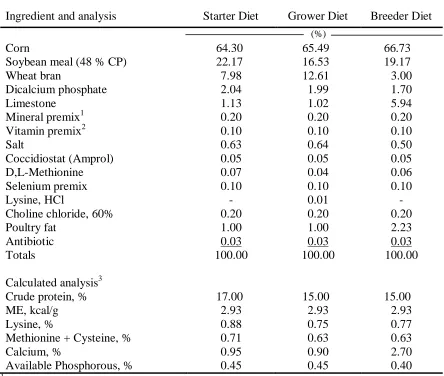
Table I-1. Composition of starter (0 to 6 wk), grower (6 to 21 wk), and
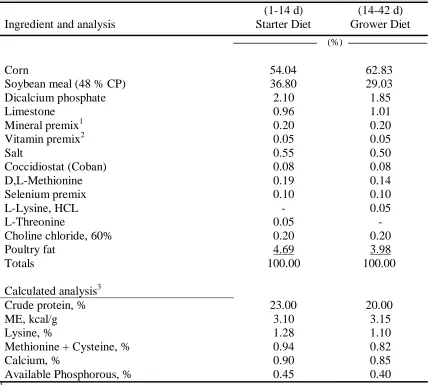
breeder (22 to 64) diets in Manuscript I-V.………..……….. 51 Table I-2. Composition of broiler diets in Manuscript I, II, III, and V ……… 52 Table I-3. Broiler breeder female BW (group samples) as affected by broiler
breeder female feeder space allocation during growing, female strain, and feed increase rate from photostimulation to peak egg production, as well as the growing feeder space by strain interaction, growing feeder space by feed increase rate interaction, and strain by feed increase rate interaction in Experiment I ………..
53 Table I-4. Broiler breeder female BW (individual) as affected by broiler
breeder female feeder space allocation during growing, female strain, and feed increase rate from photostimulation to peak egg production, as well as the growing feeder space by strain interaction, growing feeder space by feed increase rate interaction, and strain by feed increase rate interaction in
Experiment I ……….. 54
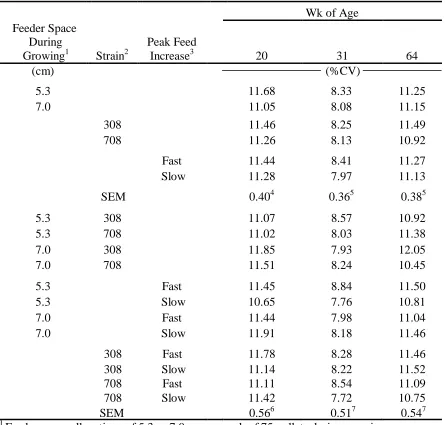
Table I-5. Coefficient of variation (CV) of broiler breeder female BW as affected by broiler breeder female feeder space allocation during growing, female strain, and feed increase rate from photostimulation to peak egg production, as well as the growing feeder space by strain interaction, growing feeder space by feed increase rate interaction, and strain by feed increase rate interaction in Experiment I………...
55 Table I-6. Egg weight (EW) and percentage egg shell at 28 wk of age as
affected by broiler breeder female feeder space allocation during growing, female strain, and feed increase rate from photostimulation to peak egg production, as well as the growing feeder space by strain interaction, growing feeder space by feed increase rate interaction, and strain by feed increase rate
interaction in Experiment I ……… 56 Table I-7. Egg weight (EW) and egg components at 30 wk of age as affected
by broiler breeder female feeder space allocation during growing, female strain, and feed increase rate from photostimulation to peak egg production, as well as the growing feeder space by strain interaction, growing feeder space by feed increase rate interaction, and strain by feed increase rate
viii Page Table I-8. Broiler breeder egg production and female mortality from 25 to
64 wk of age as affected by broiler breeder female feeder space allocation during growing, female strain, and feed increase rate from photostimulation to peak egg production, as well as the growing feeder space by strain interaction, growing feeder space by feed increase rate
interaction, and strain by feed increase rate interaction in Experiment I ….. 58 Table I-9. Broiler breeder fertility, hatchability, and embryonic mortality
from 28 to 64 wk of age from weekly set of 90 eggs as affected by broiler breeder female feeder space allocation during growing, female strain, and feed increase rate from photostimulation to peak egg production, as well as the growing feeder space by strain interaction, growing feeder space by feed increase rate interaction, and strain by feed increase rate interaction in
Experiment I ……….. 59
Table I-10. The BW of mixed sex broiler chickens produced from egg laid at 31 wk of age as affected by broiler breeder female feeder space allocation during growing, female strain, and feed increase rate from photostimulation to peak egg production, as well as the growing feeder space by strain interaction, growing feeder space by feed increase rate
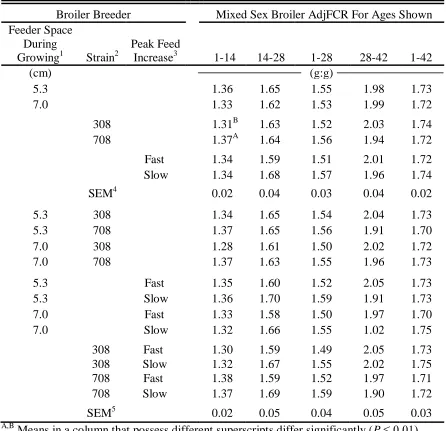
interaction, and strain by feed increase rate interaction in Experiment I ….. 60 Table I-11. Adjusted feed consumption ratio (AdjFCR) of mixed sex
broiler chickens produced from egg laid at 31 wk of age produced from egg laid at 31 wk of age as affected by broiler breeder female feeder space allocation during growing, female strain, and feed increase rate from photostimulation to peak egg production, as well as the growing feeder space by strain interaction, growing feeder space by feed increase rate
interaction, and strain by feed increase rate interaction in Experiment I ….. 61 Table I-12. Percentage mortality (deaths) of mixed sex broiler chickens
produced from egg laid at 31 wk of age as affected by broiler breeder female feeder space allocation during growing, female strain, and feed increase rate from photostimulation to peak egg production, as well as the growing feeder space by strain interaction, growing feeder space by feed increase rate interaction, and strain by feed increase rate interaction in Experiment I ……...
ix Page MANUSCRIPT II
Table II-1. Broiler breeder female BW (group sample) as affected by broiler breeder female feeder space allocation during growing and laying, and feed increase rate from photostimulation to peak egg production, as well as the growing feeder space by laying feeder space interaction, growing feeder space by feed increase rate interaction, and laying feeder space by feed increase rate interaction in Experiment II ………...
87 Table II-2. Broiler breeder female BW (individual) as affected by broiler
breeder female feeder space allocation during growing and laying, and feed increase rate from photostimulation to peak egg production, as well as the growing feeder space by laying feeder space interaction, growing feeder space by feed increase rate interaction, and laying feeder space by feed increase rate interaction in Experiment II ………..
88 Table II-3. Coefficient of variation (CV) of broiler breeder female BW as
affected by broiler breeder female feeder space allocation during growing and laying, and feed increase rate from photostimulation to peak egg production, as well as the growing feeder space by laying feeder space interaction, growing feeder space by feed increase rate interaction, and
laying feeder space by feed increase rate interaction in Experiment II ……. 89 Table II-4. Egg weight (EW) and egg components at 28 wk of age as
affected by broiler breeder female feeder space allocation during growing and laying, and feed increase rate from photostimulation to peak egg production, as well as the growing feeder space by laying feeder space interaction, growing feeder space by feed increase rate interaction, and
laying feeder space by feed increase rate interaction in Experiment II ……. 90 Table II-5. Egg weight (EW) and egg components at 30 wk of age as
affected by broiler breeder female feeder space allocation during growing and laying, and feed increase rate from photostimulation to peak egg production, as well as the growing feeder space by laying feeder space interaction, growing feeder space by feed increase rate interaction, and laying feeder space by feed increase rate interaction in Experiment II …….
x Page Table II-6. Egg weight (EW) and percentage egg shell at 51 and 62 wk of
age as affected by broiler breeder female feeder space allocation during growing and laying, and feed increase rate from photostimulation to peak egg production, as well as the growing feeder space by laying feeder space interaction, growing feeder space by feed increase rate interaction, and laying feeder space by feed increase rate interaction in Experiment II …….
92 Table II-7. Broiler breeder egg production and female mortality from 24 to
64 wk affected by broiler breeder female feeder space allocation during growing and laying, and feed increase rate from photostimulation to peak egg production, as well as the growing feeder space by laying feeder space interaction, growing feeder space by feed increase rate interaction, and laying feeder space by feed increase rate interaction in Experiment II ……...
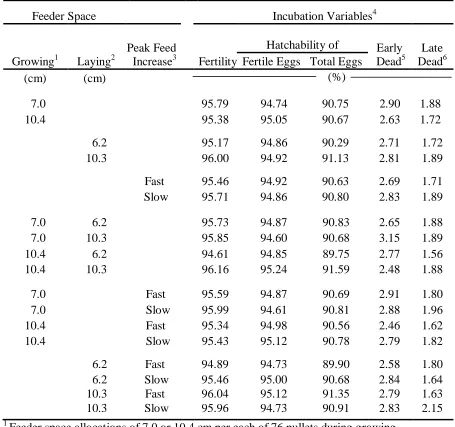
93 Table II-8. Broiler breeder fertility, hatchability, and embryonic mortality
from 26 to 63 wk of age from weekly set of 60 eggs as affected by broiler breeder female feeder space allocation during growing and laying, and feed increase rate from photostimulation to peak egg production, as well as the growing feeder space by laying feeder space interaction, growing feeder space by feed increase rate interaction, and laying feeder space by feed increase
rate interaction in Experiment II ……… 94
Table II-9. Broiler breeder female fertility after removing males at 64 wk of age as affected by broiler breeder female feeder space allocation during growing and laying, and feed increase rate from photostimulation to peak egg production, as well as the growing feeder space by laying feeder space interaction, growing feeder space by feed increase rate interaction, and
laying feeder space by feed increase rate interaction in Experiment II …….. 95 Table II-10. The BW of mixed sex broiler chickens produced from eggs laid
at 28 wk as affected by broiler breeder female feeder space allocation during growing and laying, and feed increase rate from photostimulation to peak egg production, as well as the growing feeder space by laying feeder space interaction, growing feeder space by feed increase rate interaction, and laying
xi Page Table II-11. Adjusted feed consumption ratio (AdjFCR) of mixed sex
broiler chickens produced from eggs laid at 28 wk as affected by broiler breeder female feeder space allocation during growing and laying, and feed increase rate from photostimulation to peak egg production, as well as the growing feeder space by laying feeder space interaction, growing feeder space by feed increase rate interaction, and laying feeder space by feed increase
rate interaction in Experiment II ………. 97
Table II-12. Percentage mortality (deaths) of mixed sex broiler chickens produced from eggs laid at 28 wk as affected by broiler breeder female feeder space allocation during growing and laying and feed increase rate from photostimulation to peak egg production, as well as the growing feeder space by laying feeder space interaction, growing feeder space by feed increase rate interaction, and laying feeder space by feed increase rate interaction in Experiment II ……….
98 MANUSCRIPT III
Table III-1. Broiler breeder female BW (group samples) as affected by broiler breeder female feed allocation program during growing, feed increase rate from photostimulation to peak egg production, and growing feed allocation program by feed increase rate interaction in Experiment III ……...
120 Table III-2. Broiler breeder female BW (group samples) as affected by
broiler breeder female feed allocation program during growing, feed increase rate from photostimulation to peak egg production, and growing feed
allocation program by feed increase rate interaction in Experiment III …….. 121 Table III-3. Egg weight (EW) and percentage shell at 28, 34, 40, and 46 wk
of age as affected by broiler breeder female feed allocation program during growing, feed increase rate from photostimulation to peak egg production, and growing feed allocation program by feed increase rate interaction in Experiment III ……….………..
122 Table III-4. Egg weight (EW) and percentage shell at 52, 58, and 64 wk of
age as affected by broiler breeder female feed allocation program during growing, feed increase rate from photostimulation to peak egg production, and growing feed allocation program by feed increase rate interaction in Experiment III………...….
xii Page Table III-5. Broiler breeder egg production and female mortality from 25 to
64 wk of age as affected by broiler breeder female feed allocation program during growing, feed increase rate from photostimulation to peak egg production, and growing feed allocation program by feed increase rate
interaction in Experiment III ………... 124
Table III-6. Broiler breeder fertility, hatchability, and embryonic mortality from 27 to 64 wk of age as affected by broiler breeder female feed allocation program during growing, feed increase rate from photostimulation to peak egg production, and growing feed allocation
program by feed increase rate interaction in Experiment III ………... 125 Table III-7. The BW of male broiler chickens produced from eggs laid at 28
wk of age as affected by broiler breeder female feed allocation program during growing, feed increase rate from photostimulation to peak egg production, and growing feed allocation program by feed increase rate
interaction in Experiment III.………... 126
Table III-8. The BW of female broiler chickens produced from eggs laid at 28 wk of age as affected by broiler breeder female feed allocation program during growing, feed increase rate from photostimulation to peak egg production, and growing feed allocation program by feed increase rate interaction in Experiment III ………...
127 Table III-9. Adjusted feed consumption ratio (AdjFCR) of male broiler
chickens produced from eggs laid at 28 wk of age as affected by broiler breeder female feed allocation program during growing, feed increase rate from photostimulation to peak egg production, and growing feed allocation
program by feed increase rate interaction in Experiment III ……….. 128 Table III-10. Adjusted feed consumption ratio (AdjFCR) of female broiler
chickens produced from eggs laid at 28 wk of age as affected by broiler breeder female feed allocation program during growing, feed increase rate from photostimulation to peak egg production, and growing feed allocation
program by feed increase rate interaction in Experiment III ………... 129 Table III-11. Percentage mortality (deaths) of male broiler chickens
produced from eggs laid at 28 wk of age as affected by broiler breeder female feed allocation program during growing, feed increase rate from photostimulation to peak egg production, and growing feed allocation
xiii Page Table III-12. Percentage mortality (deaths) of female broiler chickens
produced from eggs laid at 28 wk of age as affected by broiler breeder female feed allocation program during growing, feed increase rate from photostimulation to peak egg production, and growing feed allocation
program by feed increase rate interaction in Experiment III ………... 131
MANUSCRIPT IV
Table IV-1. Broiler breeder female BW (group samples) as affected by weeks of broiler breeder female starter feed, weeks of male starter feed, feed allocation program during growing, and female starter feed by male starter feed, female starter feed by feed allocation program, and male starter feed by
feed allocation program interactions in Experiment IV ……….. 152 Table IV-2. Broiler breeder female BW (individual) as affected by weeks of
broiler breeder female starter feed, weeks of male starter feed, feed allocation program during growing, and female starter feed by male starter feed, female starter feed by feed allocation program, and male starter feed
by feed allocation program interactions in Experiment IV ………. 153 Table IV-3. Coefficient of variation (CV) of broiler breeder female BW as
affected by weeks of broiler breeder female starter feed, weeks of male starter feed, feed allocation program during growing, and female starter feed by male starter feed, female starter feed by feed allocation program, and
male starter feed by feed allocation program interactions in Experiment IV .. 154 Table IV-4. Egg weight (EW) and percentage shell at 32, 45, and 64 wk of
age as affected by weeks of broiler breeder female starter feed, weeks of male starter feed, feed allocation program during growing, and female starter feed by male starter feed, female starter feed by feed allocation program, and male starter feed by feed allocation program interactions in Experiment IV...
155 Table IV-5. Broiler breeder egg production and female mortality from 25 to
64 wk of age as affected by weeks of broiler breeder female starter feed, weeks of male starter feed, feed allocation program during growing, and female starter feed by male starter feed, female starter feed by feed allocation program, and male starter feed by feed allocation program interactions in Experiment IV ………..
xiv Page Table IV-6. Broiler breeder fertility, hatchability, and embryonic mortality
from 26 to 64 wk of as affected by weeks of broiler breeder female starter feed, weeks of male starter feed, feed allocation program during growing, and female starter feed by male starter feed, female starter feed by feed allocation program, and male starter feed by feed allocation program interactions in Experiment IV ………..
157 MANUSCRIPT V
Table V-1. Broiler breeder female BW as affected by broiler breeder female feeder space allocation during growing, strain, and feed increase rate from photostimulation to peak egg production, as well as the growing feeder space by strain interaction, growing feeder space by feed increase rate
interaction, and strain by feed increase rate interaction in Experiment V…… 176 Table V-1 (continued). Broiler breeder female BW as affected by broiler
breeder female feeder space allocation during growing, strain, and feed increase rate from photostimulation to peak egg production, as well as the growing feeder space by strain interaction, growing feeder space by feed increase rate interaction, and strain by feed increase rate interaction in Experiment V ………...
177 Table V-2. Egg weight (EW) and egg components at 29 wk of age as
affected by broiler breeder female feeder space allocation during growing, strain, and feed increase rate from photostimulation to peak egg production, as well as the growing feeder space by strain interaction, growing feeder space by feed increase rate interaction, and strain by feed increase rate
interaction in Experiment V………. 178
TABLE V-3. Egg weight (EW) and egg components at 48 wk of age as affected by broiler breeder female feeder space allocation during growing, strain, and feed increase rate from photostimulation to peak egg production, as well as the growing feeder space by strain interaction, growing feeder space by feed increase rate interaction, and strain by feed increase rate
interaction in Experiment V………. 179
TABLE V-4. Broiler breeder fertility at 31 and 48 wk of age as affected by broiler breeder female feeder space allocation during growing, strain, and feed increase rate from photostimulation to peak egg production, as well as the growing feeder space by strain interaction, growing feeder space by feed increase rate interaction, and strain by feed increase rate interaction in Experiment V………
xv Table V-5. Broiler breeder egg production from 25 to 53 wk of age as
affected by broiler breeder female feeder space allocation during growing, strain, and feed increase rate from photostimulation to peak egg production, as well as the growing feeder space by strain interaction, growing feeder space by feed increase rate interaction, and strain by feed increase rate interaction in Experiment V …….………... Table V-6. The BW of mixed sex broiler chickens produced from eggs laid at 31 wk of age as affected by broiler breeder female feeder space allocation during growing, female strain, and feed increase rate from photostimulation to peak egg production, as well as the growing feeder space by strain interaction, growing feeder space by feed increase rate interaction, and strain by feed increase rate interaction in Experiment V ……….
Page
181
182 Table V-7. Adjusted feed consumption ratio (AdjFCR) of mixed sex broiler
chickens produced from eggs laid at 31 wk of age as affected by broiler breeder female feeder space allocation during growing, strain, and feed increase rate from photostimulation to peak egg production, as well as the growing feeder space by strain interaction, growing feeder space by feed increase rate interaction, and strain by feed increase rate interaction in Experiment V ………..
183 Table V-8. Percentage mortality (deaths) of mixed sex broiler chickens
produced from eggs laid at 31 wk of age as affected by broiler breeder female feeder space allocation during growing, strain, and feed increase rate from photostimulation to peak egg production, as well as the growing feeder space by strain interaction, growing feeder space by feed increase rate
interaction, and strain by feed increase rate interaction in Experiment V …... 184
Table VI-6. Overview of feeder space changes and other experimental
xvi LIST OF FIGURES
Page MANUSCRIPT I
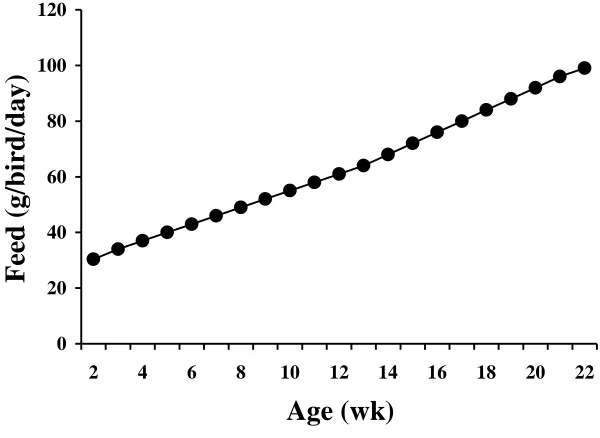
Figure I-1. Feeding program during the rearing period in Manuscript I. Ross 308 and 708SF pullets received feed according to this feeding
program from placement to 22 wk of age………... 48 Figure I-2. Feeding to peak programs in Manuscript I. Ross 308 and 708SF
hens received feed according to these two feeding programs. Either Fast feed from 23 to 29 wk of age or Slow feed from 23 to 30 wk of age. All the hens received the same feed rate thereafter. Rectangles represent the Fast feeding to peak program and circles represent the Slow feeding to peak
program………... 49
Figure I-3. Percentage female mortality during the laying period as affected by female feeding to peak program in Manuscript I. The hottest temperature occurred from 23 to 29 wk of age. Rectangles represent the mortality due to the Fast feeding to peak program and circles represent the mortality due to
the Slow feeding to peak program……… 50
MANUSCRIPT II
Figure II-1. Feeding program during the rearing period in Manuscript II. Ross 708SF pullets received feed according to this feeding program from
placement to 21 wk of age………. 84
Figure II-2. Feeding to peak programs in Manuscript II. Ross 708SF hens received feed according to these two feeding programs, either Fast feed from 21 to 28 wk of age or Slow feed from 21 to 29 wk of age. All hens received the same feed rate thereafter. Rectangles represent the Fast feeding to peak
program and circles represent the Slow feeding to peak program……… 85 Figure II-3. Percentage female mortality during the laying period as affected
by female feeding to peak program in Manuscript II. Circles represent a small decrease in feeder space (7.0-6.2 cm.), rectangles represent an increase in feeder space (7.0-10.3 cm.), triangles represent a decrease in feeder space (10.4-6.2 cm.), and diamonds represent no change in feeder space (10.4-10.3 cm). The percentage mortality from a decrease in feeder space combination
xvii Page MANUSCRIPT III
Figure III-1. Feeding programs during the rearing period in Manuscript III. Ross 308SF hens received feed according to these two feeding programs from placement to 21 wk of age. Circles represent the Line feeding program
and rectangles represent the Sigmoid feeding program………. 118 Figure III-2. Feeding to peak program in Manuscript III. Ross 308SF hens
received feed according to these two feeding program. Both Fast and Slow feeding programs reached their peak at the same time, 27.5 wk of age. All the hens received the same feed rate thereafter. Rectangles represent the Fast feeding to peak program and circles represent the Slow feeding to peak
program……….. 119
MANUSCRIPT IV
Figure IV-1. Feeding programs during the rearing period in Manuscript IV. Ross 708SF pullets received feed according to these two feeding programs from placement to 21 wk of age. Circles represent the Line feeding program
and rectangles represent the Sigmoid feeding program………. 150 Figure IV-2. Feeding program during the laying period in Manuscript IV.
Ross 708SF hens received feed according to this feeding program from 22 to
64 wk of age……….. 151
MANUSCRIPT V
Figure V-1. Feeding to peak program in Manuscript V. Ross 308 and 708SF hens received feed according to these two feeding programs. Either Fast feed from 23 to 29 wk of age or Slow feed from 23 to 30 wk of age. All the hens received the same feed rate thereafter. Rectangles represent the Fast feeding
xviii LIST OF ABBREVIATIONS
AdjFCR Adjusted feed conversion ratio, corrected for mortality AMH Anti-Müllerian Hormone
AW Albumen weight
BW Body weight
C Celsius
cm Centimeter
d Day
EW Egg weight
FSH Follicle Stimulating Hormone
g Gram
h Hour
kg Kilogram
LH Luteinizing Hormone
SD Standard deviation
YW Yolk weight
1 INTRODUCTION
Historically, the brood-grow-lay housing system where broiler breeders reside for 65 wk in a single facility has been popular internationally while the brood-grow and lay housing system where broiler breeders have been moved from growing quarters to laying quarters at about 21 wk of age has been popular in the USA. One difference between these two systems was the change in feeder space from rearing and laying periods that has generally occurred in the latter housing system. Many of the breeder management guidelines have also suggested an increase or “adequate” feeder space to insure that all birds have access to the feed at the same time to insure uniform feed intake (Anonymous, 2006, 2010a). Also, inadequate feeder space has been generally associated with poor uniformity of flock body weight (BW) (Anonymous, 1997). Robinson et al. (2003) also stated that, under typical conditions of feed restriction, inadequate access to feed has been thought to cause problems with BW uniformity at photostimulation. This has been thought to lead to non-uniform sexual maturation such that the all birds in the flock would not begin to produce eggs at the same time.
2 programs. The recommendations for the breeder feeding programs had varied for these two strains. Reddish and Lilburn (2004) showed that there were differences in carcass and reproductive characteristics between breeders that were selected for the production of heavy broilers with increased breast yield and a commercial broiler breeder line that had considerably less broiler breast meat yield. They found that birds with greater breast muscle weight also had a smaller oviduct when compared to birds with less extreme breast yield. Since the oviduct has been characterized as a priority tissue for nutrient partitioning during sexual maturation (Joseph et al., 2000), the feeding program before and after photostimulation has to be given high priority. The feeding program during this time period would likely affect reproductive tract development as a fast growth rate could result in overweight broiler breeders that would exhibit poor egg production, fertility, and hatchability (Havenstein et al., 1994; Tona et al., 2004).
3 feed on broiler breeder males and females, and the effects with feeding program during rearing and laying periods.
4 LITERATURE REVIEW
Genetic Trends
5
Anatomy Of the Female Reproductive System
General. Embryologically, there are two Mullerian ducts in the hen but only the left duct has been found to normally develop and become fully functional. This could be an adaptation to reduce weight for flight. The right ovary and oviduct have been found to be present during early embryonic stages but development has been reported to become asymmetrical by day 4 of incubation and by day 10, regression of the right oviduct has been reported to have begun (Sturkie, 1986). Anti-Mullerian hormone (AMH or Mullerian inhibiting substance) has been shown to contribute to the regression of the Mullerian duct system in male mammals, but no prenatal function in female mammals has been reported (Johnson et al., 2009). However, immunoreactive AMH has been detected in postnatal female mammals (Ueno et al., 1989 a,b). While in birds, AMH has been shown to have a role in regression of the two Mullerian ducts in males and of the right Mullerian duct in females (Teng, 1987). Female birds have also been reported to have AMH present in both embryonic ovaries (Teng, 1987), but Teng (2000, 2001) reported that ovarian estrogen released from the left ovary protected the left Mullerian duct from the influence of AMH and permitted the development of the left oviduct.
6 feeding that could lead to excessive follicle formation and ovulation rates. Problems with egg shell quality and egg size have been linked to feed ingredients issues as well as feeding levels (Robinson et al., 2003).
7 Blastodisc (Germinal Disc). The germinal disc can be observed as a small white dot on the surface of the yellow egg yolk, located where spermatozoa must penetrate and fertilization occur. Once fertilized, the blastodisc would normally begin to divide to become the blastoderm (early embryo) once it has reached the 64-cell stage. Only this small group of surface cells has been found to divide and develop. The larger mass of yolk upon which the embryo (blastoderm) sits does not divide and only serves to provide nutrients to the embryo (Robinson et al., 2003).
Yolk. The ovary has several thousand potential ova (egg yolks) that have an appearance similar to a bunch of grapes. As the ova grow to around 1 mm in diameter, they normally would become white in color. Committed yolks would continue to grow and become mature large (35 mm) yellow yolks over a period of about 19 d. As a percentage of its weight, yolk has been found to be made up of mostly water, fat (lipids), and proteins (Burley and Vadehra, 1989). A small white circle of material located in the center of the yellow yolk has been found to provide the first nutrients required for the early embryo to grow and develop.
8 junction or at the infundibular-magnal junction. Motile sperm would normally enter these storage sites after mating or insemination. These glands have been found to store more than half a million sperm so that hens do not have to be inseminated or mated daily. Sperm released over the course of the daily ovulatory cycle have been reported to ascend to the site of fertilization at the infundibulum and fertilize the daily succession of ova (Ottinger et al., 1995). The infundibulum was found to be about 10 cm in length and the ovum has been found to reside in the infundibulum for 15 to 30 minutes (Robinson et al., 2003).
Magnum. Following fertilization, the ovum must move along the oviduct into the magnum. Egg albumen has been found to be released due to mechanical pressure exerted by the gradually descending ovum. There are two types of albumen, thin and thick, that have been described to be made up mostly of protein and water (Burley and Vadehra, 1989). These two albumen types serve to protect the yolk and embryo from bacteria and promote transport down the oviduct. The twisted strands of the chalazae were reported to interconnect the yolk, inner thick albumen, and outer thick albumen in a manner so as to stabilize the yolk in the center of the egg and prevent the yolk and embryo from contacting the inside of the shell when the egg moves. This arrangement has also been suggested to prevent the germinal disc from desiccation if it were to come to rest beside the egg shell. The length of the magnum in the chicken has been found to be about 33 cm and about 3 to 4 hours has been found to be normally required for passage (Robinson et al., 2003).
9 albumen while the outer shell membrane was formed in contact with the egg shell. Both shell membranes were reported to be comprised of protein fibers that form a mesh-like structure that hold the albumen in place and provide a barrier to prevent the entry of bacteria. The process of shell membrane formation has been reported to require around 1.5 hours (Robinson et al., 2003).
Shell Gland (Uterus). The shell gland, or uterus, has been shown to be the location where “plumping” of the albumen and formation of the final shape of the egg occurred. Plumping involved fluid addition to the albumen, forming the outer thin albumen. The expansion of this albumen in the “plumping” process has been thought to give the egg its final shape within the constraints of the shape of the uterus. Glands in the surface of the shell gland are known to secrete sodium bicarbonate, sodium chloride, potassium chloride, and calcium chloride in liquid form during the shell formation process. A crystalline calcium carbonate and glycoprotein matrix would normally be formed on the shell membrane during the initial stages of the process and the final layer of shell has been found to contain any egg shell pigments. The shell ultimately functions to provide calcium and other minerals to the growing embryo. The ovum was reported to remain in the shell gland for about 20-26 hours (Robinson et al., 2003).
10 tubule have been found to be gradually released over a period of days in some species, or weeks in other species (Bakst and Wishart, 1994).
Vagina. The vagina has been described as being separated from the shell gland by the uterovaginal sphincter muscle and to terminate at the cloaca, the common opening of the reproductive, renal, and gastrointestinal systems. The vagina has no reported role in the formation of the egg other than participation in the expulsion of the egg through coordination with contractions of the shell gland. The expulsion of the egg would normally be with the large end first. The total length of time from fertilization to oviposition would normally be about 25 hours in broiler breeders.
Reproductive Problems In Broiler Breeder Females
13
Benefits Of Delaying Photostimulation As a Result From Feed Restriction
We know that feed restriction during the rearing period has improved ovarian function and reduced the numbers of abnormal eggs through control of growth rate and BW of broiler breeders. Several authors (Katanbaf et al., 1989) have stated that quantitative feed restriction increased the period of time required to attain the BW and body composition needed for sexual maturation. Even though birds may achieve their hypothalamic maturation at a relatively young age, their BW or body composition may not be sufficient for sexual maturity and reproduction at the time (Katanbaf et al., 1989; Robinson et al., 1996). Since sexual maturation of broiler breeders has been shown to be dependent upon achieving minimum thresholds of age, BW, and body composition (Katanbaf et al., 1989), delayed photostimulation would benefit today‟s modern strains as it allows more time for birds to attain all prerequisites for reproduction.
15 agreed that by delaying photostimulation, BW was increased but no subsequent difference in EW was found (Robinson et al., 1996).
Effect Of Heat Stress On Broiler Breeder Females
16 release of progesterone from the ovary stimulated the release of gonadotropin releasing hormones (factors) from the hypothalamus and caused the LH surge from the anterior pituitary (adenohypophysis). Because ovulation occurred 4 to 6 hours following the culmination of the LH surge; the reduction of LH level caused by heat stress may have caused the reduced egg production. The diminished reproductive performance of heat stressed hens may also be related to an increased prolactin (PRL) secretion (El Halawani et al., 1984; Donoghue et al., 1989) since PRL secretion has been found to reduce gonadotropin levels (Youngren et al., 1991; Rozenboim et al., 1993; You et al., 1995). Studies in rats (Neill, 1970; Krulich et al., 1974), cows and goats (Johke, 1970), turkey poults (Opel and Proudman, 1982), laying hens (Johnson, 1981), and turkey hens (El Halawani et al., 1985; Rozenboim et al., 2004) have also showed that heat stress increased the circulating levels of prolactin (PRL), which resulted in decreased circulating levels of gonadotropins (LH and FSH).
17 Causes of Mortality. High environmental temperature is one of the important sources of excess stress in poultry production. Selection for high meat yields in combination with rapid growth rate has resulted in birds that can be more susceptible to heat stress. Chronic thermal stress (high or low environmental temperatures) has been shown to have a detrimental effect upon feed consumption and cause poor BW gain in broiler chickens as well as poor laying rate, egg weight, and shell quality in laying hens, increased incidence of metabolic diseases, and increased mortality (Washburn, 1985; Howlider and Rose, 1987; Marsden and Morris, 1987; Shane, 1988; Leeson and Summers, 1988; Yahav, 2000). In birds, as well as in other homeotherms, body temperature has long been known to be controlled by balancing heat loss against heat production. Heat stress occurs when animals were not able to lose more heat than they produced (Macleod and Hocking, 1993). Earlier studies with broilers of a „fat line‟ genetically selected by Whitehead and Griffin (1984) showed higher mortality than their „lean line‟ counterparts due to heat stress, particularly when they were fed ad libitum. MacLeod and Hocking (1993) and Geraert et al. (1993) also demonstrated a greater heat resistance in genetically lean broilers and hens when compared to fat birds. MacLeod and Hocking (1993) stated that the reason for this was that fat hens were unable to dissipate body heat as efficiently as lean hens when exposed to high ambient temperatures, which would result in a critical rise in deep body temperature.
18 the smallest diameter (Wells, 1972). The effect of reduced blood flow through capillaries would reduce flow rate through heat-exchange interfaces, such as the comb and legs. Increased blood viscosity would also be likely to reduce blood flow through lung alveolar capillaries, which would impair the efficiency of gaseous exchange and may also reduce convective and evaporative heat loss from the lungs (Wells, 1972). Further effects of lower blood flow would be an increased arterial blood pressure causing long-term effects on heart ventricular function that could result in mortality. Reduced feed intake has been suggested to alleviate the thermoregulatory incapacity of the fat-line hens since this could help increase the birds‟ ability to lose heat by reducing plasma triglyceride concentrations, thus reducing the severity of any associated cardiovascular impairment (Hocking et al., 1992). MacLeod and Hocking (1993) suggested the cause of the inability for birds to lose heat may have its origins in elevated blood viscosity and vascular resistance that result from high plasma triglyceride concentrations.
Effects Of Increase In Body Weight and Breast Muscle Weight On The Reproductive
System
20 Bruggeman et al., 1999). According to several workers (Van Middelkoop, 1971; Hocking et al., 1987; Yu et al., 1992), providing excess feed during sexual maturation can cause an over-stimulation of ovarian follicle development in the form of additional large yellow follicles (LYF). Over-feeding for as little as 2 wk between photostimulation and peak production can permanently hinder fertility and hatchability (Ingram and Wilson, 1987). Precision limited feeding has been found to ameliorate this problem but detailed knowledge of the reproductive physiology remains incomplete. Further, the feeding program from onset of production to peak feed may also play an important role during the laying phase. Feeding programs may interact and affect breast muscle and reproductive tract development. Based on our previous observations, BM development may influence reproductive development (Leksrisompong et al., 2007) resulting in differences in egg production and egg quality.
Development Of the Reproductive System
22 REFERENCES
Anonymous. 1997. Hubbard Breeder Management Guide. Hubbard Farms, Walpole, New Hampshire.
Anonymous. 2006. Ross 308 Parent Stock Management Manual. Aviagen, Huntsville, Alabama.
Anonymous. 2010a. Hubbard Breeder Management Guide. Hubbard Farms, Walpole, New Hampshire.
Anonymous. 2010b. Ross 308 and 708 Parent Stock Management Manual. Aviagen, Huntsville, Alabama.
Bakst, M. R., and G. J. Wishart. 1994. Proceedings: First International Symposium on the Artificial Insemination of Poultry. Poultry Science Association, Savor, Illinois. Barbato, G. F. 1999. Genetic relationships between selection for growth and reproductive
effectiveness. Poult. Sci. 78:444-452.
Braganza, A., and W. O. Wilson. 1978a. Effect of acute and chronic elevated air temperature, constant (34oC) and cyclic (10 to 34oC), on brain and heart norepinephrine of male Japanese quail. Gen. Comp. Endocrinol. 30:233-237.
Braganza, A., and W. O. Wilson. 1978b. Elevated temperature effects on catecholamines and serotonin in brains of male Japanese quail. J. Appl. Physiol. 45:705-708.
Brake, J., J. D. Garlich, and E. D. Peebles. 1985. Effect of protein and energy intake by broiler breeders during the prebreeder transition period on subsequent reproductive performance. Poult. Sci. 64:2335-2340.
Breneman, W. R. 1956. Steroid hormones and the development of the reproductive system in the pullet. Endocrinol. 58:262-271.
Bruggeman, V., O. Onagbesan, E. D‟Hondt, N. Buys, M. Safi, D. Vanmontfort, L. Berghman, F. Vandesande, and E. Decuypere. 1999. Effects of timing and duration of feed restriction during rearing on reproductive characteristics in broiler breeder females. Poult. Sci. 78:1424-1434.
23 Chambers, J. R., J. S. Gavora, and A. Fortin. 1981. Genetic changes in meat-type chickens
in the last twenty years. Can. J. Anim. Sci. 61:555-563.
Chien, S. 1982. Hemorheology in clinical medicine. Clin. Hemorheol. 2:137-142.
deBeer, M., and C. N. Coon. 2007. The effect of different feed restriction programs on reproductive performance, efficiency, frame size, and uniformity in broiler breeder hens. Poult. Sci. 86:1927-1939.
Donoghue, D. J., B. F. Krueger, B. M. Hargis, A. M. Miller, and M. E. El Halawani. 1989. Thermal stress reduces serum luteinizing hormone and bioassayable hypothalamic content of luteinizing hormone-releasing hormone in hens. Biol. Reprod. 41:419-424.
El Halawani, M. E., and P. E. Waibel. 1978. Brain indole and catecholamines of turkeys during exposure to temperature stress. Am. J. Physiol. 230:110-117.
El Halawani, M. E., J. L. Silsby, E. J. Behnke, and S. C. Fehrer. 1984. Effect of ambient temperature on serum prolactin and luteinizing hormone levels during the reproductive life and luteinizing hormone levels during the reproductive life cycle of the female turkey (Meleagris gallopavo). Biol. Reprod. 30:809-815.
El Halawani, M. E., J. L. Silsby, S. C. Fehrer, and E. J. Behnke. 1985. Influence of acute or repeated immobilization on plasma prolactin levels in the turkey (Meleagris gallopavo). Gen. Comp. Endocrinol. 59:410-415.
El Halawani, M. E., P. E. Waibel, J. R. Appel, and A. L. Good. 1973. Effects of temperature stress on catecholamines and corticosterone of male turkeys. Am. J. Physiol. 224:384-388.
Etches, R. J., T. M. John, and A. M. V. Gibbins. 1995. Behavioural, physiological, neuroendocrine and molecular responses to heat stress. Pages 31-65 in Poultry Production in Hot Climates. N. J. Daghir, ed. CAB International, Wallingford, UK. Geraert, P. A., S. Guillaumin, and B. Leclercq. 1993. Are genetically lean broilers more
resistant to hot climate? Br. Poult. Sci. 34:643-653.
24 Goerzen, P. R., W. L. Julsrud, and F. E. Robinson. 1996. Duration of fertility in ad libitum
and feed-restricted caged broiler breeders. Poult. Sci. 75:962-965.
Grandin, T., and M. J. Deesing. 1998. Genetics and Animal Welfare. Pages 319-341 in Genetics and the Behaviour of Domestic Animals. T. Grandin, ed. San Diego, California, CA.
Havenstein, G. B., P. R. Ferket, and M. A. Qureshi. 2003a. Growth, livability, and feed conversion of 1957 versus 2001 broilers when fed representative 1957 and 2001 broiler diets. Poult Sci. 82:1500-1508.
Havenstein, G. B., P. R. Ferket, and M. A. Qureshi. 2003b. Carcass composition and yield of 1957 vs 2001 broilers when fed representative 1957 and 2001 broiler diets. Poult Sci. 82:1509-1518.
Havenstein, G. B., P. R. Ferket, S. E. Scheideler, and B. T. Larson. 1994. Growth, livability and feed conversion of 1957 vs 1991 broilers when fed “typical” 1957 and 1991 broiler diets. Poult. Sci. 73:1785-1794.
Hocking, P. M. 1993. Effects of body weight at sexual maturity and the degree and age of restriction during rearing on the ovarian follicular hierarchy of broiler breeder females. Br. Poult. Sci. 34:793-801.
Hocking, P. M. 1996. Role of body weight and food intake after photostimulation on ovarian function at first egg in broiler breeder females. Br. Poult. Sci. 37:841-851. Hocking, P. M., A. B. Gilbert, M. Walker, and D. Waddington. 1987. Ovarian follicular
structure of White Leghorns fed ad libitum and dwarf and normal broiler breeder pullets fed ad libitum or restricted until point of lay. Br. Poult. Sci. 28:495-506.
Hocking, P. M., D. Waddington, M. A. Walker, and A. B. Gilbert. 1989. Control of the development of the ovarian follicular hierarchy in broiler breeder pullets by food restriction during rearing. Br. Poult. Sci. 30:167-174.
Hocking, P. M., H. McCormack, and C. C. Whitehead. 1992. Plasma oestrogen concentrations and reproductive characteristics of broiler chickens after ten generations of selection at seven weeks of age for high or low plasma very low density lipoprotein concentration. Br. Poult. Sci. 33:1043-1056.
25 Howlider, M. A. R., and S. P. Rose. 1987. Temperature and the growth of broilers. World‟s
Poult. Sci. J. 43:228-237.
Hudson, B. P., R. J. Lien, and J. B. Hess. 2000. Effects of early protein intake on development and subsequent egg production of broiler breeder hens. J. Appl. Poult. Res. 9:324-333.
Hussein, A. S., A. H. Canton, A. J. Pescatore, and T. H. Johnson. 1996. Effect of dietary protein and energy levels on pullet development. Poult. Sci. 75:973-978.
Ingram, D. R., and H. R. Wilson. 1987. Ad libitum feeding of broiler breeders prior to peak egg production. Nutr. Rep. Int. 36:839-845.
Jeronen, E., M. L. Peura, and R. Hissa. 1978. Effect of temperature stress on brain monoamine content in the pigeon. J. Therm. Biol. 3:25-30.
Johke, T. 1970. Factors affecting plasma prolactin level of the cow and the goat as determined by radioimmunoassay. Endocrinol. Jpn. 17:393-398.
Johnson, A. L. 1981. Comparison of three serial blood sampling techniques on plasma hormone concentrations in laying hens. Poult. Sci. 60:2322-2327.
Johnson, P. A, R. R. Kent, M. E. Urick, L. S. Trevino, and J. R. Giles. 2009. Expression of anti-mullerian hormone in hens selected for different ovulation rates. Reproduction. 5:857-863.
Joseph, N. S., F. E. Robinson, D. R. Korver, and R. A. Renema. 2000. Effect of dietary protein intake during the pullet-to-breeder transition period on early egg weight and production in broiler breeders. Poult. Sci. 79:1790-1796.
Joseph, N. S., F. E. Robinson, R. A. Renema, and M. J. Zuidhof. 2002. Responses of two strains of female broiler breeders to a midcycle increase in photoperiod. Poult. Sci. 81:745-754.
Katanbaf, M. N., E. A. Dunnington, and P. B. Siegel. 1989. Restricted feeding in early and late feathering chickens. 1. Reproductive responses. Poult. Sci. 68:352-358.
26 Krulich, L., E. Hefco, P. Illner, and C. B. Read. 1974. The effects of acute stress on the secretion of LH, FSH, prolactin and GH in the normal male rate with comments on their statistical evaluation. Neuroendocrinology. 16:293-311.
Leeson, S., and J. D. Summers. 1984. Influence of nutritional modification on skeletal size of leghorn and broiler breeder pullets. Poult. Sci. 63:1222-1228.
Leeson, S., and J. D. Summers. 1988. Some nutritional implications of leg problems with poultry. Br. Vet. J. 144:81-92.
Leksrisompong, N., E. O. Oviedo-Rondón, and J. Brake. 2007. Relationships between broiler breeder body weight, breast meat development, and reproductive tract development. Poult. Sci. 86 (Suppl. 1): 167. (Abstr.)
Lilburn, M. S., and K. E. Nestor. 1993. The relationship between various indices of carcass growth and development and reproduction in turkey hens. Poult. Sci. 72:2030-2037. Lilburn, M. S., K. Ngiam-Rilling, and J. H. Smith. 1987. Relationships between dietary
protein, dietary energy, rearing environment, and nutrient utilization by broiler breeder pullets. Poult. Sci. 66:1111-1118.
MacLeod, M. G., and P. M. Hocking. 1993. Thermoregulation at high ambient temperature in genetically fat and lean broiler hens fed ad libitum or on a controlled-feeding regime. Br. Poult. Sci. 34:589-596.
Marsden, A., and T. R. Morris. 1987. Quantitative review of the effects of environmental temperature on feed intake, egg output and energy balance in laying pullet. Br. Poult. Sci. 28:693-704.
McDaniel, G. R., J. Brake, and M. K. Eckman. 1981. Factors affecting broiler breeder performance. 4. Interrelationship of some reproductive traits. Poult. Sci. 60:1792-1797.
Melnychuk, V. L., F. E. Robinson, R. A. Renema, R. T. Hardin, L. G. Bagley, and D. A. Emmerson. 1997. Carcass traits and reproductive development at the onset of lay in two lines of female turkeys. Poult. Sci. 76:1197-1204.
27 Nestor, K. E. 1980. Genetics of growth and reproduction in the turkey. 8. Influence of a management change on response to selection for increased egg production. Poult. Sci. 59:1961-1969.
Novero, R. P., M. M. Beck, E. W. Gleaves, A. L. Johnson, and J. A. Deshazer. 1991. Plasma progesterone, luteinizing hormone concentrations, and granulose cell responsiveness in heat-stressed hens. Poult. Sci. 70:2335-2339.
Opel, H., and J. A. Proudman. 1982. Effects of repeated handling and blood sampling on plasma prolactin levels in young turkeys. Poult. Sci. 61:1390-1398.
Ottinger, M. A., and M. R. Bakst. 1995. Endocrinology of the avian reproductive system. J. Avian Med. Surg. 9:242-250.
Reddish, J. M., and M. S. Lilburn. 2004. A comparison of growth and development patterns in yield selected and unimproved broiler lines. 1. Male broiler growth. Poult. Sci. 83:1067-1071.
Reddy, R. P. 1994. Artificial insemination of broilers: Economic and management implications. Pages 73-89 in First International Symposium on the Artificial Insemination of Poultry. Poultry Science Association, Savoy, IL.
Renema, R. A., and F. E. Robinson. 2004. Defining normal: comparison of feed restriction and full feeding of female broiler breeders. World‟s Poult. Sci. J. 60:508-522. Renema, R. A., F. E. Robinson, J. A. Proudman, M. Newcombe, and R. I. McKay. Effects
of body weight and feed allocation during sexual maturation in broiler breeder hens. 2. Ovarian morphology and plasma hormone profiles. 1999. Poult. Sci. 78:629-639. Renema, R. A., L. F. Romero, M. J. Zuidhof, and F. E. Robinson. 2008. Reaping what you
sow: Linking broiler breeder nutrition to egg production and offspring traits. Poultry Service Industry Workshop.
Richards, M. P., R. W. Rosebrough, C. N. Coon, and J. P. McMurtry. 2010. Feed intake regulation for the female broiler breeder: In theory and in practice. J. Appl. Poult. Res. 19:182-193.
28 Robinson, F. E., L. Bouvier, and R. A. Renema. 1998a. Effects of photostimulatory lighting and feed allocation in female broiler breeders. 1. Reproductive development. Can. J. Anim. Sci. 78:603-613.
Robinson, F. E., L. Bouvier, and R. A. Renema. 1998b. Effects of photostimulatory lighting and feed allocation in female broiler breeders. 2. Egg and chick production characteristics. Can. J. Anim. Sci. 78:615-623.
Robinson, F. E., N. A. Robinson, and R. T. Hardin. 1995. The effects of 20-week body weight and feed allocation during early lay on female broiler breeders. J. Appl. Poult. Res. 4:203-210.
Robinson, F. E., T. A. Wautier, R. T. Hardin, N. A. Robinson, J. L. Wilson, M. Newcombe, and R. I. Mckay. 1996. Effects of age at photostimulation on reproductive efficiency and carcass characteristics. 1. Broiler-breeder hens. Can. J. of Anim. Sci. 76:275-282.
Romanoff, A. L. 1960. The Avian Embryo. Macmillan Co., New York, NY.
Rozenboim, I., C. Tabibzadeh, J. L. Silsby, and M. E. El Halawani. 1993. The effect of ovine prolactin (oPRL) administration on hypothalamic vasoactive intestinal peptide (VIP), gonadoropin releasing hormone I and II (GnRH-I, II) content and anterior pituitary VIP receptors in laying turkey hens. Biol. Reprod. 48:1246-1250.
Rozenboim, I., E. Tako, O. Gal-Garber, J. A. Proudman, and Z. Uni. 2007. The effect of heat stress on ovarian function of laying hens. Poult. Sci. 86:1760-1765.
Rozenboim, I., N. Mbarky, R. Heiblum, Y. Chaiseha, S. W. Kang, I. Biran, A. Rosenstrauch, D. Sklan, and M. E. El Halawani. 2004. The role of prolactin in reproductive failure associated with heat stress in the domestic turkey. Biol. Reprod. 71:1208-1213.
Saarela, S., R. Hissa, E. Hohtola, and E. Jeronen. 1977. Effects of –methyl-para-tyrosine and temperature stress on monoamine and metabolite level in the pigeon. J. Therm. Biol. 2:121-126.
29 Siegel P. B., and E. A. Dunnington. 1985. Reproductive complications associated with selection for broiler growth. Pages 59-71 in Poultry Genetics and Breeding. W. G. Hill, J. M. Manson, and D. Hewitt, eds. British Poultry Science, Ltd., Edinburgh, Scotland.
Smith, A. J., and L. Oliver. 1972. Some nutritional problems associated with egg production at high environmental temperatures. 1. The effect of environmental temperature and rationing treatments on the productivity of pullets fed on diets of differing energy content. Rhod. J. Agric. Sci. 10:3-12.
Sturkie, P. D. 1954. Avian Physiology. Comstock, Ithaca, NY.
Sturkie, P. D. 1986. Avian Physiology. Springer Verlag, New York, NY.
Suarez, M. E., H. R. Wilson, F. B. Mather, C. J. Wilcox, and B. N. McPherson. 1997. Effect of strain and age of the broiler breeder female on incubation time and chick weight. Poult. Sci. 76:1029-1036.
Teng, C. S. 1987. Quantification of Müllerian inhibiting substance in developing chick gonad by a competitive enzyme-linked immununosorbent assay. Dev. Biol. 123:255-263.
Teng, C. S. 2000. Differential expression of c-Jun proteins during Müllerian duct growth and apoptosis: caspase-related tissue death blocked by diethylstilbestrol. Cell and Tissue Res. 302:377-385.
Teng, C. S. 2001. Differential activation of MAPK during Müllerian duct growth and apoptosis: JNK and p38 stimulation by DES blocks tissue death. Cell and Tissue Res. 306:27-34.
Tona, K., O. M. Onagbesan, Y. Jego, B. Kamers, E. Decuypere, and V. Bruggeman. 2004. Comparison of embryo physiological parameters during incubation, chick quality, and growth performance of three lines of broiler breeders differing in genetic composition and growth rate. Poult. Sci. 83:507-513.
Ueno, S. T. Kuroda, D. T. Maclaughlin, R. C. Ragin, T. F. Manganaro, P. K. Donahoe. 1989. Müllerian inhibiting substance in the adult rat ovary during various stages of the estrous cycle. Endocrinol. 125:1060-1066.
30 Wells, R. 1972. Microcirculation and coronary blood flow. Amer. J. Cardiol. 29:847-850. Whitehead, C. C., and H. D. Griffin. 1984. Development of divergent lines of lean and fat
broilers using very low density lipoprotein concentration as selection criterion: the first three generations. Br. Poult. Sci. 25:573-582.
Wilson, J. L., F. E. Robinson, N. A. Robinson, and R. T. Hardin. 1995. Effects of feed allocation on female broiler breeders. J. Appl. Poult. Res. 4:193-202.
Wolfenson, D., B. J. Lew, W. W. Thatcher, Y. Graber, and R. Meidan. 1997. Seasonal and acute heat stress effects on steroid production by dominant follicles in cow. Anim. Reprod. Sci. 47:9-19.
U.S. Census Bureau. 2010. http://www.prb.org/Topics/Census2010.aspx USDA ERS. 2010. http://www.ers.usda.gov/Briefing/baseline/livestock.htm
Van Middelkoop, J. H. 1971. Shell abnormalities due to the presence of two eggs in the shell gland. Arch. Geflugelkd. 35:122-127.
Yahav, S. 2000. Domestic fowl-strategies to confront environmental conditions. Avian Poult. Biol. Rev. 11:81-95.
You, S., L. K. Foster, J. L. Silsby, M. E. El Halawani, and D. N. Foster. 1995. Sequence analysis of the turkey LH subunit and its regulation by gonadotropin-releasing hormone and prolactin in cultured pituitary cells. J. Mol. Endocrinol. 14:117-129. Youngren, O. M., M. E. El Halawani, J. L. Silsby, and R. E. Phillips. 1991. Intracranial
prolactin perfusion induces incubation behavior in turkey hens. Biol. Reprod. 44:425-431.
Yu, M. W., F. E. Robinson, M. T. Clandinin, and L. Bodnar. 1990. Growth and body composition of broiler chickens in response to different regimens of feed restriction. Poult. Sci. 69:2074-2081.
31 MANUSCRIPT I. Effect of Feeder Space Allocations during Rearing, Female Strain, and Feed Increase Rate from Photostimulation to Peak Egg Production on Broiler Breeder Female and Broiler Progeny Performance
ABSTRACT
32 increase program or strain and there were no interactions for any variable measured. Eggs produced by these hens at 31 wk of age were incubated under standard conditions and the carryover effects on the broiler progeny evaluated. There were 19 male and 19 female broiler chicks mixed equally in each of 32 pens in a 2 x 2 x 2 design with 4 replicates per interaction cell. Broiler BW, feed consumption, adjusted feed conversion ratio (AdjFCR), and mortality were measured at 1, 14, 28, and 42 d of age. Broilers from the Ross 308 strain were significantly heavier at all ages that could have been initially due to a heavier EW. There were no effects on AdjFCR as well as mortality of broiler progeny. It could be concluded that a Slow feed increase from photostimulation to peak production was beneficial for broiler breeder females during the hot temperature irrespective of strain.
33 INTRODUCTION
35 MATERIALS AND METHODS
Broiler Breeder Rearing Period. Broiler breeder males (Ross 344) and females (Ross 308SF and Ross 708SF) were placed in an enclosed fan-ventilated 32-pen litter floor rearing house with 16 (14.3 m2 area)pens for females and 16 (4.6 m2 area) pens for males. The rearing house was equipped with 5 space heaters and 6 upward directed fans in the central walkway with pens on either side to insure uniform temperature throughout the house. At placement, there were 75 females and 18 males in each female and male pen, respectively. There was either Ross 308SF or Ross 708SF strain females in each female rearing pen and either 3 or 4 tube feeders (Kuhl DH-4) in each female rearing pen as well as 1 tube feeder in each male rearing pen. Each feeder pan had a circumference of 132 cm. After 23 h of light per day for one week, all birds were reared to 23 wk of age with 8 h of light per day at an average light intensity of 15 lux using 12W fluorescent light bulbs. Access to water was limited by a time clock and solenoid system sufficient to control litter moisture and allow the birds to have unlimited access to water until at least one hour after all feed was consumed and a similar amount on non-feed days during rearing. This was typically 6 h daily. A group BW of all females and males was taken at placement (1 d) and individual female and male BW was taken at 20 wk of age.