Constructing and Using Broad-Coverage Lexical Resource for Enhancing Morphological
Analysis of Arabic
Majdi Sawalha, Eric Atwell
School of Computing,University of Leeds, Leeds, LS2 9JT, UK
E-mail: [email protected], [email protected]
Abstract
Broad-coverage language resources which provide prior linguistic knowledge must improve the accuracy and the performance of NLP applications. We are constructing a broad-coverage lexical resource to improve the accuracy of morphological analyzers and part-of-speech taggers of Arabic text. Over the past 1200 years, many different kinds of Arabic language lexicons were constructed; these lexicons are different in ordering, size and aim or goal of construction. We collected 23 machine-readable lexicons, which are freely available on the web. We combined lexical resources into one large broad-coverage lexical resource by extracting information from disparate formats and merging traditional Arabic lexicons.
To evaluate the broad-coverage lexical resource we computed coverage over the Qur’an, the Corpus of Contemporary Arabic, and a sample from the Arabic Web Corpus, using two methods. Counting exact word matches between test corpora and lexicon scored about 65-68%; Arabic has a rich morphology with many combinations of roots, affixes and clitics, so about a third of words in the corpora did not have an exact match in the lexicon. The second approach is to compute coverage in terms of use in a lemmatizer program, which strips clitics to look for a match for the underlying lexeme; this scored about 82-85%.
1.
Introduction
Lexicography is the applied part of lexicology. It is concerned with collating, ordering of entries, derivations and their meaning depending on the aim of the lexicon to be constructed and its size. Lexicography is defined as “…the branch of applied linguistics concerned with the design and construction of lexica for practical use.” (Eynde & Gibbon, 2000). On the other hand, lexicology is defined as “…the branch of descriptive linguistics concerned with the linguistic theory and methodology for describing lexical information, often focusing specifically on issues of meaning.” (Eynde & Gibbon, 2000). Long-term efforts lexicographic projects have been greatly accelerated since the advent and use of computers which is known as computational lexicography. However, constructing a large-scale broad-coverage lexicon involves long-time development of specifications, design, collection of lexical data, information structuring, and user-oriented presentation formatting (Eynde & Gibbon, 2000).
Modern English dictionaries are stored using computerized lexicographic databases. The most-widely and accepted lexicographic database representation is lexical text markup using SGML (Standard Generalised Markup Language) such as; XML. Other Database Management System (DBMS) can be used such as; relational databases, object-oriented DBMS with
inheritance mechanisms, and hybrid
object-oriented/relational databases.
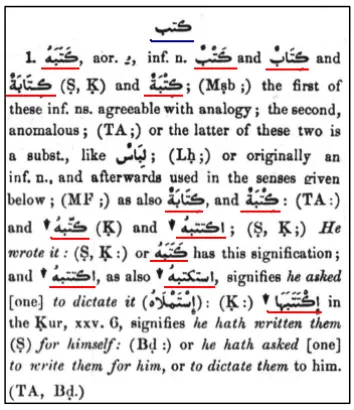
Traditional Arabic lexicons are not available in computerized lexicographic databases. Moreover, traditional Arabic lexicons have different arrangement methodologies than modern English dictionaries. Common English dictionaries list lexical entries, which are words, arranged alphabetically; followed by the meaning of that word, while Arabic lexicons are mainly
arranged by selecting the root as main lexical entries. The roots are followed by a definition part which may span several pages. The definition part is written as a unit or an article which defines all the derived words of a certain root. These lexical entries are not arranged or distinguished with special formatting.
A study of a traditional Arabic lexicon called al-qāmūs
al-muḥῑṭ ﻂﻴﶈﺍ ﺱﻮﻣﺎﻘﻟﺍ “The comprehensive lexicon”
showed three major drawbacks of traditional Arabic lexicons. First, it does not represent language development periods in different times. Second, the ambiguity of defining and explaining lexical meaning of the words. Third, the unorganized way of ordering the derivations of lexical entries and the absence of the origin of the derivations. The researcher highlighted the importance of ordering the derivations of each lexical entry to directly access the meaning of the derivations, and to show the origin of the Arabic word and its specifications (Khalil, 1998).
2.
Traditional Arabic lexicography
Arabic lexicography is one of the original and deep-rooted arts of Arabic literature. The first lexicon constructed was kitāb al-‘ayn ﲔﻌﻟﺍ ﺏﺎﺘﻛ ‘al-‘ayn lexicon’ by al-farāhῑdῑ (died in 791). Over the past 1200 years, many different kinds of Arabic language lexicons were constructed; these lexicons are different in ordering, size and aim or goal of construction. Many Arabic language linguists and lexicographers studied the construction, development and the different methodologies used to construct these lexicons.Traditional Arabic lexicons distinguish between four classes of ordering lexical entries in the lexicon. First,
al-ẖalῑl methodology is developed by ﻱﺪﻴﻫﺍﺮﻔﻟﺍ ﺪﲪﺃ ﻦﺑ ﻞﻴﻠﳋﺍ
5.
Combining the processed lexicons in
one broad-coverage lexical resource
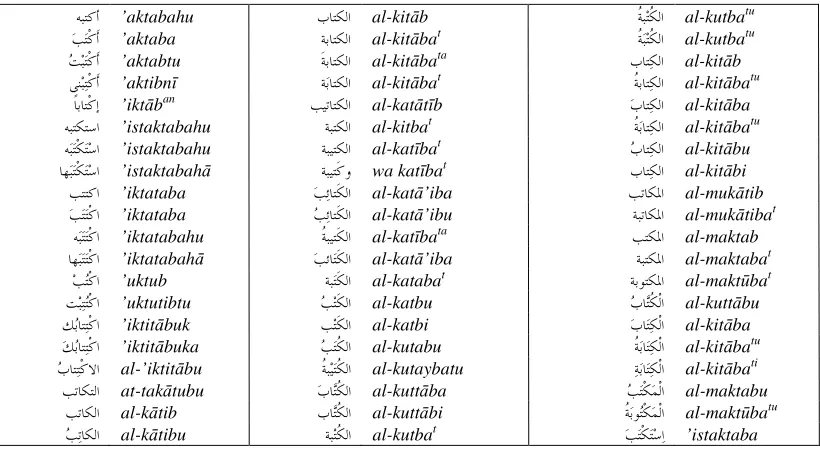
After analyzing each lexicon, a combination algorithm is applied to construct the broad-coverage lexicon. The algorithm starts by selecting a large lexicon called ﻥﺎﺴﻟ ﺏﺮﻌﻟﺍ lisān al-‘rab ‘Arab tongue’ as a seed to the broad-coverage lexicon. Then, the lexicons are combined one by one to the broad-coverage lexicon. Figure 4 shows the first 60 lexical entries of the root ﺐﺘﻛ k-t-b ‘wrote’ stored in the broad-coverage lexicon. After, combiningeach lexicon the percentage of records added to the broad-coverage lexicon is computed. The percentage starts by 100% for the seed lexicon and decreases during the combination process. The percentage will tell us when the combination process should stop, and which lexicons are better to construct a broad-coverage lexical resource. Table 2 shows the number of records extracted from 7 analyzed lexicons so far, and the number and the percentage of records combined to the broad-coverage lexicon.
# Lexicon Word types[B] Records inserted [A] Percentage
(A/B)% (A/C)%
1 lisān al-‘rab 207,992 207,992 100.00% 47.80%
2 mu’ğam al-muḥῑṭ fῑ al- luḡat 74,507 61,113 82.02% 14.04%
3 tağ al-‘arūs min ğawāhir al-qāmūs 128,119 95,415 74.47% 21.93%
4 muẖtār aṣ-ṣiḥāḥ 19,540 16,573 84.82% 3.81%
5 al-muğrab fῑ tartῑb al-mu‘rab 12,396 9,805 79.10% 2.25%
6 kitābu al-‘ayn 30,292 18,878 62.32% 4.34%
7 al-mu’ğam al-wasῑṭ 36,660 25,364 69.19% 5.83%
Totals 509,506 435,140 [C] 85.40% 100.00%
Table 2: the number of records extracted from 7 analyzed lexicons, and the number and the percentage of records combined to the broad-coverage lexicon.
ﻪﺒﺘﻛﺃ ’aktabahu ﺏﺎﺘﻜﻟﺍ al-kitāb ﹸﺔﺒﺘﹸﻜﻟﺍ al-kutbatu ﺐﺘﹾﻛﹶﺃ ’aktaba ﺔﺑﺎﺘﻜﻟﺍ al-kitābat ﹸﺔﺒﺘﹸﻜﻟﺍ al-kutbatu ﺖﺒﺘﹾﻛﹶﺃ ’aktabtu ﹶﺔﺑﺎﺘﻜﻟﺍ al-kitābata ﺏﺎﺘﻜﻟﺍ al-kitāb ﻲﹺﻨﺒﺘﹾﻛﹶﺃ ’aktibnῑ ﺔﺑﺎﺘﻜﻟﺍ al-kitābat ﹸﺔﺑﺎﺘﻜﻟﺍ al-kitābatu
ﹰﺎﺑﺎﺘﹾﻛﹺﺇ ’iktāban ﺐﻴﺗﺎﺘﻜﻟﺍ al-katātῑb ﺏﺎﺘﻜﻟﺍ al-kitāba ﻪﺒﺘﻜﺘﺳﺍ ’istaktabahu ﺔﺒﺘﻜﻟﺍ al-kitbat ﹸﺔﺑﺎﺘﻜﻟﺍ al-kitābatu ﻪﺒﺘﹾﻜﺘﺳﺍ ’istaktabahu ﺔﺒﻴﺘﻜﻟﺍ al-katῑbat ﺏﺎﺘﻜﻟﺍ al-kitābu ﺎﻬﺒﺘﹾﻜﺘﺳﺍ ’istaktabahā ﺔﺒﻴﺘﹶﻛﻭ wa katῑbat ﹺﺏﺎﺘﻜﻟﺍ al-kitābi
ﺐﺘﺘﻛﺍ ’iktataba ﺐﺋﺎﺘﹶﻜﻟﺍ al-katā’iba ﺐﺗﺎﻜﳌﺍ al-mukātib ﺐﺘﺘﹾﻛﺍ ’iktataba ﺐﺋﺎﺘﹶﻜﻟﺍ al-katā’ibu ﺔﺒﺗﺎﻜﳌﺍ al-mukātibat
ﻪﺒﺘﺘﹾﻛﺍ ’iktatabahu ﹸﺔﺒﻴﺘﹶﻜﻟﺍ al-katῑbata ﺐﺘﻜﳌﺍ al-maktab ﺎﻬﺒﺘﺘﹾﻛﺍ ’iktatabahā ﺐﺋﺎﺘﹶﻜﻟﺍ al-katā’iba ﺔﺒﺘﻜﳌﺍ al-maktabat
ﺐﺘﹾﻛﺍ ’uktub ﺔﺒﺘﹶﻜﻟﺍ al-katabat ﺔﺑﻮﺘﻜﳌﺍ al-maktūbat ﺖﺒﺘﺘﹾﻛﺍ ’uktutibtu ﺐﺘﹶﻜﻟﺍ al-katbu ﺏﺎﺘﹸﻜﹾﻟﺍ al-kuttābu ﻚﺑﺎﺘﺘﹾﻛﺍ ’iktitābuk ﹺﺐﺘﹶﻜﻟﺍ al-katbi ﺏﺎﺘﻜﹾﻟﺍ al-kitāba ﻚﺑﺎﺘﺘﹾﻛﺍ ’iktitābuka ﺐﺘﹸﻜﻟﺍ al-kutabu ﹸﺔﺑﺎﺘﻜﹾﻟﺍ al-kitābatu ﺏﺎﺘﺘﹾﻛﻻﺍ al-’iktitābu ﹸﺔﺒﻴﺘﹸﻜﻟﺍ al-kutaybatu ﺔﺑﺎﺘﻜﹾﻟﺍ al-kitābati ﺐﺗﺎﻜﺘﻟﺍ at-takātubu ﺏﺎﺘﹸﻜﻟﺍ al-kuttāba ﺐﺘﹾﻜﻤﹾﻟﺍ al-maktabu
ﺐﺗﺎﻜﻟﺍ al-kātib ﹺﺏﺎﺘﹸﻜﻟﺍ al-kuttābi ﹸﺔﺑﻮﺘﹾﻜﻤﹾﻟﺍ al-maktūbatu ﺗﺎﻜﻟﺍ
ﺐ al-kātibu ﺔﺒﺘﹸﻜﻟﺍ al-kutbat ﺐﺘﹾﻜﺘﺳﺍ ’istaktaba
6.
Evaluation
The evaluation process shows the coverage of the broad-coverage lexical resource on different types of text corpora. The Qur’an, the Arabic Web Corpus2 and the Corpus of Contemporary Arabic are used to compute the coverage of the broad-coverage lexical resource in two ways. First; exact match where each non-vowelized word in the test corpora is searched in the lexicon. Table 3 shows the coverage percentage using exact match method scores about 65-57%.
Corpus Tokens Words Words covered by lexicon
Coverage
Qur’an 77,800 77,799 52,536 67.53% CCA 684,726 594,664 389,133 65.44% Web 1,128,114 833,916 546,880 65.58% Table 3: The coverage of the lexicon using exact match
method.
Arabic words in any text come up with many different forms of clitics attached to it, which makes the matching process of the word and the lexical entries of the lexicon not an easy task and decreases the coverage percentage. The second method is to compute the coverage of the broad-coverage lexical resource through an application that depends on it. We have developed a lemmatizer for Arabic text to be used to process large and real data; the Arabic Web Corpus which consists of 100 million words of Arabic web pages. The lemmatizer depends on the broad-lexical resource to extract the lemma and the root of the word. Each word is tokenized into different forms consisting of proclitics, stem and enclitics, and then each stem is searched in the lexicon. If the stem is found in the lexicon then the root and the vowelized stems stored in the broad-coverage lexicon are retrieved. When a correct analysis is retrieved from the lexicon then we count it as a valid lexicon reference. The coverage of the lexicon is computed by the percentage of valid lexicon references to the number of words in the test sample. The lemmatizer uses other three linguistic lists; list of function words (stop words) which have fixed syntactic analysis in any context (Diwan, 2004), named entities list (Benajiba et al, 2008) and list of broken plurals3. We computed the coverage of the broad-coverage lexical resource one time with the inclusion of these functional words, and another time without including the functional words in the test. Table 4 and 5 show the coverage percentage of the lexicon computed using the lemmatizer program. The coverage percentage scored about 85% of the words, including functional words, and about 82% of the words excluding functional words, referenced the lexicon and retrieved valid analysis.
We studied the common words which are not covered by the broad-coverage lexical resource. We found that common not covered words belongs to; functional words (stop words) which are easily included to the lexicon along with their syntactical and morphological analysis by collecting them from traditional Arabic grammar
2
http://corpus.leeds.ac.uk/internet.html 3
http://sites.google.com/site/elghamryk/arabiclanguageresources
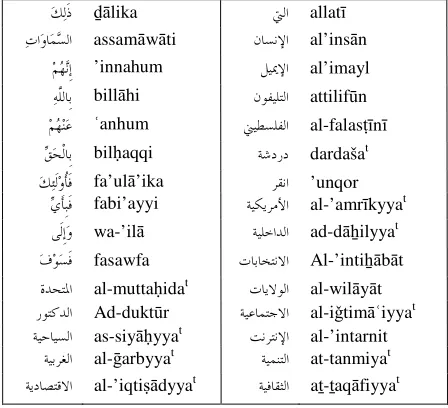
books such as (Diwan, 2004). The other category of common not covered words are the new Arabic terms, and borrowed words (Arabaized words) which are foreign words transliterated into Arabic by writing the word in Arabic letters. This is a common problem found in news paper and web pages text. The lack of updating Arabic lexicons and the lack of the correct translation of the borrowed words will increase the frequency of this type of word in contemporary Arabic text. Figure 5 shows a sample of common words not covered by the broad-coverage lexical resource.
Corpus Tokens Words Words covered by lexicon
Coverage
Qur’an 77,804 77,803 64,065 82.34% CCA 685,161 595,099 507,943 85.35% Web 1,128,624 834,426 708,101 84,86%
Table 4: Coverage including function words.
Corpus Tokens Words Words covered by lexicon
Coverage
Qur’an 77,804 54,004 42,532 78.76% CCA 685,161 411,482 338,790 82.33% Web 1,128,624 576,407 476,190 82.61%
Table 5: Coverage excluding function words.
ﻚﻟﹶﺫ ḏālika ﱵﻟﺍ allatī ﺕﺍﻭﺎﻤﺴﻟﺍ assamāwāti ﻥﺎﺴﻧﻹﺍ al’insān
ﻢﻬﻧﹺﺇ ’innahum ﻞﻴﳝﻹﺍ al’imayl ﻪﱠﻠﻟﺎﹺﺑ billāhi ﻥﻮﻔﻴﻠﺘﻟﺍ attilifūn ﻢﻬﻨﻋ ʿanhum ﲏﻴﻄﺴﻠﻔﻟﺍ al-falasṭīnī ﻖﺤﹾﻟﺎﹺﺑ bilḥaqqi ﺔﺷﺩﺭﺩ dardašat ﻚﺌﹶﻟﻭﹸﺄﹶﻓ fa’ulā’ika ﺮﻘﻧﺍ ’unqor
ﻱﹶﺄﹺﺒﹶﻓ fabi’ayyi ﺔﻴﻜﻳﺮﻣﻷﺍ al-’amrīkyyat ﻰﹶﻟﹺﺇﻭ wa-’ilā ﺔﻴﻠﺧﺍﺪﻟﺍ ad-dāẖilyyat ﻑﻮﺴﹶﻓ fasawfa ﺕﺎﺑﺎﺨﺘﻧﻻﺍ Al-’intiẖābāt ﺓﺪﺤﺘﳌﺍ al-muttaḥidat ﺕﺎﻳﻻﻮﻟﺍ al-wilāyāt ﺭﻮﺘﻛﺪﻟﺍ Ad-duktūr ﺔﻴﻋﺎﻤﺘﺟﻻﺍ al-iǧtimāʿiyyat ﺔﻴﺣﺎﻴﺴﻟﺍ as-siyāḥyyat ﺖﻧﺮﺘﻧﻹﺍ al-’intarnit
ﺔﻴﺑﺮﻐﻟﺍ al-ḡarbyyat ﺔﻴﻤﻨﺘﻟﺍ at-tanmiyat ﺔﻳﺩﺎﺼﺘﻗﻻﺍ al-’iqtiṣādyyat ﺔﻴﻓﺎﻘﺜﻟﺍ aṯ-ṯaqāfiyyat Figure 5: a sample of common words which are not
covered by the lexicon.
7.
The corpus of lexicons
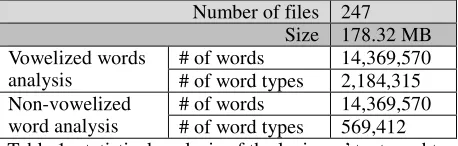
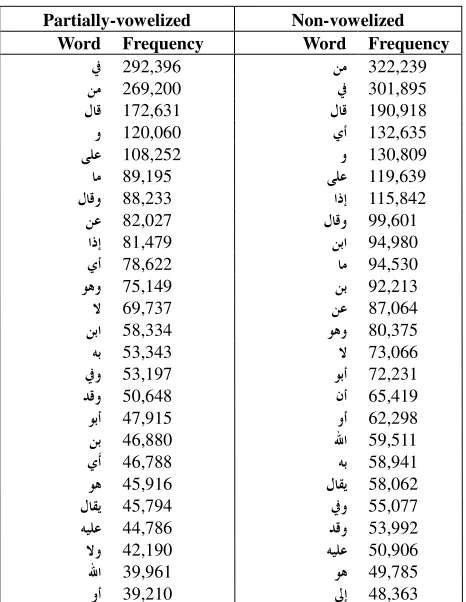
taken from newspapers and magazines text. Our lexicons’ text can be used as an Arabic corpus of dictionaries, which has different domain than the existing corpora. The Arabic corpus of dictionaries covers a period of more than 1200 years and consists of large number of words and word types. It also has both vowelized and non-vowelized text. Figure 6 shows the number of words and word types and the 25 words of highest frequency.
Partially-vowelized Non-vowelized Word Frequency Word Frequency
ﰲ 292,396 ﻦﻣ 322,239
ﻦﻣ 269,200 ﰲ 301,895
ﻝﺎﻗ 172,631 ﻝﺎﻗ 190,918
ﻭ 120,060 ﻱﺃ 132,635
ﻰﻠﻋ 108,252 ﻭ 130,809
ﺎﻣ 89,195 ﻰﻠﻋ 119,639
ﻝﺎﻗﻭ 88,233 ﺍﺫﺇ 115,842
ﻦﻋ 82,027 ﻝﺎﻗﻭ 99,601
ﺍﺫﺇ 81,479 ﻦﺑﺍ 94,980
ﻱﺃ 78,622 ﺎﻣ 94,530
ﻮﻫﻭ 75,149 ﻦﺑ 92,213
ﻻ 69,737 ﻦﻋ 87,064
ﻦﺑﺍ 58,334 ﻮﻫﻭ 80,375
ﻪﺑ 53,343 ﻻ 73,066
ﰲﻭ 53,197 ﻮﺑﺃ 72,231
ﺪﻗﻭ 50,648 ﻥﺃ 65,419
ﻮﺑﺃ 47,915 ﻭﺃ 62,298
ﻦﺑ 46,880 ﷲﺍ 59,511
ﻱﹶﺃ 46,788 ﻪﺑ 58,941
ﻮﻫ 45,916 ﻝﺎﻘﻳ 58,062
ﻝﺎﻘﻳ 45,794 ﰲﻭ 55,077
ﻪﻴﻠﻋ 44,786 ﺪﻗﻭ 53,992
ﻻﻭ 42,190 ﻪﻴﻠﻋ 50,906
ﷲﺍ 39,961 ﻮﻫ 49,785
ﻭﺃ 39,210 ﱃﺇ 48,363
Figure 6: The number of words and word types and the part of the frequency list of the corpus of lexicons text.
8.
Conclusion
In this paper we showed the process of constructing a broad-coverage lexicon for Arabic to be used in NLP applications such as lemmatizers, morphological analyzers and part-of-speech taggers. We described the traditional Arabic lexicons, arranging methodologies and the challenges and drawbacks of these lexicons.
We described the development of constructing a broad-coverage lexical resource by combining extracted information from disparate lexical resources formats and merging Arabic lexicons. Processing steps of constructing the broad-coverage lexical resource involve; first, analyzing lexicons’ text separately by manually converting each lexicon text into a unified format by choosing the most common format for all root entries. Then, for each lexicon a specialized program extracts the root and the words derived from that root. Second, a combination algorithm merges the information extracted from the previous step into one large broad-coverage lexical resource.
The evaluation of the broad-coverage lexical resource is done by computing the coverage of it. The coverage is computed using two methods; first methodology computes the coverage by matching the words of the test corpora to the words in the lexicon which scored about 67%. The second methodology uses a lemmatizer program to compute the coverage, and scored about 82%.
This is the first version of the broad-coverage lexical resource. We will extend the lexicon by including the full morphological analyses of the lexical entries and other useful information that will enhance the accuracy of NLP applications. Online access method to the contents of the broad-coverage lexical resource and downloadable version will be released.
9.
References
Al-Suliti, L., Atwell, E. (2006). The design of a corpus of contemporary Arabic. International Journal of Corpus Linguistics 11, pp.135--171.
al-ğawharῑ “ﰊﺍﺭﺎﻔﻟﺍ ﻱﺮﻫﻮﳉﺍ ﺩﺎﲪ ﻦﺑ ﻞﻴﻋﺎﲰﺍ ﺮﺼﻨﻟﺍ ﻮﺑﺍ” (died in 1009) ,
ﺔﻐﻠﻟﺍ ﰲ ﺡﺎﺤﺼﻟﺍ aṣ-ṣiḥāḥ fῑ al-luḡah ‘The Correct
Language’ , al-miškāt Islamic Library (online-library)
http://www.almeshkat.net/books/archive/books/alseh ah%20g.zip
Benajiba, Y., Diab, M., Rosso, P. (2008) Arabic named entity recognition using optimized feature sets. EMNLP '08: Proceedings of the Conference on Empirical Methods in Natural Language Processing, Honolulu, Hawaii: Association for Computational Linguistics, pp.284--293
Diwan, A. (2004) al-mu‘ğam an-naḥwῑ li-mufradāt al-
luḡah al- ‘arabiyyahﺔﻴﺑﺮﻌﻟﺍ ﺔﻐﻠﻟﺍ ﺕﺍﺩﺮﻔﳌ ﻱﻮﺤﻨﻟﺍ ﻢﺠﻌﳌﺍ , Aleppo,
Syria: fusselat lil-dirasāt wa at-tarğamah wa an-našir. Eynde, V.E, Gibbon, D (2000) Lexicon development for speech and language processing, Dordrecht, The Netherlands: Kluwer Academic Publishers.
Khalil, H. (1998), dirāsāt fi al-luḡah wa al-ma‘āğim " ﻢﺟﺎﻌﳌﺍﻭ ﺔﻐﻠﻟﺍ ﰲ ﺕﺎﺳﺍﺭﺩ " Studies of language and lexicons. First Edition, Beirut, Lebanon: Dar al-nahḍah al-‘arabiah.
Lane, E. W. (1968). An Arabic-English Lexicon. Beirut, Librarie Du Liban.
Sawalha, M., Atwell, E. (2009a). Linguistically Informed and Corpus Informed Morphological Analysis of Arabic. Proceedings of the 5th International Corpus Linguuistics Conference CL2009 Liverpool, UK. Sawalha, M. and Atwell, E. (2009b). ﻑﺮﺼﻟﺍﻭ ﻮﺤﻨﻟﺍ ﺪﻋﺍﻮﻗ ﻒﻴﻇﻮﺗ