A Novel Technique of Computational Vision
Based Flame Detection Using Optical Flow
Estimation
1
G.Sindu Sruthi,
2U.Jenuba,
3V.S.Ashwini &
4V.Abinaya
1UG Student, Department of ECE, Rajas Engineering College, Vadakkangulam, India,
2UG Student, Department of ECE, Rajas Engineering College, Vadakkangulam, India,
3UG Student, Department of ECE, Rajas Engineering College, Vadakkangulam, India
4UG Student, Department of ECE, Rajas Engineering College, Vadakkangulam, India
ABSTRACT: Detecting the breakout or flow of fire is essential for preventing material damage and human casualities. It is a serious problem in situation such as congested automobile traffic, naval vessels and heavy industry .By observing this problem , Classical optical flow method is used. Optical flow estimation computes correspondence between pixels in the current and previous frame of an image sequence. Classical optical flow estimation is a combination of linear and non linear scale-space varies smoothly in image. It mainly detect the brightness constancy fire region and satisfy the intensity assumption. But this method do not model the characterstics of fire motion in large open spaces such as hangers ,ships ,or in forest .To overcome the insufficiences of classical optical flow two methods are proposed .First is Optical Mass Transport, this method is used for identifying rapid and smoothness regularization of fire. Second is Non Smooth Data ,it is used in unfavourable lightning condition. By these method the flow magnitudes and directions are calculated from the flow fields to know the fire and non fire motion. These features are tested in a large database to demonstrate their practiocal usefulness.
KEYWORDS: Fire detection, optical flow, optimal mass transport, video analytics.
I.INTRODUCTION
II. LITERATURE REVIEW
Computer vision concepts are often inspired by human vision. A comprehensive and elegant description of the human perception of fire was presented by the 16th century French poet Du Bartas [1]: ―Bright-flaming, heat-full fire, the source of motion.‖ Whereas Du Bartas missed the characteristic reddish color that almost any vision-based detection algorithm builds upon, e.g., [2], his quote covers most of the other features employed by previous methods. High brightness or luminance causes image pixels to saturate–one feature utilized in [3]–[5]. The instantaneous flame-like texture or spatial pattern are used in [4], [6], [7]. Features related to the flame’s shape and change of shape are found in [3], [6], [7]. Also, the flickering, typical of fire, presents a popular feature [3], [4], which has also been analyze d in the wavelet domain [8], [9]. This paper is restricted to studying images in the visible spectrum and emitted heat or infrared light is not considered, but it is used in a number of approaches where infrared sensors are available [10]. Lastly, fire motion offers a whole suite of possible features. The authors of [11] consider the temporal variation of pixel intensity for fixed pixel locations. More recently, [12] develops a more comprehensive statistical approach by computing covariances of image quantities on small blocks, thus making use of spatial and temporal patterns. These statistics are applied directly to the image data and these methods are therefore comparably efficient. Optical flow estimators, on the other hand, transform the image sequence into estimated motion fields, allowing for a more insightful extraction of features. Classical optical flow algorithms are analyzed in [13] for the recognition of various dynamic textures.
III. OPTICAL FLOW ESTIMATION
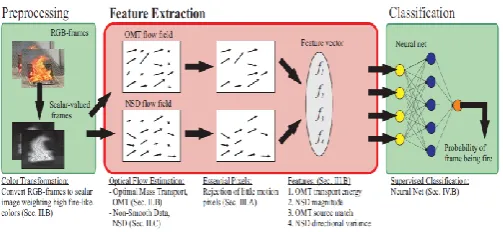
The paper’s focus is put on the feature extraction block, where two optical flow fields (OMT and NSD) are computed in parallel from which the 4D feature vector is built.
Fig. 1. Architecture diagram for flame detection
A. Classical Optical Flow
Optical flow estimation computes correspondence between pixels in the current and the previous frame of an image sequence. Central to most approaches in establishing this correspondence is the assumption of intensity constancy: moving objects preserve their intensity values from frame to frame. This assumption leads to the optical flow constraint
where I (x, y, t) is a sequence of intensity images with spatial coordinates (x, y) ∈ _ and time variable t ∈ [0,T] (subscripts denote partial derivatives).
B. Optimal Mass Transport (OMT) Optical Flow
turbulent, i.e., non-smooth, motion field. For these reasons, an optical flow estimation modeling fire as a dynamic texture, the optimal mass transport (OMT) optical flow, was introduced in [24].
A review of the OMT optical flow is given next.
1)Derivation: The optical flow problem is posed as a generalized mass—representing image intensity I—
transport problem, where the data term enforces mass conservation. The conservation law is written as
where u = (u, v)T . With intensity I replaced by mass density.
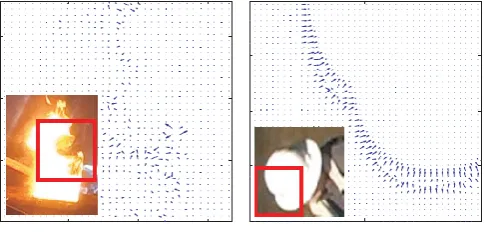
Fig. 2. OMT flow fields: fire with dynamic texture (left) and a white hat (right) moving up/right. The red box indicates the area for which the flow field is shown.
2) Flame Color as Generalized Mass:
In the original OMT optical flow [24] formulation, the generalized mass is the pixel intensity I . This choice is based on the assumption that high gas density translates to high intensity in the image.
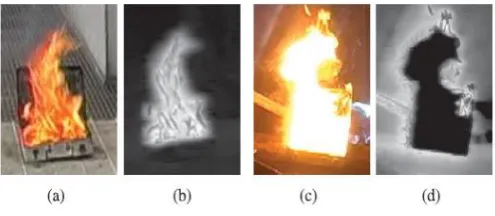
Fig. 3. Two examples for the generalized mass transformation
(a) and (c): Original images. (b) and (d): Respective generalized mass (black- 0, white - 1). Fire texture is preserved, saturated regions are assigned as low mass.
However, there are other phenomena that map to high intensities also, such as the sky on a sunny day or a white wall. In order to improve the chance of good segmentation between foreground and background, this section introduces a new model for the generalized mass based on flame color.
C. Non-Smooth Data (NSD) Optical Flow
The choice of the data term being the optical flow constraint is justified because pixel saturation trivially implies intensity constancy. Also, the NSD is explicitly chosen to be non-smooth since saturated fire blobs are expected to have non-smooth boundary motion.
Fig. 4. NSD flow fields: saturated fire (left) and a white hat (right) moving up/right. The red box indicates the area for which the flow field is shown.
The Fig. 4 shows NSD flow fields computed for a saturated fire and a rigidly moving hat. Fire motion on the boundary is non-smooth in contrast to the hat’s motion—a result from the data-driven formulation of the NSD.
IV. OPTICAL FLOW FEATURES
A naive approach to vision-based detection is to use a supervised machine learning algorithm trained directly on intensity values in the image. This approach will undoubtedly underperform because the classification complexity increases exponentially with the dimensionality of the problem, which in this case is equal to the number of pixels. Further, the computational cost and the amount of training data required become prohibitively large. Instead, feature extraction is employed by incorporating prior information (known physical properties of the problem or human intuition) for the purpose of reducing the problem dimensionality. The optical flow computations in Section II do not reduce dimensionality, as the two M×N images determine the values of the M ・ N, 2D, optical flow vectors. This transformation is an intermediate step that provides a data set from which motion features can be extracted more intuitively than would be possible from the original image. To do so, we pursue a region-based as opposed to a pixel-based approach. Whereas the pixel-wise approach classifies each pixel, the region-wise approach aims to classify a region as a whole by analyzing the set of all pixel values (in this case flow vectors) in that region.
In the following section, the proposed feature extraction is defined and motivated.
A. Pre-Selection of Essential Pixels
Static or almost static image regions should be excluded from consideration because our aim is to characterize the type of motion an object is undergoing and they interfere with the motion statistics. For example, the average flow magnitude of a moving object should not depend on the size of the static background, which would be the case if the average was computed over the entire image instead of just the moving region. The set of essential pixels, which are pixels in motion, will therefore be defined as follows.
B. Feature Extraction
1) OMT Transport Energy:This feature measures the mean OMT transport energy per pixel in a subregion
After the color transformation, fire and other moving objects in the fire-colored spectrum, are expected to produce high values for this feature.
2) NSD Flow Magnitude: Similarly, the mean of the regularization term of the NSD optical flow energy constitutes the second feature
The first two features, f1, f2, will have high values for moving, fire-colored objects. The last two features distinguish turbulent fire motion from rigid motion by comparing flow
directionality.
3) OMT Sink/Source Matching: It is known [30] that solutions to OMT problems are curl-free mappings. For the turbulent motion of fire, this property tends to create flow fields with vector sinks and sources. For rigid motion, the flow field tends to be comprised of parallel vectors indicating rigid translation of mass. The third feature is designed to quantify how well an ideal source flow template matches the computed OMT flow field. The template is defined as
4) NSD Directional Variance:The final feature distinguishes the boundary motion of saturated fire blobs from rigidly moving objects by quantifying the variance of flow directions at moving pixels. A high variance suggests uncorrelated motion in many different directions, whereas a low variance characterizes nearly uni-directional motion.
V. DETECTION ALGORITHM
This section touches on two more topics required for an end-to-end detection system. The candidate regions, i.e., suspicious subregions of the image, can be created automatically and why this step is important. Then, how a candidate region is classified as fire or non-fire based on its feature vector, F.
A. Providing Candidate Regions
Computing optical flow and extracting features from an entire frame is unfavorable for two reasons. First, computation time increases as the domain _ grows, and more importantly, the classification fails for scenes with more than one source of motion (e.g., a fire in the corner and a person walking in the center) since the motion statistics of the regions will be averaged and become no longer discriminatory. Therefore, it is essential for the proposed method that a segmentation of different sources of motion be provided, which the detection
algorithm then classifies individually.
B. Region Classification via Neural Network
VI. TESTS ON VIDEO DATABASE
The algorithm is tested on a database provided by United Technologies Research Center (UTRC), Connecticut, USA. The database features various scenarios including indoor/outdoor, far/close distance, different types of flames (wood, gas, etc.), changing lighting conditions, partial occlusions, etc.
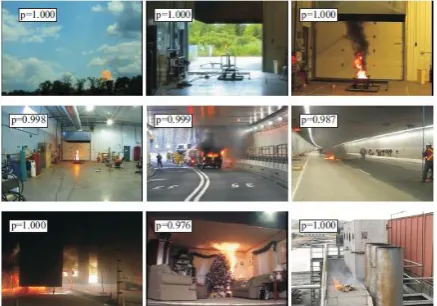
Fig. 5. Examples of detected fire scenes with the resulting probabilities.
The videos have a frame rate of 30 frames/second and spatial dimension of 240 by 360 pixels. From each of the 263 scenarios (containing 169 fire and 94 non-fire sequences), 10 consecutive frames are labeled as ground truth providing a test database of 2630 frames. Note that the non-fire scenarios are chosen to be probable false positives, namely moving and/or fire-colored objects such as cars, people, red leaves, lights and general background clutter. A neural network was trained on frames from 20 of those videos not used in the test database. The test result shows that fire is reliably detected using optical flow features only: the false positive rate (fire is detected when no fire is present) is fp = 3.19% and the false negative rate (no fire detected where there is a fire) is fn = 3.55%. These false detections rates are competitive with recently published, full-fledged fire detection systems, e.g. [2]: fp = 31.5%, fn = 1.0%, [3]: fp = 0.68%, fn = 0.028%, [4]: fp = 0.30%, fn = 12.36%, [12] (average among test videos): fp = 3.34%, fn = 21.50%. Since this paper explores the discriminatory power of optical flow features only rather than building a complete fire detector, we report the false detection rates as a feasibility check that the proposed features work on a large set of data.
VI. CONCLUSION
The very interesting dynamics of flames have motivated the use of motion estimators to distinguish fire from other types of motion. Two novel optical flow estimators, OMT and NSD, have been presented that overcome insufficiencies of classical optical flow models when applied to fire content. The obtained motion fields provide useful space on which to define motion features. These features reliably detect fire and reject non-fire motion, as demonstrated on a large dataset of real videos. Few false detections are observed in the presence of significant noise, partial occlusions, and rapid angle change. In an experiment using fire simulations, the discriminatory power of the selected features is demonstrated to separate fire motion from rigid motion. The controlled nature of this experiment allows for the quantitative evaluation of parameter changes. Key results are the need for a minimum spatial resolution, robustness to changes in the frame rate, and maximum allowable bounds on the additive noise level. Future work includes the development of optical flow estimators with improved robustness to noise that take into account more than two frames at a time.
REFERENCES
[1] G. du Bartas, La Sepmaine ou Creation du Monde. Paris, France: Michel Gadoulleau et Jean Febvrier, 1578.
[4] C. Ho, ―Machine vision-based real-time early flame and smoke detection,‖ Meas. Sci. Technol., vol. 20, no. 4, p. 045502, 2009.
[5] G. Marbach, M. Loepfe, and T. Brupbacher, ―An image processing technique for fire detection in video images,‖ Fire Safety J., vol. 41, no. 4, pp. 285–289, 2006.
[6] C. Liu and N. Ahuja, ―Vision based fire detection,‖ in Proc. Int. Conf. Pattern Recognit., vol. 4. 2004, pp. 134–137.
[7] J. Zhao, Z. Zhang, S. Han, C. Qu, Z. Yuan, and D. Zhang, ―SVM based forest fire detection using static and dynamic features,‖ Comput. Sci. Inf. Syst., vol. 8, no. 3, pp. 821–841, 2011.
[8] B. Toreyin, Y. Dedeoglu, U. Gudukbay, and A. Cetin, ―Computer vision based method for real-time fire and flame detection,‖ Pattern Recognit. Lett., vol. 27, no. 1, pp. 49–58, 2006.
[9] B. Ko, K. Cheong, and J. Nam, ―Fire detection based on vision sensor and support vector machines,‖ Fire Safety J., vol. 44, no. 3, pp. 322–329, 2009.
[10] S. Verstockt, A. Vanoosthuyse, S. Van Hoecke, P. Lambert, and R. Van de Walle, ―Multi-sensor fire detection by fusing visual and nonvisual flame features,‖ in Proc. 4th Int. Conf. Image Signal Process., 2010, pp. 333–341.
[11] W. Phillips, III, M. Shah, and N. da Vitoria Lobo, ―Flame recognition in video,‖ Pattern Recognit. Lett., vol. 23, nos. 1–3, pp. 319–327, 2002. [12] Y. Habibo˘glu, O. Günay, and A. Çetin, ―Covariance matrix-based fire and flame detection method in video,‖ Mach. Vis. Appl., vol. 23, no. 6, pp. 1–11, 2011.
[13] S. Fazekas and D. Chetverikov, ―Analysis and performance evaluation of optical flow features for dynamic texture recognition,‖ Signal Process.,Image Commun., vol. 22, nos. 7–8, pp. 680–691, 2007.
[14] D. Chetverikov and R. Péteri, ―A brief survey of dynamic texture description and recognition,‖ in Proc. Int. Conf. Comput. Recognit. Syst., [15] S. Fazekas, T. Amiaz, D. Chetverikov, and N. Kiryati, ―Dynamic texture detection based on motion analysis,‖ Int. J. Comput. Vis., vol. 82, no. 1, pp. 48–63, 2009.
[16] D. Chetverikov, S. Fazekas, and M. Haindl, ―Dynamic texture as foreground and background,‖ Mach. Vis. Appl., vol. 22, no. 5,pp. 741–750, 2011.
[17] Y. Chunyu, F. Jun, W. Jinjun, and Z. Yongming, ―Video fire smoke detection using motion and color features,‖ Fire Technol., vol. 46, no. 3,pp. 651–663, 2010.
[18] B. Lucas and T. Kanade, ―An iterative image registration technique with an application to stereo vision,‖ in Proc. Int. Joint Conf. Artif. Intell.,vol. 2. 1981, pp. 674–679.
[19] P. Saisan, G. Doretto, Y. Wu, and S. Soatto, ―Dynamic texture recognition,‖in Proc. Conf. Comput. Vis. Pattern Recognit., vol. 2. 2001, pp. 58– 63.
[20] G. Doretto, A. Chiuso, Y. Wu, and S. Soatto, ―Dynamic textures,‖ Int. J. Comput. Vis., vol. 51, no. 2, pp. 91–109, 2003.
[21] L. Cooper, J. Liu, and K. Huang, ―Spatial segmentation of temporal texture using mixture linear models,‖ in Proc. Int. Conf. Dyn. Vis., 2007,pp. 142–150.
[22] A. Chan and N. Vasconcelos, ―Modeling, clustering, and segmenting video with mixtures of dynamic textures,‖ IEEE Trans. Pattern Anal.Mach. Intell., vol. 30, no. 5, pp. 909–926, May 2008.