BLACKWELL, ELINOR FOSTER. Perceptions of North Carolina Technology Education Teachers Concerning Their Effectiveness in Teaching Students with
Disabilities in Technology Education. (Under the direction of William James Haynie.)
The purpose of this study was to determine the extent to which technology education teachers perceived they were effectively educating students with disabilities.
This study utilized a survey instrument in order to gather data from high school technology education teachers in North Carolina. The data reflected how teachers perceived the effectiveness of their own teaching skills for educating students with disabilities. Data also revealed the teachers’ demographic background, teaching strategies, and training preferences.
The survey instrument was divided into three sections. The first section gathered data regarding the teachers’ educational background, years of teaching, number of classes taught and number of students with disabilities in their class. The second part of the survey instrument identified the types of students with disabilities included in each class and the types of changes made to the learning environment to enhance educational outcomes. The third section of the survey identified whether teachers perceived a need
for future training about students with disabilities. The survey instruments, cover letter, and self addressed stamped envelope
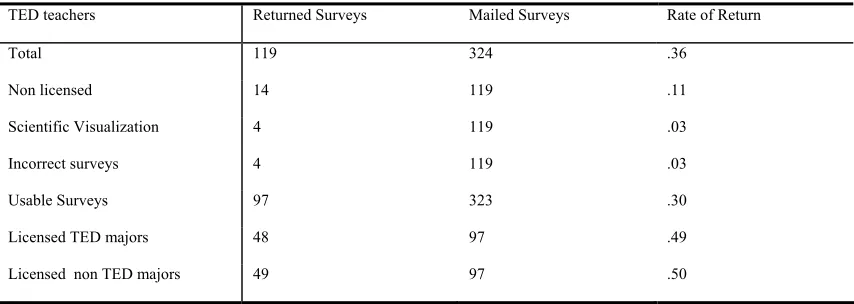
this research revealed that TED teachers found behavioral-emotional disabilities to require the most intervention strategies. There were 59 of 97 respondents who revealed a need for further training relative to students with disabilities.
Effectiveness in Teaching Students with Disabilities in Technology Education
A Dissertation in Technology Education
by
Elinor Foster Blackwell
A dissertation submitted to the Graduate Faculty of North Carolina State University in Partial Fulfillment
of the Requirements for the Degree of Doctor of Education
TECHNOLOGY EDUCATION
Raleigh September 20, 2005
APPROVED BY:
_____________________________ _________________________ Dr. William James Haynie, Chair Dr. Bonnie Fusarelli
DEDICATION
BIOGRAPHY
Elinor Blackwell was born in a small farming community of Reidsville North Carolina. She is the third of five children born to Otis and Louise Foster. Otis is a long distance truck driver whose hobbies include farming and brick masonry. Louise retired to become a full time house wife.
Elinor earned her Bachelor of Science and Master of Science degrees at North Carolina Agricultural & Technical State University. Her undergraduate degree is in Industrial Engineering, her masters degree is in Technology Education. She earned her doctor of education degree at North Carolina State University. Her Doctoral degree is in Technology Education. She is currently working as an Assistant Professor in the
Department of Graphic Communication Systems and Technological Studies at North Carolina A & T State University.
Outside of her academic and professional activities Elinor has been actively involved in ministry at Evangel Fellowship Church for the past 22 years. She is married to her high school sweetheart Jerry Blackwell Sr. The couple has four wonderful
ACKNOWLEDGEMENTS
I would like to express my appreciation to the faculty members at NC State University for helping me broaden my education: Dr. William James Haynie, Dr. William DeLuca, Dr. Richard Peterson and Dr. Bonnie Fusarelli. I would also like to thank Eren Demerhan for assistance with statistics.
I must recognize my North Carolina A & T State University School of Technology family for investing in me. Dr. Elazer Barnette, Dr. Cynthia Gillispie-Johnson, Dr. Craig Rhodes and Dr. Robert Cobb.
I am grateful for the constant support and encouragement from my family. My loving husband of 22 years Jerry Blaine Blackwell Sr., and our children: Danielle, Jerry, Gloriah and Destiny, who were all patient and helpful during this endeavor. I would also like to thank my parents Otis and Louise Foster.
TABLE OF CONTENTS
PAGE
LIST OF TABLES ix
CHAPTER
I INTRODUCTION 1
Background 1
Problem 3 Purpose and Technique of this Study 7
Significance of the Problem 7
Need for the Study 8
Research Questions 10
Definition of Terms 10
Assumptions of the Study 12
Limitations 12
II REVIEW OF LITERATURE 13
Introduction 13
Significance of Practical Education 14
Legislative Impact on Students with Special Needs 19
Educational Barriers 23
Successful Strategies 31
Early Technology Education Guides 36
Effective Technology Education Programs 43
Teacher Perceptions 53
Teacher Preparation 61
Summary 70
III INVESTIGATIVE PROCEDURE AND DESIGN 72
Experimental Procedures 72
Doty’s Instrument Development & Procedures 72
Investigative Procedures and Design for This Research 73
Subject Source 75
Sampling Procedures 75
Instrumentation 76
Measurement Characteristics of the Instrument 77
Procedures 79
IV FINDINGS 81
Research Questions 82
The Survey Instrument 82
Responses to Survey Items 83
Methods of Data Analysis 84
Category 1: Demographic Data 84
Category 2: Teacher Perceptions, Practices, Preferences & Options 90
Category 3: Perceived Needs for Further Training Relative to Students with Disabilities 103
V SUMMARY, CONCLUSIONS AND RECOMMENDATIONS 107
Summary of Findings in Review of Literature 107
Problem 108
Procedures 109
Findings 109
Summary of Findings 112
Conclusions 112
Recommendations 114
TABLE OF CONTENTS (Continued)
APPENDIX A: COVER LETTER 128
APPENDIX B: SURVEY INSTRUMENT 130
LIST OF TABLES
Table 1 TED Teacher Response Rate 84
Table 2 Types of Degrees for Non-TED Majors 85
Table 3 TED Teachers’ Years of Experience 85
Table 4 Total Number of Students Enrolled in TED classes 87
Table 5 Number of Students with Disabilities 87
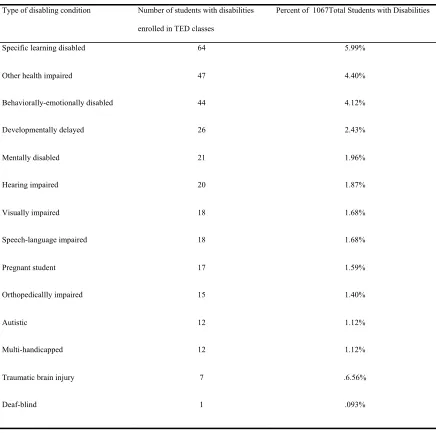
Table 6 Types of Disabling Conditions in TED Classes 88
Table 7 Number of TED Teachers Trained for Disabling Conditions 89
Table 8 Ranked Frequency Table For TED Teacher Perceptions 91
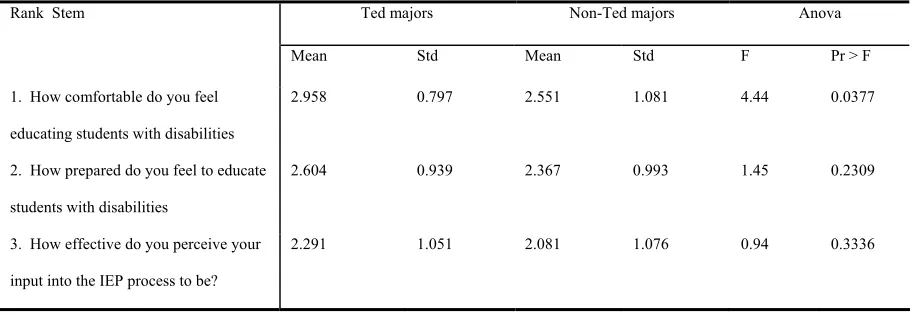
Table 9 Means and Bivariate Values for Perceptions 92
Table 10 Multivariate Analysis for Comfort Level 92
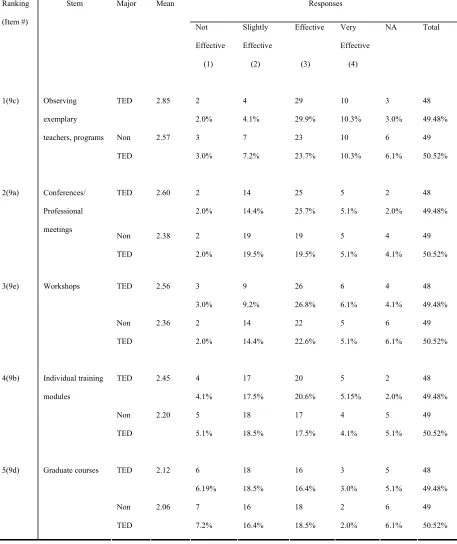
Table 11 Ranked Frequency Table for In Service Training 93
Table 12 Manova Table for In-service Training Needs, Item 9 94
Table 13 Frequency Table for TED Delivery Systems 95
Table 14 Manova Table for TED Delivery Systems 96
Table 15 Frequency Table For Intervention Strategies 97
Table 16 Manova Table for Intervention Strategies 100
Table 17 Manova Table for TED Intervention Strategies 100
Table 18 Frequency Table for Disabling Conditions Requiring the Most Interventions 101
Table 19 Frequency Table for Contributions to Student Success 102
Table 20 Bivariate Values for Contributions to Student Success 102
CHAPTER I INTRODUCTION
Background
Technology education is an action-based course of study designed to prepare students to become technologically literate citizens, who make informed decisions as productive members of a free and democratic society. Technology education teachers use five primary systems models to educate students: Communications, Transportation, Production, Construction and Bio-technology. Scott and Sarkees-Wircenski (1996) define technology education as an instructional program designed to provide students with a broad knowledge of the applications of technology in daily life by acquainting students with their technological environment. This study focuses on technology education at the high school level due to the more in-depth degree to which the
curriculum helps prepare students for the real-world problems they will face as adults. DeLuca stated in 1991 that Technology Education provides students with the experiences that help them develop valuable problem solving skills.
A student’s abilities to solve problems and think critically, facilitate development into mature adults who make wise choices in a technologically advanced society. These skills are foundational for effective competition in the global economy. All students, from all societal sectors can benefit from the wealth of educational experiences
the educational needs of students with learning disabilities. The North Carolina Department of Public Instruction, (NCDPI), Career-Technical Education, (CTE), Data Analysis Questions revealed that in 2004 more than 30% of students enrolled in technology education classes are classified as members of special populations (NCDPI CTE, 2004).
students and additional training needs for industrial arts teachers. The third discipline researched was vocational education, which preceded career and technical education, and encompasses technology education. It was necessary to find information from these related disciplines in order to bridge the gap between industrial arts, which no longer exists and technology education which had not yet evolved during this transition from isolation to inclusion for students with disabilities. The declining numbers in technology education reported by Reed in 2002 could have reflected the end to spiraling enrollment into technology education.
Data recently published by the NCDPI, revealed a possible reversal to that downward trend. The NCDPI CTE Data Analysis Questions for the technology education status report revealed a 15,000 student increase in the number of students enrolled in technology education since the 2000-2001 report was published (North Carolina Department of Public Instruction, CTE Data Analysis Questions, 2004). This increase in enrollment could lead to more information becoming available on students with disabilities enrolled in technology education classes in the future, since the NCDPI reported that 30% of the students enrolled in technology education classes during this time span were considered to be members of special populations. The demographic data for the 2004 school year revealed that in general education classes 13.5% of children have disabling conditions (NCDPI Exceptional Children Division, 2005).
Problem
actions toward social change. These actions led to integration for students with
disabilities (Shapiro, 1994). This new found awareness of and conviction for civil rights would lead to a cultural revolution that would ultimately change the destiny for future generations of persons with disabilities. These grassroots activists took action to lobby 1ocal, state and federal law makers to provide a free and appropriate education for all persons with disabilities. A decade later, only a few of persons who needed services due to disabling conditions were actually receiving those services (Erwin, Levin and Wexler, 1981). A problem associated with mainstreaming was the slow rate at which the concept was adopted and diffused into society.
The Rehabilitation Act of 1973, (PLl93-112), lifted wording from the 1964 Civil Rights Act to proclaim that a person cannot solely by reason of his handicap, be excluded from participation, denied benefits or be subjected to discrimination. This legislation guaranteed persons with disabilities the same rights and privileges afforded to
non-disabled persons. One of the most important laws of this era came into existence in 1975, when President Ford signed PL94-142 into law. This legislation guaranteed a free and appropriate education to all persons with disabilities. PL 94-142, (Education for all Disabled Children Act) applied to all persons with disabilities whose ages ranged from three to twenty one years of age, (Erwin, Levin and Wexler, 1981). Consequently, the few students with disabilities served in public schools, who had been limited to self contained classrooms, were joined by many more of their disabled peers. This new group of students then took their places among non-disabled students in regular classrooms. Some of the provisions which were guaranteed by this law for each student with
access to the Least Restrictive Environment, (LRE). These two criteria alone
permanently changed teaching and learning environments for students in general and technology education. It was clear that persons with disabilities deserved complete access to schools and other public facilities unencumbered by legal, physical or societal barriers. A major step toward accomplishing integration for students with disabilities was the eradication of the tangible or external barriers associated with gaining access to educational facilities (Cobb, 1983).
The removal of these external barriers was needed so that these institutions could more effectively accommodate persons with disabilities. These changes were made possible by passing legislation that addressed accessibility issues which helped pave the way for students with disabilities to have the same access as non-disabled persons to education and services from the public sector. This paradigm shift produced a more educated and involved community of persons with disabilities, who wanted to break the mold fashioned for them by internal barriers, such as the stereotypical attitudes. These attitudes led others to consider persons with disabilities to be somehow less human (Shapiro, 1994). Progress toward seamless integration had been achieved yet some of the negative societal stereotypes remained in place. Some people still viewed persons with disabilities as pitiable, helpless and less capable than non-disabled persons. Some of the self proclaimed advocacy groups for the disabled, which utilized emotional appeals in order to raise money for cures to disabling conditions, could have been founded on misguided good intentions (Shapiro, 1994). These charities erred by trying to find cures for conditions which persons with disabilities didn’t view as illnesses, but rather
and now fully expected and often demanded total acceptance from and integration into all sectors of society. This new generation did not want to be “fixed” but rather accepted as equals by non-disabled persons (Shapiro, 1994). The successful attempts at integration had been overshadowed by internal barriers to services such as negative attitudes and presumptions which proved to be more difficult to target and eradicate than external barriers. These lingering negative attitudes could have had a negative impact on the quality of mainstream education received by students with disabilities in technology education.
Purpose and Technique of this Study
The purpose of this study was to determine the extent to which North Carolina high school technology education teachers perceive they are effective in educating students with disabilities in technology education. The method for accomplishing this task was to poll each in-service technology education teachers in North Carolina to determine the types and numbers of students with disabilities served, and the types of skills and activities utilized to accomplish teaching and learning for this population. This study also sought to determine the extent to which technology teachers perceive they possess adequate training for educating students with disabilities in regular technology education classes. The method for accomplishing this task was to gather information regarding technology teachers’ demographic and educational background, along with areas of perceived need for in-service training. This study specifically polled the types of exceptionality, demographic data, and techniques used to facilitate learning for students with special needs. The questions posed by this study concerned the perception
technology education teachers have regarding their effectiveness in educating students with disabilities.
Significance of the Problem
integration of persons with disabilities into society can benefit each group of stakeholders affected by mainstreaming. A look at how effectively technology education teachers perceive they are helping to educate students with disabilities will be helpful for the technology education teachers, as well as the universities and state agencies who
construct technology teacher education programs. These entities must provide technology education teachers with sufficient information so that these teachers may effectively educate diverse student populations
Need for the Study
Research Questions The research questions that guided this study were:
1. Do North Carolina technology education teachers (TED) perceive they are prepared to make input in the development of IEPs for students with disabilities in their TED classes?
2. What intervention strategies have technology education teachers used for students with disabilities in their TED classes?
3. What are the major contributions of TED curriculum toward educating students with disabilities in their TED classes?
4. What is the most significant problem that technology education teachers perceive they encounter relative to students with disabilities in their TED classes?
5. Do in-service technology education teachers perceive that they need additional training relative to students with disabilities enrolled in regular TED classes? If so, what type of training would be recommended for these teachers?
Definition of Terms
1. External access refers to the opportunity to participate in technology courses 2. Internal access refers to equitable treatment of students who have already gained access to vocational education –only those disabled students enrolled in qualified vocational education courses would be considered to have access
3. Effectiveness is producing a desired effect
technologies, assess technological implications, make wise decisions (NCDPI CTE Status Report, 2004)
5. Technological literacy encompasses three interdependent dimensions: knowledge, ways of thinking and acting, and capabilities which provide people with the tools needed to participate intelligently and thoughtfully in the world around them (Pearson and Young, 2002)
6. Students with disabilities include the following types of exceptionalities: a. Autistic – a developmental disorder characterized by impaired
development in communication or social skills
b. Behaviorally-Emotionally Disabled – exhibit patterns of situationally inappropriate inter or intrapersonal behavior
c. Deaf-blind – concomitant hearing and visual impairments d. Hearing Impaired – hearing loss which is educationally and
developmentally disabling
e. Mentally Disabled – sub-average general cognitive functions
f. Multi-handicapped – pervasive primary cognitive and/or behaviorally disabled in combination with other disabilities
g. Other Health Impaired – chronic or acute health problems h. Pregnant Students – require special services due to pregnancy
i. Developmentally Delayed – development and/or behavior is significantly delayed or atypical
k. Speech and Language Impaired –speech-language impairment disorder in articulation, language, voice, and/or fluency
l. Traumatic Brain Injury – acquired open or closed head injury caused by external physical force impairing students’ abilities
m. Visually Impaired – functionally blind, partially seeing, legally blind Assumptions of the Study
The following assumptions are made regarding this study:
1. Technology education teachers in the classroom are licensed technology education instructors
2. Technology education teachers will present correct, unbiased information
Limitations
CHAPTER II
REVIEW OF LITERATURE
Introduction
Technology education, (TED), is an action-based course of study that is designed to prepare students to become technologically literate citizens, who make informed decisions as productive members of a free and democratic society. Recent data reveals that the numbers of students with disabilities in TED classes is rising. The TED teachers who are educating students in classes where there are increased numbers of students with disabilities need adequate training in order to facilitate positive student outcomes. The research questions guiding this study are:
1. Do North Carolina technology education teachers perceive they are prepared to make input in the development of IEPs for students with disabilities in their TED classes?
2. What intervention strategies have technology education teachers used for students with disabilities in their TED classes?
3. What are the major contributions of TED curriculum to educating students with disabilities in their TED classes?
4. Which type of disability do technology education teachers perceive creates the most significant problems in class by requiring the most intervention strategies in their TED classes?
what type of training would be recommended for these teachers?
The answers provided to these questions could help prepare technology education teachers to serve students with disabilities more effectively. It is important that all students have an opportunity to reap the benefits that technology education programs have to offer. Technology education plays a vital role in helping students to develop their problem solving and critical thinking abilities.
Significance of Practical Education
from technology education programs. This was a qualitative study which questioned eight at-risk students. The study revealed that these students generally found school to be boring and too academically focused. Although these students had difficulty
experiencing achievement and success in general subjects, they found success in the technology education program. Not only did these students enjoy school more when they had successful experiences, they also indicated that the technology education program had a profound influence on their decision to remain in school. In the interviews, five of the eight students mentioned they would not be in school if it were not for successful experiences and hands-on learning activities they encountered in the technology
education program. Some students also stated that they had gained positive effects from the hands-on approach to learning (Cardon, 2000). Similar results were found by Harvey when he conducted his study in 2001. He stated that secondary vocational and technical education can be a logical approach to prevent high school students with special needs from dropping out of school (Harvey, 2001). Technology teachers believe that all students, from all societal sectors can benefit from the wealth of educational experiences that these programs have to offer. These claims were echoed by Pearson and Young (2002) when they stated that individuals and the country as a whole would benefit greatly from a higher level of technological literacy (Pearson and Young, 2002).
effective competition in local and global economies. This method of instruction has been used with success when educating students, including those with disabilities.
An increase in diversity among student populations has made it important to ascertain how effectively technology teachers feel they meet the needs of students with disabilities. A recent report from data analyzed by career and technical education at the state level revealed that the level of students who are members of special populations and are enrolled in technology education classes has risen almost ten percent in the past year (NCSDPI CTE, 2004). There are the potential educational benefits of technology to diverse student populations.
technology education to prepare students for future success.
One such educator was Fair. He offered mixed reviews on this topic. Fair (1981) stated that although students with special needs may benefit from vocational education the process of integration into these classrooms could be improved upon. The study he conducted examined the impact of teaching students with disabilities in regular
vocational classrooms. The researchers interviewed 22 vocational education instructors from 11 randomly selected school districts throughout Texas. The study revealed that 87% of these teachers had never seen a copy of their students’ IEPs, although, 100% of these respondents were using individualized instruction for the students with disabilities. The project supervisor observed the instructional interaction between students with disabilities and the vocational instructor. Interactions between students with disabilities and regular students were also observed. The study revealed that students with
disabilities were fully participating within the groups they were assigned to 96% of instruction time. Recommendations from vocational teachers for improvements in
educating students with disabilities included requests for one-on-one interaction and more specific concrete tasks, since these proved to be the most effective instructional
of the age old debate regarding the need for action-based courses of study in general education. Parrish and Colby (1986) questioned the significance of technology education relative to general or special education students. They stated that coupling words like “industrial’ and “arts” is an oxymoron. They also stated that vocational education and basic academic education have been considered dichotomous programs (Parrish & Colby, 1986). Another skeptic of technology education was Purcell. Purcell stated that
although most people agree schools should play a major role in developing
technologically literate citizens, the method for accomplishing this goal has not been agreed upon (Purcell, 1992). There were other educators who echoed uncertainties regarding the relevance of technology education. Foster (1994) wrote that technology education is simply the appropriate renaming of industrial arts. What the profession calls technology education is an attempt to distance it philosophically from industrial arts and is essentially the same definition, suggested many times in the past for industrial arts. Foster goes on to say that many of the major teaching methodologies common to
The fact that the value of technology education continues to be questioned makes it more important than ever for technology education teachers to communicate with clarity its contribution to general education in order to assure a continued role in the general education of all students. A clear role and contribution of technology education is important in light of this program’s apparent ability to prepare students for success. The remainder of this review will examine the extent to which technology teachers perceive they are meeting the educational needs of students with disabilities in regular classrooms. Most of the research on this topic will focus on mainstreaming in disciplines related to technology education. The primary reason for this is that technology education did not emerge as a discipline until mainstreaming had been widely adopted and diffused into the American educational system. Students mainstreamed into technology education programs today, are there due to legislative mandates.
Legislative Impact on Students with Special Needs in Technology Education Legislation was one of the tools family members and advocates for the persons with disabilities used to bring about social change. One of the first federal civil rights laws designed to protect the rights of persons with disabilities was the l973 Rehabilitation Act. Section 504 of this law specifically stated that no person could be excluded solely on the basis of a disability.
provided funding and accountability standards that were designed to improve the quality of vocational programs by providing improved access to students with disabilities (Dean, 1995).
One of the educators demonstrating an early interest in the efficacy of such legislation was Koble. He sought to evaluate how the passage of PL 94-142 had impacted vocational education in 1978. His article discussed provisions of PL 94-142 and its implications for vocational education program development relative to
instructional changes, curriculum, teacher preparation, and educational facilities. He found that the passage of PL94-142 had far reaching implications on
industrial arts teachers. The law required a free and appropriate public education in a least restrictive environment be made available to all disabled children between the ages of 3 and 21 years of age. The law which guaranteed education for these people, was supposed to assist local education agencies improve appropriate, relevant programs for disabled students. An IEP had to be developed for each special needs child by an IEP development team. Instructional changes included in-service teacher training, which was supposed to include effective teaching techniques for this population with information on learning characteristics and how to adapt learning activities to accommodate disabled students. The curriculum may have required alteration to accommodate these students. Architectural modifications may have also been required (Koble, 1978). These
observations sounded idealistic; however, completely satisfying these stipulations proved to be quite a challenge for educators.
compliance by colleges, universities and State Departments of Public Education in the preparation for elementary teachers to educate students with disabilities in public schools. A survey was designed and sent to 78 universities and colleges asking questions
and local agencies responsible for carrying out the laws. These factors could have worked together to decrease the educational benefits garnered by students with
disabilities. This lack of consistency between agencies could have had an impact on the nominal results found by other researchers.
One such researcher was Causer. He conducted a study in 1995, designed to better understand the impact that the changes in Carl D. Perkins funding had on the educational opportunities of women, minorities, the persons with disabilities, individuals with limited English proficiency, economically disadvantaged, and others. The objective of his research was to determine if a positive correlation existed between changes in Perkins Act funding at Texas public community colleges and changes in the
corresponding enrollment and completion rates for these colleges. The study found no correlation for changes in enrollment for any of the special population groups; however, a correlation was found between changes in funding and the completion rates for disabled students. This study found little evidence that an education production function could be developed to predict student success based on resource inputs (Causer, 1995). These results seemed to add credence to one of the arguments of the disability rights activists. The concept was that children with disabilities did not have to grow into handicapped adults. Students with disabilities, given the same opportunities as non-disabled students, could experience equal degrees of success in life. The social and educational
Educational Barriers
One of the early efforts to rectify educational barriers encountered by students with disabilities was initiated by Clark and Jernigan in conjunction with a Texas governmental agency in 1978. The Occupational Education and Technology Agency funded a Texas A and M University research study to identify techniques and procedures that facilitated success for students with disabilities in vocational education programs at the community college level. This study stated that a problem existed because teachers were not aware of the need to provide comprehensive vocational training facilities to persons with disabilities (Clark and Jernigan, 1978). Another problem existed because the community colleges of this era had no clear compilation of techniques and procedures in place to make it possible for persons with disabilities to get the occupational training needed to find gainful employment. The purpose of that study was to begin establishing criteria for successful completion of vocational education programs by providing reports to state agencies and guides to educators. This information would improve the quality of vocational education and facilitate successful matriculation for students with disabilities through community colleges in Texas. Some of the strategies used to achieve this
accomplishment were to identify barriers which inhibited enrollment and completion, and identify the critical tasks needed to accommodate students with disabilities. The
who lacked an understanding of students with disabilities. Another barrier included a lack of communication, coordination of services and funding which resulted in a lack of trained, supportive staff (Clark and Jernigan, 1978). Results like these revealed that students with special needs faced some of the same problems encountered by non-disabled students. Students who struggle with transportation and teacher issues are commonplace. It was; however, more difficult to find effective solutions to common problems for students with disabilities during the early stages of mainstreaming than for non-disabled students.
One reason finding effective solutions was difficult could have been due to the fact that the legislation which mandated that students with disabilities be placed into integrated environments did not fully account for the fact that these facilities were not originally designed to accommodate the persons with disabilities. One of the
consequences resulting from this oversight was that students with disabilities found near insurmountable obstacles in some mundane places. Examples of these obstacles could be found in areas like restrooms, cafeterias, and laboratories. Some educators who
recognized these problems began conducting studies to help provide solutions. One example of these studies is listed here.
In 1979 a study was conducted by Bruweldheide in order to identify instructional aids that would allow students with physical disabilities to gain greater access to
A holistic approach to prepare vocational teachers and facilities for mainstreaming was the subject of a project undertaken in Illinois (Erekson and White, 1980). The catalyst for this project was the legislation which mandated providing access for students with physical disabilities into vocational education programs. These laws had to be implemented despite the fact that the majority of vocational education personnel had no preparation in modifying learning environments. This project addressed the problems associated with vocational education teachers preparing to modify learning environments to accommodate the physically disabled. The first phase of the project included making efforts to determine the architectural and instructional barriers common to vocational education and assess the capabilities and limitations of each student with disabilities. These teachers could then develop the instructional strategies and handbook on educating disabled learners. These educators put some mechanisms in place in order to accomplish their desired goal. The first mechanism included changes such as instituting an advisory committee and developing project monitoring design and evaluation systems. These researchers found that preparing vocational education teachers to make their equipment and labs more accessible to all students was a necessity. These findings also implied that information regarding accessibility should have been readily available and disseminated to special educators as well as to vocational education personnel. Vocational education teachers expressed a willingness to involve students with disabilities in their programs, yet they lacked information on methods to carry out the necessary modifications (Erekson and White, 1980).
mandates. These teachers felt that the development of a handbook on information addressing basic modifications to classrooms could make mainstreaming a more orderly and predictable process. Other researchers, such as Bame (1980) also expressed an interest in a more orderly and systematic approach to serving students with disabilities in vocational and technology education classes. One of the steps taken to pinpoint some of the problems that hampered mainstreaming was a national survey Bame conducted, which polled secondary school vocational programs in 1980. The goal of mainstreaming was becoming a reality; however the results of this survey made it clear that there was much work yet to be done. The chief conclusions from this document revealed that a major shortage of industrial arts teachers existed. Another finding was that the program content had not changed appreciably and most school shops were still not equipped to accommodate students with disabilities (Bame, 1980). The results of this survey did not deter technology education teachers from seeking solutions to bridge the gap between technology education and the needs of students with disabilities.
Another effort to bridge this gap emerged in 1982, when Shackleford and Henak wrote a monograph that addressed improvements in accessibility design for industrial education facilities that could accommodate students with physical disabilities. A system was designed for modifying and improving interfaces between learners and the built environment. This model used a systems approach to address the issue of accessibility to industrial education classrooms. This system also used inputs based on student needs. The system then used safe environmental modifications as processes. Successful
could face when attempts were made to maneuver in space while approaching machines and equipment or manipulating controls. The document also considered obstacles students could face while attempting to obtain supplies and tools or communicate with others. The systems model then discussed possible modifications that vocational teachers could make to correct these problems (Shackelford and Henak, 1982). Research of this type illustrated how educators were beginning to take a more systematic approach to finding solutions to the problems they encountered daily. Vocational and industrial arts teachers had little or no training to deal with these daily difficulties they encountered when attempts were made to meet the educational needs for growing enrollment numbers of students with disabilities.
courses than expected. The vocational information which appeared on students’ IEPs; however, was generally not the result of a collaborative effort, rather resulted from informal observations. The concept of educating students with disabilities in vocational education had been widely supported and accepted in Illinois. The data revealed that external access to industrial arts and vocational courses for students with disabilities did not appear to be a problem since enrollment in these courses was nearly equal for students with disabilities and non-disabled students. There were some problem areas revealed by this study. One of these problems was that less than half of students in vocational education courses had related goals listed on their IEP. The researchers recommended that the types of vocational education services and placements for each students with disabilities, be listed in concrete terms on the IEP document (Cobb, 1983). Federal legislation had provided the opportunity for students with disabilities to gain access to regular classrooms; however, in the early stages of mainstreaming there was little available information that explained exactly how this task was to be accomplished.
The information gap made it difficult for vocation teachers to deliver course materials in a manner that would prepare students with disabilities to become productive workers in a competitive society. High numbers of unemployed or underemployed persons with disabilities was an indication that students with disabilities had not achieved the same level of personal success as their non-disabled peers in school or in society. Results from studies like this one made it clear more research was needed to create effective solutions to these problems.
One example of progressive steps taken toward obtaining the goals of
vocational special education coordinator. This special education coordinator was to serve as a liaison between vocational and special education programs. Buck and Barrick conducted a study in 1989, which attempted to identify the perceptions of vocational special education coordinators regarding the importance of the tasks they were assigned by the state rules and barriers to carrying out these tasks. The study also identified the level of performance for each task and ranked barriers to implementation of tasks in order of importance. The results from this research revealed that these respondents perceived the foremost important task they were required to do was to monitor student progress via the IEP. The second most important thing they were required to do was to assist
classroom vocational teachers to develop and modify curriculum and instructional materials to accommodate students with disabilities. The third most important thing required of them was to actually assist the IEP development team (Buck and Barrick, 1989). This study indicates that states and educators were making efforts and some progress toward the goal of better accommodating students with disabilities in regular vocational classes. These results also reveal that barriers still existed to the support and services needed to bring about seamless integration. Some of these barriers included, time constraints and information gaps. These impediments had surfaced repeatedly as problem areas associated with mainstreaming, which still required effective solutions.
disabilities to take part in all school activities. Some of the students at this high school became active participants in finding practical solutions to problems students with special needs could encounter. One effective strategy employed by these students was a school accessibility survey. This survey was conducted by the technology education students. One example of a problem for which these students found a solution was a wall phone which hung out of reach for some students with disabilities. The students recommended the phone be replaced by a desk phone. The ADA encouraged interdisciplinary activities and strategies to effect change (Clark, 1998). The involvement of students in this real-world problem solving activity is characteristic of the hands-on approach to learning that makes technology education important to all students in general education and society.
Successful Strategies
Technology education teachers acquired recognition by some for providing students with a practical approach to presenting course materials that could enhance student learning. One such example of the practicality of technology education could be seen during the early stages of mainstreaming when industrial arts students with
disabilities were assessed. The technology education teachers of that era were actively looking for ways to place the students, who could manage the work, into regular classes.
One educator who was looking for ways to help industrial arts teachers respond appropriately to the challenges associated with educating students with disabilities was Messershmidt. Messershmidt conducted a case study in 1979 which revealed that
schools for inappropriate behavior. This student was allowed in the industrial arts shop as a reward for appropriate behavior. The hands-on activities that this student was involved in seemed to lessen his emotional outbursts. This program educated a number of other students with disabilities. This program allowed these students to participate in the class to the best of his or her ability. This industrial arts teacher was actively
involved in modifying the environment to accommodate students with disabilities. This teacher even involved other eager student participants in the problem solving venture for facility modification. This teacher found students with disabilities were no better or worse than regular students relative to their ability, or willingness to utilize tools appropriately (Messershmidt, 1979). Other studies later confirmed the apparent educational benefits students garnered from the industrial arts hands-on approach to learning. One example of these studies could be seen when Wenig conducted a study in 1978. Wenig stated that the multi-sensory manipulative experience garnered from industrial arts programs may provide a missing link in helping children, specifically learning disabled students, remediate their educational problems (Wenig, 1978). This study implied that educators were attempting to combine proven strategies with experimental new approaches aimed at improving student performance.
One example of these educational innovators was Kozak. He stated in 1979, that the letter and the intent of disability legislation could be satisfied by providing each student, regardless of disability status, with an IEP. He recommended that an
(Kozak, 1979). The prospect of providing each student with an IEP sounded ideal; however, the vocational education teachers who would be faced with executing this additional task may not have been enthusiastic about this prospect.
A more realistic approach to providing students with an appropriate education, was illustrated in a program reported by Joyce and McFadden in 1982. This program stressed a collaborative effort linking special education to industrial arts. This team approach could help to provide students with disabilities the independent living skills needed to live self-sufficient lives. This program was based on typical industrial arts course work, which included woodworking tools, and basic measurement concepts (Joyce and McFadden, 1987). Another typical teaching tool used in industrial arts was the problem solving model. Industrial arts teachers relied heavily upon these problem solving techniques as a means for helping students to become analytical thinkers. It should come as no surprise that some of the same strategies instilled in students for solving real-world problems could be applied to the problems which persisted regarding inclusion.
A group of educators wrote a research article on how they approached
mainstreaming by using a problem solving model (Green, Albright and Kokaska, 1989). They brainstormed possible solutions then gathered data. These educators then
diverse individuals or agencies in a common effort to provide successful vocational education learning experiences for students with disabilities. Another strategy they recommended was to use cooperative learning groups, or systematic models for helping teachers instruct students. This includes having students working in groups in order to learn the subject matter and skills like cooperation, collective problem solving, positive interdependence, individual accountability, and scheduling. A third strategy they recommended was task analysis, or breaking down a task into increasingly specific sub-skills or parts so students clearly understood requirements to complete a vocational activity. Other recommendations included tutoring, (adult or peer), using individuals other than teachers who were assigned to help students with disabilities to improve academically. The authors pointed out that most of the research had been done in special and regular education settings, not in vocational education. Additional investigations were needed to better understand when and how these strategies should be implemented. These findings concurred with research which reaffirmed that vocational educators were in need of more information, training and assistance in order to properly use instructional strategies that fully integrated students with disabilities (Greene, Alright and Kokaska, 1989). The results from this study revealed some of the more successful mainstreaming strategies incorporated into vocational education classes at this time. These strategies could possibly have been even more successful if they had been consistently coupled with collaborative efforts to help students with disabilities.
was conducted to facilitate the vocational preparation of secondary students with
disabilities. This study used a random convenience sample of 127 students with mild to severe disabilities. All assessment instruments administered to subjects were either obtained from the schools or from a central vocational assessment center. The
assessment instrument and IEP was examined for each student to determine if any of 28 Life-Centered Career Education (LCCE) competencies had been measured. The first analysis revealed that 40% of students had no vocational goals or objectives on the IEP prior to vocational assessment. The second analysis examined if the IEP content of vocational goals and objectives were related to content of vocational assessment information. The findings indicated only about 50% of the IEPs were grounded in information collected through vocational assessment. The third analysis examined whether the number of vocational goals varied based on the level of student disability. These findings from this study which was designed to address the use of vocational assessment information in the IEP development process, led the researchers to conclude that in many cases IEP vocational goals and objectives were apparently written without using vocational assessment information (Stodden, Meehan, Bisconer, and Hodell, 1989).
Early Technology Education Guides
An innovative curriculum guide emerged in 1977. This guide was based on the practical principles which are common among vocational courses. One of the purposes for which this guide was developed was to illustrate for elementary teachers of educable mentally retarded students how hands-on activities could be used to complement
academic subjects by bringing the level of instruction down from the abstract to a
concrete level (Williams and Others, 1977). The need to better train technology teachers to educate students with disabilities was clear. Efforts to satisfy this need were emerging from a variety of sources.
One institution which took an innovative approach to bridging this information gap was Florida A and M University. This university provided a platform for educators such as Heggen (1981) to help coordinate projects that were designed to create a fast-track for curriculum development which recognized the needs of special students in Florida’s middle school industrial arts education programs. The method for
school level (Heggen, 1980). These innovative approaches to facilitating mainstreaming for industrial arts were forerunners for even more comprehensive materials on this subject.
One example of the comprehensive plans for implementing mainstreaming was produced in 1981 by Dugger. The Special Needs Guide contained information that could be used to modify vocational programs to serve students with disabilities. The guide began by stating the industrial arts standards which pertained to students with disabilities. The guide also presented a discussion on issues associated with serving students with disabilities in industrial arts. Guidelines that could help industrial arts teachers identify these students were also presented. Information that could facilitate accommodating students with disabilities in industrial arts programs was presented and addressed topics such as individualized programs, modifications needed for the physical environment, and modifications needed for curriculum and instructional approaches. Specific instructional strategies were provided for the various categories of students with disabilities. The author of this text made it clear that all children were special; however, some students had more specialized needs than others. These specialized needs included the students with disabilities, disadvantaged, gifted and talented. The educational methods,
procedures, instructional programs and materials needed by each student, must be modified for the purpose of providing individualized programs and instruction to ensure all children develop to their fullest potential. Statistical data had shown that some of the problems that made mainstreaming necessary included extremely high unemployment rates among out-of-school youth and adults with disabilities and occupational
by the intellectual development and productivity of all citizens, including those with disabilities. This guide emphasized that industrial arts teachers must effectively educate students with disabilities.
One tactic that could help technology education teachers educate students with disabilities could have been a better understanding of the different types of
exceptionalities. Students with disabilities are learners who have specific or general debilitating conditions that may interfere with their functioning in regular school environments. Dugger’s report revealed that high-incidence students with disabilities, were those who comprised 80% of the total population of students with disabilities. The different categories of high-incidence students who were most commonly placed in regular classrooms included; the learning disabled, mildly retarded, speech impaired, mild to moderate hearing, and visually impaired. These students had been able to achieve success in the regular school environments with supportive services and modifications to educational curriculum and teaching strategies. Low-incidence students were most often placed in self-contained classrooms, sheltered workshops or institutional settings. These low-incidence students included the severely and profoundly retarded, severely
emotionally disturbed student, profoundly deaf or blind, and some students with orthopedic disabilities.
psychology, guidance, and technology education. It made clear the importance of the teacher as the central factor governing the success for students with disabilities industrial art. The teachers’ attitude, personality, and self-concept helped govern class
performance. It was expected that most technology education teachers would experience a little anxiety about working with diverse student populations.
One technique for eliminating teacher anxiety, recommended by the guide, would be to accurately determine which components of industrial arts were appropriate for each student. The teacher would then be better equipped to establish performance criteria, modify labs, and decide how to allocate reasonable amounts of time to instruct, tutor and supervise each student with disabilities. These measures would be needed in both classrooms and laboratories in order to fulfill the industrial arts education teacher’s role in IEP preparation. This guide also emphasized the fact that industrial arts teachers should become actively involved as members of the IEP development team or serve as consultants. Industrial arts teachers would benefit from this group effort by being better prepared to modify curriculum and instruction to accommodate the particular student with a disability (Dugger, 1981). This guide was evidence that industrial arts teachers were making progress in meeting the educational needs for these students.
This type of comprehensive guide was the fore-runner to other materials that could help equip industrial arts teachers to better meet the needs of students with disabilities. These guides were providing teachers with the information needed to recognize the types of student exceptionalities and devise a plan that would help each student garner the maximum amount of educational benefit from industrial arts.
produced by the Wisconsin State Department of Public Instruction. This guide was put together to help both administrators and educators in technology education. It put forth standards that were applicable to students with disabilities who were in technology education. The background of legislative action on behalf of students with disabilities was also reviewed briefly along with information on identification of types of
exceptionalities. This data was helpful in formulating techniques that were used to accommodate students with disabilities in technology education programs by making needed modifications to the physical environments, curriculums and instructional approaches; such as integrating career information into laboratory activities. This guide also included a chart which listed suggested instructional strategies for students who were disadvantaged, gifted students as well as disabled. The information included in this guide hinged upon a philosophy which identified the needs, abilities and interests of all
learners. The guide included sections on instructional programs and the various student populations served.
Recommendations were included in this guide for instructional staff,
administration, support systems and supervision. This type of information made it easier for technology education teachers to become familiar with the general characteristics, and limitations of students with disabilities. Another important issue pointed out here was the need for technology teachers to collaborate with other professionals in order to improve educational methods, procedures, instructional programs, materials, and to make
modifications for school facilities. Teacher attitude was identified as a very important factor for helping govern teacher performance. Most technology teachers were
encouraged the use of the typical technology education approaches of hands-on learning in order to help students with disabilities learn. Some of the strides that technology teachers took were to become involved in the IEP development team and actively modify the curriculum, facility or equipment in order to accommodate students with disabilities. It was expected that each school system would function slightly differently regarding the utilization of supportive services which operated within the school. These differences within each system made it necessary for technology education teachers to develop an awareness of local policies and then take advantage of these policies to facilitate
mainstreaming (Dugger, 1981). The comprehensive information included in this guide helped technology education instructors prepare for students with disabilities. There were other examples of efforts to make the process of mainstreaming easier to accomplish.
Robinson and Seabolt described one example of these efforts in 1986. The document they referred to was the development of a users’ manual that was intended to accompany VOC-PLAN. The user-friendly format of this manual incorporated a computerized program which was designed to assist those who were preparing
Individualized Vocational Education Programs (IVEP) for special needs students. The program contained a standard IEP format which allowed teachers to define criteria for mastery, evaluation, review dates and tasks. This program contained 2500 short term objectives that allowed vocational teachers to easily create, change, print, edit or erase IEP information (Robinson and Seabolt, 1986). This innovative users’ manual was another attempt to find more effective solutions to problems technology education
The search continued for solutions to the problems regarding integration. Morely published evidence of this continued search in 1987. He
compiled a volume that consisted of methods proven effective for helping industrial technology teachers work with mainstreamed students with disabilities. This guide allowed industrial technology teachers to use a variety of strategies to facilitate the accommodation of students with disabilities into regular classes. It made the fact clear that successful integration required team work and successful time management skills. This team approach required a collaborative effort between administration, special education as well as industrial technology teachers. These teachers expressed a need for the tools to handle the extra time commitment associated with mainstreaming. The demands for greater investments of time could cause some industrial technology teachers to become irritated and upset, these reactions could have been due in part to what Haynie suggested to be fears that mainstreaming could lead to disaster in laboratory shop classes or possibly attribute to teacher burnout (Haynie, 1983). This volume by Morely
illustrated methods to lessen the severity of such problems by adopting efficient systems of time management (Morely, 1987). Despite the best effort of researchers and
technology education teachers across the country, problems associated with
mainstreaming special needs students persisted. There appeared to be a gap between the comprehensive information these guides provided and effectively carrying out the
Effective Technology Education Programs
Scott and a group of other professors took up the charge of improving the efficacy of technology education for all students in 1985. This research was reflective of a
renewed interest and concern about serving students with disabilities during this era when industrial arts programs were moving toward more of a technology base of instruction. Technology education teachers did not express much concern regarding the
low-incidence students with disabilities, who rarely entered their classes. These teachers were primarily concerned with the high-incidence students, such as those students with severe disabilities, who appeared in their classes regularly.
Scott conducted a study in which he polled the three industrial arts teachers to help determine some answers to questions relative to mainstreaming. The answers to his questions were helpful to growing numbers of industrial arts teachers who shared these concerns. One topic addressed in Scott’s interview dealt with how students with mild mental disabilities benefited from academically challenging industrial arts programs. The first respondent to this question replied that it was wrong to assume that mildly
challenging. He also stated that high incidence students learned material differently from other students. The third responded added that inclusion benefits disabled students by helping them learn skills needed to be successful on the job and in society. (Scott, 1985). The efforts these professors made were reflective of the proactive steps being taken to improve educational outcomes for students with disabilities across the country in technology education programs.
McCleod (1985) evaluated vocational education programs which were designed for students with disabilities in Texas. The purpose of this evaluation was to make recommendations for improvements. The first of three objectives was to evaluate the effectiveness of training for entry-level knowledge and skills provided to disabled students enrolled in vocational education for students with disabilities. The second objective was to review the job status of students with disabilities who completed the VEH programs. The third objective was to make recommendations for delivering effective vocational education to students with disabilities. One of the first steps taken was to develop a project advisory committee which was selected to draw up a sample and review survey instruments for VEH teachers, vocational counselors, VEH students and employers of VEH completers. The population surveyed consisted of 175 school
teachers in special education (Mcleod, 1985). This research indicated that there still existed a need for effective technology education programs. These results implied that more effective collaborative efforts among stakeholders could help special students find gainful employment. These measures taken to improve results for students with
disabilities in Texas were reflective of the continuous efforts from technology teachers from across the nation to facilitate mainstreaming and prepare students for future success.
Vocational education teachers have demonstrated a willingness to improve program outcomes for all students, further evidence of this commitment was the California Vocational Educational Resources (VERS) referrals model. The VERS was designed to help local educators improve vocational programs by performing self
assessments on the extent and quality of mainstreaming efforts. The results of these self assessments could be used to develop plans for local self-improvement and then
implement those plans. There were key VERS personnel who were actively involved in helping bring positive change to local schools. Some of these professionals included credentialed vocational teachers, counselors, and administrators from local school districts. One group of VERS consultants served as resource persons for
self-improvement plans that were implemented. This self-assessment was a collaborative effort and was considered successful due to its short-term, voluntary and intensive focus on program improvement (Allison and Apolloni, 1987). The feedback from this program illustrated how technology education related teachers were making strides toward
meeting their goals of providing effective programs to all students.
struggling in their attempts to keep students with disabilities in regular classes in order to prepare these students with the marketable skills they would need after graduation. These skills were necessary for students with disabilities to make the successful transition into meaningful occupations. In 1990 Gill and Edgar reported that one region which was credited for efforts to properly educate special students was Pierce County in Washington State. This county was home to the Pierce County Cooperative (PCC). The PCC housed a vocational education consortium which was comprised of twelve school districts that were located in the western part of the state. This cooperative focused on improving job entry capabilities and post-secondary educational opportunities for students with mild disabilities within participating districts. A large portion of the success of the Pierce County Cooperative could be attributed to the emphasis placed on continuous staff and administrator communication. Effective programs within the district could be attributed to efforts made prior to placement that helped to determine which vocational education options were most appropriate for each student. There were also efforts to collaborate between students, teachers, parents, and administrators on the development of IEPs. This collaborative effort increased the availability of support services and resources needed for student success. The consortium also offered post-placement services in order to
for students with mild disabilities. Some of the components of this successful program included student placement based on careful assessment of student skills and interests. Continuous support and training for the vocational teachers, was also needed since teacher proficiency in this area of specialization may not compensate for limited skills in special education. Some studies had suggested that vocational teachers often lacked knowledge of content and expectations for special needs student in various vocational classes. Feedback from this program made it clear that additional training was needed in order to make appropriate referrals to vocational courses and to maximize student
benefits from these courses (Gill and Edgar, 1990).
Examining these successful programs revealed that continuous training and collaboration could prove to be an effective tool for equipping technology education teachers with the skills they needed to better educate students with disabilities. Students who had completed programs with better trained teachers received positive outcomes. Elsksnin and Elksnin suggested in 1991, that the employability for students with
The methods for further bridging the gap for vocational students with special needs included tech prep programs (Elsknin and Elsknin, 1991).
A 1992 report by Brown and Others stated that There were obvious advantages for students with disabilities who were enrolled in tech prep programs. Tech prep programs combined two years of high school with two years from post-high school courses. Tech prep did not simply repackage vocational education. These programs could play a meaningful role in the occupational preparation for students with disabilities. These programs could help to stem the tide of young people with disabilities who left high school unprepared for further education, occupation or to enter adulthood (Brown, and Others, 1992).
by this study required solutions before technology education teachers could reach their goals related to providing all students with the information and skills they needed to become self-sufficient in school and life.
Student Outcomes
The recent emphasis on vocational education or technology education outcomes for all students could indicate that the problems these teachers faced with mainstreaming had been solved or significantly reduced. Studies conducted early during the era of
mainstreaming reflected an initial lack of awareness regarding the importance of providing information that would be effective in helping students to become successful and productive members of society. Gill conducted a study in 1972 which examined the emphasis placed on industrial arts objectives for students with mental disabilities and regular students. The study compared industrial arts teachers to special education teachers on how they ranked objectives for students with mental disabilities. These two groups of teachers ranked objectives for students with mental disabilities in a different order, than for average students. This conclusion could suggest that, teachers’ attitudes toward the importance of industrial arts for the students with mental disabilities could be significantly different from their opinion of its important for average students. (Gill, 1972). These results imply that improvements were necessary regarding perceptions toward students with disabilities. A decade later educators not only demonstrated an awareness of but made active strides to bring about educational and social improvement for persons with severe disabilities.