ABSTRACT
BATTISTA, CHRISTINA. Parameter Estimation of Viscoelastic Wall Models in a One-Dimensional Circulatory Network. (Under the direction of Mette S. Olufsen and Mansoor A. Haider.)
Flow and pressure waves originate from the contraction of the heart and propagate
along deformable vessels where the waves are reflected, dampened, and dispersed within
smaller sub-networks of vessels. Wave propagation in the circulatory system has been
studied from many different angles with the most successful being from a fluid dynamics
approach. This thesis develops and applies a one-dimensional nonlinear fluid dynamics
model for pulse wave propagation in large systemic ovine arteries with the goal of
enhanc-ing the understandenhanc-ing of cardiovascular disease and potentially impactenhanc-ing diagnostic tech-niques related to systemic hypertension. Hypertension, high blood pressure, is associated
with the stiffening of large or small arteries, and by stiffening the arteries in our network,
we show the impact that each has on the pressure waveform.
The Navier-Stokes equations that govern blood flow in the large arteries are highly
de-pendent upon the parameters specified by both the in- and outflow boundary conditions
as well as the coupled arterial wall model. The most common outflow boundary condition,
the three-element Windkessel model, requires diligent estimation of parameters to
pro-duce physiologically relevant and sensible results. Simultaneously, biomechanical
proper-ties of the arterial wall change along the axial direction, resulting in stiffer arteries and less viscoelasticity with progressively smaller vessels or as diseases progress. With a change in
mechanical properties of the arterial wall, in particular viscoelasticity, various amounts of
energy are lost throughout the system. Energy loss must then be compensated for in the
downstream vasculature via means of the outflow boundary conditions. Thus the
Wind-kessel model relies not only on pressure and flow but also the wall model and its
parame-ters.
While the Windkessel model has been implemented and studied for many years, the
current approach for determining the parameters has been based on elastic wall models
where minimal amounts of energy are lost as the pulse waves propagate along the network. When incorporating viscoelastic walls where larger energy losses are evident, it is a
non-trivial task to estimate the outflow boundary condition parameters. This thesis presents
a systemic approach for determining Windkessel parameters based on vessel radius,
© Copyright 2015 by Christina Battista
Parameter Estimation of Viscoelastic Wall Models in a One-Dimensional Circulatory Network
by
Christina Battista
A dissertation submitted to the Graduate Faculty of North Carolina State University
in partial fulfillment of the requirements for the Degree of
Doctor of Philosophy
Applied Mathematics
Raleigh, North Carolina
2015
APPROVED BY:
Mette S. Olufsen
Co-chair of Advisory Committee
Mansoor A. Haider
Co-chair of Advisory Committee
Brooke N. Steele Pierre Gremaud
DEDICATION
For all of my grandparents....
Thank you for being my biggest fans and always reminding me I could accomplish this.
“What children need most are the essentials that grandparents provide in abundance. They give unconditional love, kindness, patience, humor, comfort, lessons in life...and most
importantly, cookies.”
BIOGRAPHY
Christina was born in Buffalo, NY and grew up in a small suburb called Alden. Upon
grad-uating high school in 2007, she attended the Rochester Institute of Technology (RIT) in
Rochester, NY where she decided to major in Applied Mathematics. After attending George
Washington University’s Summer Program for Women in Mathematics at the end of her
sophomore year, Christina knew she didn’t want her education to end after her bachelor’s degree. She registered for the BS/MS program in Applied and Computational Mathematics at RIT and added two minors, Applied Statistics and Criminal Justice, and a concentration
in Physics.
While at RIT, she participated in numerous research projects with many professors who
helped pave the way for her love of applied mathematics (Dr. Darren Narayan, Dr. Tamas
Wiandt, and Dr. David S. Ross). She worked with Dr. David S. Ross at RIT on her master’s
research project which was entitled “Parathyroid hormone and cell signaling in bone
re-modeling.” This had been the first time Christina applied mathematics to biology-related
topics and truly embraced her inner nerd. Realizing that she loved the biology as well as the mathematics being applied to it, she decided to apply for Ph.D. programs where there were
opportunities to continue applied mathematics research with biological applications.
In February of 2011, Christina received a call with news that the Department of
Math-ematics at North Carolina State University was inviting her into their graduate program.
She moved to Raleigh that June and Mansoor Haider offered her a research assistantship
for the first semester in the 2011 schoolyear. Mansoor Haider and Mette Olufsen advised
Christina through four years of research and a successful dissertation defense in August
2015. Christina has accepted a position at The Hamner Institute for Health Sciences as a
ACKNOWLEDGEMENTS
First and foremost, I would like to express my sincere appreciation to my advisory
commit-tee: Mette S. Olufsen, Mansoor A. Haider, Brooke L. Steele, Pierre Gremaud, and Sharon
Lubkin. Thank you all for providing me with support and insightful criticism throughout
this research. A special thanks to my advisors, Mette and Mansoor, for their patience and
guidance these past four years. A finite amount of words cannot do justice to thank them for helping me grow as a researcher and letting me have a little fun along the way. Their
confidence in me never faltered, even when mine did, and they always pushed me to look
at the bigger picture. Without their help and support, I wouldn’t have made it where I am
today.
A special thanks to all the friends I made during graduate school. I was fortunate enough
to have been surrounded by so many friends from the moment I moved to North Carolina.
There are too many people to list but I am grateful for the distractions provided by sporting
events, trivia, craft nights, card games, crosswords, and geocaching.,
I am especially thankful for my officemates over the years–Nakeya Williams, Gregory Mader, Christian Olsen, Jacob Sturdy, and Reneé Brady–and to the rest of the
Cardiovas-cular Dynamics Group (#wedonothing). Thank you for not only being classmates and
col-leagues, but also friends, and for making my workspace such a fun place to be. You guys
made research tolerable on the days when I didn’t think I could do it and provided me with
enough distractions throughout the process to keep me sane. Some of my happiest and my
saddest moments in graduate school happened in our office and I’m glad to have had you
there to share them with.
Thanks to the most adorable (and supportive!) four-legged friends in the world, Tippy
and Zoë, and to the recent family addition, Gus.
Lastly, and most importantly, I want to thank my family both near and far. Graduate
school is hard enough as it is and I couldn’t imagine doing it without the support of my
family. They have been there for me every step of the way, keeping me sane via phone
calls and visits, loving me unconditionally, and standing by me through all of my tough
TABLE OF CONTENTS
List of Tables. . . vii
List of Figures. . . ix
Chapter 1 Introduction. . . 1
1.1 Summary of the dissertation . . . 2
Chapter 2 Cardiovascular Physiology . . . 4
2.1 The cardiovascular system . . . 4
2.1.1 The systemic and pulmonary circuits . . . 5
2.1.2 The circulation of blood . . . 6
2.1.3 Vasculature . . . 9
2.2 Wall tissue . . . 11
2.2.1 Biomechanics of wall tissue . . . 13
2.2.2 Vascular pathology . . . 15
Chapter 3 Experimental Data . . . 18
3.1 Experimental setup . . . 18
3.1.1 Surgical preparation and acquisition of segments . . . 18
3.1.2 Ex vivoexperiments . . . 19
3.2 Data preprocessing . . . 21
3.3 Available data in literature . . . 22
3.3.1 Pressure-area data . . . 22
3.3.2 Pressure-flow data . . . 23
Chapter 4 Modeling Blood Flow in the Arteries . . . 26
4.1 One-dimensional fluids models . . . 26
4.1.1 Literature review . . . 26
4.1.2 Derivation of conservation laws . . . 28
4.2 Arterial wall models . . . 33
4.2.1 Literature review . . . 34
4.2.2 Elastic model . . . 36
4.2.3 Viscoelastic model . . . 39
4.2.4 Quasilinear viscoelasticity theory . . . 44
4.3 Boundary conditions . . . 48
4.3.1 Literature review . . . 48
4.3.2 Outflow boundary conditions . . . 51
4.3.3 Inflow boundary conditions . . . 54
Chapter 5 Wave Intensity Analysis. . . 56
5.1 Calculating WIA . . . 57
Chapter 6 Numerical Methods. . . 59
6.1 Literature review . . . 59
6.2 Finite element method . . . 61
6.3 Strong form . . . 62
6.4 Weak form and FEM discretization . . . 62
6.5 Convergence of the solver . . . 67
6.5.1 Non-tapered vessel . . . 67
6.5.2 Tapered vessel . . . 68
Chapter 7 Results . . . 74
7.1 Parameter estimation . . . 74
7.1.1 Vessel stiffness and unstressed vessel radii . . . 75
7.2 Network geometry extracted fromex vivoexperimental measurements . . . 77
7.3 Elastic network . . . 80
7.3.1 Model parameters . . . 80
7.3.2 Network simulations . . . 82
7.4 Viscoelastic network . . . 82
7.4.1 Single vessel network . . . 84
7.4.2 Symmetric branching networks . . . 90
7.5 WIA results . . . 99
Chapter 8 Discussion . . . 107
8.1 Limitations and future work . . . 109
Bibliography . . . 111
Appendices. . . 126
Appendix A Conservation of momentum nondimensionalization . . . 127
Appendix B Wall model derivatives . . . 130
Appendix C Hyperbolicity of PDEs . . . 134
C.1 Elastic wall model . . . 134
C.2 Kelvin linear viscoelastic wall model . . . 136
LIST OF TABLES
Table 2.1 Percent composition of themediaandadventitiaof three arteries at in vivoblood pressure. Values given are mean±standard deviation. Adapted and reproduced with permission from[55]. . . 14 Table 3.1 Summary of data available in literature forin vivoorex vivopressure
p, areaA, and flowq. Also specified are the species and arteries from which the data is measured. . . 24
Table 4.1 General summary of blood flow modeling in 1-D and 3-D plus those that have studied and compared results in both dimensions. . . 28 Table 4.2 Summary of wall models studied by different groups. . . 37 Table 4.3 Two linear wall models written in QLV formulation with creep
func-tionK(t)and inverse elastic response functions(e)[p]. Note that the creep function distinguishes between elastic and viscoelastic. . . 47
Table 5.1 WIA table showing type and direction of dominating waveforms. Cor-responding discretized WIA terminology is given in parenthesis. . . 57
Table 6.1 Summary of numerical methods implemented by references to solve 1-D fluid models. MoC: method of characteristics, FDM: finite
differ-ence method, FEM: finite element method, DG: discontinuous Galerkin. 60
Table 7.1 Average geometric and mechanical optimized parameters for the elas-tic and viscoelaselas-tic wall models. Results are presented as mean± standard deviation. For all segments,n =11,h is the wall thickness, r0is the zero-strain radius,E is the Young’s modulus, andA1andb1 are the viscoelastic relaxation parameters. Parameters noted n.d. are non dimensional. . . 76 Table 7.2 Vessel dimensions and flow distribution. For each vessel segment
shown in Figure 7.4, the table specifies length, proximal and distal unstressed radius (all in cm), as well as the distribution of flow to the vessel segment[31, 82, 146]. The total cardiac output was set at 66.9 mL/s[40]. Unstressed vessel radii were averaged from optimal values presented in Table 7.1. . . 80 Table 7.3 Model parameters. Fluid dynamics parameters were used in both the
Table 7.4 Results for each of the symmetric networks whereE h/r0is constant throughout the vasculature. The increasingR1trend observed in the single vessel and 3-vessel network changes as more generations are added. However, the trends forR2andR1/Rt remain the same for the
symmetric bifurcating networks. . . 94 Table 7.5 Parameter values and units for (7.4.4) and (7.4.5). The notation n.d.
indicates non-dimensional quantities. . . 96 Table 7.6 Results for each of the symmetric networks whereE h/r0varies based
onr0throughout the vasculature.R1now increases for all networks as viscoelastic degree (A1) is increased. However, the trends forR2 andR1/Rt remain the same for the symmetric bifurcating networks. . 98
LIST OF FIGURES
Figure 2.1 A schematic showing the parallel layout of the CVS. The only circu-latory beds in series are those between the spleen, intestines, and the liver. Red arrows indicate vessels that carry oxygenated blood, blue vessels indicate those that carry deoxygenated blood. Purple boxes represent major vascular beds where the exchange of gases occurs. Adapted and reproduced with permission from[91]. . . 5 Figure 2.2 Blood flow in the heart. Systemic venous blood enters the right atrium
(RA) through the superior (SVC) and inferior vena cava (IVC) where it then passes into the right ventricle (RV). The RV ejects blood into the pulmonary artery (PA) where it passes through the lungs and is reoxygenated before flowing through the left atrium (LA) and then filling the left ventricle (LV). From here, the blood is ejected through aorta (A) to be distributed to the major organs. Used with permis-sion from [82]. . . 7 Figure 2.3 Pressure gradients in the systemic (left) and pulmonary (right)
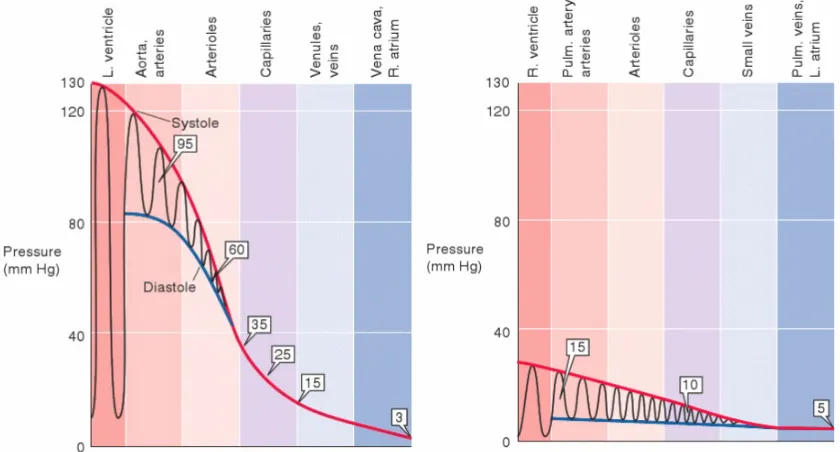
net-works, indicating that the systemic network operates at a much higher pressure than the pulmonary network. Boxed numbers mark mean pressure values at each level. Reprinted with permission from[31]. . 8 Figure 2.4 Pressure-volume loop for the left ventricle including phases of the
cardiac cycle and the opening and closing of the valves. Reprinted with permission from[91].□ . . . 9 Figure 2.5 The variation in aggregate cross-sectional area at all levels of
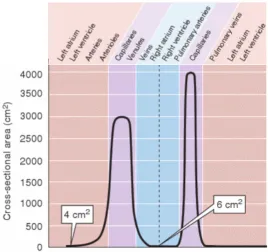
arboriza-tion. Aggregate cross-sectional area increases as larger arteries branch into smaller arterioles and capillaries. Adapted and reproduced with permission from[31]. . . 10 Figure 2.6 Branching of arteries and merging of veins.r indicates the typical
radius for a human at that level of arborization. Reprinted with per-mission from[31]. . . 11 Figure 2.7 Histological slices displaying a cross-section of the arterial wall from
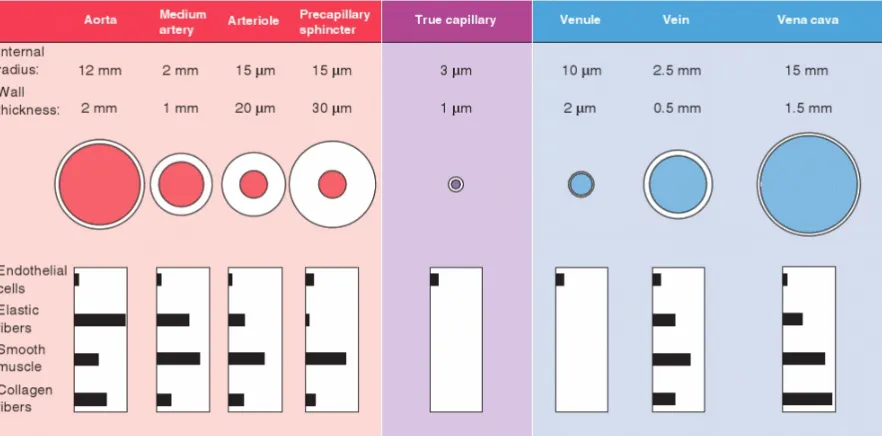
Figure 2.8 Vascular size, wall thickness, and relative composition at different levels of arborization in human vasculature. Values for medium ar-teries, arterioles, venules, and veins are illustrated. It should be noted that the dimensions vary widely vary. Wall compositions values from specific arteries are shown in Table 2.1. Reprinted with permission from[31]. . . 13 Figure 2.9 (left) A healthy pressure waveform where the forward wave
(ema-nating from the heart) occurs before the reflected wave (ema(ema-nating from the periphery). (right) As arterial walls stiffen, pulse wave ve-locity increases causing the forward and backward waves to occur at the same time, augmenting the pressure waveform. Adapted and reproduced with permission from[164]. . . 16 Figure 3.1 Mock circulation including a pneumatic pump, a perfusion line
con-nected to the chamber with the mounted vessel segment, a resis-tance modulator (R), and a reservoir. The chamber was filled with a thermally controlled Tyrode’s solution. Pressure (p) was measured with a micro transducer while the diameter (D) was measured with a pair of ultrasonic crystals using sonomicrometry. . . 20 Figure 3.2 Pressure-area, pressure time series, and area time series data from
each of the seven excised vessels. Corresponding colors represent vessels from the same sheep. From top left to bottom right: AA, BT, CA, DA, FA, MA, and PA. . . 25
Figure 4.1 The velocity profile for varying values ofγand the no-slip bound-ary condition inside a vessel with radiusr along the axial direction x. Asγincreases, the shape changes from a parabolic profile (cor-responding to a fully developed flow) to a blunt profile (mimicking a pulsatile flow). This work assumes a parabolic profile correspond-ing toγ = 2. At a solid boundary (the arterial wall wherer = R ), the blood has zero velocity relative to boundary. This is true for any timet and anyx along the axial direction. . . 32 Figure 4.2 The three simplest linear viscoelastic models composed of springs
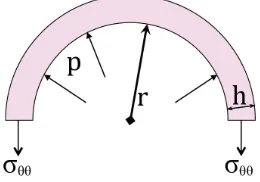
and dashpots: (a) Maxwell, (b) Voigt, and (c) Kelvin. Linear springs produce instantaneous deformations proportional to the load while dashpots slow motion, absorb energy, and produce velocity propor-tional to the load. . . 36 Figure 4.3 A diagram of the forces acting on a vessel under static equilibrium
conditions. TheFo u t w a r dis due to blood pressure acting on the
inte-rior wall of the vessel andFi n w a r d is the force acting on the exterior
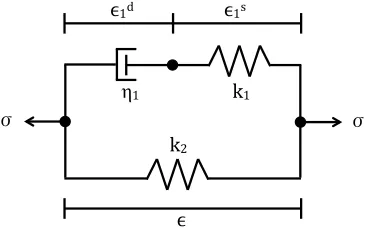
Figure 4.4 The Kelvin viscoelastic model illustrated using mechanical analogs with a combination of two Hookean elastic springs and a dashpot. . 40 Figure 4.5 The WK analogy to an air chamber. . . 50 Figure 4.6 Diagram depicting the three-element WK model. . . 51
Figure 6.1 (1st row) Maintaining the time steps per period (1200) converges for any number of elements. This shows spatial convergence for a straight elastic vessel. (2nd row) The temporal residual errors shown for pressure and area of an elastic non-tapered vessel on a log-log plot. (3rd row) The vessel is discretized spatially into 12 elements while increasing the time steps per period: 200, 400, 800,1200, 2400, 4800, 9600. It is apparent that the solutions corresponding to 800, 1200, 2400, 4800, and 9600 time steps are the same, thus signifying temporal convergence of the solver. (4th row) The spatial residual errors shown for pressure and area of an elastic non-tapered vessel on a log-log plot. . . 70 Figure 6.2 (1st row) Convergence in space for the viscoelastic wall model for
a non-tapered vessel with 1200 time steps per period. Although we change the number of elements (spatial mesh), we obtain the same results thus signifying convergence. (2nd row) The spatial residual errors shown for pressure and area of a viscoelastic non-tapered vessel on a log-log plot. (3rd row) Temporal convergence for the viscoelastic wall model with a non-tapered vessel discretized spa-tially into 12 elements. If each period is discretized into 800 or more time steps, we see convergence of the solver. (4th row) The tempo-ral residual errors shown for pressure and area of a viscoelastic non-tapered vessel on a log-log plot. . . 71 Figure 6.3 (1st row) Maintaining the time step at 800 per period, we obtain
Figure 6.4 (1st row) Convergence in space for the viscoelastic wall model in a tapered vessel. Although we change the number of elements (spa-tial mesh), we obtain the same results for 100+elements, thus signi-fying convergence. (2nd row) The spatial residual errors shown for pressure and area of a viscoelastic tapered vessel on a log-log plot. (3rd row) Temporal convergence for the viscoelastic wall model with a tapered vessel discretized spatially into 12 elements. (4th row) The temporal residual errors shown for pressure and area of a viscoelas-tic tapered vessel on a log-log plot. . . 73
Figure 7.1 Elastic modulus and zero-strain radius optimized values for larger ovine arteries. . . 77 Figure 7.2 Measured diastolic radius values plotted against the theoretical,
op-timized elastic zero-strain radius for each sheep in each vessel. . . 78 Figure 7.3 The best fit exponential decay function for all data points including
those from the sheep data and those provided in Olufsen’s disserta-tion. . . 78 Figure 7.4 The network geometry. The seven arteries from which pressure-area
measurements have been taken are marked with letters (AA, BT, CA, PD, MD, DD, FA), while other major vessels are marked with letters in parenthesis (CM, RA, IL, IT). In the model, the renal arteries and the celiac and mesenteric arteries were each combined into a sin-gle vessel, and the carotid, iliac, and femoral bifurcations were mod-eled as symmetric. . . 79 Figure 7.5 Flow and pressure-area computations and data for each vessel in
the network. . . 83 Figure 7.6 Pressure and flow waveforms along the aorta in an elastic network.
Systolic pressure increases progressing toward the periphery. . . 84 Figure 7.7 Single non-tapered vessel representative of the ascending aorta where
we have assumed a non-tapering vessel. This geometry is used to study the affects of the in- and outflow boundary conditions. . . 84 Figure 7.8 Model predictions in a single vessel (the ascending aorta)
mimick-ing results from a specific sheep. . . 85 Figure 7.9 Effect of changing the WK parameters in a single vessel network. . . . 87 Figure 7.10 Effect of changing the compliance parameter values in a single
ves-sel network. . . 88 Figure 7.11 Effect of changing wall viscosity while keeping outflow boundary
Figure 7.12 (Top) Results for matching pulse pressure in a single vessel. By in-creasing the peripheral resistance in the WK model as wall viscoelas-ticity increases, we are able to obtain the same pulse pressure but mean pressure increases. (Bottom) Results for matching mean pres-sure in a single vessel. As wall viscoelasticity increases, the distal re-sistance in the WK model must decrease in order to maintain the same mean pressure. However, this simultaneously leads to an in-crease in pulse pressure. . . 89 Figure 7.13 Increasing wall viscoelasticity while maintaining constant pulse and
mean pressures requires an increase in proximal resistance and a decrease in distal resistance of the WK model, conserving the to-tal resistance. TheR1/RT ratio, previously taken to be 0.2[99], is
di-rectly correlated with wall viscoelasticity. As seen in the left bottom row, matching pulse pressure and mean pressure maintains pres-sure shape and size. . . 90 Figure 7.14 Symmetric geometries used to determine WK parameters in
viscoelas-tic networks. From left to right: 3-, 7-, and 15-vessel networks. Note that these are representative and do not reflect the actual geometries. 91 Figure 7.15 R1andR2associated with each daughter vessel plotted as functions
ofςandA1. The total network resistance is defined as 2RTd where
RTd =R1+R2as shown in the figures. Red lines show the functions
given by (7.4.1) and (7.4.2). . . 92 Figure 7.16 A circuit of resistorsR1,R2, . . . ,Rn in parallel. The total resistance of
the circuit can be calculated using (7.4.3). . . 93 Figure 7.17 Total resistance in each symmetric network for increasing values
ofA1. It is important to note that whenA1=0, corresponding to a purely elastic wall, the networks have the same total resistance. This supports our hypothesis that as viscoelastic vessels are added into a network, more energy is lost and thus higher resistances are needed at the outflow boundary conditions to account for these losses. The total resistance corresponding to the elastic models matches the to-tal resistance found in the single vessel network and is equal to the mean pressure divided by the mean flow (RT =p¯/q¯). . . 95
Figure 7.19 Total resistance in each symmetric network for increasing values of A1. Again, the total resistance remains the same in each network for the elastic wall model and can be found viaRT =p¯/q¯. As more
vis-coelastic vessels are added to the network, higher resistances are needed in the WK models to account for energy losses due to the wall model. . . 99 Figure 7.20 R1(left) andR2(right) as functions ofA1and r0 for symmetric
net-works where E h/r0 is the same in all vessels. Both R1 and R2 are defined as second-order polynomials inA1andr0. . . 100 Figure 7.21 WIA in a single straight vessel whereE h/r0 is varied with an
elas-tic wall (top) and whereA1is varied in the viscoelastic model (bot-tom). The normal E h/r0 value is shown in black. E h/r0 varies as 25%, 50%, 150%, and 200% of this value.A1varies between 0 and 0.8 in increments of 0.2. . . 102 Figure 7.22 WIA for 3-vessel networks: (top)E h/r0 constant, (bottom) E h/r0
varying withr0. A1 =0 corresponding to the elastic case is shown in red; increasingA1given by the spectrum order. Velocity appears similar in the two cases; this is different from Figures 7.23 and 7.24. . 103 Figure 7.23 WIA for 7-vessel networks: (top)E h/r0 constant, (bottom) E h/r0
varying withr0. In the case ofE h/r0varying exponentially withr0, the pressure and velocity waveforms are lined up for all cases of vis-coelasticity validating our method for choosing WK parameters. . . . 104 Figure 7.24 WIA for 15-vessel networks: (top)E h/r0constant, (bottom)E h/r0
varying with r0. The pressure and velocity waveforms are lined up for all cases of viscoelasticity whenE h/r0varies exponentially with r0. . . 105 Figure 7.25 WIA in the ascending aorta from an elastic network mimicking healthy
Chapter 1
Introduction
Cardiovascular diseases, defined as disorders of the heart and blood vessels, are the
num-ber one cause of death globally with 17.5 million deaths in 2012[181]and an estimated 23.6 million deaths in 2030. One of the major risk factors for cardiovascular disease is
hy-pertension, or elevated blood pressure. Hypertension can lead to coronary heart disease
and is considered the most important risk factor for stroke, causing more than half of
is-chaemic strokes (obstruction of blood to the brain) and drastically increasing the risk for hemorrhagic stroke (ruptured vessels that bleed into the brain)[181].
One-third of the adult population (70 million people) in the United States suffers from
hypertension and only half have their condition under control[36]. Another 70 million adults are prehypertensive[36], indicating a risk for hypertension. The etiology of hyper-tension is largely unknown[18], with little to no progress towards achieving an accepted hypothesis. The past century provided hypotheses on the relationship between
hyperten-sion and arteriosclerosis, and suggested that the splanchnic nerves and circulation play
major roles in hypertension. One hypothesis is that the pathophysiology associated with
the stiffening of large or small arteries causes changes in the hemodynamics and wave propagation in the circulatory network. Novel hypotheses on the etiology of hypertension,
such as stiffening of arteries, can be interpreted and supported (or rejected) via means of
1.1
Summary of the dissertation
My work focused on 4 aims: (1) to derive a 1-D fluid dynamics model that can be
cou-pled with elastic or viscoelastic arterial wall models to study wave propagation, (2) to es-timate parameters associated with arterial wall models and determine how these change
with arterial cross-sectional area, (3) to construct and validate a systemic ovine arterial
network model predictingex vivopressure and area, and (4) to develop a systematic
ap-proach analyzing how energy losses due to wall viscoelasticity effect outflow boundary
conditions. The latter is important for network simulations which require large
computa-tions with many parameters, all of which must be estimated to obtain physiological results.
Elastic networks are easier to calibrate than viscoelastic network. By forming a systematic
approach to estimating outflow parameters in viscoelastic arteries, network simulation
construction is simplified.
• Chapter 2 introduces structural and functional properties of the cardiovascular
sys-tem relevant for the models developed in Chapter 4.
• Chapter 3 describes the experimental procedures used by the Hemodynamics
Lab-oratory at the Universidad de la República in Montevideo, Uruguay to acquire
pres-sure and area data from systemic ovine arteries. Moreover, it provides an overview
of literature data available for validating 1-D blood flow models.
• Chapter 4 derives the 1-D model used for predicting arterial blood pressure,
volu-metric flow, and cross-sectional area in arterial networks. The major components are a 1-D fluids model, arterial wall models, and models of the boundary conditions.
The 1-D fluids model is derived from the Navier-Stokes equations under the
assump-tion of an axisymmetric, incompressible flow. The arterial wall models use the
frame-work of Fung’s quasilinear viscoelasticity theory which formulates arterial strain as a
function of stress. The outflow boundary conditions are modeled by a three-element
Windkessel model, relating pressure and flow at the outlet of terminal vessels. Each
of these three components are accompanied by a literature review.
• Chapter 5 briefly presents wave intensity analysis, a method for analyzing wave
• Chapter 6 sets up the numerical scheme used to solve the system of partial
differen-tial equations. A stabilized space-time finite element method based on a
discontinu-ous Galerkin method in time was utilized to solve the nonlinear equations governing
pulsatile blood flow in the arteries. Results confirming convergence of the solver in
a single vessel geometry are shown.
• Chapter 7 shows results for computations with elastic and viscoelastic networks. The
inverse problem allowing for estimation of wall model parameters is briefly described.
An elastic network geometry is developed and used to confirm the adequacy in using
discreteex vivodata in network simulations. The viscoelastic network is the heart of this dissertation and builds upon smaller networks to construct a clearcut way to
pre-dict outflow boundary conditions based on geometry, wall viscoelasticity, and vessel
stiffness.
• Chapter 8 summarizes the key points addressed in this dissertation and suggests
Chapter 2
Cardiovascular Physiology
This chapter presents the cardiovascular system, specifically the systemic arterial network
which distributes blood from the left ventricle to the periphery. The general information
presented here is from physiology books by Boron [31], Smith and Kampine[146], Lev-ick[91], and Klabunde[82]. Section 2.1 outlines the cardiovascular system (CVS) and its functions while Section 2.2 presents various properties of the vasculature as well as
com-mon diseases affecting the arterial wall.
2.1
The cardiovascular system
The CVS is composed of a sophisticated network of blood vessels that facilitates the
trans-portation of nutrients (oxygen, glucose, amino acids, fatty acids, vitamins, drugs, water) to
and the removal of metabolic waste products (carbon dioxide, urea, creatinine) from
tis-sues. There are three primary components of the CVS: 1) a pump (the heart), 2) the liquid
(blood), and 3) a network (vessels). The system consists of two main divisions that form a
HEAD & ARMS
LUNGS
LIVER
STOMACH & INTESTINES
KIDNEYS
LOWER BODY & LEGS
Pulmonary
vein Pulmonary
artery
Aorta
Heart
Hepatic artery Hepatic vein
Hepatic portal vein Inferior
vena cava Superior vena cava
Renal vein Renal artery
Figure 2.1A schematic showing the parallel layout of the CVS. The only circulatory beds in series
are those between the spleen, intestines, and the liver. Red arrows indicate vessels that carry oxy-genated blood, blue vessels indicate those that carry deoxyoxy-genated blood. Purple boxes represent major vascular beds where the exchange of gases occurs. Adapted and reproduced with permis-sion from[91].
2.1.1
The systemic and pulmonary circuits
The heart, weighing only 300 grams, contains four chambers (Figure 2.2), making up two
pumps that feed the pulmonary and systemic circulatory[146]. The pulmonary circuit in-volves the flow of deoxygenated blood from the right heart to the lungs, the flow within the
lungs, and the flow of oxygen-rich blood back to the left heart. As blood passes through
the lungs, oxygen and carbon dioxide are exchanged between the capillaries and the gases
within the alveoli. The oxygenated blood is transported from the left heart throughout the
body via thesystemic circulationto organs where it diffuses from the blood into the
the tissues into the blood where they are transported back to the lungs and the exchange
between blood and gases is made once again. Compared to the pulmonary circuit, the
systemic circuit operates under a higher mean pressure as shown in Figure 2.3, 15 and 95
mmHg, respectively[31].
The right and left sides of the heart each contain an atrium and a ventricle. The left
ven-tricle and left atrium are connected via the mitral (or bicuspid) valve which, under normal
conditions, prevents back flow from the ventricle into the atrium. The right ventricle and
right atrium are connected via the tricuspid valve which serves a similar purpose as the
mitral valve. Venous blood from the systemic circulatory system is returned to the heart through the right atrium, and the right ventricle then cycles the blood to the pulmonary
circuit. The blood leaves the pulmonary system and enters the left atrium via pulmonary
veins where it then flows into the left ventricle. The left ventricle ejects blood into the
sys-temic circuit, beginning with the aorta which then, in turn, distributes the blood
through-out the body to all the organs. Blood that flows from the aorta to the major organ systems
ultimately enters the venous system, the superior and inferior vena cava, and is then
re-turned to the heart. Circulation to the major organ systems occurs primarily in parallel as
shown in Figure 2.1.
Within organs, the arterial vasculature branches into smaller and smaller vessels. This branching, along with the decrease in radial size of the arteries, is vital to maintaining
blood pressure and flow throughout the network. Its importance will be emphasized in
the next section.
2.1.2
The circulation of blood
The walls of the heart are composed of muscle tissue called the myocardium. The
my-ocardium consists of three layers: the two outermost layers of fibers are diagonally
ori-ented from the base of the heart to the apex, and the innermost layer is circumferentially
oriented. Upon contraction, the innermost layers shorten the ventricular wall, pulling the
apex towards the base while the circumferential fibers constrict the ventricular diameter
of the heart.
As the heart pumps blood into the vasculature, a pressure gradient is induced within the network. This can be described by classical hydrodynamic laws, the most important in
this scenario analogous to Ohm’s law of electricity. Thus, the pressure difference (∆P)
Figure 2.2Blood flow in the heart. Systemic venous blood enters the right atrium (RA) through the superior (SVC) and inferior vena cava (IVC) where it then passes into the right ventricle (RV). The RV ejects blood into the pulmonary artery (PA) where it passes through the lungs and is re-oxygenated before flowing through the left atrium (LA) and then filling the left ventricle (LV). From here, the blood is ejected through aorta (A) to be distributed to the major organs. Used with permission from [82].
pressure gradient is required to drive a given flow through a vessel with higher resistance:
∆P =Q R. (2.1.1)
Alternatively, arterial resistance can be calculated based on vessel lengthLand radius
r if the flow fulfills Poiseuille’s law i.e. a fully-developed flow of a viscous liquid through a rigid, cylindrical pipe where the flow velocity varies from zero at the walls to a maximum
along the centerline. Where applicable, this resistance is given as
R= 8
π ηL
r4 (2.1.2)
whereηis the viscosity. Based on Poiseuille’s law, in wide vessels (such as the aorta),
re-sistance is low because there is a larger area for the flow to pass through. In contrast, the
resistance is higher in narrower vessels. In humans, large arteries account for 2% of the
total systemic resistance, whereas the arterioles, capillaries, and the venous system make
up 60%, 20%, and 15%, respectively[31].
The cardiac output (CO) is defined as the amount of blood ejected during each
Figure 2.3Pressure gradients in the systemic (left) and pulmonary (right) networks, indicat-ing that the systemic network operates at a much higher pressure than the pulmonary network. Boxed numbers mark mean pressure values at each level. Reprinted with permission from[31].
CO=SV·HR, (2.1.3)
i.e. changes in the heart rate or stroke volume will influence the cardiac output. The heart rate is determined by groups of cells known as pacemaker cells. These cells generate action
potentials that are conducted throughout the heart and trigger contraction of the cardiac
myocytes (or cardiac muscle cells.) This contraction results in the ejection of blood and
the force of this contraction regulates stroke volume. The magnitude of this force is
con-trolled by autonomic nerves and hormones. Stroke volume in a resting adult is typically
70-80 mL and heart rate is 60-75 beats per minute (bpm), resulting in a cardiac output
of 5L/min[146]. It can increase in response to external factors (fear, excitement) or an in-creased peripheral oxygen demand (exercise). Cardiac output has been known to increase
up to five times the normal amount during strenuous exercise[146]! At rest in the supine position, the average blood pressure is about 120/80. This corresponds to the ejection of blood in intermittent patterns during systole and rest during diastole where the systemic
The systolic and diastolic portions allow the cardiac cycle to divide into an active phase
and a relaxed phase (see Figure 2.4). The active phase results in an increase in pressure
while the volume remains constant. When the ventricular pressure exceeds the arterial
pressure, the aortic valve opens (initiating systole) and blood flows into the aorta. Systole
ends when the aortic valve closes and ventricular pressure drops below the arterial
pres-sure. The mitral valve opens and blood passes from the atrium into the ventricle. The mitral
valve closes, initiating the cycle again.
Figure 2.4Pressure-volume loop for the left ventricle including phases of the cardiac cycle and
the opening and closing of the valves. Reprinted with permission from[91].□
2.1.3
Vasculature
The aorta, stemming from the heart, is the largest artery in the body and branches into many large conduit arteries. These arteries branch repeatedly into smaller arteries which
branch into even smaller vessels called arterioles, known to have a very high resistance.
Ar-terioles ultimately branch into an abundant number of thin-walled capillaries 2.6. Through
arborization, or branching of the arterial network, the number of vessels increases thus in-creasing the aggregate cross-sectional area at each level (Figure 2.5).
Figure 2.5The variation in aggregate cross-sectional area at all levels of arborization. Aggregate
cross-sectional area increases as larger arteries branch into smaller arterioles and capillaries. Adapted and reproduced with permission from[31].
arteries,∼107arterioles, and∼4×10¹⁰capillaries (radii∼3µm.) These capillaries then con-verge to form venules. Venules concon-verge into small veins, ultimately merging to become
larger, named veins such as the vena cava.
The structural branching is crucial in slowing the blood flow as the vessels decrease in
size, thus increasing in vascular resistance. From (2.1.1), as resistance increases, blood flow
decreases causing the blood velocity in capillaries to be 1/200th of the arterial velocity[31]. The slowing is necessary to give the red blood cells sufficient time to exchange carbon
dioxide and oxygen. Capillaries are closest in proximity to cells in the body, and thus they
permit this exchange. Similarly, the arborized structure allows for lower blood pressure
values as vessels decrease in size. The largest drop in pressure is believed to occur in the
arterioles (as shown in Figure 2.3). For this reason, arterioles are theoretically referred to
as the resistance vessels although pressure in these vessels cannot be measured but rather
shown computationally[126].
act-Figure 2.6Branching of arteries and merging of veins.r indicates the typical radius for a human at that level of arborization. Reprinted with permission from[31].
ing as blood reservoirs, are referred to as capacitance vessels. Venules and small veins
outnumber their counterparts (arterioles and arteries)[29], consequently their aggregate cross-sectional area is high and aggregate resistance is low. Thus, a smaller pressure drop
of 10–15 mmHg is sufficient to drive the cardiac output through the venules (Figure 2.6).
At any given time, veins and venules contain about two-thirds of the circulating blood due
to their abundance and size[31].
At all levels of arborization, blood vessels contract and dilate to regulate blood pressure,
control blood flow within organs, and distribute blood volume throughout the body. The
arterial wall alters in response to the activation of vascular smooth muscle within the wall
by autonomic nerves, metabolic and biochemical signals outside the artery, and
vasoac-tive substances released by cells that line the artery. The wall also plays a role in producing several necessary substances (nitric oxide, endothelin-1, and prostacyclin) that regulate
the CVS functions, hemostasis, and inflammatory responses. More information on the
syn-thesis and the functions of these substances can be found in[163]and[102], respectively.
2.2
Wall tissue
All blood vessels except capillaries have walls composed of three layers–thetunica intima
It is possible to distinguish each of these layers macroscopically, as shown in Figure 2.7.
Each layer is composed of particular cells serving different roles in the mechanical
work-ings of the arterial wall. The proportion of these three layers varies depending on the size
and location of the vessel as shown in Figure 2.8 and quantified in Table 2.1.
Figure 2.7Histological slices displaying a cross-section of the arterial wall from the ovine
tho-racic aorta (left) and the carotid artery (right). The vessels were stained with orcein which allows for differentiating the three main biomechanical components of the arterial wall: elastin (dark red), collagen (blue), and smooth muscle cells (yellow). The thoracic aorta has more elastin while the carotid artery contains more collagen. The difference in these compositions explains why the wall of the carotid artery appears “stiffer” than that of the thoracic aorta. Images made available by Dr. Daniel Bia, Universidad de la República, Uruguay.[26, 159]
The innermost layer, the tunica intima, is composed of a single layer of endothelial
cells, a thin basal lamina, and a subendothelial layer. The subendothelial layer is
com-posed of collagen, smooth muscle cells, and fibroblasts. This layer serves as the barrier
that prevents plasma from seeping through the vessel wall. It also secretes many
vasoac-tive chemicals including nitric oxide which is an antithrombotic vasodilator.
Thetunica mediais primarily composed of smooth muscle cells, arranged
circumfer-entially and provides the mechanical strength and contractile power for the vessel. Elastin
(in the form of fenestrated elastic lamellae) and collagen fibers are found in this layer of arterial walls. In humans, the number of elastic lamellae is related to the anatomical
lo-cation of the artery. Muscular arteries have one internal and one external elastic lamella
Figure 2.8Vascular size, wall thickness, and relative composition at different levels of arboriza-tion in human vasculature. Values for medium arteries, arterioles, venules, and veins are illus-trated. It should be noted that the dimensions vary widely vary. Wall compositions values from specific arteries are shown in Table 2.1. Reprinted with permission from[31].
decreases toward the distal end of each arterial segment.
The tunica adventitia, the outermost layer of the arterial wall, is composed of dense
fibroelastic tissue and has no distinct outer boundary. These fibers are responsible for
releasing the vasoconstrictor agent, norepinephrin, which regulates local resistance and
therefore local blood flow. In larger arteries and veins, theadventitiaalso containsvasa
vasorum(or small blood vessels) which nourish themedia.
2.2.1
Biomechanics of wall tissue
Arterial walls exhibit both passive and active deformation. Passive components, namely
elastin and collagen fibers found in thetunica media, determine the elastic, viscous, and
inertial properties exhibited by the wall. The smooth muscle contraction during
vasocon-striction is theactive componentof the arterial wall.
Elastin, considered to be the primary determinant in blood flow dynamics, is six times more extensible than rubber, and it enables large arteries to serve as temporary blood
Table 2.1Percent composition of themediaandadventitiaof three arteries atin vivoblood pres-sure. Values given are mean±standard deviation. Adapted and reproduced with permission from[55].
Thoracic aorta Pulmonary artery Plantar artery Media
Smooth muscle 33±10 46±8 61±7
Ground substance 6±7 18±9 26±6
Elastin 24±8 9±3 1±1
Collagen 37±10 27±13 12±8
Adventitia
Collagen 78±14 63±9 64±10
Ground substance 11±10 25±8 25±9
Fibroblasts 9±11 10±6 11±3
Elastin 2±3 2±2 0±0
to accommodate the blood ejected from each heartbeat. Stretched elastin stores
mechani-cal energy which is used during diastole to maintain blood pressure and drive flow through
the downstream resistive vessels. This mechanical energy allows blood pressure to stay
above∼80 mmHg despite the fact that the heart ejects blood intermittently with the least amount of energy expended.
Collagen, whose fibers are ∼100 times less distensible than elastin, stretches only 3 to 4% under physiological conditions. It prevents vessels from excessive expansion when
blood pressure rises.
While elastin breaks down with age, collagen is built up and dominates the elastic
prop-erties of the vessels. Vessels get stiffer in a process called arteriosclerosis. This is part of the natural aging process, but vessels can also stiffen earlier and at quicker rates with the
pres-ence of cardiovascular diseases such as hypertension and diabetes[44].
Although all wall components contribute to viscosity, the magnitude of internal
fric-tion, smooth muscle cells in thetunica intimaandmediarespond to physiological stimuli.
Smooth muscle tone depends on blood flow, blood viscosity, and hematocrit values.
Char-acterizing the viscous behavior of arterial walls sheds light on the physiological factors
associated with plaque build-up or other arterial disease stages.
Due to the wall viscosity controlled by elastin, collagen, and smooth muscle cells, a
caused by the energy required to dilate a vessel during systole that is not recovered during
diastole. It is common to plot and compare these loops at various locations in the body. By
plotting hysteresis loops along a network, it is clear that vessels display different degrees
of viscoelasticity. Wall viscosity varies depending on the state of the wall muscle and other
arterial properties[26].
2.2.2
Vascular pathology
As discussed by Humphrey[74], the leading causes of morbidity and mortality are diseases of and injuries to the arterial vasculature. We will briefly outline the biomechanics of two
common pathologies but refer the reader to[74]for further information.
2.2.2.1 Hypertension
Hypertension is defined as an elevation in blood pressure from the normal 120 mmHg/80 mmHg. There are multiple criteria used to distinguish what constitutes an “above average”
or “high” pressure[129]. In humans, systemic hypertension is typically characterized by systolic pressures greater than 160 mmHg or diastolic pressures greater than 90 mmHg.
Many clinicians now diagnose “pre-hypertension” which is thought to be a intermediate
stage between normal and hypertensive patients. Pre-hypertensive patients have a systolic
pressure between 121–159 mmHg or a diastolic pressure between 81-90 mmHg and are at risk of becoming hypertensive.
The etiology of hypertension remains unknown[18], but accepted causes include ag-ing, genetics, improper diet, and malfunction of major organs or nervous systems. When
hypertension clearly results from another condition or disease, it is referred to assecondary
hypertension. In opposition, when the cause is not due to another disease and is suspected to stem from vessel stiffening, it is referred to asprimary hypertension.
As previously mentioned, within themedia, elastin deteriorates with age and collagen
becomes the dominating biomechanical substance in the arterial wall. This leads to an
increase in stiffening which causes blood flow velocity to increase and reflected waves oc-cur in sync with forward propagating waves (see Figure 2.9). This results in an augmented
pressure waveform, a symptom of arterial hypertension. Hypertension is inevitable as
hu-mans age due to the deterioration of elastin. However, in other cases of hypertension, it is
Figure 2.9(left) A healthy pressure waveform where the forward wave (emanating from the heart) occurs before the reflected wave (emanating from the periphery). (right) As arterial walls stiffen, pulse wave velocity increases causing the forward and backward waves to occur at the same time, augmenting the pressure waveform. Adapted and reproduced with permission from[164].
2.2.2.2 Arteriosclerosis
While hypertension mainly affects themedia, arteriosclerosis is a local disease of the
in-tima and the most common vascular disease overall. arteriosclerosis affects large- and medium-sized arteries, causing heart disease, stroke, and gangrene in the extremities via
fatty deposits along the inner lining of the arterial wall. This affects the structure and
func-tion of blood vessels.
It has been suggested that following an insult to the endothelium and smooth muscle of the arterial wall, monocytes adhere to the local insult and migrate to the inner wall. There,
they transform into macrophages and ultimately lipid foam cells. Meanwhile, smooth
mus-cle cells are stimulated to migrate into theintimawhile calcium is accumulated locally.
Between the two mechanisms aforementioned, the fatty deposits are locally deposited,
typically at sites of complex geometry, and prevent normal blood flow to the downstream
vasculature. This impairs the delivery of oxygen to tissues and impacts bodily function.
2.2.2.3 Relevant pathology
Because this dissertation focuses on one-dimensional modeling of blood flow in the
ar-teries, we must remain realistic in the capabilities of our model. There are particular
dis-eases which can be addressed while utilizing a one-dimensional network and those which
based on the uncertainty associated with causes for arterial hypertension. That said, this
research mainly investigates healthy arterial networks in hopes that this will lead to
im-provement of tracking diseases and understanding the structural changes in vasculature
Chapter 3
Experimental Data
The experimental data used throughout this thesis were provided by Dr. Daniel Bia and
his laboratory in the Physiology Department at the Universidad de la República in
Monte-video, Uruguay and have been used by Valdez-Jasso et al.[159–162]to develop constitutive equations relating blood pressure and arterial cross-sectional area. As discussed in
Sec-tion 3.1 and shown in SecSec-tion 3.2, data recorded are time series measurements of arterial
blood pressure and vessel diameter in ovine arteries. Measurements are taken from seven vessels in the systemic arterial network underex vivoexperimental conditions in eleven
male Merino sheep. Section 3.3 details the literature data.
3.1
Experimental setup
3.1.1
Surgical preparation and acquisition of segments
Details on the experiment are summarized from[26]. Blood pressure and cross-sectional area were measured in vessels excised from eleven healthy male Merino sheep, aged
18-24 months with a mean weight of 32 kg (ranging from 25-35 kg). All protocols were
ap-proved by the Research and Development Council of the Universidad de la República and
were conducted in accordance with the guidelines for the care and use of laboratory
ad-ministration of pentobarbital (35 mg/kg). Alveolar ventilation was maintained by a respi-rator (Draeger SIMV Polyred 201, Madrid, Spain). Respirespi-ratory rate, tidal volume, and the
inspired oxygen fraction were adjusted to maintain arterialpCO2 at 35-45 millimeters of
mercury (mmHg), pH at 7.35-7.4, andpO2 above 80 mmHg. In each sheep, seven arteries
(see Figure 7.4) were selected to evaluate their mechanical properties: the right carotid
artery (CA), the brachiocephalic trunk (BT), the ascending aorta (AA), the proximal
de-scending aorta (PD), the medial dede-scending aorta (MD), the distal dede-scending aorta (DD),
and the left femoral artery (FA). For each vessel, a 6 cm segment (marked with suture
refer-ences in the adventitia) was dissected from the surrounding tissue. Two miniature piezo-electric crystal transducers (5 MHz, 2mm in diameter) were sutured in the adventitia on
opposite sides of each vessel, and the external vessel diameter was measured by
convert-ing the transit time of the ultrasonic signal (1580 m/s) between the crystals into distance by means of a sonomicrometer (1000 Hz frequency response, Triton Technology, Inc., San
Diego, CA). Optimal positioning of the dimensionless gauges was assessed with an
oscil-loscope (model 465B, Tektronix, Richardson, TX). After marking the vessel segments, the
animals were sacrificed with an intravenous overdose of pentobarbital followed by
potas-sium chloride, and the arterial segments were excised. To limit rupture of the adventitia
and endothelium, the “no-touch” technique was employed to excise and mount (in a mock circulation) the arterial segments. After completion of the excision, the correct position of
the ultrasonic crystals as well as strength and adequacy of the suture were confirmed by
visual inspection.
In summary, six steps were performed prior to theex vivomechanical tests[11]: 1) an-imals were anesthetized; 2) seven arterial segments were exposed and dissected from the
surrounding tissue in each animal; 3) each arterial segment was marked with two suture
references in the adventitia; 4) a pair of ultrasonic crystals was sutured into the adventitia
to measure the external diameter; 5) the animals were sacrificed; and 6) the segments were
excised.
3.1.2
Ex vivo
experiments
As shown in Figure 3.1, the excised vessel segments were non-traumatically mounted in the organ chamber of the mock circulation, immersed and perfused with a thermally
regu-lated (37◦C) and oxygenated Tyrode’s solution with pH 7.4. The mock circulation consisted
Salt Lake City, UT). The pneumatic device was regulated via an air supply machine that
allowed adjustments of hemodynamic parameter values and waveforms. The external
ar-terial diameter was measured using sonomicrometry, employing the ultrasonic crystals
sutured into the adventitia during thein vivoprocedures. Pressure was measured with a
solid-state microtransducer (Model P2.5, 1200 Hz frequency response, Konigsberg
Instru-ments, Inc., Pasadena, CA) inserted into each artery through a small incision. This
tech-nique allows adequate and reproducible measurements of the arterial wall mechanics [10]. Pressure sensors were calibrated using a mercury manometer. To avoid signal interference,
the pressure sensor was inserted 2 mm proximal to the ultrasonic crystals. Experimental pressure-area data are summarized in Figure 7.5 depicting pressure area loops for each
vessel segment. These measurements are obtained by setting the inflow as mimicking the
cardiac output of the individual sheep.
Figure 3.1Mock circulation including a pneumatic pump, a perfusion line connected to the
chamber with the mounted vessel segment, a resistance modulator (R), and a reservoir. The chamber was filled with a thermally controlled Tyrode’s solution. Pressure (p) was measured with a micro transducer while the diameter (D) was measured with a pair of ultrasonic crystals using sonomicrometry.
Lastly, a non-constricting ultrasonic perivascular flow probe connected to a
transit-time ultrasonic flowmeter was positioned around each artery (Model T206, Transonic
flow in each arterial segment. The flow probe was positioned and the flow recording was
used to adjust the Jarvik pump. Upon calibration of the pump, the flow probe was removed
to avoid potential effects on the pressure and diameter signals. Flow data were not saved.
Once placed in the organ chamber, each segment was allowed to equilibrate for a period
of 15 minutes. After the arterial segments mounted in theex vivosystem were stretched
toin vivolength, the arterial diameter was measured at zero pressure (0 mmHg) with the
ex vivosystem pump turned off (values shown in Table 7.1). Next, vessels were subjected to physiological hemodynamics conditions with a pumping frequency of 1.8 Hz[108 cy-cles per minute (cpm)]. The pressure and diameter signals were displayed in real time, digitized with a frequency of 200 Hz and stored for later analysis. For this study,
approxi-mately ten consecutive cardiac cycles were sampled and analyzed for each vessel. Using
these measurements, the mean wall thickness given in Table 7.1 was calculated as the
dif-ference between the external radiusre (determined by sonomicrometry) and the internal
radiusri(estimated). The internal radius (Table 7.1) was estimated from the vessel volume,
V =ωρ, whereωis the vessel weight (measured using a precision scale, Sartoris-Werke GMBH type 2442) andρis the tissue density (assumed constant as 1.06 g/mL), using the relationV =L πr2
e −πr
2
i
, whereLis the vessel length.
3.2
Data preprocessing
Pressure and radius data acquired were time series measurements over multiple cardiac
cycles. We assume that the cardiac cycle is perfectly periodic in our model, and thus we
compare our simulated results to a single selected cycle from the data time series.
Addi-tionally, the objective was to investigate pressure and cross-sectional area dynamics of the
arterial wall as they relate to wave propagation. Pressure-area data are shown in Figure 3.2.
Assuming arteries have a circular cross-sectional area, the diameter time series datadj (in
mm) was used to determine the cross-sectional areaaj (in cm2) via
aj =π
dj
20
2
3.3
Available data in literature
As aforementioned, complete data sets (blood flow, pressure, arterial cross-sectional area,
and geometry) throughout the network are nonexistent. This is due to the difficulty in si-multaneously and accurately measuring the three quantities (p,q,A) at the same locations.
However, many studies have been able to measure one or two of these quantitiesin vivo
but at discrete locations. In the data we use (discussed previously in 3.2), we were fortunate
enough to obtain both pressure and area measurements at the same location. These
exper-iments were performedex vivoafter vessels were excised, causing changes in the
biome-chanical properties of the arterial wall[26]. There is a distinct trade-off between obtaining more data by performingex vivotests or less data wherein vivoexperiments are possible.
The experiments and data available throughout blood flow literature are discussed below.
It should be noted that some experiments are also performed on casted vasculature or
synthesized polyurethane vessels created to mimic arteries. Because these casted or syn-thesized vessels do not accurately represent arterial distention, they will be neglected in
this literature review.
3.3.1
Pressure-area data
Early studies in the 1960s on canine subjects[22, 23, 121]. Bergel [22, 23]measured the static cross-sectional areaev vivoin two locations along the aorta and single recordings
from the femoral and carotid arteries. This was accomplished by excising the vessels then
filling them with fluid until specific pressure values were achieved at which their radii were
measured. Pressures were increased at increments of 20 mmHg from 0 to 240 mmHg,
not-ing that both ends of this range are unphysiological pressure values. A few years later, Patel
et al.[121]studied the aorta in dogs bothin vivowhile under anesthesia andex vivoafter the vessels had been excised. They opened the chest of each dog to reveal and expose the
thoracic aorta, measuring the external radius with vernier calipers. Next, the aorta was
ex-cised and placed in a chamber where pressure and area were measured by a transducer and
an electric caliper, respectively. Although Thomas Young had described a relation between
vessel elasticity and hemodynamics in 1808[185], the experiments by Bergel and Patel et al. ultimately led to the first constitutive equations relating pressure and cross-sectional
area over time series. Further information on constitutive equations for pressure and area
Later, Langewouters et al. [87]studied human aortas at two locations (thoracic and abdominal)ex vivoby measuring diameter at incremental pressure values (0 to 180 mmHg
in increments of 20 mmHg).
Armentano et al. have recorded canine aortic diameters and pressures[10]via an im-planted microtransducer and ultrasonic crystals as previously described. In later work[11], human subjects’ (23–45 years old) carotid arteries were tested in a similar manner
post-mortem. While this used a similar setup to[10], they also performed noninvasivein vivo experiements on normotensive human subjects. An echographic recording was used to
measure diameter while a tonometer was used to record pressure waveforms in the carotid artery.
3.3.2
Pressure-flow data
One study was able to measure pressure, flow, and area simultaneously in canine femoral
arteries. This study, performed by Milnor and Bertram[100]in 1978, carefully records pres-sure and flow at the proximal and distal ends of the artery while recording the external
diameter of the artery.
In her Ph.D. dissertation, Brooke Steele [147] also simulated stenoses along porcine aortas where polyester umbilical tape was tied around the descending aorta to restrict
blood flow. A polyester graft was attached above and below the constriction, providing
an alternate route for blood flow. Contrasted-enhanced magnetic resonance angiography
(CE-MRA) was used to determine the arterial geometry while phase-contrast magnetic res-onance imaging (PC-MRI) collected velocity information at four locations. Catheters were
simultaneously used to record pressure above and below the graft. While this experiment
set out to specifically test the effectiveness of a polyester graft in cases of aortic coarctation,
it does measure all three quantities in question: area, pressure, and velocity.
Alastruey et al.[7]measuredin vivoflow and pressure time series using a flow probe and two catheter transducers inserted in the femoral artery. Data were extracted from 10
New Zealand white male rabbits at 1 cm increments from the aortic root to the iliac to
calculate the pulse wave velocity.
Many studies[43, 96, 132–134, 142]have referenced the human networks used by No-ordergraaf[108], Westerhof et al.[178], and Stergiopulos et al.[149]. These networks com-bined have grown to include the main systemic arteries, the coronary network, and the
Table 3.1Summary of data available in literature forin vivoorex vivopressurep, areaA, and flow
q. Also specified are the species and arteries from which the data is measured.
reference p A q in vivo ex vivo species arteries (# of recordings)
[22],[23] x x x canine aorta (2), femoral (1), carotid (1)
[121] x x x x dogs aorta (1)
[87] x x x human aorta (2)
[10] x x x dog aorta(1)
[11] x x x x human carotid (1)
[100] x x x x dog femoral (2)
[147] x x x x pig aorta (p: 2,A: CE-MRA,q: 3), graft (q: 1) [108],[178],[149] x x human aorta (3), iliac (1), femoral (1) [108],[178],[149] x x human carotid (2), vertebral (1), cerebral (1)
[108],[178],[149] x x human radial (1), temporal (1)
[7] x x x rabbit aorta (∼18)
complexity through numerous studies over the years. Although the network geometry is
complex compared to other studies, the data available is still sparse. Pressure and flow
measurements were taken from young, healthy volunteers. In one group of volunteers,
vol-umetric flow in the systemic arteries was obtained using PC-MRI. Recordings were made
for the ascending aorta, thoracic aorta, abdominal aorta, common iliac, and femoral
ar-teries. In the second group, flow was measured in the precerebral and cerebral arteries us-ing B-mode and color-coded duplex flow imagus-ing. This consisted of four arteries: middle
cerebral artery, vertebral artery, internal carotid artery, and common carotid artery. Only
a portion of this second group was used to obtain pressure measurements on superficial
arteries (radial and termporal) using tonometry.
A summary of the pressure, area, and flow data aforementioned are presented in
AA
50 100 150
2 3 4 5 6 p (mmHg) A (cm 2)
0 0.5 1 1.5 2
50 100 150
t (s)
p (mmHg)
0 0.5 1 1.5 2
2 3 4 5 6 t (s) A (cm 2) BT
50 100 150
2 3 4 5 6 p (mmHg) A (cm 2)
0 0.5 1 1.5 2
50 100 150
t (s)
p (mmHg)
0 0.5 1 1.5 2
2 3 4 5 6 t (s) A (cm 2) CA
50 100 150
0.4 0.5 0.6 0.7 p (mmHg) A (cm 2)
0 0.5 1 1.5 2
50 100 150
t (s)
p (mmHg)
0 0.5 1 1.5 2
0.4 0.5 0.6 0.7 t (s) A (cm 2) DA
50 100 150
2.2 2.3 2.4 2.5 2.6 p (mmHg) A (cm 2)
0 0.5 1 1.5 2
50 100 150
t (s)
p (mmHg)
0 0.5 1 1.5 2
2.2 2.3 2.4 2.5 2.6 t (s) A (cm 2) FA
50 100 150
0.2 0.25 0.3 0.35 0.4 p (mmHg) A (cm 2)
0 0.5 1 1.5 2
50 100 150
t (s)
p (mmHg)
0 0.5 1 1.5 2
0.2 0.25 0.3 0.35 0.4 t (s) A (cm 2) MA
50 100 150
2 2.5 3 3.5 p (mmHg) A (cm 2)
0 0.5 1 1.5 2
50 100 150
t (s)
p (mmHg)
0 0.5 1 1.5 2
2 2.5 3 3.5 t (s) A (cm 2) PA
50 100 150
2.5 3 3.5 4 p (mmHg) A (cm 2)
0 0.5 1 1.5 2
50 100 150
t (s)
p (mmHg)
0 0.5 1 1.5 2
2.5 3 3.5 4 t (s) A (cm 2)
Figure 3.2Pressure-area, pressure time series, and area time series data from each of the seven