©American Dairy Science Association, 2004.
Effects of Mechanical Processing on the Nutritive Value
of Barley Silage for Lactating Dairy Cows*
J.-S. Eun,1K. A. Beauchemin,1S.-H. Hong,2and W. Z. Yang
1Agriculture and Agri-Food Canada, Research Centre, Lethbridge, AB, Canada T1J 4B1 2Department of Animal Science, Sahmyook College, Seoul, Korea
ABSTRACT
Mechanical processing of whole crop barley before ensiling may be useful for improving nutrient use by dairy cattle. The objective of this study was to assess the effects of feeding mechanically processed barley si-lage as the main forage source on lactational perfor-mance. Twenty-four Holstein cows, 16 primiparous (187
±52 days in milk) and 8 multiparous (87±69 days in milk) cows, were used in a completely randomized de-sign with a 2-wk covariate period and a 6-wk treatment period. The 2 treatments were: 1) total mixed ration (TMR) containing regular barley silage (RBS-TMR), and 2) TMR containing mechanically processed barley silage (MPBS-TMR). Barley silage and alfalfa hay sup-plied 41 and 5% of the dietary dry matter (DM), respec-tively. Intake, body weight, and milk production were measured during the covariate and treatment periods. In addition, 2 multiparous cows were used for in situ measurements of the ruminal DM and fiber degrada-tion kinetics of the barley silages and TMR. Data were analyzed with repeated measurements using a mixed model that included the covariate adjustment. Feeding MPBS-TMR had no significant effects on DM intake (DMI; 21.7 kg/d), milk yield (33.9 kg/d), or milk composi-tion, with only 4% FCM (fat-corrected milk) yield (29.7 vs. 31.7 kg/d) and milk fat concentration (3.30 vs. 3.57%) showing a numerical improvement. Apparent digest-ibilities of DM and nutrients were not affected by feed-ing MPBS-TMR, with the exception of starch digestibil-ity, which tended to increase. Dairy efficiencies calcu-lated as milk yield/DMI or FCM/DMI were not different between treatments. Body weight and body condition score were not affected by treatments. Effective rumi-nal degradability of DM was similar for both barley silages, indicating that when the silages were ground to remove the effects of mechanical processing, the
po-Received July 15, 2004. Accepted September 9, 2004.
Corresponding author: Karen A. Beauchemin; e-mail: beauchemin @agr.gc.ca.
*Contribution number (387) 04052 of the Lethbridge Research Centre.
tential digestion was similar. Mechanical processing of barley silage harvested at a mid-dough stage of matu-rity resulted in small improvements in its nutritive value for lactating dairy cows and had minor impact on digestibility and milk production.
(Key words:mechanically processed forage, barley si-lage, digestibility, milk production)
Abbreviation key: ERD= effective ruminal degrada-bility, MPBS= mechanically processed barley silage,
MPBS-TMR = TMR containing mechanically pro-cessed barley silage,pef= physical effectiveness factor,
RBS = regular barley silage, RBS-TMR = TMR
con-taining regular barley silage.
INTRODUCTION
Quality of forages for ruminants is mainly affected by maturity and moisture at harvest, method of preser-vation, type of storage structure, and feeding manage-ment. Mechanical kernel processing systems for forage crops are becoming more common in North America. These systems are intended to process corn plants at the time of cutting before ensiling to ensure kernel damage and improve starch use in ruminants (Johnson et al., 1999). Mechanical processing generally consists of 2 rollers in the silage harvester between which the chopped material must pass. The rollers crush and shear the material as it passes through, fracturing the corn kernels and crushing the corn stover. Fracturing the corn kernels in corn silage has been shown to im-prove starch digestibility (Bal et al., 2000; Weiss and Wyatt, 2000), and crushing and shearing the stover fraction enhanced NDF digestibility (Johnson et al., 2002). Results from Bal et al. (2000) indicated that cows fed diets containing processed corn silage harvested at 3 chop lengths (0.95, 1.45, and 1.90 cm) increased DMI, milk production, and milk fat concentration compared with cows fed diets containing unprocessed corn silage harvested at 0.95 cm. The results could be due to in-creased ruminal and total tract starch digestibility by mechanical processing of corn silage. On the other hand, Weiss and Wyatt (2000) reported increased starch digestibility and a tendency (P < 0.07) for
in-creased milk fat percentage when cows were fed me-chanically processed corn silage, but DMI and milk pro-duction were not affected.
Although a wide variety of forage crops are success-fully used in dairy production systems, barley silage is the main forage component for dairy cow diets in west-ern Canada. Barley silage is typically harvested in an early to mid-dough stage of maturity, allowing the crop to be ensiled at about 30 to 40% DM (Baron et al., 2000). With advancing maturity, digestibility of the forage crop declines due to maturation of the hull, which pro-vides a physical barrier to digestion of the whole kernel. Barley silage, like most small cereal silages, has a high proportion of rumen-fermentable carbohydrates such as starch. Mechanical processing of the barley crop be-fore ensiling may disrupt the physical barriers and in-crease the surface area for digestion by microbial or host enzymes. Therefore, we hypothesized that an im-provement in digestibility and milk production could occur if cows were fed mechanically processed barley silage (MPBS). The objective of this study was to deter-mine the effects of feeding MPBS as the main forage source on digestibility and lactational performance of dairy cows.
MATERIALS AND METHODS Animals and Diets
The experiment was carried out using 24 Holstein cows consisting of 16 primiparous and 8 multiparous cows in midlactation. At the start of the experiment,
DIM averaged 187 ± 52 and 87 ± 69 for primiparous
and multiparous cows, respectively. Average BW was 654±67 kg at the beginning of the experiment and 659
±61 kg at the end of the experiment.
Barley (semidwarf cultivar, Duke) was grown under irrigation near Lethbridge, AB, Canada. The crop re-ceived recommended amounts of fertilizer based on soil tests. The whole plant was harvested in a mid-dough stage of maturity in August 2002. Half of the material was left unprocessed, and the other half was mechani-cally processed during harvesting. A theoretical chop length of 0.95 cm was used in both cases. The mechani-cal processing was done using an automatic roller mill (Jaguar 900 model, Claas Ltd., Hansewinkel, Germany) designed for processing of corn plants, which was attached to the forage harvester. The rollers were ad-justed to the smallest possible setting with 1-mm clear-ance. Both silages were stored in separate silo bags.
The experiment was conducted as a completely ran-domized design with covariate and treatment periods for a total of 56 d. For the first 2 wk, all cows received a TMR containing regular barley silage (RBS). This 2-wk phase was used as the covariate period, thus milk
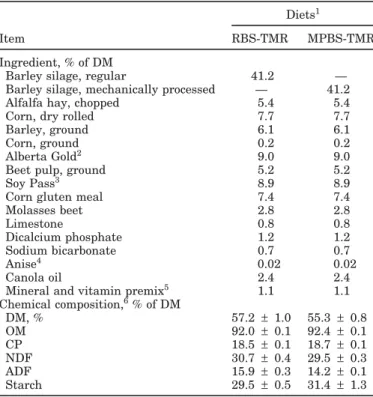
Table 1.Ingredients and chemical composition of the experimental diets.
Diets1
Item RBS-TMR MPBS-TMR
Ingredient, % of DM
Barley silage, regular 41.2 —
Barley silage, mechanically processed — 41.2
Alfalfa hay, chopped 5.4 5.4
Corn, dry rolled 7.7 7.7
Barley, ground 6.1 6.1
Corn, ground 0.2 0.2
Alberta Gold2 9.0 9.0
Beet pulp, ground 5.2 5.2
Soy Pass3 8.9 8.9
Corn gluten meal 7.4 7.4
Molasses beet 2.8 2.8 Limestone 0.8 0.8 Dicalcium phosphate 1.2 1.2 Sodium bicarbonate 0.7 0.7 Anise4 0.02 0.02 Canola oil 2.4 2.4
Mineral and vitamin premix5 1.1 1.1
Chemical composition,6% of DM DM, % 57.2 ± 1.0 55.3 ± 0.8 OM 92.0 ± 0.1 92.4 ± 0.1 CP 18.5 ± 0.1 18.7 ± 0.1 NDF 30.7 ± 0.4 29.5 ± 0.3 ADF 15.9 ± 0.3 14.2 ± 0.1 Starch 29.5 ± 0.5 31.4 ± 1.3
1RBS-TMR = TMR containing regular barley silage; MPBS-TMR =
TMR containing mechanically processed barley silage.
2Alberta Gold is a heat-processed canola meal product (Canbra
Foods, Lethbridge, AB, Canada).
3Soy Pass is a nonenzymatic browned, dehulled solvent extract
soybean meal product (LignoTech USA, Inc., Rothschild, WI).
4Anise is a flavoring agent (Canadian Bio-systems Inc., Calgary,
AB, Canada).
5Contained 29.4% NaCl, 1.0% ZnSO
4, 1.2% MnSO4ⴢ4H2O, 0.4%
CuSO4ⴢ5H2O, 45 mg/kg CoSO4ⴢ5H2O, 44 mg/kg Na2SeO3, 8%
Dyna-mate (Pitman Moore, Inc., Mundelein, IL; 22% S, 18% K, and 11% Mg), 60 mg/kg of ethylenediamine dihydroiodide, 680 IU of vitamin A/g, 160 IU of vitamin D/g, and 2 IU of vitamin E/g.
6Values were obtained from chemical analysis of TMR samples.
yield, milk composition, and DMI were determined. At the end of the covariate period, cows were divided into 2 groups, each with 12 animals, similar in milk yield (34.7 ± 8.0 and 35.1 ± 8.0 kg/d) and DMI (21.1 ± 2.2 and 22.2± 3.6 kg/d) and allocated to 1 of 2 treatment diets. Equal numbers of multiparous and primiparous cows were assigned to each treatment diet. The 2
treat-ment diets were: 1) TMR containing RBS (RBS-TMR),
and 2) TMR containing (MPBS) (MPBS-TMR) (Tables
1 and 2). The RBS-TMR was the same diet that was fed to the cows during the covariate period. Diets were formulated to sustain 35 kg/d of milk production with 3.5% of fat and 3.3% of CP using the Cornell-Penn-Miner System (CPM Dairy, Version 2.0), a computer program based on the Cornell Net Carbohydrate and Protein System principles (Sniffen et al., 1992).
Table 2.Chemical composition of forages. Forage1
Item RBS MPBS Alfalfa hay
DM, % 39.7 ± 0.7 37.2 ± 1.1 90.6 ± 1.6 OM, % of DM 90.1 ± 0.3 91.4 ± 0.1 90.8 ± 0.1 CP, % of DM 12.8 ± 0.1 12.9 ± 0.1 13.7 ± 0.3 NDF, % of DM 38.7 ± 0.6 37.3 ± 0.1 53.2 ± 0.4 ADF, % of DM 20.8 ± 0.2 20.0 ± 0.1 38.2 ± 0.2 Starch, % of DM 24.6 ± 0.8 24.3 ± 0.7 ND2
1RBS = Regular barley silage; MPBS = mechanically processed
barley silage.
2ND = Not determined.
Diets were fed as a TMR for ad libitum intake with at least 10% of daily feed refusal. All cows were individ-ually fed 3 times daily at 0600, 1400, and 1800 h with approximately 10, 50, and 40% of total daily feed alloca-tion, respectively. Cows had free access to water. Intake and milk production were recorded daily throughout the experiment.
Cows were cared for according to the Canadian Coun-cil on Animal Care guidelines (Ottawa, ON, Canada). Cows were housed in individual tie stalls fitted with rubber mattresses and bedded with wood shavings, and were milked twice daily at 0630 and 1630 h. They were turned outside in a dry-lot for exercise for at least 1 h daily in the morning after being milked.
Barley silages, chopped alfalfa hay, and concentrates were sampled weekly to determine DM content. Diets were adjusted weekly to account for changes in DM content. Samples of the barley silages and TMR fed were collected daily and composited weekly. Part of the weekly composited samples was saved for determining particle size distributions, and the rest were dried at 55°C, ground to pass a 1-mm screen (standard model 4; Arthur H. Thomas Co., Philadelphia, PA), and stored for subsequent analyses.
Particle size distributions of barley silages and TMR were measured by sieving using the Penn State Particle Separator (Lammers et al., 1996). The sum of the DM retained on the top and middle sieves was assumed equal to the physical effectiveness factor (pef) of feeds. Milk was sampled on 2 consecutive days during the a.m. and p.m. milkings in each week throughout the experiment. Milk samples were preserved with pot-assium dichromate and stored at 4°C until sent to the Central Alberta Milk Testing Laboratory (Edmonton, AB, Canada). Milk was analyzed for fat, protein, and lactose (AOAC, 1990) using an infrared analyzer (Milk-O-Scan 605; Foss Electric, Hillerød, Denmark). Milk composition was corrected for differences in milk vol-ume between the a.m. and p.m. milkings.
Mean BW of cows was calculated by weighing the cows weekly during the experiment at approximately
1300 h. Body condition score, ranging from 1 (thin) to 5 (obese), was recorded at the beginning and end of the covariate and the treatment periods according to the method of Wildman et al. (1982).
Digestibility
Apparent digestibilities of DM and nutrients in the total tract were determined using chromium as an ex-ternal marker for the last 3 wk during the treatment period. Approximately 2.92 g of Cr2O3(equivalent to 2 g of Cr) diluted using ground barley was top-dressed daily onto the feed at the p.m. feeding for 19 consecutive days. To ensure the cows consumed the entire marker each day, it was allocated as follows. Immediately after the orts were removed from the feeder, a small amount of TMR (approximately 1 kg) and the top-dressed marker were placed in front of the cows. Once the marker was consumed in its entirety, the additional TMR was allocated to the cows. After 7 d of dosing, fecal samples (approximately 100 g) were taken from the rectum of each cow once or twice daily at various times for the last 12 d. The fecal samples were pooled by individual cow, dried at 55°C, and ground to pass a 1-mm screen (Intermediate mill, Arthur H. Thomas Co.) for chemical analysis. Chromium was assumed to be completely indigestible and the digestibility of DM was calculated using the following equation: DM digestibil-ity = 1−[Cr fed (mg/d)/DMI (kg/d)]/Cr in feces (mg/kg of DM), where DMI was the average of DM consumed on the days that fecal samples were collected. Digest-ibility of nutrients was calculated using the same ap-proach.
In Situ Measurements
Two multiparous cows were used for in situ measure-ments of the ruminal DM degradation kinetics of RBS, MPBS, RBS-TMR, and MPBS-TMR. The feeds were processed before incubation, thus the purpose of the in situ measurements was to verify whether the rate and extent of digestion was the same for both treatments once the physical differences between treatments were removed. Fresh barley silages and TMR were chopped for 5 s using a Knifetec 1095 sample mill (Foss Tecator, Ho¨gana¨s, Sweden). Five grams of samples (as-fed) were
weighed into bags (10×20 cm) made of monofilament
PeCAP polyester screen (pore size, 51±2 μm; B. & S. H. Thompson, Ville Mont-Royal, QC, Canada). Bags were heat-sealed and placed in large (20×30 cm) mesh
retaining sacs with 3- × 5-mm pores that permitted
ruminal fluid to percolate freely. Triplicate nylon bags were placed in the rumen for 0, 3, 6, 9, 12, 24, 48, 72, and 96 h. Upon removal, bags were washed under
running tap water until the effluent was clear and then were dried at 55°C for 48 h. Bags and contents were weighed for the calculation of DM disappearance, and residues were ground to pass a 1-mm screen and stored for the analysis of fiber.
Chemical Analysis
Feed DM was determined by oven drying at 55°C
for 48 h. Analytical DM content of the samples was determined by drying at 135°C for 3 h (AOAC, 1990). Organic matter content was calculated as the difference between DM and ash contents, with ash content deter-mined by combustion at 550°C overnight. For the mea-surement of CP (N×6.25), samples were ground using a ball mill (Mixer Mill MM2000; Retsch, Haan, Ger-many) to a fine powder. Nitrogen was quantified by flash combustion with gas chromatography and ther-mal conductivity detection (Carlo Erba Instruments, Milan, Italy). Chromium was determined by inductively coupled plasma emission spectrometry (SpectoCi-rosCCD, Specto Analytical Instruments, GmbH & Co., Kleve, Germany) after dry ashing at 550°C for 5 h and extraction of Cr according to the method of Williams et al. (1962), but dilution after digestion of sample was done with only water instead of adding calcium chlo-ride. Neutral detergent fiber and ADF were determined
in the ANKOM200Fiber Analyzer (ANKOM Technology
Corp., Fairport, NY) using heat-stableα-amylase and sodium sulfite. Starch content of feed and feces was determined by a 2-step enzymatic method (Rode et al., 1999) with a microtiter plate reader (Dynatech Labora-tories, Chantilly, VA) to read glucose release colorimet-rically at 490 nm.
Statistical Analysis
Kinetics of DM degradation in situ was estimated by the nonlinear regression procedure of SAS (SAS Insti-tute, 2001). For each cow and type of feed, the following model (Ørskov and McDonald, 1970) was fitted to the percentage of DM degradation:
y = a + b(1−e−c(t−L)) for t>L,
where a = soluble fraction (percentage), b = slowly degradable fraction (percentage), c = rate of degrada-tion (per hour), L = lag time (hours), and t = time of incubation (hours).
Effective ruminal degradability (ERD) of DM was
estimated using the following equation (Ørskov and McDonald, 1970):
y = a + b×c/(c + k),
where k = rate of particulate passage (assumed to be 2.8 and 4.0%/h for barley silage and TMR, respectively). Daily intake, milk yield, and milk composition values were reduced to weekly means before data analysis. Data for DMI, BW, and milk yield obtained during the covariate period were used as covariates for the corres-ponding measurements during the treatment period. ANOVA was conducted using the Proc Mixed procedure of SAS (SAS Institute, 2001) for a completely random-ized design with repeated measures. The model in-cluded the effects of treatment, week, and the interac-tion between treatment and week, with the random variable being the cow within treatment. Simple, autor-egressive one, and compound symmetry covariance structures were used in the analysis depending on low values for the Akaike’s information criteria and Schwartz’s Bayesian criterion. Least square means are reported throughout. Treatment effects were declared significant atP<0.05 and trends were discussed atP
<0.15 unless otherwise noted.
RESULTS AND DISCUSSION
There was little difference in chemical composition between RBS and MPBS (Table 2), suggesting that pro-cessing did not affect nutrient composition of barley silage. Barley silage typically contains 48 to 60% of NDF, 29 to 37% of ADF, and 12 to 14% of starch in the DM (Khorasani et al., 1993; Yang et al., 1997; Mustafa et al., 2000). The NDF (38%) and ADF (20%) concentra-tions of the barley silages used in this study were con-siderably lower, and starch concentration of the barley silage (24%) was higher than those reported in the liter-ature for silages of similar maturity. In cereal silage, grain content may vary substantially. Baron et al. (1992) reported that barley grain content could range from 30 to 43% and from 37 to 52% at 30 and 35% of silage DM, respectively, implying that the grain content of barley may vary depending upon different stages of plant development and moisture contents at harvest. In addition, a semidwarf type of barley such as the Duke cultivar used in this study typically has lower fiber levels, higher grain content, and higher in vitro digestible OM than other barley types (Baron et al., 2000). The low fiber concentrations of the barley silages used in this study likely resulted from a dilution effect on whole plant fiber content caused by increased grain content and resultant increased starch concentration.
Analysis of particle size indicated that MPBS had a slightly lower proportion retained on the top screen compared with RBS (Table 3). Overall, mechanical pro-cessing of barley silage caused minimal changes in par-ticle length, and the pef of both silages were similar.
Table 3.Particle size distribution and physical effectiveness factor of barley silages and TMR determined by the Penn State Particle Separator.
Barley silage1 TMR2 Item RBS MPBS RBS-TMR MPBS-TMR DM retention on sieve, % Top, 19 mm 4.92 ± 0.21 2.87 ± 0.13 8.68 ± 0.07 4.07 ± 0.08 Middle, 8 mm 71.1 ± 0.8 70.5 ± 0.2 35.4 ± 1.6 32.9 ± 0.6 Bottom 24.0 ± 0.6 26.6 ± 0.3 55.9 ± 1.6 63.0 ± 0.7 pef,3% 76.0 ± 0.6 73.4 ± 0.3 44.1 ± 1.6 37.0 ± 0.7
1RBS = Regular barley silage; MPBS = mechanically processed barley silage.
2RBS-TMR = TMR containing regular barley silage; MPBS-TMR = TMR containing mechanically processed
barley silage.
3pef = Physical effectiveness factor determined as the portion of DM retained by top and middle sieves
of the Penn State Particle Separator.
The same trend was observed for particle distributions of the diets.
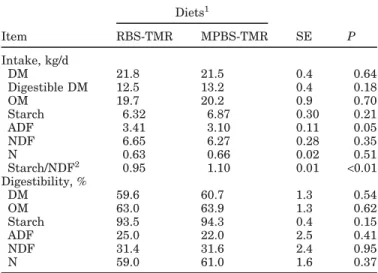
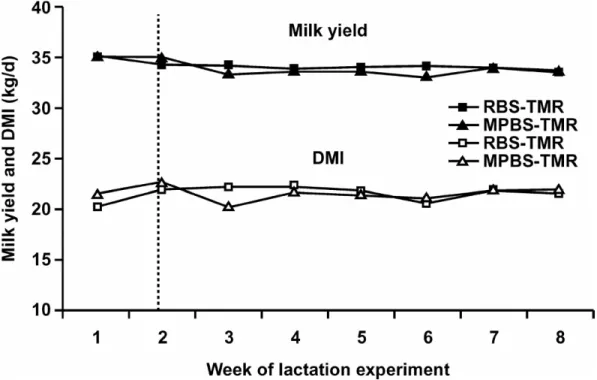
Intakes of DM and OM did not differ between treat-ments (Table 4). The lack of effect of feeding MPBS on DMI was consistent throughout the experiment (Figure 1). Although there were no differences in intakes of starch, NDF, or N between treatments (Table 4), cows fed the MPBS-TMR had lower ADF intake than those fed the RBS-TMR, due to lower concentration of ADF in the MPBS-TMR than the RBS-TMR (14.2 vs. 15.9%, Table 1). The ratio of starch to NDF intake increased in cows fed the MPBS-TMR compared with cows fed the RBS-TMR due to numerically higher intake of starch and numerically lower intake of NDF in cows fed the MPBS-TMR.
Digestibility of DM averaged 60.2%, and did not differ between treatments (Table 4). Similarly, digestibilities
Table 4.Intake and total tract digestibility of DM and nutrients by dairy cows fed regular or mechanically processed barley silage.
Diets1 Item RBS-TMR MPBS-TMR SE P Intake, kg/d DM 21.8 21.5 0.4 0.64 Digestible DM 12.5 13.2 0.4 0.18 OM 19.7 20.2 0.9 0.70 Starch 6.32 6.87 0.30 0.21 ADF 3.41 3.10 0.11 0.05 NDF 6.65 6.27 0.28 0.35 N 0.63 0.66 0.02 0.51 Starch/NDF2 0.95 1.10 0.01 <0.01 Digestibility, % DM 59.6 60.7 1.3 0.54 OM 63.0 63.9 1.3 0.62 Starch 93.5 94.3 0.4 0.15 ADF 25.0 22.0 2.5 0.41 NDF 31.4 31.6 2.4 0.95 N 59.0 61.0 1.6 0.37
1RBS-TMR = TMR containing regular barley silage; MPBS-TMR =
TMR containing mechanically processed barley silage.
2Ratio of starch to NDF intake.
of OM, ADF, NDF, and N did not differ between
treat-ments. Although feeding the MPBS-TMR tended (P=
0.15) to increase starch digestibility, the increase was not as great as expected based on improvements ob-served for corn silage. For example, Weiss and Wyatt (2000) reported that processing corn silage increased digestibility of total dietary starch by 4.4 percentage units (93.2 vs. 97.6% for unprocessed vs. processed corn silage, respectively). With advancing maturity, barley grain kernels harden and develop complex matrices that can reduce starch digestion. It appears that me-chanical processing of barley silage did not sufficiently disrupt kernel integrity to increase starch digestion.
Digestibility of starch observed in the present study is in general agreement with previous reports (Yang et al., 1997, 2000, and 2001). In contrast, digestibilities of NDF and ADF in our study were considerably lower than those published for studies in which barley silage was fed as the main forage source. The lower fiber diges-tion may have resulted from a reducdiges-tion in the numbers of fibrolytic bacteria caused by a shift from fibrous to nonfibrous carbohydrate fermentation. The high grain content of the barley crop together with the relatively high concentrate proportion in the diet may have con-tributed to this microbial shift. Mertens et al. (2003) suggested a significant negative effect of the ratio of starch to NDF intake on fiber digestibility, which is not supported by our results. However, the low NDF digestibility in this study may have minimized the neg-ative effects of high starch to NDF intake ratio on NDF digestibility.
Milk production averaged 33.9 kg/d between treat-ments (Table 5), and was not affected by feeding the MPBS-TMR. Furthermore, neither milk composition nor milk component yield was influenced by feeding the MPBS-TMR. However, milk fat concentration was numerically (P= 0.32) higher for cows consuming the
MPBS-TMR, which resulted in a numerical (P= 0.51)
Figure 1.Dry matter intake and milk yield of dairy cows analyzed with covariate adjustment (response during first 2 wk of experiment). Treatments were TMR containing regular barley silage (RBS-TMR) and TMR containing mechanically processed barley silage (MPBS-TMR). Each point represents the mean of 12 observations (SE = 0.5 and 0.6 for DMI and milk yield, respectively).
Table 5.Milk production, milk composition, and dairy efficiency by dairy cows fed regular or mechanically processed barley silage.
Diets1 Item RBS-TMR MPBS-TMR SE P Milk production,2kg/d Actual 34.0 33.7 0.5 0.67 4% FCM 29.7 31.7 2.2 0.51 Milk composition, % Fat 3.30 3.57 0.19 0.32 Protein 3.30 3.39 0.10 0.53 Lactose 4.68 4.66 0.05 0.71
Milk component yield, kg/d
Fat 1.08 1.18 0.07 0.32 Protein 1.10 1.13 0.06 0.71 Lactose 1.58 1.58 0.11 0.99 Dairy efficiency Milk/DMI 1.57 1.56 0.11 0.95 FCM/DMI 1.39 1.45 0.09 0.62 Milk N/N intake 0.27 0.27 0.01 0.99 BW3 kg 641 662 17 0.38 Change in BW, kg/d 0.19 0.12 0.26 0.86 BCS4 2.82 2.92 0.08 0.34
1RBS-TMR = TMR containing regular barley silage; MPBS-TMR =
TMR containing mechanically processed barley silage.
2Yield of milk and 4% FCM during first 2 wk of lactation were used
as covariates in the analysis.
3Data of BW and BCS during first 2 wk of lactation were used as
covariates in the analysis.
4Scale used for scoring body condition was 5-point scale, where 1 =
emaciated and 5 = overly fat (Wildman et al., 1982).
FCM were only trends and not statistically significant because of the large variation associated with means. This variation indicates that not all cows responded in the same manner to the effects of mechanical processing of barely silage. It is possible that this variability would have been reduced had only multiparous cows been used in the study.
Feeding the MPBS-TMR diet did not affect dairy effi-ciencies expressed as milk or FCM production corrected for DMI (Table 5). In spite of low fiber digestibility, the dairy efficiency in this study fell within the recom-mended range (Hutjens, 2002). The efficiency of N use, assessed as kilograms of milk N per kilogram of N in-take, averaged 0.27 across treatments, and was not affected by feeding MPBS-TMR. Neither BW nor BCS differed between the treatments.
Determination of the effect of mechanical processing on in situ degradability requires that samples should not be dried or ground before in situ measurement to maintain potential treatment effects (Johnson et al., 1999). Because we ground the samples for in situ mea-surement of degradability, we did not expect any effect of mechanical processing of barley silage on in situ de-gradability. However, mechanical processing increased the soluble fraction, but decreased ruminal degradation rate of barley silage (Table 6). In contrast, ERD of DM was similar for RBS and MPBS, indicating that when the silages were ground to remove the effects of
mechan-Table 6.Kinetics of in situ ruminal DM degradation of barley silages and TMR by dairy cows.
Parameters1 Feeds2 a, % b, % c, %/h ERD, % Barley silage RBS 52.6e 24.7 2.33d 63.8 MPBS 55.5d 26.8 1.27e 63.8 SE 0.4 0.8 0.15 0.5 TMR RBS-TMR 42.7 36.7 5.48d 63.9 MPBS-TMR 44.8 36.4 4.84e 64.7 SE 0.8 0.7 0.09 0.6
d,eWithin a column and feed, means that do not have a common
superscript differ (P<0.05).
1Parameters were calculated from the fitted equation: P = a + b(1−
e−c[t−L]) for t>L, where P = percentage of DM degradation from the
bag at time t, a = soluble fraction, b = slowly degradable fraction, c = rate at which b is degraded, L = lag time (h), and t = time of incubation (h) . Effective ruminal degradability (ERD) was calculated using equation: a + bc/(c + k), where k = passage rate (assumed to be 2.8 and 4.0%/h for barley silage and TMR, respectively).
2RBS = Regular barley silage; MPBS = mechanically processed
barley silage; RBS-TMR = TMR containing regular barley silage; MPBS-TMR = TMR containing mechanically processed barley silage.
ical processing, the potential digestion was similar for both silages. In contrast to previous findings (Yang et al., 2000; 2001), the soluble fractions of the barley si-lages were considerably higher and the slowly degrad-able fractions lower than those reported in the litera-ture, resulting in higher ERD. This result further con-firms that the barley silages used in this study had higher grain content with concomitant reduction of fiber content, resulting in the greater ERD and lower fiber di-gestibility.
For the TMR, neither the soluble fraction nor the potential degradable fraction differed between the RBS-TMR and MPBS-RBS-TMR. However, ruminal degradation rate was higher for the RBS-TMR than the MPBS-TMR. Again, ERD did not differ between the treatments, and was similar between the barley silages and the TMR. Patterns of DM disappearance in situ were similar be-tween silages and TMR throughout the total incubation time. From the beginning to 6 h of incubation, DM disappearance was higher for silages than TMR, but after 9 h of incubation, DM disappearance of TMR was higher than that of silages.
Higher disappearances of NDF and ADF for RBS than for MPBS were observed at 48 h of incubation in situ (Table 7), but they did not differ when incubated as a TMR for 48 h. Similarly, Johnson et al. (2003) reported (for silages with short chop length of 0.95 cm), that NDF disappearance was greater for unprocessed corn silage than for processed corn silage measured at 24 and 48 h of incubation in the rumen. Because sam-ples for in situ measurement were ground, it is not clear
Table 7.In situ ruminal fiber disappearance of barley silages and TMR by dairy cows. In situ disappearance, % NDF ADF Feeds1 24 h 48 h 24 h 48 h Barley silage RBS 13.5 38.8a 12.6 40.4a MPBS 11.7 27.8b 10.9 29.0b SE 1.3 2.1 1.3 2.2 TMR RBS-TMR 17.6 38.5 16.5a 38.0 MPBS-TMR 16.2 39.0 8.9b 34.6 SE 1.7 2.0 1.9 2.1
a,bWithin a column and feed, means that do not have a common
superscript differ (P<0.05).
1RBS = Regular barley silage; MPBS = mechanically processed
barley silage; RBS-TMR = TMR containing regular barley silage; MPBS-TMR = TMR containing mechanically processed barley silage.
whether mechanical processing damaged the barley stem tissue sufficiently and increased fiber degrada-tion. Given the similar in vivo fiber digestibility be-tween treatments, however, it appears that mechanical processing did not sufficiently damage the fiber fraction of barley silage. We speculate that the lack of response to processing was likely caused by the conditions of the mechanical processing. In order for mechanical pro-cessing to be effective for barley silage, propro-cessing con-ditions should be modified from the ones used for corn silage. Alternatively, mechanical processing may be a more effective means of improving digestibility for bar-ley silage harvested in a more advanced stage of matu-rity than the mid-dough stage used in this study.
CONCLUSIONS
Mechanical processing did not cause chemical changes to the barley silage used in this study; only slight changes in physical characteristics due to pro-cessing were observed. Feeding MPBS did not improve use of nutrients by dairy cows in midlactation. There were only numerical increases in starch digestion, milk fat concentration, and FCM yield. The mechanical pro-cessing conditions used for barley silage in our study were similar to the ones typically used for processing corn silage. Because the size and structure of grain kernel from corn and barley are quite different, the rollers designed for processing corn silage are unsuit-able for processing barley silage.
ACKNOWLEDGMENTS
The authors wish to thank the crew at the Dairy Research Unit of the Lethbridge Research Centre for caring for the cows and milk sample collection.
Assis-tance provided by B. Farr, K. Andrews, and R. Wuerfel during the collection period and sample analysis is sin-cerely appreciated.
REFERENCES
Association of Official Analytical Chemists. 1990. Official Methods of Analysis. AOAC, Arlington, VA.
Bal, M. A., R. D. Shaver, A. G. Jirovec, K. J. Shinners, and J. G. Coors. 2000. Crop processing and chop length of corn silage: Effects on intake, digestion, and milk production by dairy cows. J. Dairy Sci. 83:1264–1273.
Baron, V. S., A. C. Dick, and M. S. Wolynetz. 1992. Characterization of barley silage-maturity relationships for central Alberta. Can. J. Plant Sci. 72:1009–1020.
Baron, V. S., E. Okine, and A. C. Dick. 2000. Optimizing yield and quality of cereal silage. Pages 351-367 in Proc. of the Western Canadian Dairy Seminar, Univ. Alberta, Edmonton, AB, Canada. Hutjens, M. 2002. Using dairy efficiency. Online. Available: http://
www.traill.uiuc.edu/dairynet/paperDisplay.cfm?Type= currentTopic&ContentID=612. Accessed June 18, 2004. Johnson, L., J. H. Harrison, C. Hunt, K. Shinners, C. G. Doggett,
and D. Sapienza. 1999. Nutritive value of corn silage as affected by maturity and mechanical processing: A contemporary review. J. Dairy Sci. 82:2813–2825.
Johnson, L. M., J. H. Harrison, D. Davidson, C. Hunt, W. C. Mahanna, and K. Shinners. 2003. Corn silage management: Effects of hy-brid, maturity, chop length, and mechanical processing on rate and extent of digestion. J. Dairy Sci. 86:3271–3299.
Johnson, L. M., J. H. Harrison, D. Davidson, M. Swift, B. Mahanna, and K. Shinners. 2002. Corn silage management II: Effects of hybrid, maturity, and mechanical processing on digestion and energy content. J. Dairy Sci. 85:2913–2927.
Khorasani, G. R., E. K. Okine, J. J. Kennelly, and J. H. Helm. 1993. Effect of whole crop cereal grain silage substituted for alfalfa silage on performance of lactating dairy cows. J. Dairy Sci. 76:3536–3546.
Lammers, B. P., D. R. Buckmaster, and A. J. Heinrichs. 1996. A simple method for the analysis of particle sizes of forage and total mixed rations. J. Dairy Sci. 79:922–928.
Mertens, D. R., G. Ferreira, P. Berzaghi, and R. D. Shaver. 2003. Corn silage maturity and processing: 2. Effects on fiber and starch digestion by dairy cows. Pages 86–87 in U.S. Dairy Forage Re-search Center 2002 ReRe-search Report. ARS-USDA, Madison, WI. Mustafa, A. F., D. A. Christensen, and J. J. McKinnon. 2000. Effects of pea, barley, and alfalfa silage on ruminal nutrient degradability and performance of dairy cows. J. Dairy Sci. 83:2859–2865. Ørskov, E. R., and I. McDonald. 1970. The estimation of protein
degradability in the rumen from incubation measurements weighted according to rate of passage. J. Agric. Sci. (Camb.) 92:499–503.
Rode, L. M., W. Z. Yang, and K. A. Beauchemin. 1999. Fibrolytic enzyme supplementations for dairy cows in early lactation. J. Dairy Sci. 82:2121–2126.
SAS Institute. 2001. SAS/STAT Users Guide (Release 8.0). SAS Inst., Inc., Cary, NC.
Sniffen, C. J., J. D. O’Connor, P. J. Van Soest, D. G. Fox, and J. B. Russell. 1992. A net carbohydrate and protein system for evaluat-ing cattle diets: II. Carbohydrate and protein availability. J. Anim. Sci. 70:3562–3577.
Weiss, W. P., and D. J. Wyatt. 2000. Effect of oil content and kernel processing of corn silage on digestibility and milk production by dairy cows. J. Dairy Sci. 83:351–358.
Wildman, E. E., G. M. Jones, P. E. Wagner, R. L. Boman, H. F. Troutt, Jr., and T. N. Lesch. 1982. A dairy body condition scoring system and its relationship to selected production characteristics. J. Dairy Sci. 65:495–501.
Williams, C. H., D. J. David, and O. Ilsmaa. 1962. The determination of chromic oxide in faeces samples by atomic absorption spectro-photometry. J. Agric. Sci. (Camb.) 59:381–385.
Yang, W. Z., K. A. Beauchemin, B. I. Farr, and L. M. Rode. 1997. Comparison of barley, hull-less barley, and corn in the concentrate of dairy cows. J. Dairy Sci. 80:2885–2895.
Yang, W. Z., K. A. Beauchemin, and L. M. Rode. 2000. Effects of barley grain processing on extent of digestion and milk production on lactating cows. J. Dairy Sci. 83:554–568.
Yang, W. Z., K. A. Beauchemin, and L. M. Rode. 2001. Effects of grain processing, forage to concentrate ratio, and forage particle size on rumen pH and digestion by dairy cows. J. Dairy Sci. 84:2203–2216.