AIC Reports
Special report
Indigenous Youth Justice
Programs Evaluation
Jacqueline Stewart, Bodean Hedwards, Kelly
Richards, Matthew Willis and Daryl Higgins
© Australian Institute of Criminology 2014 ISBN 978 1 922009 52 4 (Print)
978 1 922009 53 1 (Online)
Apart from any fair dealing for the purpose of private study, research, criticism or review, as permitted under the Copyright Act 1968 (Cth), no part of this publication may in any form or by any means (electronic, mechanical, microcopying, photocopying, recording or otherwise) be reproduced, stored in a retrieval system or transmitted without prior written permission. Inquiries should be addressed to the publisher.
Published by the Australian Institute of Criminology GPO Box 2944 Canberra ACT 2601 Tel: (02) 6260 9200 Fax: (02) 6260 9299 Email: [email protected] Website: aic.gov.au
Please note: minor revisions are occasionally made to publications after release. The online versions available on the AIC website will always include any revisions.
Disclaimer: This research report does not necessarily reflect the policy position of the Australian Government.
Edited and typeset by the Australian Institute of Criminology
A full list of publications in the AIC Reports series can be found on the Australian Institute of Criminology website at aic.gov.au
Contents
v Acknowledgements vi Executive summary
vii Aboriginal Power Cup (South Australia) vii Tiwi Islands Youth Development and Diversion
Unit (Northern Territory)
vii Woorabinda Early Intervention Panel Coordination Service (Queensland)
viii Aggression Replacement Training (Queensland) viii Program design
ix Outcomes ix Summary
1 Introduction
2 Project development and design
2 Collection of qualitative and quantitative data 4 Analysis and reporting
5 Theoretical considerations
5 Aboriginal Power Cup
6 Tiwi Islands Youth Diversion and Development Unit
6 Woorabinda Early Intervention Coordination Panel
6 Aggression Replacement Training
7 Literature review
7 Community-based justice initiatives 11 Sport-based programs
14 Aggression Replacement Training
18 Aboriginal Power Cup
18 Evaluation approach 21 Findings
24 Program design 34 Program outcomes 35 Conclusion
37 Tiwi Islands Youth Diversion and Development Unit 37 Evaluation approach 40 Findings 48 Implementation 56 Evaluation approach 58 Findings 65 Implementation 70 Program outcomes 76 Conclusion
77 Aggression Replacement Training
78 Evaluation approach 80 Findings
94 Conclusion
96 Discussion
97 Appropriateness of program design 99 Community involvement
99 Program reach
101 Extent to which program achieves intended outcomes
104 Implications for future evaluations
105 Improving practice
105 Community involvement 105 Cultural competence 106 Goals and exits 106 Resourcing 106 Collaboration
106 Risk assessment of external influences 107 Data collection and management 107 Summary
108 References
112 ‘MySchool’ references
114 Appendicies
115 Appendix 1: Measures used to evaluate the effectiveness of ART
116 Appendix 2: Aboriginal Power Cup Program Logic
117 Appendix 3: Aboriginal Power Cup interview schedule
120 Appendix 4: TIYDDU Program Logic 121 Appendix 5: TIYDDU interview schedule 124 Appendix 6: Woorabinda Early Intervention
Coordination Panel Program Logic 125 Appendix 7: Woorabinda Early Intervention
Coordination Panel interview schedule 127 Appendix 8: Mature-minded screening tool 128 Appendix 9: ART interview schedule 130 Appendix 10: ART Program Logic
131 Appendix 11: Analysis of ‘How I Think’ scores 134 Appendix 12: Data requirements
Tables
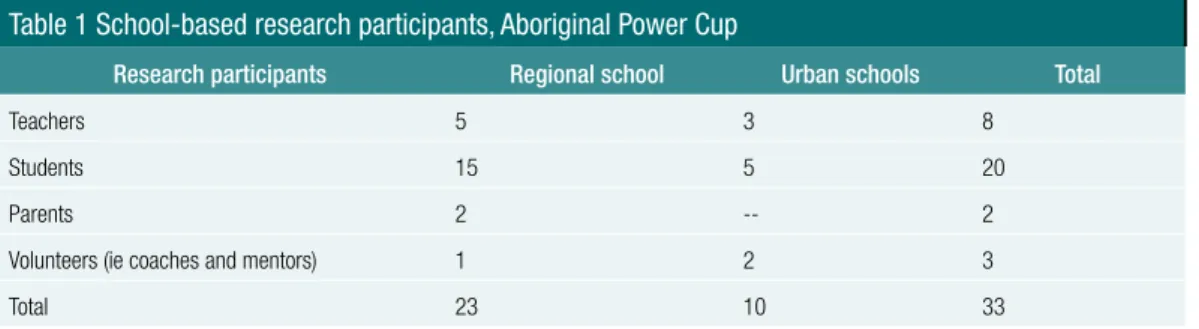
19 Table 1 School-based research participants, Aboriginal Power Cup
21 Table 2 Data requested and received, Aboriginal Power Cup
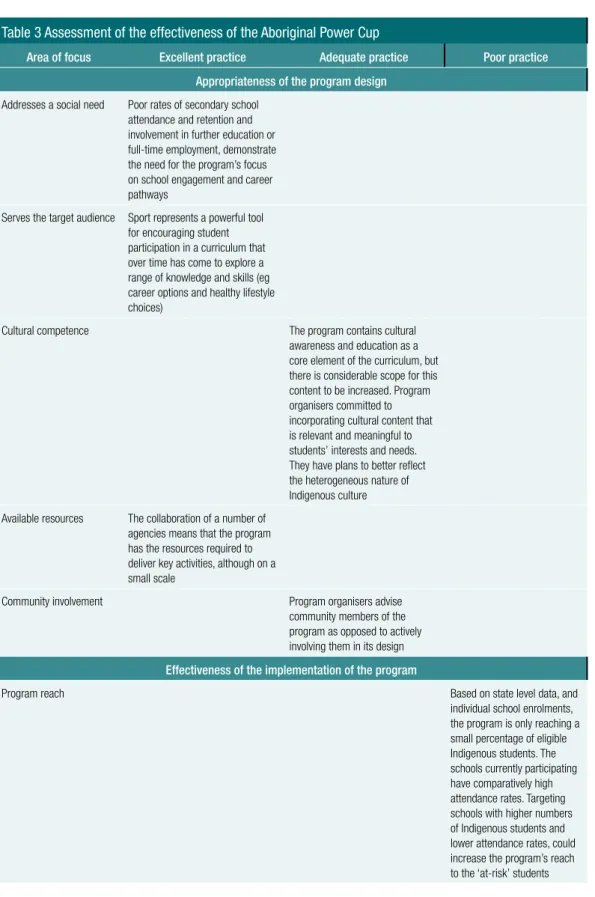
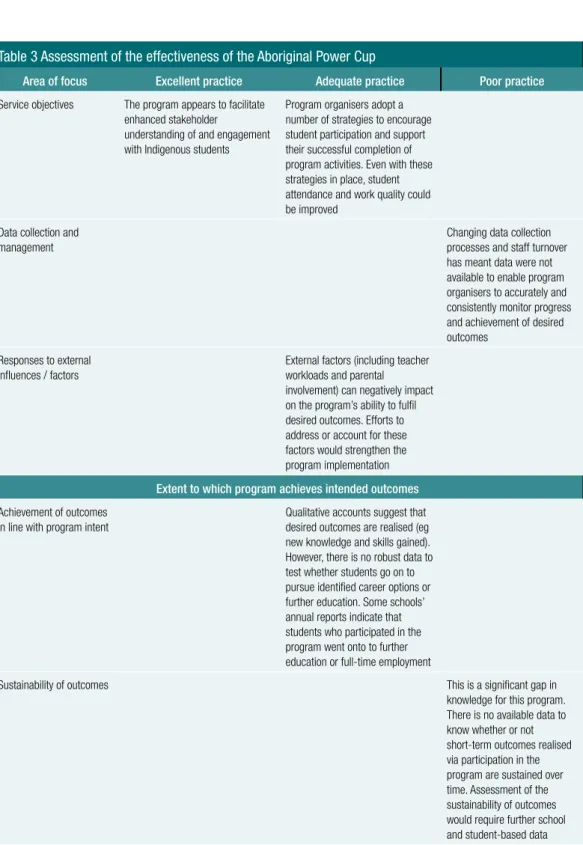
22 Table 3 Assessment of the effectiveness of the Aboriginal Power Cup
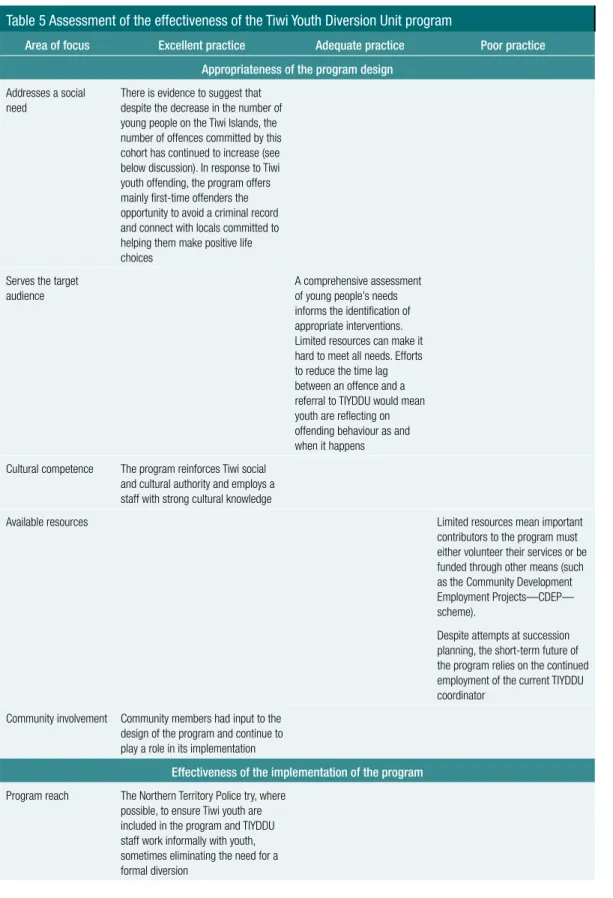
40 Table 4 Data requested and received, Tiwi Islands Youth Diversion and Development Unit 41 Table 5 Assessment of the effectiveness of the
Tiwi Youth Diversion Unit program 57 Table 6 Data requested and received,
Woorabinda Early Intervention Panel Service 58 Table 7 Assessment of the effectiveness of the
Woorabinda Early Intervention Coordination Panel
62 Table 8 Profile of 10 Indigenous youth participants of the Woorabinda Early Intervention Coordination Panel: Presenting issues identified by panel staff, 2008–09 68 Table 9 Examples of strategies implemented to
address the presenting issues of young people and their families
80 Table 10 Data requested and received, Aggression Replacement Training
81 Table 11 Assessment of the effectiveness of the Aggression Replacement Training for Indigenous youth participants
132 Table A11.1 ANOVA: Pre- ART HIT (physical aggression subscale) scores for Indigenous and non-Indigenous participants
132 Table A11.2 ANOVA: pre- ART overall HIT scores for Indigenous and non-Indigenous 132 Table A11.3 ANOVA: post-ART overall scores
for Indigenous and non-Indigenous
133 Table A11.4 T-test: post-ART HIT scores for Indigenous and non-Indigenous
Figures
26 Figure 1 Participation in the Aboriginal Power Cup since commencement
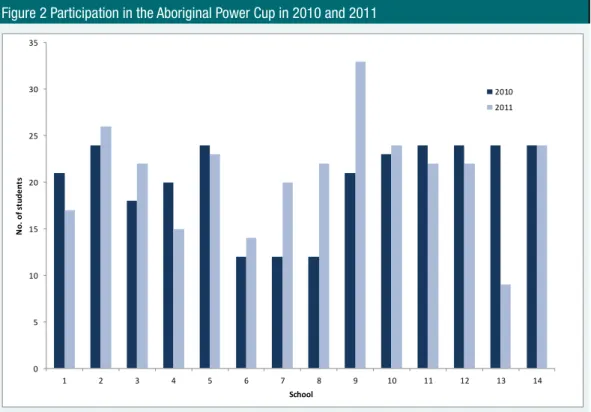
27 Figure 2 Participation in the Aboriginal Power Cup in 2010 and 2011
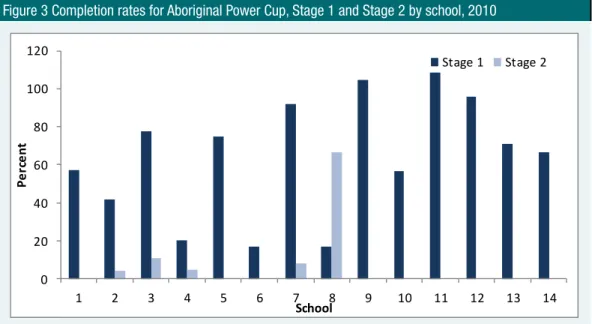
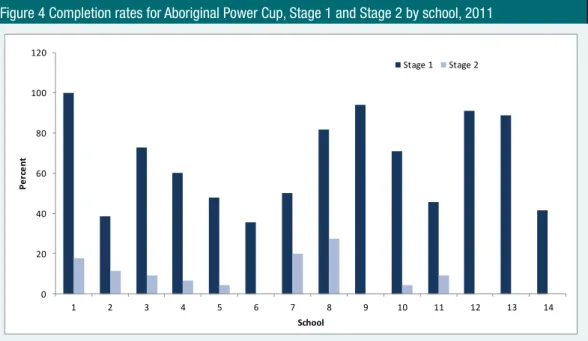
31 Figure 3 Completion rates for Aboriginal Power Cup, Stage 1 and Stage 2 by school, 2010 32 Figure 4 Completion rates for Aboriginal Power
Cup, Stage 1 and Stage 2 by school, 2011 43 Figure 5 Total offences committed by 10–17
year olds, Tiwi Islands, 2001–11
43 Figure 6 Offences committed by 10–17 year olds Tiwi Islands by age, 2001–11
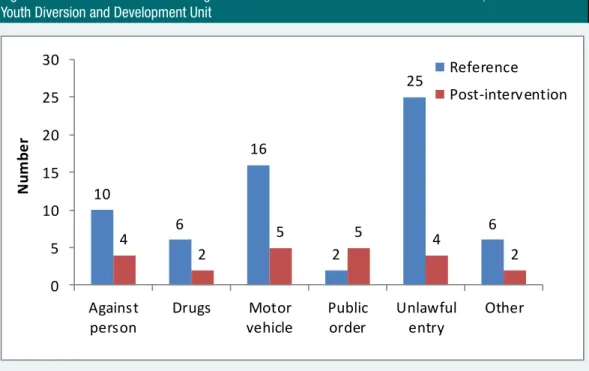
53 Figure 7 Reference offences and alleged offences within 12 months of commencement, Tiwi Islands Youth Diversion and Development Unit 72 Figure 8 Total offences committed by
Woorabinda Early Intervention Coordination Panel participants by participant, 2006–12 (n) 73 Figure 9 Total offences committed by
Woorabinda Early Intervention Coordination Panel participant by year, 2006–12 (n)
74 Figure 10 Total offences committed 10–17 year olds, Woorabinda region, by year, 2006–12 (n) 75 Figure 11 Student attendance rates in
Woorabinda (%)
89 Figure 12 Offenders who commenced, completed or exited ART (n)
Acknowledgements
Jacqueline Stewart is a former Research Fellow at the Australian Institute of Family Studies.
Bodean Hedwards is a former Research Officer at the Australian Institute of Criminology (AIC). Dr Kelly Richards is a former Senior Research Analyst at the AIC.
Matthew Willis is a Research Manager at the AIC. Dr Daryl Higgins is Deputy Director of Research at the Australian Institute of Family Studies.
The evaluation team wish to acknowledge their gratitude to the individuals, including program
stakeholders, who provided information and assistance for this evaluation. Without their generous contributions this work would not have been possible.
The project was developed with assistance from Laura Beacroft (former Research Manager, AIC) and the Indigenous Justice Programs Evaluation Advisory Group.
State and territory government representatives are also acknowledged for providing feedback on the preliminary findings.
Executive summary
Diversion from the youth justice system is a critical goal for addressing the overrepresentation of Indigenous young people in the criminal justice system. In this report, four programs that were already being implemented by states and territories and identified by them under the National Indigenous Law & Justice Framework as promising practice in diversion are examined. The programs were evaluated, as part of a broader initiative, to
determine whether and on what basis they represent good practice (ie are supported by evidence). State and territory governments nominated the programs for evaluation.
The four programs sit at different points along a continuum, ranging from prevention (addressing known risk factors for offending behaviour, such as disengagement from family, school, community or culture), early intervention (with identified at-risk young people), diversion (diverting from court process—usually for first or second time offenders) and tertiary intervention (treatment to prevent recidivism):
• Aboriginal Power Cup (South Australia)—a sports-based program for engaging Indigenous young people in education and providing positive role models (prevention).
• Tiwi Islands Youth Development and Diversion Unit (Northern Territory)—a diversion program that engages Tiwi youth who are at risk of entering the
criminal justice system in prevention activities, such as a youth justice conference, school, cultural activities, sport and recreation (early intervention and diversion).
• Woorabinda Early Intervention Panel Coordination Service (Queensland)—a program to assess needs and make referrals for young Indigenous people and their families who are at risk or have offended and have complex needs (early intervention and diversion).
• Aggression Replacement Training (Queensland)—a 10 week group cognitive-behavioural program to control anger and develop pro-social skills, delivered to Indigenous and non-Indigenous youth assessed as ‘at risk’ of offending or reoffending (early intervention and tertiary intervention with offenders to reduce risk of reoffending).
For each program, the evaluation team developed a ‘program logic’, identifying the activities and goals of the program, and how it articulates within a broader framework of criminal justice prevention. This informed the design of the evaluation and the approach to collecting both qualitative data (from young people participating in the program, program staff, family, or other service providers/community members) and quantitative data to identify any effects of the program on individuals, or the broader community.
Aboriginal Power Cup
(South Australia)
Many of the requests for quantitative data on educational performance and engagement were not met. Available data showed that Aboriginal Power Cup enrolments have consistently increased since it commenced, but the program is reaching a small proportion of schools and less than 20 percent of potentially eligible students across the state. Data were not available to demonstrate whether or not indicators of school performance/student engagement (eg attendance, retention to following year, retention to Year 12, or academic achievement) for Indigenous youth have increased after
introduction of the Cup in particular schools, or whether schools with a high proportion of
Indigenous students who have the Aboriginal Power Cup have better performance than similar schools where the program has not been implemented. Data showed that schools running the Aboriginal Power Cup had overall average attendance rates of 75 percent plus. There appears to be scope for the program to extend its ‘reach’ by targeting schools with low attendance rates, particularly where these schools also have a high proportion of Indigenous students.
However, without good pre-post implementation data (given the program was already operating prior to the evaluation being commissioned without appropriate baseline data having been collected), or relevant comparison school data, it is not possible to say with confidence that the program is achieving concrete school performance/engagement improvements. Qualitative data, based on interviews with program organisers, participants, teachers and other community members showed that the program is valued, that it facilitates culturally relevant curriculum, that students enjoy participating and it gives them a sense of achievement. A particularly positive addition to the program is the involvement of the school’s Aboriginal Community Education Officers.
Tiwi Islands Youth
Development and Diversion
Unit (Northern Territory)
The focus of the evaluation was the Unit’s diversion program for (typically) first-time offenders, who instead of going to court, are given the opportunity to participate in a youth justice conference and are supported by a range of interventions to address risk factors for reoffending, including community service activities focused on reparation.
Data were not available to assess whether or not participants benefit in terms of school engagement/ performance. Individual re-offence data for program participants showed that only 20 percent of young people participating in the Unit’s diversion program had contact with police for alleged offences in the 12 months following commencement of the program, which compares very favourably with reoffending rates calculated in other jurisdictions. Qualitative data showed that the program was useful in reconnecting young people to cultural norms and the nature of the program was seen to be culturally ‘competent’ and directly addressed the factors that contribute to offending behaviour, such as
substance misuse, boredom and disengagement from work or education.
Data were not available on the number of potentially eligible young people, so it is unclear as to whether the reach of the program is adequate, or whether there is unmet demand.
Woorabinda Early
Intervention Panel
Coordination Service
(Queensland)
The case management and referral service was seen by young people and family members as a positive program. Out of the 18 young people who have participated since 2006, police data show that five
(27.8%) did not reoffend in the period to 31 October 2012. Of the 13 who did reoffend, data were not available to show whether their rates of reoffending are lower or higher than other Indigenous juvenile offenders in the region. Baseline data for number of offences prior to entry into the program, or comparable data for other young Indigenous offenders not serviced by the program were not available. Qualitative data highlighted the contributions of the service to positive behaviour change for individuals and improved skills for family members to better support their children.
Participants, program staff, families and community representatives felt the program was important, culturally appropriate and responsive to individual needs. However, there were concerns about the reach of the program (compared with the number of Indigenous young offenders in the region) and the limited funding for staffing the program.
Aggression Replacement
Training (Queensland)
Although it was initially agreed that data from all young people across Queensland (Indigenous and non-Indigenous) who have participated in aggression replacement training (ART) since July 2011 would be supplied, only pre-post test data from 32 participants were received (16 Indigenous and 16 non-Indigenous).Scores on the outcome measure of violence-related cognitions (the ‘How I Think’ questionnaire) showed that:
• on average, cognitive distortions that contribute to aggressive behaviour decreased for all
participants, although there were individual differences; and
• the degree of decrease was less, on average, for the Indigenous participants than for the
nonIndigenous participants.
Re-offence data were not available for the
Indigenous ART participants. Re-offence data would have provided a valuable indicator of whether ART is achieving one of its primary outcomes, namely a reduction in the further offending of young people who participate in the program.
The program logic identified that the focus of ART is narrow, addressing one but by no means the only issue linked to offending behaviour—anger management. Qualitative data showed that it was still seen by participants and program staff as valuable, although evidence of community involvement in selecting the program, or adapting/ ensuring its cultural appropriateness, was limited. The implementation of ART was significantly affected by resource constraints and external factors (such as the roll-out of the program and changes to the policy around ongoing data monitoring of program outcomes coinciding with external factors—most significantly, the floods and cyclones affecting most parts of Queensland during various periods of 2010–12). As such, routine data monitoring appears to have been compromised, which limited the capacity of the evaluation team to draw any firm conclusions about attitudinal change, or any consequent effects on reoffending behaviour.
Program design
All four programs addressed an important social need, although ART was more narrowly focused on cognitions that may contribute to aggressive behaviour, compared with the other three programs, which had broader aims and addressed a wider range of needs.
With the possible exception of ART, the remaining three were seen as culturally appropriate or ‘competent’ and had a level of community involvement in the design, or take up of the service. All programs seemed to struggle with the available resources, which is not surprising given that many social service agencies and programs confront funding constraints in the face of significant demand. However, resource constraints limited the reach of many of the projects—either in terms of the capacity to roll out the program statewide (Aboriginal Power Cup and ART), or to adequately staff, plan for replacements and include the full range of services needed (both the diversion services in Tiwi and Woorabinda).
Many of the programs did not have adequate mechanisms in place to collect data to allow thorough evaluation of program outcomes. The lack
of baseline and ongoing data collection also impacted the ability of the programs to monitor outcomes and implement program adjustments as necessary to ensure the programs were effective and meeting needs.
Outcomes
The lack of solid data provided to the evaluation team also reduced the capacity to draw conclusions about whether any positive outcomes from program participation are sustainable in the longer term. It was not possible to directly compare the four programs in terms of their effectiveness in diverting Indigenous young people from the criminal justice system. Each operated in a very different context and they were located at varying points along the continuum from prevention through to responding to criminal justice involvement.
ART had the most concrete data available to demonstrate outcomes (although the number of participants for whom data were made available was very limited).
Re-offence data are a problematic measure of success for the programs under examination. It is difficult to calculate on an individual level. Re-offence data is not an accurate measure of a program’s effectiveness on a regional level, as programs did not have 100 percent coverage of the area. Further other community (or wider) factors are likely to affect offending behaviour. However, compared with the intended outcomes (ie as outlined in the program logic), qualitative data suggested all four programs were valuable and addressing intended aims. Quantitative data were often lacking or not suitable to demonstrate change in reoffending. Importantly, in Woorabinda, five of the 18 participants did not reoffend over the six year period and in Tiwi, 80 percent did not reoffend in the 12 months postparticipation.
Available data sometimes showed problematic trends (eg continued criminal justice involvement by program graduates from the services in Tiwi and Woorabinda); however, a lack of good baseline data or adequate control groups makes it not possible to determine whether these data are better or worse than had the program not been in operation.
Summary
This report highlights the challenges faced in trying to evaluate programs when there are not adequate data to inform the evaluation. As a result, the evaluation team has been limited in its capacity to assess the effectiveness and impacts of these programs. While findings have been drawn from qualitative data and information and supported by the available quantitative data, if the availability of appropriate data, including baseline data, had been determined before the evaluation commenced, it would have maximised the value of the investment in the programs. Effective resource use would involve the establishment of datasets and a framework for the evaluation during early phases of the program’s development and implementation to allow continual quality improvement and ongoing measurement of long-term program outcomes.
Introduction
Despite considerable efforts in recent years, Indigenous Australians are still significantly overrepresented in the criminal justice system. In a report by the Select Committee on Regional and Remote Indigenous Communities (2012), it was found that young Indigenous people are 24 times more likely than non-Indigenous young people to be in detention, with young Indigenous offenders accounting for 48 percent of the total juvenile detention population. Among other organisations, the House of Representatives Standing Committee on Aboriginal and Torres Strait Islander Affairs (2011) recognised that while Indigenous
overrepresentation in the criminal justice system is a problem, the focus of initiatives to address this problem should be on the issues that bring Indigenous offenders into contact with the system in the first place. A similar conclusion was reached by the Royal Commission into Aboriginal Deaths in Custody (1991), which found that while Aboriginal people did not necessarily die in custody at a greater rate than non-Aboriginal people in custody, they were overrepresented in custodial deaths due to their overrepresentation at all stages of the criminal justice system.
In the 20 years following the Royal Commission, there have been a number of policies and programs adopted by Australian states and territories to address Indigenous overrepresentation in the
criminal justice system (cf AIC 2009a, 2009b; AJAC nd; Victorian Government 2005). In late 2009, the Minister for Families, Housing, Community Services and Indigenous Affairs requested an inquiry into the ‘high level of involvement of Indigenous juveniles and young adults in the criminal justice system’ (House of Representatives Standing Committee on Aboriginal and Torres Strait Island Affairs 2011: 2). The report of that inquiry had a strong focus on early intervention and crime prevention, with a
fundamental reference being to look specifically at ‘best practice examples that support diversion of Indigenous people from juvenile detention centres and crime, and provide support for those returning from such centres’ (House of Representatives Standing Committee on Aboriginal and Torres Strait Island Affairs 2011: 3).
The Indigenous Justice Programs Evaluation project was designed to assess the effectiveness of four Indigenous justice programs. These programs sit at different points along a continuum, ranging from prevention (addressing known risk factors for offending behaviour), early intervention (with identified at-risk young people), diversion (diverting from court process) and tertiary intervention (treatment to prevent recidivism). The project forms part of a broader evaluation initiative announced by the former Standing Committee of Attorneys-General (now the Standing Committee on Law and
Justice) in 2009. Under this initiative, state and territory governments nominated a total of 20 programs for evaluation, which were identified in the good practice appendix of the National Indigenous Law and Justice Framework (SCAG Working Group 2009). The Australian Institute of Criminology, in partnership with the Australian Institute of Family Studies, was awarded the tender to evaluate four youth-focused programs identified by the state/ territory governments. These were the Aboriginal Power Cup, the Woorabinda Early Intervention Coordination Panel, the Tiwi Island Youth Diversion and Development Unit, and Aggression
Replacement Training. The two year project commenced in December 2010.
The evaluation project aimed to examine whether, and on what basis, the four programs represent ‘good practice’ in Indigenous youth diversion and early intervention for young people in, or at risk of, contact with the criminal justice system. The evaluation will assist in identifying the best approaches to tackling crime and justice issues in Indigenous communities, highlighting how these can support the aims of the National Indigenous Law and Justice Framework and inform program development, implementation and evaluation. The evaluation was undertaken in three distinct phases:
• project development and design;
• collection of qualitative and quantitative data (mixed-method design); and
• analysis and reporting.
Project development and
design
A key element of the evaluation project development and design stage was the preparation of program logic diagrams for each of the four programs. While all four programs were in operation when the evaluation commenced, program logics had not been developed. Program logics were developed by the evaluation team in conjunction with ARTD Consulting based on information supplied by staff of the programs and other publicly available
information, such as funding proposals and information on websites.
The program logic processes identified the short, medium and long-term outcomes intended for each program, the resource inputs and activities needed to achieve those outcomes and external factors influencing the capacity of the programs to deliver their outcomes. The program logic diagrams and the working sheets that informed them have been used to support the evaluation by clearly identifying intended outcomes, attributes of success for these outcomes, guiding the development of evaluation questions and allowing the identification of resource and activity limitations that may have negatively impacted on the programs. The findings section for each program is also framed around the program logic. The discussion begins at the base of the program logic with an examination of the appropriateness of the program design and progresses up through the various elements of the program logic, considering whether the programs are implemented effectively and whether desired outcomes are realised. The program logic diagrams for each program are shown in the Appendices.
Collection of qualitative and
quantitative data
To ensure a rigorous evaluation design, the project used a mixed methods approach, tailoring the methodology for each program. The Australian Institute of Criminology Human Research Ethics Committee provided ethics approval. While the methodology for each program is detailed in each relevant section of the report, the overarching evaluation approach is outlined below.
Qualitative data
The program participants, family members of participants (where appropriate), police, community Elders, program staff and representatives of other service providers (such as health providers), and the criminal justice system were interviewed to obtain rich descriptions of each program’s processes and impacts. The sampling strategy for each program
was developed to be contextually and program specific. The different approaches to sampling are discussed within the analysis of each program. Interviews were conducted in both one-to-one and in a group. Often, participants were interviewed together as this approach has been identified as a highly effective means of engaging young people in discussions (McDonald & Rosier 2011). Some participants also joined one-to-one and group interviews.
Not all interviews were recorded. Therefore, several techniques were adopted to ensure the accuracy of collected data. During interviews, responses were regularly paraphrased back to participants, helping to ensure comments were truthfully recorded. Fieldwork and interview notes were also verified with participants during the analysis phase. All interviews were conducted by the first author of this report, Jacqueline Stewart.
Program documentation (where available) was also analysed and program activities observed (where appropriate) to determine how programs operate to achieve desired results.
The qualitative data informed understandings of processes and impacts. The assessment of processes sought to address all aspects of the implementation of programs, including the nature, scope and quality of program activities, to ensure all components of each program were assessed. The findings supported interpretations regarding the reason for successful impacts or help explain their absence and provided guidance on areas of administration and sustainability. Qualitative data also informed the degree to which program goals were attained and the programs’ effects on participants, such as changes in criminal behaviour or school and community engagement. These data have informed conclusions regarding each program’s effectiveness.
Quantitative data
The initial stage of the quantitative data collection required the identification of data and the potential sources. This process included a preliminary scoping study of publicly available education and recidivism data. This is a key process in identifying gaps in data provision for evaluative research.
Specific data requests and supporting documentation were developed for each data source and program as there were variances in the nature of data required across all four initiatives. To ensure the evaluation provided holistic impact and outcome-based findings, data were requested for youth in regard to their engagement in education and offending behaviours. Data were sought on various levels, including state, community and individual. The aim of collecting these levels was to provide a comparative baseline for each of the programs. This approach was particularly important, as control groups of a similar nature were not available due to the unique and contextually specific nature of each of the programs in this evaluation. Some of the programs operated in geographically defined areas, while others targeted a narrow or specific cohort of participants. Within the
parameters of this evaluation, it was not possible to establish control groups that were matched on key characteristics as some of the characteristics that determined participation—such as living on the Tiwi Islands or being an Indigenous high school student—had a level of influence on the individuals that could not effectively be matched in other individuals. In addition, where community-level indicators were available (such as rates of offending), the evaluation team attempted to negotiate access to relevant administrative data sets for both Indigenous and non-Indigenous youth. The collection of data for both groups, to the extent that it was available, enabled reflections on the likelihood of Indigenous offenders being diverted at the ‘front-end’ of the criminal justice system.
There was a number of key limitations associated with the quantitative data collection, which are detailed in the sections of the report relating to each program. While each program experienced specific challenges, factors such as small sample sizes, privacy and confidentiality and limited human resources available in the administering agencies to assign to collating data sets in the face of other resource constraints contributed to the relatively small and subsequently limited data. In light of the limitations associated with program data, quantitative data were used to complement and reiterate findings from the qualitative analysis rather than being used separately to draw any specific conclusions.
Analysis and reporting
Various data analysis techniques were adopted with the quantitative data obtained for the evaluation, including analyses of the variance within sampled participants to identify changes resulting from program participation and descriptive statistics. Thematic analysis was undertaken to identify recurring topics or subjects from within the qualitative data. These data included the interview transcripts or field notes taken during interviews and results of the document analysis. Themes were initially identified inductively, both from within and across each dataset. Emerging themes were checked against the program logic to determine whether they supported or varied from the suggested theory of change. When variances were identified, further analysis (reading and repeated readings of the data) was undertaken to confirm and re-confirm emerging findings.
Team members regularly discussed emerging themes. These discussions helped to ensure the data was consistently interpreted (ie a peer was available to critically assess the process and whether it proceeded in a systematic manner). A researcher
also conducted the analysis over time (eg transcripts were analysed and then reanalysed at a later point) to compare and confirm interpretations. Where possible, findings were verified from two or more sources. Additional documentary resources and quantitative data supported the data triangulation. The report was designed to fulfil dual aims. It seeks to demonstrate whether, and on what basis, each program can be considered an effective means of crime prevention, early intervention or diversion for Indigenous young people. Through the adoption of common indicators of good practice the report also sets out to identify overarching lessons concerning implementation of justice programs for Indigenous individuals, families and communities.
A draft report was submitted to state/territory government representatives for comment. It provided agencies, typically responsible for funding the programs, an opportunity to comment on errors of fact or provide supplementary information on a program’s operation. Where government representatives identified different perspectives or viewpoints to those of the evaluation participants (ie program staff, participants or community members) these are presented in a footnote.
Theoretical
considerations
This section outlines the theoretical underpinnings of the four youth prevention, early intervention and diversion programs evaluated through this project. A review of criminological theories affords the opportunity to reflect on the capacity of the program to positively contribute to the aim of reducing adverse contact with the criminal justice system; a key measure of success for any program working with young people who have offended or are at risk of engaging in antisocial or offending behaviour. Specifically, the adoption of a theoretical framework further informs program developers about factors that reduce the likelihood of offending and whether the program addresses these factors.
Aboriginal Power Cup
The theoretical pathway between the Aboriginal Power Cup and reduced youth offending is that enhanced engagement with school and prosocial activities such as sport will result in fewer offences committed by participating students. As such, the program appears to be underpinned by two related criminological theories—social control theory and strain theory.Social control theory posits that individuals who are bonded to social groups such as the family, school and peers will be less likely to offend (Hirschi 1969).
The theory views social bonds as having four elements—attachment (affection for and sensitivity towards others), commitment (the investment one has in conventional society), involvement (in
conventional activities) and belief (conventional moral beliefs).
The Aboriginal Power Cup is underpinned by both commitment and involvement. The program aims to enhance Indigenous students’ commitment to conventional activities (school, careers, sports) and therefore assist them to develop a ‘stake in conformity’. Under the theory, having a stake in conformity leads to less offending as youth take greater risks when they engage in delinquent behaviour (ie they have more to lose (Hirschi 1969)). Further, as something of a by-product, the Aboriginal Power Cup enhances students’ involvement in prosocial activities. Based on the view reflected in social control theory that ‘idle hands are the devil’s workshop’ (Boetig 2005: 18), the Power Cup, like many similar programs, restricts student’s opportunities for committing offences by taking up their time in positive, prosocial activities.
Strain theory posits that individuals share similar goals (eg wealth) but have varied abilities to achieve these goals. Those who experience blocked opportunities may resort to illegitimate means to attain these goals (Agnew 1985). The Aboriginal
Power Cup facilitates both students’ adoption of conventional goals (eg employment, education) and their capacity to achieve these goals (through leadership training, career options etc).
Tiwi Islands Youth Diversion
and Development Unit
The logic for the youth diversion program encompasses the notions of attachment and engagement. As such, it appears to be underpinned by social control theory (Hirschi 1969; described in detail above). This suggests that greater levels of attachment and commitment to social groups and the community reduce the likelihood of offending. The youth diversion program appears to focus particularly on developing young peoples’ attachment, chiefly to families, community role models and schools. Commitment is also a key-underpinning element of the program, with commitment to school being of particular
importance. Further, the program enhances young peoples’ involvement (eg with school and community work) and therefore decreases young peoples’ opportunities to commit offences.
Woorabinda Early
Intervention Coordination
Panel
The Woorabinda Early Intervention Coordination Panel Service also appears to be underpinned by social control theory (discussed above). The theory’s
notion that young people who are attached to social groups are less likely to offend corresponds to the operation of the panel service. The panel service focuses on developing young people’s attachment to family, community and school. Through enhanced attachment the panel service seeks to both decrease opportunities and desire to commit offences. Through service coordination the panel service also aims to serve the needs of vulnerable groups better.
Aggression Replacement
Training
Acts of aggression are driven by a multitude of causes, both within and external to a young person. According to Glick and Gibbs (2011) a key internal cause is psychological and social skill deficiency. They suggest aggressive young people lack the intrapersonal, interpersonal and social-cognitive skills that compromise prosocial behaviour. ART seeks to address these deficiencies by tailoring interventions and programs to enhance prosocial skill proficiency, increase anger control and advance levels of moral reasoning (Glick & Gibbs 2011). Research evidence is growing on whether such skills contribute to reduced offending behaviour. A meta-analysis by Andrews and Bonta (cited in Glick and Gibbs 2011) revealed a range of risk factors associated with criminal conduct. These factors include antisocial/pro-criminal attitudes, values and beliefs and personal temperament. As ART enables young people to examine these factors, the program conceivably mitigates against future offending behaviour. However, this theory needs to be tested through further research.
Literature review
There has been a range of specific justice models developed in response to the overrepresentation of Indigenous Australians in the criminal justice system. Examples include Indigenous, circle, Koori and Murri courts, and various early intervention projects focused on diverting Indigenous offenders from the formal criminal justice system (Beranger, Weatherburn & Moffatt 2010). A key priority in this area has been to divert Indigenous offenders into alternative justice processes, thereby reducing formal contact with the justice system. Despite the increased focus on Indigenous diversion, there is a lack of evidence to support positive outcomes for Indigenous recidivism. This review looks at literature relevant to the youth intervention programs under evaluation, noting that these programs are generally more in the nature of prevention than diversion. Prevention programs aim to stop offending behaviours by young people at risk of offending, or further offending by those who have already offended. For instance, a behavioural management program for young offenders may seek to change some of the cognitive distortions that lead to violent offending. Diversion programs operate to divert young people from involvement, or further involvement, with parts of the justice system. As an example, a diversion program may operate to divert a young person from juvenile detention on the basis that they undertake a drug
and alcohol program. The literature review also considers community-based justice initiatives, sports-based programs and ART.
Community-based justice
initiatives
This section makes use of available national and international research and evaluations to establish the effectiveness of select community-based justice initiatives. Such initiatives have been developed in a framework in which prevention and diversion programs are delivered with and for members of a local community (ie a group of interacting people sharing an environment).
Three initiatives are examined—youth justice conferences, family therapy and collaborative case management. These initiatives were selected because they are comparable to the ones evaluated for this study.
Youth justice conferences
Youth justice conferences provide a forum where participants address criminal and antisocial
behaviours. Typically conference participants include the offender and their parents, carer or guardian and
any other persons who may have a positive impact on the young person’s behaviour (eg teachers, traditional Elders etc). Victims and their supporters may also be involved. Participants talk about the offence, its impact and what can be done to repair harm caused by crime with the help of a qualified facilitator/convenor. Qualified facilitators can be drawn from a range of agencies. For example, in the Northern Territory contracts have been made with community-based non-government organisations to conduct conferences (Polk et al. 2003).
No clear picture emerges from the available national research as to the capacity of conferencing to prevent future offending. The safest conclusion is that it has not been established that conferencing produces lowered levels of recidivism (Polk et al. 2003).
The mixed results from a number of Australian-based studies illustrates why any evidence-Australian-based assessment concerning the effectiveness of conferencing is challenging. The five year Canberra Reintegrative Shaming Experiments project compared reoffending rates post-conference with those following standard court processing for four kinds of cases—youth violent crimes, youth property offending with personal victims, youth shoplifting offences discovered by store personnel and drink driving at any age. Different results emerged for the different offence categories (Sherman, Strang & Woods 2000). The study found that the perpetrators of youth violent crimes who attended a conference reoffended at substantially lower levels than those assigned to court. Yet for both categories of youth property offences, no difference in offending rates was found and for drink driving offenders a small increase in reoffending was discovered.
In later studies, Luke and Lind (2002) and Cunningham (2007) calculated reoffending among young offenders who attended conferences in New South Wales and Northern Territory respectively. Luke and Lind (2002) followed conference participants for between 27 to 39 months. Cunningham (2007) investigated reoffending within 12 months of the conference. Both studies found that compared with court-based responses, conferences produced some reduction in reoffending. Luke and Lind (2002) reported that conferencing produced a 15 to 20 percent reduction
in reoffending across different offence types and regardless of variables predictive of desistence and persistence in youth crime (eg age, gender, criminal history and Aboriginality). Cunningham (2007) revealed that 79 percent of offenders who participated in conferencing did not reoffend compared with 61 percent of offenders who went to court.
The appropriateness of the comparison base for all three studies has been questioned. Polk et al. (2003) argued that a more suitable comparison is between young people who have been through a conference and those who have been warned and released (as opposed to assigned to court). The further young people enter into the justice system, the more problematic the social characteristics of offenders become. Therefore any comparison of young persons participating in conferences versus court is open to challenge on the grounds of selection effects (eg the differences in offending could be due to factors which have not been measured such as employment status, parental support and discipline etc; Polk et. al. 2003).
More recently, a New South Wales study examined the reoffending of young people who underwent a Youth Justice Conference in 2007, compared with a matched group who were eligible for conferencing but had been processed in the Children’s Court in the same year (Smith & Weatherburn 2012). The study found no different in reoffending between the two groups, with the proportion of conference participants who reoffended statistically the same as the proportion of reoffending among those who went through the children’s court. These results were different from those found by Luke and Lind (2002), although both examined NSW populations. While it is possible that the earlier result was due to selection bias, it is equally likely that Youth Justice
Conferences in New South Wales were less effective in 2007 than they were five years earlier, or that the profile of those participating in conferences had changed (Smith & Weatherburn 2012).
Other studies have just considered the outcomes of young people who participated in conferences (as opposed to measuring the effectiveness of alternative processes). Hayes and Daly (2004) studied a cohort of 89 conference participants in South Australia. Forty percent of the cohort were
arrested or apprehended by police in the eight to 12 months following their conference (Hayes & Daly 2003). These same researchers also followed 200 conference participants in Queensland. They revealed that 60 percent of the cohort had a further offence three to five years after their conference (Hayes & Daly 2004). Similarly, Vignaendra and Fitzgerald (2006) found that 58 percent of their conference cohort reoffended within five years. The cohort included 1,711 young people from New South Wales. All studies reported that reoffending patterns varied according to the offender’s age, sex, Indigenous status and prior history of offending, finding that the characteristics of younger age, being male, being Indigenous and having a prior history of offending all contributed to higher levels of reoffending. Offenders who were in the youngest age groups (10–13 and 14–15 years) at the time of their conference, male and
Indigenous were more likely than older, female, non-Indigenous young people to reoffend. Young people conferenced for an offence against the person or an offence that fell in the ‘other’ category (drug offences, offensive language, trespass and traffic offences) were more likely to reoffend than young people conferenced for theft or property damage (Vignaendra & Fitzgerald 2006).
The findings of these studies have been questioned because there is no comparison group. Without a proper comparative basis it is not possible to determine if the conferencing experience as opposed to some other pre-existing characteristics of the young people who had no further offences produced the lower levels of reoffending (Polk et al. 2003). Information on the effect of conferencing for Indigenous youth is limited. In some cases, incomplete information is available on the cultural identity of the conference participants (see Luke & Lind 2002; Vignaendra & Fitzgerald 2006). Other times, the research findings are not disaggregated for a specific diversion program (like conferencing). Therefore, it is only possible to determine whether a collection of diversionary options (ie verbal warnings and conferences) reduced offending (see
Cunningham 2007).
Long-term assessments of behavioural outcomes (such as rates of offending) post conference participation are scarce. The lack of long-term data
reflects the relatively recent introduction of youth justice conferencing in Australia (Hayes 2005). Finally, some of the available research suggests that the conference experience itself makes a difference in observed outcomes (ie the young person’s subjective experience of the process). Conferences have been assessed to make a greater difference to levels of offending when young offenders are remorseful, apologise to the victim and when conference agreements are created with genuine consensus (Hayes & Daly 2004; McLaren 2000).
Family therapy
Family therapy involves working with families to nurture changes and development. Its adoption as a response to youth offending is based on the notion that risk factors within the family can influence outcomes for young people; therefore, family members should be part of any intervention to address identified problems or issues (Robinson, Power & Allan 2010).
Of all the therapies multi-systemic therapy (MST) has arguably the most extensive international evidence base. This may be because MST was one of the few family therapy interventions that started out by identifying the causes of offending and then building interventions around them (McLaren 2000).
There is international evidence that MST significantly reduces the recidivism of young people compared with traditional non-familial responses to youth crime. Curtis, Ronan and Borduin (2004) analysed seven randomised controlled trials conducted in the United States. The results reflected an overall effect size (ES; Cohen’s d) of .55. Specifically, MST-treated youth experienced a decrease in the number of arrests (and seriousness of arrests), presenting symptoms, deviant peer relations and drug misuse. Young people also experienced increases in positive family relations, supportive peer relations, school attendance and parental monitoring. Follow-up data suggests that treatment effects were sustained for up to four years (Curtis, Ronan & Borduin 2004). A four year randomised study of MST in four Canadian communities revealed less resounding results. It included a treatment group and a control group. The control group continued with the usual services available through local youth justice and
social service systems. Typical support included supervised probation supplemented by referral to specialised programming as appropriate (Cunningham 2002). Three years post-MST implementation there was no significant difference in the treatment (n=211) and control groups (n=198; Cunningham 2002). Of the treatment group, 68.2 percent had at least one subsequent conviction, compared with 66.5 percent in the control group (Centre for Children and Families in the Justice System 2006–09).
Researchers with the Canadian study offer an explanation as to why their results differ to those of the US studies. In the US MST studies, young people assigned to the control (or ‘usual services’) group received little in the way of helpful services (eg probation or individual counselling). Leschied and Cunningham (2002: 14) suggest that
the strong results in favour of MST [in the United States] may have reflected the benefits of an intensive service with high integrity compared with a low-intensity intervention that is not appropriately targeted.
Neither of the highlighted studies disaggregated results according to ethnicity. Therefore, no conclusions were presented regarding the effectiveness of MST for culturally and linguistically diverse groups.
Collaborative case management
Collaborative case management is a high-intensity, high-commitment relationship between two or more parties designed to produce positive outcomes for young people who have come into contact with the criminal justice system. Research literature regularly identifies collaborative case management as an effective means of preventing future offending. Its effectiveness is reported as multi-faceted. Information sharing arrangements mean that comprehensive assessments are prepared,specifying known risk and protective factors. Service providers address these factors in an integrated and coordinated way. Furthermore, the involvement of key stakeholders from a young person’s life (such as parents and teachers) acknowledges that these networks are both agents of change and agents for change (Cappo 2007; Dembo et al. 2008; Denning
& Homel 2008; Kathleen Stacey and Associates 2004; KPMG 2006).
Empirical evidence of the effectiveness of
collaborative case management is limited. Identified evaluations typically focus on process (ie how the collaboration works) as opposed to results (ie whether the collaboration improved outcomes for young people) (see KPMG 2007, 2006).
Chuang and Wells (2010) studied interagency collaboration between child welfare and juvenile justice systems. They assessed whether
collaboration improved access to behavioural health services for children and young people involved in both systems. Three components of collaboration were considered:
• Jurisdiction—the development of rules concerning decision-making authorities and information sharing requirements.
• Shared information systems—the establishment of methods for agencies to communicate and monitor each other’s’ activities. • Connectivity—interagency arrangements such
as joint decision making and joint budgeting. Jurisdiction and shared information systems led to improved outcomes for children; connectivity did not (Chuang & Wells 2010).
A similar evaluation analysed the operation of the Youth at Risk Alliance. The Youth at Risk Alliance delivers three key programs including Complex Needs Assessment Panels. The panels are comprised of members of government and non-government organisations involved in service delivery to vulnerable young people. Panel members develop and implement case plans for young people. While there is evidence of effectiveness in process terms, no data (excluding anecdotal accounts) were available to assess whether Complex Needs Assessment Panels contributed to improved outcomes for young people (KMPG 2006). KPMG (2007) also evaluated the Multiple and Complex Needs Initiative. The Initiative supports young people who experience multiple and complex conditions (including criminal offending). Regional panels have been established to provide coordinated, cross-agency consideration of all potential referrals and to monitor the ongoing care of participating young people. Service providers—
drawn from community as well as the Department of Human Services—were asked via online survey (n=44) and interviews (n=44) whether the Initiative led to better outcomes for the participating young people. The majority of stakeholders reported process improvements (eg improved trust between service providers) and believed that these
improvements contributed to improved outcomes for individuals (KPMG 2005). Supplementary case studies contained evidence of observed behavioural change (eg reduced incidences of violence, participation in external social activities etc) for eight out of 16 young people (KPMG 2007), comprising 29 percent of the 59 young people accepted to the Initiative as at the time of data collection in October 2007. However, it is unclear whether and how different components of the Initiative (eg regional panels) contributed to these changes.
Few data were found on the effectiveness of collaborative case management for Indigenous Australians. One review suggested that collaboration enhances the accessibility of programs for
Indigenous individuals and families who are disengaged from service systems (McDonald & Rosier 2011). However, further research is needed to fully test this suggestion.
Sport-based programs
The best form of diversion is to prevent young people from coming into contact with the justice system in the first place (ie prevention). A number of programs and services aim to engage Indigenous young people with education and foster positive relationships with family and community in order to reduce the risk of later offending, as well as promote a range of other positive personal prosocial outcomes.
The Royal Commission into Aboriginal Deaths in Custody identified the positive effects that sport can have on channelling youth activities (RCIADC 1991). Culture and sport have been considered as a potentially effective method of achieving better health outcomes for Indigenous communities, as programs aim to promote constructive lifestyle choices and improve health outcomes (Tatz 2011). Other reported outcomes indicate that sports programs have been used effectively as a vehicle to
involve youth in educational, employment and life-skills programs, as well as reducing their participation in crime (Quantum Consulting 2008; Sellwood, Dinan-Thompson & Pembroke 2004; Small Candle Consulting 2009). This review looks at the range of benefits associated with sporting programs, particularly in Indigenous communities. It explores the impacts of sporting programs on physical and mental health, social, individual and community development, school engagement and crime prevention. This review also looks at a number of contemporary sporting programs that are run across Australia in both education and community contexts.
Sport as a vehicle for change
The Standing Committee of Aboriginal and Torres Strait Islander Affairs (2011: 65) in reporting on an inquiry into the high level of involvement of Indigenous young people in the criminal justice system said that:Sport and recreation are shown to have a positive impact on Indigenous Australians, improving overall health, reducing violence, crime, theft and vandalism, reducing substance abuse and self-harm and improving school attendance. Indigenous participation in sports and physical activity is historically associated with ‘colonising practices’, where ‘Indigenous people were encouraged to engage in sport and physical activity as a pathway toward being civilised’ (Nelson, Abbott & Macdonald 2010: 501). Despite the historical discriminatory associations, contemporarily, Indigenous people are thought to have an ‘innate sporting superiority’ (Nelson, Abbott & Macdonald 2010: 501). As Tatz (1995; 1999) has shown, sporting is a fundamental feature of Indigenous community lifestyles. Furthermore, the Indigenous Youth Strategy (Beckingham 2008: 30) stated that:
Young Indigenous people love sport. The evidence of this is their enthusiasm for football, regional sporting festivals, interschool sports, cross regional events etcetera. Sport is not only good for their fitness, but also helps build self-esteem and confidence, provides a means of socialising, keeps young people occupied and teaches them responsibility.
There is a range of social and cultural reasons behind the ‘strong determination to win’ found in sporting games in Indigenous communities (Tatz 1995: 183). Cameron and MacDougall (2002: 2) highlight that key features of team sports such as uniforms, loyalty and belonging create a sense of equality ‘which may mean that suicide, truancy and illicit drug use is no longer viewed as an option’. Other researchers agree that for ‘many Indigenous people sport provides opportunities for positive life experiences…and a way out of difficult social situations’ (Godwell 2000: 1). Similarly, exercise and sport can potentially allow Indigenous youth ‘to escape from the reality of family conflict, homelessness or the temptation to use alcohol drugs or inhale petrol’ (Cameron & MacDougall 2000: 2).
Indigenous health and sports programs
National statistics indicate that Indigenous Australians’ experience significantly higher rates of physical, mental and cognitive disabilities compared with the non-Indigenous population (AIHW 2006). In research exploring Indigenous mental health, Tatz (2011) identified a range of mental and physical health benefits associated with the adoption of sports in remote Indigenous communities. In a presentation about sport and Indigenous suicide, Tatz (2011: 5) stated:Sport, however minimal and sparse, provides a sense of belonging and a feeling of coherence. It has a ritual, a set of formal and informal rules, and it provides a sense of what sociologist Ferdinand Tónnies called ‘gemeinschaft’; a sense of belonging to an association that puts the group ahead of self and self-interest. Sport is more important to Aborigines [sic] than it is to any other segment of Australian society.
Tatz (2011) reiterated that while there is not sufficient evidence to support the suicide preventative benefits of sports, participation clearly ‘defers’ the action and has a number of additional mental health benefits. In particular, he highlighted the positive impact that a sense of belonging and association can have on small Indigenous communities. Although research directly linking physical activity with reduced risk-taking behaviours is limited, suggestions have been made that sport and culture do have a positive
effect by addressing risk factors such as low self-esteem, depression, poor parental and peer relationships, as well as disengagement with school (Quantum Consulting 2008).
Physical activity and positive behaviour
change
There is an increasing body of research that supports the link between sports and recreational activities and positive behaviour change. Sellwood, Dinan-Thompson and Pembroke (2004) suggested that communities that adopted the ‘Auskick’ program saw a reduction in violence, substance abuse and crime rates, and increased trust between police and Indigenous young people. It has also been argued that offences such as sexual assault could also be addressed through sport programs as ‘physical activity could contribute to changing relationships between young women and men’ (Cameron & MacDougall 2000: 5). Although there is relatively limited research linking cultural and sporting activities with reduced crime levels, the connection between factors for committing crime such as negative peer role models, low self-esteem and boredom are shown to be mitigated by the participation in physical activities (Quantum Consulting 2008).
In addition to the health benefits, sport programs and competitions sometimes enable participants to travel outside their own communities. Sellwood, Dinan-Thompson and Pembroke (2004) indicated that these trips enable youth to practice making positive life choices in an unfamiliar environment where they can be challenged by new social situations and as a result, enrich their personal integrity and decision-making skills. More so, important notions of ‘having a go’, ‘fair play’ and ‘doing one’s best’ (Walker & Oxenham 2001: 29) are other valuable lessons that can be taught through involvement in sporting activities. Mason and Wilson (1988) noted that sport is a strategy that can be utilised within a broader context, involving the development of values, social support and positive role models. It is also suggested community sporting programs can play an important role through helping young people build their social competence and autonomy (Martinek & Hellison 1997).
Community involvement, employment and
education opportunities
Crawford (2009) argued that the significance of sport within Indigenous communities is undervalued. In the evaluation of the ‘Auskick’ program, Sellwood, Dinan-Thompson and Pembroke (2004) reiterate this by highlighting the importance of program ownership within communities. The evaluation indicates that sports and recreation programs need to be coordinated and managed by local parents or volunteers—as opposed to teachers, police and development officers from external or highly transitional positions within the community—to create community ownership. Community ownership of sports and recreation activities is significant. Cameron and MacDougall (2000: 1) indicate, for program success, programs need to be ‘connected positively within the social fabric of groups and communities’.
Analysis of community sport programs identified the shortage of human resource capital as a key threat to program sustainability (Quantum Consulting 2008). Alternatively, this seemingly problematic concern has provided a positive opportunity for Indigenous communities as ‘sport has often been seen as an avenue…to undertake training and engage in employment within the industry, particularly at a local community level’ (Quantum Consulting 2008: 7). The Australian Sports
Commission (cited in Cameron & MacDougall 2000: 5) argues that a community ownership approach can give Indigenous people ‘the skills and knowledge to design, coordinate and deliver sporting activities in a culturally appropriate way’.
School sporting programs
A number of sporting and recreational programs have emerged as part of the school curriculum. The key aim of these programs is to encourage attendance, school engagement and achievement, life-skill development and further educational and employment opportunities (Eliot nd). Sporting activities are noted as a particularly effective way of enticing young Indigenous students to attend school. Eliot (nd: 15) indicated that
If young Indigenous people are to benefit from school-based education and training, they must
attend school and engage regularly. And, they must be encouraged and supported to attend and engage regularly. Initially, they may need incentives (and this has worked dramatically in a nongovernment school in the Kimberley where non-attendance has gone from 40% to 10% after the introduction of incentives). For example, young Aboriginal people like to go to school for sport and socialising, therefore these activities should be used as incentives for them to attend and engage.
Projects like the ‘Going for Goal’ program in New Zealand and the United States are increasingly being used as tools to engage young people in education. These projects aim to teach young people life skills, transferrable across a range of contexts including the classroom to the sporting field (Tatz 1999). Some programs incorporate education in numeracy and literacy with the sport component of the program. This inclusion can address the high drop-out rates for Indigenous youth and providing developmental pathways to employment and further study (Cameron & MacDougall 2000).
Various other community sport programs in Western Australia, Queensland and South Australia
demonstrate promising processes for promoting student attendance/engagement (Sellwood, DinanThompson & Pembroke 2004). The ‘no school no pool’ initiatives in Western Australia and
Queensland adopt school registers where
attendance is noted twice daily to avoid truancy after morning check-in. The Kickstart program (Australia-wide) records attendance rates and has seen a significant improvement with absences being explained with a letter from the student’s family (Sellwood, Dinan-Thompson & Pembroke 2004). The Clontarf Foundation is a non-government organisation that has been operating in Australia for over 10 years. The program uses the ‘passion that Aboriginal boys have for football…[to] attract the boys to school’ (Clontarf Foundation 2011: 2). Their program is formed in partnership with a local school and ‘is focused on encouraging behavioural change, developing positive attitudes, assisting students to complete school and secure employment’ (Clontarf Foundation 2011: 2). The Clontarf Foundation (2011: 2) considers factors such as failure to experience achievement as a predominant influence on young
people’s capacity as feelings of failure to achieve can ‘lead to alienation, anger and then to more serious consequences’. The program utilises football as the vehicle for Indigenous youth to obtain a sense of achievement, raise their self-esteem and prescribes behavioural guidelines of school attendance, study results and good behaviour (Clontarf Foundation 2011). Recent internal reviews of the school program indicate that there has been an increase to 90 percent year-to-year school retention, 80 percent school attendance rates and 75 percent of
graduates obtaining full-time employment within 12 months of graduation (Clontarf Foundation 2011: 2).
Crime prevention
There is a significant gap in literature exploring the role of sports programs and crime prevention, particularly in Australia. Furthermore, there are few specifically targeted crime prevention or diversionary sports programs operating in Australia, as the majority are educational or health focused. While not Australian based, the UK program, ‘Positive Futures’ is an illustration of a sports-based program that has ‘had a positive influence on participants drug use, physical activity and offending behaviour’ (Flanagan 2010: 8). The Positive Futures program is described as a ‘relationships strategy’ (Flanagan 2010: 8) despite its diversionary and sports development features. The program operates by identifying key areas of interest for participants, such as sport, physical activities, arts and education, and engaging them into those areas.
Sports program evaluation and
methodology
The current research investigating the impact of school and community sports programs has predominantly focused on the links between physical activities and various health outcomes (Beneforti & Cunningham 2002). Beneforti and Cunningham (2002) indicate that where evaluative research has been conducted, results have been inconclusive. There are a range of reasons underlying this gap in research, with the most common relating to ambiguous and unsystematically changed aims and objectives, limited and
fragmented resources for undertaking evaluations (Flanagan 2010), equivocal standard evaluation
measures and the difficulty in disentangling the impact of concurrent policies and programs (Beneforti & Cunningham 2000). Furthermore, while data were necessary to identify a number of outcomes in the reviewed evaluations, as Beneforti and Cunningham (2000) indicate, an effective evaluation should be not be reliant on the ability to quantify outcomes. Rather it should aim to identify the contextual and operational factors that contribute to program effect. ‘In other words, absence of proof does not necessarily mean absence of effect’ (Beneforti & Cunningham 2000: 22). Flanagan (2010: 7) emphasises the importance of sound evaluative research on sports programs, indicating that ‘sport should not be seen as the ‘panacea’ or ‘silver bullet’ that can solve complicated and long standing societal issues’. The effectiveness of sports programs relies on programs being ‘carefully designed in conjunction with the specialist policy area across the social justice network and targeted towards specific outcomes’ (Flanagan 2010: 7).
Aggression Replacement
Training
ART is a form of cognitive-behavioural therapy designed to help young people with their aggressive and violent behaviours. An outline of the key components of ART (Social Skills Training, Anger Control Training and Moral Reasoning) is contained in the section of this report focusing on the use of ART in Queensland.
This section focuses specifically on the evidence base related to ART, one form of cognitive-behavioural therapy. It explores the outcomes of recent evaluation studies of ART as have been used in other Australian jurisdictions and overseas. For details of the efficacy of other forms cognitive-behavioural therapy, see Butler et al. (2006), Chambless and Ollendick (2001) and Tolin (2010).