University
of
Cape
Town
THE IMPACT OF THE MULTIPLE CURRENCY SYSTEM ON
THE PERFORMANCE OF THE STOCK MARKET IN
ZIMBABWE
ENERGY MUTODI
A THESIS SUBMITTED IN FULFILMENT OF THE REQUIREMENTS FOR THE AWARD OF THE DOCTOR OF PHILOSOPHY DEGREE IN BUSINESS
ADMINISTRATION
2019
University
of
Cape
Town
The copyright of this thesis vests in the author. No
quotation from it or information derived from it is to be
published without full acknowledgement of the source.
The thesis is to be used for private study or
non-commercial research purposes only.
Published by the University of Cape Town (UCT) in terms
of the non-exclusive license granted to UCT by the author.
ii DECLARATION BY CANDIDATE
NAME : ENERGY MUTODI
STUDENT NUMBER : MTDENE001
QUALIFICATION : PhD BUSINESS ADMINSTRATION
TITLE OF THESIS THE IMPACT OF THE MULTIPLE CURRENCY
SYSTEM ON THE PERFORMANCE OF THE STOCK MARKET IN ZIMBABWE
DECLARATION
I declare that this thesis is my individual work and is being submitted to the Graduate School of Business at the University of Cape Town in fulfillment of the requirements for the Doctor of Philosophy degree in Business Administration. This thesis has not been submitted before for examination at any other University.
Energy Mutodi
iii ABSTRACT
This study investigated the impact of the multiple currency system on the performance of the stock market in Zimbabwe. In particular, the study assessed the major determinants of stock market performance in the multiple currency environment in Zimbabwe, the impact of external factors, as well as the push and pull factors determining foreign investor participation in the Zimbabwean stock market. The study was motivated by the poor performance of the stock market experienced during the multiple currency system, despite some positive developments in the economy such as a positive growth trajectory and low and stable inflation rates of below 5%.
The poor performance of the stock market thus underscores the need to understand whether the multiple currency system had an impact on the stock market. While some studies have looked at the impact of macroeconomic factors on stock markets, there is a possibility that due to the uniqueness of the Zimbabwean economy presented by the multiple currency system, existing studies may no longer be relevant in explaining the impact of the macroeconomic factors on stock market performance. Therefore, a gap exists in the economic literature on the potential impact of the multiple currency system in a dollarised economy such as Zimbabwe. The contribution of this study is therefore to assess the determinants of stock market performance under the multiple currency system in Zimbabwe, given its uniqueness. In addition, it adds to the existing empirical financial markets literature on how the multiple currency system influences the transmission mechanism of macro-economic factors on stock market performamce in Zimbabwe.
The study applied a panel regression model on all the 54 listed companies operating on the Zimbabwe Stock Exchange, using quarterly data from 2009 to 2016. The study estimated the model using the OLS estimation method. For robustness checks, the study also used the Two Stage Least Squares (TSLS) and the General Methods of Moments (GMM) estimation methods. The results indicated that money supply, domestic interest rates and foreign interest rates were significant factors influencing stock market performance in Zimbabwe under the multiple currency regime. Further, in order to ascertain the validity of the results, a
iv
bootstrapping procedure was applied, which confirmed the results obtained in the panel regression model.
On the impact of external factors on stock market performance, the stock market index was regressed against the external shocks, namely foreign interest rates, commodity prices, the volatility index which reflected movements in global stock markets, as well as domestic control variables, including domestic economic growth and money supply. The results indicated that only foreign interest rate had a direct influence on stock market performance whilst other external factors were statistically insignificant. It was found, however, that commodity price had an indirect impact on the stock market through its influence on economic activity and its influence on money supply. The results thus show that the multiple currency system influences the stock market through its impact on money supply in the economy.
With regard to the push and pull factors influencing foreign investor participation, the value of shares bought by foreigners was regressed against the stock market index, the volume of manufacturing index representing economic conditions in Zimbabwe or pull factors, and foreign interest rates, with the volatility index representing the push factors from the global markets. The results indicated that only the stock market index was important in influencing foreign investor participation, while economic growth and foreign factors such as the volatility index and foreign interest rates were not significant. This could be explained by the low liquidity in the economy, which tends to depress stock prices. Overall, money supply is a major factor that influences stock market performance in Zimbabwe; the multiple currency system affects the liquidity conditions and hence money supply in the economy. The study, therefore, recommends the implementation of policies aimed at easing the liquidity conditions in the economy so as to stimulate economic activity. The study also recommends the removal of restrictions that deter foreign investor participation in Zimbabwe.
v DEDICATION
This thesis is dedicated to my parents, Mr Johnson Kumirai Mutodi and the late Mrs Vaina Mutodi nee Chipepura, because of their love, support and inspiration over the years. I also find pleasure in dedicating this work to my entire family, including my wife, Faith Mutodi, and my children, brothers and sisters. All the energies and desire to complete this work came from the
need to make our family better and positively impact on other people’s lives. His Excellency
President Emmerson Dambudzo Mnangagwa, the new President of the Republic of Zimbabwe as I thank him for appointing me as a Deputy Minister of Information, Publicity and Broadcasting Services in his government; the Bankers Association of Zimbabwe, Chief Executives and Chief Finance Officers across all economic sectors in Zimbabwe, Reserve Bank of Zimbabwe; Ministry of Finance, particluarly the Minister of Finance Professor Mthuli Ncube, staff at the National Housing Delivery Trust (NHDT), Faculty members at the University of Zimbabwe Graduate School of Management and the generality of Zimbabweans in pursuit for answers to our current financial market crisis also form the broader audience to which this work is dedicated.
vi ACKNOWLEDGEMENTS
There are many people who contributed in various ways to the completion of this thesis. I would like to thank my supervisor, Dr Kutlwano Ramaboa, for agreeing to supervise my work and for offering me guidance that I have relied upon throughout my study. Her promptness in responding to my requests for guidance at various stages of this study made it easier for me to progress in my research. Dr Ramaboa also encouraged me to present my work at various conferences, from which I gained confidence and received important reviews. I would like to thank her for such incredible effort and dedication.
Many thanks also go to my friends for their encouragement and support - Dr Smart Manda, who during my study was also pursuing his doctorate at Nelson Mandela University; Dr Gift Mugano and Dr Nyasha Kaseke, the Director of the Graduate School of Management at the University of Zimbabwe. I was Dr Kaseke’s student at the Graduate School of Management
during my Masters Degree in Business Administration studies and I therefore thank him for recommending me to undertake this doctoral research here at the University of Cape Town, Graduate School of Business. Tribute also goes to Jennifer Lindsey-Renton for proof reading my work, Professor Anthony Hawkins, Professor of Economics at the University of Zimbabwe for all the inspiration, and Professor Graham Partington, for his insights on how to do a quantitative study in the field of Finance, which he gave during an academic conference in Zimbabwe in May 2017. The chair for my thesis work presentation at GSB, Professor Nicholas Biekpe, his teammates Professor Ralph Hamann, Professor Sean Gossel and Dr Latif Abdul Alhassan, Ms. Natalie Gordon, Vedantha Singh, Dr Misheck Mutize and the entire PhD class in the 2016 inaugural PRC also deserve my acknowledgement for their support.
I would like to also express my gratitude to my sponsors, Mr. James Stevenson and Mr. Warren Spence, and their families. It would have been impossible to do this study without their generous support. To my family members, Elasto, Faith, Hazel, Nigel, Energy jnr, Herodine and Ruvimbo, who lost precious family time as a result of this study, I say thank you and God bless you all.
vii TABLE OF CONTENTS
DECLARATION BY CANDIDATE ... ii
ABSTRACT ... iii
DEDICATION ... v
ACKNOWLEDGEMENTS ... vi
LIST OF EQUATIONS ... xiv
ABBREVIATIONS AND ACRONYMS ... xv
CHAPTER ONE: INTRODUCTION ... 1
1.1 Research context ... 1
1.2 Problem statement ... 8
1.3 Research questions ... 9
1.4 Research objectives ... 10
1.5 Significance of the study ... 10
1.6 Research scope ... 12
1.7 Limitations of the study ... 12
1.8 Organisation of the study ... 12
1.9 Summary ... 13
CHAPTER TWO: STOCK MARKET DEVELOPMENTS AND STYLISED FACTS ... 14
2.1 Introduction ... 14
2.2 Development of the Zimbabwe Stock Exchange – before independence (1980) ... 14
2.3 Performance of the ZSE during the period from 1980 to 2008 ... 15
2.4 Stock market performance under the multiple currency system ... 18
2.5 Stylised facts on stock market developments ... 23
2.5.1 Association between the industrial index and GDP growth ... 23
viii
2.5.3 Association between interest rates and the industrial index ... 25
2.5.4 Association between the industrial index and foreign interest rates ... 26
2.5.5 Association between the industrial index and commodity prices ... 27
2.5.6 Association between the industrial index and the volatility index ... 28
2.5.7 Association between ZAR/US Dollar exchange rate and the industrial index ... 29
2.5.8 Association between money supply and the industrial index ... 30
2.6 Country experiences of stock market performance in dollarised economies ... 32
2.7 Summary ... 33
CHAPTER THREE: LITERATURE REVIEW ... 34
3.1 Introduction ... 34
3.2 Theoretical literature review ... 34
3.3 Dividend discount models... 39
3.4 Determinants of stock market performance ... 41
3.5 Impact of external factors ... 51
3.6 Foreign investor participation ... 52
3.7 Empirical Literature ... 54
3.8 Africa ... 58
3.9 Zimbabwe ... 60
3.10 How multi-currency or dollarisation influences determinants of stock markets ... 62
3.11 Summary ... 64
CHAPTER FOUR: RESEARCH METHODOLOGY... 66
4.1 Introduction ... 66
4.2 Multiple Currency System Model Framework ... 67
4.3 Model Specification ... 68
4.4 Justification of variables ... 70
4.4 Estimation Methods ... 73
ix
4.4.2 The General Methods of Moments (GMM) ... 75
4.5 Aggregate Stock Market Index Model ... 75
4.6 Bootstrapping ... 75
4.5 Impact of External Factors on the ZSE ... 77
4.6 Impact of foreign investor participation ... 78
4.7 Analysis of the data ... 79
4.8 Summary ... 80
CHAPTER FIVE: THE TRANSMISSION MECHANISM OF A MULTIPLE CURRENCY SYSTEM ON STOCK MARKET PERFORMANCE... 81
5.1 Introduction ... 81
5.2 Descriptive statistics ... 81
5.3 Correlation coefficients ... 82
5.4 Impact of the multiple currency system on stock market performance ... 83
5.5 Bootstrapping ... 87
5.6 Results from the Panel TSLS and GMM Models ... 89
5.7 Results from the Stock Market Index Regression Model ... 92
5.8 Summary ... 94
CHAPTER SIX: ASSESSING THE IMPACT OF EXTERNAL SHOCKS ON STOCK MARKET PERFORMANCE ... 96
6.1 Introduction ... 96
6.2 Empirical Analysis of the Impact of External Shocks on Stock Market Performance in Zimbabwe97 6.3 Impact of external shocks on the stock market ... 98
6.4 Transmission mechanism of external shocks ... 100
6.5 Summary ... 103
CHAPTER SEVEN: AN ECONOMETRIC ANALYSIS OF THE PUSH AND PULL FACTORS DRIVING FOREIGN INVESTOR PARTICIPATION IN ZIMBABWE ... 104
x
7.2 Empirical analysis of the push and pull factors of foreign investor participation in
Zimbabwe105
7.3 Association between the industrial index and foreign demand for shares ... 106
7.4 Association between economic activity and foreign demand for shares ... 107
7.5 Diagnostic tests ... 108
7.6 Regression results on the determinants of foreign investor participation ... 109
7.7 Summary ... 111
CHAPTER EIGHT: CONCLUSION AND POLICY RECOMMENDATIONS ... 113
8.1 Introduction ... 113
8.2 Research summary and major conclusions ... 113
8.3 Policy implications of the research findings ... 116
REFERENCES ... 118
Appendix A: Unit Root Test Results ... 140
Appendix B: Panel Regression Models ... 145
Appendix C: Bootstrapping Results ... 148
APPENDIX E: SECOND STEP: ESTIMATING SHOCKS ... 152
Table E.1: Commodity Price Shock ... 152
Table E.2: VIX Shock Impact ... 153
Table E.3: Foreign Interest Rate Shock ... 154
Table E.4: Exchange Rate Shock ... 155
ADF UNIT ROOT TESTS (STATIONARITY TESTS) ... 161
Table G.1: Volume of Shares Bought by Foreigners (VSBF) - Levels ... 161
Table G.2: Volume of Shares Bought by Foreigners (VSBF) ... 162
Table G.3: Foreign Interest Rate (FINT) - Levels ... 163
Table G.4: Foreign Interest Rate (FINT) ... 164
Table G.5: Volatility Index ... 165
xi
Table G.7: Stock Maket Index ... 168
xii
LIST OF FIGURES
Figure 2.1: The Performance of the ZSE (1980-1991) 16
Figure 2.2: Market capitalisation (US$ million) 21
Figure 2.3: Zimbabwe Stock Exchange indices 22
Figure 2.4: Market capitalisation to GDP ratio 23
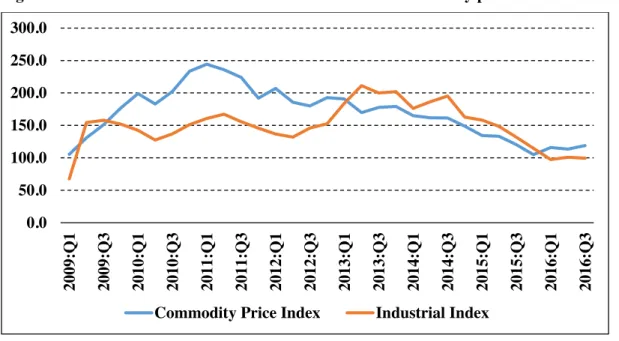
Figure 2.5: Association between industrial index and GDP growth 24 Figure 2.6: Association between VMI and the industrial index 25 Figure 2.7: Association between interest rates and the industrial index 26 Figure 2.8: Association between the industrial index and foreign interest rates 27 Figure 2.9: Association between the industrial index and commodity prices 28 Figure 2.10: Association between the industrial index and the volatility index 29 Figure 2.11: Association between ZAR/US Dollar exchange rate and the industrial index 30 Figure 2.12: Association between money supply and the industrial index 31
Figure 3.1: The stock market channel 46
Figure 4.1: Multiple Currency System Model Framework 68
Figure 6.1: Graph of residuals 97
Figure 7.1: The industrial index and foreign demand for shares 107 Figure 7.2: Association between economic activity and foreign demand for shares 108
xiii
LIST OF TABLES
Table 2.1: Correlation Matrix for the Macroeconomic Variables (Percentages) 31 Table 4.1: Summary of Variables for Analysing Stock Market Performance 70 Table 4.2: Summary of Variables for Model on Foreign Investor Participation 79
Table 5.1: Descriptive statistics 82
Table 5.2: Correlation matrix 83
Table 5.3 Panel Unit Root Results 84
Table 5.4: Results from the Panel Least Squares Regression Model 86
Table 5.5: Results from bootstrapping 88
Table 5.6: Results from the Panel GMM and Two-Stage Least Squares Models 90
Table 5.7: Results from the Aggregate SMI Regression Model 93
Table 6.1: Results from the Panel Least Squares Regression 99 Table 6.2: Results from the Panel Least Squares Regression 100 Table 6.3: Transmission of Domestic Variables to the Stock Market 102
Table 7.1: Descriptive statistics 105
Table 7.2: Correlation analysis 106
Table 7.3: ADF Unit Root Test results 109
xiv LIST OF EQUATIONS
Equation 4.1 Determinants of Share Price Model (Page 69)
t it t t t t t t t it it DUM SIZE LOG COM LOG VIX LOG FINT VMI LOG EXR LOG CPI LOG DINT MS SP LOG SP LOG 11 10 9 8 7 6 5 4 3 2 1 1 ) ( ) ( ) ( ) ( ) ( ) ( ) ( ) (
Equation 4.2 Aggregate Stock Market Index Model (Page 75)
t t t t t t t t t t COM LOG VIX LOG FINT VMI LOG EXR LOG CPI LOG DINT MS SMI LOG SMI LOG ) ( ) ( ) ( ) ( ) ( ) ( ) ( 9 8 7 6 5 4 3 2 1 1
Equation 4.3 Model For Estimating External Shocks (Page 77)
Equation 4.4 Model on the Impact of External Factors (Page 78)
Equation 4.5 Foreign Investor Participation Model (Page 78)
t p t p p t t EF EF Ln( ) 0 1 3 ln t t n t i t it it
it LOGSMI EF EF OCV
SMI LOG 1 3 2 1 1 ( ) 2 ) ( t t t t t t VIX LOG FINT VMI LOG SMI LOG VSBF LOG VSBF LOG ) ( ) ( ) ( ) ( ) ( 6 5 4 3 1 2 1
xv ABBREVIATIONS AND ACRONYMS
ADF AfDB APT ARDL BRICS Augmented Dickey-Fuller African Development Bank Arbitrage Pricing Model Autoregressive Distributed Lag
Brazil, Russia, India, China & South Africa CAPM CSD CBZ CPI DDM DCF EF EMBI EMH ESAP
Capital Asset Pricing Model Central Securities Depository Commercial Bank of Zimbabwe Consumer Price Index
Dividend Discount Model Discounted Cash Flow External Factors
Emerging Markets Bonds Index Efficient Market Hypothesis
Economic Structural Adjustment Programme EUR FDI FE FINT FMOLS GARCH
Euro, Eurocurrency of the 11 EU countries which joined the Euro Foreign Direct Investment
Fixed Effects Foreign Interest Rate
Fully Modified Ordinary Least Squares
Generalised Autoregressive Conditional Heteroskedasticity GDP
GMM GoZ
Gross Domestic Product
Generalised Method of Moments Government of Zimbabwe IMF
IPO JSE
International Monetary Fund Initial Public Offering
Johannesburg Stock Exchange LIBOR London Interbank Offered Rate LIC
LSE MCMB
Low Income Country: World Bank Definition London Stock Exchange
xvi MoF
NASDAQ NYSE
Ministry of Finance
National Association of Security Dealers Automated Quotation New York Stock Exchange
NPV Net Present Value OECD
OLS RE ROI
Organization for Economic Co-operation and Development Ordinary Least Squares
Random Effects Return On Investment RBZ
SMI TSLS
Reserve Bank of Zimbabwe Zimbabwe Stock Market Index Two-Stage Least Squares Model UNCTAD USD UK VAR VECM VIX VMI VSBF
United Nations Conference on Trade and Development United States Dollar
United Kingdom Vector Autoregression
Vector Error Correction Model Volatility Index
Volume of Manufacturing Index
Volume of Shares Bought by Foreigners
WB World Bank
WEO World Economic Outlook ZIMSTAT Zimbabwe Statistical Agency ZSE Zimbabwe Stock Exchange
1
CHAPTER ONE: INTRODUCTION
1.1 Research context
Stock markets play an important role in most economies as they provide unique services and benefits to individuals, corporations and governments. Specifically, stock markets serve as channels through which surplus funds are moved from lenders (savers) to borrowers (spenders) who have shortages of funds (Awan & Iftekhar, 2015). The ability of stock markets to mobilise savings for investments in turn helps to facilitate company growth, redistribute wealth, create investment opportunities for small investors, as well as raise capital for government (Tichiwou, 2010). A company can raise capital through an Initial Public Offering (IPO) on the stock exchange, where it gains access to investors who are ready to supply new capital to the business (Boubakari & Jin, 2010).
Unlike bonds, which are sold at a discount with a fixed rate of return, stocks are generally non-interest bearing securities whose dividend payments are determined by company management based on the performance of the firm (Berk & DeMarzo, 2014). Holders of stocks who are effectually the shareholders expect to get a return on their investment. As such, their decision to hold stocks reflect their expectations about future corporate performance in terms of earnings per share, cash flows and required rates of return (El-Wassal, 2013). In essence, investors looking for capital gains would invest on the stock market in anticipation of an increase in stock prices. Therefore, stock prices constitute an important measure of stock market performance. It reflects how well a company is doing relative to others on the stock market. However, stock prices can also respond differently to changes in macroeconomic factors. Investors, therefore, need to understand how the macroeconomic factors such as economic growth, inflation, money supply, interest rates and commodity prices affect stock prices.
In view of the critical role played by stock markets, several attempts have been made to understand the factors that affect stock market performance, with empirical literature often citing the importance of the economy in influencing the performance of the stock market (Sharma & Roca, 2012; Sharma & Gounder, 2012). Literature has also shown that a declining economy results in falling company revenues and lower-than-expected future earnings, thus
2
affecting the intrinsic value of companies and causing stock prices to fall significantly (Sharma & Nguyen, 2010; Hearn & Piesse, 2009; De la Torre, Gozzi, & Schmukler, 2007).
There are numerous studies in empirical literature, which point to a positive relationship between stock markets and economic growth (Awan & Iftekhar, 2015; Adjasi & Biekpe, 2006; Tachiwou, 2010; Zivengwa, Mashika, Bokosi, & Makova, 2011; Mehr-un-Nisa & Nishat, 2012; Gan, Lee, Yong, & Zhang, 2006). The world has witnessed visible and rapid developments in the financial systems of both developed and developing economies, by incorporating stock markets into the integral part of financial systems for economies to benefit from the functions of stock markets (Sharma & Roca, 2012). The New York Stock Exchange (NYSE), the National Association of Security Dealers Automated Quotation (NASDAQ), and the London Stock Exchange (LSE) are the most prominent stock markets in the world, whose main function is to raise capital for firms, provide liquidity, as well as determine share prices (Berk & DeMarzo, 2014). In developing countries like Zimbabwe, the stock market has played a key role in raising capital for business (Zivengwa, Mashika, Bokosi, & Makova, 2011).
Kirui, Wawire and Onono (2014) observed that the macroeconomic factors which influence stock market performance are interest rate, economic growth, inflation, money supply, the movement of international capital, changes in exchange rates, as well as political and economic shocks, while Flannery and Protopapadakis (2002) found that the major macroeconomic factors influencing stock markets include money supply, unemployment, trade balance, the number of new residential buildings and the producer price indices. Of these, money supply has been found to be the most important factor influencing stock market performance in the long term (Jamaludin, Ismail, & Manaf, 2017; Sirucek, 2012), yet other studies have found that firm-specific factors are also important in determining stock market performance (Idris & Bala, 2015). While a number of empirical studies have been conducted on the impact of macroeconomic factors on stock market performance in Zimbabwe such as (Zivengwa, Mashika, Bokosi, & Makova, 2011; Sunde & Sanderson, 2009), empirical literature focusing on the impact of the multiple currency system on stock market performance in Zimbabwe is still very limited.
3
The multiple currency system is essentially a monetary system synonymous with dollarization in the sense that foreign currency is used in place of domestic currency. However, the Zimbabwean scenario is unique in the sense that a number of currencies, namely the US dollar, the South African rand, Botswana pula, British pound, the Euro, and the Chinese Yuan were adopted for official use in domestic transactions, hence the name multiple currency system. This system was introduced in 2009 in response to the hyperinflationary episode experienced in the country from 2007 to 2008 (Reserve Bank of Zimbabwe [RBZ], 2009; Government of Zimbabwe [GoZ], 2009). This hyperinflation episode compelled economic agents to reject the domestic currency in favour of trading in more stable currencies such as the US dollar and the South African rand.
The multiple currency system in Zimbabwe presented a unique scenario compared to other countries that have dollarised, such as Panama and Ecuador. This is because countries such as Panama and Ecuador adopted a single foreign currency, specifically the US dollar, while maintaining their local currencies in circulation albeit in small amounts (Quispe-Agnoli & Whisler, 2006). In the case of Zimbabwe, a basket of currencies was adopted, namely the US dollar, the South African rand, the Botswana pula, the Euro and the British pound in place of the domestic currency (Government of Zimbabwe [GoZ], 2009). Moreover, the country completely abandoned its domestic currency until October 2016, when the Central Bank introduced a new surrogate currency which was backed by a bond secured from the Afrexim Bank, known as the “bond note” (Reserve Bank of Zimbabwe [RBZ], 2016). The bond notes also became part of the basket of currencies used in the multiple currency system, although the US dollar maintained its dominance over other currencies as all transactions are priced in US dollars. The Reserve Bank of Zimbabwe estimated that the US dollar constituted about 90% of total transactions in the multiple currency system (Reserve Bank of Zimbabwe [RBZ], 2015).
The continued weakening of regional currencies such as the rand and the pula against the US dollar also prompted economic agents to prefer the US dollar to such currencies (Reserve Bank of Zimbabwe [RBZ], 2016). Moreover, the country had more US dollars already in circulation before the official introduction of the multiple currency system (Reserve Bank of Zimbabwe [RBZ], 2013). Although the multiple currency system involves use of a basket of currencies, it is often cited as equivalent to dollarisation, not only due to the wide use of foreign currency in
4
place of domestic currency in transactions, but also because all the accounts and prices, both in the public and the private sector, are in foreign currency (Mpofu, 2015).
This scenario has, therefore, made it necessary to understand how the multiple currency system could have affected the performance of the stock market in Zimbabwe. While existing empirical literature provides some insights on the impact of macroeconomic factors on stock market performance in Zimbabwe, it would be important to try and understand the influence of the multiple currency system on stock market performance in Zimbabwe in order to fully understand why the stock market performance was very poor while the economy registered robust economic growth after the introduction of the multiple currency system in 2009. Following the introduction of the multiple currency system, the stock market was characterised by very low trade volumes, as the market was predominantly associated with low prices, low demand for stocks by investors, a lack of activity on the stock market, and the losses suffered by investors after the conversion from the Zimbabwe dollar to the US dollar (Reserve Bank of Zimbabwe [RBZ], 2015).
The ZSE also realised significant delistings, with the number of companies declining from a peak of 82 counters in 2009 to 54 counters by December 2016. Market capitalisation also declined from a peak of approximately US$6 billion in 2013 to around US$3 billion in 2016. In addition, the participation of foreign investors on the ZSE was subdued, notwithstanding the fact that the economy was relatively stable and that the multiple currency system effectively eliminated the exchange rate risk since trading was being conducted in US dollars as opposed to a domestic currency, which historically has proved to be more prone to depreciation against major currencies.
The poor stock market performance following the introduction of the multiple currency system has therefore been a great concern in Zimbabwe, which requires some further empirical investigation (Sibanda, 2015). Based on the recorded performance of the ZSE, it is possible that the multiple currency system may have been one of the factors that altered the dynamics of the stock market performance and the transmission mechanisms through which macroeconomic variables affect stock market performance. There is thus a gap in the empirical literature on the impact of the macroeconomic factors on the stock market under the multiple
5
currency environment. This is especially important given the poor performance of the Zimbabwean stock market, despite the firm economic recovery experienced following the adoption of the multiple currency system in 2009.
Since 2009, the economy registered robust growth rates averaging above 10% between 2009 and 2013, while the stock market indicators were all depressed. The economy registered a growth of 5.6% in 2009, compared to a decline of 14.8% in 2008. The economy also continued to strengthen as shown by high growth rates of 11.4%, 11.9% and 10.6% in 2010, 2011 and 2012, respectively (Reserve Bank of Zimbabwe [RBZ], 2013). The moderation in economic growth from 2012, however, mainly reflected an end to the recovery phase, since the economy was emerging from a decade long economic crisis. Whilst the stock market performance was poor following the introduction of the multiple currency system, there were some positive developments in the banking sector and the economy at large. The multiple currency system boosted confidence in the economy, with the banking sector registering phenomenal growth in deposits, from US$400 million in February 2009 to $4.5 billion by December 2015 (Reserve Bank of Zimbabwe [RBZ], 2015). These positive developments, however, did not extend to the stock market, implying that there could be some factors that could have been affecting the stock market performance under the multiple currency environment.
The poor stock market performance following the introduction of the multiple currency system thus generated great interest in the potential factors influencing stock market performance in Zimbabwe (Sibanda, 2015; Musimwa & Kaseke, 2012). Some analysts cited the problem of market liquidity due to the tight monetary conditions in the economy experienced during the multiple currency system as the reason behind the poor performance of stocks (EFE Securities, 2013). The tight liquidity situation was mainly due to low deposit levels in the banking sector coupled with the absence of interbank trading which limited the ability to lend by commercial banks as well as the inability by the central bank to provide its lender of last resort function as the central bank was not issuing any currency until November 2016. Money supply was thus a function of international balance of payments developments since liquidity was dependent on how much the country exported and borrowed from the international community. As a result, the sellers were generally forced to accept lower than desirable prices for their goods, assets and services due to the liquidity crisis. This created an unfair ability by buyers to dictate prices
6
leading to ‘a buyers’ market’, where sellers are hesitant to sell while buyers are itching to buy at lower prices, thereby creating a stalemate, which gives rise to a lukewarm stock market activity.
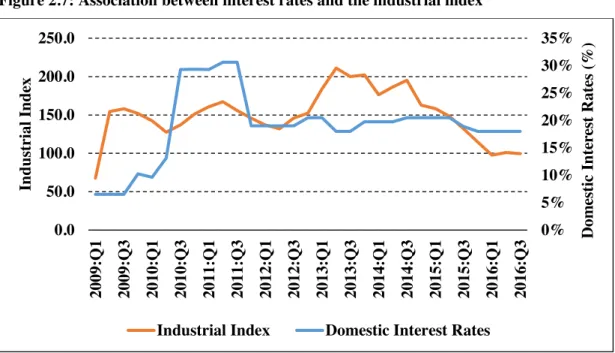
As has been cited in the literature, liquidity has been found to be an important factor that influences stock market developments (Akram, 2014), yet in Zimbabwe, liquidity seems not to be an important factor. Zimbabwe has experienced severe liquidity shortages since 2012, which could have impacted negatively on the stock market. These liquidity challenges arose due to the inability of the Central Bank to influence money supply in the economy under the multiple currency regime. This resulted in high interest rates, which negatively affected investments in shares as investors anticipated higher returns in the money market than in the stock market.
The adverse external developments also became important in influencing liquidity in the economy, as the country is dependent on a narrow range of primary commodity exports that are prone to adverse international commodity price movements (Reserve Bank of Zimbabwe [RBZ], 2016). In addition, the country was also reeling under sanctions, which blocked its access to foreign credit from traditional creditors due to its arrears status with the international financial institutions, notably the World Bank, the International Monetary Fund (IMF) and the African Development Bank (AfDB), among others (Reserve Bank of Zimbabwe [RBZ], 2011). The inability to access additional lines of credit severely limited the country’s ability to
enhance money supply creation in the economy, as the country was no longer issuing its domestic currency (Reserve Bank of Zimbabwe [RBZ], 2011). This challenge was further compounded by the Central Bank’s inability to influence money supply growth through the interest rate channel.
Interest rates have empirically been found to be the most significant variable affecting the stock market, as they can have a direct effect on cost of capital and therefore company profitability (Nissim & Penman, 2003). In the same vein, money supply is also an important factor influencing stock market developments (Aduda, Masila, & Onsongo, 2012). This is mainly because monetary authorities use money supply and interest rates to influence economic activity. By increasing money supply, authorities seek to reduce the cost of capital and increase inflation thereby making interest bearing assets attractive, while by mopping up excess
7
liquidity through treasury bill issuances, they seek to lower interest income and inflation thereby making stock markets attractive. However, money supply under the multiple currency system was constrained as the Central Bank ceased to issue domestic currency. The money
supply in the economy was therefore determined by the country’s ability to generate foreign
currency through exports and the attraction of diaspora remittances and foreign direct and portfolio investment into the country (Reserve Bank of Zimbabwe [RBZ], 2013). The country’s
export performance, however, was very poor as a result of both the domestic and external developments.
The country also witnessed a growing informal sector in the economy, which meant that a
significant proportion of the country’s money supply was circulating outside the formal
banking system, further exacerbating the liquidity challenges in the economy (GoZ, 2016; Reserve Bank of Zimbabwe [RBZ], 2016). Money supply is considered the most important macroeconomic factor that affects stock prices (Aduda, Masila, & Onsongo, 2012). According to Fang and Tice (2009), money supply also acts as the predicting indicator of the development of equity prices. Empirical literature, for instance Sirucek (2012) and Maskay (2007), also supports the fact that money supply growth increases the demand for stocks, and hence their prices.
It has also been noted that unexpected increases in money supply can cause a Central Bank to increase interest rates, the effect of which is that if the return on other fixed income securities like treasury bills and bonds, which are substitutes of equity, go up, stock prices decline (Kirui, Wawire, & Onono, 2014). This means that changes in monetary uncertainty modify stock prices’ risk premiums, as investors prefer interest bearing securities such as bonds and treasury bills than profit related assets such as shares, hence they demand a high return on investment (ROI) for assuming the risk of keeping stocks. Adverse international developments such as the global financial crisis experienced in 2008 and 2009 have also become important in influencing stock market performance (Slimane, Mehanaoui, & Akbar, 2013), including in Zimbabwe (Mushure, 2015).
Against this background, this study sought to examine the impact of the multiple currency system on stock market performance in Zimbabwe. Specifically, the study sought to understand
8
the factors influencing stock market performance and their transmission mechanisms under the multiple currency system in Zimbabwe. Given the important role played by external factors in influencing money supply and domestic interest rates, the study also examined the impact of external variables such as the volatility index and international commodity prices on stock market performance in Zimbabwe. In addition, the study sought to understand the factors influencing foreign investor participation in Zimbabwe under the multiple currency environment. This was especially important in order to inform policy on how best the country can harness its foreign savings in order to improve liquidity in the economy and to raise much-needed capital for retooling, especially given the low savings levels in Zimbabwe.
1.2 Problem statement
Following the introduction of the multiple currency system in February 2009, the country experienced some positive developments including a sharp decline in inflation thus ending the hyperinflation era, positive economic growth trajectory and improved confidence in the banking sector. Notwithstanding these positive developments ushered in by the introduction of the multiple currency system in 2009, the stock market did not respond positively to the favourable economic developments. For instance, during the period February 2009 to December 2015, 15 companies de-listed from the Zimbabwe Stock Exchange, citing viability problems and failure to raise new capital on the market (Zimbabwe Stock Exchange [ZSE], 2015). The local stock market counters also declined from a peak of 82 counters to 54 counters by end of 2016. Notable de-listings in terms of their market capitalisation included African Banking Corporation, Astra Holdings, Tractive Power, Interfresh and PG, while only two firms were listed - TN Holdings and Padenga Holdings. However, TN holdings subsequently delisted as a result of viability problems. Other prominent stock market players such as Dawn Properties and African Sun have also indicated their intention to exit the ZSE. These are mostly blue chip companies, which had a significant influence on the stock market.
Moreover, the ZSE failed to attract foreign investor participation notwithstanding the fact that trading was now done in US dollars, thus eliminating exchange rate risk. It is possible, therefore, that there could be other important factors that were influencing foreign investor participation on the ZSE in Zimbabwe, hence the need to investigate these factors. This is
9
because foreign investors were necessary as a source of additional capital in the economy since the country was experiencing some liquidity challenges. The poor performance of the stock market following the introduction of the multiple currency system has, therefore, raised important questions regarding the impact of the multiple currencies on stock market performance in Zimbabwe (Sibanda, 2015; Musimwa & Kaseke, 2012).
Against this background, there was need for understanding whether the multiple currency system had any effect on stock market performance in Zimbabwe. There was thus a need for a better understanding of the nexus between macro-economic factors and stock market performance, in order to inform policy-makers and market players about the transmission mechanisms confronting the stock market business under the multiple currency environment. The causal relationships between independent factors such as money supply, interest rates, GDP and firm-specific factors need to be established not only to inform policy but to help investors in making decisions on investment options in Zimbabwe.
1.3 Research questions
This study sought to find answers to the following questions:
i. What has been the impact of macroeconomic factors on stock market performance under the multiple currency regime?
ii. What has been the influence of global or external factors on stock market performance under the multiple currency regime?
iii. How has the multiple currency system influenced foreign investor participation on firms listed on the Zimbabwe Stock Exchange?
Finding answers to the above mentioned research questions would provide a better awareness and understanding of the real impact of the multiple currency regime on the performance of stock exchanges. The first question will assist in understanding the key macroeconomic variables influencing stock market performance under the multiple currency regime, the second will assess the significance of foreign or global factors in the performance of the stock market
10
in Zimbabwe, whilst the third will assess whether foreign investors still have interest and confidence in the ZSE by looking at the portfolio shift between foreign and local participation, institutional and individual investors.
1.4 Research objectives
This study aimed to assess the impact of the multiple currency regime on stock market performance in Zimbabwe in terms of financial performance, market performance, and non-financial performance. The specific objectives of the study can be summarised as follows:
i. Analyse the impact of macroeconomic factors on stock market performance under the multiple currency regime.
ii. Analyse the impact of external shocks on stock market performance under the multiple currency regime.
iii. Analyse the macroeconomic factors influencing foreign investor participation on the Zimbabwe Stock Exchange (ZSE) under the multiple currency system.
1.5 Significance of the study
Although some studies have analysed the impact of macroeconomic factors on stock market performance in Zimbabwe (Zivengwa, Mashika, Bokosi, & Makova, 2011; Sunde & Sanderson, 2009; Jecheche, 2008), they mainly focussed on the pre-multiple currency era, when government had sovereignty over the major stock market drivers. However, the multiple currency environment is unique in the sense that the country completely abandoned its own currency. This is mainly because under the multiple currency system, the Central Bank does not issue domestic currency and the country uses a basket of selected currencies. Given the unique nature of the multiple currency system, it implies that existing studies may not be very useful in explaining the stock market dynamics in Zimbabwe; as such studies were carried out in a completely different context than the current scenario. There is reasonable belief that the multiple currency system might have altered the dynamics of the stock market performance and the transmission mechanisms through which macroeconomic variables affect stock market
11
performance. Therefore, there is a gap in the empirical literature on the impact of the macroeconomic factors on the stock market under the multiple currency environment.
Moreover, the evidence coming from the empirical literature indicates that the macroeconomic variables which influence stock market performance vary from country to country, for instance (Khalid & Khan, 2017; Akbar, Ali, & Faisal, 2012; Anokye & Tweneboah, 2008; Gan, Lee, Yong, & Zhang, 2006), hence the need to determine the macroeconomic variables that could be influencing the Zimbabwean stock market performance under the multiple currency regime. This study, therefore, provides further insights into the macroeconomic factors influencing stock market performance under a multiple currency regime in Zimbabwe.
By assessing the major determinants of stock market performance under a multiple currency regime, this study makes a distinct contribution to literature, as it is a factor that has not been used in previous studies. The advantage of this approach is that it combines both macroeconomic variables as well as firm specific variables (Ozlen, 2015). The study also assessed the significance of external factors in stock market performance under the multiple currency environment. The role played by external factors in explaining both money supply and interest rates implies that these factors have become important in explaining stock market dynamics. This is in view of the fact that the literature on how external factors are propagated into the multiple currency system is still very limited. In addition, the study adds to the empirical literature through an assessment of the push and pull factors determining foreign investor participation in a dollarised environment.
Although the multiple currency system eliminated exchange rate risk, this did not help boost foreign investor participation in the stock market and the economy at large, despite the fact that the exchange rate is a key factor in influencing stock market performance (Raheman, 2012; Asaolu, 2011; Lee, 2010; Horobet & Lilie, 2010). Given the importance of foreign investment in the economy, it was important to investigate the factors that influence foreign investor participation in Zimbabwe. The findings from this study will thus assist policy-makers as they consider the sustainability of keeping a multiple currency regime. Furthermore, the study contributes to the literature by providing some evidence of the impact of an appropriate monetary regime on economic performance.
12
1.6 Research scope
This is a quantitative research study, which covered the period from 2009 to 2016. The research is based on data available through the Zimbabwe Securities and Exchanges Council, which is readily available to the public by virtue of the fact that the firms under study were publicly listed.
1.7 Limitations of the study
The study only considers the period under the multiple currency regime. During hyperinflation, which took place from 2006 to 2008, the ZSE performed well, but due to differences in currencies and the lack of an approved exchange rate to match the multiple currency period, the study could not compare periods. This study is thus limited by the structural breaks in the data as well as the gap created by the closure of the stock market in 2008.
1.8 Organisation of the study
This thesis is organised as follows:
Chapter One provides an introduction, the problem statement, the purpose of the study, the research questions and the significance of the study, also called the contribution to research. Chapter Two provides a narrative on stock market developments in Zimbabwe and the stylised facts. Chapter Three looks at the theoretical and empirical literature, while Chapter Four discusses the methodology used in the study. From Chapter Five to Chapter Seven, the thesis provides a detailed analysis and interpretation of the results for the three research questions. Chapter Five deals with the empirical results and analysis of the transmission mechanisms influencing stock market performance under the multiple currency system, while Chapter Six deals with the results and analysis of the influence of external shocks on stock market performance under the multiple currency regime. Lastly, results concerning the dynamics in foreign investor participation under the multiple currency climate are presented and analysed
13
in Chapter Seven. Chapter Eight concludes the research and provides study-based recommendations regarding the operation of the stock market in Zimbabwe under the multiple currency economic climate.
1.9 Summary
This chapter introduced this study on the impact of the multiple currency system on the performance of the stock market in Zimbabwe, and examined the research context, which highlighted the growing importance of stock markets in the development of economies. The chapter noted that while there were some positive gains in the economy following the introduction of the multiple currency system, stock market performance was constrained, thus providing the basis for research on the impact of a multiple currency system on stock market performance. The chapter noted that studies on the impact of the multiple currency system on stock market performance in Zimbabwe are limited, as most studies examined the period before the multiple currency environment.
The chapter also highlighted the research questions, purpose and significance of the study. In particular, the study sought to understand what the impact of macroeconomic factors on stock market performance under the multiple currency regime has been; what the influence of global or external factors on stock market performance under the multiple currency regime has been; and how the multiple currency system influenced foreign investor participation on the ZSE. The chapter further discussed the significance of the study, highlighting that studies in the area are limited as most focussed on the pre-multiple currency era. In addition, the chapter highlighted that the multiple currency system ushered in a unique situation for Zimbabwe, as a basket of currencies was used in place of the domestic currency.
14
CHAPTER TWO: STOCK MARKET DEVELOPMENTS AND STYLISED FACTS
2.1 Introduction
This chapter provides a detailed background to the study and stylised facts on the stock market developments in Zimbabwe. The background on stock market developments in Zimbabwe is critical, as it provides the foundation for this study.
2.2 Development of the Zimbabwe Stock Exchange prior to independence (1980)
The Zimbabwean Stock Market’s history dates back to 1896 in Bulawayo in the then Rhodesia, soon after white settlers of mainly British origin colonised the country. The key economic activity amongst the settlers was based on mining, and the stock exchange was an important component of the settlement process as it was aimed at financing mining activities (Muzamani, 1993). Other satellite stock exchanges were also established in Gwelo (now Gweru) and Umtali (now Mutare), again based on mining activities, which required an efficient mechanism for the stock exchange ownership of mining claims and funding.
In Bulawayo, the exchange only survived for six years before the South African Boer war broke out. In other areas of establishment, the stock exchanges also did not last long, mainly due to fewer mineral deposits than expected being found. The mining activities therefore declined, which directly influenced economic activity as well as the stock exchange. As per Tachiwou (2010), a declining economy results in problems in the stock market.
The Bulawayo Stock Exchange was later revived after the Second World War under a new name – the ‘Rhodesia Stock Exchange’ - and it resumed trading in 1946 (Zimbabwe Stock Exchange [ZSE], 2015b). A second exchange was then established in Salisbury (now Harare) in 1951. Major deals between the two exchanges were conducted by telephone.
15
During the Federation period of Rhodesia and Nyasaland, when Rhodesia (Zimbabwe), Zambia (Northern Rhodesia) and Malawi (Nyasaland) became one country under British control, Salisbury was the centre of economic activity. All operations of the exchanges were moved to Salisbury, including the trading floor, the secretaries and the administration. In the same period, it was decided that legislation was necessary to govern the operation of the exchange, which would govern the rights and obligations of the members of the exchange and the investing public.
In the 1970s, the rules of the exchange were revised extensively by a committee within the governing treasury. This resulted in an Exchange Control Act being passed by the House of Assembly in 1974 (Zimbabwe Stock Exchange [ZSE], 2015b), which has become the basis for most operations of the Zimbabwe Stock Exchange today.
2.3 Performance of the ZSE during the period from 1980 to 2008
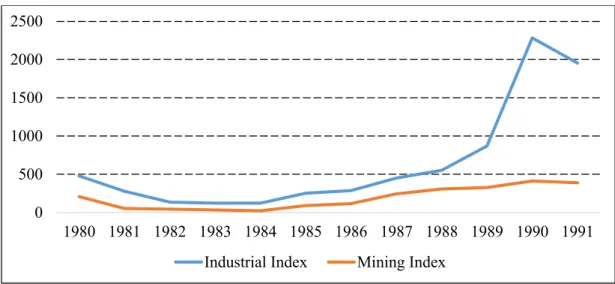
Following the attainment of independence in 1980, the name of the stock exchange was changed from the Rhodesia Stock Exchange to the Zimbabwe Stock Exchange (Zimbabwe Stock Exchange [ZSE], Zimbabwe Stock Exchange Handbook, 2015b). The Zimbabwean stock market boomed in the 1980s amid renewed confidence in the economy, and the external trading of shares was allowed by the government, resulting in an increase in the number of traders and investors. Trading on the ZSE included equities, preference shares, government bonds, municipal stocks, debentures and warrants, however the strong socialist ideologies of the government led to the stock exchange becoming virtually inactive towards the mid-1980s. The industrial index reached its lowest ebb in 1984 when it dropped to about 122 from 447.8 in 1980, however it improved again in the late 1980s, reaching 869.13 in 1989, as a result of improved investor confidence due to news of successful negotiations for an IMF supported programme, the Economic Structural Adjustment Programme (ESAP), which the government agreed to implement. The volume of shares traded also increased significantly, from 20,914,048 in 1982 to 39,201,638 by 1989 (Zimbabwe Stock Exchnage [ZSE], 2015). Most of this improvement was noticed from 1985. The performance of the ZSE in the first 12 years after independence in the form of turnover and indices is reflected in Figure 2.1.
16
Figure 2.1: The Performance of the ZSE (1980-1991)
Source: Muzamani, (1993)
The market peaked in August 1990 at an index level of 2700 (industrial and mining combined), and the economic reforms of the early 1990s gave a further boost to activities on the ZSE, however the depreciation of the domestic currency against major currencies, drought, and the general economic downturn squeezed company profits and hit the market badly. As a result, the stock market index plunged by 51 percent to 867 in 1992. In June 1993 the market recovered as short term interest rates declined, and the opening of the ZSE to foreign investors in 1993 and institutional reforms implemented in 1994 also gave the ZSE a major boost. The institutional changes included a reduction in corporate tax from 42.5% to 40%, a reduction in capital gains tax from 30% to 19%, and a reduction in the tax rate on dividends earned on the ZSE from 20% to 15% (Zimbabwe Stock Exchnage [ZSE], 2015). Against this backdrop the industrial index grew by 184% in 1994, with 58% of the traded shares being bought by foreign investors (ZSE, 2016).
From 1995, however, the stock market’s performance started weakening. This was due to two main factors, notably the high domestic real interest rates and drought, which kept investors away from the market. International negative emerging markets sentiment following the Mexico debacle also reduced interest in the ZSE’s shares. However, from July 1995, the stock market was boosted by renewed interest from international investors, who started investing in selected stocks. This renewed interest was based on the belief that there were some very cheap stocks in the market whose long-term value looked promising. In 1996, the ZSE was rated the
0 500 1000 1500 2000 2500 1980 1981 1982 1983 1984 1985 1986 1987 1988 1989 1990 1991 Industrial Index Mining Index
17
best emerging market performer. Market capitalisation was approximately US$255 million, representing an increase of approximately 240% from 1989 levels (ZSE, 2016).
The stock market witnessed a decline of approximately 60% and 88% in turnover and value of shares traded in 1998 respectively, against the backdrop of positive real money market interest rates, which were above 10%. The stock market remained depressed until mid-year 1999, but started showing signs of improvement towards the end of 1999, with a remarkable growth of 25% in the industrial index at the beginning of 2000. This was attributed to the good performance of some listed companies, together with other favourable export measures. The stock market was given the impetus to go even higher by the low interest rate policy adopted in August 2000.
Zimbabwe experienced high inflation from 2001, subsequently graduating into hyperinflation during the period 2007 to 2008. An unprecedented bull-run dominated the ZSE during this period however, mainly driven by self-fulfilling inflation expectations and unbridled speculation. The hyperinflation decimated the domestic economy and all local currency denominated savings, yet the ZSE, in tandem with the informal market, remained vibrant and did not reflect the then state of the economy and the performance of the underlying counters. Increased liquidity into the equities market due to low and negative real returns on the money market, a lack of alternative investment destinations and adverse inflation expectations made the equities market a lucrative investment haven, but reflected speculative behaviour and inflation developments as opposed to GDP growth, i.e. investors started hedging against inflation by investing in the stock market as the prices were inflation adjusted.
As a result, the industrial index surged to 6.5 quintillion points by the end of November 2008, recording growth rates in excess of 15 billion percent during the year, compared to negative growth rates of 14.2% of GDP (Zimbabwe Stock Exchange [ZSE], 2015b). The mining index also exceeded 18 billion percent growth, reaching 7.5 quintillion points by November 2008 (Zimbabwe Stock Exchange [ZSE], 2015b). However, this increase mainly reflected market distortions in the economy emanating from the hyperinflationary environment; share prices were responding to the exchange rate movements of dual listed companies such as Old Mutual, which became the centre of comparison. The participants were also using unofficial exchange
18
rates determined by parallel market activities, termed “burning of money”. These rampant, undisciplined and underhanded dealings by market participants compelled the government to suspend trading on the ZSE on 20th November 2008.
2.4 Stock market performance under the multiple currency system
Following the introduction of the multiple currency system in February 2009, trading activity on the Zimbabwean stock market was subdued and share prices were heavily depressed, with some dropping to the levels of fractions of cents. Under the multiple currency regime, the Reserve Bank of Zimbabwe lost its ability to directly influence interest rates through its overnight accommodation window, which is a monetary policy instrument that allows banking institutions in a short position to borrow money on a short-term basis from the Central Bank.
The inability of the Central Bank to determine interest rates also constrained its ability to influence the behaviour of the stock market; central banks usually influence stock market prices through interest rates, since there is an inverse relationship between interest rates and stock market prices. Empirical evidence, however, suggests that interest rate determination under a dollarised environment is mainly influenced by foreign interest rates and country risk premiums (Nyarota, Nakunyada, Mupunga, & Kupeta, 2016). As such, these variables became critical in influencing the dynamics of the stock market performance in Zimbabwe.
The ZSE resumed trading in February 2009 following the official introduction of the multiple currency system, which paved the way for trading in foreign currency. Trading started on a low
note as the bourse went through a ‘market correction period’ of two months, at which time all
listed shares had traded at least once. Following the resumption of full operations, the ZSE experienced an aggressive recovery, closing 2009 at a global best of 47 percent as it was coming off a relatively low base. By year-end, the total number of companies listed on the ZSE had risen to 79, while the annual market capitalisation reached US$3.8 billion with a monthly average of US$3.5 billion (ZSE, 2016).
19
The increase in stock prices, however, started to decelerate between 2010 and 2012, registering an average annual return of 2.3% as the limited capital, policy inconsistencies and political uncertainty from the inclusive Government of Zimbabwe partners took its toll on stock prices (Chikoko & Sami, 2012). The problem of policy inconsistencies was mainly reflected in the way the Government implemented the indigenisation and economic empowerment regulations, as it kept changing positions. A lack of clarity on the implementation of the indigenisation regulation also led to foreign investors taking a wait and see attitude, thereby undermining the performance of the stock market (International Monetary Fund [IMF], 2011).
The lacklustre performance of the ZSE was further exacerbated by the country’s poor credit
rating, which was mainly caused by the continued accumulation of international payment arrears by the government to both multi-lateral and bilateral creditors, as well as the high ratio of non-performing loans, which stood at 16% in December 2014 (Reserve Bank of Zimbabwe [RBZ], 2015). In terms of the Global Competitiveness Report’s ease of doing business indicators, the country also had a poor ranking of 146 out of 148 countries in 2013-2014 and 143 out of 144 in 2014-2015 Global Competitiveness Report, (World Economic Forum [WEF], 2015). All these factors negatively affected the perception of investors concerning the attractiveness of the country as an investment destination.
The decline in the mainstream industrial index was mainly driven by losses recorded in the mostly heavily capitalised counters. The drop in the industrial index throughout the year was reflective of persistent economic challenges as well as the tight liquidity situation prevailing in the economy. The performance of the listed companies was also characterised by weakening financial results, with companies experiencing falling revenues and profitability, as well as investors shunning Zimbabwe in preference of other countries with better returns.
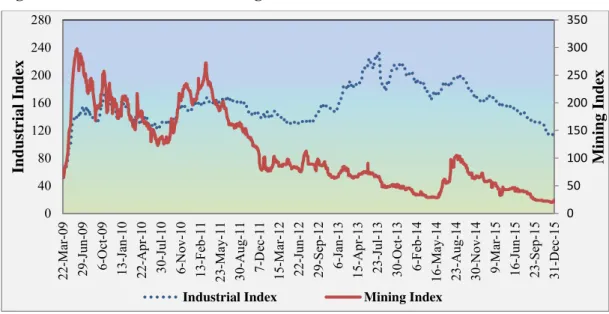
In 2013, the equities market performed strongly in the first half of the year but retreated in the last half of the year, owing to uncertainties associated with elections and the delay in the pronouncement of the 2014 National Budget. The industrial index opened the year at 152.40 points, ending the year at 202.12 points. However, despite recovering in the last quarter of 2013, the industrial index tapered off towards year-end, due to tight liquidity conditions and profit taking, which traditionally dominates the last month of the year. Similarly, mining
20
counters realised thin trading, as most mines continued to reel under capitalisation challenges. Consequently, the mining index closed 2013 in recession at 45.79 points, down from 65.12 points in 2012, representing a 29.68% decline.
The challenging macroeconomic and operating environment in 2014, which was characterised by a significant slowdown in economic activity, a liquidity crunch, company closures, and limited access to affordable medium to long-term credit, among other challenges, had spill over effects on the performance of the ZSE, which lost over US$800 million, or 17% in value. The industrial index declined by close to 20% in 2014, from 202.12 points at the beginning of the year to 162.79 points by 31 December 2014.
In line with the bearish sentiments on the Zimbabwe Stock Exchange, cumulative share turnover declined by 8.26%, from US$486.7 million in 2013 to US$446.5 million by December 2014. Share trading was partially affected by the rollover to the Central Securities Depository (CSD) system, during which investors were required to open trading accounts into the system.
This notwithstanding, foreign investors’ contributions to the bourse remained robust,
increasing to 63.11% of total revenue in 2014, compared to 60.32% realised in the previous year.
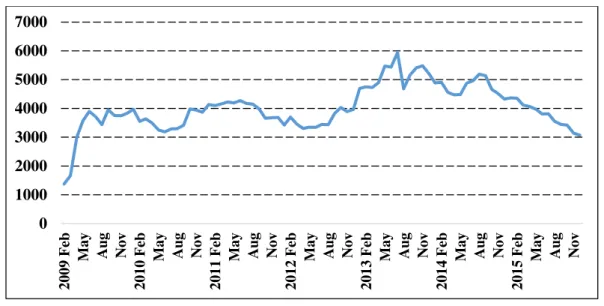
As a consequence of the subdued trading on the stock exchange, market capitalisation declined by 16.73%, from US$5.20 billion in 2013 to US$4.33 billion by the end of December 2014. This means that more than US$870 million worth of value was lost in 2014. In 2015, the ZSE traded weaker, with both indices displaying a bearish trend throughout the year. Year on year, the industrial index lost 47.94 points (-29.45%) to close at 114.85 points, while the resources index lost 47.99 points (-66.92%) to close at 23.72 points. Figure 2.2 shows the market capitalisation trends.
21
Figure 2.2: Market capitalisation (US$ million)
Source: Zimbabwe Stock Exchange (2016)
Figure 2.2 above shows changes in the market capitalisation over the period 2009 to 2015. Foreign investors contributed 42.3% of the total revenue in January 2011, which increased to 51.22% in 2012, while in 2013 and 2014 foreign investors contributed 60.32% and 63.11% respectively, reflecting strong foreign investor interest in emerging markets. Yet in 2015, foreign contributions decreased to 55% of the total revenue and foreign participation was mainly concentrated on selected blue chip counters.
In addition, the number of counters on the ZSE has been declining, reflecting the worsening economic challenges in the economy. The ZSE currently has 54 listed companies - 50 industrial and 4 mining. The number of listed companies was 78 in 2012, showing a decline over the years. The 50 industrial category is further decomposed into real estate, agriculture, printing, construction, insurance, conglomerate, health care, food processing, consumer goods, retail, distribution, spirits and wines. The ZSE is thus well diversified in terms of the economic sectors, which the listed companies represent. Currently, only approximately 17 companies dominate market capitalisation, which include, among others, Delta Corporation, Innscor Africa, Hippo Valley Estate, Barclays Bank, Old Mutual, Econet Wireless, CBZ, Seed Co and Lafarge Cement. 0 1000 2000 3000 4000 5000 6000 7000 2009 Feb Ma y A ug N ov 2010 Feb Ma y A ug N ov 2011 Feb Ma y A ug N ov 2012 Feb Ma y A ug N ov 2013 Feb Ma y A ug N ov 2014 Feb Ma y A ug N ov 2015 Feb Ma y A ug N ov