Application of Natural Dyes by
Padding Technique on Textiles
A thesis submitted in fulfilment of the requirements
for the degree of
Doctor of Philosophy
Saminathan Ratnapandian
B. Tech. (Textile Technology), M.S. (Textile Technology)
School of Fashion and Textiles
Design and Social Context Portfolio
RMIT University
March 2013
Declaration
I, Saminathan Ratnapandian, certify that:a) Except where due acknowledgement has been made, the work is that of the author alone.
b) The work has not been submitted previously, in whole or in part, to qualify for any other academic award.
c) The content of the thesis is the result of work which has been carried out since the official commencement date of the approved research program.
d) Any editorial work, paid or unpaid, carried out by a third party is acknowledged and,
e) Ethics procedures and guidelines have been followed.
Saminathan Ratnapandian
Date 4.09.2013 .
Acknowledgements
I express my deepest gratitude to my supervisors Associate Professor Dr Lijing Wang and Mr Stanley M. Fergusson for their continuous guidance, support and
encouragement during all phases of my doctoral research. Dr Wang focused me on defining and describing a structured path towards my ultimate goal. Mr Fergusson shared his invaluable knowledge of textile colouration.
I place on record my heartfelt thanks to Associate Professor Dr Rajiv Padhye, Director, Centre for Advanced Materials and Performance Textiles, for his technical,
administrative and moral support. I appreciate the input of Adjunct Professor Dr Max White during the initial stages of the research. I am grateful to Mr Keith Cowlishaw, Head of School, who kindly provided a clear path regarding all administrative matters. I express my gratitude to Ms Fiona Gavens, Administrative Officer, for assisting, guiding and when needed chasing me down in regards to all administration related matters. I thank Mr Martin Gregory and Ms Geraldine Van Lint for ensuring the availability of laboratory resources.
Ms Trudy Orchard and Ms Fiona Greygoose from Textile Testing Services, deserve special mention for sharing their technical knowledge and graciously permitting the use of their facilities. I thank Mr Clive Skelchy and Ms Michelle Matheson from RMIT library, for ensuring that all available resources were made accessible for my research. I thank all the academic and non-academic staff at the RMIT Brunswick campus that helped me during my research. I am grateful to Dr Muthu Pannirselvam and Ms Zahra Homan from RMIT city campus for their technical input and time while permitting use of their laboratory.
I thank Dr Maryam Naebe, Deakin University, for her help in plasma treatment experiments. I appreciate the efforts of Ms Mary-Jo O’Rourke, Accredited Editor, for editing and proof-reading this work.
I am grateful for the financial support provided by RMIT University through the RUIRS scholarship and DVC (R&I) postgraduate research student international conference grant.
I am fortunate to have had a supportive peer group that included Dr Saniyat Islam, Mr Amit Jadhav, Mr Javid Jalvandi, Dr Sinnappoo Kanesalingam, Mr Farzad Mohaddes and Dr Rajkishore Nayak. I thank them for their camaraderie, constructive criticism and enthusiastic encouragement.
Last but not least, my wife, S. P. Vijayaraanee, deserves a special note of thanks for her love, encouragement, understanding and support. I could not have carried out my research without the love and sacrifice of my parents-in-law and I am indebted to them. I am grateful for the fond memories of my daughters who found it funny that, just like them dad was also going to school.
Contents
Title pageDeclaration ...ii
Acknowledgements ... iii
List of figures ... ix
List of tables ...xii
Abstract... xiii
Research output from this thesis work ...xvii
1 Chapter 1 ... 1 1.1 Introduction ... 2 1.2 Textile colouration ... 3 1.2.1 Dyes ... 3 1.2.1.1 Synthetic dyes ... 3 1.2.1.2 Natural dyes ... 6 1.2.2 Fabric colouration ... 12 1.2.2.1 Batch dyeing ... 12 1.2.2.2 Continuous dyeing ... 15 1.2.2.3 Printing ... 17 1.2.2.4 Unconventional dyeing ... 18
1.2.2.5 Improving textile colouration ... 18
1.2.3 Fastness testing ... 19
1.3 Present scenario ... 19
1.3.1 Research on natural dyes ... 21
1.3.1.1 Sources and extraction ... 22
1.3.1.2 Application techniques ... 22
1.3.1.3 Performance of natural dyes ... 23
1.3.1.4 Objections to natural dyes ... 23
1.4 Research conducted in this thesis ... 24
1.4.1 Chapter outline ... 25
1.4.2 Expected outcomes and potential benefits ... 25
2. Chapter 2 ... 26
2.1 Introduction ... 27
2.2 Design of experiments ... 27
2.2.1 Selection of materials ... 28
2.2.1.2 Dyes... 29 2.2.1.3 Chemicals ... 32 2.2.2 Dyeing methods ... 33 2.2.2.1 Mordant dyes ... 33 2.2.2.2 Vat dyes ... 34 2.2.3 Evaluation ... 36 2.2.3.1 Colour measurement ... 36 2.2.3.2 Fastness testing... 37
2.2.3.3 Atomic Absorption Spectrometry (AAS) ... 37
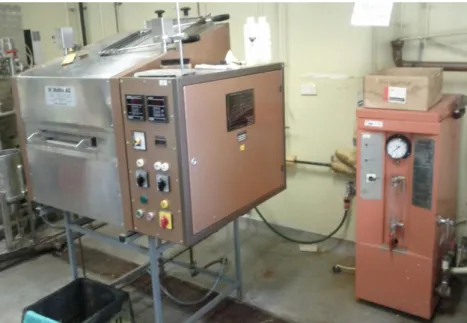
2.2.3.4 Attenuated Total Reflectance Fourier Transform Infra-Red (ATR-FTIR) 39 2.2.3.5 Wettability testing ... 39 2.2.3.6 Antimicrobial testing ... 40 2.3 Summary ... 41 3 Chapter 3 ... 42 3.1 Introduction ... 43 3.2 Equipment ... 43 3.2.1 Padding mangle ... 43 3.2.2 Steamer ... 43 3.2.3 Dryer ... 44
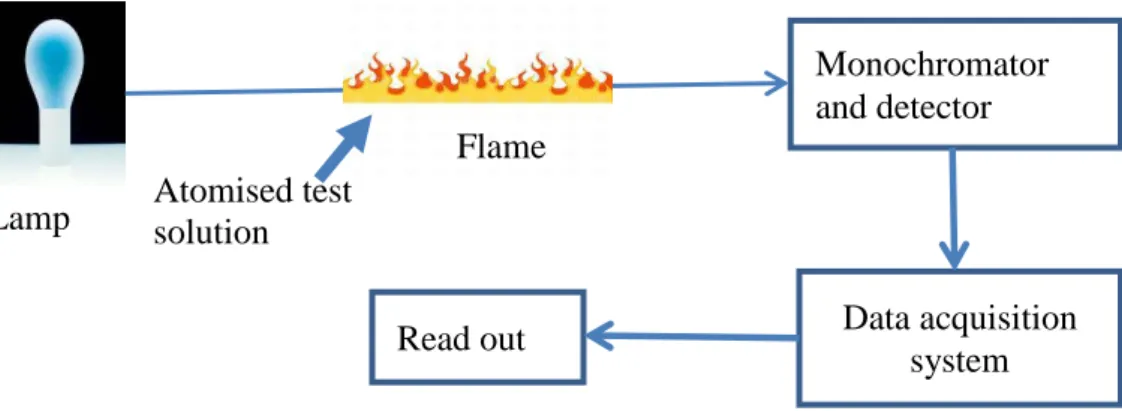
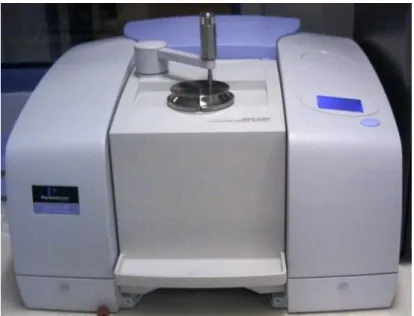
3.2.4 Attenuated Total Reflectance Fourier Transform Infra-Red (ATR-FTIR) 44 3.2.5 Atomic Absorption Spectrometer (AAS) ... 45
3.3 Materials ... 45
3.4 Methods ... 46
3.4.1 Exhaust dyeing ... 46
3.4.2 Padding ... 46
3.4.2.1 Optimising process sequence ... 47
3.4.2.2 Optimising dye-mordant ratio ... 48
3.4.3 Steaming and washing off ... 48
3.4.4 Dyeing evaluation ... 49
3.4.5 Atomic Absorption Spectrometry (AAS) ... 49
3.4.6 ATR–FTIR analysis... 50
3.5 Results and discussion ... 50
3.5.1 Shades obtained ... 50
3.5.2 ATR–FTIR results ... 53
3.5.4 Optimum mordant concentration ... 59 3.5.4.1 AAS results ... 61 3.5.5 Fastness properties... 63 3.6 Conclusions ... 64 4. Chapter 4 ... 66 4.1 Introduction ... 67 4.2 Plasma technology ... 67 4.3 Equipment ... 69 4.3.1 Plasma machine ... 69
4.3.2 Padding mangle, steamer and dryer ... 70
4.4 Materials ... 70
4.5 Methods ... 71
4.5.1 Plasma pretreatment ... 71
4.5.2 Padding ... 72
4.5.3 Evaluation ... 72
4.6 Results and discussion ... 72
4.6.1 Fabric wettability ... 72
4.6.2 Effect of plasma treatment on shade obtained ... 73
4.6.3 Fastness properties... 78
4.7 Conclusions ... 78
5. Chapter 5 ... 80
5.1 Introduction ... 81
5.1.1 Application of chitosan in dyeing... 81
5.1.2 Antimicrobial activity of chitosan ... 82
5.2 Equipment ... 82
5.2.1 Padding mangle, curing chamber and dryer ... 82
5.2.2 Antimicrobial testing ... 83
5.3 Materials ... 83
5.4 Methods ... 83
5.4.1 Padding ... 83
5.4.2 Evaluation ... 84
5.5 Results and discussion ... 84
5.5.1 Shades obtained ... 84
5.5.2 Effect of chitosan ... 85
5.5.3 Fastness properties... 89
5.5.4 Antibacterial evaluation results ... 89
6 Chapter 6 ... 93
6.1 Introduction ... 94
6.1.1 Thiourea dioxide (TUD) ... 94
6.1.2 Sodium carbonate ... 94
6.2 Equipment ... 95
6.2.1 Padding mangle, steamer and dryer ... 95
6.2.2 Printing ... 95
6.3 Materials ... 95
6.4 Methods ... 96
6.4.1 Indigo dyeing ... 96
6.4.2 Printing with indigo ... 99
6.4.3 Evaluation ... 101
6.5 Results and discussion ... 102
6.5.1 Dyeing ... 102
6.5.1.1 Shades obtained ... 102
6.5.1.2 Effect of steaming time and alkali ... 104
6.5.1.3 Fastness properties ... 107
6.5.2 Printing ... 108
6.5.2.1 Shades obtained ... 108
6.5.2.2 Effect of alkali and steaming duration ... 110
6.5.2.3 Evaluation of fastness ... 111
6.6 Conclusions ... 112
7. Chapter 7 ... 114
7.1 Introduction ... 115
7.1.1 Padding of mordant dyes ... 115
7.1.2 Improving padding of mordant dyes ... 116
7.1.3 Indigo colouration ... 116
7.2 Further work ... 118
7.2.1 Increasing the scale of experiments ... 118
7.2.2 Analysis of dye-metal-textile complex ... 118
7.2.3 Effects of chitosan ... 118
7.2.4 Indigo colouration ... 118
List of figures
Figure 1.1 Classification of synthetic dyes... 4
Figure 1.2 Typical chemical groups of natural dyes ... 9
Figure 1.3 Fabric colouration methods ... 12
Figure 1.4 Exhaust dyeing line diagram ... 13
Figure 1.5 Schematic diagram of padding ... 16
Figure 1.6 Distribution of global dye demand... 21
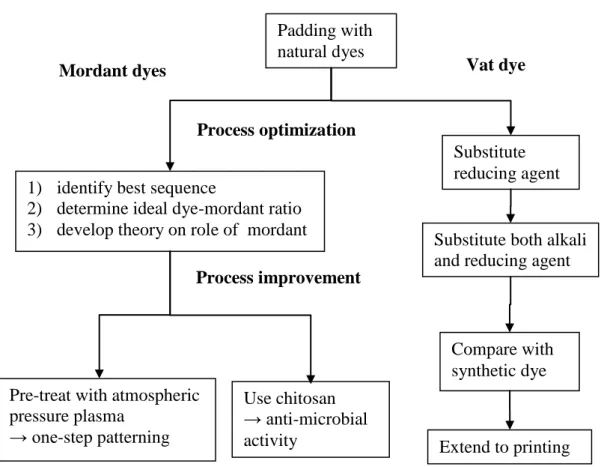
Figure 2.1 Design outline for padding natural dyes ... 28
Figure 2.2 Indigo formation in plants ... 30
Figure 2.3 Four possible stereo-isomeric dimers of profisetinidine ... 31
Figure 2.4 Polymers of condensed tannins ... 32
Figure 2.5 Solubilising reaction of indigo ... 34
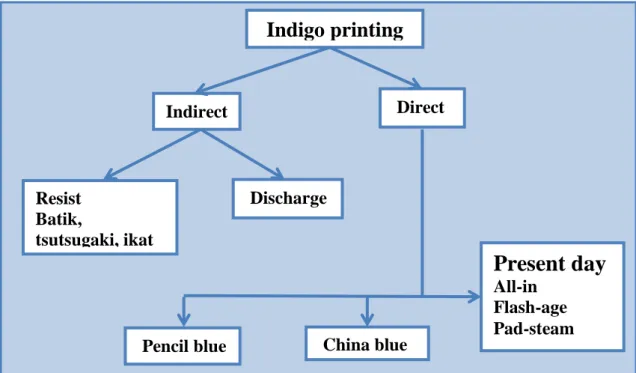
Figure 2.6 Various types of indigo printing ... 35
Figure 2.7 Schematic diagram of AAS... 38
Figure 2.8 Schematic diagram of ATR – FTIR ... 39
Figure 3.1 Padding mangle geometry ... 43
Figure 3.2 Laboratory scale steamer ... 44
Figure 3.3 Perkin Elmer Spectrum 400 FTIR ... 45
Figure 3.4 Varian AA 280 FS (AAS) ... 45
Figure 3.5 Mordanting and dyeing combinations... 48
Figure 3.6 Reflectance curves of cotton fabrics dyed with A. catechu ... 51
Figure 3.7 Reflectance curves of cotton fabrics dyed with A. nilotica ... 51
Figure 3.8 Schematic of metal complex formation ... 52
Figure 3.9 Equatorially coordinated copper with cellulose ... 52
Figure 3.10 FTIR spectra of dyes ... 54
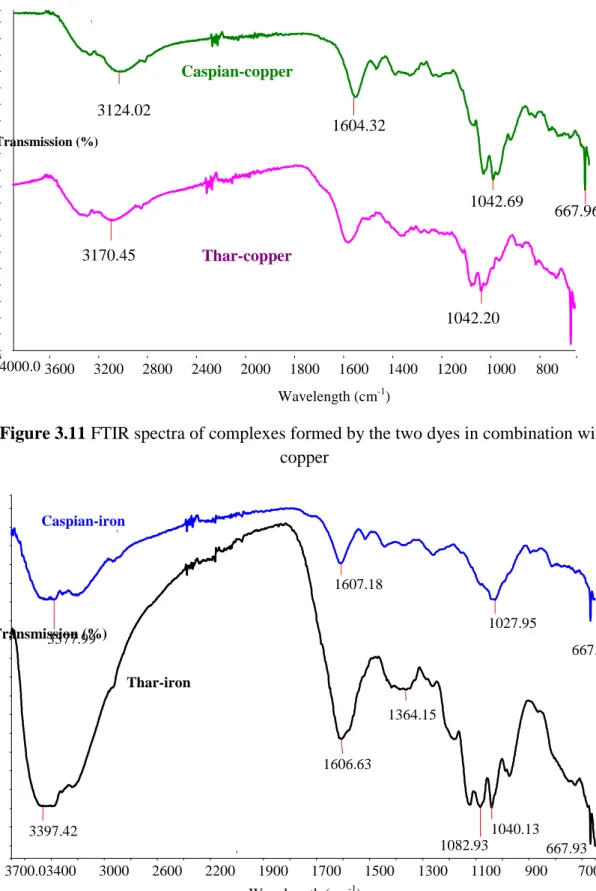
Figure 3.11 FTIR spectra of complexes formed by the two dyes in combination with copper ... 55
Figure 3.12 FTIR spectra of complexes formed by the two dyes in combination with iron ... 55
Figure 3.13 FTIR spectra of cotton fabric dyed in combination with copper as mordant ... 56
Figure 3.14 FTIR spectra of cotton fabric dyed in combination with iron as mordant .. 57
Figure 3.15 Comparison of colour strength (A. catechu) padded on cotton ... 60
Figure 3.16 Comparison of colour strength (A. nilotica) padded on cotton ... 61
Figure 3.17 Calibration curve for AAS ... 61
Figure 4.1 Schematic representation of plasma ... 67
Figure 4.2 APC 2000 atmospheric plasma treatment system ... 70
Figure 4.3 APC 2000 side view showing position of electrodes ... 70
Figure 4.4 Schematic sample set-up for plasma treatment ... 71
Figure 4.5 Effect of plasma gas on depth of shade... 74
Figure 4.6 Effect of plasma gas on depth of shade... 74
Figure 4.7 Effect of plasma gas on depth of shade... 75
Figure 4.8 Effect of plasma gas on depth of shade... 75
Figure 4.9 Effect of varying the plasma parameters on padding Caspian dye on wool fabric ... 76
Figure 4.10 Effect of varying the plasma parameters on padding Thar dye on wool fabric ... 76
Figure 4.11 One-step patterning ... 78
Figure 5.1 Schematic structure of chitosan ... 81
Figure 5.2 Line diagram of pad dyeing in the presence of chitosan ... 84
Figure 5.3 Reflectance curve for Caspian ... 85
Figure 5.4 Reflectance curve for Thar ... 85
Figure 5.5 Shade card for Thar dye ... 86
Figure 5.6 Shade card for Caspian dye ... 87
Figure 5.7 Comparison of sum of the K/S values for Caspian dye ... 87
Figure 5.8 Comparison of sum of the K/S values for Thar dye ... 88
Figure 5.9 Bacterial growth on agar plates for Thar (A) and Caspian (B) dyes ... 90
Figure 5.10 Agar plates control (A) and fabric dyed with Thar and 0.05% chitosan (B) ... 91
Figure 6.1 K-Bar hand coater ... 95
Figure 6.2 Modified vat pad-dyeing process ... 97
Figure 6.3 Schematic process sequence diagram ... 101
Figure 6.4 Comparison between exhaust dyeing and padding – natural indigo ... 102
Figure 6.5 Comparison between exhaust dyeing and padding – synthetic indigo ... 103
Figure 6.7 Effect of steaming duration on colour strength (reduced in Bath A) ... 105
Figure 6.8 Effect of steaming duration on colour strength (reduced in Bath B) ... 105
Figure 6.9 Reflectance curves natural indigo (Bath A 90 s and Bath B 6 min) ... 107
Figure 6.10 Printed indigo reduced using Bath A (TUD + caustic soda) ... 109
Figure 6.11 Reflectance curves comparing print shades from synthetic and natural indigo reduced using Bath A ... 109
List of tables
Table 1.1 Typical shades of natural dyes ... 9
Table 1.2 Continuous dyeing vs. batch dyeing... 15
Table 2.1 Fabric specifications ... 29
Table 2.2 Chemicals used and their suppliers ... 32
Table 3.1 Pad liquor (dye) recipe ... 47
Table 3.2 Atomic mass of elements present in mordants ... 50
Table 3.3 Calculation to determine maximum mass of metal applied on 0.2 g of fabric ... 50
Table 3.4 FTIR band assignment... 54
Table 3.5 Typical K/S values at 440 nm for dyed cotton fabric ... 58
Table 3.6 K/S values at 440 nm for cotton fabric padded with different mordant concentrations ... 59
Table 3.7 Metal retained (mg) measured using AAS ... 62
Table 3.8 Comparison of dyeing process consumables (10 g fabric sample) ... 63
Table 3.9 Fastness testing results for pad-dyed cotton ... 63
Table 4.1 Plasma treatment vs. traditional wet processing ... 68
Table 4.2 Mordant concentration and sequence for padding with 10 g/l dye ... 72
Table 4.3 Wicking test results ... 73
Table 4.4 Fastness properties of wool dyed after plasma treatment ... 78
Table 5.1 Padding liquor recipe incorporating chitosan ... 83
Table 5.2 Fastness ratings of cotton fabric dyed with Acacia dye and 0.05% chitosan . 89 Table 5.3 Antimicrobial testing results ... 91
Table 6.1 Indigo exhaust dyeing recipe ... 96
Table 6.2 Pad liquor recipe ... 98
Table 6.3 Constitution of reducing chemical pad baths ... 98
Table 6.4 Print paste recipe for indigo ... 100
Table 6.5 Comparative colour strength that demonstrates effect of steaming time ... 104
Table 6.6 Fastness testing results (dyeing) ... 108
Abstract
This thesis presents the findings from investigations into adapting the pad-dyeing process for dyeing cotton and wool using natural dyes. The aim was to apply traditional dyes employing current and emerging technologies of textile colouration. The scope of this research was to add to the knowledge regarding continuous dyeing methods for natural dyes with an ultimate goal of large-scale sustainable colouration.
The growing niche market for sustainable products is prompting the reintroduction of natural dyes on a commercial scale. However, the dominance of synthetic dyes for the past 150 years has stifled in-depth studies on industrial-scale use of natural dyes. Hobbyists and craftspeople, a minority, who continue to use natural dyes for textile colouration, adhere primarily to the conventional home-scale exhaust dyeing method. Such methods are not readily compatible with commercial application methods. Hence, this work was undertaken to explore the continuous dyeing method of padding for the application of natural dyes.
Two prominent classes of natural dyes namely mordant dyes (represented by dyes derived from Acacia catechu and Acacia nilotica) and vat dyes (Indigofera tinctoria) were evaluated.
The work on mordant dyes focused on determining optimal process parameters such as padding sequence, mordanting method and mordant concentration. Copper (II) sulfate and iron (II) sulfate, two widely used mordants, were employed in the research. Among the three possible mordanting methods, post-mordanting was found to yield the darkest shades for both mordants. A process sequence of pad (dye) → dry → steam followed
by pad (mordant) → steam → dry resulted in the deepest shades when copper (II)
sulfate was the mordant, while for iron (II) sulfate it was pad (dye) → steam → dry followed by pad (mordant) → steam → dry. A distinct shade of beige was obtained on mordanting with copper (II) sulfate while iron (II) sulfate yielded a yellow-grey shade. Ideal mordant concentration required for a 10 g/l dye concentration was either 15 g/l copper (II) sulfate or 5 g/l iron (II) sulfate. These concentrations were lower than those recommended for both exhaust dyeing (5% on the weight of material) and padding (60
g/l) as reported in the literature. The results reported above were similar for both mordant dyes (Acacia catechu and Acacia nilotica).
In order to gain a better understanding of the functioning of mordant in the dyeing process, the dyes, mordants and dyed fabrics were analysed using Atomic Absorption Spectroscopy (AAS) and Fourier Transform Infra-Red (FTIR) spectroscopy. AAS revealed the absorption of a significantly higher amount of metal by the dyed fabric as compared to a mordanted fabric. This confirmed the formation of a dye-metal-textile complex during dyeing. The FTIR spectra were distinctly different for the dyes derived from Acacia catechu and Acacia nilotica. However, when the dyed samples, coloured using the above dyes in combination with the same mordant, were analysed, the
differences between the spectra diminished. This indicated that metal plays a major role in defining the bonds created during dye-metal-textile complex formation. This may be the reason for the similarity in shades observed for the dyes evaluated.
Improvement to the optimised padding process was achieved by employing
atmospheric pressure plasma pretreatment of the textile, or including chitosan in the pad liquor. Pure helium and a 95/5 helium/nitrogen mixture were evaluated as the plasma gas. Irrespective of the gas used or the duration of treatment, exposure to
plasma improved the wettability of wool fabric. Wool treated in pure helium plasma for 14 seconds exhibited an increase of 30% in the depth of shade as compared to an untreated fabric, both pad-dyed with 10 g/l dye solution. A tone-on-tone pattern was created in a single padding operation by selective pretreatment of the fabric.
Incorporation of 0.05% chitosan in the pad liquor for cotton resulted in a 20% darker shade and imparted antimicrobial properties to the dyed fabric. However addition of an excess quantity of chitosan inhibited dye uptake by the fabric.
Indigo was applied, at a concentration of 16 g/l, on cotton by the vat dyeing process of
pad (dye) → dry → pad (reducing chemicals) → steam. Sodium dithionite and sodium
hydroxide, the common reducing agent and alkali employed in the exhaust dyeing of indigo, were replaced by thiourea dioxide (TUD) and sodium carbonate respectively. The advantage of TUD is its thermal stability in comparison to sodium dithionite. This made the dyeing process easy to control and avoided the effluent problems associated
with sodium dithionite. Sodium carbonate, being a milder alkali than sodium hydroxide, poses reduced handling and disposal issues.
Experiments on colouration with indigo were conducted in two stages. First, the alternate reducing agent (TUD) was used in combination with sodium hydroxide to reduce the indigo. In the next stage, both reducing agent and alkali were replaced. The shade obtained in both cases was equivalent to that obtained by exhaust dyeing of a 1.5% shade of indigo. When TUD was used in the presence of sodium hydroxide, a steaming time of 90 seconds was sufficient to reduce the natural indigo and produce the darkest shade. However, when the alkali was also substituted, a prolonged steaming of up to 6 minutes was necessary. This increase may be due to the higher reaction energy requirements for sodium carbonate as compared to sodium hydroxide. A comparison between samples dyed using natural and synthetic indigo by the alternative chemicals indicated that the former produced a darker shade. This may be due to the higher reactivity of the less crystalline natural indigo.
Similar experiments were conducted on ‘table strike-off’ trials using a K-Bar hand coater that simulated screen printing. Cotton fabric printed with an indigo-containing paste was dried. The dried fabric was padded in a reducing bath containing either TUD and sodium hydroxide or TUD and sodium carbonate and then steamed for durations equal to that followed for dyeing. The results differed in that an equivalent shade was not obtained, neither between natural and synthetic indigo nor between the two alkalis. Overall, the darkest shade was produced by synthetic indigo reduced in the presence of sodium hydroxide. Natural indigo yielded a shade 20% lighter than synthetic indigo. The discrepancy in results between printing and dyeing may be attributed to the interference by the print paste thickener on the diffusion of the reduced indigo into the fabric.
The outcome of the research is a clear indication that natural dyes can be used in conjunction with current continuous dyeing practices. The reaction between natural dye, mordant and textile is unique and optimum combinations have to be determined in each case. The role of the mordant is critical in regards to the final shade and, as seen in this investigation; similar shades may be obtained from dyes derived from different plants. Judicial use of plasma treatment and chitosan can produce darker shades for a
given amount of dye, leading to a cleaner production process. Any consequent benefit opens additional markets for the dyed materials. Colouration with indigo by the vat dyeing method and the use of alternate reduction chemicals increases process control while lowering the impact on the environment.
Research output from this thesis work
Publications
1. Ratnapandian, S., Islam, S., Fergusson, S. M., Wang, L. and Padhye. R., “Colouration of cotton by combining natural colorants and bio-polysaccharide,” The Journal of the Textile Institute, DOI:10.1080/00405000.2013.797143, 2013.
2. Ratnapandian, S., Fergusson, S. M. and Wang, L., “Application of Acacia natural dyes on cotton by pad dyeing,” Fibers and Polymers, vol. 13 (2), pp. 206–11, 2012.
3. Ratnapandian, S., Fergusson, S. M., Wang, L. and Naebe, M., “Effect of atmospheric plasma on pad-dyeing natural dyes on wool,” Journal of Fiber Bioengineering and Informatics, vol. 4 (3), pp. 267–76, 2011.
4. Ratnapandian, S., Fergusson, S., Wang, L., and Padhye, R., Chapter 4 Indigo Colouration, in “Dyeing: Processes, Techniques and Applications”, Nova Science Publishers, Inc. (in production),2013.
Conference papers
1. Ratnapandian, S., Fergusson, S. M., Wang, L. and Padhye, R., “An innovative approach to indigo dyeing,” presented at TBIS conference, Shinshu University, Ueda, Japan, 2012.
2. Ratnapandian, S., Fergusson, S. M., Wang, L. and Padhye, R., “Sustainable
developments in printing cotton fabric with indigo,” presented at 88th Textile institute world conference, Shah Alam, Malaysia 2012.
3. Islam, S., Ratnapandian, S., Padhye, R., Wang, L., and Arnold, L., “Sustainable colouration of cotton fabrics utilizing chitosan and natural dyes,” presented at APSCEET 2011 (8th Asia-Pacific conference on sustainable energy& environmental technologies), Adelaide, 2011.
4. Ratnapandian, S., Fergusson, S. M., Wang, L. and Naebe, M., “Effect of atmospheric plasma on pad-dyeing natural dyes on wool,” presented at TBIS conference, Beijing, China 2011.
1
Chapter 1
1.1
Introduction
Humanity has progressed from the stone age to the information age and is now making deep inroads into the environment age [1]. This is characterised by increasing
awareness regarding the effect of human interaction, both short and long term, with the environment. The extrapolated detrimental effect has evoked the need to conserve and protect our fragile environment. The growing public awareness has been expressed through an expanding premium market for goods and services that carry ‘natural’ or ‘eco-safe’ or ‘green’ or similar labels [2, 3]. Extensive research and development in science and technology are underway in order to satisfy this need. This provides an excellent focus point for the textile industry.
The textile colouration sector uses dyes (colouring matter), chemicals (whose reaction ensures the colouring of textiles) and auxiliaries (chemicals that promote colouration) in addition to consuming large quantities of water. Unfixed dye, spent chemicals and auxiliaries and water not picked up by the fibre material are collectively discharged at the end of colouration as effluent. Marine life would be adversely affected if these effluents, usually coloured, were discharged without treatment into the water body [4]. Further, such effluents affect riverbeds, soil and crops [5, 6]. This intimate relationship with the environment offers textile colouration the maximum scope for capitalising on the eco-conservation trend [7, 8].
Several authors [9-12] summarize the efforts of the colouration industry in embracing eco-conservation as:
1) reducing the quantity of consumables by increasing process efficiency and reclaiming and reusing resources such as chemicals, water and energy 2) using materials and processes with a lower environmental impact; and
3) increasing the use of renewable resources such as natural fibres (silk, cotton and wool) and natural dyes.
This thesis contributes to the above effort by investigating the application of natural dyes employing the pad-dyeing process on cotton and wool. A comprehensive approach was adopted by evaluating either the use of plasma pre-treatment or the inclusion of chitosan for improving dye uptake during padding. On another front, the use of
comparatively benign auxiliaries was studied. In order to understand the scope of this research, a brief introduction to textile colouration is given below.
1.2
Textile colouration
The primary objective of colour in textiles is enhancing aesthetic appeal. In addition, colour serves diverse purposes such as identification (uniforms), warning (safety and survival vests) and mark of status (religious robes). It even marks stages of life (white wedding gowns and bereavement black, in many Western cultures) [13]. Hence, textile colouration is of great importance and has developed into an art and science [11, 14, 15]. Most textile materials acquire the desired colour(s) by the application of
appropriate dyes.
1.2.1
Dyes
Dyes are complex chemicals that are absorbed by and react with suitable substrates to yield a coloured product. There are two broad dye categories based on origin, namely natural dyes and synthetic dyes. Burdett [16] credits J. W. Slater with publishing the first book in 1870 that provided comprehensive data on dyes and pigments used in textile colouration. This collection of data has gone through various stages and finally emerged as the globally recognised Colour Index (CI) published jointly by the Society of Dyers and Colourists (SDC) and American Association of Textile Chemists and Colorists (AATCC). The index scientifically classifies the wide variety of dyes based on chemical structure, colour, application methods, fastness properties, manufacturer, synthesis route and date invented [12]. Fastness properties refer to the resistance to fading of a coloured textile on exposure to different environmental conditions during its normal usable life.
1.2.1.1 Synthetic dyes
Present day industrial dyes are termed synthetic dyes because they are synthesised or manufactured to specifications. Raw materials used are generally petroleum derivatives. A wide range of low-cost dyes, whose properties can be modified as needed, are
produced by this US$16.2 billion global industry [17]. The standardized manufacturing processes make the application methods and dyeing results repeatable and consistent [14, 15]. Consequently, high performance standards and appropriate evaluation
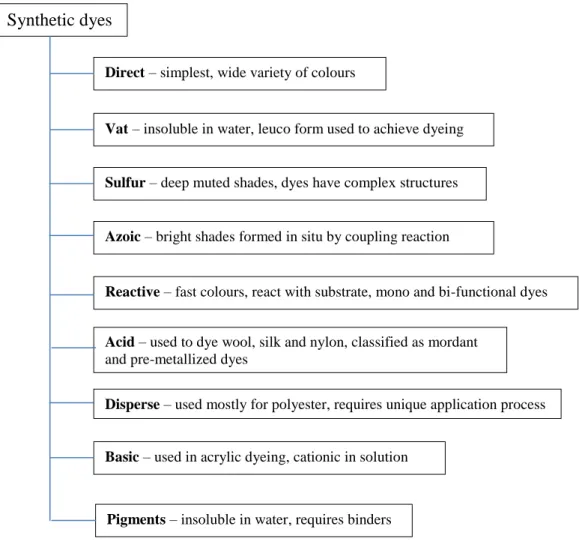
techniques have been developed for dyed products [18, 19]. The various synthetic dye classes shown in Figure 1.1 are briefly described below.
Figure 1.1 Classification of synthetic dyes
Direct dyes
These are relatively cheap and easy to apply. They provide a wide range of colours primarily for dyeing cotton. Starting from Congo Red (CI Direct Red 29), the first
direct dye, these dyes can colour cotton directly from a dye-bath containing sodium
chloride without the assistance of a mordant [20]. Mordant, a metallic salt, was
considered essential for dyeing cotton using natural dyes [21]. This class of dye is sub-divided based on chromophore, fastness properties and application methods. The main drawback of these dyes is their moderate wet fastness.
Vat dyes
Synthetic dyes
Direct – simplest, wide variety of colours
Azoic – bright shades formed in situ by coupling reaction
Vat – insoluble in water, leuco form used to achieve dyeing
Acid – used to dye wool, silk and nylon, classified as mordant
and pre-metallized dyes
Reactive – fast colours, react with substrate, mono and bi-functional dyes
Disperse – used mostly for polyester, requires unique application process
Basic – used in acrylic dyeing, cationic in solution
Sulfur – deep muted shades, dyes have complex structures
These dyes are usually insoluble in water. The typical presence of two carbonyl (C=O) groups permits the formation of a corresponding soluble leuco-compound by reduction under alkaline conditions. Cotton can be dyed under these conditions and in the
subsequent oxidation step the dye is regenerated inside the fibre. This results in high light and wash fastness [11].
Sulfur dyes
These have complex structures obtained by the thionation of various aromatic
intermediaries. Deep, muted shades with good wet fastness and moderate to good light fastness can be obtained using sulfur dyes. The Colour Index identifies different classes of sulfur dyes based on their solubility [11].
Azoic dyes
These are dyes formed in situ in the fibre by the interaction of a diazonium compound with a coupling compound. Bright shades especially in the orange-scarlet-red regions can be obtained by the use of these dyes [12].
Reactive dyes
These dyes are formed by either Michael’s addition reaction involving vinyl sulfone groups or nucleophilic substitution reaction of halogen-o-heterocyclic groups [22]. If only one reactive group is present the dye is a mono-functional reactive dye, and if two groups are evident, then it becomes a bi-functional reactive dye. A bi-functional dye having two similar reactive groups is homo-bi-functional and if they are different then it is hetero-bi-functional. Dye hydrolysis, that is, the reduction in dye effectiveness by its reaction with water, a major drawback of reactive dyes, is minimized in the bi-functional class. These dyes react with the fibre, resulting in high substantivity [14].
Acid dyes
These are dyes primarily used to colour nylon, wool and silk under acidic conditions. The low number of reaction sites in nylon results in a poor colour yield. This is rectified by the formation of metal-complexes by mordanting, which is the application of
metallic salts in a separate step or by using metallized dyes. In the case of pre-metallized dyes, the metal is incorporated in the dye molecule during manufacture. Depending on the number of dye molecules attached to a metal atom, they are classed
as 1:1 or 1:2 metal complex dyes. The dyes exhibit high saturation values, compatibility in mixed shades and good light and wet fastness properties [23].
Disperse dyes
These non-ionic, insoluble or sparingly soluble dyes are applied to hydrophobic fibres, generally from an aqueous dispersion. They are used primarily to dye polyester, although they have been used for other fibres as well [24]. Dyeing is usually followed by a reduction-clear to prevent staining from the unfixed dye. Some unique methods are used for the application of disperse dyes.
Basic dyes
These dyes are special in that they form coloured cations in solution. They are used particularly to dye acrylic and paper. Their variable migration properties necessitate the use of special auxiliaries during dyeing [11].
Pigments
These are colouring matter that is insoluble in water with minimal or zero affinity to textile materials. Special techniques are used to print pigments onto textiles [25].
1.2.1.2 Natural dyes
The name natural dye applies to all colouring matter derived from natural sources, such as plants, animals and minerals. The use of natural dyes has been recorded across the globe since ancient times [10, 26]. They were the only dyes available and used until 1856 when Sir W. H. Perkin discovered the first synthetic dye “mauviene”, a basic dye [27].
The extraction process for natural dyes, although time-consuming and laborious, is fairly straightforward and involves no applied chemistry. The dyes are mostly derived from flora and fauna. This organic origin makes them readily susceptible to climatic changes and other natural variations. The result is either a) the textile acquires a unique shade for every batch or b) consistent and repeatable shades can be produced with difficulty only by a skilled and knowledgeable dyer. Similar to the multitude of colours present in nature, a wide variety of colours can be obtained using these dyes. Dye classification, which began on simple alphabetical order, is now in line with the
directives of the Colour Index and is based on the parameters of structure, origin, application method and colour [10, 21, 28].
Natural dyes are broadly classified as adjective and substantive dyes based on their inherent affinity for textiles. Substantive dyes possess a high affinity for textiles. They may be classified as belonging to vat, acid, direct and pigment classes [21, 29].
However, a large number of natural dyes have low affinity and require the use of a mordant to fix the dye to textiles and hence are known as mordant or adjective dyes [30]. The word ‘mordant’ is derived from Latin mordere meaning ‘to bite’ because mordants were believed to eat away the surface or open up the pores in a fibre and thus facilitate dye absorption [31]. Mordants are now identified as chemicals that react with fibre and/or dye and thereby are able to fix the dye [28, 31]. The three broad classes of mordants are single or bi-metallic salts, tannins and oil mordants [29].
Most natural dyes form metal complexes with mordants and, according to the metal involved, each complex has a distinct shade [32-34]. This gives the monogenetic and
polygenetic classification of natural dyes. As the names suggest, the first type of dyes
yields only one shade while the second yields different colours according to the mordant employed [21]. Naturally occurring aluminium, copper, potassium and iron salts were the traditionally used mordants and are employed even today. Their quality, in terms of purity, affects the richness and durability of the shades obtained [28]. Purer salts and other metals such as tin and chromium were introduced with advancements in chemistry [35]. Health and environmental hazards posed by incorrect handling of some of these salts, chromium salts in particular have been identified. Hence, at present the most widely used metal salt mordants are aluminium sulfate, potash-aluminium sulfate, stannous (tin) chloride, copper (II) sulfate and iron (II) sulfate. At times, tannin-metal complexes and oil-metal complexes serve as mordants for other natural dyes [36]. In general, the presence of metal increases the fastness property of the dyed material by mechanisms such as dye aggregation (lake formation) and absorption of free-radicals [37].
The process of applying mordants or mordanting is classified into the following three types [30, 31]:
a) Pre-mordanting is where the textile material is first treated with the mordant
and helps in absorption of the dye liquor. Printing with different mordants and then dyeing with a polygenetic dye to obtain a multicoloured pattern is an application of this method. The disadvantage of pre-mordanting is that prolonged storage can damage the textile if the metal salt is corrosive. In addition, the mordant can leach into the dye bath resulting in colour variations.
b) Meta mordanting involves a dye bath containing both dye and mordant. The
fabric is dyed in one step. The major disadvantage is that the aggregation of dye-mordant complex in the dye bath interferes with the dyeing process. The large complex cannot be easily absorbed by the substrate resulting in uneven dyeing.
c) Post mordanting is a popular method for leather colouration. The mordant is
applied after the dye has been applied. This method yields deeper penetration of the dye and a level shade. Prolonged storage of dyed fabric prior to mordanting has to be avoided in order to minimise loss of colour by fading or rubbing. Although the function of a mordant is clear, the exact mechanism involved is difficult to identify [28]. The complexity of dye molecules hinders intimate understanding of the binding mechanism between dye and substrate or the precise role of the mordant in fixing the dye. Hence there is ongoing research in this area in terms of determining the optimum amount of mordant required and developing a theory that explains the precise role of the mordant.
Table 1.1 lists some typical colours obtained using natural colours and their plant sources. Plants yield the maximum variety of natural dyes. The dye can be derived from leaves, flowers, seeds, roots and bark. In certain instances, each of these parts of the same plant yield different colours [38, 39]. Other sources of natural dyes are naturally occurring metal salts termed mineral colours. Some examples are chrome-yellow, iron buff and mineral khaki. Tyrian purple is a well known colour obtained from shell-fish (Murex brandaris) while cochineal is obtained from insects (Dactylopius coccus). Lichen and fungi can also yield dyes but their slow rate of growth severely limits any commercial exploitation. Some of the important chemical groups present in natural dyes are given in Figure 1.2 [40].
Table 1.1 Typical shades of natural dyes
Shade Source Chemical group
Blue Indigofera tinctoria indigo Red Caesalpinia sappan anthocyanin Yellow Bougainvillea glabra flavonoid Green Urtica diacia chlorophyll Black Haematoxylum
campechianum tannins (Prorobinetidin &
profisetininidin) Brown Acacia catechu
Orange Bixa orellana carotenoid
Figure 1.2 Typical chemical groups of natural dyes
Indigoid dyes
These are the blue dyes, especially indigo, derived primarily from the indigofera, isatis and polygonum species [13, 28]. Tyrian purple extracted from murex species of
Indigo Anthocyanidin
Betacarotene
Prorobinetinidin
molluscs is another noted member of this group. These were the first vat dyes and are characterised by the two carbonyl (C=O) groups. The conversion to leuco-form was traditionally brought about by lengthy and inconsistent fermentation [10, 28, 29, 41-43].
Flavonoids
These are the largest group of natural dyes which are prominently yellow in colour. Luteolin is the primary colourant in these dyes. Weld, sawwort and fustic are some of the well known examples from this group. The fastness to light is typically poor as is evident from the fading of old tapestries [10].
Anthocyanins
These are water soluble flavonoids responsible for the red and blue colours of flowers and fruits. The colours are sensitive to pH and light. Their use as watercolours is well established [44]. In the case of anthocyanidins the glycosides of the anthocyanins are replaced by hydroxyl groups. Logwood is an excellent example of this class of dyes.
Carotenoids
These colourants are named carotenoids because they were initially isolated from carrots. Other common sources are tomatoes and sweet peppers while saffron and turmeric are exotic sources. A yellow to orange-red colour is obtained using these direct dyes [28].
Anthracenes
This class of dyes is extracted from plants (flowers, bark and roots), lichens and insects. The two main groups of this class are 1) anthraquinones with yellow, pink and red pigments [45]; and 2) napthoquinones with brown, pink or purple pigments [46]. Safflower, madder and cochineal are noted examples of this class of dyes.
Chlorophyll
This is the green pigment present in plants, algae and cyanobacteria that absorbs light energy during photosynthesis. Four types of chlorophyll have been identified although the commercial product is mainly made up of chlorophylls a and b. It is generally not
used for textile colouration because of difficulties in application and browning on exposure to light, resulting in poor light fastness [29].
Tannins
This is the term introduced by Seguin in 1790 to describe plant extractions that can convert raw hide to leather [47]. In addition, they have the character of astringency (a term used in leather manufacturing to describe the reactivity of the tannin for the hide) to touch and taste and the propensity to give a greenish or bluish-black hue in the presence of iron salts. In spite of substitution by minerals and synthetics, annual global production of plant tannins was estimated to be 1,800,000 tonnes in 2007 [28, 47]. Tannins are identified chemically as polyphenols and are broadly classed as hydrolysable (gallo-tannins and ellagi-tannins) and condensed (proanthocyanidins) tannins. Their common characteristic reaction with iron salts is utilised for the manufacture of iron-gall inks. Galling or sumaching is a textile application of this reaction, wherein the tannin serves as a mordant. At times they serve the dual purpose of mordant and colourant due to their close association with some of the other
colouring groups such as flavonoids and quinones [28, 47].
Limitations of natural dyes
Some typical limitations of natural dyes are inadequate availability and low colour yield and efficiency during both cultivation and dyeing [32, 39, 48]. Their unsuitability for colouring synthetic and synthetic-blended fabrics is another drawback. A widely accepted disadvantage is their poor performance as regards to desirable properties when compared to most synthetic dyes [30, 49]. The most significant shortcoming is their inherent variation, introduced by changes in growing and or harvesting conditions. Unlike synthetic dyes, most natural dyes are usually made up of more than one compound. The type of compounds present and their interaction (among themselves and the substrate) result in unique shades. A skilled dyer can utilise these same drawbacks to create specialty products for niche markets.
1.2.2
Fabric colouration
Colour can be introduced into textile materials at all stages such as fibre, yarn, fabric and garment. However, fabric colouration is the most popular and involves a wide variety of machines and methods. Dyeing and printing are the broad classifications of fabric colouration, as depicted in Figure 1.3. A simplistic description of dyeing is that the fabric acquires a single colour uniformly throughout. Similarly, printing may be defined as a process where one or more colours are applied in a desired pattern on the fabric [11, 12]. Dyeing and printing are described further in the following paragraphs.
Figure 1.3 Fabric colouration methods [11, 12, 50]
1.2.2.1 Batch dyeing
This is an intermittent method used for dyeing short lengths of fabrics. It involves bringing together the fabric and dyes, which are partially or wholly dissolved in a transfer medium, usually water, so that the colour can be absorbed by the fabric. The dye is adsorbed on the fabric (fibre) surface and ideally diffuses (or is absorbed) into the gross structure. Depending on the dye and constituent material of the fabric, the interaction may be either chemical or physical. The process is generally called exhaust
dyeing because it is usually conducted using dye liquor which is a dilute solution of
dyes in water. The ratio of material to liquor can range from 1:4 to 1:30, normally termed low-liquor to long-liquor dyeing [11, 12]. In order to facilitate the initial dye
Fabric colouration Printing Dyeing Batch-wise (exhaust) Continuous (padding) Liquor circulating Screen Roller Combined Material circulating Inkjet
adsorption and subsequent diffusion most exhaust dyeing processes follow a
temperature gradient. Accordingly, dyeing commences at ambient temperature. The temperature is increased gradually to the required value depending on the dye used and held there for the required time period, as shown in Figure 1.4. Based on the dye-material combination, ionic or covalent fixation of dyes may be facilitated by altering the dye bath pH during diffusion [12, 14].
Figure 1.4 Exhaust dyeing line diagram
A traditional practice followed to this day is that exhaust dyeing recipes give the amount of auxiliaries and dyes as a percentage of the mass of the material being dyed. The auxiliaries are added first to the dye bath and allowed to mix thoroughly to obtain uniform concentration in the fibre. This is followed by addition of the dyes, which are allowed to mix completely before increasing the dye bath temperature [14]. These measures are necessary to achieve uniform and level dyeing. In addition to level dyeing, the other desirable aims of dyeing are short dyeing times, shade reproducibility and maximum exhaustion so that a minimum of dye is discharged in the effluent. Several authors [11, 12, 50] consider that the rate of dye uptake (exhaustion) or dyeing rate depends on:
a) the chemical reactivity of the dye for the fibre b) physical properties of the dye
c) the type and construction of the fabric being dyed d) dye concentration
e) liquor ratio f) temperature
Time Diffusion and fixation Adsorption
T
empera
g) auxiliaries used; and
h) interchange of dye between liquor and fibre (fabric).
The process of dyeing is recognised as complete on reaching equilibrium, wherein there is no significant change in the final concentration of dye in the bath or on the fabric. Samples are now drawn for comparison against standards and corrections made as required.
In order to achieve short dyeing cycles and thereby higher production, most modern dyeing equipment is enclosed ensuring uniform dye bath temperature with minimum variations. Pressurisation of the equipment allows dyeing at elevated temperatures of up to 130○C. Circulating liquor and circulating goods (materials) are the two classes of exhaust dyeing machines [12].
Circulating liquor machines
The fabric is wound onto a perforated beam and placed in the dyeing vessel. Dyeing is brought about by pumping dye liquor from the inside of the beam to the outside through the multiple layers of fabric. This ensures uniform contact between fabric and dye liquor [51]. Bi-directional pumping, periodically reversing the flow direction of the dye liquor, is used for yarn dyeing. Consistent packing density ensures level dyeing [52].
Circulating goods machines
Jiggers and winches are the traditional dyeing machines of this class. In the former, fabric is mounted in open width on a roller and guided back and forth through the dye bath. On a winch, the fabric is traversed in rope form through the dye bath. The lower fabric tension of winch dyeing favours its use for knitted and other delicate fabrics, while woven fabrics are mostly processed on jiggers. Pressurised jet dyeing machines are often used for lightweight fabrics because of shorter dyeing times and uniform dyeing. The liquor is injected into the fabric as it passes through the jet. The
combination of pressure and injection of liquor permits dyeing at a typical low liquor ratio of 1:8 and in some cases even 1:4 [52].
1.2.2.2 Continuous dyeing
This is a method for open-width dyeing of fabric lengths in excess of 10,000 metres in a single colour [11]. It generally involves the use of a production line system where machines of consecutive processes, which may include pre- and post-dyeing treatments, are arranged sequentially and operated in a synchronised manner. The process can also be utilized in a semi-continuous manner for shorter lengths. Fabric running speed controls the dwell time in each process although dwell may be modified by the use of ‘festoon’ type fabric transport [12, 52]. A material to liquor ratio of 1:1 or even 1:0.5 is an advantage of this method [53]. Some of the key features of batch and continuous dyeing are compared in Table 1.2 [52, 54].
Table 1.2 Continuous dyeing vs. batch dyeing [52]
Feature Continuous dyeing Batch dyeing
Shade uniformity High and reproducible
Batch-to-batch variation possible
Quality of dyeing Better Good
Crease defects Can be controlled Difficult to control Production High due to short
throughput time
Low due to long dyeing time
Labour requirements Less More
Process cost Less More
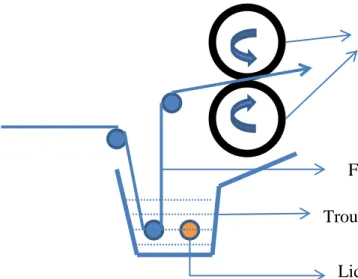
During continuous dyeing, the dye is applied by continuous immersion of fabric in a dye bath contained in a trough and removing excess liquor using squeeze rollers as shown in Figure 1.5 [11]. The position and number of squeeze rollers differ based on the model and manufacturer of the machine. The process in its entirety is termed
padding and the padding process is repeated to ensure that the fabric is thoroughly
wetted to obtain level dyeing. The amount of dye liquor retained by the fabric after squeezing is termed wet pick-up and is reported as a percentage of the dry weight of the fabric. Wet pick-up is primarily controlled by the pressure applied by the squeeze rollers. However, fabric construction and composition also influence wet pick-up. For example, the minimum wet pick-up of 60 – 70% for cotton cannot be reduced by increasing the pressure [11]. In general, lower pick-up minimises migration of dye liquor in the fabric and saves energy during drying. Alternate application methods of dye liquor are spraying and printing.
Figure 1.5 Schematic diagram of padding
With the exception of the pad-batch process, it is preferable to dry the fabric
immediately after padding to obtain uniform dye fixation. Non-contact driers using a hot-air stream or infra-red radiation are employed to avoid soiling of equipment and marks on the fabric. At this stage the dye is present on the fibre surface and needs to be integrated into the material during fixation by chemical reaction, aggregation, ionic interaction or solid solution. A variety of methods and conditions are available for fixation depending on the dye and substrate. Saturated steam at 100○C is employed for a majority of the dyes [11]. Roller type steamers are usually used for this steam fixation process. They are designed to provide an air-free environment with a cold water exit seal (usually called water-lock). Each commercial range of dyes requires an appropriate duration of steaming. The major padding-fixing combinations are described below.
Pad – batch
This simple process involves padding the fabric with a dye solution containing a suitable dye and auxiliaries and then winding up the padded fabric onto a suitable roller. For dye fixation, the fabric wound on the roller is left undisturbed without steaming for 6–24 hours at ambient temperature. This process is therefore often called ‘cold’ pad-batch dyeing. During fixing, the fabric roll should preferably be rotated at low speed to avoid drainage of the internal liquid. In order to minimise evaporation from the exposed surfaces and edges of the roll, the fabric roll is wrapped with a plastic film. Finally, the fabric is thoroughly washed to remove unfixed dye and residual
Squeeze rollers
Fabric
Trough with liquor Liquor inlet
chemicals [11, 55]. The pad-batch dyeing process is the most economical of all pad dyeing processes for the reactive dyeing of cotton. It is claimed that this process is more economical than exhaust dyeing, mainly due to minimal energy requirements [56].
Pad – dry – cure
Curing in dry heat for 60–120 seconds may be used to fix the dyes after padding. A curing temperature of 160○C helps the formation of crosslinks in the finishing of cotton. Urea as humectant and dilute alginate solution as anti-migrant are special components of the padding liquor for cotton. Urea retains sufficient water to serve as a fluid medium for dye diffusion while alginate helps to avoid shade variation between the face and back of the fabric or the two-sided effect [11, 56, 57].
Pad (dye) – dry – pad (chemical) – steam
This two-step process sequence is widely employed for continuous dyeing of cotton fabrics using vat dyes. The fabric is first padded in a neutral dye solution that contains additional humectants and anti-migrants and dried in a hot flue drier. After drying, the fabric is padded with a solution of auxiliaries and other chemicals followed by
steaming. The steam provides the necessary energy and additional moisture required to complete the dye-fibre reaction [11, 52]. Intermediate drying has been eliminated by employing super-heated steam and short steaming duration (flash-ageing), to make the process more efficient.
Drawbacks of continuous dyeing
Since the entire process is in open width, care has to be taken to avoid stretching of the fabric. Once processing has started, any machinery breakdown would cause significant fabric damage due to excessive dwell time [12]. Colour bleeding during chemical padding can cause shade variation. This is avoided by using a high concentration of electrolytes in the padding liquor. Urea removed during washing-off is a source of pollution because it can be a nutrient source for algae [11, 14].
1.2.2.3 Printing
A large number of methods exist for applying dyes by the printing technique of which
form of a print paste consisting of dyes, thickeners and auxiliaries. The print paste is applied by means of engraved rollers (roller printing) or flat/rotary screens (screen printing). After dye application, the printed fabrics are dried and steamed, similar to the processes used for padding depending on the dye-fabric combination. Each colour requires its own screen, thus making the printing range significantly long. Pigment printing uses binders to secure the pigment to the fabric surface. This is generally followed by a simple drying-curing step. Transfer printing involves sublimation of dye from a patterned paper onto the fabric [11, 12].
Inkjet printing produces patterns directly on the fabric by spraying the dye solution and is gaining popularity. Production speeds at 20–30 m/min are slow as compared to rotary screen printing but this is compensated for by the inherent flexibility and quick change characteristics. Soluble dyes are ideally suited for inkjet printing. Insoluble dyes especially disperse dyes have to be finely dispersed to avoid clogging of the inkjet nozzles [11].
1.2.2.4 Unconventional dyeing
Trials to replace water by super-critical carbon dioxide have been successful for different classes of dyes and substrates [58, 59]. Shishoo [60] has collated the output from investigations into the use of plasma technology in textiles aimed at application areas such as a) elimination of water and chemical based pre-treatments; b) enhancing dye uptake; and c) imparting functional finishes. Ultrasonics [61], microwave and sonicator [62, 63] have been used to assist in the dyeing process. Hot-air drying has been supplemented by the use of radio frequency (RF) [64] and infra-red (IR) [65] techniques.
1.2.2.5 Improving textile colouration
Considering the variety of dyes and dyeing methods available, there is ample scope for improving textile colouration to increase productivity, reduce waste, optimize process parameters, etc. This may include:
1) developing new dyes, dyeing machines and methods 2) reuse of resources such as water and energy
3) use of waste and by-products of textile and other industries; and 4) applying unconventional technologies as discussed above.
The above may be summed up as developing processes for producing darker shades with given amounts of dye [11, 12, 14, 15].
.
1.2.3
Fastness testing
Coloured textiles are exposed to various influencing factors that may cause
decomposition, sublimation, decolourisation or stripping (bleeding) of colour. Singly or in combination, these factors cause fading of the textile. Staining occurs when the colour is transferred to any adjacent textile during washing/rubbing. The most common degrading factors for coloured textiles are exposure to light, rubbing under dry and wet conditions and interaction with water as in perspiration, washing, chlorinated water and sea water during their useful life. Hence, in addition to producing level shades,
colouration must also yield materials possessing sufficient resistance or fastness to the above factors during the intended end-use [66].
Test methods and standards have been developed to evaluate coloured textile materials for the above and other possible degrading factors. Each country has its own standards organization; for example, Standards Australia put forth standards equivalent to universal standards developed by organizations such as the International Organization for Standardization (ISO). Countrywise standards take into account local conditions. It should be noted that acceptable performance levels are usually agreed on by the concerned parties (supplier and customer) and do not form part of the test method especially in the case of textiles [19].
1.3
Present scenario
The textile industry in general and textile colouration in particular are embracing the global ‘go-green’ movement. Sustainability is being promoted in all aspects of colouration [2, 3, 7]. This is reflected as consistent efforts towards obtaining desired results in terms of shade and fastness with a reduction in the quantity of consumables by optimizing the process. Another pathway being explored is reclaiming and reusing consumables from effluent. Substitution with consumables possessing a lower
environmental impact is an attractive development. In the above instances,
consumables include dyes, chemicals, auxiliaries, water, energy (usually heat) and at times even the textile substrate. These efforts have led to constant reports on
zero-discharge processing [67, 68]. For example, Levi Strauss has gone further by
encouraging recycling of denim and promoting efforts to reduce the amount of water required for washing during use [69].
In general, automation is gaining wide acceptance in the dye-house in order to minimise human error, especially in dyeing machine control and dye--dispensing operations. Integration of computer colour matching and recipe formulation has further reduced subjective errors and increased repeatability. Low-liquor and ultra-low-liquor machines are gaining popularity in batch-dyeing. These machines are pressurized to yield consistent results [52, 54]. Semi-continuous dyeing, that is continuous dyeing with intermediate storage, is gaining popularity for dyeing fabric lengths of 1000–5000 metres in view of the 1:1 liquor ratio possible [53].
The worldwide volume and variety of demand for colouring textiles is being met by a large range of synthetic dyes. With an annual growth of 3.9%, the market value for synthetic dyes is estimated to be US$16.2 billion distributed as shown in Figure 1.6 [17]. Synthetic dyes are manufactured using petroleum derivatives, for example
benzene, as raw material. The dwindling estimate of long-term availability of petroleum resources, and thereby its derivatives, is encouraging the search for renewable
alternatives [70]. With the advent of the environmental age, consumers have become aware of the environmental and health issues associated with some synthetic dyes [71]. Synthetic dyes identified as carcinogens have been banned or replaced. Effluents from dyeing process cause environmental hazards because some dyes and auxiliaries used are non-biodegradable, posing a great threat to marine life [4, 72]; hence they must be treated before discharge.
Figure 1.6 Distribution of global dye demand
Natural dyes are derived from renewable sources and hence it is commonly believed and claimed that they are biodegradable and non-polluting [73]. In some cases they also possess medicinal properties [74]. These features and a growing concern for the
environment have created a niche market for the industrial scale use of natural dyes [40, 75].
1.3.1
Research on natural dyes
The growing interest in industrial use of natural dyes has exposed a knowledge gap on how to use natural dyes in modern dyeing facilities. In the past 150 years, these natural dyes have been used for textile colouration in limited quantities. Their reduced use over a long period has resulted in:
loss of knowledge regarding extraction and application process due to absence of written records
extinction of some dye sources and non-identification of new sources slowing down of scientific research on natural dyes, leading to stagnation in
recipe development, modernisation and optimisation.
The new interest has brought about scientific investigations resulting in publications relating to dye sources, extraction and application methods, dye chemistry and
performance of natural dyes [30, 40]. The following sub-sections discuss some of these findings.
1.3.1.1 Sources and extraction
Several authors have collated a wide variety of plant sources for natural dyes across the world [28, 38, 39, 48, 76]. Mohanty et al. [77] report that more than 300 indigenous plant species have been identified in India as traditional dye sources. The plants range from undesirable weeds to those that can be cultivated. They also include rare and exotic species. Different parts of the plants such as leaves, flowers, bark, seed pods and roots may contain maximum amounts of colourant and in some cases yield different colours from each part [38, 39]. Apart from these, the use of byproducts and waste products such as wood chips and sawdust (timber industry), grape pomace (wine making) and olive pomace (oil extraction) as cheap dye sources has been reported [78, 79]. Developments in genetic engineering have been applied to make micro-organisms produce dyes as well [80-83].
Steeping, boiling or fermentation in water of plant material forms the most common dye extraction technique. The extract is purified by simple filtration, settling and evaporation to obtain the final dye in paste, cake, granule or powder form. This process reduces transportation cost of raw materials and also helps to standardise the final product. Bechtold [10] has suggested moving the dye houses near the extraction facilities to eliminate the evaporation step. Spray drying and super-critical carbon dioxide extraction are the new developments in this sector. Commercial quantities of some natural dyes are now available [84, 85].
1.3.1.2 Application techniques
The industrial use of natural dyes declined at a time when long-liquor exhaust dyeing and hand or simple mechanical printing methods were the only colouration techniques available. Such methods were laborious, time consuming and sometimes convoluted compared to present day colouration techniques [11]. Some traditional recipes and techniques that were passed down by word-of-mouth only were lost [13, 28].
Enthusiasts like Dyer [39], Flint [86] and Adrosko and Furry [48] have collated recipes from across the world, simplified them based on their personal experiences and
published books for use by other hobbyists. Interest groups conduct classes to
disseminate their knowledge as well. Numerous national and international conventions, seminars and symposiums are being conducted to popularise the natural-dyeing
concept. However, a common disclaimer among these protagonists is ‘These are my results. Your results will vary and you are welcome to try your own version.’ Researchers like Bechtold [10], Cardon [28], Chavan [87, 88] Gulrajani and Gupta [30] and Gulrajani [89] have approached these recipes in a scientific manner. Their efforts have been aimed at understanding the chemistry and then standardizing the dyes, assessing the relative merits of different dyes and evaluating the dyeing process.
Variations in the exhaust dyeing method have been addressed [28, 30, 90]. The use of modern machinery for this process has been investigated [91]. Non-conventional methods such as ultrasound, microwave and radio frequency dyeing have been used with natural dyes [62, 92, 93]. Padding using natural dyeing has been reported by only a few researchers [94, 95]. However, the padding parameters mentioned are not in proportion, warranting further investigation. Application of chitosan to improve the uptake of some natural dyes during exhaust dyeing has been studied [96, 97]. However, the large number and variety of natural dyes offer opportunities for continued research [49].
1.3.1.3 Performance of natural dyes
Natural dyes have been used to produce a variety of shades [10, 28, 98]. However, with exceptions such as indigo, cochineal and madder, most natural dyes cannot perform to the fastness standards set for synthetic dyes. There is a constant scientific effort to improve this deficiency. The role of mordants for increasing fastness ratings has been studied [37, 99, 100]. Certain natural dyes have been shown to impart antimicrobial activity and UV protection [101, 102]. Thus research on natural dyes provides scope for innovative developments.
1.3.1.4 Objections to natural dyes
Common resistance to change has been seen with the idea of reintroducing natural dyes to industrial use. The question of whether natural dyes can provide the desired variety of shades has been answered positively by several researchers [10, 28, 32, 98]. The limitations indicated are quantity and quality. Glover [103] expresses doubts about the
agricultural feasibility of replacing synthetic dyes with natural dyes. It should be noted that there is no move for complete replacement and natural dye consumption in Europe would probably constitute only 5% by volume of total dye consumed there. Research has revealed that this can be met by utilizing a small portion of non-agricultural semi-arable land in Europe [84, 104, 105]. Modern farming methods have made dye-crop cultivation a viable commercial proposition in some countries [84]. Queries regarding sustainability, safety and pollution with respect to natural dyes, for example the use and discharge of metal salts for mordanting, have to be considered [103]. The above
arguments bring out the knowledge gap mentioned earlier and highlight the need for research.
1.4
Research conducted in this thesis
Exhaust dyeing of natural dyes is traditional and has been adopted widely by hobbyists and craftspeople. Consequently, previous researchers have concentrated most of their efforts on regularising and improving this method [40, 94, 95, 106]. The rising commercial interest in the use of natural dyes encourages research into the use of continuous colouration methods. Hence, this research investigated the padding of natural dyes. Commercially available natural dyes in powder form and laboratory grade chemicals were used to standardise and further simplify the process.
The study was conducted in progressive stages to obtain answers to:
a) How mordants are to be used with the selected natural dyes during padding? b) What are the ideal padding parameters for a given dye concentration? c) What means of improving the dye uptake may be employed?
d) Whether there is a potential for additional benefits from such improvement techniques? and,
e) What is the feasibility of a colouring process that uses chemicals with a lower environmental impact as compared to current practices?
At every stage of experimentation the depth of shade was measured and desirable fastness properties were evaluated. Keeping in line with the objective of utilising renewable resources, cotton and wool were selected for use as the textile substrates. In summation, sustainability in industrial-scale use of natural dyes as measured by the lowering of resultant environmental impact was the focus of this thesis.
1.4.1
Chapter outline
Chapter 2 lays out the research methodology of this study. It discusses the design of the experiments and gives details of the materials used.
Chapter 3 describes the padding process and optimisation steps involved. Specialised evaluation techniques used to gain an intimate understanding of dyeing mechanism are detailed. The results obtained are discussed.
Chapter 4 describes investigations regarding atmospheric pressure plasma pretreatment to improve natural dye uptake. Innovative applications of utilising this technology are explored.
Chapter 5 reveals the results of studies on whether including chitosan in the pad liquor of natural dyes produces darker shades. The resultant antimicrobial characteristics are also analysed.
Chapter 6 outlines the investigations into dyeing with indigo dye by the padding process. The effectiveness of using chemicals with a lower environmental impact is presented. The use of these chemicals in printing has also been evakuated. Finally, a comparison is drawn between using these chemicals in combination with natural and synthetic indigo.
Chapter 7 gives the overall conclusions drawn considering the results of the study. Future research directions are outlined.
1.4.2 Expected outcomes and potential benefits
It is expected that a better understanding of the pad-dyeing mechanism for natural dyes will be acquired. The insight into a) how mordants help to fix the selected dyes; and b) the unique relationship between individual dye and mordant will aid in optimising the process parameters for the selected natural dyes. The process will be improved by integrating atmospheric-pressure plasma technology or byproducts (chitosan) to obtain darker shades. Such improvement methods are also expected to result in additional benefits. Indigo colouration by using chemicals with lower environmental impact and the vat dyeing process will increase the scope of the use of this dye. The findings in this thesis are likely to encourage industrial trials in the padding of natural dyes. In