Scratches Detection in Extruded
Aluminium Profiles Using Image
Processing
Hasan Al-Jabbouli, Ebubekir KoçFaculty of Engineering
Fatih Sultan Mehmet University, Istanbul, Turkey
Abstract— One of the exhausted and costly issues in extruded aluminium profiles production is the detection of scratches. Having scratches can be a big loss and wasting of time. Current methods for dealing with this problem are mostly restricted in terms of human ability, dangerous or can’t be applied during production process. This paper presents an automated solution for this problem using image processing techniques. Detection happens by applying a set of operations on the captured image of the produced aluminium profile and by using a defined criterion to take the final decision about the detection of any scratch. The proposed solution was experimentally tested and promising results were noted.
Keywords- Extruded aluminium profiles defects, Scratch detection, Image processing, Machine vision. I. INTRODUCTION
Demands for high-quality aluminium production are increasing regularly. In this field, the quality control of aluminium profiles surface is very important as it can justify high percentage of price premium of the final product. In the same time, scratches can go undetected for long time, sometimes forcing large amounts of profiles to be scrapped. Therefore it is very important to perform quality check in the early production phases. Aluminium ingots are rolled throw a special machine to produce the required extruded frames according to the required measurements and specifications. In this stage, and because of having some aluminium crumbs, some scratches might happen on product surface and it might extend for long distances along the produced item. The early detection of such defects can reduce production expenses and can solve an important problem that can affect anodising process which is the next processing step for extruded profiles.
Human inspection of aluminium profiles is tedious and can cause eye fatigue; it is also subject to sorting errors due to different judgments by different people. Several non-human methods were used to detect these types of scratches: Eddy currents sensor using a giant magneto resistive (GMR) was applied to detect defects in conducting materials [1]. A flat coil was used to produce an alternate magnetic field, which gives rise to eddy currents in the material under test. GMR sensor with the coil placed on top is moved over the surface of the metal plate using an XY table. The GMR output voltage depends on the width and the depth of the defects [1]. In addition of being dangerous technique because of the usage of electricity, it is very difficult to be applied on aluminium profiles during production process and these can be applied offline mostly. Scanning surface inspection systems using laser was also used so that reflected light off the surface is bounced and inspected [2]. The main disadvantage of this method its high cost compared to other methods. Also, it cannot detect shallow scratches and colours dissimilarities on aluminium profiles.
Machine vision (MV) [3] which is a promising approach was used also to detect defects in different disciplines including; Scratch detection in rolls of photo papers [4], apple surface defect detection [5]. MV was also used to detect pinhole defects in aluminium foils by applying linear contrast stretch and image binary segmentation on captured production line image, then analysing the light/dark pixels to identify any holes or defects [6]. Another MV based system was proposed by ISRA-PARSYTEC [7] to do inspection of aluminium ingot surface. This system detects cracks, oxidation points, holes and other defects, as well as poor grinding surface of aluminium ingots but is not used to detect scratches in profiles production. In next section, a new machine vision technique that is used to detect scratches in aluminium profiles will be introduced.
II. THE PROPOSED SOLUTION
Fig. 1. The proposed system architecture
Lighting which is very important in this domain should be continuous, environment independent and causing no reflation on aluminium surface. The camera should be of high contrast and high sharpness. To implement these hardware requirements, the proposed solution uses a normal florescent lighting lamp combined with an acceptable resolution, high contrast, high sharpness and acceptable frame rate (32 frames per second) camera of 50 MHz clock frequency and 2560x480 pixels.
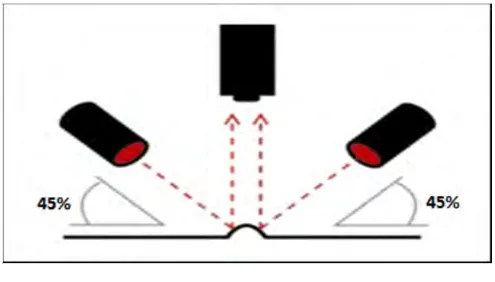
Fig. 2. Bright and dark field illumination(Martin 2007)
To avoid reflection on aluminium surface, which can affect the detection process, dark field lighting technique (Fig. 2.) was applied [8].
The proposed processing algorithm, which is the most important part of the system, consists of a number of units to process the captured images. These steps which are shown schematically in (Fig. 3.) are:
i. Converting the captured image from RGB values to grayscale, as colour is an irrelevant information for the proposed system. This happens usually by forming a weighted sum of the R, G, and B components, but this would be interpolation and is less effective for scratch detection because it decreased the brightness of scratches and the image contrast [9]. So red and blue pixel are only discarded while green which contains approximately 59% of the pixel’s luminance is treated as grey scale [4].
ii. Edges, including any noise are detected in ‘edge detection’ unit by applying ‘Sobel Filter’ [10]. This filter uses intensity values only in a 3*3 region around each pixel to approximate the corresponding image gradient. It uses only integer values for the coefficients which weigh the image intensities to produce the gradient approximation [11].
iii. Noise is eliminated and scratches are clarified by passing the image to the next two units which are ‘Noise reduction’ and ‘clarifying scratches’ units, where erosion [12] is applied to the image in the first unit and dilation [12] in the later one. Erosion and dilation are well known filters where the first one reduces all objects while the later increases them. Erosion is used to eliminate noise but not scratches then dilation is used to clarify these scratches.
iv. According to user-defined threshold which is used to filter scratches, the system alerts the user about having scratches or not.
surface. To solve this problem another camera can be placed on the bottom and two side mirrors on the two sides of the profile (left and right) can be placed.
Fig. 3. Processing steps
III. RESULTS AND DISCUSSION
As the speed of the system is important, the system will discard some frames and not all frames will be processed. If the camera acquires N frames per second, the system will process N/3 frames per seconds. As the speed of the aluminium profiles is not that fast (~10mm/s) compared to the speed of the camera. There is no need to store frames.
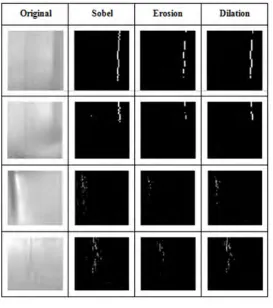
Fig. 4. Some test images and corresponding results
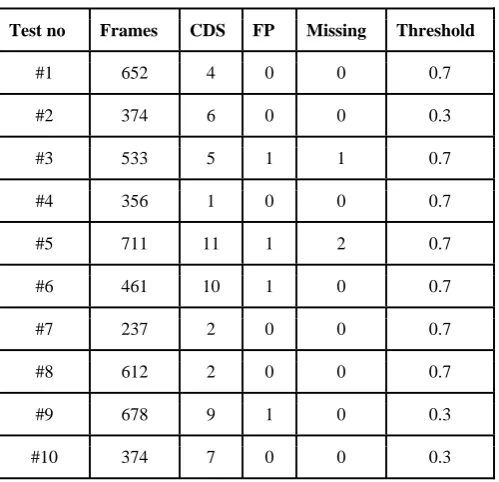
number of correctly detected scratches (CDS), the false positive results (FBs) and the number of missing scratched which were not detected by the system were noted. Experiments showed that the system achieved 89.06% of correct detection of scratches. Some images of these detected scratches can be seen in fig. 4.
TABLE I
Experimental Results (Scratch length was set to be: 3cm)
Test no Frames CDS FP Missing Threshold
#1 652 4 0 0 0.7
#2 374 6 0 0 0.3
#3 533 5 1 1 0.7
#4 356 1 0 0 0.7
#5 711 11 1 2 0.7
#6 461 10 1 0 0.7
#7 237 2 0 0 0.7
#8 612 2 0 0 0.7
#9 678 9 1 0 0.3
#10 374 7 0 0 0.3
The other issue to be considered is the number of false positives that can occur. When there is any interfere of an external light, an undesirable brightness on the surface of the profile can be happened, which will be seen as a scratch. The solution for that is simply to have more stability in the whole process by isolating the working environment from the outer light sources; this happened by creating a special box where the profiles can flow through. The proposed solution has some disadvantages which are:
i. The system is sometimes considering joint points, which are horizontal, as scratches; to avoid that from happening, the system can be configured to detect vertical scratches, which are the most occurred ones, only.
ii. The proposed system is sensitive to some user-defined parameters which can be adjusted according to processing environment and user needs.
IV. CONCLUSION
The paper explains a scratch detection system for extruded aluminium profiles. Tests for the proposed solution were applied using a number of scratches. Results show that the experimental system is practical and feasible, and that the proposed algorithm of scratch detection is effective. The proposed solution needs to be further enhanced to overcome user-defined parameters impact.
REFERENCES
[1] E. Ramirez-Pacheco, J. H. Espina-Hernandez, F. Caleyo, and J. M. Hallen, “Defect Detection in Aluminium with an Eddy Currents Sensor,” in 2010 IEEE Electronics, Robotics and Automotive Mechanics Conference, 2010, pp. 765–770.
[2] S. Son, H. Park, and K. H. Lee, “Automated laser scanning system for reverse engineering and inspection,” Int. J. Mach. Tools Manuf., vol. 42, no. 8, pp. 889–897, Jun. 2002.
[3] R. Jain, R. Kasturi, and B. G. Schunck, Machine vision, vol. 5. McGraw-Hill New York, 1995. [4] L. B. Saldanha, R. Hartmann, and C. Bobda, “Scratch detector–A FPGA based system for scratch
detection in industrial picture development,” Int. Symp. Ind. Embed. Syst., pp. 57–62, Jul. 2010. [5] Q. Li, M. Wang, and W. Gu, “Computer vision based system for apple surface defect detection,”
Comput. Electron. Agric., vol. 36, no. 2–3, pp. 215–223, Nov. 2002.
[6] X. Xiang, J. He, and S. Yang, “Pinhole defects detection of aluminum foil based on machine vision,” in
2009 9th International Conference on Electronic Measurement & Instruments, 2009, pp. 2–38–2–41. [7] A. Welfring, “World first for high-efficiency aluminium production: 100 % inspection of aluminium
[8] J. W. Gordon, “Dark Field Illumination,” J. R. Microsc. Soc., vol. 26, no. 2, pp. 157–160, Apr. 1906. [9] P. Raffy and F. Yassa, “Single-step conversion from RGB Bayer pattern to YUV 4: 2: 0 format,” US
Pat. 7,002,627, 2006.
[10] I. Sobel and G. Feldman, “A 3x3 isotropic gradient operator for image processing,” a talk Stanford Artif. Proj., 1968.
[11] W. Burger and M. J. Burge, Digital Image Processing. Springer, 2008, p. 564.
[12] A. C. Bovik, Handbook of Image and Video Processing. Orlando, FL, USA: Academic Press, 2010, p. 1384.