Original Research Article
Study of knowledge attitude and practice amongst interns, residents
and para-medical staff regarding transmission and prevention of
hepatitis-B of C. U. Shah Medical College and
Hospital, Surendranagar
Chaudhari Gopi Dineshbhai
1, Joshi Karshit Jitendrabhai
1*,
P. Kartha Girija
1, P. Chaudhari Nirmal
2INTRODUCTION
Hepatitis is an inflammatory disease of the liver which is caused by the hepatitis B virus (HBV). Hepatitis B is a global problem, with 66% of the world population living in areas where there are high levels of infection.1 There are more than 2 billion people Worldwide, having evidence of recent or past HBV infection and 350 million
are chronic carriers. In South East Asian Region, there are estimated 80 million HBV carriers (about 6% of the total population).2 India has the intermediate endemicity of hepatitis B, with hepatitis B surface antigen prevalence between 2% and 10% among the population studied. The number of carriers in India has been estimated to be over 40 million.3 Hepatitis B and C virus infections have become a serious problem of public health and a major ABSTRACT
Background: Hepatitis B is global infectious diseases with estimated two billions of the world population have contracted the infection, of them there are 350 million with chronic infection. Hepatitis B disease may lead to state of chronic carrier, liver cirrhosis and failure or hepatocellular carcinoma.
Methods: This was a cross-sectional study which involved 100 intern, 100 resident doctors, and 100 paramedical staff; data collection was performed by a suitable self-administered, close-ended questionnaire.
Results: Medical staff members had better knowledge about hepatitis B than the paramedical staff in the study. More than 50% of the paramedical staff didn’t know the correct mode of hepatitis b transmission. Attitude towards vaccination was seen significantly high in interns and resident doctors, as more than 88% had taken hepatitis b vaccine as compared to only 57% from paramedical staff had taken vaccine. Only 55% of paramedical staff had strictly followed universal precautions which was statistically significant in medical and paramedical staff.
Conclusions: This study highlights the dissimilarities in knowledge, attitude as well as practices amongst different categories of healthcare personnel regarding hepatitis B infection. The most distressing situation was of paramedical staff that was at the lowest strata in terms of both knowledge and practices and therefore was at highest risk of hepatitis B infection.
Keywords: Hepatitis B, Knowledge, Attitude, Practice, Interns, Resident doctors, Paramedical staff
1
Department ofCommunity Medicine, 2Department of Medicine, C.U. Shah Medical College, Surendranagar, Gujarat, India
Received: 27 September 2018
Revised: 02 November 2018
Accepted: 03 November 2018
*Correspondence:
Dr. Joshi Karshit Jitendrabhai, E-mail: [email protected]
Copyright: © the author(s), publisher and licensee Medip Academy. This is an open-access article distributed under the terms of the Creative Commons Attribution Non-Commercial License, which permits unrestricted non-commercial use, distribution, and reproduction in any medium, provided the original work is properly cited.
cause of morbidity and mortality, particularly in developing countries.
Hepatitis B is vaccine-preventable. Hepatitis B vaccine is the first anticancer vaccine which has outstanding record of safety and effectiveness and 95% effective in preventing children and adults from developing chronic infection.4
Hepatitis B infections are common due to lapse in the sterilization technique of instruments or due to the improper hospital waste management as 10 to 20% health care waste is regarded hazardous and it may create variety of health risks.5 Medical students being part of the health care delivery system are exposed to the same, if not of greater, magnitude of risk as other health care workers when they come in contact with patients and contaminated instruments. Doctors and paramedics can easily get infected with the highly infectious hepatitis B virus in hospital and clinic settings with consequent morbidity and mortality.
Knowledge regarding the hepatitis B virus and safety precautions is needed to minimize the health care settings acquired infections among health personnel. They should have complete knowledge of hepatitis B infections, importance of vaccinations and practice of simple hygienic measures apart from that of specific protective measures. Therefore this study was conducted to assess the knowledge, attitude, and practices regarding hepatitis B amongst medical and paramedical health personnel.
METHODS
A cross-sectional study was conducted amongst interns, Resident doctors and paramedical staff of C.U. Shah medical college & Hospital during a period extended from 1st of August 2016 to 30th of September 2016. The total numbers of participants were 300, of which there were 100 resident doctors, 100 Interns &100 paramedical staff. In hospitals, randomly selected nurses and doctors who consented to participate were given questionnaires, while in Intern all doctors were included.
Data collection was carried out using a self-administered, close-ended structured questionnaire to assess the KAP regarding HBV infection and vaccination. It contained questions about knowledge regarding transmission of hepatitis, prevention and vaccination. Attitude of participants was assessed by asking suitable questions and using an appropriate scoring system. Regarding practice which is concerned with exposure to and/or protection against hepatitis B virus was revealed by appropriate questions. Data was entered and analyzed in SPSS version -16 and was presented in form of simple tables and graphs.
RESULTS
Hepatitis B virus (HBV) infection is a well-recognized occupational health hazard preventable by vaccination.
This study included Interns, Resident and paramedical staff of C. U. Shah Medical College & Hospital. A total of 300 participants were included in the study. The participants were equally distributed among paramedical staff, interns and residents.
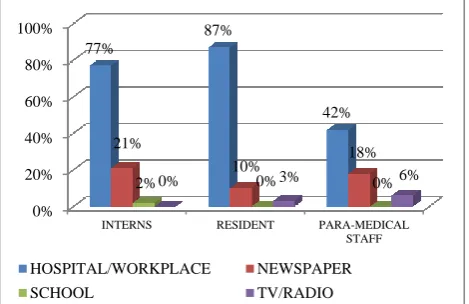
Figure 1: Knowledge regarding sources of information about hepatitis B virus.
The source of information about Hepatitis B among resident doctors was about 87 percent from either hospital or workplace & 77% Interns and 42% paramedical staff had same source of information. About 21% of intern’s source of information was newspaper or from health magazine and only 2% heard about Hepatitis B from their school. About 10% of resident doctors read about Hepatitis B from newspaper & only 3% from Television/Radio. In paramedical staff about 18% of them source of information is Newspaper. Only 6% mention their knowledge sources are Television/Radio.
The analysis of data collected indicates that out of 200 interns and resident doctors more than 70% had correct knowledge regarding transmission of Hepatitis B while awareness about the same was poor among paramedical staff. Knowledge about sharing of needles (47%), unprotected sex (47%) and vertical transmission was found (40%) and the difference of their knowledge was statistically significant (p<0.05).
Table 2 describes the responses of the participants about prevention of hepatitis B. Chi square value is 17.804 with 8 degree of freedom at 5% level. It is clear from this analysis that there is significant difference (p<0.05) between knowledge regarding prevention of Hepatitis B among interns, resident doctors and paramedical staff.
Attitude towards HBV was assessed by asking five questions, as shown in Table 3. Each question was labeled with agree or disagree attitude; the respondents were allowed to choose to only one response. All resident doctors agreed with the compulsory vaccination and reporting each case of needle stick injury while in interns 98% agreed with compulsory vaccination and 83% agreed with reporting needle stick injury. More than 80%
0% 20% 40% 60% 80% 100%
INTERNS RESIDENT PARA-MEDICAL STAFF
77%
87%
42%
21%
10% 18%
2% 0% 0% 3% 0% 6%
HOSPITAL/WORKPLACE NEWSPAPER
agreed with following universal precautions and proper biomedical waste management while in paramedical staff
perception was low compare to them and the difference between them was statistically significant.
Table 1: Knowledge regarding transmission of hepatitis B.
Following transmit hepatitis B Interns Resident doctors Paramedical staff Statistical value
N (%) N (%) N (%)
1.Blood Transfusion 98 (98) 100 (100) 89(89)
X2=13.518 (df =6) p value=0.035
2.Sharing Needles 87 (87) 100 (100) 47 (47)
3.Unprotected sex 64 (64) 83 (83) 47 (47)
4.Vertical Transmission 71 (71) 93 (93) 40 (40) Table 2: Knowledge regarding prevention of hepatitis B.
Following prevent hepatitis B Interns Resident doctors Paramedical staff Statistical value
N (%) N (%) N (%)
1.Whether HBV is preventable 100 (100) 100 (100) 84 (84)
X2 =17.804 (df =8) p value=0.2274
2.Hepatitis-B vaccine is available 100 (100) 100 (100) 79 (79)
3.Post-exposure prophylaxis
available 88 (88) 94 (94) 63 (63)
4.Knowledge of vaccination
schedule 84 (84) 91 (91) 39 (39)
5.Knwledge about universal
precautions 78 (78) 96 (96) 37 (37)
Table 3: Agreement of participants regarding attitude towards hepatitis B infection.
Statements Participants Statistical value
Interns Resident doctors Paramedical staff
N (%) N (%) N (%)
X2 =17.674 df =8
p value=0.0238
1. Vaccination should be
compulsory? 98 (98) 100 (100) 73 (73)
2. Reporting every case of needle
stick injury? 83 (83) 100 (100) 71 (71)
3. Always careful; don’t need
HBV vaccination. 27 (27) 09 (09) 16 (16)
4. Universal precautions should be
followed by all health workers? 88 (88) 92 (92) 58 (58) 5. Proper Biomedical waste
management practices is necessary?
86 (86) 100 (100) 96 (96)
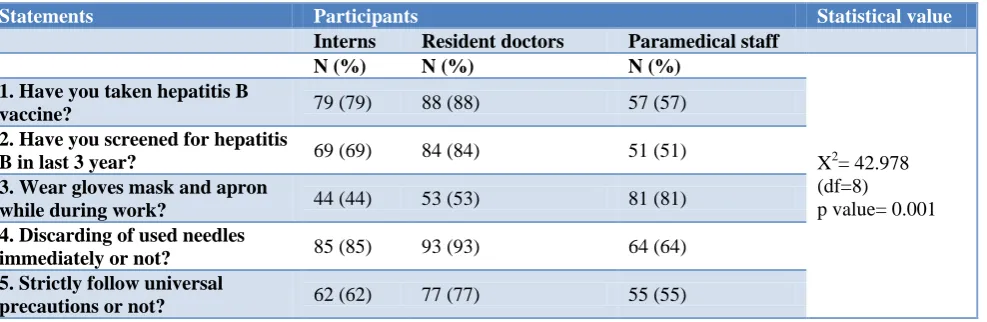
Table 4: Agreement of participants regarding practise towards hepatitis B infection.
Statements Participants Statistical value
Interns Resident doctors Paramedical staff
N (%) N (%) N (%)
X2= 42.978 (df=8)
p value= 0.001
1. Have you taken hepatitis B
vaccine? 79 (79) 88 (88) 57 (57)
2. Have you screened for hepatitis
B in last 3 year? 69 (69) 84 (84) 51 (51)
3. Wear gloves mask and apron
while during work? 44 (44) 53 (53) 81 (81)
4. Discarding of used needles
immediately or not? 85 (85) 93 (93) 64 (64)
5. Strictly follow universal
Chi square value is 42.978 with 8 degrees of freedom at 5% level (p=0.001) highly significant. This suggests there was significant difference between the practise towards hepatitis B disease transmission among interns, resident doctors and paramedical staff (Table 4).
DISCUSSION
HBV infection is caused by DNA virus with incubation period of 21-135 days.5 Hepatitis B virus (HBV) infection is an occupational risk for physicians and surgeons especially in developing countries where a carrier rate is about 4%. HBV infection kills about 1.1 million people globally every year.6
The results of the present study showed some interesting facts regarding KAP (knowledge attitude and practices) of healthcare personnel concerning some cardinal aspects of hepatitis B infection. The results of this study revealed that the medical staff had higher percentage of optimistic responses toward the questions concerning the knowledge about hepatitis B, this can be explained by the fact that medical staff had more training years in the college and the continuous medical education in the postgraduate years, therefore they had vast knowledge than the paramedical staff, this result is in agreement with in earlier studies both globally as well as in Indian context.
7-12
The analysis of data disclose that knowledge regarding prevention of Hepatitis- B, resident doctors had correct knowledge then the paramedical staff this can also be described by the same reason mentioned above, this was in concurrence with other studies, Kesieme et al.13,14
Based on their good level of knowledge the medical staff had a good attitude toward the vaccination against hepatitis B, this was similar with Patricia study.15 Other than medical staff, majority of paramedical staff were not screened for hepatitis B in the last three years and many of them even didn’t know about their serological status. This matter must be kept in mind as these healthcare personnel’s are more or less dealing with the patient through various interventions in everyday life and may serve as a source of infection. Of course majority had knowledge about hepatitis B vaccine, but it was still a matter of concern that all were not immunized for the same, paramedical staff. this result was in concurrence with other studies, such that in Pakistan where they found a ate of vaccination between 45%-86% in different Pakistani hospitals.16 The reason behind not being vaccinated against hepatitis B infection; majority of paramedical staff specified that they were too cautious to acquire the infection while other worker didn’t felt the same as need. Setia et al study suggested that gap in knowledge of risk belief is really worried among all health workers because of their high frequency of exposure to blood and other body fluids contagiousness of hepatitis B.12
The knowledge and practice of universal precautions was also reported quite inadequate. This is in line with many studies globally where, regardless of indications that non- adherence to barrier precautions raises the exposure risk of blood and body fluids, either poor level of compliance or sub optimal adherence has been reported widely.17,18 Study revealed that although majority of health care personnel believed that proper biomedical waste management practices is necessary for prevention of hepatitis B, but in contrast to that the practice of the same was found comparatively suboptimal. In contradiction to a study conducted by Koria et al, practice of wearing gloves, mask and apron was quite less while dealing patients or handling any specimen containing blood or body fluids.10
Improper implementation and inadequate routine monitoring of such practices as well casual work culture of healthcare personnel might be the reason for such practices in actual set up regardless of the knowledge level.
CONCLUSION
This study highlights the dissimilarities in knowledge, attitude as well as practices amongst different categories of healthcare personnel regarding Hepatitis B infection. The most distressing situation was of paramedical staff who were at the lowest strata in terms of both knowledge and practices and therefore was at highest risk of Hepatitis B infection. Study also revealed the inadequate, suboptimal and non-satisfactory behavior for universal precaution as well as preventive approaches. Therefore it was concluded that provision of satisfactory knowledge through orientation and sensitization programme as well as educational campaign will help to create awareness regarding HBV infection can only bring about a positive attitude, thereby leading to good practices. Apart from that the periodic screening and proper immunization of all healthcare personnel should be made mandatory.
Funding: No funding sources Conflict of interest: None declared
Ethical approval: The study was approved by the Institutional Ethics Committee
REFERENCES
1. Park JE, Park K. Text Book of Preventive and Social Medicine, 19th Edition, M.S. Banarsidas Bhanot, Jabalpur; 2007: 267.
2. Malik AH, Lee WM. Chronic Hepatitis B Virus Infection. Treatment Strategies for the next Millenium. Annals Internal Med. 2000;132(9):723-31.
3. Tandon BN, Acharaya SK, Tandon A,
Epidemiology of Hepatitis B virus infection in India Gut. 1996;38(2):56-9.
news-room/fact-sheets/detail/hepatitis-b. Accessed on 3 June 2018.
5. Taneja N, Biswal M. Safe disposal of infectious waste,Indian perspective J Hospital Infection. 2006;4:525-26.
6. Sharma R, Sharma CL, Khajuria R. The Knowledge, Attitude and Practices regarding HBV infection of married women in reproductive age group living in cantonment area, Sunjawan, Jammu, JK Sci. 2004;6(3):127-30.
7. Afihene MY, Duduyemi BM, A-Tetteh HL, Khatib M. Knowledge, attitude and practices concerning Hepatitis B infection, among healthcare workers in Bantama, Ghana: a cross sectional study. Int J Community Med Public Health. 2015;2(3):244-53. 8. Haider G, Haider A. Awareness of women
regarding hepatitis B. J Ayub Med Coll Abbottabad. 2008;20(4):141-4.
9. Shaheen S, Nighat N, Majid HQ. Knowledge regarding hepatitis B among EPI vaccinators working in district sout, Karachi. Pak J Med Sci. 2007;23:538–41.
10. Koria B, Lala MK. A study of knowledge, attitude and practice of hepatitis-B infection among the laboratory technicians in the civil hospital, Ahmedabad, Gujarat. Healthline. 2012;3(1):63-5. 11. Biradar SM, Kamble VS, Reddy S. Hepatitis B
infection and vaccination: knowledge and attitude among medical students. Int J Community Med Public Health. 2015;2:395-8.
12. Setia S, Gambhir RS, Kapoor V, Jindal G, Garg S, Setia S. Attitudes and awareness regarding hepatitis B amongsthealthcare workers of a tertiary hospital in India. Ann Med Health Sci Res. 2013;3(4):551–8 13. Maqbool Alam, knowledge, attitude and practices among health care workers on needle-stick injuries. Ann Saudi Med. 2002;22:5-6.
14. Kesieme EB. Knowledge of Hepatitis B Vaccine among Operating Room Personnel in Nigeria and Their Vaccination Status. Hepatitis Research and Treatment. 2011: 2011.
15. Patricia N. Africa. Knowledge, attitudes and practices of health care workers regarding hepatitis B vaccination, in the Ekurhuleni Metro, Gauteng Province. Dissertation submitted to the School of Public Health, Faculty of Health Sciences, University of Limpopo, Medunsa Campus in partial fulfillment of the requirements for the degree Masters of Public Health. Pretoria, 2009.
16. Rana JS, Khan AR, Haleem AA, Khan FN, Sarwari AR. Hepatitis c: knowledge, attitudes and practices among orthopedic trainee surgeons in Pakistan. Annals of Saudi Med. 2000;20:5-6.
17. Knight V. Perceptions and Practice of universal blood and body fluid precautions by registered nurses at a major Sydney Teaching Hospital. J Advan Nurs. 1998;27(4):746–51.
18. Kermode M, Jolley D, Langkham B, Thomas M, Crofts N. Occupational exposure to blood and risk of blood borne virus infection among health care workers in rural North Indian settings. Am J Infect Control. 2005;33:34–41.