DECODING STEM: THE IMPACT OF SCIENCE, TECHNOLOGY,
ENGINEERING, AND MATHEMATICS (STEM) OUTREACH
PROGRAMMING ON ENGLISH LANGUAGE LEARNERS
STEPHANIE FLORENCE
A THESIS SUBMITTED TO
THE FACULTY OF GRADUATE STUDIES
IN PARTIAL FULFILLMENT OF THE REQUIREMENTS
FOR THE DEGREE OF MASTER OF EDUCATION
GRADUATE PROGRAM IN EDUCATION
YORK UNIVERSITY
TORONTO, ONTARIO
April, 2018
ii
Abstract
Science, technology, engineering, and mathematics (STEM) are often considered to be
“gatekeeping” school subjects. The language used in STEM education and traditional pedagogies – which place emphasis on textbook learning – can be challenging for students, especially those who are learning English at the same time. This case study examines a cohort of English
Language Learners (ELLs) selected from a larger longitudinal STEM study that aimed to investigate how school partnerships with STEM outreach programs model alternative
pedagogical strategies through hands-on inquiry models to effectively engage ELLs, as well as support STEM learning and second language acquisition (SLA) concurrently. Findings indicate that STEM outreach programs can support attitude, interest, and self-efficacy in both STEM and SLA due to specific distinguishing features. In the context of this study, these features include: (a) access to hands-on learning; (b) agency by design; and (c) access to peer learning networks. Jointly, self-efficacy, attitude, and interest come together to support ELLs in STEM over time.
iii
Acknowledgments
I want to express my gratitude to my fiancé Maciej, who read this thesis almost as many times as I did. He discussed it with me and listened to me talk about it. His continued support means the world to me.
I would like to thank my supervisor Steve Alsop. During our meetings he raised excellent points that helped me to think critically about my work. I am grateful for his support.
I am indebted to my co-supervisor Isha DeCoito for her support, guidance, and mentorship. Not only have her contributions been instrumental in this thesis, but she has helped to shape my entire scholarly agenda. I could not have written this thesis without her encouragement and support. Thank you for everything.
I am also grateful to the York University professors who helped me to explore various perspectives on my work during the courses that I took with them. The knowledge I gained through those courses was pivotal in the development of this thesis.
I would like to thank my teacher friends Paolo Lamonica and Patricia Onderdonk for keeping me inspired and in touch with the practice of teaching during in the course of the project. They made me laugh during some of the toughest times and I thank them both profusely for seeing me through to the end of this endeavour.
Finally, I am grateful to the students who participated in the project and to the school where the data were collected.
iv
Table of Contents
Abstract ... ii
Acknowledgments ... iii
Table of Contents ... iv
List of Tables ... vii
List of Figures ... viii
Chapter 1: Introduction... 1
1.1 Scope, Context and Purpose of Study ... 3
1.2 Research Questions ... 12
1.3 Context of the Study... 13
1.4 STOp Workshop ... 15
1.5 Significance of the Study ... 16
1.6 Thesis Outline ... 17
Chapter 2: Review of the Literature ... 19
2.1 From Science, Math, and Tech to STEM Education ... 19
2.2 A Brief History of Gatekeeping in STEM Disciplines ... 23
2.3 Self-Efficacy in STEM and/or SLA ... 24
2.4 ELLs and STEM ... 26
2.5 Overlapping Content-Based Instruction with STEM Education ... 29
2.6 STEM Outreach Programs ... 30
2.7 Addressing the Gaps in the Literature ... 32
v
3.1 Situated Cognition Theory: The Integrated STEM Education Framework Modified for
ELLs Attitudes and Interest in STEM ... 34
3.2 Social Cognitive Theory: Developing and Supporting Self-Efficacy in STEM and SLA ... 43
Chapter 4: Methodology ... 49
4.1 Methods ... 49
4.2 Data Sources ... 62
4.3 Data Analysis ... 63
Chapter 5: Findings and Analysis ... 69
5.1 ELLs’ Attitude and Interest in STEM ... 70
5.1.1 Workshop observations. ... 70
5.1.2 The S-STEM survey: quantitative comparison of STEM subject Interest. ... 82
5.1.3 Open-ended questions: a thematic analysis of ELL interest in STEM. ... 87
5.1.4 Interviews: ELL student voices on interest in STEM. ... 99
5.2 Self-Efficacy in STEM and SLA ... 108
5.2.1 S-STEM survey: measures of self-efficacy in STEM. ... 108
5.2.2 Interviews: personal reflections on language and STEM. ... 113
5.3 Chapter Summary ... 126
Chapter 6: Discussion and Conclusions ... 127
6.1 The Role of Hands-On Activities in Supporting ELLs ... 128
6.2 The Role of Agency by Design in Supporting ELLs ... 131
6.3 The Role of Peer Learning Networks (PLNs) in Supporting ELLs ... 133
6.4 Limitations ... 134
vi
6.6 Areas for Future Research ... 136
References ... 138
Appendices ...………157
Appendix A ... 157
vii
List of Tables
Table 1. Social Risk Scale Breakdown by School ... 14
Table 2. Comparing ELL Language Needs with STEM Literacy Needs ... 28
Table 3. Case Study Participant Background ... 55
Table 4. Case Study Participation in Study ... 62
viii
List of Figures
Figure 1. Immigrant population within the GTA ... 5
Figure 2. Integrated STEM learning and associated factors ... 7
Figure 3. Resources in “Understanding Life Systems – Biodiversity” workshop ... 11
Figure 4. Structure of STOp workshops ... 16
Figure 5. Graphic of the conceptual framework for STEM learning. ... 35
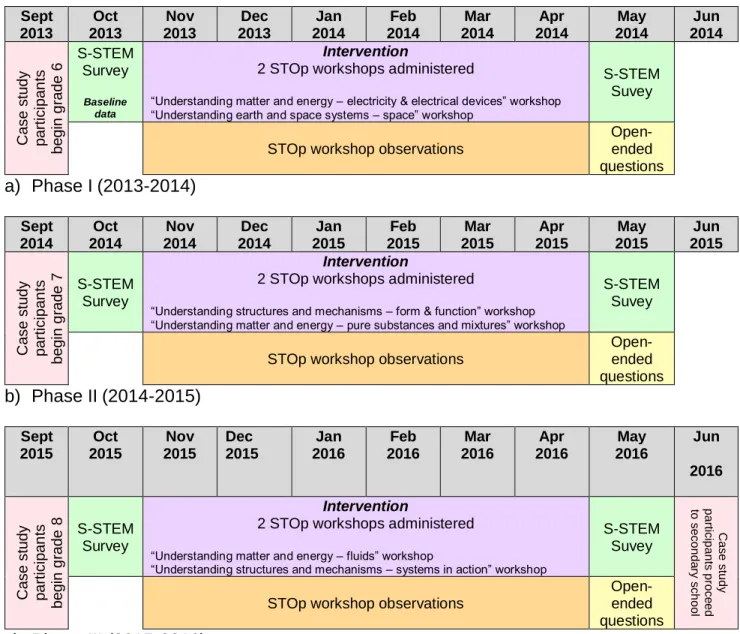
Figure 6. Data collection timeline. ... 58
Figure 7. Sample S-STEM survey statement from E & T scale ... 59
Figure 8. Variation in wording of S-STEM statement for the mathematics construct..... 64
Figure 9. A sample of quantified open-ended questions using Microsoft Excel ... 68
Figure 10. Sample testing comparing types of triangles. ... 74
Figure 11. Bridge testing demonstration from #2 "Structures and Mechanisms" ... 75
Figure 12. Comparison between interactive and passive demonstration ... 76
Figure 13. Attitudes towards and interest in individual STEM subjects. ... 83
Figure 14. Impact of STOp hands-on activities on ELL’s interest in science. ... 85
Figure 15. STEM attitude and interest fostered in classroom vs. STOp workshops. ... 86
Figure 16. Workshop components ELLs found to be exciting. ... 89
Figure 17. STEM career aspiration influencers amongst ELLs ... 93
Figure 18. Students’ interest in STEM over three phrases ... 95
Figure 19. Open-ended thematic analysis of interest in STEM ... 97
Figure 20. Themes highlighting ELLs’ excitement with STOp workshops ... 100
ix
Figure 22. Themes highlighting ELLs’ personal STEM interest ... 105
Figure 23. Self-efficacy in individual STEM subjects across the longitudinal study. .... 110
Figure 24. Impact of STOp on ELL self-efficacy in STEM ... 112
Figure 25. Self-efficacy in collaboration and communication ... 113
Figure 26. ELLs’ feelings towards STOp workshops (emotional response) ... 114
Figure 27. How STOp workshops supported ELLs’ self-efficacy in STEM and SLA ... 116
Figure 28. Word cloud exploring self-efficacy from STOp workshops ... 117
Figure 29. Word tree exploring use of the word understand ... 118
Figure 30. Word tree exploring use of the word funs ... 119
Figure 31. Word tree exploring use of the word friends ... 120
Figure 32. Word tree exploring use of the word together ... 120
Figure 33. PLN support ELLs’ self-efficacy in STEM and SLA ... 122
Figure 34. Gradual release of responsibility model of STOp ... 131
1
Chapter 1: Introduction
Canada’s education system has been described as undergoing a period of transition from a model reflective of the industrial era to a 21st century one (Fullan & Langworthy, 2014;
Partnership for 21st Century Learning, 2014). In the context of this transition, science,
technology, engineering, and mathematics (STEM) has been applauded for its importance in the future economy (DeCoito, 2016; Grisanzio, 2016). The interdisciplinary nature of STEM, as well as its potential to foster 21st century skills, such as creativity, problem-solving, and higher order
thinking (DeCoito, 2014), highlight the need for STEM pedagogical intervention at the elementary level in schools. The banking model of education (Freire, 2010) typically used in traditional science and mathematics instruction emphasizes a textbook "read and respond" format. This approach focuses on knowledge, comprehension, and some application (Kessler & Quinn, 1987; Krathwhol, 2002). Conventional modes of teaching often pose a challenge for students who are learning STEM content knowledge, as they can be void of strategies that
address learning needs in certain populations. In particular, marginalized groups of students (e.g., women, minorities, and individuals with disabilities) often avoid higher education in STEM as a result of a lack of self-efficacy (NSERC, 2010).
The Canadian education system serves a diverse population (Chui, Flanders & Anderson, 2012). In this thesis, I use the term “English Language Learners” (ELLs) to identify an ethnically diverse group of students who are learning English while, at the same time, speaking their first language at home (Gere, 2008; Ontario Ministry of Education, 2001; Ontario Ministry of
Education, 2008). ELLs enter the Canadian education system with a variety of specific needs. In addition to overcoming language barriers, they are expected to unpack content often at the same rate as students who are proficient in English. Many ELLs "have some educational background
2
[in] the science content" (Coloma, as cited in Goodman & Hevia, 1996, p. 30). However, the Canadian school language requirements usually imply a "double learning" taking place – the student unpacks content knowledge and at the same time learns the English language. In the banking model of education (Freire, 2010), as reflected in traditional science and mathematics education, textbooks and lectures require ELLs to decode the language content and context concurrently with developing their understanding of STEM content knowledge. This process frequently makes STEM learning more challenging for these students, and can deter them from pursuing STEM education beyond the minimum provincial requirements.
Content-based instruction (CBI) is a pedagogical model used to foster second language acquisition (SLA) in applied linguistics. In CBI, students engage in content instruction and learning without explicit effort to learn the language separately through meaningful content-based activities (Richards & Rodgers, 2001). Outreach programs have the potential to support both STEM learning initiatives as well as SLA for ELLs through hands-on inquiry-based pedagogical modeling in CBI. In teaching STEM content using outreach programs for CBI, traditionally marginalized groups, such as ELLs, have access to STEM content knowledge despite language barriers. If ELLs can interact with STEM education, then perhaps the space between comprehension and communication can potentially diminish. If this is the case, the simultaneous formation of both STEM and second language (L2) identities, fostered around positive attitudes and interest in STEM by grade eight, can potentially promote student entry into future STEM pathways (Cannady, Greenwald & Harris, 2014). My research explores the
potential of an inquiry-based hands-on outreach program to: (a) engage ELLs, and (b) introduce STEM content and the English language cohesively, thus supporting ELLs’ participation in the international post-secondary STEM arena.
3
1.1 Scope, Context and Purpose of Study
In my thesis, I analyze a case sample of ELLs taken from a larger 3-year STEM
longitudinal study that involved a four-way partnership between Western University, four middle schools from a public-school board in the Greater Toronto Area, a STEM outreach program (STOp), and a biotechnology company. The larger study has four goals: (a) to engage students and teachers in STEM education; (b) impact students’ attitudes and interest towards STEM; (c) impact interest in STEM education and careers; and, (d) impact STEM professional
development. Each of these goals is sensitive to disconnections between STEM education in schools and STEM pathways that ultimately result in a shortage and lack of diversity in STEM educational attainment and, ultimately, undermine the formation of a STEM literate society (Bybee, 2013; DeCoito, Steele, & Goodnough, 2016). Research in STEM education confirms that the interdisciplinary approaches towards the four subjects in the context of real-world problem-solving often has a positive impact on both attendance and achievement in STEM disciplines (Satchewell & Loepp, 2002; Sinay, Jaipal-Jamani, Nahornick & Douglin, 2016).
The STOp outreach program is a Canadian charitable organization that provides STEM workshops in Ontario and Alberta. These workshops seek to bring together the community, STEM industry and the education system to support students during their formative (K-8) years. For this thesis, STOp is based in the Greater Toronto Area and therefore, explores workshops in the context of the Ontario curriculum standards. The goal of the STOp is "… to ignite scientific wonder in children through investigative half-day workshops, guided by the knowledge of scientists and engineers" (STEM Outreach Program [STOp], 2013; DeCoito et al., 2014). Myszkal (2016) notes that when schools collaborate with a STEM outreach program, students are given access to: (a) STEM as an interdisciplinary and practical framework rather than
4
dissected and often decontextualized subjects; (b) STEM materials for hands-on learning; (c) time for inquiry and exploration in STEM; and, (d) a diverse team of STEM professionals to facilitate the workshops (p. 5-7). The foundational underpinnings of STEM outreach programs have a positive impact on diverse learners (Sithole et al., 2017). Difficulties encountered by ELLs at the middle school level in situating themselves as both multilingual learners and STEM participants are reduced in STEM outreach programs as they receive a myriad of benefits from outreach learning experiences. Not only are their perceptions of STEM and familiarity with STEM concepts addressed, but also the acquisition of language and communication in their L2.
1.1.1 Considering Canada’s Diversity. STEM degrees are considered globally
transferable (Nelson, 2014; UK Commission for Employment and Skills, 2011). On January 1st,
2015, the government of Canada introduced the Express Entry Immigration System, which includes the Federal Skilled Worker Program, in an effort to acquire more skilled workers to fulfill the economic needs of the country (Government of Canada, 2017). Within this system, there is a provision for express entry of applicants who, in addition to meeting minimum criteria of admission, have received training and acquired work experience in any of the 347 eligible occupations (Immigration Canada, 2017). The list of qualified professions places a significant emphasis on various STEM careers, including engineering managers, architecture and science managers, physicists and astronomers, civil engineers, and computer programmers and
interactive media developers – to name a few (Immigration Canada, 2017). The non-STEM careers on the list indicate a need for STEM skills such as record keeping, reading and
understanding technical materials, and creative problem-solving (Texas GEAR UP, 2017). These skills are important and relate to the conceptualization of STEM education mentioned above.
5
Canada currently has the second highest (20.6%) immigration population of the G8 next to Australia (26.8%) (Organization for Economic Cooperation and Development, 2016).
Additionally, the growth of the immigrant population in Canada has replaced the natural increase that currently accounts for less than one-third of Canada’s population growth (Statistics Canada, 2017). The top three provinces for immigration settlement are Ontario, British Columbia, and Quebec (Chui, Flanders & Anderson, 2011; King, 2009). Toronto, the capital city of Ontario, has been dubbed "the most multicultural city in the world" (Kuzmin, Motskin & Gallinger, 2015). This study takes place within the Greater Toronto Area (GTA), which comprises Toronto and its suburbs. Figure 1 illustrates the proportion of migrant population in the GTA.
Figure 1. Immigrant population within the GTA (Statistics Canada, 2011 as cited in Region of Peel, 2013, p. 3)
STEM education incorporates a variety of scientific terms that can be difficult to understand for learners whose first language differs from the language of instruction. The presence of a language barrier makes the process of learning through traditional STEM pedagogies potentially difficult for ELLs. Outreach programs such as STOp aim to provide students with experiences in STEM that bridge the theories and real-life contexts, while also including hands-on learning experiences intended to familiarize students with STEM concepts.
6
This approach relies less on language and more on inspiring students in a fun and engaging way. For ELLs, the approach used by the STOp is “naturally differentiated” and seeks to give students autonomy over their learning. This autonomy is valuable because while these students are
integrated with English-speaking peers, they can further navigate both their language and STEM learning concurrently.
1.1.2 Why STEM? An Ontario curricular context. The current structure of middle school in Ontario often initiates a rotary system for grade seven and eight students (and some grade six) (Toronto District School Board, 2006). As a result, teachers work in a "specialized" manner based on their teachable(s) – for example, science teachers teach science and may or may not teach mathematics as well. Thus, the Government of Ontario has a series of curriculums that isolate standards for each given subject. In STEM education, these are the Science and
Technology curriculum (Ontario Ministry of Education, 2007) and the Mathematics curriculum (Ontario Ministry of Education, 2005). The subject of “engineering” is split between the two curriculums, without explicit indication of how mathematics and science overlap.
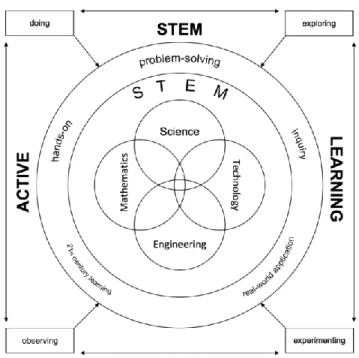
The interdisciplinary nature of STEM education is often conceived of as distinct from the current practice of teaching each discipline of science, technology, engineering, and mathematics in isolation. Although there is no universal definition of STEM outside of the four subjects within the acronym (Bybee, 2010), many professionals in education understand STEM education as interdisciplinary and promoting active learning (Figure 2). This conceptualization includes embedding problem-solving and inquiry, as well as active engagement of students with STEM content, rather than exposure to strictly theoretical STEM knowledge through two-dimensional textbooks, images, and chalk ‘n talk pedagogies. As depicted in Figure 2, STEM education
7
bridges theories into real-life contexts by providing experiences relevant to the application of STEM through "exploring", "doing", "observing," and "experimenting".
Figure 2. Integrated STEM learning and associated factors
Not only does STEM seek to promote collaborative understanding between and across the disciplines, there is also an applied understanding of the four subjects highlighted through action. DeCoito (2016) provides a knowledge synthesis exploring STEM in Canada according to various stakeholders including STEM education postsecondary faculty members. According to DeCoito (2016), STEM is often described as:
a transdisciplinary field in which real problems of the world get undertaken. Problems that require science, technology, engineering and mathematics brought to bear in order to be able to solve the problem or address the issue or the concern that is manifested. It
8
cannot be solved adequately by just one of the disciplines or one of the fields; it's a field unto itself (Interview with a STEM education faculty member, 2015).
The definition above incorporates discipline overlap while bringing forth the active and applied components of STEM as a whole. Thus, the definition differs from the one supplied in the current Ontario curriculum standards. The existence of such does not insinulate a negative conception of science and technology, as well as mathematics, as explored in schools. Rather, I point to this difference to highlight how each definition complements the other to support students' perceptions of themselves within the four disciplines and the impact of STEM education on the learner. The Ontario Science and Technology Curriculum (Ministry of
Education, 2007) centres on science and technology literacy (including theories surrounding the nature of science) as a foundation for science and technology curriculum expectations. For this curriculum document, the Science Teachers Association of Ontario (STAO) posits that:
The primary goal of science is to understand the natural and human-designed worlds. Science refers to certain processes used by humans for obtaining knowledge about nature, and to an organized body of knowledge about nature obtained by these processes. Science is a dynamic and creative activity with a long and interesting history. Many societies have contributed to the development of scientific knowledge and understanding ...
Scientists continuously assess and judge the soundness of scientific knowledge claims by testing laws and theories, and modifying them in light of compelling new evidence or a reconceptualization of existing evidence.
Technology involves the development and use of materials, tools, and processes for solving human problems and helping to satisfy human needs and desires … Science often
9
uses and requires tools and processes developed by technology, and conversely,
technology often employs principles, laws, theories, and processes developed by science. (Cited in Ontario Ministry of Education, 2007, p. 4)
The Ontario Mathematics Curriculum (Ontario Ministry of Education, 2005) considers the practical uses of mathematics as a life skill. Additionally, this document notes the connection between mathematics and other disciplines, including science; however, the structure of the curriculum separates the concepts and often places the onus of recognizing the interdisciplinary relationships on the student – especially if he or she is taught using traditional methods, as illustrated in the document:
As students identify relationships between mathematical concepts and everyday
situations and make connections between mathematics and other subjects, they develop the ability to use mathematics to extend and apply their knowledge in other curriculum areas, including science, music, and language. (p. 3)
Thus, while the curriculum frames theories and knowledge of each discipline by
separating the subjects – specifically, as students transition to a rotary system at the intermediate level – teachers and students may find it difficult to make connections between the disciplines and implementing them in a real-life context. For ELLs, the ability to make these connections is further impeded by the presence of a language barrier in comprehending the theories within the disciplines, as well as communicating the complexities and connections between the scientific, technological and mathematical theories. As a result, in differentiating between STEM and the curriculum expectations in Ontario, the definitive foundation lies in the explicitness in providing active and interdisciplinary learning for students.
10
Cognizant of the need for balance between curriculum expectations and interdisciplinary and active STEM learning in a real-life context, STOp, the organization that runs the workshops on which I focus on this thesis, aims to merge curriculum expectations with STEM education and STEM professionals. In combining the Ontario curriculum expectations using a STEM model (Figure 2) STOp provides workshops that emphasize the following: (a) science and technology; (b) mathematics; and (c) combined grade special interest. Although the workshops are aligned with the curriculum and may be either "science forward" or "mathematics forward," they all aim to provide students with the connections between the curriculum content and broader
interdisciplinary STEM concepts. In this way, they provide students with opportunities to engage in their STEM education as autonomous agents of their learning. For ELLs, this autonomy provides a series of scaffolding elements that naturally differentiate their learning needs.
1.1.3 Access to STEM manipulatives for hands-on learning. There is a variety of science and mathematics manipulatives available in Ontario schools; however, these materials need to be carefully selected for purchase based on durability, frequency, and access for use across multiple disciplines. Funding in Ontario schools is complex. Given the financial
intricacies of providing hands-on inquiry-based learning experiences, outreach programs such as STOp provide hands-on learning and manipulatives at the forefront of their design. In
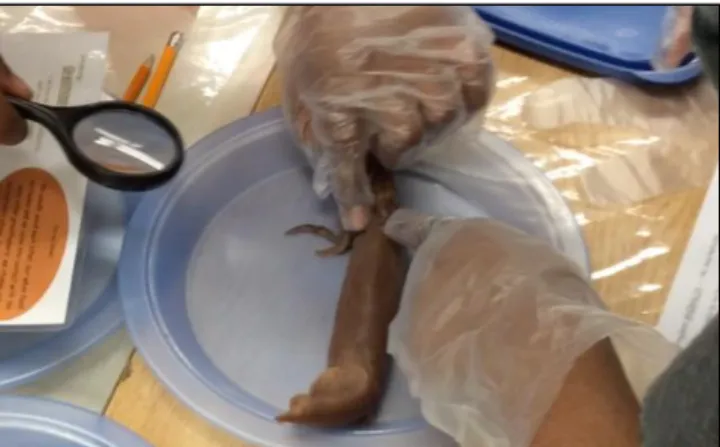
comparison to schools, which have limited funding, specialized STEM outreach programs that work in collaboration with STEM industry partners have better access to a variety of learning materials. For example, in the STOp workshop that explores Understanding Life Systems – Biodiversity students investigate a selection of preserved specimens provided by the workshop facilitator. The student participants assume the role of a taxonomist to investigate the diversity of life systems in the environment (STOp, 2013) (Figure 3).
11
Figure 3. Resources in “Understanding Life Systems – Biodiversity” workshop
Access to such varied materials within schools – due to the process of preservation and storage – is unavailable. As a result, students are left learning some STEM concepts, using more
traditional science teaching methods (Myszkal, 2016; Qureshi et al., 2016; Sanders, 2009). The inquiry-based process that STOp workshops make possible supports a wider range of learners than traditional science teaching methods. In the context of this thesis, ELLs are provided with richer opportunities to learn using hands-on materials, which are less reliant on language (Lee et al., 2008) and more exploratory in nature.
1.1.4 Time as a resource for authentic STEM learning. In middle school, science is often taught on a rotary basis, which can place constraints on instructional time. The benefit of the rotary method is that students have access to teachers as "specialists" in their subject area. Unfortunately, the rotary system only allocates forty-minute class periods to students at the intermediate level (grades 7-10). Occasionally, students may have two periods on the same subject area one after another; however, this is not a regular occurrence. Forty minutes is not a lot of time to conduct inquiry without cognizant and detailed preparation from the teacher. In comparison, STOp workshops include half-day programs of two and a half to three hours during which students explore STEM using a variety of pedagogical methods. Students are provided
12
ample time to investigate manipulatives, and in the case of ELLs, practice their L2 in a low-anxiety learning environment with their peers. Furthermore, students have time to witness the connections between the disciplines without any interruptions.
1.1.5 STEM industry professionals as facilitators of learning. Although the rotary system does provide students with specialized science educators, the connection and application to other STEM disciplines is not always present. Nieto (2011) comments that teachers'
pedagogical creativity is often impaired by curricular subject expectations over time (p. 190). In contrast, STOp involves in its workshops community members who are active in STEM
industries. For example, the workshop that explores Structures and Mechanisms – Form and Function is facilitated by a civil engineer. These professionals combine work experience and content knowledge, which can differ from experiences provided by classroom teachers. When teachers rely on textbook learning, they are generally bound by the interpretation of the textbook. In contrast, having STEM industry experts to complement the various approaches to teaching science and technology education in schools supports student learning through practical knowledge and experience.
1.2 Research Questions
In this thesis, I explore the following research questions:
1. Do STEM workshops, as a form of CBI, affect middle school ELLs attitudes and interests in STEM over time?
2. Do STEM workshops affect ELLs self-efficacy, in terms of fostering both STEM and L2 identities in middle school students?
13
1.3 Context of the Study
The STEM education literature indicates that middle school is a crucial time to establish positive attitudes, interests, and self-efficacy in students as they transition towards more abstract science content (Mattern & Schau, 2002; Mohr-Schroeder et al., 2014; President’s Council of Advisors on Science and Technology, 2010). Student vulnerability can increase during middle school when you include factors such as race, gender and socioeconomic background (Elam, Donham & Soloman, 2012; Mohr-Schroeder et al., 2014). Without careful attention to these factors, a large population of students becomes removed from STEM pathways. The larger STEM longitudinal study, a part of which I analyze in this thesis, commenced in 2013 in
partnership with four highly diverse middle schools considered somewhat high on the social risk index (SRI). SRI is a numerical score (0-9) that incorporates the following variables:
▪ average household income; ▪ unemployment rate;
▪ proportion of residents 15 years and older who lacked a high school diploma; ▪ proportion of owner-occupied dwellings;
▪ mobility over one year;
▪ knowledge of Canada’s official languages; ▪ proportion of recent immigrants;
▪ lone parent families; and,
▪ reliance upon government transfer payments (HRSDC, 2008; Ontario School Board [OSB], 2008).
My study focuses specifically on the experiences of a cohort of ELLs from a school to which I refer as Trillium Street Middle School (a pseudonym). For all schools involved in the broader
14
study, a calculation of social risk was completed twice: first in 2006, before the initiation of Phase I of the study, and then again during Phase II in 2014. Table 1 presents the level of social risk of the schools involved in the study. During the larger study, Trillium Street Middle School remained in the somewhat high-risk category; however, the score shows small decline over time.
Table 1
Social Risk Scale and Breakdown by School
Social Risk Scale Social Risk Breakdown by School
Scale Score School 2006 2014
High Risk 7-9 Trillium Street Middle School 6.335 5.684
Somewhat High Risk 5-6 School 2 6.174 6.069 Somewhat Low Risk 3-4 School 3 6.577 7.093
Low Risk 0-2 School 4 6.609 3.177
Note. Data for the social risk scores by school provided by the Ontario School Board (2008 & 2014)
Two variables, “recent immigration” and “knowledge of Canada’s official language,” are pertinent to this case study. They indicate that Trillium Street Middle School needs to consider the population and support learning in a way that is reflective of the needs of students within the community. When the ELL SRI community variables are isolated, data shows that the
community has a total of 3225 recent immigrants who account for 15.8 percent of the population in the area. Additionally, 21 percent of the community’s families are considered low income (before tax) (Ontario School Municipality [OSM], 2006) and 4.5 percent of the population in the area speak neither of Canada’s official languages (OSM, 2006). For this reason, Trillium Street Middle School has an established ESL program within the school. However, given the
integrative policy surrounding ESL programs, ELLs still need access to their content learning – and content core educators that can successfully foster their linguistic and cultural needs. As a
15
result, partnerships with programs such as STOp are valuable as they address ELLs’ distinct learning needs.
1.4 STOp Workshop
A typical STOp workshop comprises several components: lectures, a mixture of passive and active demonstrations, and hands-on learning. The first segment of the workshop introduces the big ideas, with some focused instruction, which is followed by a short activity to pique student interest and apply a single concept. Over the course of the workshop, instructors alternate between lecture and/or demonstration model. All lectures and demonstrations are followed by hands-on activities aimed at reinforcing the particular skill or idea. This method
compartmentalizes STEM concepts into smaller and more tangible components that, when combined, help students to understand the big idea under investigation. The next step of the workshop is a larger hands-on inquiry project or challenge, which requires an application of all the skills and theories together. This segment is followed by a final consolidation of STEM learning that broadly applies the knowledge to a real-life context (e.g., STEM skills, careers, literacy, etc.) (Figure 4).
16
Figure 4. Structure of STOp workshops
The mean amount of time dedicated to each pedagogy within the two and a half hour workshops was calculated to establish the pedagogical distribution of STOp (Figure 4). The calculation used a random sample of six time-stamped running record style workshop observations as well as time-stamped multimedia including photographs and videos. Each observation was categorized as either lecturing, demonstrations, or, hands-on experiments and the amount of time dedicated to each pedagogy was recorded. Because the STOp engages in some lecturing, ELLs were able to effectively compare teaching methods under a consistent context and reflect on which pedagogical approach fulfilled their learning needs most efficiently; thus, aiding in the exploration of ELLs' attitude, interest, and self-efficacy in STEM.
1.5 Significance of the Study
The findings that I present in this thesis can potentially help to support STEM education in Canadian schools. Given the diversity of students in Canada, detaching the acquisition of
17
language from content makes learning challenging. More specifically, the practice separating language learning through the expertise of one educational expert (the ESL teacher) and the acquisition of science, technology, and mathematics on another (the science teacher, the
technology teacher, and the mathematics teacher) places the onus of making connections on the individual student. Given the dissection between language and content education, it is difficult for ELLs to form a positive attitude towards and interest in STEM subjects. Furthermore, when STEM education uses didactic methods that rely heavily on linguistic understanding, ELLs confidence in their skills to pursue STEM learning diminishes. This approach removes ELLs from STEM pathways – not because they are unfit to participate in STEM but because they face a barrier created by the education system. Findings from this study indicate the need for
collaboration among ESL teachers, STEM content teachers, and STEM professionals through participation in STEM outreach workshops. Furthermore, the study demonstrates the value of pedagogies used by STOp. Speficially, they point to the advantages of the hands-on inquiry-based approach – a pedagogical approach different from traditional science, technology, and mathematics instructions – used in STOp workshops. This approach fosters autonomy in students regardless of their linguistic ability. The study suggests that such pedagogies can support the development of content-specific teachers' pedagogies so that ELLs have the opportunity to develop their attitudes, interests, and self-efficacy in STEM while concurrently navigating the acquisition of the English language.
1.6 Thesis Outline
This thesis is divided into six chapters. Chapter Two, which follows the Introduction, offers a review of pertinent literature in both STEM education and applied linguistics to showcase the dissection between the fields and identify the gaps in both fields. Chapter Three
18
provides a theoretical framework for discussing the theories within the disciplines to consider the needs of ELLs within STEM education. These theories include the integrated STEM education framework, self-efficacy theory, second language acquisition, and agency by design. Chapter Four details the methods and tools used in the study and profiles the case study participants. Chapter Five presents the data and findings from the case study. Finally, Chapter Six considers the results through a theoretical lens and discusses the study’s limitations, its implications, and areas for future research.
19
Chapter 2: Review of the Literature
Research on ELLs as participants in STEM education is sparse. The existing literature often emphasizes theoretical discussions rather than empirical data. Furthermore, many sources are from the United States which differs from Canada with respect to policies surrounding immigration and second language acquisition (SLA) in schools. As a result, the literature has been sectioned into the following categories: (a) from science, math, and tech to STEM education; (b) a brief history of gatekeeping in STEM disciplines; (c) self-efficacy in STEM education and/ or SLA; (d) ELLs and STEM; (e) overlapping content-based instruction with STEM education; (f) STEM outreach programs; and, (g) addressing the gaps in the literature. The combination of themes mentioned above implicitly supports this research as they allow for inferred connections between two large fields – STEM education and applied linguistics. These categories inform the need for further research in combining STEM outreach and CBI to foster positive attitudes and interests in STEM education, as well as supporting ELLs' self-efficacy in STEM and SLA.
2.1 From Science, Math, and Tech to STEM Education
The current practice in Canadian junior and high schools is to isolate subjects. The separation between subjects begins during middle school with the introduction of rotary and teachers who specialize in specific disciplines (hereafter referred to as specialist teachers for brevity) (Bégin et al., 1994). The argument for separation is that as school content increases in complexity, students should be given access to specialist teachers, who can support individual career pathways (e.g., university preparation, college preparation, etc.) (Byrd-Bennett et al., 2009; Pollock & Mindzak, 2014; Schiro, 2013; Walker, 2002). Pollock and Mindzak (2014) argue that specialized teachers support students through quality programming and planning
20
based on the teachers' interests, experiences, and skill sets. Furthermore, the Elementary
Teachers’ Federations of Ontario (ETFO) stresses that specialist teachers are one of six building blocks for better schools in Ontario, contending that "staffing elementary schools with teachers who have specialized training in [music, guidance, physical education, visual or performing arts, or design and technology] greatly enriches the educational experience of students" (p. 8).
Although specialized education aims to foster student success, the literature indicates that it places responsibility for making cross-curricular connections on the student. For this reason, acquiring an interest in the subject matter can be challenging (Drake & Reid, 2010; Kelley & Knowles, 2016; The Literacy and Numeracy Secretariat, 2010). The Committee on Integrated STEM Education (2014) emphasizes that "[c]onnecting ideas across disciplines is challenging when students have little to no understanding of the relevant ideas in the individual disciplines. Also, students do not always or naturally use their disciplinary knowledge in integrated contexts" (cited in Kelley & Knowles, 2016 p. 3). For students who face a language barrier or learning disability, cross-curricular connections are further highlighted and disadvantage these learners.
More recently, the discourse supporting interdisciplinary education has received some international attention. For example, Finland has removed subject-specific education within its policies in favour of topic-specific education that integrates multiple subjects in a problem-solving approach (Garner, 2015; Halinen, 2016; Kauppinen, 2016). Gardner and Boix Mansilla (1994) suggest that "[b]y combining knowledge from multiple disciplines … learners may approach subjects too complex to be adequately addressed with the tools of only one discipline" (as cited in Miller, 2006, p. 1). The need to approach problem-solving with multiple disciplines was the drive for coining the interdisciplinary acronym known as STEM (Bybee, 2013; Mitts, 2016; Shanahan, Burke & Francis, 2016). The National Science Foundation (NSF) recognized
21
that although science, technology, engineering, and mathematics tend to be taught separately from one another (Abell & Lederman, 2014; Kelley & Knowles, 2016; Sanders, 2009), these subjects work together when implemented in a real-life context (Bryan, Moore, Johnson & Roehrig, 2016). Mitts (2016) illustrates the connection between STEM and its four components of a whole-problem solution by breaking down each subject into the function. Mitts claims that: (a) science – proposes why: the theory; (b) technology – explains how: the process; (c)
engineering – determines what: the design; and (d) math – reveals relationships: the concept (p. 31). While the definition of STEM remains ambiguous, generally there are two schools of thought – that is, a political/ economic goal resonating from the STEM workforce (which emphasize the need for STEM careers for the future) and a goal that comes from the field of education (which emphasizes STEM skills development).
From the political standpoint, there has been global government emphasis on the need to fill STEM occupations. Many countries, including Canada, are moving towards a knowledge-based economy (Cheng, Colijm, Levanon & Paterra, 2012 as cited in Franz-Odendaal, Blotnicky, French & Joy, 2016; Orpwood, Schmidt & Hu Jun, 2012; Policy Horizons Canada, 2013). This economic goal affects policies on immigration (as discussed in section 1.1.1) as well as
education in how the curriculum is supporting STEM pathways with a goal of producing STEM workers (National Academy of Engineering and National Research Council of the National Academies [NRC], 2014). With this political train of thought, some educational scholars argue that STEM becomes mechanical, focusing on economic output rather than STEM skills as life skills that produce STEM literate citizens (Siekmann, 2016).
The educational perspective on STEM suggests that the integration of the four subjects highlight their relationships as "allied areas of research" (Shanahan, Burke & Francis, 2016, p.
22
130), but subsequently underscores that STEM education is inherently active (Mitts, 2016). Through a combination of the subjects, individuals can solve problems and apply knowledge in a real-life context (DeCoito, Steele & Goodnough, 2016). The active learning component of STEM provides purpose through STEM literacy. STEM literacy consists of:
▪ knowledge, attitudes, and skills to identify questions and problems in life situations, explain the natural and designed world, and draw evidence-based conclusions about STEM related issues;
▪ understanding of the characteristic features of STEM disciplines as forms of human knowledge, inquiry, and design;
▪ awareness of how STEM disciplines shape our material, intellectual, and cultural environments; and,
▪ willingness to engage in STEM-related issues and with the ideas of science, technology, engineering, and mathematics as a constructive, concerned, and reflective citizen (Bybee, 2013, p. 5).
By fostering the aforementioned in students, they can acquire a sense of innovation, problem-solving, communication, and other 21st century learning skills (Orpwood, Schmidt & Hu Jun,
2012; Partnership for 21st Century Skills, 2002), which organically support the whole learner
23
2.2 A Brief History of Gatekeeping in STEM Disciplines
Gasiewski, Eagan, Garcia, Hurtado, and Chang (2011) define gatekeeping the practice of offering post-secondary introductory science and mathematics courses that either explicitly or implicitly filter those with the academic stamina to learn using disengaging pedagogies such as “chalk ‘n talk” lectures with exceedingly difficult tasks. Gatekeeping is predicated on the assumption that success in science is explicitly innate rather than developed (p. 229-230).
Gasiewski et al. (2011) discuss the impact of gatekeeping practices at the post-secondary level in STEM fields stating that:
Introductory courses in the sciences have been criticized for their lack of engaging pedagogy and their encouragement of passive learning techniques. Critics have cited these features as primary reasons why students decide to leave the sciences shortly after enrolling in college, as students report feeling un-engaged in learning and confused about course content. (p. 2)
Gatekeeping practices in STEM have a considerable impact on individuals pursuing STEM pathways. This impact is intensified when factors such as gender, race, ability, and language are considered (Basile & Lopez, 2015; Cech, 2013; Charles & Bradley, 2009; Finson, 2002;
Legewie & DiPrete, 2014; Sorrells, Cole, Pazey & Carter, 2014; Torres-Velàsquez et al., 2014). As a result, teacher-centered (Fatt, 2000; Kahl & Venette, 2010) didactic/ banking model pedagogies (Freire, 2010; Myszkal, 2016; National Research Council, 2010) accompanied by rote-memorization (Furtado, 2010; Gasiewski et al., 2011; Osburne, 1993) and a lack of relatable identities through diversity in STEM participants, disengage students and potentially remove some populations (such as ELLs) from STEM pathways.
24
2.3 Self-Efficacy in STEM and/or SLA
Bandura defines self-efficacy as "beliefs about one's capabilities to learn or perform behaviors at designated levels … Much research shows that self-efficacy influences academic motivation, learning, and achievement" (Schunck & Pajares, 2002, p. 2). The literature stresses the value of low anxiety learning environments that encourage "intellectual risk" (Beghetto, 2009) in language and content acquisition to support self-efficacy, as well as foster attitude and interest in STEM (Beebe, 1983 as cited in Kessler & Quinn, 1987; Krashen, 1981). In education, intellectual risk-taking and self-efficacy form a linear relationship (Beghetto, 2009, p. 213). For students to feel safe taking intellectual risks, a certain level of self-efficacy needs to be fostered. The building blocks of self-efficacy include: (a) mastery experiences; (b) observing others; (c) direct persuasion by others; and (d) mood (Bandura, 1977, p. 195; Reivich, 2010, p. 1-2). The foundation of these building blocks is composed of personal and social factors. In his talk about "failure" in STEM inquiry, Rob Stephenson emphasizes that elementary level students do not see an unsuccessful experiment as a complete failure, but rather an approach that did not work out and an opportunity to improve / learn how to improve in the future (TEDx Talks, 2014). This conceptualization encourages students to explore the challenge further and apply various approaches to problem-solving. Maslyk (2016) also investigates failure in the process of "making", stating that:
Traditional schooling isn’t set up for taking risks and accepting failures. We teach the content until we are sure our students understand it, then we test them to see if they have mastered it. Engaging in STEAM and making means that both teachers and students will get a little more comfortable with failure. (p. 45)
25
This emphasis on personal inquiry and collaboration with other students potentially fosters self-efficacy in STEM, leading to intellectual risk-taking.
Similar to STEM education, certain "risk" factors emerge when students are learning to communicate educational content in a second language and are affected by the learning
environment, pedagogies, and self-confidence (Allen & Franklin, 2002, p. 8; Liu & Chen, 2015). When ELLs are segregated in separate English as a Second Language (ESL) classes, student performance anxiety decreases; however, the binary between content-based classrooms and language learning classrooms fails to integrate students’ language learning with content. Secondly, this separation segregates ELLs from their English-speaking peers. Dörnyei (2014) refers to the following three affective influencers of L2 acquisition: (a) the ideal L2 self – the learner's perceived ideal in learning another language that motivates the learner through closing the gap between the actual and ideal self; (b) the ought-to L2 self – the skills and attributes the learner believes he or she needs in order to avoid negative outcomes in L2 acquisition; and (c) L2 learning experience – specific to the learning environment and L2 learning process (p. 521). These influences parallel theories around academic self-efficacy in STEM education (Bandura, 1982; Schunck & Pajares, 2002). If ELL students are to acquire STEM content and a second language in a manner that enhances positive attitudes and increases interest in both their L2 and STEM, and at the same time develop an identity within these areas, then self-efficacy is of paramount importance. Students need a program that allows their self-efficacy to flourish, which points to the limitations current models of segregated language teaching and traditional STEM pedagogies.
26
2.4 ELLs and STEM
STEM disciplines carry a series of vocabulary that can be difficult for students, including native English-speaking students, to understand (Lee, Quinn & Valdés, 2013; Lo, 2014).
Cummins (1984) distinguishes two types of English proficiencies. The first is basic interpersonal communicative skills (BICS), or conversational L2 proficiency where the ELL student can communicate fluently with others who speak English. BICS usually develops quickly, within the first few years of second language immersion. The second type of English proficiency is
cognitive academic language proficiency (CALP), which considers fluency from the ability to engage in the abstract/decontextualized written and spoken form in academic contexts. The language used for academic purposes is more challenging to acquire and is not regularly used in "playground" conversation environments (Cummins, 2008; Gibbons, 1991). CALP takes
anywhere from five to seven years to develop. As Hoffman and Zollman (2016) stress:
Academic language is much more cognitively demanding and often appears in situations without many context cues (such as a non-illustrated reading passage or a lecture-style lesson without visuals or manipulatives). This more difficult type of English encompasses general academic language that students are unlikely to hear in social situations (phrases like "select the most likely response from the following options" or "multiply by the conjugate") as well as content-area technical terms (including STEM terminology with multiple meanings; e.g., plane or receptacle). (p. 85)
Like Cummins, other scholars from the field of applied linguistics differentiate academic and conversational language (Biber, 1986; Corson, 1995; Gibbons, 1991; Cummins, 2008) to argue that the acquisition of an additional language is not a linear process (Cummins, 1984; Hoffman
27
& Zollman, 2016). The distinction between the two proficiencies emphasizes that while
individuals may be able to engage in conversational English, they may still need support in their academic language development (Hoffman & Zollman, 2016; Lillywhite, 2011).
When working with students who are learning the English language and STEM content, communication of STEM knowledge and understanding becomes challenging. At the same time, the literature notes that ELLs do still need to acquire academic language proficiency and the skills to be able to interpret language in an abstract context – specifically in the context of STEM terminology (Cummins, 1984; Hoffman & Zollman, 2016). Krashen's theory of SLA (1981) emphasizes that students need "comprehensible input" in low-anxiety environments, in which they are motivated to communicate about a given topic without fear of precise grammar. The literature also suggests that "teachers should not assume that [ELL] students will somehow absorb academic language through mere exposure to it" (Manitoba Ministry of Education, 2014, p. 15). Lee at al. (2008) proposes that hands-on activities carry less of a linguistic burden on ELL students (as cited in Shanahan, Pedretti, DeCoito & Baker, 2011). Nevertheless, ELLs still need scaffolding for their L2 identities to be fostered in the process of learning STEM content
(Gibbons, 2006). The findings of Lewis et al. (2011) suggest that science activities provide ELLs with “structured opportunities for developing English proficiency in the context of authentic communication about science” (p. 157 as cited in Frank, 2011, p. 10). In considering these findings – which parallel CBI in applied linguistics –indicates that ELLs can still develop their abstract STEM academic language by making it contextual through hands-on STEM activities (Gibbons, 2006). After this contextual exposure, ELLs can develop their STEM academic language and infer abstract content more efficiently. Furthermore, as Cummins (1984) emphasizes, BICS and CALP are not an exclusive of one another. Reducing them to such a
28
dichotomy oversimplifies the reality of language acquisition (Cummins, 1984). The ability to engage simultaneously in both BICS and CALP, as fostered in STEM activities, complements the development of proficiency in both linguistic fluencies. Zollman (2012) draws a parallel between the needs of ELLs and STEM literacy and argues that "STEM literacy should not be viewed as a content area but as a shifting didactic means (composed of skills, abilities, factual knowledge, procedures, concepts and metacognitive capacities) to gain further learning (as cited in Hoffman & Zollman, 2016, p. 84). Hoffman and Zollman (2016) provide a comparison of STEM literacy and the needs of ELLs (Table 2).
Table 2
Comparing ELL Language Needs with STEM Literacy Needs.
English language learning needs STEM literacy needs
Multiple opportunities to hear and use both social and academic English
Multiple opportunities to hear and use language to express STEM understandings
Rich contexts to help language comprehension, and the opportunity to engage and contribute to the interactive learning community
Rich contexts to help illustrate STEM concepts, and the opportunity to engage and contribute to the classroom STEM learning community Instructional supports for written and spoken
Language – e.g., intentional student grouping, multiple representations, scaffolding strategies for different tiers of English vocabulary
Appropriate supports for STEM concepts – e.g., hands-on student engagement, multiple representations, scaffolding strategies for STEM-specific
vocabulary Acceptance of “flawed” language for example
non-standard English grammar in earlier stages of language learning
Acceptance of “flawed” language – for example, non-scientific language
Note. This table is reprinted from “What STEM teachers need to know and do for English language learners
(ELLs): Using literacy to learn” by Lisa Hoffman and Allan Zollman (2016) in the Journal of STEM Teacher Education51(1), p. 84 and is used in this thesis with permission from the authors.
In practice, STEM literacy and the supports needed for ELLs share commonalities. Framing these requirements using theories from applied linguistics, such as CBI and hands-on activities, highlights the potential for outreach programs to support the development of language alongside STEM education.
29
2.5 Overlapping Content-Based Instruction with STEM Education
The use CBI is not a new model to support SLA. CBI encourages the concurrent teaching of language and academic content (Brinton, Snow & Weshche, 1989; Kaufman & Crandall, 2005), similar to conditions present when children learn their first language. It places the emphasis on meaning, rather than form (Krashen, 1981, 1989). The core of CBI is learning the language in a meaningful and useful context rather than for the sake of language development (Jakar, 2005). Unfortunately, many school-based models have repeatedly shown a discrepancy between the responsibilities of second language educators and content-based educators
(Arkoudis, 2005; Tan, 2011), who often compartmentalize language and content learning. The literature notes the importance of fostering a professional interdisciplinary partnership in language and content learning to nurture L2 and content-based identities and engagement for ELLs. Such a partnership helps students to acquire both language and subject-based content (Arkoudis, 2005; Manitoba Ministry of Education, 2005; Navés, 2009; Kong & Hoare, 2011). Teachers need to scaffold learning in both areas for CBI to be effective (Lee, Quinn & Valdés, 2013).
It is not enough to place ELLs in a L2 literacy-based/ banking model classroom and expect spoken and written content transmission to automatically translate into "comprehensible input" (Krashen, 1983 as cited in Bilash, 2009). Furthermore, student engagement and
motivation tend to decline when didactic teaching methods are used (Brown, Collins & Duguid, 1989). Although traditional textbook science education in schools is continually discouraged by students and educational researchers (Dewey, 2008; Imdieke, 2000; Wong, Pugh & Dewey Ideas Group at Michigan State University, 2001), the practice continues. The literature makes a clear distinction between the flaws of textbook/ lecture-based models and the benefits of an
open-30
ended inquiry used in CBI for science (Kessler & Quinn, 1987; McNay, 1985; Lee, Quinn & Valdés, 2013). The literature favors an inquiry-based model to support experimentation with science content and L2 skills (Kessler & Quinn, 1987). Dependence on didactic STEM teaching methods is usually reflective of teacher self-efficacy in STEM content (Morgan, 2015; Myszkal, 2016), as well as the disjointed understanding of the role of the English as a Second Language (ESL) educator versus the content-based educator (Arkoudis, 2005).
2.6 STEM Outreach Programs
The appreciation for the importance of connecting the community and industry
professionals with the school is consistent across the academic literature, various policies, and pedagogical theory, including in the STEM disciplines (Fox, Sonnert & Nikiforova, 2009). Outreach programs provide a simple and practical liaison between industry and education. This connection offers students a visual representation of what the STEM workforce may resemble. Diversity in the STEM workforce is particularly important for students who are likely to be streamed in other directions during their school years, such as women, minorities and individuals with disabilities (Bailey & Alfonso, 2005; Bement, Lightfoot, Carlson, Frase, & Fresco, 2007; Espinosa 2011). Furthermore, outreach programs provide students with an alternative to traditional classroom pedagogies, with engagement at the forefront of their design (Kressly, 2009). This is in contrast to present day schooling, which is often driven by curriculums and high-stakes testing (e.g., the Education Quality Assurance Organization [EQAO] test) (Berliner, 2011).
According to Cannady, Greenwald, and Harris (2014) student interest in STEM by the end of grade 8 is pivotal to the STEM pathways typology which challenged the metaphor of the "leaky STEM pipeline" and proposed that attrition in STEM is not linear. Furthermore, using the
31
pipeline as a metaphor oversimplifies the issue because it indicates to policy makers that the solution is to merely "patch the holes" (p. 444). Rather, the authors suggest that individuals may leave and return to STEM during various stages of education. For example, while a student may leave STEM pathways for a non-STEM college diploma, they may change their mind and return to pursue a STEM degree later (Cannady, Greenwald & Harris, 2014). In order to foster this interest in STEM and allow the option of pursuing STEM degrees to remain open, Cannady, Greenwald, and Harris (2014) propose the following three measures to combat attrition in STEM: (a) positive attitude and interest in STEM subjects by grade eight (p. 447); (b) access to upper level secondary science and mathematics courses (p. 449); and (c) consideration of post-secondary STEM learning by grade twelve (p. 444). In relation to the first component, fostering positive attitudes and interest in STEM by grade eight, STEM outreach programs can nurture interest as they represent another avenue for teaching and learning science. These programs bring with them resources and equipment that students do not usually explore in their regular science, technology and mathematics classrooms (Kressly, 2009; Myszkal, 2016). These materials combined with open-ended, hands-on pedagogy creates a climate that fosters student inquiry (Bryan, Moore, Johnson & Roehrig, 2016). Although outreach programming in schools is not considered "informal science learning," which occurs outside of formal schooling on a voluntary basis, these programs are guided by the learners' needs and interests (Dierking, Falk, Rennie, Anderson & Ellenbogen, 2003) as the inquiry process in and of itself is student-driven (Edutopia, 2015). Informal science learning has been recognized for its potential to increase interest in STEM fields due to its capacity to foster curiosity and personal need to know (Falk & Dierking, 2010). Outreach programs also engage students through open-ended inquiry and accessible exploration of STEM content using hands-on manipulatives. The key characteristics that separate
32
outreach programs from informal science learning are the pedagogies employed, specifically scaffolding (Bouillion & Gomez, 2001; Venniz, den Brok & Taconis, 2017). Hence, outreach can be considered an alternative form of science learning that can introduce students – including ELLs – to STEM concepts in an open-ended model which fosters curiosity (Florence, DeCoito & Gerrard, 2017; Venniz, den Brok & Taconis, 2017). These approaches become a springboard to self-motivated learning, or rather, fostering positive attitudes and enhanced interest in STEM.
2.7 Addressing the Gaps in the Literature
The preceding review of the existing literature demonstrates that the field of STEM education research in schools is still relatively new. Moreover, STEM education with ELLs is only starting to emerge. From what is available in the literature, the focus is on making connections from a theoretical perspective with empirical data supporting individual theories. Thus, the pedagogical recommendations are being inferred. Nevertheless, the review of the literature suggests that STEM outreach may have positive impacts on ELL pedagogies. However, the literature fails to provide empirical longitudinal data with a focused analysis on ELL
students' experiences. The suggestions to support ELLs in STEM offered in the literature tend to centre on academic success. Although pedagogical intervention by teachers to support student success is foundational, the literature does not examine the affective domain, including attitude and interest in STEM, as well as self-efficacy, while students are in the process of learning the English language. As I discuss above, the STEM pathways typology (Cannady, Greenwald & Harris, 2014) proposes that attitude and interest in STEM that students have developed by grade eight is crucial. Moreover, both STEM education and applied linguistics refer to self-efficacy; however, the literature has not combined these disciplines, and the studies do not unpack the elements that support self-efficacy concurrently in SLA and STEM content knowledge. My
33
thesis fills this gap. Specifically, it examines the impact of STEM outreach workshops on a cohort of ELLs in terms of fostering positive attitudes and interest in STEM. Additionally, my thesis explores how collaborative classroom inquiry initiatives modelled by outreach programs support ELLs’ self-efficacy in both STEM and SLA.
34
Chapter 3: Theoretical Framework
In my analysis of ELLs’ attitudes, interest, and self-efficacy in STEM and SLA I use a theoretical framework that combines Situated Cognition Theory (SitCT) and Social Cognitive Theory (SocCT).
3.1 Situated Cognition Theory: The Integrated STEM Education
Framework Modified for ELLs Attitudes and Interest in STEM
3.1.1 From situated cognition theory to an integrated STEM education framework.
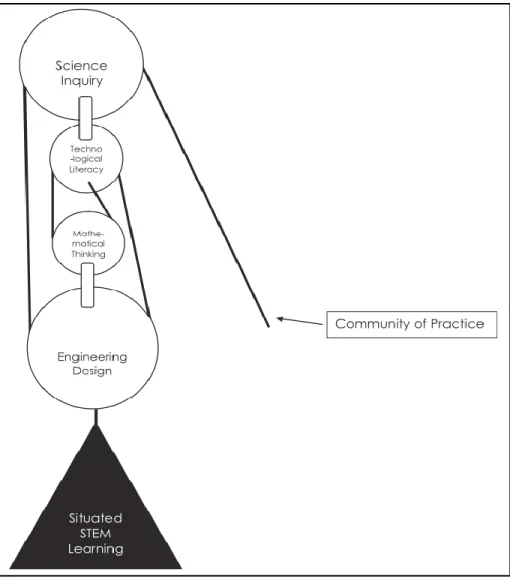
Situated Cognition Theory (SitCT) is an epistemological theory that posits that authentic learning resides in the interrelationship between social, cultural, linguistic, and physical contexts (Brown, Collins & Duguid, 1989). In applying SitCT to STEM education, Kelley and Knowles (2016) have developed a framework for integrated STEM education (Figure 5).
35
Figure 5. Graphic of the conceptual framework for STEM learning. Reprinted from "A conceptual framework for integrated STEM education" by T.R. Kelley and J.G. Knowles (2016) in the International Journal of STEM Education 3(11). Creative Commons license: http://creativecommons.org/licenses/by/4.0/.
Kelley and Knowles define integrated STEM education as "an approach to teaching the STEM content of two or more STEM domains, bound by practices within an authentic context for the purpose of connecting these subjects to enhance student learning" (2016, p. 3). This framework is supported by the following factors: (a) situated STEM learning; (b) engineering design; (c) science inquiry; (d) technological literacy; (e) mathematical thinking; and, (f) a community of practice (Kelley & Knowles, 2016, p. 4). The National Research Council (2014) suggests that
36
integration of these elements is fostered through "problem-, project-, or design-based tasks to engage students in addressing complex contexts that reflect real-world situations" (p. 51). In this thesis, I supplement the integrated STEM education framework with theories from applied linguistics and STEM education to support attitude and interest in STEM subjects. Furthermore, this framework is used to conceptualize the analysis of data from this case study adequately.
3.1.2 Situated STEM learning. Situated STEM learning is the foundation, or the weight (see Figure 5), that bridges STEM concepts with active and applied STEM learning. Kelley and Knowles (2016) state that "when learning is grounded within a situated context, learning is authentic and relevant, therefore representative of an experience found in actual STEM practice" (p. 4). Situated STEM learning is inherently active as it uses hands-on learning experiences in a group/ social context to solve problems with a combination of STEM disciplines, reflective of real-world STEM experiences. The connection between STEM skills and the application of STEM literacy prompted the National Research Council (2009) to supplement the factors of SitCT. The NRC suggests that students should: (a) experience excitement, interest, and motivation to learn about phenomena in the natural and physical world and (b) think about themselves as science learners and develop an identity as someone who knows about, uses and sometimes contributes to science (as cited in NRC, 2014 p. 20). These additional factors highlight the importance of positive attitudes and interest in STEM content in developing an identity as a STEM participant. For ELLs, the development of identity and interest in STEM overlaps with situated language learning. That is, through situated STEM learning in an active problem-solving approach, ELLs are also situating their BICS and CALP proficiencies within a group of English speaking peers.
37
CBI aims to contextualize language in place of learning abstract linguistic rules. Brown, Collins, and Duguid (1989) use language development as an example of situated knowledge and learning in SitCT stating that,
People generally learn words in the context of ordinary communication. This process is startlingly fast and successful … By contrast, learning words from abstract definitions and sentences take out of the context of normal use, the way vocabulary has often been taught, is slow and generally unsuccessful. (p. 32)
CBI claims that by contextualizing language and making it relevant to the subject matter, as well as to ELLs’ real-world experiences, ELLs will be motivated to acquire language to support both their linguistic and content learning needs (Valentine & Repath-Martos, 1992). In STEM education, this means ELLs are not only developing their CALP in STEM, but, given the emphasis on activities in group-work contexts as the foundation for SitCT, their BICS
proficiency advances as well. These experiences support the development of STEM identities, and motivates learners. Therefore, it influences ELLs’ attitude towards and interest in STEM content and self-efficacy in both STEM and SLA.
3.1.3 Engineering design. The first pulley within the integrated STEM education framework focuses on the design process through engineering (Figure 5). Kelley and Knowles (2016) argue that:
The very nature of engineering design provides students with a systematic approach to problem-solving that often occur naturally in all of the STEM fields. Engineering design