University of Tennessee, Knoxville
Trace: Tennessee Research and Creative
Exchange
Doctoral Dissertations Graduate School
5-2011
Examining A School’s Reform Efforts Through
Capacity Building: A Case Study of an Elementary
School
Daphne Helen Odom
This Dissertation is brought to you for free and open access by the Graduate School at Trace: Tennessee Research and Creative Exchange. It has been accepted for inclusion in Doctoral Dissertations by an authorized administrator of Trace: Tennessee Research and Creative Exchange. For more
Recommended Citation
Odom, Daphne Helen, "Examining A School’s Reform Efforts Through Capacity Building: A Case Study of an Elementary School. " PhD diss., University of Tennessee, 2011.
To the Graduate Council:
I am submitting herewith a dissertation written by Daphne Helen Odom entitled "Examining A School’s Reform Efforts Through Capacity Building: A Case Study of an Elementary School." I have examined the final electronic copy of this dissertation for form and content and recommend that it be accepted in partial fulfillment of the requirements for the degree of Doctor of Philosophy, with a major in Education.
Vincent A. Anfara, Major Professor We have read this dissertation and recommend its acceptance:
Pam Angelle, Cheryl Kershaw, Gerald Ubben
Accepted for the Council: Dixie L. Thompson Vice Provost and Dean of the Graduate School (Original signatures are on file with official student records.)
To the Graduate Council:
I am submitting herewith a dissertation written by Daphne Helen Odom entitled “Examining A School’s Reform Efforts Through Capacity Building: A Case Study of an Elementary School.” I have examined the final electronic copy of this dissertation for form and content and
recommended that that it be accepted in partial fulfillment of the requirements for the degree of Doctor of Philosophy, with a major in Educational Administration and Policy Studies.
Vincent A. Anfara, Major Professor
We have read this dissertation and recommend its acceptance:
Pam Angelle Cheryl Kershaw Gary Ubben
Accepted for the Council: ___Carolyn Hodges Dean of the Graduate School
Examining A School’s Reform Efforts Through Capacity Building: A Case Study of an Elementary School
A Dissertation Presented for the Doctor of Philosophy
Degree
The University of Tennessee, Knoxville
Daphne Helen Odom May 2011
DEDICATION
This dissertation is dedicated to my amazing husband who has supported me in a
thousand ways while I worked on this degree. I believe with all my heart that there is nothing the two of us cannot accomplish together. You are an amazing husband and daddy. This is also dedicated to my babies who have never known a time where mommy did not have to study or write. This is for Riley who was born as I finished my EdS, for Emma who was born while I completed my doctoral coursework, to Lucy Kate who was born while I wrote Chapter 2 of this dissertation, and to baby Joshua who was born while I wrote Chapter 4. You four precious miracles are my inspiration in every way. Mommy loves you. I also want to dedicate this dissertation to my mom and sister who sacrificed their time to take care of the babies so I could study or go to class. Thank you both for being so supportive of me. Lastly, I would like to thank my beautiful friend, Amy, for saying yes all those years ago. Thank you for your love, support, laughter, and most importantly for loving me-just as I am. I know that I would not have made it without you. You are so very loved.
ACKNOWLEDGEMENTS
I would like to thank my amazing committee for their support and guidance. Thank you, Dr. Anfara, for taking such good care of me. Your patience and support has meant the world to me. Your belief in me has inspired me to be the very best that I can be. I would like to thank Dr. Angelle and Dr. Ubben for your time and support. I take away important lessons from you both. Additionally, I’d like to thank Dr. Kershaw for being my mentor. I will never be able to thank you enough for your love and guidance over the past 15 years. Thank you for nurturing me.
I would like to thank Dr. Donna Wright for showing me 8 years ago that I would not have to choose between being a professional and a mommy. Your gesture that summer is the reason I decided to pursue my doctorate. I’d like to thank the participants of this study for being so candid and honest. Your dedication to children is inspiring. Lastly, I would like to send my admiration and love to my cohort. I am a better educator for working with our group. Thank you all for your support.
ABSTRACT
Due to accountability measures put in place by No Child Left Behind (NCLB), many schools identified as failing by the legislation are implementing reform efforts. This qualitative case study examined the initiatives one school put in place in order to remove themselves from the NCLB list of failing schools. Additionally, this case study sought to discover evidence of the components of capacity building in one elementary school, Cottonwood Elementary in East Tennessee. The theoretical framework of the study is based on the five components of capacity building as defined by Newman, King, and Youngs (2000). The five components defined by the authors are: teacher knowledge, skills, and dispositions; program coherence; professional community; technical resources; and leadership. Data were collected using interviews, observations and documents. The findings related to the first research question posed in this study were examined through four initiatives created by the administration in an attempt to remove the school from the NCLB list. The administrative team and faculty at Cottonwood Elementary chose to focus on: behavior and the structure of the building, attendance, literacy through professional development, and on data and accountability.Additionally, evidence of each component of capacity building as defined by Newman et al. (2000) can be found at Cottonwood Elementary. After the data were analyzed an additional component of capacity building, internal accountability as defined by Elmore (2007) was found to exist.
TABLE OF CONTENTS
CHAPTER 1 ... 1
Chapter Introduction ... 1
Statement of the Problem... 5
Purpose of the Study ... 6
Research Questions... 7
Definition of Terms... 7
Delimitations... 8
Limitations ... 8
Significance of the Study ... 9
Organization of the Study ... 10
CHAPTER 2 ... 13
Chapter Introduction ... 13
Educational Reform ... 14
History of Reform in the United States... 14
Excellence Movement (Top Down)... 16
Restructuring Movement (Bottom-Up)... 18
Standards Movement ... 19
Conclusion ... 20
Capacity Building ... 21
What is Capacity Building? ... 21
Components of Capacity Building... 28
Teacher knowledge, skills, and dispositions... 28
Professional communities ... 31
Program coherence... 37
Technical resources... 39
Leadership... 40
Previous Research on Capacity Building... 47
Theoretical Framework... 51
Conclusion ... 52
CHAPTER 3 ... 54
Chapter Introduction ... 54
Description and Rationale for a Case Study Design... 56
Qualitative Methods... 57
Role of the Researcher ... 58
Participants and Site... 60
Data Collection ... 61 Interviews... 63 Documents ... 67 Observations ... 68 Data Analysis……….69 Verification Methods ... 72 Conclusion ... 74
CHAPTER 4 ... 76
Introduction... 76
Context... 77
A School at a Crossroads ... 80
Focus on Behavior and Structure of Building... 85
Focus on Attendance... 94
Focus on Literacy through Professional Development... 96
Focus on Data and Accountability... 104
Focus on Change... 110
Conclusion ... 114
CHAPTER 5 ... 116
Introduction... 116
Analysis of the Components of Capacity Building... 116
Teacher Knowledge, Skill and Disposition ... 117
Teacher Knowledge. ... 117 Teacher skill... 120 Teacher disposition ... 123 Summary ... 124 Professional Communities ... 125 Summary ... 130 Program Coherence... 131 Summary. ... 134 Technical Resources ... 135 Summary ... 139 Leadership... 139 Summary. ... 149 A Sixth Component ... 150 Internal Accountability ... 151 Summary ... 160 Conclusion of Findings... 161
Findings on Research Question 1 ... 162
Findings on Research Question 2 ... 163
CHAPTER 6 ... 165
Introduction... 165
Is There a “How to Guide” For Administrators? ... 165
Get Organized ... 166
Stay Visible... 167
Hold Everyone Accountable ... 167
Have High Expectations ... 168
Differentiate Your Professional Development... 168
Learn To Use Data ... 169
In Her Own Words... 169
Where Do We Go From Here? ... 179
Can you build capacity in a school with limited financial resources?... 179
Would a change in leadership affect the capacity of the school? ... 180
Can You Classify The Stages of Capacity Building? ... 180
Concluding Thoughts... 181
REFERENCES ... 183
APPENDICES ... 190
Appendix A - Administrator Interview Protocol ... 191
Appendix B - Teacher Interview Protocol ... 193
Appendix C - Curriculum Coach Interview Protocol ... 195
Appendix D - Follow-Up Interview Protocol ... 196
Appendix E - Cottonwood Elementary Behavior Goal Analysis ... 197
Appendix F - Cottonwood Elementary Weekly Attendance Analysis ... 198
Appendix G - Grade Level Assessment Planning Form... 199
Appendix H - Cottonwood Elementary Lesson Plan Summary ... 200
Appendix I - STIM Agenda ... 201
Appendix J - Cottonwood Walk-Abouts 2009-2010 ... 202
Appendix K - Administrator Survey Results ... 203
Appendix L - Guided Reading/Comprehension Levels Summary ... 205
Appendix M - Cottonwood Elementary Principals’ Expectations of Staff... 206
LIST OF TABLES
1. Contributors to the Literature on Capacity Building (Identified By Component)... 22
2. Matrix Of Research Questions and Data Sources... 62
3. Interview Question Analysis... 64
4. Description of Participants... 66
5. Code Mapping: Three Iterations of Analysis... 71
6. Percent of Students Proficient, 2002-2003 ... 82
7. Office Referrals 2003-2009 ... 94
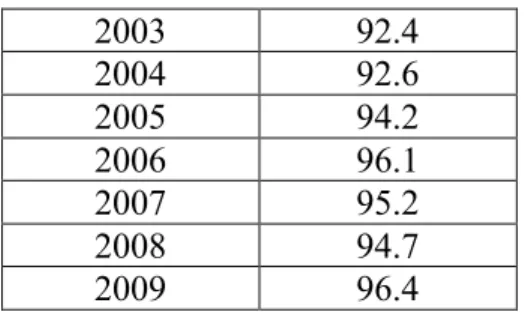
8. Attendance Rates 2003-2009 ... 95
9. Percent of Students Proficient, 2003-2009 ... 104
10. Cottonwood Elementary Assessments... 106
11. Cottonwood Elementary NCLB Standings... 115
12. Teacher Knowledge, Skill and Disposition In Practice at Cottonwood Elementary ... 174
13. Professional Community In Practice at Cottonwood Elementary ... 175
14. Program Coherence In Practice At Cottonwood Elementary ... 176
15. Technical Resources In Practice at Cottonwood Elementary ... 177
16. Leadership In Practice at Cottonwood Elementary ... 178
LIST OF FIGURES
1. Factors influencing school capacity and student achievement. ... 4
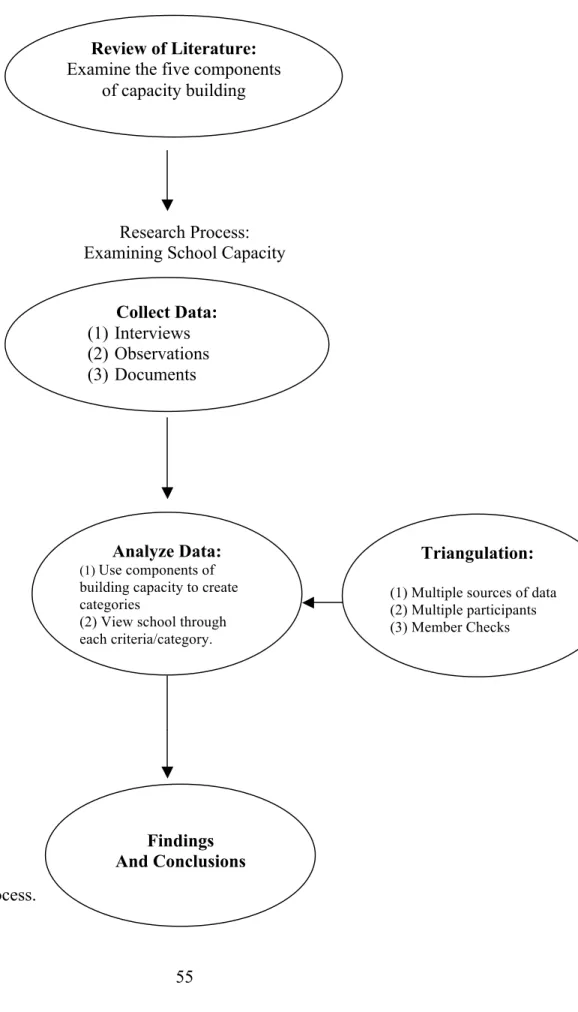
2. Research Process... 55
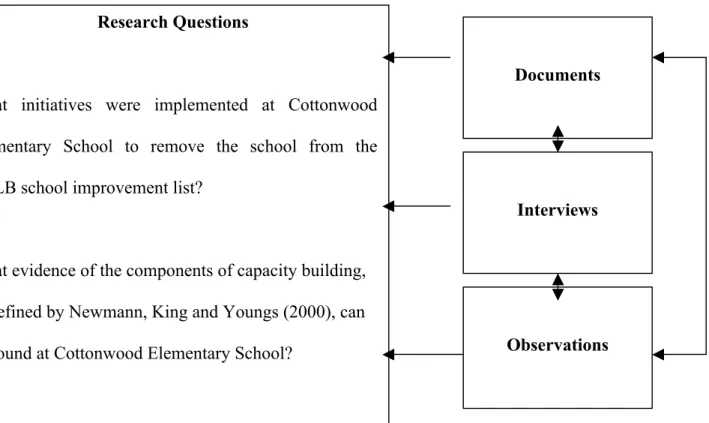
3. Multiple Sources of Evidence... 73
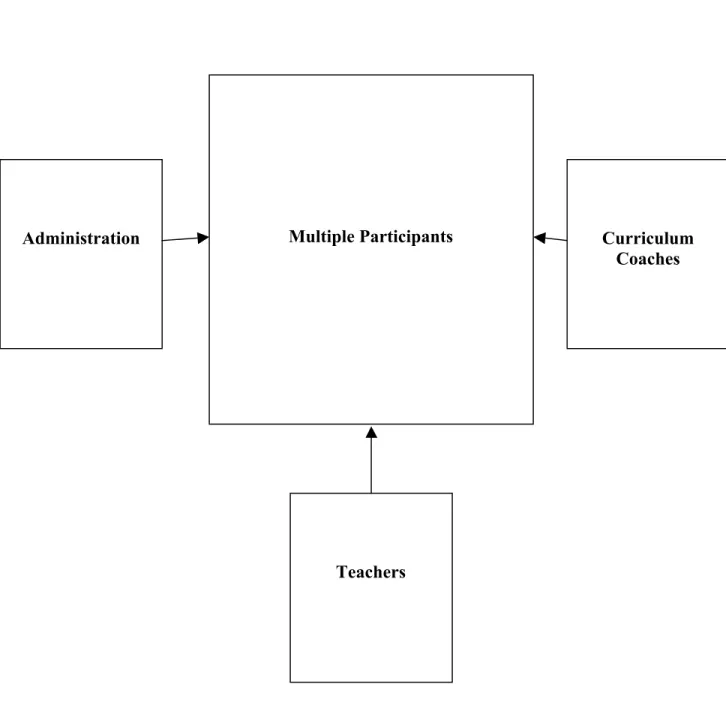
4. Triangulation: Using multiple participant groups... 74
5. Internal accountability as related to the five components of capacity building... 152
CHAPTER 1 INTRODUCTION Chapter Introduction
Today the education profession is caught up in the latest wave of reform known as the standards movement. Seen as the remedy for the past failures of excellence and restructuring programs, the standards movement focuses on each child’s journey towards academic success (Fuhrman, 2003). This emphasis on accountability has schools rushing to make sure all
instructional decisions are aligned with state standards. Focusing on improving student success on statewide-standardized tests is a reaction to meeting the federal standards as dictated by the No Child Left Behind (NCLB) legislation. NCLB is not the first wave of legislation to be passed and, in fact, is one of many legislative mandates concerning education.
In 1965, the Elementary and Secondary Education Act was passed into law. According to Marshall and Pepin (2005), Title I of this act sought to equalize educational opportunities for lower income children. Flashing forward to the1990s, there was a shift in quality goals with the Goals 2000: Educate America Act. However, disagreements over what standards would be implemented, who would measure the progress of the states, and ultimately who was in control over the policy led to the failure of the legislation. Due to differences of opinion among the many policy advisors, the law was never fully funded or supported. As Marshall and Pepin stated:
Ultimately, Democrats and Republicans could not agree on how to interpret the
standards for the states, did not fully fund the program, and subsequently eliminated it in 2000. Goals 2000 took its place in a long line of under-funded federal education
initiatives that demanded change without the resources necessary to accomplish such change. (p. 190)
Picking up where many initiatives have left off, is the No Child Left Behind Act
(NCLB). The law, signed into effect on January 8, 2002, is a federal law aimed at increasing the accountability of schools in order to increase the academic performance of all students. This law specifically targets schools labeled as Title 1 schools. Students are tested annually and the schools are held accountable for the results. If schools or districts do not meet adequate yearly progress (AYP) as defined by their state, they risk several consequences. However, NCLB is unique. Marshall and Pepin (2005) noted, “although NCLBA is listed as a policy aimed at improving quality, it also attempts to encompass equity, excellence and choice goals” (p. 191). NCLB legislation is based on four pillars. These pillars include stronger accountability for results, more freedom for states and communities, proven education methods, and more choices for parents (U.S. Department of Education, 2004b).
Due to the increase in awareness regarding data analyses and standardized testing, along with the accountability measures in place, schools are responsible for ensuring the academic success of all students. In failing schools, traditionally lower income schools, the fight to successfully avoid the NCLB target list is fierce and is the impetus for many schools to
implement new programs in hopes of raising test scores. The change process is not an easy one and is not without hardship.
Newmann, King, and Youngs (2000) and Fullan (2007) described an essential component of the change process called capacity building. Capacity building, or school capacity, affects instructional quality and professional development. Fullan defined school capacity as consisting of the “collective effectiveness of the whole staff working together to
improve student learning for all” (p. 164). The five interrelated components of capacity building as identified by Newmann et al. include,
• Teacher knowledge, skills and dispositions; • Professional community;
• Program coherence; • Technical resources; and • Principal leadership
Teacher knowledge, skills, and dispositions include the instructional practices and pedagogy of staff working with students. Professional community relates to the organizational development of the school and staff. Program coherence concerns the coordination of the schools’ activities and programs, while technical resources are the necessities of a school to work towards
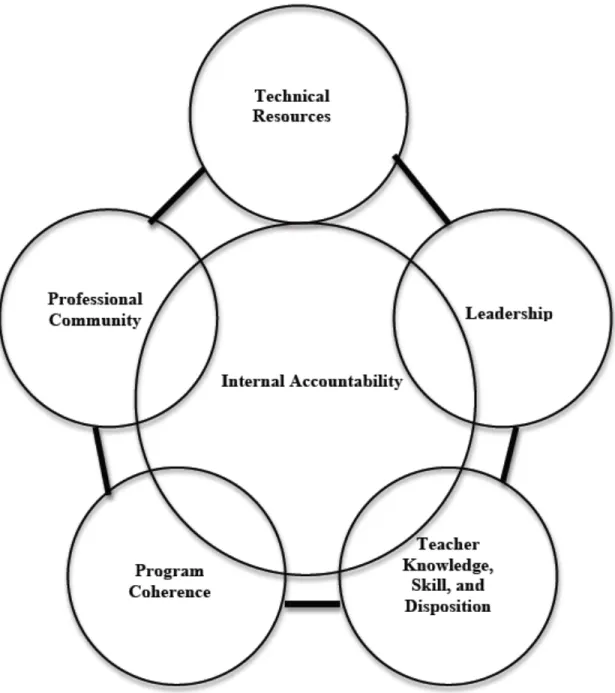
instructional improvement. Last, principal leadership is important as it ties the previous four components together (Newmann et al.). Figure 1 illustrates the factors influencing school capacity and student achievement.
Figure 1. Factors influencing school capacity and student achievement.
Modified from “Professional Development That Addresses School Capacity” by F. Newmann, M. King, and P. Youngs, 2000, American Journal of Education, 108, p. 262. Copyright 2000 by the University of Chicago Press.
Student Achievement
Instructional Quality Curriculum, Instruction, Assessment
School Capacity T Teachers’ Knowledge, Skills, Dispositions Professional Community
Technical Resources Program Coherence
Principal Leadership
Policies and Programs By
School, District, State, Independent Organization On
PROFESSIONAL DEVELOPMENT Curriculum and Assessment Standards Teacher Certification, Hiring Promotion
Special Instructional Programs, Incentives for Innovation School Size, Assignment of Students
Statement of the Problem
Within the educational profession there have been many waves of reform designed to address issues affecting the overall system. Presently, educational professionals find themselves in the middle of the standards movement, where each instructional decision made is related to aligning the content to standards in order to demonstrate student improvement on standardized tests. Due to this push of accountability, and the implementation of NCLB legislation, various reform initiatives designed to bring about change in failing schools are being implemented in hopes of strengthening instructional quality and raising student achievement. Capacity building, or the effort to increase school capacity, is one such effort. In order for the change process and initiatives to be successful, the individuals, or stakeholders, of the schools must believe they can make a difference and that they have the tools to be successful change agents. Capacity
building, as defined by Fullan (2007), is “the policy, strategy, or action taken that increases the collective efficacy of a group to improve student learning through new knowledge, enhanced resources, and greater motivation on the part of people working individually and together” (p. 58).
A problem in education today is schools are so focused on the implementation of change; little attention is given to preparing staffs to be successful agents of change in order to increase student achievement. The concept of capacity building seeks to enhance the collective efficacy of a group and close the learning gap for students (Fullan, 2006). Schools must take time and be invested in reform initiatives at the building level. According to Fullan (2007), school capacity affects instructional quality and student achievement in a positive way. Therefore, schools must take the time and energy to build capacity among the staff. Unfortunately, many schools do not build capacity before or during change initiatives.
Purpose of the Study
The purpose of this qualitative, single site, case study was to explore capacity building as an essential element of effective and successful school reform. This study looked at the reform research, specifically, capacity building and how it contributed to successful school reform, thus leading to an increase in student achievement. This qualitative study was of a Title 1 school once targeted on the NCLB list for poor performing schools.
Cottonwood Elementary, a school in East Tennessee, responded to the legislative requirements mandated by NCLB and has been removed from the NCLB school improvement list. In addition, this school has remained in good standing for three consecutive years. This study sought to examine what steps Cottonwood Elementary School took in order to improve the instructional quality of the staff and raise student achievement. This study also looked for evidence of the components of capacity building as defined by Newmann et al. (2000) present at Cottonwood Elementary School. Though there is a growing body of research on capacity building and its importance when examining school reform, there is much to be added regarding how elementary principals go about building capacity in order to achieve increased student achievement. As Fullan (2001) stated,
We have an increasingly clear idea of what is required at the building level to achieve greater implementation that positively affects student learning. We need to have more case studies of what this looks like at the building level. More than that, however, we need strategies that will increase the number of schools engaged in successful reform strategies. (p. 7)
Research Questions
This case study examined capacity building as an essential element of effective and successful school reform. The central idea of this study was to examine how a school
demonstrated improvement and was removed from the No Child Left Behind target list. The study aimed to look at a school that has implemented reform and achieved success as defined by NCLB. Specifically, this study examined practices designed to improve the academic
performance of students. This study sought to answer the following questions:
(1) What initiatives were implemented at Cottonwood Elementary School to remove the school from the NCLB school improvement list?
(2) What evidence of the components of capacity building, as defined by Newmann et al. (2000), can be found at Cottonwood Elementary School?
These components include:
a) Teachers’ knowledge, skills and dispositions; b) Professional community;
c) Program coherence; d) Technical resources; and e) Principal leadership
Definition of Terms
In order to understand the concepts presented in this study, the term capacity building has been defined.
Capacity Building: Throughout this study capacity building, or increasing school capacity, is defined using the work of Fullan (2007) and Newmann et al. (2000). Fullan defined capacity building as, “the policy, strategy, or action taken that increases the collective efficacy of a group
to improve student learning through new knowledge, enhanced resources, and greater motivation on the part of people working individually and together” (p. 58). Additionally, Newmann et al. defined school capacity as “the collective power of the full staff to improve student achievement school-wide” (p. 261). These two sets of authors agree on five
components or factors influencing a staff’s ability to increase school capacity. These
components are: teacher knowledge, skill and disposition, professional communities, program coherence, technical resources, and leadership.
Delimitations
This study was delimited to one urban elementary school. A single site, qualitative case study design was used. Only teachers, staff, and administrators were interviewed and observed while examining the five components of capacity building. The decision not to include parents, community leaders, and students in the study came from the need to focus on the school’s reform efforts as implemented by the administrators, teachers, and staff of Cottonwood Elementary. Also, the study was delimited by its location. The school studied was located in East Tennessee.
Limitations
There are factors that limited this study. Though a case study design is an “intensive, holistic description and analysis of a single instance, phenomenon, or social unit” (Merriam, 1998, p. 27), there are limitations associated with the design. Merriam listed the following limitations of a case study design: reliability, validity, and generalizability and subjectivity of the researcher. According to Merriam, external validity, or generalizability, is concerned with the extent to which the findings of one study can be applied to other situations. Researchers using a case study model must “persuade consumers of their trustworthiness” (Merriam, p. 199).
Additionally, when examining the subjectivity of the researcher Merriam warned, “Both the readers of case studies and the authors themselves need to be aware of biases that can affect the final product” (p. 43). In addition, the school chosen is a school in an East Tennessee school system. Throughout the data collection process I was employed in East Tennessee as an
assistant principal. This has the potential for bias, which as mentioned earlier, is a limitation of the case study design (Merriam, 1998).
Significance of the Study
There is an abundance of research on the history of school reform, types of reform initiatives, and the change process. With increasing numbers of schools failing to meet NCLB requirements, successful change initiatives designed to increase student achievement are
extremely popular and necessary. States are raising standards, as well as the scores needed to be proficient on state standardized tests. These decisions will place an increasing number of schools on the NCLB list. Studies that provide insight into the journeys of other schools once on the NCLB list and subsequently able to make gains in student achievement are invaluable. Such schools can share their experiences, reform efforts, and initiatives to help increase student achievement.
As evidenced by the many waves of school reform in the past, educators are still
searching for a way to succeed at increasing student learning. Capacity building is one strategy, which is focused on how to assist schools and organizations in promoting student success. Cosner (2009) stated, “This accountability for improved achievement has elevated school reform to central work within the life of schools, work that depends on school capacity” (p. 248). The idea that schools can build their own capacity to increase the instructional quality of their staff, which then leads to an increase in student achievement, makes this a relevant and
important topic. This study is significant because it sought to examine a Title 1 school that was successful at implementing its reform efforts. This study will contribute to the research on capacity building by examining the labors of Cottonwood Elementary School and their use of the five components of capacity building as defined by Newmann et al. (2000). If one
successful school’s efforts can be examined and defined, hopefully a stronger knowledge base can be built for others.
Although there is research available on the individual components of capacity building, research focusing on all five components is not common. The majority of empirical research is from case studies or mixed methods research whose focus is on one or more components of capacity building. A gap in the literature occurs in the availability of case studies focusing on all five components of capacity building.
Organization of the Study
Chapter 1 provided a brief history of the legislation that has led to the current state of accountability education. Next, capacity building was defined using the research of Fullan (2007) and Newmann et al. (2000). The five components of capacity building used in this study include (a) teachers’ knowledge, skills and dispositions; (b) professional community; (c)
program coherence; (d) technical resources; and (e) leadership (Newmann et al.). Additionally in the chapter, the statement of the problem, purpose of the study, research questions, definition of terms, delimitations, limitations, and significance of the study were addressed.
Chapter 2 discusses the construct of capacity building and its five components as defined by Newman et al. (2000). It begins with a discussion of the history of educational reform in our country. More specifically, the three waves of reform beginning with the excellence movement, then the restructuring movement, and last the standards movement are covered. Next, the idea
of capacity building is explored and examined. A specific focus is placed on the five
components of capacity building, as defined by Newmann et al. Additionally, various forms of empirical research examining the components of capacity building are summarized. Last, capacity building is examined as the theoretical framework of the study.
Chapter 3 describes the research methods and designs of the study. In this chapter the rationale for using a case study design is given and there is a discussion concerning the qualitative design of the study. The role of the researcher, participants and site is discussed. Data collection methods, specifically, documents, interviews, and observations are examined. Procedures for data analysis, as well as verification methods, are also included in this chapter.
Chapter 4 presents an analysis of the data and answers the first research question: What initiatives were implemented at Cottonwood Elementary School to remove the school from the NCLB school improvement list? An in-depth discussion of the efforts implemented by
Cottonwood Elementary will be discussed. The chapter will present the findings and summarization of the data.
Chapter 5 presents an analysis of the data and answers the second research question: (2) What evidence of the components of capacity building, as defined by Newmann et al. (2000), can be found at Cottonwood Elementary School? Throughout this chapter is a discussion of the daily activities, procedures, and culture of the school. Additionally, the five components of capacity building are discussed in terms of these daily activities.
Chapter 6 concludes the study with a discussion of how the findings support and extend the current research on the components of capacity building. Recommendations for future studies will be presented in the chapter. Additionally, the final chapter offers suggestions for
administrators going through reform efforts. Lastly, Chapter 6 concludes with the researcher’s thoughts and reflections.
CHAPTER 2
REVIEW OF RELATED LITERATURE Chapter Introduction
In order to better understand the relevance of capacity building in education today previous reform efforts must be reviewed. The literature reviewed in this chapter will focus on the history of school reform, including the three waves of reform: the excellence movement, the restructuring movement, and the standards movement. Next, the current wave of reform, known as the standards movement, which has influenced many schools and administrators to
implement various change initiatives and reform efforts, specifically, capacity building will be explored. Throughout the review of literature, previous studies focused on the concept of capacity building will be closely examined. The construct of capacity building will function as the theoretical framework for this study and each component of capacity building will be addressed.
The purpose of this qualitative, single site, case study is to explore capacity building as an essential element of effective and successful school reform. This study looks at the reform research, specifically, capacity building and how it contributes to successful school reform, which leads to an increase in student achievement. Also examined will be capacity building as an essential element of the reform process. Specifically, a school that has implemented reform and found success as defined by No Child Left Behind will be evaluated. The guiding question through the research process is, exactly what did the school in question do to improve the academic performance of its students? This study sought to answer the following questions:
(1) What initiatives were implemented at Cottonwood Elementary School to remove the school from the NCLB school improvement list?
(2) What evidence of the components of capacity building, as defined by Newmann et al., (2000) can be found at Cottonwood Elementary School?
The majority of the research used in this study was theoretical. The focus of the research either examined the concept of capacity building or looked at one of its components exclusively. However, some empirical studies were used. One such example, Borko, Wolf, Simone, and Uchiyama’s (2003) study of two elementary schools in the state of Washington closely examines the reform efforts of two schools through each of the five components of capacity building. The remaining empirical studies cited in this review of literature concentrate on one or a few components, but not all five. The studies are discussed throughout the review of literature.
The research was obtained by electronic searches using Google Scholar, ERIC and Education Full Text databases for online articles. Additionally, databases were used to identify books on the subject of capacity building or one of the components. Additionally, resources were found searching on the University of Tennessee’s library website through e-journals and periodical searches.
Educational Reform History of Reform in the United States
Fuhrman (2003) described past reform movements as waves, while Bunting (1999) described the movements as pendulums swinging back and forth. To those in education, they are simply various efforts to reform the education system in our country. Though the political climate may have changed with each new wave, the intent has remained the same: to provide
the best education for our nation’s children. Before discussing the specific waves of reform, it is necessary to understand the impact several historic events have had on education. The launch of Sputnik (1957), the Brown v. Board of Education legislation (1954), the Civil Rights Act of 1964, the publication of the Coleman Report The Equality of Educational Opportunity (1966), the passing of the Elementary Education and Secondary Act of 1965, and finally the release of A Nation at Risk (1983) are all events which ultimately led to the first wave of reform known as the excellence movement.
In 1957, the Russians launched the spacecraft Sputnik and overnight the political and educational systems in our country were changed. Setting in motion the National Defense Education Act (NDEA), the launch of Sputnik caused the United States to believe they had lost their scientific and technological lead over the rest of the world (Fuhrman, 2003; Urban & Waggoner, 2000). The Cold War fears resumed and the “brain race” was on with the Soviets in the lead. With the passage of NDEA in 1958, public education saw an increase in assistance to colleges in the form of loans and scholarships, and financial aid to states to improve in science, math, technology, foreign language, counseling and guidance services (Urban & Waggoner).
Also affecting the social, political, and educational climate in 1954 was the court
decision from Brown v. Board of Education. Stating the court’s intentions in no uncertain terms, Chief Justice Earl Warren wrote, “We conclude that in the field of public education the doctrine of ‘separate but equal’ has no place. Separate educational facilities are inherently unequal” (Urban & Waggoner, 2000, p. 299). Regarding the educational and political impact, Urban and Waggoner stated, “It may have been one of the few occasions in our history when an
educational policy was the catalyst for the substantial changes in social relations and policies outside the schools” (pp. 288-289). This decision mandated integration within the public school
system, forever changing the face of education. This type of political shifting eventually led to the passage of the Civil Rights Act of 1964.
The launch of Sputnik had forced the nation to focus on math, science, and technology. With the passage of the Civil Rights Act, education began to look at the impact on the Civil Rights Movement (Bunting, 1999). Diane Ravitch (cited in Bunting, 1999) stated, “Society was clearly in the throes of a moral crisis that could not be resolved through a more rigorous, more demanding math and science curriculum” (p. 213). Essentially, what was taught was no longer as important as who was taught (Bunting, 1999). With the publication of the James Coleman and colleagues’ report in 1966, The Equality of Educational Opportunity, a look at the lack of educational opportunities for students of poverty was brought to the forefront (Urban & Waggoner, 2000). With the spotlight on the issue of poverty, questioning the effects of economic class, race, and school achievement became important in education.
With the emphasis on equity came what some call the “single most influential piece of educational legislation in American history” (Urban & Waggoner, 2000, p. 328). The
Elementary and Secondary Education Act of 1965 was a response to the serious issue of children living in poverty and the effects this had on education in our country. Children in poverty, were the emphasis as Title 1 programs brought awareness to the war on poverty and its impact on education.
Excellence Movement (Top Down)
The reform focus turned again with the release of the 1983 publication, A Nation at Risk
(National Commission on Excellence in Education, [NCEE] 1983). Urban and Waggoner
(2000) described this publication as an effort to convince the public that the United States was in the midst of a national crisis. The report challenged the country’s lack of progress in
educational reform by clearly stating that other nations were outperforming U.S. students, U.S. students had lower test scores, and there was an increasing dropout rate in the country. (Elmore, 2003; Fuhrman, 2003; Urban & Waggoner). This report began a national discussion regarding the future of the US educational system (Borek, 2008).
The battle cry of the excellence supporters was to get back to basics and traditional disciplines. A Nation at Risk (NCEE, 1983) caused many in the business world to sit up and take notice as they became worried there would not be enough trained employees for the work force which would lead to a weakened economy. An emphasis was placed on preparing our students to compete in the international job market, all in an effort to reduce the “rising tide of
mediocrity” (Fuhrman, 2003, p. 8). Additionally, according to Hunt (2008), businesses were involved in influencing state legislatures, who in turn influenced public schools to use a more business-minded approach to reform and managing schools.
There are several standards the excellence movement sought to implement. Raising academic standards for teachers and students is the most prevalent theme of the excellence movement. Additionally, in an effort to reduce the trend of poor performing schools and unqualified students, the excellence movement sought to actualize a variety of measures aimed at reversing the trends of decline. Additional measures put into action during this wave of reform included emphasizing student assessments, increasing graduation rates, a longer school year, and stricter requirements for teacher certification (Bunting, 1999; Fuhrman, 2003; Hunt, 2008).
In an effort to address how schools had reached this point of failure, A Nation at Risk
(NCEE, 1983) specified a number of degradations that had occurred. Richard Elmore (2003) stated the central problem was defined, “as low expectations for academic work in schools,
weak preparation for teachers in academic content, and insufficient time on academic work in schools” (p. 25). Educators were assumed to be part of the problem, and not necessarily the professionals needed to help solve the problematic issues identified in education. In fact, Elmore stated, “Throughout the entire post-Nation at Risk period, education reform was largely done to, rather than donewith, educational professionals” (p. 27).
Restructuring Movement (Bottom-Up)
The restructuring movement, also known as reform from the bottom-up, evolved in the late 1980s. Characteristics of this reform movement included collaborative planning time, longer classes, and site-based management (Fuhrman, 2003, p. 9). The majority of the restructuring took place at the district level (Hunt, 2008). District administrations sought to empower school level administrators through the concept of site-based management.
When comparing the restructuring movement to the excellence movement, Hunt (2008) said, “Unlike the excellence movement, the restructuring movement was encouraged and promoted by educators and their professional associations. This was the golden age of site-based management and the flattening of organizations” (p. 582). School boards and superintendents were asked to release control to school-level administrators and teachers. Teachers were encouraged to try new teaching strategies and pedagogy in this era of creativity. Professional learning transformed into “instructionally related approaches to improving
classroom learning” (Hunt, p. 582). Specifically, educators were asking: How can we best engage students?
Teachers were at the core of this change process (Bunting, 1999). Similarly, Hunt (2008) reported that teachers were asked to contribute their expertise to the reform efforts. Viewed as professionals, teachers and administrators were given the autonomy to make the
day-to-day decisions regarding their staff, students, and buildings. Teachers were asked to
contribute ideas and sit on teams put together for the purpose of designing curriculum aimed at showcasing creativity and engaging students. Additionally, Bunting stated, “Today’s reform centered on restructuring, underscores that decisions about education belong to everyone, especially to those front liners who day after day are expected to make things work in schools” (p. 215). Fuhrman (2003) stated,
Neither the excellence nor the restructuring movement produced the results their proponents desired. Student performance remained relatively flat. Researchers found that excellence reforms frequently led to superficial change; for example, more math and science courses were offered in the wake of higher graduation requirements, but the courses were often remedial. (p. 9)
Standards Movement
Today the world of education finds itself right in the middle of a third wave of reform called the standards movement. Fuhrman (2003) described this movement as the one that connects the excellence and restructuring movements. This wave of reform is seen as the remedy to all the previous failures of the earlier reform efforts. Hunt (2008) described this movement by saying,
It has shifted public focus, sometimes with laser-like intensity, to the building level. It has redirected attention from the activities of teachers to the achievement of students. Rather than emphasizing the results of mandates such as course requirements and teacher certification standards, the movement has focused on how well individual students and groups of students are able to perform academically. (p. 583)
The focus of the standards movement is on student achievement and performance, and this is almost always measured by a standardized state assessment. Using data, administrators and teachers work together to address the individual needs of each student (Hunt, 2008). Integrated into all the state assessments used to measure and evaluate student progress are state standards. This movement has increased the emphasis on school improvement planning as well as a looking at individual student performance.
Since the publication of A Nation at Risk (NCEE, 1983), educational policies have been aimed at competing internationally. Not only did the United States government feel the need to compete with the rest of the world educationally, but also economically. This desire to thrive within the global economy was another triggering mechanism of NCLB and the emphasis of the restructuring movement (Fuhrman, 2003). Much like the excellence movement, the need to produce highly qualified workers is an important facet of the standards movement. According to the U.S. Department of Education’s website, “Satisfying the demand for highly skilled workers is the key to maintaining competitiveness and prosperity in the global economy. Raising student achievement directly leads to economic growth” (U.S. Department of Education, 2004a).
Conclusion
In this section of the review of literature each wave of the reform movement was
discussed. The excellence movement sought to get back to the basics (e.g., math, science, social studies, language arts, reading) and traditional disciplines. Additionally, an emphasis was placed on preparing our students to compete in the international job market. The next reform movement, the restructuring movement gave schools the authority to make instructional decisions for themselves. Teachers were encouraged to try new teaching strategies and
pedagogy in this era of creativity. Today the field of education is in the midst of the standards movement. Within the standards movement the focus is on student achievement and
performance, and this is almost always measured by a standardized, high-stakes state
assessment. With the increase in emphasis on standardized test scores, more schools are feeling the consequences of the school improvement list as defined by NCLB legislation. It is because of the accountability component of the standards movement that schools must put in place reform efforts such as capacity building.
Capacity Building What is Capacity Building?
With an increase in accountability, the standards movement continues to take center stage in education. The research surrounding reform and increasing student achievement continues to gain momentum as well. Capacity building is an essential strategy used while implementing reform and change initiatives. The body of research focused on school capacity building is becoming more prevalent as schools, educators, and researchers focus on how to raise student achievement through reform efforts. For an overview of literature on the concept of capacity building, refer to Table 1. Those focusing their research efforts on capacity building have found that increasing school capacity increases the success of reform efforts as well as student achievement (Borko et al., 2003; Cosner, 2009; Newman et al., 2000; Youngs, 2001; Youngs & King, 2002).
Table 1
Contributors to the Literature on Capacity Building (Identified By Component) Capacity Building Teachers’ Knowledge, skill and disposition Program Coherence Professional Community Technical Resources Leadership Borko, H., Wolf, S., Simone, S. & Uchiyama, K. (2003) X X X X Brown, D. (2002) X Collins, J. (2001) X Corallo, C., & McDonald, D. H. (2002) X X Cooter, R. (2003) X Cosner, S. (2009) X Curry, M., & Killion, J.
(2009) X Darling-Hammond, L. (1995, 2008) X Dufour, R., Dufour, R.,
Eaker, R., & Karhanek, G. (2004)
X
Earl, L., & Lee, L. (2000) X Easton, L. (2008) X X Fullan, M., Cuttress, C., & Kilcher, A. (2005) X Fullan, M. (2006) X X X X Fullan, M. (2007) X X X X X X Helm, C. (2007) X Hord, S. (2009) X Hughes, G., Copley, L., Howley, C., & Meehan, M. (2005) X X X X Knapp, M. (1997) X X X X X X Lambert, L. (2006) X Marzano, R., Waters, T., & McNulty, B. (2005) X Marzano, R. (2007) X Newmann, F., King, M. & Youngs, P. (2000) X X X X X X Newmann, F., Smith, B., Allensworth, E., & Bryk, A. (2001)
X X
Sergiovanni, T. (2004) X
Smith, W., & Andrews, R. (1989)
X
Youngs, P. (2001) X X
Youngs, P., & King, M. (2002)
The theoretical framework for this study focuses on the concept of capacity building as defined by Fullan (2007) and Newmann et al. (2000). These authors discuss and analyze how schools can build capacity in order to improve student achievement and instructional quality. Fullan (2007) defined capacity building as a “policy, strategy, or action taken that increases the collective efficacy of a group to improve student learning through new knowledge, enhanced resources, and greater motivation on the part of people working individually and together” (p. 58). Additionally, Newmann et al. (2000) stated, “The collective power of the full staff to improve student achievement school-wide can be summarized as school capacity” (p. 261). This can be achieved through enhancing the five components of school capacity as defined by
Newmann et al.: teacher knowledge, skills and dispositions, professional community, program coherence, technical resources, and principal leadership. Similarly, Hughes, Copley, and Meehan (2005) defined school capacity as, “the presence of characteristics needed to support the development of a thriving learning community” (p. 10). Supporting previous definitions, Cosner (2009) defined capacity building as “a collection of resources, interactive in nature, that support the school-wide reform work, teacher change, and ultimately the improvement of student learning” (p. 250).
School capacity affects student achievement and the quality of instruction (Fullan, 2007). Focusing on improving the quality of instruction through capacity building provides opportunities for an organization, a teacher, and/or a school’s ability to engage in continuous improvement. Fullan (2006) stated the reason there is low student achievement or poor
instructional quality is that those involved do not know how to improve the situation or do not believe they can improve it. Fullan (2006) maintained that capacity building strategies work
because, “they give people concrete experiences that improvement is possible. People need proof that there is some reality to the higher expectations” (p. 62).
Fullan’s (2007) work on capacity building has many features and points. He maintained that everything you do effects newly acquired “knowledge, skills, and competencies; enhanced resources; and stronger commitments” (Fullan, p. 252). Fullan contended when schools build capacity on their own, schools are empowered to be successful and continue to sustain the reform efforts. Fullan asserted that capacity building is a collective effort that must be acted upon by all levels of support, including the local, district, and state levels. Fullan also discussed the government’s role in capacity building stating,
Governments can push accountability, provide incentives, and/or foster capacity building. We will see that if they do only the first and second, they can get some short-term results that, I will argue are real but not particularly deep or lasting. If they do all three, they have a chance of going the distance. (pp. 236-237)
Similar to Fullan (2007), Cooter (2003) applied the 5 concepts of capacity building to his studies on reform efforts in urban schools. Cooter likened capacity building to effective teacher development and maintained it was crucial when developing, implementing, and sustaining any type of reform effort. Authors Greenwald, Hedges, and Laine (1996) stated teacher capacity building was one of the most productive investments for schools and far exceeded the benefits of teacher experience or class size. Agreeing with Greenwald et al., Cooter maintained, “there is strong evidence in the research of the positive impact of capacity building on student achievement” (p. 199). The author continued:
A key feature of this capacity-building model for teacher development is distributed learning over time. It acknowledges that neither cognitive development of new
knowledge nor field practice is sufficient in the professional development of teachers. Rather, the combination of both elements- new learning developed over time and practice under the guidance of a more knowledgeable coach- is the most effective practice. (p. 199)
Knapp (1997) concurred with previously cited research from Newmann et al. (2000) and Fullan (2007). Knapp agreed the previously mentioned five components as necessary to
building capacity, are teacher knowledge, skills, and dispositions; program coherence; technical resources; professional communities; and leadership but expanded upon them by including vision and leadership, a collective commitment, supportive norms and resources, and structures conducive to learning. Differing from Newmann et al., Knapp also viewed professional
development as a necessary component in addition to professional community. Knapp viewed this as important enough to stand-alone and declares professional development as important as the components identified by Newman et al.
Borko et al. (2003), in their study of two high poverty elementary schools in the state of Washington, combined the work of Newmann et al. (2000) and Knapp (1997) to create six dimensions of capacity building. Professional development was added as the sixth component of capacity building. The schools in this study were chosen because of their increase in student achievement and their exemplary performance on the Washington state assessment (WASL). Both schools had a history of poor performance on the state assessment and demonstrated success in raising student achievement as defined by the state of Washington. The study analyzed the schools’ progress toward successful implementation of six dimensions of capacity building. Researchers found principal leadership to be the most important factor in determining the success of a school’s reform efforts (Borko et al.).
Similarly, Earl and Lee (2000) found leadership was key in their study designed to look at sustaining school improvement through capacity building. Earl and Lee studied 22 secondary schools previously labeled as poor performing and looked specifically at the practices and principles that guided the schools during the improvement process. Their findings include strong teacher skills and knowledge base, shared leadership, relationships among staff and students, as well as timely support from outside agencies assisting with the capacity building process (Earl & Lee). The authors determined that these practices must be implemented for improvement to continue. Specifically Earl and Lee noted, “It’s not just quantity, or even quality, of support that matters, but access to the right type of intervention at the right time” (p. 35).
All five of the components chosen for this study on capacity building are interrelated and necessary for the success of increasing student achievement. Youngs and King (2002) found in their study of principal leadership and school capacity that all five components must be present in order to achieve the most successful results. Youngs and King stated, “All five dimensions of school capacity are related, and each one has the potential to affect one or more of the others. For example, teacher collaboration can strengthen teachers’ knowledge, skills, and dispositions. On another hand, a lack of program coherence can weaken shared goals for student learning” (p. 647).
For the purposes of this study, the five components of capacity building as defined by Newmann et al. (2000) will be addressed. Fullan (2007) also used these five components in his work on capacity building. These five components were chosen as the focus of this study due to the use of Newmann et al.’s work in each piece of research used for this review of literature, both empirical and theoretical. The five components of capacity building are professional
communities, technical resources, program coherence, leadership, and teacher knowledge and skills. However, additional components to the original five as defined by Newmann et al. can be found in other research studies. For example, Cosner’s (2009) study on capacity building looks specifically at building trust through organizational and school capacity. Cosner’s study supports and extends previous research on capacity building because of the additional emphasis on trust as a necessary component of school capacity.
Additionally, Youngs and King (2002) found in their study on principal leadership and school capacity that building trust was an important component of successful capacity building efforts. Cosner (2009) found collegial trust emerged as an important theme among ten of the eleven principals studied in the author’s research on organizational and school capacity. Cosner contended trust could be considered a key component of the capacity building work of these principals. Specifically, Cosner stated that the “research on school reform and organizational change points to the importance of collegial trust as a social resource and dimension of school capacity” (p. 257). According to Cosner trust was an essential aspect in each of the five components listed by Newmann et al. (2000). It is a necessary layer of teacher knowledge and skills needed for reform as well as the importance of collegial trust when developing
professional communities among staff. The more time teachers have to meet and collaborate with one another, the more likely trust among the members of the community is to develop. Additionally, trust is needed when developing relationships among administration and staff. Youngs and King in their study of principal leadership, found a school’s capacity was
strengthened when principals fostered and developed trust, specifically by managing conflict proactively and effectively. Cosner was able to weave the concept of trust into each of the five
components as identified by Newman, et al. In order to truly dissect the definition and components of capacity building, an in-depth look at each of the components is necessary.
Components of Capacity Building
Teacher knowledge, skills, and dispositions. The definition of school capacity, according to Fullan (2007), is the focus on an organization, a teacher, and/or a school’s ability to engage in continuous improvement. In order for this to occur there must be an emphasis on quality teaching. A teacher’s knowledge, skills and dispositions towards education play an important role in determining the success of a school’s reform efforts (Hughes et al., 2005). School capacity, according to Newmann et al. (2000), includes the knowledge, skills, and dispositions of individual staff members.
In their study of two high poverty elementary schools, Borko et al. (2003) cited the importance of teacher knowledge. The authors contend that in order for reform efforts to be successful, teachers must have the knowledge and skills (e.g., frameworks, curriculum maps, assessments, and professional development opportunities) to drive the reform agendas (Borko et al.). Supporting Borko et al.’s research findings is the Youngs and King (2002) study of
principal leadership and school capacity. Youngs and King focused on the importance of teacher knowledge and skills citing teacher competence as necessary for effective classroom practice. According to Youngs and King teachers must integrate subject knowledge, subject matter, and student knowledge into each unit and lesson to achieve maximum learning of students. Additionally, a school’s capacity includes the knowledge, skills, and dispositions of individual teachers and each teacher must be professionally competent in curriculum and pedagogy (Youngs & King).
Easton (2008) defined teacher knowledge as the conceptual understanding of research, theories, principles, and information. According to Hughes et al. (2005), teachers who
collaborate and observe one another find themselves less isolated and involved in greater learning opportunities, thus increasing their level of professional knowledge. In order to achieve a deeper base of knowledge, an emphasis on deprivatized practice in school communities as instrumental in effective development of teachers was encouraged. This practice, where teachers observe one another’s methods and practices while providing feedback to each other, is one example of a method used to increase teacher knowledge.
Skills are strategies and processes used to apply knowledge (Easton, 2008). Strong and effective classroom management is one such skill (Brown, 2002; Darling-Hammond, 2008; Hughes et al., 2005; Marzano, 2007). Both Brown and Marzano stated teachers should work towards establishing a classroom of respect among both teachers and students while
communicating realistic goals, learning objectives, and expectations. Effective classroom management allows the maximum amount of student learning to occur within the classroom. Brown considered the failure to establish classrooms and procedures based on mutual respect, as the number one reason teachers are not successful in the teaching profession. “Learning is an emotional as well as cognitive process, and knowing students well can establish a positive social and emotional bond” (Brown, pp. 67-68).
In addition to classroom management, developing knowledge and skills in
differentiating instruction is necessary for quality instruction to take place. Contributing to the school’s capacity to achieve and sustain improvement is an individualized teaching plan for each child in the school (Brown, 2002; Darling-Hammond, 2008; Marzano, 2007).
assessments to evaluate student learning, assignments based on student need and ability level, curriculum chosen to meet the interests and needs of students, varying expectations for what each student will learn, and a variety of instructional and assessment techniques. Hammond (1995) discussed equitable teaching practices and differentiated instruction. Darling-Hammond stated successful education could occur only if teachers are prepared to meet
rigorous learning demands and the different needs of students. According to Hughes, et al. (2005) differentiated instruction involves varying the content and instruction and learning environment to meet the diverse needs of students. A major goal of building and increasing school capacity is to increase student achievement (Corallo & McDonald, 2002; Fullan, 2007; Newmann et al., 2000). In order to increase student achievement, according to Brown, teachers must choose instructional strategies that promote “the development of the thinking processes, particularly research skills, analytical thinking, and problem solving” (p.113).
Highly effective teachers also engage in a variety of teaching practices designed specifically to meet their students’ individual needs while simultaneously increasing student capacity and achievement. Darling-Hammond (2008) listed the following characteristics of effective teachers: create ambitious and meaningful tasks, engage students in active learning, draw connections to students’ prior knowledge, scaffold the learning, engage in ongoing assessment of student learning, provide clear standards and give feedback, and encourage strategic and metacognitive learning. Teachers with these characteristics find themselves more likely to increase the levels of achievement of students in their classrooms.
Dispositions are the beliefs teachers have in their students and their ability to learn. “Teachers’ attitudes, perceptions, expectations, and assessments are also closely bound to the likelihood that their school is well positioned to undertake significant school improvement
work” (Hughes et al., p. 14). Educators who believe they are not capable of successfully teaching their students will not have a belief in the school community’s broader attempts to build capacity or succeed in the reform efforts. Collective and individual teacher efficacy is critical to the capacity process. Equally as important is the teacher’s attitude not just towards the improvement process but also towards students and the curriculum. The key to increasing student achievement is a teacher’s disposition and attitude toward their students and the curriculum (Brown, 2002; Helm, 2007; Hughes et al., 2005; Marzano, 2007; Newmann, King, & Youngs, 2000). Successful teachers, according to Hughes et al., get to know students, are encouraging of students, communicate a belief in their students, as well as a belief that all students have the ability to learn.
Additionally, Helm (2007) found teachers who possess the right dispositions could be successful in teaching students regardless of race or socioeconomic status. Helm identified specific characteristics of teachers who exhibited excellence in teaching. Helm believed educators must love children, respect all children and parents, see the potential in each child, motivate children to their highest potential, be spontaneous, humorous and creative. Helm noted of successful teachers, "Teachers must possess and exhibit the disposition of caring, have a positive work ethic, and be able to think critically” (p. 110).
Professional communities.Capacity building is about giving teachers and schools the tools and skills necessary to sustain improvement over time. As stated previously, Fullan (2007) viewed professional learning communities as necessary to the on-going collaboration and development that must occur within the school-wide community in order for capacity building to thrive. As cited in Dufour, Dufour, Eaker, and Karhanek (2004), the National
Commission on Teaching has this to say regarding the importance of professional learning communities,
Quality teaching requires strong professional learning communities. Collegial interchange, not isolation, must become the norm for teachers. Communities for
learning can no longer be considered utopian; they must become the building blocks that establish a new foundation for America’s schools. (p. 1)
Similarly, Hord (2009) maintained teaching quality depends on the continuous professional learning of teachers. Hord believed that professional learning could not be something added to the plate of teachers. Specifically, Hord stated, “Learning is not an add-on to the role of the professional. It is a habitual activity where the group learns how to learn together” (p. 40).
Before examining what a true professional learning community looks like, it is important to examine what types of professional development have been used in the past. Professional development has historically been offered as a range of experiences from daylong workshops to conferences (Curry & Killion, 2009). Professional development geared specifically for
individual teacher needs has not traditionally been the focus of professional development. Instead, according to Curry and Killion, regional or district workshops or other types of required professional development often had their content decided upon by someone other than the classroom teacher. The professional development occurred outside the school, was short-term and had limited follow-up support. Instead, Curry and Killion maintained, professional learning communities should follow a reform-oriented approach. They stated, “Reform-oriented
professional development is more effective in changing teacher practices than traditional approaches to professional development” (Curry & Killion, p. 58). However, not all
district and state influence on professional development and school capacity, Youngs (2001) looked at various reform efforts across the United States. Youngs found the majority of reform efforts indeed strengthen teacher knowledge and skill; however, most efforts do not have much of an impact on the other four components of capacity building. Therefore, Youngs maintained that it was up to individual schools and leadership to incorporate the remaining four components into the professional development agenda of a school.
Knapp (1997) stressed the importance of professional development in terms of its crucial impact on the success of building capacity. While Newmann et al. (2000) and Fullan (2007) included professional development as a part of the professional community component, Knapp included professional development as a component all its own. However, all of the above mentioned authors agree professional development is a necessity to reform efforts. As Fullan (1991) stated, “Continuous development of all teachers is the cornerstone for meaning,
improvement, and reform. Professional development and school development are inextricably linked” (p. 315). Fullan (1991) viewed professional development as both a strategy for specific instructional change and a strategy for basic organizational change in the way teachers work and learn together. Youngs and King (2002), in their study of principal leadership, professional development and school capacity, also emphasized the importance of professional development. Youngs and King stated a single professional development activity could strengthen the quality of a teacher’s instructional practice and student achievement even if the topic only addressed one or two components of capacity building.
Dufour et al. (2004) maintained that there are six core elements necessary to create an effective professional learning community. First, there must be a shared mission, values and goals. Next, a collaborative culture with a focus on learning for all must exist. Additionally,
there needs to be an emphasis on transforming collective inquiry into best practice. Meaning, professional learning communities must have an action component as well as a commitment to continuous improvement with a focus on results.
Kruse (1994) also discussed the five elements she felt must be included in a professional learning community. First, Kruse stated that there needs to be a reflective dialogue among all members of the professional learning community. Important as well is a de-privatization of practice. Similar to Dufour et al. (2004) and Youngs and King (2002), a collective focus on student learning is mandatory as well as a collaboration centered on shared values and norms.
Hord (2009) listed six research-based dimensions of a professional learning community. Concurring with Fullan (2006), Kruse (1994), Dufour et al. (2004), and Youngs and King (2002), Hord included the importance of shared beliefs, values, and a vision for the school. Differing from the aforementioned authors, Hord added the importance of shared and supportive leadership. Here power, authority, and decision making is a team effort with each member having their voice heard and respected. Additionally, Hord believed structural conditions such as resources were necessary for the team to be successful. A time and place for the group to meet are also important parts of a successful professional learning community (Hord, 2009). Hord also supports the significance of respect and trust in the professional learning community. In addition to Kruse, Cosner (2009), Fullan, and Dufour et al., Hord discussed the necessity of collective learning. This learning, according to Hord must be “intentionally determined to address student needs and the increased effectiveness of the professionals” (p. 42). Last, Hord explained the group must peer share their experiences and practice in order to gain feedback, which in turn strengthens their collective learning.