University of Wisconsin Milwaukee
UWM Digital Commons
Theses and DissertationsMay 2019
Initial Educators’ Perceptions of Their Readiness for
the Classroom Through Co-Teaching and
Traditional Models of Student Teaching
Nathan JoyntUniversity of Wisconsin-Milwaukee
Follow this and additional works at:https://dc.uwm.edu/etd
Part of theTeacher Education and Professional Development Commons
This Dissertation is brought to you for free and open access by UWM Digital Commons. It has been accepted for inclusion in Theses and Dissertations by an authorized administrator of UWM Digital Commons. For more information, please [email protected].
Recommended Citation
Joynt, Nathan, "Initial Educators’ Perceptions of Their Readiness for the Classroom Through Co-Teaching and Traditional Models of Student Teaching" (2019).Theses and Dissertations. 2085.
INITIAL EDUCATORS’ PERCEPTIONS OF THEIR READINESS FOR THE CLASSROOM THROUGH CO-TEACHING AND TRADITIONAL MODELS OF STUDENT TEACHING
by
Nathan Joynt
A Dissertation Submitted in
Partial Fulfillment of the
Requirements for the Degree of
Doctor of Philosophy
in Urban Education
at
The University of Wisconsin-Milwaukee
ABSTRACT
INITIAL EDUCATORS’ PERCEPTIONS OF THEIR READINESS FOR THE CLASSROOM THROUGH CO-TEACHING AND TRADITIONAL MODELS OF STUDENT TEACHING
by
Nathan Joynt
The University of Wisconsin-Milwaukee, 2019 Under the Supervision of Dr. Barbara Bales
Research outlines the importance of teacher candidates’ clinical experiences in their preparation programs (e.g., Banks, 2015). Research also shows that many initial educators feel
unprepared for the challenges of managing their own classrooms once they transition from their
preparation programs to their school sites (e.g., Levine, 2006). Teachers who feel unprepared to
independently lead in the classroom are less likely to employ instructional behaviors that
positively affect student learning (Darling-Hammond, Chung, & Frelow, 2002). An effective
clinical experience is critical in building initial educators’ sense of preparedness and
self-efficacy, qualities that lead to the employment of high-quality teaching practices in the classroom
(e.g., Ronfeldt & Reininger, 2012).
Preliminary research on a co-teaching model of student teaching – the student teacher and
cooperating teacher collaboratively plan the delivery and assessment of instruction throughout
the clinical experience – suggests improved perceived preparedness for teacher candidates (e.g.,
Bacharach & Heck, 2012). However, few of the initial studies have followed teacher candidates
into their own classrooms after the clinical placement to consider the perceived effects of the
The purpose of this bounded case study was to explore self-perception of readiness for
the classroom of initial educators who had completed a co-teaching or traditional model of
student teaching during their clinical experience. Situated learning theory (Lave & Wenger,
1991) was used as the lens for this exploration given its focus on the milieu of the classroom and
the interactions between the teacher candidate and cooperating teacher. Through completion of a
readiness survey and participation in one-on-one interviews during their first months of teaching,
initial educators shared their reflections on how their clinical experience model affected their
sense of preparedness for leading their own classroom. Based on participants’ perspectives,
implications for teacher preparation programs and faculty considering a shift to the co-teaching
model of student teaching are offered. The findings contribute to the teacher education
For my children Patrick, Sidney, and Lewis
TABLE OF CONTENTS Introduction ...1 Problem Statement ...2 Research Question ...3 Statement of Purpose ...4 Significance...4
Context of the Study – The Co-Teaching for Student Teaching Project at Farnham University ...5
Chapter 1: Literature Review ...10
Key Terms ...10
Scope of the Review ...12
Historical Context of Student Teaching ...13
Historical Context of the Co-Teaching Model of Student Teaching ...14
Description of the Co-Teaching Model of Student Teaching ...16
The Co-Teaching Model Compared with the Traditional Model of Student Teaching ...18
Research on the Co-Teaching Model of Student Teaching ...21
Research on Initial Educators’ Perceived Readiness for the Classroom ...26
Argument for Further Research ...30
Chapter 2: Theoretical Framework ...32
Situated Learning Theory ...32
Tenets of Situated Learning Theory ...36
Situated Learning Theory as a Lens for Comparing Clinical Experience Frameworks...38
Chapter 3: Methodology...42
Reflexivity – Ontological and Epistemological Positions ...42
Research Design – Bounded Case Study ...44
Population/Sample ...46
Protection of Human Subjects ...48
Research Plan and Timeline...48
Phase I – The InTASC Readiness Survey (IRS): Weeks of January 15 and May 14, 2018 ...48
Measures ...48
Procedure ...49
Analysis...49
Phase II – Semi-Structured Interviews: Weeks of January 29, March 26, May 28, and December 10, 2018...49
Measures ...49
Procedure ...50
Analysis...51
Validity and Reliability ...53
Limitations ...57
Chapter 4: Findings ...59
The Within-Case Analysis: Kathy and Esther, Sidney and Jaime, Sonya and Mary ...59
Co-Teaching Case 1 – Kathy and Esther ...60
Legitimate Peripheral Participation in Kathy and Esther’s Relationship ...63
Communities of Practice in Kathy and Esther’s Relationship ...65
Power Dynamics in Kathy and Esther’s Relationship ...67
Kathy’s Readiness to Teach: Her Story ...70
Traditional Case 1 – Sidney and Jaime ...75
Legitimate Peripheral Participation in Sidney and Jaime’s Relationship ...78
Communities of Practice in Sidney and Jaime’s Relationship ...80
Power Dynamics in Sidney and Jaime’s Relationship ...81
Sidney’s Readiness to Teach: Her Story ...83
Traditional Case 2 – Sonya and Mary...88
Legitimate Peripheral Participation in Sonya and Mary’s Relationship ...90
Communities of Practice in Sonya and Mary’s Relationship ...93
Power Dynamics in Sonya and Mary’s Relationship ...94
Sonya’s Readiness to Teach: Her Story ...97
The Cross-Case Analysis: Kathy and Esther, Sidney and Jaime, Sonya and Mary ...102
Legitimate Peripheral Participation Across the Three Cases ...103
Communities of Practice Across the Three Cases ...104
Power Dynamics Across the Three Cases ...106
Teasing Apart the Differences in Readiness to Teach: Key Influences on Preparation ...108
Teasing Apart the Differences in Readiness to Teach: Focused Learning Outcomes ...110
Teasing Apart the Differences in Readiness to Teach: Reflections on the Perfect Clinical Experience ...112
Conclusion ...113
Chapter 5: Conclusions, Implications, and Future Research ...116
Clinical Influences on One’s Readiness to Teach...116
Influence of the Cooperating Teacher on Readiness to Teach ...116
Influence of Authentic Teaching Opportunities on Readiness to Teach ...118
The School Community as a Learning Community and Its Influence on Readiness to Teach ...119
Focused Learning Outcomes from the Clinical Experience ...120
Classroom Management as a Focused Learning Area ...120
Implications for Teacher Education Programs ...122
Intentional Student Teacher/Cooperating Teacher Pairings ...122
Consideration of School Culture at Placement Sites ...123
Authentic Teaching Opportunities ...124
Implications for Faculty Who Develop Co-Teaching Models of Clinical Practice ...125
Implications for Future Research ...127
A More Accurate Representation of the Co-Teaching for Student Teaching Model ...127
Cooperating Teachers’ Sense-Making of New Models of Student Teaching ...128
Qualities and Practices of Effective Cooperating Teachers ...128
Initial Educators in Full-Time Classroom Teaching Positions ...129
Linking Models of Student Teaching to Student Learning ...129
References ...131
Appendix A: IRB Approval Letter ...137
Appendix B: InTASC Readiness Survey ...138
Appendix C: Interview Protocols for Initial Educator Interviews ...151
Appendix D: Interview Protocol for Cooperating Teacher Interviews ...155
Appendix E: Coding Manual ...156
LIST OF FIGURES
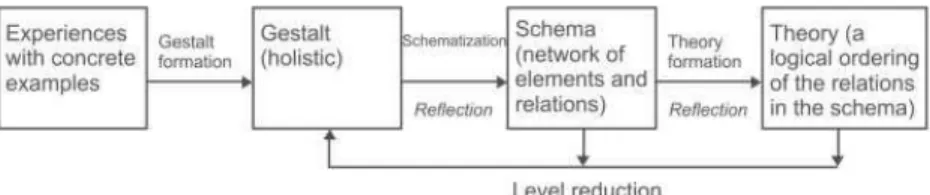
Figure 1: Korthagen’s (2010) Model of Teacher Development ...36
LIST OF TABLES
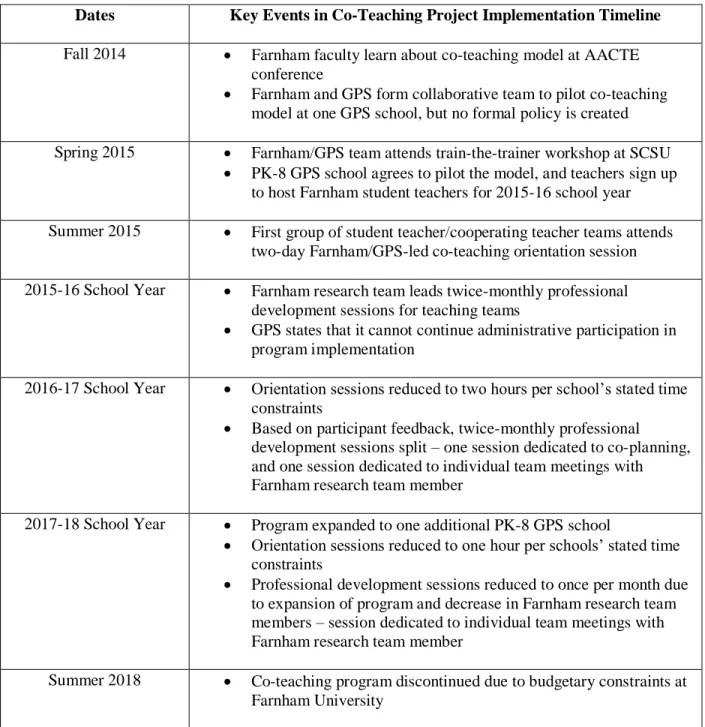
Table 1: Farnham University’s Co-Teaching for Student Teaching Pilot Program
Implementation Timeline ...8
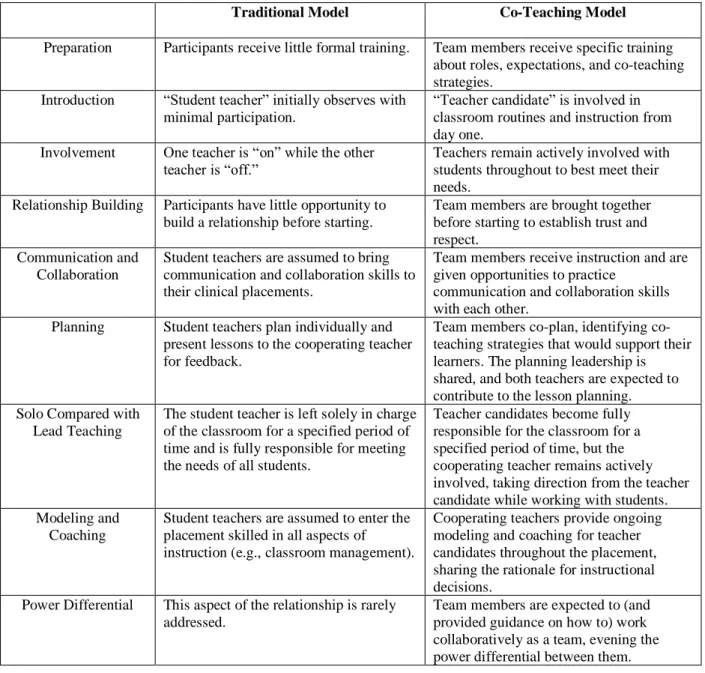
Table 2: Traditional Model Compared with Co-Teaching Model of Student
Teaching (Heck & Bacharach, 2014)...18
ACKNOWLEDGEMENTS
Education has always been an important part of my life, and there are many people who
have influenced my path in education throughout the years. I would like to start by thanking my
committee members: Dr. Barbara Bales, Dr. Marie Sandy, Dr. Linda Post, and Dr. Elise Frattura.
Each one of you has shown that you are a teacher first by focusing on the needs of your students,
something I do not take for granted. I hope to demonstrate this same dedication and commitment
to students in my future work as a teacher educator. Dr. Bales especially, thank you for the
constant encouragement, support, and patience you provided throughout my graduate work. You
have been a wonderful mentor and advisor.
Thank you to Dr. Jack Helfeldt and Dr. Elizabeth Foster, who co-authored the InTASC
Readiness Survey used in this study.
Thank you to Mr. James Hoffman, Ms. Susan Hobart, and Ms. Jayne Heffron, three
dedicated educators who taught me what it means to combine high expectations with care and
compassion in their work with children. They shaped my approach to teaching and education.
A special thank you to my parents for not only a childhood filled with learning, laughter,
and love, but also for their continued care as grandparents to our three children. I could not have
completed this dissertation without you. Thank you for counting buses on Silver Spring, coffee
breaks at Barnes & Noble, and afternoon pajama picnics on the driveway.
Finally, and most importantly, thank you to my wife Jaime, who has unfailingly
supported me throughout this work and made my transition from administrator to graduate
Introduction
The year was 2004, and I was a first-year teacher fresh out of the University of
Wisconsin-Madison, full of confidence in my ability to teach. I had taken a job in a suburban
district outside of Milwaukee, and I entered my fifth grade classroom in early August ready to
get to work. Leaning on my coursework and field experiences in Madison, I set about organizing
my room in cooperative desk pods, designing a large paper social contract to guide our class’s
shared discipline model, and creating opportunities for building a strong classroom community
(e.g., shared snack schedule, Student of the Week family visits, etc.). I was prepared. I was
ready. Bring on the kids.
A week before the school year began, things changed. I received a large donation of
books from a retiring teacher to bolster my classroom library. The school’s reading specialist stopped in and told me I needed to make sure all the books were labeled with a reading level so
students could pick texts that fit their abilities. I had never leveled books before. During the
parent curriculum night, I was asked how I planned to address the 9/11 anniversary in my work
with students those first weeks of school. I had no idea. My shared snack schedule hit a snag
when I learned that three students had severe nut allergies. I scrapped the plan. A parent
emailed and asked that we meet about their child’s 504 plan before the first day. I did not know what a 504 plan was, nor that this child had one. My principal dropped in and recommended that
I wear ties throughout the year as a way to “improve” my first-year teacher status among students and families. I went on a shopping spree at Goodwill. The first day of school arrived,
and I looked out my classroom window at all the students I had been so ready to teach just a few
weeks earlier. Now, I felt like I was barely keeping my head above water, a feeling that did not
My experience as a first-year teacher is one that I saw repeated by initial educators
throughout my years as a teacher and school administrator. Brimming with confidence, new
teachers soon learned the challenges of navigating all the academic, social, and professional
aspects of their position as a classroom teacher. I often wondered whether it was possible for an
education program to entirely prepare a student teacher for the myriad of roles and
responsibilities an educator embraces. I brought this history to my dissertation studies.
This chapter introduces my dissertation research. I begin by outlining the problem of
initial educators’ sense of preparedness for the classroom based on their preparation programs, specifically their clinical experience models. I outline the co-teaching model, an alternative
framework1 to the traditional clinical experience model. Next, I detail the significance of this
research. I end the chapter by describing a Midwestern urban university’s co-teaching pilot
program, which served as the catalyst for this study.
Problem Statement
Research outlines the importance of teacher candidates’ clinical experiences in their
preparation programs (e.g., Banks, 2015; National Council for Accreditation of Teacher
Education [NCATE], 2010; Zeichner, 2002). Research also shows that many initial educators
feel unprepared for the challenges of managing their own classrooms once they transition from
their preparation programs to their school sites (e.g., Coggshall, Bivona, & Reschly, 2012;
Levine, 2006; MetLife Survey of the American Teacher, 2005). Teachers who feel unprepared
to independently lead in the classroom are less likely to employ instructional behaviors that
positively affect student learning, thus resulting in inequitable learning opportunities for the
-students in their classrooms (Darling-Hammond, Chung, & Frelow, 2002). A dynamic and
effective clinical experience is critical in building initial educators’ sense of preparedness and self-efficacy, qualities that lead to the employment of high-quality teaching practices in the
classroom (Lee, Eckrich, Lackey, & Showalter, 2010; Ronfeldt & Reininger, 2012).
Many initial educators complete a traditional clinical experience as part of their
preparation program - the student teacher observes their cooperating teacher and gradually
assumes more teaching responsibilities until they take the lead role for a specified period of time.
This model has remained largely unchanged for many years (Fraser & Watson, 2014; Greenberg,
Powerance, & Walsh, 2011; Zeichner, 2002). Preliminary research on a co-teaching model of
student teaching – the student teacher and cooperating teacher collaboratively plan the delivery
and assessment of instruction throughout the clinical experience – suggests improved perceived
preparedness for student teachers (e.g., Darragh, Picanco, Tully, & Henning, 2011; Soslau,
Gallo-Fox, & Scantlebury, 2018; Yopp, Ellis, Bonsangue, Duarte, & Meza, 2014). While these
initial studies have considered the effects of the co-teaching model on student teachers’
perceived preparation during the clinical experience, few studies have continued to follow
teacher candidates into their own classrooms after the clinical experience to consider the
perceived effects of the model on their subsequent teaching practices.
Research Question
This research seeks responses to the question, “How do initial educators’ perceptions of
their readiness for the classroom compare between those who participated in one iteration of a
co-teaching model of clinical experience and those who experienced a traditional student
Statement of Purpose
In the burgeoning research on co-teaching as a student teaching model, there exists a gap
in how the model affects student teachers’ self-perception of readiness to teach once they enter the classroom as a teacher of record. The purpose of this bounded case study is to explore
self-perception of readiness for the classroom of initial educators who completed a co-teaching or
traditional model of student teaching during their clinical experience. The perception of
readiness is generally defined as student teachers’ feelings about their ability to individually and
successfully perform the duties of classroom teachers upon completion of their clinical
experience (Capraro, Capraro, & Helfeldt, 2010). These duties include, but are not limited to,
classroom management, lesson planning, differentiating instruction, collaborating with a variety
of stakeholders, utilizing technology, and assessing student learning.
Significance
From a practical and ethical standpoint, research into the effects of the clinical experience
on initial educators’ perceived readiness for the classroom holds the potential to improve equitable learning opportunities for all students. Research in teacher preparation has shown a
strong link between teachers’ sense of preparedness and their sense of self-efficacy, which often leads to the employment of high-quality teaching practices in the classroom (Lee et al., 2010). A
dynamic and effective clinical experience is seen as critical in building this sense of preparedness
and self-efficacy (Ronfeldt & Reininger, 2012). If this research reveals that the co-teaching
model of student teaching leads to initial educators feeling more prepared to manage their own
classrooms and meet the diverse needs of their students, then all students stand to gain from this
model. Implications hold special significance for rural and urban school settings, as students in
experience, leading to inequitable learning opportunities in those settings (Knoblauch & Chase,
2015). By ensuring that all initial educators are prepared to lead their own classrooms – “ready
to teach” - at the end of their preparation programs, this gap in equitable teacher quality could be addressed.
From a scholarly standpoint, research in this area holds the potential to improve the
learning of not only students, but also teacher candidates and cooperating teachers. Through
co-teaching and the highly collaborative nature of the model, the theory-practice gap that has
plagued teacher preparation for so many years could be addressed (Feiman-Nemser, 2001).
Cooperating teachers are exposed to innovative instructional theories and strategies brought to
the experience by the teacher candidate, thereby nurturing their professional growth and practice;
teacher candidates spend more time actively engaged in the practices of teaching in an authentic
classroom context, thereby nurturing their professional growth and practice within a supportive
community as well. Students in these settings also stand to benefit from more individualized and
personalized instruction as a result of the model (Bacharach, Heck, & Dahlberg, 2010).
Context of the Study – The Co-Teaching for Student Teaching Project at Farnham
University2
A co-teaching for student teaching model was introduced to Farnham University, an
urban college located in the Midwest, in the fall of 2014 after a group of Farnham faculty
attended an American Association of Colleges for Teacher Education (AACTE) conference and
learned about the framework. The group contacted Gallagher Public Schools (GPS), a large
urban school district located near Farnham University, to see if they would be interested in
piloting the model at one of their schools. A collaborative partnership was formed, though no
formal agreement or policy was put into place.
In the spring of 2015, faculty from Farnham and district administrators from GPS
attended a two-day train-the-trainer workshop led by St. Cloud State University (SCSU) faculty.
SCSU had been at the forefront of implementing the co-teaching for student teaching model for
over a decade.3 The workshop outlined the steps necessary for planning, implementing,
supporting, and assessing a co-teaching for student teaching model. The GPS administrators
identified a potential PK-8 school for implementation, and the team presented the model to the
school principal and teacher leadership team. The school agreed to implement the model, and
teachers at the school signed up to host student teachers at their final staff meeting of the school
year.
That summer, the Farnham/GPS team led a two-day co-teaching orientation session for
the co-teaching teams (cooperating teachers and student teachers) at an urban education
conference hosted by Farnham University. The orientation session included an outline of the
co-teaching model, including strategies, planning activities, and personality inventories so the teams
could better understand their communication styles. Once the school year started, the Farnham
research team led twice-monthly after-school professional development sessions for the
co-teaching teams. The sessions provided teachers with opportunities to reflect on their practice,
discuss benefits and challenges of the model, and plan for continued use of the co-teaching
strategies. This support framework remained the same for the duration of the entire school year.
While GPS administrators were invited to these sessions, they did not attend any of the meetings
and eventually stated that they would be unable to continue participating in the implementation
of the model (though they still supported Farnham’s ongoing implementation of the pilot
program at the school).
The pilot program continued into the next school year. However, the two-day orientation
session was abbreviated to a two-hour meeting with cooperating teachers and student teachers
led by members of the Farnham research team due to beginning of the year time constraints
identified by the school’s principal and teachers. Additionally, the professional development sessions were adjusted based on teacher feedback from the previous year and dwindling student
teaching numbers. The meetings still occurred twice-monthly, but one meeting was designated
specifically for co-planning, as previous teams had cited planning time as a significant challenge.
The other meeting included Farnham research team members sitting in on team planning
sessions so the support they provided could be targeted to the specific needs of the individual
teams. These meetings often included discussions of how the co-teaching strategies could be
used to better meet the needs of students in the classroom. This support model remained the
same for the duration of the school year and was met with positive feedback from teachers.
For the next school year, the co-teaching pilot program was expanded to an additional
PK-8 GPS school with the support of GPS administrators. Due to time constraints, the beginning
of the year orientation was once again shortened, this time to a one-hour meeting with
cooperating teachers and student teachers at both schools led by one member of the Farnham
research team. The same targeted professional development support model was used, but
meetings took place once per month instead of twice due to the expansion of the program and the
decrease in Farnham research team members. The meetings were again targeted to meet the
support framework was positive, so the program was scheduled to continue into the next school
year at both schools. However, due to budgetary constraints, the Farnham research team was
forced to discontinue the program. Table 1 provides a summary of the project’s timeline.
Dates Key Events in Co-Teaching Project Implementation Timeline
Fall 2014 • Farnham faculty learn about co-teaching model at AACTE
conference
• Farnham and GPS form collaborative team to pilot co-teaching model at one GPS school, but no formal policy is created
Spring 2015 • Farnham/GPS team attends train-the-trainer workshop at SCSU
• PK-8 GPS school agrees to pilot the model, and teachers sign up to host Farnham student teachers for 2015-16 school year
Summer 2015 • First group of student teacher/cooperating teacher teams attends
two-day Farnham/GPS-led co-teaching orientation session
2015-16 School Year • Farnham research team leads twice-monthly professional
development sessions for teaching teams
• GPS states that it cannot continue administrative participation in program implementation
2016-17 School Year • Orientation sessions reduced to two hours per school’s stated time constraints
• Based on participant feedback, twice-monthly professional development sessions split – one session dedicated to co-planning, and one session dedicated to individual team meetings with Farnham research team member
2017-18 School Year • Program expanded to one additional PK-8 GPS school
• Orientation sessions reduced to one hour per schools’ stated time constraints
• Professional development sessions reduced to once per month due to expansion of program and decrease in Farnham research team members – session dedicated to individual team meetings with Farnham research team member
Summer 2018 • Co-teaching program discontinued due to budgetary constraints at
Farnham University
Table 1: Farnham University’s Co-Teaching for Student Teaching Pilot Program Implementation Timeline
As one of the graduate members of the Farnham research team, this dissertation research
has been at the core of my doctoral studies since I began the program. Over the next three years,
I worked with the Farnham faculty team, GPS teachers, and Farnham student teachers to
consider how a co-teaching clinical experience might potentially better serve the needs of
teachers and students than the traditional student teaching model. One of the concerns that came
up most often in speaking with the cooperating teachers was how student teachers would be
prepared to independently lead their own classrooms if they co-taught throughout their clinical
experience. It was this research question - How do initial educators’ perceptions of their
readiness for the classroom compare between those who participated in one iteration of a
co-teaching model of clinical experience and those who experienced a traditional student co-teaching
model? - as well as a paucity of research in that specific area of the co-teaching for student
teaching framework that led me to develop this study for my dissertation.
The next chapter shares the research base for this project. In doing so, I highlight the
gaps in the education field’s understanding about how initial educators’ perceptions of their
readiness for the classroom compare between those who participated in a co-teaching model of
Chapter 1: Literature Review
This chapter provides a review of the literature and research addressing the clinical
experience in student teaching, including the co-teaching model of student teaching, with a focus
on those texts that address initial educators’ perceived readiness for the classroom. I begin by defining some of the key terms related to student teaching clinical experiences and the
co-teaching model of student co-teaching in particular. I then outline how I conducted my review of
the literature, including a discussion of the criteria I used in determining the studies and articles
to include and exclude in the review. Moving into the synthesis portion of the literature review, I
start by summarizing the historical context of pre-service teachers’ clinical experiences,
including the foundations of the traditional student teaching model and calls for reform in teacher
education. Next, I outline the co-teaching model of student teaching, including the development
of the model and an overview of the framework. I then provide a summary of studies that focus
on emerging research on the co-teaching model of student teaching, as well as initial educators’
perceived readiness to teach in the classroom based on their preparation programs. I conclude
the chapter by outlining the need for greater research in the co-teaching model of student
teaching as it relates to initial educators’ perceived readiness to teach independently. Key Terms
To begin, it is necessary to define a number of the terms I use throughout the literature
review:
• Clinical experience (student teaching experience) – This is the culminating experience pre-service teachers participate in as part of traditional teacher education programs. The
experience often includes observing, assisting, and leading small group and whole class
teachers with the opportunity to link theory to practice in an authentic school context
(NCATE, 2010).
• Co-teaching (coteaching) – This is a teaching strategy rooted in special education; it has traditionally been used to support students with special needs in a general education
classroom setting. In this discipline, Cook and Friend (1995) define co-teaching as “two or
more professionals delivering substantive instruction to a diverse, or blended, group of
students in a single physical space” (p. 2).
• Co-teaching model of student teaching – Using the special education model of co-teaching as a foundational framework, the strategy has been applied to pre-service teachers’ clinical
experiences. Applied this way, Heck and Bacharach (2014) define co-teaching as “two
teachers (teacher candidate and cooperating teacher) working together with groups of
students; sharing the planning, organization, delivery and assessment of instruction, as well
as physical space” (p. 7).
• Cooperating teacher – This is the classroom teacher who supervises and works with teacher
candidates during the clinical experience.
• Initial educator – This refers to a classroom teacher who is in their first or second year of professional practice.
• Teacher candidate (pre-service teacher, student teacher) – This is the undergraduate or graduate student who is taking part in the clinical experience as part of their teacher
preparation program.
• Traditional model of student teaching – While the length and expectations of student
teaching experiences vary across states and teacher preparation programs, the model that has
(Fraser & Watson, 2014; Greenberg et al., 2011; Zeichner, 2002). “Traditional practices
during the student teaching experience focus on the candidate spending the initial weeks as a
silent observer, gradually assuming the role of teacher, and ultimately accepting full
responsibility for the classroom” (Heck & Bacharach, 2014, p. 5).
• Perception of readiness – This term refers to teacher candidates’ feelings about their ability to individually and successfully perform the duties of classroom teachers upon completion of
their teacher preparation program (Capraro et al., 2010). These duties include, but are not
limited to, classroom management, lesson planning, differentiating instruction, collaborating
with a variety of stakeholders, utilizing technology, and assessing student learning.
Scope of the Review
In conducting my literature review, I first searched for relevant papers and studies that
addressed pre-service teachers’ clinical experiences, the co-teaching model, and initial educators’
classroom experiences. Search terms included: student teaching, student teaching field
experience, pre-service teaching, pre-service teaching field experience, teacher preparation
program, student teaching clinical experience, pre-service teaching clinical experience,
teaching (and coteaching), teaching field experience, teaching clinical experience,
co-teaching teacher preparation program, initial educator readiness, initial educator teacher
preparation program, initial educator field experience, initial educator clinical experience, and
initial educator reflection. From the search results, I selected articles and studies I judged to be
of high quality based on Haller and Kleine’s (2001) research evaluation framework; in addition, the selected works were relevant to models of clinical experiences and their perceived and/or
During this time, I also chose to exclude articles and studies that focused on co-teaching
within the realm of special education, as well as literature that focused on teacher preparation for
specific contexts (e.g., urban schools). These topics, while certainly important to educators’
continued efforts to meet the needs of all learners, were beyond the scope of this study because
they did not specifically address the co-teaching or traditional models of student teaching.
Historical Context of Student Teaching
The history of teacher preparation can be traced back to the 1830s, when James G. Carter
proposed that Massachusetts create an institution focused specifically on teacher preparation; his
vision soon spread to other states (Fraser & Watson, 2014). The normal schools, teachers
colleges, and other teacher preparation programs that developed as a result of Carter’s vision included the same basic framework: “foundation courses in content knowledge and educational theory and methods, and then, as the capstone, student teaching with a real class under the
watchful eye of supervisors and experienced teachers” (Fraser & Watson, 2014, p. 2). Yet, this model for teacher preparation has undergone very little change since that time (Fraser & Watson,
2014; Greenberg et al., 2011; Zeichner, 2002). Referring specifically to pre-service teachers’
clinical experiences, Greenberg et al. (2011) stated that “the time spent in preceding field work,
the level of supervision by the preparation program and the length of the experience have all
increased, but the fundamentals have remained relatively unchanged” (p. 6).
In the mid-1980s, following closely on the heels of A Nation at Risk: The Imperative for
Educational Reform (National Commission on Excellence in Education, 1983), calls for teacher
education reform were made by a range of groups, including the Carnegie Task Force on the
Future of Teaching (1986) and the Holmes Group (1986). As a result, many teacher preparation
coursework on content pedagogy, a greater focus on strategies for meeting the needs of all
learners, and more comprehensive clinical experiences (Darling-Hammond et al., 2002).
In 2010, the NCATE Blue Ribbon Panel report on strategies for transforming teacher
education to better serve schools identified the clinical experience as “one of the three aspects of teacher preparation that are likely to have the highest potential for effects on outcomes for
students, along with content knowledge and the quality of teacher candidates” (p. 2). Zeichner (2002), sharing his perspective on student teacher learning during field experiences, stated that
“student teaching is a critical aspect of preservice teacher education” (p. 59). Given the
importance of the clinical experience, a number of innovative changes to the traditional student
teaching model have been put into motion in recent years, including the development of
professional development schools (PDS) (e.g., Darling-Hammond, 2006; NCATE, 2010;
Zeichner, 2002), context-specific residencies (e.g., Fraser & Watson, 2014; Futrell, 2010;
Matsko & Hammerness, 2014), an increase in the length of time teacher candidates spend in the
placement (e.g., Banks, 2015; Capraro et al, 2010; Ronfeldt & Reininger, 2012), and a
co-teaching model of student co-teaching (Heck & Bacharach, 2014).
Historical Context of the Co-Teaching Model of Student Teaching
The co-teaching model of student teaching speaks to reform efforts focused on increasing
the length of teacher candidates’ engagement in their clinical experiences; student teachers are involved in collaborative lesson planning, classroom instruction, and student assessment for the
entirety of their clinical experience. However, the model also gained traction due to an
unintended consequence of the neoliberal push for high-stakes assessment and accountability in
education during the past few decades. With the onset of compulsory state testing as part of the
difficulties finding field placements for pre-service teachers, particularly in the semester that
students took their state’s standardized assessment. In part, cooperating teachers were hesitant to
release control of their classroom to a pre-service teacher for a significant period of time because
they remained accountable for their students’ learning (e.g., Bacharach & Heck, 2012; Darragh et al., 2011; Ellis & Bogle, 2008). “Co-teaching was used to bridge the concerns of all parties
because it allowed both the cooperating teacher and the teacher candidate to be actively engaged
in the classroom” (Heck & Bacharach, 2014, p. 6).
While pockets of co-teaching models of student teaching developed before this time, the
efforts were often small in scale and failed to gain widespread use in preparation programs (e.g.,
Eick, Ware, & Williams, 2003; Roth, Masciotra, & Boyd, 1999; Wassell & LaVan, 2009). The
model employed by teacher education programs to address the concerns of cooperating teachers
due to NCLB had its roots in a Virginia consortium’s pilot program. In 1997, the Virginia Department of Education had approved a two-year grant for the MidValley Consortium for
Teacher Education to develop and pilot a co-teaching model for student teaching (Perl,
Maughmer, & McQueen, 1999). This was based on a study of Maryland’s minimum competency test that showed that the passage rates for students in co-taught classrooms (a
general education and special education teacher) were significantly higher than those for students
in traditional classrooms (Walsh & Snyder, 1993). Schools in the MidValley Consortium for
Teacher Education continued to use the model after the grant term had ended, citing the benefits
for students, teacher candidates, and cooperating teachers (Perl et al., 1999). As the model grew
and was recognized as a potential solution for the difficulty in finding placements for pre-service
teachers due to increased accountability measures, the consortium began to provide training
Teacher educators at SCSU attended one of the training opportunities and began to
develop their own co-teaching model of student teaching in the early 2000s. Initial feedback
from the cooperating teachers and teacher candidates who participated in the SCSU pilot was
positive, and the university was awarded a grant by the United States Department of Education
Teacher Quality Enhancement Partnership to further investigate the impact of co-teaching on
cooperating teachers, teacher candidates, and students (Heck & Bacharach, 2014). Shortly after,
SCSU collaborated with The Renaissance Group, a national consortium of teacher preparation
institutions, and began hosting training opportunities for the model. At the time, the SCSU
co-teaching model was recognized as a “Promising Practice” by the NCATE (2010) Blue Ribbon Panel report on transforming teacher preparation through clinical practice experiences.
Presently, the framework has gained traction in a number of teacher education programs,
including Whitworth University (Darragh et al., 2011), the University of Central Missouri
(Hartnett, Weed, McCoy, Theiss, & Nickens, 2013), Purdue University and Ball State University
(Fraser & Watson, 2014), California State University-Fullerton (Yopp et al., 2014), Western
Kentucky University (Stobaugh & Gichuru, 2017), the University of Delaware (Soslau et al.,
2018), and Farnham University.
Description of the Co-Teaching Model of Student Teaching
The co-teaching model of student teaching traces its roots to the field of special
education, which first employed the framework as a service delivery option, combining the
knowledge and efforts of special and general educators to facilitate the full inclusion of students
with special needs into general classroom settings (Friend, Embury, & Clarke, 2015). As a
student teaching framework, co-teaching is defined as “two teachers (teacher candidate and
organization, delivery and assessment of instruction, as well as physical space” (Heck & Bacharach, 2014, p. 7). The model allows for both the cooperating teacher and the student
teacher to be actively engaged with students for extended periods of time (both within the school
day and throughout the clinical experience), capitalizing on their combined professional
knowledge and skills to meet the needs of all learners in the classroom.
Co-teaching during student teaching consists of three major components: co-planning,
co-instruction, and co-evaluation (Soslau et al., 2018). During co-planning, the teacher
candidate and cooperating teacher collaboratively develop lessons, discussing the rationale
behind instructional decisions and offering ideas and suggestions as a team. Co-instruction,
which involves the teacher candidate and cooperating teacher teaching together, can take many
forms, including the seven co-teaching strategies outlined by Heck and Bacharach (2014): One
Teach, One Observe; One Teach, One Assist; Station Teaching; Parallel Teaching; Supplemental
Teaching; Alternative or Differentiated Teaching; and Team Teaching. These strategies are
chosen collaboratively by the teaching team based on the curriculum and their students’ needs.
Co-evaluation entails collaborative reflection between the student teacher and cooperating
teacher on their students’ learning, their own instruction, and future planning for the classroom. Through these collaborative actions, the teaching team’s practices become aligned, space is made for the equal sharing of ideas between the team members, and the co-teachers are able to
externalize their own thinking and practices (Soslau et al., 2018). In short, the invisible aspects
of teaching are made visible, resulting in the growth and development of both teachers, as well as
The Co-Teaching Model Compared with the Traditional Model of Student Teaching Heck and Bacharach (2014) outlined nine major differences between the co-teaching
model of student teaching and the traditional model. These differences are summarized in Table
2.
Traditional Model Co-Teaching Model Preparation Participants receive little formal training. Team members receive specific training
about roles, expectations, and co-teaching strategies.
Introduction “Student teacher” initially observes with minimal participation.
“Teacher candidate” is involved in classroom routines and instruction from day one.
Involvement One teacher is “on” while the other
teacher is “off.” Teachers remain actively involved with students throughout to best meet their needs.
Relationship Building Participants have little opportunity to build a relationship before starting.
Team members are brought together before starting to establish trust and respect.
Communication and Collaboration
Student teachers are assumed to bring communication and collaboration skills to their clinical placements.
Team members receive instruction and are given opportunities to practice
communication and collaboration skills with each other.
Planning Student teachers plan individually and present lessons to the cooperating teacher for feedback.
Team members plan, identifying co-teaching strategies that would support their learners. The planning leadership is shared, and both teachers are expected to contribute to the lesson planning. Solo Compared with
Lead Teaching
The student teacher is left solely in charge of the classroom for a specified period of time and is fully responsible for meeting the needs of all students.
Teacher candidates become fully responsible for the classroom for a specified period of time, but the cooperating teacher remains actively involved, taking direction from the teacher candidate while working with students. Modeling and
Coaching
Student teachers are assumed to enter the placement skilled in all aspects of instruction (e.g., classroom management).
Cooperating teachers provide ongoing modeling and coaching for teacher candidates throughout the placement, sharing the rationale for instructional decisions.
Power Differential This aspect of the relationship is rarely addressed.
Team members are expected to (and provided guidance on how to) work collaboratively as a team, evening the power differential between them.
Table 2: Traditional Model Compared with Co-Teaching Model of Student Teaching (Heck & Bacharach, 2014)
In considering the differences outlined in Table 2, one of the most important pedagogical
distinctions is the amount of time teacher candidates and cooperating teachers are engaged in
planning, instruction, and assessment. In the traditional model, student teachers often silently
observe in the classroom for the initial weeks of their clinical placement, and then they are
gradually given instructional responsibilities by the cooperating teacher (e.g., teach math first,
then teach math and social studies the next week, etc.). Eventually, the student teacher assumes
full responsibility of the classroom for a specified period of time, during which the cooperating
teacher does not assist and/or leaves the classroom. This “sink or swim” approach is ineffective in supporting and nurturing pre-service teachers as they learn to teach in isolation (Giebelhaus &
Bowman, 2002).
In the co-teaching model, the teacher candidates and cooperating teachers are actively
involved in all aspects of teaching throughout the clinical experience. Even during the student
teacher’s lead teaching time, the cooperating teacher is present and engaged in planning,
instruction, and evaluation, following the teacher candidate’s direction and providing feedback in real time. The invisible aspects of teaching are made visible, resulting in the growth and
development of the teacher candidate. “The co-teaching partnership enables cooperating teachers to provide consistent mentoring, giving teacher candidates the time and support
necessary to gain [the] skills and confidence required to teach successfully” (Heck & Bacharach,
2014, p. 4). Additionally, students in the classroom benefit from the presence and engagement
of both teachers, as the teaching team is better able to meet the needs of all learners through their
shared efforts.
Another key difference between the two models is the power differential between the
model, the cooperating teacher is often considered the “all-knowing” member of the team and serves as the student teacher’s primary resource in all aspects of their teaching education. Rikard and Veal (1996), outlining the power and influence cooperating teachers hold over student
teachers, contended that supportive relationships are more difficult for teams to establish given
this power differential. Compounding this issue, the clinical experience is often the first time
student teachers are applying the pedagogical theory they learned through their teacher education
courses in an authentic classroom setting, so cooperating teachers are tasked with helping them
to navigate the often difficult transition from theory to practice (Feiman-Nemser, 2001).
Cooperating teachers in the traditional model often lack training in this aspect of their role, and
this can cause confusion for the student teacher as they struggle to understand how the theory
they learned in their coursework manifests itself in the daily instructional decisions made by their
cooperating teacher (Cochran-Smith & Zeichner, 2005). Given the power differential between
the two teachers, student teachers may shy away from asking questions or offering their own
perspectives in planning and instruction, thereby hampering their own development as a teacher.
In the co-teaching model of student teaching, efforts are made to balance the power
differential between the cooperating teacher and the teacher candidate. Through training
workshops, this power differential is explicitly addressed, and team members are provided with
collaboration and communication strategies to enhance the effectiveness of their partnership
(Heck & Bacharach, 2014). By engaging the teacher candidate in planning and instruction right
from the start, they are empowered to share ideas and suggestions, contributing to the partnership
and offering their own theoretical perspectives based on what they learned through their
coursework. Both the teacher candidate and the cooperating teacher are expected to grow and
instruction, and evaluation throughout their clinical experience enables them to build confidence
in their own abilities as a teacher (Soslau et al., 2018).
From a theoretical standpoint, major differences between the two models speak to Roth
and Tobin’s (2004) comparison of the co-teaching framework to apprenticeship models of learning.4 The authors maintained that this model of student teaching helps to weaken the
traditional power relationship between student teachers and cooperating teachers, enabling both
participants to learn together from the shared experience. Both participants are fully engaged in
shared teaching practices throughout the clinical experience, enabling the teacher candidate and
cooperating teacher to learn from and with each other. Additionally, Tobin and Roth (2005)
argued that the co-teaching framework moves teaching teams beyond the process of “mimesis,”
the imitation of an action based solely on observation (as is the case with teaching in the
traditional model). Through a process of “mutual entrainment,” both the teacher candidate and the student teacher learn, understand, and perform teaching practices (Tobin & Roth, 2005). In
short, student teachers (and their cooperating teachers, to a degree) learn to teach through their
prolonged engagement in shared instruction, not simply through observation. This is a hallmark
of the co-teaching model of student teaching and sets it apart from the traditional model of
student teaching.
Research on the Co-Teaching Model of Student Teaching
Due to the relevantly recent growth of the co-teaching model in teacher preparation
programs, early research (pre-1999) was limited. Although the research base has expanded,
many of these earlier pieces provided an overview of the model and outlined potential benefits of
the framework with limited evidence (e.g., Carambo & Stickney, 2009; Diana, 2014; Hartnett et
al., 2013). Within the pool of more recent studies, some researchers employed qualitative
research techniques (e.g., Eick et al., 2003; Roth et al., 1999; Wassell & LaVan, 2009), while
others employed mixed methods research techniques (e.g., Bacharach & Heck, 2012; Darragh et
al., 2011; Yopp et al., 2014). This review of the literature chronicles those studies with findings
that inform the co-teaching model of student teaching as a framework for teacher learning.
Roth et al. (1999) provided a case study of one student teacher’s experience in a six-week
co-teaching framework in a middle school science course. Based on observations and interviews
with the student teacher, the authors argued that the model allowed the pre-service teacher to
better develop her skills and practice through her observation of and collaboration with her
cooperating teacher. “Coteaching provides an ideal situation because teachers come to build the necessary common ground (and therefore, the necessary intersubjectivity) to construct a viable
professional discourse during their reflections on actions” (Roth et al., 1999, p. 783).
Eick et al. (2003) detailed the use of a co-teaching model as part of the field component
in ten secondary teacher candidates’ science methods course. Based on observations and teacher candidates’ written reflections, the authors found that co-teaching provided the pre-service teachers more comfort in learning to teach, increased opportunities to critically reflect, the ability
to develop confidence in teaching and managing students, and increased opportunities to employ
inquiry-based teaching methods. “Greater assuredness in interacting with classroom students is
evidence of the beginning development of classroom management and discipline skills. This
coteaching arrangement appears to have begun this process of development in a
teacher-supportive environment sooner” (Eick et al., 2003, p. 82).
Wassell and LaVan (2009) provided a case study of two secondary math and science
independently. The teachers were able to transfer many of the practices they learned in their
clinical experiences to their classrooms, such as the importance of shared reflection and
responsibility and the benefits of building relationships with students. The two initial educators
admitted that they struggled with some aspects of teaching without a co-teacher in the room,
including critically reflecting on their practice, taking pedagogical risks, and classroom
management. Overall, the authors and teachers felt the model benefitted them in their
preparation for classroom teaching; “the practices that [the students] displayed during coteaching were indeed transposable into their first years as independent teachers” (Wassell & LaVan, 2009,
p. 430).
Bacharach et al. (2010), using four years of quantitative data from K-6 students’
performance on the Minnesota Comprehensive Assessment (MCA), showed that student
achievement scores in math and reading were greater in co-taught classrooms (teacher candidate
and cooperating teacher) than in non-co-taught classrooms (classrooms without a student teacher,
as well as classrooms with a student teacher and cooperating teacher using a traditional student
teaching model). The authors also provided qualitative data from focus group sessions with 400
PK-6 students outlining the perceived benefits of the co-teaching model, which included getting
help when students needed it, fewer classroom disruptions, and improved student behavior.
“Coteaching will have a tremendous impact on the academic achievement of learners throughout the United States, and it has the potential to unequivocally change the face of teacher preparation
and student teaching as we know it today” (Bacharach et al., 2010, p. 13).
Darragh et al. (2011), using data from a three-question survey given to 156 teacher
candidates who had just completed their clinical experience using the co-teaching model of
beneficial to their students’ learning, a valuable practice for their professional training, and an experience that enabled them to feel prepared to implement co-teaching in their own classrooms.
Only two of the respondents indicated that they did not feel prepared to teach independently.
“Co-teaching not only prepares teacher candidates in a true apprenticeship model, it prepares them for the collaborative environment in schools today and shows them how to utilize more
than one adult in the classroom to improve student achievement” (Darragh et al., 2011, p. 102). Bacharach and Heck (2012) provided a summary of four years of data from surveys and
focus groups that showed perceived benefits of the co-teaching model for student teaching from
the perspectives of teacher candidates, PK-12 students, and cooperating teachers. Teacher
candidates felt they developed better classroom management skills, collaboration skills, a deeper
understanding of the curriculum, and increased confidence in themselves as teachers. Students
felt they were able to get more help with questions and more individual attention. Cooperating
teachers felt they were able to provide more help for students with high needs, grew
professionally through co-planning with their teacher candidates, and appreciated being able to
host a student teacher without giving up their classrooms. The authors also outlined quantitative
data from teacher candidates’ summative assessments, based on the ten Interstate (New) Teacher and Assessment Support Consortium (InTASC) standards for new teachers, that showed that
pre-service teachers in a co-taught model of student teaching outscored pre-pre-service teachers in a
traditional model of student teaching at statistically significant levels in the areas of professional
development, partnerships, and professional dispositions.
Yopp et al. (2014), using data from surveys and interviews of 10 cooperating teachers
and 20 teacher candidates in secondary math classes in an urban California school district, found
positive alternative framework to the traditional student teaching model. The teacher candidates,
half of whom were teaching in their own classrooms at the time of the interviews, reported
feeling better prepared for teaching due to the co-planning opportunities and ability to explore a
variety of pedagogical approaches to instruction that were a part of the co-teaching model. “It
was primarily through their shared experience of learning together how to successfully
implement new strategies that the teachers, new and experienced, grew professionally” (Yopp et al., 2014, p. 108).
Soslau et al. (2018), using video recordings, audio recordings, and interviews of 12
teaching teams’ instruction, planning, and evaluation meetings, compared the co-teaching model as theorized to its manifestation in practice. They found that there were
opportunities for improvement in the areas of positioning, power, and agency-building for the
team members; focus on student learning in team meetings; and cooperating teachers embracing
the dual roles of teacher and learner of teaching. The authors recommended reconceptualizing
the role of the university field instructor so they served both as instructor of the teacher candidate
and teaching team facilitator/co-teaching model supporter. “This change reflects a shift in focus
for field instructors from supporting candidate learning with a secondary focus on pupil learning,
to supporting classroom practice and candidate, clinical educator, and field instructor learning
that maximizes pupil learning” (Soslau et al., 2018, p. 12).
In considering themes from the emerging research on the co-teaching model of student
teaching, a number of studies outlined the perceived benefits of the model for teacher candidates
(Bacharach & Heck, 2012; Bacharach et al., 2010; Darragh et al., 2011; Eick et al., 2003; Roth et
al., 1999; Soslau et al., 2018; Wassell & LaVan, 2009; Yopp et al., 2014); fewer studies
(Bacharach & Heck, 2012; Bacharach et al., 2010). While many of the studies considered the
effects of the co-teaching model on participants during the clinical experience (Bacharach &
Heck, 2012; Bacharach et al., 2010; Darragh et al., 2011; Eick et al., 2003; Roth et al., 1999;
Soslau et al., 2018; Wassell & LaVan, 2009; Yopp et al., 2014), few continued to follow teacher
candidates into their own classrooms after the clinical experience to consider the effects of the
model on their subsequent teaching practices (Wassell & LaVan, 2009; Yopp et al., 2014). It is
expected that this research base will continue to grow as the co-teaching model of student
teaching is implemented in more teacher education programs.
Research on Initial Educators’ Perceived Readiness for the Classroom
In considering research on initial educators’ perceived readiness for the classroom, studies generally focused on the traditional model of student teaching. These studies often
employed mixed method research techniques, relying on feedback from pre-service teachers and
initial educators obtained through surveys, interviews, written reflections, and/or focus group
sessions (e.g., Ashley, 2016; Capraro et al., 2010; Oh, Ankers, Llamas, & Tomyoy, 2005).
Additionally, in reviewing the literature in this area, there existed a number of studies that linked
pre-service teachers’ perceived preparedness for the classroom to feelings of self-efficacy
(Darling-Hammond et al., 2002; Lee et al., 2012; Ronfeldt & Reininger, 2012); therefore, studies
that considered teacher candidates’ and initial educators’ sense of self-efficacy have been included in this section. Following is a chronological summary of these studies.
Darling-Hammond et al. (2002), using data from a survey of 2,956 initial educators in
New York City, concluded that teachers felt adequately prepared overall for their first year in a
classroom based on their preparation programs. Additionally, the authors found that teachers’ sense of preparedness was the strongest predictor of their sense of self-efficacy, which they tied
to positive instructional behaviors that affect student learning, such as a willingness to try new
instructional techniques, persistence in trying to solve learning problems, and enthusiasm for and
commitment to teaching.
Oh et al. (2005), using data from a survey of 204 K-12 teachers in an urban school
district, found that the quality of the cooperating teacher played the most important role in
participants’ assessment of their student teaching experiences. The authors also concluded that teachers who had a longer student teaching experience tended to show a higher level of
confidence in their ability to change student learning in positive ways.
Yost (2006) used observations, interviews, and the reflective writings of eight
second-year K-12 teachers in a variety of settings to consider the factors that lead to initial educators
leaving the field in such high numbers. She concluded that the teachers’ field experiences, particularly the quality of the cooperating teacher and the school setting, played a critical role in
the development of the teachers’ sense of self-efficacy.
Capraro et al. (2010) used data from a readiness survey completed by 135 teacher
candidates in a southwestern teacher preparation program to find that student teachers who
participated in an inquiry-focused PDS placement reported significantly higher levels of
readiness in all areas of the survey than student teachers who participated in a traditional
placement or a PDS placement (without an inquiry focus). The authors advocated for clinical
placements that were more structured around and focused on inquiry-based learning procedures.
Lee et al. (2012), using data from a pre/post survey of 130 PK-4 teacher candidates in an
urban-based teacher preparation program, found that student teachers’ perception of their
preparedness to teach before and after the clinical experience showed statistically significant
classroom management, promoting family involvement, and professionalism. The authors also
connected teacher candidates’ sense of self-efficacy to successful practices in the classroom, highlighting the importance of the clinical experience in building self-efficacy.
Ronfeldt and Reininger (2012) used data from 1,057 pre/post student teaching surveys
completed by pre-service teachers in a large urban school district to show that the quality of a
teacher candidate’s field experience played a pivotal role in improving their feelings of preparedness, sense of self-efficacy, and commitment to stay in teaching. Specifically, the
authors found that the cooperating teacher had the strongest positive effect on teacher
candidates’ perceived preparedness and sense of self-efficacy for teaching in a classroom. Ronfeldt, Schwartz, and Jacob (2014), using data from 3,145 surveys of K-12 teachers
with five or less years of experience in the classroom, concluded that teachers who completed
more methods-related coursework and practice teaching during their preparation programs felt
better prepared to lead their own classrooms as first-year teachers, and they were more likely to
stay in teaching. The authors found that these elements of preparation programs were
particularly significant in rural and urban settings.
Knoblauch and Chase (2015), using data from surveys and self-assessments completed by
368 teacher candidates in a Midwestern teacher preparation program, found that all student
teachers, regardless of a rural, suburban, or urban placement setting, experienced significant
growth in their sense of self-efficacy as a result of their clinical experience. The authors tied
teacher candidates’ perception of self-efficacy to successful teaching practices in the classroom. The authors also noted that while student teachers in urban placement settings experienced
growth in their sense of self-efficacy as a result of the clinical experience, the overall level was
Ashley (2016), using data from a survey of 74 suburban and rural K-12 teachers in the
state of New York, found that teachers felt only somewhat prepared to teach as first-year
teachers by their preparation programs. The author stated that the majority of respondents felt
they learned more from being a teacher of record in a classroom than they learned in their
teacher preparation programs.
In considering themes from the research on initial educators’ perceived readiness for the classroom, many studies detailed the importance of the clinical experience in improving teacher
candidates’ sense of preparedness and self-efficacy (Knoblauch & Chase, 2015; Lee et al., 2012; Oh et al., 2005; Ronfeldt & Reininger, 2012; Ronfeldt et al., 2014; Yost, 2006). Research also
outlined the link between initial educators’ sense of preparedness and self-efficacy and their use of quality teaching practices (Darling-Hammond et al., 2002; Knoblauch & Chase, 2015; Lee et
al., 2012; Ronfeldt & Reininger, 2012; Ronfeldt et al., 2014; Yost, 2006). Finally, while some
studies found value in lengthening the clinical experience (Oh et al., 2005; Ronfeldt et al., 2014),
other studies found greater value in the quality of the placement, especially as it relates to the
cooperating teacher and school site (Capraro et al., 2010; Ronfeldt & Reininger, 2012; Oh et al.,
2005; Yost, 2006). “It might not be the amount of time, so much as how the time is spent during the field experiences, which seems to determine its effectiveness” (Capraro et al., 2010, p. 145).
Based on these studies, continued research in the area of initial educators’ perceived readiness for the classroom is necessary, especially as it relates to the effects of recent
innovations in pre-service teachers’ clinical experiences, such as the co-teaching model.
Darling-Hammond (2016) highlighted the recent increase in studies focused on isolating the
experience, a research base that is weak due to the newer nature of these models (Cochran-Smith
et al., 2015).
Argument for Further Research
This literature review suggests that despite widespread acknowledgement that the clinical
experience in teachers’ preparation programs is critical for their future success (e.g., Banks, 2015; NCATE, 2010; Zeichner, 2002), initial educators continue to reportfeeling underprepared
for the classroom in their first years of teaching (e.g., Coggshall et al., 2012; Levine, 2006;
MetLife Survey of the American Teacher, 2005). This sense of unpreparedness can lead to high
teacher turnover and, in turn, inequitable learning opportunities for students (Knoblauch &
Chase, 2015). As a result, there has been a call for reform in teacher preparation programs,
particularly pre-service teachers’ clinical experiences, which have remained relatively unchanged
for many years (Fraser & Watson, 2014; Greenberg et al., 2011; Zeichner, 2002). One such
alternative framework is the co-teaching model of student teaching, which entails the teacher
candidate engaging in planning, instruction, assessment, and reflection with the classroom
cooperating teacher for the duration of their clinical experience (Bacharach et al., 2010). Due to
this model providing opportunities for the teacher candidate to more fully engage in the practices
that make up effective teaching, initial educators are potentially more prepared for teaching in
their own classrooms after their clinical experiences than their peers who participated in more
traditional models of student teaching.
The purpose of this research, then, was to explore self-perception of readiness for the
classroom of initial educators who completed a co-teaching or traditional model of student
that guided this study. This is important because the theoretical lens through which one