ABSTRACT
Title of Document: A SYSTEMS ENGINEERING
FRAMEWORK FOR METABOLIC ENGINEERING EXPERIMENTS
Joseph Johnnie, Master of Science in Systems Engineering, 2011
Directed By: Dr. Mark Austin, Department of Civil and
Environmental Engineering, and the Institute for Systems Research, University of Maryland at College Park
Cells of living organisms simultaneously operate hundreds or thousands of interconnected chemical reactions. Metabolic networks include these chemical reactions and compounds participating in them. Metabolic engineering is a science centered on the analysis and purposeful modification of an organism's metabolic network toward a beneficial purpose, such as production of fuel or medicinal compounds in microorganisms. Unfortunately, there are problems with the design and visualization of modified metabolic networks due to lack of standardized and fully developed visual modeling languages. The purposes of this paper are to propose a multilevel framework for the synthesis, analysis and design of metabolic systems, and then explore the extent to which abstractions from systems engineering (e.g., SysML) can complement and add value to the abstractions currently under development within the greater biological community (e.g., SBGN). The computational test-bed that accompanies this work is production of the anti-malarial drug artemisinin in genetically engineered Saccaharomyces cerevisiae (yeast).
A SYSTEMS ENGINEERING FRAMEWORK FOR METABOLIC ENGINEERING EXPERIMENTS
By
Joseph Johnnie
Thesis submitted to the Faculty of the Graduate School of the University of Maryland, College Park, in partial fulfillment
of the requirements for the degree of Master of Science in Systems Engineering
2011
Advisory Committee: Dr. Mark Austin, Chair
Dr. Ganesh Sriram, Committee Member Dr. Ray Adomaitis, Committee Member
© Copyright by Joseph Johnnie
i
Dedication
This paper is dedicated to my parents, Elizabeth Johnnie and Johnnie Nedungattu. Without their steadfast support, I would not be where I am today.
ii
Acknowledgements
I would like to acknowledge the following people, all of whom have contributed to this work. Dr. Mark Austin (Department of Civil and Environmental Engineering and Institute of Systems Research), in his role as thesis advisor, helped me to define the overall scope and direction of my research. He has provided me technical advice with respect to understanding metabolic engineering from a systems perspective, and editorial input on my research papers as well. Assistant Professor Ganesh Sriram (Department of Biomolecular and Chemical Engineering) has helped guide me through the metabolic research for this paper. He has been instrumental in introducing and bringing me up to speed in the metabolic engineering space to the point where I could successfully integrate metabolic engineering with systems engineering. Professor Raymond Adomaitis brought a unique perspective as a professor with dual faculty appointments in the departments of Biomolecular and Chemical Engineering and the Institute for Systems Research. Since this research aims to integrate research from these two fields, his input was invaluable.
Dr. Austin, Dr. Sriram, and Dr. Adomaitis all served as members of the thesis committee with Dr. Austin functioning as chair.
Dr. Ashish Misra and Mr. Matt Conway, members of Dr. Sriram’s lab, were also implementing Flux Balance Analysis for their own individual projects during the summer of 2011. Rather than pursue these efforts separately, we decided to unite our efforts as a group. This resulted in a lot of positive momentum which we each carried forward into our own individual research. I am grateful to them for their help and assistance with the metabolic engineering component of my research.
iii
Mrs. Susan Frazier, the Institute of Systems Research Director of Human Resources and Education, was instrumental in encouraging me to pursue the research based master’s degree in systems engineering and guiding me through the application process. Without her help, I would have never had the opportunity to complete this project.
I would also like to thank the Institute of Systems Research community as a whole, along with the members of the Sriram Metabolic Engineering Laboratory. Both groups fostered a tremendously supportive environment in which to pursue research.
iv
Table of Contents
Dedication ... i Acknowledgements ... ii Table of Contents ... iv List of Tables ... viList of Figures... vii
Chapter 1 Introduction ... 1
1.1 - Problem Statement ... 1
1.2 – Scope and Objectives... 5
Chapter 2 – Multi-Level Framework for Orchestration of Good Design Solutions ... 7
2.1 – Approach... 7
2.1.1 - Strategies for Dealing with Increases in System Complexity ... 7
2.1.2 - Solution Mechanisms ... 10
2.1.3 - Multi-Level Framework for Metabolic Process Design ... 13
2.1.4 - Systems Integration ... 15
2.2 – Semi-Formal Models for Metabolic Engineering ... 16
2.2.1- Goals and Scenarios ... 16
2.2.2 – Abstraction: Ad Hoc Metabolic Engineering Diagrams ... 17
2.2.3 - Abstractions: SBGN ... 18
2.2.4 - Abstractions: SysML ... 23
2.3 - Formal Models for Metabolic Engineering ... 27
2.3.1 - Flux Balance Analysis ... 27
2.3.2 - OPTKNOCK Algorithm ... 32
2.4 - Formal Model Interface Design for Systems Integration ... 36
Chapter 3 – Metabolic Engineering Experiment ... 38
3.1 – Background ... 38
3.1.1 – Semi-formal Model Design - Goals ... 38
3.1.2- Motivation and History ... 38
3.1.3 – Advance 1: CYP71AV1/CPR Pathway ... 39
3.1.4 – Advance 2: DBR2 Pathway ... 41
3.2 - Formal Models for Metabolic Engineering ... 43
v
3.2.2 - Methodology ... 44
3.2.3 - Preparing the Model ... 46
3.2.4 - Setting Parameters and Constraints ... 51
3.2.5 - OPTKNOCK Results and FBA Verification ... 53
3.3 – Semi-Formal Models for Metabolic Engineering ... 57
3.3.1 - Ad Hoc Abstraction ... 58
3.3.2 - SBGN Abstraction ... 61
3.3.3 - SysML Abstraction... 63
3.4 - Systems Integration for Metabolic Engineering ... 65
Chapter 4 – Conclusion ... 69
4.1 - Summary ... 69
4.2 - Future Work ... 70
References ... 72
Appendices ... 77
vi List of Tables
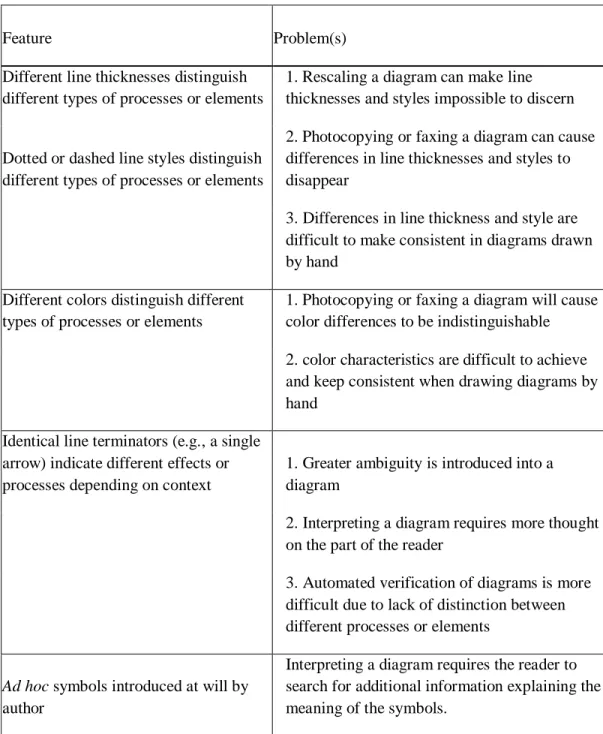
Table 1 - Features and problems of ad hoc graphical notations (Novere et al, 2009) ... 19
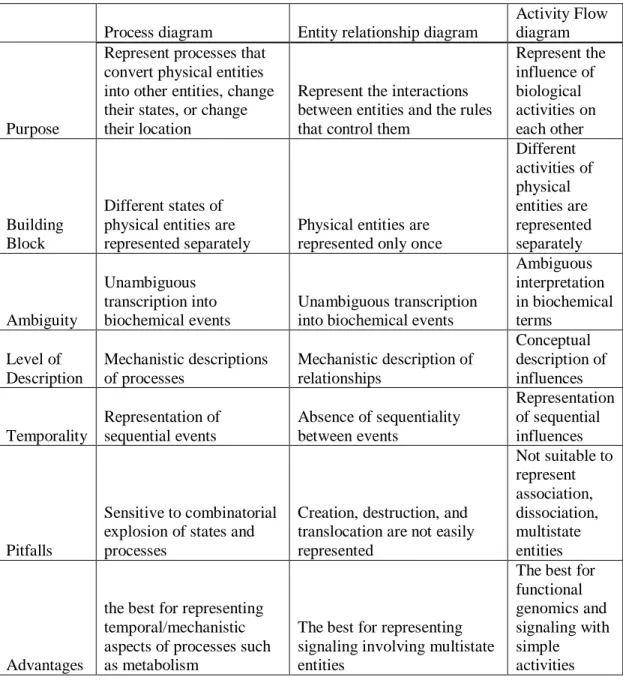
Table 2 - Comparison between the three languages of SBGN (Novere et al, 2009)... 21
Table 3 - Preparing the Yeast model – Strain 1 ... 49
Table 4 - Preparing the Yeast model - Strain 2 ... 51
Table 5 - Preparing the Yeast Model - Strain 3 ... 51
Table 6 - List of Target Reactions ... 53
Table 7 - OPTKNOCK Results and Verification (Units: mol•gDW-1• h-1 )... 53
vii List of Figures
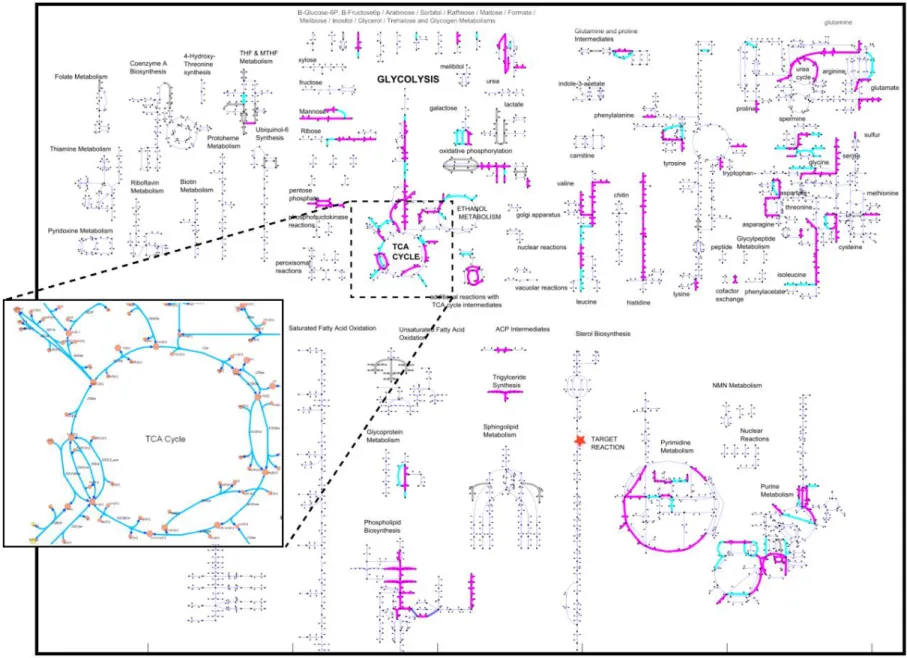
Figure 1 - Complete Yeast Metabolism (Schellenberger et al, 2010); Highlighted areas
represent pathways of high metabolic traffic ...2
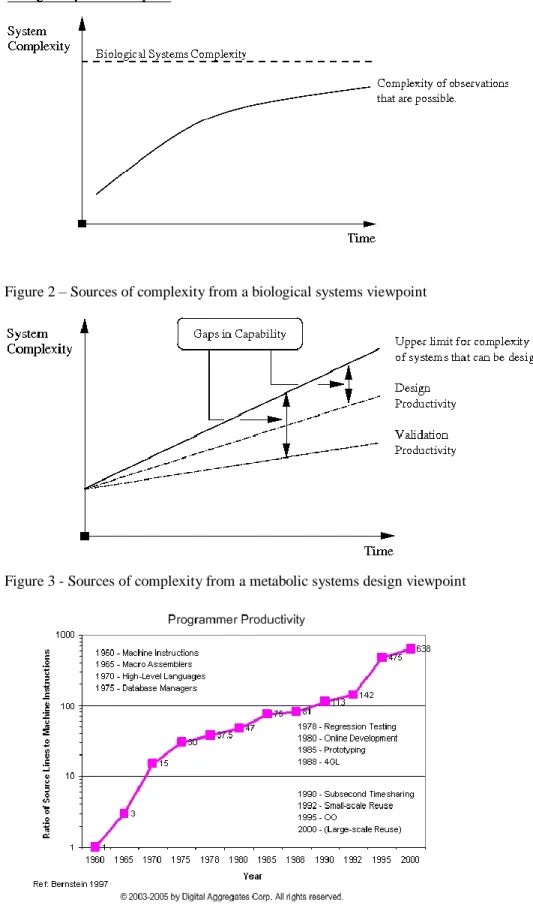
Figure 2 – Sources of complexity from a biological systems viewpoint ...9
Figure 3 - Sources of complexity from a metabolic systems design viewpoint...9
Figure 4 - Increases in programmer productivity over time (Austin 2011) ...9
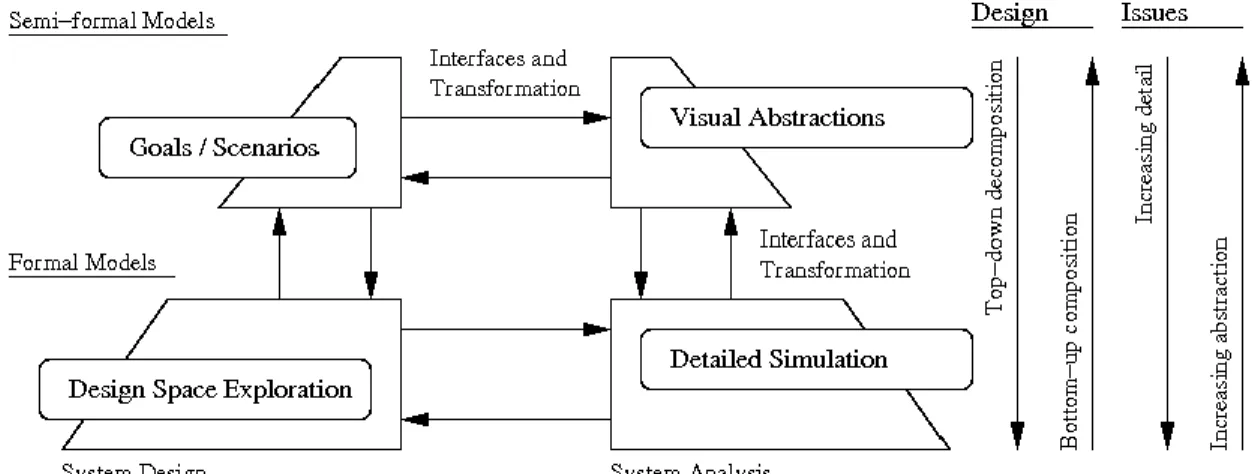
Figure 5 - A Multi-level framework for synthesis, analysis, design and integration of models in metabolic system design. ... 14
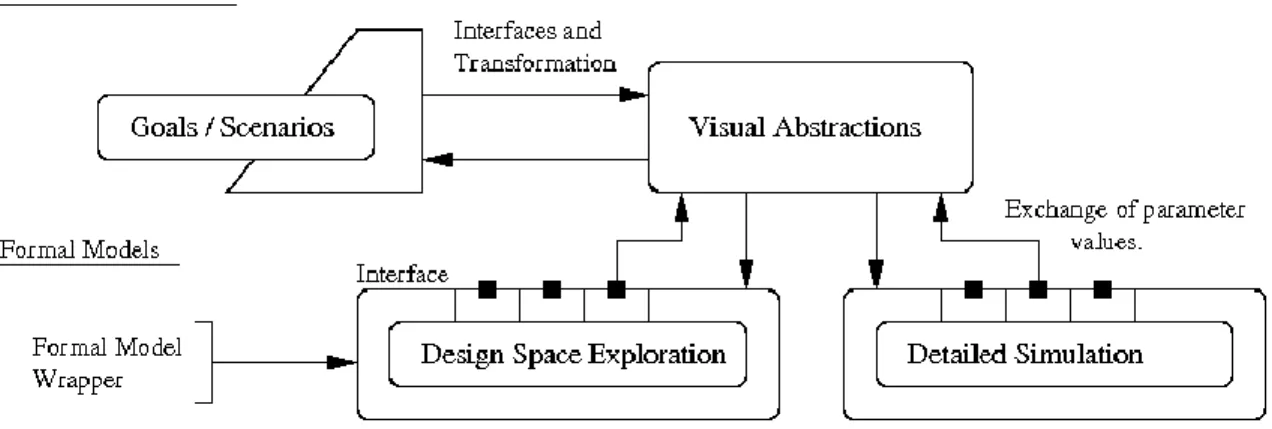
Figure 6 - Framework for integration of semi-formal models with formal models ... 16
Figure 7 - Metabolic Engineering Diagrams (Yang et al, 2011; Boyle et al, 2011) ... 17
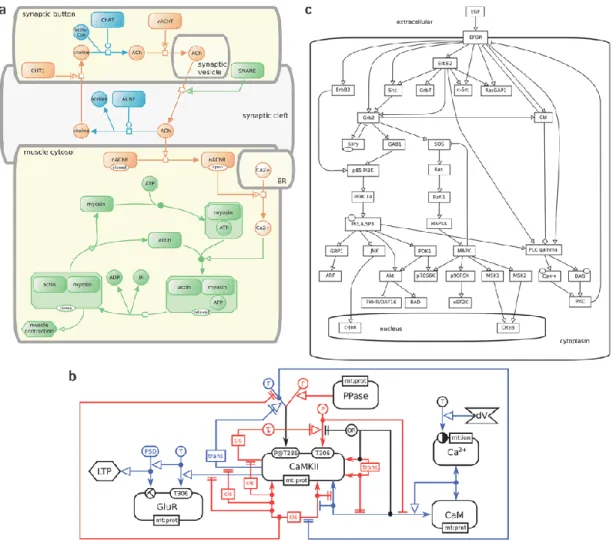
Figure 8 - SBGN examples: (a) process diagram, (b) entity relationship diagram, (c) SBGN activity flow diagram (Novere et al, 2009). ... 20
Figure 9 - SBGN Process diagram for Glycolysis ... 22
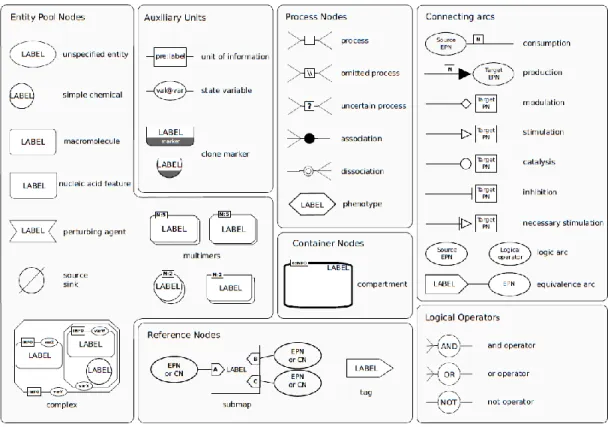
Figure 10 - Glyphs for SBGN Process Diagrams ... 22
Figure 11 - SysML Taxonomy (OMG: SysML v 1.2, 2010) ... 24
Figure 12 - Internal Block Diagram of a Distiller (Friedenthal et al, 2009) ... 25
Figure 13 - Parametric Diagram of a Distiller (Friedenthal et al, 2009) ... 26
Figure 14- How to translate a reaction network into a linear algebra expression with stoichiometric matrix and flux vector. (Athanasiou et al, 2003) ... 28
Figure 15 - Applying Steady State and solving for fluxes using linear algebra (Athanasiou et al, 2003)... 29
Figure 16 - Flux balance analysis (Orth et al, 2010). ... 30
Figure 17 - If a linear program has a non-empty, bounded feasible region, the optimal solution will always be one of the corner points (Arsham 2011). ... 31
Figure 18 - Flux Balance Analysis - Overall Approach (Orth et al, 2010) ... 32
Figure 19 - OPTKNOCK algorithm framework (Burgard et al, 2003) ... 33
Figure 20 - Bilevel programming framework - maximizing cellular and bioengineering objectives (Burgard et al, 2003) ... 34
Figure 21 – Venn Diagram showing common and distinct features of SysML and SBGN, together with a framework for wrapping formal models with SysML interface constructs (e.g., ports). ... 36
Figure 22 - Schematic Representation of engineered artemisinic acid biosynthetic pathway in S. cerevisiae (Ro et al, 2006) ... 40
Figure 23 - Covello Group Pathway (Source: Zhang et al, 2008)... 42
Figure 24 - Schematic of a Computational Metabolic Engineering Experiment ... 45
Figure 25 - A Bar Graph Comparing Pre and Post Knockout fluxes for each strain ... 54
Figure 26 - Lysine Metabolic Pathway ... 56
Figure 27 –A Non standard de facto Visual Abstraction generated using BIGG and the COBRA Toolbox (Hyduke et al, 2011)) ... 59
viii
Figure 28 – SBGN compliant notation, generated using VANTED and SBGN-ED
software (Junker et al, 2006; Czauderna et al, 2010).. ... 60 Figure 29 - SysML Visual Model for Pathways of Interest The target pathway for flux is highlighted and the suggested knockouts are crossed out. ... 62 Figure 30 - Parametric Diagram defining parameters and constraints between MICITD and HACNH reactions ... 63 Figure 31 - Systems Integration - Plugging the in silico metabolic engineering experiment into the Systems Engineering framework ... 67
1
Chapter 1 Introduction
1.1 - Problem Statement
Throughout the systems engineering community, a well-known tenet is that good designs balance the need for functionality and performance against limitations on cost. During the pre-implementation stages of system development (i.e., where a detailed system description may not exist), systems engineers are concerned primarily with system functionality and the identification of key environmental conditions within which this functionality must occur. Models of functionality need to describe what the system will do, and the order in which these functions will be executed, under both normal and abnormal operating conditions. The answers to these basic concerns are commonly expressed as functional requirements. Performance requirements describe how well a system should perform these functions. Interface requirements describe conditions that will allow for communication between subsystems, and, between subsystems and the external environment. Then, as the system development proceeds, engineers assume that it will be possible to control the complexity of developments through separation of design concerns (e.g., function before implementation; logic and physical representations) and decomposition of design solutions into hierarchies. Together these strategies of development lead to loosely coupled system architectures and well-defined hierarchies of behavior which, in turn, can facilitate the definition of simulation models (or corresponding experimental test-beds) and procedures for efficient search of the design space for solutions that are feasible (i.e., satisfy all constraints) and provide a desirable tradeoff in design criteria.
2
3
These principles apply to a wide range of established and emerging application areas. As a case in point, metabolic networks are immensely complex systems characterized by large numbers of nodes (chemical compounds, hereafter referred to as metabolites), and interconnections (reactions). The metabolism of a single microorganism such as Escherica coli or S. cerevisiae (yeast) is massive, composed of thousands of metabolites and reactions regulated by hundreds of genes, which interact with each other in a combinatorial fashion to maintain the cell’s living state (Figure 1).
Recent advances in computer technology and bioinformatics have allowed for detailed analyses of these metabolic systems. Examples include the creation of metabolic models for organisms such as E. coli and S. cerevisiae in languages such as SBML (systems biology markup language), and the development of algorithms to identify nontrivial bottleneck reactions in these models. However, due to a lack of visual abstraction capabilities, procedures for the systematic and precise design (i.e., modification and construction) of metabolic networks are not as straightforward and predictable as they should be. For example, while engineers have algorithms to process a metabolic network and identify reactions of interest, the results are not automatically carried through to visual diagrams showing where the reactions are located within the overall metabolic system.
State-of-the-art metabolic engineering procedures apply an understanding of reaction kinetics from chemical engineering to the chemical networks and compounds of cells from the biological domain. Value in metabolic systems is generated by maximizing production rate of a metabolite of interest or maximizing carbon flux through its synthesis pathway, while minimizing energy cost associated with
4
compounds such as ATP (adenosine triphosphate) and NAD(P)H (Nicotinamide adenine dinucleotide (phosphate)). Metabolic engineers identify and investigate how specific modifications to the metabolic network (e.g., reaction knockouts or gene overexpression) result in redirection of carbon traffic in the system as a whole. Computational analysis and linear programming methods are used to simulate and predict experimental results while genetic engineering is used to implement the design. Unfortunately, this process requires extensive human input and is time consuming. One source of inefficiency stems from less-than-perfect algorithms sometimes suggesting reactions whose modifications result in cell death, or whose modifications are impossible to implement through genetic engineering. This puts researchers in a position where code may need to be rewritten multiple times before it outputs reaction modifications that are experimentally feasible.
Overcoming these limitations will require new approaches to identifying and handling design modifications such as reaction knockouts. Reaction knockouts are a type of modification to a metabolic network in which a reaction is eliminated and a pathway becomes a dead end. Since carbon cannot flow through an interrupted pathway, the flux is often rerouted through other pathways in the metabolic network. When applied strategically, reaction knockouts can reroute flux towards a targeted pathway. However, reaction knockouts vary in impact, ranging from no effect on reaction flux (e.g., if the knockout reaction is on a pathway in parallel with other paths) to total reduction of all cellular flux to zero, also known as cell death (e.g., if a reaction is in a main branch of the network). A second source of difficulty stems from the non-additive nature of reaction knockouts. This occurs due to flux interactions. As a result,
5
design procedures based upon sequences of individual knockouts are sometimes less than optimal. To overcome this barrier, design procedures need to handle combinations of knockouts. When this fact is coupled with large network size, the complexity of the design space explodes in combinatorial fashion. This results in an algorithm’s application becoming much more computationally intensive and time consuming.
To see how the high degree of interconnectivity between biological nodes creates combinatorial explosion, consider a 3 knockout experiment of 500 reactions. This corresponds to nCr = 500C3 = 20,708,500 knockout combinations. If the designer wanted to complete 3 knockouts on a higher-level organism with 900 reactions, knockout combinations increase to nCr = 500C3 = 121,095,300. Increasing the number of knockouts further to 6, gives nCr = 500C6 = 21,057,686,727,000 possibilities. This rapid growth in possible combinations creates a gap between what is required from a system perspective, and what is possible from a design and validation perspective. Smarter approaches to computational metabolic engineering would incorporate knowledge of dependencies among metabolites, and employ combinations of “system decomposition and abstraction” to keep the complexities of metabolic computations in check.
1.2 – Scope and Objectives
When working with complex biological systems, metabolic engineers continually seek new approaches to the synthesis, design, and assessment of system-level architectures. For example, scientists have suggested that the biological community needs to lay broad foundations with respect to the concepts of standardization, decoupling and abstraction (Endy 2005). Still, many questions remain. How, for example, can one design metabolic processes with less human intervention
6
and greater efficiency through automation? What kinds of design tools will work for extremely large biological systems? We hypothesize that various forms of assistance will be useful to the metabolic engineering and greater biological community. Assistance can be provided in the form of design principles (e.g., rules of development) and building blocks upon which good design solutions can be built. Designers also need mechanisms to: (1)Dynamically control the levels of detail that will be presented to an engineer, and (2)Dynamically reconfigure statements of system functionality in response to the identification of designer mistakes and/or changes in required functionality.
This thesis has two purposes. In Chapter 2, we propose a multi-level framework for the synthesis, analysis and design of metabolic systems. This framework will employ a variety of modeling abstractions, approaches to design specification, and strategies for systems integration. In Chapter 3, we apply this framework to a metabolic engineering experiment in which the objective is to optimize a yeast strain genetically engineered to produce artemisninin via reaction knockouts. We will pay special attention to semiformal models of visual abstraction and interfacing them with more formal models of simulation. This is an area with strong precedents in systems engineering, but limited development in the metabolic engineering space. In Chapter 4, we will present a summary of the work and suggestions for future research. Scripts of the MATLAB code for the in silico experiment can be found in Appendix A.
7
Chapter 2 – Multi-Level Framework for Orchestration of Good
Design Solutions
2.1 – Approach
Metabolic systems are complex heterogeneous systems developed by teams of researchers, many of whom will have expertise in only one or two aspects of biology (e.g., cell biology; functional genomics; genetics, microbiology, bioinformatics etc.). To this end, and in support of the synthesis, design, integration, and evaluation of metabolic systems, this chapter formulates a multi-level framework for the orchestration of good design solutions. We expect that high levels of productivity will be achieved through the use of high-level visual abstractions coupled with lower-level (mathematical) abstractions suitable for formal systems analysis.
2.1.1 - Strategies for Dealing with Increases in System Complexity
From both a scientific and engineering perspective, metabolic networks are immensely complex systems characterized by large numbers of nodes (chemical compounds, hereafter referred to as metabolites), and interconnections (reactions). History tells us that as technologies improve over time, scientists are provided with better tools to conduct experimental observations and collect experimental data. This, in turn, allows for the formulation of new hypotheses aimed at explaining the mechanisms and dynamics behind experimental observations. After more than five decades of modern biological research, we are now entering an era where mathematical modeling of biological and biochemical systems can provide insight into the system structure (e.g., organs, tissues, cells and molecules, connections among components) and system behavior (e.g., detailed dynamics of biochemical interactions; built in control/defense
8
mechanisms to provide protection against environmental attack) (Tomlin 2005, Tomlin 2007).
From a systems engineering perspective, biologists are not designing and creating more complicated systems per se - instead, they observe systems in the hope of creating a better understanding of the architecture, behavior, and control mechanisms in the biological system. The associated increase in observational complexity over time is shown in Figure 2. We assume that in the beginning, scientific studies will lead to large improvements in knowledge and understanding of the biological system, but that longer term, further studies will produce diminishing returns.
One consequence of these advances is an ongoing desire to apply metabolic engineering in higher level organisms, with each iteration of design and development being more complex than its predecessors. Figure 3 summarizes the key challenges designers of metabolic processes will face over time. First, using state-of-the-art approaches to design, there is an upper limit to system complexity that can be designed and validated in an acceptable amount of time. New approaches to design are needed to improve designer productivity and minimize the gap between our capability and what is actually feasible from a design and validation point of view.
9
Figure 2 – Sources of complexity from a biological systems viewpoint
Figure 3 - Sources of complexity from a metabolic systems design viewpoint
10
Fortunately, we can learn a lot about the pathway forward by looking to successes from the past. History tells us that major increases in productivity are almost always accompanied by problem-solving at higher levels of abstraction. As illustrated in Figure 4, within the software world, remarkable increases in programmer productivity have been achieved through the use of high-level languages (e.g., Java, Python, UML) coupled with compiler technologies for the automated transformation of high-level abstractions into equivalent lower level abstractions (e.g., automated code generation, byte codes and machine codes), and machine infrastructures for software execution (e.g., Java Virtual Machine). Naturally, professionals in both the systems engineering and metabolic engineering communities would like a pathway forward for achieving similar increases in attainable productivity.
2.1.2 - Solution Mechanisms
Experience tells us that good solutions are likely to employ a combination of the following mechanisms:
Semi-Formal Models. To allow for the efficient description of ideas (e.g., goals and scenarios, tentative design concepts), textual and visual representations need to be based on semi-formal models (e.g, Unified Modeling Languages (UML) and Systems Modeling Languages (SysML)) having well defined syntax and semantics.
Formal Models. To help prevent serious flaws in detailed design and operation, design representations and validation/verification procedures need to be based on formal languages having precise semantics.
11
Abstraction. Abstraction mechanisms eliminate details that are of no importance when evaluating system functionality, system performance, and/or checking that a design satisfies a particular property. When we discuss the effectiveness of an abstraction, we are focusing on two particular concepts: (1) information hiding, and (2) encapsulation. By information hiding, we are referring to the omission of all irrelevant details. By encapsulation, we are referring to the grouping of processes or concepts together in a logical way. It often goes hand in hand with information hiding, as by grouping a set of items together, we can often condense them under the group heading and free up space in the diagram for other uses.
Decomposition. Decomposition is the process of breaking a design at a given level of hierarchy into subsystems and components that can be designed and verified almost independently.
Composition. Composition is the process of systematically assembling a system from subsystems and components. We seek, in particular, methods that allow for the systematic assembly of behavior models for complex systems from behavior models for simpler systems and components.
(coupled with strategies of systems engineering development (e.g., separation of logical and physical concerns; breadth before depth) refined over many years).
Semi-formal models are appropriate for the early stages of development, especially when a complete system description does not exist. At first, the central concern is making sure the right product or process will be designed. For projects that are new and innovative, the system engineer will need to work with the stakeholders
12
simply to figure out what the system will do, the scenarios corresponding to goals, and strategies for handling unexpected events. This activity is called goals and scenario analysis. The use of visual modeling abstractions, such as UML and SysML helps to reduce the risk of failure by forcing engineers to state all of their assumptions and think systematically about how the fragments of system behavior will be translated into flows of control and sequences of functionality. Development of the system structure description will include identification of the major subsystems, their connectivity to other subsystems, and connectivity to the surrounding environment. A second purpose for visual modeling abstractions is to act as an enabling formalism for the integration of models developed for different purposes.
Formal models of analysis are appropriate for the simulation, evaluation, and optimization-based design of detailed design descriptions, where decisions on high-level behavior and structure need to be refined to include data/information relevant to a specific discipline (e.g., the chemistry and physics of metabolic processes). Formal models for engineering design should consist of the following components (Sangiovanni-Vincentelli, 1996):
A set of explicit or implicit equations which involve input, output and possible internal (state) variables;
A set of properties that the design must satisfy given as a set of equations over design variables (inputs, outputs, states);
A set of performance indices which evaluate the quality of the design in terms of cost, reliability, speed, etc. given as a set of equations involving design variables.
13
A set of constraints on design variables and on performance indices specified as a set of inequalities.
Appropriate formalisms will depend on the domain of interest. For our purposes, we will incorporate the chemistry and physics of metabolic engineering processes, thereby allowing for: (1) The quantitative evaluation of metabolic system performance and cost, and (2) A framework for defining and searching the design space of potentially good solutions.
Semi-formal and formal modeling abstractions are developed to support design processes that are part top-down and part bottom-up. Top-down approaches to development assume that a complicated design problem can be simplified through its decomposition into a network of simpler design problems. A key advantage for top-down approaches to design is built-in support for customization. The key disadvantage of top-down approaches to design is that processes always start from scratch – since there is no attempt to reuse previous work, schedules of development may be unnecessarily long. Bottom-up approaches to development assume that good design solutions can be created through the assembly or composition of previously defined components or building blocks. The key advantages of bottom-up development are reduced time to market and improved quality (because building blocks will have been tested in previous iterations of development).
2.1.3 - Multi-Level Framework for Metabolic Process Design
We propose that the mechanisms of semi-formal and formal modeling, and top-down and bottom-up approaches to design be combined in a single multi-level framework as shown in Figure 5.
14
The design of metabolic processes will be part top-down decomposition (e.g., customized specification metabolic pathways) and part bottom-up composition of previously designed biochemical blocks. As a designer moves from the semi-formal to formal layers, levels of design detail will increase and reliance on abstractions will decrease. Conversely, moving from the detailed design layer to the higher-level layer relying on visual abstractions will correspond to an increasing reliance on abstractions and an increased focus on integration of models.
Recent research has demonstrated the use of SysML as a successful centerpiece abstraction for team-based system development, with a variety of interfaces and relationship types (e.g., parametric, logical and dependency) providing linkages to detailed discipline-specific analyses and orchestration of system engineering activities. (Bajaj et al, 2011). In the long term, however, we believe that multiple models of visualization will be required (e.g, combinations of SysML and SBGN), with graphical formalisms displaying concepts in a notation familiar to the end user.
Figure 5 - A Multi-level framework for synthesis, analysis, design and integration of models in metabolic system design.
15
To support the broader exploration of design spaces, for example, a long-term goal is to find ways of connecting algorithms for design space exploration with those for performance assessment of metabolic processes. We also need tools for the automated transformation of high-level representations into lower-level schematics for detailed implementation, and for automated transformation between visual representations (e.g., SySML to SBGN where similarities exist). Finally, we envision the use of optimization-based design tools that will assist a designer in the efficient exploration of a design space. Subsystems will be integrated together by connecting interface representations for each of the participating subsystems.
2.1.4 - Systems Integration
System integration is the process of bringing together the component subsystems into one system and ensuring that the subsystems function together as a single system. To simplify the design and management of the system operation, these subsystems will have interfaces that expose to the outside world the mechanisms for communication and hide internally, the mechanisms of subsystem functionality. Thus, integration can be viewed as joining the subsystems together by gluing their interfaces together. If the interfaces do not interlock directly, then adapters can be designed to provide the required mappings (or glue).
Figure 6 (an extension of Figure 5) shows the details for how high-level visual modeling languages, such as SysML, can act as the glue for the integration of formal models for guided design space exploration and detailed simulation. By itself, SysML
16
Figure 6 - Framework for integration of semi-formal models with formal models
enables systems integration through its use of requirements diagrams, structural constructs, and parametric, logical, and dependency relationships. The hope is that SysML will also be a suitable abstract visual representation for metabolic systems, with the potential to interface with algorithms such as OPTKNOCK, and FBA simulations as they are implemented in MATLAB (details to follow in Chapter 3).
2.2 – Semi-Formal Models for Metabolic Engineering
Standardized graphical representations, such as the Systems Modeling Language (SysML) or Systems Biology Graphical Notation (SBGN) provide a means to describe products of conceptual design such as models of system functionality and high-level requirements.
2.2.1- Goals and Scenarios
The primary design goal for this work is efficient production of a metabolite of interest within a metabolic system subject to rigid constraints for homeostasis (life-maintaining processes). Restated, in order for a metabolic system to be considered functional, the cell cannot die! Modifying metabolic systems for the purpose of
17
increasing or decreasing formation of certain metabolites falls under performance requirements. Metabolic engineering experiments tend to be oriented towards optimization of target metabolites while still maintaining a cell’s living state.
2.2.2 – Abstraction: Ad Hoc Metabolic Engineering Diagrams
Within the biochemical community, SBGN (Systems Biology Graphical Notation) provides a family of language for shown process flow, entity relationships and flows of information. For example, the SBGN Process Description Language provides a standardized graphical notation for showing the temporal courses of biochemical/molecular interactions taking place in a network of biochemical entities.
18
While most metabolic engineering diagrams do not adhere to a particular standard, there are some common design principles that researchers do tend to follow when presenting their data in the field. One of the most important metrics for metabolic engineers is metabolic flux. Metabolic flux can also be thought of as the flow rates at which reactions proceed, or also the flow of carbon atoms through a series of reactions. For this reason, metabolic engineers place primary emphasis on showing the metabolic flux through a system, and secondary emphasis on showing the system itself. A common way to show differences in flow is through size, color, and shape (Agrawala et al, 2011). The examples from Figure 7 demonstrate this. On the left side, grey represents zero flow, green represents low flow, and yellow represents high flow. On the right side, the size of the arrows represents flow rate, with thicker arrows indicating higher activity. While this method works well on an ad hoc basis, it is not device independent (i.e., it is easily affected by rescaling and/or photocopying). Lack of a standard has resulted in a plethora of different diagram types and formats with individual syntax and semantics.
2.2.3 - Abstractions: SBGN
SBGN is the result of efforts from the biological community to develop a standardized visual language for the greater biological community, one that overcomes the shortcomings of ad hoc visual languages used in previous generations of work. A summary of these shortcomings can be found in Table 1. In order to address these problems, the SBGN development community created three types of visual languages: (1) Process diagrams, (2) Entity relationship diagrams, and (3) Activity flow diagrams. Examples of all three are seen in
19
Figure 8, along with a summary of the relative advantages and disadvantages of each one (Table 2).
Table 1 - Features and problems of ad hoc graphical notations (Novere et al, 2009)
Feature Problem(s)
Different line thicknesses distinguish different types of processes or elements
1. Rescaling a diagram can make line thicknesses and styles impossible to discern
Dotted or dashed line styles distinguish different types of processes or elements
2. Photocopying or faxing a diagram can cause differences in line thicknesses and styles to disappear
3. Differences in line thickness and style are difficult to make consistent in diagrams drawn by hand
Different colors distinguish different types of processes or elements
1. Photocopying or faxing a diagram will cause color differences to be indistinguishable
2. color characteristics are difficult to achieve and keep consistent when drawing diagrams by hand
Identical line terminators (e.g., a single arrow) indicate different effects or processes depending on context
1. Greater ambiguity is introduced into a diagram
2. Interpreting a diagram requires more thought on the part of the reader
3. Automated verification of diagrams is more difficult due to lack of distinction between different processes or elements
Ad hoc symbols introduced at will by author
Interpreting a diagram requires the reader to search for additional information explaining the meaning of the symbols.
20
Figure 8 - SBGN examples: (a) process diagram, (b) entity relationship diagram, (c) SBGN activity flow diagram (Novere et al, 2009).
21
Table 2 - Comparison between the three languages of SBGN (Novere et al, 2009)
Process diagram Entity relationship diagram
Activity Flow diagram
Purpose
Represent processes that convert physical entities into other entities, change their states, or change their location
Represent the interactions between entities and the rules that control them
Represent the influence of biological activities on each other Building Block Different states of physical entities are represented separately
Physical entities are represented only once
Different activities of physical entities are represented separately Ambiguity Unambiguous transcription into biochemical events Unambiguous transcription into biochemical events
Ambiguous interpretation in biochemical terms Level of Description Mechanistic descriptions of processes Mechanistic description of relationships Conceptual description of influences Temporality Representation of sequential events Absence of sequentiality between events Representation of sequential influences Pitfalls Sensitive to combinatorial explosion of states and processes
Creation, destruction, and translocation are not easily represented Not suitable to represent association, dissociation, multistate entities Advantages
the best for representing temporal/mechanistic aspects of processes such as metabolism
The best for representing signaling involving multistate entities
The best for functional genomics and signaling with simple activities
22 Figure 10 - Glyphs for SBGN Process Diagrams
23
Summary of SBGN Process Diagram Notation. Figure 10 is a reference card which describes the various types of glyphs specific to the process diagram language of SBGN, and Figure 9 is a depiction of glycolysis using the process diagram language. These are included to give the reader some familiarity with how to read SBGN diagrams, which will be used in Chapter 3 to represent the experimental results.
The process diagram shows the transformation of glucose to glucose-6-phosphate, to fructose-6-glucose-6-phosphate, etc. all the way through to pyruvate in the metabolic process of glycolysis. These are all simple chemicals represented by circles. Each reaction is a process represented by a square, and each step is catalyzed by a more complex macromolecule enzyme. Catalysis is represented by small circles near squares and macromolecules are represented by rounded rectangles. Repeated molecules, such as ATP, are partially filled in.
The notation is designed so that a user can see with a quick glance what the main enzymes are, what the commonly repeated molecules are, what the main reactants are and how they fit together in the process of glycolysis.
2.2.4 - Abstractions: SysML
The Systems Engineering Markup Language, SysML, is a standard visual language for communication of system development product and process concepts, such as requirements, models of system behavior and structure, and support for parametric studies.
24
The concepts of SysML build upon those of UML (the Unified Modeling Language), a similar visual language for communication of software products and processes. UML was developed by the Object Management Group during the 1990s. SysML was also developed by the Object Management Group, but during the 2002-2005 time frame. During the past two decades, UML has evolved to meet the expanding demands of the software community. For example, UML 2 added features to support the development of software for real-time systems. To our knowledge, however, SysML has not been used to model biological systems.
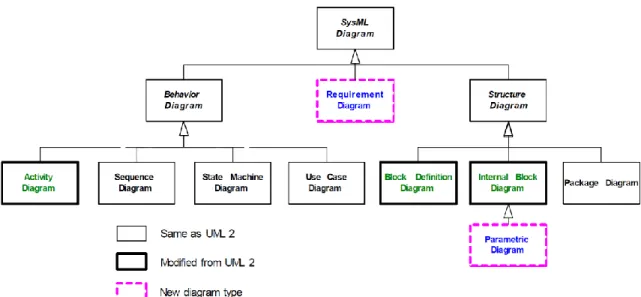
The primary uses for UML and SysML are to provide engineers with a collection of visual formalisms (i.e., types of diagrams) to express system behavior and architecture in the form of entities, processes, activities, components, and relationships between components. SysML can be subdivided into three groups of support (as shown in Figure 11): (1)Structural constructs, which tend to take the form of block diagrams
25
and depict the components of a system, (2)Behavioral constructs, which depict the interactions between components of a system, and (3)Requirement diagrams. Note that it is possible to create diagrams which combine both structural and behavioral constructs, e.g., nesting a state machine inside a block.
Focus on internal block and parametric diagrams. It is generally accepted that metabolic flux is a key parameter in metabolic engineering. The process flows and transformation reactions can be represented as a hierarchical graph of blocks, ports, and connections. In order to successfully integrate the constraints as defined by metabolic flux into a SysML diagram, it makes sense that we use internal block diagrams and at a more detailed level, parametric diagrams.
To see how this might work in practice, Figure 12 and Figure 13 are SysML compliant internal block diagram and parametric diagram depictions of a distiller example, as developed in the text of Friedenthal 2009.
26
One can see from Figure 12 how the distiller works. There are three types of flows: H2O, Heat, and Residue, and three major components: a heat exchanger, a boiler, and a drain. Heat flows into the system and to the boiler. Water flows through two loops. The first loop flows into the system, through the heat exchanger, and then out of the system. The second loop is a closed loop flowing between the heat exchanger and the boiler. Residue flows from the boiler out of the system through a drain valve.
Figure 13 - Parametric Diagram of a Distiller (Friedenthal et al, 2009)
Figure 13 also represents the distiller. However, its emphasis is on describing the parameters which describe the material flows in Figure 12. For each item flow, there is a list of value properties and value bindings, e.g., temperature and flow rate properties. Additionally, each of these listed item flows is linked to multiple constraints which can be called out with defining equations and proportionalities.
Thus, while a biology-specific layer of SysML does not exist, our experience with metabolic engineering suggests that Internal Block Diagrams with potential
27
parametric specifications and constraints would be the best SysML notation for representing metabolic systems.
2.3 - Formal Models for Metabolic Engineering
For metabolic engineering, formal models are needed for the accurate and quantitative evaluation of system behavior (e.g., metabolic process production) and efficient design space exploration. The best formal model system analysis tool that allows for detailed simulations of metabolic systems is flux balance analysis (FBA). By optimizing for biomass, and setting the parameters so that they reflect the reactions which have been modified, one can get a good idea for how a metabolic system will perform.
Design space exploration takes the form of various algorithms which can winnow the metabolic landscape down and identify key bottleneck reactions which can be modified to redirect cellular traffic towards pathways of interest. Examples of such algorithms include GDLS (Lun et al, 2009), EMILiO (Yang et al, 2011), OptORF (Kim et al, 2010) and OPTKNOCK (Burgard et al, 2003). The general purpose of these algorithms is to apply a linear programming based framework which will identify key reactions or genes whose modification (in the form of knockouts or overexpression) will result in optimization of a target metabolite. As the oldest of the algorithms mentioned, OPTKNOCK has become the standard benchmark algorithm within metabolic engineering.
2.3.1 - Flux Balance Analysis
Expressing a biological system in mathematical terms enables the researcher to use linear algebra to find mathematical solutions for experimental problems at a high
28
level of abstraction. Consider Figure 14. Visually, a researcher can see from the diagram that the flux r0 breaks into two flux branches, r1 and r2. The r1 flux continues to the r3 flux, and the r2 flux continues to the r4 flux. Thus, r1=r3, r2=r4, r1+r2=ro, and r3+r4=0. Figure 15 verifies this mathematically. While the flux through the network in Figure 14 is easy to visualize, as networks become more complex, convoluted, and interconnected, we have to rely increasingly on mathematical abstraction for analysis. The standard method of mathematically representing a genome scale system and predicting biomass formation is the process known as flux balance analysis.
Figure 14- How to translate a reaction network into a linear algebra expression with stoichiometric matrix and flux vector. (Athanasiou et al, 2003)
29
In order to understand flux balance analysis (which is essentially metabolic flux analysis at the genome scale), it helps to understand metabolic flux analysis.One takes a reaction network and breaks it down by reaction. Depending on whether a metabolite is produced or consumed, one can assign a positive or negative coefficient to the flux vector (which is equivalent to the rate of consumption/production) in the individual metabolite rate expressions. This coefficient will be the number expressed later in the stoichiometric matrix (where every row corresponds to the concentration of one compound, and every column corresponds to the flux of one reaction).
One can then set up a linear algebra equation of dx/dt = Sv, where dx/dt is the change in concentration of a column of reactants, S is the stoichiometric matrix (based on the coefficients for each individual reactant rate expression), and v is the flux through each reaction. The major assumption of metabolic flux analysis is that all internal metabolites have a steady state of 0. Since one can measure external
30
metabolites to obtain values, one can then set dx/dt=0 for the internal metabolites and solve for the unknown fluxes using linear algebra (Figure 14 and Figure 15).
Flux balance analysis is metabolic flux analysis at the genome scale (Orth et al, 2010; Palsson, 2006). The major concepts from metabolic flux analysis are still the same. S is still the stoichiometric matrix, and v is still the flux vector. Internal metabolites still have an assumed steady state of 0. However, there are now a much greater number of unknowns due to the larger system scale. With a larger system scale, the number of unknowns exceeds number of knowns, resulting in a solution space, and not a specific solution (Figure 16).
Figure 16 - Flux balance analysis – The allowable solution space is the set of all points satisfying all constraints. These constraints are represented by mass balance equations (which assure that any compound produced must equal the amount consumed at steady state) and capacity constraints (in the form of upper and lower bounds, which are usually based on experimental values). If a linear program has a non-empty bounded feasible region, then the optimal solution is always one of the corner points. (Orth et al, 2010).
In order to find an optimal solution within the solution space, one needs to apply constraints, set an objective function ctv=Z, where c is a vector of weights indicating how much each reaction contributes to the objective function, and maximize the objective function. Ultimately, the objective function quantifies how much each reaction contributes to overall phenotype. The mathematical representations of the stoichiometric function and objective function set up a system of linear equations which
31
can be optimized using linear programming based algorithms to find the solution. Since the constraints define a non empty and bounded solution space, the optimal solution will always be at one of the corners (Figure 17 and Figure 18).
Figure 17 - (1) The feasible region of any linear program is always a convex set and (2) The iso-value line of a linear program objective function is always a linear function. Combining these two concepts, it follows that if a linear program has a non-empty, bounded feasible region, the optimal solution will always be one of the corner points (Arsham 2011).
32
Figure 18 - Flux Balance Analysis - Overall Approach (Orth et al, 2010)
2.3.2 - OPTKNOCK Algorithm
The OPTKNOCK algorithm is a bilevel programming algorithm (Figure 19), meaning it takes the cellular objective function (as described in the previous flux balance analysis section) and then runs it while also maximizing a surrounding bioengineering objective (through the reaction knockouts) (Burgard et al, 2003).
33
Figure 19 - OPTKNOCK algorithm framework (Burgard et al, 2003)
Below is the Sv=0 function (the stoichiometric matrix multiplied by the flux vector at steady state, as discussed in the section regarding FBA) rewritten within context of maximizing flux towards the cellular objective (that is, the target pathway).
N Mirrev Msecr_only Mrev
Next one accounts for gene deletion/reaction elimination; this constraint ensures reaction flux is zero only if the yj is zero, i.e., reaction is knocked out .
34
M
The next step is combination of the reaction knockout and objective function into the bilevel programming framework as illustrated in Figure 19. In other words, for every reaction knockout the algorithm is also maximizing the cellular objective function. Figure 20 shows the bilevel programming framework with the relevant equations plugged in.
Figure 20 - Bilevel programming framework - maximizing cellular and bioengineering objectives (Burgard et al, 2003)
This is where we apply linear programming to find the solution (i.e., the knockout which results in the highest flux redirected towards our target reactions). There is a rule in linear programming where for every linear programming problem (primal), there exists a unique optimization problem (dual) whose optimal objective value is equal to that of the primal problem.
35
Note that both the primal and dual problems are bounded by constraints in the form of reaction knockouts, stoichiometric coefficients, and glucose uptake inputs. When bounded by these constraints the primal and dual problems are equal to each other at the optimal point. They can then be rewritten in order to solve for that optimum, which corresponds to our solution (i.e., the knockout which results in the highest flux redirected towards our target reactions).
36
2.4 - Formal Model Interface Design for Systems Integration
Now that the details for the semi-formal and formal modeling are in place, the next issue to consider is interface design for the systems integration of models from metabolic simulation and design space exploration.
The upper-half of Figure 19 is a Venn diagram of the relationship between SysML and SBGN. Although the formalisms for both visualizations have been designed to serve the needs of distinct communities, most of the distinctions are at the syntax level. There is, in fact, a surprising overlap in features common to both representations. The notable differences crop up in the visual representation of biology-specific glyphs and flow-based modeling. The three SBGN diagrams (process diagrams, entity relationships diagrams, and activity flow diagrams) are oriented respectively towards representing temporal/mechanistic aspects of biochemical processes (e.g., metabolism), signaling interactions between multistate entities (e.g., hormonal cascades), and biological
Figure 21 – Venn Diagram showing common and distinct features of SysML and SBGN, together with a framework for wrapping formal models with SysML interface constructs (e.g., ports).
37
influences (e.g., gene regulation). Process diagrams correspond in SysML notation to structural constructs such as block diagrams, internal block diagrams, constrained block diagrams and to some extent behavioral constructs such as state machine diagrams. Entity relationship and activity flow diagrams correspond in the SysML notations to behavioral constructs such as activity diagrams.
The defining characteristic of SBGN is its customization and use of visual constructs for communication of ideas in biology. This is a good thing. Our supposition is that SBGN can be combined with SysML, resulting in a system representation that communicates ideas and acts as an interface to models for flow-based modeling (e.g., metabolic flux analysis and design explorations enabled through the use of OPTKNOCK).
38
Chapter 3 – Metabolic Engineering Experiment
3.1 – Background
3.1.1 – Semi-formal Model Design - Goals
The second purpose of this paper is to demonstrate the effectiveness of the framework discussed in Chapter 2, through application to a metabolic engineering experiment.
This process begins with the semi-formal model design portion of our framework (see the upper half of Figure 5) and the formulation of experimental goals/scenarios, followed by the generation of requirements. Accordingly, the objective of this experiment is to determine which reaction knockouts will maximize production of the metabolite artemisinin in our genetically engineered strain of yeast. The performance requirement is to maximize production of artemisinin. The functional requirement is to maximize production subject to the constraint of maintaining homeostasis.
The experimental procedure will determine the reaction knockouts using the OPTKNOCK algorithm, and verify the predicted results using flux balance analysis (FBA) simulations. Finally, we will present the results in visual form using a combination of ad hoc metabolic engineering diagrams, SBGN, and SysML.
3.1.2- Motivation and History
Malaria is an infectious disease which affects nearly 200-250 million people and kills nearly 700,000-1,000,000 people annually (World malaria report 2010). The majority of those who die from infection live in poverty and cannot afford access to the current anti-malarial drug standard, artemisinin. Consequently, any scientific advances
39
which can help lower the cost of artemisinin will translate into greater accessibility to the drug worldwide. There have been two such major scientific advances in the past five years. The first involves the reengineering of yeast to manufacture artemisinic acid, a precursor to artemisinin (Ro et al, 2006), and the second, the creation of an alternative “dihydro” pathway within yeast which enables synthesis of artemisinin in situ in the presence of activated oxygen (Zhang et al, 2008).
3.1.3 – Advance 1: CYP71AV1/CPR Pathway
The high cost of Artemisinin stems from the extraction process of the drug from the herb Artemisia annua (A. annua). Researchers at UC-Berkeley (hereafter referred to as the Keasling group) have developed a procedure to cut the costs of drug development by genetically engineering S. cerevisiae to produce artemisinic acid, a precursor to artemisinin (Ro et al, 2006). By sourcing the drug from microbes instead of plants, overall production time is decreased from months to days, and biomass fraction increases from 1.9% to 4.5%, resulting in nearly two orders of magnitude of productivity improvement.
The Keasling group’s strategy for producing artemisinin in S. cerevisiae consists of three major steps:
1. Increase farnesyl pyrophosphate (FPP) production. As illustrated in Figure
22, this was done by upregulating the expression of tHMGR and ERG20, and downregulating the expression of ERG 1-8, 11-13, 24-25.
40
Figure 22 - Schematic Representation of engineered artemisinic acid biosynthetic pathway in S. cerevisiae (Ro et al, 2006)
2. Introduce the amorphadiene synthase (ADS) gene into the genetic sequence of S. cerevisiae in order to convert FPP to amorphadiene. To drive carbon towards the inserted ADS pathway, the Keasling group uses a methionine-repressible promoter to downregulate ERG9, the gene which expresses the
41
enzyme squalene synthase (red), and catalyzes the next step in the mevalonate pathway in wild type yeast.
3. Insert genes CYP71AV1 and CPR from A. Annua to express enzymes from the family cytochrome P450. These enzymes catalyze the oxidation of amorphadiene to artemisinic acid.
3.1.4 – Advance 2: DBR2 Pathway
A second group of researchers from the Canadian Plant Biotechnology Institute (hereafter referred to as the Covello group), have determined that the gene DBR2, a complementary DNA clone isolated from the flower buds of A. annua, corresponds to artemisinic aldehyde double bond reductase activity in A. annua. As illustrated in the highlighted portion of Figure 23, when S. cerevisiae uptakes the DBR2 gene, it creates a new metabolic pathway from artemisinic alcohol to dihydroartemisinic acid (Zhang et al, 2008).
In this pathway, artemisinic alcohol is converted to dihydroartemisinic alcohol through the action of the double bond reductase enzyme, as regulated by the DBR2 gene. The double bond reductase eliminates the nonring double bond in artemisinic alcohol by adding two atoms, resulting in the nickname “dihydro” pathway. While the researchers were unable to identify what specific enzymes controlled for the continued oxidization of dihydroartemisinic alcohol to dihydroartemisinic acid, oxidation did take place, just as artemisinic alcohol oxidized to artemisinic acid in three steps.
42
Figure 23 - Covello Group Pathway (Source: Zhang et al, 2008)
A key benefit of dihydroartemisinic acid is that it quickly converts to artemisinin in the presence of activated oxygen. Artemisinic acid, on the other hand, requires two additional steps in order to isolate artemisinin. In other words, this means that in a scale-up facility, a researcher can simply run an oxygenating hose through a bioreactor and produce artemisinin in situ, thereby avoiding the need for time-consuming extraction steps. This lowers the overall cost (Acton et al, 1992).
43
It is important to note that the new strains of yeast developed by the Covello group contain both the “dihydro” pathway and Keasling Group pathways. While the “dihydro” pathway presents productivity and economic advantages, the enzymes that catalyze the formation of artemisinic acid from artemisinic alcohol play important roles upstream within the overall yeast metabolic network. The creation of a new “dihydro” only strain of yeast requires validation and verification to ensure that knockouts forcing carbon to the “dihydro” route do not affect the performance of the overall metabolic network.
3.2 - Formal Models for Metabolic Engineering
For the formal model sections of our multi-level framework, design space exploration takes the form of determining which reaction knockouts will maximize production of artemisinin. To do this, we run a mathematical abstraction of a yeast model (as described earlier in Chapter 2) through the OPTKNOCK Algorithm. Then, with the OPTKNOCK results in hand, the next step is to verify those results using flux balance analysis (FBA) simulation. The latter coincides with the formal model analysis portion of our framework.
3.2.1 - Tools
The simulation and design space exploration elements of the in silico experiment employ MATLAB 7.11.0, a Tomlab/Cplex or Gurobi Linear Programming solver, the COBRA Toolbox for MATLAB, and a suitable yeast model.
MATLAB 7.11.0 is a software package, which after more than two decades of development, has become one of the standards for numerical analysis in the greater scientific community. CPLEX is a linear programming solver designed by IBM. The
44
Tomlab plugin allows a MATLAB user to run CPLEX from within MATLAB. Gurobi is an alternative linear programming solver free for academic users that runs within MATLAB. The COBRA (Constraint Based Reconstruction and Analysis) Toolbox is a package for MATLAB designed for in silico analysis of biological models. (Becker et al,2007; Hyduke et al 2011). I will discuss yeast models further on in Section 3.2.4.
3.2.2 - Methodology
Figure 24 provides a high level view of the procedure for design space exploration and simulation processes in the in silico experiment. The experimental procedure consists of the following steps:
1. Prepare a SBML and COBRA compatible model of S. cerevisiae so that it accurately reflects the genotypes of the strains in possession and load the model into the COBRA Toolbox.
2. Set parameters and constraints of the simulated environment. This involves: a. Define the media and nutrients available to the microbial culture;
b. Remove reactions from consideration that would be difficult or unreasonable to knockout;
c. Establish the target reaction to maximize flux towards (for our purposes, the artemisinin production biosynthetic pathway);
d. Declare biomass formation to be the constraint reaction;
3. With the aforementioned parameters and constraints in place, run the OPTKNOCK algorithm. OPTKNOCK will output a list of suggested reactions to knockout.
45
46
4. Run a flux balance analysis simulation on the preknockout model. The preknockout model is the same model that was run through the OPTKNOCK algorithm. Flux balance analysis will output simulated flux through target reaction and simulated biomass growth.
5. Modify the preknockout yeast model to exclude the reaction knockout list as output by the OPTKNOCK algorithm. This is the postknockout yeast model. 6. Run a flux balance analysis simulation on the post knockout yeast model to
obtain post knockout results. Flux balance analysis will output simulated flux through target reaction and simulated biomass growth.
7. Verify the results of the simulation. For Step 7, there are two indicators that the algorithm worked: (1) The simulated maximum flux through the target reaction should correspond with OPTKNOCK’s prediction, and (2) The maximum flux should increase through the target pathway going from the Preknockout model to the Postknockout model.
Step 3 of this procedure (OPTKNOCK) corresponds to the design space exploration quadrant of the systems engineering framework. Step 4 of this procedure (Flux Balance Analysis) corresponds to the simulation quadrant of the systems engineering framework.
3.2.3 - Preparing the Model
The most current curated model of yeast is referred to as the Yeast Consensus Model, available at: http://www.comp-sys-bio.org/yeastnet/ (Herrgard et al, 2008). While it would have been the ideal model to use as the basis for the simulation experiment, we found that the Yeast Consensus Model is neither SBML (systems
47
biology markup language) nor COBRA compliant. Furthermore, although the protocol behind SBML compliance can be extensive in its own right, a general overview of what compatibility entails will suffice here (Hucka et al, 2003).
Within the model, there are two categories of classes: (1) reaction classes and (2) metabolite classes. To be SBML compatible, each reaction class must have attributes that include the abbreviation for the reaction, the name(s) of the compounds in the reaction, the equation of the reaction, the cellular compartment in which the reaction takes place (e.g., cytosol, mitochondria, ribosomes, etc), and the direction of the reaction (i.e., irreversible, reversible). In order for the model to be COBRA compatible, each reaction must also have a lower and upper bound with respect to flux for each direction of the reaction, along with an objective function status (either 0 or 1). For metabolite classes, SBML compatibility entails including attributes for a compound’s abbreviation, name, and formula. COBRA compatibility requires the attribute of compound charge. It is important to note that while additional attributes could be included within classes, such as EC (enzyme class) numbers, KEGG (Kyoto Encyclopedia of Genes and Genomes) abbreviations, and molecular weights, they are not necessary for SBML/COBRA compatibility. Of all the attributes listed above, the most important for the purposes of the simulation experiment is the equation, as the mathematical abstraction of the S. cerevisiae model will be based on this attribute. A practical caveat - because the equation is dependent on the compound abbreviations and direction of reaction, it is important to verify that both of these attributes also correspond correctly with the equations.