Medication Adherence
A Review and Lessons for Developing Countries
https://doi.org/10.3991/ijoe.v15i11.10647
Adebayo Omotosho (*), Ayegba Peace
Landmark University, Omu-Aran, Nigeria
Abstract—Most of the time, complete adherence to prescribed medication is a big step towards recovery from either chronic or acute diseases, but patients often are unaware of the adverse effects that could arise from inconsistency in adherence. The inability of patients to adhere to prescription can affect the po-tency of some effective therapies known to treat many conditions, and passive compliance may result in the development of resistant to the drug causing a need for treatment modification. Shockingly, more than half of the drugs pre-scribed for patients with chronic conditions like diabetes and hypertension were found not to be taken as recommended. Adherence is so important because it can assist clinicians in successful supervision of evidence-based treatment of patients; therefore this paper presents an overview of medication adherence, non-technology and technology-based approaches, and lessons for developing countries.
Keywords—Medication adherence; prescription; ehealth; developing countries
1
Introduction & Background
As stated in existing studies, low level of medication adherence is connected with many things such as the high possibility of demise and hospitalization of people with heart failure with reduced ejection fraction[5], exposure to a high risk of sudden frac-tures and deaths in osteoporosis patients[2], and several other casualties. Nonadher-ence is chiefly high among patients with chronic diseases, especially hypertensive patients who are responsible for close to 50% of nonadherence, and by the year 2025, the prevalence of hypertension is projected to go up by 30% [3]. The direct and indi-rect methods have been used for evaluating drug adherence It is however recommend-ed that the use of direct methods for treatment of chronic disease, like resistant hyper-tension, is more accurate and less prone to patients’ manipulation [6]. Direct methods make use of direct observation of the patient in the course of taking the prescription, and therapeutic drug monitoring. The indirect methods analyzing medication adher-ence include the use of adheradher-ence questionnaire, medical diaries, patient interviews, automated electronic pillbox, prescription registries, and manual counting of pills [1].
Globally, the use of technology in healthcare service delivery (known as eHealth) has the potential to transform healthcare medications management, by providing im-portant personalization and tracking– which can help to reduce the overhead cost associated with fluctuating abidance to medication instructions. [11,12,13]. [11] in-vestigated the projected roles of eHealth systems in supporting and improving the general health of patients and the effectiveness of adherence as medication interven-tion. They concluded in order for low- and middle-income countries to benefit from the future eHealth solutions, there is a need for a context-based and adaptable trans-disciplinary research approach that considers the multifaceted factors that can con-tribute to effective investment in eHealth at the macro, micro, and meso levels. Whether the pieces of evidence supporting technology usage are conflicting or not, it is difficult to categorically undermine the role of technology in improving medication adherence, and some studies have even stated that the use of telemedicine technology for medication adherence and the future exploration of artificial intelligence can also change the way medication regimens is addressed [14]. This paper performs a sum-mary review of medication adherence, non-technology and technology-based ap-proaches, and a lesson for developing countries.
2
Literature Review
clocks, telephone calls and so on) did not give a good outcome. They concluded that the lack of awareness and poor education of patients on osteoporosis may have con-tributed to the failure of patient-directed behavioural intervention. The most frequent-ly used interventions for enhancing medication compliance identified by [17], were classified as behavioral interventions (therapies and techniques to improve patients’ attitude to treatment), educational intervention (patients’ education on medication adherence techniques), integrated care interventions (collaborations between health care personnel and patients), self-management and risk communication interventions. It was also noted that many studies focused on short term adherence, and the adher-ence methods in place for chronic patients have not been very effective. The authors concluded that behavioral adherence interventions have been more successful than others, suggesting a need for more focus on improving health literacy. [18] carried out a review of medication adherence in patients with chronic heart failure (CHF). The search was performed using Medline and Cochrane database and incorporated all records accessible up until 2014. It yielded 17 studies that covered 162,727 patients. Ten studies which covered 33.7% of all participants showed no correlation between age and medication adherence, and the mean age of adherent patients was between 66 and 75 years of age. Only one study indicated a better medication adherence in older patients compared to youths and they then concluded that increased age alone is not connected to reduced medication adherence in patients with CHF. A cross-sectional study was carried out with 2445 adult patients on an anti-hypertensive medication by [19] in Hong Kong. A questionnaire was used and eight-item Morisky medication adherence scale was applied to evaluate the level of adherence in these patients. Re-sults from their study demonstrated that about 55.1% of the patients had good medica-tion adherence, with a score greater than 6. Age, employment status, illness percep-tion, and self-perceived health state are viewed as basic factors in medication adher-ence. They concluded by suggesting the use of educational projects in promoting adherence in younger patients. Understanding the factors affecting adherence is still ongoing research because their comprehension can help to increase patient’s compli-ance. In a recent study, [20] developed a new way to measure medication adherence which involves determining adherence levels as well as the specific factors that influ-ence non-adherinflu-ence in patients with inflammatory bowel disease. This new method called the medication adherence index was evaluated against the popular Morisky medication adherence scale-8. It was noted that specifying the reasons for non-adherence significantly increased non-adherence in patients, this is logical because if the causes of non-adherence are known, adequate solutions can be provided.
pro-vided by users, 34.16% propro-vided positive comments about the adherence applications and found them very helpful. In the same vein, [22] performed a review on technolo-gies available for monitoring medication adherence and categorize them into sensor systems, vision-based, proximity-based and fusion based systems. Under sensor sys-tems, there are wearable sensors and fixed sensors (which can be mounted on pillbox-es) and ingestible sensors. Some applications in this category include Medtracker, Pillsense, and Medrem. MyTmed, which has ingestible biosensors, is an example of ingestible sensors. Proximity sensors include technologies that make use of RFID technology, vision-based systems include technologies that make use of the smartphone camera in detecting medication compliance, and fusion based systems blend multiple techniques. Challenges that affect the use of the technologies high-lighted include, system and data accuracy, energy consumption, acceptability and user tampering. [23] identified the most popular technologies for medication adherence, in young adults with sickle cell disease through a survey carried out on 80 patients, and it was discovered that 79% of patients preferred daily text messages as reminders to take medication and other technologies that assist directly observed therapy. The major features in smartphones that boost adherence include medication reminders, medication logs, positive feedback and adherence text prompts. However, a review of 15 applications available for HIV management showed that while the majority of the applications had reminders, logs, resources and search functionalities, none of them had the self-management feature which is necessary for persons living with HIV.
Many of the proposed electronic detection monitoring devices (EMD) for inhaler adherence in asthma patients have only been implemented for clinical research and [27] investigated the impact of EMD’s based on cost-effectiveness, feasibility, and barriers in a variety of settings to encourage the use of EMD in a larger population. Some EMDs for inhaler adherence considered are Asthmapdis (which has a mobile application and a tracking device on the inhaler), Doser (which records the total num-ber of puffs per day), smart inhaler tracker, Akita, and so on. The major limitations of the devices are the cost of devices, data transfer and vulnerability to changes in the inhaler design. It was noted that EMD technologies for inhaler adherence by direct patient reminder or clinician to patient feedback are most promising and can improve medication adherence. The world’s aged population is increasing rapidly; another study on medication adherence in the elderly was carried out by [28]. They proposed the use of a pervasive multimedia system that takes advantage of multimedia technol-ogy customization features to improve compliance in home health care. Multimedia system that can adapt to the surrounding of the elderly by rendering a context-aware prompt using audio, text, images or animations correctly and appropriately can sup-port home care adherence. Services provided by their system include the ability to follow medication plan online, medication advice, identification of medication infor-mation and so on. The evaluation result of their developed system showed great prom-ises in enhancing adherence among the aged.
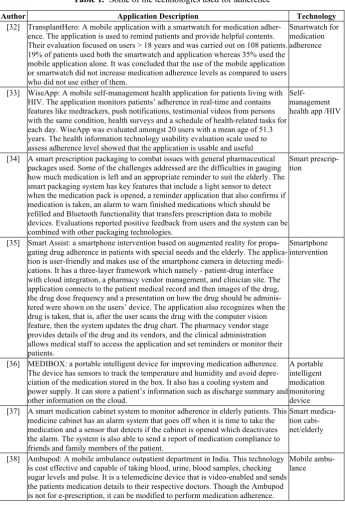
in-creases pharmacy costs reduces the total costs of healthcare and medications. Some of the specific recent technologies developed for adherence are described in Table 1.
Table 1. Some of the technologies used for adherence
Author Application Description Technology
[32] TransplantHero: A mobile application with a smartwatch for medication adher-ence. The application is used to remind patients and provide helpful contents. Their evaluation focused on users > 18 years and was carried out on 108 patients. 19% of patients used both the smartwatch and application whereas 35% used the mobile application alone. It was concluded that the use of the mobile application or smartwatch did not increase medication adherence levels as compared to users who did not use either of them.
Smartwatch for medication adherence
[33] WiseApp: A mobile self-management health application for patients living with HIV. The application monitors patients’ adherence in real-time and contains features like medtrackers, push notifications, testimonial videos from persons with the same condition, health surveys and a schedule of health-related tasks for each day. WiseApp was evaluated amongst 20 users with a mean age of 51.3 years. The health information technology usability evaluation scale used to assess adherence level showed that the application is usable and useful
Self-management health app /HIV
[34] A smart prescription packaging to combat issues with general pharmaceutical packages used. Some of the challenges addressed are the difficulties in gauging how much medication is left and an appropriate reminder to suit the elderly. The smart packaging system has key features that include a light sensor to detect when the medication pack is opened, a reminder application that also confirms if medication is taken, an alarm to warn finished medications which should be refilled and Bluetooth functionality that transfers prescription data to mobile devices. Evaluations reported positive feedback from users and the system can be combined with other packaging technologies.
Smart prescrip-tion
[35] Smart Assist: a smartphone intervention based on augmented reality for propa-gating drug adherence in patients with special needs and the elderly. The applica-tion is user-friendly and makes use of the smartphone camera in detecting medi-cations. It has a three-layer framework which namely - patient-drug interface with cloud integration, a pharmacy vendor management, and clinician site. The application connects to the patient medical record and then images of the drug, the drug dose frequency and a presentation on how the drug should be adminis-tered were shown on the users’ device. The application also recognizes when the drug is taken, that is, after the user scans the drug with the computer vision feature, then the system updates the drug chart. The pharmacy vendor stage provides details of the drug and its vendors, and the clinical administration allows medical staff to access the application and set reminders or monitor their patients.
Smartphone intervention
[36] MEDIBOX: a portable intelligent device for improving medication adherence. The device has sensors to track the temperature and humidity and avoid depre-ciation of the medication stored in the box. It also has a cooling system and power supply. It can store a patient’s information such as discharge summary and other information on the cloud.
A portable intelligent medication monitoring device [37] A smart medication cabinet system to monitor adherence in elderly patients. This
medicine cabinet has an alarm system that goes off when it is time to take the medication and a sensor that detects if the cabinet is opened which deactivates the alarm. The system is also able to send a report of medication compliance to friends and family members of the patient.
Smart medica-tion cabi-net/elderly
[38] Ambupod: A mobile ambulance outpatient department in India. This technology is cost effective and capable of taking blood, urine, blood samples, checking sugar levels and pulse. It is a telemedicine device that is video-enabled and sends the patients medication details to their respective doctors. Though the Ambupod is not for e-prescription, it can be modified to perform medication adherence.
[39] A smart transportation IOT based system for transporting pharmaceutical medi-cation. The system keeps cloud information on the transportation location through GPS, at regular intervals, has a transportation box with RFID which can read product data and a transportation box which can only be opened when the box is close to the customers’ location earlier given. The system is also able to monitor and report traffic jam within every 2 kilometers and provide alternative routes. It also has the alarm feature to remind patients to take prescribed medica-tion. The system is reported to be cheap and efficient, and it has an anti-fraud feature for security
Smart medica-tion transporta-tion
[40] AICure: an AI platform installed on mobile devices, for monitoring medication adherence. Prior methods available for monitoring adherence include the use of pill counts and self-reported data, electronic monitoring packages - which are reliable but do not verify drug administration - and, the direct-observed-therapy (DOT) - which is a very intensive method for monitoring non-adherence but very effective. However, AICure visually identifies the patients using facial recogni-tion and algorithms to confirm ingesrecogni-tion of the prescribed medicarecogni-tion. The platform was evaluated in a six-month study on 53 subjects, out of 431 schizo-phrenia patients who were participating in a phase 2 clinical study of ABT-126 medication. Results showed that subjects using the AICure platform were 25% more adherent compared to subjects monitored with the modified DOT.
AI platform for monitoring adherence/ schizophrenia
[41] Video / virtually observed therapy (VOT): a technology for monitoring medica-tion adherence in tuberculosis patients. It takes advantage of the Internet connec-tivity and video conferencing capabilities of smartphones. Since smartphones are now readily available in low- and middle-income countries, therefore the VOT has great potentials. The VOT has been successfully deployed in London and eastern Europe.
Virtually ob-served therapy/ tuberculosis
[42] ScanMed: an application for tracking medication adherence. The system has a web interface for the healthcare professional and a mobile interface for patients use. The health professional is able to input all medication details on the inter-face and a QR code which contains the information is printed on the medication container. The mobile application acquires the information after it is scanned and displays the information on the user’s mobile device. The application reminds and notifies the user’s when it’s time to take the medication. However, the user is required to scan the medication each time he or she is compliant, as a proof of adherence but it is argued that this technique may not guarantee adherence.
Mobile medica-tion tracker
[43] A smartwatch-based medication adherence solution that measures a patient’s adherence when using gel capsule medications. The watch utilizes sensors in capturing users’ actions, a triaxial accelerometer and a gyroscope. The motions-captured-as-data in measuring adherence by the smartwatch were the cap of the bottle being turned and the wrist being turned with the palm facing upwards. The two motions must occur consecutively to affirm ingestion by the watch. The technology is evaluated on 12 subjects and the application had a 30% precision in the medication bottle opener gesture and 82.7% precision in detecting palm up gestures.
Smartwatch-based medica-tion adherence system
[44] A drug checker system based on IOT to monitor drug adherence and detect adverse drug reactions. The application can be installed on smartphones and PDAs. The drugs to be taken can be verified using a pharmaceutical intelligent information system (PIIS) and patient’s information obtained from a personal health record, PIIS database or personal health card based on RFID. Once the information is acquired, an intelligent system detects and reports drug allergies, interactions, side-effects and optimized times for drug consumption.
Drug checker system
[45] UbiMeds: a mobile application for improving medication adherence in the elder-ly and disabled with visual and cognitive impairment. It is easielder-ly accessible, provides details of medication to be taken, allows physician-patient monitoring, automated reminders, and text to speech features. It integrates with the patient’s personal health record, tracks prescription intake, and notifies the patient’s family and physician when the patient is non-compliant. However, the applica-tion was designed to run only on Apple devices.
3
Methodology and Implications
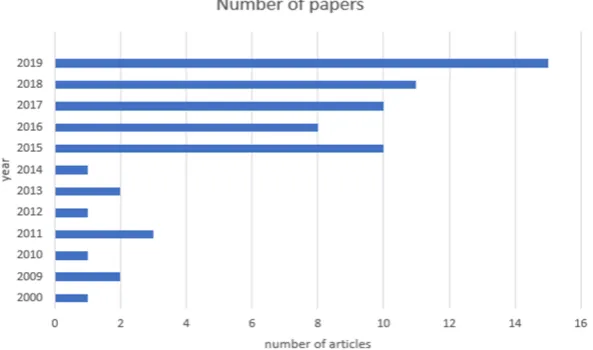
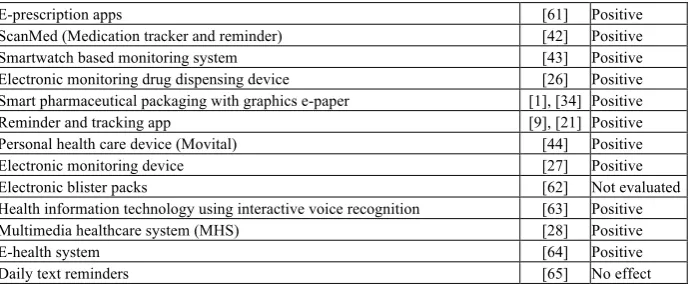
Over 70 articles were used in this study and our articles were mainly downloaded from Google Scholar, Science Direct and PubMed databases. Our search emphasizes on technology in adherence and general medication adherence challenges. The distri-butions, by year, of some of the selected 65 articles considered in this study are shown in Figure 1. Since there are different schools of thought on the sustainability of tech-nology supporting medication adherence, especially those involving reminder apps, we highlighted some of the technologies and applications found in our review. Data in Table 2 shows some of the Information and Communications Technology (ICT) ap-plications that have been revealed to somehow influence medication adherence. Even though many of the studies were carried out and implemented outside the shores of Africa and the like, some of them are viable solutions that can be adopted. It goes without saying that technology has a promising potential at improving medication adherence but some of the limiting factors contributing to non-adherence can be a cog in the wheel, and some of those challenges found in our review are shown in Table 3, with the frequency of their appearance and some possible solutions. Since identifying reasons for non-adherence can significantly increase adherence, and therefore aid in providing adequate solutions [20]; forgetfulness and cost are still chief among the global leading factors.
Diseases such as cardiovascular diseases, asthma, and diabetes were the top rank-ing diseases largely referenced in many of the work we reviewed and are likewise prevalent in developing countries like Africa. The spread of these diseases in develop-ing countries and implications are scary, therefore, use of existdevelop-ing technological solu-tion supporting adherence is important.
Diabetes is a risk factor of cardiovascular diseases and when left untreated causes a lot of complications. In developing countries, between 1980 and 2015, there have been 88% increases in the number of diseases attributed to diabetes with over 90% cases associated with type2 diabetes. Also, within this period, the number of adults with diabetes increased drastically from 108 million to 422 million. Common causes of type2 diabetes are overweight and obesity, which can be associated with poor feed-ing habits by individuals in low middle-income countries [46]. Only 25.8% of coun-tries have adopted guidelines for managing hypertension.
Fig. 1. Article distribution by year
Table 2. Some of the technologies used for adherence
Technology Author Impact
Asthma adherence pathway (AAP) [48] Positive Medsimple (Medication management application) [49] Positive
Remotely monitored therapy [50] Positive
Tablet technology [51] Positive
TransplantHero (Mobile app for education and reminder) [32] Positive
Interwalk smartphone app [52] Positive
Self-management app [33] Positive
Mhealth technology [53] Positive
mKidney system [54] Not evaluated
99DOTS (digital patient management) [55] Not evaluated
Electronic pill bottles [56] Positive
Home-based telehealth group intervention [57] Positive Medication monitors, video observed therapy, SMS reminders. [58] Positive Medication Event Monitoring Systems (MEMS); Home telemonitoring [59] Positive Digitally enabled heart failure management platform (proposed) [24] Not evaluated Medibox (a portable intelligent device for pill storage with reminders and alerts
the physician) [36] Positive
Smartphone app reminder and self-monitoring; Smart Assist [25], [35] Positive Smart medicine cabinet monitoring system [37] Positive
Gamification [8] Not evaluated
Ingestible biosensor medication [60] Not evaluated Smart medicine transportation and medication monitoring system [39] N/A
Reminder devices (Pillbox) [29] No effect
AiCure (Monitoring adherence) [40] Positive Video-enabled devices for patient-healthcare professional interaction [41] Not evaluated Apps with reminders, text prompts, education on medication and medication log
E-prescription apps [61] Positive ScanMed (Medication tracker and reminder) [42] Positive Smartwatch based monitoring system [43] Positive Electronic monitoring drug dispensing device [26] Positive Smart pharmaceutical packaging with graphics e-paper [1], [34] Positive Reminder and tracking app [9], [21] Positive Personal health care device (Movital) [44] Positive Electronic monitoring device [27] Positive
Electronic blister packs [62] Not evaluated
Health information technology using interactive voice recognition [63] Positive Multimedia healthcare system (MHS) [28] Positive
E-health system [64] Positive
Daily text reminders [65] No effect
Table 3. Factors that affect medication adherence
Factors Occurrence Possible solutions
1 Forgetfulness on the dose and time to take medication 15 Use of automated reminders and smart packages.
4 High out of pocket medica-tion costs 11 Health insurance plans; Higher priority to low-income areas.
7 No follow-up by health physicians and family 9
Directly observed therapy and therapeutic drug monitor-ing; More supportive patient-provider relationships and frequent follow-ups.
14 Number of pill doses 7 Minimizing pill dose
10 Complexities (in drug dose) 7 Minimizing the number of pills; Reducing the frequency of drug administration
5 Harmful side effects 7
Enlightening patients through education on common side effects and ways to prevent them can help to attenuate the trepidation and concerns about adverse drug reactions; Emphasis on the need for treatment by physicians. 18 Age-related 6 Easy to use technologies and reminders.
9 Lack of awareness of availa-ble reminder technologies 5 Counselling and patient education
13 Changes in treatment sched-ule or drug dosage 5 Fixed-dose combination therapies; Minimizing changes in treatment schedule and follow-ups.
3 Gaps in medical knowledge 4 Involving pharmacist in medication management; Provision of clear medication knowledge by physicians.
12
Difficulty in transportation or pickup of medication from a pharmacy
4 E-prescribing
2 Lack of motivation 3 Pharmacist-delivered counseling; Risk communication; Video observed therapy.
8
Lack of digital competence or interest in using medica-tion technologies
3 Education and coaching
11 Lack of income or health care insurance 3 Health insurance plans; Prescription of cost-saving generic medication.
19 Ambiguous medication technologies 3 Introduction of simplified, easy to use technologies.
15 Self-perceived health status 2 Telephone-based medication counselling
management)
6 Low conscientiousness 1 Evidence-based interventions like educational programs.
16 Depression 1 Counselling; Providing physiological support.
17 Impaired cognition 1 Use of technologies with diverse sensors (e.g. text to speech)
21
Fear that reminders would become annoying over time Admitting to relatives that their memory is poor causes them to refuse medication reminders.
1 Pillboxes; Assistance from caregivers; Self-management technologies.
Chronic kidney diseases have been reported to be 13.9% overall prevalent in sub-Saharan Africa and primary hypertension is its major risk factor. Some hypertension related factors include alcohol and tobacco use, salt intake and lack of physical activi-ty. For instance, in Uganda, alcohol is reported to be associated with a 64% increased risk of developing hypertension [66].
Cardiovascular diseases caused an estimate of 17.7 million deaths worldwide in 2015. Of these deaths, approximately 7.4 million were as a result of coronary heart disease and stroke was responsible for about 6.7 million. Also, three-quarters of the occurrence of this disease occurs in low middle-income countries and it is the leading cause of death globally occurring mostly in those aged greater than 70 years [67].
Heart failure is a growing issue in Africa and about 75% of heart failure patient cases where non-ischemic in origin and highlights hypertension as a rising cause of heart failure. The causes of heart failure such as rheumatic heart disease and endomy-ocardial fibrosis are more prevalent in Africa. Appropriate therapies and medicines for patients with heart failure are unaffordable by 60% of low-income countries as seen by the prospective urban rural epidemiology study [68].
Asthma [69] reported that about 235 million people are suffering from asthma and over 80% of deaths resulting from asthma occur in low middle-income countries. It was also shown that severe asthma is prevalent among 13-14 years old and the cost of asthma medication is out of reach for most patients. Asthma is most prevalent in South Africa with a 53% occurrence in children of 5-12 years. In Africa, over 94.8 million cases of asthma were reported in 2000 and this increased significantly to 119.3 million in 2010 [70].
According to [71] the top five causes of death in children are malaria, diarrhea, HIV/AIDs, lower respiratory infections, and neonatal disorders. In 2015 alone, over 212 million cases of malaria-causing 429,000 deaths were reported in Africa and the highest number of deaths occurred in children. Examples of lower respiratory tract infections are influenza, pneumonia, tuberculosis, and bronchitis Most rural areas do not have access to high-quality health facilities and delayed the diagnosis of these diseases cause it to be extremely severe. Pneumonia is the number one killer disease in African children and HIV/AIDS is the leading cause of deaths in African adults.
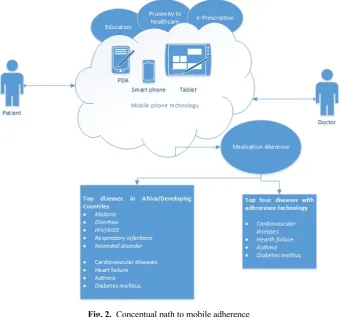
effective system for measuring adherence, it can reduce the frequency of visit and proximity issues, and the possibility of this has been demonstrated in some simula-tions [72, 73, 13, 74, 75] In developing countries, e-learning is also increasingly be-coming popular, this platform can be adapted to solve some of the medication adher-ence problems, through re-education of patients on the importance of keeping to med-ication regimens. The remodeling of the health system into a centralized structure can greatly reduce cost in the long run [31], and lastly, there is a need for evidence-based research on the use of reminder apps and other technology in developing countries in order to understand the contextual issue [76]. Although the main focus of this work is not to design a framework, however, since total adherence is capable of catalyzing healing and recovery; based on the numerous factors identified in the previous sec-tions, Fig 2 shows a few of the basic features – education, e-Prescription, and health care proximity – that can be achieved with using mobile technology to tackle some of the prevalent diseases that are already either controlled or on the decline in developed countries through leveraging the use of ubiquitous technology to support medication adherence.
4
Conclusion
This paper performed a detailed review of medication adherence and ICT, the chal-lenges and the use of varieties of technology to support patients and prescribing phy-sicians in providing complete healthcare, with respect to intervention based on abid-ance to medication regimens. The diseases that have received the most attention based on our review were identified and findings suggest that if low-income countries can adapt some of these technologies into managing patient’s adherence, starting with health education of patients’, breaking the barriers created by proximity, and cost of visits hospital visits, recovery from many of the prevalent diseases can be improved through electronic prescription and mobile reminders. Future work will explore the availability and evaluation of ICT solutions for endemic diseases in tropical countries.
5
References
[1]Lam, W. Y., & Fresco, P. (2015). Medication adherence measures: an overview. BioMed research international.
[2]Jaleel, A., Saag, K. G., & Danila, M. I. (2018). Improving drug adherence in osteoporosis: an update on more recent studies. Therapeutic Advances in Musculoskeletal Disease, 10(7), 141-149. https://doi.org/10.1177/1759720x18785539
[3]Abegaz, T. M., Shehab, A., Gebreyohannes, E. A., Bhagavathula, A. S., & Elnour, A. A. (2017). Nonadherence to antihypertensive drugs: a systematic review and meta-analysis. Medicine, 96(4). https://doi.org/10.1097/md.0000000000005641
[4]Hossain, N., Sampa, M. B., Yokota, F., Fukuda, A., & Ahmed, A. (2018). Factors Affect-ing Rural Patients' Primary Compliance with e-Prescription: A DevelopAffect-ing Country Per-spective. Telemedicine and e-Health. https://doi.org/10.1089/tmj.2018.0081
[5]Fitzgerald, A.A., Powers, J.D., Ho, P.M., Maddox, T.M., Peterson, P.N., Allen, L.A., Ma-soudi, F.A., Magid, D.J. and Havranek, E.P. (2011). Impact of medication nonadherence on hospitalizations and mortality in heart failure. Journal of cardiac failure, 17(8), 664-669. https://doi.org/10.1016/j.cardfail.2011.04.011
[6]Eskås, P. A., Heimark, S., Eek Mariampillai, J., Larstorp, A. C. K., Fadl Elmula, F. E. M., & Høieggen, A. (2016). Adherence to medication and drug monitoring in apparent treat-ment-resistant hypertension. Blood pressure, 25(4), 199-205. https://doi.org/10.3109/ 08037051.2015.1121706
[7]Fernandez-Lazaro, C. I., Adams, D. P., Fernandez-Lazaro, D., Garcia-González, J. M., Ca-ballero-Garcia, A., & Miron-Canelo, J. A. (2018). Medication adherence and barriers among low-income, uninsured patients with multiple chronic conditions. Research in so-cial & administrative pharmacy: RSAP. https://doi.org/10.1016/j.sapharm.2018.09.006 [8]Rahim, M. I. A., & Thomas, R. H. (2017). Gamification of Medication Adherence in
Epi-lepsy. Seizure, 52, 11-14.
[9]Stawarz, K., Cox, A. L., & Blandford, A. (2014, April). Don't forget your pill!: designing effective medication reminder apps that support users' daily routines. In Proceedings of the 32nd annual ACM conference on Human factors in computing systems (pp. 2269-2278). ACM. https://doi.org/10.1145/2556288.2557079
en-hancing medication adherence. Journal of the American Medical Informatics Association, 22(e1), e177-e193. https://doi.org/10.1093/jamia/ocu047
[11]Car, J., Tan, W. S., Huang, Z., Sloot, P., & Franklin, B. D. (2017). eHealth in the future of medications management: personalisation, monitoring and adherence. BMC medicine, 15(1), 73. https://doi.org/10.1186/s12916-017-0838-0
[12]Omotosho, A., Emuoyibofarhe, J., & Oke, A. (2017). Securing Private Keys in Electronic Health Records Using Session-Based Hierarchical Key Encryption. Journal of Applied Se-curity Research, 12(4), 463-477. https://doi.org/10.1080/19361610.2017.1354272
[13]Omotosho, A., Emuoyibofarhe, J., & Meinel, C. (2017b). Securing E-Prescription from Medical Identity Theft Using Steganography and Antiphishing Techniques. Journal of Ap-plied Security Research, 12(3), 447-461. https://doi.org/10.1080/19361610.2017.1315788 [14]Treskes, R. W., Van der Velde, E. T., Schoones, J. W., & Schalij, M. J. (2018).
Implemen-tation of smart technology to improve medication adherence in patients with cardiovascu-lar disease: is it effective? Expert review of medical devices, 15(2), 119-126. https://doi.org/10.1080/17434440.2018.1421456
[15]Yap, A. F., Thirumoorthy, T., & Kwan, Y. H. (2016a). Medication adherence in the elder-ly. Journal of Clinical Gerontology and Geriatrics, 7(2), 64-67. https://doi.org/10.1016 /j.jcgg.2015.05.001
[16]Yap, A. F., Thirumoorthy, T., & Kwan, Y. H. (2016b). Systematic review of the barriers affecting medication adherence in older adults. Geriatrics & gerontology international, 16(10), 1093-1101. https://doi.org/10.1111/ggi.12616
[17]Costa, E., Giardini, A., Savin, M., Menditto, E., Lehane, E., Laosa, O., Pecorelli, S., Mon-aco, A. and Marengoni, A. (2015). Interventional tools to improve medication adherence: review of literature. Patient preference and adherence, 9, 1303. https://doi.org/10.2147/ppa.s87551
[18]Krueger, K., Botermann, L., Schorr, S. G., Griese-Mammen, N., Laufs, U., & Schulz, M. (2015). Age-related medication adherence in patients with chronic heart failure: A system-atic literature review. International journal of cardiology, 184, 728-735. https://doi.org/10.1016/j.ijcard.2015.03.042
[19]Kang, C. D., Tsang, P. P., Li, W. T., Wang, H. H., Liu, K. Q., Griffiths, S. M., & Wong, M. C. (2015). Determinants of medication adherence and blood pressure control among hypertensive patients in Hong Kong: a cross-sectional study. International journal of cardi-ology, 182, 250-257. https://doi.org/10.1016/j.ijcard.2014.12.064
[20]Zand, A., Nguyen, A., Stokes, Z., Reynolds, C., Dimitrova, M., Sauk, J., & Hommes, D. (2019). P272 Developing a novel medication adherence index to determine reasons for nonadherence in inflammatory bowel disease. Journal of Crohn's and Colitis, 13(Supplement_1), S234-S234. https://doi.org/10.1093/ecco-jcc/jjy222.396
[21]Park, J. Y. E., Li, J., Howren, A., Tsao, N. W., & De Vera, M. (2019). Mobile Phone Apps Targeting Medication Adherence: Quality Assessment and Content Analysis of User Re-views. JMIR mHealth and uHealth, 7(1), e11919. https://doi.org/10.2196/preprints.11919 [22]Aldeer, M., Javanmard, M., & Martin, R. (2018). A Review of Medication Adherence
Monitoring Technologies. Applied System Innovation, 1(2), 14. https://doi.org/10.3390 /asi1020014
[23]Badawy, S. M., Thompson, A. A., & Liem, R. I. (2016). Technology access and smartphone app preferences for medication adherence in adolescents and young adults with sickle cell disease. Pediatric blood & cancer, 63(5), 848-852. https://doi.org/ 10.1002/pbc.25905
Dis-ease Management in Heart Failure A Review. Trends in Cardiovascular Medicine. https://doi.org/10.1016/j.tcm.2018.04.001
[25]Morrissey, E. C., Casey, M., Glynn, L. G., Walsh, J. C., & Molloy, G. J. (2018). smartphone apps for improving medication adherence in hypertension: patients’ perspec-tives. Patient preference and adherence, 12, 813. https://doi.org/10.2147/ppa.s145647 [26]Henriksson, J., Tydén, G., Höijer, J., & Wadström, J. (2016). A prospective randomized
trial on the effect of using an electronic monitoring drug dispensing device to improve ad-herence and compliance. Transplantation, 100(1), 203-209. https://doi.org/10.1097/tp. 0000000000000971
[27]Chan, A. H. Y., Reddel, H. K., Apter, A., Eakin, M., Riekert, K., & Foster, J. M. (2013). Adherence monitoring and e-health: how clinicians and researchers can use technology to promote inhaler adherence for asthma. The Journal of Allergy and Clinical Immunology: In Practice, 1(5), 446-454. https://doi.org/10.1016/j.jaip.2013.06.015
[28]Tang, L., Zhou, X., Yu, Z., Liang, Y., Zhang, D., & Ni, H. (2011). MHS: A multimedia system for improving medication adherence in elderly care. IEEE Systems Journal, 5(4), 506-517. https://doi.org/10.1109/jsyst.2011.2165593
[29]Choudhry, N. K., Krumme, A. A., Ercole, P. M., Girdish, C., Tong, A. Y., Khan, N. F., & Franklin, J. M. (2017). Effect of reminder devices on medication adherence: the REMIND randomized clinical trial. JAMA internal medicine, 177(5), 624-631. https://doi.org/10. 1001/jamainternmed.2016.9627
[30]Ni, Z. (2018). Using Two Mobile Apps to Improve Medication Adherence Among Patients With Coronary Heart Disease.
[31]Roebuck, M. C., Liberman, J. N., Gemmill-Toyama, M., & Brennan, T. A. (2011). Medi-cation adherence leads to lower health care use and costs despite increased drug spending. Health affairs, 30(1), 91-99. https://doi.org/10.1377/hlthaff.2009.1087
[32]Levine, D., Torabi, J., Choinski, K., Rocca, J. P., & Graham, J. A. (2019). Transplant Sur-gery Enters A New Era: Increasing Immunosuppressive Medication Adherence Through Mobile Apps and Smart Watches. The American Journal of Surgery. https://doi.org/ 10.1016/j.amjsurg.2019.02.018
[33]Beauchemin, M., Gradilla, M., Baik, D., Cho, H., & Schnall, R. (2019). A Multi-step Usa-bility Evaluation of a Self-Management App to Support Medication Adherence in Persons Living with HIV. International journal of medical informatics, 122, 37-44. https://doi.org/ 10.1016/j.ijmedinf.2018.11.012
[34]Blankenbach, K., Duchemin, P., Rist, B., Bogner, D., & Krause, M. (2018, May). 22-2: Smart Pharmaceutical Packaging with E-Paper Display for improved Patient Compliance. In SID Symposium Digest of Technical Papers (Vol. 49, No. 1, pp. 271-274). https://doi. org/10.1002/sdtp.12521
[35]Khan, A., & Khusro, S. (2019). Smart Assist: Smartphone-Based Drug Compliance for El-derly People and People with Special Needs. In Applications of Intelligent Technologies in Healthcare (pp. 99-108). Springer, Cham. https://doi.org/10.1007/978-3-319-96139-2_10 [36]Saravanan, M., & Marks, A. M. (2018, February). MEDIBOX—IoT enabled patient
assist-ing device. In 2018 IEEE 4th World Forum on Internet of Thassist-ings (WF-IoT) (pp. 213-218). IEEE. https://doi.org/10.1109/wf-iot.2018.8355207
[37]Ishak, S. A., Abidin, H. Z., & Muhamad, M. (2018). Improving Medical Adherence using Smart Medicine Cabinet Monitoring System. Indonesian Journal of Electrical Engineering and Computer Science, 9(1), 164-169. https://doi.org/10.11591/ijeecs.v9.i1.pp164-169 [38]Chitrao, P. V., & Bhoyar, P. K. (2017, September). Technology for affordable, inclusive,
on Reliability, Infocom Technologies and Optimization (Trends and Future Directions) (ICRITO) (pp. 505-509). IEEE. https://doi.org/10.1109/icrito.2017.8342480
[39]Edoh, T. (2017, December). Smart medicine transportation and medication monitoring sys-tem in EPharmacyNet. In 2017 International Rural and Elderly Health Informatics Confer-ence (IREHI) (pp. 1-9). IEEE. https://doi.org/10.1109/ireehi.2017.8350381
[40]Bain, E. E., Shafner, L., Walling, D. P., Othman, A. A., Chuang-Stein, C., Hinkle, J., & Hanina, A. (2017). Use of a novel artificial intelligence platform on mobile devices to as-sess dosing compliance in a phase 2 clinical trial in subjects with schizophrenia. JMIR mHealth and uHealth, 5(2). https://doi.org/10.2196/mhealth.7030
[41]Story, A., Garfein, R.S., Hayward, A., Rusovich, V., Dadu, A., Soltan, V., Oprunenco, A., Collins, K., Sarin, R., Quraishi, S. & Sharma, M. (2016). Monitoring therapy adherence of tuberculosis patients by using video-enabled electronic devices. Emerging infectious dis-eases, 22(3), 538. https://doi.org/10.3201/eid2203.151620
[42]Nor, R. M., Mohamadali, N. A., Azmi, K., Marzuki, A., Nor, L. M., & Yusof, M. (2016, November). ScanMed: A mobile medicine adherence application with intake validation us-ing QR code. In 2016 6th International Conference on Information and Communication Technology for The Muslim World (ICT4M) (pp. 112-117). IEEE. https://doi.org/ 10.1109/ict4m.2016.033
[43]Kalantarian, H., Alshurafa, N., Nemati, E., Le, T., & Sarrafzadeh, M. (2015, June). A smartwatch-based medication adherence system. In 2015 IEEE 12th International Confer-ence on Wearable and Implantable Body Sensor Networks (BSN) (pp. 1-6). IEEE. https://doi.org/10.1109/bsn.2015.7299348
[44]Jara, A. J., Zamora, M. A., & Skarmeta, A. F. (2014). Drug identification and interaction checker based on IoT to minimize adverse drug reactions and improve drug compliance. Personal and ubiquitous computing, 18(1), 5-17. https://doi.org/10.1007/s00779-012-0622-2
[45]Silva, J. M., Mouttham, A., & El Saddik, A. (2009, October). UbiMeds: a mobile applica-tion to improve accessibility and support medicaapplica-tion adherence. In Proceedings of the 1st ACM SIGMM international workshop on Media studies and implementations that help improving access to disabled users (pp. 71-78). ACM. https://doi.org/10.1145/ 1631097.1631109
[46]Atun, R., Davies, J. I., Gale, E. A., Bärnighausen, T., Beran, D., Kengne, A. P., N.S., Mangugu, F.W., Nyirenda, M.J., Ogle, G.D& Ramaiya, K. (2017). Diabetes in sub-Saharan Africa: from clinical care to health policy. The lancet Diabetes & endocrinology, 5(8), 622-667.
[47]Dzudie, A., Rayner, B., Ojji, D., Schutte, A. E., Twagirumukiza, M., Damasceno, A., Ba, S.A., Kane, A., Kramoh, E., Kacou, J.B.A. & Onwubere, B. (2018). Roadmap to achieve 25% hypertension control in Africa by 2025. Global heart, 13(1), 45-59. https://doi.org/10.1016/j.gheart.2017.06.001
[48]Weinstein, A. G., Singh, A., Laurenceau, J. P., Skoner, D. P., Maiolo, J., Sharara, R., Ma, K., Cheema, T., Butler, E., Kong, A. & Thakkar, P. (2019). A Pilot Study of the Effect of an Educational Web Application on Asthma Control and Medication Adherence. The Journal of Allergy and Clinical Immunology: In Practice. https://doi.org/10.1016/ j.jaip.2018.12.024
[49]Kjos, A. L., Vaughan, A. G., & Bhargava, A. (2019). Impact of a Mobile App on Medica-tion Adherence and Adherence-related Beliefs in Patients with Type 2 Diabetes. Journal of the American Pharmacists Association. https://doi.org/10.1016/j.japh.2018.12.012
suppression identifies nonadherence in severe asthma. American journal of respiratory and critical care medicine, 199(4), 454-464. https://doi.org/10.1164/rccm.201806-1182oc [51]Ramprasad, C., Tamariz, L., Garcia-Barcena, J., Nemeth, Z., & Palacio, A. (2019). The use
of tablet technology by older adults in health care settings—is it effective and satisfying? a systematic review and meta analysis. Clinical gerontologist, 42(1), 17-26. https://doi.org /10.1080/07317115.2017.1322162
[52]Valentiner, L. S., Thorsen, I. K., Kongstad, M. B., Brinkløv, C. F., Larsen, R. T., Karstoft, K., Nielsen, J.S., Pedersen, B.K., Langberg, H. & Ried-Larsen, M. (2019). Effect of eco-logical momentary assessment, goal-setting and personalized phone-calls on adherence to interval walking training using the InterWalk application among patients with type 2 dia-betes—A pilot randomized controlled trial. PloS one, 14(1), e0208181. https://doi.org/ 10.1371/journal.pone.0208181
[53]Sharma, A., Mentz, R. J., Granger, B. B., Heitner, J. F., Cooper, L. B., Banerjee, D., Green, C.L., Majumdar, M.D., Eapen, Z., Hudson, L. & Felker, G. M. (2019). Utilizing mobile technologies to improve physical activity and medication adherence in patients with heart failure and diabetes mellitus: Rationale and design of the TARGET-HF-DM tri-al. American Heart Journtri-al. https://doi.org/10.1016/j.ahj.2019.01.007
[54]Henderson, M. L., Thomas, A. G., Eno, A. K., Waldram, M. M., Bannon, J., Massie, A. B., Levan, M.A., Segev, D.L & Bingaman, A. W. (2019). The Impact of the mKidney mHealth System on Live Donor Follow-Up Compliance: Protocol for a Randomized Con-trolled Trial. JMIR research protocols, 8(1), e11000. https://doi.org/10.2196/11000 [55]Cross, A., Gupta, N., Liu, B., Nair, V., Kumar, A., Kuttan, R., Ivatury, P., Chen, A.,
Lak-shman, K., Rodrigues, R., & D'Souza, G. (2019, January). 99DOTS: a low-cost approach to monitoring and improving medication adherence. In Proceedings of the Tenth Interna-tional Conference on Information and Communication Technologies and Development (p. 15). ACM. https://doi.org/10.1145/3287098.3287102
[56]Mehta, S. J., Asch, D. A., Troxel, A. B., Lim, R., Lewey, J., Wang, W., Zhu, J., Norton, L., Marcus, N & Volpp, K. G. (2019). Comparison of pharmacy claims and electronic pill bot-tles for measurement of medication adherence among myocardial infarction patients. Med-ical care, 57(2), e9-e14. https://doi.org/10.1097/mlr.0000000000000950
[57]Kelly, S. L., Steinberg, E. A., Suplee, A., Upshaw, N. C., Campbell, K. R., Thomas, J. F., & Buchanan, C. L. (2019). Implementing a Home-Based Telehealth Group Adherence In-tervention with Adolescent Transplant Recipients. Telemedicine and e-Health. https://doi.org/10.1089/tmj.2018.0164
[58]Ngwatu, B. K., Nsengiyumva, N. P., Oxlade, O., Mappin-Kasirer, B., Nguyen, N. L., Jaramillo, E., Falzon, D. & Schwartzman, K. (2018). The impact of digital health technol-ogies on tuberculosis treatment: a systematic review. European Respiratory Journal, 51(1), 1701596. https://doi.org/10.1183/13993003.01596-2017
[59]Burnier M. (2018) The impact of new technology on medication adherence: finally break-ing the nonadherence barrier? Available at: https://www.medicographia.com/2018/05/the- impact-of-new-technology-on-medication-adherence-finally-breaking-the-nonadherence-barrier/Accessed 23/3/2019
[60]Chai, P. R., Carreiro, S., Innes, B. J., Rosen, R. K., O'Cleirigh, C., Mayer, K. H., & Boyer, E. W. (2017). Digital pills to measure opioid ingestion patterns in emergency department patients with acute fracture pain: a pilot study. Journal of medical Internet research, 19(1). https://doi.org/10.2196/jmir.7050
cognitive impairment. PloS one, 12(2), e0170651. https://doi.org/10.1371/journal.pone. 0170651
[62]Brath, H., Morak, J., Kästenbauer, T., Modre-Osprian, R., Strohner-Kästenbauer, H., Schwarz, M., Kort, W. & Schreier, G. (2013). Mobile health (mHealth) based medication adherence measurement–a pilot trial using electronic blisters in diabetes patients. British journal of clinical pharmacology, 76, 47-55. https://doi.org/10.1111/bcp.12184
[63]Vollmer, W. M., Feldstein, A., Smith, D., Dubanoski, J., Waterbury, A., Schneider, J., Clark, S., & Rand, C. (2011). Use of health information technology to improve medication adherence. The American journal of managed care, 17(12 0 0), SP79.
[64]Meglic, M., Furlan, M., Kuzmanic, M., Kozel, D., Baraga, D., Kuhar, I., Dernovsek, M., & Marusic, A. (2010). Feasibility of an eHealth service to support collaborative depression care: results of a pilot study. Journal of Medical Internet Research, 12(5). https://doi.org/10.2196/jmir.1510
[65]Hou, M. Y., Hurwitz, S., Kavanagh, E., Fortin, J., & Goldberg, A. B. (2010). Using daily text-message reminders to improve adherence with oral contraceptives: a randomized con-trolled trial. Obstetrics & Gynecology, 116(3), 633-640. https://doi.org/10.1097/aog. 0b013e3181eb6b0f
[66]Schutte, A. E., Botha, S., Fourie, C. M. T., Gafane-Matemane, L. F., Kruger, R., Lammer-tyn, L., L., Malan, L., Mels, C.M.C., Schutte, R., Smith, W & Van Rooyen, J. M. (2017). Recent advances in understanding hypertension development in sub-Saharan Africa. Jour-nal of human hypertension, 31(8), 491. https://doi.org/10.1038/jhh.2017.18
[67]WHO, (2017). Prevention of cardiovascular disease, Guidelines for assessment and man-agement of cardiovascular risk. Available at: https://www.afro.who.int/health-topics/ cardiovascular-diseases. Accessed 4/3/2019.
[68]Gallagher, J., McDonald, K., Ledwidge, M., & Watson, C. J. (2018). Heart Failure in Sub-Saharan Africa. Cardiac failure review, 4(1), 21.
[69]WHO, (2008). Chronic respiratory diseases. Available at: https://www.who.int/respiratory/ asthma/en/. Accessed 4/3/2019
[70]Adeloye, D., Chan, K. Y., Rudan, I., & Campbell, H. (2013). An estimate of asthma preva-lence in Africa: a systematic analysis. Croatian medical journal, 54(6), 519-531. https://doi.org/10.3325/cmj.2013.54.519
[71]WHO, (2018). The African Regional Health Report: The Health of the people. Available at: https://www.who.int/bulletin/africanhealth/en/. Accessed 4/3/2019.
[72]Omotosho, A. & Emuoyibofarhe, O. J. (2012). A Secure Intelligent Decision Support Sys-tem for Prescribing Medication. Computing, Information SysSys-tems and Development In-formatics Journal, 3(3), 9-18.
[73]Omotosho, A., Emuoyibofarhe, J., Ayegba, P. & Meinel, C. (2018). E-Prescription in Ni-geria: A Survey. Journal of Global Pharma Technology, 10(12S), 58 – 64
[74]Omotosho, A., Asanga, U., & Fakorede, A. (2017). Electronic Prescription System for Pe-diatricians. European Scientific Journal, 13(18), 426 – 437. https://doi.org/10.19044/ esj.2017.v13n18p426
[75]Marquez-Contreras, E., de Lopez Garcia-Ramos, L., Martell-Claros, N., Gil-Guillen, V.F., Marquez-Rivero, S., Perez-Lopez, E., Garrido-Lopez, M.A., Farauste, C., Lopez-Pineda, A., Casado-Martinez, J.J. & Orozco-Beltran, D. (2018). Validation of the electronic pre-scription as a method for measuring treatment adherence in hypertension. Patient education and counselling, 101(9), 1654-1660. https://doi.org/10.1016/j.pec.2018.04.009
6
Authors
Adebayo Omotosho is currently a visiting research in Internet Technologies and System Group at Hasso Plattner Institute, University of Potsdam, Germany. He is also a lecturer in the Department of Computer Science, Landmark University, Omu-Aran. He received his Ph.D. in Computer Science at Ladoke Akintola University of Tech-nology in 2016. He is a Seasoned Computer Programmer and has taken part in a num-ber of programming competitions in C/C++/C#. He is a memnum-ber of the Nigeria Com-puter Society (NCS), ComCom-puter Professional [Registration Council] of Nigeria (CPN), Computer Science Teachers Association for Computing Machinery (ACM), and In-ternational Association of Computer Science and Information Technology. His re-search interests are e-health, privacy and security
Peace Ayegba is a research assistant in the Department of Computer Science, Landmark University Omu-Aran. She is currently on her MSc degree and her research areas are computer security, human-computer interaction, artificial intelligence and bioinformatics.