Open Access
D E B A T E
© 2010 Helmink et al; licensee BioMed Central Ltd. This is an Open Access article distributed under the terms of the Creative Commons Attribution License (http://creativecommons.org/licenses/by/2.0), which permits unrestricted use, distribution, and reproduction in any medium, provided the original work is properly cited.
Debate
Development and implementation of a lifestyle
intervention to promote physical activity and
healthy diet in the Dutch general practice setting:
the BeweegKuur programme
Judith HM Helmink
1, Jessie JM Meis
1, Inge de Weerdt
2, Femke N Visser
3, Nanne K de Vries
4and Stef PJ Kremers*
4Abstract
Background: The number of patients with diabetes is increasing. BeweegKuur (Dutch for 'Exercise Therapy') is a Dutch lifestyle intervention which aims to effectively and feasibly promote physical activity and better dietary behaviour in primary health care to prevent diabetes.
Methods: The goal of this paper is to present the development process and the contents of the intervention, using a model of systematic health promotion planning. The intervention consists of a 1-year programme for diabetic and prediabetic patients. Patients are referred by their general practitioner (GP) to a lifestyle advisor (LSA), usually the practice nurse or a physiotherapist. Based on specific inclusion criteria and in close collaboration with the patient, an individual exercise programme is designed and supervised by the LSA. This programme can be attended at existing local exercise facilities or (temporarily) under the supervision of a specialized exercise coach or physiotherapist. All participants are also referred to a dietician and receive diet-related group education. In the first pilot year (2008), the BeweegKuur programme was implemented in 7 regions in the Netherlands (19 GP practices and health centres), while 14 regions (41 GP practices and health centres) participated during the second year. The aim is to implement
BeweegKuur in all regions of the Netherlands by 2012.
Discussion: The BeweegKuur programme was systematically developed in an evidence- and practice-based process. Formative monitoring studies and (controlled) effectiveness studies are needed to examine the diffusion process and the effectiveness and cost-effectiveness of the intervention.
Background
Commissioned by the Dutch Ministry of Health, Welfare and Sports (VWS), a lifestyle intervention called 'BeweegKuur' was developed by the Netherlands Institute for Sport and Physical Activity (NISB)[1]. The Beweeg-Kuur is a lifestyle intervention tailored to the individual needs of patients, focusing on a change in physical activ-ity behaviour and dietary behaviour, to support the pre-vention and treatment of type 2 diabetes mellitus. The intervention is developed with the aim to become an effective and feasible primary health care based
interven-tion, which in time can be reimbursed under the Dutch basic health insurance scheme. The current paper describes the rationale for the development of the BeweegKuur programme, as well as its development and contents. It also outlines the design of a formative evalua-tion study of the pilot implementaevalua-tion.
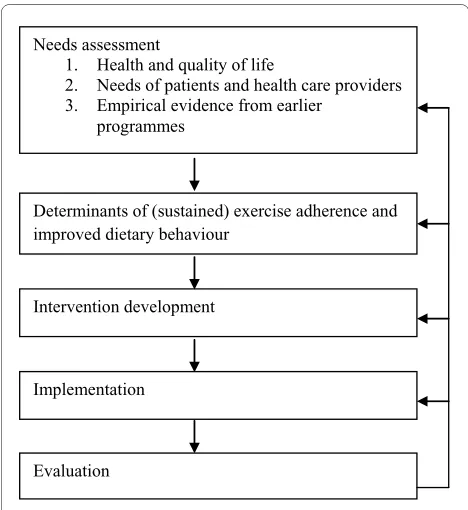
Effective interventions should be based on the model of systematic intervention planning and development (Fig-ure 1, see also [2,3]). The first step of this planning model comprises a needs assessment. This step involves gather-ing both quantitative (e.g., literature review) and qualita-tive (e.g., in-depth interviews) information regarding the needs for intervention development. The needs assess-ment starts by reviewing health and quality of life. It also reviews personal (i.e. patient-related) and environmental
* Correspondence: [email protected]
4 School for Public Health and Primary Care (CAPHRI) and School for Nutrition, Toxicology and Metabolism (NUTRIM), Department of Health Promotion, Maastricht University, the Netherlands
(e.g., health care professionals) factors involved in unhealthy lifestyle, as well as empirical evidence on exist-ing primary health care interventions. The second step of the model explores the determinants of (sustained) exer-cise adherence and improved dietary behaviour. This is followed by the development of a prototype for the inter-vention (step 3) and its pilot implementation (step 4). All these steps should be evaluated in the fifth step. With respect to the prototype development and pilot imple-mentation, the evaluation is typically and preferably of a formative nature [4]. The structure of this paper follows the steps of this planning model.
Step 1: Needs Assessment
Health and quality of life
Approximately 740,000 people in the Netherlands were diagnosed with diabetes in 2007, 90% of whom had type 2 diabetes [5], while 250,000 to 740,000 people are esti-mated to be unaware that they have the disease [5]. Addi-tionally, approximately 900,000 people aged 60 years and older suffer from early-stage diabetes (Impaired Glucose Tolerance: pre-diabetes) [6]. The number of Dutch citi-zens with diabetes is expected to have doubled by 2025, partly due to the ageing population and the increasing number of overweight people [6]. At least 40% of people with type 2 diabetes suffer from chronic complications, such as cardiovascular diseases, neuropathy, retinopathy and renal failure [7]. These types of complications partic-ularly limit their mobility and, therefore, their ability to
be physically and socially active, resulting in a reduced ability to live independently and in a lower quality of life [8]. Physical inactivity, unhealthy dietary behaviour and obesity play a significant role in the development of type 2 diabetes [9]. Currently, at least five million people in the Netherlands are overweight and physically inactive [6]. It has been argued that the greatest benefit to health can be achieved by getting physically inactive people with diabe-tes to become active, which can delay the development of complications in the long term and support and postpone pharmaceutical treatment [10,11]. The advantageous effects of exercise include changes in body composition and a decrease in blood pressure. Exercise also results in favourable effects on the regulation of the blood glucose level [12]. Finally, exercise as well as healthy dietary behaviour are not only important in the treatment of type 2 diabetes, but also decrease the risk of developing diabe-tes, and are therefore an important primary prevention measure [13].
Needs of patients and primary health care providers
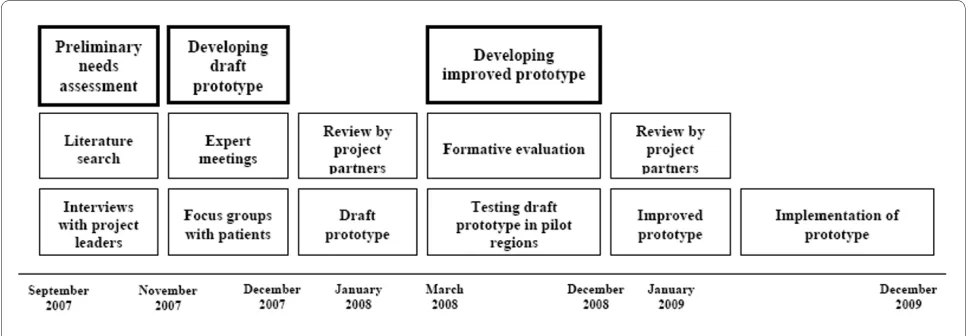
Before developing a prototype of the BeweegKuur inter-vention, a preliminary needs assessment was carried out (see Figure 2). A literature search was used to explore existing lifestyle interventions, national as well as interna-tional [14]. Based on this literature review, in-depth inter-views were conducted with leaders of Dutch national projects relevant to the BeweegKuur programme. The outcomes of these interviews were used to develop the first outline of the intervention. During its development, the outline was discussed with primary health care pro-viders as well as patients by means of face-to-face inter-views and focus group sessions. The goal of this discussion process was to see how the draft prototype should be adjusted to fit the needs of both patients and health care professionals. The first step in the process consisted of interviews with project partners and special-ists to assess whether the prototype was feasible and to discuss improvements to the prototype. In addition, four expert panels were formed in different regions in the Netherlands, each including eight to fourteen people, from different disciplinary backgrounds and with or without experience with lifestyle interventions. The out-comes of these expert panel meetings were incorporated in an improved version of the prototype.
Three focus groups with diabetic and prediabetic patients were then organized to assess the views of dia-betic or prediadia-betic patients regarding the care they would expect, the role of health professionals and the perceived need for the BeweegKuur programme. The main outcomes of the focus group sessions were that referral to BeweegKuur by a general practitioner (GP) would provide additional motivation for patients, which is consistent with previous research [15]. The patients emphasized the importance of close collaboration Figure 1 Model of systematic intervention planning and
devel-opment.
Needs assessment
1. Health and quality of life
2. Needs of patients and health care providers 3. Empirical evidence from earlier
programmes
Determinants of (sustained) exercise adherence and improved dietary behaviour
Intervention development
Implementation
between the different health care professionals and their need to feel safe with these professionals. Other issues included the importance of a smooth transition to exist-ing local exercise facilities and of low costs. Finally, the patients indicated that they would be stimulated by noticeable results, for example initial loss of weight or an improvement in blood glucose levels.
The results of the focus groups were confirmed in three interviews with patients who were participating in an intervention similar to BeweegKuur. Important aspects they mentioned were close collaboration between health care professionals, personal guidance by a health care professional, a clear structure and exercising in a group with peers. The main reason for attending the lifestyle intervention appeared to be achieving weight loss. The opinions of health care professionals regarding lifestyle interventions were explored in nine face-to-face inter-views with GPs, physiotherapists and lifestyle advisors (LSA) who were already participating in a lifestyle inter-vention. The health care providers affirmed the impor-tance of lifestyle interventions. Important topics they mentioned included the crucial role of motivating patients to start and continue the intervention, and work-ing in a multidisciplinary team.
Empirical evidence from existing lifestyle interventions
Various relatively controlled lifestyle interventions to pre-vent type 2 diabetes (i.e. highly supervised and executed within a research context) have been developed and eval-uated in the Dutch context (e.g., Study on Lifestyle Inter-vention and Impaired glucose tolerance Maastricht (SLIM) [12,16], as well as internationally (e.g., the Diabe-tes Prevention Program (DPP) [17] and the Finnish Dia-betes Prevention Study (DPS) [10]). Although details differ between the various studies in terms of outcomes and purposes, the general purport is that a controlled life-style intervention to improve physical activity and dietary behaviour has a positive effect on the health of partici-pants [18]. However, it is not self-evident that relatively
controlled lifestyle interventions will also be suitable for wider implementation in practice. The following para-graphs review lifestyle interventions delivered by primary health care centres all over the world and specifically in the Netherlands.
To increase patients' physical activity, interventions have been set up in primary health care settings in vari-ous countries, such as the UK [19], Finland [20,21], the United States [22], New Zealand [23] and Australia [24]. The typical conclusion from these types of intervention studies is that their effectiveness is limited. A meta-analy-sis showed that 17 inactive adults would have to be referred to an intervention to result in one of them start-ing to exercise for 30 minutes a day, with at least moder-ate intensity, on a minimum of five days a week [19]. A potential cause of the limited effectiveness relates to high attrition rates, because the intervention interferes with patients' other activities, is not in line with their capabili-ties [25] or is not designed and implemented so as to result in sustained behaviour change.
shown that a prescription for exercise by a GP accompa-nied by written material led to an increase in self-reported physical activity by inactive individuals within a short period of time. However, this research also showed that a prescription for exercise alone did not result in more physical activity [24]. For example, GPs indicated that they preferred presenting patients with written exer-cise objectives rather than verbal ones, which also made the GPs feel comfortable about discussing physical activ-ity with patients and prescribing exercise [24]. Although the GPs who participated in the study supported the con-cept, they indicated that the lack of time presented an immediate and significant obstacle, which might be over-come by suitable training and materials [23].
Factors that could discourage participants from exer-cising include high costs and the distance to exercise facilities; embarrassment about physical appearance; reli-gion and culture; lack of time; inability or unwillingness to arrange a babysitter or attend during evening hours; and lack of support from the social environment [27]. Another barrier to participation in an exercise-on-pre-scription intervention could be low self-efficacy. External obstacles were also identified, such as an intimidating exercise environment, inadequate supervision during exercise and unfavourable opening hours [19]. Referral by a GP was an important motivation to participate because it forms a strong incentive and provides a legitimate rea-son for starting to exercise [27]. In the Netherlands, vari-ous initiatives have been set up in primary health care settings to increase patients' physical activity behaviour, with names like Big!Move [28,29], Exercise on Prescrip-tion [27,30] and 'From Complaint to Strength' [31]. The results of these projects were generally favourable in terms of self-reported effect indicators. Participants indi-cated that they had increased their level of physical activ-ity and that they felt better and healthier [27]. During the exercise programme, the participants developed a more positive attitude towards exercising, and they reported that the social atmosphere and social contacts were important aspects of the intervention [27]. A change was also observed in the number of consultations with their GP, which decreased by 20% during the Big!Move project [28,29]. The projects show that a lifestyle intervention can be effective, when specific barriers are overcome. The BeweegKuur programme tries to overcome potential motivational barriers for the patients by training health care providers to apply motivational interviewing. Health care providers are supported in the implementation of the BeweegKuur intervention by the NISB, which trains all health care professionals involved to work with the intervention. The Regional Support Structure for Pri-mary Health Care (ROS) advisor can assist them in opti-mizing their implementation of the BeweegKuur programme. The referral by the GP is assumed to provide
an important motivation for patients to start exercising, and the adoption of a multidisciplinary approach is expected to increase the success in terms of promoting a healthy lifestyle. Inclusion of the BeweegKuur pro-gramme in the Dutch basic health insurance scheme would reduce the financial barrier to patients. Both the evidence base described above and the practice-based information gathered in step 1 of the planning process were incorporated in the draft of the prototype. For more detailed information regarding the content of the inter-vention, we refer to Step 3 of the planning process.
Step 2: Determinants of (sustained) exercise adherence and improved dietary behaviour
Although many diabetics and prediabetics are able to improve their physical fitness [10], most of them fail to become more physically active and to improve their diet. Developing interventions to achieve this requires thor-ough insights into the main determinants of (sustained) exercise adherence and improved dietary behaviour.
These determinants of (sustained) exercise adherence and improved dietary behaviour can be classified into several domains, as demographic and psychological influ-ences coexist with social, environmental and wider pol-icy/legislative determinants [32]. All of these factors can, directly or indirectly, influence people's motivation to be physically active and to consume a healthy diet.
Psychological determinants of exercise and dietary behaviour have been extensively studied, often based on socio-cognitive theories such as the Theory of Planned Behaviour [33]. Concepts such as enjoyment of exercise and self-efficacy have been repeatedly found to be posi-tively associated with physical activity [34]. Factors related to healthy food consumption include health con-sciousness and knowledge of the prescribed number of servings, as well as knowledge of diet-disease relation-ships [35,36]. Specific barriers to exercise in patients with diabetes include perceived difficulty of engaging in exer-cise and feelings of tiredness [37]. The central construct in this theoretical framework is the intention or level of motivation to change physical activity and/or diet.
maintain-ing healthy behaviour. Previous research showed that when patients perceive their doctor as autonomy-sup-portive, they report greater intrinsic self-motivation for treatment adherence [39]. In order to achieve sustained behavioural change, lifestyle interventions thus need to ensure engagement in physical activities that are intrinsi-cally enjoyed, that participants feel competent at, and that contribute to their sense of autonomy [40]. Further-more, lifestyle interventions need to enhance autono-mous motivation for diet improvement, to facilitate better maintenance of healthy behaviour change [41,42].
People's motivations, abilities and opportunities to change their health-related behaviour may also be strongly dependent on the environments they live in [41]. This implies that optimal intervention structures are the result of an investment in enhanced facilitative environ-ments (e.g., a solid local infrastructure in which people can be referred to various local exercise facilities), which may be regarded as a crucial feature to enable sustained behavioural change.
Theory- and evidence-based knowledge about the main determinants of sustained changes in dietary behaviour and physical activity has led to the following major change objectives [2] of our intervention. The Beweeg-Kuur programme should:
- promote participants' autonomous motivation for behaviour change,
- inform participants about lifestyle-disease relation-ships and ways in which they can improve their own health status,
- increase participants' willingness to change their health-related behaviours and support their own ini-tiatives,
- discuss difficulties in behaviour change and assist participants improve their problem solving skills, and - promote a facilitative environment to engage in sus-tained physical activity and healthy dietary behaviour.
Step 3: Intervention development
An elaborate scrutiny of the first two steps resulted in the development of a draft prototype of the BeweegKuur intervention. During the first year of the study (2008), the prototype was continuously being changed, guided by formative research to achieve further improvement [14]. At the same time, a professional development and sup-port manual was developed, based on the experiences of experts and "experts by experience". This took place under the supervision of the Development and Profes-sional Advancement work group, consisting of represen-tatives from the NISB, and all relevant Dutch professional organizations in the field of health care, including NHG (Dutch College of General Practitioners), KNGF (Royal Dutch Society for Physical Therapy), LVG (Association of Organized Primary Healthcare), VSG (Dutch Association
for Sports Medicine), NVDA (Dutch Association of Doc-tors' Assistants), TNO (Netherlands Organisation for Applied Scientific Research), NPi (Dutch Institute of Allied Health Care), LHV (National Association of Gen-eral Practitioners), DNO (Diabetes and Nutrition Organi-sation), NDF (Netherlands Diabetes Federation) and DVN (Dutch Diabetes Association).
Outline of the BeweegKuur programme
The BeweegKuur intervention [1] starts and ends at the GP's practice. The practice staff are responsible for including the patient, coaching and supervising them and referring them to allied health professionals and/or local exercise coaches or a sports physician. The aim of the 12-month intervention is to facilitate transfer to existing local exercise facilities [1].
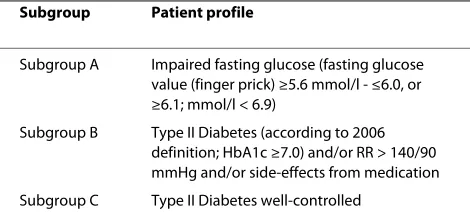
The BeweegKuur programme is open to prediabetic patients and patients with type 2 diabetes (see Table 1 for the inclusion criteria per subgroup). In addition to these criteria, eligible patients must have an inactive lifestyle (i.e. not adhering to the Dutch guideline recommenda-tion of exercising at least half an hour for five or more days a week) and motivation for behavioural change. Exclusion criteria for the BeweegKuur are type 2 diabetes with three or more complications, type 2 diabetes with serious polypharmacy and type 2 diabetes with type 3 hypertension.
The goal of the BeweegKuur programme is to achieve health benefits through increased physical activity and improved dietary behaviour for patients with type 2 dia-betes or prediadia-betes. The primary objective is to promote a healthy lifestyle in terms of physical activity and dietary behaviour. Secondary objectives include the improve-ment of physical parameters, such as HbA1c, hyperten-sion and BMI and the cardiovascular risk profile. Long-term objectives are the prevention of type 2 diabetes in prediabetic patients and lowering the incidence of com-plications in type 2 diabetes patients.
Theoretical and practical context of the BeweegKuur intervention
The starting point for the BeweegKuur intervention is the assumption that a permanent facilitative environment, autonomy support and involvement of counsellors play a
Table 1: The inclusion criteria per subgroup.
Subgroup Patient profile
Subgroup A Impaired fasting glucose (fasting glucose value (finger prick) ≥5.6 mmol/l - ≤6.0, or ≥6.1; mmol/l < 6.9)
Subgroup B Type II Diabetes (according to 2006 definition; HbA1c ≥7.0) and/or RR > 140/90 mmHg and/or side-effects from medication
crucial role in encouraging patients to take up and main-tain positive lifestyle changes. The integration of the Motivational Interviewing counselling technique [43] with an environmental approach that facilitates opportu-nities to engage in lifestyle changes could thus be regarded as providing optimal conditions for long-term maintenance. The primary health care setting can be regarded as a good place to start a lifestyle intervention. In the Netherlands, GPs act as the gatekeepers to health care; they see their patients regularly and know their social environment [15]. Most diabetic patients visit their GP or the practice nurse for a check-up every three months, enabling quick selection of eligible patients for BeweegKuur and detection of relapse after inclusion in the programme. Prediabetic patients do not get these reg-ularly check-ups.
In the BeweegKuur intervention, it is the GP who determines whether an individual is eligible for the pro-gramme. Coaching and supervision are provided by a life-style advisor (LSA, often the practice nurse), based on principles of Motivational Interviewing [43]. Peer feed-back meetings are regularly organized for the health care providers. All medical specialists involved in the Beweeg-Kuur programme are offered training in motivational interviewing, consisting of four eight-hour sessions, with the final session after one year. This training course is essential to improve the expertise of the professionals involved in the programme. The Motivational Interview-ing course incorporates concepts from Self-Determina-tion Theory [38].
Based on specific inclusion criteria and in close collab-oration with the patient, the LSA designs an individual exercise programme, which can be attended in the exist-ing local exercise facilities or (temporarily) under the supervision of a specialized exercise coach or physiother-apist. In addition, all participants are referred to a dieti-cian. During the BeweegKuur programme, the GP practice remains the central location, where patients have frequent contact with the LSA about their progress in the programme and about perceived barriers.
Designed as a multi-disciplinary intervention, the BeweegKuur intervention intends to create cohesion between intervention elements and aims to achieve coop-eration between partners at both national and local lev-els. Thus, the BeweegKuur programme contributes to the development of a solid local infrastructure for preven-tion. The Regional Support Structure for Primary Health Care (ROS) plays a central role in the local coordination. Good contacts within the multidisciplinary team are important. Patients should feel that they are supported by a team which is involved and committed, and that all health care providers involved aim for the same goals. It is crucial for patients' confidence in therapy that health care providers have compatible goals, provide unequivocal
recommendations, and fully support, respect and know one another. The LSA is the pivot of the BeweegKuur intervention, and is responsible for unequivocal and smooth communication within the multidisciplinary team and the coordination of individual activities within the BeweegKuur programme.
The BeweegKuur programme combines individual counselling with group counselling. Group counselling can promote group cohesion, which can help motivate patients. Cohesion can be seen as a field of forces that act on the participants to stay in the group [44]. These forces depend on participants being attracted to the group and the ability of the group to mediate important goals for the participants [44]. Several studies have shown that cohe-sion can be a significant predictor of adherence to exer-cise [45-48]. For example, a study by Kwak and colleagues [45] showed that, regardless of participants' cognition about exercise, a close and bonded walking group led to higher adherence. Therefore, the BeweegKuur interven-tion uses group educainterven-tion as much as possible, for dietary behaviour as well as exercise [18].
Duration of the BeweegKuur programme
The BeweegKuur programme takes one year. Coaching by the LSA is gradually reduced during this year, being both more frequent and more intense at the start of the programme. The final appointment with the LSA takes place one year after the start of the intervention. It is assumed that patients who are more active and have improved their dietary behaviour over the year have increased their level of intrinsic motivation towards life-style changes, and will be able to maintain these changes in the long run as a result of the continuous provision of a facilitative environment (e.g., [40]).
The exercise settings in the BeweegKuur programme
The second setting is a so-called 'start-up exercise set-ting', which is supervised by a physiotherapist for four weeks. Finally, the third setting is the 'supervised exercise setting', a three-month training programme supervised by a physiotherapist, who designs an exercise program. After the weeks of training with the physiotherapist, the LSA and the patient look for an activity that suits the patient, and the patient is referred to local exercise facili-ties. During the sessions with the physiotherapist, the patient starts exercising in small groups two or three times a week. The training consists of power, endurance and interval training exercises, designed by a team of spe-cialists [49]. The group sessions can also be used for edu-cation on dietary and other behaviour, depending on the patients' preferences. The patients in the second and third settings also have six follow-up meetings with the LSA to discuss the perceived barriers and the progress in terms of exercise and dietary behaviour. The meetings with the LSA and the physiotherapist offer an autonomy-supportive environment to achieve better treatment adherence [38]. All patients in the BeweegKuur receive a logbook that assists in the self-monitoring process of the behavioural changes, and that guides and promotes the formation of Action Plans [50].
Patients are referred to one of the three settings depending on the presence of comorbidity,
exercise-related complaints and strength limitations (as tested with the Cardiac Stress Test). If one or more of these cri-teria are met, the patient starts in the third setting, with the physiotherapist. If none of these criteria apply, the patient starts in the first setting. If the criteria are not applicable, but the patient needs to overcome certain bar-riers to get started, they start in the 'start-up exercise set-ting'.
Step 4: Adoption and implementation plan
the BeweegKuur programme and local exercise networks will be further developed. In 2012, it is expected that all inhabitants of the Netherlands will be able to participate in the BeweegKuur programme in their region if they meet the inclusion criteria. The NISB is developing a plan for further dissemination of the programme.
Step 5: Evaluation and monitoring
The pilot project for the implementation and dissemina-tion of the BeweegKuur intervendissemina-tion in the first seven ROS regions is being monitored in a formative imple-mentation study [14]. The purpose of this study is to test the BeweegKuur intervention in terms of perceived feasi-bility, satisfaction and perceived efficacy of the health care providers and the patients who started the Beweeg-Kuur in 2008. The BeweegBeweeg-Kuur implementation process is being assessed using interviews with patients, GPs, LSAs and physiotherapists. In addition, patients receive three questionnaires, one at the start of the intervention, one after three months and one after a year. Two ques-tionnaires are sent to the health care professionals (one at the start and one after they have worked with the inter-vention for 6 months). The evaluation study is based on the systematic approach proposed by Grol and Wensing [51-53] and the implementation theories proposed by Rogers [54] and Paulussen et al. [55,56]. In addition, after the pilot study, formative monitoring studies and (cost-)effectiveness studies are envisaged to examine the diffu-sion process and the cost-effectiveness of the interven-tion.
Discussion
This paper has presented the dynamic development and implementation process of the BeweegKuur intervention. In the first two steps of the systematic intervention plan-ning and development model used in this study, we col-lected all relevant information for the development of the prototype intervention. In-depth interviews, expert meetings, focus groups and reviewing previous com-pleted and ongoing interventions yielded information about the strengths and barriers of this type of lifestyle intervention in primary care. The information showed that a lifestyle intervention can be effective, when specific barriers have been overcome. The BeweegKuur interven-tion tries to overcome these potential motivainterven-tional barri-ers for both patients and health care providbarri-ers. In this respect, the characteristics of the intervention, i.e. its sys-tematic design and implementation, its theoretical under-pinnings and its focus on environmental facilitation, make that the BeweegKuur has the potential to reach moderate effect sizes regarding both short-term change as well as longer-term behavioural maintenance.
There are still some aspects of BeweegKuur that need attention, however. An important point in the
Beweeg-Kuur intervention is the access to existing local exercise facilities. During the first pilot year (2008), the network of these exercise facilities was incomplete and the health care providers lacked an adequate overview of the avail-able facilities. This is likely to have resulted in relapse by the participants in the pilot year of the BeweegKuur pro-gramme. An additional element of the relapse prevention strategy might be if GPs and LSAs address the patients' lifestyle in follow-up appointments after the end of the BeweegKuur intervention. For example, GPs and practice nurses could be advised to monitor the patients during the regular diabetes appointments. This monitoring of the patient is important, in order to quickly identify lapse and relapse.
Implementation planning for an innovation such as BeweegKuur should take the adopter categories of health care providers into account. Innovators are persons who adopt an innovation immediately after its release [54], and they are followed by the early adopters. These early adopters are characterised by a high degree of opinion leadership in most systems, and are respected and impor-tant for the adoption of the innovation by the other adopter categories [54]. The early majority is a category with a lot of informal and social contacts, and will adopt a new idea before the average system member. The late majority are sceptical about an innovation, and the final category consists of the laggards, who are characterized by a considerable resistance to the innovation [54]. In addition, a potential gap exists between the early adopters and the early majority [57]. Early adopters have other goals than the early majority, and the gap between these stages should be taken into account when implementing an innovation [57]. In the first year of the BeweegKuur project, most participating health care professionals were likely to be innovators or early adopters, as a result of the selection procedures. In the coming years of the project, the characteristics in terms of adopter categories are expected to change. The dissemination process of the BeweegKuur intervention will come to a point where the characteristics of the late majority and laggards will pre-vail. If the BeweegKuur programme were to be included in the basic health insurance package in the Netherlands, this may induce the late majority and laggards to join the intervention. The question remains how these adopter categories can best be approached to ensure intervention quality.
adjusted, the aim is to implement the intervention in more primary health care centres.
Competing interests
The authors declare that they have no competing interests.
Authors' contributions
SK and NV conceptualized the implementation study. JH and JM conducted the implementation study. FV and IW are responsible for the development and implementation of the BeweegKuur intervention. JH wrote the first draft of the paper. All authors have read and contributed to previous versions of the manu-script and have approved the final manumanu-script.
Acknowledgements
We would like to thank Dutch Ministry of Health, Welfare and Sports (VWS) for the financial support and all health care providers and patients participating in the BeweegKuur programme.
Author Details
1School for Nutrition, Toxicology and Metabolism (NUTRIM), Department of Health Promotion, Maastricht University, the Netherlands, 2Netherlands Diabetes Federation, Amersfoort, the Netherlands, 3Netherlands Institute for Sport and Physical Activity, Bennekom, the Netherlands and 4School for Public Health and Primary Care (CAPHRI) and School for Nutrition, Toxicology and Metabolism (NUTRIM), Department of Health Promotion, Maastricht University, the Netherlands
References
1. De Weerdt I, Broeders I, Schaars D: Prototype De BeweegKuur. Het beste recept voor uw gezondheid. Een interventie voor de (eerstelijns) zorg om mensen met (een hoog risico op) diabetes mellitus type 2 te begeleiden naar een actievere leefstijl. NISB; 2008.
2. Bartholomew KL, Parcel GS, Kok G, Gottlieb NH: Planning Health promotion programs: Intervention Mapping San Francisco, CA: Jossey Bass; 2006. 3. Brug J, Oenema A, Ferreira I: Theory, evidence and intervention
mapping to improve behaviour nutrition and physical activity interventions. International Journal of Behavioral Nutrition and Physical Activity 2005, 2:2.
4. Windsor R, Clark N, Boyd R, Goodman R: Introduction to evaluation; measurement in evaluation; process evaluation; formative & impact evaluation; cost evaluation; planning and evaluation; qualitative evaluation. In Evaluation of health promotion-health education-disease prevention programs 3rd edition. New York: McGraw-Hill Publisher; 2004. 5. Baan CA, Schoemaker CG, Jacobs-van der Bruggen MAM, Hamberg-van Reenen HH, Verkleij H, Heus S, Melse JM: Diabetes tot 2025. Preventie en zorg in samenhang. RIVM; 2009.
6. Poortvliet MC, Schrijvers CTM, Baan CA: Diabetes in Nederland. Omvang, risicofactoren en gevolgen, nu en in de toekomst. RIVM; 2007. 7. Marshall SM, Flyvbjerg A: Prevention and early detection of vascular
complications of diabetes. BMJ 2006, 333:475-480.
8. Rubin RR, Peyrot M: Quality of life and diabetes. Diabetes Metabolism Research and Reviews 1999, 15:205-218.
9. Sullivan PW, Morrato EH, Ghushchyan V, Wyatt HR, Hill JO: Obesity, Inactivity, and the Prevalence of Diabetes and Diabetes-Related Cardiovascular Comorbidities in the U.S., 2000-2002. Diabetes Care 2005, 28:1599-1603.
10. Tuomiletho J, Lindström J, Eriksson JG, Valle TT, Hämäläinen H, Ilanne- Parikka P, Keinänen-Kiukaanniemi S, Laakso M, Louheranta A, Rastas M, et al.: Prevention of type 2 diabetes mellitus by changes in lifestyle among subjects with impaired glucose tolerance. The New England Journal of Medicine 2001, 344:1343-1350.
11. Laatikainen T, Dunbar JA, Chapman A, Kilkkinen A, Vartiainen E, Heistaro S, Philpot B, Absetz P, Bunker S, O'Neil A, et al.: Prevention of Type 2 Diabetes by lifestyle intervention in an Australian primary health care setting: Greater Green Triangle (GGT) Diabetes Prevention Project. BMC Public Health 2007, 7:249.
12. Mensink M, Feskens EJM, Saris WHM, De Bruin TWA, Blaak EE: Study on Lifestyle intervention and Impaired Glucose Tolerance Maastricht
(SLIM): preliminary results after one year. International Journal of Obesity 2003, 27:377-384.
13. Fowler MJ: Diabetes Treatment, Part 1: Diet and Exercise. Clinical Diabetes 2007, 25:105-109.
14. Helmink JHM, Cox VCM, Kremers SPJ: Implementatie van de BeweegKuur: Een pilot studie. Maastricht University; 2009.
15. Visser F, Hiddink G, Koelen M, Van Binsbergen J, Tobi H, Van Woerkum C: Longitudinal changes in GPs' task perceptions, self-efficacy, barriers and practices of nutrition education and treatment of overweight. Family Practice 2008, 25:i105-i111.
16. Mensink M, Blaak EE, Corpeleijn E, Saris WHM, De Bruin TWA, Feskens EJM: Lifestyle intervention according to general recommendations improves glucose tolerance. Obesity Research 2003, 11:1588-1596. 17. Knowler WC, Barrett-Connor E, Fowler SE, Hamman RF, Lachin JM, Walker
EA, Nathan DM: Reduction in the incidence of type 2 diabetes with lifestyle interventions or metformin. The New England Journal of Medicine 2002, 346:393-403.
18. Bemelmans WJE, Wendel-Vos GCW, Bogers RP, Milder I, de Hollander EL, Barte JCM, Tariq L, Jacobs-van der Bruggen M: Kosten-effectiviteit beweeg- en dieetadvisering in de gezondheidszorg. De beweegkuur en dieetadvies onderzocht voor mensen met (hoog risico op) diabetes mellitus type 2. RIVM; 2008.
19. Williams NH, Hendry M, France B, Lewis R, Wilkinson C: Effectiveness of exercise-referral schemes to promote physical activity in adults: a systematic review. British Journal of General Practice 2007, 57:979-986. 20. Uutela A, Absetz P, Nissinen A, Valve R, Talja M, Fogelholm M: Health
psychological theory in promoting population health in Päijät-Häme, Finland: First steps toward a type 2 diabetes prevention study. Journal of Health Psychology 2004, 9:73-84.
21. Absetz P, Oldenburg P, Hankonen N, Valve R, Heinonen H, Nissinen A, Fogelholm M, Talja M, Uuteka A: Type 2 diabetes prevention in the 'real world': three-year results of the GOAL implementation trial. Diabetes Care 2009, 32:1418-1420.
22. Long BJ, Calfas KJ, Wooten W, Sallis JF, Patrick K, Goldstein M, Marcus BH, Schwenk TL, Chenoweth J, Carter R, et al.: A multisite field test of the acceptability of physical activity counseling in primary care: project PACE. American Journal of Preventive Medicine 1996, 12:73-81. 23. Swinburn BA, Walter LG, Arroll B, Tilyard MW, Russell DG: Green
prescriptions: attitudes and perceptions of general practitioners towards prescribing exercise. British Journal of General Practice 1997, 47:567-569.
24. Smith BJ, Bauman AE, Bull FC, Booth ML, Harris MF: Promoting physical activity in general practice: a controlled trial of written advice and information materials. British Journal of Sports Medicine 2000, 34:262-267. 25. Praet SFE, Van Rooij ESJ, Wijtvliet A, Boonman-de Winter LJM, Enneking T, Kuipers H, Stehouwer CDA, Van Loon LJC: Brisk walking compared with an individualised medical fitness programme for patients with type 2 diabetes: a randomised controlled trial. Diabetologia 2008, 51:736-746. 26. Sorensen JB, Skovgaard T, Puggaard L: Exercise on prescription in
general practice: A systematic review. Scandinavian Journal of Primary Health Care 2006, 24:69-74.
27. Schmidt M, Absalah S, Stronks K: Wat beweegt de deelnemers? Een evaluatie van het project 'Bewegen Op Recept' in Den Haag. Academisch Medisch Centrum; 2006.
28. Overgoor L, Aalders M: Big!Move. Evaluatieverslag Big!Move april 2003- juni 2004. Gezondheidcentrum Venserpolder; 2004.
29. Overgoor L, Aalders M, Statius Muller I: Big!Move, beweging in gedrag van patiënt en huisarts. Huisarts & Wetenschap 2006, 49:42-45. 30. Hosper K, Deutekom M, Stronks K: The effectiveness of 'Exercise on
Prescription' in stimulating physical activity among women in ethnic minority groups in the Netherlands: protocol for a randomized controlled trial. BMC Public Health 2008, 8:406.
31. GGD Rotterdam-Rijnmond: Zorgmonitor: Rotterdams Leefstijlprogramma Van Klacht naar Kracht. GGD; 2008.
32. Biddle SJH, Mutrie N: Psychology of physical activity: Determinants, wellbeing and interventions. 2nd edition. London: Routledge; 2008. 33. Ajzen I: The theory of planned behaviour. Organizational Behaviour and
Human Decision Processes 1991, 50:179-211.
34. Trost SG, Owen N, Bauman AE, Sallis JF, Brown W: Correlates of adults' participation in physical activity: Review and update. Medicine and Science in Sports and Exercise 2002, 34:1996-2001.
Received: 13 January 2010 Accepted: 26 May 2010 Published: 26 May 2010
This article is available from: http://www.ijbnpa.org/content/7/1/49 © 2010 Helmink et al; licensee BioMed Central Ltd.
This is an Open Access article distributed under the terms of the Creative Commons Attribution License (http://creativecommons.org/licenses/by/2.0), which permits unrestricted use, distribution, and reproduction in any medium, provided the original work is properly cited.
35. Hollis JF, Carmody TP, Connor SL, Fey SG, Matarazzo JD: The nutrition attitude survey: associations with dietary habits, psychological and physical well-being, and coronary risk factors. Health Psychology 1986, 5:359-374.
36. Harnack L, Block G, Subar A, Lane S, Brand R: Association of cancer prevention-related nutrition knowledge, beliefs and attitudes to cancer prevention dietary behaviour. Journal of the American Dietetic Association 1997, 97:957-965.
37. Thomas N, Alder E, Leese GP: Barriers to physical activity in patients with diabetes. Postgraduate Medical Journal 2004, 80:287-291.
38. Deci E, Ryan R: Intrinsic motivation and self-determination in human behaviour. New York: Plenum; 1985.
39. Williams GC, McGregor HA, Zeldman A, Freedman ZR, Deci EL: Testing a self-determination theory process model for promoting glycemic control through diabetes self-management. Health Psychology 2004, 23:58-66.
40. Silva MN, Markland D, Minderico CS, Vieira PN, Castro MM, Coutinho SR, Santos TC, Matos MG, Sardinha LB, Teixeira PJ: A randomized controlled trial to evaluate self-determination theory for exercise adherence and weight control: rationale and intervention description. BMC Public Health 2008, 8:234.
41. Rothschild ML: Carrots, sticks and promises: a conceptual framework for the management of public health and social issue behaviours. Journal of Marketing 1999, 63:24-37.
42. Williams GC, Minicucci DS, Kouides RW, Levesque CS, Chirkov VI, Ryan RM, Deci EL: Self-determination, smoking, diet and health. Health Education Research 2002, 17:512-521.
43. Miller WR, Rollnick S: Motivational interviewing: Preparing people to change addictive behaviour. New York: Guilford Press; 1991. 44. Festinger L, Schachter S, Back K: Social Pressures in Informal Groups.
New York: Harper and Row; 1950.
45. Kwak L, Kremers SPJ, Brug J, Walsh A: How is your walking group running? Health Education 2006, 106:21-31.
46. Carron AV, Widmeyer WN, Brawley LR: Group cohesion and individual adherence to physical activity. Journal of Sport & Exercise Psychology 1988, 10:127-138.
47. Spink KS, Carron AV: Group cohesion effects in exercise classes. Small Group Research 1994, 25:26-42.
48. Spink KS, Carron AV: Group cohesion and adherence in exercise classes. Journal of Sport & Exercise Psychology 1992, 14:78-86.
49. Praet SFE: Exercise therapy in type 2 diabetes, Dissertation. Maastricht University; 2007.
50. van Osch L, Beenackers M, Reubsaet A, Lechner L, Candel M, de Vries H: Action planning as predictor of health protective and health risk behavior: an investigation of fruit and snack consumption. International Journal of Behavioral Nutrition and Physical Activity 2009:6. 51. Grol R, Wensing M: Implementatie, effectieve verbetering van de
patiëntenzorg. Maarssenbroek. Elsevier gezondheidszorg; 2006. 52. Wensing M, van Splunteren P, Hulscher M, Grol R: Praktisch nieuw:
implementatie van vernieuwingen in de gezondheidszorg. Assen: Van Gorcum; 2000.
53. Hulscher M, Wensing M, Grol R: Effectieve implementatie: theorieën en strategieën. ZonMw; 2000.
54. Rogers E: Diffusion of innovations. Free press: New York; 2003. 55. Paulussen T, Wiefferink K, Mesters I: Invoering van effectief gebleken
interventies. Gezondheidsvoorlichting en gedragsverandering 5th edition. 2007:151-172.
56. Fleuren MAH, Wiefferink CH, Paulussen TGWM: Belemmerende en bevorderende factoren bij de implementatie van zorgvernieuwingen in organisaties. TNO; 2002.
57. Moore G: Crossing the Chasm. New York: Harper Collins; 2002.
doi: 10.1186/1479-5868-7-49
Cite this article as: Helmink et al., Development and implementation of a lifestyle intervention to promote physical activity and healthy diet in the Dutch general practice setting: the BeweegKuur programme International