Abstract
Introduction: the vagus nerve plays a special role in the control of respiratory system activity which repre-sents the parasympathetic part of the autonomic ner-vous system. A small bronchial innervation by the sympathetic system also is observed, and there is a sig-nificant expression of adrenergic receptors, in particu-lar β2 receptors, in the airways. the development of genetics and molecular biology allows for a detailed study which can clarify the essential elements in the pathogenesis of many types of lung disease, as well as the physiological phenomena - bronchial smooth mus-cle tone and their contractile mechanism.
Material and methods: the study involved 148 healthy male volunteers aged 20-26. In all subjects, gene poly-morphism at nucleotide position 46 and 79 of β2 -adrenergic receptor (β2-ADR) was assessed. Accord-ing to the gene polymorphism data, we divided the whole examined population of males into 6 groups for further studies. Moreover, in all the subjects, we per-formed spirometry testing to verify their pulmonary functions.
Results: the basic values of spirometry tests in all subjects were in the range of normal values. the fre-quency of different genotypes in the gene polymor-phism of the β2-adrenergic receptor at nucleotide po-sitions 46 and 79 were typical for the Caucasian popu-lation. Analysis of the output values of spirometry, conducted in the particular groups based on their genotype, showed significant inter-group differences in the selected spirometry tests.
Conclusions: Our results may be useful in explaining the differences in the measured values of spirometric indices in healthy subjects in relation to the polymor-phism of β2-ADR, and may also contribute to the ver-ification of standards for spirometric indices for this selected group of young males in the Polish popula-tion.
Key words: β2-adrenergic receptor, gene polymor-phism, spirometry
I
NtRODUCtIONthe bronchial smooth muscle tonus is determined by the effect of the nervous system and endogenous sig-nal substances (ligands) supplied via the bloodstream,
as well as locally secreted substances [22]. Neural regu-lation is effected with the mediation of parasympa-thetic fibres in the autonomic nervous system inner-vating bronchia and one of its parts, defined as the nonadrenergic and noncholinergic system (NANC). Bronchial tonus is maintained by the neurons of the vagus nerve nuclei, whose excitability is modified by impulses received from the respiratory complex in the brain stem. Surprisingly, a very slight bronchial inner-vation by the sympathetic system is observed with a significant simultaneous expression of adrenergic re-ceptors, in particular β2 (β2-ADR) [10, 22, 29]. Changes in bronchial tonus dependent on the activa-tion of β2-ADR, are determined by the expression and presence of this receptor in isoforms, resulting from the polymorphism of the β2-ADR encoding gene. In 1986, Dixon et al [8] described a sequence of amino acids for β2-ADR isolated from hamster tissues, and demonstrated its structural homology with rhodopsin. the β2-adrenergic receptor is classified to the group of metabotropic membrane receptors interacting with gs protein [1, 23, 29]. the β2-ADR gene, cloned in 1987, resides on a long arm of the chromosome 5 (5q31-32), is polymorphic and contains no introns [19, 24, 29, 31]. Up to the present time, 9 gene mutations have been identified in nucleotides (g.): 46, 79, 100, 252, 491, 523, 1053, 1098 and 1239. Five of them con-cern degenerative changes not affecting the modifica-tion of encoded amino acid, while the other four poly-morphic positions, located in nucleotides: 46, 79, 100, and 491, are responsible for the modification of amino acids in respective positions 16, 27, 34, and 164 of the receptor polypeptide chain [23, 24]. the struc-ture of the β2-adrenergic receptor, with the polymor-phic regions marked and changes in the receptor chain corresponding to them are presented in Fig. 1.
the most common polymorphism of the β2-ADR gene concerns codons 16 and 27. the polymorphism at codon 16 is associated with the potential replace-ment of adenine with guanine (g. 46 A→g) in nu-cleotide 46 of the gene (g. 46), which results in the re-placement of arginine with glycine at position 16 of the receptor polypeptide chain. A more common poly-morphism at codon 27 of β2-ADR, caused by the re-placement of cytosine with guanine at position g. 79 (g.79 C→g), results in the replacement of glutamine with glutamate acid at position 27 of the receptor
Eur J Med Res (2010) 15(Suppl. II): 135-140 © I. Holzapfel Publishers 2010
E
VALUAtION OF
S
PIROMEtRy
V
ALUES IN
R
ELAtION
tO
B
EtA
-2-
ADRENERgIC
R
ECEPtOR
g
ENE
P
OLyMORPHISM
I. Poziomkowska-gesicka1, E. Dzieciolowska-Baran2, A. gawlikowska-Sroka2, D. Slowik-Zylka3, t. Sroczynski3
chain. Polymorphism at codon 16 β2-ADR is signifi-cant for signal transduction by this receptor. the ob-jective of the present study was to evaluate the fre-quency of β2-ADR gene polymorphism at codon g. 46 and g. 79 and its effect on the values of spirometric in-dices in healthy men.
M
AtERIAL ANDM
EtHODSthe study involved 148 healthy male volunteers aged 2026. At the first stage, the material for genetic ana -lysis was sampled from the subjects (buccal mucosa smear and oral cavity smear taken after 30 min without intake of food and drink). genomic DNA was isolat-ed with a Sherlock Ax kit from A&A Biotechnology (gdynia, Poland), according to a method developed by the manufacturer. Afterwards, DNA was amplified in PCR (polymerase chain reaction) to separate obtained DNA fragments electrophoretically; gel photographs were taken under UV (Fig. 2).
Polymorphism of the β2-ADR encoding gene was evaluated at nucleotide positions 46 and 79. Based on the observed changes subjects were divided into 6 groups: g. 46AA – homozygote, presence of adenine and adenine (at receptor 16Arg/16Arg); g. 46gg – homozygote, presence of guanine and guanine (at receptor 16gly/16gly); g. 46Ag – heterozygote, presence of adenine and guanine (at receptor 16Arg/16gly); g. 79CC – homozygote, presence of cytosine and cytosine (at receptor 27gln/27gln); g. 79gg – homozygote, presence of guanine and guanine (at receptor 27glu/27glu); g. 79gC – heterozygote, presence of guanine and cytosine (at receptor 27glu/27gln). Spirometric testing was conducted with Lungtest 1000 apparatus from MES (Cracow, Poland). the obtained values of spirometry indices are presented with relation to the age, sex and body height of examined subjects. the spirometer was calibrated, and current data were entered (temper-ature, humidity and ambient pressure conditions) before measurements. testing was carried out accord-ing to the recommendations of the American thoracic Society (AtS) and the European Respiratory
Society (ERS) with volumes reported at BtPS para-meters (body temperature, pressure saturated) [3, 9, 35]. Vital capacity (VC) and flow/volume loop were measured. the highest measured values of spirometric indices were selected for further ana-lysis.
the Chi2test was used to compare the frequency of
genotypes and allele of the gene encoding the β2 -adrenergic receptor. the significance of the differ-ences between the values of measured indices was evaluated in consideration of their correlation and characteristics of sets. Normality of distribution was analyzed with the Shapiro-wilk test. A non-parametric Mann-whitney U test was used for distributions other than normal, and a parametric t-test for normally dis-tributed data. Significance of correlations between variables was evaluated with Spearman’s rank coeffi-cient of correlation.
R
ESULtSthe distribution of genotypes in the studied group of 148 subjects conformed to the Hardy-weinberg equilibrium. It was also found that both polymor-phisms (SNP) g. 46 and g.v79 are closely correlated: D’ = 0.900655; P<0.0001. three genotypes were found within the nucleotide 46 and three within the nu-cleotide 79. the distribution of their frequency was as follows: g. 46AA n = 20 (13.5%); g. 46gg n = 65 (43.9%); g. 46Ag n = 63 (42.6%); g. 79CC n = 38 (25.7%); g. 79gC n = 31 (21%); and g. 79gg n = 79 (53.3%).
Spirometry testing was performed in 148 subjects. the mean age of the subjects was 22.5 ±1.5SD (range 20-26 years), body height 179.4 ±6.2 (range 165-190 cm), and body mass 77.9 ±10.5 (range 58.0-11.6 kg). Basic values of spirometric indices in all subjects were within the normal range. the mean value of FVCex was 108% and FEV1 102%
predicted. the values of spirometric indices in the in-dividual groups g. 46 and g. 79 are presented in table 1.
Similarly to the study by Memon et al [31], FEV1
values in all subjects (n = 148) were significantly correlated with FVCex (Fig. 3), and the following
regression equation was elaborated: FEV1= 0.4862 +
0.7168 • FVCex; r = 0.837.
Fig. 1. Structure of the β2-adrenergic receptor with marked polymorphic regions and corresponding changes in the re-ceptor chain [34].
D
ISCUSSIONthe presence of β2-ADR genotypes, with attempts to link them with clinical symptoms, has been analyzed in patients with chronic obstructive pulmonary disease, asthma, atopy, hypertension, obesity, dyslipidaemia and diabetes type 2 [5, 12, 19, 21, 31, 36]. Small et al [36] reported that subjects with g. 79gg, particularly women, usually have body mass higher by 20 kg and have by 50% of fatty cells more than subjects with the genotype g. 79CC. Moreover, special importance is
at-tributed to the polymorphism of the β2-ADR encod-ing gene at the position of nucleotides 46 and 79 (g. 46 and g. 79) [6, 7, 28, 31, 38]. It has been claimed that these polymorphic positions (g. 46 A→g and g. 79 g→C) may predispose people to the development of pulmonary and circulatory diseases, as well as to di-verse responses to treatment [10, 31, 36]. It should be emphasized, however, that the frequency of the geno-types in studied groups of healthy subjects and pa-tients is comparable [13, 34].
In the present investigation, distribution of the studied genotypes conformed to the Hardy-weinberg equilibrium. their close correlation was found (D’= 0.9; P<0.0001), which conforms to the results obtained by other authors [13, 14, 16, 31, 39, 40]. Subjects were divided into 6 groups: three based on the polymor-phism of the β2-ADR encoding gene at nucleotide po-sition 46, and three based on the polymorphism of the β2-ADR encoding gene at nucleotide position 79.
the frequency of genotype g. 46AA was compara-ble to the results obtained by taylor et al [39], Hall et al [12], Israel et al [15] Martinez et al [29], Lima et al [26], Liggett [25], and Aynacioglu et al [4]. In studies conducted by Hopes et al [14] and Azis et al [5] this genotype had a lower frequency (6.3-9.3%), while in studies by xie et al [40] and Kotani et al [19], it was significantly higher – 26.6 and 27.7%, respectively. Differences in the evaluation of the frequency of genotype g. 46AA are significant. However, it is
Table 2. Significance of differences (P) for the values of spirometric indices in individual groups g. 46.
Spirometric Significance of differences between groups index within the polymorphism of nucleotide 46
AA and gg AA and Ag gg and Ag
VC (L) 0.242 0.268 0.985
FVCex(L) 0.103 0.270 0.530
FEV0.5(L) 0.007 0.020 0.884
FEV1(L) 0.039 0.049 0.987
FEV2(L) 0.013 0.040 0.692
FEV3(L) 0.058 0.097 0.813
PEF (L/s) 0.026 0.058 0.706
MEF75(L/s) 0.001 0.010 0.236 MEF50(L/s) 0.132 0.084 0.353 MEF25(L/s) 0.075 0.181 0.181 FEF75/85(L/s) 0.150 0.145 0.145 FEF25/75(L/s) 0.049 0.020 0.289 Aex (L2/s) 0.008 0.021 0.691
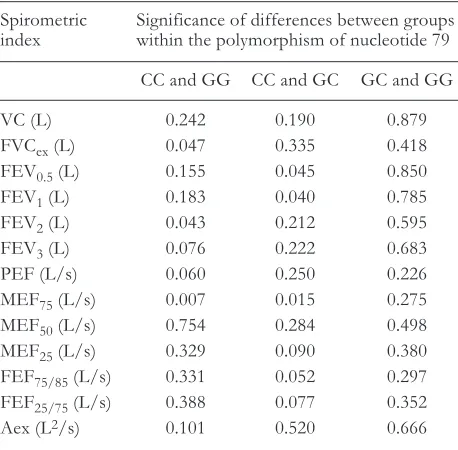
Table 3. Significance of differences (P) for the values of spirometric indices in individual groups g.79.
Spirometric Significance of differences between groups index within the polymorphism of nucleotide 79
CC and gg CC and gC gC and gg
VC (L) 0.242 0.190 0.879
FVCex(L) 0.047 0.335 0.418
FEV0.5(L) 0.155 0.045 0.850
FEV1(L) 0.183 0.040 0.785
FEV2(L) 0.043 0.212 0.595
FEV3(L) 0.076 0.222 0.683
PEF (L/s) 0.060 0.250 0.226
MEF75(L/s) 0.007 0.015 0.275 MEF50(L/s) 0.754 0.284 0.498 MEF25(L/s) 0.329 0.090 0.380 FEF75/85(L/s) 0.331 0.052 0.297 FEF25/75(L/s) 0.388 0.077 0.352 Aex (L2/s) 0.101 0.520 0.666
Table 1. FVCexand FEV1values expressed in % of predicted in the individual groups g. 46 and g.79.
g. 46/g. 79 g. 46AA g. 46gg g. 46Ag g. 79CC g. 79gg g. 79gC
FVCex(%pred) 108 109 106.9 105.3 111 108
FEV1(%pred) 99.6 102.5 101.3 97.8 104 102
Significance of differences between the mean values of spirometric indices recorded in groups g. 46 is presented in table 2, and between groups g. 79 in table 3.
claimed that this genotype has the lowest frequency within g. 46 [21]. Frequencies of genotype g. 46gg re-ported by taylor et al [39], Lima et al [26], Hopes et al [14], Martinez et al [29], and Azis et al [5] are compa-rable to those observed in our study and ranged from 38.3 to 47.2%. A slightly different range (from 29.1 to 36%) concerned data presented by Hall et al [12], xie et al [40], Kotani et al [19], Israel et al [15], and Ayna-cioglu et al [4]. Only Liggett [25] found genotype g. 46gg in 57.3% of studied subjects. In this study, the percentage of subjects heterozygous at codon 16 – g. 46Ag, as in the study by xie et al [40], was compara-ble with that for homozygotes g. 46gg. Usually, the percentage of individuals with g. 46Ag is estimated at 38-49%, which corresponds with the results obtained in our present study [12, 14, 19, 26, 29, 34]. Ayna-cioglu et al [4], Israel et al [15], and Azis et al [5] recorded a significantly higher frequency of the stud-ied genotype (50%), while Liggett [25], taylor et al [39] recorded a significantly lower one (29-37%). Indi-viduals with g. 79CC, as in our study, in studies by Hall et al [12], Lima et al [26], Hopes et al [14], and Liggett [25] accounted for 25.7%. Individuals with g. 79gg accounted for 21%. According to Hall et al [12], Lima et al [26], Hopes et al [14], xie et al [40], and Israel et al [15], their frequency was between 15.4 and 24%. In populations studied by Aynacioglu et al [4] and Mar-tinez et al [29], genotype g. 79gg was significantly less frequent and accounted for, respectively, 10.6% and 13.8%, while in studies by Azis et al [5] and Liggett [25] significantly more frequently (37.5 and 28%). Subjects heterozygous at codon 27 accounted for over a half of the studied population (53.3%), which conforms with results obtained by Hall et al [12], Lima et al [26], Hopes et al [14], Israel et al [15], and Reihsaus et al [34] – range from 49.2 to 59%. In contrast to that, in studies presented by Liggett [25], Martinez et al [29], xie et al [40], Aynacioglu et al [4], Azis et al [5], and Kotani et al [19], the percentage of individuals with g. 79gC was lower (13.6 - 45%). Data obtained in our present study show, similarly to the cited references, that g. 79gg is the genotype g. 79 of the lowest frequency. Differences in the frequency of the analyzed β2-ADR genotypes may result from the fact that the studies covered representatives of differ-ent ethnic groups, including Caucasian, Hispanic and Latino American, African-American, and Asian [36]. In this study, similar to the available literature data, no individuals were observed with coexisting g. 46AA and g. 79gg [29].
In the present study, spirometric measurements demonstrated the functional efficiency of the respira-tory system in all subjects. Values of the analyzed in-dices did not differ from standard values established with respect to the age and body height of subjects. the mean value of FVCex was 108% and FEV1 was
102% of predicted; the mean value of FEV1 %FVCex
index was 82%. In all six groups, the output values of basic indices were within the normal range; FVCex105
- 111% of predicted, FEV198 -105% of predicted
val-ue. Currently in Poland, there are no well documented studies available which cover a group of healthy sub-jects of a wide age range. therefore, it is recommend-ed to use a set of prrecommend-edictrecommend-ed values according to
differ-ent authors. However, the most popular predicted val-ues recommended by ERS (unchanged for over 20 years) are not fully representative for the Polish [27], greek [2], Finish [17] Croatian [37], german [18], or Spain [11] populations.
A comparative analysis of the values of spirometric indices was carried out separately for the genotype-groups. the groups g. 46AA and g. 46gg, as well as g. 46AA and g. 46Ag significantly differed for FEV0.5, FEV1, and FEV2 values: with the lowest indices
recorded in the group g. 46AA and the highest in the group g. 46gg. Peak expiratory flow (PEF) was dif-ferent only for the groups g. 46AA and g. 46gg, and had the highest values in subjects from the group g. 46gg. From among indices describing the maximum expiratory flow only MEF75 was different for the
groups g. 46AA and g. 46gg, as well as g. 46AA and g. 46Ag: the lowest values were measured in subjects from the group g. 46AA, and the highest from the group g.46gg. Similar to the above results, Aex and FEF25/75values also varied.
the groups g. 79CC and g. 79gg demonstrated significant differences in FVCex values. FEV0.5 and
FEV1 were significantly higher in the group g. 79gC
when compared with the group g. 79CC. the FEV2
index was different for individuals with g. 79CC and g. 79gg, similar to MEF75, which was also varied for the
genotypes g. 79CC and g. 79gC. the highest values of the analyzed indices were measured in the group g. 79gg, intermediate - g. 79gC and the lowest for g. 79CC. the present data conform to the results ob-tained by Joos [16], who found that individuals with g. 46gg achieve the highest FEV1and FVCexexpressed
as the percent of the predicted value. Israel et al [15] also recorded the highest FEV1values in the group g.
46gg. In contrast, Martinez et al [29], in the analysis of polymorphism of g. 79, found the highest FEV1
values in the group g. 79gg. taylor et al [39], in the analysis of the polymorphism of g. 46 in asthmatic pa-tients, recorded the highest FEV1 values in the group
g. 46AA, slightly lower in g. 46Ag, and the lowest in g. 46gg. Additionally, Martinez et al [29] recorded the highest FEV1 values in children with g. 46AA,
inter-mediate in g. 46gg, and the lowest in g. 46Ag. when analysing the g. 79 polymorphism in the present study we found that, similar to observations by Israel et al [15], heterozygotes achieve intermediate values of spirometric indices, while the highest values are achieved by homozygotes g. 79gg and the lowest by g. 79CC.
In conclusion, we believe the present study may be useful in explaining the differences in normal values of spirometric indices in healthy subjects in relation to the polymorphism of the β2-ADR gene. Considering the fact that the measured spirometric indices exceed-ed standard values, further spirometric studies on healthy subjects may contribute to the establishment of new predicted values for relevant age groups in the Polish population.
R
EFERENCES1. Abraham g, Kottke C, Dhein S, Ungemach FR. Pharma-cological and biochemical characterization of the beta-adrenergic signal transduction pathway in different seg-ments of the respiratory tract. Biochem Pharmacol 2003; 66(6): 1067-81.
2. Alexandraki S, Koutsilieris M, Siafakas N, Katsardis C. Spirometric reference values in greek children and ado-lescents. In vivo2010; 24(2): 195-200.
3. American thoracic Society. Standardization of Spirome-try 1994 Update. Am J Respir Crit Care Med 1995; 152(3): 1107-36.
4. Aynacioglu AS, Cascorbi I, güngör K, Ozkur M, Bekir N, Roots I, Brockm J. Population frequency, mutation linkage and analytical methodology for the Arg16gly, gln27glu and thr164Ile polymorphisms in the β2 -adren-ergic receptor among turks. Br J Clin Pharmacol 1999; 48(5): 761-4.
5. Aziz I, Hall IP, McFarlane LC, Lipworth BJ. β2 -adreno-ceptor regulation and bronchodilator sensitivity after reg-ular treatment with formoterol in subjects with stable asthma. J Allergy Clin Immunol 1998; 101(3): 337-41. 6. Bleecker ER, Postma DS, Lawrance RM, Meyers DA,
Ambrose HJ, goldman M. Effect of ADRB2 polymor-phisms on response to long acting β2-agonist therapy: a pharmacogenetic analysis of two randomized studies. Lancet 2007; 370(9605): 2118-25.
7. Carroll CL, Stoltz P, Schramm CM, Zucker AR. Beta2adrenergic receptor polymorphisms affect response to treatment in children with severe asthma exacerba-tions. Chest 2009; 135(5): 1186-92.
8. Dixon RAP, Kobilka BK, Strader DJ, Benovic JL, Dohlman Hg, Frielle t, Bolanowski MA, Bennett CD, Rands E, Diehl RE, Mumford RA, Slater EE, Sigal IS, Caron Mg, Lefkowitz RJ and Strader CDl. Cloning of the gene and cDNA for mammalian β2-adrenergic recep-tor and homology with rhodopsin. Nature 1986; 321: 75-9.
9. Enright PL, Beck KC, Sherrill DL. Repeatability of spirometry in 18,000 adult patients. Am J Respir Crit Care Med 2004; 169(2): 235-8.
10. green AS, turki J, Hall IP, Ligget SB. Implications of ge-netic variability of human β2-adrenergic receptor struc-ture. Pulm Pharmacol 1995; 8(1): 1-10.
11. gonzalez Barcala FJ, gonzalez Barcala FJ, Cadarso Suarez C, Valdes Cuadrado L, Leis R, Cabanas R, tojo R. Lung function reference values in children and adoles-cents aged 6 to years in galicia. Arch Bronconeumol 2008; 44(6): 295-302.
12. Hall IP, wheatley A, wilding P, Liggett SB. Association of glu 27 β2-adrenoceptor polymorphism with lower air-way reactivity in asthmatic subjects. Lancet 1995; 345(8959): 1213-4.
13. Hancox RJ, Sears MR, taylor DR. Polymorphism of the β2-adrenoceptor and the response to long-term β2 -ago-nist therapy in asthma. Eur Respir J 1998; 11(3): 589-93. 14. Hopes E, McDougall C, Christie g, DewarJ, wheatley A,
Hall IP, Helms PJ. Association of glutamine 27 polymor-phism of β2-adrenoceptor with reported childhood asth-ma: population based study. BMJ 1998; 316(7132): 664. 15. Israel E, Drazen JM, Liggett SB, Boushey HA, Cherniack
RM, Chinchilli VM, Cooper DM, Fahy JV, Fish JE, Ford Jg, Kraft M, Kunselman S, Lazarus SC, Lemanske RF Jr, Martin RJ, McLean DE, Peters SP, Silverman EK, Sork-ness CA, Szefler SJ, weiss St, yandava CN. Effect of polymorphism of the β2-adrenergic receptor on response to regular use of albuterol in asthma. Int Arch Allergy Im-munol 2001; 124(1-3): 183-6.
16. Joos L, weir tD, Connett JE, Anthonisen NR, woods R, Pare PD, Sandford AJ. Polymorphisms in the β2
-adrener-gic receptor and bronchodilator response, bronchial hy-perresponsiveness, and rate of decline in lung function in smokers. thorax 2003; 58(8): 703-7.
17. Kainu A, Lindqvist A, Sarna S, Sovijärvi A. Spirometric and anthropometric determinants of forced expiratory time in a general population. Clin Physiol Funct Imaging 2008; 28(1): 38-42.
18. Koch B, Schäper C, Ittermann t, Völzke H, Felix SB, Ewert R, gläser S. Reference values for lung function testing in adults – results from the study of health in Pomerania. Dtsch Med wochenschr 2009; 134(46): 2327-32.
19. Kotani y, Nishimura y, Maeda H, yokoyama M. β2 -adrenergic receptor polymorphisms affect airway respon-siveness to salbutamol in asthmatics. J Asthma 1999; 36(7): 583-90.
20. Kulminski AM, Culminskaya I, Ukraintseva SV, Arbeev Kg, Land KC, yashin AI. β2-adrenergic receptor gene polymorphisms as systemic determinants of healthy aging in an evolutionary context. Mech Ageing Dev 2010; 131(5): 338-45.
21. Leineweber K, Büscher R, Bruck H, Brodde OE. β-adrenoceptor polymorphisms Naunyn Schmiedebergs Arch Pharmacol 2004; 369(1): 1-22.
22. Liebhart J, Malolepszy J, Dor A. Role of autonomic ner-vous system (adrenergic, cholinergic, and non-adrenergic non-cholinergic) in the regulation of the functional state of airways. Postepy Hig Med Dosw 1995; 49(3): 395-407 (Article in Polish).
23. Liggett SB. Pharmacogenetics of β1-and β2-adrenergic re-ceptors. Pharmacology 2000; 61(3): 167-73.
24. Liggett SB. Pharmacogenetics of relevant targets in asth-ma. Clin Exp Allergy 1998; 28 Suppl 1: 77-9.
25. Liggett SB. Polymorphisms of the β2-adrenergic receptor and asthma. Am J Respir Crit Care Med 1997; 56: 156-62. 26. Lima JJ, thomason DB, Mohamed MH, Eberle LV, Self
tH, Johnson JA. Impact of genetic polymorphisms of the β2-adrenergic receptor on albuterol bronchdilator phar-macodynamics. Clin Pharmacol ther 1999; 65(5): 519-25. 27. Lubinski w, golczewski t. Physiologically interpretable
prediction equations for spirometric indices. J Appl Phys-iol 2010; January 21, 2010. doi:10.1152/japplphysi-ol.01211.2009.
28. Martin AC, Zhang g, Rueter K, Khoo SK, Bizzintino J, Hayden CM, geelhoed gC, goldblatt J, Laing IA, Le Souëf PN. β2-adrenoceptor polymorphisms predict re-sponse to β2-agonists in children with acute asthma. J Asthma 2008; 45(5): 383-8.
29. Martinez FD, graves PE, Baldini M. Association between genetic polymorphisms of the β2-adrenoceptor and re-sponse to albuterol in children with and without a history of wheezing. J Clin Invest 1997; 100(12): 3184-8.
30. Mcgraw Dw, Liggett SB. Coding block and 5’ leader cistron polymorphisms of the β2-adrenergic receptor. Clin Exp Allergy 1999; 29 Suppl 4: 43-5.
31. Memon MA, Sandila MP, Ahmed St. Spirometic refer-ence values in healthy, non smoking Urban Pakistani population. J Pak Med Assoc 2007; 57(4): 193-5.
32. Ortega VE, Hawkins gA, Peters SP, Bleecker ER. Phar-macogenetics of the β2-adrenergic receptor gene. Im-munol Allergy Clin North Am 2007; 27(4) :665-84. 33. Ramsay CE, Hayden CM, tiller KJ, Burton PR, goldblatt
J, Lesouef PN. Polymorphisms in the β2-ADR gene are associated with decreased airway responsiveness. Clin Exp Allergy 1999; 29(9): 1195-203.
34. Reihsaus E, Innis M, MacIntyre N, Liggett SB. Mutations in the gene encoding for the β2-adrenergic receptor in normal and asthmatic subjects. Am J Respir Cell Mol Biol 1993; 8(3): 334-9.
36. Small KM, Mcgraw Dw, Liggett SB. Pharmacology and physiology of human adrenergic receptor polymorphisms. Annu Rev Pharmacol toxicol 2003; 43: 381-411.
37. Smolej Narancic N, Pavlovic M, Zuskin E, Milicic J, Skar-ic-Juric t, Barbalic M, Rudan P. New reference equations for forced spirometry in elderly persons. Respir Med 2009; 103(4): 621-8.
38. taylor DR. β-adrenergic receptor polymorphisms rela-tionship to the beta agonist controversy and clinical im-plications. Expert Opin Pharmacother 2007; 8(18): 3195-203.
39. taylor DR, Drazen JM, Herbison gP. Asthma exacerba-tions during long term β-agonist use: influence of β2 -adrenoceptor polymorphism. thorax 2000; 55(9): 762-7.
40. xie Hg, Stein CM, Kim RB, xiao ZS, He N, Zhou HH, gainer JV, Brown NJ, Haines JL, wood AJ. Frequency of functionally important β2-adrenoceptor polymorphisms varies markedly among African-American, Caucasian and Chinese individuals. Pharmacogenetics 1999; 9(4): 511-6.
Address for correspondence:
Iwona Poziomkowska-gesicka Department of Clinical Allergology Pomeranian Medical University 72, Powstancow wlkp. St. 70-111 Szczecin, Poland