Review Paper:
A Systematic Review of the Effectiveness
of Early Intervention and the Role of Parents in Language
Development of Hearing Loss Children
Ehsan Shekari1 , Mahbubeh Nakhshab2,3, Vahid Valinejad4*, Amin Modarres Zadeh4, Amirhossein Hosseinpour5
1. Department of Neuroscience, School of Advanced Technologies in Medicine, Iran University of Medical Sciences, Tehran, Iran. 2. Department of Speech Therapy, University of Social Welfare and Rehabilitation Sciences, Tehran, Iran.
3. Department of Speech Therapy, School of Rehabilitation Sciences, Isfahan University of Medical Sciences, Isfahan, Iran. 4. Department of Speech Therapy, School of Rehabilitation, Tehran University of Medical Sciences, Tehran, Iran. 5. Department of Counseling, University of Social Welfare and Rehabilitation Sciences, Tehran, Iran.
* Corresponding Author: Vahid Valinejad, PhD Student
Address: Department of Speech Therapy, School of Rehabilitation, Tehran University of Medical Science, Tehran, Iran.
Tel: +98 (918) 8871721
E-mail: [email protected]
Objectives: Deaf and hard-of-hearing children are slow in language development, and language deficits are common in hearing-impaired children. Here, all areas of the language, including syntax, morphology, phonology, semantic and pragmatic, are involved, and this leads to a deficiency in reading and academic skills. Evidence shows that through early intervention, we can minimize or eliminate problems of children with hearing loss. Early intervention teaches parents how to communicate with their disabled child.
Methods: Internet search in databases including ISI Web of Knowledge, Embase and Pubmed from 1990 to 2014 was conducted. Key words such as children with hearing loss, deaf children, hard-of-hearing, family education program(s), early intervention, early detection, family’s approach, parent’s approach, and parent’s education program(s) were searched.
Results: A total of 100 articles were initially found, and only 20 articles were finally selected for the study. The inclusion criteria for the study were as follows: the article should be interventional and written in English and should be published between 1990 and 2014. Discussion: Research showed the effectiveness of early intervention in the early development of language and vocabulary. In addition, early detection of hearing loss in the first 6 months of age has a positive impact on children and families interactions and consequently, on language and vocabulary development. The primary focus in the implementation of early intervention services is to reduce the negative effects of risk factors and facilitate optimum development over time. Finally, the combination of early diagnosis and early intervention for children with hearing impairment is necessary.
A B S T R A C T
Article info: Received: 25 Nov. 2016
Accepted: 01 Feb. 2017
Keywords:
Early intervention, Early diagnosis, Hearing loss, Family-centered programs
Citation: Shekari E, Nakhshab M, Valinejad V, Modarres Zadeh A, Hosseinpour A. A Systematic Review of the Effective-ness of Early Intervention and the Role of Parents in Language Development of Hearing Loss Children. Iranian Rehabilitation Journal. 2017; 15(1):5-14. https://doi.org/10.18869/nrip.irj.15.1.5
:
: https://doi.org/10.18869/nrip.irj.15.1.5 Use your device to scan
and read the article online
1. Introduction
earing loss is a disabling condition in children that reduces the resolution ca-pability of speech inquiry and disturbs the correct understanding of speech and learning [1]. Each year, over 718,000 babies are born with bilateral permanent hearing loss or obtain it in the early months of infancy. On an average, 2000 children with permanent hearing loss are born every day or obtain it during the early months of infancy [2]. Failure to detect hearing loss in its initial stages can negatively affect speech, language, cognitive and psychosocial development, and conse-quently, damage vocational attainment, particularly during the growth period [3]. In addition, hearing loss leads to unpleasant experiences in families and expose them to stress. The birth of a child with hearing loss has a feelings for parent which looks like an experience of bereavement [4]. Therefore, among all sensory disabili-ties in early childhood, permanent hearing damage from birth or during infancy is an important issue [3].
In the auditory system, the period when the brain’s plas-ticity is high and ready to develop through stimulation is considered to be critical. Therefore, it is assumed that due to the rapid advancement of the brain in the plasticity period in early life, a child can acquire age-appropriate speech and language abilities when stimulations are presented in this sensitive period Since neuroplasticity decreases with age, it is logical to believe that the capacity of children to acquire these abilities is limited with time [5].
Lack of auditory sense reduces sensory stimulations of the brain. In addition to preventing auditory learning, sensory deprivation also prevents the nerve growth and reduces brain plasticity. Moreover, this pauses the growth of the auditory centers and destroys the auditory ways [6]. The development of language in deaf and hard-of-hearing chil-dren is relatively slow, and linguistic deficits are commonly seen in hearing-impaired children. Deficits in all areas of language, including syntax, morphology, phonological, se-mantic, and pragmatic aspects affect the reading and aca-demic skills of hearing-impaired children [7]. However, the following three factors can facilitate oral language acquisi-tion in children with all levels of hearing loss: 1) Early de-tection of hearing issues through universal auditory screen-ing program for newborns; 2) Early intervention; and 3) Advances in auditory technology.
In Singapore, auditory screening is performed in approxi-mately 99.95% of children from birth to 6 weeks. Hearing aids can also be used from 1.5 months of age [8]. In 2013,
Amiri and colleagues conducted a study on 25073 children in Ahvaz and reported that 92% of newborn hearing prob-lems is diagnosed before 3 months of age [9].
Among the various hearing aids, cochlear implantation is widely used in hearing-impaired children. Cochlear im-plants help people with deep sensorineural hearing loss to attain a high level of speech perception. However, many individual variables affect the use of cochlear implantation and the perception of spoken sounds. In pre-linguistic chil-dren who have been diagnosed with profound sensorineu-ral hearing loss, cochlear implants can provide a great op-portunity to learn the expressive language [10]. With early identification of hearing impaired children, early interven-tions have also led to more natural approaches. In these ap-proaches, parents and caregivers are used as the providers of medical services [11].
Today, family training is essential for every family hav-ing children with special needs. From this point of view, designing and formulating family-oriented educational programs is of importance. Educational programs for fam-ily increase awareness and skill-training and help parents improve their interactions with their child [12]. After the diagnosis of hearing impairment (deaf/hard-of-hearing) in children, a suitable, personalized, objective and well-defined treatment plan is needed. For an infant or young child is deaf or hard of hearing D/HH to reach their full potential, intervention personal carefully planned should be performed, by means of care providers with the knowl-edge and skills of optimal and services based on research, best practices, and proven models. EI service provider is complicated and requires an individual to respond to the identified needs of children and families [13].
Evidence show that early interventions provide necessary conditions for the young children (birth to 36 months of age) to eliminate barriers to growth and minimize or elimi-nate other problems of hearing-impaired children. Early intervention facilitates and accelerates the overall develop-ment of the children through providing education that other children normally acquire. It teaches families how to com-municate with their children with special needs and provide education services for them [14]. Vygotsky (1986), who is one of the most influential thinkers in developmental psy-chology, believes that the development of an individual is a social process during which children’s interaction with oth-ers changes them from a creature who responds to stimula-tion to a thinking human being who is a part of society. In his view, these changes are rooted in children’s culture and obtained through the use of unique oral language [15].
Since the interaction between the child and the family is important for the development of linguistic and mental skills of children, a part of recent research in psychology have focused on this aspect.
One of the most interesting studies in this context is the study by Fantuzzo and McWayne (2002). Their study was conducted in the North-East urban educational areas of the US, which comprised mainly low-income African Americans families. They used various quantitative tools for evaluating the interaction of families with children, the child’s learning style, lexical development, and behavior of children in the class. They found that the interaction of par-ents with children has a strong positive effect on the child’s learning and behavior in the classroom. They concluded that home interactive activities such as reading to children, asking children regarding their activities in school, and training courses with them, have the strongest relationship with academic achievement of children in the future [16].
Rasinski and Stevenson (2005) evaluated the effect of parent training in increasing the verbal abilities of first-grade children with hearing impairment. In this study, the experimental group consisted of 15 parents who re-ceived direct education through books, pamphlets, and consolidated guides. The control group consisted of 15 families that received only general advice in school. After 11 weeks, the reading ability of children increased signifi-cantly in the experimental group than the control group. It was also found that any educational program that is de-signed for parents should have these 8 characteristics: 1) The program should be significant for parents; 2) The pro-gram should be appropriate for suffering children in terms of their development; 3) Educational program should be based on the school curriculum or skills that parents like; 4) Learning educational materials should be easy for parents; 5) The program should not take too much of the family time; 6) The program should be designed for each family member separately and proprietary; 7) Counseling should always be included in the program; 8) Situations to practice the learned skills should be created.
The linguistic interaction of parents with their hearing-impaired children takes a more complex shape due to prob-lems in communication and mental states of the family. Desley and Perlmtor [17] found that children of parents who were qualified in comprehensive communication, i.e., using speech, writing with fingers, and using hand signs, scored more in psychometric tests of self-confidence than children whose parents had only verbal communication. Even communications between the second and third mem-bers of the family with hearing-impaired children have an effect on these children’s ways of communication [17].
In a descriptive study of 10 families with hearing loss, Norton (2000) investigated the impacts of interaction between grandparents and child. He found that the un-derstanding of the child, his/her acceptance, and support from the grandparents helped the children to be better involved in family life and activities. Speech therapists and teachers also played an important role in guiding parents to solve frequent problems with their hearing-impaired children [15].
Knowles (2008) investigated the parent’s percep-tions of the effect of early intervention on facilitating the transfer of children from home to school. He found that the parents viewed early intervention as a great responsibility that guided parents in providing trans-parent and comprehensive information and involved them in the treatment. In this study, parents reported that among the pressures they face during the chil-dren’s growth period, communication problems with experts, including lack of provision of clear informa-tion, insufficient training, lack of adequate support to parents, and fear of the other factors, are problematic and stressful [18]. Given the role of early intervention in reducing the negative effects of hearing loss on the acquisition and development of speech and language, as well as the role of parents in carrying out these in-terventions, we tried to consider the previous studies in the field of early intervention and treatment based on parents of the hearing-impaired children.
Methods
For this systematic review, databases such as ISI Web of Knowledge, PubMed and Embase were searched for articles in the period from 1990 to 2014. Key words like hard-of-hearing, deaf children, children with hear-ing loss, family’s approach, parents’ approach, parents’ education, program(s), early detection, family education program(s), and early intervention were searched.
In order to increase the scope of the search, the refer-ences of the selected studies were further examined to find more related articles. The abstracts of articles were evaluated by the authors. The primary criterion was whether the paper accounted for the researcher’s ques-tions or not. The second stage of selection was based on the following criteria: Articles are written in English.
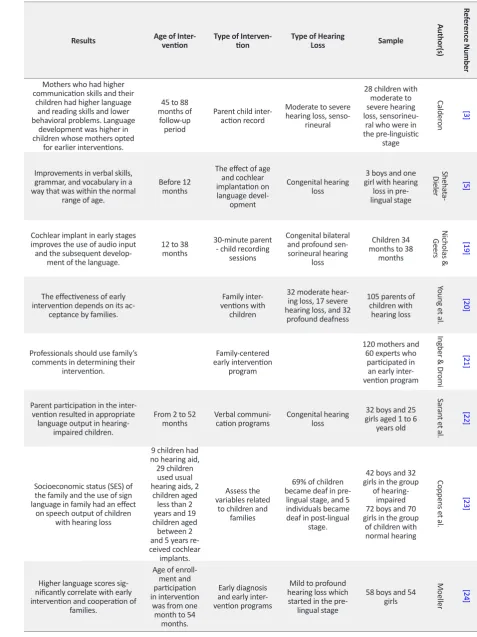
Table 1. The main clinical results of the studies reviewed
Results Age of Inter-vention Type of Interven-tion Type of Hearing Loss Sample
Author(s) Reference Number
Mothers who had higher communication skills and their
children had higher language and reading skills and lower behavioral problems. Language
development was higher in children whose mothers opted
for earlier interventions.
45 to 88 months of
follow-up period
Parent child inter-action record
Moderate to severe hearing loss,
senso-rineural
28 children with moderate to severe hearing loss, sensorineu-ral who were in the pre-linguistic
stage
Calde
ron [3]
Improvements in verbal skills, grammar, and vocabulary in a way that was within the normal
range of age.
Before 12 months
The effect of age and cochlear implantation on language devel-opment Congenital hearing loss
3 boys and one girl with hearing
loss in pre-lingual stage She ha ta-Diele r [5]
Cochlear implant in early stages improves the use of audio input and the subsequent
develop-ment of the language.
12 to 38 months
30-minute parent - child recording
sessions
Congenital bilateral and profound sen-sorineural hearing
loss
Children 34 months to 38
months Nicholas & Ge er s [19]
The effectiveness of early intervention depends on its
ac-ceptance by families.
Family inter-ventions with
children
32 moderate hear-ing loss, 17 severe hearing loss, and 32
profound deafness
105 parents of children with
hearing loss
Young e
t al.
[20]
Professionals should use family’s comments in determining their
intervention.
Family-centered early intervention
program
120 mothers and 60 experts who
participated in an early inter-vention program
Ingber & Dr
omi
[21]
Parent participation in the inter-vention resulted in appropriate language output in
hearing-impaired children.
From 2 to 52
months Verbal communi-cation programs Congenital hearing loss
32 boys and 25 girls aged 1 to 6
years old Sar an t e t al. [22]
Socioeconomic status (SES) of the family and the use of sign language in family had an effect
on speech output of children with hearing loss
9 children had no hearing aid, 29 children
used usual hearing aids, 2
children aged less than 2 years and 19 children aged between 2 and 5 years re-ceived cochlear
implants.
Assess the variables related
to children and families
69% of children became deaf in
pre-lingual stage, and 5 individuals became deaf in post-lingual
stage.
42 boys and 32 girls in the group
of hearing-impaired 72 boys and 70 girls in the group
of children with normal hearing
Coppens e
t al.
[23]
Higher language scores sig-nificantly correlate with early intervention and cooperation of
families.
Age of enroll-ment and participation in intervention
was from one month to 54
months.
Early diagnosis and early inter-vention programs
Mild to profound hearing loss which started in the
pre-lingual stage
58 boys and 54 girls
Moelle
r
Results Age of Inter-vention Type of Interven-tion Type of Hearing Loss Sample
Author(s)
Re
fer
ence Number
Early enrollment in intervention programs can improve language
development.
1.1 months to
9.50 months Parent child inter-action
Bilateral hearing loss; 89% was
con-genital .
79 families who had hearing-im-paired children
Holzing
er
et al. [25]
The emphasis on early interven-tion and parent participainterven-tion is
very helpful.
---Face to face parent - child
interaction
15 children with severe to profound
hearing loss and 5 patients had
moder-ate hearing loss.
40 mothers with normal hearing with their 20 children with normal hearing and 20 children with moderate to profound hearing loss Me ado w–Orlans & St einber g [26]
Children who entered interven-tion before 6 months of age had
higher language output com-pared to the group that entered
after 6 months.
From birth to age 34/4 months
Home-based services for family
education and hearing-impaired
children
275 sensorineural, 22 conductive, 14 complex and 17 au-ditory neuropathy
640 infants and children with
hearing loss
Me
inz
en-Derr
et al. [27]
Intervention before 6 months has a remarkable effect on
language development.
15 child before 6 months and 25 child after
18 months Colorado home intervention program CHIP Mild, moderate,moderate
to severe, severe and profound
hear-ing losss
40 child and their family
Yoshinag
a-It
ano
et al. [28]
Despite early identification and intervention of hearing-impaired children, language abilities of these children were
lower than age-matched chil-dren with normal hearing.
1 to 5 months
Early intervention on the speech communication
emphasized.
---10 deaf children and 10 children
with normal hearing McGo w an e t al. [29]
Parents can learn more appro-priate interaction with the child.
Family must be less control-ling and directing and more responsive to their children’s
communication efforts. ---Increase com-munication skills between parents through home visits
8 children with congenital hearing loss and 3 children with acquired
hear-ing loss
17 parents of 11 children who re-ceived cochlear implants Harrig an & Nik olopoulos [30]
Communication behaviors of parents, maternal stress, degree of hearing loss and children stay in the intensive care unit can
affect speech production.
30 months Video recording of parent - child play
Sustainable con-genital hearing loss
40 deaf children and 31 children
with normal hearing
Vohr e
t al.
[31]
Parents’ stress affects the way they communicate with their
children.
---Family-centered early intervention
program
Sustainable con-genital hearing loss
30 children with hearing loss and 91 children with normal hearing
Topol e
t al.
[32]
Age at intervention did not have considerable effect on children’s
language outcome.
45% before 6 months and 55% between 6
and 34 months received
hear-ing aids
Auditory-verbal program,auditory with signs, and bi-lingual programs
Bilateral hearing loss from mild to
severe
79 boys and 54 girl with hearing
loss
Ter
esa e
t al.
[33]
Parent’s participation in inter-vention for children with severe
to profound hearing loss was effective even when they enter
in intervention at older ages.
8 to 32 months participation in Use parent intervention scale
Sustained hearing loss from moderate
to severe
120 children in hearing loss
group and 64 children in nor-mal group
W
atkin e
t al.
Results Age of Inter-vention Type of Interven-tion Type of Hearing Loss Sample
Author(s)
Re
fer
ence Number
Children who received cochlear implant in younger age showed
higher language scores.
5 years to 6 years and 11
months
Family center early intervention
program
Most children af-fected by hearing
loss in prelingual phase and a few in
primary language development
153 children with hearing loss
Ge
er
s e
t al.
[35]
Early identification of hear-ing loss and early intervention
makes remarkable language achievement.
75 children be-fore 6 months of age and 75 children at 6
months
Person-centered programs
Children with mild moderate, severe, profound hearing
loss
75 boys and 75 girls
Sw
ane
poe
l e
t al.
[36]
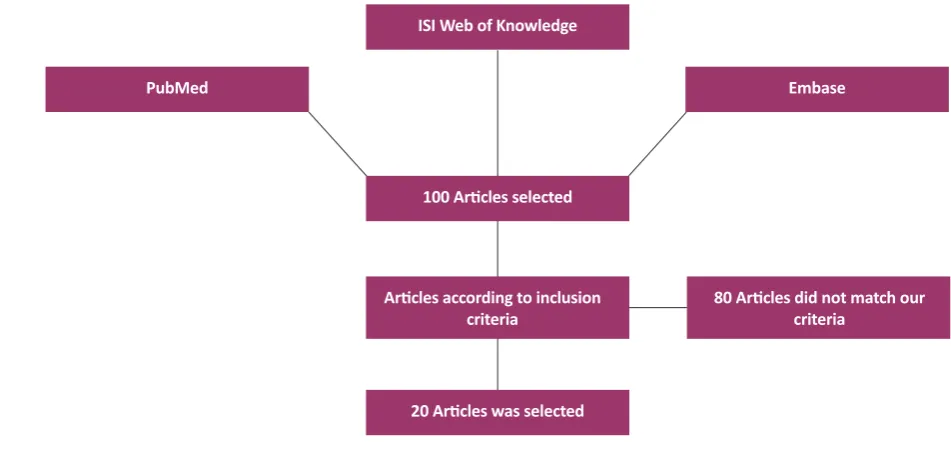
This article must have examined different types of hear-ing loss among infants and children aged below 8 years. The article selection method used in this paper is shown in Figure 1.
3. Results
Based on the key words listed, 100 articles were ini-tially found. But finally, only 20 studies were chosen for final review that suited the needs of this research. Table 1
summarizes the methodology, the details of the subjects, and the results of the chosen studies.
4. Discussion
The age of the child in the first intervention program of communication is a crucial factor in determining the rate of language acquisition. However, children with profound hearing loss achieved good speech-language skills if they received cochlear implants at a very young age along with verbal communication applications [22].
This shows that using hearing aids at a young age is an important factor in the development of speech and lan-guage skills in hearing-impaired children.
Figure 1. Article selection chart
ISI Web of Knowledge
100 Articles selected
20 Articles was selected Articles according to inclusion
criteria 80 Articles did not match our criteria
Several studies have compared the age of detection and intervention and have shown that children with hearing loss who were diagnosed at 2 to 6 months of age have language development at par with children with the same chronological age. Children who were diagnosed after 6 months showed significant language delay compared to the normal population. The age at which the child undergoes intervention is also an important factor in predicting expressive language, understanding, discernment, listening, and speech pro-duction scores. The lack of significant differences in language scores in children who had been diagnosed at an age of 7 to 12, 13 to 18, 19 to 24, and 25 to 30 months showed that the identification of hearing loss between 7 to 30 months of age had no significant ef-fects on Language Quotient [32, 37].
According to reported studies, diagnosing hearing loss in children before the age of 6 months can improve the process of speech and language development skills, mak-ing their development similar to children with normal development. Also, there may be other different vari-ables that may affect vocabulary development, speech and language skills of children with hearing loss. Such variables include parent participation in the intervention program, using sign language at home, intelligence, and no use of hearing aids.
Family participation, degree of hearing loss, and cog-nitive abilities significantly predict language outcome
[22]. As the maternal communication skills provides an important predictor for language growth, early reading skills and social-emotional growth. Children with moth-ers who showed better communication skills with them had more speaking and reading scores and less behav-ioral problems [36]. Ching et al. reported that the educa-tional level of parents of children with hearing loss has significant effects on language output [33]. The greatest progress was seen in children whose families had the highest level of participation in the early intervention program. In addition, limited involvement of the family led to delayed language development in children aged 5 years [24]. Therefore, the involvement of parents in training programs can be very effective in improving the language scores of children with hearing loss.
Studies have shown that parental stress increases behav-ioral problems and issues in speech production in hearing-impaired children. Therefore, parent’s stress should be rec-ognized and controlled for optimum intervention program to be carried out [30-32]. Moreover, family-based training programs can be more effective and efficient in controlling parent’s negative factors like anxiety and stress.
The communication system of parents with child hav-ing hearhav-ing loss was another variable that was examined in many studies. Researchers have shown that there is a negative relationship between the use of sign language at home and vocabulary knowledge in reading. Thus, chil-dren who use sign language received lower input in oral language and therefore, had low vocabulary knowledge in reading [20]. It seems that reducing the use of sign language and using verbal language by parents may im-prove the growth of child’s language skills.
Redsea (1995) evaluated the effect of early intervention on speech, language and auditory functions of young hearing-impaired children. In this study, he stated that the children’s function in speech production has a signif-icant relationship with the level of child’s hearing loss, but the language scores was not significantly related to the level of hearing loss. The onset age of early interven-tion was also related with language scores such that a child’s score in language assessment was higher when the intervention starts earlier [21].
In general, studies have shown that vocabulary develop-ment in hearing-impaired children is stable over time. In addition to the age of children at intervention and the role of parents, other factors such as educational status, use of sign language in the home, intelligence, use of hearing aids, and hearing impairment starts, may also cause differ-ences between the hearing-impaired children and normal children [23,33]. Therefore, it is essential to consider the age of receiving hearing aids and parental involvement in intervention as the most important factors in children’s education and designing treatment programs.
5. Conclusion
and frustration, especially in mothers, by showing suc-cessfully treated cases and improvement in child prog-ress on opting for appropriate treatment.
The above studies considered in this paper answer three important questions: 1) When hearing begins? 2) Whether the outcome of an early intervention outcome is the same for all hearing loss severities? 3) Can the re-sults of these interventions be generalized to that of other language disorders?
Intervention should begin at an age of less than 6 months, especially during fetal life. The answer to the second question plays an important role in speech and language development theories and the importance of hearing in them. And if the interventions in this popula-tion of children can be implemented in all children at risk, one comprehensive communication early interven-tion protocol can be achieved. These three cases them-selves require very precise study and the need for them is felt especially inside our country as well.
Acknowledgments
This research did not receive any specific grant from funding agencies in the public, commercial, or not-for-profit sectors. The author wishes to thank Mr. Moham-mad Amin Modareszadeh and Mr. Mohsen Shekari for their help in writing this paper.
Conflict of Interest
The authors declared no conflicts of interest.
References
[1] Northern JL, Downs MP. Hearing in children. Philadelphia: Williams & Wilkins; 2002.
[2] Stewart TM. The relationship of attitudes and intentions to
behave to the acquisition of fluent speech behaviour by stam -merers. International Journal of Language & Communication Disorders. 1982; 17(2):3-13. doi: 10.3109/13682828209012215 [3] Calderon R. Parental involvement in deaf children’s
edu-cation programs as a predictor of child’s language, early
reading, and social-emotional development. Journal of Deaf Studies and Deaf Education. 2000; 5(2):140-55. doi: 10.1093/ deafed/5.2.140
[4] Foroughan M, Movallali G, Salimi M, Asad-Malayeri S. [The
effectiveness of a group counseling program on the mental health of parents of hearing impaired children (Persian)].
Au-diology. 2006; 15(2):53-60.
[5] May-Mederake B, Shehata-Dieler W. A case study assessing the auditory and speech development of four children im
-planted with cochlear implants by the chronological age of 12 months. Case Reports in Otolaryngology. 2013; 2013:1-10. doi:
10.1155/2013/359218
[6] Uus K, Bamford J. Effectiveness of population-based new -born hearing screening in England: Ages of interventions and
profile of cases. Pediatrics. 2006; 117(5):887-93. doi: 10.1542/
peds.2005-1064
[7] Fung PC, Chow BWY, McBride-Chang C. The impact of a
dialogic reading program on deaf and hard-of-hearing
kin-dergarten and early primary school-aged students in Hong
Kong. Journal of Deaf Studies and Deaf Education. 2005; 10(1):82-95. doi: 10.1093/deafed/eni005
[8] Lim LH. A multidisciplinary approach to paediatric hearing
loss: programme at the centre for hearing intervention and
language development, National University Hospital, Singa
-pore. Annals of the Academy of Medicine Singa-pore. 2008;
37(12):57-3. PMID: 19904451
[9] Amiri M, Ghoochani Z, Haghighizadeh MH, Nilehchi Z. [Neonatal hearing screening program in Ahvaz, Southern
Iran (Persian)]. Audiology. 2014; 22(4):69-77.
[10] Frisch SA, Pisoni DB. Modeling spoken word recognition
performance by pediatric cochlear implant users using fea
-ture identification. Ear and Hearing. 2000; 21(6):578-589. doi:
10.1097/00003446-200012000-00005
[11] Muma J, Perigoe C. Professional preparation: Developing language in children with hearing loss. The Volta Review. 2010; 110(2):179-190.
[12] Movallali G, Dousti M, Abedi-Shapourabadi S. The effec-tiveness of positive parenting program (triple P) on mental health of parents of hearing impaired children. Journal of
Ap-plied Environmental and Biological Sciences. 2015;
5(5S):286-90.
[13] Yoshinaga-Itano C. Principles and guidelines for early in
-tervention after confirmation that a child is deaf or hard of
hearing. Journal of Deaf Studies and Deaf Education. 2013; 19(2):143-157. doi: 10.1093/deafed/ent043
[14] Ball J. Early intervention & autism: Real-life questions,
real-life answers. Arlington: Future Horizons; 2008.
[15] Brown-Levey S. The role parents play in deaf children’s
language and communication skills development. New York: State University of New York; 2004.
[16] Fantuzzo J, McWayne C. The relationship between
peer-play interactions in the family context and dimen -sions of school readiness for low-income preschool
chil-dren. Journal of Educational Psychology. 2002; 94(1):79-87.
doi:10.1037//0022-0663.94.1.79
[17] Rasinski T, Stevenson B. The effects of fast start reading:
a fluency-basedhome involvement reading program, on the reading achievement of beginning readers. Reading Psychol
-ogy. 2005; 26(2):109-25. doi: 10.1080/02702710590930483
[18] Evans H. Technological early intervention tools for families
of children with hearing loss: Parental learning preferences
[PhD thesis]. Minneapolis:Walden University; 2008.
[19] Nicholas JG, Geers AE. Effects of early auditory experi
-ence on the spoken language of deaf children at 3 years of
[20] Young A, Gascon-Ramos M, Campbell M, Bamford J. The
design and validation of a parent-report questionnaire for
as-sessing the characteristics and quality of early intervention
over time. Journal of Deaf Studies and Deaf Education. 2009; 14(4):422-35. doi: 10.1093/deafed/enp016
[21] Ingber S, Dromi E. Actual versus desired family-centered
practice in early intervention for children with hearing loss.
Journal of Deaf Studies and Deaf Education. 2010; 15(1):59-71. doi: 10.1093/deafed/enp025
[22] Sarant JZ, Holt CM, Dowell RC, Rickards FW, Blamey PJ.
Spoken language development in oral preschool children with permanent childhood deafness. Journal of Deaf Studies and Deaf Education. 2008; 14(2):205-217 doi: 10.1093/deafed/ enn034.
[23] Coppens KM, Tellings A, van der Veld W, Schreuder R,
Verhoeven L. Vocabulary development in children with hear
-ing loss: The role of child, family, and educational variables.
Research in Developmental Disabilities. 2012; 33(1):119-28. doi: 10.1016/j.ridd.2011.08.030
[24] Moeller MP. Early intervention and language development
in children who are deaf and hard of hearing. Pediatrics. 2000; 106(3):1-9. doi: 10.1542/peds.106.3.e43
[25] Holzinger D, Fellinger J, Beitel C. Early onset of family cen
-tred intervention predicts language outcomes in children with
hearing loss. International Journal of Pediatric Otorhinolaryn
-gology. 2011; 75(2):256-60. doi: 10.1016/j.ijporl.2010.11.011
[26] Meadow-Orlans KP, Steinberg AG. Effects of infant hear-ing loss and maternal support on mother-infant interactions
at 18 months. Journal of Applied Developmental Psychology.
1993; 14(3):407-26. doi: 10.1016/0193-3973(93)90017-p
[27] Meinzen-Derr J, Wiley S, Choo DI. Impact of early inter
-vention on expressive and receptive language development among young children with permanent hearing loss. Ameri -can Annals of the Deaf. 2011; 155(5):580-91. doi: 10.1353/ aad.2011.0010
[28] Yoshinaga-Itano C, Mah-Rya LA. Identification of hearing
loss after age 18 months is not early enough. American Annals
of the Deaf. 1998; 143(5):380-7. doi: 10.1353/aad.2012.0151
[29] McGowan RS, Nittrouer S, Chenausky K. Speech produc
-tion in 12-month-old children with and without hearing loss. Journal of Speech, Language, and Hearing Research. 2008; 51(4):879-88. doi: 10.1044/1092-4388(2008/064)
[30] Harrigan S, Nikolopoulos TP. Parent interaction course in order to enhance communication skills between parents and children following pediatric cochlear implantation.
In-ternational Journal of Pediatric Otorhinolaryngology. 2002;
66(2):161-6. doi: 10.1016/s0165-5876(02)00243-4
[31] Vohr B, St Pierre L, Topol D, Jodoin-Krauzyk J, Bloome
J, Tucker R. Association of maternal communicative
behav-ior with child vocabulary at 18–24months for children with congenital hearing loss. Early Human Development. 2010;
86(4):255-60. doi: 10.1016/j.earlhumdev.2010.04.002
[32] Topol D, Girard N, Pierre LS, Tucker R, Vohr B. The ef
-fects of maternal stress and child language ability on behav -ioral outcomes of children with congenital hearing loss at
18–24months. Early Human Development. 2011;
87(12):807-11. doi: 10.1016/j.earlhumdev.2087(12):807-11.06.006
[33] Ching TY, Crowe K, Martin V, Day J, Mahler N, Youn S, et
al. Language development and everyday functioning of chil
-dren with hearing loss assessed at 3 years of age. International Journal of Speech-Language Pathology. 2010; 12(2):124-31.
doi: 10.3109/17549500903577022
[34] Watkin P, McCann D, Law C, Mullee M, Petrou S,
Ste-venson J, et al. Language ability in children with permanent hearing impairment: The influence of early management and family participation. Pediatrics. 2007; 120(3):e694-e701. doi:
10.1542/peds.2006-2116
[35] Geers AE, Moog JS, Biedenstein J, Brenner C, Hayes H.
Spoken language scores of children using cochlear implants
compared to hearing age-mates at school entry. Journal of
Deaf Studies and Deaf Education. 2009; 14(3):371-85. doi: 10.1093/deafed/enn046
[36] Swanepoel D, Störbeck C, Friedland P. Early hearing de
-tection and intervention in South Africa. International
Jour-nal of Pediatric Otorhinolaryngology. 2009; 73(6):783-6. doi:
10.1016/j.ijporl.2009.01.007
[37] Yoshinaga-Itano C. From screening to early identifica
-tion and interven-tion: Discovering predictors to successful
outcomes for children with significant hearing loss. Journal