FRIDAY 19 APRIL 2013
1. Are sulphonylureas still relevant in an incretin world?
IW CampbellSulphonylureas (SUs) were first introduced into clinical practice in 1956, and have contributed to the management of type 2 diabetes mellitus for more than 50 years. SUs, which act quickly, were initially considered to be the most effective class of oral hypoglycaemic agents. Although the occurrence of hypoglycaemia is not negligible with SUs, severe episodes requiring third party intervention are uncommon. Mortality that is due to SU-induced hypoglycaemia is rare.
Adhering to the prescribing guidelines for SUs in the context of renal and hepatic impairment, especially patients over 70 years of age, minimises the risk of SU-induced hypoglycaemia, as does avoiding restricted carbohydrate intake at times of anorexia. To further reduce the risk of SU-induced hypoglycaemia, the concomitant use of potentiating drugs, such as salicylates and warfarin, should be considered.
Theoretical and animal data have raised the possibility of adverse cardiac events caused by some SUs, especially glibenclamide, through impairment of ischaemic pre-conditioning. However, no reliable clinical evidence associates SUs with an increased cardiovascular risk.
The long-term safety of multiple diabetes therapies has been shown in several prospective trials: United Kingdom Prospective Diabetes Study (UKPDS), A Diabetes Outcome Progression Trial (ADOPT), Action to Control Cardiovascular Risk in Diabetes (ACCORD) and Diabetes Mellitus Insulin-Glucose Infusion in Acute Myocardial Infarction 2 (DIGAMI 2), the four-year follow-up to DIGAMI. The possible side-effects of incretin-based therapies, such as immunosuppression on exocrine pancreatic pathology, thyroid C-cell hyperactivity and skin lesions, has still not been fully evaluated and therefore needs to be fully assessed.
The low cost of SUs, compared with incretins, such as glucagon-like peptide- (GLP)-1 based therapies, plays an important role in keeping SUs in the prescribing guidelines for healthcare professionals in health services where resources are limited. Therefore, SUs should retain their position as second-line drugs of choice, after metformin, in the treatment of type 2 diabetes mellitus.
2. Effect of a multi-disciplinary approach in the treatment
of type 2 diabetes mellitus
G Makan, Z Bayat, A Arumugam, E Henning Division of Endocrinology, Helen Joseph Hospital
Background: Management of type 2 diabetes mellitus is often suboptimal, possibly because of over-reliance on physician-driven care, which fails to address psycho-social and lifestyle factors that are necessary to improve control. We prospectively studied the effect of a multi-disciplinary team approach on several determinants of outcome in type 2 diabetes mellitus.
Method: Participants were recruited from a diabetic outpatient department and followed-up for five months. Of 18 participants initially recruited, 14 (77.8%) completed the study course. A multidisciplinary team consisting of a physician, nurse, physiotherapist, dietitian, podiatrist and social worker reviewed each participant on a monthly basis and provided speciality-based education and intervention. Body mass index (BMI), random hemo gluco test (HGT), and blood pressure (BP) were measured at the start of the intervention and on study completion. Change in parameters was analysed using the Wilcoxon matched pairs test. P-value < 0.05 was considered to be significant.
Results: Reduction in haemoglobin A1c (HbA1c) was observed in 92% of participants. The change in HBA1c was statistically significant (p-value = 0.007). Possibly as a result of the short duration of this study, this reduction was below the CTID recommended target. Fifty-five per cent of participants showed nonstatistically significant improvement in random HGT (p-value = 0.51). Systolic BP improved nonsignificantly in 72% (p-value = 0.45). Diastolic BP improved nonsignificantly in 73%
48th Congress of the Society for Endocrinology, Metabolism
and Diabetes of South Africa (SEMDSA) and
(p-value = 0.11). Sixty-four per cent improved BMI nonsignificantly (p-value = 0.68).
Conclusion: A multi-disciplinary team approach may assist in improving HbA1c in type 2 diabetes mellitus. This approach may also be of benefit in improving random HGT, BMI and BP. A multidisciplinary team approach is a useful means to improve management of type 2 diabetes mellitus.
3. To compare control in a group of insulin-requiring
patients with type 2 diabetes mellitus before and after
the implementation of specialist supervised care
SA Bhana, K Huddle, R ShiresChris Hani Baragwanath Academic Hospital, Faculty of Health Sciences, University of the Witwatersrand
Objectives: To measure the differences, if any, in parameters of control, i.e. HbA1c, total cholesterol (TC), BP and BMI in a single group of patients with type 2 diabetes mellitus before and after specialist supervised care. Secondly, to describe differences in the use of antiplatelet and statin therapy as primary cardiovascular prophylaxis.
Method: Patients were recruited from the diabetes clinic at Chris Hani Baragwanath Academic Hospital. The audits were conducted between two periods. The first recorded standard of care delivered by registrars from January 2005 to December 2007. The second recorded care by the specialist supervised clinic was from September 2009 to September 2012. The patients were all insulin-requiring and were seen for 24 months in both audit periods. The first recorded HbA1c in each period marked the start of the 24-month assessment period. It was necessary for 80% of parameters to be available for the patients to be included. This meant that of the 506 patients seen in 2005, 136 patients were assessed. The remainder of patients either had insufficient data, were lost to follow-up, or were transferred to local clinics.
Results: The average duration of diabetes was 14.7 years at the start of audit 1. Both periods showed a significant improvement in HbA1c, but the second had a 2.17% drop in HbA1c (p-value = 0.0001). Between periods 1 and 2, HbA1c fell significantly from 9.59 ± 2.39% to 8.39 ± 1.3% (p-value = 0.0001). 30% vs. 17.6% of patients achieved a HbA1c < 7%. There was also a significant fall in systolic blood pressure (SBP), but not diastolic blood pressure (DBP). 29.7% vs. 21.3% achieved a SBP < 130 mmHg. TC and BMI did not change.
Conclusion: This study uncovered a difference in levels of care delivered by an endocrinologist-supervised clinic versus registrars, with the greatest benefit seen in HbA1c and the percentage of patients achieving the guideline goals.
4. Understanding the numbers: limitations of assays
PJ TrainerThe Christie NHS Foundation Trust, Wilmslow Road, Manchester, United Kingdom
The practice of clinical endocrinology is premised on the ability to accurately measure hormones as the criteria for diagnosis. The goals of therapy are frequently based on biochemistry. The improvement in outcomes in a plethora of conditions is a consequence of the improved performance of immunoassays that allow earlier diagnosis and more stringent treatment targets. The refinements in assay methodology include automation, the use of nonisotopic reporters, improved antibody specificity, lower limits of detection and smaller inter- and intra-assay coefficients of variation. In parallel to the
improvement in hormone measurement, there has also been a move towards practice driven by adherence to consensus guidelines, which implies the adoption into local practice of internationally defined consensus cut-off criteria. However, it must be recognised that all assays have limitations. A free thyroxine (T4) and thyroid-stimulating hormone (TSH) within the stated reference range does not exclude TSH deficiency, and a low serum cortisol does not automatically mean hypoadrenalism as corticosteroid-binding globulin deficiency can result in low-serum total cortisol, but normal free, biologically active, cortisol. In Cushing’s patients on metyrapone therapy, cross-reactivity of 11-deoxycortisol in conventional cortisol assays may result in spuriously high-serum cortisol and a failure to appreciate if a patient is overtreated and hypoadrenal. The performance of growth hormone (GH) assays have improved according to some criteria, but according to others, their clinical applicability has deteriorated: for example, the bias between different commercial assays has increased. In other words, the reported value for a given sample can vary greatly depending on the assay methodology, a factor rarely considered in consensus criteria published on the diagnosis of GH deficiency or goals of therapy for acromegaly, but may impact on an individual’s eligibility for a treatment such as GH replacement therapy. The comparison of data between insulin-like growth factor-1 (IGF-I) assays, and therefore the use of consensus cut-offs, is greatly limited by the lack of a common reference material, and in some cases, the absence of well validated, age-related reference ranges. In summary, a clinical endocrinologist needs to combine clinical acumen, access to a good laboratory and a thorough understanding of the characteristics of the assays that are employed.
5. The determinants of non-alcoholic fatty liver disease in
South African females
NH Naran, M Haagensen, NJ Crowther Department of Chemical Pathology, NHLS
The School of Pathology of the University of the Witwatersrand The Department of Radiology, Donald Gordon Medical Centre, Johannesburg
Objective: Non-alcoholic fatty liver disease (NAFLD) is the most common hepatic pathology in industrialised countries. However, this disease has been little studied in Africa. Therefore, the aim of our study was to investigate the anthropometric and metabolic characteristics of African, Indian and European subjects, with varying levels of hepatic triglyceride (TG) deposition.
Method: Indian (46), African (29) and European (28) female volunteers were recruited. Fasting blood lipid, insulin and glucose levels were measured. Insulin resistance was quantified using the homeostatic model assessment (HOMA) method. Computed tomography (CT) scans were used to measure hepatic lipid deposition [using the liver-to-spleen attenuation ratio (LAR)] and visceral and subcutaneous fat volume. Subjects were divided into tertiles based on LAR. Physical activity was assessed using an activity monitor (Sensewear® PRO
2,
Bodymedia).
tertile 3, to 47.6 (38.2) in tertile 2, and 66.6 (71) in tertile 1 (p-value = 0.005 for trend). HOMA showed a similar trend (p-value = 0.005).
Conclusion: This data demonstrates that high hepatic levels of lipid are more prevalent in Indian, than African subjects, and that NAFLD is characterised by insulin resistance.
6. Light intensity physical activity and cardiorespiratory
fitness are independently associated with reduced body
fat and metabolic risk factors in black South African
women
K Dickie, S Chantler, LK Micklesfield, EV Lambert, J Evans, CL Jennings, Y Joffe, JH Goedecke
UCT/MRC Research Unit for Exercise Science and Sports Medicine Objective: To examine the independent effects of cardiorespiratory fitness, physical activity and sedentary time on body composition and metabolic risk factors in black South African women.
Method: In an apparently healthy sample of black South African women (n = 76, 34 ± 7 years), accelerometry was used to measure physical activity and sedentary time (minutes/week), whereas cardiorespiratory fitness (VO2 maximum, kg/ml/minute) was measured during a submaximal step test. Body composition (dual-energy X-ray absorptiometry and computerised tomography), BP, fasting glucose, insulin and lipid concentrations were also measured.
Results: Irrespective of the high proportion of women who were overweight or obese (96%), more than half of the women met physical activity global recommendations for health [World Health Organization (WHO), 2010] (n = 42, 55.3%), and the goal of ≥ 10 000 steps/day (n= 39, 51.3%). Greater light physical activity and steps/ day, but not moderate to vigorous physical activity were associated with lower central fat mass (r = -0.25, p-value < 0.05 and r = -0.31, p-value < 0.01, respectively). Less sedentary time was associated with higher lipid levels, independent of body fat. Higher cardiorespiratory fitness was associated with reduced body fat percentage (r = -0.34, p-value < 0.05) and central fat mass (r = -0.31, p-value < 0.05), as well as improved insulin sensitivity (HOMA insulin resistance, r = -0.41, p-value < 0.01), independent of body fat, physical activity and sedentary time, but not visceral adipose tissue. Cardiorespiratory fitness was inversely associated with sedentary time (r = -0.31, p-value = 0.03) and not with any of the physical activity variables (p-value > 0.05).
Conclusion: Both physical activity and cardiorespiratory fitness levels were important in improving body composition and metabolic risk in a sample of apparently healthy black South African women. Promoting increasing daily light physical activity while reducing sedentary time should be encouraged to reduce levels of obesity and metabolic risk factors.
7. Ethnic differences in n-6 polyunsaturated fatty acid
metabolism and the association with inflammatory gene
expression
JH Goedecke,1,2 D Bast,2 U Risérus,3 T Olsson4 1South African Medical Research Council 2University of Cape Town, South Africa 3Uppsala University, Sweden 4Umea University, Sweden
Previously, we demonstrated that black South African women have a greater subcutaneous adipose tissue (SAT) inflammatory profile than white women. We hypothesise that this may be associated with the intake and metabolism of polyunsaturated fatty acids (PUFA),
specifically the proinflammatory n-6 PUFA, arachidonic acid (AA). AA levels are dependent on dietary intake and metabolic processing of precursor linoleic acid (LA) by the activity of desaturase enzymes. The aim of the study was to compare serum fatty acid composition and desaturase enzymes between black and white South African women. Serum fatty acid composition and gluteal SAT inflammatory gene expression were measured in 60 black and white South African women. Although LA tended to be higher (57.7 ± 4.4 vs. 55.9 ± 3.7, p-value = 0.079) in black compared to white women, its metabolites, γ-linolenic acid (GLA) (GLA, 0.70 ± 0.29 vs. 0.89 ± 0.31, p-value = 0.015) and dihomo-γ-linolenic acid (DGLA) (DGLA, 0.67 ± 0.14 vs. 0.76 ± 0.15, p-value < 0.001) were lower, while AA (9.2 ± 1.8 vs. 7.9 ± 1.4, p-value = 0.004) was higher. These differences may be explained by lower δ6 desaturase ( D6D, 0.012 ± 0.006 vs. 0.016 ± 0.006, p-value = 0.017), which catalyses the conversion of LA to GLA, and higher D5D (D5D, 14.1 ± 2.8 vs. 10.6 ± 2.9, p- value < 0.001), which catalyses the conversion of DGLA to AA, in black compared to white women. Lower LA, and higher DGLA and AA levels were associated with increased SAT expression of the inflammatory cytokine, tumour necrosis factor-α (LA: r = -0.49, p-value = 0.007; DGLA: r = 0.51, p-value = 0.005; AA: r = 0.39, p-value = 0.03) in black, but not white women. In conclusion, we showed ethnic differences in the metabolism of n-6 PUFA, with increased conversion of LA to AA in black, compared to white women, that was associated with increased SAT inflammatory profile. These findings have implications for disease risk. It is suggested that ethnic-specific dietary recommendations are considered.
8. Longitudinal changes in body composition and its
relation to metabolic outcomes in black South African
women
S Chantler, K Dickie, LK Micklesfield, EV Lambert, J Evans, CL Jennings, Y Joffe, JH Goedecke
UCT/MRC Research Unit for Exercise Science and Sports Medicine, Department of Human Biology, Faculty of Health Sciences, University of Cape Town
Objective: To investigate changes in body composition and regional fat distribution over a 5.5-year period and its association with metabolic outcomes in black South African women.
Method: Changes in body composition (dual-energy X-ray absorptiometry and computerised tomography), BP, fasting glucose, insulin, lipid levels and lifestyle factors, including socio-economic status, dietary intake and physical activity, were measured in 66 black South African women at baseline (27 ± 8 years) and after a 5.5-year period.
Conclusion: In a sample of black South African women, increases in central fat mass were associated with reduced insulin sensitivity, and may in part be due to excessive energy intake. Women who were younger and who had a lower BMI were at greater risk of gaining body weight. They should be the focus of future interventions.
9. Cardiovascular risk factors across body mass index
categories in adults residing in Bellville South, South
Africa
Y Yako, AP Kengne, RT Erasmus, TE Matsha Cape Peninsula University of Technology
Objective: To determine the distribution of obesity phenotypes and assess their association with subclinical cardiovascular disease (CVD) in mixed-ancestry South Africans.
Method: The study was conducted cross-sectionally in 339 adults (men 24.5%) recruited from the Bellville South community in Cape Town. Participants were stratified for BMI (in kg/m2) as normal weight
(< 25), overweight (25 to < 30) and obese (≥ 30), and for metabolic status as healthy or abnormal in the presence of < 2, or ≥ 2 of the following: BP ≥ 130/85 mmHg or known hypertension, diabetes mellitus or fasting blood glucose ≥ 5.6 mmol/l, TG > 1.69 mmol/l or high-density lipoprotein (HDL) cholesterol < 1.02 mmol/l in men or < 1.29 in women. Subclinical vascular status was based on echographical common carotid intima-media thickness (CIMT) and cardiac interventricular septum thickness (IVS).
Results: Within BMI subgroups, there was a less favourable CVD risk profile among metabolically abnormal versus healthy individuals. At least one diabetic individual was present in all subgroups, but the prevalence was the highest in metabolically abnormal obese individuals (43.6%). Similarly, hypertensive individuals were present in all BMI categories, with the highest prevalence (50.8%) observed in metabolically abnormal obese individuals. Metabolically abnormal, normal-weight individuals had the highest mean TC (> 6.1 mmol/l) and low-density lipoprotein (LDL) cholesterol (> 3 mmol/l). Median CIMT was higher in the metabolically abnormal, normal weight and overweight individuals (p-value = 0.033 and 0.014, respectively), while the IVS was higher only in the metabolically abnormal overweight individuals (p-value = 0.0001).
Conclusion: The clustering of cardiometabolic abnormalities was frequent across the BMI categories in this population, with only borderline effects on markers of subclinical CVD.
10. The Global Attitudes of Patients and Physicians 2
™(GAPP2
™) survey finds that patients with type 2 diabetes
mellitus using insulin analogue worry about self-treated
hypoglycaemia in South Africa
A Murphy, L Pemba, M Brod
Netcare Sunward Park Hospital, South Africa Novo Nordisk, South Africa
The Brod Group, Mill Valley, California, United States of America
Background: The Global Attitudes of Patients and Physicians 2 (GAPP2™) survey investigated the insulin-taking behaviour of patients on basal analogue insulin. We report on the frequency and impact of self-treated hypoglycaemia in patients with type 2 diabetes mellitus from South Africa.
Method: South African data from 75 patients on insulin analogue and 100 prescribers were compared with data from 3 042 patients
and 1 222 prescribers from six other GAPP2™ countries (USA, Canada, Japan, UK, Germany and Denmark).
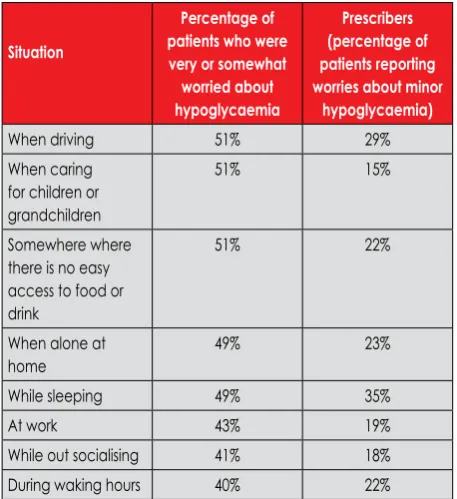
Results: Of the South African patients, 37% had experienced hypoglaceamia, while one in 10 (10%) recalled having hypoglaceamia in the preceding 30 days (versus 36% for other countries). Nineteen per cent had it at night. At least 40% of South African patients worried about experiencing hypoglaceamia on a daily basis, compared to 23% in other countries. However, South African prescribers reported lower levels of worry from their patients by at least 14 percentage points in given daily situations (Table I). Forty-one per cent of South African prescribers had not discussed hypoglycaemia with their patients in the last 30 days. More insulin analogue patients from South Africa have missed a basal insulin dose than those in other countries (35% vs. 5%, p-value ≤ 0.001) (when responding to the last episode of hypoglycaemia). In addition, 9% reported to have reduced a basal insulin dose and 35% to have increased the level of glucose monitoring.
Conclusion: Hypoglycaemia is less common in South African patients than it is in patients in other GAPP2™ countries, but worry and insulin-dose adjustments in response to hypoglycaemia warrant further discussion and education from prescribers in order to address these concerns. The GAPP2™ surveys were supported by a grant from Novo Nordisk.
Table I: Patient worry abouthypoglycaemia and prescriber-reported patient worry
Situation
Percentage of patients who were very or somewhat worried about hypoglycaemia
Prescribers (percentage of patients reporting worries about minor
hypoglycaemia)
When driving 51% 29%
When caring for children or grandchildren
51% 15%
Somewhere where there is no easy access to food or drink
51% 22%
When alone at home
49% 23%
While sleeping 49% 35%
At work 43% 19%
While out socialising 41% 18%
During waking hours 40% 22%
11. The association between health-related quality of life
and some indicators of severity and control in patients
with type 2 diabetes mellitus
R Daya, FJ Raal, Z Bayat Helen Joseph Hospital University of Witwatersrand
The objectives were:
• To determine the health-related quality of life of a sample of patients with type 2 diabetes mellitus.
• To describe the demographics (age, gender, smoking pack history over the years and number of alcohol units consumed per week) of the population being studied.
• To document the following parameters which are important in determining the control and severity of type 2 diabetes: glycosylated HbA1c, the patient’s total amount of insulin required per day (if on insulin therapy), BMI and exercise compliance. • To ascertain whether or not there is an association between any
or all of the above parameters and the health-related quality of life of these patients.
• To determine the presence of any co-existing diseases and to compare health-related quality of life of patients with diabetes mellitus, with and without co-existing diseases, such as hypertension and dyslipidaemia.
Method: This was a prospective clinical audit, cross-sectional in nature, and a descriptive study of patients attending the Helen Joseph Hospital Diabetic Clinic from June to September 2012. The study population was a sample of 200 patients with type 2 diabetes mellitus who routinely attended the diabetic clinic. Each patient was given a
Diabetes-39 questionnaire which was then analysed in conjunction
with data from the patients’ files. No incentives were offered for participation. The patients were not discriminated against if they refused to participate. The questionnaire captured demographic variables such as age, gender, age of diagnosis, marital status, exercise regimen, employment status, living arrangements, smoking and alcohol habits, height, weight, as well as diabetes-specific variables, such as concurrent use of antihypertensive medication and/or cholesterol-lowering drugs. The patients’ files were then analysed and various diabetic parameters (HBA1c, lipogram, weight, height, number of insulin units used per day and whether or not there was any concurrent use of oral hypoglycaemic agents) were noted.
Results: Results have shown there to be an association between HBA1c and health-related quality of life. Furthermore, there was an association between health-related quality of life and hypertension and dyslipidaemia. No association was found between health-related quality of life and other clinical parameters, such as number of insulin units used per day, exercise, BMI, lipogram and the use of oral hypoglycaemic agents. Demographic parameters, including age, gender, age at diagnosis, employment status and living arrangements, were also shown to have no impact on health-related quality of life in this study. No association was found between health-related quality of life in patients who consumed alcohol and cigarettes and those who didn’t.
12. Eat less, move more: if it’s so simple to fight the obesity
epidemic, why are we not winning?
WM Macfarlane
University of Brighton, United Kingdom
The WHO has classified obesity as one of the major threats to human health in the 21st century. Twelve per cent of the world’s population
are now classified as obese, with 1.7 billion people at risk of weight-related illness. Increases are particularly remarkable in children and young adults, and in low- and middle-income countries. Globally, in 2010, the number of overweight children under the age of five was estimated to be over 42 million, with 35 million of these living in
developing countries. So what causes obesity? In the simplest terms, healthy metabolism is maintained through a careful balance of consumed and expended calories. In reality, genetics, metabolism, behaviour, environment, culture and socio-economic status all play a role in the loss of that balance, which leads to obesity. While global guidelines on diet and exercise are reportedly well understood, implementation has met with mixed success. The ready availability of low-cost, high-fat, high-sugar foods and drinks continues to create a toxic metabolic environment. At the same time, physical inactivity is now identified as the fourth leading risk factor in global mortality: a staggering statistic. So how can the obesity epidemic be combatted? Success may lie in multidisciplinary, culturally relevant approaches to diet, exercise and lifestyle. Individual responsibility can only have its full impact when people have access to all the tools, information and support that they need to make healthy choices. Eat less, move more: it sounds so simple. We will explore why we are not currently winning the battle and will introduce emerging new strategies aimed at turning the tide.
13. Phenotypic and genotypic characterisation of type 1
diabetes mellitus in black South African patients
CJ Padoa,1 P Rheeder,2 NJ Crowther11Department of Chemical Pathology, NHLS, University of the
Witwatersrand, South Africa
2Division of Clinical Epidemiology, University of Pretoria, South Africa
The age at diagnosis of type 1 diabetes is higher in black, than white, South African subjects. Furthermore, in a previous study we showed that there are two subgroups of type 1 black patients with diabetes based on age at diagnosis, One group is diagnosed in their mid-teens and the second group in their early 20s. Therefore, we compared the genetic and phenotypic characteristics in black South African patients with type 1 diabetes mellitus with an early (≤ 20 years, n = 131, group 1) and late (> 20 years, n = 103, group 2) age at diagnosis. Anthropometric measurements were taken, glutamic acid decarboxylase (GAD) 65 and IA2 autoantibody titres measured and genotypes determined by PCR-restriction fragment length polymorphism analysis for five type 1 diabetes susceptibility genes (PTPN22, CTLA4, INS, ZnT8 and GAD65). There was no significant difference in gender, duration of disease or family history between the two groups. However, there was a statistically significant difference in autoantibody positivity. Group 1 had a higher positivity rate for both autoantibodies [GAD65: 77.1% vs. 52.4% (p-value < 0.0001), IA2: 28.2% vs. 8.7% (p-value < 0.0002)]. No differences were found in the allelic frequencies of the type 1 diabetes susceptibility gene single-nucleotide polymorphisms that were studied. These data demonstrate that these two groups of patients with type 1 diabetes can be distinguished by differences in autoimmune components of the disease process. This warrants further research to fully characterise possible differences in disease aetiology.
14. Demographic and laboratory characteristics of children
newly diagnosed with diabetes from 2005-2009 at Red
Cross War Memorial Children’s Hospital
AM Botes, M Carrihill, K Reichmuth, H Cararra
University of Cape Town, Red Cross War Memorial Children’s Hospital
secondary to another illness, and neonatal diabetes was excluded. Method: A retrospective folder review was carried out of newly diagnosed diabetics younger than 14 years old at the age of diagnosis. Two hundred and twenty-five patients were included for analysis. Results: Fifty-eight per cent of the patients were female and most of the patients were diagnosed with type 1 diabetes. The average age at diagnosis was 9.1 years, with an average HbA1c of 11.3%. Sixty-eight per cent of the patients fell into the normal weight category. 8.44% of patients fell into the obese category. One hundred and forty-eight (65%) of the 225 patients presented with diabetic ketoacidosis. Fifty-one (22.67%) of the patients were less than four years old at the time of diagnosis. Fifty-three per cent of the Caucasian children were younger than four years old at diagnosis, while most of the children in the black and coloured group were diagnosed after the age of 10 years. Conclusion: Almost a quarter of children with diabetes presented before the age of four years. Caucasian children presented earlier than those of other ethnicities. A large proportion of patients presented with diabetic ketoacidosis, which can be life- threatening. This calls for increased awareness among physicians and parents to recognise symptoms earlier.
15. Predictors of glycaemic control in children and
adolescents with type 1 diabetes, as indicated by
haemoglobin A
1clevels in a population of patients from
the Red Cross Children’s Hospital Diabetes Clinic
S Murless, C JanariUniversity of Cape Town
Objective: This cross-sectional interpretive study aimed to determine the predictors of glycaemic control, as measured by glycated HbA1c, in children, adolescents and young adults with type 1 diabetes. It also aimed to assess whether the Diabetes Clinic at the Red Cross Children’s Hospital was achieving the treatment goal set by the International Society of Pediatric and Adolescent Diabetes (ISPAD) guidelines on HbA1c ≤ 7.5%, and its own target HbA1c levels of < 8% for pre-schoolers and < 7% for schoolchildren.
Method: The clinical records of patients attending the Red Cross Children’s Hospital Diabetes Clinic for outpatients from 1 July 2011 to 30 June 2012 were reviewed. The following clinical and demographic parameters were recorded and analysed: HbA1c, gender, age, age at time of diagnosis, duration of diabetes, language, income class, residential postal code and number of clinic visits in the one-year period.
Results: In the analysed population (n = 250, 138 females and 112 males), the median age was 13 years (a range of 10-15.75 years). The overall mean HbA1c value for the study sample was 9.6% [standard deviation (SD) = 1.74%] and the overall median HbA1c value was 9.29% (8.50-10.69). Gender was not a predictor of glycaemic control and there was not a strong association between HbA1c and number of clinic attendances. However, there was a downward trend in HbA1c, with increased number of visits. High mean HbA1c correlated significantly with older age, a longer duration of diabetes, later onset thereof, lower income class, Xhosa speakers and further distance of residence from the hospital (p-value < 0.05).
Conclusion: Glycaemic control in youth with type 1 diabetes is affected by various patient-related and treatment-related factors. The Diabetes Clinic at the Red Cross Children’s Hospital is not achieving its HbA1c treatment goals. Changes in healthcare delivery, by means of targeting these influential factors, are required.
16. Screening for hypothalamic-pituitary-adrenal axis
suppression in children with asthma is not possible when
employing clinical and biochemical parameters
EW Zollner,1 CJ Lombard,2 U Galal,2 SF Hough,3 EM Irusen,4 E Weinberg5 1Paediatric Endocrinology, University of Stellenbosch, TygerbergChildren’s Hospital, Cape Town
2Biostatistics Unit, Medical Research Unit, Cape Town 3Endocrinology, University of Stellenbosch, Tygerberg Hospital,
Cape Town
4Allergy Unit, University of Stellenbosch, Tygerberg Hospital, Cape Town 5Lung Institute, University of Cape Town, South Africa.
Objective: It is impractical to test asthmatic children for hypothalamic-pituitary-adrenal axis suppression (HPAS) with dynamic adrenal function tests. To determine which parameter is the most useful screening test for HPAS.
Method: One hundred and forty-three children with asthma were recruited. Height velocity, weight velocity (WV), height SD score, weight SD score, and change in SBP from supine to standing, were recorded. Early morning urinary free cortisol (UFC), morning serum cortisol (C), adrenocorticotropin hormone (ACTH) and dehydroepiandrosterone sulphate (DHEAS) were collected. UFC was expressed as a ratio of creatinine excretion and as a ratio of body surface area. A metyrapone (MTP) test was performed if the 08h00 C was > 83 nmol/l. Spearman correlation coefficients (r) were calculated between the post-MTP ACTH, 11-deoxycortisol (11DOC), 11DOC+C, and each variable. Diagnostic statistics were calculated.
Results: All screening variables correlated weakly with the three PMTP outcomes. Only DHEAS and UFC (nmol/m2) were statistically
significant . DHEAS for PMTP, ACTH and 11DOC (r = 0.20, p-value = 0.025, r = 0.21, p-value 0.017); UFC (nmol/m2) for PMTP, 11DOC and
11DOC+C (r = 0.19, p-value = 0.033, r = 0.20, p-value = 0.022). The area under receiver operating characteristic (ROC) curve for DHEAS in the 5-9 year age group was 0.69 (CI: 0.47-0.92). At DHEAS cut-off of 0.2 mmol/l: sensitivity = 0.88, specificity = 0.61, positive predictive value = 0.37, negative predictive value = 0.95, accuracy = 0.67, positive likelihood ratio = 2.26 and negative likelihood ratio = 0.20.
Conclusion: No parameter is useful as a universal screening test. DHEAS may be suitable to exclude HPAS before adrenarche.
17. Screening for thyroid disease in pregnancy: what’s the
evidence and what to do
SJ Mandel
Perelman School of Medicine, University of Pennsylvania, Philadephia, United States of America
Society and the American Thyroid Association. Serum free T4 levels decrease throughout gestation and changes are assay-specific. Measurement of total T4 is more robust and reflects a 50% increase over the nonpregnant reference range.
In retrospective case series, overt maternal hypothyroidism has been associated with adverse maternal outcomes. Evidence-based Endocrine Society, American Thyroid Association and Cochrane guidelines recommend levoxthyroxine (LT4) treatment based upon standard practice. Six large, epidemiological, population-based observational studies have failed to confirm a consistent association with poor gestational outcomes as have been suggested by earlier retrospective small studies for subclinical hypothyroidism, Furthermore, two recent prospective randomised controlled studies evaluated screening for maternal thyroid dysfunction at the end of the first trimester and reported no effect on either obstetrical outcomes or the cognitive development of the offspring. The negative findings of these studies have been potentially attributed to late timing of the intervention and to a milder degree of maternal hypothyroidism in these cases, compared to those in the retrospective reports.
Based upon available data, universal screening for thyroid dysfunction cannot be recommended either before or during pregnancy by the Endocrine Society, American Thyroid Association or Cochrane. In addition, with the absence of prospective data that demonstrate the effectiveness of LT4 therapy for subclinical maternal hypothyroidism, treatment can only be recommended and justified based upon the low risk of therapy. Lastly, although all three guidelines recommend targeting case findings by measuring thyroid function in women at high risk of thyroid disease, they acknowledge that there are insufficient or low-quality data to support this recommendation.
SATURDAY 20 APRIL 2013
18. So we think we know how to treat Graves’ disease
AD ToftSpire Hospital, Edinburgh, Scotland
Of the three treatments of the hyperthyroidism of Graves’ disease: antithyroid drugs, iodine-131 and surgery, each is effective, but none is perfect. Increasingly radioiodine is regarded as the primary therapy of choice in people older than 20 years of age, accepting that permanent hypothyroidism is the outcome in the great majority. Thyroid surgeons now advocate total thyroidectomy to manage Graves’ disease. This radical approach is justified because it removes all coincidental microfoci of papillary carcinoma (not a common problem) and the desire to avoid recurrent hyperthyroidism (which it does not). It is unwise to advocate vigorous treatments which almost always result in thyroid failure when there is no consensus about the correct dose and form of thyroid hormone replacement. It is also incorrect to consider patients with Graves’ disease as cured when the outcome is the substitution of hyperthyroidism with hypothyroidism.
Physicians have been reluctant to advise more than one course of antithyroid drugs, but for no obvious reason. If the drug is tolerated and the patient compliant, there is no contraindication to relatively long-term treatment, e.g. 5-10 years, if there is recurrence after the initial course of 12-18 months. At least with an antithyroid drug, the hypothalamic-pituitary-thyroid axis remains intact, and unlike the patient who is treated with iodine-131 or surgery, there are no anxieties about whether a suppressed serum TSH concentration is a sign of overtreatment with LT4, and a risk factor for atrial fibrillation and osteoporosis.
19. Biology or technology: stem cells, transplants and the
artificial pancreas project
WM Macfarlane
University of Brighton, United Kingdom
Recent improvements in the success of islet transplantation therapy for the treatment of type 1 diabetes have provided critical proof of principle that cell replacement therapy can allow liberation from insulin injections and freedom from hypoglycaemia in patients with type 1 diabetes mellitus. However, while transplant protocols continue to improve, donor availability and the prospect of lifelong immunosuppression continue to drive the need for alternative sources of insulin-producing cells. Exciting advances in stem cell biology have recently been coupled with innovative three-dimensional tissue engineering strategies to generate functional insulin-producing cell clusters from naïve, starting cell populations. Do stem cells offer a realistic alternative to donor islet material in cell replacement therapy for type 1 diabetes mellitus? Or could technology alone provide an effective alternative treatment? The Artificial Pancreas Project aims to combine programmable insulin pumps with continuous glucose-monitoring systems to generate a closed-loop system that allows automated control of blood glucose levels in patients with type 1 diabetes. Since the publication of the Juvenile Diabetes Research Foundation Artificial pancreas roadmap in 2009, exciting progress has been made, with recent successful hospital studies now being expanded to diabetes camps and at-home trials. The ultimate aim of all the approaches discussed here is to provide safe and effective glucose-responsive insulin release, mimicking normal pancreatic beta-cell function as closely as possible and providing improved glycaemic control, free from the burden of daily insulin injections. Will biology or technology provide the answer?
20. Mechanism of exenatide-induced hypoglycaemic
effect in an animal model of type 1 diabetes
E Adeghate,1 M Lotfy,1 J Singh21Department of Anatomy, Faculty of Medicine and Health Sciences,
United Arab Emirates University, Al Ain, United Arab Emirates
2Department of Biological Sciences, University of Central Lancashire,
Preston, United Kingdom
The dysfunction of pancreatic β cells leads to diabetes mellitus and hyperglycaemia. Exenatide (1 μg/kg body weight), a GLP-1 agonist, was administered intraperitoneally to normal and diabetic Wistar rats daily, for two-and-a-half months. Diabetes mellitus was induced by a single intraperitoneal injection of streptozotocin (60 mg/kg). A similar amount of phosphate buffered solution was given to control rats. Exenatide-immunoreactive cells were seen in the outer region of the islets of Langerhans of normal rats. However, exenatide-immunopositive cells were discerned in both the peripheral, as well as central, compartments of the pancreatic islets of diabetic rats. The number of exenatide-immunoreactive cells increased significantly after the onset of diabetes. Exenatide induced large and significant (p-value < 0.001) increases in the number of insulin, catalase- and glutathione-immunopositive cells in pancreatic islets. In conclusion, exenatide may contribute to increased pancreatic β-cell mass by enhancing endogenous pool of antioxidants, which may in turn help in the survival of pancreatic β cells after the onset of diabetes mellitus. The increased antioxidant pool may contribute to an exenatide-induced hypoglycaemic effect in experimental diabetes mellitus.
21. Islet immunity and beta-cell reserve of black South
African patients with ketoacidosis at the initial diagnosis
of diabetes
C Ekpebegh, B Longo-Mbenza, E Blanco-Blanco
Walter Sisulu University, Nelson Mandela Academic Hospital, Mthatha
Objective: To classify patients with ketoacidosis at the first manifestation of diabetes using markers of islet immunity and β-cell reserve.
Method: A prospective study of black South African patients admitted into Nelson Mandela Academic Hospital, Mthatha, between 2010 and 2012, with ketoacidosis as the first manifestation of diabetes. Islet immunity was assessed using anti-glutamic acid decarboxylase 65 (AGAD 65) antibody, while β-cell reserve was assessed using the serum C-peptide response to intravenous injection of glucagon. Positive- and negative-serum AGAD 65 antibody levels were levels ≥ 5 units/l (A+) and < 5 units/l (A-) respectively. Replete (β+) and deplete (β-) β-cell reserve were serum C-peptide taken six minutes after an intravenous injection of 1 mg glucagon of ≥ 0.5 ng/ml and < 0.5 ng/ml, respectively. Patients were subsequently categorised into any one of the following diabetes classes: A+ β- and A+ β+ (type 1A), A- β+ (type 2) and A- β-.
Results: Seventy-one patients were studied, of whom 38 were males. The majority of patients (46.5%) were A-β+. The proportions of patients with A+ β- and A+ β+ were 22.5% and 4.2% respectively. 26.8% of patients were A- β-. The A- β+ were older than older groups and also had higher proportions of patients with acanthosis nigricans, hypertension, increased waist circumference and obesity than the other groups.
Conclusion: The majority of our patients with ketoacidosis at thetinitial manifestation of diabetes had type 2 diabetes (A β+).
22. Defensive active coping and neural fatigue in Africans
and Caucasians with subclinical vascular disease risk:
the Sympathetic Activity and Ambulatory Blood Pressure
in Africans (SABPA) study
A de Kock,1 L Malan,1 M Hamer,2 NT Malan1
1Hypertension in Africa Research Team (HART), School for Physiology,
Nutrition and Consumer Sciences, North-West University, Potchefstroom Campus, Potchefstroom, South Africa.
2Psychobiology Group, Department of Epidemiology and Public Health,
University College London, 1-19 Torrington Place, London, WC1E 6BT, United Kingdom
Objective: Psychosocial stress and ethnic variations in coping responses have been associated with pathology. And so, in Africans (especially men), the defensive active coping response is a recognised cardiovascular risk. It is uncertain whether sympathetic dysfunction may be the underlying cause. Therefore, we investigated salivary 3-methoxy-4-hydroxyphenolglycol (MHPG), as an indicator of sympathetic neural activity, and the extent of subclinical vascular disease risk in defensive active coping Africans and Caucasians.
Method: The Coping Strategies Index questionnaire identified participants who preferably utilised defensive active coping. Twenty-four-hour ambulatory BP measurements were obtained, together with blood samples and saliva samples (analysed for MHPG levels with high-performance liquid chromatography). CIMT was calculated from ultrasound images as an indicator of subclinical vascular disease risk.
Results: Defensive active coping Africans (n = 143) showed overall poorer health than Caucasians (n = 148), with higher self-reported stress, alcohol abuse, hypertension, and diabetes risk (p-value ≤ 0.05). African women revealed lower levels of MHPG compared to Caucasian women, although no differences were established in men. Furthermore, Africans demonstrated a trend of increased low-grade inflammation and glycated haemoglobin associated with increased CIMT. In African men at high risk of subclinical vascular disease (n = 30), an inverse association was revealed between MHPG and CIMT [β = -0.22 (-0.40, -0.03)].
Conclusion: Novel findings revealed that Africans utilising defensive active coping are more vulnerable to subclinical vascular disease, possibly resultant from neural fatigue and sympathetic hypoactivity (decreased MHPG). When defensive active coping fails, sympathetic hyperactivity may be followed by neural fatigue and sympatho-adrenal-medullary desensitisation, resulting in pathology.
The authors declare no conflict of interest.
23. Reduced bioavailable insulin-like growth factor-1
is significantly linked to ambulatory blood pressure
in African men: the the Sympathetic Activity and
Ambulatory Blood Pressure in Africans (SABPA) study
AE Schutte, CMC Mels, W Smith, R Schutte, L Malan, HW Huisman, JM van Rooyen, CMT Fourie, NT Malan, R Kruger, E ContiHypertension in Africa Research Team (HART), North-West University, Potchefstroom, South Africa
Cardiovascular and Thoracic Department, Sapienza University of Rome, Italy
Objective: Insulin-like growth factor-1 (IGF-1)is regarded as a powerful vasoprotective agent because of its endothelial-protective, antiplatelet and antithrombotic activities. Reduced bioavailable IGF-1 concentrations, as a possible contributor to the high prevalence of hypertension in black populations, need to be thoroughly investigated. Therefore, we compared components of the IGF-1 axis of African and Caucasian men in terms of its association with ambulatory blood pressure and common carotid intima-media thickness (CIMT).
Design and method: We included African (n = 86) and Caucasian (n = 101) male school teachers and measured growth hormone (GH), total IGF-1, IGF binding protein-3 (IGFBP-3), and pregnancy-associated plasma protein-A (PAPP-A) levels.
Results: The ambulatory BP of African men was almost 10 mmHg higher than that of Caucasians (137/88 mmHg vs. 128/80 mmHg, p-value < 0.001), accompanied by a significantly unfavourable IGF-axis for all measured components (p-value < 0.001), including reduced bioavailable IGF-1 (IGF-1/IGFBP-3, p-value = 0.006) and tissue utilisation of IGF-1 represented by IGF-1/IGBP-3 PAPP-A (p-value < 0.001). Single, partial and multiple regression analyses confirmed a significant independent association between ambulatory SBP and bioavailable IGF-1 only in African men (R2 = 0.23, β = -0.21, p-value =
0.042). CIMT was similar in the ethnic groups (p-value = 0.34), and was only associated with bioavailable IGF-1 in Caucasian men prior to adjustment for γ-glutamyl transferase..
24. The contribution of diabetes mellitus to lower extremity
amputations in four public sector hospitals in Cape Town
for 2009 and 2010
NS Levitt, GL Dunbar, D Hellenberg
Faculty of Health Sciences, University of Cape Town
Objective: Globally, diabetes is the most common cause of nontraumatic lower-extremity amputations (LEAs), but there are sparse data from South Africa and Africa. The objective was to determine the contribution of diabetes to the burden of LEAs in the Cape Town metropole and describe the patients’ demographic characteristics, the causes and sites of LEAs, and length of hospitalisation.
Method: A retrospective analysis of LEAs was performed in four Cape Town public sector hospitals, from 1 January 2009 to 31 December 2010. Cases were identified from theatre registers and information was extracted from their clinical records using a data extraction form.
Results: There were 1 280 nontraumatic LEAs in 867 patients, 925 LEAs in 593 patients with diabetes (68.4%) and 355 LEAs in 274 non-diabetic patients (31.6%). The proportion of men and women in the diabetes group was similar (each 50%), but men were twice as common in the non-diabetes group (66 vs. 33%). Ulcers (25.3 vs. 15.3%) and infections (85.7 vs. 63.5%) were the dominant causes in the diabetic group, and ischaemia (23.7 vs. 49.3%) in the non-diabetic group (all p-value < 0.001). Duration of hospital stay was similar in the two groups (diabetes 10.6, 6.4 days; non-diabetes 10.7, 8.3 days, p-value = 0.7), but the diabetic group had more multiple admissions and multiple LEAs than the non-diabetic group (p-value < 0.005).
Conclusion: The rate of 8.9 LEA/week in people with diabetes is unacceptable. An integrated programme is urgently required to reduce the burden of this preventable complication of diabetes.
25. Low-serum testosterone levels in an urban, tertiary
diabetic population
T Kemp,1 P Rheeder2
1Endocrinology and Metabolism Unit, Department of Internal Medicine,
Steve Biko Academic Hospital, University of Pretoria
2School of Health Systems and Public Health, University of Pretoria
Background: According to the literature, low-serum testosterone levels are associated with diabetes mellitus. No or minimal data exist for its prevalence or predictors in South Africa.
Method: An observational, cross-sectional study was performed in 150 consecutive male patients with diabetes over the age of 50 years in the diabetic clinic at the Steve Biko Academic Hospital. These patients were evaluated for diabetes control and complications, the presence of erectile dysfunction and hypogonadism symptoms. Early morning serum testosterone levels were assessed. Subjects with low testosterone levels were compared to those with normal testosterone levels.
Results: Some degree of erectile dysfunction was reported in 95.3% of the patients, while 51.3% reported serious erectile dysfunction. The prevalence of androgen deficiency symptoms was 94.7%. Fifty per cent of the men had low total testosterone levels, 40.7% had low calculated bioavailable testosterone levels, and 27.3% had both low total and low calculated bioavailable testosterone levels. Variables univariately associated with low total testosterone were found to be the BMI, the waist circumference and the presence of known CVD. Using multivariate logistic regression, the only significant
factors were found to be waist circumference and known CVD. Univariate associations with a low calculated testosterone level were age, diabetes duration, BMI, waist circumference and known CVD. Following multivariate logistic regression, the remaining significant variables were found to be age, diabetes duration and BMI. Univariate associations for both low total and low calculated bioavailable testosterone levels were age, diabetes duration, hypertension duration, BMI, waist circumference and the presence of known CVD. After multivariate logistic regression, the significant factors were diabetes duration, BMI and known CVD.
Conclusion: This study confirms the high prevalence of low testosterone levels in male patients with diabetes in a tertiary setting, and argues in favour of universal or targeted screening of this population group.
26. Male hypogonadism in Addison’s disease : an
under-recognised problem
IL Ross, DJ Blom, NS Levitt, DH Haarburger Faculty of Health Sciences, University of Cape Town
Background: Male hypogonadism may complicate Addison’s disease, but the prevalence of testosterone deficiency in adult males with primary hypoadrenalism is unknown.
Method: Male patients older than 18 years of age, who were enrolled in the South African Addison’s disease national registry and who were clinically well, were screened for biochemical evidence of testosterone deficiency (early morning basal testosterone < 9.9 nmol/l). We also compared cardiovascular risk factors between eugonadal and untreated hypogonadal patients.
Results: Of the 42 males studied, 14 (33%) were hypogonadal (five previously diagnosed and nine newly diagnosed). The presence of testosterone deficiency did not relate to age, the duration of disease or the required hydrocortisone dose. The underlying causes of Addison’s disease for the hypogonadal group were autoimmune in 7 (50%), tuberculosis in 3 (21%), X-linked adrenal hypoplasia in 2 (14%). Two (14%) were idiopathic. None of the 14 hypogonadal subjects had antigonadal autoantibodies. Untreated hypogonadal subjects had a higher BMI compared to eugonadal subjects [29.4 kg/m2 interquartile range (IQR): 24.8-32.5 kg/m2 vs. 24.3 kg/m2, IQR:
22.6-26.7, p-value = 0.029], and a higher high-sensitive C-reactive protein (hsCRP)(5 mg/l IQR: 2.5-14 vs. 1.5 mg/l IQR: 0.6-2.8, p-value = 0.001), but there were no significant differences between the two groups with regard to TC, LDL cholesterol, HDL cholesterol, TGs or fasting glucose. Luteinising hormone (LH) and FSH did not differ between the groups. However, dehydroepiandrosterone sulphate was lower in the hypogonadal group (0.31 μmol/l, IQR: 0.27-0.37 vs. 0.75 μmol/l, IQR: 0.51-1.50, p-value = 0.005). Primary and probable secondary hypogonadism were diagnosed in 2 (22%) and 7 (78%) of the untreated hypogonadal group respectively.
27. Correlation of basal and timed responses to depot
adrenocorticotrophin hormone stimulation testing
ZD Stevens, B H Ascott-Evans, K Barnard, M ConradieDivision of Endocrinology, Tygerberg Academic Hospital and University of Stellenbosch
Objectives: The use of synthetic ACTH stimulation to identify patients at risk of secondary hypocortisolemia is well documented. A dynamic evaluation of the cortisol axis, using a depot preparation of ACTH, requires testing for more than eight hours. In a previous study, we showed a good correlation between 2-hour and 8-hour cortisol responses following ACTH stimulation. The aims of the present study were to investigate the correlation between the 1- and 8-hour responses, and to identify a baseline cortisol level above which
stimulation testing may not be required.
Method: Patients with suspected secondary hypoadrenalism were stimulated using an intramuscular injection of 1 000 μg of depot synthetic ACTH. Cortisol responses were evaluated at baseline, 1, 2, 6 and 8 hours. The correlation between 1-, 2- and 8-hour responses was investigated. Independent ROC analyses were performed on baseline and 8-hour responses in excess of 1 000, 900 and 800 nmol/l.
Results: Thirty-two patients were included. A good correlation between the 1- and 8-hour (r = 0.86, r2 = 0.74), and the 2- and 8-hour
(r = 0.91, r2 = 0.83) responses was found. Baseline cortisol values in
excess of 500 nmol/l rose to over 1 000 nmol/l at 8 hours [positive predictive value (PPV) = 100%]. If a peak value of over 900 nmol/l was used, then baseline values of above 280 nmol/l did not require ACTH testing (PPV) = 100%).
Conclusion: In this group, both 2- and 1-hour responses to depot ACTH stimulation showed very good correlation with the 8-hour response. The study identified a baseline cortisol level of above 280nmol/l that may predict sufficient adrenal reserve that does not require stimulation testing. This level requires further validation.
28. Retrospective analysis of acromegalics at Tygerberg
Hospital: preliminary data on early outcomes after
pituitary surgery
FH van Zyl, B Ascott-Evans, M Hoffmann, HB Hartzenberg, K Barnard, M Conradie
Division of Endocrinology, Faculty of Health Sciences, Tygerberg Academic Hospital, Stellenbosch University
Although pituitary tumours that cause acromegaly are benign, the increased morbidity and mortality associated with persistently elevated GH and insulin-like growth factor levels is significant. We present the short-term outcomes (tumour size reduction and change in GH levels) following pituitary surgery, for patients with acromegaly assessed in our unit between 2007 and 2012. Tumour volumes were calculated from magnetic resonance imaging (MRI). A random GH level < 1.0 ug/l represents biochemical control. Baseline and follow-up (3-6 months after surgery) results were compared. Twelve patients (seven women and five men) aged 25-66 years were included. Macroadenomas were reported on MRI in all patients, except one. Baseline pituitary volumes ranged from < 1-39.5 cm2 (median =
8.7 cm2 and mean = 15.35 cm2). Postoperatively, there was more
than a 65% reduction in tumour volume in 8 out of 10 patients (range = 0-13.4 cm2, median = 1.39 cm2, mean =3.14 cm2). Pre-treatment
GH levels were > 20 ug/l in seven of the 12 patients: range 2.65-48 ug/l (median = 30.8 ug/l and mean =27.3 ug/l). Postoperative biochemical control was documented in 25% of patients: GH range
0.2-40 ug/l (median = 8.5 ug/l and mean = 13.8 ug/l). The initial tumour size, as well as the degree of tumour invasion and GH elevation, were negatively correlated with biochemical control following surgical intervention.
SUNDAY 21 APRIL 2013
29. The management of differentiated thyroid carcinoma
AD ToftSpire Hospital, Edinburgh, Scotland
The incidence of thyroid cancer has increased almost threefold in the last 30 years, while mortality has been slowly decreasing. Much of the increase is attributable to the incidental finding of papillary microcarcinomas (less than 1 cm in diameter) during neck ultrasound for unrelated reasons. The extent of treatment of these incidentalomas is controversial, as it is for those found during surgery for benign nodular thyroid disease or Graves’ disease. Multiple foci or the presence of BRAF gene mutations may be an indication that more aggressive therapy is required. However, there is agreement that the treatment for cancers that are greater than 2 cm in diameter is total thyroidectomy with removal of any affected nodes, followed by iodine-131 remnant ablation and serial ultrasound examinations and serum thyroglobulin measurements to indicate remaining or recurrent disease. Stimulation with human recombinant TSH (thyrogen) is preferred to LT4 withdrawal for four weeks prior to ablative iodine-131, as it avoids the symptoms of hypothyroidism, but is relatively expensive. The thyrogen stimulation test may become redundant as assays for thyroglobulin become more sensitive, and it will be possible to predict a cure or recurrence on the basis of a single basal serum thyroglobulin measurement. The overall 10-year survival rates for middle-aged adults with differentiated thyroid carcinoma are approximately 90-95%. Complete responses can be expected in almost half of all young patients, even with distant metastases, but no significant fluoro-deoxy-D-glucose positron emission tomography.
30. The association of 25-hydroxyvitamin D and parathyroid
hormone with metabolic syndrome in two ethnic groups
in South Africa
JA George,1 SA Norris,2 HE van Deventer,3 NJ Crowther1
1Department of Chemical Pathology, National Health Laboratory Service
and University of the Witwatersrand
2MRC/University of the Witwatersrand Developmental Pathways
to Health Research Unit, University of the Witwatersrand 3Lancet
Laboratories, Auckland Park, Johannesburg
Objective: Alhough inconsistent, a number of studies have shown an association between 25-hydroxyvitamin D [25(OH)D] status, parathyroid hormone (PTH) and the metabolic syndrome. These have largely been carried out in Caucasians or black subjects living in high-income countries. There are no data on the relationship of 25(OH)D and PTH status with the metabolic syndrome in populations that are resident in Africa. The aim of this study was to evaluate if there was an association between either 25(OH)D or PTH with the metabolic syndrome in Africans or Asian Indians living in South Africa.
Method: We measured anthropometry, serum 25(OH)D and PTH levels and the components of the metabolic syndrome, plus related metabolic variables, in 374 African and 350 AsianIndian healthy adults from the greater Johannesburg metropolitan area.
metabolic syndrome had higher PTH than those without it (p-value < 0.0001), while 25(OH)D levels were not significantly different (p-value = 0.50). In multivariate analysis, 25(OH)D was not associated with any components of the metabolic syndrome. However, PTH was shown to be positively associated with SBP (p-value = 0.018) and DBP (p-value = 0.005) and waist circumference (p-value < 0.0001) and negatively associated with HOMA (p-value = 0.0008) levels. Logistic regression analysis showed that Asian Indian ethnicity [odds ratio (OR) 2.24; 95% CI: 1.57, 3.18, p-value < 0.0001) and raised PTH (OR 2.48, 95% CI: 1.01, 6.08, p-value = 0.04) produced an increased risk of the metabolic syndrome, but 25(OH)D did not (OR 1.25; 95% CI: 0.67, 2.24, p-value = 0.48).
Conclusion: After adjusting for age, gender and ethnicity, there was no significant association between 25(OH)D concentration and the metabolic syndrome. After adjusting for age, gender, ethnicity and 25(OH)D, a significant association remained between PTH concentration and the metabolic syndrome.
31. A survey of vitamin D Status in a northern suburbs’
practice in Johannesburg
K Roberg, S Bhana, N Govind
Chris Hani Baragwanath Academic Hospital, Johannesburg
Objective: Adequate vitamin D status is expected in individuals living in high sun-exposed areas, such as Johannesburg. However, worldwide reports indicate that despite seemingly adequate sun exposure, the rate of 25(OH)D deficiency is higher than expected. The aim of this study was to document the 25(OH)D status of a patient population in Johannesburg, a high sun-exposure area, and compare these levels across gender, race, age and co-morbidities such as hypertension, diabetes mellitus and dyslipidaemia.
Method: This retrospective study population consisted of 1 000 patients (adults and children) from a specialist practice in the northern suburbs, Johannesburg. Data were collected from the patients’ files. The mean age was 40 years, SD: 11.81. 71.4% of participants were female and 28.6% male. 2.4% were black, 21.8% Indian and 75.8% white. 25(OH)D was measured using the DiaSorin LIAISON® assay and deficiency levels were defined as: normal > 30 ng/ml, moderate 10.1-29.9 ng/ml and severe < 10 ng/ml.
Results: Mean serum 25(OH)D was 24.45 ng/ml. Using a cut-off of 30 ng/ml, 82.8% of participants were 25(OH)D-deficient. Reported results include comparison across gender, race, age and co-morbidities.
Conclusion: These data suggest that despite living in a city that is adequately exposes to sunlight, 25(OH)D deficiency is pervasive in Johannesburg. Reasons as to the causes should be probed and guidelines for vitamin D supplementation advised.
32. Haemboglobin A
1cfor the diagnosis of diabetes mellitus
in South Africa
M van Deventer, K Reddi Lancet Laboratories
Objective: The 2012 Society for Endocrinology, Metabolism and Diabetes of South Africa (SEMDSA) guidelines for the diagnosis of diabetes mellitus include an HbA1c value of > 6.5% as an alternative diagnostic tool for the diagnosis of diabetes mellitus. The aim of this study was to evaluate the appropriateness of this cut-off value in South Africa, as well as to evaluate the effect of human immunodeficiency virus (HIV) infection, renal dysfunction and anaemia on the relationship between glucose and HbA1c.
Method: The Lancet Laboratory database was used to identify all patients who had a glucose tolerance test between 1 January 2011 and 31 March 2012, and who had an HbA1c measurement available using the same request. For the same period, all patients who had a random glucose, HbA1c, HIV, creatinine or haemoglobin result were also identified. HbA1c measurements were obtained using the BioRad Variant II high-pressure liquid chromatography method.
Results: At the proposed HbA1c cut-off value of 6.5%, sensitivity for the diagnosis of diabetes mellitus was 84% (95% CI: 81.9-86) and specificity was 86.4% (95% CI: 84.8-87.9). Using ROC curve analysis, HbA1c for the diagnosis of diabetes mellitus had an area under the curve of 0.93 (95% CI: 0.92-0.94) (n = 3 304).Using multiple regression analysis, HIV infection, renal dysfunction and anaemia all had a statistically significant (p-value < 0.0001) effect on the relationship between random glucose and HbA1c. Random glucose (mmol/l) = -3.27 + 1.54 x HbA1c (%) + 0.53 x HIV status, where HIV status =1 if positive, and 0 if negative (n = 10 963). Random glucose (mmol/l) = -6.17 + 1.98 x HbA1c (%) + 3 x renal dysfunction, where renal dysfunction =1 if creatinine >120 μmol/l and 0 if creatinine < 120 μmol/l (n = 23 562). Random glucose (mmol/l) = -6.22 + 2.04 x HbA1c (%) + 2.54 x anaemia, where anaemia =1 if Hb < 8 and 0 if Hb > 8 (n = 23 040).
Conclusion: Maximum sensitivity and specificity using HbA1c for the diagnosis of diabetes melllitus in this population was obtained at a cut-off value of 6.5%. HbA1c appears to underestimate glucose in patients with HIV infection, renal failure and anaemia.
33. Lipid cut-off values indicating low and high
cardiometabolic risk in human immunodeficiency
virus-infected Africans
CMT Fourie, JM van Rooyen,1 HS Steyn,2 G Koekemoer,2 HW Huisman,1 R
Schutte,1 L Malan,1 W Smith,1 C Mels,1 AE Schutte1
1 Hypertension in Africa Research Team (HART); School for Physiology,
Nutrition, and Consumer Sciences
2 Statistical Consultation Services
Objective: South Africa is the country with the highest number of adults living with HIV infection in the world. Besides the traditional risk factors for CVD in the general population, there are specific factors in people living with HIV which could increase the risk of the development of CVD, namely chronic inflammation and metabolic changes (dyslipidaemia). This study proposes the identification of lipid cut-off values as being the most important risk factor for the development of CVD in a cohort of 140 HIV-infected black Africans from the North-West province.
Method: Anthropometric measures, SBP, DBP, heart rate and the carotid artery dorsalis pedis pulse wave velocity (cdPWV) were determined. Blood was analysed with appropriate methods to determine TC, HDL, LDL, TGs and glucose. ROC analysis were used to determine the optimum cut-off values (based on the Youden index) for the low- and high-risk HIV-infected participants to develop CVD for each of the selected variables.
Results: The TG:HDL ratio ≥ 1.49, TC:HDL ratio ≥ 5.4 and a HDL level ≤ 0.76 mmol/l, indicate a risk of the development of CVD in a cohort of black Africans living with HIV in the North-West province.