TECHNOLOGY INTEGRATION: A MIXED METHODS CASE STUDY
by
David James Mulder
A dissertation
submitted in partial fulfillment of the requirements for the degree of Doctor of Education in Educational Technology
Boise State University
DEFENSE COMMITTEE AND FINAL READING APPROVALS
of the dissertation submitted by
David James Mulder
Dissertation Title: Pre-Service Teachers’ Perceptions of their Abilities for Technology Integration: A Mixed Methods Case Study
Date of Final Oral Examination: 13 March 2017
The following individuals read and discussed the dissertation submitted by student David James Mulder, and they evaluated his presentation and response to questions during the final oral examination. They found that the student passed the final oral examination. Jesús Trespalacios, Ph.D. Chair, Supervisory Committee Patrick R. Lowenthal, Ph.D. Member, Supervisory Committee
Norm Friesen, Ph.D. Member, Supervisory Committee
iv
To Missy, Ethan, and Callie,
because I could not have completed the journey without your support.
v
First of all, I want to express my gratitude to the pre-service teachers I am privileged to serve at Dordt College, and particularly the ones who willingly agreed to participate in this study. I literally could not have completed this project without you!
This work could not have been accomplished without the help and support of my committee, Dr. Jesús Trespalacios, Dr. Patrick Lowenthal, and Dr. Norm Friesen. I am indebted to all of you gentlemen for helping to shape me as an academic and as a writer. Thank you, Jesús, for your willingness to serve as my program advisor and dissertation chair. Your mentorship and guidance throughout the process of developing this
dissertation have helped me clarify my own thinking. You have helped to give me confidence in my own abilities as a researcher and an academic, and your support has meant so much to me. Thank you, Patrick, for always pushing me to take the next step, for your encouragement to write throughout my doctoral work, and for the opportunity to write with you. Thank you, Norm, for your mentorship in developing my understanding the nature of qualitative research, and for serving as a model for the kind of writer I hope to continue to become. The combined wisdom and experience you three brought together as my committee have benefited me immensely, and you all have challenged and
encouraged me throughout the past few years.
I am thankful to Dr. Ross Perkins, program coordinator for the Ed.D. in
vi
encouragement at a critical moment. Thank you for your support, Ross.
Thanks to Dr. Gloria Stronks for keeping me after class one day in the summer of 2005 as a M.Ed. student. Your simple question of, “Have you ever thought about
teaching at the college level? You should!” caused me to re-envision my vocational calling. This word of encouragement started me on this path, and I am grateful that you named what you saw in me then, and how God has blessed me on this path.
I am so grateful for my fantastic colleagues at Dordt College who have been a constant source of encouragement and accountability for me throughout my doctoral studies. Thanks for listening to me go on and on about the things I have been learning, thanks for challenging me to take it to our students, and thanks for helping to cover some of my courses in this last semester, so I can finish well. I am grateful to be part of this outstanding group of Christian educators.
vii
Adam Young, Balmorhea, Color Therapy, Modest Mussorgsky, Rend Collective, Josh Garrels, MuteMath, The Accidentals, and Bethel Music. I highly recommend them for your listening pleasure.
viii
This case study was developed to understand pre-service teachers’ perceptions of their abilities to integrate technology into the classroom, and to understand their
perceptions of how those abilities developed. The case that was investigated in this study is the teacher preparation program at a small comprehensive college located in the upper Great Plains region of the United States. Utilizing a convergent parallel mixed-methods design, both a survey as well as semi-structured interviews provided data to understand pre-service teachers’ perceptions of their preparation for technology integration. The TPACK framework for technology integration (Mishra & Koehler, 2006) and self-efficacy theory (Bandura, 1986, 1997) were used as a theoretical framework for understanding pre-service teachers’ self-efficacy for technology integration.
The results of this study indicate that pre-service teachers generally feel
ix
teacher educators interested in fostering pre-service teachers’ abilities to integrate technology in the classroom.
x
DEDICATION ... iv
ACKNOWLEDGEMENTS ...v
ABSTRACT ... viii
LIST OF TABLES ...xv
LIST OF FIGURES ... xvii
LIST OF ABBREVIATIONS ... xviii
CHAPTER 1: INTRODUCTION ...1
Research Context ...2
Statement of the Problem ...3
Purpose of the Study ...5
Theoretical Framework ...6
The TPACK Framework ...7
Technology Self-Efficacy ...9
Research Questions ...10
Overview of Methods ...11
Significance of the Study ...12
Definition of Terms...13
Chapter Summary ...15
xi
The Teacher Prepaation Program: Fostering Technology Integration ...23
Teaching Technology Integration ...24
The Stand-Alone Technology Course and Alternatives ...25
Frameworks for Technology Integration ...27
The RAT Model ...28
The SAMR Model...29
Technology Integration Matrix ...31
The TPACK Framework ...32
Examining the TPACK Framework...35
The Development of the TPACK Framework ...37
The Structure of the TPACK Framework ...38
Debate about the Nature of the TPACK Framework ...40
Perspectives on the Role of TPACK as a Framework for Learning to Integrate Technology ...43
Summing Up the Role of the TPACK Framework ...47
Self-Efficacy and Technology Integration ...48
Teacher Beliefs and Technology Integration ...48
Bandura’s Self-Efficacy Theory and the Development of Self-Efficacy ..50
Technology Self-Eficacy and Technology Integration ...54
Linking TPACK and Technology Self-Efficacy...56
Positioning the Study within Self-Efficacy for Technology Integration ...60
Chapter Summary ...63
xii
Yin’s approach ...66
Stake’s approach ...66
Placing Myself in the Research ...66
Design of the Study ...68
Type of Case Study ...68
The Value of Mixed Methods in Case Study Research ...69
Selection of Participants ...70
Instrumentation ...74
Description of Survey ...74
Description of Semi-Structured Interviews ...75
Data Collection ...76
Program Document Review ...77
Survey ...78
Interviews ...79
Data Analysis ...80
Quantitative Analysis ...81
Qualitative Analysis ...81
Creating a Trustworthy Account of the Research ...83
Member Checking ...84
Triangulation ...85
Thick Description...85
xiii
Research Context ...88
Results of Program Review ...95
Description of Participants ...98
Survey Participants ...99
Interview Participants ...103
Data Analysis Procedures ...106
Survey Analysis ...106
Qualitative Analysis ...111
Presentation of Findings ...116
Finding 1: Pre-service teachers generally feel confident in their abilities to teach with technology, regardless of their gender, year in college, or major/endorsement area. ...117
Finding 2: Pre-service teachers feel a sense of pressure or expectation to be able to integrate technology into their teaching practices. ...125
Finding 3: Modeling effective technology integration is an important part of pre-service teachers developing the self-efficacy to integrate technology into their own teaching practices. ...131
Finding 4: Both formal and informal learning opportunities positively impact pre-service teachers’ confidence for working with technology. ..138
Finding 5: Technological knowledge is an important component for self-efficacy in technology integration, but pedagogical knowledge and content knowledge are also necessary. ...145
Finding 6: Pre-service teachers believe that a practical course in educational technology would help to prepare them to integrate technology in the classroom...152
Chapter Summary ...157
xiv
Research Question 1: Perceptions of Abilities for Technology
Integration ...160
Research Question 2: Origins of Abilities for Technology Integration ...162
A Final Piece to the Puzzle: Desire for a Technology Course ...167
Implications for Practice ...168
Promote Self-Efficacy ...169
Utilize the TPACK Framework for Structuring Learning Experiences ...170
Model Technology Integration ...172
A Plan of Action ...174
Limitations of this Study ...178
Recommendations for Further Research ...180
Conclusion ...181
REFERENCES ...183
APPENDIX A ...201
APPENDIX B ...211
xv
Table 1 Technology Integration Matrix ... 33
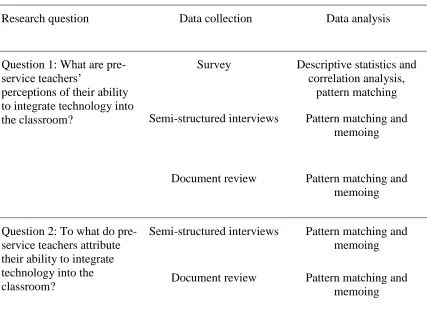
Table 2 Research questions and methods of data collection and analysis ... 71
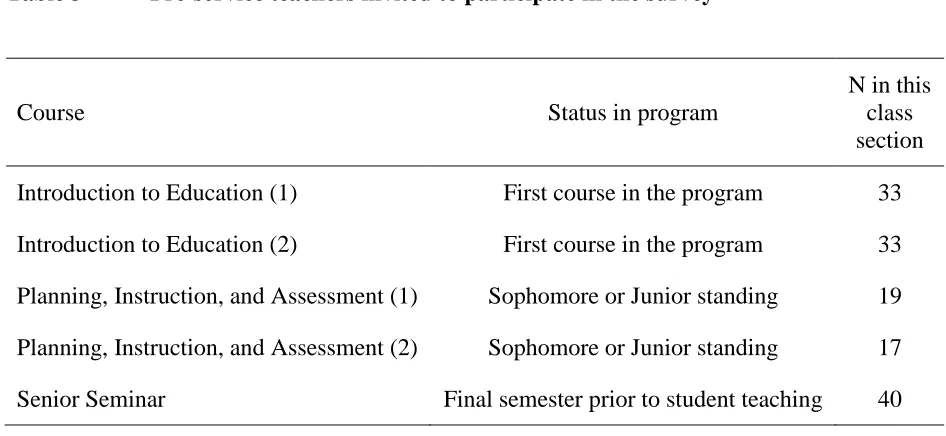
Table 3 Pre-service teachers invited to participate in the survey... 72
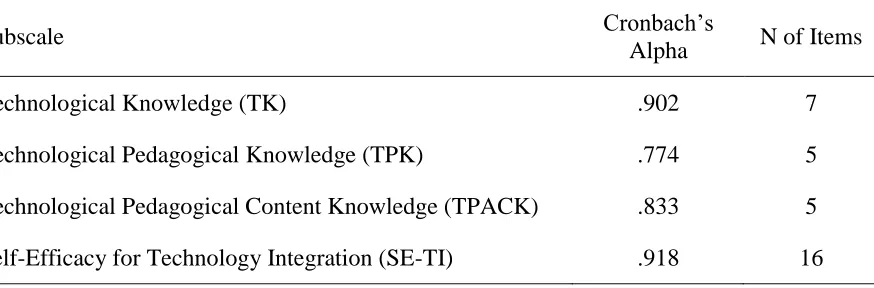
Table 4 Subscales of survey, including reliability statistics ... 75
Table 5 Data collection methods and timeline ... 77
Table 6 Pre-service teachers who completed the survey ... 99
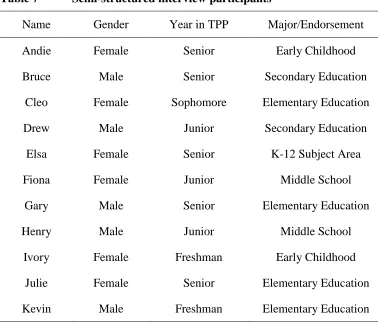
Table 7 Semi-structured interview participants ... 104
Table 8 Survey participants by gender... 107
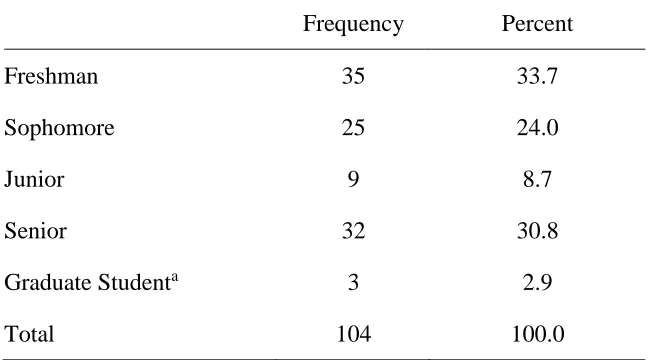
Table 9 Survey participants by year in the Teacher Preparation Program ... 107
Table 10 Survey participants by major or endorsement area ... 108
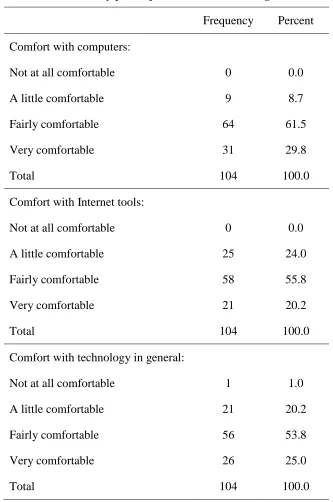
Table 11 Survey participants’ comfort working with various technologies ... 109
Table 12 Reliability statistics for survey subscales ... 110
Table 13 Descriptive statistics for survey subscales ... 110
Table 14 Correlations between demographic items and subscales ... 112
Table 15 Code categories and frequencies... 115
Table 16 Descriptive statistics for Gender comparison ... 121
Table 17 MANOVA results for Gender... 122
Table 18 Descriptive statistics for Class comparison ... 123
xvi
Table 21 MANOVA results for Major or Endorsement ... 125
Table 22 Mean scores for TK subscale by class grouping ... 147
Table 23 Comparison of subscale mean scores ... 148
xvii
xviii
CK Content Knowledge
PDS Professional Development School
PCK Pedagogical Content Knowledge
PK Pedagogical Content Knowledge
SE-TI Self-Efficacy for Technology Integration TCK Technological Content Knowledge
TK Technological Knowledge
TPK Technological Pedagogical Knowledge
TPACK Technological Pedagogical Content Knowledge
CHAPTER 1: INTRODUCTION
There are new challenges facing teachers today. One of these challenges is the steady increase of technology (e.g., computers, Internet) in schools over the past decade. The increasing amount of technologies present creates an additional burden for today’s teachers because there are concerns about how they will be used: What are the best ways to incorporate educational technologies that will positively impact student learning?
The presence of educational technologies has become the norm for today’s classrooms (Brown & Green, 2013; Ertmer, Ottenbreit-Leftwich, Sadik, Sendurur, & Sendurur, 2012; Gray, Thomas, & Lewis, 2010; Picciano, Seaman, & Allen, 2010). In fact, digital tools such as computers, tablets, digital projection systems, digital cameras, and the Internet are now considered “basic infrastructure” in K-12 schools (Ruggiero & Mong, 2015). Many schools are using or considering 1:1 technology programs to make student access to information and communications technologies (ICTs) readily available (Brown & Green, 2013; Hew & Brush, 2007). With this extensive and increased access to ICTs in schools, a cultural expectation has developed that technology-enhanced teaching will improve learning outcomes for students (Barreto & Orey, 2014; Hew & Brush, 2007; Koc & Bakir, 2010; Laferrière, Hamel, & Searson, 2013). Technology integration has therefore become basic job requirement for teachers in contemporary society (Lawless & Pellegrino, 2007; Ruggiero & Mong, 2015; Teo, 2011). Teachers are expected to be able to effectively integrate technology into the classroom from their first days in the
Research Context
The setting for this research is the Teacher Preparation Program at Dordt College, a private, comprehensive college located in the upper Midwestern United States. Dordt College enrolls approximately 1400 undergraduate students, and Education is the most popular major on campus with over 250 students studying in the Teacher Preparation Program. The program has multiple options, including 1) Elementary Classroom (all subjects), 2) Elementary Subject Area Specialist (art, music, physical education, Spanish, or special education), 3) Secondary Subject Area Specialist (with 20 different subject options), and 4) K-12 Subject Area Specialist (art, music, physical education, Spanish, or special education). Additionally, Education majors can choose to add other endorsements to these four major options, including options such as early childhood, middle school, English as a second language, many different subject area minors, and athletic coaching. While these different choices provide a range of pathways through the program, all Education majors take the same ten core courses, which is comprised of educational foundations, learning theory, diversity in education, general methods, educational psychology, and philosophy of education, among others. Notably absent in the curriculum, however, is a course in educational technology.
When the curriculum of the program was revised six years ago, the faculty determined that the Education major required too many credits. The faculty thus reduced the total number of credits that students needed to take by eliminating some courses. One of the courses eliminated through this process was “Media and Technology in
technology skills in isolation of their pedagogical context ineffective, an idea which has been borne out in the literature (see Kovalik, Kuo, & Karpinsky, 2013; Lambert & Gong, 2010). Second, different teachers need different kinds of technology knowledge and experiences (e.g., an early childhood educator would use very different technology tools than a high school history teacher.) Thus, the expectation was advanced that technology integration would be modeled and developed in all methods courses instead, to
demonstrate the connection between technology and pedagogy more clearly, and contextualized within different content areas.
Unfortunately, over the years, this goal of modeling and development of
technology integration skills in the methods courses has been inconsistent. One reason for this inconsistency is that different faculty members place varying degrees of importance on this aspect of teaching and learning in methods courses. Further, program assessment data also indicates that graduating seniors and recent graduates (with 1, 3, and 5 years of experience) rate their learning about educational technology relatively lower than other aspects of the program. Graduates specifically commented on their lack of preparation for teaching with technology. With the present cultural expectations of a high-technology classroom and technologically savvy novice teachers (see Davies & West, 2014; Ruggerio & Mong, 2015; Teo, 2011), this situation must be addressed.
Statement of the Problem
using technology (Gilakjani, 2013). Most pre-service teachers today are comfortable using technology in their personal lives, for communication, social networking, or entertainment (Bennett & Maton, 2010; Fluck & Dowden, 2013). They have not, however, had the experience of planning for and using educational technologies for teaching, or perhaps have never imagined how they might use technologies in the classroom (Kovalik et al., 2013). In fact, research indicates pre-service teachers are no better at integrating technology into their teaching than their more experienced colleagues (Ertmer et al., 2012; Pegler, Kollewyn, & Crichton, 2010).
technology, have a substantial impact on their decisions of whether or not to use an educational technology (Ertmer, 2005; Gilakjani, 2013; Southall, 2013).
Purpose of the Study
Teacher educators play an essential role in fostering pre-service teachers’ abilities to integrate technology and pedagogy (Ertmer & Ottenbreit-Leftwich, 2010; Southall, 2013). Many teacher preparation programs rely on a stand-alone technology course to demonstrate how to integrate technologies (Kay, 2006; Ottenbreit-Leftwich, Glazewski, & Newby, 2010). Too often though, these stand-alone technology integration courses often emphasize how to use the technologies, without making a connection to pedagogy or content areas (Wang & Chen, 2007). Research indicates that simply teaching how to use an educational technology without also emphasizing how to teach with it (i.e., the pedagogies involved) does not result in the meaningful integration of technology (Lawless & Pellegrino, 2007; Lambert & Gong, 2010; Mishra & Koehler, 2006).
Compounding the problem of helping pre-service teachers develop the skills and attitudes needed for technology integration is the fact that technologies for teaching and learning are ever-evolving (Barreto & Orey, 2014; Ertmer & Ottenbreit-Leftwich, 2010). Additionally, different schools and districts have different technologies available for teachers and students use. Because of these realities, it is impossible to prepare pre-service teachers fully for every technology they might encounter. Instead, as Ertmer (2005) advocated, programs must foster a sense of self-efficacy for technology
Southall, 2013). Research suggests that providing such opportunities for pre-service teachers as part of their teacher preparation program may be essential for developing their skills and attitudes for technology integration (Kay, 2006; Mishra & Koehler, 2006; Teo, 2011). To best prepare pre-service teachers for the demands of teaching with technology, teacher educators should definitely have a grasp of their students’ abilities to use
educational technologies, but this may not be enough. Knowledge of their self-efficacy for teaching with technology is also valuable, as this may be an important predictor of their abilities to effectively integrate technology (Abbitt, 2011; Ertmer & Ottenbreit-Leftwich, 2010).
Thus, the purpose of this study was to understand how pre-service teachers perceive the development of the knowledge, skills, and self-efficacy necessary for technology integration. The emphasis in this study was exploring how pre-service teachers express their technology self-efficacy. This case study is an investigation of the experiences of pre-service teachers studying the Teacher Preparation Program at Dordt College. In particular, this study seeks to understand to the opportunities pre-service teachers have to learn about technology integration, with the intention of strengthening the training and support for the challenging task of effectively integrating technology and pedagogy.
Theoretical Framework
The demands of effective technology integration are challenging for pre-service teachers (Gill, Delgarno, & Carlson, 2015; Kovalik et al., 2013; Sadaf, Newby, & Ertmer, 2016). In order to effectively integrate ICTs for teaching and learning, pre-service
knowledge, pedagogical knowledge, and technological knowledge. Pre-service teachers need to develop an understanding of how these different knowledge areas interact for effective technology integration to occur (Gill et al., 2015; Mishra & Koehler, 2006). This is further complicated by the fact that new technologies are constantly being developed or adapted for use in schools (Spector, 2016). Because of this, pre-service teachers must be lifelong learners, who are able to discover new technologies, explore the capabilities of these technologies, and evaluate their potential for teaching and learning (Ertmer & Ottenbreit-Leftwich, 2010; Fluck & Dowden, 2013). Self-efficacy theory can help explain how pre-service teachers think of their abilities to learn about new
technologies and teach with technology. Self-efficacy is a strong predictor for whether or not teachers will use technology in their teaching (Perkmen & Pamuk, 2011; Southall, 2013; Teo, 2009). Self-efficacy is a key part of self-directed learning (Zimmerman, 1995), which is essential for lifelong learning.
The TPACK Framework
In order to understand how pre-service teachers develop the self-efficacy needed for effective technology integration, a framework for understanding technology
integration is needed. In this study, I used the TPACK framework for technology
integration as a theoretical framework to investigate how pre-service teachers develop the knowledge and skills needed to integrate technology into their teaching practices.
framework as a means of describing the complex interrelationships between the technological knowledge, pedagogical knowledge, and content knowledge domains in effective technology integration. This framework draws on earlier work by Shulman (1986, 1987) about teacher knowledge domains, and incorporates technological knowledge into his Pedagogical Content Knowledge model (Koehler & Mishra, 2005; Mishra & Koehler, 2006).
The TPACK framework is comprised of three knowledge domains teachers need in order to effectively integrate technology into the classroom. First, technological knowledge is the domain of teacher knowledge comprised of understanding how to use various technologies. Second, pedagogical knowledge is the domain comprised of knowledge of teaching methods. Third, content knowledge includes knowledge of the subjects to be taught. The TPACK framework illuminates how these three teacher knowledge domains interact and overlap in effective technology integration (Koehler & Mishra, 2009, Mouza & Karchmer-Klein, 2013). Effective technology integration requires knowledge of how to use technologies, how to teach with them, and how to contextualize their use for learning particular content (Cox & Graham, 2009; Mishra & Koehler, 2006; Schmidt et al., 2009).
preparation program, this makes the TPACK framework a useful tool for describing and understanding how the different knowledge domains develop in pre-service teachers (Herring & Smaldino, 2015).
The TPACK framework is used widely in teacher preparation today for a variety of purposes (Voogt et al., 2013). Some researchers use TPACK to describe how
technology integration develops (Baran, Chuang, & Thompson, 2011; Koehler, Mishra, & Yahya, 2007; Pamuk, 2012). Others use TPACK as a way of organizing learning opportunities to foster technology integration (Koh & Divaharan, 2011; Mishra &
Koehler, 2006; Mouza & Karchmer-Klein, 2013). Still others use the TPACK framework to examine and explain teachers’ beliefs and decision-making about technology (Abbitt, 2011; Cox & Graham, 2009; Graham et al., 2012). In this study, the TPACK framework will be used as a theoretical framework to describe the knowledge and skills needed for technology integration. Specifically, the TPACK framework will be used to elaborate the technological knowledge held by pre-service teachers, and how it connects with their growing pedagogical knowledge within the context of the content areas they intend to teach, and thus how their skills for technology integration develop.
Technology Self-Efficacy
work (Klassen, Durksen, & Tze, 2014). With regard to technology integration, self-efficacy theory suggests that if teachers believe they are capable of using a particular technology for teaching and learning, they will be able to do so. Ertmer and her
colleagues, in particular, have focused their attention on the importance of self-efficacy for pre-service teachers learning to integrate educational technologies into their teaching practices (Ertmer, 2005; Ertmer & Ottenbreit-Leftwich, 2010; Sadaf, Newby, & Ertmer, 2016).
Technology is always changing. Therefore, developing Technological Knowledge may prove to be difficult for teachers. However, Ertmer and Ottenbreit-Leftwich (2010) suggested that developing self-efficacy could foster the attitudes needed for effective technology integration. Research suggests that teachers with higher self-efficacy view themselves as capable learners (Klassen, Durksen, & Tze, 2014), and that individuals with greater technology self-efficacy are more likely to use technology (Compeau & Higgins, 1995). Thus, self-efficacy theory was a key aspect in my theoretical framework for explaining pre-service teachers’ beliefs about technology integration. Understanding pre-service teachers’ technology self-efficacy will provide insight into the ways they approach learning to integrate technology (Abbitt, 2011; Sadaf et al., 2016; Southall, 2013).
Research Questions
The following questions guided this study:
RQ2: To what do pre-service teachers attribute their ability to integrate technology into the classroom?
Overview of Methods
This research study utilized a case study approach to describe pre-service teachers’ self-efficacy for technology integration. This case study comprises a single embedded design (Yin, 2013), examining the Dordt College Teacher Preparation Program as the unit of analysis. Participants were invited to participate purposefully, to ensure that a selection of students at different points in the program (i.e., both first year students, as well as students preparing to student teach, as well as students in the middle of their program), students with different majors (e.g., elementary education, secondary education), and both male and female participants. By purposefully inviting participants in this way, I was able to include a representative sample, as suggested by Creswell (2013).
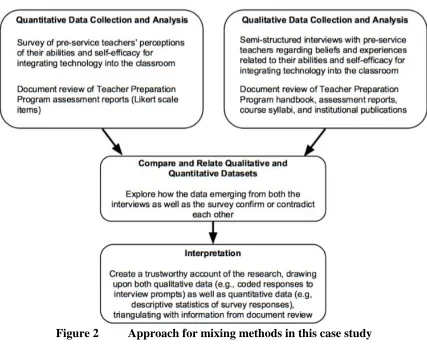
Using a convergent parallel mixed-methods design (Creswell, 2012; Guest, 2013), multiple methods of data collection were utilized to answer the research questions,
program assessment reports, provided corroborating sources of data. Course syllabi included explanations of how technology integration is modeled or explicitly taught by faculty members. Program assessment reports included results of an annual survey administered to all graduates of the teacher preparation program, and there are several items in this survey related to opportunities to learn about technology integration. All of these data were taken together to triangulate results from the findings and provide a “thick description” (Lincoln & Guba, 1985) of the current realities of preparing pre-service teachers for technology integration. A detailed explanation of the research methodology is described in Chapter Three.
Significance of the Study
have to develop the knowledge, skills, and self-efficacy needed for technology integration.
Bishop and Spector (2014) have noted, “the challenges for effective technology integration in learning, instruction, and performance are quite significant and the research is somewhat limited” (p. 817). In this light, this study adds a specific case to the literature on preparing pre-service teachers for technology integration. Many teacher preparation programs include a technology integration course (Kay, 2006; Ottenbreit-Leftwich, Glazewski, & Newby; 2010); the program at Dordt College is unique in that it does not currently include such a course. Thus, the outcomes of this study describe pre-service teachers’ experiences in learning to integrate technology into their teaching, how they acquired the necessary teacher knowledge domains (i.e., Technological Knowledge, Pedagogical Knowledge, and Content Knowledge), and how their self-efficacy for technology integration developed. This study is aimed at understanding how pre-service teachers learn to use educational technologies through their course work, and, more importantly, how they develop the ability to wisely integrate technology and pedagogy within their intended teaching context (i.e., specific content areas and grade levels.)
Definition of Terms
In this study, the following definitions for important terms will be used: Content Knowledge is knowledge about the subject matter to be learned or taught
(Mishra & Koehler, 2006).
Educational Technology is any tool used by an educator in the support of the processes
Pedagogical Content Knowledge is a teacher knowledge domain combining knowledge
of content and knowledge of the most effective pedagogies for teaching that content (Mishra & Koehler, 2006). Shulman (1986) described pedagogical content knowledge as, “the most regularly taught topics in one’s subject area, the most useful forms of
representation of those ideas, the most powerful analogies, illustrations, examples, explanations, and demonstrations—in a word, the ways of representing and formulating the subject that make it comprehensible to others” (p. 9).
Pedagogical Knowledge is a teacher knowledge domain comprised of “deep knowledge
about the processes and practices or methods of teaching and learning and how it encompasses, among other things, overall educational purposes, values, and aims” (Mishra & Koehler, 2006, p. 1026).
Self-Efficacy was defined by Bandura (1997) as “beliefs in one’s capabilities to organize
and execute the courses of action required to produce given attainments” (p.
3). Individuals with high levels of self-efficacy are able to put their knowledge and skills into action, believing that they will be successful.
Technological Content Knowledge is a teacher knowledge domain that encompasses
“knowledge about the manner in which technology and content are reciprocally related” (Mishra & Koehler, 2006). That is, the application of technology can impact a student’s understanding of the content, and also the way a student can come to understand the content may be directly shaped by the technologies.
Technological Pedagogical Knowledge is a teacher knowledge domain comprised of the
the application and use of technologies for teaching and learning (Mishra & Koehler, 2006).
Technological Pedagogical Content Knowledge is a teacher knowledge domain that
represents the intersection of technological knowledge, pedagogical knowledge, and content knowledge, and “represents a class of knowledge that is central to teachers’ work with technology” (Mishra & Koehler, 2006, p. 1029).
Technological Knowledge is a teacher knowledge domain comprised of the knowledge
and skills required to operate particular technologies (Mishra & Koehler, 2006). Technological knowledge includes knowledge of how to use both digital tools (e.g., computers) as well as non-digital tools (e.g., books) (Mishra & Koehler, 2006), but this study emphasizes the integration of digital tools.
Technology Integration is the process of determining the tools (and the methods for
implementing them) to address pedagogical situations and problems (Roblyer & Doering, 2013).
Chapter Summary
This chapter introduced the problem of preparing pre-service teachers for
technology integration generally, and specifically how this challenge takes shape for the Education Department at Dordt College. In subsequent chapters, the particular case of fostering technology integration knowledge, skills, and attitudes within the Teacher Preparation Program at Dordt College will unfold. In chapter 2, a review of the literature on promising practices for technology integration in pre-service teacher education will be elaborated. This literature review begins with an examination of the challenges of
examined as a means of organizing the technology integration component of a teacher preparation program, followed by an articulation of self-efficacy theory, and its
CHAPTER 2: REVIEW OF THE LITERATURE
Teachers are responsible for a wide array of duties each day, and the planning, instruction, assessment, management, and communication tasks can be draining for teachers (Armstrong, Henson, & Savage, 2009). Potentially adding to the challenges are the new and different pressures placed on teachers due to the steady increase of digital technologies available in classrooms in recent years (Hew & Brush, 2007; Hsu & Kuan, 2013; Ruggerio & Mong, 2015). The presence of digital technology at all grade levels— elementary, middle school, and high school—is pervasive, and all teachers are expected to use technology in some ways in schools today, in both teaching and communicating (Ruggiero & Mong, 2015). Thus, technology integration has become a basic requirement for teachers today (Ruggerio & Mong, 2015; Teo, 2011).
student access to educational technologies readily available, many schools are using or considering 1:1 technology programs or “bring-your-own-technology” programs (Brown & Green, 2013; Brown & Green, 2014, Project Tomorrow, 2013). A wide variety of software applications—some developed for school use, and others adapted from other settings—are also present (Brown & Green, 2014; Hsu & Kuan, 2013). Social media use is on the rise among many students in K-12 schools (Kidd & Carpenter, 2014), and online learning in K-12 schools continues to grow in popularity and prevalence (Gemin, Pape, Vashaw, & Watson, 2015; Picciano et al., 2010). The presence of these educational technologies—and expectations of their appropriate use for teaching and learning—adds a layer of complexity to an already demanding role that K-12 teachers play. The sum of these technological changes has added pressures to teacher preparation programs to ensure that the novice teachers stepping into today’s classrooms are adequately prepared to use a wide variety of educational technologies to benefit their teaching and, more importantly, their students’ learning.
This chapter explores the relevant literature related to preparing pre-service teachers for technology integration. After beginning with a description of the challenges of integrating technology and pedagogy, attention will shift to different approaches that teacher preparation programs use to support the development of the knowledge, skills, and attitudes necessary for effective technology integration. This description leads into an exploration of the TPACK framework (Mishra & Koehler, 2006), followed by an
Understanding the Challenges of Technology Integration
The rise of digital technologies and the expectation of their successful integration into the classroom provides many pre-service teachers a substantial challenge (Abbitt, 2011; Kivunja, 2013). Spector (2016) suggested that “successful integration of an educational technology is marked by that technology being regarded by users as an unobtrusive facilitator of learning, instruction, or performance” (p. 166). While successful integration might already be the norm for low-tech tools (e.g., non-digital classroom technologies such as pencils, notebooks, and overhead projectors), digital tools may provide teachers with more challenges because of their uncertainty or unfamiliarity with the tools (Barreto & Orey, 2014; Gilakjani, 2013). Ruggiero and Mong's (2015) study suggested that the "use of technology in the classroom makes learning easier and more engaging but must be tempered with using it wisely and efficiently to meet instructional goals" (p. 169). Often, teachers feel pressure to teach with educational technologies just because they are present (Gilakjani, 2013; Ruggiero & Mong, 2015), but this does not mean they are integrated well (Copriady, 2014; Hew & Brush, 2007). Preparing pre-service teachers for effective technology integration is an ambitious goal, as working with ICT tools in an instructional context can often provide challenges for veteran teachers, let alone novice teachers (Copriady, 2014; Lawless & Pellegrino, 2007; Pegler, Kollewyn, & Crichton, 2010; Richardson, Ertmer, Aagard, Ottenbreit, Yang, & Mack, 2008).
as “having and using this equipment in the classroom” (Davies & West, 2014, p. 842). Roblyer and Doering (2013) proposed a much broader definition for technology integration; they considered “technology integration” to instead be the process of
determining the tools, and methods for implementing these tools, to address pedagogical situations and problems. In this broad perspective, a wide variety of technologies— including both digital and analog tools—can be considered forms of educational technology.
It is not surprising when considering the integration of educational technologies that many educators first think of digital tools (Davies & West, 2014), but analog technologies continue to play a substantial role in contemporary schools as well. Mishra and Koehler (2006) noted, that both “standard technologies, such as books, chalk and blackboard,” as well as “more advanced technologies, such as the Internet and digital video”, require a level of knowledge and skill to be implemented well in classrooms (p. 1027). Low-tech tools such as pencil and paper might not seem like “technologies” to many teachers because they are so commonplace in classrooms. Little thought is given to their presence, because there is such a long history of their acceptance, but this may, in fact, be an appropriate example of highly effective technology integration. As Bishop and Spector (2014) have suggested,
find the index, and the like. When educators and learners have stopped talking about how to point and click, how to search and find, how to drag and drop, how to cut and paste, and so on, then we know they have integrated those techniques into their routine suite of technology-oriented behaviors. (p. 817)
Integration of these low-tech educational technologies is not the focus of this study. However, this view of technology integration may help to illustrate the level of familiarity and comfort needed for teaching with a technology. With this depiction of technology integration in mind—one in which the use of the tool has become second nature to teachers and students—the integration of many digital technologies is still relatively cumbersome.
Research indicates that novice teachers joining the ranks of practicing educators are no better at technology integration than their more experienced peers (Albion, 2011; Bate, 2010; Ertmer & Ottenbreit-Leftwich, 2010; Pegler et al., 2010; Yong, Gates, & Harrison, 2016). In fact, novice teachers may actually be worse than veterans at
technology integration, due to their still-developing pedagogical knowledge (Gilakjani, 2013; Martin, 2011). Research conducted by Gilakjani (2013) indicated that teaching experience matters greatly for technology integration. Many novice teachers are expected to be naturally inclined to use technology, and might thus be expected to easily integrate technology into their teaching, but research does not bear this assumption out (Bate, 2010; Pierson & Cozart, 2005; Southall, 2013). Ertmer and Ottenbreit-Leftwich (2010) framed the concept in this way: “Although today’s students [i.e., pre-service teachers,] may be fairly knowledgeable about a variety of ICT tools, they have little to no
knowledge about how to use these tools to facilitate student learning” (p. 269). According to Gilakjani (2013), the literature indicates that experienced teachers are better able to examine a technology and draw from their pedagogical knowledge to see how it might be useful. Novice teachers, on the other hand, have the challenge of not only learning to use a new tool, but also the challenges of becoming familiar with the demands of the
curriculum and learning effective classroom management (Gilakjani, 2013). This
suggests an important role for the teacher preparation program for supporting pre-service teachers in developing the knowledge, skills, and attitudes necessary for effective
The Teacher Preparation Program: Fostering Technology Integration
While even veteran teachers may wrestle with technology integration, the challenges of integrating educational technologies into classroom practice may be more pronounced for novice teachers entering the profession (Janssen & Lazonder, 2016; Kovalik, Kuo, & Karpinski, 2013; Pierson & Cozart, 2005). More experienced colleagues and administrators may have unrealistic expectations regarding young teachers’ comfort and expertise in using technology (Gilakjani, 2013). While many pre-service teachers today are comfortable using technology in their personal lives, for communication, social networking, or entertainment (Bennett & Maton, 2010; Fluck & Dowden, 2013), they have not had the experience of using educational technologies for teaching, or perhaps have never imagined how they might use personal technologies as part of the teaching and learning process (Kovalik, Kuo, & Karpinski, 2013).
Unfair expectations about their technological abilities aside, teachers entering the profession will be expected to integrate technology into their teaching practices (Davies & West, 2014; Ruggerio & Mong, 2015). Digital technologies for teaching and learning are more available than ever before (Brown & Green, 2014; Gray, Thomas, & Lewis, 2010; Project Tomorrow, 2013). Further, technology integration skills are now
be mindful of the demands and challenges of technology integration in K-12 schools, and seek to encourage service teachers by “embedding digital pedagogy in our
pre-service higher education” (Kivunja, 2013, p. 132). In other words, preparing pre-pre-service teachers for technology integration requires instructors who model technology integration in the courses they teach.
Teaching Technology Integration
Teacher preparation programs must, therefore, plan for how the pre-service teachers they serve will become acquainted with educational technologies. There are many approaches for modeling technology integration available for teacher educators to consider. Kay (2006) conducted a meta-analysis of articles describing different
approaches for developing technology integration strategies among pre-service teachers. In his analysis, Kay submitted ten different strategies teacher preparation programs might employ, including 1) integrating technology into all courses, 2) using multimedia (e.g., video case studies), 3) developing the Education faculty members' skills so that they can integrate technology into their teaching, 4) a stand-alone technology course, 5) modeling effective use of technology, 6) collaboration between colleges and K-12 schools, 7) field-based learning, 8) targeted workshops, 9) improving access to educational technologies, and 10) partnering pre-service teachers with mentor teachers. Kay noted that some institutions use a combination of these different strategies concurrently.
Ottenbreit-Leftwich, Glazewski, and Newby (2010) conducted a similar analysis into different ways teacher preparation programs approach teaching technology
technology integration in the field, 4) technology integration observation or modeling sessions, 5) authentic technology integration experiences, and 6) technology integration reflections. In summing up this variety of approaches, they advise teacher educators to “consider various experiences and select the most appropriate learning experiences to achieve their intended goals of preparing preservice teachers to use technology in their future classrooms” (Ottenbreit-Leftwich et al., 2010, p. 23).
The Stand-Alone Technology Course and Alternatives
Given this wide variety of options for methods for fostering technology
integration in pre-service teachers, it might be surprising that many teacher preparation programs rely on a stand-alone technology course to demonstrate how to use particular technologies (Kay, 2006; Ottenbreit-Leftwich et al., 2010; Wang & Chen, 2007). Kay (2006) suggested that the stand-alone technology course is prevalent despite real
disadvantages to this approach, foremost of which is that learning these technology skills in isolation may not necessarily result in them using them well in the field. However, Ottenbreit-Leftwich et al. (2010) also noted that,
(Christensen & Knezek, 2014; Koehler, Mishra, & Yahya, 2007; Lambert & Gong, 2010; Tournaki & Lyublinskaya 2014). Christensen and Knezek (2014) argued that verifying pre-service teachers technology skills is different than providing them opportunities to apply them within content areas for learning. Simply having experience working with computers and other educational technologies is not enough to prepare pre-service teachers for the integration of technology and pedagogy in their teaching practices. The presence of a computer lab as part of a teacher preparation program and the inclusion of a course dedicated to learning educational technologies does not automatically translate into teachers being well-prepared for technology integration (Lambert & Gong, 2010).
Alternatives that supplement or replace the stand-alone technology course must be seriously considered. To prepare pre-service teachers with the knowledge, skills, and attitudes to effectively integrate technology into their teaching, teacher educators may need to rethink their approach toward teaching technology integration (Lambert & Gong, 2010; Ottenbreit-Leftwich et al., 2010; Wang & Chen, 2007). When interviewed, novice teachers have reported that they would like the professors in their teacher preparation programs to model technology integration in their courses and demonstrate how to plan lessons that integrate technology (Chesley & Jordan, 2012). Kovalik, Kuo, and Karpinsky (2013) found three essential factors for fostering technology integration: (a)
be bolstered with more firsthand opportunities to work with educational technologies by embedding them in all of their coursework, “not just those taught by tech-savvy
professors” (Chesley & Jordan, 2012, p. 43).
Research suggests that the ICT tools that will be present in pre-service teachers’ classrooms within even just a few years of commencing their career will be vastly
different from the tools available to them at the present (Brown & Green, 2013; Davies & West, 2014; Project Tomorrow, 2013). Therefore, it does not make sense to try to teach pre-service teachers everything about how to use current tools. Instead, teacher educators should stress the value of learning to solve instructional problems incorporating
technology (Ertmer & Ottenbreit-Leftwich, 2010; Kovalik et al., 2013; Lambert & Gong, 2010). Rather than focusing on learning to use particular technologies, pre-service
teachers would be better off developing the skills for lifelong learning (Christensen & Knezek, 2014; Mishra & Koehler, 2006). Cultivating habits of mind for selecting the best technologies and pedagogies for the content they are teaching will pay dividends in the long run (Holden & Rada, 2011). Thus, a re-conceptualization of the traditional stand-alone technology course demonstrating how to use ICT tools is necessary; pre-service teachers need to see the connection between technologies available, the pedagogical approaches they should consider, and the content they teach.
Frameworks for Technology Integration
In recent years, many different frameworks for describing technology integration have been developed, each with a particular purpose or intended context for use. Several notable frameworks include the RAT model, the SAMR model, the Technology
Thomas, & Scharber, 2006; Koehler & Mishra, 2009). Each of these models will be described below to illustrate their strengths and weaknesses, the contexts in which they are often used, and their suitability for use in supporting the development of the
knowledge, skills, and self-efficacy for technology integration in pre-service teachers. The RAT Model
The RAT model for technology integration was first introduced by Hughes (2005) and further developed by Hughes, Thomas, and Scharber (2006). The acronym RAT stands for replacement, amplification, and transformation, the three levels of technology usage depicted in this model. Hew and Brush (2007) described the RAT model as a means of understanding “technology-supported pedagogy” (p. 227). At the replacement level, a digital technology is used to replace another format, such as a student
model is a helpful way for describing classroom technology integration at varying levels, but has not found widespread acceptance to date, as evidenced by the minimal impact it has made in the body of scholarly research on technology integration with only a few publications referencing the work of Hughes and colleagues. This may be because other models were developed around the same time that proved more popular among
practitioners (Green, 2014). The SAMR Model
The SAMR model was developed by Puentedura (2006, 2014). This model is very similar to the RAT model, though with four levels of technology usage being depicted: substitution, augmentation, modification, and redefinition. SAMR’s similarities to the RAT model were noted by Green (2014) in her explanation of and critique of different technology integration models. Comparable to the RAT model, the SAMR model describes different uses of technology from simply substituting a digital technology for another tool, to functional augmentation, to task modification, to complete task
redefinition (Puentedura, 2014).
The following descriptions of the four levels in the SAMR model are adapted from Puentedura (2006, 2014). At the substitution level, one technology is swapped for another, such as using a word processor instead of pencil and paper to write an essay. The task assigned to students is unchanged; only the tools are different. At the augmentation level, a technology that provides moderate functional improvements over another
being assigned. At the modification level, the technologies being employed allow for significant redesign of the task being assigned to the students. An example might be using a collaborative word processor, such as Google Docs, and having students develop work interactively in real time by concurrently editing a shared document. At the
redefinition level, the task being assigned is completely transformed and might barely resemble the original task. An example might be assigning students to maintain a public blog, sharing their work with an authentic audience of readers from around the world, rather than just writing for the teacher. Puentedura (2006) argued that the schoolwork assigned to K-12 students must be transformed with the modification and redefinition applications of technology in order for U.S. students to remain competitive in
international educational assessments.
The SAMR model has found widespread acceptance in K-12 education (Green, 2014; Hanover Research, 2013), but some authors have sharp critique for this model (Green, 2014; Hamilton, Rosenberg, & Akcaoglu, 2016). Particularly, while practitioners have enthusiastically embraced the SAMR model, there is scant record of it in the
scholarly literature, even by its developer, Dr. Puentedura (Hamilton et al., 2016). Hanover Research (2013) commented that Puentedura has published “many articles” about SAMR (p. 17), but their references only point back to Puentedura’s blog. Without rigorous examination and research into how this model actually functions to explain technology integration, questions remain about its value as a theoretical framework (Green, 2014; Hamilton et al., 2016).
integration takes place (Hamilton et al., 2016). The SAMR model places a great importance on the technologies being implemented and the products being generated, rather than the processes of learning and teaching (Hamilton et al., 2016; Harmes, Welsh, & Winkleman, 2015). Additionally, a technology integration model should indicate not only how technologies are being utilized, but also the pedagogies being employed (Davies, 2011; Graham et al., 2012; Green, 2014). Without also considering pedagogy, Davies (2011) argued that the concept being considered is technology adoption, rather than technology integration.
Technology Integration Matrix
The Technology Integration Matrix (TIM) was developed by the Florida Center for Instructional Technology (Allsopp, Hohlfeld, & Kemker, 2007; Hanover Research, 2013). The TIM was created to, “assist teachers, schools, and districts in evaluating the level of technology integration in classrooms and to provide teachers, supervisors, and administrators with models of how technology can be integrated into instruction in
meaningful ways” (Allsopp et al., 2007, p. 2). Where other technology integration models emphasize the technologies being used, the TIM recognizes the importance of the
pedagogies also being practiced (Harmes et al., 2015).
acceptance and five descriptors of learning environment usage result in a matrix of 25 combinations of technology integration and learning environment (Hanover Research, 2013), as illustrated in figure 1. The characteristics of the learning environment and the levels of acceptance can be combined to describe a type of technology integration, such as “collaborative: entry” or “goal directed: transformation” (Hanover Research, 2013).
The TIM is a beneficial resource for describing students’ use of technology as guided by the teacher’s comfort level. Because of the inclusion of pedagogical
approaches and not technology alone, it can be a valuable tool for evaluating teachers’ technology integration (Harmes et al., 2015). The overall emphasis, however, is not about uncovering the teacher’s thinking about technology; the TIM is designed to describe the way students are using technology (Hanover Research, 2013). As a model, the TIM may benefit pre-service teachers by providing them examples of effective technology
integration. However, the TIM does not explain how the knowledge and skills for technology integration develop in pre-service teachers.
The TPACK Framework
While the RAT model, SAMR model, and the TIM all describe different levels of technology usage on the part of the students, the TPACK framework takes a different approach. The TPACK framework was developed to explain the knowledge bases teachers must have to effectively integrate technology into their teaching practices (Koehler & Mishra, 2009; Mishra & Koehler, 2006). Expressing their vision of
Table 1 Technology Integration Matrixa
Entry Adoption Adaptation Infusion Transformation
Activ
e
Students use technology for drill and practice
and computer-based training.
Students begin to utilize technology tools to create
products, for example using a word processor to
create a report.
Students have opportunities to select and modify
technology tools to accomplish specific purposes, for example using colored cells on a spreadsheet to plan a garden.
Throughout the school day, students are empowered to select appropriate technology tools and actively apply them to the tasks at
hand.
Given ongoing access to online resources, students actively select and
pursue topics beyond the limitations of even
the best school library. C o llab o rativ e Students primarily work alone when using technology.
Students have opportunities to
utilize collaborative tools, such as email, in conventional
ways.
Students have opportunities to select and modify
technology tools to facilitate collaborative
work.
Throughout the day and across subject areas, students utilize technology tools to
facilitate collaborative
learning.
Technology enables students to
collaborate with peers and experts irrespective of time
zone or physical distances. C o n str u ctiv e Technology is used to deliver information to students.
Students begin to utilize constructive tools
such as graphic organizers to build upon prior
knowledge and construct meaning.
Students have opportunities to select and modify
technology tools to assist
them in the construction of understanding. Students utilize technology to make connections and construct understanding across disciplines and throughout the
day.
Students use technology to construct, share,
and publish knowledge to a
worldwide audience. Au th en tic Students use technology to complete assigned
activities that are generally unrelated to real-world problems.
Students have opportunities to apply technology
tools to some content-specific activities that are
based on real-world problems.
Students have opportunities to select and modify
technology tools to solve problems
based on real-world issues.
Students select appropriate technology tools to complete authentic
tasks across disciplines.
By means of technology tools, students participate
in outside-of-school projects and
problem- solving activities that have
meaning for the students and the community. Go al Dir ec ted Students receive directions, guidance, and feedback from technology, rather than using technology tools to set goals, plan activities, monitor
progress, or self-evaluate.
From time to time, students have the opportunity to use
technology to either plan, monitor, or evaluate an activity. Students have opportunities to select and modify
the use of technology tools to facilitate goal setting, planning,
monitoring, and evaluating specific
activities.
Students use technology tools to
set goals, plan activities, monitor
progress, and evaluate results
throughout the curriculum.
Students engage in ongoing metacognitive activities at a level
that would be unattainable without the support
of technology tools.
a Based on information from Florida Center for Technology Integration (n.d.)
when technology is being used wisely to support student learning (Koeler, Mishra, Kereluik, Shin, & Graham, 2014).
The TPACK framework has several features that make it an attractive model for use in this study. First, while other frameworks were developed to describe levels of technology adoption by practicing teachers, the TPACK framework was developed to explain and predict how pre-service teachers develop the abilities to teach with
Examining the TPACK Framework
Learning to integrate technology into teaching is a challenging process. Ruggerio and Mong (2015) emphasized that technology integration is a process, and not an event; carrying this concept to pre-service teachers, we might say that learning to integrate technology is also a process and not a one-time event. It takes time to develop the
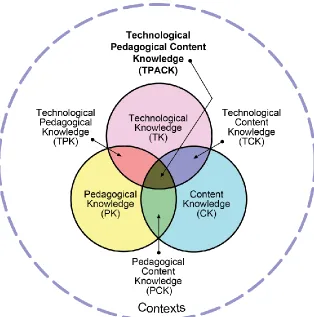
knowledge, skills, and attitudes needed for effective technology integration (Archambault & Barnett, 2010; Gill et al., 2015, Koehler et al., 2014). The term “integration” implies bringing two or more things together into a unified whole. The process of learning how to unify technology and pedagogy, within the context of a particular content area will take time, effort, and discipline on the part of pre-service teachers and teacher educators alike. However, a model for structuring this learning is available in Mishra and Koehler’s (2006) TPACK framework. Figure 1 illustrates a visual representation of the knowledge domains described in the TPACK framework.
Koh and Divaharan (2011) provided short, helpful descriptors of each of the seven domains within the TPACK framework:
1) Technological Knowledge (TK) – knowledge of technology tools. 2) Pedagogical Knowledge (PK) – knowledge of teaching methods. 3) Content Knowledge (CK) – knowledge of subject matter.
4) Technological Content Knowledge (TCK)—knowledge of subject matter representation with technology.
Reproduced by permission of the publisher, © 2012 by tpack.org
Figure 1 The TPACK framework illustrated
6) Pedagogical Content Knowledge (PCK)—knowledge of teaching methods with respect to subject matter content.
7) Technological Pedagogical Content Knowledge (TPACK)—knowledge of using technology to implement teaching methods for different types of subject matter content. (Koh & Divaharan, 2011, p. 37-38)
educational technologies, as well as appropriate pedagogical methods, and
contextualizing their use within a particular content area (Koehler & Mishra, 2009). The Development of the TPACK Framework
The TPACK framework was developed by Mishra and Koehler to address the fact that, “in education the reality [of technology integration] has lagged far behind the
vision” (Mishra & Koehler, 2006, p. 1018). Building upon earlier work on teacher knowledge domains by Shulman (1986, 1987), Mishra and Koehler conducted a design experiment over several years to develop the framework. Shulman (1986) had proposed the concept of “pedagogical content knowledge,” which he described as,
for the most regularly taught topics in one's subject area, the most useful forms of representation of those ideas, the most powerful analogies, illustrations, examples, explanations, and demonstrations—in a word, the ways of representing and
Koehler (2006) noted, “having knowledge of subject matter and general pedagogical strategies, though necessary, was not sufficient for capturing the knowledge of good teachers” (p. 1021). The pedagogical content knowledge domain demands both a deep knowledge of the content as well as a strong understanding of good pedagogy. These types of knowledge combine as the domains overlap: different methods are selected for teaching mathematics and reading, for example, because of the demands of the various content areas. Shulman (1987) suggests that pedagogical content knowledge represents “the blending of content and pedagogy into an understanding of how particular topics, problems, or issues are organized, represented, and adapted to the diverse interests and abilities of learners, and presented for instruction” (p. 8). This model is the theoretical basis for the TPACK framework.
Mishra and Koehler (2006) created the TPACK framework by building upon Shulman’s pedagogical content knowledge model with the addition of a third knowledge domain: technological knowledge. Technological knowledge is essential for effective technology integration (Archambault & Barnett, 2010; Canbazoğlu Bilici, Yamak,
Kavak, & Guzey, 2013). Mishra and Koehler argue that knowledge of how to use various technologies is not enough. Technological knowledge is one domain needed, but both pedagogical knowledge and content knowledge are also essential for true integration to take place (Koehler & Mishra, 2009).
The Structure of the TPACK Framework
of the content area influences how the tools will be employed (Mishra & Koehler, 2006; Pamuk, 2012). Thus, the domains within the TPACK framework encompass
technological knowledge, pedagogical knowledge, and content knowledge, but also the overlaps between these domains: technological content knowledge, technological pedagogical knowledge, pedagogical content knowledge, and technological pedagogical content knowledge.
2013), but there are ongoing debates about the nature of the framework and questions about how TPACK should be implemented in a teacher preparation program remain. Debate about the Nature of the TPACK Framework
The TPACK framework has found wide acceptance among both practitioners and researchers in the field of Educational Technology (Herring, Koehler, Mishra, Rosenberg, & Teske, 2016; Voogt et al., 2013). The TPACK framework was originally introduced by Koehler and Mishra (2005) as TPCK: technological pedagogical content knowledge, and this term was used to both describe the central construct as well as name the framework. However, at the suggestion of a group of practitioners and researchers, the framework was renamed as TPACK to make it more memorable, and easier to speak (Thompson & Mishra, 2007). Mishra and Koehler were amenable to this modification in naming,
particularly because “these three knowledge domains should not be taken in isolation, but rather that they form an integrated whole, a ‘Total PACKage’ as it were, for helping teachers take advantage of technology to improve student learning” (Thompson & Mishra, 2007, p. 38).
In the decade since Koehler and Mishra (2005) first unveiled the TPACK
various views on the role of technological knowledge, the connection between TPACK and teacher beliefs, means of measuring TPACK, and strategies for developing TPACK (Voogt et al., 2013). With all of this research ongoing, it is unsurprising that different scholars take different views of TPACK. Some researchers view TPACK as a hierarchy of knowledge domains, others consider the TPACK knowledge domains as intractable from one another, and still others suggest TPACK as descriptive of the evolution of technology integration over time. Each of these views will be discussed below.
The hierarchical perspective: TPACK integrating knowledge domains. The TPACK framework by its nature explores the interrelationships between different knowledge domains. This perspective has been named the “integrative” TPACK model by Colvin and Tomayko (2015). Pamuk (2012) suggested that the structure of the domains within the TPACK framework is hierarchical; that is, teachers must first have TK, PK, and CK before they can develop the other knowledge domains. In this
perspective, the TCK, TPK, PCK, and TPACK domains integrate the different
knowledge bases from the three primary knowledge domains. Cox and Graham (2009) affirmed this viewpoint in their depiction of an “elaborated model” of the TPACK framework that provides firm barriers between the different domains. While this perspective is helpful for teacher educators for describing the range of knowledge domains necessary for technology integration, it is not the only perspective.
knowledge domains interact in functionally different ways as they combine. In this view, the TCK, TPK, PCK, and TPACK knowledge domains are unique and separate, different from the three foundational domains. In this perspective, the TK, PK, and CK knowledge domains are transformed through their interaction, and the result is a completely new form of knowledge that cannot easily be discerned as constituent parts. Gill, Delgarno, and Carlson (2015) suggested that the TK, PK, and CK knowledge domains cannot function independently in true technology integration, noting that
the development of understandings of the pedagogical affordances of technology, although requiring both technological knowledge and pedagogical knowledge, won’t be acquired automatically once these subsidiary types of knowledge are developed, in the absence of modeling, reflection and opportunities to practice the use of technologies for learning. This has implications for the way in which technology skill development is supported during a course (that is, it needs to be carried out in the context of exploration of the associated pedagogical issues). (p. 54)
In a similar vein, Archambault and Barnett (2010) argued that the knowledge domains in the TPACK framework cannot be unraveled and that the boundaries between the domains are “fuzzy” (p. 1661), which, in their view, diminishes the usefulness of TPACK as an explanatory model.
The evolutionary perspective: TPACK describing change.
TPACK framework is in fact descriptive of how knowledge domains may evolve over time. What might constitute TPACK today might be considered PCK in the future as a given technology become commonplace (e.g., books are not generally conceived as “technologies” today, because they have such wide acceptance; few educators would raise the question, “how will I integrate book technology into my pedagogical content knowledge?”) In this evolutionary perspective, emerging technologies are the focus of the TK domain, because once a technology becomes widely adopted, few are concerned about the challenges of effectively integrating it into practice.
Summing up this variety of perspectives, Colvin and Tomayko (2015) have suggested that, “While most scholars agree that the attainment of TPACK is a worthy goal for teachers, the question of how to get there remains unanswered” (p. 70).
Regardless of which particular perspective one espouses, it is important to keep Mishra and Koehler’s original intent for the TPACK framework in mind. TPACK is intended to acknowledge the complexity of how teacher knowledge develops, and because of that, it “argues against teaching technology skills in isolation and supports integrated and design-based approaches as being appropriate techniques for teaching teachers to use technology” (Mishra & Koehler, 2006, p. 1045). Therefore, teacher educators must consider the role the TPACK framework will play within the teacher preparation program.
Perspectives on the Role of TPACK as a Framework for Learning to Integrate Technology