* Corresponding author. Tel: +98-9147210750, E-mail address: [email protected] (S. Ghadernejad).
Journal Homepage: ijmge.ut.ac.ir
Application of an integrated decision-making approach based on FDAHP
and PROMETHEE for selection of optimal coal seam for mechanization;
A case study of the Tazareh coal mine complex, Iran
Saleh Ghadernejad
a, *, Amir Jafarpour
b, Pouya Ahmadi
a aSchool of Mining, College of Engineering, University of Tehran, Tehran, IranbDepartment of mining and metallurgical, Yazd University, Yazd. Iran
ABSTRACT
Increasing the production rate and minimizing the related costs, while optimizing the safety measures, are nowadays’ most important tasks in the mining industry. To these ends, mechanization of mines could be applied, which can result in significant cost reductions and higher levels of profitability for underground mines. The potential of a coal mine mechanization depends on some important factors such as seam inclination and thickness, geological disturbances, seam floor and roof conditions. Mechanization of underground mines requires substantial investments. Therefore, thorough inspection of pertaining aspects is of highest importance before a final decision. The main aim of this study is to develop a new approach to rank the mechanization potential of different coal seams in the Tazareh coal mine complex based on multi-criteria decision-making methods. In fact, a decision-making approach is an effective tool for dealing with complex decision-making processes, and the obtained results may aid the decision maker to determine the priorities and make the best decision. To this end, an integrated Fuzzy Delphi Analytical Hierarchy Process (FDAHP) - PROMETHEE method was utilized to rank coal stopes from the best to the worst. Among different coal seams, K19 was selected as the optimal alternative for mechanization of the Tazareh coal mine complex. In addition, in order to investigate the effects of the pertaining factors on the final decision, a sensitivity analysis was performed. The results obtained from sensitivity analysis showed that K19 with 71.4% of votes had the highest potential for mechanization.
Keywords : Coal mine, Mechanization potential, FDAHP, PROMETHEE method, Optimal selection
1.
Introduction
Efforts in coal mines have predominantly been motivated for a number of goals, including reducing the material costs, decreasing the number of stopes, lowering the level of labor inputs, and maximizing the production rate. Coal is one of the most important sources of energy in industries and an outlook in its demanding shows an increasing requirement in the years to come [1-2]. It shows that coal production has to be increased. Mechanization of extraction processes in coal mines is a strategy which will naturally result in higher rates of coal production. Nowadays, the use of machinery equipment in mining industries has resulted in improvement in working conditions and production rates [3]. However, recent researches and tests conducted regarding the mechanization of coal mines have revealed that the machinery and geological conditions are not the only significant factors that influence the mine mechanization process. Other factors such as the management system, necessary training, accomplishments of mechanization, etc. are also affect the mechanization process [4].
Various studies have been conducted to investigate the capability of coal seams for mechanization, some of which offering classification sets for the possibility of mechanization in coal mines. According to previous studies, the most effective and important parameters affecting the coal mine mechanization process can be divided into two distinct groups, including geometric characteristics and environmental conditions of a coal seam [5]. Seam inclination, thickness, uniformity, and extension are
the most important parameters of geometric characteristics of a coal seam. Moreover, roof and floor conditions of a seam and also water condition at working face are the main parameters of environmental conditions that can impact upon the mechanization process. In the following, the characteristics of each parameter will be discussed.
In general, seam inclination is related to dip angle of a coal seam, herein coal seams with low dip angles being suitable for mechanization. From a technical point of view, an increase in seam inclination can cause difficulties with mechanizability (“mechanizability” is used to express the quality of being mechanizable) of a coal seam. In addition to seam inclination, seam thickness and its regularity are the controlling parameters on the level of mechanization for a typical coal seam. The mechanization of an extraction operation is usually carried out in coal seams with thickness varying from 0.6 to 5 meters [2].
From a geological point of view, the effects of geological structures such as faults and crashed zones on the mechanizability of the coal seam cannot be ignored. For instance, by increasing the presence of faults or joints as adverse geological structures within a seam, the mechanizability of seam will reduce. In addition to the discussed parameters, roof and floor conditions and the water condition at working faces effect on the mechanization of a coal seam [2].
Roof condition is a critical characteristic of a coal stope controlling the mechanizability of a coal seam. In general, roofs should be caved in as the support system advances in a longwall mining. The quality of rocks at the roof of a seam may be high enough so that the roof does not fall as the face advances. But there is the possibility of sudden collapse
Article History:
of the roof, which would cause irreparable damages on the equipment. In such cases, the roof must be destroyed manually to avoid a large overhead caving. On the contrary, when a very weak roof is crumbling, rather than holding, part of the coal seam must be left as a support [2]. Therefore, it can be concluded that the roof conditions of a seam have to demonstrate a medium stability. Furthermore, the floor condition of a stope plays an important role in longwall mining. The strength of the floor should be high enough to resist intrusions. An intrusion of soft floors is troublesome for advancing and can make the roof conditions difficult to control due to the high convergence. In fact, the reaction of floors to different types of support, installed along or behind longwall faces, significantly affects the stability of a strata. In addition to the discussed parameters, the water existing in coal mines can cause serious problems including excruciating conditions and the support system corrosion. Consequently, in such cases a suitable drainage system and anticorrosion support system is needed. Another important factor that influences the selection of a mechanized extraction process in coal mines is the extension of seams, which certainly has its own economic implications [2].
In this study, based on an integrated FDAHP-PROMETHEE method, the most suitable stope in the Tazareh coal mine complex is selected for executing the mechanization. In this regard, seam inclination, seam extension, seam thickness, uniformity of seam, roof and floor condition and also the water condition in the working face are selected as the controlling parameters.
This paper is organized as follows. In section 2, an overview of pervious works is presented. Section 3 provides a general overview of fuzzy sets. Section 4 reviews the methodology of the Fuzzy Delphi Analytical Hierarchy Process. In the next section, the principles of PROMETHEE method are introduced. The implementation of the proposed model for selecting the best coal seam in the Tazareh coal mine complex is demonstrated in section 6. In section 7, a sensitivity analysis is used to investigate the effects of uncertainty on the final seam selection. And finally, section 8 provides the cocluding remarks.
2.
Literature review
The capability of mechanization (or simply ‘mechanizability’ hereafter) of coal seams and the development of precise evaluating models has been the ultimate goal for many still ongoing researches. This section reviews the studies on the mechanization of coal mines.
Ateai et al. (2009) introduced a new rating system for determination of the coal seam mechanizability indicator. They used fuzzy sets to develop a fuzzy classification system [6]. Hattingh et al. (2010) studied the technologies and strategies related to underground mining mechanization, making a significant contribution to human parameters [4]. Later, Hosseini et al. (2012) also used the fuzzy logic to provide a classification system related to the mechanization of coal mines. Taking into account different economic and technical parameters, they evaluated the mechanizability of underground mines [1]. In their subsequent study, Hosseini et al. (2013) developed a new classification system to evaluate the mechanizability of coal mining operations [2]. Bilim and Kekec (2016) also investigated mechanized digging systems in underground coal mines, but did not consider the mechanizability [7]. More recently, Ghadernejad et al. (2016) presented a ranking system for underground mines’ mechanizability based on a multi criteria decision-making method. The ranking system was developed using an Analytical Hierarchy Process [5].
It must be noted that there has not been much research on the mechanizability of coal mining and on the provision of a suitable classification system that meets the actual and environmentally compatible conditions. Therefore, the necessity of research in this regard is undeniable. In this research, the mechanizability of coal mines is investigated using an integrated decision-making method.
3.
Fuzzy sets
The foundation of fuzzy sets and fuzzy logic was introduced by Zadeh
(1965) to analyze complex systems [8]. The fuzzy sets in new mathematics science are referred to as sets in which the membership of some or all the members is completely unclear, and its elements are (or not) partly belonging to that collection. A fuzzy set is the generalization of a classical set that allows the inclusion of any value within the interval [0,1] [9]. In fact, in a fuzzy set, unlike in a definite set, the elements are not divided into two categories of members and non-members. Nevertheless, based on the defined functions, the membership of different elements in fuzzy sets is between 0 and 1 [10]. Suppose A is a fuzzy subset of the reference set X. The membership function A in the reference set X is defined as the Eq. 1:
[ ]
0,1→
:
μA X (1)
Where Ashows the membership degree of each member of set A in the continuous interval [0, 1]
.
In the above relationship, the value of 0 is used to display the total absence of membership, and the value of 1 represents the full membership, and all values between these two values are used to indicate the average membership for each member of the A set. Usually a fuzzy set with a set of ordered pairs is represented by Eq. 2:}
∈
)), ( μ ,
{(x x x U
A= A (2)
Where U contains a finite set of Xis
.
Also, fuzzy finite set A can also be represented by Eq. 3 [11]:1
(
)
n i
i A i
x
A
x
(3)If the U set contains an infinite member, it is usually shown as follows:
( )
x A
x
A
x
(4)Membership functions express all the information in a given fuzzy set
.
The membership functions of fuzzy sets must be defined exactly in relation to the type of the function and the type of its parameters. The parameters and the form of membership functions will significantly affect the validity of the results [12]. Among the bulk of existing membership functions, triangular, trapezoidal, belt, and Gaussian functions are known as the extensively utilized functions. In the current study, due to the ease of use and the low volume of information needed to define a triangular membership function, this function was selected as the main membership function. Furthermore, this type of membership is very suitable for works based on an interval system [13, 14].4.
Fuzzy Delphi Analytical Hierarchy Process (FDAHP)
4.1. Background of FDAHP method
and will lead to the presence of relevance Delphi fuzzy sets. The Fuzzy Delphi Analytical Hierarchy Process (FDAHP) is also a combination of analytical hierarchy processes with fuzzy Delphi.
Analytical Hierarchy Process (AHP) is an approach developed to deal with complex systems and leads to multiple options and compares them with one another [19]. This method, with the aid of a series of pair-wise comparisons, simplifies complicated and faulted structures by arranging indicators and decision options in a hierarchical structure. The analysis of a conventional hierarchy will be problematic due to the use of definitive amounts to reflect decision makers' comparison of alternatives [20]. In addition, the AHP method is often criticized for using the unbalanced scale in judgments and its inability to manage the uncertainty and inherent inaccuracy in the paired comparison process [21]. In order to overcome all these shortcomings, the FDAHP was created to solve hierarchical issues. Decision makers usually find that they achieve more certainty by providing a range of judgments rather than their constant values. Therefore, a fuzzy Delphi analytical hierarchy is a combination of an analytical hierarchy process with Fuzzy Delphi. Although the fuzzy Delphi analytical hierarchy method is a method developed for decision-making, it can also be in the form of weighting.
The fuzzy Delphi technique is based on the experiences and opinions of experts in a science. Therefore, the results obtained from this method can be a suitable approach for evaluating the importance of the parameters affecting a phenomenon and a concept. It is also efficient in different categories and used in various engineering fields.
4.2. Applications of FDAHP method
Over the years, the use of multi-criteria decision-making methods has come to a special place. Meanwhile, the FDAHP method and some of other integrated decision-making methods have been widely used, due to their greater compatibility with the actual conditions as well as the desirability of the results. In the following, some of the most important applications of this method in engineering are mentioned.
Mikaeil et al. (2011) used a combination of FDAHP and TOPSIS to evaluate the energy consumption in the rock sawing process [22]. In another research, Rafiee et al. (2011) utilized the FDAHP method to select the optimum support system for the Beheshtabad water transfer tunnel [23]. Aalianvari et al. (2012) using the FDAHP method, tried to estimate the risks of groundwater flow in the Qomroud tunnel [24]. More recently, Kazemi et al. (2015) used FDAHP method to rank the criteria for choosing the effective materials [25].
In another study, Mikaeil et al. (2015) tried to rank the sawability of dimension stones using the combination of FDAHP and PROMETHEE method [26]. Additionally, Bouzon et al. (2016) used FDAHP to identify and analyze the reverse logistics barriers [27]. Also, Qiu et al. (2017) used the FDAHP method to assess the risk of water pollution [28]. Furthermore, Haghshenas et al. (2017) used the combination of FDAHP and TOPSIS methods to select the most suitable excavation machine for the tunneling project of line 7 of Tehran subway [29].
Considering the aim of this paper as well as the effects of various engineering parameters on the evaluation and presentation of the appropriate ranking system, an integrated decision-making approach was used based on FDAHP and PROMETHEE method. In the next step, first, the FDAHP method is examined and then the proposed combination method is discussed.
4.3. Process of FDAHP method
The process of performing and calculating the fuzzy Delphi hierarchy analysis (FDAHP) is as follows [30]. After the preliminary stage, which includes a survey of experts in the form of qualitative or quantitative questionnaires, the fuzzy numbers calculation (Eq. 5) is based on the results of the survey. In this case, the triangular fuzzy numbers are defined as follows (Fig
.
1):( , , )
aij ij ij ij (5)
( ) 1,2,...,
ij in ijk k n
(6)
11 1, 2,...,
n n
ij k ijk k n
(7)
( ) 1, 2,...,
ij Max ijk k n
(8)Where
ij ij ij and ijk demonstrates the relative importanceof i on j from the viewpoint of expertk . Also, ij and ij
respectively show the upper and the lower bounds.
Fig1. Triangular membership function in Delphi fuzzy method [30]. After the formation of the above fuzzy numbers, the matrix of the paired fuzzy comparison is composed of the following components:
,
, 1, 1, 2, ,
ij ij ji i j
A
n (9)Another representation of the matrix is as follows:
21 21 21
31 31 31 32 32 32
12 12 12 13 13 13
(1 / ,1 / ,1 / ) 23 23 23
(1 / ,1 / ,1 / ) (1 / ,1 / ,1 / )
(1,1,1) ( , , ) ( , , )
(1,1,1) ( , , )
(1,1,1)
A
(10)
The relative fuzzy weight of the parameters is also calculated from the following equations:
1 n
i ij in
Z (11)
1
i i i n
W Z Z Z
(12) Where, and respectively denote addition and multiplication
of numbers in the fuzzy environment and
, ,
1 2 1 2
2 1 2
1 . W i is a row vector that shows the
fuzzy weight of ith parameter.
In the end, in order to defuzzicate the weight of the parameters, we obtain the geometric mean relation under the weight of the parameters in the form of a definite number:
1/3 3
1
i ij
j
W W
(13)
5.
PROMETHEE method, theory and application
5.1. Review of method
in a given criterion [31]. Until now, different versions of PROMETHEE have been developed for various purposes. In fact, PROMETHEE is a family of outranking methods, which are used to manage different problems. The most important versions of PROMETHEE are summarized in Table 1.
In addition to the mentioned versions of PROMETHEE in Table 1, Brans and Mareschal in 1994 developed a visual interface modulus GAIA (Geometrical Analysis for Interactive Aid) for graphical representation as an aid in more complicated decision-making problems.
Table 1. The most important versions of PROMETHEE and their application.
Researchers Methods Application
Brans [31] PROMETHEE I A solution for partial ranking of alternatives
Brans [31] PROMETHEE II A solution for complete ranking of alternatives
Brans and Mareschal [32] PROMETHEE III Ranking based intervals
Brans and Mareschal [32] PROMETHEE IV Partial and complete ranking for continuous situations Brans and Mareschal [32] PROMETHEE V A solution for multiple selection under constraints Brans and Mareschal [33] PROMETHEE VI for the human brain representation
Macharis et al. [34] PROMETHEE GDSS for group decision-making
Figueira et al. [35] PROMETHEE TRI A solution for dealing with sorting problems Figueira et al. [35] PROMETHEE CLUSTER A solution for nominal classification
Over the last few years, PROMETHEE has been utilized in many engineering fields, including mining engineering. In this part of the research, the most recently published researches based on POMETHEE and combination of PROMETHEE and other MCDM methods are reviewed.
Wang et al. (2015) evaluated the transport system in a thin coal seam using the PROMETHEE method [36]. In another study, Balusa and Singam (2017) used the weighted product method (WPM) and PROMETHEE technique to represent the solution to the problem of selecting a suitable underground mining method for the mining industry [37]. Also, Iphar and Alpay (2018) presented a mobile application of integrated MCDM methods (such as: TOPSIS and PROMETHEE) for underground mining method selection [38]. In another research, Ebrahimabadi et al. (2018) compared the results of two MCDM methods in selecting the plant species for the reclamation [39]. More recently, Mikaeil et al. (2018) analyzed geotechnical risks along the Emamzadeh-Hashem tunnel (Northern Iran) using FDAHP-PROMETHEE [40]. The studies showed that application of the PROMETHEE method in decision-making problems can have acceptable results. In this study, PROMETHEE I and II are used to select the best coal seam as an alternative for mechanization of coal mines.
5.2. Stepwise procedure of partial and complete ranking
This part of the research describes PROMETHEE I and II, which are intended to provide the partial and complete rankings of a limited set of alternatives from the best to the worst, respectively. PROMETHEE can be constructed in five steps [31]. The first step is to determine deviations based on pair-wise comparisons. Eq. 14 is used to determine the difference between the evaluation of
a and
b on jth criterion.
,
j j j
d a b g a g b (14)
The second step is to use a relevant preference function for each criterion. In fact, the preference of alternative
a with regard to
bon each criterion is calculated using an appropriate preference function. For each criterion, the preference function P a bj
, , converts the quantity differences between two given alternatives
a b, in a special criterion into a preference degree that varies from 0 to 1. There are six basic predefined preference functions introduced by Vincke and Brans, including; (I) usual criterion, (II) quasi-criterion, (III) criterion with linear preference, (IV) level criterion, (V) criterion with linear preference and indifference area, and (VI) Gaussian criterion. Eq. 15 is utilized to calculate the preference of jth criterion.
, [
, ] 1, 2,...,j j j
P a b F d a b j n (15)
The procedure is followed by calculating the global preference index using Eq. 16:
1
, k j( , ) j
j
a b P a b W
(16)Where
a b, is defined as the weighted sum of P a bj
, for each criterion and Wj is the weight associated with jth criterion. In thefourth step, the positive and negative outranking flows for each alternative are calculated using Eqs. 17 and 18, respectively. Then, the net outranking flow is determined by Eq. 19 for each alternative:
1( , ) 1
x A
a a x
m
(17)
1( , ) 1
x A
a x a
m
(18)
a
a
a
(19) In the final step, partial and complete rankings of alternatives are performed using PROMETHEE I and II, respectively. The partial ranking is performed based on the positive and negative flows. In PROMETHEE I, comparing the out-ranking flows is carried out as follows:
( ) ( ) ( ) ( )
( ) ( ) ( ) ( )
( ) ( ) ( ) ( )
a b and a b
I
aP b if a b and a b
a b and a b
( ) ( ) ( ) ( )
I
aI b if a b and a b
( ) ( ) ( ) ( )
I
aR b if a b and a b (20)
Where, PI , II , and RI are respectively preference, indifference,
and incomparable. Also, the complete ranking is performed based on net flow as follows:
( ) ( )
II
aP b if a b
( ) ( )
II
aI b if a b
Where, II
P and IIIare respectively preference, indifference.
6.
Application of FDAHP-ROMETHEE in Optimal Coal
Seam Selection for Mine Mechanization
6.1. Factor influencing coal mine mechanizability
thickness, inclination, uniformity, and extension. The second group is related to the environmental conditions in a coal stope. Seam floor and roof condition and the water condition at the working face are located in the last affecting group.
6.2. Case study
The Tazareh coal mine complex is located in Shahrood 1:100,000 geological map. From a geological point of view, this area mainly consists of sandstone, thin bedded coaly shale of the Shemshak formation and both young and old alluvial deposits with marl and quartzite gravels. The Alborz Sharghi Coal Company has been extracting coal form this part of Iran for nearly three decades. With an annual production of 600,000 tons of coal, the Alborz Sharghi Company is one of the largest coal producers in Iran. The processed coal from the coal washing plant of the Alborz Sharghi Coal Company is transported to Isfahan and is used in the steel industry [41]. (Fig. 2)
Fig 2. Tazareh Coal Mine Complex.
6.3. Sending the questionnaire to mining experts
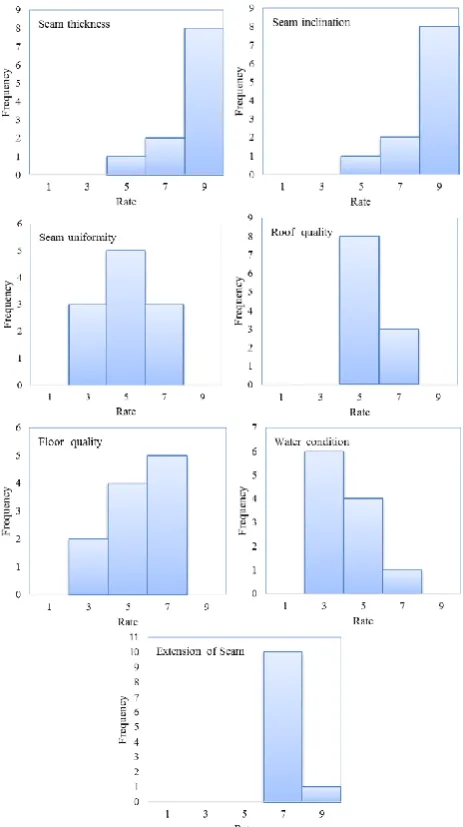
After the literature review and recognizing the effective parameters, some technical questionnaires were prepared and sent to several Iranian coal mining experts. In these questionnaires, the experts were asked to mark the importance of each parameter in a very simple way. In order to use the data derived from the questionnaires in the FDAHP method, for each importance level an intensity number from 1 to 9 has been assigned based on Satays’ method [19]. In total, 11 completed questionnaires were incorporated to determine the weights of each criterion in the FDAHP process. An example questionnaire completed by one of the experts is shown in Table 2. Experts’ opinion rates (histograms) about each parameter are illustrated in Fig. 3. As seen in this figure, the seam thickness and inclination have the highest frequency of a rate 9. It shows that they are the most important parameters for coal seam mechanizability from the experts’ view point.
Table 2. A sample of questionnaire was completed by D1.
Selected parameters
Degree of importance VW (1) W (3) M (5) S (7) VS (9) C1 Seam Inclination
C2 Seam thickness
C3 seam uniformity
C4 Roof quality
C5 Floor quality
C6 water condition
C7 seam extension
VW: Very Weak importance, W: Weak importance, M: Moderate importance, S: Strength importance, VS: Very Strength importance
Fig 3. Rate of opinions of experts about each parameter.
6.4. Determining the weight of selected parameters
FDAHP is proposed to take the decision makers subjective judgments into consideration and to reduce the uncertainty and vagueness in the decision-making process. Decision makers from different backgrounds may define different weight vectors. They usually lead to not only imprecise evaluations but also serious persecution during the decision-making process. Therefore, we proposed a group decision based on FDAHP to improve a pair-wise comparison. Firstly, each decision maker (Di) will individually carry out a pair-wise comparison using Saatys’ 1– 9 scale [19]. An example of these pair-wise comparisons is shown as Eq. 22. “C1…..7” are the criteria describing the seam inclination, seam thickness, uniformity, roof quality, floor quality, water condition, and extension of seam, respectively.
The weighting factors for each criterion were presented in the following steps:
1. Compute the triangular fuzzy numbers according Eqs. 2 – 4.
2. Create a fuzzy pair-wise comparison matrix A
Decision makers’ pair-wise comparison values are transformed into triangular fuzzy numbers as in Table 3.
Table 3. Fuzzy pair-wise comparison matrix.
3. Calculate the relative fuzzy weights of the evaluation factors:
1/7
1 11 12 ...17 [0.865713,1.330431,2.062489]
Z a a a
1/7
2 21 22 ...27 [0.767917,1.361177,1.989755]
Z a a a
1/ 7
3 31 32 ...37 [0.495631, 0.834085,1.387114]
Z a a a
1/7
4 41 42 ...47 [0.566578, 0.873732,1.437819]
Z a a a
1/7
5 51 52 ...57 [0.566578, 0.957704,1.437819]
Z a a a
1/7
6 61 62 ...67 [0.434325, 0.655919,1.198745]
Z a a a
1/7
7 71 72 ...77 [0.834206,1.206209,1.849724]
Z a a a
[4.530948, 7.219258,11.36347
i Z
1
1 1 ( 1 2 3) [0.07618, 0.18429, 0.4552]
W Z Z Z Z
1
2 2 ( 1 2 3) [0.06758, 0.18855, 0.43915]
W Z Z Z Z
1
3 3 ( 1 2 3) [0.04362,0.11554,0.30614]
W Z Z Z Z
1
4 4 ( 1 2 3) [0.04986, 0.12103, 0.31733]
W Z Z Z Z
1
5 5 ( 1 2 3) [0.04986, 0.13266, 0.31733]
W Z Z Z Z
1
6 6 ( 1 2 3) [0.03822, 0.09086, 0.26457]
W Z Z Z Z
1
7 7 ( 1 2 3) [0.07341, 0.16708, 0.40824]
W Z Z Z Z
The final weights of each parameter are calculated and indicated in Table 4.
Table 4. Priority weights for criteria.
Criteria Global weights
Seam Inclination 0.186
Seam Thickness 0.176
Uniformity 0.116
Roof Quality 0.124
Floor Quality 0.128
Water Condition 0.097
Extension of Seam 0.171
6.5. Application of PROMETHEE method to multi-criteria comparison of mechanizability
The main purpose of this work was to select the best coal seam for mechanization in the Tazareh coal mine complex based on some effective factors (Fig. 4). In this work, after determining the weights of the criteria by the FDAHP method, selecting the best coal seam for mechanization among different alternatives was performed by the PROMETHEE method (PROMETHEE I and II). In the current study, among different preference functions, the V-Shape Function was used due to its simplicity (Table 5).
Fig. 4. Criteria and alternatives of the study.
Table 5. Specification of PROMETHEE method.
Criterion Seam Inclination Seam Thickness Uniformity (degree) (cm) - Roof Quality (Kg/cm2) Floor Quality (MPa) Water Condition (m3/min) Extension of seam (m)
Min/Max Min Max Max Max Max Min Max
Preference function V-shape V-shape V-shape V-shape V-shape V-shape V-shape
Preference 0.25 1208.74 1.00 24.11 159.30 2.53 41.37
Minimum 26.00 55.00 0.25 5.61 83.40 3.00 18.93
Maximum 32.50 1595.00 0.25 41.17 258.70 6.00 75.00
Firstly, the amount of each alternative was filled in the decision matrix for each criterion. The decision matrix was obtained with respect to the important rock properties. The values for the decision matrix of the criteria are given in Table 6. The positive, negative, and net preference flows (calculated by Eqs. 17 - 19), and the final ranking (obtained on the net flow) are shown in Table 7. The graphical preferences of different alternatives are illustrated in Fig. 5.
Table 6 and Fig. 3 illustrate the preferences of the alternatives. For instance, K19 and K11 coal seams dominated over the other alternatives in Fig. 4. It can be inferred from the results (Table 7 and Fig. 4) that among the alternatives, according to the defined criteria, K19 and K11 coal seams have the highest potential for mechanization.
7.
Sensitivity analysis
sensitively the alternatives change with the importance of the criteria.
This graphical tool exposes the importance of criteria weights in selecting the optimal alternative among the feasible alternatives. Table 6. Decision matrix of selection the best coal seam for mechanization [6].
Seam Inclination Seam Thickness Uniformity Roof Quality Floor Quality Water Condition Extension of seam
(degree) (cm) - (Kg/cm2) (MPa) (m3/min) (m)
K8 32.5 102.00 0.25 14.04 112.50 5.00 64.29
K10 30 164.00 0.25 22.60 112.50 6.00 75.00
K11 26 113.00 0.25 41.17 83.40 4.00 62.50
K17 30 93.00 0.25 12.80 258.70 5.00 42.60
K19 30 1595.00 0.25 21.96 258.70 3.00 69.23
K20 29 55.00 0.25 5.61 112.50 3.00 18.93
Table 7. PROMETHEE I/II scores and final ranking.
Rank Alternatives () () ()
1 K19 0.2968 0.4712 0.1743
2 K11 0.2502 0.3863 0.1361
3 K10 -0.0380 0.2100 0.2480
4 K17 -0.0759 0.2072 0.2831
5 K20 -0.1444 0.2146 0.3590
6 K8 -0.2887 0.0783 0.3670
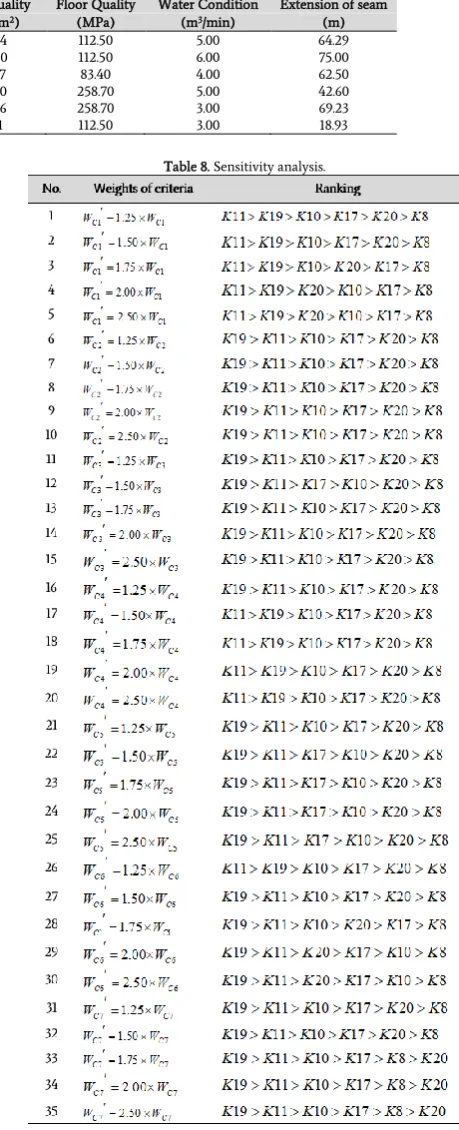
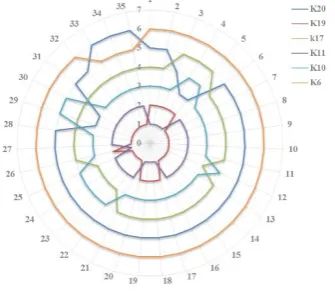
Fig 5. Graphical representation of preference of coal seams. The main goal of sensitivity analysis is to see which criterion is the most significant one in influencing the decision-making process. For this reason, 35 experiments were conducted as presented in Table 8. Fig. 6 shows how the priority of each alternative can be changed with increasing or decreasing the importance of the criteria. Table 8 and Fig. 6 show that among 35 experiments, alternative K19 has the highest score in 25 experiments. In 10 experiments, K11 is the winner. Therefore, it can be concluded that the decision-making process is rarely sensitive to the criteria weight with alternative K19 emerging as the winner (71.4% votes).
8.
Conclusion
In this paper, a decision support system was developed for ranking the mechanizability of different coal seams. In fact, the main goal of this study was to rank the mechanizability of diverse coal seams in the Tazareh coal mine complex, and to choose the best candidate among a pool of alternatives by using an integrated multi-criteria decision-making method. According to the complicated structure of the decision phase and the existing uncertainty, the application of fuzzy sets can be useful. In other words, using linguistic preferences could be very valuable for uncertain situations. Hence, a decision-making model was developed based on FDAHP and PROMETHEE methods. In the utilized decision-making model, FDAHP based on pair-wise comparison was applied to obtain the weights for the evaluation criteria, while PROMETHEE was used to prioritize the feasible alternatives. In this research, the most momentous parameters affecting the feasibility of using mechanized mining of coal seams have been presented in terms of two distinct groups, including geometrical and environmental condition parameters.
Table 8. Sensitivity analysis.
score was selected. Furthermore, a sensitivity analysis was conducted to determine the influence of the criteria weights on the problem of the coal seam selection. The results showed that among six different coal seams, K19 was the best alternative and K8 was the worst one. Additionally, the results obtained from the sensitivity analysis demonstrated that K19 with 71.4% of votes had the highest potential for mechanization.
Fig. 6. Results of sensitivity analysis.
Acknowledgment
The authors would like to thank Prof. Dr. Abbas Majdi, the director of the School of Mining Engineering, University of Tehran, Iran, for encouragement. Also, special thanks to the staffs and students of the University of Tehran, Amirkabir University of technology, Urmia University of Technology, and Tarbiat Modares University, too numerous to mention, for their sincere help on completion of the questionnaires.
REFERENCES
[1] Hosseini, S. A. A., Ataei, M., Hosseini, S. M., & Akhyani, M. (2012). Application of fuzzy logic for determining of coal mine mechanization. Journal of Coal Science and Engineering (China) 18, 225-231. Https://doi.org/10.1007/s12404-012-0301-y
[2] Hosseini, S. M., Mikaeil, R., Ataei, M., Khalokakaei, R., & Akhyani, M. (2013). Development a New Classification for Assessing the Coal Mine Mechanization. Archives of Mining Sciences 58, 217-226. Https://doi.org/10.2478/amsc-2013-0015 [3] Dix, K. (1988). What's a coal miner to do? the mechanization of
coal mining. University of Pittsburgh Press, Pennsylvania. [4] Hattingh, T. S., Sheer, T. J., & Du Plessis, A. G. (2010). Human
factors in mine mechanization. In The 4th Internaltional Platinum Conference, Platinum in transition ‘Boom or Bust”. The South African Institute of Mining and Metallurgy. [5] Ghadernejad, S., Lalegani, S., & Rajaty, M. H. (2016).
Classification of Mechanization Capability of Tazareh Coal Mine Stopes Using Analytical Hierarchy Process. 3rd National Iranian Coal congress, 30-31 August 2016, Shahrood University of Technology.
[6] Ataei, M., Khalokakaei, R., Hossieni, M. (2009). Determination of coal mine mechanization using fuzzy logic. Journal of Mining Science and Technology (China) 19, 149-154. https://doi.org/10.1016/S1674-5264(09)60028-4
[7] Bilim, N., & Kekeç, B. (2016). Fully Mechanized Excavation System in Underground Coal Mining. 2nd Int Conference on Science, Ecology and Technology (ICONSETE’2016).
[8] Zadeh, L. A. (1965). Fuzzy sets. Information and control, 8, 338-353
[9] Bellman, R. E., & Zadeh, L. A., (1970). Decision-making in a fuzzy environment. Management science, 17, B-141. [10] Zadeh, L. A. (1999). Fuzzy sets as a basis for a theory of
possibility. Fuzzy sets and systems, 100, 9-34
[11] Dubois, D., & Prade, H. (1980). new results about properties and semantics of fuzzy set-theoretic operators. Fuzzy sets: theory and applications to policy analysis and information systems. https://doi.org/10.1007/978-1-4684-3848-2_6 [12] Baglio, S., Fortuna, L., Graziani, S., & Muscato, G. (1994).
Membership function shape and the dynamic behaviour of fuzzy systems. International journal of adaptive control and
signal processing 8, 369-377.
Https://doi.org/10.1002/acs.4480080406
[13] Piegat, A. (2001). Fuzzy Modeling and Control. Physica-Verlag Heidelberg.
[14] Bárdossy, G., & Fodor, J. (2005). Assessment of the completeness of mineral exploration by the application of fuzzy arithmetic and prior information. Acta Polytechnica Hungarica 2, 15-31.
[15] Mintzberg, H. (2001). Reflecting on the Strategy Process Strategy Thinking for next economy. Sossey-Bass.
[16] Rowe, G., Wright, G., & Bolger, F. (1991). Delphi: a re-evaluation of research and theory. Technological Forecasting and Social Change, 39, 235-251. https://doi.org/10.1016/0040-1625(91)90039-I
[17] Kuo, Y. F., & Chen, P. C. (2008). Constructing performance appraisal indicators for mobility of the service industries using fuzzy Delphi method. Expert Systems with
Applications, 35, 1930-1939.
https://doi.org/10.1016/j.eswa.2007.08.068
[18] Cheng, C. H., & Lin, Y. (2002). Evaluating the best main battle tank using fuzzy decision theory with linguistic criteria evaluation. European Journal of Operational Research 142, 174-186. https://doi.org/10.1016/S0377-2217(01)00280-6 [19] Saaty, T. L., (1980). The Analytic Hierarchy Process. New
York: McGraw-Hill
[20] Wang, T. C., & Chen, Y. H. (2007). Applying consistent fuzzy preference relations to partnership selection. Omega International Journal of Manage Sciences, 35, 384-388. https://doi.org/10.1016/j.omega.2005.07.007
[21] Deng, H. (1999). Multi criteria analysis with fuzzy pair-wise comparison. Int J Approx Reason 21, 215-231. https://doi.org/10.1016/S0888-613X(99)00025-0
[22] Mikaeil, R., Ataei, M., & Yousefi, R. (2011). Evaluating the Power Consumption in Carbonate Rock Sawing Process by Using FDAHP and TOPSIS Techniques. In Efficient Decision Support Systems-Practice and Challenges in Multidisciplinary Domains. InTech.
[23] Rafiee, R., Ataei, M., & Jalali, M. (2011). the Optimum Support selection by using FDAHP method for BEHESHTABAD Water Transporting Tunnel. Journal of Earth and Resources, 4, 41-49.
[25] Kazemi, S., Homayouni, S. M., & Jahangiri, J. (2015). A fuzzy delphi-analytical hierarchy process approach for ranking of effective material selection criteria. Advances in Materials
Science and Engineering.
http://dx.doi.org/10.1155/2015/845346
[26] Mikaeil, R., Kamran, M. A., Sadegheslam, G., & Ataei, M. (2015). Ranking sawability of dimension stone using PROMETHEE method. Journal of Mining and Environment 6, 263-271. http://dx.doi.org/10.22044/jme.2015.477
[27] Bouzon, M., Govindan, K., Rodriguez, C. M. T., & Campos, L. M. (2016). Identification and analysis of reverse logistics barriers using fuzzy Delphi method and AHP. Resources, Conservation and Recycling 108, 182-197. https://doi.org/10.1016/j.resconrec.2015.05.021
[28] Qiu, M., Shi, L., Teng, C., & Zhou, Y. (2017). Assessment of water inrush risk using the fuzzy delphi analytic hierarchy process and grey relational analysis in the Liangzhuang coal mine, China. Mine Water and the Environment, 36, 39-50. https://doi.org/10.1007/s10230-016-0391-7
[29] Haghshenas, S. S., Haghshenas, S. S., Mikaeil, R., Ardalan, T., Sedaghati, Z., & Kazemzadeh Heris, P. (2017). Selection of an Appropriate Tunnel Boring Machine Using TOPSIS-FDAHP Method (Case Study: Line 7 of Tehran Subway, East-West Section). Electronic Journal of Geotechnical Engineering 22, 4047-4062.
[30] Chen, C. S., & Liu, Y. C. (2007). A methodology for evaluation and classification of rock mass quality on tunnel engineering. Tunnelling and Underground Space Technology 22, 377-387. https://doi.org/10.1016/j.tust.2006.10.003
[31] Brans, J. P. (1982). L’ingénierie de la décision: élaboration d’instruments d’aide à la décision. La méthode PROMETHEE. Presses de l’Université Laval
[32] Brans, J. P., & Mareschal, B. (1992). PROMETHEE V – MCDM problems with segmentation constraints. INFOR 30, 85–96.
[33] Brans, J. P., & Mareschal, B. (1995). The PROMETHEE VI procedure. How to differentiate hard from soft multicriteria problems. Journal of Decision Systems 4, 213–223.
[34] Mareschal, B., Brans, J. P., & Macharis, C. (1998). The GDSS PROMETHEE procedure: a PROMETHEE-GAIA based procedure for group decision support ULB-Universite Libre
de Bruxelles.
[35] Figueira, J., De Smet, Y., & Brans, J. P, (2004), MCDA methods for sorting and clustering problems: Promethee TRI and Promethee CLUSTER. Université Libre de Bruxelles. Service deMathématiques de la Gestion, Working Paper, 2. [36] Wang, C., Tu, S., Zhang, L., Yang, Q., & Tu, H. (2015).
Auxiliary transportation mode in a fully-mechanized face in a nearly horizontal thin coal seam. International Journal of Mining Science and Technology, 25(6), 963-968. https://doi.org/10.1016/j.ijmst.2015.09.013
[37] Balusa, B. C., & Singam, J. (2017). Underground mining method selection using WPM and PROMETHEE. Journal of the Institution of Engineers (India): Series D, 1-7. https://doi.org/10.1007/s40033-017-0137-0
[38] Iphar, M., & Alpay, S. (2018). A mobile application based on multi-criteria decision-making methods for underground mining method selection. International Journal of Mining, Reclamation and Environment, 1-25. https://doi.org/10.1080/17480930.2018.1467655
[39] Ebrahimabadi, A., Pouresmaieli, M., Afradi, A., Pouresmaeili, E., & Nouri, S. (2018). Comparing Two Methods of PROMETHEE and Fuzzy TOPSIS in Selecting the Best Plant Species for the Reclamation of Sarcheshmeh Copper Mine. Asian Journal of Water, Environment and Pollution, 15(2), 141-152. https://doi.org/10.3233/AJW-180026.
[40] Mikaeil, R., Gharahasanlou, E. J., & Aryafar, A. (2018). Geotechnical Risks Assessment During the Second part of Emamzadeh Hashem (AS) Tunnel Using FDAHP-PROMETHEE. Amirkabir J. Civil Eng., 49(4) (2018) 247-250. https://doi.org/10.22060/CEEJ.2017.11768.5075
[41] Doulati, A. F., Jodieri, S. B., Moradzadeh, A., Soleimani, E., & Ansari, J. M. (2008). A combined mathematical–geophysical model for prediction of pyrite oxidation and pollutant leaching associated with a coal washing waste dump. International Journal of Environmental Sciences & Techniques 5: 517–526. https://doi.org/10.1007/BF03326049 [42] Awasthi, A., Chauhan, S. S., Omrani, H., & Panahi, A. (2011).