*Corresponding author: Masoud Ghorbanpoor PhD, De-partment of Pathobiology, Faculty of Veterinary Medicine, Shahid Chamran University of Ahvaz, Ahvaz, Iran.
aureus isolates with bovine mastitis milk origin
Zohreh Ahangari1, Masoud Ghorbanpoor1*, Masoud Reza Seifiabad Shapouri1, Darioush Gharibi1,
Kiarash Ghazvini2,3
1Department of Pathobiology, Faculty of Veterinary Medicine, Shahid Chamran University of Ahvaz, Ahvaz, Iran
2Department of Bacteriology and Virology, Faculty of Medicine, Mashhad University of Medical Sciences, Mashhad, Iran
3Antimicrobial Resistance Research Center, Bu-Ali Research Institute, Mashhad University of Medical Sciences, Mashhad, Iran
Received: February 2017, Accepted: May 2017
ABSTRACT
Background and Objectives: Staphylococcus aureus is one of the major causes of bovine mastitis, which can be transmitted from animals to humans. Methicillin-resistant S. aureus (MRSA) isolates are more attentive and if not treated promptly, they can cause death. The aim of this study was to determine the prevalence of methicillin resistance and frequency of selected virulence factors of S. aureus isolates with bovine mastitis milk origin in Ahvaz, southwest of Iran.
Materials and Methods: During a two-year period (2014-2015), 75 S. aureus isolates were recovered from referred clinical and sub-clinical bovine mastitis milk samples. The isolates were phenotypically investigated for resistance to cefoxitin by Kirby-Bauer method. DNA were analyzed by PCR for mecA and selected genes that encode the virulence factors.
Results: According to the results, the spa, ebpS, fnb, bbp, clfA, clfB, and cna genes were detected in 98.7, 97.3, 97.3, 86.7, 84, 84 and 65.3% of the isolates, respectively. Among the 75 isolates, only one (1.3%) isolate was methicillin-resistant. Totally, 39 isolates (50.7%) had all of these virulence factors except mecA. The results showed that 96% of the isolates had at least the fnb, ebpS and spa genes, signifying the noteworthy role of these genes in the pathogenesis of S. aureus bovine intra-mammary infection in this area.
Conclusion: In the present study, the prevalence of mecA was relatively low, possibly indicating that cows do not play a
significant role in community-acquired MRSA infection in this area. According to the results, studied virulence factors were
somewhat prevalent, bearing in mind the probable risk of transmission of these isolates from cows to humans, especially those that are in close contact with infected cattle. The data presented here can be used for the introduction of a protective vaccine against this infection.
Keywords: Staphylococcus aureus, Virulence factor, Methicillin resistance, Bovine mastitis
ORIGINAL
AR
TICLE
INTRODUCTION
Staphylococcus aureus is a Gram-positive bacteri-um and one of the most important pathogenic coag-ulase positive staphylococci in humans and animals. This agent can cause various diseases in humans such as endocarditis, pneumonia, and life-threaten-ing septicemia (1). In animals, S. aureus is respon-sible for a range of diseases, including mastitis, which cause considerable economic losses in the animal husbandry industry (2). S. aureus may be transmitted from animal or animal products to hu-man (3).
S. aureus isolates which are resistant to
semi-syn-thetic β-lactam antibiotics are known as MRSA.
Usually, MRSA isolates possess a gene (mecA) to in-activate many antibiotics, including β-lactam drugs. Although the presence of mecA gene is closely
relat-ed to the resistance to β-lactams, there are reports
of mecA-negative MRSA (4). Some reports show (5, 6) that MRSA strains are expanding, and there are concerns about the treatment of the diseases caused by these isolates. Although the most com-mon type of MRSA infection is hospital-acquired, but the community-acquired type of MRSA infec-tion has been widely observed during the past decade (7).
It has been shown that S. aureus is a major cause of contagious bovine mastitis (8, 9). Antibiotic treat-ment of staphylococcal mastitis has often been in-effective, owing to the development of antibiotic-re-sistant strains, such as MRSA (10). Therefore, the introduction of new prevention methods is highly recommended.
S. aureus possesses many virulence factors. The majority of them are in the form of cell surface pro-teins. Matrix adhesion molecules, as one of the most common categories of surface proteins, mediating bacterial binding to host tissue and the extracellular
matrix, such as collagen, fibronectin and fibrinogen (1). The binding is the first step of staphylococcal
infection, so S. aureus surface components such as elastin binding protein (EbpS), collagen binding
protein (Cna), fibronectin binding proteins A and B (FnbA, FnbB), fibrinogen binding protein (Fib),
clumping factor A and B (ClfA, ClfB), and bone si-aloprotein binding protein (Bbp) have an important role in colonization of this agent (1, 11, 12). The pres-ence of these surface proteins is critical to the suc-cess of the organism as a commensal bacterium and
as a pathogen (1). Staphylococcal protein A (SpA) is a multifunctional surface protein that is bound to an FC fragment of IgG of numerous mammalian species (human, mouse, rabbit, ruminants), causing immune evasion (13) and can act as a B-cell super-antigen (1, 14). It is, therefore, an important S. aureus virulence factor.
During the past decade, community-acquired MRSA infection has been increasingly observed, urging to highlight the role of animals in this type of infection. On the other hand, S. aureus can express many virulence factors, including surface proteins like adhesions that are covalently attached to pepti-doglycan. Study of the prevalence of these proteins
in any area is important in defining biomarkers that
can be used for diagnostic purposes and in
identify-ing potential vaccine specific for that region. In Iran,
data on the genotypic and phenotypic characteristics of S. aureus isolates with bovine origin are very lim-ited. The aim of this study was to determine the prev-alence of some of the virulence factors of S. aureus isolates with bovine mastitis milk origin in Ahvaz, southwest of Iran. This data is essential for improv-ing our understandimprov-ing of pathogenesis and risk of in-terspecies transmission as well as adopting a proper preventive approach for this infection.
MATERIALS AND METHODS
Sample collection. During a two-year period (2014-2015), referred clinical and sub-clinical bovine mas-titis milk samples were inoculated on blood agar. Af-ter 24-48 h of incubation at 37°C, isolated colonies were examined by Gram staining under microscope for their morphological characters. The Gram-pos-itive cocci were sub-cultured on blood agar plates. Suspected staphylococcal isolates were identifed by biochemical tests and oxidase negative, and catalase, coagulase and D-mannitol positive isolates were considered as probable S. aureus isolates (15).
Molecular confirmation of suspected S. aureus
isolates. All probable S. aureus isolates and a stan-dard MRSA strain (ATCC 33591) as a positive control were examined for the presence of aroA gene by PCR
in 200 microliter of sterile deionized water and
heat-ed at 100˚C for 10 minutes. In order to remove the
sediment and collect the supernatant, containing the
crude extract of bacterial DNA for PCR amplifica -tion, the tubes were centrifuged at 10000 rpm for 5 minutes (17).
For aroA amplification, the reaction was per
-formed in a final volume of 25 µl containing: 12.5 µl
of the 2x Master Mix with 1.5 mM MgCl2 final con
-centration (Amplicon, Denmark), 1 µl (20 mM) of
each aroA specific primers (Bioneer, South Korea), 3 µl DNA template (about 300 ng) and distilled water up to final volume of 25 µl in 0.2 ml reaction tube.
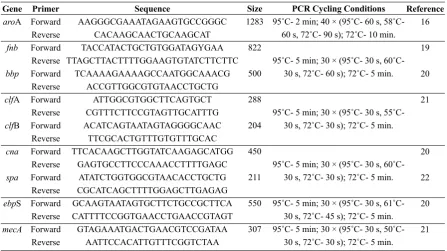
The tubes were subjected to thermal cycling (Ep-pendorf, Mastercycler® 5330, Germany) using the program shown in Table 1. The PCR products were analyzed by gel electrophoresis using 1% agarose gel containing safe stain (Sinaclon, Iran) and visualized by trans-illuminator (Uvitec, England). The size of
the amplified products was estimated by comparison
with a DNA ladder (Fermentas, USA). The aroA pos-itive isolates were considered as S. aureus and the
DNA stored at -70˚C, for analysis of selected viru -lence factors.
Phenotypic detection of MRSA. Screening of S.
aureus isolates for detection of phenotypic meth-icillin-resistant strains was performed by
antibi-otic susceptibility test, using 30 µg cefoxitin discs
(padtanteb, Iran) on Mueller Hinton Agar (Himedia, India) by disc diffusion (Kirby-Bauer) method, ac-cording to the guidelines of clinical and laboratory standards institute (CLSI) (18). According to CLSI recommendation, complete inhibition zone diameter
of ≤21mm was considered as S. aureus mecA positive and those with an inhibition zone of >22 mm were as mecA negative. A standard MRSA strain (ATCC 33591) was used as positive control.
Molecular detection of virulence genes. The presence of seven virulence-related genes (clfA, clfB, spa, fnb, bbp, ebpS and cna) and a methicil-lin-resistant mediated (mecA) gene was investi-gated in 75 S. aureus isolates with bovine mastitis milk origin. To detect virulence factors, a duplex or
monoplex PCR was performed with specific prim -ers and thermal conditions listed in Table 1. The
reaction mixture was the same, as for the amplifi -cation of aroA gene except for using specific prim -ers of each selected gene(s). The PCR conditions
for the amplification of genes are presented in Ta -ble 1. A standard S. aureus (ATCC 33591) and
dis-Table 1. List of primer sequences and thermal conditions used for amplification of selective genetic determinants in S. aureus
isolates with bovine mastitis milk origin
Reference 16 19 20 21 20 22 20 21 Gene aroA fnb bbp clfA clfB cna spa ebpS mecA Primer Forward Reverse Forward Reverse Forward Reverse Forward Reverse Forward Reverse Forward Reverse Forward Reverse Forward Reverse Forward Reverse Sequence AAGGGCGAAATAGAAGTGCCGGGC CACAAGCAACTGCAAGCAT TACCATACTGCTGTGGATAGYGAA TTAGCTTACTTTTGGAAGTGTATCTTCTTC TCAAAAGAAAAGCCAATGGCAAACG ACCGTTGGCGTGTAACCTGCTG ATTGGCGTGGCTTCAGTGCT CGTTTCTTCCGTAGTTGCATTTG ACATCAGTAATAGTAGGGGCAAC TTCGCACTGTTTGTGTTTGCAC TTCACAAGCTTGGTATCAAGAGCATGG GAGTGCCTTCCCAAACCTTTTGAGC ATATCTGGTGGCGTAACACCTGCTG CGCATCAGCTTTTGGAGCTTGAGAG GCAAGTAATAGTGCTTCTGCCGCTTCA CATTTTCCGGTGAACCTGAACCGTAGT GTAGAAATGACTGAACGTCCGATAA AATTCCACATTGTTTCGGTCTAA Size 1283 822 500 288 204 450 211 550 307
PCR Cycling Conditions
95˚C- 2 min; 40 × (95˚C- 60 s, 58˚C-60 s, 72˚C- 90 s); 72˚C- 10 min.
95˚C- 5 min; 30 × (95˚C- 30 s, 60˚C-30 s, 72˚C- 60 s); 72˚C- 5 min.
95˚C- 5 min; 30 × (95˚C- 30 s, 55˚C-30 s, 72˚C- 55˚C-30 s); 72˚C- 5 min.
95˚C- 5 min; 30 × (95˚C- 30 s, 60˚C-30 s, 72˚C- 60˚C-30 s); 72˚C- 5 min.
95˚C- 5 min; 30 × (95˚C- 30 s, 61˚C-30 s, 72˚C- 45 s); 72˚C- 5 min. 95˚C- 5 min; 30 × (95˚C- 30 s,
tilled water were used as positive and negative con-trols, respectively. The PCR products and a DNA ladder (Fermentas, USA) were loaded in a 1.5% agarose gel containing safe stain. The DNA bands were visualized using trans-illuminator (Uvitec, En-gland).
RESULTS
Molecular confirmation of suspected S. aureus
isolates. Out of 78 biochemically-suspected S. au-reus isolates, 75 were aroA positive and confirmed
as S. aureus. The products of PCR amplification of
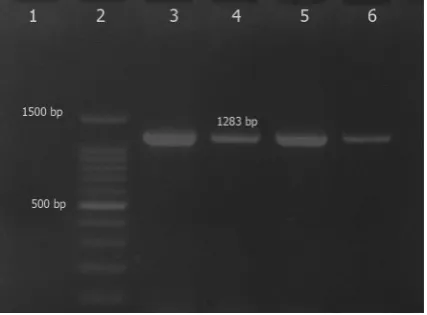
aroA gene in all isolates were uniform in size, ap-proximately 1283bp (Fig. 1).
Phenotype and genotype detection of methicil-lin-resistant S. aureus. Screening of 75 S. aureus isolates for detection of phenotypic methicillin-re-sistant strains showed that only 1 (1.3%) isolate was resistant to methicillin and had a complete inhibition
zone diameter of 15 mm. PCR amplification of mecA
confirmed the presence of mecA gene in this strain (Fig. 2).
Frequency and distribution of virulence deter-minants. The results of the detection of virulence determinants (clfA, clfB, spa, fnb, bbp, ebpS and cna) in S. aureus isolates using PCR are shown in Figs. 3 and 4.
Evaluation of 75 S. aureus isolates for the presence
Fig. 2. Agarose gel electrophoresis of the PCR products for
amplification of mecA in suspected MRSA Lane 1: positive control S. aureus (ATCC 33591), lane 2: MRSA isolate, lanes 3, 4 negative mecA isolates, lane 6: negative control and lane 5, 100bp ladder.
Fig. 3. Agarose gel electrophoresis of the PCR products for detection of clfA, clfB, cna and spa gene of some S. aureus
isolates, Lanes 1 and 3 negative and positive controls for
clfA and clfB genes, lanes 4 and 5, clfA+clfB+ isolates, lanes 6 and 8 negative and positive controls for cna and spa genes, lane 9 and 10, cna+spa+ and spa+ isolates respectively, lanes 2 and 7, 100bp ladder.
Fig. 1. Agarose gel electrophoresis of the PCR products for
amplification of aroA in S. aureus suspected isolates, Lanes 1 and 3: negative and positive controls, respectively, lanes 4-6, aroA positive isolates and lane 2, 100bp ladder
Fig. 4. Agarose gel electrophoresis of the PCR products for detection of fnb, bbp and ebpS gene of some S. aureus iso-lates, Lanes 1 and 3 negative and positive controls for fnb
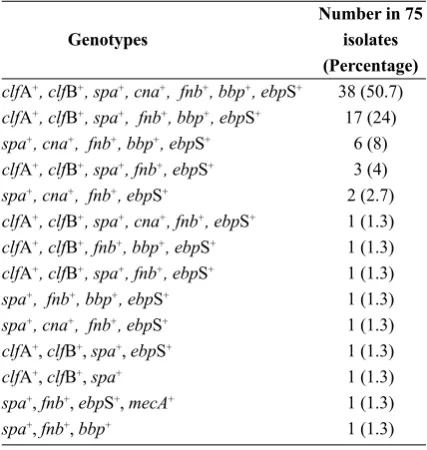
of the spa, clfA, clfB, bbp, fnb, can, ebpS and mecA genes showed that the spa with 98.7% prevalence is the most common evaluated gene. The fnb and ebpS genes with an equal prevalence of 97.3% were also amongst the most prevalent genes of these isolates. The prevalence of clfA and clfB were equally 84% and bbp and cna with the respected prevalence of 86.7% and 65.3% were the least common analyzed genes. Accordingly, 38 isolates (50.7%) possessed all of these virulence factors except mecA. Based on the results, 96% of the tested isolates have at least the fnb, ebpS and spa genes, indicating the important role of these genes in the pathogenesis of bovine S. aureus mastitis in southwest of Iran. Among the 75 isolates, only 1 (1.3%) was both phenotypically and genotypically methicillin-resistant. The prevalence of selected virulence-related genotypes in tested iso-lates is listed in Table 2.
DISCUSSION
S. aureus is the most frequent opportunistic patho-gen in humans and one of the major causes of chronic and sub-clinical mastitis in dairy cattle. The present study was performed since there was limited data on virulence factors of S. aureus with bovine mastitic milk origin in southwest of Iran. The resistance of S. aureus against various antibiotics is a critical concern
Table 2. Frequency of selected virulence-related genotypes in 75 isolates of S. aureus with bovine mastitis origin
Genotypes
clfA+, clfB+, spa+, cna+, fnb+, bbp+, ebpS+
clfA+, clfB+, spa+, fnb+, bbp+, ebpS+
spa+, cna+, fnb+, bbp+, ebpS+
clfA+, clfB+, spa+, fnb+, ebpS+
spa+, cna+, fnb+, ebpS+
clfA+, clfB+, spa+, cna+, fnb+, ebpS+
clfA+, clfB+, fnb+, bbp+, ebpS+
clfA+, clfB+, spa+, fnb+, ebpS+
spa+, fnb+, bbp+, ebpS+
spa+, cna+, fnb+, ebpS+
clfA+, clfB+, spa+, ebpS+
clfA+, clfB+, spa+
spa+, fnb+, ebpS+, mecA+
spa+, fnb+, bbp+
Number in 75 isolates (Percentage)
38 (50.7) 17 (24)
6 (8) 3 (4) 2 (2.7) 1 (1.3) 1 (1.3) 1 (1.3) 1 (1.3) 1 (1.3) 1 (1.3) 1 (1.3) 1 (1.3) 1 (1.3)
worldwide, but the methicillin resistance is the most well studied characteristic of this agent. MRSA usu-ally spreads from human to human, but its transmis-sion from animal to human is also possible (24, 25). Although MRSA has increasingly been recognized in farm animal populations in recent years, limited data is available with respect to the prevalence of MRSA in bovine mastitis milk sample in Iran. Our results sug-gest that there is a low prevalence (1.3%) of MRSA isolates in mastitis milk samples. This is consistent with studies of Virgin et al. (26) and Haran et al. (27) in USA and Hata et al. (28) in Japan, reporting the prevalence of 1-2% for MRSA. This sampling proto-col, in addition to the selective double enrichment pro-tocol for MRSA, may account for success in detecting MRSA and the higher rates of prevalence of MSSA isolates compared to previous studies. In contrast to
our finding, Kumar et al. 2011 (29) in India report -ed a 9.3% (10 of 107 isolates) prevalence for mecA positive S. aureus isolates from bovine mastitis milk. Such relatively high prevalence (16.7%) has also been reported in studies of Havaei et al. (30) in Esfahan, Iran. The inconsistency may be due to the difference in methodology, time and location of the studied area. S. aureus can produce a group of other virulence fac-tors, including adhesions factors needed for bacterial attachment to the host epithelial surfaces that is
essen-tial for the colonization, as the first step for initiation of infection. Therefore, identification of major viru -lence factors such as adhesins and determination of their frequency in isolates of S. aureus in any particu-lar area is necessary for vaccine development. A
vac-cine that induce an efficient immune response to these proteins could be efficient against different S. aureus strains that use adhesins for colonization (31, 32). Re-cently, few studies have been performed regarding S. aureus derived from bovine or ovine mastitis. In this regard, Momtaz et al. (33) detected some virulence factors of S. aureus isolates from clinical and subclin-ical bovine mastitis samples in the center of Iran. Saei et al. (34) detected some virulence genes of S. aureus isolates with ovine mastitis origin in the northwest of Iran.
S. aureus protein A is a major virulence factor that is responsible for evasion from host immune respons-es (14). In the prrespons-esent rrespons-esearch, the prevalence of this
gene was 98.7%, showing the significant role of this
gene in virulence of the tested S. aureus isolates.
Con-sistent with this finding, in the studies of Momtaz et
Gogoi-Tiwari et al. (36) in Australia, the prevalence of this gene in S. aureus isolates in dairy bovine masti-tis milk sample was reported to be 80.2%, 85.9% and 87.7%, respectively.
The fnb and ebpS with a similar prevalence of 97.3% were the second most prevalent virulence genes in the
present study. In relative consistency with our finding,
the frequency of fnb in comparable studies in other countries was reported to be 56% to 96% (35-37). Based on the study of Saei et al. (34) on S. aureus isolates from ovine mastitis in the northwest of Iran, the frequency of fnbA and fnbB were 90% and 77.7%, respectively. In contrast to the results of present study, the ebpS were detected in 25% of S. aureus isolates with bovine mastitis in Poland (38). However,
con-sistent with our findings, Ikawaty et al. (37) found
ebpS in all of the tested isolates. It seems that these two genes have a critical role in the pathogenesis of mastitis in animals.
S. aureus may interact with bone sialoprotein, a gly-coprotein of bone, and dentine extracellular matrix to colonize at the site of infection (39). In our study, 86.9% of isolates possessed the bbp gene, but in sim-ilar research in Australia (34), this gene was detected in only 9.1% of isolates. However, Puacz et al. (40) reported the presence of 93.9% of this gene in S. au-reus derived from bovine mastitis in central-eastern Poland.
Our result revealed that the frequency of clfA and clfB in examining isolates is equally 84%. The prev-alence of clfA in isolates with bovine mastitis was reported to be 19%-100% and clfB was detected in 91.8%-92.9% of the isolates (33, 35-37).
Although cna is a major virulence factor in staph-ylococcal diseases, this gene had the lowest frequen-cy (65.3%) in the tested isolates. Consistent with this
finding, the prevalence of this gene in the study of
Gogoi-Tiwari et al, (36), Ikawaty et al. (37) and Klein et al. (35) was reported to be 31.2%, 49% and 22.4%, respectively. Rhem et al. (41) and Elasri et al. (42) stated the role of the Cna protein in the osteomyelitis due to S. aureus, but according to the study of Elasri et al. (42), this protein does not have any important contribution in human skeletal muscle infections, though it contributes to human S. aureus keratitis. Consequently, cna may not play an important role in the pathogenesis of bovine mastitis due to S. aureus.
According to our findings, 75 isolates of S. aureus from bovine mastitis milk samples could be grouped
in 14 genotype profiles, based on the selected follow
-ing genes (Table 2) and the most frequent profile with
a prevalence of 50.7% belongs to the one that
pos-sessed at least 7 of 8 selected genes. These findings confirm the inconsistency of this bacterium in the
southwest of Iran and help us in establishing a suitable protective approach to decrease the occurrence of this important disease in dairy farms. Similarly, based on 7
genes, Coelho et al. (43) reported 27 different profiles
for S. aureus isolates recovered from intra-mammary infections amongst 25 dairy cattle farms in Rio de Ja-neiro, Brazil.
In conclusion, although S. aureus isolates with
bo-vine mastitis origin differ in their genetic profile in the
southwest of Iran, 96% of all isolates simultaneously possessed fnb, ebpS and spa genes, representing the
significant role of these genes in pathogenesis of bo -vine intra-mammary infection due to prevalence of S. aureus in this area. This can help in the explora-tion and control of S. aureus mastitis in bovine dairy farms. Whether the comparative prevalence of select-ed virulence genes of S. aureus is applicable to the introduction of a protective vaccine against staphylo-coccal bovine mastitis, cannot be deducted from the data existing in this research. However, it may be use-ful bearing in mind this evidence, in the development of an effective vaccine against this important disease. On the other hand, it seems that in tested area, the risk for the spread of MRSA from bovine sources into the human population will be low. However, high risk persons who are in close contact with MRSA-infected cattle, including veterinarians, slaughterhouse staff, and livestock workers, may get infected with bovine mastitis milk.
ACKNOWLEDGEMENTS
This work was supported by a grant from the Re-search Council of Shahid Chamran University of Ahvaz. We would like to thank the University for the
provided financial support.
REFERENCES
2. Bradley AJ. Bovine Mastitis: An evolving disease. Vet J 2002;164:116-128.
3. Peton V, Le Loir Y. Staphylococcus aureus in veteri-nary medicine. Infect Genet Evol 2014; 21:602-615.
4. Chambers HF. Methicillin resistance in staphylococci: molecular and biochemical basis and clinical implica-tions. Clin Microbiol Rev 1997;10,781-791.
5. Davis MF, Iverson SA, Baron P, Vasse A, Silbergeld EK, Lautenbach, E, et al. Household transmission of meticillin-resistant Staphylococcus aureus and other staphylococci. Lancet Infect Dis 2012;12:703-716.
6. Baptiste KE, Williams K, Williams NJ, Wattret A, Clegg PD, Dawson, S. et al. Methicillin-resistant staph-ylococci in companion animals. Emerg Infect Dis
2005;11:1942-1944.
7. Rybak M, Laplante K. Community-associated meth-icillin-resistant Staphylococcus aureus: A review.
Pharmacotherapy 2005;25:74-85.
8. Thompson-Crispi K, Atalla H, Miglior F, Mallard BA. Bovine mastitis: Frontiers in immunogenetics. Front Immunol 2014;5:493.
9. Hu C, Gong R, Guo A, Chen H. Protective effect of
ligand-binding domain of fibronectin-binding protein
on mastitis induced by Staphylococcus aureus in mice.
Vaccine 2010;28:4038-4044.
10. Flock JI. Extracellular-matrix–binding proteins as tar-gets for the prevention of Staphylococcus aureus infec-tions. Mol Med Today 1999;5:532-537.
11. Atshan SS, Nor Shamsudin M, Sekawi Z, Lung LTT, Hamat RA, Karunanidhi A, et al. Prevalence of
adhe-sion and regulation of biofilm-related genes in different
clones of Staphylococcus aureus. J Biomed Biotechnol
2012;1-10.
12. Zong Y, Xu Y, Liang X, Keene DR, Höök A, Gu-rusiddappa S, et al. A ‘collagen hug' model for Staph-ylococcus aureus CNA binding to collagen. EMBO J
2005;24:4224-4236.
13. Bi C, Dong X, Zhong X, Cai H, Wang D, Wang L. Aca-cetin protects mice from Staphylococcus aureus blood-stream infection by inhibiting the activity of sortase A.
Molecules 2016;21:1285.
14. Sutra L, Poutrel B. Virulence factors involved in the pathogenesis of bovine intramammary infections due to
Staphylococcus aureus. J Med Microbiol
1994;40:79-89.
15. Markey B, Leonard F, Archambault M, Cullinane A, Maguire D (2013). Clinical Veterinary Microbiology. 2nd ed. Mosby Elsevier. Edinburgh London.
16. Marcos JM, Soriano AC, Salazar MS, Moral CH,
Ra-mos SS, Smeltzer MS, et al. Rapid identification and
typing of Staphylococcus aureus by PCR-restriction fragment length polymorphism analysis of the aroA gene. J Clin Microbiol 1999;37:570-574.
17. Sauer P, Síla J, Štosová T, Večeřová R, Hejnar P,
Vágnerová I, et al. Prevalence of genes encoding ex-tracellular virulence factors among meticillin-resistant
Staphylococcus aureus isolates from the University Hospital, Olomouc, Czech Republic. J Med Microbiol
2008;57:403-410.
18. Clinical and Laboratory Standards Institute (2015) Performance standards for antimicrobial susceptibility
testing; Twenty-fifth informational supplement, Docu -ment M100- S25. CLSI, Wayne, PA.
19. Ingham KC, Brew S, Vaz D, Sauder DN, McGavin MJ. Interaction of Staphylococcus aureus fibronectin-bind
-ing protein with fibronectin affinity, stoichiometry, and
modular requirements. J Biol Chem
2004;279:42945-42953.
20. Paniagua-Contreras G, Sáinz-Espuñes T, Mon-roy-Pérez E, Raymundo Rodríguez-Moctezuma J, Arenas-Aranda D, Negrete-Abascal E, et al. Virulence markers in Staphylococcus aureus strains isolated from hemodialysis catheters of Mexican patients. Ad-vances Microbiol 2012;2:476-487.
21. Ghasemian A, Najar Peerayeh S, Bakhshi B, Mirzaee M. The microbial surface components recognizing adhesive matrix molecules (mscramms genes among clinical isolates of Staphylococcus aureus from hospi-talized children. Iranian J Pathol 2015;10:258.
22. Ster C, Gilbert FB, Cochard T, Poutrel B.
Transcrip-tional profiles of regulatory and virulence factors of
Staphylococcus aureus of bovine origin: oxygen im-pact and strain-to-strain variations. Mol Cell Probe
2005;19:227-235.
23. Merlino J, Watson J, Rose, B, Beard-Pegler M, Gottli-eb T, Bradbury R, et al. Detection and expression of methicillin/oxacillin resistance in multidrug-resistant and nonmultidrug-resistant Staphylococcus aureus in central Sydney. J Antimicrob Chemoth
2002;49:793-801.
24. Juhász-Kaszanyitzky É, Jánosi S, Somogyi P, Dán Á, van Bloois LV, van Duijkeren E, et al. MRSA trans-mission between cows and humans. Emerg Infect Dis
2007;13(4):630-632.
25. Sakwinska O, Giddey M, Moreillon M, Morisset D, Waldvogel A, Moreillon P. Staphylococcus aureus host range and human-bovine host shift. Appl Environ Mi-crob 2011;77(17):5908-5915.
26. Virgin JE, Van Slyke TM, Lombard JE, Zadoks RN. Methicillin-resistant Staphylococcus aureus detection in US bulk tank milk. J Dairy Sci 2009;92:4988-4991.
27. Haran KP, Godden SM, Boxrud D, Jawahir S, Bender JB, Sreevatsan S. Prevalence and characterization of
Staphylococcus aureus, including methicillin-resis-tant Staphylococcus aureus, isolated from bulk tank milk from Minnesota dairy farms. J Clinl Microbiol
2012;50:688-695.
Eguchi M. Genetic variation among Staphylococcus aureus strains from bovine milk and their relevance to methicillin-resistant isolates from humans. J Clin Mi-crobiol 2010;48:2130-2139.
29. Kumar R, Yadav BR, Singh RS. Antibiotic resis-tance and pathogenicity factors in Staphylococcus aureus isolated from mastitic Sahiwal cattle. J Biosci
2011;36:175-188.
30. Havaei SA, Assadbeigi B, Esfahani BN, Hoseini NS, Rezaei N, Havaei SR. Detection of mecA and entero-toxin genes in Staphylococcus aureus isolates asso-ciated with bovine mastitis and characterization of Staphylococcal cassette chromosome mec (SCCmec) in MRSA strains. Iran J Microbiol 2015;7:161-167.
31. Khan A, Javed MT, Mahmood F, Hussain R. Molecular analysis of virulent genes (coa and spa) of Staphylococ-cus aureus involved in natural cases of bovine mastitis.
Pakistan J Agri Sci 2013;50: 739-743.
32. Pereira UP, Oliveira DG, Mesquita LR, Costa GM,
Pereira LJ. Efficacy of Staphylococcus aureus vaccines for bovine mastitis: A systematic review. Vet Microbiol
2011;148:117-124.
33. Momtaz H, Rahimi E, Tajbakhsh E. Detection of some virulence factors in Staphylococcus aureus isolated from clinical and subclinical bovine mastitis in Iran.
African J Biotechnol 2010;9:3753-3758.
34. Saei HD, Aghdasi S, Mohammad-Zadeh H. Frequency analysis of adhesin genes cna, fnbA and fnbB in Staph-ylococcus aureus isolates recovered from sheep masti-tis. Iranian Vet J 2013;9:19-29.
35. Klein RC, Fabres-Klein MH, Brito MA, Fietto LG, Ri-bon Ade O. Staphylococcus aureus of bovine origin: Genetic diversity, prevalence and the expression of ad-hesin-encoding genes. Vet Microbiol 2012;160:183-188.
36. Gogoi-Tiwari J, Waryah CB, Eto KY, Tau M, Wells K, et al. Relative distribution of virulence-associated
factors among Australian bovine Staphylococcus au-reus isolates: Potential relevance to development of an effective bovine mastitis vaccine. Virulence
2015;6:419-423.
37. Ikawaty R, Brouwer EC, Van Duijkeren E, Mevius D, Verhoef J, Fluit AC. Virulence factors of genotyped bovine mastitis Staphylococcus aureus isolates in the Netherlands. Int J Dairy Sci 2010;5:60-70.
38. Kot B, Szweda P, Frankowska-Maciejewska A,
Piech-ota M, Wolska K. Virulence gene profiles in Staphy-lococcus aureus isolated from cows with subclinical mastitis in eastern Poland. J Dairy Res
2016;83:228-235.
39. Tung H S, Guss B, Hellman U, Persson L, Rubin K, and Rydén C. A bone sialoprotein-binding protein from
Staphylococcus aureus: a member of the staphylococ-cal Sdr family. Biochem J 2000;345:611-619.
40. Puacz E, Ilczyszyn WM, Kosecka M, Buda A, Dud-ziak W, Polakowska K, et al. Clustering of Staphylo-coccus aureus bovine mastitis strains from regions of Central-Eastern Poland based on their biochemical and genetic characteristics. Polish J Vet Sci
2015;18:333-342.
41. Rhem M, Lech E, Patti J, McDevitt D, Hook M, Jones D, Wilhelmus K. The collagen-binding adhesin is a virulence factor in Staphylococcus aureus keratitis. In-fect Immun 2000;68:3776-3779.
42. Elasri MO, Thomas JR, Skinner RA, Blevins JS, Been-ken KE, Nelson CL, et al. Staphylococcus aureus colla-gen adhesion contributes to the pathocolla-genesis of osteo-myelitis. Bone 2002;30:275-280.
43. Coelho SMO, Reinoso E, Pereira IA, Soares LC, Demo M, Bogni C, et al. Virulence factors and anti-microbial resistance of Staphylococcus aureus isolated from bovine mastitis in Rio de Janeiro. Pesq Vet Bras