O
RIGINAL
A
RTICLES
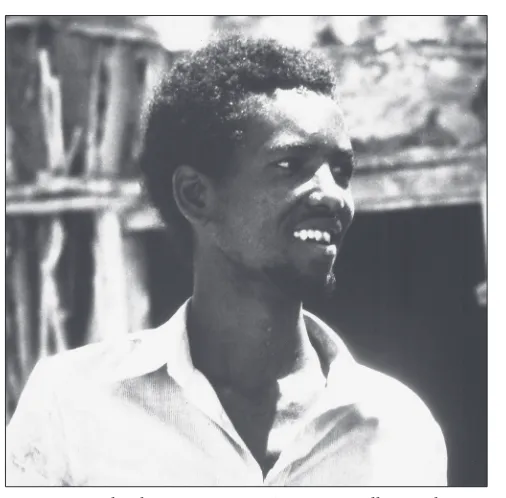
Coming soon after the euphoria of the smallpox eradication triumph (Fig. 1), ‘the greatest achievement in public health in the 20th century’, polio became the next logical vaccine-preventable disease to be targeted for eradication, even though the proposal was not without its detractors, including many of the most prominent public health authorities, some directly involved in the smallpox eradication.1,2
The initial target date, 2000, unfortunately came and went without eradication in sight. So too did the next scheduled date of 2005 (a target set by Rotary International, the most important non-governmental supporter of the Global Polio Eradication Initiative). As yet no future target date has been set. Campaign fatigue has now become a further setback, particularly in the remaining endemic countries such as India where children are now being concealed from the immunisation teams. In another endemic country, Nigeria, politically motivated rumours which surfaced in 2003, alleging that the polio vaccine was maliciously adulterated with contraceptive drugs, led to a catastrophic resurgence of polio in that country and subsequent export of the virus to 20 other countries.3 The feasibility of the
eradication of polio is again under serious question.4,5
Eradication
Infectious agents that are eradicable are those where the chain of transmission can be broken by an intervention such as a vaccine and where there is no reservoir such as chronic or persistent infection or a non-human host (Fig. 2).6-9 Vaccines
are theoretically able to successively control, eliminate and eradicate these diseases (Table I).
Eradication of disease – the case study of polio
Barry D Schoub
Executive Director, National Institute for Communicable Diseases; Professor of Virology and Communicable Disease Surveillance
Barry D Schoub, MB BCh, MMed, MD, DSc, FRCPath, FCPath (SA), FRSSAf
Launched in October 1988 by the 41st World Health Assembly (WHA Resolution 41.28), the Global Polio Eradication Initiative aimed to eradicate poliomyelitis from the planet by the year 2000. It is the largest international public health initiative ever undertaken, costing several billion dollars and immunising billions of children worldwide. It has also been mired in controversy almost since its outset.
[image:1.637.330.587.59.764.2]Corresponding author: B D Schoub ([email protected])
Fig. 1. The world's last recorded case of epidemic smallpox – Ali Maow Maalin, Somalia, 1977 (WHO photo by J Wickett).
[image:1.637.329.582.209.458.2]O
RIGINAL
A
RTICLES
[image:2.637.70.566.165.227.2]Smallpox, the only disease so far to be eradicated, complied admirably with the requirements of an eradicable disease (Table II).
Undoubtedly the eradication of polio will be far more difficult. What polio shares with smallpox is the availability of a highly effective and cheap vaccine and a virus restricted in nature to humans, with chronic persistent infections occurring only very rarely (discussed below). In contrast to smallpox, what complicates polio eradication is the much greater difficulty in recognition of infection, as the great majority (>99%) of infections are asymptomatic, greatly complicating surveillance and monitoring. The geopolitical climate with multiple conflicts throughout the world, compared with the Cold War smallpox era with relatively few open conflicts, has also greatly hindered polio immunisation efforts.
The strategy, as with smallpox, aims to achieve maximum vaccine coverage to terminate the circulation of the virus in the population coupled with a reliable surveillance tool for the detection of remaining pockets of virus circulation and to monitor progress. Herd immunity is achieved with high routine vaccine coverage (at least 90% for all 3 doses) supplemented by mass immunisation programmes (immunising all infants under 5 years of age independently of the routine immunisation programme on a single day or few days) and mop-up immunisation (house-to-house visits to reach infants missed in the mass immunisation campaign). Syndromic surveillance for acute flaccid paralysis (AFP), the most characteristic clinical presentation of polio, is used as an indicator of virus circulation.
What has been achieved so far?
In the two decades of the eradication initiative the incidence of polio has been drastically reduced by over 99%.10 It was
estimated that there were over 350 000 cases of polio in 125 countries in 1988 compared with 2003 when, with improved surveillance, only 784 cases were reported in 6 countries. (Unfortunately there has been a resurgence over the past 3 years – 1 255 cases in 2004, 1 979 cases in 2005 and 1 996 cases in 2006, mainly as a result of the suspension of immunisation programmes in Northern Nigeria in 2003.11) Both polio
vaccines, trivalent inactivated polio vaccine (TIPV) and trivalent oral polio vaccine (TOPV) using a live attenuated strain of poliovirus termed Sabin-like virus, have proven to be among the most successful human vaccines. The majority of the world’s population now live in countries certified by the World Health Organization as being polio free – the Americas in 1994, the Western Pacific Region in 2000 and the European Region in 2002. It would also appear that type 2 poliovirus has probably already been eradicated from the world – the last case was reported in 1999.12
Up to 30 May 2007, 183 wild-type polio cases had been reported globally, less that half of the 453 cases reported for 2006 at the same date.11 In 2006 polio was confirmed in
17 countries, 94% (1 808 cases) in the 4 endemic countries of Nigeria, India, Pakistan and Afghanistan. (An endemic country is defined as one where the circulation has never been interrupted.) The worst affected country, Nigeria, was responsible for 56% of all cases (1 123) in 2006, followed by India with 34% (674). From these endemic countries, also referred to as reservoir countries, polio was exported to 13 countries where collectively 128 cases (6%) were reported in 2006.11
What still remains to ‘finish the job’?
Strategies differ somewhat for the endemic/reservoir countries as for the imported countries. In the imported countries polio has been relatively easy to eliminate with multiple rounds of mass immunisation. For example, the type 1 polio outbreak in Namibia in 2006 was fully controlled and eliminated within 60 days.13 Similarly the large outbreaks in 2005 in Indonesia and
Yemen, with 303 and 478 cases respectively, were followed by only 2 cases and 1 case respectively in 2006.10,11,14 The situation
[image:2.637.70.302.672.776.2]in the endemic countries, however, is considerably more complicated. In Afghanistan and Northern Pakistan conflicts have hindered immunisation teams. However, the two main problematic regions in the world are the northern states of Nigeria and Uttar Pradesh and Bihar states in India. Nigeria,
Table I. Epidemiological modification of infectious diseases by vaccination
Organism present in population Surveillance Vaccination programmes
Level 1: Control Yes – at low level Required Required
Level 2: Elimination Only imported cases and perhaps a Required Required
restricted number of contacts
Level 3: Eradication No – not present worldwide Not required Not required
Table II. Smallpox: Factors favouring eradication
• Severe disease – high mortality and sequelae • No animal reservoir
• Very few subclinical cases
• Cases infectious only at onset of rash • Recurrence of infectivity never occurred • Only one serotype
• Effective, stable vaccine
O
RIGINAL
A
RTICLES
which is still suffering the legacy of the 2003 suspension of polio immunisation, is the worst affected country in the world with multiple lineages of type 1 virus and also type 3 virus circulating in the population. There has however been considerable improvement in 2007 – 68 cases to date for 2007 compared with 245 to the same date in 2006.11 Unfortunately
the situation appears to have deteriorated in India, with 44 cases up to 8 May compared with 26 to the same date in 2006, partly due to falling immunisation coverage in parts of Uttar Pradesh and Bihar because of growing parental resistance. Even more problematic here has been the difficulty in achieving successful immunisation, even with multiple rounds of vaccination, because of very high population density, crowding and high levels of diarrhoeal disease interfering with the immunogenicity of TOPV.15 Fortunately, recent studies in
Uttar Pradesh using high-potency monovalent type 1 polio vaccine, mOPV1, have demonstrated a protective efficacy about 3 times that of TOPV and have raised hopes that multiple rounds (7 - 8) of mOPV1 as well as mOPV3, as appropriate, may be effective in eliminating transmission in this difficult region.16
Post-eradication planning
With the eradication goal-line on the horizon, planning for the post-eradication era is well underway and a number of significant problems and difficulties will need to be addressed, some of which were not envisaged at the commencement of the initiative.17-19 The ultimate aim of eradication, as
currently defined, is to be able ultimately to dispense with control measures such as vaccination, as was the case with smallpox. Unfortunately, lessons from the successful smallpox eradication provide less guidance for the polio eradication initiative. Stopping polio vaccination in the future will have awesome implications and there would need to be convincing assurance that the virus would not reappear before such a momentous decision is taken. The risk could take the form of either wild-type virus escaping from a facility or vaccine-derived polioviruses. Accidental escape of wild-type virus from laboratories has indeed already occurred. For example, as recently as 2003, 7 cases of type 2 polio, which had been eradicated in 1999, were caused by a recognised laboratory strain of polio, MEF-1.20 An escape incident has also been
recorded from a vaccine production plant in The Netherlands which used wild-type virus for IPV manufacture and caused asymptomatic infection of a factory worker and his child.21
Deliberate release of wild-type polio as a bioterrorist weapon poses a potential future risk, although this virus would make a very poor biological weapon because the great majority of infections would be sub-clinical and an effective vaccine is available.
Reappearance of poliovirus could also be due to virus derived from OPV.17-19 Although the risk of paralytic polio
from the vaccine virus is 10 000 times less than for wild-type virus, 1 in 2 million for vaccine virus as against 1 in 200 for wild-type virus, it was this minute risk of vaccine-associated paralytic poliomyelitis (VAPP) that motivated most countries in the developed world to switch from TOPV to TIPV for routine immunisation. Being a live RNA virus, Sabin-like virus mutates in the gastrointestinal tract and in doing so may undergo phenotypic changes including the potential for acquiring neurovirulence and transmissibility. Poliovirus, both wild-type and Sabin-like virus, generally produce acute self-limiting infections of the gastrointestinal tract and do not cause chronic infections with persistent excretion of virus. Sabin-like viruses are normally not isolated from the stool beyond 1 month after receipt of vaccine. Conventionally vaccine viruses that have mutated but still have less than 1% nucleotide sequence changes from the original parental vaccine strain in the VP1 gene are classified as Sabin-like viruses. Those with more than 1% change are termed VDPV (vaccine-derived poliovirus). If Sabin-like virus is provided with opportunities to multiply beyond a month after receiving vaccine it could generate these neurovirulent and transmissible mutational changes. These opportunities could occur in children with primary humoral immunodeficiency, a rare inherited disorder, who may be unable to clear the Sabin-like virus and persistently excrete for months to years. To date only 31 such cases have been described world wide, almost all in developed countries. (It is deemed unlikely that such cases would survive in developing countries because of the long-term expense of maintenance therapy. Cell-mediated immunodeficiency, such as caused by HIV, does not result in persistent excretion.) These viruses are termed iVDPV (immunodeficient vaccine-derived poliovirus). Secondly, opportunities for mutational change may occur when the virus is able to circulate between the gastrointestinal tracts of susceptible persons in populations where the wild-type virus has been eliminated but vaccination rates have fallen, resulting in populations highly susceptible to infection. In this situation Sabin-like virus often also recombines with type C enteroviruses in the gut, ultimately acquiring phenotypic characteristics of neurovirulence and transmissibility
equivalent to those of the wild-type virus. To date, 8 outbreaks due to this transmissible neurovirulent mutant, termed cVDPV (circulating vaccine-derived poliovirus), have been described on three continents causing over 100 cases of paralytic polio and involving all three types of poliovirus.22,23 The third
VDPV, aVDPV (ambiguous vaccine-derived poliovirus) refers to VDPV isolates incidentally detected by surveillance of environmental sites where the immune status of the virus excretor is unknown.
The remaining questions
O
RIGINAL
A
RTICLES
to be eradicated. One of the most serious challenges that currently confronts the polio eradication initiative is to sustain the impetus of the initiative, in particular in competition with enormously pressing competing health needs and especially in the face of the doubts and scepticism.4,5 In essence, can polio be
eradicated and should polio be eradicated?
Can polio be eradicated?
In the remaining pre-eradication phase, what is, in reality, left to address is the main remnant endemic reservoir pockets of Northern Nigeria and Uttar Pradesh and Bihar states of India. Nigeria has certainly made significant progress since the 2003 setback with less than half reported cases in 2007 compared with 2006 up to the same date in May, although India has unfortunately deteriorated from 2006 to 2007 (33 - 55 as of 30 May),11 although promising data from recent trials of mOPV1
in Uttar Pradesh state may give cause for optimism for this rather intractable region.16
More complex is the post-eradication phase and, specifically, the risk of wild-type virus escape and VDPV emergence. Several strategies are planned. A global survey of laboratories that have stored wild-type virus, or materials which potentially could contain wild-type virus, is underway throughout the world. Once completed, laboratories will be segregated into two categories – the risk elimination category and the risk management category. The former, comprising most laboratories in the world, will destroy all material potentially containing wild-type poliovirus. The few laboratories in the risk management category will need to keep material only under regularly supervised bio-safety level-3 containment. Similarly, vaccine manufacturing plants using wild-type virus to produce TIPV will need to propagate the virus under regulated BSL-3 containment and TIPV vaccination will be mandatory for all workers and their contacts.
Surveillance forms a major component of the eradication campaign. A laboratory network co-ordinated by the WHO and consisting of over 125 laboratories throughout the world has been established and is organised in three levels – national laboratories for virus isolation and preliminary characterisation, regional reference laboratories for confirmation and more specialised testing and specialist laboratories. In the post-eradication era laboratory surveillance will necessarily have to continue for many years if not indefinitely as long as the virus is still present in laboratories.
When eradication finally arrives, most countries in the world which are TOPV users will have the option of either going ‘cold turkey’ or switching to TIPV. The ‘cold turkey’ option refers to a synchronous cessation of TOPV where all countries would co-ordinate a global mass immunisation day or few days and then permanently cease the use of TOPV. This is essential to avoid ongoing use of TOPV in some countries that could endanger neighbouring countries who stopped TOPV
and who would therefore be vulnerable to cVDPV. The WHO has planned for a stockpile of over 2 billion doses of OPV which could be rushed to a potential hotspot should polio reappear in any part of the world in the post-eradication era.
Should polio be eradicated?
Many countries in the developed world are unlikely to cease immunisation in the post-eradication era because of the fear that the disease will recur either from accidental or deliberate wild-type virus release or from VDPV. Using OPV from the stockpile to deal with any possible future outbreak carries its own risks (‘fighting fire with fire’), potentially creating the very conditions that give rise to cVDPV, i.e. introducing OPV into a susceptible population. Careful planning would indeed be required should a vaccine response be needed to stamp out a future re-emerging polio focus to ensure that the remedial campaign is short and sharp, possibly combining TOPV with TIPV administered to surrounding contacts.
The eradication initiative has been criticised for diverting precious and limited financial and human resources away from primary health care needs.24 Financially, however, a world free
of the need for polio vaccine would benefit by saving US$1.5 billion per year in immunisation costs alone, which could be passed on to other health care needs. The alternative option, that of controlling polio at a lower level, which relies on routine immunisation rather than the more intense eradication initiative, has been shown in a recent modelling study to potentially result in greater cumulative costs and a far larger number of cases.25
At least as important as the cost-benefit is the enormous value in sensitising the general public to the benefits of immunisation and in the mobilisation of hundreds of
thousands of volunteers who could subsequently be motivated for other primary health care needs in a future polio-free world. Another valuable spin-off of the eradication initiative has been the creation of the network of polio laboratories worldwide which are already being utilised for other programmes which require laboratory support, for example measles.
Are other diseases eradicable in the
future?
O
RIGINAL
A
RTICLES
What will now need to change is not to discard the concept of eradication of disease because of the unforeseen difficulties in the polio eradication initiative, but rather that the definition of eradication may need to be revised. Recent concerns about smallpox reappearing as a biological weapon have shown that even with that relatively easily eradicable disease the need for vaccine has reappeared. With polio many developed countries will not cease immunising their citizens with TIPV even well after the virus has been eradicated for fear of accidental or deliberate reappearance of the virus. Eradication could be re-defined as the absence of evidence of the presence of an organism in the human population, but omitting any reference to cessation of control measures or cessation of surveillance. Another further theoretical category could now be added, that of extinction, which would indicate the permanent and absolute absence of an organism from the planet so that control measures could confidently be permanently stopped.6 It is
highly doubtful whether this stage could be reached with any infectious organism.
References
1. Fenner F. Global eradication of smallpox and discussion. Rev Infect Dis 1982; 4: 923-924. 2. Evans AS. The eradication of communicable diseases: Myth or reality? Am J Epidemiol 1985;
122: 199-207.
3. Jegede AS. What led to the Nigerian boycott of the polio vaccination campaign? PLoS Medicine 2007; 4: 0001-0006.
4. Arita I, Nakane M, Fenner F. Is polio eradication realistic? Science 2006; 312: 852-854. 5. Khuri-Bulos N. Polio eradication – rethinking the endpoint of the end game. Lancet 2004; 4:
262-263.
6. Dowdle WR. The principles of disease elimination and eradication. Bull World Health Organ
1998; 76: 22-25.
7. Arita I, Wickett J, Nakane M. Eradication of infectious diseases: Its concept, then and now. J Infect Dis 2004; 57: 1-6.
8. Recommendations of the International Task Force for Disease Eradication. MMWR Morb Mortal Wkly Rep 1993; 42: 1-38.
9. Aylward B, Hennessy KA, Zagaria N, Olive JM, Cochi S. When is a disease eradicable? 100 years of lessons learned. Am J Public Health 2000; 90: 1515-1520.
10. Progress towards interruption of wild poliovirus transmission – worldwide, January 2004 – March 2005. MMWR Morb Mortal Wkly Rep 2005; 54: 408-412.
11. Wild poliovirus weekly update. Global Polio Eradication Initiative. 30 May 2007. http:// www.polioeradication.org/casecount.asp (last accessed 4 June 2007).
12. World Health Organization. Transmission of wild poliovirus type 2 – apparent global interruption. Wkly Epidemiol Rec 2001; 76: 95-97.
13. Outbreak of type-1 wild poliovirus in adults, Namibia 2006. Wkly Epidemiol Rec 2006; 81(45): 425-430.
14. Resurgence of wild poliovirus type 1 transmission and consequences of importation – 21 countries, 2002 – 2005. MMWR Morb Mortal Wkly Rep 2006; 55(6): 145-150.
15. John TJ, Shah NK, Thacker N. Indian Academy of Pediatrics and Polio Eradication in India.
Indian Pediatr 2006; 43: 765-768.
16. Grassly NC, Wenger J, Durrani S, et al. Protective efficacy of a monovalent oral type 1 poliovirus vaccine: a case-control study. Lancet 2007; 369: 1356-1362.
17. Aylward RB, Cochi SL. Framework of evaluating the risks of paralytic poliomyelitis after global interruption of wild poliovirus transmission. Bull World Health Organ 2004; 82(1): 40-46.
18. Minor PD. Polio eradication, cessation of vaccination and re-emergence of disease. Nature Rev
2004; 2: 473-482.
19. Dowdle WR, De Gourville E, Kew OM, Pallansch MA, Wood DJ. Polio eradication: the OPV paradox. Rev Med Virol 2003; 13: 277-291.
20. Deshpande JM, Nadkarni SS, Siddiqui ZA. Detection of MEF-1 laboratory reference strain of poliovirus type 2 in children with poliomyelitis in India in 2002 & 2003. Indian J Med Res
2003; 118: 217-223.
21. Dowdle WR, Wolff C, Sanders R, Lambert S, Best M. Will containment of wild poliovirus in laboratories and inactivated poliovirus vaccine production sites be effective for global certification? Bull World Health Organ 2004; 82(1): 59-62.
22. Update on vaccine-derived polioviruses. MMWR Morb Mortal Wkly Rep 2006; 55(40): 1093-1097.
23. Dowdle W, Kew O. Vaccine-derived polioviruses: Is it time to stop using the word ‘rare’?
J Infect Dis 2006; 194: 539-541.
24. Wigton A, Hussey G, Fransman D, Kirigia J, Makan B. The winter 1996 mass immunization campaign – is it the best strategy for South Africa at this time? S Afr Med J 1996; 86(7): 794-795.