GUEST EDITORS
Stacy M. Carter
A,B,G, Jan E. Ritchie
C,D,Eand Peter Sainsbury
B,FACentre for Values, Ethics and the Law in Medicine, University of Sydney
BSchool of Public Health, University of Sydney
CSchool of Public Health and Community Medicine, University of New South Wales
DSchool of Public Health, Griffith University
EInternational Union for Health Promotion and Education
FPopulation Health, Sydney South West Area Health Service
GCorresponding author. Email: [email protected]
On qualitative research and public health
This issue of the NSW Public Health Bulletin presents exam-ples of qualitative enquiry in public health. To introduce these papers, we will make some arguments about qualitative
enquiry. What is ‘good’ qualitative research? What is ‘poor’ qualitative research? How can we tell the difference? Why does it matter? How can you improve the quality of the qualitative research you commission or conduct?
Qualitative research is at a high-point of popularity in public health in Australia. As a rough and limited metric, we searched Medline on 19 June 2009 using the search string ((qualitative research.mp. OR Qualitative Research/ OR qualitative method*.mp. OR qualitative stud*.mp.) AND exp Public Health/ AND (australia.mp. or exp Australia/)). This search returned no hits before 1990, 57 papers published between 1991 and 2000, and 640 papers for the period 2001 to 2009. You might expect that, as qualitative researchers, we would be celebrating! Rather, we have shared concerns that the new-found popularity of qualitative research in public health and health services might be its downfall. We worry that it may produce so much slipshod qualitative research that audiences lose faith in it as a genre, either because the work self-evidently fails to be useful or illumi-nating, or because its authors are unable to defend it.
Danger lurks in the illusion that ‘anyone can do’ qualitative research. Epidemiological research is difficult for novices to do unsupervised. Complex statistics are more or less
NSW PUBLIC HEALTH
BULLETIN
Qualitative Research
Doing good qualitative research in public health:
not as easy as it looks
Abstract: In this paper, we discuss qualitative research for public health professionals. Quality matters in qualitative research, but the principles by which it is judged are critically different from those used to judge epidemiology. Compared to quantita-tive research, good quality qualitaquantita-tive studies serve different aims, answer distinct research questions and have their own logic for sampling, data collec-tion and analysis. There is, however, no need for antagonism between qualitative research and epidemiology; the two are complementary. With theoretical and methodological guidance from expe-rienced qualitative researchers, public health profes-sionals can learn how to make the most of qualitative research for themselves.
unapproachable without formal training, likewise the sophisticated epidemiological designs required for publica-tion in mainstream public health journals. In contrast, anyone who speaks a language can have a conversation with someone, write about it and call it research. This can lead to a proliferation of work calling itself qualitative research that bears little resemblance to the best practices in the field.
In this editorial, we describe what we mean by good quali-tative research. As most of the studies the Bulletin publishes are epidemiological, we will organise our discussion by comparing epidemiological and qualitative principles. We will also focus on particular problems we have observed in the public health and health services literatures.
The papers in this issue
This special issue of the Bulletin contains three peer-reviewed papers and the reflections of a participant in one of the reported studies. The authors were invited because each was working in a different substantive area of public health, and in a different methodological style. We are not arguing that these are the best or only ways of working. However, the resulting papers provide opportunities to draw out some important issues in qualitative research practice.
Julie Mooney-Somers and Lisa Maher detail a community-based participatory research (CBPR) project about blood-borne viruses and sexually transmissible infections. This project was conducted in collaboration with young Aboriginal and Torres Strait Islander people and their net-works in three communities. CBPR seeks immediate benefit for participants: in this case, through the development of research capacity, building new links between community organisations and research institutions, and prioritising ethical and social considerations.1CBPR also prioritises a
two-way learning process between researchers and partici-pants. In a commentary attached to the paper, Robert Scott, a participant in the CBPR project, reflects on his experience of the process and the impact in his community.
In the second paper, Julie Leask reports on a project using role play to examine a critical moment in GP-patient com-munication: when a parent refuses immunisation for their child.2
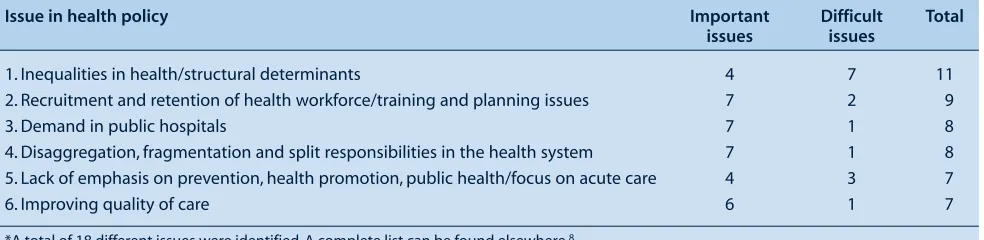
In the final paper, Jenny Lewis combines qualitative and quantitative methods to ask: ‘Who is regarded as influen-tial and what issues are considered important or difficult in health policy?’3Already you can see some of the
diver-sity in qualitative research practice, diverdiver-sity that is highly relevant to our next question.
What is good quality qualitative research?
For epidemiologists, gold standards for good quality research are clear. Population-based random samples, random double-blind allocation in intervention trials, valid
and reliable instruments, appropriate statistical tests – all of these are shared ideals. Study types are clearly defined: case-control studies, cohort studies and randomised con-trolled trials each follow a well-known formula and conform to an increasingly well-articulated set of rules. However, the ‘rules’ for assessing the quality of qualitative research are less straightforward. There is a large, divided body of work on this subject.4–10 Some seek to develop
standardised rules for qualitative research and/or its report-ing; others emphasise the need for flexibility and account-ability from researchers rather than adherence to rigid principles.4,11,12It would be simplistic to attempt to provide
a standard ‘formula’ for conducting qualitative enquiry here: instead we will outline some basic principles.
Qualitative aims, research questions and general approach
Qualitative research achieves aims different from and complementary to those addressed in epidemiology.13 It
does this by approaching enquiry differently: through a less controlled, more open study design, by asking differ-ent kinds of research questions and by employing differdiffer-ent ways of thinking.
Descriptive epidemiology asks questions about prevalence and its patterning. How many children are immunised? Are they unequally distributed by region? Is immunisation associated with level of education? Qualitative researchers attempt to understand what happens in participants’ every-day lives, how things work and what things mean to par-ticipants. Leask’s study, for example, asks about a process: ‘How do doctors deal with a parent who is refusing immu-nisation?’ Another qualitative study might ask: ‘What does it mean to a parent to have their child immunised?’ Epidemiological research studies variables pre-determined by the researcher. Variables of interest must be clearly defined before data collection starts. Qualitative researchers rarely presume which variables are important, but rather seek to discover what is relevant by speaking with participants, reading texts or observing behaviours. Qualitative studies are typically far less controlled than in epidemiology, certainly markedly less than a randomised controlled trial. Qualitative researchers seek to study the social world in its ordinary, complicated, changing state.
Epidemiological logic emphasises linearity and deductive thinking; in its idealised form, epidemiology begins with hypotheses and makes observations to test these hypo -theses.14 Qualitative researchers begin with induction:
making observations to build theory, rather than to test theory. Then, as analysis progresses, they rely on abduc-tion (moments of inspiraabduc-tion in which a hunch, clue, metaphor, explanation or pattern is imagined or recalled from existing theory to make sense of the data) and deduc-tion (when the analyst goes back to the data to test these emerging ideas).14,15 These forms of thinking create a
In short, because qualitative researchers generally do not know what is important before they start, their studies are likely to be a lot more flexible than epidemiological studies, evolving to pursue new leads as they emerge in data collection and continuous analysis.
Qualitative sampling strategies
A misunderstanding of the aims of qualitative research often leads to poor sampling in qualitative studies. In epi-demiology, we wish to report prevalence of or association between variables in a defined population. We need to isolate those variables to prevent confounding. To achieve this, we ideally randomly select participants from the pop-ulation; in intervention studies, we also randomise partic-ipants into different study arms. We collect and tabulate data on many variables, including demographic variables. The purpose is two-fold. The first purpose is to demon-strate that the participants could have been anybody in the population under study. They had the same chance of being selected or ending up in the intervention arm as everyone else; there was nothing special about them that could have confounded the results. The second purpose is to allow the researcher to statistically control for every-thing other than the variable of interest.
This is precisely the opposite of the logic of qualitative sam-pling: in fact, some qualitative researchers talk about partici-pant ‘selection’ to distinguish it more clearly from probability sampling.16In good qualitative research, participants are not
‘average’ or ‘typical’. They are special. They are selected because they are uniquely positioned to help the researcher understand what happens or what things mean. Thus, qualita-tive sampling is often described as ‘purposive’; that is, chosen to serve an analytic purpose. Qualitative researchers can learn as much from atypical cases (by comparison and contrast) or from unexpected sources as they can from central cases or obvious sources. A cleaner may be able to tell you as much about pandemic control as a nurse, albeit from a different per-spective. Someone who comes to work with influenza may help you understand the process of staying home when infected. In Leask’s study, for example, GPs known to have an interest in immunisation or expected to have unusual views about immunisation were included, as were parents of young children.2 Lewis describes using an empirically generated
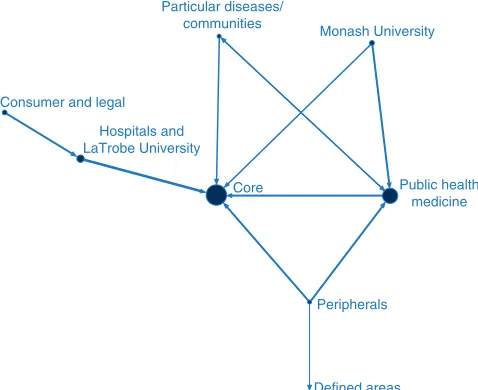
map of policy makers’ reputations as a basis for selecting interviewees.3 She identified eight groups of influential
people. Some groups were widely considered important, others marginal. Lewis’s qualitative sampling included people from each group, thus providing a range of central and peripheral players with different kinds of expertise or disciplinary focus. Such sampling (along with the style of data collection) allows for a wide range of relevant concepts to emerge, and for examination, rather than control, of the relationship between them.
It is a terrible waste of qualitative research resources to hear exactly the same thing from 30 ‘average’ people who
are, for the purposes of the study, identical. This does little to advance the complexity or depth of the researchers’ understanding. The best qualitative samples are often determined in a dynamic way as the study progresses, the researcher constantly asking themselves questions such as: ‘Which new participants could help me better under-stand this important idea or process that I am starting to see in my analysis? What new questions might I ask my existing participants to help me understand? What might I need to observe to understand? What documents might help me understand?’ This dynamism requires ongoing modification of ethics approval, but in our experience Human Research Ethics Committees increasingly expect such modifications in qualitative studies, and are efficient in processing them.
Qualitative data collection methods
If qualitative research is to understand what happens and what things mean, generate new and relevant concepts, and find out what is important to participants (rather than impose pre-determined variables), then data must be col-lected in a relatively open way. A large number of highly structured questions will generally produce yes/no or one-line answers that yield little insight. Mooney-Somers and Maher’s description of the data collection in their CBPR project provides one alternative.1 Peer researchers spent
time in the participating communities getting to know people, and this yielded important information despite being relatively informal and unstructured. Interviews were flexible and personal, commencing with the origins of both the peer researcher’s and participant’s families and with the participant’s history, proceeding to the partici-pant’s own stories about their experience. This kind of open data gathering maximises the chance that important, unexpected insights will be developed.
Qualitative data analysis
Analysis is a neglected area of qualitative research in public health and health services. There is generally scant description of analytic methods and reasoning in pub-lished papers. Researchers often appear to do nothing more than magically intuit and then list ‘themes’ from their data. Leask provides one alternative in her paper, making a detailed account of her analytic processes. Rather than simply stating that she generated ‘themes’, she specifies that she attended to the rhetorical styles used by the doctors (e.g. giving ‘yes but’ responses, or engaging in ‘scientific ping pong’).2Rather than focusing on counting
the number of doctors who used each strategy, her analy-sis explains the detail of each strategy, including how they worked rhetorically in the simulated consultation.
Box 1. Suggested references for beginning qualitative research
Books and reports to introduce the field
Mason J. Qualitative researching. 2nd ed. London: Sage Publications; 2002.
Patton MQ. Qualitative research & evaluation methods. 3rd ed. Thousand Oaks, CA: Sage Publications; 2001. The SAGE Qualitative Research Kit. London: Sage Publications; 2007.
Silverman D. Doing qualitative research: a practical handbook. 2nd ed. London: Sage Publications; 2005.
Australian Government, National Health and Medical Research Council, Australian Research Council, Australian Vice-Chancellors Committee. National Statement on Ethical Conduct in Human Research. Canberra: Australian Government; 2007.
Series in the medical literature
There have been several useful series published in the medical literature in recent years.
The 1995 British Medical Journal series
This series introduces qualitative research and focuses on data collection methods. Jones R. Why do qualitative research? BMJ1995; 311(6996): 42–5.
Pope C, Mays N. Reaching the parts other methods cannot reach: an introduction to qualitative methods in health and health services research. BMJ1995; 311(6996): 2.
Britten N. Qualitative research: qualitative interviews in medical-research. BMJ1995; 311(6999): 251–3. Kitzinger J. Qualitative research: introducing focus groups. BMJ1995; 311(7000): 299–302.
Mays N, Pope C. Qualitative research: observational methods in health-care settings. BMJ1995; 311(6998): 182–4. Mays N, Pope C. Qualitative research: rigour and qualitative research. BMJ1995; 311(6997): 109–12.
The 2008 British Medical Journal series
This series focuses on quality assessment, use of theory, and extant qualitative methodologies.
Kuper A, Reeves S, Levinson W. Qualitative research: an introduction to reading and appraising qualitative research. BMJ2008; 337(7666): 404–9.
Lingard L, Albert M, Levinson W. Qualitative research: grounded theory, mixed methods, and action research. BMJ 2008; 337(7667): 459–61.
Reeves S, Kuper A, Hodges BD. Qualitative research: qualitative research methodologies – ethnography. BMJ2008; 337(7668): 512–4.
Reeves S, Albert M, Kuper A, Hodges B. Qualitative research: why use theories in qualitative research? BMJ 2008; 337(7670): 631–4.
Kuper A, Lingard L, Levinson W. Qualitative research: critically appraising qualitative research. BMJ 2008; 337(7671): 687–9.
From the Medical Journal of Australia
Kitto SC, Chesters J, Grbich C. Quality in qualitative research: Criteria for authors and assessors in the submission and assessment of qualitative research articles for the Medical Journal of Australia. Med J Aust2008; 188(4): 243–6.
analysis.17,18 Flexibility in sampling allows qualitative
researchers to return to the field to collect more data until they reach this point. The logic underpinning this strategy is: keep talking with the most informative people until you have a good understanding of how things work and what they mean. This differs from the alternative logic: list the topics that most people agreed with. Exploratory analytic logic is a good match for purposive sampling; frequency count logic is better matched to well-designed quantitative research using probability sampling.
Reporting and methodology in qualitative research
It is important in any research to distinguish between methodology and methods. Methods are the actions you take in a research project. Method is what you do: your sam-pling, your data collection, your analysis. Methodology is justification of your methods.19You engage in methodology
for yourself throughout a study, examining each choice you make and thinking about whether it is justified in relation to researchers generally use more subtle indicators of
impor-tance than counting. How passionately was something spoken of? What was unspoken or unable to be said? Who said what? How can we better understand the differences? What might these differences tell us about the process we are studying? How rich and complex was a concept? What consequences did participants describe in relation to it? If, for example, only a small number of people described a problem in a health service, but they described it as so profoundly undermining their faith in clinicians and the system that they would no longer attend, this may be a problem worth exploring with more participants, in order to better understand it.
they evolved, assumptions made and theories drawn on, sample selected, data collection and analysis procedures, and the evolving ethical aspects of a study. In relation to sampling, there should be a detailed account of exactly who was included and, critically, an explanation of how each group was relevant to the research question and the analysis.20 The contributors to this issue have provided
some illustrations of this logic. When Leask, for example, provides a detailed account of her analytic methods, and presents and explains a ‘negative case’ – a doctor who had a different approach to dealing with the mother who refused immunisation – she is doing methodological work for you as the reader.2Mooney-Somers and Maher,
similarly, do methodological work when they explain that their interview questions were developed in conversation with participants and were designed to respect cultural protocols, and that this was guided by the principles under-lying the study.1
A brief note about existing qualitative methodologies. There are a number of methodological traditions in qual-itative research – coherent ways of working that have been honed and reiterated over time. They include ethnogra-phy, grounded theory, phenomenology and narrative methodology.21CBPR, illustrated in this issue, is another
of these extant methodologies. Each of them is a terrific set of resources that can be used to guide a research project. Each of them has existed and been evolving for decades – sometimes more than a century. Each of them has considerable, complex theoretical substance. There is a tendency to slap methodological labels – especially the label ‘grounded theory’ – on anything qualitative, as a kind of badge of authenticity.12,22This is a little like going
on a harbour cruise for palaeontologists and claiming to be an expert on the Permian–Triassic extinction event, when in fact you have just read a pamphlet about dinosaurs from the Australian Museum. It will become obvious fairly quickly that you do not know your marine organisms from your terrestrial invertebrates, and you will not be able to get off the boat for at least 4 hours. Traditions such as grounded theory are only useful if used actively and coherently throughout a study – to help one engage in methodology for oneself. It is only then that it makes sense to use the label when engaging in methodol-ogy for others.
The conceptual underpinnings of research: reclaiming theory
Karl Popper, the great philosopher of science responsible for the notion of falsification, famously said that he did not care where scientists got their ideas from: the origin of ideas was a matter for psychology.14All that mattered to
science was the transformation of ideas into hypotheses and the deductive testing that followed. This may help explain a somewhat unfavourable view of theory among some public health researchers.
your study as it evolves. You also engage in methodology when you report a study for an audience and justify the methods you have used to them.
There is rarely adequate attention given to methodology in qualitative research papers, a problem widely acknowl-edged and not confined to public health or health services research. If authors do not justify their methods, it is diffi-cult to determine the quality of their work. The critical question to ask oneself when engaging in methodology for others is: ‘What would a reader need to know to be able to evaluate my research for themselves? Which parts of my thinking and methods do I need to explain?’
This is not a matter of apologising for one’s research; con-versely, it means arguing for its usefulness. This goes to the heart of the debate about what good quality qualitative research is. It is often a difficult argument for epidemio-logically trained people to make, because the methodology of epidemiology is so different from the methodology of qualitative research. However, as Lucy Yardley argues:
While traditional criteria for research quality are often inappropriate, and the ethos and plurality of many qualita-tive methods are incompatible with fixed, universal proce-dures and standards, some way of evaluating the quality of research employing qualitative methods is absolutely nec-essary, in both senses of the word – both imperative and unavoidable. All interpretations contain an implicit claim of authority; it makes no sense to engage in a process of analysis and then deny that it has any validity!4
Qualitative research is time-consuming. Why would you recruit participants, collect data and go through the lengthy agonies of analysis, only to say apologetically, in keeping with epidemiological principles: ‘but of course the sample size is very small and you can’t generalise’? Many novices make these apologies and attempt to make their qualitative research look as ‘epidemiological’ as pos-sible. Think about sampling. We sometimes see tables of standard demographics in methods sections of qualitative papers, purporting to demonstrate how much like the general population the sample were. The fault for this does not always lie with authors: sometimes editors or review-ers demand such details as a condition of publication. Not only are such demographics unlikely to satisfy the require-ments of epidemiology, but also, as you will remember, they are inconsistent with the principles of purposive par-ticipant selection. If you succeed in ‘proving’ that your participants were ‘average’ or ‘typical’, rather than espe-cially relevant to your research question and analysis, you will probably thereby demonstrate that your sampling was misdirected.
We think ‘theoretical’ should be reclaimed as a compli-ment! ‘Being theoretical’ or ‘doing theory’ means con-tributing to a cohesive explanation of some aspect of our world. This is the highest possible purpose of research – far greater than the distillation of lonely facts. Theory is also inescapable, along with the baggage of values that theory carries. In fact, the variables in an epidemiological study are a reduction of complex values and theoretical concepts. If, in epidemiology, we classify a person according to their ‘race’ rather than their ‘ethnicity’, their ‘culture’, their ‘lan-guage spoken at home’ or the amount of ‘cultural capital’ they have access to, a theoretical choice has been made, whether or not it is acknowledged. When we treat an indi-vidual as independent in analysis, measuring nothing to do with the society, communities or cultures of which they are a part, we are making a theoretically loaded choice.
Because of its open, inductive approach to the world, qual-itative research is extremely good at generating new theories. The best qualitative research will also be know-ingly informed by theories of many kinds. Theories provide concepts to use in analysis. They guide study design: encouraging focus on groups (like cultures or sub-cultures) or on individuals; describing in detail or building a conceptual model.21 Theories inform data creation.
When you record an interview, for example, what have you recorded? People’s experiences? Their attitudes? Their beliefs? Their perceptions? Their performances?23
Would these be the same in any interview, or would they be different at different times and with different inter-viewers? What effect do you have in the study, and how should you best be accountable for this effect? Even the way we write is a theoretically loaded choice. Our use of an active first person voice and of authors’ first names in this editorial, for example, reveals our belief that researchers should present themselves as real live human individuals, rather than ‘objective’, distant and inscrutable, as any piece of research or writing is a product of the people who have crafted it. Theories are everywhere, and good researchers of all kinds acknowledge them and use them as resources.24
Lewis argues that the theories about policy that you bring to a study of policy influence will change what you look at.3If you use a theory that suggests that influence rests in
institutions, you will examine institutions; if in conflicting interests, you will study interests; if in contests of ideas, you will study the movement of ideas. These are not right or wrong, but different, and it is possible to be open to participants’ perspectives within each frame. Mooney-Somers and Maher’s paper, like most CBPR, also begins with normative theoretical commitments about what research should be.1Because of its theoretical orientation,
CBPR defines good research as that which includes participants as equals and achieves concrete change in participants’ communities, a theoretical commitment that prompted Scott’s contribution to the issue.
In conclusion: does the qualitative/quantitative distinction matter?
Do we need to make a distinction between qualitative and quantitative research? We would argue that we need dis-tinction without antagonism: a kind of cross-cultural understanding and mutual respect. Qualitative and quanti-tative research can contribute differently and equally to knowledge in public health and health services.13However,
if qualitative research is to keep its end of this bargain, it may need to be protected from its new-found popularity and allowed to assert and follow its own principles. We would urge those with a nascent interest in qualitative research not to attempt to take it up as a straightforward, instrumental toolbox of methods. To public health audi-ences, qualitative research may seem new; in fact, the ideas at its heart go back centuries, some say as far as Aristotle.25,26 The methods of contemporary qualitative
research were initiated in anthropology and sociology at the turn of the 20th century and have been evolving ever since.27,28 Good qualitative research requires careful
thought about methodology and theory in the context of this history, which is difficult for beginners to achieve without support and training. We advise public health pro-fessionals to work with experienced qualitative researchers until they have established themselves in this new world.
Qualitative enquiry is a fractured, rich and potentially highly rewarding field of endeavour: this issue of the Bulletin is a tiny part of it. Public health, we believe, needs both epidemiology and qualitative research. Without epi-demiology we cannot answer questions about the preva-lence of and association between health determinants and outcomes. Without qualitative enquiry, it is difficult to explain how individuals interpret health and illness in their everyday lives, or to understand the complex workings of the social, cultural and institutional systems that are central to our health and wellbeing. We hope that this issue of the Bulletin will stimulate debate about the place of qualitative enquiry in public health and health services research in Australia. At the very least, it might prevent you from getting stuck on a metaphoric harbour cruise with only a pamphlet for company.
Acknowledgments
Our sincere thanks to the authors for their contributions to this issue of the Bulletin.
References
1. Mooney-Somers JD, Maher L. The Indigenous Resiliency Project: a worked example of community-based participatory research. N S W Public Health Bull 2009; 20(7–8): 112–8.
2. Leask J. How do general practitioners persuade parents to vaccinate their children? A study using standardised scenarios. N S W Public Health Bull 2009; 20(7–8): 119–24.
4. Yardley L. Dilemmas in qualitative health research. Psychol Health 2000; 15: 215–28. doi:10.1080/08870440008400302
5. Kitto SC, Chesters J, Grbich C. Quality in qualitative research: Criteria for authors and assessors in the submission and assessment of qualitative research articles for the Medical Journal of Australia. Med J Aust 2008; 188(4): 243–6.
6. Mays N, Pope C. Qualitative research in health care: assessing quality in qualitative research. BMJ 2000; 320(7226): 50–2. doi:10.1136/bmj.320.7226.50
7. Pope C, Mays N. Qualitative research in health care. 3rd ed. London: Blackwell Publishing; 2006.
8. Kuper A, Lingard L, Levinson W. Qualitative research: critically appraising qualitative research. BMJ 2008; 337: a1035. doi:10.1136/bmj.a1035
9. Seale C. The quality of qualitative research. London: Sage Publications; 1999.
10. Flick U, editor. Managing quality in qualitative research. London: Sage Publications; 2007.
11. Tong A, Sainsbury P, Craig J. Consolidated criteria for reporting qualitative research (COREQ): a 32-item checklist for interviews and focus groups. Int J Qual Health Care 2007; 19(6): 349–57. doi:10.1093/intqhc/mzm042
12. Barbour RS. Checklists for improving rigour in qualitative research: a case of the tail wagging the dog? BMJ 2001; 322(7294): 1115–7. doi:10.1136/bmj.322.7294.1115
13. Popay J, Williams G. Public health research and lay knowledge. Soc Sci Med 1996; 42(5): 759–68. doi:10.1016/0277-9536(95)00341-X
14. Daly KJ. Paths of inquiry for qualitative research. In: Daly KJ, editor. Qualitative methods for family studies and human development. Thousand Oaks, CA: Sage Publications; 2007. pp. 43–60.
15. Shank G. The extraordinary ordinary powers of abductive reasoning. Theory Psychol 1998; 8(6): 841–60.
doi:10.1177/0959354398086007
16. Maxwell JA. Qualitative research design: An interactive approach. 2nd ed. Thousand Oaks, CA: Sage Publications; 2005.
17. Bowen G. Naturalistic inquiry and the saturation concept: a research note. Qual Res 2008; 8(1): 137–52.
doi:10.1177/1468794107085301
18. Morse JM. The significance of saturation. Qual Health Res 1995; 5(2): 147–9. doi:10.1177/104973239500500201
19. Carter SM, Little M. Justifying knowledge, justifying method, taking action: epistemologies, methodologies and methods in qualitative research. Qual Health Res 2007; 17(10): 1316–28. doi:10.1177/1049732307306927
20. Morse JM. “What’s your favorite color?” Reporting irrelevant demographics in qualitative research. Qual Health Res 2008; 18(3): 299–300. doi:10.1177/1049732307310995
21. Creswell JW. Qualitative inquiry and research design: choosing among five approaches. 2nd ed. Thousand Oaks, CA: Sage Publications; 2007.
22. Barbour RS. The newfound credibility of qualitative research? Tales of technical essentialism and co-option. Qual Health Res 2003; 13(7): 1019–27. doi:10.1177/1049732303253331
23. Mason J. Qualitative researching. 2nd ed. London: Sage Publications; 2002.
24. Reeves S, Albert M, Kuper A, Hodges B. Why use theories in qualitative research? BMJ 2008; 337(7670): 631–4.
25. Buchanan DR. An Ethic for Health Promotion: Rethinking the Sources of Human Well-Being. New York: Oxford University Press; 2000.
26. Flyvbjerg B. Making social science matter: Why social inquiry fails and how it can succeed again. Cambridge, UK:
Cambridge University Press; 2001.
27. Eriksen TH, Nielsen FS. A history of anthropology. London: Pluto Press; 2001.
28. Bulmer M. The Chicago School of Sociology:
Aboriginal people have been examined, measured and asked questions … They have been passive subjects rather than participants.1
Despite the volume of research conducted on the health of Indigenous Australians, there is a perception that Indigenous people have derived little direct benefit from these efforts.2 The history of research on Indigenous
The Indigenous Resiliency Project: a worked
example of community-based
participatory research
Abstract: Community-based participatory research (CBPR) is often cited as a suitable methodological approach for academic researchers wanting to work collaboratively with Indigenous communities. This paper describes the Indigenous Resiliency Project currently being conducted in Redfern, Townsville and Perth. This case study is used to demonstrate how a group of university-based researchers and Aboriginal Community Controlled Health Services have used CBPR to work with young Indigenous Australians to explore young people’s perspectives on resilience in relation to bloodborne viruses and sexually transmissible infections. This paper also describes some initial benefits gained through the process of developing the Indigenous Resiliency CBPR Project, such as: developing research capacity; establishing relationships between community organisations and research institutions; and priori-tising ethical and social considerations in the conduct of research. A commentary on the experi-ence of one health worker involved in the project accompanies the paper.
Julie Mooney-Somers
A,Band Lisa Maher
AANational Centre in HIV Epidemiology and Clinical Research,
University of New South Wales (on behalf of the Indigenous Resiliency Project Australian Steering Committee)
BCorresponding author. Email: jmooneysomers@
nchecr.unsw.edu.au
peoples, both locally and internationally, has produced a deep suspicion of research, with a recent series of com-munity workshops indicating that Australian Indigenous communities remain suspicious of research conducted by mainstream organisations.1,3,4 In 2002, the National
Health and Medical Research Council (NHMRC) launched its Road Map, a set of guidelines for health research with Indigenous communities calling for ‘com-munity involvement in the development, conduct and communication of research’.5More recently, the National
Statement on Ethical Conduct in Human Research states that the ‘research approach should value and create oppor-tunities to draw on the knowledge and wisdom of Aboriginal and Torres Strait Islander Peoples by their active engagement in the research processes, including the interpretation of the research data’.6Aboriginal and Torres
Strait Islander organisations have developed their own research protocols for researchers wanting to work with Indigenous communities, and a number of Human Research Ethics Committees have been established to assess research affecting Indigenous people and their communities.7It is in this context that Indigenous health
research increasingly involves partnerships between university-based researchers and Indigenous communities and organisations. These partnerships are seen as a way of ensuring research is responsive to community needs, con-ducted in a culturally appropriate manner, and beneficial to the community.
Community-based participatory research (CBPR) is an approach that allows researchers to work with communi-ties to generate knowledge about and solutions to prob-lems the community is facing. This framework repositions the people who would usually be the object of the research as participants in the research process; ‘the researched become the researchers’.8CBPR involves more than
con-sultation; it focuses on developing community capacity to participate as co-investigators in developing, conduct-ing and disseminatconduct-ing the research.9 It encompasses
of new knowledge (which includes shared ownership of research products).9
CBPR has often been utilised in research with vulnerable or marginalised populations and is increasingly employed in research with Indigenous communities.1,9–17 The
princi-ples and characteristics of CBPR are considered to have the potential to address the failings, and ‘colonising-effects’, of previous research on Indigenous peoples.8
Further, by involving affected communities in the analysis and interpretation of data, CBPR has the potential to avoid the misrepresentation of ‘Indigenous societies, culture and persons by non-Indigenous academics and professionals’.8
Instead of seeing ‘experts’ – usually non-Indigenous people – as the only legitimate source of knowledge, CBPR recognises and values the knowledge of ‘ordinary’ people. While the technical knowledge of researchers is valuable, it is not the only legitimate way of knowing about the world.18Moreover, prioritising community members’
knowledge of community needs and perspectives may increase the likelihood of any intervention arising from the research having beneficial outcomes for the affected com-munity.9 While a CBPR framework is increasingly used in
mainstream public health research, there are few published examples of the day-to-day practicalities of using this framework to undertake research with Indigenous com-munities in Australia. This paper uses the Indigenous Resiliency Project as a case study to demonstrate how a CBPR approach can be employed to develop community-based research into highly sensitive and challenging health issues.
The Indigenous Resiliency Project
The Indigenous Resiliency CBPR Project is one compo-nent of an international collaboration exploring the role of resiliency in responding to bloodborne viruses (BBVs) and sexually transmissible infections (STIs) in Indigenous communities in Australia, New Zealand and Canada. Funded by the NHMRC, the Australian component is being undertaken by a collaboration of Aboriginal Community Controlled Health Services (ACCHS): Townsville Aboriginal and Islanders Health Service (TAIHS), Aboriginal Medical Service, Redfern (AMS Redfern) and Derbarl Yerrigan Health Service, Perth (DY); a research institution, the National Centre in HIV Epidemiology and Clinical Research; and several independent Indigenous researchers. This collaboration worked with international partners to develop a funding application. The Boards of Directors of the three partici-pating ACCHS reviewed and approved each component of the project during the initial project development stage, and again when each component began. Formal ethical review processes have been followed through the Human Research Ethics Committees of the Aboriginal Health and Medical Research Council of NSW, the Western Australian Office of Aboriginal Health and the University
of New South Wales. An Australian Steering Committee (ASC), made up of two representatives from the three community partners and the research partner, along with several independent Indigenous researchers, oversees the development of the project. The ASC provides guidance on scientific, administrative and budgetary matters and determines areas of priority for the project. The ASC plays a vital leadership role in advising on cultural matters related to the conduct of the study, including the review and approval of all project dissemination, and assists in strengthening communication with all key stakeholder communities. This is the forum through which shared decision-making is achieved and the shared ownership of research products is protected.9
The Indigenous Resiliency CBPR Project brings young Indigenous Australians, participating health services and university-based researchers together to develop and conduct qualitative research on what protects young Indigenous Australians against BBVs and STIs. It aims to build the capacity of participating health services in research practice; identify, assess and enhance the STI and BBV resilience capability of Aboriginal and Torres Strait Islander people in three project sites; and inform opportu-nities to decrease the risk of STI and BBV transmission in project site communities. In each project site, a locally employed (but centrally-funded) site coordinator and health service staff, under the guidance of their Board of Directors, work with a project-based qualitative study coordinator and university-based researchers to engage with young Indigenous people from the local community (peer researchers) to develop and conduct the project. The Indigenous Resiliency CBPR Project is not a multi-site project where the same protocol is implemented across all sites. Instead, each project ‘is a custom job’, with the local projects recognising diversity by developing in response to the priorities – and capacities – of the local community and health service.19
Methods
Individual interviews and focus groups are being used to explore young people’s lived experiences of sexual behav-iour and drug use, learning about STIs and BBVs in their families and communities, and accessing services for prevention, testing and treatment. These qualitative approaches offer opportunities for understanding the meaning of sexual behaviour and drug use, and the con-texts in which people contract or avoid STIs and BBVs. Individual face-to-face interviews, in particular, allow peer researchers to create a space where participants can share stories of how they have drawn on their own and their community’s strengths to keep themselves protected against STIs and BBVs.
likely to be progressively redefined and qualitative methods are conducive to this. It is also necessary for the project to be flexible to the developing skill and confi-dence of peer researchers (and health service staff). In CBPR, methods are selected on the basis that they are ‘useful and useable to all those participating in the
process’.18 This means selecting methods that can
be taught quickly to people with a broad range of educa-tional experiences and literacy skills. To date, 20 young people and many health service staff and mentors have been trained in qualitative sampling, developing interview questions, and conducting and recording interviews. In due course, these young people, health service staff and mentors will participate in the thematic analysis of the qualitative data they have collected and disseminate find-ings through the preparation of community reports and involvement in community forums. People have been pro-vided with the skills required to participate actively in each stage of the research process. The methods used do not need expensive hardware or software. Indeed, most of the data has been collected using pen and paper. This has allowed the development of a skill base that is more likely to be sustainable when the project ceases.
The relationship between interviewer and interviewee is crucial in qualitative methods as data is generated through their interactions. The Indigenous Resiliency CBPR Project concerns personal and often stigmatised behav-iours, and the research teams spent a lot of time discussing how to talk about these in sensitive and culturally appro-priate ways. Semi-structured interviews and focus groups allow peer researchers to use their knowledge and expert-ise to conduct a conversation around the interview ques-tions and adapt their quesques-tions and style for individual participants. Interviews usually began with a conversation about where the participants’ and researchers’ families were from. This was an important cultural protocol to follow and the amount of time spent on this varied consid-erably, especially if there was a shared family connection. The first question in the interview schedule (in both Townsville and Redfern) was about the participant’s history. This allowed the participant to provide a context for the interview, and for the researcher and participant to get to know each other before questions about STIs and BBVs began. Again, this was an important cultural proto-col but is not usual for a qualitative research interview.
CBPR recognises local methods of knowledge gathering as valid.19 Semi-structured interview schedules were
developed in the research training and development work-shop held at each site. This meant that the peer researchers and health service staff shaped the question content and the way questions were to be asked. Interviewers used the schedule to guide their conversation, encouraging partici-pants to share personal experiences and stories from their lives. Data was collected by spending time meeting and
getting to know people in the community (potential par-ticipants and others). Individual interviews were con-ducted on the street, in parks and shopping malls and in community-owned spaces. The flexibility of a qualitative approach meant that interviews could be held when an opportunity arose, and could, if necessary, be started, paused and resumed at a different time. In the two active project sites, 95 individual interviews and seven focus groups have been conducted with young Indigenous Australians. In each case, an Indigenous researcher – peer, health service staff or mentor – was the interviewer or focus group facilitator.
At the time of writing, one project site is engaged in data analysis, a second is actively involved in data collection, and the third is developing the project, so there are no outcome data to report. However, the aims of the project are not exclusively oriented to data-driven outcomes. CBPR foregrounds action and changes occur in service provision and the lives of people participating in the research throughout the project.9 The remainder of this
paper will reflect on the process of the research and describe some process-driven outcomes.
Discussion
Reflecting community priorities
The ASC asked each health service to identify a priority population to engage. In TAIHS, a consultation process was undertaken internally and with key stakeholders and community members. Consensus emerged around home-less and residentially unstable young people as the priority population group.20In contrast, the AMS Redfern had an
existing association with a local Aboriginal Men’s Group (Babana), whom they invited to become a partner in the local project. Thus, their priority population became young men.
The university-based researchers developed a three-day research development and training workshop covering research ethics, communication, research sampling and recruitment, individual and group interviewing, partici-pant observation, writing field notes and analysis of qual-itative data (these workshops are described elsewhere).21
established ways of conducting the project that were appropriate to the priority population and the local community.20,21
Working with peer researchers
At the heart of CBPR is a commitment to work with people affected by the issue under investigation. For the Indigenous Resiliency CBPR Project, this means inviting young Indigenous people from the local community to engage with the project as peer researchers – from the development of research questions and materials, to data collection, data analysis and dissemination. It also means valuing the knowledge peer researchers have gained through their lived experiences, and giving them a mandate to influence the project and its process.
In Townsville and Redfern, the journeys of the peer researchers have been quite different.20 In Townsville,
eight young men and women who had experienced resi-dential insecurity (either personally or through a close family member or friend) were recruited through local contacts and health promotion events. These young people participated in the research training and development workshop and four were invited to work with the local team to develop and conduct the project. By the focus group stage, most of the original peer researchers were no longer involved and a ninth young person was trained to participate in the final stage of data collection. The AMS Redfern, in partnership with Babana Aboriginal Men’s Group, identified eight young men through professional or community contacts. All eight were asked to make a com-mitment to engage with the project for the duration (2 days per week for 4 months). The AMS Redfern and Babana Aboriginal Men’s Group introduced a parallel mentoring program where members of the men’s group were matched with peer researchers to provide ongoing cultural support. This unique and valuable innovation has undoubtedly been crucial in maintaining the level of peer researcher involve-ment, with eight peers involved throughout. In keeping with the spirit of CBPR, the role of these mentors evolved during the project and they became an integral part of the research, attending research meetings and accompanying peer researchers during field work and data collection.
There has been a lot of discussion within the project teams about changes in the young people engaged as researchers. Health service staff and mentors have commented on their increasing self-esteem and confidence, and their willing-ness to speak out about issues they feel the project needs to address differently. The young people themselves have spoken of an increased sense of community belonging gained from working within a community organisation. The project has increased the youth voices within the participating health services, creating opportunities for dialogue between young people and health workers. Being involved in the project has also connected the participants
to people who have become invested in their future. Opportunities for training and employment have been regularly brought to the peers’ attention. Two of the peer researchers are now working in health service delivery within community-controlled and mainstream organisa-tions. Important connections are also being made between current leaders in the local Indigenous community and the peer researchers, themselves potential community leaders. Several of the peer researchers have been invited to sit as community or youth representatives on advisory boards and committees.
Research as action
The Indigenous Resiliency CBPR Project has had quite a high profile within the participating health services. For the duration of the project, there are dedicated site coordi-nators based within each health service and other staff who work closely with the project. In Redfern, eight peer researchers, eight mentors, two health service staff and a university-based researcher worked in the health service 2 days a week for 4 months. This is a significant presence, and raises the profile not only of the Indigenous Resiliency CBPR Project but also of research generally. The health service’s support of research is demonstrated to staff, clients and other people visiting the service. More importantly, a research skill base is being developed within the health service, and in the case of the peer researchers (and in Redfern, the mentors), in the local community. This is an important outcome, and addresses the first aim of the Indigenous Resiliency CBPR Project to develop research capacity. It is too early to judge the success or sustainability of this capacity; however, in both health services conversations have begun about future programs of research, some involving a CBPR framework.
project. The project formally supported the principle of ‘no research without service’ by organising referrals and having information available for peer researchers to dis-tribute. More informally, peer researchers, health service staff and mentors spoke to many people (who did not necessarily participate in the project) about STIs and BBVs. Having members of the community talking openly about STIs and BBVs raises the profile of these infections and may help alleviate the shame associated with discussing them.
A less predictable outcome of the project has been th con-nections established between the health services and exter-nal organisations that provide services to the priority population in each project site. In Townsville, a service that provided a venue for a focus group asked for regular discussions around sexual and other health issues to be provided for the young people attending their service. During the first AMS Redfern workshop, participants visited several organisations that provide services to young people. The mentors (who include staff from local high schools and the probation and parole service) and health service staff made contact with programs that could be useful to their clients. Similarly, the mainstream organ-isations made contact with their local community-controlled health service, a connection that could facilitate future referrals for their Indigenous clients.
Conclusion
Until Indigenous communities have the resources or capacity to conduct their own research, partnerships with university-based researchers who bring technical expertise are inevitable.13CBPR is an approach that simultaneously
facilitates a research partnership and provides ‘the training and resources that will allow the community to act on its own behalf in the future’.18
This paper has described how the Indigenous Resiliency Project has utilised a CBPR approach to build a partner-ship between community organisations and research institutions, and to develop a project that is community-owned, locally relevant and culturally appropriate. An early benefit of this approach, and a key objective of the project, is that community members have been trained to conduct research that responds to the health priorities set by their communities. It is too early to evaluate the long-term sus-tainability or success of this research capacity, which may include seeking research funding, creating research jobs, developing research partnerships and continuing to conduct research.9 Nor can we assess whether the
relationships between the Indigenous communities, ACCHS and research institutions that have facilitated this genuinely participatory project endure and generate new projects. The principal issue that this paper cannot address at this early stage is the effect that this project will have on the health of the participating communities.
Adopting a CBPR approach is not easy; it brings consider-able challenges for researchers and communities. CBPR requires considerably more time, money, personnel and personal commitment than traditional research approaches. As Baum and colleagues note, it is messy, unpredictable and there are often differences in priorities between researchers and communities.8 However, unlike other
research approaches, CBPR combines research and action in a way that has the potential for communities to see the benefits of research conducted by, rather than on, them.
Acknowledgments
This paper is written on behalf of the Indigenous Resiliency Project Australian Steering Committee: Angie Akee and Robert Scott (Townsville Aboriginal and Islanders Health Service), John Daniels and Dulcie Flowers (Aboriginal Medical Service, Redfern), Colin Garlett (Derbarl Yerrigan Health Service), John Kaldor and Lisa Maher (National Centre in HIV Epidemiology and Clinical Research) and independent investigators Sandra Eades, Chris Lawrence, Maurice Shipp and Edward Wilkes. As per our project protocols, this paper was circulated to members of the ASC for review and approval. Where internal protocols dictated, ASC members also circulated the paper to their health service Board of Directors, management and relevant staff. We acknowledge the contributions of David Brockman, the project’s national coordinator until April 2008; Wani Erick, the Townsville Aboriginal and Islanders Health Service site coordinator until December 2008; and John Williams, the current site coordinator at the Aboriginal Medical Service, Redfern. We thank the project staff, peer researchers, mentors and participants for their many contributions.
The Indigenous Resiliency Project is funded by the International Collaboration in Indigenous Health Research Program, a trilateral partnership between the National Health and Medical Research Council of Australia, the Canadian Institutes of Health Research, and the Health Research Council of New Zealand. The National Centre in HIV Epidemiology and Clinical Research is core-funded by the Australian Government Department of Health and Ageing, and Lisa Maher is supported by the award of an NHMRC Research Fellowship.
References
1. Holmes W, Stewart P, Garrow A, Anderson I, Thorpe L. Researching Aboriginal health: experience from a study of urban young people’s health and well-being. Soc Sci Med 2002; 54(8): 1267–79. doi:10.1016/S0277-9536(01)00095-8
2. Cochran PA, Marshall CA, Garcia-Downing C, Kendall E, Cook D, McCubbin L et al. Indigenous ways of knowing: implications for participatory research and community. Am J Public Health 2008; 98(1): 22–7. doi:10.2105/ AJPH.2006.093641
3. Smith LT. Decolonizing methodologies: research and indige-nous peoples. London, New York: Zed Books; 1999.
4. Onemda VicHealth Koori Health Unit. We can like research ... in Koori hands: A community report on Onemda VicHealth Koori Health Unit’s research workshops in 2007. Melbourne: The University of Melbourne; 2008.
6. National Health and Medical Research Council, Australian Research Council, Australian Vice-Chancellors’ Committee. National Statement on Ethical Conduct in Human Research. Canberra: National Health and Medical Research Council; 2007.
7. Aboriginal Health and Medical Research Council of New South Wales. AH&MRC Guidelines for Research into Aboriginal Health: Key principles. Sydney: Aboriginal Health and Medical Research Council of New South Wales; 2008.
8. Baum F, MacDougall C, Smith D. Participatory action research. J Epidemiol Community Health 2006; 60: 854–7. doi:10.1136/jech.2004.028662
9. Viswanathan M, Ammerman A, Eng E, Garlehner G, Lohr K, Griffith D et al. Community-based participatory research: assessing the evidence. Rockville, MD: Agency for Healthcare Research and Quality; 2004.
10. Coupland H, Maher L. Clients or colleagues? Reflections on the process of participatory action research with young injecting drug users. Int J Drug Policy 2005; 16(3): 191–8. doi:10.1016/j.drugpo.2004.12.002
11. Bostock J, Freeman J. ‘No limits’: Doing participatory action research with young people in Northumberland. J Community Appl Soc Psychol 2003; 13(6): 464–74. doi:10.1002/casp.751
12. Nelson G, Ochocka J, Griffin K, Lord J. ‘Nothing about me, without me’: participatory action research with self-help/mutual aid organizations for psychiatric consumers/ survivors. Am J Community Psychol 1998; 26(6): 881–912. doi:10.1023/A:1022298129812
13. Pyett P. Working together to reduce health inequalities: reflections on a collaborative participatory approach to health research. Aust N Z J Public Health 2002; 26(4): 332–6. doi:10.1111/j.1467-842X.2002.tb00180.x
14. Tsey K, Patterson D, Whiteside M, Baird L, Baird B, Tsey K. A microanalysis of a participatory action research process with a rural Aboriginal men’s health group. Australian Journal of Primary Health 2004; 10(1): 64–71.
15. Hecker R, Gordon E, Delaney S, Schuil C, Capon A, editors. The benefits of participatory evaluation methods in evaluating Aboriginal health programs. Evaluation: Equipping communi-ties and government conference; 1997; Curtin, ACT.
Australasian Evaluation Society.
16. Larkins SL, Page RP, Panaretto KS, Scott R, Mitchell MR, Alberts V et al. Attitudes and behaviours of young Indigenous people in Townsville concerning relationships, sex and contraception: the “U Mob Yarn Up” project. Med J Aust 2007; 186(10): 513–8.
17. Brough M, Bond C, Hunt J, Jenkins D, Shannon C, Schubert L. Social capital meets identity: Aboriginality in an urban setting. J Sociol (Melb) 2006; 42(4): 396–411. doi:10.1177/
1440783306069996
18. Brydon-Miller M. Using Participatory Action Research to Address Community Health Issues. In: Murray M, editor. Critical Health Psychology. London: Palgrave; 2003, pp. 187–202.
19. Kidd SA, Kral MJ. Practicing participatory action research. J Couns Psychol 2005; 52(2): 187–95. doi:10.1037/0022-0167.52.2.187
20. Erick W, Mooney-Somers J, Akee A, Maher L. Resilience to blood borne and sexually transmitted infections: the develop-ment of a participatory action research project with young Aboriginal and Torres Strait Islander people in Townsville. Aborig Isl Health Work J 2008; 32(6): 5–8.
21. Mooney-Somers J, Erick W, Brockman D, Scott R, Maher L. Indigenous Resiliency Project Participatory Action Research Component: A report on the Research Training and
Development Workshop, Townsville, February 2008. Sydney: National Centre in HIV Epidemiology and Clinical Research, The University of New South Wales; 2008. Available from: http://www.nchecr.unsw.edu.au/NCHECRweb.nsf/resources/ PAR-report/$file/PARwshop-report_TAIHS.pdf
Commentary
Robert Scott is the men’s sexual health worker at the Townsville Aboriginal and Islanders Health Service (TAIHS). He has been actively involved in the Indigenous Resiliency Project. This is a reflection on his involvement.
I remember when the researchers from Sydney made their first visit to our service (TAIHS) to talk about the project. The staff didn’t think the project would have much to do with us as it seemed to be all about management and the timeline was quite long. I became involved because of my job as a sexual health worker and sat in on the teleconferences. It was like going from high school to a university lecture. There was a lot of information and background and often it was hard to understand. When I went to my first face-to-face meeting in Perth, the picture became much clearer and because I was away from work I could spend time and talk to people. I asked a lot of questions and got a good insight into the project.
In the past, research has not always been done properly, and this has caused community unease. It was hard when I got back to work because there was a lot of resistance in the service and the community to research. Our clinic staff did not understand what the project was about and put stickers on the front cover of peoples’ charts that read, ‘The contents of this file is not to be used for research’. This was a complete misunderstanding as we were never going to access charts but it shows how important it is to consult with people properly before you begin.
When the project started, we talked about the kind of personnel we needed. I was worried that if we had a health worker in the coordinator position they would end up doing non-project work. In the end, we did employ a regis-tered nurse (Wani Erick). Sometimes the health service has needed Wani’s and my clinical skills more than they have needed the project to progress. The tension between research and service delivery is a familiar one for Aboriginal and other health workers.
The only thing I think we could have done better was to have a male worker more available to do some of the interviews with young men. I was on clinic duty during the data collection time and was unable to help much with that aspect, so we have a bias toward women in our sample.
The project has had an impact on the TAIHS workforce. The research has made people more talkative and that has the potential to improve community knowledge. Wani and I shared a lot of information about STIs and BBVs that has been passed on to our clients. The fieldwork really raised awareness of our service in the community, especially among young people at risk who didn’t access our service. Wani got a lot of requests for information, services and referrals and because she was based in the service she knew all the doctors here, when they worked and what services people could access, so she could connect them directly to the right things and organise appointments or transport.
The analysis of health care communication has been a growing area of interest for qualitative researchers. It has required methods of data collection that access discussions that occur between patients and health professionals. Video
to vaccinate their children? A study using
standardised scenarios
Abstract: Objective: To understand how general practitioners (GPs) address parental concerns about childhood immunisation using standardised scenarios. Methods: A combination of typical case and intensity sampling was used to recruit GPs. Interviews began with role-play vignettes of four different scenarios, exemplifying concerns about immunisation and the parents who have them. They ended with GPs’ reflections on these encoun-ters. Transcripts were analysed with the focus on describing and evaluating typical persuasive strate-gies. Results: Eleven GPs were interviewed from a range of demographic areas. In the role plays, GPs acknowledged the mother’s concerns, tailored their discussion to her individual circumstances, and conveyed the notion of choice. Theoretical frameworks guided some in their responses. Less successful strategies were to enter into games of scientific ‘ping pong’; to discredit a mother’s source of information; or to ask confronting hypo-thetical questions. Attempts to negotiate with a mother refusing all vaccines for her children proved to be the most challenging role play. Conclusions: GPs tended to adopt the role of persuader rather than informer. Communication frameworks such as shared decision-making may help them to better balance these roles.
Julie Leask
National Centre for Immunisation Research and Surveillance of Vaccine Preventable Diseases, The Children’s Hospital at Westmead
Discipline of Paediatrics and Child Health, University of Sydney School of Public Health, University of Sydney
Email: [email protected]
or audio-assisted observations of actual patient encounters have been used.1,2 Another approach uses standardised
patients. These are people who act out a set patient scenario with a clinician.3A widely used assessment tool in medical
education, standardised patients have been increasingly used in qualitative research of doctor–patient communica-tion.4–6This study used this method to attempt to describe
how general practitioners (GPs) communicate with parents concerned about immunisation.
Discussions about immunisation occur frequently in face-to-face encounters between a health professional and a parent.7These discussions are key since health
profession-als are the single most important influence on a parent’s decision to immunise or not immunise their children.8–11
Health professionals have a public health responsibility to maximise childhood immunisation rates. They are also faced with ethical and legal obligations to ensure that parents are adequately informed about the risks and bene-fits of immunisation and that valid consent is given before a vaccine is administered.
This study investigated the ways GPs communicate about vaccine risk and benefit to parents who have strong con-cerns about immunisation. GPs were chosen because they represented 85% of immunisation providers in NSW at the time of the study.
Methods
The study sought to assess the strategies GPs used when communicating with parents. To achieve the study’s aims, direct observation of actual conversations with parents would have been the ideal method but this was costly and impractical. A second option was to talk to GPs about their experiences of communicating with parents, yet this approach was likely to result in a polemic on what GPs think ‘should’ happen. A middle ground was the choice of standardised patients, which would allow both an assess-ment of the GP’s rhetoric and a way into the GP’s own reflection of their experiences.
Ethical approval to conduct this study was gained from the University of Sydney Human Research Ethics Committee.
employ.9,12–16 Proposed scenarios were discussed with a
team of researchers, piloted with two GPs and modified accordingly (Box 1).
Participants
The study used a purposive sample drawn from typical case sampling and intensity sampling.17Initially, GPs who
were assumed to be typical cases were sought, using a database of respondents to a previous survey who had agreed to a further interview. GPs were chosen from a mix of inner-urban and suburban locations within the Sydney metropolitan area. Each GP was sent a letter that was followed by a telephone call. Due to a poor response using this method, the sample was supplemented with GPs known to have a particular interest in immunisation (inten-sity sampling). Some of these were ‘outliers’ – interesting and divergent cases who broaden the scope of the enquiry and provide richer insights than if the study were limited to only typical cases. Similar mixed recruitment strategies have been used elsewhere.18
Interviews
Interviews were conducted between November 2000 and February 2001. Participants who agreed to an interview were visited in their own practice. Two interstate GPs were interviewed over the telephone and another asked to email her responses. It was emphasised that the study aimed to describe how GPs communicate with parents about child-hood immunisation.
In each interview, the researcher played the role of the parent, first giving the GP a brief character description and then initiating the script. GPs were asked to respond as they would in a normal encounter. The mock encounter
was followed by questions aimed at debriefing; ascertain-ing whether the GP felt the scenarios were similar to situations experienced with parents; and discussing their actual experiences.
All interviews were recorded and transcribed by a pro -fessional transcription service. Each transcription was checked for inaccuracies.
Analysis
To evaluate GP communication, the analysis used previous research on what parents desire from such encounters; guidelines in the area of patient–doctor communication; the views of two mothers who read a representative cross-section of the transcripts; and the researcher’s own in-character reflections.15,19,20
Qualitative analysis is interpretive by nature.21When the
researcher is the instrument, he or she must be aware of how his or her beliefs and experiences shape the analysis. The qualitative literature labels this ‘reflexivity’.22 A
journal was kept that included the author’s own experi-ences and reflections relevant to the study. This enabled the analysis to proceed with an awareness of how these might interact with the interpretation.
Transcripts were coded according to the dual perspective of describing typical rhetorical styles and evaluating inter-actions. Open coding was used where each interview tran-script was read and re-read, and emerging patterns and themes noted freely.23For each interview, memorandums
were recorded that made brief observations about the wider meaning of the text and its connection to the emerg-ing themes. Themes were reviewed, refined and grouped Box 1. Role-play scenarios
Scenario 1: Considering delaying immunisation
Susan Kelso, 27, lives in the inner-city and has one child, a 7 week-old girl. She is currently on maternity leave from her job in publishing.
I’m wondering whether we might be better to delay the first shot until she is a bit older.
It’s always been at the back of my mind what these vaccines do to their immunity when they are so young and fragile.
Scenario 2: Vaccine refusal
Janice Cook has two children, Nathan, 4, and Ashlyn, 6½. She is at home full-time and would like you to sign a Conscientious Objection form.*
I’m afraid I don’t believe in immunisation. Ashlyn had a terrible time after her 12 month DTP vaccine and developed allergies. Since then, I’ve done a lot of reading about this issue and there seems to be lots of evidence, even in the medical
journals, that immunisation is not as safe as we’re led to believe.
Anyhow, we’ve decided it’s better for them to develop natural immunity. We try to give them lots of fresh fruit and vegetables, we purify all our water. Nathan hardly ever has colds compared with the other children at day care and certainly doesn’t have the allergies that Ashlyn suffers.
I have chosen to vaccinate him homeopathically and am just here to get the form signed.