COLLEGE STUDENTS’ ATTITUDES TOWARD INDIVIDUALS WITH AUTISM
David Mahoney
A dissertation submitted to the faculty of the University of North Carolina at Chapel Hill in partial fulfillment of the requirements for the degree of Doctor of Philosophy in the
Department of Psychology (Clinical Psychology).
Chapel Hill 2007
Approved by:
Gary Mesibov, Ph.D., Advisor Marilyn Hartman, Ph.D., Reader Lee Marcus, Ph.D., Reader
ii ABSTRACT
DAVID MAHONEY: College Students’ Attitudes Toward Individuals With Autism (Under the direction of Gary Mesibov)
This study examined several predictors of college students’ attitudes toward individuals with autism. Three hundred thirty college students completed measures of general and behavioral knowledge of autism, quantity and quality of past contact with individuals who have autism, anxiety, attributions about behavioral and causal controllability of autism, respondent gender and socially desirable response tendency as well as the attitude dimensions of desired social distance, views of academic integration, the rights of business owners not to serve people with autism and behavioral intention to do volunteer work with people who have autism. Results suggested that students had relatively positive attitudes toward individuals with autism. General and behavioral knowledge, quantity and quality of contact, anxiety, attributions about behavioral control and respondent gender were significant predictors of one or more attitude dimensions. However, several mediational models of potential interrelationships among these predictors failed to fit the data. The need for further
iii
ACKNOWLEDGMENTS
iv
TABLE OF CONTENTS
Page
LIST OF TABLES.………...vi
LIST OF FIGURES……….……vii
Chapter 1. INTRODUCTION.………..1
Knowledge and Attitudes Toward Mental Disorders………..….4
Contact and Attitudes Toward Mental Disorders………6
Attributions and Attitudes Toward Mental Disorders……….…..11
Respondent Characteristics and Attitudes Toward Mental Disorders……...13
Knowledge and Attitudes Toward Autism………16
Contact and Attitudes Toward Autism………..24
Attributions and Attitudes Toward Autism……….…..27
Overview of the Present Study………..29
2. METHOD.……….34
Participants.………...34
Measures.………...34
Procedure.………..43
3. RESULTS.……….44
Effects of Individual Predictors on Attitude Inventory Dimensions………..45
v
Mediational Analyses………49
4. DISCUSSION.………..53
vi
LIST OF TABLES
Table Page
1. Pattern Matrix Coefficients for Autism Attitudes Inventory
Following Principal Axis Factor Analysis………..69
2. Pattern Matrix Coefficients for Knowledge of Autism Measure Following Principal Axis Factor Analysis………..71
3. Summary of Participant’s Questionnaire Responses………..72
4. Intercorrelations Between Predictor Variables and Attitude Dimensions……….……73
5. Summary of Regression Results for Predictors on the Set of Dependent Variables………..74
6. Summary of Regression Results for Social Distance……….……75
7. Summary of Regression Results for Academic Integration………...76
8. Summary of Regression Results for Private Rights………...77
9. Summary of Logistic Regression Results for Behavioral Intention……….………78
vii
LIST OF FIGURES
Figure Page
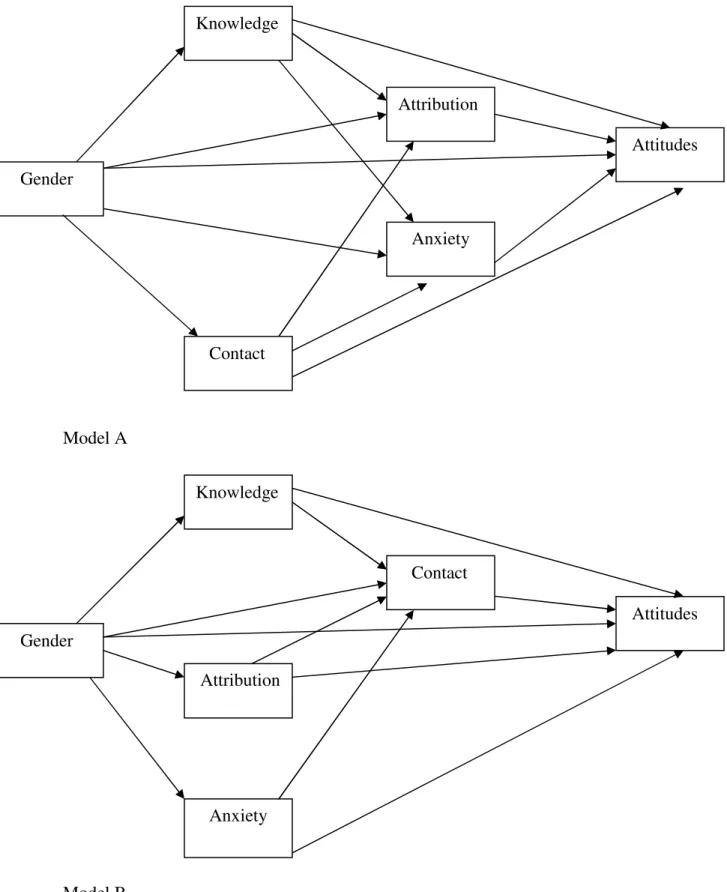
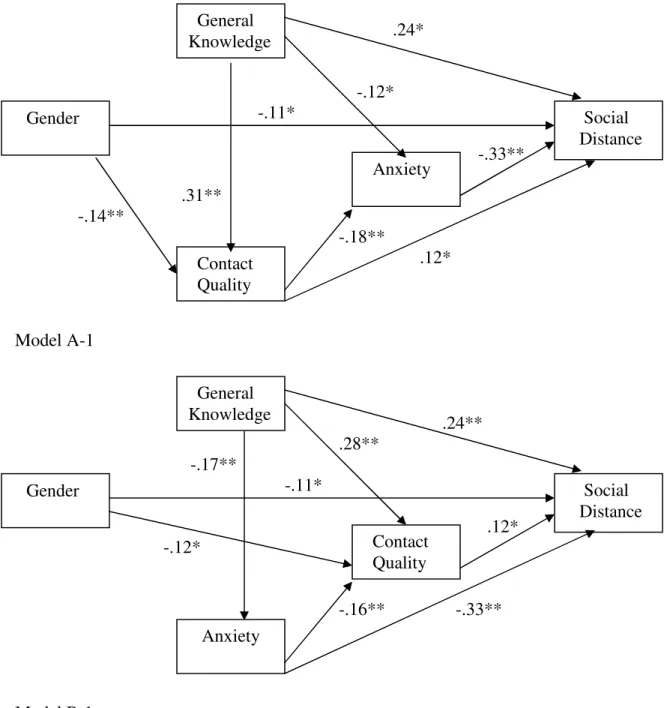
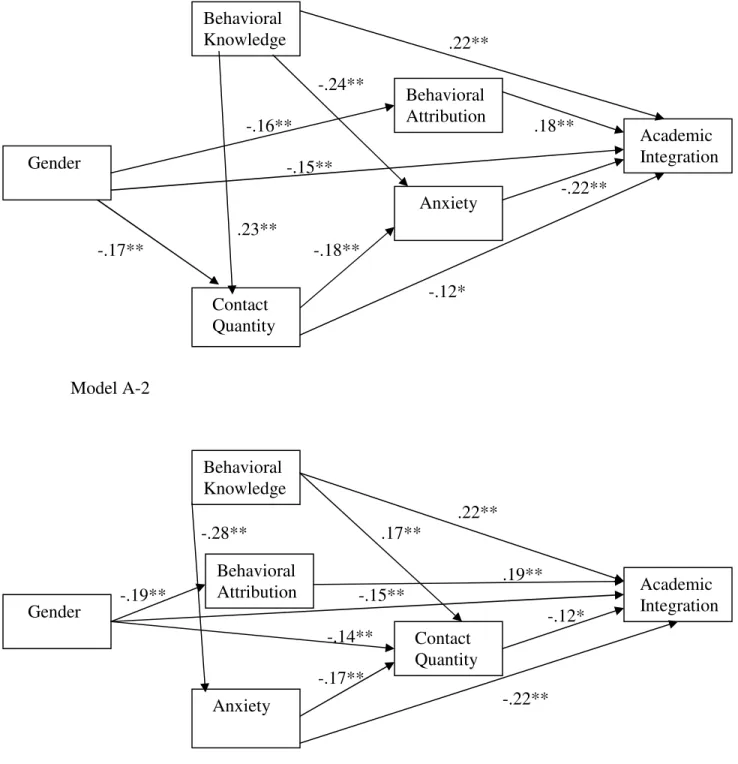
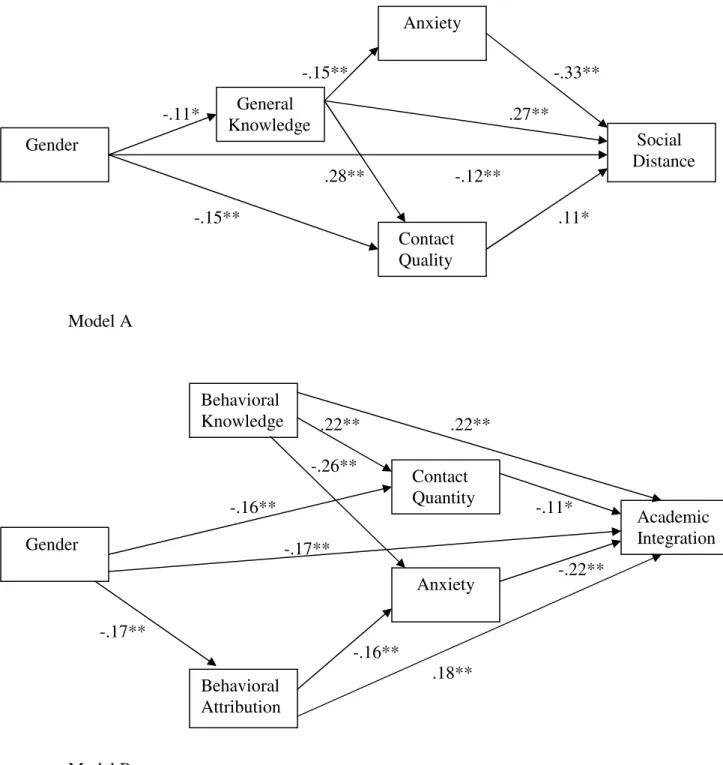
1. Path Diagrams of Proposed Mediational Models………..80 2. Final Mediational Models for Social Distance………..81 3. Final Mediational Models for Academic Integration………82 4. Path Diagrams of Alternative Mediational Models for Social Distance
CHAPTER 1 INTRODUCTION
In the years since the beginning of deinstitutionalization there has been increased interest in perceptions of individuals with mental disorders as they have been integrated into the community (Caruso & Hodapp, 1988). As Caruso and Hodapp (1988) observe, study of these perceptions contributes to the understanding of how people may react to individuals with mental disorders. An important focus of such studies has been attitudes toward
individuals with mental disorders. An attitude is “a psychological tendency that is expressed by evaluating a particular entity with some degree of favor or disfavor” (Eagly & Chaiken, 1993, p.1). Attitudes can be observed in three general classes of evaluative response-cognitive, behavioral and affective-reflecting the extent to which the attitude object is associated with attributes, behaviors/intended behaviors and emotional states of an overall positive or negative quality (Eagly & Chaiken, 1993).
2
1970). On account of these negative patterns, a mental disorder can be a form of stigma or “an attribute that conveys a devalued social identity in particular contexts” (Crocker, Major & Steele, 1998, p.506). Negative consequences that may follow from such stigmatizing attitudes are discriminatory behavior and decreased self-esteem in the stigmatized due to awareness of having a devalued social identity and experiencing negative social interactions (Crocker, Major & Steele, 1998). Consistent with these hypotheses, several studies have found that people identified as mentally ill are less likely to be hired for jobs or rented apartments and may experience lower self-esteem due to their devalued social status (Corrigan & Penn, 1999).
Given the significance of attitudes toward people with mental disorders, considerable research has focused on variables that predict attitudes to understand better how these attitudes develop and how they may be modified. As attitudes may consist of cognitive, behavioral and affective evaluative responses, so factors in each of these domains can also potentially influence attitudes (Eagly & Chaiken, 1993). These factors, discussed in greater detail below, include the cognitive factor of knowledge about the particular disorder, the behavioral factor of having contact with individuals who have the disorder and the affective factor of feeling anxious about people with the disorder. The additional respondent
characteristics of gender as well as socially desirable response tendencies have also been examined in relation to attitudes.
3
in both TIME Wallis, 2006 and Newsweek Kantrowitz & Scelfo, 2006). This suggests that public exposure to people with autism is likely to be increasing in various settings (e.g., neighborhoods, schools, the workplace) and that the importance of understanding attitudes toward individuals with autism and behaviors directed toward them is increasing accordingly. To date, several studies suggest that children are less socially accepting of a child with
4
Knowledge and Attitudes Toward Mental Disorders
One attitude predictor that has been the focus of considerable research attention is the cognitive variable of knowledge about mental disorders. Studies have examined whether having accurate information about the condition will make people less likely to endorse prejudicial stereotypes and desire significant social distance (Corrigan & Penn, 1999). In the case of attitudes toward mental illness, Corrigan and Penn (1999) reviewed studies of the association between knowledge and attitudes, finding that individuals who better understand the nature of mental illnesses tend to endorse fewer negative or discriminatory attitudes. They noted that numerous studies over a 30 year period have found that presentation of vignettes, fact sheets or participation in brief classes about mental illness tends to promote more positive attitudes in a variety of populations (e.g., adolescents, college students, community residents, and pre-service professional students) at least in the short-term (Corrigan & Penn, 1999). For example, Holmes and colleagues (1999) found that college students believed people with mental illnesses are less dangerous and deserving of greater community integration after completing a course on severe mental illnesses.
5
findings suggest that knowledge may need to be relatively extensive to have a significant influence on attitudes in some cases.
As with attitudes toward mental illness, a number of studies have examined the effect of knowledge on attitudes toward mental retardation and reported a similar pattern of results. After viewing video taped interviews of peers with mental retardation discussing their abilities and interests, children endorsed more positive adjectives describing the peer with mental retardation, although the information did not influence their willingness to interact with the target child (Bak & Siperstein, 1987). Participation in a 10-week course about mental retardation and other mental disorders led to endorsement of desire for less social distance and more positive opinions of individuals with mental disorders among high school students (Fiedler & Simpson, 1987) at least in the short-term. In contrast, another study of high school students found that prior knowledge did not have an effect on desired social distance or views of academic mainstreaming of individuals with mental retardation,
6
Contact and Attitudes Toward Mental Disorders
Besides knowledge, the effect of the behavioral variable of contact with individuals who have mental disorders on attitudes has also been a focus of considerable research. The major theoretical statement regarding the effects of contact on attitudes has been the so-called “contact hypothesis” formulated most notably by Allport in the 1950’s, which predicts that contact should lead to improved attitudes toward a particular group if contact is cooperative, participants in the contact are of equal status, participants share common goals and the contact has support from social customs or laws (Dovidio, Gaertner & Kawakami, 2003). Allport also noted the importance of relatively more intimate contact for improving attitudes, and it has been suggested that such contact in the form of intergroup friendships may
promote more positive attitudes (Pettigrew, 1998). In addition, it has been proposed that a perception of contact as qualitatively positive or pleasant may be associated with the positive impact of contact on attitudes (Dovidio, Gaertner & Kawakami, 2003).
The importance of contact for reducing negative attitudes toward numerous groups has been well documented. Pettigrew and Tropp (2000) conducted a meta-analytic review of 203 studies from the past 50 years that have assessed the effect of exposure to direct (i.e., face to face) contact on attitudes toward a variety of minority groups (e.g., racial and ethnic
7
hypothesis. These findings reinforce the importance of qualitative aspects of intergroup contact experiences for influencing attitudes in addition to having the experience of contact itself (Pettigrew & Tropp, 2000).
With respect to investigations of contact and attitudes toward mental illness, a meta-analysis examined 35 studies from the 1960’s through early 1990’s that provided direct contact with individuals who have a mental illness in the context of professional training (e.g., medical students or employees in psychiatric institutions) or undergraduate student training (i.e., contact for course credit or as a volunteer activity) (Kolodziej & Johnson, 1996). The analysis found that having contact significantly improved attitudes (i.e., endorsement of fewer negative or stereotypical beliefs about and less social rejection of people with mental illnesses). Interestingly, greater attitude change was found for
undergraduate students than professionals. Kolodziej and Johnson suggested that qualitative aspects of the contact (e.g., being voluntary in nature or relatively more equal status existing between patients and college students in junior institutional positions compared to
professional staff) might have influenced this difference.
Furthermore, in a review of more recent studies on contact and attitudes toward mental illness, Couture and Penn (2003) report that a number of studies found that people reporting more prior contact with individuals who have mental illnesses endorse more positive
8
when assessed before and after contact in a psychiatric institution did not change
significantly. It was again suggested that differences in qualitative aspects of the situation (e.g., extent to which it was on an equal or voluntary basis) likely account for the lack of significant effects for contact reported in these cases (Couture & Penn, 2003). This proposal, consistent with the contact hypothesis, highlights the likely impact of quality of contact on attitudes in addition to the impact of merely having the experience of contact.
In addition to the impact of contact on attitudes toward mental illness, the effect of contact on attitudes toward individuals with mental retardation has also been examined. Many of the early studies from the 1950’s through the 1970’s examined attitudes toward elementary school children with mental retardation who were mainstreamed into regular education classrooms. In a review of this literature, Horne (1985) reported that studies generally found a negative effect of contact, as children rejected and did not wish to interact with their peers who had mental retardation. Horne (1985) noted that in several studies rejection was
9
in one study of college students’ attitudes toward individuals with Down’s Syndrome (Hall & Minnes, 1999). Hall and Minnes (1999) found that quality (i.e., perceived pleasantness) but not quantity of prior direct contact was a significant predictor of attitudes toward individuals with Down’s Syndrome as more positive beliefs about the abilities and competencies of such individuals were associated with more positive quality of previous contact. They also found that indication of behavioral intent to volunteer at an agency that provided services to people with mental retardation were associated with more positive quality of previous contact (Hall & Minnes, 1999).
10
However, this may not be the only potential mediational model that could account for relationships among these variables. A plausible alternative would be that contact is a mediator such that anxiety toward as well as knowledge about a particular group may
influence the amount of contact that occurs with that group as well as the perceived quality of that contact, which in turn influences attitudes. Thus, a low level of anxiety and high level of knowledge could lead to seeking relatively more contact that is also perceived as
qualitatively more positive, which could lead to more positive attitudes. Both of these models merit evaluation to determine whether one can provide a better account for the relationships among these variables and attitudes.
11
more pronounced physiological anxiety response predicted a desire for greater social distance, suggesting that the imagined contact generated anxiety that influenced attitudes (Graves, Cassisi & Penn, 2005). The alternative that the effect of anxiety on attitudes may be mediated by contact has not been examined. Overall, these studies suggest that quantitative as well as qualitative dimensions of contact and anxiety may have an impact on attitudes toward individuals with mental disorders.
Attributions and Attitudes Toward Mental Disorders
Another potential predictor of the cognitive type that has recently begun to receive attention independently as well as in relation to knowledge and contact is attributions about individuals with mental disorders. The type of attribution examined in most studies is controllability or beliefs about the extent to which the individual is responsible for causing their condition as well as managing their behavior (Corrigan, 2000). Both the onset and behavior management aspects of controllability have been examined and found to be associated with attitudes. The initial focus of such studies was on stigmatized groups other than people with mental illnesses. With respect to control over the cause of one’s condition, people express greater willingness to assist individuals with conditions believed to have a less controllable onset (e.g., AIDS due to a blood transfusion) than those perceived as having a more controllable onset (e.g., AIDS due to sexual promiscuity) (Weiner, Perry &
12
With respect to attributions and attitudes toward mental disorders, people attribute varying levels of controllability over illness onset to different disorders with cocaine addiction and psychotic disorders perceived as most under the individual’s control while mental retardation is perceived as relatively uncontrollable by the individual (Corrigan et al., 2000). An
association between these personal controllability attributions and attitudes has also been reported. Martin and colleagues (2000) found that those who attributed the cause of a hypothetical individual’s mental illness to aspects of the individual’s bad character, which implies a degree of personal control, desired greater social distance than those who attributed the disorder to less personally controllable causes such as a genetic or inherited problem. Similarly, when the degree of personal control over the onset of a hypothetical individual’s mental illness is manipulated, attributions of more personal responsibility are associated with greater social rejection (Corrigan et al., 2003). Finally, Penn and colleagues (2003) found that viewing a documentary film about individuals with schizophrenia was associated with decreased attributions of controllability over the disorder’s cause as well as behavior
management, but these attributional changes were not accompanied by significant changes in perceived dangerousness, desired social distance, quality of affective response or expressed behavioral intent to attend a meeting with a person who had a mental illness. Nevertheless, Penn and colleagues (2003) note that a trend in the direction of positive change was observed and speculate that the information presented in the documentary may not have been
13
individuals who have a mental illness that included discussion of personal controllability over mental illness decreased the extent to which individuals with mental illness were perceived as responsible for their condition and decreased desired level of social distance. Corrigan and colleagues (2003) also found that history of prior contact with individuals who have mental illnesses was not associated with controllability attributions. In this case, attributions concerned a particular hypothetical individual for whom specific information about the degree of personal responsibility for illness onset was provided. This outcome suggests that there may be some instances when knowledge is the most important predictor of attributions (i.e., when focusing on an individual about whom specific information is known).
Taken together, these two studies provide tentative support for the hypothesis that
knowledge, contact, controllability attributions and attitudes may be associated. Knowledge and contact may influence the extent to which people perceive mental illnesses as
controllable, which may then influence their attitudes. Alternatively, knowledge as well as perceptions of controllability may influence the extent to which people seek contact with an individual who has a mental illness, which then influence attitudes. Overall, it appears that attributions likely have some impact on attitudes toward individuals with mental disorders and that this impact may relate to other factors such as knowledge and contact.
14
suggested that females may report more positive attitudes due to a tendency to be more nurturant, kind or sensitive than males (Farina, 1981; MacDonald & MacIntyre, 1999). However, results have been mixed with gender differences reported in only some studies. In the case of attitudes toward mental illness, reviewing early studies from the 1960’s and 1970’s, Farina (1981) found that in five studies involving behavioral interactions with someone identified as having a mental illness, women were always more accepting than men (e.g., willing to hire and work with a job applicant identified as a former mental patient). In contrast, in early studies that relied only on written attitude measures, no gender differences were reported in 11 cases while females were more accepting in three and males more accepting in four cases (Farina, 1981). This mixed pattern has continued more recently with several studies that relied on written measures finding that females were more accepting and desired less social distance (Penn & Link, 2002; Corrigan et al., 2003), while another study of this type using a large national sample of adults did not find a significant gender difference in perceived dangerousness or desired social distance from vignette descriptions of
individuals with mental illnesses (Schnittker, 2000).
Mixed results have also been obtained in the case of attitudes toward mental retardation. Females have endorsed significantly more positive attitudes toward individuals with mental retardation among elementary school children (Bak & Siperstein, 1987) adolescents (Fiedler & Simpson, 1987; Krajewski & Flaherty, 2000) and one sample of college students
15
Future studies might evaluate whether gender differences in attitudes may be mediated by knowledge about or contact with people who have mental illnesses.
Regarding socially desirable response tendencies, it has been noted that concerns about political correctness and a desire not to appear prejudiced may lead to reporting more socially desirable attitudes toward individuals with mental disorders (Hall & Minnes, 1999). Several studies have found that high social desirability may relate to more positive reported attitudes. In their study of attitudes toward mental illness, Alexander and Link (2003) found that a higher socially desirable response tendency corresponded to perceptions that individuals with mental illness are not dangerous as well as endorsement of less social distance from a
hypothetical individual with mental illness. Similarly, in the case of attitudes toward mental retardation, Hall and Minnes (1999) found that higher social desirability scores corresponded to more positive beliefs, but not expressed intent to volunteer at an agency that provided services to individuals with mental retardation. This suggests that a socially desirable
16 Summary of Attitudes Toward Mental Disorders
The literature suggests that attitudes toward individuals with mental disorders such as mental illness and mental retardation are generally negative as significant social distance from such individuals is typically endorsed. This literature also suggests that knowledge about and contact with individuals who have mental disorders are generally associated with endorsement of more positive attitudes. Regarding contact, quantitative as well as qualitative dimensions likely contribute to attitudes toward individuals who have mental disorders. It also seems that lower anxiety as well as attributions of less controllability over the disorder may be associated with more positive attitudes. Several models accounting for the
interrelationships among these predictors are also suggested. Finally, it seems that gender and social desirability may also have some impact on reported attitudes toward individuals with mental disorders.
Knowledge and Attitudes Toward Autism
There have been relatively few investigations of factors related to attitudes toward autism. Because there have been substantial changes in the definition of autism as well as
17
most of these individuals having particular peak skills such as impressive rote memorization abilities (Schopler & Mesibov, 1984). Over time, numerous studies demonstrated that the intelligence of these children could be reliably assessed and that the majority of individuals with autism also have some degree of mental retardation (Schopler & Mesibov, 1984; Klinger et al., 2003). Finally, since most of the small group of children first diagnosed with autism came from families of high socioeconomic status (SES), it was believed for many years that autism occurred more frequently in this group (Schopler & Mesibov, 1984). However, subsequent studies have demonstrated that autism is commonly diagnosed in families at all levels of SES (Schopler & Mesibov, 1984; Klinger et al., 2003).
Several studies have assessed knowledge about autism among various professional groups and found a pattern of inaccurate knowledge in several domains. Stone (1987) developed a survey that assesses knowledge about cognitive and social/emotional features of autism as well as general descriptive features such as course and prognosis and compared responses for a group of university-based autism specialists to a sample of community clinical
18
treatment. Finally, all four groups were more likely than the specialists to believe that autism occurs more frequently in individuals of higher SES.
Two more recent studies have found that some inaccurate beliefs about autism persist among health and mental health professionals. In a replication of Stone’s (1987) study, Heidgerken and colleagues (2005) administered Stone’s measure to primary providers such as pediatricians or family physicians, mental health professionals such as psychologists, and autism specialists. While non-specialists agreed with autism specialists that autism and mental retardation can be comorbid and that people with autism do not necessarily have special talents, both non-specialist groups were still more likely to believe that children with autism do not show social attachments or affectionate behaviors and that autism is more prevalent in people of higher SES. The primary providers were also more likely than autism specialists to believe that autism can be outgrown with treatment and that autism is due to cold rejecting parents. Using a different method, Cucarro and colleagues (1996) also demonstrated the persistence of the belief that autism is more common in higher SES individuals. They presented school psychologists, speech language pathologists and
physicians with an ambiguous vignette that was either weighted toward diagnostic criteria for autism or attention deficit hyperactivity disorder (ADHD). They alternated descriptions of the SES of the target child in the vignette and found that the autism vignette was significantly more likely to be diagnosed with autism when described as coming from a high SES family than from a low SES family. Interestingly, SES had no effect on whether the ADHD-weighted vignette was assigned that diagnosis.
19
helping professionals. Using their autism survey, Stone and Rosenbaum (1988) compared teacher and parent responses to those of university based autism specialists. Both parents and teachers were less likely than autism specialists to believe that children with autism can also have mental retardation and more likely to believe that such children have special talents and are more intelligent than tests indicate. Parents and teachers were also more likely to believe that autism is an emotional disorder and that emotional factors play a major role in the development of autism. Parents were also more likely than teachers or specialists to believe that autism exists only in childhood and can be outgrown with proper treatment. In one notable departure from the professionals in Stone’s (1987) and Heidgerken et al’s (2005) samples, the teachers and parents were likely to agree with the autism specialists that
individuals with autism can show affectionate behavior. Also, in a recent study of special and regular education teachers in the United Kingdom using Stone’s (1987) measure, Helps and colleagues (1999) reported a similar pattern of results.
In addition to investigations of knowledge about autism among professional groups, three studies have examined aspects of knowledge about autism among the general public and found varying degrees of accurate knowledge. In the first investigation, Roth and Smith (1983) surveyed Arkansas homeowners’ knowledge about mental retardation, cerebral palsy, epilepsy, and autism. Respondents were to indicate agreement, disagreement or uncertainty about the veracity of a series of statements for each disability with four items related to autism. Respondents displayed generally accurate knowledge about cerebral palsy, epilepsy, and mental retardation, though in the latter case nearly one third of respondents were
20
communication disorder, or an inability to relate to others and nearly one half were uncertain about whether children with autism are highly intelligent. Roth and Smith also included an attitude measure as part of their survey and the majority of respondents agreed with
statements suggesting that individuals with disabilities should attend public schools as well as have the right to live and work in the community. However, many of the statements in this survey used “mentally retarded people,” as the referent with “people with mental disabilities” or “handicapped people” also used for several items. Only one item assessing the right for individuals with problems to attend public school specifically included autism and the majority of respondents supported it. Hence, these results did not clearly indicate what attitudes adults have toward individuals with autism and the relationship between knowledge and attitudes was not assessed.
21
cannot show affection. Respondents were also uncertain about other aspects of autism such as prevalence and gender ratio. Overall, this survey suggests that members of the general public do not believe that autism is an emotional disorder, but are uncertain about other aspects of the disorder such as the cognitive abilities associated with having autism.
A third study also assessed general awareness of the challenges associated with parenting children with autism or other disabilities. Geddie and Range (1992) compared college student ratings of stress and functioning for a hypothetical family with a child labeled as either having no handicap, a physical handicap, mental retardation or autism. The family having a child with autism was believed to experience the most stress of the four groups, followed by the family having a child with one of the other disabilities assessed. Also, the students believed that families having a child with autism or one of the other disabilities would be more likely to require professional assistance to cope with the child. These college students did not believe that parents of children with autism would be more likely to have mental illnesses than parents of children in other types of families. While Geddie and Range did not directly assess knowledge of autism, these findings suggest some level of awareness among the public of the difficulties associated with having a child who has autism.
In addition to studies of knowledge about autism, two recent investigations have
22
child as well as estimates of their classmates’ willingness to have social contact with the target child. Swaim and Morgan found that participants rated the target child who did not display autistic behaviors more positively than the target with autistic behaviors regardless of whether information about autism was provided. Provision of information about autism also did not have an effect on desire for social contact and children reported equal willingness for social contact with both target children, but girls and sixth graders believed that their peers would be less likely to want to interact with the target displaying autistic behaviors. Swaim and Morgan observe that this difference in terms of self versus other desire for social contact may suggest that participants were more concerned with social desirability in their own responses and that their own desire for social contact may not be as strong as indicated by actual responses. This possibility suggests the utility of assessing directly the role of social desirability in future studies of attitudes toward individuals with autism.
Subsequently, Campbell and colleagues (2004) partially replicated Swaim and Morgan’s (2001) procedure with third, fourth and fifth grade students. They also found that
23
some knowledge about autism may produce a modest positive effect on attitudes among elementary school children. Also, since the information was limited and presented very briefly, more extensive presentation may have a stronger positive impact on children’s attitudes. In addition, these studies provide a mixed picture regarding gender differences in attitudes as one study found no differences while the other found that females displayed more positive attitudes.
Overall, studies to date provide limited information about the impact of knowledge on attitudes toward autism. The level of knowledge about autism is variable among the non-disabled and is in some ways still consistent with early conceptualizations of the disorder (e.g., parents and teachers of children with autism are likely to overestimate the cognitive abilities of individuals with autism and many healthcare professionals believe that
individuals with autism cannot display affectionate behaviors and are more likely to be of high SES). Interestingly, the general public may not endorse some of these inaccurate statements (e.g., awareness that individuals with autism can show affection and social attachments), although they continue to endorse other inaccurate information (e.g., uncertainty about the prevalence of autism, overestimation of or uncertainty about the cognitive abilities of individuals with autism). With respect to the impact of knowledge on attitudes, providing information about autism had a positive effect on attitudes among children in one case and no effect in a second case. Since these studies provided limited information about the disorder, a more extensive presentation may have a stronger positive effect on attitudes. While no studies have addressed the relationship of knowledge to
24
MacIntyre, 1999) suggest that knowledge may have a positive effect on adult’s attitudes toward individuals with autism. Examination of the relationship between knowledge of autism and adult attitudes is needed.
Contact and Attitudes Toward Autism
As was the case with knowledge and attitudes, two studies have assessed the relationship between contact and attitudes toward autism. These studies evaluated children’s beliefs before and after periods of interaction with peers who had autism and reported conflicting results. In the first study, McHale and Simeonsson (1980) assessed the attitudes of second and third grade students before and after a series of brief free-play interactions with same age peers with autism. Participants’ responses toward the child with autism were positive in terms of adjective ratings and desire for social contact both before and after the series of free-play interactions, suggesting that contact did not have a significant effect on attitudes.
Because attitudes were positive pre-contact and the sample size small, it is possible that small positive effects of contact could not be detected.
In a second study, Prather and Chovan (1984) assessed second and third grade students before and after a series of brief tutoring sessions in which the non-disabled children taught the children with autism how to complete several matching tasks. Although adjective ratings were generally positive both before and after tutoring, after the sessions, non-disabled
25
Prather and Chovan note the inconsistency between their results and those of McHale and Simeonsson (1980) and speculate that the reason for this may relate to qualitative differences between the two contact situations. Specifically, they suggest that the free play interactions may have been more enjoyable than their academically oriented tutoring session and this qualitatively positive experience may have prevented negative responses following contact. In a similar vein, McHale and Simeonsson suggested that in a free play situation children with autism might appear less deviant or disruptive than in a more task oriented academic situation, thereby reducing the likelihood that their peers would view them negatively or perceive the interaction as unpleasant. This hypothesis is consistent with the proposal that the positive or pleasant quality of an interaction may relate to attitudes following contact (Dovidio, Gaertner & Kawakami, 2003). Furthermore, the contact hypothesis emphasizes the importance of cooperation in an interaction for promoting positive attitudes (Dovidio, Gaertner & Kawakami, 2003). Hence, a lack of consistent cooperation from the children with autism in the academic task may have made it more qualitatively difficult or unpleasant than a lack of cooperation in the less restricted free play situation. Qualitatively unpleasant aspects of the situation likely also produced increased anxiety about interacting with an individual who has autism, which may have had a more negative impact on attitudes following the tutoring experience. Overall, these hypotheses suggest the need for future studies to assess the quality of contact with individuals who have autism as well as emotional responses to that contact to determine the extent to which these variables may affect
attitudes.
26
evidence for the existence of negative attitudes among adults following contact. In both interviews (Gray 1993, 2002) and a mailing survey (Mahoney, 2003) some parents endorsed the belief that others made negative remarks, avoided them or excluded them from social activities because they had a child with autism. Parents reported that negative or critical remarks made to them frequently followed events in which the child with autism behaved in a disruptive manner (Gray 1993, 2002; Mahoney, 2003). Reports of avoidance or exclusion were accompanied by concerns that the behavior of the child with autism would disrupt an event (Mahoney, 2003). These findings suggest that people who had qualitatively unpleasant experiences were likely to express somewhat negative attitudes toward individuals with autism. They also suggest the possible influence of anxiety as past unpleasant contact may have increased anxiety about future encounters with individuals who have autism and increased negative attitudes.
27
contact on attitudes. It is also possible that emotional responses to the contact situation (i.e., level of anxiety) may be involved either by mediating the impact of contact on attitudes or by having the impact of anxiety mediated by contact. There is a need for further evaluation of attitudes toward autism among the adult population and of the extent to which various characteristics of contact may influence attitudes.
Attributions and Attitudes Toward Autism
As is the case with knowledge and contact, attributions related to autism have been the focus of limited investigation. Two studies have examined attributions of perceived controllability over the cause and behavior management of autism. In the first study,
Grindstaff (2001) examined attributions made by several types of professionals (e.g., special education teachers, speech language pathologists, psychologists) before and after attending a one-week course on teaching individuals who have autism about the extent to which such individuals can control their behavior. Grindstaff found that participants’ attributions regarding the behavior of individuals with autism shifted in the direction of greater
uncontrollability following the training. Also, these attributions of greater uncontrollability were associated with reported intent to make greater use of the teaching techniques
28
completely controllable and so not deliberately disruptive may lead to relatively greater tolerance of the individual than if the disruptive behavior is perceived as intentional. In addition to attributions concerning behavior management, attributions about control over the cause of the disorder were assessed in the NAAR (2003) survey of the general public. Respondents were asked about possible causes of autism and genes were the most commonly suggested cause with environmental stressors such as toxins or vaccines also often identified. This result suggests that members of the general public attribute the cause of autism to factors outside of the individual’s control. As was the case with Grindstaff’s (2001) study, the NAAR survey did not assess the relation of this aspect of controllability attributions to attitudes.
29 Summary of Attitudes Toward Autism
The available information on attitudes toward autism is limited. Several studies suggest that attitudes toward people with autism may be relatively negative among children and perhaps less so among adults. For the attitude predictors examined to date, results are
generally consistent with the findings for attitudes toward other mental disorders. No gender differences as well as more positive attitudes for females have been reported in the case of autism as with other mental disorders. Similarly a small positive effect of knowledge on attitudes has been reported in one case, which is consistent with findings for other mental disorders, although no effect was found in a second study. Regarding contact, findings of no effect on already positive attitudes in one study and a somewhat negative effect of direct contact in a second study with qualitatively important differences between the two studied interactions appears generally consistent with the findings for other mental disorders suggesting the potential importance of contact quality. However, none of these studies of attitude predictors assessed adult attitudes toward autism, as participants in each case were elementary school children. Furthermore, there have been no examinations of the effect of anxiety or control attributions on attitudes toward autism. Consequently, significant gaps remain in the understanding of attitudes toward autism.
Overview of the Present Study
30
31
Regarding hypotheses about the predictors of primary interest, consistent with some findings for the impact of knowledge on attitudes toward autism (Campbell et al., 2004) as well as other mental disorders (e.g., Corrigan & Penn, 1999; MacDonald & MacIntyre, 1999), it was predicted that more accurate knowledge of autism would be associated with more positive attitudes toward individuals with autism. Regarding the impact of prior direct contact, consistent with previous studies assessing the effect of contact on attitudes toward people with autism (McHale & Simeonsson, 1980; Prather & Chovan, 1984) as well as individuals with other mental disorders (e.g., Couture & Penn, 2003), it was predicted that more as well as qualitatively more positive contact experiences would be associated with more positive attitudes. For anxiety, consistent with previous findings (e.g., Angermeyer & Matschinger, 1997), it was predicted that lower levels of anxiety would correspond to more positive attitudes. In the case of attributions, based on findings regarding controllability attributions and attitudes toward individuals with mental illnesses (Corrigan et al., 2003; Martin et al., 2000), it was predicted that attributions of less personal controllability would be associated with more positive attitudes.
32
expressions of more socially desirable responding would correspond to more positive attitudes toward individuals with autism. An exception to this prediction may relate to behavioral intentions to interact with an individual who has autism since several previous studies have not reported an impact of social desirability on behavioral intentions (Hall & Minnes, 1999; Penn et al., 2003), suggesting that there may not be a significant association between these variables.
Finally, as an exploratory follow-up analysis, several mediational models that may account for relationships among these predictor variables were evaluated. On account of the hypothesized significance of gender differences in attitudes, this variable was included to examine whether gender differences in attitudes may be mediated by differences in knowledge, contact, anxiety or attributions with the relationships among the latter set of constructs varying in each model. Social desirability was not included in these models, as self-presentational concerns were believed to focus directly on attitudes and not operate through other variables. Regarding those variables, one model suggested by previous findings related to attitudes toward mental illness (Angermeyer & Matschinger, 1997; Corrigan et al., 2001), as well as attributions about individuals with mental illness (e.g., Corrigan et al., 2002) and autism (Grindstaff, 2001) predicts that the effect of knowledge and contact will be mediated by anxiety and controllability attributions (see Model A in Figure 1). Greater knowledge and more prior contact may lead to decreased feelings of anxiety as well as attributions of decreased control and, in turn, relatively more positive attitudes. In addition, the alternative model predicting that greater knowledge, decreased anxiety and attributions of less personal control will lead to increased contact that is perceived as
33
CHAPTER 2 METHOD Participants
A preliminary power analysis using the equations provided by Cohen (1988) indicated that with seven predictors (gender, social desirability, knowledge, contact quantity as well as quality, anxiety, and controllability attributions) to achieve power of .80 at an alpha level of .05 and detect a small to medium effect size of .10 would require approximately 300
participants. Three hundred thirty college students enrolled in a general psychology course participated in this study for course credit. Participants were 68% female, 81.5% Caucasian, 7% African-American, 7% Asian American, 3% Latino and 1.5% of other racial backgrounds with an average age of 19.
Measures
Attitude Inventory
The Mental Retardation Attitude Inventory-Revised (MRAI-R) (Antonak & Harth, 1994) was adapted for use in this study. This measure was selected because it provides
comprehensive multidimensional assessment of attitudes toward a population with a
35
retardation, Inclusion-Segregation, which assesses views about integration of children with mental retardation in regular education classrooms, Private Rights, which assesses beliefs about whether landlords or business owners have the right to exclude individuals with mental retardation, and Subtle Derogatory Beliefs, which assesses negative views of the character and social behavior of individuals with mental retardation. Antonak and Harth (1994) reported acceptable reliability for the four subscales (α’s ranging from .73 to .82) and found that scores on the MRAI-R were not significantly influenced by a socially desirable response bias since MRAI-R scores for those who earned high scores on a measure of social
desirability were not significantly different from those who earned low scores on the measure of social desirability. Adaptation of the MRAI-R required changing the referent in each item from “child/person with mental retardation” to “child/person with autism.”
To determine whether the four-factor structure of the attitude inventory remained when the referent changed to “person with autism,” a confirmatory factor analysis using maximum likelihood estimation was conducted. The following fit indices from that analysis are
36
indicative of good fit although levels as high as .08 are considered indicative of adequate fit (Byrne, 2001).
Results across fit indices for the four factor solution were indicative of a relatively poor fit to the data, χ2 (371, N = 330) = 705.51, p<.001, IFI = .84, CFI = .83, RMSEA = .05 (.04-.06). Similarly, a one factor solution also indicated a relatively poor fit to the data, χ2 (377, N = 330) = 909.49, p<.001, IFI = .73, CFI = .73, RMSEA = .07 (.06-.07). These results indicate that the attitude scale is likely not characterized by either a four factor or single factor structure. Because no theoretical guidance was available to suggest how to re-specify the model for further confirmatory analyses, an exploratory factor analytic approach was then used to determine the appropriate factor structure for this measure.
37
The second factor had an eigenvalue of 1.97 and accounted for 6.8% of the variance in item scores. This factor consisted of six items with five from the Integration-Segregation subscale, all of which concerned academic mainstreaming, and one item from the Subtle Derogatory Beliefs subscale concerning beliefs about the ability of people with autism to be the equals of people without autism in social situations. Given the content of these items, the name of the new subscale was changed to Academic Integration.
The third factor had an eigenvalue of 1.65 and accounted for 5.67% of the variance in item scores. This factor consisted of three items from the Private Rights subscale relating to the rights of businesses vis-à-vis children with autism and their families (i.e., whether daycare centers or private nursery schools should be required to accept them or real estate agents should be required to show homes to families having children with autism regardless of the neighbors opinions). Since these items were from the original Private Rights subscale, that name was retained. Three items from the Subtle Derogatory Beliefs subscale and one each from the Social Distance, Integration-Segregation, and Private Rights subscales did not load on any factor and were dropped from the final attitude inventory.
The new Social Distance and Academic Integration subscales displayed good internal consistency (α = .82 for social distance and α = .74 for academic integration), while the new Private Rights subscale displayed only moderate internal consistency (α = .55). Scores on the three-factors of this 23-item autism attitude inventory were used in all analyses. Behavioral Intentions
38
partially adapted from a study of attitudes toward individuals with Down’s Syndrome (Hall & Minnes, 1999). A statement indicated the availability of unspecified volunteer
opportunities to work with people who have autism at the local TEACCH autism treatment center. Respondents were asked if they would be interested in such an opportunity and, if so, to provide an email address or phone number where they could be reached to discuss this opportunity and their participation in greater detail. Provision of contact information constituted the measure of behavioral intention. After completing the study, all participants were provided with information about available volunteer opportunities at the local
TEACCH center. Knowledge of Autism
39
more psychometrically sound version of the measure, which was done in this study. In this sample, however, the measure displayed only moderate internal consistency (α = .62). Since the measure had not previously been used with a college student population, an exploratory factor analysis was conducted to determine whether a multidimensional structure would better characterize the measure for such a sample.
A principal components analysis with varimax rotation was conducted and examination of eigenvalues and the scree plot suggested a two-factor solution. A principal axis factor
analysis with direct oblimin rotation specifying a two-factor solution was then conducted. The pattern coefficients for items on each factor are presented in Table 2. The first factor had an eigenvalue of 3.36 and accounted for 18.68% of the variance in item scores. This factor was comprised of nine items that assessed a range of general descriptive features of autism (e.g., distinctness from childhood schizophrenia, prevalence in high SES groups, role of emotion and parental rejection in causing autism). Consequently, this subscale was named the General Knowledge subscale. The second factor had an eigenvalue of 1.57 and
accounted for 8.7% of the variance in item scores. This factor was comprised of three items related to behavioral aspects of autism (e.g., whether children with autism show social attachments, affection and are deliberately noncompliant) and so it was named the Behavioral Knowledge subscale. Six items (e.g., regarding comorbidity with mental
40 Quantity ofContact
The Level of Contact Report (Holmes et al., 1999), which has been used to assess contact with individuals who have mental illness, was adapted for use in this study. This measure was selected for its extensive assessment of potential contact situations. The Level of
Contact Report consists of 12 statements describing various levels of contact with individuals who have mental illnesses ranging from no contact to indirect contact (i.e., viewing
documentaries, movies or television shows about people with mental illness) to direct contact (e.g., working with or living with someone who has a mental illness, having a friend or family member with mental illness or having a mental illness oneself). The statements were rated by several experts in psychiatric rehabilitation to determine their level of intimacy (rank order correlations between raters = .83) and each item was assigned a rank from 1-12.
Respondents are asked to indicate all of the contact situations they have experienced and their score on the measure is the highest ranked item they endorse. In the present study the two items related to indirect contact (i.e., media exposure) were not used since the focus was on the influence of prior direct contact on attitudes. This procedure reduced the possible score range to 1-10, but the relative rank order of the remaining items was unchanged. Adaptation of the Level of Contact Report required changing the referent from “person with severe mental illness” to “person with autism.”
Quality of Contact
The quality of contact subscale from the contact measure employed by Islam and
41
which assess several hypothetically important qualitative aspects of contact discussed in the literature (Dovidio, Gaertner & Kawakami, 2003; Pettigrew, 1998), require respondents to rate the extent to which they typically experienced prior contact as equal, cooperative, pleasant, voluntary, and intimate on a scale from one to seven with higher scores indicating qualitatively better contact. The referent for these items was changed from the religious groups used in the original study to “individual with autism.” Participants could also indicate if they had never had direct contact with someone who has autism, which resulted in
assignment of a score of 0 on this measure. This measure displayed moderate internal consistency in this sample (α = .68).
Anxiety
The anxiety subscale from the measure of emotional reactions to mental illness used by Angermeyer and Matschinger (1997) was adapted for use in this study. This four-item subscale was derived by factor analysis from a measure of various emotional reactions to individuals with mental illness, but internal consistency of the subscale was not reported. These items require respondents to rate their feelings of uneasiness, fear, insecurity, and embarrassment regarding people with mental illness on a scale from one to five with higher scores indicating greater anxiety. Adaptation of the scale required changing the referent from the target individuals with mental illness described in the original study’s vignettes to
“people with autism.” The adjective “uncomfortable” was also substituted for
42 Controllability Attributions
The attribution measure consisted of two items adapted from Corrigan and colleagues’ (2002) Attribution Questionnaire. This two-item subscale was derived by factor analysis from a measure of attributions as well as emotional and behavioral reactions to individuals with mental illness, but internal consistency of the subscale was not reported. These items require ratings of the degree of control the individual with autism is believed to have over the cause of their condition as well as their autistic behaviors on a scale from 1 = not at all under personal control to 9 = completely under personal control. These items were presented with several filler items assessing participants’ beliefs about the likelihood that individuals with autism will commit or be victims of crime. This measure displayed poor internal consistency (α = .31) and so the only strategy permitting the use of these items was to enter them in all analyses as single item measures of two different dimensions of control attributions, one for control over causing autism and one for control over behavior management.
Social Desirability
The Crowne-Marlowe Scale (Crowne & Marlowe, 1960), one of the most widely used measures of social desirability (Barger, 2002), was used to assess social desirability. This measure consists of 33 statements answered in a true/false format with higher scores
43 Procedure
CHAPTER 3 RESULTS
Analysis of the effects of the set of predictors (i.e., general and behavioral knowledge, contact quantity and quality, anxiety, behavioral and causal control attributions, gender, and social desirability) on attitude dimensions proceeded in three steps. First, the impact of the set of predictors on the subscales of the attitude inventory (i.e., social distance, academic integration and private rights) was examined using a multivariate multiple regression. From the total of 330 participants, cases with missing data (i.e., a measure that was not completed) were dropped so 322 participants were included in the analysis. Second, the impact of the set of predictors on the categorical behavioral intentions item was examined using logistic regression. Cases with missing data were again dropped so 316 participants were included in the analysis with the increase in missing data due to participants whose only non-response was for the behavioral intention item. Third, the proposed mediational analyses examining relationships among significant predictors and attitude dimensions were evaluated using path analyses. Data from all 330 participants were initially included in these analyses. As
45
Effects of Individual Predictors on Attitude Inventory Dimensions
Respondents mean scores on each of the variables entered into the regression equations are found in Table 3. Participant responses covered nearly the full range of possible scores for each measure. On average, respondents were relatively knowledgeable about autism with somewhat weaker general than behavioral knowledge. They had moderate amounts of contact consisting of frequent observation of people with autism or working with such an individual and this contact was rated as being of low positive quality. Respondents also reported relatively low anxiety. Respondents believed that people with autism have a moderate degree of control over their behavior and very little control over the cause of their condition. On average, attitudes toward autism were also positive with relatively low desired social distance, limited support for business owners refusing to serve people with autism, and moderate support for academic integration.
Correlations between the predictor variables and the attitude inventory dimensions of social distance, academic integration and private rights as well as behavioral intentions item are found in Table 4. The size of significant correlations was generally small to moderate with most in the range from -.30 to .30. With the exception of social desirability, all predictors were significantly correlated with at least one attitude dimension. As expected, the attitude dimensions were also significantly intercorrelated indicating that they are measuring related constructs. This pattern of significant correlations suggests the suitability of this data for multivariate regression analysis.
46
of the variance in the set of attitude inventory dimensions (i.e., social distance, academic integration and private rights), F (27, 906) = 6.60, p<.001, Wilks’ Λ = .59, partial η2 = .160. With respect to the effects of individual predictors on the set of attitude inventory dimensions (see Table 5), general knowledge of autism accounted for a significant 4.8% of the variance in the set of attitude inventory dimensions, F (3,310) = 5.16, p<.002; Wilks’ Λ = .95, partial η2 = .048, and behavioral knowledge accounted for 4.1% of the variance, which was also significant, F (3,310) = 4.38, p<.005; Wilks’ Λ = .96, partial η2 = .041. For contact, quantity accounted for a significant 2.9% of the variance, F (3,310) = 3.13, p<.02; Wilks’ Λ = .97, partial η2 = .029, and quality accounted for 2.5% of the variance, which was also significant, F (3,310) = 2.68, p<.05; Wilks’ Λ = .98, partial η2 = .025. Anxiety accounted for a
significant 11.5% of the variance, F (3,310) = 13.47, p<.001; Wilks’ Λ = .885, partial η2 = .115. Behavioral control attributions accounted for a significant 3.6% of the variance in attitude inventory dimensions, F (3,310) = 3.82, p<.01; Wilks’ Λ = .96, partial η2 = .036. Also, respondent gender accounted for a significant 4.8% of the variance, F (3,310) = 5.18, p<.002; Wilks’ Λ = .95, partial η2 = .048, with females reporting more positive attitudes. Causal control attributions and social desirability were not significant predictors of the set of attitude inventory dimensions.
For the attitude dimension of desired social distance, the follow-up univariate regression indicated that general knowledge of autism, contact quality, anxiety and respondent gender were significant predictors (see Table 6). General knowledge accounted for 3.5% of the variance in social distance with greater general knowledge of autism associated with desire for less social distance (b = .18, t = 3.39, p<.001, partial η2 = .035). Contact quality
47
was associated with desire for less social distance (b = .08, t = 2.34, p<.02, partial η2 = .017). Anxiety accounted for 10.2% of the variance in social distance as decreased anxiety was associated with desire for less social distance (b = -.59, t = -5.96, p<.001, partial η2 = .102). Respondent gender accounted for 1.8% of the variance in social distance with men desiring greater social distance than women (lower scores indicate desire for more social distance) (b = -1.32, t = 14.68, p<.001, partial η2 = .018). It should be noted that causal control
attributions were also a significant predictor (b = -.36, t = -2.22, p<.03, partial η2 = .016), but cannot be interpreted meaningfully since causal control attributions did not have a significant overall effect on attitudes in the multivariate test reported previously. Behavioral
knowledge, contact quantity, behavioral attributions and social desirability were not significant predictors of social distance.
48
behavioral control were associated with more support for academic integration (b = .37, t = .3.38, p<.001, partial η2 = .035). Gender accounted for 2.6% of the variance in academic integration as men were less supportive of academic integration than women (b = -.934, t = -2.87, p<.004, partial η2 = .026). General knowledge of autism, contact quality, causal control attributions and social desirability were not significant predictors of attitudes toward
academic integration.
For the attitude dimension of private rights, the follow-up univariate regression indicated that anxiety was the only significant predictor (see Table 8). Anxiety accounted for 2.5% of the variance in attitudes toward private rights as decreased anxiety corresponded to increased support for requiring business owners to serve people with autism (b = -.11, t = -2.85,
p<.005, partial η2 = .025). No other variables were significant predictors of attitudes toward private rights.
Effects of Predictor Variables on Behavioral Intention
The logistic regression model examining the set of predictor variables in relation to the behavioral intention item (see Table 9) was reliable (χ2 (9, N = 330) = 49.69, p<.001) and the set of predictors accounted for approximately 19.6% of the variance in behavioral intention to perform volunteer work with people who have autism (Nagelkerke R2 = .196). This model was able to predict accurately 74.3% of those who did not indicate behavioral intent and 55.6% of those who did indicate behavioral intent with an overall predictive accuracy rate of 66.5%. In terms of individual predictors, behavioral control attributions, anxiety and
49
decreased by 73% (b = -.31, Wald = 10.80, p<.001, odds ratio = .73). Also, men were 36% less likely to indicate intent to volunteer than women (b = -1.03, Wald = 12.82, p<.001, odds ratio = .36). Finally, a trend approaching significance was noted for behavioral knowledge such that increased behavioral knowledge predicted increased odds of indicating intent (b = .10, Wald = 3.42, p=.06, odds ratio = 1.10). General knowledge of autism, contact quantity and quality, causal control attributions and social desirability did not significantly predict behavioral intention.
Mediational Analyses
Two mediational models examining relationships among the predictors of each attitude dimension were initially hypothesized. In Model A gender, levels of knowledge and contact were hypothesized to influence attributions as well as anxiety which in turn influences attitudes. In Model B gender, knowledge, attributions and anxiety were hypothesized to influence contact, which in turn influences attitudes (see Figure 1). Since results of the multivariate multiple regression indicated that different variables predicted social distance and academic integration, the two models were examined for each attitude dimension separately with one set of analyses (Models A-1 and B-1) using significant predictors of social distance (i.e., gender, general knowledge, anxiety, and contact quality) and another set (Models A-2 and B-2) using significant predictors of academic integration (i.e., gender, behavioral knowledge, behavioral attributions, anxiety and contact quantity). Private rights were not included in these mediational analyses since there was only one significant
predictor of that attitude dimension. All mediational models were evaluated using path analysis with maximum likelihood estimation. The χ2 test, incremental fit index (IFI),
50
associated 90% confidence interval were the fit indices used for evaluating these path
analyses. Values indicative of good fit for index were as follows: non-significant χ2 , IFI and CFI greater than .95, and RMSEA less than .08 with less than .05 indicating the closest fit. For social distance, neither model provided an adequate fit to the data. Model A-1 in which gender predicted general knowledge and contact quality which in turn predicted anxiety and then desired social distance was a poor fit to the data, χ2 (1, N = 330) = 27.50, p<.000, IFI = .85, CFI = .84, RMSEA = .28 (.19-.38). The alternative Model B-1 in which gender predicted anxiety, and general knowledge which in turn predicted contact quality and then desired social distance also provided results indicative of a less than adequate fit to the data, χ2 (1, N = 330) = 7.75, p<.01, IFI = .96, CFI = .95, RMSEA = .14 (.06-.24), although a relatively better fit than Model A-1. Both models were then re-estimated with cases that had missing data deleted in order to obtain modification indices, which indicate potential
decreases in χ2 value (i.e., better fit) associated with each parameter that could be added to the model (Byrne, 2001). The new models with 322 cases provided fit indices that were similar to the full sample model, but examination of modification indices indicated that adding paths from general knowledge to contact quality in Model A-1 and from general knowledge to anxiety in Model B-1 improved fit by making both models fully saturated (i.e., with a direct path between every variable in the model), so they both fit the data perfectly (i.e., χ2 = 0, IFI/CFI = 1.00). This outcome made it impossible to compare the relative fit of the models suggesting that no beneficial adjustment to these models was possible. These final models are presented in Figure 2.
51
turn predicted behavioral attributions and anxiety and then predicted academic integration provided a poor fit, χ2 (2, N = 330) = 24.88, p<.000, IFI = .87, CFI = .85, RMSEA = .19 (.13-.26) as did the alternative Model B-2 in which gender predicted anxiety, behavioral
attributions, and behavioral knowledge which in turn predicted contact quantity and then predicted academic integration, χ2 (3, N = 330) = 35.62, p<.000, IFI = .81, CFI = .78, RMSEA = .18 (.13-.24). As was the case with the models for social distance, these models were re-estimated with cases having missing data deleted to provide modification indices that would suggest changes to improve model fit. For Model A-2, examination of modification indices suggested that adding a path from behavioral knowledge to contact quantity would improve model fit. While this addition did improve fit, χ2 (1, N = 322) = 5.63, p<.02, IFI = .97, CFI = .97, RMSEA = .12 (.04-.22), all indices still did not consistently meet criteria for a good fit. For Model B-2, modification indices suggested that adding a path between
52