Strategies for Differential Proteomic Analysis by Liquid Chromatography-Mass Spectrometry
Jordan Thomas Stobaugh
A dissertation submitted to the faculty of the University of North Carolina at Chapel Hill in partial fulfillment of the requirements for the degree of Doctor of Philosophy in the
Department of Chemistry.
Chapel Hill 2012
© 2012
ABSTRACT
JORDAN THOMAS STOBAUGH: Strategies for Differential Proteomic Analysis by Liquid Chromatography-Mass Spectrometry
(Under the direction of James W. Jorgenson)
As the field of proteomics has evolved, the analytical techniques used in this field of
research has also evolved, transitioning from primarily gel-based techniques to separations
based on liquid chromatography. Enzymatic digestion is often a first step for comprehensive
analysis, known as bottom-up proteomics, but this comes at a cost of greatly increasing the
sample complexity. Analysis of intact proteins, or top-down proteomics, is not without
difficulties either as both the chromatography and mass spectrometry are more challenging.
Various single and multidimensional techniques have been used to increase the peak capacity
for bottom-up approaches, as, for the time being, they appear better suited for comprehensive
proteomic analyses.
The focus of Chapter 2 is determining what is possible given commercial
instrumentation and common analytical methods for a bottom-up analysis. A single- and
multidimensional separation were compared in the analysis of differentially grown yeast
samples. These same samples were used in Chapter 3 in a pre-fractionation approach in
which the intact protein samples were fractionated, then digested. The digested fractions
were then analyzed by LC/MS to determine protein identity and relative abundance. The
work presented in Chapter 5 relies on the methods developed in Chapter 3 in the differential
Lastly, in an effort to increase the number of protein identifications without
substantially increasing analysis time, new instrumentation was designed to facilitate
chromatography at pressures not attainable with commercial instrumentation. This was the
focus of Chapter 4 where a nanoAcquity UPLC was modified for XUPLC operation,
allowing for an increase in backpressure from 10,000 psi to 40,000 psi. With the increase in
back pressure, columns with more efficiency either through smaller particle diameters or
ACKNOWLEDGEMENTS
None of the work presented in this dissertation would have been possible without
contributions on many levels from many individuals. It would only seem appropriate to begin
with Dr. Jorgenson. Through his approach to research and guidance of students, I was able to
grow tremendously as a researcher with significant latitude to try new things, but lean on his
expertise for advice when needed. I cannot thank him enough for the opportunities provided
to me by studying under his direction. Brenna Richardson taught me many of the techniques
as a new graduate student that were needed for this research, and for that I am grateful. I also
must thank Kaitlin Fague, who worked alongside me for much of the work and will be
carrying the projects forward. Keith Fadgen and Martin Gilar from Waters Corporation
deserve many thanks as well. They each provided much support by aiding in troubleshooting
and for supplying the necessary parts to keep the systems operational. No data would have
been collected without their continued support. Keith has also been instrumental in providing
critiques for the XUPLC system. With regard to the motivation for the XUPLC system, Ed
Franklin was instrumental in showing what could be accomplished through use of long
capillary columns.
There are many people who helped me on a personal level during my time as a
graduate student. For helping me stay sane by providing me an outlet I need to thank the
students and mentors of FIRST Robotics Team 900, whom I mentored for three years. In
in mentoring and the fun we had while doing so. Nicholas Dobes also deserves a thank you
for the amusing opportunities he provided for me with car repair and other such tasks
involving my garage. Laura Blue also provided much support and stress relief through
conversations at our desks when everything seemed to be going wrong. Lastly, I must thank
my family for their unwavering support – my mother for helping to keep things in
perspective and my father for his guidance and valid opinions on my research. Megan, my
wife, probably deserves the most gratitude of all. Thank you for everything. Thank you for
moving far from home, leaving family, friends, and a career behind to allow me to pursue my
dreams. Thank you for Abigail, our daughter, and the joy she has brought us. None of this
TABLE OF CONTENTS
LIST OF TABLES ... xii
LIST OF FIGURES ... xiv
LIST OF ABBREVIATIONS ... xxviii
CHAPTER 1: INTRODUCTION AND BACKGROUND FOR PROTEOMICS BY MULTIDIMENSIONAL LIQUID CHROMATOGRAPHY MASS SPECTROMETRY ...1
1.1 Differential Proteomics ...1
1.1.1 Definition and Challenges ...1
1.1.2 Approaches: Top-Down vs. Bottom-Up ...2
1.1.4 Quantitative proteomics ...4
1.2. Multidimensional separations for differential proteomics ...7
1.2.1 Background and theory ...7
1.2.2 Two-dimensional gel electrophoresis ...10
1.2.3 Gel-Eluted Liquid-Fraction Entrapment Electrophoresis ...11
1.2.4 Multidimensional peptide identification technology ...12
1.2.5 Pre-fractionation as alternative MDLC approach ...13
1.3 Scope of Dissertation ...15
1.4 References ...16
2.1 Introduction ...21
2.1.1 Bottom-up Proteomics ...21
2.1.3 Ion mobility in proteomic applications ...24
2.2 Experimental ...25
2.2.1 Overview of experimental methods ...25
2.2.2 Preparation of S. cerevisiae protein extracts ...25
2.2.3 Trypsin digestion of fractions ...26
2.2.5 Capillary UPLC-MS/MS of tryptic peptides ...27
2.2.6 Protein identification by PLGS 2.5 & Scaffold 3.3. ...28
2.3 Results & Discussion ...28
2.3.1 Differential comparison of Baker’s yeast by 1D UPLC. ...28
2.3.2 Analysis of gradient length and available peak capacity. ...33
2.3.3 2D nanoAcquity ...35
2.3.4 Data from Synapt G2 ...38
2.4 Summary and Conclusions ...40
2.5 References ...42
2.6 Tables ...44
2.7 Figures...45
CHAPTER 3: PRE-FRACTIONATION OF DIFFERENTIALLY GROWN S. CEREVISIAE CELL LYSATES ...62
3.1 Introduction ...62
3.2. Experimental ...63
3.2.1 Overview of Experimental Methods ...63
3.2.2 Chemicals and sample preparation ...64
3.2.5 Multidimensional LC/MS of peptides ...66
3.2.6 Peptide data processing ...67
3.3 Results & Discussion ...67
3.3.1 Chromatograms of Intact Protein Separations ...68
3.3.2 Proteins per fraction ...71
3.3.4 Fractions per protein ...76
3.3.5 Molecular weight distribution of identified proteins ...77
3.3.6 Differential comparison for RP-20 & AXC-20 fractionation strategies ...78
3.4 Conclusions ...82
3.5 References ...85
3.6 Tables ...87
3.7 Figures...89
CHAPTER 4: XUPLC MODIFICATION OF A NANOACQUITY UPLC ...109
4.1 Introduction ...109
4.1.1 Motivation for ultra-high pressure separations ...109
4.1.2 Previous prototype instrumentation ...111
4.1.3 Purpose of nanoAcquity modification ...113
4.2 System design & experimental parameters ...114
4.2.1 Pneumatics ...114
4.2.2 Fluidic connections ...116
4.2.3 Flow paths ...118
4.2.4 Software interface ...119
4.2.5 Constant Pressure & Elevated Temperature ...122
4.2.6 Columns & Running conditions ...124
4.3.1 Gradient Clipping...125
4.3.2 Leaks ...125
4.3.3 Data Analysis of linked files ...126
4.3.4 Chromatographic performance of XUPLC ...127
4.4 Future directions ...132
4.5 References ...134
4.6 Tables ...136
4.7 Figures...137
CHAPTER 5: APPLICATION OF PRE-FRACTIONATION METHODOLOGY FOR A DIFFERENTIAL ANALYSIS OF A MOUSE EMBRYONIC FIBROBLAST BETA-ARRESTIN 1,2 DOUBLE-KNOCKOUT ...166
5.1 Introduction ...166
5.1.1 Beta-arrestin background ...166
5.1.2 Previous studies of MEF lysates by online 2DLC ...169
5.2 Experimental ...169
5.2.1 Overview of experimental method ...169
5.2.2 Preparation of MEF protein extracts ...170
5.2.3 LC/MS conditions ...171
5.3 Results & Discussion ...172
5.3.1 Comparison of AXC40 to RP18 ...172
5.3.2 Comparison of Pre-fractionation to Online 2DLC results ...177
5.3.3 Comparison of Pre-fractionation to Literature ...179
5.3.4 Comparison of MEF to Yeast ...182
5.4 Conclusions ...183
5.5.2 XUPLC of peptides ...185
5.5.3 Immunoprecipitation of beta-arrestin interacting proteins ...185
5.6 Tables ...187
5.7 Figures...190
LIST OF TABLES
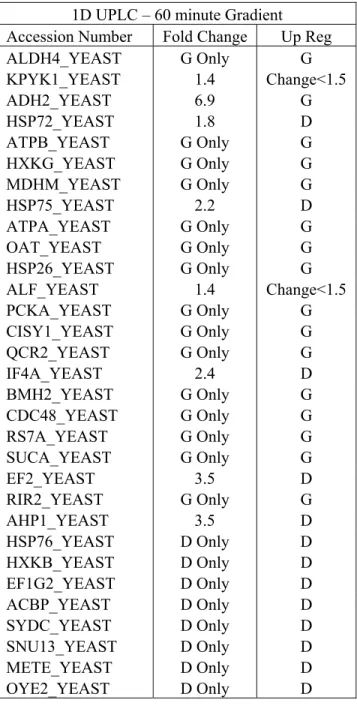
Table 2-1. Proteins identified as being differentially expressed between the dextrose-based and glycerol-dextrose-based baker’s yeast samples are shown here. These proteins were found to have a P-value of less than 0.05 when conducting a Fisher’s exact
test. ...44
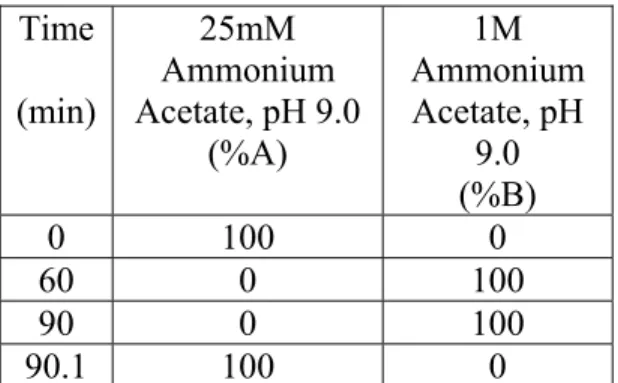
Table 3-1: Gradient program used for the intact protein pre-fractionation of the yeast cell lysates by anion-exchange chromatography. The column used was a Waters BioSuite Q SAX, 7.5 mm ID x 7.5 cm with 10 μm particles and 1000 Å pores. The flow rate was 0.5 mL/min and the column was held at a temperature of 50 °C, the maximum per manufacturer recommendations. Forty fractions were
collected from 2 to 82 minutes. ...87
Table 3-2: Gradient program used for the intact protein pre-fractionation of the yeast cell lysates by reversed-phase chromatography. An Agilent PLRP-S, 4.6 mm x 25 cm column with 5 μm pores particles and 300 Å pores. The flow rate was 1.0 mL/min. A column temperature of 80 °C was used – well below the rated maximum of 200 °C. Fractions were collected every minute from 2 to 42
minutes for a total of 40 fractions collected. These fractions were later pooled to
form the 20 fractions analyzed. ...87
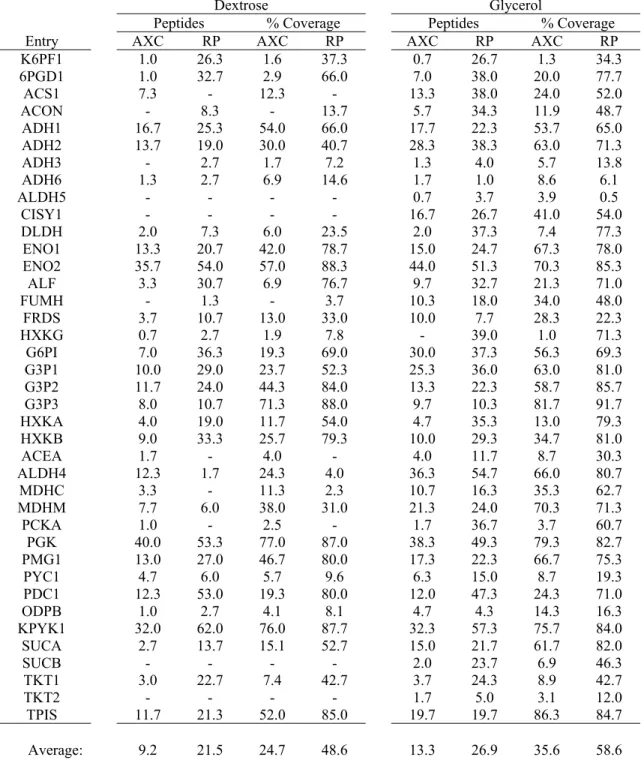
Table 3-3: The number of peptides used in an identification as well as the coverage percentage of the proteome is shown for both anion-exchange and reversed-phase pre-fractionation of proteins determined to be involved in the metabolic pathways of interest and differentially expressed. Overall, there were more peptides found
and a larger coverage percentage for the reversed-phase pre-fractionation. ...88
Table 4-1. Three columns were evaluated on the XUPLC system. These include a 200-cm column packed with 1.9 μm particles, a 117-cm column packed with 1.5 μm particles, and a 25-cm column packed with 1 μm particles. The inner diameter for each column was 75 μm. The pressure supplied by the Haskel -903 pump was approximately 30,000 psi and the temperature was held at 65°C. Gradients of water and acetonitrile were used to elute the peptides and started between 1% & 3% acetonitrile with a final acetonitrile concentration of 40% at the end of the gradient. Peak capacities were calculated by dividing the elution window, which was defined as the period of time between the first eluting peak and last eluting peak, by the FWHM peak width. The analysis time corresponds to the amount of time required from injection-to-injection. Detection was by a Waters QTOF Premier mass spectromter. Proteins were identified with PLGS 2.5. The last two lines of the table show data from a standard nanoAcquity setup utilizing a 90-minute gradient previously determined as the preferred gradient length with one data set collected with a QTOF Premier and the other with a Waters Synapt G2
Table 5-1. Gradient program used for the intact protein pre-fractionation of the yeast cell lysates by anion-exchange chromatography. The column used was a Waters BioSuite Q SAX, 7.5 mm ID x 7.5 cm with 10 μm particles and 1000 Å pores. The flow rate was 0.5 mL/min and the column was held at a temperature of 50 °C, the maximum per manufacturer recommendations. Forty fractions were
collected from 2 to 82 minutes. ...188
Table 5-2. Gradient program used for the intact protein pre-fractionation of the yeast cell lysates by reversed-phase chromatography. An Agilent PLRP-S, 4.6 mm x 25 cm column with 5 μm pores particles and 300 Å pores. The flow rate was 1.0 mL/min. A column temperature of 80 °C was used – well below the rated maximum of 200 °C. Fractions were collected every minute from 2 to 42
minutes for a total of 40 fractions collected. These fractions were later pooled to
form the 20 fractions analyzed. ...188
Table 5-3. Proteins found by the anion-exchange pre-fractionation method that are known to associate with beta-arrestin proteins are shown here. Only 5 of the 18 proteins in this list were differentially expressed and found in both samples allowing a fold change to be calculated. Nearly half, 7 of 18, were found to be
expressed within a fold change of 1.5 in each sample. ...189
Table 5-4. For the reversed-phase pre-fractionation, there were fewer proteins
identified that are known to interact with the beta-arrestin proteins. There were a few differences between this data and that from the anion-exchange
pre-fractionation data as fold changes were calculated for some of the tubulin
LIST OF FIGURES
Figure 2-1. a) During the first dimension of separation, flow from the first pump at a pH of 10 flows through the first-dimension column. Effluent from this column is diluted with low pH mobile phase from the second pump before being trapped on the trap column. During the second dimension of analysis (b), flow from the first pump is diverted after the first-dimension column to waste and a gradient is pumped from the second pump through the analytical column with detection by
mass spectrometry. ...45
Figure 2-2. The separation of peptides from the dextrose-based sample and glycerol-based sample was by reversed-phase UPLC with a 60 minute long gradient from 5-40% acetonitrile. For the purposes of a differential comparison, proteins were only counted if they were identified with a confidence greater than 95% by Scaffold 3.3 in two of three replicates. This figure indicates the number of proteins identified in each sample and the number of proteins identified in common. For the differential comparison, proteins were required to have a
p-value less than 0.05 after a Fisher’s exact test was applied to the data. ...46
Figure 2-3. Given the change in carbon source from dextrose to glycerol, it was expected that there would be differences in protein expression for the metabolic pathways. Simplified pathways and their associated proteins are shown here. Proteins found to be regulated in glycerol are shown in red. Those up-regulated in the dextrose sample are shown in blue. Proteins identified, but not determined to be differentially expressed are shown in boldface black with unidentified proteins shown in gray. The gradient length used in the peptide
separation was 60 minutes in length from 5-40% acetonitrile. ...47
Figure 2-4. Additional gradient lengths were attempted. The gradient lengths used were (a) 90-, (b) 120-, (c) 150-, and (d) 180-minutes. For the purposes of a differential comparison, proteins were only counted if they were identified with a confidence greater than 95% by Scaffold 3.3 in two of three replicates. This figure indicates the number of proteins identified in each sample and the number of proteins identified in common. For the differential comparison, proteins were required to have a p-value less than 0.05 after a Fisher’s exact test was applied to
the data. ...48
Figure 2-5. Given the change in carbon source from dextrose to glycerol, it was expected that there would be differences in protein expression for the metabolic pathways. Simplified pathways and their associated proteins are shown here. Proteins found to be regulated in glycerol are shown in red. Those up-regulated in the dextrose sample are shown in blue. Proteins identified, but not determined to be differentially expressed are shown in boldface black with unidentified proteins shown in gray. The gradient length used in the peptide
Figure 2-6. Given the change in carbon source from dextrose to glycerol, it was expected that there would be differences in protein expression for the metabolic pathways. Simplified pathways and their associated proteins are shown here. Proteins found to be regulated in glycerol are shown in red. Those up-regulated in the dextrose sample are shown in blue. Proteins identified, but not determined to be differentially expressed are shown in boldface black with unidentified proteins shown in gray. The gradient length used in the peptide
separation was 120 minutes in length from 5-40% acetonitrile. ...50
Figure 2-7. Given the change in carbon source from dextrose to glycerol, it was expected that there would be differences in protein expression for the metabolic pathways. Simplified pathways and their associated proteins are shown here. Proteins found to be regulated in glycerol are shown in red. Those up-regulated in the dextrose sample are shown in blue. Proteins identified, but not determined to be differentially expressed are shown in boldface black with unidentified proteins shown in gray. The gradient length used in the peptide
separation was 90 minutes in length from 5-40% acetonitrile. ...51
Figure 2-8. Given the change in carbon source from dextrose to glycerol, it was expected that there would be differences in protein expression for the metabolic pathways. Simplified pathways and their associated proteins are shown here. Proteins found to be regulated in glycerol are shown in red. Those up-regulated in the dextrose sample are shown in blue. Proteins identified, but not determined to be differentially expressed are shown in boldface black with unidentified proteins shown in gray. The gradient length used in the peptide
separation was 90 minutes in length from 5-40% acetonitrile. ...52
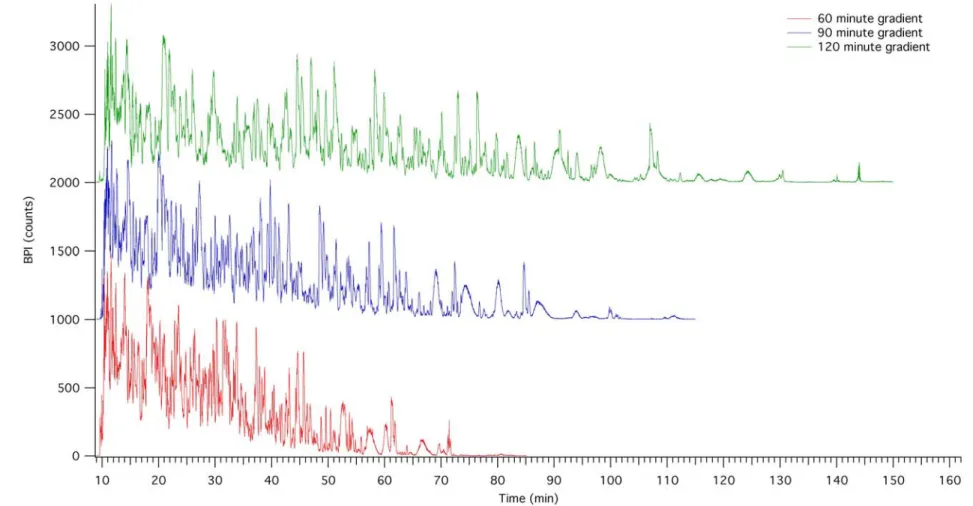
Figure 2-9. Representative chromatograms of the glycerol-based, yeast cell lysate digest for gradient lengths of , 90-, and 120-minute long gradients. The 60-minute method shows a chromatogram that is crowded with poorly resolved peaks. This improves slightly with the 90-minute gradient. A more thorough analysis is needed than what is possible through visual inspection to determine
improvements to peak capacity. ...53
Figure 2-10 Representative chromatograms of the glycerol-based, yeast cell lysate digest for gradient lengths of 150- and 180-minute long gradients. For both of these gradients, it does not appear as though the resolution is improving. Peak widths are broader at the longer gradient times. A more thorough analysis is needed than what is possible through visual inspection to determine
Figure 2-11. From the chromatograms shown above, the data shown here is the result of the PLGS 2.5 data processing. The Apex3D algorithm used to process the raw mass spectral data attempts to fit Gaussian peaks to the eluting peptides. From this data, the full-width, half-maximum (FWHM) of the peaks are readily
available. Peak capacities here are calculated from the FWHM. Gradients longer than 90 minutes were not shown to give more protein identifications. There was a slight increase in peak capacity in lengthening the gradient from 90- to 120-minutes. At 180 minutes, the gradient becomes shallow enough and the peaks tail significantly enough that the Apex3D algorithm begins fitting multiple peaks
per actual peak. ...55
Figure 2-12. Proteins that were identified in one of three analyses with a confidence greater than 95% by Scaffold 3.3 are counted here. The multidimensional UPLC system utilizing a high pH first dimension and a low pH second dimension resulted in a greater number of identifications. The amount of time required for the multidimensional approach, however, was significantly more than required
of the single-dimension analyses. ...56
Figure 2-13. For the multidimensional peptide separation, the coverage of the metabolic pathways of interest was about the same as for the longer, single-dimension separations. The coverage was found to be 26 of the 53 proteins
searched for. ...57
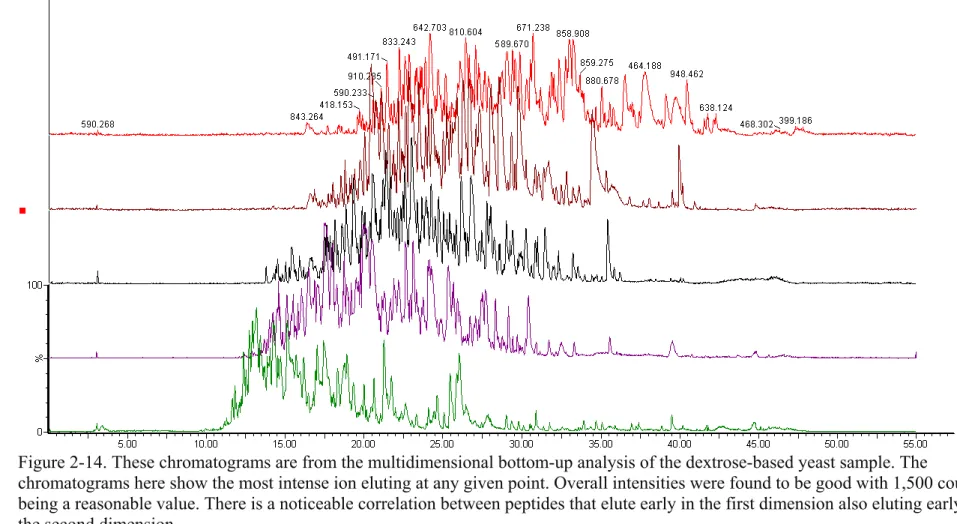
Figure 2-14. These chromatograms are from the multidimensional bottom-up analysis of the dextrose-based yeast sample. The chromatograms here show the most intense ion eluting at any given point. Overall intensities were found to be good with 1,500 counts being a reasonable value. There is a noticeable correlation between peptides that elute early in the first dimension also eluting early in the
second dimension. ...58
Figure 2-15. The chromatograms here are from the same analysis as in Figure 14. Here, the total ion current has been plotted, providing a clearer picture of the elution window and the correlation of peptides eluting early in the first
dimension also eluting early in the second dimension, as shown in green in the bottom trace. The percentage acetonitrile used to elute peptides from the first
dimension are shown for each fraction. ...59
Figure 2-16. All of the other metabolic pathway figures were comprised of data collected on a Waters QTOF Premier mass spectrometer. For this analysis, the same conditions used for the 90-minute gradient conducted in the Jorgenson lab were used by the Duke Proteomics Core facility to obtain data on their Waters SynaptG2 HDMS mass spectrometer. The newer and more advanced mass spectrometer, which also utilized an ion mobility separation, was able to identify
Figure 2-17. Scaffold 3.3 attempts to assign all peptides. Using the peptides score as part of this function, the software attempts to eliminate incorrectly assigned peptides from being used to identify proteins. Data was collected on two different mass spectrometers, (a) a SynaptG2 and a (b) QTOF Premier. There were a greater number of correctly assigned peptides from the SynaptG2 data and the differences in scores between the incorrect and correct populations were also greater. The improved data facilitated the additional identifications observed with the analysis completed by the more advanced mass spectrometer. ...61
Figure 3-1. Experimental workflow for the intact protein pre-fractionation and
bottom-up analysis of each digested fraction. An LC pump generated a gradient, which began the specified gradient program once the injection occurred. A Waters 2487 UV detector at 280 nm recorded data for the intact protein
separations. Fractions were then lyophilized and digested with trypsin. Fractions were then analyzed by either 1D or 2D-UPLC/MSE using a Waters nanoAcquity UPLC system with mass spectrometric detection by a Waters Q-TOF Premier mass spectrometer. The data was then processed through ProteinLynx Global
Server 2.5 and Scaffold 3.3. ...89
Figure 3-2. Anion-exchange pre-fractionation of yeast cell lysates differentially grown on dextrose and glycerol-based media. Approximately 4 mg of each sample was inject for analysis. The column used was a Waters BioSuite Q SAX, 7.5 mm ID x 7.5 cm with 10 μm particles and 1000 Å pores. The flow rate was 0.5 mL/min and the column was held at a temperature of 50 °C, the maximum per manufacturer recommendations. A linear gradient from 25 mm ammonium bicarbonate, pH 9.0 to 750 mM ammonium bicarbonate, pH 9.0, was run from 0-60 minutes with an additional 30 minute hold at 750 mM ammonium
bicarbonate. Forty fractions were collected from 2 to 82 minutes. For the
anion-exchange pre-fractionation, the intact protein separation was only done once. ...90
Figure 3-3. The initial separation of the dextrose yeast cell lysate on the PLRP-S column, an Agilent PLRP-S, 4.6 mm x 25 cm column with 5 μm particles and 300 Å pores. Mobile phase A was comprised of 80% water, 10% acetonitrile and 10% isopropanol plus 0.2% TFA. Mobile phase A was a 50/50 mixture of
acetonitrile and isopropanol with 0.2% TFA added. The temperature was held at 90 °C. This gradient was substantially steeper than the final gradient conditions used for the pre-fractionation, but demonstrated the utility of this column and
Figure 3-4. For the reversed-phase pre-fractionation methods, a more rigorous replicate analysis was employed to better evaluate the reproducibility of the entire method. As such, each intact protein sample injected three times with fractions collected and digested for each of the 6 runs. An Agilent PLRP-S, 4.6 mm x 25 cm column with 5 μm pores particles and 300 Å pores was used for the separations. The flow rate was 1.0 mL/min. A column temperature of 80 °C was used – well below the rated maximum of 200 °C. Fractions were collected every minute from 2 to 42 minutes for a total of 40 fractions collected. These fractions were later pooled to form the 20 fractions analyzed. For each sample, the UV traces overlay quite well demonstrating good method reproducibility. The
gradient conditions are overlayed in black and correspond to the right axis. ...92
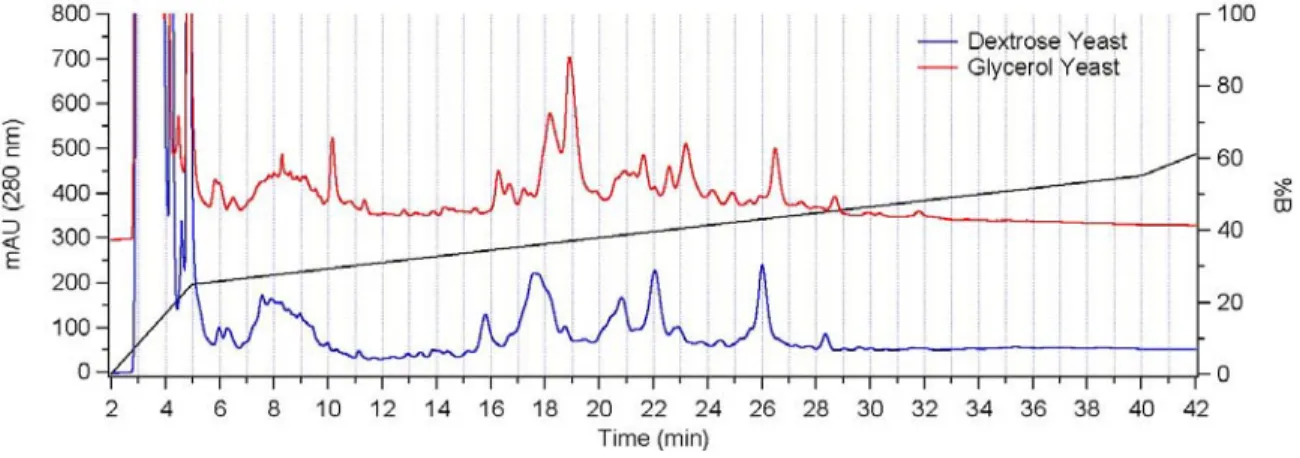
Figure 3-5. While the samples are very similar and show similar elution trends, there are also differences prevalent between the two sample types. The glycerol yeast data, offset by 300 mAU, show an intense peak at 10 minutes which is missing altogether in the dextrose yeast, as an example. The gradient conditions are
overlayed in black and correspond to the right axis. ...93
Figure 3-6. The total number of protein identifications for each fraction are shown in light grey. Plotting the data in this way is useful as it gives an idea as to what is eluting off of the LC column in each fraction and the complexity of the sample reaching the mass spectrometer. However, for the purpose of determining overall protein identifications, it is more convenient to represent the data by only
plotting proteins in the fraction of greatest intensity, as determined through Scaffold 3.3. Fewer identifications were made by the anion-exchange method (a) than by the reversed-phase method (b). For both intact protein separations, few
new unique proteins were identified in the final five fractions. ...94
Figure 3-7. The reversed-phase pre-fractionation method identified 546 proteins in 2/3 replicate runs whereas there were only 262 proteins identified in 2/3 replicate runs of the peptide fractions. Only 16% of the proteins identified by anion
exchange were not identified by the reversed-phase approach. Twenty fractions were analyzed by each method to allow for a uniform comparison based on
gradient fractionation. ...95
Figure 3-8. After running all 40 fractions from the anion-exchange pre-fractionation method, similar trends are observed as seen previously in Figure 6. The total number of protein identifications for each fraction are shown in dark red. Plotting the data in this way is useful as it gives an idea as to what is eluting off of the LC column in each fraction and the complexity of the sample reaching the mass spectrometer. However, for the purpose of determining overall protein identifications, it is more convenient to represent the data by only plotting proteins in the fraction of greatest intensity, as determined through Scaffold 3.3, and is shown in light red. Finer fractionation where there are large numbers of proteins eluting and courser fractionation over portions of the method where
Figure 3-9. For the anion-exchange approach, all 40 fractions were analyzed in addition to being pooled to form 20 fractions. Finer fractionation allowed for a small increase in the number of proteins identified, but required an increase in
analysis time from 120 to 240 hours. ...97
Figure 3-10. Reversed-phase pre-fractionation allowed for a greater number of protein identifications than either anion-exchange method. A total of 658 unique proteins were identified in at least 2/3 replicate runs for these fractionation
strategies. Only 17% (112) were not found by reversed-phase pre-fractionation. ...98
Figure 3-11. An alternative approach to increasing the fractionation of the intact protein separation was to increase the peak capacity of the peptide separation by incorporating a multidimensional separation at the peptide level. This
comparison was made by analyzing only the glycerol yeast sample. While a greater number of protein identifications were made with the multidimensional separation, it is questionable whether the gains in additional identifications are
worth the additional analysis time. ...99
Figure 3-12. A representative set of chromatograms from the reversed-phase
fractionation of yeast grown on glycerol. Reversed-phase chromatography was used in both dimensions of the peptide separation by operating the first
dimension at a pH 10 and the second dimension at pH 3. The first-dimension column was a custom-packed 150 μm ID x 10 cm XBridge C18 with 3.5μ particles and 130 Å pores. The second-dimension column was a Waters Acquity BEH C18 column with 1.7 μm particles and 130 Å pores. Five fractions were taken from the first dimension and peptides were eluted from the first column in five isocratic steps of 12, 16, 20, 24, and 65% acetonitrile. There is a general trend of peptides eluting early in the first-dimension also eluting early in the second-dimension suggesting a lack some level of correlation between the two
dimensions and limiting the peak capacity of the overall system. ...100
Figure 3-13. The percentage of unique proteins is plotted as a function of the number of fractions a unique protein is identified in. Both anion-exchange and reversed-phase pre-fractionation strategies exhibit similar behavior when compared on the basis of gradient fractionation. The majority of proteins (60%) elute in only one fractions indicating that the fractions were approximately equal to the width of a
peak. ...101
Figure 3-14. Only a slight increase in the number of fractions a unique protein was identified in was associated with the more comprehensive peptide analysis. It has been reported that greater peak capacity afforded by the multidimensional
separation allows for the detection of peptides at lower concentrations and
Figure 3-15. There was no bias associated with the molecular weight of the intact proteins identified by either pre-fractionation method. The median mass of proteins identified was 37.6 kDa for anion exchange (a) and 38.0 kDa for
reversed phase (b). ...103
Figure 3-16. The mass of proteins for the reversed-phase (a) and anion-exchange (b) pre-fractionation methods are shown as a function of the fraction each protein eluted in greatest intensity. More abundant proteins are represented by darker
bars. ...104
Figure 3-17. The reversed-phase pre-fractionation approach showed better overlap between the two samples than either anion exchange fractionation approach and significantly more proteins overall. While the samples were grown on different
carbon sources, a significant amount of agreement is expected between the two. ...105
Figure 3-18. Greater variability in the identified proteins was observed between the two samples when pre-fractionated by anion-exchange chromatography. In general, proteins identified by the anion exchange methods were less intense than by the reversed phase method suggesting that the decreased overlap
between the two samples may be due in part to poor recovery. ...106
Figure 3-19. By increasing the fractionation of the anion exchange method from 20 to 40 fractions, not only was there an increase in the number of identifications, but
better agreement between the samples with respect to the proteins identified. ...107
Figure 3-20. The up-regulation of the TCA cycle and the glyoxylate cycle are much more evident from the reversed-phase pre-fractionation approach. Many more proteins were identified by the reversed-phase method and these additional identifications were needed in order to form conclusions. The up-regulation of proteins in these pathways meets expectations given the nature of the differential
sample. ...108
Figure 4-1. The Apex3D algorithm used to process the raw mass spectral data attempts to fit Gaussian peaks to the eluting peptides. From this data, the full-width, half-maximum (FWHM) of the peaks are readily available. Peak capacities here are calculated from the FWHM. Gradients longer than 90 minutes were not shown to give more protein identifications. There was a slight increase in peak capacity in lengthening the gradient from 90- to 120-minutes. At 180 minutes, the gradient becomes shallow enough and the peaks tail
significantly enough that the Apex3D algorithm begins fitting multiple peaks per
Figure 4-2. The prototype hydraulic amplifier system previously used for automated UHPLC gradient analyses. During sample loading and gradient formation (A), flow would originate from the CapLC system and fill the gradient storage loop. After loading, the two “pin valves” or Valco on/off valves would be closed and the hydraulic amplifier activated, forcing flow out of the storage loop and
through the column and splitter. ...138
Figure 4-3. A Waters nanoAcquity UPLC with detection by a Waters QTOF-Premier
mass spectrometer. The pressure limit of the nanoAcquity is 10,000 psi. ...139
Figure 4-4. The nanoAcquity UPLC with the XUPLC modification installed.
Pneumatic components are primarily locatd on the left side of the nanoAcquity stack with the exception of the Valco on/off valves. The column heater is mounted to position the outlet of the capillary column near the mass spectrometer source. A gradient storage loop is wound around a spool and mounted below the temperature control module on the lower right of the
nanoAcquity. ...140
Figure 4-5. A general schematic for the pneumatics sub-system. Gas supply (air or N2) needs to be provided at approximately 100 psi. Two regulators are need, one to regulate down the pressure to 40 psi for the solenoid valves responsible for switching the Valco on/off valves and the other to supply pressure to the Haskel -903 pneumatic amplifying liquid pump. The outlet pressure of the -903 is
roughly equal to 1,000 psi liquid for 1 psi gas. ...141
Figure 4-6. A photograph of the pneumatics sub-system showing mounting locations. Note the ball valves for manual shut-off and release of gas pressure to the -903. These are installed as a safety mechanism in case rapid decompression is
required without the use of the computer controls. ...142
Figure 4-7. Fluidic schematic overview for the XUPLC system. The blue circles represent Valco on/off valves. Grey circles represent tees from Valco. The trap column, analytical column, and associated tees are housed inside the Waters
TCMII for elevated temperature operation. ...143
Figure 4-8. During gradient loading, the nanoAcquity vent valve and trap valve are closed. Flow from the nanoAcquity fills the gradient storage loop. The resistance to flow from the analytical column is sufficient enough to prevent the gradient
from being split between the storage loop and the column. ...144
Figure 4-9. During sample loading and trapping the valves are configured to allow flow from the nanoAcquity through the trap column and then to waste. Analytes are trapped on the column. Trapping conditions are typically 0.5% acetonitrile and a minimum volume of three times the sample loop volume is used to ensure all of the sample has been flushed onto the column. During this operation, the
Figure 4-10. During running operation the vent, nanoAcquity and trap valves are closed and the gradient storage isolation valve is opened. This forces flow driven by the -903 pump through the storage loop, past the trap column where analytes are eluted, and onto the analytical column where analytes are briefly re-focused prior to elution. The nanoAcquity vent valve is open during operation to prevent
damage to the nanoAcquity should the nanoAcquity valve fail. ...146
Figure 4-11. Typically, one line of the sample list corresponds to an LC/MS analysis. For XUPLC operation, a minimum of two lines and frequently more are required for a given sample injection. The first row is responsible for loading the gradient. The second line allows for the sample injection and starts the mass spectrometer. Often a third row is used to stop the analysis and return the system to initial conditions for the next run, although two can be used for shorter analyses. If more lines are needed, they can be added in an intermediate position in order to
maintain valve states for running operation. ...147
Figure 4-12. On the rear of the nanoAcquity are several switches required for XUPLC operation. These control the Valco on/off valves responsible for manipulating the flow path. In order to access these during manual operation, one must navigate to the “Rear panel…” menu under “Troubleshoot” for both the pump
and autosampler. ...148
Figure 4-13. Within the rear panel are many switches. The ones needed for operation are switches 1, 2, and 3 on the binary solvent manager rear panel and switches 1,
2, 3, and 4 on the sample manager rear panel. ...149
Figure 4-14. For automated operation, timing events are included in inlet file, which is the method file used by the nanoAcquity during operation. For both the pump and autosampler, there is an events tab where switches and their associated on/off states can be defined. To aid in method development, a spreadsheet was
developed to allow the user to more easily program the methods. ...150
Figure 4-15. Curves showing the change in viscosity as a function of the acetonitrile percentage and the temperature are shown here at 25, 45, 65, and 85°C spanning
0% to 100% acetonitrile. Most gradients range from 1-40% acetonitrile.13,14 ...151 Figure 4-16. Data shown in Figure 15 was normalized in order to demonstrate the %
change in viscosity. The figure was also modified to show the difference in
Figure 4-17. Method development for the XUPLC system is more difficult than for standard nanoAcquity UPLC operation. Clipping of the front-end of the gradient can occur if an incorrect delay time is used. The delay is necessary to account for the system volume between the pump and the gradient storage loop. This can be observed in the chromatogram shown as at 18.5 minutes there is a sudden change from baseline conditions to full-intensity peptide elution. A more appropriate delay volume would result in a gradual rise from the baseline as
peptides begin to elute. ...153
Figure 4-18. As a result of the elevated pressures (30,000 psi), leaks can develop. These are routinely found on the fused-silica capillary fittings. The volume of gradient loaded should have resulted in a nearly 300-minute long analysis time. From this chromatogram, it would appear as though a leak developed at
approximately 63 minutes. A leak is suspected as the gradient is unexpectedly progressing much more rapidly with a significant number of peaks being detected in a compressed timescale. The location of the leak is likely one of the three connections on the tee prior to the trapping column as there are still peptides being detected. A leak at the second tee results in a significant loss of
sample and no peaks are seen as a result. ...154
Figure 4-19. A 200-cm x 75 μm ID capillary column packed with 1.9 μm BEH C18 particles was operated at 30,000 psi and 65°C. The gradient was 35 μL of 4-40% acetonitrile. A peak capacity from the full-width, half-maximum data outputted from ProteinLynx yields a peak capacity of 660 for this separation. A total of
153 proteins were identified from this separation. ...155
Figure 4-20. A 117-cm x 75 μm ID capillary column packed with 1.5 μm BEH C18 particles was operated at 30,000 psi and 65°C. The gradient was 45 μL of 3-40% acetonitrile. A peak capacity from the full-width, half-maximum data outputted from ProteinLynx yields a peak capacity of 570 for this separation. A total of
128 proteins were identified in this separation. ...156
Figure 4-21. The elevated pressure permits the use of longer columns with modestly sized particles (1.5 and 1.9 μm). Also possible is the use of 1 μm particles. A 25 cm x 75 μm ID capillary column was packed with 1 μm BEH C18 particles and operated at 65°C. The gradient had a volume of 35 μL spanning 1-40%
acetonitrile. Run times more consistent with what is typically of the nanoAcquity UPLC are possible with this shorter column. In this analysis, 119 proteins were identified in a total analysis time of 120 minutes with a peak capacity of 250. For standard nanoAcquity operation, a 90-minute gradient resulting in a total run time of 120 minutes resulted in 80 protein identifications and a peak capacity of
Figure 4-22. A 25 cm x 75 μm ID capillary column was packed with 1 μm BEH C18 particles and operated at 65°C. The gradient had a volume of 25 μL spanning 1-40% acetonitrile. Run times more consistent with what is typically of the nanoAcquity UPLC are possible with this shorter column. In this analysis, 85 proteins were identified in a total analysis time of 120 minutes with a peak capacity of 250. The same peak capacity was the result of narrower peaks with this length of gradient as compared to the gradient used in for the chromatogram in Figure 22. The reduction in identified peaks can likely be attributed to the narrow peaks not being characterized as well by the Apex3D algorithm within
ProteinLynx...158
Figure 4-23. A 25 cm x 75 μm ID capillary column was packed with 1 μm BEH C18 particles and operated at 65°C. The gradient had a volume of 15 μL spanning 1-40% acetonitrile. In this analysis, 59 proteins were identified in a total analysis time of 120 minutes with a peak capacity of 160. This method requires 60 minutes from injection-to-injection and has a comparable peak capacity to the
nanoAcquity in 2/3 the analysis time. ...159
Figure 4-24. The same 117-cm column with 1.5 μm particles as used in the analysis shown in Figure 20 was used here with a gradient approximately twice the length. There was only a slight improvement in peak capacity and fewer proteins were identified. Close examination of the peak shape reveals substantial tailing. Mass overload is not suspected as this is exhibited by low intensity peaks as well. Reducing the mass of sample injected did not result in peak shape improvements either. The forward-trapping, forward-flush operation is suspected to be
contributing to this problem. The trap column is much longer (6.5 cm) than what is typically used in this type of operation on the nanoAcquity (2 cm). This additional length may be broadening the peaks sufficiently such that they cannot
properly focus at the head of the analytical column. ...160
Figure 4-25. Inside the column heater module are the trap column, analytical, and hardware required for operation. The two tees and either end of the trap column are mounted to a slotted piece of ¼” aluminum plate to facilitate assembly. The tees can be mounted with a screw from the back. The analytical column is coiled and taped to the surface of the heater to ensure that it is at the proper temperature. A Teflon junction is used to connect the outlet of the column, which remains inside the heater, to a piece of capillary serving as a transfer line between the
column and the spray tip. ...161
Figure 4-27. Valve configuration for sample loading and trapping. In this
configuration, sample is placed onto the end of the trap column. ...163
Figure 4-28. Valve configuration for gradient loading. Using the second valve (HTM Valve) on the nanoAcquity facilitates reversed-trapping as after the sample is trapped, by switching the HTM Valve and associated on/off valves, the gradient
can be loaded. ...164
Figure 4-29. Valve configuration for running under XUPLC conditions. Adding the low pressure valve, as indicated in the figure, would allow for a gradual reduction in flow from the nanoAcquity after the gradient is loaded. It would also allow the pump to continue pumping at a low rate during the analytical
portion of the method and is likely a worthwhile investment. ...165
Figure 5-1. When a GPCR ligand (such as a catecholamine) is bound, the GPCR induces a change on the G-protein complex causing it to preferentially bind GTP over GDP. Once GTP is bound by the Gα sub-unit, it dissociates from the
complex and both the Gα and Gβγ sub-units are capable of promoting
independent second messenger pathways. In order to regulate signaling, GRK phosphorylates the GPCR, inducing another structural change allowing for the binding of a β-arrestin. After β-arrestin binding, the GPCR can no longer initiate signaling in G-proteins and the receptor is either recycled or degraded after
endocytosis. ...190
Figure 5-2. The classically understood role of β-arrestins is in regulation of GPCR signaling. More recently, pathways demonstrating the role of β-arrestins as signaling initiators have been found. One such pathway believed to have cardioprotective effects is shown here. The β-arrestin recruits an SRC kinase, which phosphorylates matrix-metalloproteinase (MMP). The pathway then transits the cell membrane as MMP then cleaves Heparin-Binding epidermal growth factor (HP-EGF). The cleaved portion of HP-EGF then activates the epidermal growth factor receptor (EGFR). The EGFR continues to signaling cascade in this cardioprotective pathway. More research is needed regarding this and other potential β-arrestin signaling pathways as they are currently not well
understood. ...191
Figure 5-3. The intact protein pre-fractionation of a MEF cell lysate by anion exchange chromatography with UV detection. A BioSuite Q SAX column was used for the separation. For both the wild type and double-knockout samples, 2.5 mg of protein were injected on column. A gradient of 25-1000 mM ammonium acetate at pH 9.0 over 60 minutes was used for elution of the proteins. The column was operated at the maximum manufacturer recommended temperature. Forty fractions were collected from four to 84 minutes. Each of the 40 fractions
Figure 5-4. The intact protein pre-fractionation by reversed-phase chromatography with UV detection. An Agilent PLRP-S 4.6mm x 30 cm was used for the separation. Mobile phase B was comprised of 50% acetonitrile and 50% isopropanol with 0.2% TFA. Mobile phase A was 90% water and 10% mobile phase B with 0.2% TFA. The maximum temperature of a PLRP-S column is 200°C, however 80°C was determined sufficient for the elution of proteins. The appearance of the chromatograms for the two samples is more similar than in the anion-exchange pre-fractionation. A total of 54, minute-wide fractions were taken and combined to form 18, three-minute wide fractions, which were subject
to a trypsin digestion and analyzed by UPLC-MSE. ...193
Figure 5-5. For the differential comparison, a protein must have been found in at least two of three replicate runs with a confidence greater than 95%. The proteins identified and counted from both the wild-type and double-knockout samples are represented in this diagram indicating a surprisingly low overlap between the two pre-fractionation methods than what was previously found when analyzing
the Baker’s yeast samples. ...194
Figure 5-6. A pressure trace using arbitrary units was obtained during the intact protein pre-fractionation utilizing the reversed-phase method. The use of formic acid was necessary to reduce the backpressure not only during the run, but also for subsequent runs. Without formic acid, the baseline pressure would continue to rise with each subsequent sample injection. With formic acid, after an initial
spike in the pressure, the sample runs and blank runs were nearly identical. ...195
Figure 5-7. The use of formic acid in the injection also had an effect on the data observed in the UV trace. The peak at 33 minutes is noticeably absent from the injection without formic acid. Additionally, greater signal intensity was observed when formic acid was used. ...196
Figure 5-8. A histogram showing the number of fractions a given protein was identified in is shown for the anion-exchange pre-fractionation method. By fractionating the gradient 40 times, there were a substantial number of proteins split across two or more fractions. Data for both the wild-type and
double-knockout samples are included in this figure. ...197
Figure 5-9. A histogram showing the number of fractions a given protein is identified in is shown for the reversed-phase pre-fractionation method. By only
fractionating the gradient 18 times, an overwhelming majority of the proteins identified by this method were found in only one fraction. Data for both the
Figure 5-10. The number of total proteins identified in a single fraction as well as the number of unique proteins per fraction is shown for the reversed-phase method. For the unique protein data, a protein was only counted in the fraction in which it eluted with the greatest number of spectral counts as determined by Scaffold 3.3. As with the anion-exchange pre-fractionation, little information in the form of new identifications was made in the later fractions as compared to earlier
fractions. For the reversed-phase method, proteins were generally better retained and there were not a substantial number of proteins eluting in the dead volume. Data for both the wild-type and double-knockout samples are included in this
figure. ...199
Figure 5-11. The number of total proteins identified in a single fraction as well as the number of unique proteins per fraction is shown for the anion-exchange method. For the unique protein data, a protein was only counted in the fraction in which it eluted with the greatest number of spectral counts as determined by Scaffold 3.3. While many proteins were being identified in the last several fractions, little new information was gained as little new identification were made in these fractions. There are also a significant number of protein identifications at the dead volume indicating there are many proteins that are unretained by anion-exchange
chromatography. Data for both the wild-type and double-knockout samples are
LIST OF ABBREVIATIONS
2D-UPLC two-dimensional ultra performance liquid chromatography
2DE two-dimensional gel electrophoresis
AUC area under the curve
AXC anion-exchange chromatography
AXC20 anion-exchange chromatography with 20 fractions
AXC40 anion-exchange chromatography with 40 fractions
BEH bridged-ethyl hybrid
BPI base peak index
CID collision-induced dissociation
ECD electron-capture dissociation
ESI electro-spray ionization
ETD electron-transfer dissociation
FT-ICR Fourier transform ion cyclotron resonance
FT-MS Fourier transform mass spectrometry
GELFrEE gel-eluted liquid fraction entrapment electrophoresis
IEC ion-exchange chromatography
IMS ion mobility separations
kDa kilo-dalton
LC liquid chromatography
LC/MS liquid chromatography mass spectrometry
MALDI matrix-assisted laser desorption ionization
mAU milli-absorbance units
MDLC multidimensional liquid chromatography
MS/MS tandem mass spectrometry
MSE Waters Corporation data-independent acquisition mode
MudPIT multidimensional peptide identification technology
MW molecular weight
nL nanoliter
NPLC normal-phase liquid chromatography
PTM post-translational modification
QTOF quadrupole time-of-flight
RP reversed-phase
RP18 reversed-phase chromatography with 18 fractions
RP20 reversed-phase chromatography with 20 fractions
RPLC reversed-phase liquid chromatography
SCX strong-cation exchange chromatography
SEC size-exclusion chromatography
SILAC stable isotope labeling by amino acids in cell culture
TFA trifluoroacetic acid
TIC total ion current
UHPLC ultra-high pressure liquid chromatography
UPLC ultra performance liquid chromatography
XUPLC extreme ultra performance liquid chromatography
μL microliter
μm micrometer
dKO double-knockout
UV ultraviolet
CHAPTER 1: INTRODUCTION AND BACKGROUND FOR PROTEOMICS BY MULTIDIMENSIONAL LIQUID CHROMATOGRAPHY MASS SPECTROMETRY 1.1 Differential Proteomics
1.1.1 Definition and Challenges
Qualitative information was typical of proteomic analyses in early proteomics work
with much effort being focused solely on the total number of identifications from a given
sample. Significant improvements in mass spectrometry with much improved data analysis
tools have contributed greatly to towards the expansion of quantitative approaches and the
ability to use proteomics for biomarker discovery. The focus of differential proteomics is to
discern differences in protein expression between samples in an effort to gain additional
information into the processes that are occurring that would be otherwise difficult to
ascertain by examining a single sample. The challenges associated with differential
proteomics are similar to those of any proteomic analysis. The number of proteins possible is
significant. For example, there are over 5,500 proteins encoded by the yeast genome.1 For
mammalian cells there are more.2 Expression levels can range from thousands of copies per
cell down to a few copies with the most interesting proteins often found at the lower end of
this spectrum.3,4 Cytosolic proteins are typically the easiest proteins to identify based on their
solubility. Unfortunately, many proteins associated with cell signaling are found to be
associated with the membrane. Preventing these protein from precipitating and having a
1.1.2 Approaches: Top-Down vs. Bottom-Up
Analysis of intact proteins, top-down proteomics, is a challenging problem both in
terms of the chromatography and mass spectrometry and is therefore not as common as
methods involving the analysis of peptides. Identification of proteins through mass alone is
not a reliable approach for making the identification due to post-translational modifications
that can alter the molecular weight of the target protein. Therefore, MS/MS of intact proteins
is required of top-down proteomics. While collision-induced dissociation (CID) is a common
method of fragmentation, for top-down methods the preferred methods are electron-capture
dissociation (ECD) or electron-transfer dissociation (ETD).5,6,7 Both of these methods
provide for a more complete fragmentation of the peptide backbone and tend to retain labile
post-translational modifications (PTMs). Fourier transform-ion cyclotron resonance
(FT-ICR) mass spectrometers are commonly used for top-down experiments as are a new class of
mass spectrometers, Orbitraps.8 With resolution in excess of 100,000, both of these
instruments have the requisite resolution needed to resolve the isotopic charge envelopes of
co-eluting proteins.5,9,10 Advantages of top-down proteomics include the ability to discern
isoforms, better characterize PTMs, and better sequence coverage.11 Quantitation of the intact
protein has also been reported as an advantage of top-down experiments as the protein
abundance is measured directly and not inferred through peptide intensity.12,13 Despite these
advantages, there are a number of limitations of this technique that have restricted its
widespread adoption. The chromatographic challenge of separating intact proteins is
significant and conditions used for effective protein chromatography, such as the inclusion of
trifluoroacetic acid (TFA) as an ion-paring agent, hinder electrospray ionization (ESI).
improve ESI does not significantly hinder their separation. One of the key disadvantages of
top-down proteomics is the need for high-resolution instrumentation and the associated
expense of such mass spectrometers. Larger amounts of protein are also frequently needed
and the samples analyzed trend towards simpler mixtures or even purified proteins.8 Some
recent work has analyzed more complex mixtures by top-down methodology, but fewer
identifications are possible with current methodologies via top-down proteomics when
compared to bottom-up approaches.13,14
As a result of obtaining a greater number of identifications, in addition to the lower
instrumentation cost, and general experimental simplicity, bottom-up approaches are
substantially more prevalent for proteomic analyses.8 In a true bottom-up analysis, the intact
proteins are not subject to an initial separation, but are digested, often by trypsin, and the
resultant peptide mixture analyzed by LC/MS/MS.8 While sample complexity is greatly
increased due to the digestion, the chromatography of peptides is less problematic than intact
proteins. Gradients of water and acetonitrile with formic acid as a modifier are typical of
peptide separations and can be done on a C18 stationary phase without much in the way of
special considerations. Though the chromatography is less challenging when attempting to
resolve peptides with respect to proteins, because there are many more components in the
mixture, the peak capacity of even the most rigorous separation methods are overwhelmed.
That said, mass spectrometers offer another dimension of separation and increase the
effective peak capacity of the analysis.15 This approach holds an advantage over top-down
methods with regard to proteome coverage, which is an important factor when analyzing
complex samples.16 Additionally, there is often an increase in sensitivity for bottom-up
bioinformatics with significant work being done to improve probabilistic scoring schemes as
well as incorporation of additional criteria during the searching.17-19 Some of the work has
been to create libraries of proteomics data to aid in the searching and these efforts are
onoing.20 Bottom-up approaches, however, suffer from a limited dynamic range and are not
capable of quantifying across the expression range of proteins in cells.
There are additional limitations to what can be accomplished through bottom-up
strategies. Ultimately, peak capacity remains an issue – especially for purely “shotgun”
samples, where no prior separation has occurred to simplify the sample. While the mass
spectrometer does provide another dimension of separation, even the most advanced mass
spectrometers currently available can be overwhelmed by exceedingly complex samples.
Further improvements to both mass spectrometry and liquid chromatography are needed to
more deeply examine proteomic samples. Although bottom-up approaches clearly require
greater peak capacity than presently available in order to better resolve sample components,
there are additional challenges that require attention. Incomplete sequence coverage, the loss
of labile PTMs, and an inability to determine the origin of certain peptides as a result of
redundant sequences are all areas of potential improvement for bottom-up proteomic
approaches.8
1.1.4 Quantitative proteomics
Much progress has been made with regard to quantitative proteomics in both relative
and absolute terms. Various labeling schemes have been created to aid in the quantitation.
Label-free methods are also common. Each approach has certain advantages and limitations
that make them more suitable for particular proteomic challenges. A common labeling
(SILAC).21,22 Through the incorporation of heavy and light isotopes in growth media, two
proteomes can be distinguished from one another based on the mass of the identified peptides.
Typically, the labeled amino acids used in this approach are lysine and arginine. For the most
basic of SILAC analyses, one cell culture is grown with a light amino acid while the other is
grown in heavy amino acid media. By mixing the cells in a 1:1 ratio, any proteins that are
observed in a 1:1 ratio are known to be equally expressed. If the ratio is in favor of the light
amino acid, meaning that a greater intensity of peptides was found from the light amino acid
culture, then there was a greater expression of that particular protein for the light amino acid
culture than the heavy. There are a few criteria that must be met in order to be sure of a
differential identification. The first is that the incorporation of heavy or light amino acids
must exceed 95%. Another criterion is that the peptides used in the identification, and
therefore the determination of any associated fold-changes in expression, must have good
abundance and a good signal-to-noise ratio. Ratios on the order of 1.3-2.0 have been used as
the minimum cut-off for differential determination.21A key limitation of SILAC is the narrow
range of samples that can be analyzed by this method. Typically, bacterial or yeast cell
cultures are used with this method. A significant amount of effort has been placed though on
creating cell lines with stable-isotope labeling. This has expanded the use of the technique,
but working beyond controlled cell lines has proven challenging. One group has been able to
incorporate this labeling method into mice. Initially, this was accomplished by feeding a
lysine-free diet and providing lysine through alternative means.22 Over a number of weeks,
the isotope content for a range of cell types analyzed from the mice increased to
approximately 80%. However, this level of labeling was not enough and extended feeding
and providing a lysine deficient diet for each generation was the incorporation of the label
able to reach 93%. Other common labeling techniques involve the use of isobaric tags to
modify peptides allowing for relative and absolute quantitation during tandem mass
spectrometry.23-25 Protein samples are digested and then tagged with different isobaric tags.
The two digested protein samples are then combined in equal amounts. During the MS1 scan,
the tagged precursor ions will not be differentiable, however, the MS2 scan will reveal the
reporter ions from the tag in addition to the expected fragments. The intensity of these
reporters can then be compared for quantitative purposes.25 Overall, both chemical and
metabolic labeling strategies provide for more accurate quantitation of proteins, but the
expense of the isotopic labels and the limited-scope of available samples discourages
significant applications.
Much work has been done to improve the quantitation of protein abundances based
on the MS signal for label-free methods. The motivation for this type of work is clear. By not
requiring a label, a much wider range of samples can be analyzed. Integrating peak areas for
peptides, termed area under the curve (AUC), quantifies proteins based on the intensity of the
precursor ion. One such method is data-independent acquisition, known as MSE from Waters
Corporation. All ions are passed to the collision cell and subjected to a high energy scan
hopefully fragmenting all peptides allowing for sequencing of a greater number of peptides
than what is possible through data-directed approaches. The MS/MS data is then assigned to
the precursor ions based on retention time and intensity of the precursor. For quantitation,
this method relies on the comparison of intensities of the most abundant peptides from a
given protein to those from a standard of known quantity. Another method for quantifying
summed to determine abundance and normalized against a number of factors including the
length of primary sequence. Studies have indicated that each of these methods produce
similar findings with regard to protein identifications.26 The data-independent acquisition,
termed MSE by Waters Corporation, did produce slightly higher sequence coverage and a
greater number of peptides assigned to proteins on average. The greatest challenge associated
with label-free techniques, regardless of the quantitation method, lies in the analysis of large
data sets. Ultimately, as software and MS technology has improved, so has the confidence in
using label-free techniques for quantitative purposes, and can be considered as a reliable
alternative to labeling strategies. Detection limits are often reported in the 10fmol to 100pmol
range with good linearity.27 Already these strategies offer an improvement over classical gel
approaches with regard to dynamic range, which will only continue to improve with
advancement in software and instrumentation. This will allow for greater utility in the area of
biomarker discovery as more is learned regarding entire protein networks involved in
biological processes.
1.2. Multidimensional separations for differential proteomics 1.2.1 Background and theory
It has long been recognized that the peak capacity of single-dimension separations is
insufficient to completely resolve the components of even modestly complex samples. This
peak capacity problem is further compounded by the fact that for a random distribution of
analytes, should the number of components exceed 37% of the peak capacity, significant
overlapping of peaks will occur.28 Proteomics samples often contain more than a thousand
proteins or tens of thousands of peptides and even the best single-dimension separations fall
dramatically increase the peak capacity and Giddings specified two key criteria for this type
of separation.29 The first is that, for a separation to be multidimensional, the modes of
separation must be orthogonal. Many different modes of chromatography have been paired
for multidimensional separations. Examples include ion-exchange followed by reversed
phase,30,31 size-exclusion followed by reversed-phase,32,33 and normal-phase followed by
reversed-phase,34 in addition to others. Altering the sample is another way to achieve
orthogonality by adjusting the pH of the mobile phase in multidimensional separations. In
2005, Gilar et al demonstrated the validity of this approach by multidimensional separation
using reversed-phase chromatography in both dimensions for peptide analysis. In this work, a
high-pH first dimension was followed by a low-pH second dimension.35 Whichever the
mechanism, the important point is that the two separation steps must be independent.
Assuming orthogonal modes between the first and second dimension, the theoretical peak
capacity of the entire system is simply the peak capacity of the first dimension multiplied by
the peak capacity of the second dimension. In practice, the peak capacity often falls short of
the theoretical maximum, but still provides for a significant improvement over most
single-dimension approaches.36
The second criterion, according to Giddings,28 regarding the operation of
multidimensional, separations is that the peak capacity of the first dimension must be
transferred to the second dimension in order for the peak capacities to be multiplicative.
Sampling the first dimension at a rate of three times the peak capacity is frequently
mentioned as an appropriate minimum sampling rate needed to preserve the resolution from
would need to be exceedingly fast. For more infrequent sampling, the peak capacity of the
first dimension of separation is reduced to the number of fractions collected.
The impracticality of sampling the first dimension as frequently as required is most
notably associated with online methodologies, where the two modes are coupled, although
there are a number of advantages associated with online approaches.39 Automation is the
most frequently cited as there is an inherent increase in sample throughput as there is less
time required on the part of the investigator manipulating the sample and online analyses
tend to require less time. Also, as there is complete transfer of sample from one dimension to
the next, sample loss and contamination is significantly reduced. There are significant
challenges to overcome; however, when implementing an online multidimensional separation.
Custom instrumentation is often needed, which presents control issues, but more importantly
are concerns related to the coupling of the LC methods. Mobile phase immiscibility and
compatibilty is a concern as is the precipitation of salts from buffers. Previous work in the
Jorgenson lab with online separations of intact proteins addressed these issues by utilizing
volatile ammonium acetate buffers for anion-exchange chromatography in the first dimension
and gradients of water and acetonitrile with formic acid for the second.40 These were not the
ideal mobile phase conditions for either dimension of separation. At a pH of 9.0, the
anion-exchange mobile phase was poorly buffered and the pH would change over the course of the
analysis. The inclusion of formic acid into the reversed-phase separation was needed to
improve ionization for the intact mass determination by time-of-flight mass spectrometry,
whereas TFA would have been preferred for reversed-phase protein separations.
Offline separations provide an alternative to the more frequently cited online
include, a more labor- and time-intensive approach and an associated difficulty with
automation as fractions must be collected from the first dimension. There is a greater
potential for sample contamination so care must be taken to avoid such challenges and
recovery can be problematic depending on the nature of the analyte. However, despite these
potential pitfalls, there are significant advantages to an offline separation. Instrumentation is
very simple. Often all that is needed is an LC pump and a fraction collector. The
incompatibility of solvents can largely be mitigated as the two modes are no longer directly
coupled. Most important of all is that the two methods can be independently optimized
without concern for sampling rates allowing for more flexibility in method development.
1.2.2 Two-dimensional gel electrophoresis
Classically, 2D gel electrophoresis (2DE) was used for differential protein expression
analysis.41 2DE works by first separating proteins by their isoelectric point utilizing
isoelectric focusing and then by molecular weight with electrophoresis with both separations
occurring on a polyacrylamide gel.42 Spots are then excised and the proteins, which are
digested in gel, are analyzed by traditional chemical sequencing techniques or more
commonly by MALDI-MS. The resulting accurate mass data can then be compared to a
database containing enzymatically digested protein sequence information in order to discern
the identity of the protein, as is done with protein mass fingerprinting. An advantage for this
method is that it is considered to be among the most rapid methods for identifying protein
expression differences. However, there are numerous drawbacks rendering it a less than ideal
method for comprehensive proteomic analyses. A significant drawback is the small dynamic
range. As a result of the visual procedure needed for identifying differential proteins, only