USE OF PSYCHOTROPIC MEDICATION IN FOSTER CARE AND RELATED OUTCOMES
Angela You Gwaltney
A dissertation submitted to the faculty at the University of North Carolina at Chapel Hill in partial fulfillment of the requirements for the degree of Doctor of Philosophy in the School of
Social Work.
Chapel Hill 2018
Approved by: Dean F. Duncan Din-Geng Chen Terry Shaw Jean Smith
© 2018
ABSTRACT
ANGELA Y. GWALTNEY: Use of Psychotropic Medication in Foster Care and Related Outcomes
(Under the direction of Dean F. Duncan)
Children who enter foster care have experienced some of the most severe cases of abuse, neglect, and/or dependency. Because of these adverse experiences, their prevalence of mental health disorders is predictably higher than in the general population. Children in foster care also have high rates of psychotropic medication use, which has become a national concern. The literature in this area has also found the occurrence of risky medication practices such as polypharmacy, concomitant pharmacy, and prescribing to very young children (i.e., under 4 years of age). However, studies have yet to explore the social effects of medicating children in foster care such as stabilizing foster care placements or supporting reunification with families. The following three-paper dissertation not only examines how children in foster care are receiving psychotropic medication but also the effects, both positive and negative, that using psychotropic medications has on the child’s foster care outcomes.
United States as well as characteristics of foster children who use psychotropic medication. Articles published between 1990 and 2016 were included in the search. After a two-step
inclusion/exclusion process, 39 articles were identified to have met the inclusion criteria. Results of the meta-analysis found that the overall prevalence rate of psychotropic medication use for children in foster care was 32.9%. The paper also found that males, older youth, children with internalizing/externalizing behavior problems, children living in rural areas, as well as children placed in out-of-home placements were more likely to receive psychotropic medication. The odds of receiving psychotropic medication also varied by abuse type.
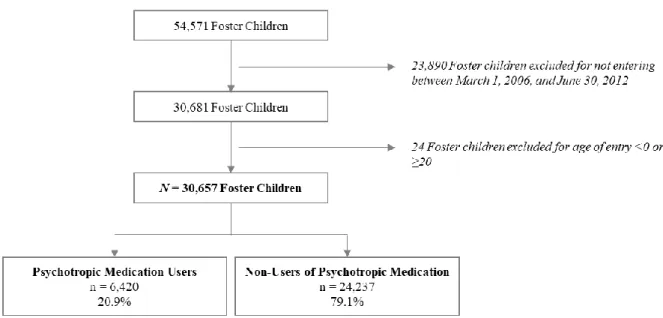
Paper II is a descriptive study of children in foster care in North Carolina who received psychotropic medication. Foster care and Medicaid data were linked to create the sample of foster children from the state of North Carolina who entered into care between March 2006 and June 2012 (N = 30,657). Univariate analysis was performed for frequency distributions and measures of central tendency and variation. Chi-square tests were used to test linear trends over the study period and generalized linear modeling (GLM) was used to assess association of individual and contextual factors and medication use. About one in five foster children (20.9%) received a psychotropic medication during their time in care. Males, Whites, older children, and those with a mental health diagnosis were more likely to receive psychotropic medication. Those placed in kinship care were less likely to receive psychotropic medication. Among those who were medicated, disruptive disorder was the most commonly diagnosed mental illness and its prevalence grew throughout the study period. Stimulants were the most prescribed medication and taken by 59.0% of those who received medication.
Using the same linked administrative dataset, inverse probability of treatment weighting was calculated and applied to mimic a randomized study. The Cox proportional hazards model., Poisson count regression, and multinomial logit regression and were used to examine the effects of medication use on length of time in care, placement stability, and permanency outcomes (i.e., reunification, guardianship, adoption, or others). Results revealed that children on medication stayed in care longer, less likely to experience placement disruption, and more likely to exit to adoption.
ACKNOWLEDGEMENTS
I would like to take this opportunity to express my gratitude to the people who have supported me in this journey. I could not have accomplished this without them in my life. First, to my committee chair, Dr. Dean Duncan; thank you for supporting me through the years and shepherding me to the end. I am so grateful for our fateful meeting years ago working on a grant together. Although we did not win that grant, I found something even better: a mentor and champion who would help shape me professionally.
It is with deep gratitude that I thank my committee members, Dr. Jean Smith, Dr. Terry Shaw, Dr. Din-Geng Chen, and Dr. Sheryl Zimmerman for all their expertise and guidance. Their insight has been profoundly invaluable, and this dissertation would not have been the same without them. I hope I may one day be as generous as they have been with me in sharing time, energy, and wisdom.
I am so thankful for the extraordinary personnel at the University of North Carolina who have been amazing resources and made this dissertation possible. I want to thank the Odum Institute, in particular, Chris Wiesen for the many statistical consultations; Angela Bartlett for her expertise in systematic literature searches; Jenny Vaughn for her critical reviews and edits, and Rod Rose for his help in coding and data management: I am so grateful for each of you.
dream. I love you so much. Thank you to my parents who have supported my life-long journey: your unconditional faith and trust enabled me to pursue this path and reach this milestone.
And finally, to my daughters, Claire and Lena; through this journey I have been
motivated to push myself beyond what I thought was possible because I see boundless potential in the both of you. Work hard, find joy, and persist. Above all, do all things in love; “If I have the gift of prophecy and can fathom all mysteries and all knowledge, and if I have absolute faith so as to move mountains, but have not love, I am nothing (1 Corinthians 13:2).” Anything is possible for you girls. Thank you for inspiring me every day.
TABLE OF CONTENTS
LIST OF TABLES ... xi
LIST OF FIGURES ... xii
LIST OF ABBREVIATIONS ... xiii
INTRODUCTION ... 1
REFERENCES: INTRODUCTION ... 6
PAPER I ... 9
Introduction ... 10
Method ... 11
Results ... 19
Discussion ... 30
Conclusions ... 36
REFERENCES: PAPER I... 37
APPENDIX A: EPHPP QUALITY ASSESSMENT TOOL FOR QUANTITATIVE STUDIES ... 43
PAPER II ... 47
Introduction ... 48
Literature Review... 50
Method ... 53
Results ... 58
Discussion ... 74
Conclusions ... 84
APPENDIX B: PLACEMENT BY DIAGNOSIS INTERACTION MODEL ... 93
PAPER III ... 94
Introduction ... 95
Literature Review... 96
Method ... 104
Results ... 112
Discussion ... 123
Conclusion ... 129
REFERENCES: PAPER III ... 131
APPENDIX C: PSYCHOTROPIC DRUG CLASSES AND COMMON USES ... 138
APPENDIX D: DIAGNOSTIC GROUP AND ICD-9 CODES ... 139
SUMMARY ... 140
LIST OF TABLES
Table 1 – PICOS research question ... 12
Table 2 – Summary of selected psychotropic medication in child welfare ... 21
Table 3 – Meta-analytic results for psychotropic medication use event rate for children in foster care ... 24
Table 4 – Meta-analytic results for associations between psychotropic medication use and demographic variables ... 25
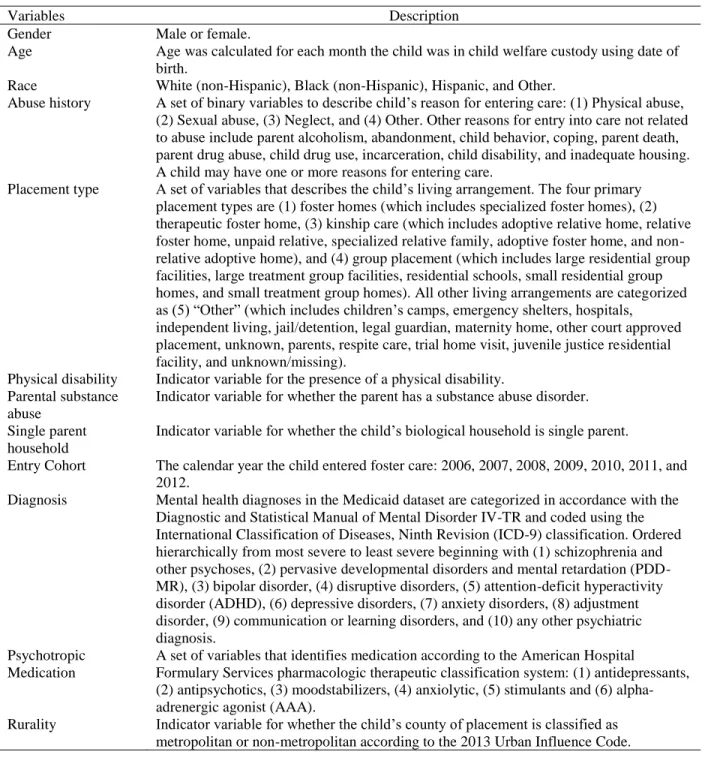
Table 5 – Variables used in this research ... 55
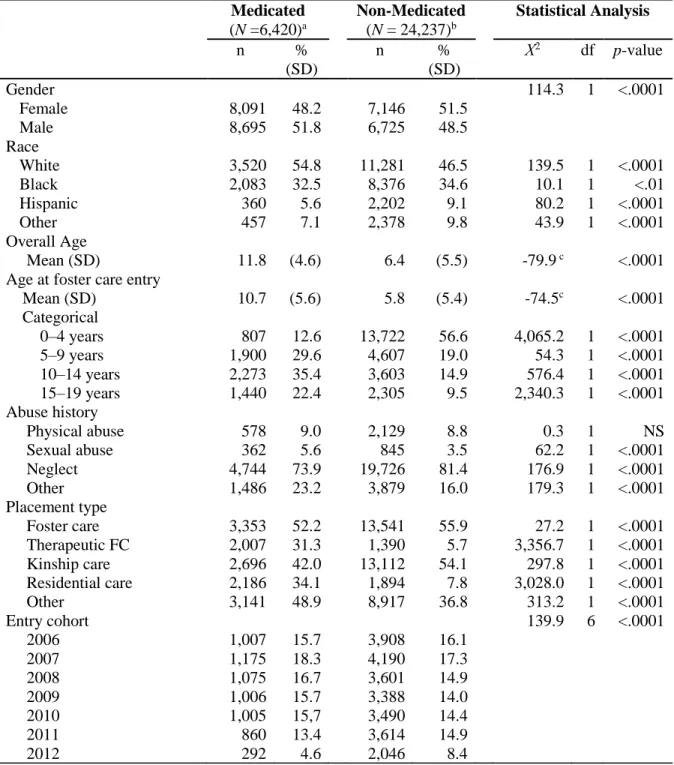
Table 6 – Sample description ... 61
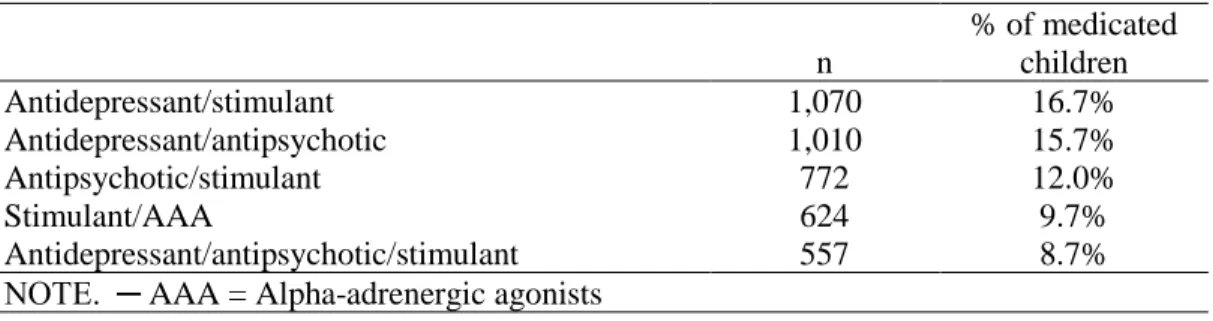
Table 7 – Medications prescribed by type ... 64
Table 8 – Percent of children in foster care with a psychiatric diagnosis and prescribed psychotropic medication treatment ... 66
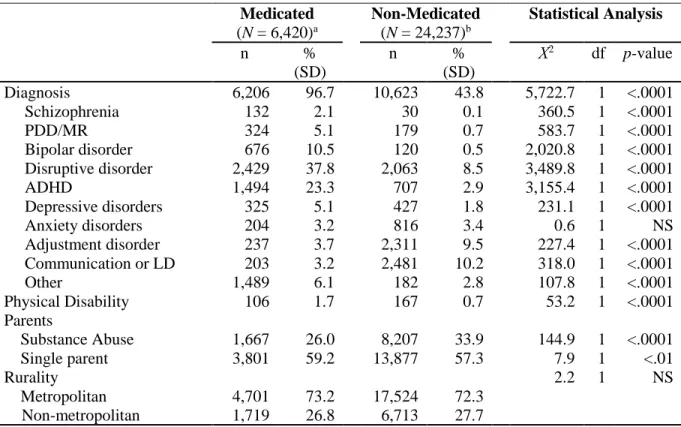
Table 9 – Demographic, clinical, and mental health service use patterns of foster children treated with psychotropic medications in North Carolina, 2006-2012 ... 68
Table 10 – Estimated OR and 95% CI medication use for medicated children in foster care... 73
Table 11 – Balance assessment of baseline characteristics between treated and untreated subjects ... 115
Table 12 – Description of outcome variables in raw dataset ... 116
Table 13 – Effect sizes from Cox regression model for time to permanency... 119
Table 14 – Factors associated with incidence of placement change ... 121
LIST OF FIGURES
Figure 1 – PRISMA flow chart ... 19
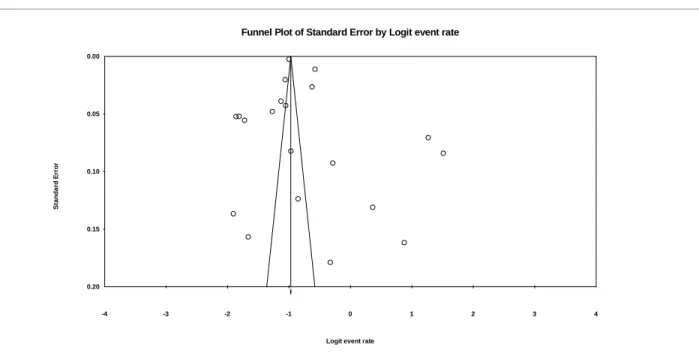
Figure 2 – Begg’s funnel plot with pseudo 95% confidence limits ... 29
Figure 3 – Dataset construction flow chart ... 59
Figure 4 – Trends in medication by placement type over time... 70
Figure 5 – Trends in diagnosis over time... 71
Figure 6 – Medication prescribed over time ... 72
Figure 7 – Box plot showing overlap of logit propensity ... 113
Figure 8 – Histograms showing propensity score distributions ... 114
Figure 9 – Survival curves of exit to permanency by medication status ... 117
LIST OF ABBREVIATIONS
AAA Alpha-adrenergic agonist
ADHD Attention deficit/hyperactivity disorder CBCL Child Behavior Checklist
CI Confidence interval
DSM-IV Diagnostic and Statistical Manual of Mental Disorder IV-TR
EIS Eligibility Information System
EPHPP Effective Public Health Practice Project
FC Foster care
GLM Generalized linear modeling
HR Hazard ratio
ICD-9 International Classification of Diseases, Ninth Revision IPTW Inverse probability of treatment weighting
IRR Incident rate ratio LAS Long-acting stimulant LD Learning disorder
MAOI Monoamine oxidase inhibitor MR Mental retardation
NS Nonsignificant
ODD Oppositional defiant disorder
OR Odds ratio
PDD Pervasive developmental disorder
PRISMA Preferred Reporting Items for Systematic Reviews and Meta-Analyses PSA Propensity score analysis
INTRODUCTION
USE OF PSYCHOTROPIC MEDICATION IN FOSTER CARE AND RELATED OUTCOMES Children in the foster care system are often victims of maltreatment or have experienced a host of traumatic experiences that may lead to the development of emotional and behavioral issues. The acute and chronic stressors associated with child maltreatment alters the biological stress systems that adversely affects brain development (De Bellis, 2001). National survey data suggest that nearly half of children in the foster care system have clinically significant behavioral issues (Burns et al., 2004; Leslie, Hurlburt, Landsverk, Barth & Slymen, 2004). Many of these children are treated with mind-altering psychotropic medication to treat their emotional and behavioral needs. A report commissioned by the Government Accountability Office (GAO) found prescribing rates for this population ranging from 20% to 40%, which is 2.7 to 4.5 times the rate of prescribing for non-foster youth, even when controlling for socioeconomic status (2011). Increased national attention to the high rate of psychotropic medication use in foster care has exposed the need for research that helps better understand the intersection of child welfare and the medicalization of mental health care.
from the home and being placed in a new environment (and oftentimes multiple placements) may be a traumatic experience in and of itself, and children may simply be reacting to these
disturbances by responding in unhealthy ways (Rubin, O’Reilly, Luan, & Localio, 2007; Simms, 1991). The strained mental health system (e.g., a shortage of well-trained mental health
professionals specialized in treating children and adolescents; Burns et al., 2004) and
reimbursement structure that incentivizes medication over therapy (Matone, Zlotnik, Noonan, Miller, & Rubin, 2015) may also contribute to the high use of pharmacological treatments as opposed to non-pharmacological alternatives. Alternatively, children who enter into state custody experience greater scrutiny under the supervision of social workers, foster parents, judges, and teachers who may be overzealously assessing age-appropriate child/adolescent behavior as deviant (Chubinsky & Hojman, 2013; Conrad & Slodden, 2013).
Regardless of why children are medicated, there are strong criticisms of the ubiquity of medication therapy among children in foster care. The negative side effects of psychotropic use from clinical studies with adult samples are already well known (National Institute of Mental Health [NIMH], 2009), and children are even more sensitive to medication side effects (Correll et al., 2009; Vitiello et al., 2009). That is, the developmental changes experienced by children may affect the safety and efficacy of medications. And yet, most medication studies are not conducted with children due to ethical reasons (Spetie & Arnold, 2007). Some critics argue that pharmacological treatments are not the best form of treatment and that instead,
effects (Bellamy, Gopalan, & Traube, 2010; Compton et al., 2004; Correll, 2010; Olfson, Crystal, Huang, & Gerhard, 2010; Landsverk, Burns, Stambaugh, & Reutz, 2009). Some even argue that children are being medicated to appease overburdened parents and teachers rather than what is in the best interest of the child (Miller, 2009)
Despite strong criticism of the use of psychopharmacological treatments, physicians use their clinical experience and expertise to determine the best course of action for their patients. However, if they are to make an informed treatment and prescribing decision, more data on the effects of psychotropic medication are needed. Current clinical evidence for psychotropic medication treatment of adolescent psychiatric disorders varies widely across medication class and disorder. Although stimulants are a well-established treatment for adolescent attention-deficit/hyperactivity disorder (ADHD) (Kaplan & Newcorn, 2011), clinical trials provide only modest support for the short-term efficacy antidepressants for major depressive disorders and for several anxiety disorders in adolescents (Bridge et al., 2007). The use of antipsychotic
medication for adolescents only have limited empirical support for schizophrenia, bipolar I mania, mixed mania, and autism and there are currently no well-established psychiatric indications of anxiolytics or mood stabilizers for adolescents (Vitiello et al., 2009).
examines the effects of medication on the foster care experience, including children’s placement stability, length of time in care, and permanency outcomes.
Paper I, “The Use of Psychotropic Medication for Children in Foster Care: A Systematic Review and Meta-Analysis,” is a systematic literature review to determine the state of
knowledge on contributing factors for prescribing psychotropic medication. Methods outlined by the Preferred Reporting Items for Systematic Reviews and Meta-Analyses Statement (PRISMA; Moher, Liberati, Tetzlaff, & Altman, 2009) were used to amass relevant articles in the area of psychotropic medication use among foster children in the United States from 1990 to 2016. After a two-step inclusion/exclusion process, data from the sample of articles were extracted for a meta-analysis. Paper I presents what has been established in the body of research to date
regarding the incidence of psychotropic medication use among children in foster care as well as characteristics of children in foster care who are prescribed psychotropic medication. The results of Paper 1 establish findings from the aggregate body of work, identify gaps in the literature for future studies, and critically examine how this area of research can be improved.
influence psychotropic medication treatment. The results of Paper II was used to inform
statistical controls needed in research in the area of psychotropic medication use and children in foster care. Further, the results identifies potential subpopulations that may be particularly vulnerable to possible over-medication.
Paper III, “Effects of Medication on Foster Care Outcomes,” analyzes the effects of medication on placement stability, length of time in care, and permanency outcomes. Because medication use is not a random occurrence, propensity score analysis (PSA) was conducted to mimic randomization of treatment and control group (i.e., medicated foster youth vs.
non-medicated). PSA balanced the characteristics of the youth who used psychotropic medication and those who did not in order to address bias from confounding factors, which allowed for causal analysis to be performed (Rosenbaum & Rubin, 1983). In particular, the inverse probability of treatment weighting (IPTW) was used to adjust for the differential probability of selection of foster children in the medication treatment and non-medication treatment groups. Paper III helps enhance foster care planning to become more holistic by considering the effects of medication on foster care experiences and outcomes.
As a whole, the three papers that constitute the dissertation establish new knowledge by synthesizing relevant findings in the literature, and then expanding on those findings by
analyzing psychotropic medication use among a large sample of foster children longitudinally. Moreover, the papers fill a significant gap in the literature by expanding the scope of the research on psychotropic medication use beyond descriptive analysis, allowing us to conduct causal effect analysis and begin to understand the effects of medication on foster care experiences and
REFERENCES: INTRODUCTION
Bellamy, J. L., Gopalan, G., & Traube, D. E. (2010). A national study of the impact of outpatient mental health services for children in long-term foster care. Clinical Child Psychology and Psychiatry, 15(4), 467–479. doi:10.1177/1359104510377720
Bridge, J. A., Iyengar, S., Salary, C. B., Barbe, R. P., Birmaher, B., Pincus, H. A., … Brent, D. A. (2007). Clinical response and risk for reported suicidal ideation and suicide attempts in pediatric antidepressant treatment. JAMA, 297(15), 1683–1696.
doi:10.1001/jama.297.15.1683
Burns, B. J., Phillips, S. D., Wagner, H. R., Barth, R. P., Kolko, D. J., Campbell, Y., & Landsverk, J. (2004). Mental health need and access to mental health services by youths involved with child welfare: A national survey. Journal of the American Academy of Child Adolescent Psychiatry, 43(8), 960–970. doi:10.1097/01.chi.0000127590.95585.65
Chubinsky, P., & Hojman, H. (2013). Psychodynamic perspectives on psychotropic medications for children and adolescents. Child and Adolescent Psychiatric Clinics of North America, 22(2), 351–366. doi:10.1016/j.chc.2012.12.004
Compton, S. N., March, J. S., Brent, D., Albano, A. M., Weersing, R., & Curry, J. (2004). Cognitive-behavioral psychotherapy for anxiety and depressive disorders in children and adolescents: an evidence-based medicine review. Journal of the American Academy of Child and Adolescent Psychiatry, 43(8), 930–959.
doi:10.1097/01.CHI.0000127589.57468.BF
Conrad, P., & Slodden, C. (2013). The medicalization of mental disorder. In C. S. Aneshensel, J. C. Phelan, & A. Bierman (Eds.), Handbook of the Sociology of Mental Health (2nd ed., pp. 61–73). New York, NY: Springer Netherlands. doi:10.1007/978-94-007-4276-5
Correll, C. U. (2008). Antipsychotic use in children and adolescents: minimizing adverse effects to maximize outcomes. Journal of the American Academy of Child & Adolescent
Psychiatry, 47(1), 9–20. doi:10.1097/chi.0b013e31815b5cb1
Correll, C. U., Manu, P., Olshanskiy, V., Napolitano, B., Kane, J.M., & Malhotra, A.K. (2009). Cardiometabolic risk of second-generation antipsychotic medications during first-time use in children and adolescents. JAMA, 302(16), 1765–1773. doi:10.1001/jama.2009.1549 De Bellis, M. D. (2001). Developmental traumatology: The psychobiological development of
maltreated children and its implications for research, treatment, and policy. Development and Psychopathology, 13(3), 539–564. doi:10.1017/S0954579401003078
English, D. J., Upadhayaya, M. P., Litrownik, A. J., Marshall, J. M., Runyan, D. K., Graham, J. C., & Dubowitz, H. (2005). Maltreatment’s wake: The relationship of maltreatment
Government Accountability Office [GAO]. (2011). Foster children: HHS guidance could help states improve oversight of psychotropic prescriptions. (NIH Publication No. GAO-09-26). Washington, DC: Office USGA.
Kaplan, G., & Newcorn, J. H. (2011). Pharmacotherapy for child and adolescent attention-deficit hyperactivity disorder. Pediatric Clinics of North America, 58(1). 99–120.
doi:10.1016/j.pcl.2010.10.009
Kapur, S. (2003). Psychosis as a state of aberrant salience: A framework linking biology, phenomenology, and pharmacology in schizophrenia. American Psychiatry, 160(1), 13– 23.
Landsverk, J. A., Burns, B. J., Stambaugh, L. F., & Rolls Reutz, J. A. (2009). Psychosocial interventions for children and adolescents in foster care: Review of research literature. Child Welfare, 88(1), 49–69.
Leslie, L. K., Hurlburt, M. S., Landsverk, J., Barth, R., & Slymen, D. J. (2004). Outpatient mental health services for children in foster care: A national perspective. Child Abuse & Neglect, 28(6), 697–712.
Miller, C.M. (2009, August 12). Child-welfare panel: Drugs misused on foster kids. Miami Herald. Retrieved from http://www.miamiherald.com/2009/08/12/1183698_child- welfare-panel-drugs-misused.html
Matone, M., Zlotnik, S., Noonan, K., Miller, D., & Rubin, D. (2015). Antipsychotic prescribing to children: An in-depth look at foster care and Medicaid populations. Philadelphia, PA: The Children’s Hospital of Philadelphia PolicyLab.
Mitchell, Moher, D., Liberati, A., Tetzlaff, J., Altman, D. G., The PRISMA Group. (2009). Preferred reporting items for systematic reviews and meta-analyses: The PRISMA statement. PLoS Medicine, 6(6): e100097. doi:10.1371/journal.pmed.1000097 National Institutes of Mental Health. (2009). Treatment of children with mental illness:
Frequently asked questions about the treatment of mental illness in children (NIH Publication No. 09-4702). Retrieved from
http://www.nimh.nih.gov/health/publications/treatment-of-children-with-mental-illness-fact-sheet/nimh-treatment-children-mental-illness-faq.pdf
Olfson, M., Crystal, S., Huang, C., & Gerhard, T. (2010). Trends in antipsychotic drug use by very young, privately insured children. Journal of the American Academy of Child & Adolescent Psychiatry, 49(1), 13–23. doi:10.1016/j.jaac.2009.09.003
Simms, M. D. (1991). Foster children and the foster care system, part II: Impact on the child. Current Problems in Pediatrics, 21(8), 345–369.
Spetie, E., & Arnold, L. E. (2007). Ethical issues in child psychopharmacology research and practice: Emphasis on preschoolers. Psychopharmacology, 191(1), 15–26.
doi:10.1007/s00213-006-0685-8
Vitiello, B., Correll, C., van Zwieten-Boot, B., Zuddas, A., Parellada, M., & Arango, C. (2009). Antipsychotics in children and adolescents: Increasing use, evidence for efficacy and safety concerns. European Neuropsychopharmacology, 19(9), 629–635.
PAPER I
THE USE OF PSYCHOTROPIC MEDICATION FOR CHILDREN IN FOSTER CARE: A SYSTEMATIC REVIEW AND META-ANALYSIS
Abstract
Ever since the high usage rates of psychotropic medication among children in foster care has been brought to the nation’s attention, there has been a growing body of research in an effort to better understand this topic (Birnbaum et al., 2013; Barnett et al., 2016; Leslie, Raghavan, Zhang, & Aarons, 2010; Mackie et al., 2011; Zito et al., 2008; Zito et al., 2013). However, a systematic review has yet to be conducted that broadly examines the findings of these studies. The purpose of this work is to review the relevant literature related to the use of psychotropic medication for children in foster care, including prevalence rates and predictors of psychotropic medication use. This paper helps understand what the research has established in this area and deficits in the literature that can be explored in future work.
Introduction
An estimated 400,540 children are in foster care across the United States (Child Welfare Information Gateway, 2013; NIMH, 2009). These children have experienced some of the most adverse and stressful challenges, such as being victim to abuse or neglect or witnessing extreme violence and trauma, that lead to profound mental health issues and require some form of psychological treatment (Stambaugh et al., 2013; U.S. Department of Health and Human Services [DHHS], 2007). Common secondary and associated responses to childhood trauma include depression, aggression, substance abuse, physical illnesses, low self-esteem, identity confusion, difficulties in interpersonal relationships, and guilt and shame (Carlson & Dalenberg, 2000). The stress of experiencing abuse makes the children in the child welfare system more vulnerable to mental problems such as post-traumatic stress disorder (PTSD), conduct disorder, and learning, attention, and memory difficulties (Dallam, 2001; Perry, 2001).
Among treatment options, the prescribing of psychotropic medication among all children and adolescents has grown in the past two decades, but the rate has been far greater in the foster care population, even after controlling for similar socioeconomic backgrounds (Harrison, Cluxton-Keller, & Gross, 2012). Estimates of the percentage of foster care youth who receive psychotropic medication range from 13% to 25% (Gardner & Soeken, 2005; Leslie et al., 2010; Zito, Safer, Zuckerman, Zito et al., 2008) which are far higher than the general population.
The psychotropic medications prescribed are not approved for children and are being used off-label to treat diagnoses such as ADHD (Attention Deficit/Hyperactivity Disorder), conduct disorder, depression, anxiety and developmental delay. The practice of
cardiovascular disease) and lack of evidence of efficacy for the treatment of many of the mental and behavioral health disorders it is being used to treat. Metabolic abnormalities caused by psychotropic medication use in youth can have both short- and long-term health implications. Because childhood is a period of rapid physiological and neurological changes, children react differently to psychotherapeutic medication which may explain their greater sensitivity to the negative side effects compared to fully developed adults.
The revelation of high rates of psychotropic medications in the foster care system has raised alarm among government officials, physicians, and other advocates (GAO, 2011; Szilagyi, Rosen, Rubn, & Zlotnik, 2015). Some of the questionable practices prevalent in foster care are off-label medication use, polypharmacy (i.e., the administration of two or more psychotropic medication), and prescribing to very young youth (i.e., under the age of 4 years) (Medicaid Medical Directors Learning Network, 2010; Naylor et al., 2007; Zito et al., 2008b).
Ever since the growing practice of prescribing children in foster care psychotropic medication has been brought to the attention of the child welfare field, several research studies have been conducted and published. However, as of yet, a systematic literature review
synthesizing the existing research on prevalence rates and the factors related to the prescription of psychotropic medications among youth in foster care has not been conducted. This paper fills that void and provides a strong foundation in better understanding how mental health needs of children in the United States’ foster care systems are being met and the characteristics associated with medication use.
Method
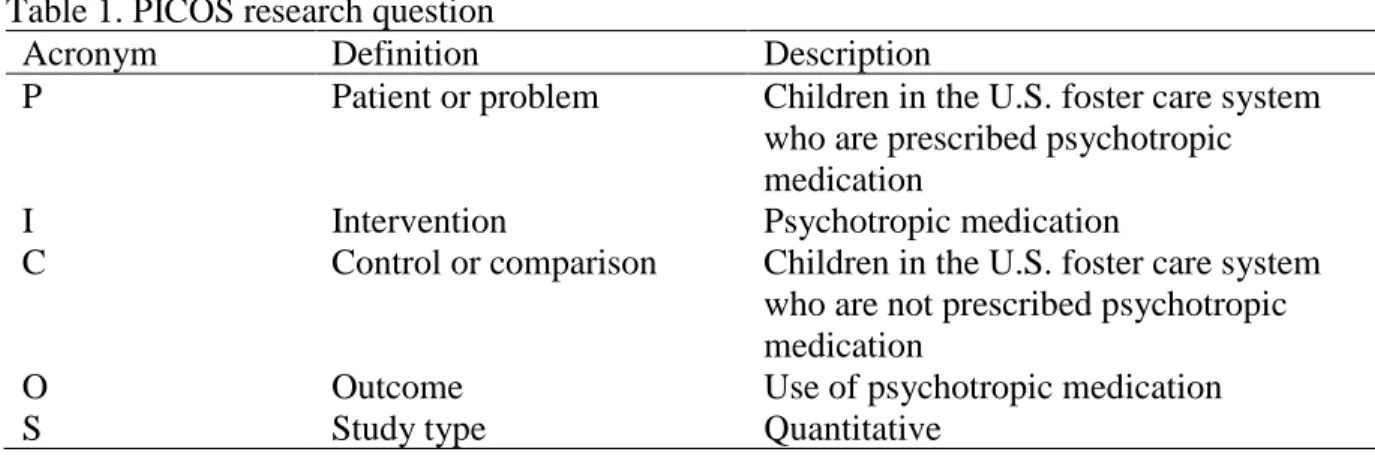
among children in the U.S. foster care system and (2) What characteristics are associated with the prescription of psychotropic medication among children who are in foster care? The key characteristics of the systematic review are framed in the PICOS research question format, a model used to frame and define a research question. The PICOS elements include
problem/patient/population, intervention/indictor, comparison, outcome, and study type (Table 1). Once a sample of papers was identified, a meta-analysis was conducted. A meta-analysis is a subset of systematic review that assesses and consolidates a body of research (Haidich, 2010). Table 1. PICOS research question
Acronym Definition Description
P Patient or problem Children in the U.S. foster care system who are prescribed psychotropic medication
I Intervention Psychotropic medication
C Control or comparison Children in the U.S. foster care system who are not prescribed psychotropic medication
O Outcome Use of psychotropic medication
S Study type Quantitative
Literature Search and Study Selection
A literature search was conducted using the electronic databases PsychINFO, PubMED, EMBASE, Cochrane, ERIC, CINAHL, ProQuest’s Dissertations and Theses Global, Social Services Abstracts, and Social Work Abstracts. Search terms in various combinations were used including (foster*, kin*, relative*, “child welfare,” “out-of-home”) AND (psychotrop*,
language” and publication date. Duplicate articles were discarded. The final search (described below) was performed on February 6, 2017.
Inclusion and exclusion criteria. Peer-reviewed journal articles published between 1990 and 2016 fulfilling the following characteristic were included: peer reviewed, quantitative studies involving children in child welfare and the use of psychotropic medication. The published date criterion was chosen because psychotropic medication use in foster children was not an area studied prior to 1990. Exclusion criteria were as follows: articles in languages other than English, articles without primary quantitative data (e.g., letters to the editor, book reviews), and grey literature (e.g., conference proceedings). Grey literature was excluded because the peer-review process is generally less rigorous and often does not include enough detail to perform a meta-analysis.
Study selection. Study selection was conducted and reported in accordance with the Preferred Reporting Items of Systematic reviews and Meta-Analyses (PRISMA) guidelines which were developed by an international group of researchers to increase the reporting quality of systematic reviews (Moher, Liberati, Tetzlaff, Altman, & The PRISMA Group, 2009). PRISMA is an evidence-based guideline that provides a minimum set of items for reporting in systematic reviews and meta-analyses. A PRISMA recommended flowchart depicting the flow of information through distinct phases of a systematic review to illustrate the identification,
screening, eligibility assessment, and inclusion of articles was also provided.
child welfare-involved youth, and propensity to receive psychotropic medication. Studies that did not address the research question of the prevalence of psychotropic medication use among U.S. foster children and characteristics related to the use of psychotropic medication were
excluded. Articles that were not available online were requested through the library service at the University of North Carolina at Chapel Hill.
Study Endpoints and Measured Outcomes
The endpoints of interest were the incidence of psychotropic medication use in foster children or child welfare-involved youth. Predictors of psychotropic use including age, race, and geography were also extracted from the literature.
Data Extraction
Meta-analysis was conducted using the data collected from the systematic literature review search. Meta-analysis is a statistical procedure used to combine data from across studies and identify a common treatment effect (or effect size). The aim is to derive a pooled estimate that is closest to the population estimate. Data from full-text articles were extracted by one author (A.G.). For each article, prevalence rates, prescription likelihood, and other relevant data were entered into a database (Excel 2016).
The odds ratio (OR) is the most common measure of effect in dichotomous data. If an OR was unavailable, the effect size was calculated from other statistics (e.g., regression coefficient β). The OR [with 95% confidence interval (CI)] was used as the effect size index. Each OR was
transformed into a Fisher’s Z coefficient, averaging across coefficients, and converting back to an OR. The correlation was converted to an effect size (Fisher’s Z) using the standard formula:
𝐹𝑖𝑠ℎ𝑒𝑟𝑍 = .05 ∗ 𝐿𝑜𝑔 (1 + 𝐶𝑜𝑟𝑟𝑒𝑙𝑎𝑡𝑖𝑜𝑛
𝑆𝐸𝐹𝑖𝑠ℎ𝑒𝑟𝑍 = 1 √𝑁 − 3
The transformation from Fisher’s Z to correlation is given by
𝐶 = 𝐸𝑥𝑝(2 ∗ 𝐹𝑖𝑠ℎ𝑒𝑟𝑍)
𝐶𝑜𝑟𝑟𝑒𝑙𝑎𝑡𝑖𝑜𝑛 = (𝐶 − 1
𝐶 + 1)
𝑆𝐸𝐶𝑜𝑟𝑟𝑒𝑙𝑎𝑡𝑖𝑜𝑛 = (1 − 𝐶𝑜𝑟𝑟𝑒𝑙𝑎𝑡𝑖𝑜𝑛2) ∗ 𝑆𝐸𝐹𝑖𝑠ℎ𝑒𝑟𝑍
When multiple follow-up periods were studied, the most recent data were extracted and used for analysis to prevent over-counting similar study populations.
Data Analysis
Meta-analysis (Glass, 1976) is the statistical technique used to combine the results of a series of studies that address a common question. Results of the various studies are typically transformed to the same metric and represented as effect sizes for analysis. For this study,
random effects meta-analyses were conducted to provide a weighted means estimate of incidence rates and the correlation between each variable and the use of psychotropic medication for children in foster care. The random-effects model was chosen because it has an underlying assumption that a distribution of effects exists and therefore, heterogeneity among study results (τ2) exists. When a study provided effect sizes for a linear random effects model, the beta was converted to the correlation statistic Cohen’s d by dividing the mean difference (𝛽) by the standard deviation of the residuals (𝜎). When the standard deviation was not available, it was estimated using the standard error and the sample size as follows:
𝜎 = √𝑛 ∗ 𝑆𝐸
Such analyses were conducted where data were available from at least three studies. For each analysis, the I2 statistic was produced to index the total variation in correlation magnitude across studies due to between-study heterogeneity versus within-study heterogeneity (i.e., sampling error; Rosenthal, 1991). Overlapping bands of I2 values were used to categorize heterogeneity which is the degree of inconsistency in the study results. Values ranging between 0% to 40% indicated minimal heterogeneity; 30% to 60%, moderate heterogeneity; 50% to 90%, substantial heterogeneity; and 75% to 100%, heterogeneity (Deeks, Higgins, & Altman, 2011). A p < 0.05 is considered statistically significant. Forest plots were produced to examine the
distribution of effects across individual studies. All statistical analyses were performed using Comprehensive Meta-Analysis (version 3.3).
Subgroup analysis. There were five subgroup studies found in the systematic literature review: children with ADHD, antipsychotic medication users, older youth, expenditure outcome studies, and preschool-aged children (see Table 1). However, none of these subgroups had k ≥ 10 studies available for analysis and therefore, meta-analysis was not undertaken for any subgroups.
Sensitivity analysis. Analyses were re-conducted while limiting the data to studies classified as having low risk of bias to determine the effect of including studies classified as having high risk of bias.
vertical axis as a function of effect size on the horizontal axis. Large studies appear at the top of the graph and tend to cluster near the mean effect size. Smaller studies appear toward the bottom of the graph and are typically dispersed across a range of values because smaller studies tend to have greater sampling variation in effect size estimates. In the absence of a publication bias, studies are expected to be distributed symmetrically about the combined effect size. On the contrary, in the presence of bias, there is likely to be a higher concentration of studies on one side of the mean than the other. This reflects the fact that smaller studies (found at the bottom) are more likely to be published if they have larger than average effects which makes them more likely to meet the criterion for statistical significance.
Two additional statistical tests were performed to assess the funnel plot. First, the Egger’s test of the intercept was conducted to test for asymmetry of the funnel plot (Egger et al., 1997). It assesses bias by using the inverse of the standard error to predict the standardized effect (i.e., effect size divided by the standard error). Second, the Begg Mazumbdar Rank Correlation Test was conducted to test the interdependence of variance and effect size (Begg & Mazumdar, 1997). Since large studies tend to be included in the analysis regardless of their treatment effect—
A “classic fail-safe N” test was also conducted as a test to determine whether the entire observed effect could be an artifact of bias (Rosenthal, 1979). This test provides the number of null effect studies needed to raise the p value associated with the average effect above an
arbitrary alpha level (set at α = .05). According to researchers, results from meta-analysis can be interpreted as valid and thus resistant to bias due to researchers’ tendencies to exclude
nonsignificant findings when the fail-safe N reaches the 5k + 10 limit (Carson, Schriesheim, & Kinicki, 1990; Rosenthal, 1979).
Quality and Risk of Bias in Individual Studies
The quality of each article was appraised using the Effective Public Health Practice Project (EPHPP) Quality Assessment Tool for Quantitative Studies (EPHPP, 2008; Jackson & Waters, 2005) recommended by the Cochrane Handbook for Systematic Reviews of
Results
Search Results
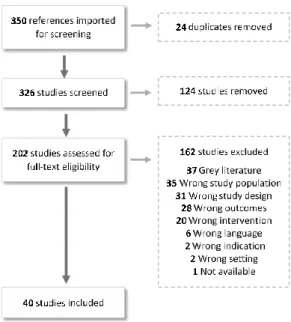
Results of the literature review were documented using the Preferred Reporting Items of Systematic reviews and Meta-Analyses (PRISMA). Figure 1 summarizes the results of the systematic search. The database search returned 350 entries. Deleting duplicate articles left 326 potential articles for assessment. Following evaluation of titles and abstracts, 124 articles failed to meet inclusion criteria and were excluded. A total of 202 articles were subsequently selected for full-text review; 162 articles were excluded after full-text review.
Figure 1. PRISMA flow chart
Study Characteristics
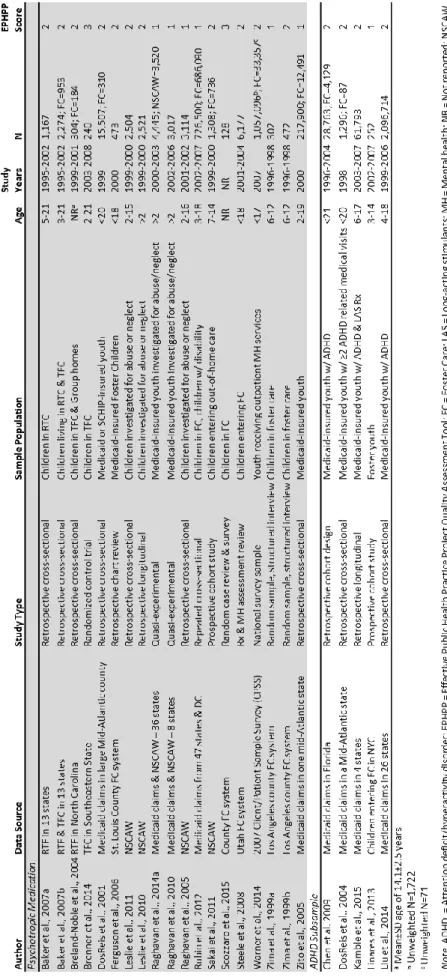
A summary of studies is provided in Table 2. Children included were either in the foster care system or had been investigated for abuse or neglect. Most were retrospective
Ta
ble
2
. S
umm
ar
y
of se
le
cted ps
y
chotropi
c medic
ati
on in child we
lfa
able
2. Continue
Quantitative Synthesis
Psychotropic medication use rates in foster care. Out of the 40-study sample, twenty (20) studies reported rates of psychotropic medication use for children in foster care (see Table 3). Because of the high degree of heterogeneity, the random effects model was used. Based on the meta-analysis of the reporting of 20 studies, the overall prevalence rate of psychotropic medication use for children in foster care is 32.9% (95% CI = .29–.37). The lowest reported rate was 10.3% (Zima et al., 1999b) and the highest was 82.0% (Baker et al., 2007b). There was high degree of heterogeneity (I2 = 99.6%, τ2 = 0.160, p <.001). The wide range of medication use is indicative of the diverse study population (even within foster care research) and study
ble
3
. Me
ta
-a
na
ly
ti
c r
esult
s for
ps
y
chotropi
c me
dica
ti
on use
e
ve
nt r
ate f
o
r c
hil
dre
n in foster
c
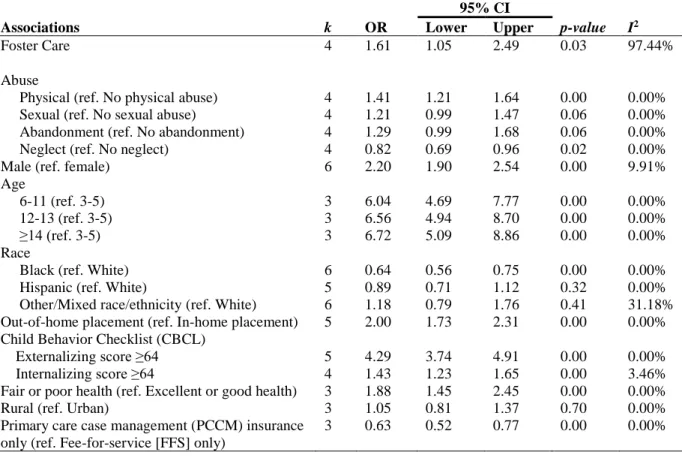
Correlates of psychotropic medication use. Results of the meta-analyses for the correlates of psychotropic medication use for children in foster care are presented in Table 4. There was no list of correlates a priori and the correlates were extracted from the systematic literature review. Correlates studied in at least three articles were included for analysis. Because of the small number of studies, meta-analyses could not be conducted for emotional abuse, continuous variable of age, ages in which reference groups were not 3-5 years old, caregiver education, caregiver employment, clinician diagnosis of impairment, county pediatrician ratio, county psychiatrist ratio, county poverty level, agency climate, certain insurance types, group home placement, placement instability, time in placement, individual states, and state/county administration type.
Table 4. Meta-analytic results for associations between psychotropic medication use and demographic variables
95% CI
Associations k OR Lower Upper p-value I2
Foster Care 4 1.61 1.05 2.49 0.03 97.44%
Abuse
Physical (ref. No physical abuse) 4 1.41 1.21 1.64 0.00 0.00% Sexual (ref. No sexual abuse) 4 1.21 0.99 1.47 0.06 0.00% Abandonment (ref. No abandonment) 4 1.29 0.99 1.68 0.06 0.00%
Neglect (ref. No neglect) 4 0.82 0.69 0.96 0.02 0.00%
Male (ref. female) 6 2.20 1.90 2.54 0.00 9.91%
Age
6-11 (ref. 3-5) 3 6.04 4.69 7.77 0.00 0.00%
12-13 (ref. 3-5) 3 6.56 4.94 8.70 0.00 0.00%
≥14 (ref. 3-5) 3 6.72 5.09 8.86 0.00 0.00%
Race
Black (ref. White) 6 0.64 0.56 0.75 0.00 0.00%
Hispanic (ref. White) 5 0.89 0.71 1.12 0.32 0.00%
Other/Mixed race/ethnicity (ref. White) 6 1.18 0.79 1.76 0.41 31.18% Out-of-home placement (ref. In-home placement) 5 2.00 1.73 2.31 0.00 0.00% Child Behavior Checklist (CBCL)
Externalizing score ≥64 5 4.29 3.74 4.91 0.00 0.00%
Internalizing score ≥64 4 1.43 1.23 1.65 0.00 3.46%
Fair or poor health (ref. Excellent or good health) 3 1.88 1.45 2.45 0.00 0.00%
Rural (ref. Urban) 3 1.05 0.81 1.37 0.70 0.00%
Primary care case management (PCCM) insurance only (ref. Fee-for-service [FFS] only)
Foster care. Analysis of k = 4 studies revealed that children in foster care are 61% more likely to receive psychotropic medication than their non-foster care counterparts. This mean effect was statistically significant. There were high levels of true heterogeneity across studies (I2 = 97.44%), with study-specific estimates ranging from OR = 1.05 to OR = 2.49.
Abuse. Children in foster care who were physically abused (k = 4 studies) are 41% more
likely to receive psychotropic medication than children with no history of physical abuse, whereas children in foster care who were neglected (k = 4 studies) are 18% less likely to receive psychotropic medication than children with no history of neglect. Neither showed evidence of true heterogeneity across studies (I 2 = 0.00%). The I 2 of 0.00% may be misleading because of the small sample size (von Hippel, 2015). This bias may be exacerbated by the fact that there were multiple studies from the same author. The mean effects of sexual abuse and abandonment were not statistically significant at p < .05.
Gender. Data from k = 6 studies revealed that males in foster care had more than double
the odds of receiving psychotropic medication than females (OR = 2.22). This mean effect was statistically significant and there were low levels of true heterogeneity across studies (I2 = 14.56%). Study-specific estimates ranged from OR = 1.90 to OR = 2.54.
Age. Age was significantly correlated with psychotropic medication user; those who were
Race. Black foster children had significantly lower odds of receiving psychotropic medication than their White counterparts (OR = 0.64, 95% CI = [0.56, 0.75]). Being of Hispanic ethnicity and being of Other/mixed race/ethnicity did not have a statistically significant
correlation with psychotropic medication use. All these statistics had low levels of true heterogeneity across studies.
Out-of-home placement. Foster children living in out-of-home placements (k = 5 studies)
were twice as likely to receive psychotropic medication than those in in-home placements (OR = 2.00, 95% CI = [1.73, 2.31]). This mean effect was statistically significant (p < .01). There was no evidence of true heterogeneity across studies (I2 = 0.00%).
Behavior. Several studies have utilized the Child Behavior Checklist (CBCL) scores as a
measure of a child’s behavioral problems (Achenbach & Rescorla, 2000; Achenbach & Rescorla, 2001). Children with clinical scores ≥64 on the CBCL externalizing assessment had over twice times the odds of receiving psychotropic medication (k = 5 studies; OR = 2.00, 95% CI = [3.74, 4.91]). Children with scores ≥64 on the CBCL internalizing assessment were 43% more likely to receive psychotropic medication (k = 4 studies; OR = 1.43, 95% CI = [1.23, 1.65]). Both mean effects were statistically significant and had no evidence of true heterogeneity across studies (I2 = 0.00%).
Health condition. Analysis of k = 3 studies revealed that foster children in Fair or Poor
Rural setting. A few studies (k = 3) have included rural setting as a variable in their analysis. There was a weak positive association between rural geography compared to urban geography, although this mean effect was not statistically significant. There were no evidence of true heterogeneity across studies (I2 = 0.00%).
Insurance type. Although there were several studies analyzing the relationship of
insurance type to psychotropic medication use, there were few consistent measures of insurance coverage and type across studies. There was, however, sufficient data (k = 3 studies) to find a negative association between primary care case management (PCCM) insurance only compared to fee-for-service (FFS) insurance types (OR = 0.63). This mean effect was statistically
significant (95% CI = .52–.77). There was no evidence of true heterogeneity across studies (I2 = 0.00%).
Sensitivity analysis. Sensitivity analysis was conducted by removing studies that were
classified as having high risk of bias from the meta-analysis. Removing studies with a high risk of bias did not significantly alter results. Therefore, conclusions were generally robust to risk of bias.
more likely to be published. The narrowness of the inverted V is quite narrow is indicative of a very large range of sample sizes represented in the studies used in this analysis. The average sample size in the analysis of the prevalence rate of foster youth medication use was 760,587 with a standard deviation of 152,722.2.
Figure 2. Begg’s funnel plot with pseudo 95% confidence limits
Other methods of assessing publication bias appear to minimize the concern of the possible presence of publication bias. There appears to be an equal number of studies distributed on each side of the mean effect size which can be an indication that sampling error is random (although studies with positive effect sizes deviate further from the mean than studies with negative effect sizes). The Egger’s regression test for funnel plot asymmetry was not statistically significant for the correlation data (τ = 3.77, p = .17). The Begg Mazumdar rank correlation test supported this finding with a non-significant correlation of the Kendall’s tau b (τΒ = 0.12, p = .46) providing further support that there is no publication bias present. The Classic fail-safe N test revealed that 8,475 additional “null” studies would need to be located and included to
invalidate the overall effect found in this meta-analysis. This value far exceeds the recommended
-4 -3 -2 -1 0 1 2 3 4
0.00
0.05
0.10
0.15
0.20
S
tand
ar
d
E
rr
or
Logit event rate
5k + 10 limit. It is to be noted that publication bias cannot be ruled out completely because of the low sensitivity (i.e., <20 studies; Sterne, Egger, & Smith, 2001).
Discussion
This paper is the first systematic review and meta-analysis to evaluate the prevalence and predictors of psychotropic medication use for children in foster care. One must note that a wide range in prevalence rates was found in the literature which may be due to the lack of specificity or diverse focus even within the foster care population. Although there is a wide range in
reported prevalence of psychotropic medication use for children in foster care, the meta-analysis that was conducted in this paper found that nearly a third of the children in foster care received psychotropic medication (32.9% across studies) which continues to the raise the concern that children in foster care are using psychotropic medication at very high rates.
Because studies involving the use of psychotropic medication for children in foster care did not use a standardized variable list, a meta-analysis of all variables studied was not
attainable. However, of the 18 separate predictor variables were able to be analyzed, 13 had a significant effect size. The meta-analysis found that children with a history of physical abuse, males, older children, children living in out-of-home placements, children with behavioral problems, and children with fair or poor health were more likely to receive psychotropic
medication. Children with a history of neglect, Black children, and children in primary care case management Medicaid insurance systems were less likely to receive psychotropic medication.
general. The lack of studies of causal effects highlights an area of research that is understudied, and the field would benefit from greater examination by researchers.
Policy Relevance
Children in foster care were statistically more likely to receive psychotropic medication than non-foster children. As a vulnerable population, these children warrant additional attention around the decision-making process regarding medication use. White foster children in particular were more likely to receive psychotropic medication than non-White foster children. However, we have yet to establish whether this difference is driven by over-prescribing among white youth, under-prescribing among minority youth, or both. We do know that racial and ethnic minorities have expressed strong feelings of mistrust and fear towards Western “white medicine” (McGuire & Miranda, 2008; Ojeda & Bergstresser, 2008; U.S. Department of Health and Human Services [DHHS], 2001). White children may have greater cultural acceptance of medical
intervention whereas their Black and Hispanic counterparts may harbor greater stigma towards mental illness and mental health treatment (Anglin, Link, & Phelan, 2006). In addition, children of color may not have the same access to psychotropic medication treatment as their White counterparts. Because the studies are limited to descriptive interpretations, a causal statement cannot be made for why Black foster youth are less likely to receive psychotropic medication. As a precaution, policy-makers should examine the mental health system to ensure that there are no barriers to appropriate mental health treatment for children of color. Future studies may look further into whether minority youth are not offered or do not accept medication
recommendations.
living in out-of-home placements are over-medicated because of poor systemic oversight or because non-familial caretakers may have a preference of relying on medication to calm children. Another possible explanation may be that out-of-home placements are in nature a traumatic experience and medication may help the child stabilize during periods of transitions. Finally, the children in Medicaid systems with primary care case management (PCCM) were less likely to receive psychotropic medication than those in fee-for-service systems. In PCCM
Medicaid systems, the state Medicaid agency employs a primary care provider to approve and monitor the care of enrolled Medicaid beneficiaries for a small monthly case management fee. It may be that having a primary care provider oversee all the care of the foster child reduces the risk of overmedication. Policy-makers may consider this Medicaid model as a means of preventing possible over-medication of children in foster care.
Clinical Relevance
Different abuse histories had a differential patterns of psychotropic medication use. Children with physical abuse were more likely to receive psychotropic mediation, while children who were neglected were less likely to be receive such medication. This finding suggests that abuse history is relevant information and that clinicians treating emotional and behavioral symptoms should be cognizant of this history. According to developmental traumatology research, abuse and neglect are considered as a most extreme form of dysfunctional family and interpersonal functioning in the spectrum of adverse life circumstances and dysfunctional interpersonal and family relationships (De Bellis, 2001). Trauma exposure for children in foster care are not only from abuse but also from a host of potentially traumatic events such as
elevated internalizing and externalizing problems that are persistent and make them more unable to cope with subsequent, nontraumatic life stressors (Grasso, Ford, & Briggs-Gowan, 2013). This paper found that children with behavioral problems were much more likely to receive
psychotropic medication, especially those with externalizing behaviors. Therefore, it is important that childhood trauma, such as abuse, are addressed. Clinicians should be cautious not to overuse psychotropic medication as a means of modifying behavior simply to appease caretakers or teachers but rather should ensure that children receive appropriate clinical care for their genuine mental health needs. Finally, children with fair or poor health were found to be more likely to receive psychotropic medication than children with excellent or good health. This finding may indicate a possible correlation between health and behavioral or emotional needs. Clinicians should consider a holistic approach in the treatment of a child’s mental health and address possible physical health needs in their treatment plan.
Limitations and Strengths
A core strength of this review is its systematic approach in which clear inclusion criteria were developed in accordance with the PRISMA guidelines and quantitative synthesis. This study follows a rigorous standard of systematic literature review and meta-analysis on a topic that has not been studied using this methodology. Also, many of the correlational analyses had low or no evidence of true heterogeneity between studies which may be an indication that the various studies share common findings, thus supporting the generalizability of these studies.
subjects, diagnoses, and treatment types. The small sample sizes limited the number of studies that could be analyzed. Also, because there were so few studies conducted on some sub-populations/topics, sub-analysis could not be performed. In addition, Cochrane states that the EPHPP tool is best conducted by individuals trained on the tool; I did not receive formal training on the tool. Another limitation is that the quality assessment was conducted by a
single-investigator which increases the risk of bias. Furthermore, most studies in this area used a cross-sectional design and only a few took additional measures to reduce bias due to confounding variables. Because the studies reviewed were correlational, conclusions could not be drawn on causality. The field would benefit from more studies of experimental or quasi-experimental and longitudinal study designs.
A characteristic limitation of systematic review studies and meta-analysis are that studies are limited to studies that were published. Therefore, it is possible that unpublished data may contradict the findings from published research. However, the funnel plots do not provide definitive evidence of publication bias. Finally, studies were evaluated by only one coder which is also a limitation of this review.
Further Considerations and Future Research
research is needed to determine whether results from these subgroups can be replicated or generalized.
There may be different predictors of psychotropic medication use for children in foster care than those examined in this review. For example, some studies reported significant positive relationship with children in group homes (Breland-Noble et al., 2004; Zima et al., 1999a). However, meta-analysis could not be undertaken to confirm this finding due to a small sample size (k = 2 studies). Future research is required to examine additional predictors of psychotropic medication use for children in foster care: possible predictors that may be of interest may be different placement types (such as foster care, therapeutic foster care, kinship care, or residential care), various mental health diagnosis, physical disability, as well as parental factors such as parent substance abuse or single parent status.
The risk of bias analysis conducted through the EPHHP scores indicated that most studies conducted in this area are not considered strong in quality. Studies received lower ratings of quality because most of the research were descriptive in nature and did not take adequate measures to use a controlled comparison group. This research area can be strengthened by conducting more experimental studies such as randomized controlled trials. However, because this is a sensitive research area involving a particularly vulnerable subject population, most studies are conducted retrospectively using secondary, administrative data. When secondary datasets are used, these studies can benefit from the use of advanced quasi-experimental study methods to mimic a controlled comparison group of a randomized controlled trial.
research and the field would benefit greatly from understanding the impact of medicating children in foster care.
Conclusions
REFERENCES: PAPER I
Achenbach, T. M., & Rescorla, L. A. (2000). Manual for the ASEBA Preschool forms and Profiles. Burlington, VT: University of Vermont Department of Psychiatry.
Achenbach, T. M., & Rescorla, L. A. (2001). Manual for the ASEBA School-Age Forms and Profiles. Burlington, VT: University of Vermont, Research Center for Children, Youth, & Families.
Adams, P. F., Hendershot, G. E., & Marano, M. A. (1999). Current estimates from the National Health Interview Survey, 1996. Washington, DC: National Center for Health Sciences. Anglin, D. M., Link, B. G., & Phelan, J. C. (2006). Racial differences in stigmatizing attitudes
towards people with mental illness. Psychiatric Services, 57(6), 857–862. doi: 10.1176/appi.ps.57.6.857
Armijo-Olivo, S., Stiles, C. R., Hagen, N. A., Biondo, P. D., & Cummings, G. G. (2010). Assessment of study quality for systematic reviews: A comparison of the Cochrane Collaboration Risk of Bias Tool and the Effective Public Health Practice Project Quality Assessment Tool: Methodological research. Journal of Evaluation in Clinical Practice, 18(1), 12–18. doi:10.1111/j.1365-2753.2010.01516.x
Baker, A.J., Archer, M., & Curtis, P. (2007a). Youth characteristics associated with behavioral and mental health problems during the transition to residential treatment centers: The Odyssey Project population. Child Welfare, 86(6), 5–29.
Baker, A. J., Kurland, D., Curtis, P., Alexander, G., & Papa-Lentini, C. (2007b). Mental health and behavioral problems of youth in the child welfare system: Residential treatment centers compared to therapeutic foster care in the odyssey project population. Child Welfare, 86(3), 97–123.
Barnett, E. R., Butcher, R. L., Neubacher, K., Jankowski, M. K., Daviss, W. B., Carluzzo, K. L., … Yackley, C. R. (2016). Psychotropic medications in child welfare: From federal mandate to direct care. Children and Youth Services Review, 66, 9–17.
doi:10.1016/j.childyouth.2016.04.015
Begg, C. D., & Mazumdar. M. (1994). Operating characteristics of rank correlation test for publication bias. Biometrics, 50(4), 1099–1101. doi:10.2307/2533446
Birnbaum, M. L., Saito, E., Gerhard, T., Winterstein, A., Olfson, M., Kane, J. M., & Correll, C. U. (2013). Pharmacoepidemiology of antipsychotic use in youth with ADHD: Trends and clinical implications. Current Psychiatry Reports, 15(8), 382–395. doi: 10.1007/s11920-013-0382-3
Breland-Noble, A. M., Elbogen, E. B., Farmer, E. M. Z., Dubs, M. S., Wagner, H. R., & Burns, B. J. (2004). Use of psychotropic medications by youths in therapeutic foster care and group homes. Psychiatric Services, 55(6), 706–708. doi:10.1176/appi.ps.55.6.706 Brenner, S. L., Southerland, D. G., Burns, B. J., Wagner, H. R., & Farmer, E. M. Z. (2014). Use
Carlson, E. B., & Dalenberg, C. J. (2000). A conceptual framework for the impact of traumatic experiences. Trauma, Violence, & Abuse, 1(1), 4–28. doi:0803973233
Carson, K. P., Schiresheim, C. A., & Kinicki, A. J. (1990). The usefulness of the “fail-safe” statistic (N) in meta-analysis. Educational and Psychological Measurement, 50, 233–243. Chen, C. Y., Gerhard, T., & Winterstein, A. G. (2009). Determinants of initial pharmacological
treatment for youths with attention-deficit/hyperactivity disorder. Journal of Child and Adolescent Psychopharmacology, 19(2), 187–195. doi:10.1089/cap.2008.096
Child Welfare Information Gateway. (2013). Foster Care Statistics 2011. Washington, DC. Retrieved from https://www.childwelfare.gov/pubs/factsheets/foster.pdf
Comprehensive Meta-Analysis (Version 3.3) [Computer software]. (2017). Englewood, NJ: Biostat. Available from http://www.comprehensive.com
Crystal, S., Mackie, T., Fenton, M. C., Amin, S., Neese-Todd, S., Olfson, M., & Bilder, S. (2016). Rapid growth of antipsychotic prescriptions for children who are publicly insured has ceased, but concerns remain. Health Affairs (Project Hope), 35(6), 974–982.
doi:10.1377/hlthaff.2016.0064
De Bellis, M. D. (2001). Developmental traumatology: The psychobiological development of maltreated children and its implications for research, treatment, and policy. Development and Psychopathology, 13(3), 539–564. doi:10.1017/S0954579401003078
Deeks, J. J., Higgins, J. P. T., & Altman, D. F. (2011). Analyzing data and undertaking meta-analyses. In J. P. T. Higgins & S. Green (Eds.), Cochrane Handbook for Systematic Reviews of Interventions (Version 5.1.0). Chichester, UK: John Wiley & Sons.
DosReis, S., Tai, M. H., Goffman, D., Lynch, S. E., Reeves, G., & Shaw, T. (2014). Age-related trends in psychotropic medication use among very young children in foster care.
Psychiatric Services, 65(12), 1452–1457. doi:10.1176/appi.ps.201300353
DosReis, S., Owens, P. L., Puccia, K. B., & Leaf, P. J. (2004). Multimodal treatment for ADHD among youths in three Medicaid subgroups: Disabled, foster care, and low income. Psychiatric Services, 55(9), 1041–1048. doi:10.1176/appi.ps.55.9.1041
DosReis, S., Yoon, Y., Rubin, D. M., Riddle, M. A., Noll, E., & Rothbard, A. (2011).
Antipsychotic treatment among youth in foster care. Pediatrics, 128(6), e1459–1466. doi:10.1542/peds.2010-2970
DosReis, S., Zito, J. M., Safer, D. J., & Soeken, K. L. (2001). Mental health services for youths in foster care and disabled youths. American Journal of Public Health, 91(7), 1094–1099. doi:10.2105/AJPH.91.7.1094
Effective Public Health Practice Project [EPHPP]. (2008). Quality assessment tool for quantitative studies. Retrieved from
Egger, M., Smith, G. D, Schneider, M., & Minder, C. (1997). Bias in meta-analysis detected by a simple graphical test. British Medical Journal, 315, 629–634.
doi:10.1136/bmj.315.7109.629
Ferguson, D. G., Glesener, D. C., & Raschick, M. (2006). Psychotropic drug use with European American and American Indian children in foster care. Journal of Child and Adolescent Psychopharmacology, 16(4), 474–481. doi:10.1089/cap.2006.16.474
Fontanella, C. A., Hiance, D. L., Phillips, G. S., Bridge, J. A., & Campo, J. V. (2013). Trends in psychotropic medication use for Medicaid-enrolled preschool children. Journal of Child and Family Studies, 23(4), 617–631. doi:10.1007/s10826-013-9761-y
Glass, G. V. (1976). Primary, secondary, and meta-analysis of research. Educational Researcher, 5(10), 3–8.
Grasso, D. J., Ford, J. D., & Briggs-Gowan, M. J. (2013). Early life trauma exposure and stress sensitivity in young children. Journal of Pediatric Psychology, 38(1), 94–103.
doi:10.1093/jpepsy/jss101
Haidich, A. B. (2010). Meta-analysis in medical research. Hippokratia, 14(1), p. 29–37. Higgins, J. P. T., & Green, S. (Eds.). (2008). Cochrane handbook for systematic reviews of
interventions: Cochrane book series. Chichester, UK: John Wiley & Sons.
Jackson, N., & Waters, E. (2005). Criteria for the systematic review of health promotion and public health interventions. Health Promotion International, 20(4), 367–374.
Kamble, P., Chen, H., Johnson, M. L., Bhatara, V., & Aparasu, R. R. (2015). Concurrent use of stimulants and second-generation antipsychotics among children with ADHD enrolled in Medicaid. Psychiatric Services, 66(4), 404–410. doi:10.1176/appi.ps.201300391
Leslie, L. K., Raghavan, R., Hurley, M., Zhang, J., Landsverk, J., & Aarons, G. A. (2011). Investigating geographic variation in use of psychotropic medications among youth in child welfare. Child Abuse & Neglect, 35(5), 333–342. doi:10.1016/j.chiabu.2011.01.012 Leslie, L. K., Raghavan, R., Zhang, J., & Aarons, G. A. (2010). Rates of psychotropic
medication use over time among youth in child welfare/child protective services. Journal of Child and Adolescent Psychopharmacology, 20(2), 135–143.
doi:10.1089/cap.2009.0065
Linares, L. O., Martinez-Martin, N., & Castellanos, F. X. (2013). Stimulant and atypical antipsychotic medications for children placed in foster homes. PloS One, 8(1), e54152. doi:10.1371/journal.pone.0054152
Liu, X., Kubilis, P., Xu, D., Bussing, R., & Winterstein, A. G. (2014). Psychotropic drug utilization in children with concurrent attention-deficit/hyperactivity disorder and
anxiety. Journal of Anxiety Disorders, 28(6), 530–536. doi:10.1016/j.janxdis.2014.06.005 Mackie, T. I., Hyde, J., Rodday, A. M., Dawson, E., Lakshmikanthan, R., Bellonci, C., … Leslie,
McGuire, T. G., & Miranda, J. (2008). New evidence regarding racial and ethnic disparities in mental health: Policy implications. Health Affairs, 27(2), 393–403. doi:
10.1377/hlthaff.27.2.393
Moher, D., Liberati, A., Tetzlaff, J., Altman, D. G., & The PRISMA Group (2009). Preferred reporting items for systematic reviews and meta-analyses: The PRISMA statement. PLoS Medicine, 6(7). e1000097. doi:10.1371/journal.pmed.1000097
Narendorf, S. C., Bertram, J., & McMillen, J. C. (2011). Diagnosis and medication overload? A nurse review of the psychiatric histories of older youth in treatment foster care. Child Welfare, 90(3), 27–43.
Narendorf, S. C. (2013). Psychotropic medication use in older foster youth: A focus on racial differences (Doctoral dissertation). Retrieved from ProQuest Information & Learning. National Institute on Mental Health [NIMH]. (2009). Treatment of children with mental illness.
(NIH Publication No. 09-4702). Retrieved March 20, 2012, from
http://www.nimh.nih.gov/health/ publications/treatment-of-children-with-mental- illness-fact-sheet/nimh-treatment-children-mental- illness-faq.pdf
Ojeda, V. D., & Bergstresser, S. D. (2008). Gender, race-ethnicity, and psychosocial barriers to mental health care: An examination of perceptions and attitudes among adults reporting unmet need. Journal of Health and Social behavior, 49(3), 317–334. doi:
10.1177/002214650804900306
Raghavan, R., Brown, D. S., Allaire, B. T., Garfield, L. D., & Ross, R. E. (2014a). Medicaid expenditures on psychotropic medications for maltreated children: A study of 36 states. Psychiatric Services, 65(12), 1445–1451. doi:10.1176/appi.ps.201400028
Raghavan, R., Brown, D. S., Allaire, B. T., Garfield, L. D., Ross, R. E., & Snowden, L. R. (2014b). Racial/ethnic differences in Medicaid expenditures on psychotropic medications among maltreated children. Child Abuse & Neglect, 38(6), 1002–1010.
doi:10.1016/j.chiabu.2014.02.013
Raghavan, R., Brown, D. S., Allaire, B. T., Ross, R. E., & Landsverk, J. (2016). Associations between magnitude of child maltreatment and Medicaid expenditures for psychotropic medications. Psychiatric Services, 67(8), 916–919. doi:10.1176/appi.ps.201500211 Raghavan, R., Brown, D. S., Thompson, H., Ettner, S. L., Clements, L. M., & Key, W. (2012).
Medicaid expenditures on psychotropic medications for children in the child welfare system. Journal of Child & Adolescent Psychopharmacology, 22(3), 182–189. doi:10.1089/cap.2011.0135
Raghavan, R., Lama, G., Kohl, P., & Hamilton, B. (2010). Interstate variations in psychotropic medication use among a national sample of children in the child welfare system. Child Maltreatment, 15(2), 121–131. doi:10.1177/1077559509360916