PERCEPTIONS OF AFRICAN AMERICAN PARENTS IN THE PROJECT L.I.F.T. LEARNING COMMUNITY ABOUT THEIR ROLE IN STUDENT ACHIEVEMENT
Raymond Barnes, Jr.
A dissertation submitted to the faculty of the University of North Carolina at Chapel Hill in partial fulfillment of the requirements for the degree of Doctor of Education in Educational
Leadership in the School of Education
Chapel Hill 2017
Approved by:
Adviser: Dana N. Thompson-Dorsey Reader: Derrick D. Jordan
iii ABSTRACT
RAYMOND BARNES: Perceptions of African American Parents in the Project L.I.F.T. Learning Community about their Role in Student Achievement
(Under the direction of Dana N. Thompson-Dorsey)
The purpose of this study was to understand how African American parents engaged in their children’s education to support their academic achievement in school. The study explores the “how” and “why” of African American parent involvement in an individual learning community in a southern urban school district. In this study, parent engagement and parent involvement are used interchangeably with a specific focus on actions and beliefs that African American parents demonstrate toward their children’s achievement. The perceptions of African American parents in the study provide an explanation of the barriers to their engagement and how they perceive their individual roles, the school’s role and the principal’s role in creating opportunities for parental engagement.
iv
v
ACKNOWLEDGEMENTS
I am grateful for my dissertation chair, Dr. Dana Thompson-Dorsey for her expertise, support and guidance. I am grateful to Dr. Linda C. Tillman, Dr. Paul Mihas, and my
dissertation committee, Dr. Derrick D. Jordan and Dr. James Ellerbe for their encouragement of my efforts to complete the dissertation process and not quit. Without their ongoing
support, I would not have completed my research.
To Dr. Denise Watts, Superintendent of the Project L.I.F.T. Learning Community, thank you for providing the opportunity to conduct my research and understand African American parent involvement in your learning community. This was a valuable experience for me, and one that I will never forget.
To the participants in this study, thank you for sharing your stories with me. It was an awesome opportunity for me to hear your stories regarding parent involvement and your passion for African American children achieving academically.
To my mother, Rosa Abbah and my father, the late Raymond Barnes, Sr., thank you for instilling in me to fulfill all of my dreams and goals. You all did not have much, but what you did have was given to me selflessly and with love.
vi
To my family, you all have been so supportive of me though all of my dreams and goals. I am forever grateful for the love, support and uncompromising expectations that you have for me.
vii DEDICATION
This dissertation is dedicated to all African American children who have life challenges beyond their control, African American children who have been declared “at-risk” and
viii
TABLE OF CONTENTS
LIST OF TABLES ... xii
LIST OF FIGURES ... xiii
CHAPTER ONE: INTRODUCTION ...1
Background ...1
Purpose of the Study ...3
Problem Statement ...4
Context of the Study ...4
Purpose Statement ...5
Research Questions ...6
Conceptual Framework ...7
Significance of the Study ...8
Limitations ...9
Definitions of Parent Engagement ...9
Definition of Terms ...12
CHAPTER TWO: LITERATURE REVIEW ...14
Introduction ...14
Legal Mandate for Parent Engagement ...17
Parent Involvement Models ...20
Correlation between Parent Engagement and Student Achievement ...26
Benefits of Parent Engagement ...30
ix
Benefits of engagement for parents. ...35
Benefits of engagement for schools. ...35
Barriers to Parental Engagement ...37
Urban School Barriers ...48
Urban Leadership Barriers ...49
School Strategies to Improve Parent Involvement ...50
Conclusion ...51
CHAPTER THREE: METHODOLOGY ...54
Introduction ...54
Qualitative Methods ...54
Case Study Methodology ...56
Conceptual Framework ...58
Context of the Study and Site Selection ...61
Participants ...62
Role of the Researcher ...62
Access ...63
Interviews ...63
Analysis...64
Trustworthiness ...65
Limitations ...66
CHAPTER FOUR: RESULTS ...67
Purpose of the Study ...67
x
Description of Sample ...69
Overview of Parent Focus Group Themes ...74
Theme 1: Perceived barriers. ...74
Theme 2: Perceived parental efforts. ...75
Theme 3: Perceived principal efforts. ...75
Theme 4: Perceived teacher efforts. ...75
Overview of Principal Interview Themes ...75
Theme 1: Perceived barriers. ...75
Theme 2: Perceived principal efforts. ...76
Theme 3: Perceived teacher efforts. ...76
Theme 4: Perceived parent experiences. ...77
Parent Emergent Themes ...77
Theme 1: Barriers... ...77
Theme 2: Parent effort. ...79
Theme 3: Principal effort. ...82
Theme 4: Teacher effort. ...84
Principal Emergent Themes ...85
Theme 1: Barriers ...85
Theme 2: Experiences. ...90
Theme 3: Principal effort. ...93
Theme 4: Teacher effort. ...95
xi
CHAPTER FIVE: CONCLUSIONS AND RECOMMENDATIONS ...98
Discussion of Findings ...100
Parent Focused Research Questions ...101
Principal Research Question ...107
Limitations and Recommendations for Future Research ...109
Implications for Practice and Policy ...111
Conclusion ...114
APPENDICES ...116
APPENDIX A: PARENT INTERVIEW QUESTIONS ...116
APPENDIX B: PRINCIPAL INTERVIEW QUESTIONS ...118
APPENDIX C: PARENT FOCUS GROUP QUESTIONS ...119
xii
LIST OF TABLES
Table Page
xiii
LIST OF FIGURES
Figure Page
CHAPTER ONE INTRODUCTION Background
Parents who actively engage in schools positively impact and influence student engagement and achievement (Ingram, Wolfe, & Liberman, 2007). Students show positive achievement gains during their grade school years when parents take an active role in their education. Dearing, Kreider, Simpkins, and Weiss (2006) indicated that there was a positive correlation between parent engagement and student literacy achievement. Similarly, Sheldon (2007) noted that student attendance increased when parents were more involved in their children’s education.
Parents are encouraged to become equal partners in their children’s education
(Henderson, Jacob, Kernan-Schloss, & Raimondo, 2004). Decades of research findings have yielded compelling evidence of the positive impact that parental involvement has on student achievement and overall success in school (Dearing, McCartney, Weiss, Kreider, &
Simpkins, 2004; Epstein, 1995, 2001; Hoover-Dempsey & Sandler, 1997). Given the fact that parents can and do make a difference in their children’s education, the
2
the literature by what schools can do to draw parents in to help educate children (Barton, Drake, Perez, St. Louis, & George, 2004).
In underserved, low-income communities, parent engagement is vital to the academic success and achievement of students. This is a challenge for many parents in these
communities who have limited formal education, as they are less confident in their ability to become active partners in their child’s education (Cooper, 2010). These parents generally do not know how to engage as partners in their child’s school. This inability to engage is often interpreted by educators as disinterest, disconnection, and an unwillingness to engage in ways that will benefit a child’s academic achievement (Cooper, 2009; Cooper, 2010; Fields-Smith, 2005).
African American parents who live in low-income communities experience a disconnect from the school, which has implications for loss of student learning and achievement (Cooper, 2009a, 2010; Fields-Smith, 2005). The disconnect is not limited to teachers. School leaders’ and administrators’ perceptions of African American parents’ lack of engagement is a cause of African American students not achieving as well as their
Caucasian peers (Cooper, 2009a, 2010; Fields-Smith, 2005).
3
account for the achievement of students who come from impoverished backgrounds and are able to achieve at high levels.
Nieto (2004) stated that most families cannot be involved in the day-to-day operations of their child’s school, but most parents are involved in their children’s education by the values they teach in the home and the explicit and implicit expectations they have for their children’s schooling, including expecting their children to complete homework, asking their children about their day in school, exposing their children to other education experiences outside of school, and communicating to their children the importance of education. Nieto declared that families not involved in the school in traditional ways should not be penalized, and that their involvement should be honored. Through a series of case studies of low-income families, Nieto found that regardless of their economic background, working-class and low-income parents highly valued education (2004).
The important role that parents play in their children’s education represents a rich resource for schools and communities as schools seek educational success for all children (Hoover-Dempsey et al., 2005). According to Hoover-Dempsey and Sandler (2005), parental involvement represents a rich vein of continued parental influence in the lives of children as they develop through the elementary, middle, and high school years. While the research is clear about the benefits of parent engagement, there is much to learn about engaging African American parents and how educators working in predominately African American school communities view the role of these parents in their children’s educational journey.
Purpose of the Study
4
Parental involvement has been explored from the perspective of what schools can do to engage families, but few studies have explored parental involvement from the African American parents’ perspective of their role in student achievement. The results of this study will be useful to school officials seeking to increase African American parental involvement in urban schools, to parents who seek to become more involved in their children’s education, and to principals who seek to engage parents in their children’s academic achievement. Problem Statement
There is a recurring cycle of noninvolvement among African American parents in the school setting (Brandon & Brown, 2009). Research indicates that parental involvement in the education process is related to academic and behavioral success of students. School personnel must understand the barriers created at the school that might lead to less parent participation (Thompson, 2003a). Considering the benefits and barriers described in parent involvement literature, further investigation is needed to specifically identify African Americans’ perceptions of their role in student achievement. Because of these findings, the Project L.I.F.T. Learning Community has a focus on parent engagement and this research is designed to investigate the perceptions of African American parents regarding their role in student achievement.
Context of the Study
The researcher conducted an exploratory, intrinsic, single case study with the purpose of explaining the “how” and “why” (Yin, 2014) of African American parents’ engagement in the Project L.I.F.T. Learning Community. According to Creswell (1998), an intrinsic case study is a case selected for its uniqueness. The study was conducted in the Project
Charlotte-5
Mecklenburg Schools (CMS) in Charlotte, North Carolina. Project L.I.F.T. is a public and private partnership organized as a non-profit organization, operating as one of ten learning communities in CMS. This study focused on four of the nine schools in the Project L.I.F.T. Learning Community. Project L.I.F.T. is a transformational learning community that changes the way students who traditionally perform poorly in school are educated by
ensuring these students are equipped and ready to enter the 21st century and beyond. Project L.I.F.T. has a focus on time, talent, technology, and community and parent engagement. CMS is one of the largest urban school districts in the United States, serving over 148,000 students. African American students are the largest racial/ethnic group in the school district, making up 42% of the student population. The racial/ethnic distribution of the remaining student population is 32% Caucasian, 18% Hispanic/Latino, 5% Asian, and 3% Multiracial. Project L.I.F.T. serves 7,183 students, 80% of whom are African American. The
racial/ethnic distribution of the remaining student population of Project L.I.F.T. is 2% Caucasian, 11% Hispanic/Latino, 5% Asian, and 2% Multiracial.
Purpose Statement
In a literature review conducted by Henderson and Mapp (2002), many of the studies noted the relationship between parent engagement and improved school performance. Students with involved parents, no matter the income level or background, are more likely to succeed in school. Henderson and Mapp’s research was organized into three broad
6
scales, more classes passed and credits earned, enrollment in more challenging academic programs, better attendance, and better social skills. In relation to parent, family, and community organizing, the results of the study indicated equal benefit for schools. There was evidence of higher quality learning programs for students, new resources and programs to improve teaching and curriculum, and improved after-school programs and family supports. The research conducted by Henderson & Mapp (2002) clearly indicated that schools placing an emphasis on family involvement have students who perform better than students at schools lacking effective parent engagement strategies.
The Project L.I.F.T. Learning Community has an emphasis on parent engagement with a goal of improved student performance. This aspect of the learning community is referred to as the parent engagement pillar, designed to develop and implement strategies to increase the level of parent engagement throughout the learning community. The purpose of this study was to investigate the African American parents’ perception of parental engagement in the Project L.I.F.T. Learning Community.
Research Questions
The overarching research question in this study is: What are the perceptions of African American parents about parent engagement in the urban school context? This study is guided by four research questions.
1. What are Project L.I.F.T.’s African American parents’ beliefs about their role in their child’s academic achievement?
7
3. How do Project L.I.F.T.’s African American parents partner with the school for their child’s academic achievement?
4. How do Project L.I.F.T.’s school principals perceive the role of African American parents in student achievement?
Conceptual Framework
Hoover-Dempsey and Sandler’s (1995, 1997) model suggests that parents are motivated by two belief systems: (a) role construction for involvement, and (b) sense of efficacy for helping their child succeed in school. The parent role construct is defined as the parent’s belief about what they are supposed to do for their child’s education and the parents’ demonstrated behaviors as they support their child’s education (Hoover-Dempsey et al., 2005). Role construction in the Hoover-Dempsey and Sandler (1995, 1997) model is socially constructed, meaning it is based on parents’ experiences of schooling. These experiences often include “the parent’s personal experiences with schooling, prior experience with involvement, and ongoing experiences related to the child’s schooling” (Hoover-Dempsey et al., 2005, p. 108).
The second motivator in the Hoover-Dempsey and Sandler (1995, 1997) model is self-efficacy, or the behaviors or actions that parents demonstrate to support desired outcomes. Hoover-Dempsey et al. (2005) assert that self-efficacy is like role construction in that it is socially constructed. Because self-efficacy is a social construct, schools and other groups or organizations can have a significant influence on parents’ sense of efficacy for supporting their children’s success.
8
parents and their role in student achievement. The researcher also examined other ways in which African American parents of the Project L.I.F.T. Learning Community engaged in their schools and how the schools can support parental engagement to improve student achievement.
Significance of the Study
This study was significant in that the researcher collected parent perspectives of how they were actively engaged in their child’s achievement in school. Smalley and Reyes-Blanes (2001) asserted that actively involving parents in lower-income communities in inner cities remains a challenge for educators. Cooper and Crosnoe (2007) argued that a lack of money, time, and energy limit economically disadvantaged African American parents’ level of involvement in their child’s education. Similarly, Lareau (2003) indicated that parents in lower socioeconomic communities do not have access to the same financial and educational resources as middle class parents.
The financial barrier exists in the Project L.I.F.T Learning Community. Project L.I.F.T. has a focus on parent engagement and has funded parent engagement initiatives for the past five years, providing money, resources, staff, and time. This study provided insight into African American parents’ perspectives on how these strategic efforts support them in their child’s achievement.
The purpose of this case study was to examine African American parents’ perspective of their involvement in their children’s education in the Project L.I.F.T. Learning
9
L.I.F.T. school officials seeking to increase African American parental involvement, and to parents who seek to become more involved in their children’s education. The benefits of this study were:
• Insight for educators regarding whether or not the current partnership frameworks for parental involvement are comprehensive enough to encourage African American parents to become involved;
• African American parents spoke in their own voices, and provided valuable insight into their role in supporting their children’s education, and the ways in which they supported their children’s education that may have been overlooked or not recognized by school officials; and
• African American parents shared their perceptions of the relationships they
established with teachers and other school officials that have benefitted their children’s education.
Limitations
10 Definitions of Parent Engagement
Parent engagement in education can be defined in different ways and does not have a universal meaning (Anguiano, 2004; Hoover-Dempsey & Sandler, 1997). Wendy S. Grolnick (2009) argued that there are three dimensions of parental involvement based on how parent-child interactions affect student academic achievement and motivation: (a) behavioral involvement, (b) personal involvement, and (c) cognitive and intellectual involvement. Behavioral involvement refers to the parents’ public actions representing their interest in their child’s education, demonstrated by the parents attending an open house event or
volunteering at school. Personal involvement includes parents communicating to the child a positive attitude about school and the importance of education. Cognitive and intellectual involvement refers to the behaviors that promote a child’s skill development and academic knowledge (Grolnick & Slowiaczek, 1994; Grolnick, Benjet, Kurowski, & Apostoleris, 1997). Parent involvement from Wendy Grolnick et al. (1997) perspective affects student achievement because the interactions of the parents affect the motivation of the children and their belief in having control over their success in school.
11
In a broad context, Hoover-Dempsey and Sandler (1995) and Hoover-Dempsey, Bassler, and Burrow (1995) asserted that parent involvement included home-based activities such as helping with homework and discussing school activities, and school-based activities such as volunteering at school and attending school events. Based on this theory, parent involvement is a function of their beliefs about parental roles and responsibilities, their perception that they can help their child succeed in school, and opportunities for involvement provided by the school or teacher. When parents are involved with their children at home and at school, the children acquire knowledge, skills, and an increased sense of confidence to succeed.
Joyce Epstein (1995) argues that school, family, and community are important aspects of a child’s development. Epstein (2001) refers to the three aspects of school, family, and community as spheres of influence that are vital to the child’s educational development. Epstein’s model for parent involvement encourages an overlap of school, home, and community to create six types of involvement: (a) parenting, (b) communication, (c) volunteering, (d) learning at home, (e) decision-making, and (f) collaboration with community (2001). She asserts that the overlapping of the spheres and implementing
activities across all six types of involvement improve student achievement and experiences in school.
12
personnel, homework assistance, and getting to know other families and members of the community (Caspe & Lopez, 2006; Dearing et al., 2004).
Lee and Bowen (2006) asserted that parent engagement can be defined in home
context, which may include “helping with homework, discussing the child’s school work and experiences at school and structuring home activities” (p. 194). Additionally, Lee and Bowen (2006) defined the school context of parent engagement as parents “attending parent-teacher conferences, volunteering at school and being involved in school sponsored
activities” (p. 194). “Currently, parents’ roles and involvement in schools have been understood in terms of ‘what they do’ and how that fits or does not fit with the goals of the school” (Howard & Reynolds, 2008, p. 84).
Definition of Terms
The definitions of terms that follow are intended to serve and assist the reader as a reference regarding the content of the study.
• Equal partners: Parents and school staff having mutual interest in the decision-making and knowledge process for students.
• Indigenous insider: “Endorses the unique values, perspectives, behaviors, beliefs, and
knowledge of his or her indigenous community and culture and is perceived by people within the community as a legitimate community member who can speak with authority” (Tillman, 2006, p. 272).
• Low-Income: Defined as 50% of the median family income for a given metropolitan
13
• Parent: Broadened term recognizing families that include grandparents, aunts, uncles,
cousins, sisters, brothers, and legal guardians acting as parents – charged with the care of the child (Tillman, 2002).
• Partnership: The development of a multi-level relationship with common beliefs, shared vision(s) for learning, sharing of information and data; structure of the partnership varying in reference to relationships between families and schools, schools and community (Harvard Family Research Project, 2010).
• Parental engagement/involvement: “A dynamic, interactive process in which parents
draw on multiple experiences and resources to define their interactions with schools and among school actors” (Howard & Reynolds, 2008, p. 84).
• Student Achievement: Academic outcome of student performance in school as
CHAPTER TWO LITERATURE REVIEW Introduction
Public schools are confronted with challenge of closing the achievement gap between African American and White students (O’Sullivan, 2013). Because of this, school explore several strategies to decrease the gaps that exist, but this challenge continues remain at the forefront for public education (Pitre, 2014). Focusing on engaging parents is a strategy that educators and researchers have found to be effective with increasing the achievement of African American students. Parental involvement is strongly associated with academic achievement among African American students (Educational Testing Service, 2007).
Collaboration between parents and schools has become increasingly important as society has recognized that schools alone cannot educate students (Epstein & Sheldon, 2002; Machen, Wilson, & Notar, 2005). When educational lenses are focused on African American students, the data reveal that these students do not fare well academically, socially, or behaviorally compared with their Caucasian, non-Hispanic peers (Colombo, 2006; National Research Council, 2001). Often, this poor achievement is attributed to a lack of parental involvement, even in the face of current research justifying the involvement of parents in the education of their children (Yan & Lin, 2005).
Children learn best when the adults in their lives provide a common message and unite to support them (Comer, 2005). Epstein (1995) called this common message the
15
community in which students learn and grow. The partnership among individuals in these three spheres locates the child at the center. But as society has become more complex and demanding, with schools placing a stronger focus on high stakes testing and parents focusing on maintaining employment, relationships among homes, schools, and communities have not remained a priority (Comer, 2005). Parents are overwhelmed by their work schedules
personal lives, and economic struggles. Teachers are overwhelmed with additional responsibilities for students, teaching, and grading tasks. School administrators feel the pressure of federal, state, and district mandates to raise student achievement levels as defined by high-stakes testing.
The lack of honest and consistent communication has resulted in an environment of mistrust between families and educators (Comer, 2005; Lawrence-Lightfoot, 2003). However, children cannot afford to have these relationships severed. The complexity of involving parents is related to the professional school culture that administrators have worked hard to create (Fullan, 2001). While teachers are enjoying more professionalism with regard to teaching qualifications, degrees in education, and ongoing professional development, a lack of training in the creation of partnerships with families still exists (Epstein & Sanders, 2006).
16
school (Hayes, 2011). Prior research also indicated that both African American and low-income parents consider educational attainment a means to economic and social security, but their actual involvement frequently leaves much to be desired in terms of school expectations (Drummond & Stipek, 2004).
Epstein (1995) posits that school involvement such as volunteerism, participating in fundraising activities, membership in the local school board, and membership in parent-teacher organizations makes parents’ efforts more visible, which communicates a belief that they are concerned about their child’s educational success and further encourages
collaboration between the home and school. Although many parents participate at the primary grade level, their involvement is likely to decline as a student progresses through middle and high school (Sheldon & Epstein, 2004). These forms of involvement can include establishing and communicating high expectations to children, volunteering at the school, communicating with teachers and administrators, serving on various education-centered committees, and involvement in the home, including discussing school activities and offering other elective opportunities for educational enhancement (Sheldon & Epstein, 2004).
In some instances, schools outline participation for families (Lawson, 2003). These activities may range from allowing parents limited power and influence (e.g., involvement in the home); to minimal participation (e.g., clerical, extracurricular, cultural, and child
17
workshops, PTA meetings, and academic conferences) have been criticized as not adequately representing the involvement of African American parents. Their low participation rates have often led educators to conclude that these parents are uninterested in their children's academic performance (McKay, Atkins, Hawkins, Brown, & Lynn, 2003).
Legal Mandate for Parent Engagement
Academic achievement, typically measured by multiple standardized assessments, is a focal point for our nation’s educational system. Parents are considered valuable human resources, according to federal legislation that addresses educational issues (Fege, 2006). High stakes testing takes place in schools throughout the country in an effort to measure achievement at several points on the educational process. According to performance measurements on state and local assessments, American students, especially African
American students, consistently fall short of academic proficiency in core subject areas such as reading, math, and science (Fege, 2006).
Parent involvement in the education of their children increases overall achievement and academic performance as measured by high stakes testing. Past educational reform efforts, meant to increase student achievement, have barely recognized the power of parents when seeking to change schools and improve students’ academic outcomes. More recent reform efforts have sought to increase parent participation, and even call for a partnership between parents and schools. The rationale for the partnership is to value and leverage the parents’ power to positively impact change in student achievement as they serve in key decision-making roles in school operations (Fege, 2006).
18
2006). NCLB was a reauthorization of the 1965 Elementary and Secondary Education Act (ESEA), and an extension of the Improving America’s Schools Act (IASA) of 1994. NCLB was a more specific and directive method of approaching parent engagement and
partnerships than some of the former legislations. NCLB legislation provided the opportunity for action, engagement, and collaboration between parents and schools, especially the low performing schools that receive federal funds.
The 2002 introduction of NCLB was considered by many school and government officials as the most significant education legislation since ESEA. NCLB was viewed as the “landmark in education reform designed to improve student achievement and change the culture of America’s schools” (U.S. Department of Education, 2003, p.1). Since 2002, the bill has been heavily scrutinized and criticized by some school officials and policy makers because of the lack of funding to support the bill and the heavy emphasis on high stakes testing to determine student achievement (Dingerson, Beam, & Brown, 2004). Despite the criticism, there are a few features of the legislation that call for the inclusion of those historically excluded from the educational process (Fege & Smith, 2002) and the
19
achievement, but should include equity, participation, and representation of all parents in the school.
The most recent law sign by President Barack Obama on December 10, 2015 is the Every Student Succeeds Act (ESSA) of 2015. ESSA addresses many of the challenges of NCLB in that it gives states more control and flexibility over the assessment systems, increases funding for schools (Senate Committee On Health, Education, Labor, and Pension, 2015), and encourages the inclusion of parents in the educational process. ESSA specifically calls for parents to be meaningfully involved and consulted in the development of the state and school district education plan. The term “meaningful” refers to measureable student outcomes. ESSA requires parents to be involved in the creation of the “state report cards” that provides information on how all schools in the state are performing. The report cards are to be created and written in a parent-friendly manner so that families can understand the provided information. The law requires all Title I school districts that have a high percentage of families living below the poverty line to have a written parent and family engagement policy to strengthen the relationship between schools and families to support student
achievement (National Office of Government Affairs. October 2016. Family Engagement in the New Law).
The ESSA law uses the term “parent and family engagement,” rather than parental involvement to require districts and schools to carry out at least one of the following
20
family engagement in its policy. The ESSA law specifies that parents who are economically disadvantaged, are disabled, have limited English proficiency, have limited literacy, or are of any racial or ethnic minority group have barriers that hinder their participation in their child’s education. Districts and schools are to establish evaluation tools and methods to identify the type and frequency of school-home interactions and the needs of parents and families have to better support their child’s learning. The evaluations are to target at least three key areas: a) barriers, b) ability to assist learning, and c) successful interactions.
The Every Student Succeeds Act of 2015 has more specific measures that districts and schools must adhere to for parent and family engagement. ESSA provides more clarity and specification to NCLB, but also provides new measures for districts and schools such as the evaluation tool for parent and family engagement, requiring professional development and allocating parent and family engagement 1% set aside funds in Title I to schools with high needs schools being priority.
Parent Involvement Models
For the past 20 years, parent involvement research, policy, and practice have been dominated by Epstein’s (1995) model of family-school-community partnerships (Auerbach, 2007). The Epstein model is based on a theory of overlapping spheres of home, school, and community influences that shape children’s learning and development, and a six-part
21
promotes partnerships; however, the “quantitative studies based on it fail to account for the needs and experience of many parents of color/low income as well as structural constraints on their actions and relations with schools” (Auerbach, 2007, p. 253).
In a study of Hawk Elementary School, the Epstein Parent Involvement Model was used to assess its effectiveness in high-poverty and high-minority schools. The researchers defined parental involvement in terms of both “traditional strategies (such as attending conferences and school events and responding to requests and communications from the school) and less traditional strategies (such as participating in home learning activities and parental ownership of some aspects of the school)” (Bower & Griffin, 2011, p. 80). Hawk Elementary School is a small, urban school in the southeastern United States. The school has a student population of 347, with 60.5% African American, 33.1% Hispanic, and 6.4% Multi-Racial and Caucasian. This is a high poverty school with 92.5% of the students receiving free or reduced lunches. Two members of the administrative team and five teachers participated in this study.
Bower and Griffin (2011) found that Hawk Elementary School’s strategies for parent involvement aligned more with traditional types of parent involvement. The primary
22
Building relationships is necessary to gain the trust of parents. School staff is often encouraged to reach out to parents to establish a positive relationship from the beginning of the school year. School leaders may require staff to reach out to build these positive
relationships without having a focus for how the relationships will impact students and benefit the school as a whole. Christianakis (2011) offered two models for schools to consider for parent involvement. The first model is the Partnership Model. The partnership model consists of six components:
(1) Parenting: to encourage and support learning at home.
(2) Communication: to exchange information between home and school. (3) Volunteering: to recruit and train parents to help in school.
(4) Learning at Home: to train parents for homework and to create learning environments at home.
(5) Decision Making: to involve parents in school governance, such as the PTA, committees, and councils.
(6) Collaborating with Community: to coordinate resources and work from civic organizations and businesses to strengthen community ties.
The Partnership Model supports students in the home context as well as the school context. Christianakis (2011) contends that this model is effective because it allows teachers and parents to work together for a common goal of creating better outcomes for students.
23
most effective when there are high levels of social networking and interactions between parents and school staff.
The Hoover-Dempsey and Sandler (1995, 1997) model of parent involvement is useful for its attention to parent perspectives and elaboration of the concept of parent role
construction. The four-part model theorizes that parent role construction is the key predictor in whether parents become actively engaged in their children’s education (Auerbach, 2007). The Hoover-Dempsey and Sandler model is “highly generative, but calls for adaptation when applied to working-class parents of color” (as cited in Auerbach, 2007, p. 256). Hoover-Dempsey and Sandler (1997) identify three constructs that influence parents’ involvement in children’s education (Auerbach, 2007). The first construct is parents’ perception of their role. Parents’ notions about their parenting roles impact their beliefs, which then guide their behavior around their children’s education. The second construct is parents’ sense of
efficacy, which is pivotal to their sense of whether they are able to get involved in their child’s education and whether their efforts to help and support will result in positive outcomes. The third construct is parents’ perception of the invitations, demands, and opportunities for school involvement put forth by their children and the school. “Together, these three constructs form the basis of a parent’s decision to get in the educational process” (Auerbach, 2007, p. 481). Hoover-Dempsey and Sandler (1997) also claimed that the expectations that groups and associations hold for their members may become recursive: “They influence the scope, level, and nature of parent involvement in children’s schools” (Lawson, 2003, p. 81).
lower-24
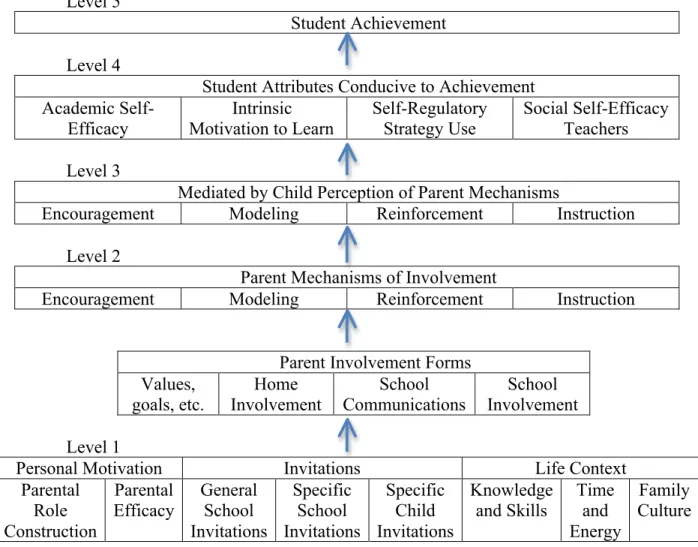
income families. The researchers used the Hoover-Dempsey and Sandler model of parent involvement. The model contains variables that examine parent involvement from the perspectives of the parent, and includes five levels that inform parents’ initial decision to become involved in their child’s education (see Fig. 1). Levels one and two of the model address the parent’s decision-making process; levels three, four, and five delineate how parent involvement affects student achievement.
The researchers examined parents’ beliefs about their roles in their children’s learning, and how their prior experiences with schools shaped their involvement (Whitaker & Hoover-Dempsey, 2013). Two research questions were investigated in the study:
1. How are parents’ valence toward school, perceptions of student invitations, teacher invitations, school expectations, and perceptions of school climate related to their beliefs about their role in supporting their children’s education?
2. Do parents’ current experiences with schools – reflected in contextual invitations to involvement – influence their role beliefs more than their prior experiences with schools, as reflected in their valence toward schools? (Whitaker & Hoover-Dempsey, 2013, p. 80).
The conclusion of this exploratory study “highlighted the need for continued investigation into parental engagement, especially in schools serving low-income
communities” (Whitaker & Hoover-Dempsey, 2013, p. 95). Knowing how parents were involved in the school was another finding from the study. Whitaker and Hoover-Dempsey (2013) indicated that conducting interviews would allow parents to describe their
relationships and experiences in the school.
25
achievement of their child. The Hoover-Dempsey and Sandler model in Figure 1 identifies the constructs that are central to why parents become involved. Level 1 of the model focuses on what motivates parents to become involved in their child’s education. Level 1.5 focuses on the types of involvement some families choose. Level 2 focuses on the learning
mechanisms parents engage in during the course of involvement. Level 3 focuses on how students perceive their parents’ involvement. Level 4 focuses on the important student proximal learning outcomes that are influenced by parents’ involvement. Lastly, Level 5 focuses on student achievement.
Level 5
Student Achievement Level 4
Student Attributes Conducive to Achievement Academic
Self-Efficacy
Intrinsic Motivation to Learn Self-Regulatory Strategy Use Social Self-Efficacy Teachers Level 3
Mediated by Child Perception of Parent Mechanisms
Encouragement Modeling Reinforcement Instruction
Level 2
Parent Mechanisms of Involvement
Encouragement Modeling Reinforcement Instruction
Level 1.5
Parent Involvement Forms
Values, goals, etc. Involvement Home Communications School School Involvement
Level 1
Personal Motivation Invitations Life Context
Parental Role Construction Parental Efficacy General School Invitations Specific School Invitations Specific Child Invitations Knowledge and Skills Time and Energy Family Culture
26
Correlation between Parent Engagement and Student Achievement
In the meta-analysis study of K-5 parental involvement programs by Jeynes (2005) included 19 studies among hundreds that met rigorous standards of research. This research included: (a) parent activities outside of school, (b) academic achievement measured as an outcome, and (c) treatment and control groups created by random assignment. The specific interventions used in this study to measure parent involvement were:
• Collaborative reading: Parents and children reading together as a structured activity. • Education and training: A program designed to provide parents with appropriate
teaching or support, skills-based activities, materials, or information to be used with their child outside the school day.
• Education and training in math: A program to provide parents with specific math
skills to be applied to activities, materials, or information used with their child outside the school day.
• Education and training in science: Parents participate in workshops designed to
guide them in engaging in science activities with their child.
• Math games: Parents use card and dice games to illustrate specific math skills. • Reading games: Non-specific, parent-child game activities that involve reading
tasks.
• Parent rewards and incentives: Parents provide rewards or incentives to their child
27
approximately half a standard deviation higher than the academic performance of the children in the control group. More students performed at a higher level when parents were engaged in the listed interventions.
Ferguson (2005) found that some parenting programs produce desired improvements in achievement and some do not. Specific interventions may have different effects in various school settings. Therefore, he concluded, strategies must differ based on the particular population that the school serves, they must be reevaluated as populations change, and they must build the capacity for parents to improve their own situations. Loury (2002) noted that low-income families are often stigmatized by assumptions of inferiority by school staff. Parents need to believe that the school cares about and respects their children before they will consider getting involved at the school. An understanding of perceptions, roles, possible responsibility reconstructions, and culture shifts is needed before implementing a parent engagement program. The voices of parents, teachers, and administrators should be
recognized before the implementation of any new programs in order to meet the condition of partnership rather than assumed support (Brown & Beckett, 2007; Decker, Decker, & Brown, 2007).
28
to do outside reading, (e) parents attending or participating in school functions, and (f) to what extent there were household rules regarding school and leisure activities. The study included approximately 12,000 students in six racial groups: (a) mostly African American, (b) all African American, (c) mostly Asian American, (e) mostly Latino and Asian American, and (f) all Latino and Asian American (Jeynes, 2003). The researchers in these studies used four different measures of academic achievement to assess the effects of parental
involvement: (a) the overall components of academic achievement combined, (b) grades, (c) academic achievement as measured by standardized tests, and (d) other measures. Results for the African American participants revealed that all of the aspects of parental involvement had a significant positive influence on academic achievement, with parents checking
homework having the greatest impact.
29
student educational outcomes than some of the other aspects of parental involvement; (b) the broad association between parental involvement and school achievement was one of the most encouraging patterns to emerge from the study; and (c) “The results of this study are
particularly important, given the achievement gap between urban students and their
counterparts in non-urban areas. Indeed, this study’s findings suggest parental involvement may effectively contribute to reducing that gap” (Jeynes, 2007, p. 104). According to these results, parents who convey high expectations for success in school have greater impact on their children’s achievement. If parents are more involved with their children’s learning, the expectation of student achievement is high. This report was also encouraging in that it projected the end of or a reduction in low achievement among African American students. Spera (2006) addressed adolescents’ perceptions of parental goals, practices, and styles in relation to their motivation and achievement. His study revealed that adolescents’
perceptions of their parents’ involvement in their schoolwork were positively and
30
other studies on parental engagement thus far reviewed, this study indicated that for African American youth, “peer influences play a stronger role than parenting behaviors in predicting academic achievement among African American adolescents” (p. 535). The participants in this study consisted of 75 African American and 80 European American adolescents selected from a larger United States sample of 556 adolescents from six public high schools in the Midwest. The study did not identify the socioeconomic status of the participants, but did specify the family structure, education of the family, and the two ethnic groups of European American and African American as measuring factors. European American fathers were more formally educated than the African American fathers, and African American fathers had a greater percentage (65%) of children living in a household without two parents than did the European American fathers (50%). The absence of African American fathers has more serious educational consequences for black youth that for white youth (Jeynes, 2015). Although Bean et al. (2003) reported peers having a stronger role in predicting academic achievement among African American adolescents, their findings also noted that maternal support related significantly to academic achievement.
African American student achievement by gender has a significant role in parent involvement for the African American family. In general, African American girls do perform better in school than boys. Additionally, African American girls are less likely to drop out of high school before graduating that African American boys (National Center for Education Statistics: NCES, 2014a). Similarly, African American girls between the ages of 18 and 24 are also more likely to be enrolled in college as compared to African American boys (NCES, 2014b).
31
Studies have produced positive empirical evidence suggesting that parental
involvement in children’s education is strongly associated with student achievement (Fields-Smith, 2005). Henderson and Mapp (2002) maintain that:
The evidence is consistent, positive, and convincing: families have a major influence on their children’s achievement in school and through life. This fourth edition of Evidence confirms that the research continues to grow and build an ever-strengthening case. When schools, families, and community groups work together to support learning, children tend to do better in school, stay in school longer, and like school more (p. 7).
Many studies revealed that students with involved parents, regardless of income or background, were more likely to earn higher grades and test scores, and enroll in higher-level programs, be promoted, pass their classes and earn credits, attend school regularly, have better social skills, show improved behavior and adapt well to school, and graduate and go on to postsecondary education.
Benefits of parent engagement for students.
The first area of benefit to students is in school discipline and behavior. Sheldon and Epstein (2002) employed a quantitative, two-part survey at 47 schools in a range of
socioeconomic levels and regional areas, and found that with increased family and
community involvement, regardless of prior rates of discipline, the number of office visits, detentions, and suspensions decreased. The most effective involvements were parenting skills and consistent volunteering at the school. While discipline and structure are essential for teaching and learning to be consistent and effective, more research has focused directly on how parent involvement can increase academic achievement among urban students (Jeynes, 2005).
32
benefit when parents share their knowledge of their children’s strengths, needs, experiences and problems, so that appropriate social and academic programs can be implemented in the classroom (Henderson et al., 2007; Jeynes, 2005; Lawrence-Lightfoot, 2003). This is
especially important for urban students from low-income families who have the most to gain if school communities work for greater and more meaningful parent involvement (Smalley & Reyes-Blanes, 2001). Equity in schools can be built only through the school’s work with parents (Ferguson, 2005). Especially in low-income, urban schools where enrollment is marked by diverse cultural, racial, and ethnic backgrounds, administrators and teachers need to work towards culturally relevant teaching, or connecting curriculum to students’ home lives to keep students engaged and enrolled, especially at the middle school level.
Westat (as cited in Wherry, 2010) stated that “in schools where teachers reported high levels of ‘outreach’ to the parents of low achieving students, reading and math test scores grew at a rate 40% higher than in schools where teachers reported low levels of outreach” (p. 3). The Westat study also indicated that when fathers are involved, children do better in school. In a similar article examining parent involvement by fathers, Tobias (2009) reported that fathers play a vital role in the positive school experiences of children. In 2009, the National Center for Fathering and the National Parent Teacher Association reported:
33
Bodnar (2009) supported this view by suggesting that when a father is involved with his child’s education, the mother will be able to do other things, such as volunteer. A father being involved in a child’s education also indicates that the father is involved in the child’s life, an important factor in itself. Bodnar (2009) further suggested that students perform better when they have their father as well as their mother involved, even if they do not live together.
Carey (2004) maintained that parent involvement in middle school academics and other activities is more important now than ever before, because research suggests that parental involvement of any kind results in benefits to both the school and the child, with higher grades, higher standardized test scores, higher graduation rates, a greater likelihood of the child attending college, and a more positive attitude from the child. These results are consistent regardless of the parents’ own educational achievements, ethnic background, cultural or language challenges, and socioeconomic status.
When parents are appropriately involved, children’s academic achievement improves and other beneficial outcomes result, such as regular attendance, good behavior, and
improved teacher efficacy (Epstein, 2001). Research has shown that parent involvement has a significant influence on student achievement (Barnard, 2004; Fan & Chen, 2001).
Additionally, students in secondary schools earn higher grades in English and math, attain better reading and writing skills, have better attendance, and exhibit fewer behavior problems when parents are involved (Epstein, 2008). “Data from the National Assessment of
34
achievement tests between students with involved parents and students whose parents were not involved (Dietel, 2006). Aside from the NAEP data, two major sets of models have been proposed to identify the benefits of parent involvement.
Pomerantz, Moorman, and Litwack (2007) theorize that “in the skill development models, parents’ involvement in children’s academic lives improves children’s achievement because of the skill-related resources it provides children” (p. 376). Pomerantz et al. defined skill-related resources as “cognitive skills, such as receptive language capability and
phonological awareness, as well as metacognitive skills, such as planning, monitoring, and regulating the learning process” (p. 376). The researchers asserted that when parents are involved in children’s academic lives, they may gain useful information about how and what children are learning in school, and accurate information about children’s abilities
(Pomerantz et al., 2007).
In the motivational model, “the central idea is that parents’ involvement enhances children’s achievement because it provides children with a variety of motivational resources that foster children’s engagement in school” (Pomerantz et al., 2007, p. 376). The
researchers asserted that when parents are involved in their children’s academic lives, they highlight the value of school and provide their children with active strategies for dealing with school and the challenges it presents (Pomerantz et al., 2007). It is likely that parents’
involvement in children’s schooling enhances children’s achievement through both skill and motivational development.
35
the academic achievement of African American 12th grade youth, Jeynes (2005) found that parent involvement is beneficial in student achievement. The results indicated that “having highly involved parents contributes as a predictor to the academic outcomes for African American senior students” (p. 264). African American students with highly involved parents had an advantage over those whose parents were less involved. The average difference in the scores was 4.08 points, with the smallest difference seen in the Reading test and the largest difference in Social Studies (Jeynes, 2005).
Benefits of parent engagement for parents.
Parent involvement in schools has been shown to result in positive changes among parents (Sheldon & Van Voorhis, 2004). Parental benefits include an increased sense of self-efficacy, increased understanding of the school’s program, more motivation to continue their own education, and greater appreciation for the role they play in their child’s education (Plevyak, 2003; Wherry, 2003). Parental involvement is beneficial to families because it improves parent-teacher relationships and increases parent self-confidence in helping children succeed in school (Hill & Taylor, 2004). Additionally, parent involvement promotes a positive experience for parents, who feel encouraged to build their own self-image and their parenting skills (Epstein, 1995; Hill & Taylor, 2004). Collaboratively, parents benefit from other parents with similar ideas by being engaged in school. Parents gain an awareness of the community resources available to them. Parents benefit from volunteering because it brings “awareness that parents are welcome and valued at school” (Epstein, 1995, p. 729).
36
The school also benefits by actively involving parents and the community; schools tend to establish better reputations in the community and experience better community support. Schools that encourage and involve parents usually have higher quality programs than schools that do not involve parents. Parent involvement is not a luxury; it is an integral component of student achievement and school reform. Decades of research studies on the effect of meaningful parent involvement programs in schools have shown that when parents are involved, students achieve more, regardless of socioeconomic status, ethnic/racial background, or the parents' education level. When parents are involved, students exhibit more positive attitudes and behavior. Children from diverse cultural backgrounds tend to do better when parents and professionals collaborate to bridge the gap between the culture at home and the culture at the learning institution. Schools that work well with families have better teacher morale and higher ratings of teachers by parents. Additionally, school programs that involve parents outperform identical programs without parent and family involvement.
In a comprehensive school reform and school improvement study in Sacramento, California, teachers were trained to conduct home-school visits for students who were scheduled to be in their classes that year. During the first visit, teachers focused on building a trusting relationship with the parents. Eventually, as the visits continued, teachers
discussed ways that parents could be supportive of education at home. The schools involved in the study showed a decrease in discipline problems, an increase in student daily
37
(Epstein, 1995). When parents are involved, teachers develop an understanding of the families and the children, such as the child’s cultural background and parents’ expectations, concerns, and goals for their children (Hill & Taylor, 2004). This understanding also allows for increased positive and open communication for teachers when working with diverse parent groups (Epstein, 1995).
Barriers to Parental Engagement
Although parental involvement has been shown to positively affect student achievement, reduce problem behaviors, and create a positive sense of self-efficacy for achieving in school, parental involvement tends to decline in secondary schools (DePlanty, Coulter-Kern, & Duchane, 2007). Various factors influence the level of parental
involvement. Parental involvement during adolescence decreases due to a lack of social networks for parents and a lack of financial stability (Sheldon, 2003). Parents identified other barriers that prevent them from being more involved in their child’s education, including inconvenient meeting times, transportation, child care, communication from the school, and knowledge of school rules and policies (Johnson, Pugach, & Hawkins, 2004).
Galassi and Griffin (2010) stated, “parents’ perceptions regarding life context variables (skills and knowledge, and time and energy) also influence how and if parents are involved in the school” (p. 88). Parents may be motivated to be involved in school activities if they perceive that they have the skills and knowledge to be effective and helpful, whereas parents’ perceptions about the demands on their time and energy (e.g., work and family
38
in terms of feeling out of place, experiencing real or perceived discrimination, or having a sense of estrangement when interacting with educators” (p. 86). School personnel may have the misconception that African American parents are apathetic, disinterested, or indifferent to their child’s education and may not work to encourage these parents to participate in school (Bloom, 2001). Similarly, “teachers often perceive African American parents as uninvolved and disinterested in their children’s education” (Fields-Smith, 2005, p. 130). Conversely, these parents may feel as if they don’t have anything to offer the school (Thompson, 2003b).
Brandon (2007) identified nine factors that erect barriers to parent participation: (a) cultural and/or linguistic diversity, (b) economics, (c) family composition, (d) parent
educational level, (e) home communication, (f) parent-teacher interaction, (g) school-parent interaction, (h) success of the child in school, and (i) personal constraints (e.g., lack of time, lack of transportation, lack of child care). The interaction of these barriers can be complex and may create a cycle of noninvolvement where parents retreat and educators do not engage the parents (Brandon, 2007). Similarly, a recent study of primarily African American middle school parents found that parents’ demanding work schedules and lack of paid leave prevented them from participating in school activities (Murray et al., 2014)
Parents commented on the negative stereotypes that many teachers had of African American students, and how these negative perceptions influenced the interactions between African American students and their teachers. African American are less likely to engage in equitable partnerships when they perceive that the school does not welcome parent
39
negative school climate to include discipline and safety problems and ineffective leadership can reduce parents’ desire to spend time at the school (Murray et al., 2014).
Parents stated that “increased involvement could dispel many of the myths that exist regarding African American students and their families (Archer-Banks & Behar-Horenstein, 2008, p. 150). Parents’ viewpoints on the barriers to parental involvement echoed what researchers have asserted. Parental involvement is crucial to children’s successful
educational experiences at all grade levels (Abdul-Adil & Farmer, 2006). However, Park and Bauer (2002) suggest that parents have to learn to be engaged in their children’s educational experiences regardless of ethnicity.
The complexity of family arrangements today and the vast socio-economic and cultural differences among classroom teachers, children, and families further prevent positive
relationships from forming. Factors that prohibit urban parents from engagement with their child’s school may include: language barriers, lack of transportation to and from the school, lack of childcare for siblings at home, personal negative associations with school, and feelings of inadequacy in the content areas (Norton & Nufeld, 2002). When schools do not consider parents’ needs, low-income parents often feel removed from the school and begin to develop a competing rather than complementary mentality (Hoover-Dempsey, 1997).
40
Difficulties begin due to disparities between school and home environments. During early childhood education, the issue of school readiness begins with disparities in the knowledge with which students arrive at school, and the learning gaps only continue to increase as children get older (Ferguson, 2005). Potential contributions to school readiness that can be missing in low-income, urban homes are:
nurturance (expressions of love, affection and care), discipline (responses to behaviors that parents regard as inappropriate), teaching (strategies for transmitting information or skills to the child), language (the amounts and characteristics of verbal communication with the child), and materials (books, recordings and other materials to support learning) (Ferguson, p. 9).
As a result of these limitations, minority, low-income, urban students may begin school behind their peers on many levels. However, Jeynes (2005) found that the most important influences in urban settings on student success were parental styles and expectations. The findings indicate that if parents are successful in providing emotionally stable and stimulating environments at home, the lack of financial resources and educational levels is minimized (Davis-Kean, 2005). This suggests that there exist more subtle ways in which parents influence their children than the more direct factors such as their level of income, their years of schooling, or their ability to directly engage in students’ academic work. Finally, parents may have their own personal negative histories associated with schools, teachers, and administrators in general, rather than with the particular school at which their child is
enrolled (Lawrence-Lightfoot, 2003). These personal biographies may cloud parents’ ability to set aside their own issues, shortcomings, or negative experiences with schools from their child’s current experiences, preventing parents from attending school events or
41
regularly with parents and provide positive, constructive feedback that reflects individual knowledge of the students’ abilities (Lawrence-Lightfoot, 2003).
Koonce and Harper (2005) discussed the barriers that African American parents face when they try to collaborate with schools. They reported that parents felt unwelcome in their children’s school and that the teachers related to them with hostility. The authors
commented that some schools are resistant to implementing programs to increase parental involvement, which complicates the problem of institutionalizing parent participation. If parents do not feel welcome in the school building, the probability that they will ask for or provide help for their children is small.
Some parents themselves have had negative personal experiences in school that cause them to be reluctant to come into school (Hoover-Dempsey et al., 2005). If they feel uncertain about how to do the math, uncomfortable being in the building because of past negative experiences with school personnel, or have experienced hostility expressed by school staff, parents will probably not want to come into the school facilities. Smalley and Reyes-Blanes (2001) suggested that actively involving African American parents in their children’s education remains one of society’s greatest challenges. The study suggested non-traditional methods of involving parents, such as training them away from the school setting. Fields-Smith (2005) suggested that educators must consider alternate, less visible ways for parents to be involved in their children’s schooling. Lewis, et al. (2008) said that educational leaders must be willing to put aside traditional and passive approaches to parental
42
While there are many reasons for parents to visit schools, there are probably just as many reasons why parents do not visit schools. They may feel unable to negotiate the system; they may be less educated and may feel intimidated by the school environment, or they may feel socially out of place (Molland, 2004). These barriers often outweigh the widely publicized benefits of educational involvement, and exacerbate weak home-school connections between African American parents and schools (Thompson, 2003b). Because of these barriers, parents become more disenfranchised from the educational system.
Henderson and Mapp (2002) argued that the way in which parents perceive school
invitations, demands, and opportunities for parent involvement are key factors that influence parent involvement.
According to Bodnar (2009), research supports strong parental involvement as a key to student success. Yet there are factors that determine which parents will be capable and eager to participate in their child’s education. While the research shows that there are economic and demographic issues that tend to affect parental participation levels, it is still important for schools to work on motivating all parents. Many parents are not sure how to get involved and many have had parents who were not involved in their education. Once they know the importance of participating, and what they can do, they will be more likely to take an active role (Bodnar, 2009).