Original Research Article
How effective are planned teaching programmes regarding HIV/AIDS
amongst the adolescent girl students? A case study using Ludwig von
Bertanlaffy’s general system model
Mudabera Gulzar*
INTRODUCTION
Contended heart and happy mind resides in a sound and healthy body. This means one should value his/her health more than any other thing in this world. However, human body is the host of so many disease causing organisms and such disease causing agents are increasing with day by day. One such disease is HIV/AIDS. In fact, this is the
most dreadful and the severest disease affecting human beings in the present times. The misfortune lies in the fact that there is no cure and no vaccine for HIV/AIDS.1
AIDS stands for Acquired Immunodeficiency Syndrome. It is the last stage in the progression of disease resulting from viral infection known as Human Immunodeficiency Virus (HIV). AIDS is a serious condition that weakens ABSTRACT
Background: In the current times, HIV/AIDS is the most dreadful disease affecting human lives. The worst being that there is no cure or vaccine against it. Given this fact, a pre-experimental study was conducted to evaluate the effectiveness of planned teaching programme (PTP) and to assess the association of selected demographic variables with the pre- and post-test knowledge scores regarding HIV/AIDS among the adolescent girl students in a selected higher secondary school of Srinagar city.
Methods: The study is based on Ludwig von Bertanlaffy’s General System model. The sample consists of 50 adolescent girl students who are studying in 9th and 10th classes. This sample was chosen using non-probability (convenience) sampling technique. The tool used for data collection was self-structured questionnaire.
Results: The study showed that 10th class students’ HIV-related knowledge was more than that of 9th class students. Also, students with educated parents have more knowledge of HIV/AIDS. However, there was no significant difference in the HIV knowledge level of rural and urban areas students. The mean post-test knowledge score (39.12) was significantly higher than mean pre-test knowledge score (12.78). Furthermore, an association was found between post-test HIV/AIDS knowledge scores and demographic variables such as educational status of students, habitat, educational and occupational status of parents.
Conclusions: The results showed the importance of sex education. It needs to be provided to the adolescents, particularly girls, so that they can safeguard themselves from HIV and other STDs/STIs. Also, awareness programmes should be conducted at all levels targeting whole population groups to decrease its incidence. Lastly, mass media should be involved actively in increasing awareness about HIV/AIDS amongst the public.
Keywords: HIV/AIDS, STD/STIs, Planned teaching programme, Pre-test, Post-test, Ludwig von Bertanlaffy’s General System Model, Girl adolescent students, R P School Mala Bagh
Sher-i-Kashmir Institute of Medical Sciences, Soura, Jammu and Kashmir, India
Received: 02 August 2018
Revised: 23 September 2018
Accepted: 25 September 2018
*Correspondence:
Mudabera Gulzar,
E-mail: [email protected]
Copyright: © the author(s), publisher and licensee Medip Academy. This is an open-access article distributed under the terms of the Creative Commons Attribution Non-Commercial License, which permits unrestricted non-commercial use, distribution, and reproduction in any medium, provided the original work is properly cited.
the body’s immune system leaving it unable to fight off illness. HIV attacks vital cells in the human immune system -mainly CD4 (helper T cells) lymphocytes, macrophages and dendritic cells- thereby, suppressing cell mediated immunity of a person, and thus increasing its risk to opportunistic infections. HIV is a member of genus Lentivirus, part of the Retroviridae family. Infection with HIV occurs when it enters the host CD4 (T) cell and causes this cell to replicate viral RNA & viral proteins, which in turn invade other CD4 cells. Soon after its entry, the virus grows exponentially in the human body. Unfortunately, human body responds to this virus entry by the reduction in the number of circulating CD4+ T cells. This, in turn, activates CD8+T cell which reduce the development of the virus, thereby resulting in the slow progression of the disease. A circle of response and re-response is set between CD4+T cells and CD8+T cells.2 Ultimately these virus-fighting cells get depleted in the human body. This leads to HIV; and, from HIV to AIDS. This weakens the immune system and allows opportunistic infections to attack the human body. Since T cells are important to fight any disease, and because of their reduction and depletion the body cannot fight infections or kill cancerous cells. Eventually, the immune system gives up. It should be noted that the incubation period for HIV/AIDS is 10 to 11 years. So far, two kinds of HIV virus have been characterized: HIV-1 and HIV-2. Medical sciences report HIV-1 to be more viral and infective than HIV-2.
There are three main stages of HIV infection: (1) acute infection, also known as primary HIV or acute retroviral syndrome, is the initial period following the contraction of HIV. Symptoms of this stage include fever, large tender lymph nodes, throat inflammation, a rash, headache, and/or sores of the mouth and genitals, and gastrointestinal symptoms such as nausea, vomiting or diarrhea. The duration of the symptoms varies, but is usually one or two weeks. These symptoms usually remain no-recognizable in this stage; (2) clinical latency, also known as asymptomatic HIV, or chronic HIV, is the second stage of the natural history of HIV infection and can last from about 3 to 20 years. The main symptoms experienced by people in this stage are fever, weight loss, gastrointestinal problems, muscle pains, and persistent generalized lymphadenopathy, characterized by unexplained, non-painful enlargement of more than one group of lymph nodes (other than groin) for over 3 to 6 months. Most HIV-1 Infected individuals have a detectable viral load and in the absence of treatment will eventually progress to the final stage i.e., AIDS; and, (3)
Acquired ImmunoDeficiency Syndrome, or AIDS in short, is the final stage of HIV virus. The most common signs include: pneumocystis pneumonia, cachexia in the form of HIV wasting syndrome, and esophageal candidiasis, recurring respiratory tract infections, high fever, arthralgia (joint pain), myalgia (muscle pain), unexplained severe weight loss, chronic diarrhea, fungal nail infections, pulmonary tuberculosis, skin and mucous
membrane lesions, visual problems, and neurological infections.
This disease has spread across the globe. For instance, in 2016, about 36.7 million people were living with HIV. However, the number of new HIV+ cases was less by 3 million in 2016 as compared to 2015. Of all these HIV positive patients, most of them live in Sub-Saharan Africa. More than 3.2 million are under the age of 15 years. In 2013, 1.5 million people died from AIDS worldwide. In 2013, around 12.9 million people living with HIV (37% of the total) had access to anti-retroviral therapy. People living with HIV/AIDS in India are 2.39 million (0.31% are of 15 years age or older). This disease is not even sparing Jammu and Kashmir from its vicious grip. As per 2013 census, 3900 people are living with AIDS in Jammu & Kashmir. In May 2017, this figure stood at 4175 [Jammu (1482), followed by Kathua (793), Samba (482), Udhampur (243), and Rajouri (241)] (Source: J&K State AIDS Control Society). For Kashmir region, including Leh, the prevalence of HIV is quite low as the number of HIV patients in these regions are 228, including 58 non-locals. Causes of its spread across J & K include: greater use of drugs, followed by sexual transmission.3
The big questions that arise here are: How does this virus enter into a human body? How can one detect the presence of this virus in a human body? And is it treatable? If not, then what are preventive measures which need to be carried out in order to stop its replication and spread? The answer lies in the fact that HIV/AIDS gets transmitted primarily through contaminated blood transfusions, unprotected sex with infected partner, hypodermic needles, and from mother to her child during pregnancy, delivery, or breastfeeding. However, it is not transmitted through hugging, kissing, shaking hands, breathing the same air or exchanging clothes, etc. with someone who is HIV positive person. Also, the myth that some body fluids, such as saliva and tears transmit HIV is baseless.
HIV/AIDS is diagnosed through laboratory testing and then staged based on the presence of certain signs or symptoms. The common diagnosed tests for HIV/AIDS are: ELISA (enzyme-linked immunosorbant assay), Western blot test, viral load CD4/CD8, and nucleic acid test.
opportunistic infections is the only treatment of HIV so far.4
Until a vaccine is developed for HIV/AIDS prevention, “EDUCATION” is its only vaccination. Other preventive strategies are: (i) Pharmaceuticals or pharmaceutical intervention in the form of microbicides for sexually transmitted diseases, Pre and post-exposure prophylaxis, and Anti retroviral drugs; (ii) Social strategies- sex education, needle-exchange programmes, safe injection sites, safe sex, serosorting, sexual abstinence, use of low dead space syringes, etc.; (iii) Pre-exposure strategies includes a daily dose of medications such as Tenofovir with or without emtricitabine, universal precautions within health care environment, physician prescription of syringes, and supervised injection facilities; (iv) Post-exposure strategies- A course of anti retroviral administered within 48-72 hours after exposure to HIV. A single dose of Zidovudine reduces the risk of subsequent infection; (v) mother to child preventive strategies- supplying bottle feed to the child of a HIV infected mother, extended anti-retroviral prophylaxis should be given to the infant. This epidemic has an extra ordinary burden on already troubled health sector. Besides, it has developed a social stigma and hence is more of a social problem. The world AIDS Day is celebrated on 1st of December every year.
Because of unavailability of vaccine against HIV virus, the only way to reduce or stop its spread is to raise awareness against this disease. This is the main reason of carrying out this analysis. Specifically, I made an attempt to find out how awareness camps and knowledge dissemination regarding this deadly disease will help to check its spread. In such a pursuit I tested the effectiveness of PTP on 50 adolescent girl students of R P School Malla Bagh, Srinagar. The results show that injected knowledge programmes have a significant impact in raising awareness about this lethal disease among the girl students.
This study becomes more important because existing literature suggests that in spite of its greater need; very limited research has been done on HIV/AIDS. At the local level, a study entitled “awareness of HIV/AIDS in a remotely located conservative district of Jammu and Kashmir (Kargil)” was conducted.5
The author concluded: less awareness about HIV/AIDS, with majority of respondents having no or false perceptions about HIV/AIDS. At the national level, studies related to the knowledge of students regarding HIV/AIDS and effectiveness of related awareness camps generally report lack of knowledge among students regarding HIV/AIDS.6-9 These studies also showed that adolescents, particularly girls, have less or no knowledge about its transmission and prevention. The adolescents also miss on various aspects of reproductive and family planning methods and health indicators of physical maturity in girls and boys. Similar conclusions are drawn from international studies and reports.10,11 Other studies
showed the effectiveness of educational programs regarding HIV/AIDS.12,13 According to UNAIDS report on the global AIDS epidemic, 50% of persons living with HIV were infected during adolescence and young adulthood. 14 Another report shows that half of the adults aged 15 years or above living with HIV are women whereas the ratio between women and men is 3:1.15
Aim of the study
To assess the pre test knowledge regarding HIV/AIDS amongst the adolescent girl students of R P Mala Bagh School, Srinagar, J & K.
To evaluate the effectiveness of planned teaching programme on increasing their knowledge regarding HIV/AIDS.
To assess the association of selected demographic variables with the pre- and post-test knowledge scores.
Assumptions of the study
Study assumes that adolescent girls (14-16 years) studying in 9th and 10th classes at R P Malla Bagh School, Srinagar may have some knowledge regarding HIV/AIDS.
The sampled girls may not have adequate knowledge regarding HIV/AIDS.
Research (Null) hypothesis of the study
There will be a significant improvement in knowledge regarding HIV/AIDS after planned teaching programme at 5% level of significance.
There will be a significant association between demographic variables and the knowledge about HIV/AIDS amongst the adolescent girl students.
Operational definitions
Effectiveness: The degree to which something is successful in producing a desired result.
Planned teaching programme: It is defined as scheduled or arranged or organized teaching programme regarding HIV/AIDS.
Adolescent girls: Girls aged between 14-16 years studying in 9th & 10th class at R.P School Malla Bagh, Srinagar.
Awareness: The state of making the adolescent girls (14-16 years) aware or conscious about HIV/AIDS.
METHODS
Conceptual framework
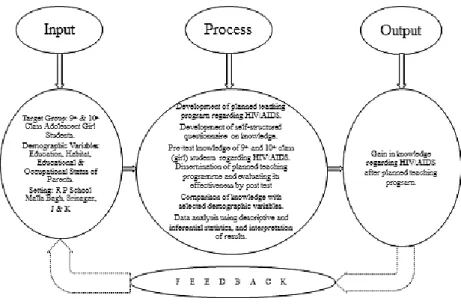
the effectiveness of planned teaching programme on knowledge regarding HIV/AIDS among adolescent girls in a selected higher secondary school of Srinagar, the
details of System Model used in this study are shown in Figure 1 below.
Figure 1: Schematic representation of Ludwig Von Bertanlaffy’s General System Model. Note: Feedback was not used in this study.
Figure 2: Research design- a schematic representation of the research approach.
Data
A self-structured questionnaire was prepared to assess the knowledge of school adolescent girls regarding HIV/AIDS. The sample for the present study were adolescent girls of 9th and 10th class of R P School Malla Bagh, Srinagar, Jammu and Kashmir and sample size was 50. The self-structured questionnaire consisted of multiple choice items. The self-structured questionnaire
were present at the time of data collection and who were interested to participate in the study were surveyed. A verbal informal consent was obtained from participants the before answering the questionnaire and the usual privacy-maintaining ethics in filling the questionnaire were maintained.
This research is quantitative in nature. The research follows one group pre test-post test design. Such a design is considered appropriate to assess the effectiveness of planned teaching programme regarding HIV/AIDS. The details are given in Figure 2 above.
Description of the research tool and variables under study
The content validity of the research tool used in this study was established by three experts from the field of nursing education. The tool consists of two parts/sections (A & B) with a total of 50 items. Section A includes items related to the demographic data, which consists of five items, i.e., age, educational status, habitat, education of parents, and occupation of parents. Section B Includes items related to assess the knowledge of sample adolescent girls regarding HIV/AIDS. The knowledge aspects are already discussed under the topics causative agents, mode of transmission, clinical manifestation, diagnosis, treatment, and prevention. Descriptive statistics (frequencies, percentages, range, mean and
standard deviations) and paired t test was used to examine the relationships between variables and to answer the said research questions.
RESULTS
In this section, the estimated results showing the relationship of pre- and post-test knowledge awareness related to AIDS among adolescent girls with various variables used in the study are given. The results are based on a sample of 50 adolescent girls. Out of this 50 sample size, 24 girls (48%) belong to the rural area and 26 (52%) live in the urban habitat. 50% of the students (i.e., 25 girls) are from 9th class and the remaining 50% (25 girls) are in the 10th class of their studies. Fathers of these 50 girl students have either passed 12th class (20 students have father’s education equivalent to 12th
pass) or are graduates (22 students) or post-graduates (8 students have post-graduate fathers). Contrary to this, 10 girl students (20%) have illiterate mothers, 19 (38%) have 12th pass mothers, 16 (32%) have graduate mothers, and only 5 girls (10%) have post-graduation qualified mothers. In terms of their parents’ occupation, the fathers of 16 girls (32%) are businessmen, 18 girls (36%) fathers are govt. employed and 16 girls (32%) have fathers working as labourers, while only 12 (i.e., 24%) have govt. employed mothers and the rest 38 girls (76%) mothers are house-wives. The main results are given in Tables 1 to 6 below.
Table 1: Comparison between pre-test and post-test AIDS knowledge scores (n=50).
Knowledge Mean Standard Deviation Median Minimum Maximum Range
Pre-test 12.78 3.112 12 8 17 9
Post-test 39.12 1.637 39 36 42 6
Table 2: Comparison between pre-test and post-test AIDS knowledge results (n=50).
Knowledge Mean±Standard Deviation Mean difference P value
Pre-test 12.78±3.112
26.34 <0.001*
Post-test 39.59±1.637
*Shows significance at 5% level.
Table 3: AIDS knowledge score of sampled adolescent girls according to their habitat (n=50).
Characteristics Category Mean±SD Difference of means P value
Habitat Rural 12.58±2.992 0.378 0.672 (NS)
Urban 12.96±3.268
NS = Non-significant at 5% level of significance.
Table 4: AIDS knowledge score of sampled adolescent girls according to their education (n=50).
Characteristics Category Mean±SD Difference of means P value
Education of students 9
th
class 10.56±1.635
4.44 0.001*
10th class 15.00±2.614 *Shows significance at 5% level.
Table 1 above depicts that the pre-test and post-test knowledge scores of adolescent students studying in R P
pre-test mean score is 12.78% compared to the post-test knowledge score of 39.12%. The locational average i.e., median is also same in both the cases, while standard deviation and range of pre-test is greater than that of post test score. This clearly reflects the effectiveness of PTP among these sample adolescents. Comparing these pre-test and post-pre-test AIDS knowledge scores further, we see that there is a significant mean difference (at 5% level of significance) between them. Because the value of this mean difference is 26.34 and the p-value is less than 0.001 as shown in Table 2 above.
Next, we try to find out the association of demographic variables with post test HIV/AIDS knowledge of sampled girl students. Such results are reported in Table 3-Table 6 as given above.
Table 3 depicts that there is no statistically significant difference in the HIV/AIDS knowledge scores of students of urban and rural areas. However, the AIDS knowledge level of 10th class students is more than the knowledge level of 9th class students and this difference is even significant at 5% level of significance as shown in Table 4 above.
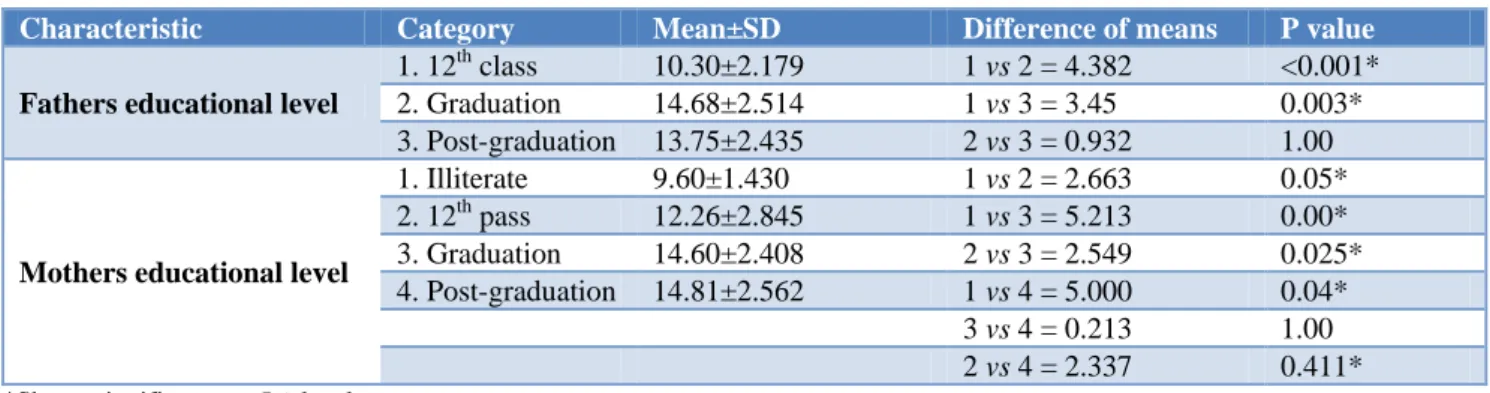
Table 5: AIDS knowledge score of sampled adolescent girls according to their parents education (n=50).
Characteristic Category Mean±SD Difference of means P value
Fathers educational level
1. 12th class 10.30±2.179 1 vs 2 = 4.382 <0.001* 2. Graduation 14.68±2.514 1 vs 3 = 3.45 0.003* 3. Post-graduation 13.75±2.435 2 vs 3 = 0.932 1.00
Mothers educational level
1. Illiterate 9.60±1.430 1 vs 2 = 2.663 0.05* 2. 12th pass 12.26±2.845 1 vs 3 = 5.213 0.00* 3. Graduation 14.60±2.408 2 vs 3 = 2.549 0.025* 4. Post-graduation 14.81±2.562 1 vs 4 = 5.000 0.04*
3 vs 4 = 0.213 1.00
2 vs 4 = 2.337 0.411*
*Shows significance at 5% level.
Table 6: AIDS knowledge score of sampled adolescent girls according to their parents occupation (n=50).
Characteristic Category Mean±SD Difference of means P Value
Fathers occupation
1. Govt. employee 14.11±2.564 1 vs. 2=0.326 1.000
2. Business 14.44±2.529 1 vs. 3=4.486 0.000*
3. Laborer 9.63±1.455 2 vs. 3=4.813 0.000*
Mothers occupation Govt. Employee 14.58±2.503 2.373 0.020*
House-wife 12.21±3.095 *Shows significance at 5% level.
Table 5 depicts that the HIV/AIDS knowledge level of those students the qualification of whose parents were graduation and post-graduation is more than the knowledge level of those students the qualification of whose parents were up to 12th standard only. However, although there are significant mean differences in the knowledge level of children of 12th educated vs graduate parents, 12th educated vs Post-graduate parents, illiterate vs 12th educated mothers, illiterate vs graduate mothers, illiterate vs Post-graduate mothers, and 12th educated mothers vs Post-graduate mothers; there is no such statistically significant (at 5% level of significance) difference in the knowledge level of children of graduate vs Post-graduate parents. Even the knowledge level of those students whose parents are less qualified is significantly less than the knowledge level of those students whose parents are more qualified.
Table 6 depicts that knowledge level of those students whose fathers were working in government sector and in business sector is more than the knowledge level of those students whose fathers were laborers. Also, the
knowledge level of those students whose mothers are working in Government sector is more than the knowledge level of those students whose mothers are house-wives. Except, in the case of girl children belonging to government employed or businessmen fathers the mean difference is statistically insignificant, in all other cases, it is significant at 5% level of significance.
DISCUSSION
The study was conducted to assess the pre test knowledge regarding HIV/AIDS amongst the adolescent girl students, to evaluate the effectiveness of planned teaching programmes on increasing their knowledge regarding HIV/AIDS and to assess the association of selected demographic variables with the pre and post test knowledge scores.
knowledge level of those students whose parents were educated was more than the knowledge level of those students whose parents were less educated or uneducated. Also, there was no significant difference in the HIV knowledge level of students of rural and urban areas. The mean post test knowledge score was significantly higher than mean pre test knowledge score with a mean difference of 26.34 and standard deviation difference of 1.47. An association was found between post test knowledge scores and demographic variables such as educational status of students, habitat, educational status of parents and occupation of parents. It was concluded that the knowledge of girls about HIV/AIDS was limited, which improved significantly with PTP to the mean level of 39.12. Before the PTP education session, the mean knowledge about HIV/AIDS among adolescent girls was 12.78. Such a finding is in line with the earlier important studies where the researchers measure a positive impact of curriculum-based sex and HIV education programs on sexual behavior of people, particularly youth.16
From statistical inferences it was concluded that there was no difference in pre test knowledge among students of rural & urban areas (Table 3). Pre test knowledge was lesser among 9th class students than 10th class students (Table 4). Pre and post test knowledge of those students whose parents were educated to a satisfactory level was more than those students whose parents were either illiterate or less educated (Table 5). Lastly, HIV/AIDS awareness of sample adolescent girls whose parents are working in the organized labour market is higher compared with the knowledge level of those girl students whose parents are either working in the unorganized labour market or are unemployed (Table 6).
It is therefore, important to provide sex education to adolescents so that they can safeguard themselves from STI. The awareness programmes should be done at all levels targeting whole population groups to decrease its incidence. Mass media should be involved actively in increasing awareness about HIV/AIDS among the common public.
CONCLUSION
The results showed that the knowledge of adolescent girls about HIV/AIDS was limited, which improved significantly with planned teaching programme. Before the education session, the knowledge about HIV/AIDS among adolescent girls was 12.78 on an average. This improved to 39.12 after the education session. This increase in HIV related knowledge depicts that such effective teaching progammes should be conducted to improve the awareness about HIV/AIDS.
In sum, provision of sex education to adolescents is the most important HIV prevention practice so as to safeguard people from STI/STDs and to prevent the spread of HIV/AIDS. Other HIV prevention practices include: standardized programmes and sex education
based curriculum across all levels of educational institutions; academic conferences and voluntarily NGO based workshops related to STDs/STIs/HIV/AIDS; parents need to discuss the sexual issues with their children; conducting awareness programmes about HIV/AIDS; implementation of planned teaching programmes to assist young people to keep them abreast with sex education and other preventive strategies; and, disseminating information and education on HIV/AIDS via SCHOOLS and school education.
In short, it is the need of the hour to conduct researches on HIV/AIDS in order to prevent people from becoming its victims. Information about attitudes and knowledge through regular surveys regarding HIV/AIDS is essential for better understanding of the dynamics of HIV/AIDS epidemic. Thus, awareness programmes about HIV/AIDS serve as the main preventive measures. This should be given to ONE AND ALL. Mainly the target groups i.e., adolescents, multiple sex workers, health care professionals, and other high risk behavior groups should be involved intensively. Therefore, given the objective of this study, it will help the youths in better understanding of the prevention that will keep them away from HIV/AIDS.
ACKNOWLEDGEMENTS
The present study is primarily based on our B.Sc. Dissertation submitted, in 2014, to Madr-e-Meharban Institute of Nursing Sciences & Research, Sher-i-Kashmir Institute of Medical Sciences, Soura, Srinagar, Jammu and Kashmir. The other members who participated towards this dissertation are Mustaqeem Jahan, Monika Thappa, Nuzhata Nazir, and Nahida Nazir. The research was carried out under the supervision of Mrs. Dilshada Wani, and under the tutorship of Mrs. Prakash Kour and Mrs. Zareefa Bano. The author wishes to thank Mrs. Mehmooda Regu, Dr. Rayees Ahmad, Mr. Manan, Mrs. Nazoora, and lastly, the Principal of R P School Malla Bagh, for their support and help in carrying out this study.
Funding: No funding sources Conflict of interest: None declared Ethical approval:Not required
REFERENCES
1. Deeks SG, Lewin, SR, Havlir DV. The end of AIDS: HIV infection as a chronic disease. Lancet (London, England). 2013;382(9903):1525-33. 2. Brenchley JM, Schacker TW, Ruff LE, Price DA,
Taylor JH, Beilman GJ, et al. CD4+ T Cell Depletion during all Stages of HIV Disease Occurs Predominantly in the Gastrointestinal Tract. Journal of experimental medicine. 2004;200(6):749.
4. Eramova I, Matic S, Munz M. HIV/AIDS Treatment and Care Clinical Protocols for the WHO European Region. 2007. Available at: http://www.who.int/hiv/ topics/idu/care/E90840.pdf. Accessed on 3 June 2018.
5. Ahamad M. Awareness of HIV/AIDS in a remotely located conservative district of Jammu and Kashmir (kargil): Results of a community based study. Indian J Community Med. 2002;27(1):12-8.
6. Dash R. Reproductive health Problems of Unmarried Adolescent Girls. J Adolescent Health and Related Issues. 2004;3(2):34-36.
7. Lal SS, Vasan RS, Sarma PS, Thankappan KR. Knowledge and attitude of college students in Kerala towards HIV/AIDS, sexually transmitted diseases and sexuality. The National Med J of India. 2000;13(5):231-6.
8. Shilpa V, Kumari, RS. Knowledge of high school students on Reproductive Health and AIDS. Indian Psychological Rev. 1999;52(1):14-23.
9. Yadav SB, Makwana NR, Vadera BN, Dhaduk KM, Gandha KM. Awareness of HIV/AIDS among rural youth in India: a community based cross-sectional study. J Infection Developing Countries. 2011;5(10):711-6.
10. Mlingo M, Ehlers VJ, Roos J. HIV and AIDS knowledge and sexual behaviours amongst secondary school learners in Harare, Zimbabwe. Health SA Gesondheid. 2012;17(1):#570.
11. UNICEF, UNAIDS and WHO (2002). Report on the global HIV/AIDS epidemic. 2002; Accessed from http://data.unaids.org/pub/report/2002/brglobal_aids
_report_en_pdf_red_en.pdf. Accessed on 3 June 2018.
12. Kirby B, Laris MPH, Lori AR. Sex and HIV Education Programs: Their Impact on Sexual Behaviors of Young People Throughout the World. Douglas J Adolescent Health. 2007;40:206–17. 13. Maphoso LS. An HIV/AIDS intervention
programme to change knowledge, attitudes and behavior of members of the South African police service. 2008; Available at: http://ulspace.ul.ac.za/ bitstream/handle/10386/118/Maphoso%20Thesis.pd f?sequence=1&isAllowed=y. Accessed on 3 June 2018.
14. UNAIDS. Report on the global AIDS epidemic, A UNAIDS 10th anniversary special edition. 2006; Available at: http://data.unaids.org/pub/report/2 006/2006_gr_en.pdf. Accessed on 3 June 2018. 15. UNAIDS/WHO. Report on the global AIDS
epidemic. 2008; Available at: http://www.unaids. org/sites/default/files/media_asset/jc1510_2008glob alreport_en_0.pdf. Accessed on 3 June 2018. 16. Kirby DB, Laris BA, Rolleri LA. Sex and HIV
Education Programs: Their Impact on Sexual Behaviors of Young People Throughout the World. J Adolescent Health. 2007;40(3):206-17.