VOLUME 15 ISSUE 1 (2017), 129 - 138
DESIGN PROBLEM-SOLVING: UNDERSTANDING THE SIGNIFICANCE OF ITERATIVE-BEHAVIOUR IN DESIGN
Danfulani Babangida Idi1, & Khairul Anwar Mohamed Khaidzir2
1,2 Faculty of the Built Environment,
UNIVERSITI TEKNOLOGI MALAYSIA
Abstract
Different concepts and definitions associate iterative-behaviour with repetition. This study consider iterative-behaviour simply means as the act that involve repetition of activities to improve the evolving design. The research further investigate the significance of designer iterative behaviour in design using sketching as the media for design interaction. The retrospective protocol analysis of the video data have identified and measure designer iterative behaviour in design, through a sketching and scoring sessions by five (5) final year undergraduate students and five (5) design tutors, all from the Department of Architecture, University of Technology Malaysia. The design and score were qualitatively and quantitatively compared using close group discussion and the Pearson correlation coefficient analysis. The result shows that in design problem-solving, designer iterative-behaviours were not statistically significant in determining the quality of design.
Keyword: Iterative-behaviour, modification, revisit, fixation, representation
INTRODUCTION
Iterative-behaviour simply means involving repetition of activities to improve an evolving design (Eppinger, Nukala & Whitney, 1997). Different concepts and definitions associate iterative-behaviour with repetition. Among research specifically conducted to measure iterated-behaviour uses straight observation, interviews, questionnaires, and protocol analysis with records of verbal and actions of real design activity (Stauffer & Ullman, 1991; Ericsson & Simon, 1980) To date, there has been little research specifically addressing issues of designer iterative-behaviour in design (Jin & Chusilp, 2006). Literature indicated repetitive actions such as physical actions, sign language, and eye movement, and sketching activities such as regroup, interpret, reorganize, generate, revise, refine and consolidate are all form of iterative-behaviour developing a design idea (Robbins, 1994; Gero, Tversky & Purcell, 2001; Suwa & Tversky, 1997; Schön, 1983; Goldschmidt & Smolkov, 2006; Safoutin, 2003). However, studies on the relationship of iterative-behaviour and sketch quality was slightly under researched. To this end, this study had successfully observed, identified and analysed some of the above classification of iterative-behaviour in design problem-solving that uses sketching as the design tool (Furlinger & Moore, 2008; Aguero et al., 2010).
THEORETICAL FRAMEWORK
In recent times information and communication have become key features in any technological advance. The use of sketch as a medium for communication that has begun in early civilization and has continued up to the present digital era for design ideation. This study adopted a method use to study designer behaviour by Adams and Atman (1999) using fresh and senior students in their engineering design coursework. The focus of their work was to identify designers' behaviours, such as the monitor, search, verify, plan, redefine and capture, and further related to design competency. The research method used was verbal protocol. Alternatively, this study used sketching and pin-up design assessment as design media and scoring tool. Coding categories were equally used to describe and measure the specified required behaviour. Although the result of their study suggest designer behaviour is a significant component of design activity, whereas this study suggests otherwise. Their result indicates measures of designer activities correlate positively with design success, and senior students tend to have more efficient behaviour than freshman students (Adams & Atman, 1999).
of iterative-behaviour in architectural design is under-researched. In addition, since sketch is a common visual thinking tool for design, the study of designer behaviour with regards to it potentially forms an important issue of research in the architectural design process. Findings and results of this kind of study can assist stakeholders in design domains to improve on existing manual and traditional methods of design problem solving. The main objectives of the study are to identify and investigate the role of designer iterative-behaviour in sketching using final year undergraduate architecture students and design tutors.
ITERATIVE-BEHAVIOR
According to Wynn, Claudia and John (2007), iterative-behaviour has five (5) attributes namely repetition, revisit, rework, modification and fixation. Repetition means the repetition of a process such as do it again, reworks, copy, delineation and revisit activities until you are satisfied with the outcome of your design. Copy activity means the act of duplication or reproduction direct or indirect transfer of drawings from the same sheet or between two sheets. Another aspect of repetition considered is delineation as the process of outlining or defining an object for further clarification by tracing, shading or colouring. According to Wynn, Claudia and John (2007), modification is the refinement of primary characteristics of secondary characteristics by enhancing and integrating of shapes, lines or texture together with maintaining the originality of the design. Also, by combining and amalgamating different parameters of various shapes to converge as well-defined design (Wynn, Claudia & John, 2007).
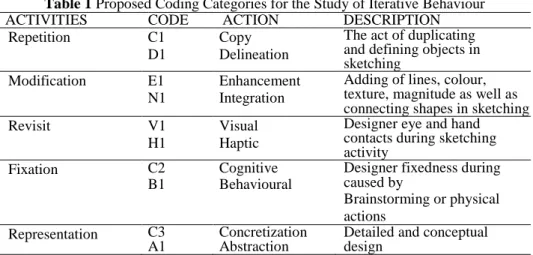
imagery and sketches (Abstract), schematic drawings and 3D modelling (Concrete). This study used the same concept to categorized designers embodiment design as Concretization while Abstraction represents the method of preliminary designs presentation. This study used the 5 classifications of iterative-behaviour illustrated by Wynn, Claudia and John (2007) and in Table 1 as the variables that will represent iterative-behaviour in the research.
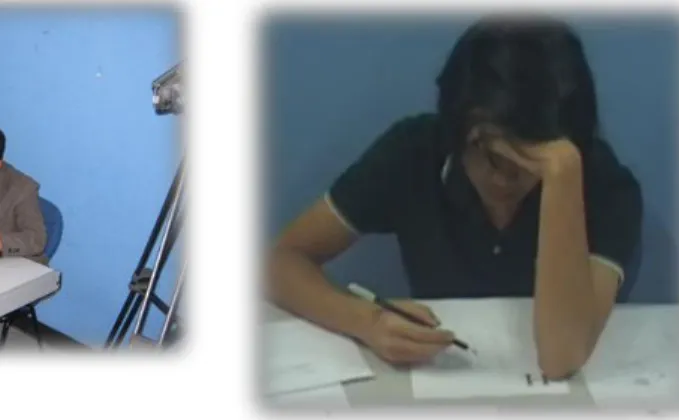
Figure 1 Designer Visual and Haptic Visitations during Sketching Activity
Figure 2 Designer Cognitive Fixation in Design
METHODOLOGY
Among methods of studying design activities are protocol studies, observation, interviews, content analysis, close group discussion and linkography. Eastman conducted the first protocol study in 1968 in which experienced architectural designers were asked to redesign the interior of a residential bathroom (Akin & Lin, 1995).
Protocol studies is classified into content oriented and process oriented studies (Gero, Tversky & Purcell, 2001) where the content-oriented approach is centred on the study of the drawings produced, such as sketch, CAD drawings, and models while, the process-oriented approach is the study of the process of production such as behaviours, verbal use, and gestures. Most recently an empirical protocol analysis was used to compare two design working environments, which were manual pencil and paper and the monitor, keyboard, mouse working environments, using FBS, Chi-square Test, and Paired-T test (Tang, Lee & Gero, 2010).
The aim of this research is to identify and investigate the significance of designer iterative-behaviour in design problem-solving. The research method and design include stages of experimental design, subject recruitment, conducting experiments, transcribing protocols, coding schemes, quantitative and qualitative comparisons using close group discussions with a supervisor and members of the research group, literature review and non-probabilistic experiment that established findings and possible options for future research.
EXPERIMENTAL DESIGN
The experimental design consists of planning, positioning, and distribution of experimental components such as designers, instruments with appropriate distribution of methods, processes, time, position of the instrument, space allocation and other facilities required for the study. The design consists of the designers positioning, design task and arrangement of supporting instruments. The designers are five highest grade score final year students of architecture selected based on their sketching ability, design grade and willingness to participate in the exercise. The selected subjects worked independently for a period between 45 to 60 minutes.
The design problem requires the design of an internet café for the international student of UTM. The café should have a range of shopping and commercial shops, along with some public, cultural and social space within the same site. It will also have some courts. There shall be adequate parking facilities and landscaping to provide the student with a sense of identity. Pedestrian paths and sidewalks shall ensure safety for the student from vehicular movement. The proposed design shall aim to evolve a more humane internet café through sustainable strategy, appropriate construction and technology, innovative planning, creative architecture, and sustainable environmental design. These shall be the main criteria for the evaluation of the project.
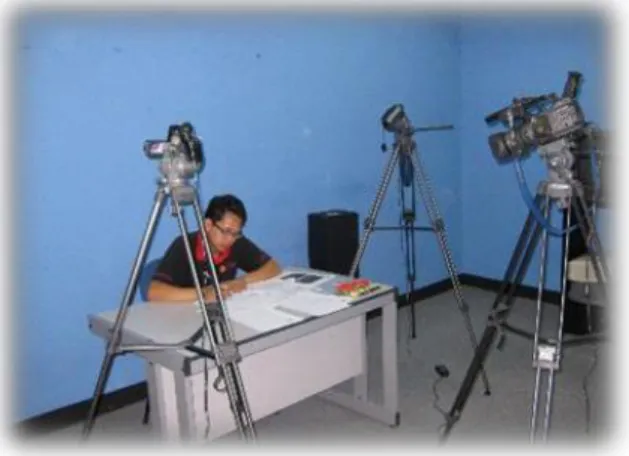
Experimental procedure akin to this research experiment was conducted using two high-level video cameras in the corners of the room20. One of the cameras points to the designer behaviour while the other to the sketching activity (Dorst & Cross, 2001). This study also used three video cameras, one digital photo camera, film editing computer system, stopwatch, bell, voice recorder, loudspeakers, drawing sheets and instruments, table and chair.
Figure 3 Experimental Set-up
DESIGN ASSESSMENT
In a similar context, a research study conducted an experiment that uses design tutors assessments as a method of obtaining the overall ‘quality of a design using five independent, skilled design teachers from the TU Delft Faculty of Industrial Design Engineering, all of whom are also practicing designers to assess the designs (Dorst & Cross, 2001). Below is the procedures of the design quality measurement set-up:
First, the assignment was read, and some of the relevant information were shown to the judges. The judges could ask questions for further clarification. Slides of all the concepts were shown in random order for 15 seconds, accompanied by a one-sentence summary to explain the way each of them works.
The scoring categories together with the design concepts are presented to the judges for scoring. The scoring categories are creativity, aesthetics, technical aspects and ergonomics, and business aspects. In the last run-through, the judges were asked to give total judgments of the concepts. Thus, the ‘total’ judgments is not a mean of the other scores, but a separate, ‘overall impression’ score (Dorst & Cross, 2001).
In this research, the assessment was done by experienced architectural design academicians from the architecture department at the Faculty of the Built Environment, Universiti Teknologi Malaysia. The drawings produced by the students was collected immediately after every experimental session and immediately presented to the assessors for scoring.
patterns, or detailed that constitute the design (Laseau, 2001). The second criterion is designer skills (Proficiency in communication) which represent the designer ability to communicate explicitly design ideas (Laseau, 2001). The third criterion is the progression (transformation) in design, which is the transformation of concept and detailed design (Laseau, 2001). The final criterion is the clarity of the information contained in the drawing (Laseau, 2001)
.
RESEARCH DATA
The process of data collection is classified into phases of different protocols starting with an introductory warm-up exercise before proceeding with both sessions (design and scores). The first category of data is the drawing while the second category is the information derived from video record based on the five variables that represent iterative-behaviour, i.e. repetition, modification, revisit, representation, and fixation. Then the third and final category which is the result of the design quality measurements carried out by the design tutors (Data on Design Quality Measurements).
Table 1 Proposed Coding Categories for the Study of Iterative Behaviour
ACTIVITIES CODE ACTION DESCRIPTION
Repetition C1
D1
Copy Delineation
The act of duplicating and defining objects in sketching
Modification E1
N1
Enhancement Integration
Adding of lines, colour, texture, magnitude as well as connecting shapes in sketching
Revisit V1
H1
Visual Haptic
Designer eye and hand contacts during sketching activity
Fixation C2
B1
Cognitive Behavioural
Designer fixedness during caused by
Brainstorming or physical actions
Representation C3
A1
Concretization Abstraction
Detailed and conceptual design
ANALYSIS AND RESULT
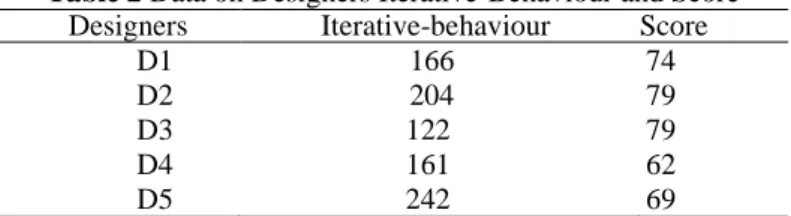
Processing and summing designers’ iterative-behaviour and judges score has established the figures that has been used for qualitative and quantitative data analysis. The two different analysing factors are judges’ score and iterative-behaviour. Table 2 illustrate the sum of individual designer iterative-behaviour and score.
Table 2 Data on Designers Iterative-Behaviour and Score
Designers Iterative-behaviour Score
D1 166 74
D2 204 79
D3 122 79
D4 161 62
D5 242 69
Based on the result of the observed designer iterative-behaviour as presented in Table 3, Figure 4 indicated that the relationship between the sum of iterative-behaviour and score (column 2 and 3 in table 2) was negative and weak. Moreover, the influence of the measured iterative-behaviour seems to be very low or even close to zero when compared with the score implying that iterative-behaviour has a negative and weak relationship with the score.
Figure 4 Correlation score between Iterative-Behaviour and Design quality (Score)
Table 3 Research Data for Iterative-Behaviour
Subjects ITERATIVE-BEHAVIOR Sum
D1 E1 N1 V1 H1 C2 B1 C3 A1
D1 44 6 6 21 21 0 0 38 9 166
D2 59 4 4 33 33 0 0 48 2 204
D3 18 3 3 30 30 0 0 10 9 122
D4 43 5 5 36 34 0 0 16 1 161
However, the findings have shown some positive relationship between skills and score together with ideation and progression. There are nearly no correlations between Iterative-Behaviour and score but some findings between other scoring criteria have a strong and positive relationship with iterative-behaviours. The result further expressed that getting higher scores in architectural design sketch is not related to designer iterative-behaviours as presented in Table 4.
Table 4 The Correlation between Iterative-Behaviour and Scores
Iterative-Behaviour and Score Correlation coefficient
-0.196
CONCLUSION
This study examines the role of iterative-behaviour in architectural design sketching where the empirical comparison is used to compare iterative-behaviour and sketching through protocol analysis and Pearson correlation coefficient analysis. The results show that the relationship between iterative-behaviour and score was negative and weak. Moreover, the influence of iterative-behaviour seems to be very low or even close to zero when compared with the score implying that iterative-behaviour has a negative and weak relationship with the score of architectural design sketch. However, the findings have shown some positive relationship between skills and score together with ideation and progression. The results of Pearson correlation (Table 3 and Figure 4) show that there was no significant relationship between iterative-behaviour and a total score of architectural sketching processes. In other words, too much of iterative-behaviour does not have either positive or negative impact on the outcome of the overall score of an architectural sketch. Maybe the reason for the negative and weak correlation result could be due to the conventional sketching method used in this research. Maybe a computerized sketching tool could proof a strong and positive relationship between iterative-behaviour and score.
ACKNOWLEDGMENT
REFERENCES
Adams, R., & Atman, C. (1999). Cognitive processes in iterative design behavior. 29th ASEE/IEEE Frontiers in Education Conference, San Juan, Puerto Rico. Aguero, C., Canas, J., Martın, F., & Perdices, E. (2010). Behavior-based iterative
component architecture for soccer applications with the Nao humanoid. In 5th Workshop on Humanoids Soccer Robots. Nashville, TN, USA.
Akin, O., & Lin, C. (1995). Design protocol data and novel design decisions. Design Studies, 16(2), 211-236.
Bilda, Z., Gero, J., & Purcell, T. (2006). To sketch or not to sketch? That is the question. Design Studies, 27(5), 587-613.
Cross, N., & Anita, C. (1996). Winning by design: the methods of Gordon Murray, racing car designer. Design Studies, 17(1), 91-107.
Dorst, K., & Cross, N. (2001). Creativity in the design process: co-evolution of problem– solution. Design Studies, 22(5), 425– 437.
Eppinger, S., Nukala, M., & Whitney, D. (1997). Generalized models of design iteration using signal flow graphs. Research in Engineering Design, 9(11), 112-123. Ericsson, K., & Simon, H. (1980). Protocol analysis: verbal reports as data. Cambridge:
MIT Press.
Fish, J., & Scrivener, S. (1990). Amplifying the mind's eye: sketching and visual cognition. Leonardo, 23(1), 117-126.
Furlinger, K., & Moore, S. (2008). Detection and analysis of iterative behavior in parallel applications. 8th ICCS, Krakow, Poland.
Gero, J., Tversky, B., & Purcell, T. (Eds.) (2001). Visual and spatial reasoning in design II. Sydney: Key Centre of Design. Computing and Cognition, University of Sydney.
Goldschmidt, G., & Smolkov, M. (2006). Variance in the impact of visual stimuli on design problem-solving performance. Design Studies, 27(5), 549-569.
Jin, Y., & Chusilp, P. (2006). Study of mental iteration in different design situations. Design Studies, 27(1), 25-55.
Laseau, P. (2001). Graphic thinking for architects and designers. Toronto: John Wiley. Robbins, E. (1994). Why architects draw. Cambridge, MIT Press.
Schön, D. (1983). The reflective practitioner: how professionals think in action. London: Basic Books.
Safoutin, M. (2003). A methodology for empirical measurement of iteration in engineering design processes (thesis). University of Washington.
Stauffer, L., & Ullman, D. (1991). Fundamental processes of mechanical designers based on empirical research. Journal of Engineering Design, 2(2) 113-125.
Suwa, M., & Tversky, B. (1997). What do architects and students perceive in their design sketches? A protocol analysis. Design Studies, 18(4), 385-403.
Tang, H., Lee, Y., & Gero, J. (2010). Comparing collaborative co-located and distributed design processes in digital and traditional sketching environments: A protocol study using the function-behaviour-structure coding scheme. Design Studies, 32(1), 1-29.