By
Jonathan Kellen Reid
A Master’s Paper submitted to the faculty of
the University of North Carolina at Chapel Hill
in partial fulfillment of the requirements for
the degree of Master of Public Health in
the Public Health Leadership Program
Chapel Hill
2012
Advisor
Date
Second Reader
1
Table of Contents
Comprehensive Community Health Program for Underserved in Two Counties ... 0
Abstract ... 2
Introduction ... 3
Systematic Review... 5
Introduction ... 5
Methods ... 6
Results ... 8
Program Plan... 13
Program Context ... 13
Goals & Objectives ... 14
Program Theory ... 17
Program Implementation ... 20
Budget ... 29
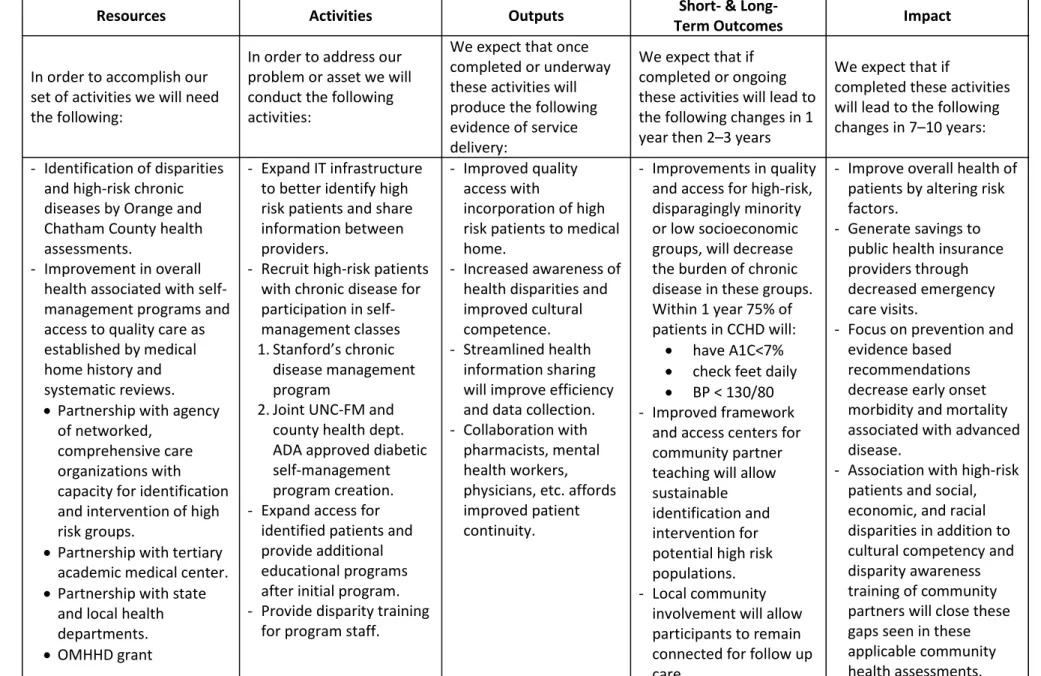
Logic Model ... 30
Introduction and Approach to the Evaluation ... 31
Rationale ... 31
Approach to Evaluation... 31
Evaluation Study Design and Methods ... 33
Evaluation Planning Tables ... 35
Dissemination ... 40
IRB Application ... 41
Discussion... 42
2
Abstract
Racial and ethnic minorities bear a larger burden of diseases with respect to diabetes and cardiovascular disease. Specifically, African American and Hispanic minorities maintain higher prevalence rates, worse control of risk factors, and higher rates of complications.1 Although the number of promising
approaches to address these disparities is increasing, the literature is inconsistent for important factors such as risk, population, and setting when trying to design and implement effective evidence based programs. This program plan and evaluation is based on ongoing work by AccessCare and partners for an Office of Minority Health and Health Disparities sponsored grant to address these issues for two counties in rural North Carolina. At the time of this publication, the AccessCare Community Health Disparity Program was in its implementation and evaluation planning stages and was designed to utilize a comprehensive network of community organizations, providers, and educators to support and teach susceptible patients with chronic disease self-management skills.
A systematic review of clinically oriented studies in communities of high risk populations addressing a range of cardiovascular diseases and risk factors including hypertension, hyperlipidemia, and physical inactivity was performed to identify successful programs and evidence based strategies.
Data supporting the value of registries, multidisciplinary teams, and community outreach through culturally tailored programs with interventions addressing care transitions, medication access, and adherence has been incorporated into this plan. There is a deficiency of research in programs that directly address disparity reduction and reports that present long-term results or sustainability of these health care interventions. Given the limitations of available research, this program’s ability to reduce disparities directly and its long term sustainability are the greatest areas of uncertainty. However, the program has the potential to significantly improve health outcomes through evidence based
3
Introduction
The AccessCare Community Health Disparity Program has been awarded a grant to develop and improve self-management skills through education and health related financial support for primarily African American and Hispanic patients with diabetes mellitus (type II) and chronic heart disease in Orange and Chatham counties, North Carolina.
Within Orange County there are several major causes of morbidity and mortality with respect to chronic diseases. The predominant chronic diseases include cancer, heart disease, cerebrovascular disease, and diabetes. In fact, these four chronic diseases combined are responsible for the majority of the
hospitalizations, illnesses, and death within the community.2 Although there are some well-established
hereditary links associated with these chronic diseases, there are strong, modifiable, lifestyle factors associated as well such as poor nutrition, and physical inactivity. The program under discussion will address the self-management skills for patients in this community needed to control risk factors with an additional foreseeable benefit of reducing the potential financial costs of treating end stage disease, and most importantly, the burden of disease for minorities.
As of 2007, cancer was the leading cause of death in Orange County, and is associated with considerable costs when considering treatment requiring hospitalizations and lost productivity due to illness. For the 411 hospitalized in 2005 for cancer related disease, the total cost was approximated at $11,139,657.3 Since there
are prevention and early detection services for many cancers, the burden of cancer could be reduced by focusing on these methods. Additional associated lifestyle factors, particularly tobacco use and poor nutrition also represent potential targets for modifying the burden of disease in the local communities.
The second leading cause of death in Orange County is heart disease, followed by cerebrovascular disease (stroke). In 2005, there were 130 and 48 deaths caused by heart disease and stroke, respectively.2 Not
4 hospitalizations cost a total of $31, 415,230 not including the costs of lost productivity.3 As with cancer, there
are well established risk modulating services available for patients to prevent primary and secondary events that have such considerable morbidity and mortality associated with them. Focus on blood cholesterol, blood pressure, BMI, physical activity, and diet can change the rates of heart disease and stroke in our community. Other areas worth mentioning that may be difficult to modify, are worth considering include stress levels, socio-economic status, education, depression, and discrimination.
Chatham County, while having smaller number of total residents than Orange, has a higher percentage of their total population on Medicaid or uninsured at 27%.4 Of the total people who live in Chatham County
(63,505), 26% are Black or Latino, 1.60% American Indian or Asian, and 71% white. Mortality data in
Chatham County is consistent with the national trends where the top four causes, in order, are heart disease, cancer, and cerebrovascular disease with diabetes as the sixth leading cause.5 This ranking does not,
however, account for the disparities that exist due to health-system, care-process, and patient related factors.4 Although relatively common, the burden of these chronic diseases is not distributed equitably
along socioeconomic and cultural lines. The CDC’s age adjusted cardiovascular disease death rates for non-Hispanic Caucasians vs. African Americans of 243 vs. 329 (per 100,000) and 41.3 vs. 19.1 (per 100,00) for diabetes illustrates the considerable disparity.1
Using the comprehensive partnership networks generated from NC’s innovative Medicaid community and non-health partners, this program will have the ability to reach its target population: Blacks and Latinos with diabetes and heart failure. The primary authors at AccessCare and UNC-Family Medicine already have primary care centered medical homes and leaders at the hospital system dedicated to quality improvement, a health department positioned to help us in understanding the local health needs, support from
5 The utility of this program to generate a functional interface for these health-system services will still be challenged to reduce patient barriers such as transportation to classes. Care managers will be available to help address these barriers and provide ongoing support as well as a program evaluation plan to assess future issues and expectations. In addition to challenges with recruitment, patient attrition or necessary completion of Stanford’s Chronic Disease Self-Management program (CDSMP) could be a potential issue and justifies the use of patient participation incentives. Other potential problems with provider and educator ability to connect with a multicultural population will be addressed with cultural competency training that will additionally be negotiated to provide CME (for providers) to ensure provider attendance and enhance sponsor involvement and community education by utilizing the Office of Minority Health and Health Disparities (OMHHD) curriculum.
Although there are considerable social and financial obstacles to achieving considerable change in the burden of chronic diseases, there are numerous areas that can be focused to change the rates in our community. Knowledge of co-incident risks that are disproportionate in our community, such as tobacco use, may create opportunities to optimize change. Continued planning is necessary to identify the particular areas of intervention that will create the scope of the program. To ensure that this program; its goals and methods, have a solid foundation of evidence based on the success of similar programs, a systematic review was performed.
Systematic Review
Introduction
Significant disparities exist among racial or ethnic minorities with regards to health outcomes and quality of care for chronic diseases such as diabetes and cardiovascular disease. The major
6 the considerable disparity in the US mortality rates for cardiovascular disease for African American males and females as compared to the non-Hispanic white population and is not limited to
cardiovascular disease. Diabetes, although attributed to fewer deaths than heart disease every year, is associated with an even greater disparity. Again using the most recent CDC Vital Statistics data, African Americans had an age adjusted death rate from diabetes of 41.3 versus 19.1 per 100,000 for non-Hispanic whites.1
Over the past twenty years, prior to the development of the Healthy People 2020 (formerly 2010) agenda, resource investment and political interest generated numerous interventions to fight the increasing prevalence of heart disease and diabetes. The use of disease management programs, for instance, have been found effective6 but there is still a question as to the effectiveness of this strategy
on ethnic minority patients or, importantly, the extent to which they can affect disparities. Therefore, with the potential for effective management of chronic disease, this report intends to systematically review the medical literature for health care interventions that have or likely will have a reduction in the current health disparities seen with two chronic conditions—cardiovascular disease and diabetes.
Methods
PubMed and NLM databases were searched using prescribed MeSH headings or keywords for evaluation studies of interventions published from 1995 to 2011 and designed to improve cardiovascular or
7 disparity;[All Fields] AND ("minority groups"[MeSH Terms] OR minority;[Acknowledgments] OR
minority;[Figure/Table Caption] OR minority;[Section Title] OR minority;[Body - All Words] OR minority;[Title] OR minority;[Abstract]) AND intervention;[All Fields] AND program;[All Fields] AND ("chronic disease"[MeSH Terms] OR chronic disease[Acknowledgments] OR chronic disease[Figure/Table Caption] OR chronic disease[Section Title] OR chronic disease[Body - All Words] OR chronic disease[Title] OR chronic disease[Abstract]). Initial search generated 154 publications.
After reviewing abstracts I found that two of the articles were systematic reviews that aligned with remediating racial disparities for a given chronic disease. Since this review’s question aligned with these two published reviews, the reports cited from these publications with abstracts or titles that involved programs (or interventions) that modified cardiovascular disease or diabetes mortality and/or morbidity were included in this review. Exclusion criteria were established as those reports that did not have a well-established association with the diseases of interest; for example, reviews of interventions involving physical activity whose contribution to cardiovascular or diabetes disease severity is poorly described and not a modifiable risk of interest to our program. Additionally, a program intervention targeting tobacco cessation in these populations was excluded as tobacco addiction can be considered a chronic disease and intervention is beyond the scope of our intended program plan. Following exclusion of interventions that were beyond the scope of our program or tenuously associated with the disease states, 36 of the 62 reports were included from the cardiovascular health disparities systematic review, and 46 of the 48 reports from the diabetes health disparities systematic review.
For completeness, review of abstracts from the initial search results that yielded reports after
8 publications that directly measured cardiovascular outcomes or the modifiable risk factor of
hypertension were evaluated. Note that this systematic review is intended to be a relatively brief and focused review of salient programs and that a more thorough review of the additional determinants of cardiovascular health, diabetes interventions, and associated disparities are available but not discussed here.
Results
Discussions of the 25 reviewed intervention studies for cardiovascular disease with blood pressure as a primary health indicator and are further categorized by the intervention’s target, i.e. patient, or broader system intervention.
Hypertension Results
Of the 25 studies included, the majority (19) were RCT’s, 4 pre/post studies, 1 comparative (follow up of RCT) study, and 1 retrospective comparison study. Approximately one-third of these (9) attempted to modify patients’ blood pressure by altering some aspect of the patient or their families’ behavior. Specifically, reducing salt consumption (5), other dietary changes not primarily salt restriction (2), increasing exercise (1), and stress reduction (1) were the “independent variables” altered to effect change. The remaining studies were focused on interventions to improve delivery or quality of care through changes in system procedures or number/type of providers.
Patient-Centered Interventions
9 substantial increase in the test group’s potassium intake (vs. sodium) over the control group. The study concludes that the low-fat, salt-restricted and controlled diet resulted in a statistically significant 6.8mmHg decrease in systolic blood pressure for African American patients as compared to controls8,
and especially more effective in this group than the other ethnic groups. A subsequent DASH was performed to further evaluate these findings and was able to conclude an additional benefit to African American females.9 To address the external validity concerns with the DASH study design where diets
were pre-prepared for participants, the three-phase PREMIER study also evaluated the effect on blood pressure of combining variable amounts of a potentially comprehensive lifestyle modification strategy (DASH diet, counseling, and/or exercise). Participants assigned to this version of the DASH diet were found to have only marginal improvements in blood pressure, where 30% of those receiving only counseling for altering their risk profile achieved optimal BP, compared to 35% who were assigned to both counseling and the DASH diet.10-12 A subsequent study designed to potentially improve the BP in
African American females, based on the previous evidence that this group shows a relative sensitivity to salt, investigators further modified the DASH diet to incorporate “culturally targeted” recipes and counseling to improve the appeal but maintain the dietary restrictions.13 Their study, and another
similarly designed found a 4 point fall in systolic blood pressure after 8 weeks.13,14 Dietary counseling
(recipe book or card), instructional audiotapes, and group classes15, or automated telephone messages
programmed to provide reminders for medication adherence and messages offering hypertension awareness16 did not yield statistically significant differences in participants’ blood pressure or lipid
profile.
10 Results from this multi-center, multi-phase trial provided a marginal 2-3 point decrease in systolic blood pressure for the salt restricted group, weight loss group, and even the combined salt-restricted plus weight loss group.17 The TOHP II study did however find a significant decrease in the incidence of frank
hypertension compared to controls. However, one center in a later phase of the same trial could only achieve a 21% compliance rate to the specified salt reduction18,19.
Another research study designed to find an intervention that could control blood pressure in the African American population, combined “regular exercise” and antihypertensive medication treatment (vs. antihypertensive control alone) in those with mild to moderate HTN. This small (46 African American males) RCT did demonstrate a 5mmHg decrease in BP but importantly showed a statistically significant decrease, i.e. reversal in left ventricular hypertrophy after 32 weeks with an additional decrease in dose requirement for medication.20
The most novel intervention in the hypertension category was an evaluation of transcendental meditation versus physical medicine rehabilitation versus blood pressure risk classroom based for African American males with high blood pressure. Although randomization and program matching was carefully executed, there was no mention of measurement concealment and the fundamental
differences between interventions make drawing conclusions between them problematic. Regardless, a significant short-term reduction in BP was seen in the meditation group as well as a longer term
depressions in those with milder hypertension.21
System-Centered Interventions
11 As for the former, studies that surveyed the effectiveness of outreach by means of mailers or
advertisements to improve access and raise awareness have had modest results, at best. For example, a randomized trial to determine whether a mailed postcard improved follow-up in uncontrolled
hypertensive patients living in a poor urban area, 45 percent followed up within 10 days, compared with 47 percent of controls (p = 0.93).22 A similar study involving 421 low income patients with moderately
high blood were randomly assigned to receive tracking and surveillance for follow up on their blood pressure. There are two important distinctions from the previous study, however, as only patients that were initially diagnosed with hypertension were invited, and they were encouraged to follow up by people, not mailers. The result was an increase in clinic attendance from 47% to 65% with a number needed to treat of 5 to have one follow-up.23
A study with similarities to our program plan was performed by Fedder and colleagues who were able to reduce emergency room visits for 117 high risk patients African American patients receiving Medicaid by 40%, hospitalizations by 30%, and a 27% decrease in Medicaid reimbursement (or costs) over the two year period.24 The intervention for this study was the utilization of community health workers who
alternated weekly home visits and phone contacts to teach patients to understand the need to control their illnesses, to follow both their therapy and behavioral regimens, and to maintain appropriate visits to a primary care practitioner.
12 were selected for the intervention which could disproportionately group motivated patients in the treatment cohort as compared to matched patients unwilling to commit to weekly reporting.25
Three studies intervened with the use of point of care surveillance and monitoring where the results of their interventions vary from entirely ineffective to moderately effective.26 For example, the use of
chart flags or reminders to facilitate physician compliance with blood pressure monitoring guidelines was ineffective at altering disease severity.27 In contrast, Jenkins’ and Tao’s research teams reorganized
their practices with a focus on quality and multi-disciplinary comprehensive services, respectively. By offering access to individualized therapies, pharmacists, nurses, and nutritionists, similar in concept to a medical home, Tao’s research team was able to report back 58% of his urban public hospital participants were at target blood pressures in six months. However, he speculates that his intervention may not be sustainable as 25% of enrollees were lost to follow up.28
The largest subcategory reviewed here In terms of number of articles Involves utilization of nurses or alternative care workers to reach culturally or ethnically disparaged patients and additionally improve their blood pressure. The authors of a two year nurse provider study targeting the Hispanic population reported that patients received no better or no worse health status outcomes, physiologic measures, or differences in patient satisfaction after being randomly assigned to either a nurse or a physician.29
Another multi-part research study also illustrates the patient related benefits of utilizing healthcare workers. The first part of the study, young urban African-American men with hypertension were cared for by a physician who was assigned to provide their best level of care over a one year period with a result of no change in blood pressure at the end of this 12-month phase.30 The condition of the second
13 significant increase in blood pressure control in addition to an even more robust improvement in left ventricular mass.30
Program Plan
Program Context
The goal of a grant awarded to AccessCare is to develop a program to improve self-management skills for patients in underserved communities with chronic disease in Orange and Chatham counties. This program additionally intends to identify those who have experienced a significant increase in medical costs or
emergency department/hospital visits and those at greatest risk with care management follow-up, outreach and education. The scope of this program certainly addresses national and local health concerns regarding the increasing numbers of patients living with chronic disease where improvements in self-management may provide relief from acute care facilities and associated costs not to mention potential gains in a high-risk patient’s disease course.
To provide a background before addressing limitations, a brief overview of this agency’s resources and scope are provided. AccessCare is the largest of the fourteen primary care networks with three hundred practices that contract with North Carolina’s Department of Health and Human Services to develop disease
management and case management initiatives and coordinate prevention, treatment and other services. This system of networks is coordinated by Community Care of North Carolina, enhances the Carolina ACCESS Medicaid program by developing voluntary, physician-led community partnerships to improve care and reduce costs by connecting Medicaid enrollees with a medical home.
14 identification and assistance. Fortunately, AccessCare provides a medical home to many underserved patients, including includes pharmacies and other non-direct patient care modalities that can be used as a point for recruitment of a new self-management program.
Although the specifics of the self-management program are still being formulated, one component includes adoption of patients with poor access into an established medical home. For patients that have difficulty, for a number of reasons, care will be available through a large network of resources, including non-physician health care workers familiar with their members’ cases to facilitate appropriate connections or provide interventions directly. A pharmacist, for instance, enrolled in a medical home will be better able to recommend changes in medication such as insulin and/or blood pressure medicines by intermediating between the patients and ordering physician without a scheduled office visit which may otherwise prohibit any necessary changes. This may also allow for detection of an impending problem with appropriate response that may not involve a hospitalization or emergency room visit if the problem were continued. The issue here may again be a practical one as patients with difficulty complying with normal follow up visits or medication dosing may also not be able to regularly communicate their ongoing health status to other members; however, this program is also designed to educate and equip patients with effective tools for self-management. Although this former issue may be a concern, the ability to more easily prevent or recognize and communicate problems may make them more likely to comply especially if they understand the benefits. For the purposes of evaluating the program, program members may also be available to identify issues patients are having and incorporate changes as issues arise.
Goals & Objectives
Program Goal: Utilize North Carolina’s largest network of Medicare and Medicaid funded health care
15 in Orange and Chatham counties to reach optimal wellness and contain costs by providing access to quality care and education.
Short Term Objectives: For the first six months these objectives will apply.
Objective 1: From 2/12 to 5/12 relationships will be formalized and program planning will be ongoing.
Strategy 1: Three to four meetings will be scheduled with community participants and local AccessCare partners to define plans for training, discuss referrals and evaluations, and plans for monitoring and reporting.
Strategy 2: It will be necessary to have a signed consensus, or formal agreement between the Orange and Chatham County Health Departments in conjunction with UNC-Family Medicine that will establish an ADA recognized self-management Diabetes & Medical Nutrition Therapy (MNT) program by the end of March, 2012. Note: Alternative course will be Stanford’s Chronic Disease Self-Management program (CDSMP)31.
Objective 2: Develop necessary systems for tracking patients and reporting performance from 3/12 to 5/12.
Strategy 1: Expand capabilities of existing information technology infrastructure to allow collection of feedback from community meetings and designated quality indicators (discussed later) using partner Carolina Health Net (CHN).
Strategy 2: OCHD, CCHD, UNC-FM, and CHN will collaborate to educate community and health care partners on the referral process and selection for participation in didactic portion of initiative.
Objective 3: Provide self-management support, i.e. educational support for minorities living with diabetes
16 Strategy 1: UNC-FM, AccessCare, and CHN will be responsible for designating instructors/teams to provide 1-2 trainings for participants.
Strategy 2: OCHD and CCHD will provide instruction to diabetics with ADA self-management where other, non-diabetic participants will participate in the CDSMP program.
Strategy 3: CHN, AccessCare, UNC-FM will develop a plan for incentivizing participation and retention.
Long Term Objectives
Objective 1: Review program progress for continual quality improvement 7/12 to 5/13.
Strategy: Three community meetings will be held to discuss progress, barriers, and solutions. Modification of this plan and budgetary revisions may be necessary at this time.
Objective 2: From 6/12 to 5/13, continue to offer participants support through the CDSMP, ADA class,
Medicaid, and/or ongoing case management.
Strategy 1: Provide four training areas for the CDSMP across North Carolina appropriate to the characteristics of the community and target population. In addition, AccessCare, UNC, and other salient community teams will track attendance and associated characteristics of attendees with self-report of changes in baseline knowledge and management of their chronic disease.
Strategy 2: OCHD and CCHD will provide up to 10 and 24 classes, respectively for established ADA self-management (MNT) for the diabetic population.
17 Strategy 4: AccessCare, UNC-FM, CHN, and PHS should provide case management to at least 75% of patients identified at risk and who accept case management.
Objective 3: Offer provider and program partner support through cultural competency training to expressly
address disparities.
Strategy 1: At least 3-5 representatives from AccessCare and UNC-FM should attend training by N.C. Office of Minority Health and Health Disparities (OMHHD), with open discussion about program plan and reports for one year32. Participants should also apply with the Academy of Family Physicians for continuing medical
education credit in addition to those providing later training in local program.
Strategy 2: Training by OMHHD should also be made available at least once for local partners with a goal of 75% partner participation from 11/12 to 3/13. Training should be publicized and provide CME.
Program Theory
Certainly, many of the constructs from various theories used to guide planning, implementation, and evaluation are applicable when developing this program plan. To maximize the potential of this program, salient constructs and their associated theories are therefore described as applicable to this plan; however, the theory which is central to this program’s core plan and objectives is the diffusions of innovations theory. Though this theory is generally described at the level of the community but will be slightly modified in scope to consider the programs focus at the individual level noting that community level involvement is innate to affect and enable change in high-risk patients with chronic disease.
Individual Level
18 patient’s geographic location creates a barrier, there may be other contributing factors, to be delineated in later discussion, in patients already considered high risk and should be considered in the program planning as an obstacle and potential target for improving self-management. To understand how receptive patients are to our planned interventions, gathering data on these patients state of change will allow us to understand the extent to which patients are motivated to improve their current baseline health status. In other words, the population of interest in Orange and Chatham counties, if already determined to change, will require less intervention to begin providing new self-management strategies. Conversely, patients in earlier stages of change may require education or additional resources to address barriers that may encourage transition from contemplation to determination stages, for example.
The health belief model is also applicable when planning the implementation and evaluation of this program as it was initially formulated with the assumption that limited access to traditional management services is the most significant barrier to controlling the modifiable risk factors for chronic disease. Utilizing electronic data and information systems, this barrier may be bypassed to allow patients to interface with the health care system remotely but with a cost to the patient to be more vigilant with self-monitoring. It will,
therefore, be important to understand the patient’s beliefs about the severity of their current risk, perceived significance of limited medical access, ability/willingness to communicate information via phone or
computer, and appreciation of the benefits of the program and self-management. Of note, the consumer information processing theory may apply here as well pending the data received from the above concerns which may address issues related to self-efficiency, especially educating patients on new procedures. Of this theory, the tenants of designing information that is clear, informative, and concise will provide the ability the maximally enhance learning, retention, and importantly, use.
19 By design, the requirements of this program to engage the interpersonal level will be limited to allow for more direct access to medical care. This idea is rooted in the social learning theory’s concept of reciprocal determinism that applies to the extent that the patient’s high risk status and relatively excessive use of emergency services is a result of their environment where modification of this interaction will similarly result in a change in behavior. The program will ensure that participating providers will provide the same level of consultation and recommendation to participants afforded to patients with convenient access which would reduce complications or exacerbations of chronic disease and reinforce constructive behaviors as described by the theory’s concepts of reinforcement and expectations.
Community Level
Aspects of the organization change: stage theory are appropriate to consider in planning for the new or modified services required for patients to be able to interface the health care system remotely, particularly in the context of a long term or sustainable program. The community health assessments have provided the necessary data on disease burden and will continue to be important for objective evaluation of the program’s changes in community wide health outcomes. Recruitment of local health care professionals within the larger AccessCare organization will be critical in implementing change as well as the recruitment of educators and information technology personnel to ensure the necessary infrastructure is in place. Institutionalization of change for local health clinics and emergency services to empower patients with self-management skills and resources will ideally lead to improved outcomes for those now considered high risk.
Diffusion of innovations theory is the framework for this program as the course of chronic disease is known to be modifiable by following recommended disease management skills such as measuring blood glucose and regimented insulin dosing for diabetes which eliminates potentially serious complications of the disease. Essentially the concept of innovating new methods for patients to perform these tasks given their
20 careful consideration of the numerous obstacles modifying and adapting a new system to an established one will create.
Program Implementation
Due to the complexity and large breadth of this program, this paper will focus on the core program development and evaluation aspects covered in the “short term objectives” discussed in the above “Goals and Objectives” section. Discussion of the entire program was necessarily included to develop the scope of the program necessary to accomplish the objectives. Also note the incorporation of key activities and a modified timeline were also incorporated in the objectives above. The implementation discussion to follow will further develop these strategies with particular attention to program monitoring and evaluation through objectives and outcome measures.
Activities & Strategies
Goal 1: Formalize relationships with community partners & conduct continuous quality improvement
A. Objective: Convene Community Partner Meetings
Responsible Party: AccessCare
Timeline (2/12-5/12) [3-4 meetings in Project Period 1]: (7/12-5/13)3 in Project Period 2
Process and Outcome measures: Convene up to 7 meetings during the entire project to identify missing
key players, discuss progress towards goals for continual quality improvement, and modify approaches where necessary. Also, discuss results from Orange County HD community assessment. Develop monthly meeting minutes as well as action plans for monitoring and reporting of progress.
B. Objective: Develop subcontract/invoice with OCHD and CCHD
21 Timeline: 2/12-3/12
Process and outcome measures: A signed formal agreement will be established with OCHD to provide
ADA recognized self-management Diabetes and Medical Nutrition Therapy programs. Agreement will include financial and program accountability reporting.
Goal 2: Develop necessary systems for tracking patients and reporting performance
A. Objective: Expand capabilities of existing software
Responsible party: AccessCare and CHN
Timeline: 3/12-5/12;
Process and outcome measures: Collect feedback from partners using a standard qualitative tool to
understand more about their reporting systems. Findings will be analyzed and shared with the group to develop next steps. We want to ensure we have a system that tracks our data elements and also protects patient confidentiality.
B. Objective: Formalize referral process to ADA & MNT programs, CDSMP, and Medicaid worker
Responsible Party: OCHD & CHD-ADA; UNC-FM-CDSMP & CHN-Medicaid;
Timeline: 2/12-5/12;
Process and Outcome Measures: UNC-FM to map the process for referrals to the CMSMP program. The
22 Goal 3: Provide patients’ support with CDSMP, ADA & MNT, Medicaid, & Case Management
A. Objective: Identify people for CDSMP training & Provide Training
Timeline: 2/12-5/12
Responsible Party: CHN, AccessCare, and UNC FM;
Process and Outcome Measures: Identify teams to be trained then secure training through the state or
Triangle Agency on Aging. Provide 1-2 trainings for lay leaders based on need and availability. We estimate 6 -7 people in our community will receive lay leader training.
B. Objective: Secure locations, conduct outreach/marketing, and provide CDSMP
Timeline: 6/125/13
Responsible Party: AccessCare, UNC FM, and CHN
Process and Outcome Measures: Develop outreach plan offering 4 trainings targeted to patients in
designated areas of need in Orange and Chatham counties; Track and report on #s attending to include characteristics of the population; Expect 75% of participants report an increased knowledge in
managing their chronic disease. We will survey patients at the beginning of class and then repeat at the end of the class. We hope to repeat the survey 3 months later. Sample surveys available online
http://patienteducation.stanford.edu/research/index.html
C. Objective: Develop Patient Incentive program for participation and retention
Timeline: 3/12-5/12
Responsible Party: AccessCare, CHN, UNC FM, OCHD, CCHD Process and Outcome Measures: Develop a
23
D. Objective: Provide Diabetics with ADA self-management programs and MNT
Timeline: 3/12-5/13
Responsible Party: OCHD and CCHD;
Process and Outcome Measures: Outcome measures listed will be tracked and recorded monthly:
OCHD- 12 classes over the 16month project.
• 75% of participants will complete 8 of 10 hours of education (numbers tracked and recorded monthly).
• 75% of enrolled participants to report conducting daily self-foot exams at 3 month follow-up appt.
• 50% of participants will have an improved A1c at the 3 months follow-up as compared to baseline
• 50%of patients will show an increase in knowledge in the ADA self-management content areas. We will use a knowledge test scored 1-4, 1=no knowledge and4=expert;
CCHD- 32 classes over the 16 month project.
• 75% of patients who complete class will have a A1cof 7% or less at 3 month follow-up,
• Check feet daily
• Blood pressure of < than 130/80.
E. Objective: Provide uninsured with support from Medicaid worker
Timeline: 6/12-5/13
Responsible Party: Carolina Health Net (CHN);
Process and Outcome Measures: Provide Medicaid review for 95% and assistance to 95% reviewed of
patients referred over year; will track number of referrals and the number reviewed monthly;
F. Objective: Provide case management and follow-up for at- risk patients
24 Responsible Party: AccessCare, UNC FM, CHN, PHS;
Process and Outcome Measures: Provide case management and tracking of numbers for 75% of patients
identified at risk and based on patient’s acceptance. Ideally, healthcare utilization patterns for this cohort pre/post our series of interventions could be correlated. Plausibility of this will be reviewed.
Goal 4: Offer provider and partner support through Cultural Competency training.
A. Objective: Attend state trainings;
Responsible Party: AccessCare, UNC FM, CHN, OCHD;
Timeline: 6/12-5/13
Process and Outcome Measures: 3-5 Partners to attend training. Also, begin discussions with OMHHD
about applying with AFP for CME for their curriculum
B. Objective: Obtain CMEs for local provider training
Responsible Party: AccessCare, UNC FM
Timeline: 6/12-9/12
Process and Outcome Measures: CMEs obtained for training and begin to develop marketing campaign
C. Objective: Publicize local training
Timeline: (9/12-10/12) or (1/13-2/13)
Responsible Party: AccessCare
Process and Outcome Measures: Create flyers/email notification to be distributed at least 4 weeks
prior to training
D. Objective: Offer local training at central location
25 Timeline: 11/12 or 3/13
Process and Outcome Measures: Offer at least 1 local training in an effort to maximize attendance from
the provider community. Expect 75% of participants to have increased knowledge about providing culturally competent care. We will measure by giving a pre/post questionnaire to the group.
Staffing
1. AccessCare of Central Carolina Care Team (Assistant Care Manager: Lee Stubbs) support and empower
individuals to reach their optimal level of wellness. They utilize motivational interviewing techniques to help patients establish goals and collaborate with staff at the patient’s medical home on education and support. In this project, they will help identify and refer patients to both self-management support programs following patients who complete the class over the long term if identified as needed that support. For patients identified as high risk/cost, they can provide additional services such as home visits, medication reconciliation, and transitions from inpatient settings back home. The whole care team will need an overview of project objectives.
2. UNC FM Care Manager (Amy Prentice) supports and empowers individuals to reach their optimal level of
wellness. In contrast to the AccessCare care managers, she works at UNC Family Medicine Center as a member of the health care team seeing patients when they come for medical appointments. She will need training as a lay leader. She will take a lead at the clinic helping to identify other staff that may be trained, e.g. certified medical assistants. She will be our CDSMP Program Coordinator participating in community meetings, help with developing patient incentive programs, have input on outreach, and follow-up with patients who may need ongoing support.
3. AccessCare Client Coordinators (Jessica Whelan and Anita Hill) provides support to AccessCare of Central
26 she will help to coordinate activities with the assistant care manager in Chatham County. A secondclient coordinator involved with the project will have completed training as a lay leader before project
implementation so she will help with trainings, meetings, reporting on progress.
4. Carolina HealthNet Medicaid Worker (Ana Perla) provides support to uninsured patients with Medicaid
applications. She meets with them at point of care, screens for eligibility, helps the patient complete the application and associated documents, then ensures it gets to their local DSS for processing. In this project, she will need an overview of the project and we anticipate lay training. She will be accepting referrals for identified uninsured patients and helping them through the process.
5. Carolina Health Net Project Research Associate (Tim Smith) provides support with data analysis and
technology as well as community development. In the project, he will need an overview of CDSMP and the project objectives. He will be instrumental in helping with the Chatham county expansion. He is currently involved with Chatham county community partners developing the Healthy Living initiative which aligns nicely with this project. In addition, he will help with the evaluation, patient incentive programs, and any necessary system development.
6. AccessCare Regional Project Director (Vicky Epps) provides ongoing support to the projects and staff for
AccessCare of Central Carolina. This involves all activities to include personnel management and project development. In this project, she will help to oversee the management of performance goals, attend community meetings and support staff in their roles. She currently sits on the Community Resource connections which will be useful for Chatham and Orange county partnerships.
7. Carolina HealthNet Project Director (Sherry Hay) provides ongoing support to all aspects of the
27 8. Orange County Health Department Staff oversees all aspects of their American Diabetes Association
(ADA) Diabetes Self-Management Education (DSME). Typical programs include individualized group classes taught by health care professionals skilled in providing diabetes education. They will need an overview of the CDSMP model. For the project, they will provide classes for type II diabetics by a variety of staff to include part-time registered dietician, pharmacist, exercise physiologist, interpreter, and medical office assistant. If participants agree, they will share their results with the patient’s primary care provider. For more details on the classes see section 5 titled Partnerships. In addition, they will share data on their DSME participants, community health assessment, and participate in meetings.
9. AccessCare‐UNC Hospital ED Navigator (Nerri Yamamoto) identifies underserved patients in the UNC
Emergency Department who do not have a medical home or do not know how to use their benefits such as Medicaid/Medicare. She meets with those who don’t have a medical home and help them schedule an appointment in the community. For this project, she will need an overview of project objectives as well as lay leader training. She will participate in community planning meeting, help identify patients for referral and incentives, help in developing outreach materials, and discuss progress toward goals.
10. AccessCare Administrative Assistant (Lesley Bates) helps support of all aspects of AssessCare of
Central Carolina and Carolina Health Net activity. For this project, she will need an overview of project objectives. She will be supporting the project activity with scheduling trainings for patients, providers, and partners. This will include finding meeting locations, applying for CME application, ordering supplies and refreshments, and other associated administrative activities.
11. PHS and UNC FM are patient centered primary care medical homes. Providers will help to identify
patients for the CDSMP or ADA DSME Diabetes programs and receive data from the project in an effort for continual quality improvement. They will be invited to the state and/or local cultural competency training.
29
Budget
BUDGET Period I Period II Combined
Amount Amount Amount
I. PERSONNEL SERVICES
Salary/Wages $35,064.00
Social Security $2,682.00
Medical /Health Insurance $8,200.00
Retirement $3,506.00
Subtotal Personnel Services $16,271.00 $49,452.00 $65,723.00
II. OPERATING EXPENSES
Food Service Agreement
Speakers Fee Interpreter Services Rental/Leased Space Utilities
Ground Transportation (Travel) Lodging Meals
Internet Services Provider Charges
Telephone Service Cellular Phone Service Postage, Freight, Delivery
Printing, Binding, and Duplication General Office Supplies Educational Supplies
Participant Support Costs ( Incentives)
Computer Equipment (must be less than $5,000)
Subtotal Operating Expenses $0.00 $0.00 $0.00
III. CONTRACTED SERVICES
Subcontractor’s name/title:
Describe: (Ex: Bookkeeping, professional services, etc.)
Subtotal Contracted Services $42,189.00 $132,628.00 $174,817.00
Subtotal Operating Expenses $0.00 $0.00 $0.00
Subtotal Personnel Services $16,271.00 $49,452.00 $65,723.00
Subtotal Contracted Services $42,189.00 $132,628.00 $174,817.00
Total Overhead Cost (not to exceed 8%) $4,677.00 $14,566.00 $19,243.00
Total Budget $63,137.00 $196,646.00 $259,783.00
30 Resources Activities Outputs Term Outcomes Short‐ & Long‐ Impact
In order to accomplish our set of activities we will need the following:
In order to address our problem or asset we will conduct the following activities:
We expect that once completed or underway these activities will produce the following evidence of service delivery:
We expect that if completed or ongoing these activities will lead to the following changes in 1 year then 2–3 years
We expect that if
completed these activities will lead to the following changes in 7–10 years: - Identification of disparities
and high-risk chronic diseases by Orange and Chatham County health assessments.
- Improvement in overall health associated with self-management programs and access to quality care as established by medical home history and systematic reviews.
• Partnership with agency of networked,
comprehensive care organizations with capacity for identification and intervention of high risk groups.
• Partnership with tertiary academic medical center.
• Partnership with state and local health departments.
• OMHHD grant
- Expand IT infrastructure to better identify high risk patients and share information between providers.
- Recruit high-risk patients with chronic disease for participation in self-management classes 1.Stanford’s chronic
disease management program
2.Joint UNC-FM and county health dept. ADA approved diabetic self-management program creation. - Expand access for
identified patients and provide additional educational programs after initial program. - Provide disparity training
for program staff.
- Improved quality access with
incorporation of high risk patients to medical home.
- Increased awareness of health disparities and improved cultural competence. - Streamlined health
information sharing will improve efficiency and data collection. - Collaboration with
pharmacists, mental health workers, physicians, etc. affords improved patient continuity.
- Improvements in quality and access for high-risk, disparagingly minority or low socioeconomic groups, will decrease the burden of chronic disease in these groups. Within 1 year 75% of patients in CCHD will:
• have A1C<7%
• check feet daily
• BP < 130/80 - Improved framework
and access centers for community partner teaching will allow sustainable identification and intervention for potential high risk populations. - Local community
involvement will allow participants to remain connected for follow up care.
- Improve overall health of patients by altering risk factors.
- Generate savings to public health insurance providers through decreased emergency care visits.
- Focus on prevention and evidence based
recommendations decrease early onset morbidity and mortality associated with advanced disease.
31
Introduction and Approach to the Evaluation
Rationale
The burden of chronic diseases, namely diabetes and cardiovascular disease affects the
socioeconomically disadvantaged and cultural or ethnic minorities disproportionately. These problems are often compounded by poor access to care in certain regions, particularly the relatively rural counties of Chapel Hill and Chatham Counties, NC. Although any patient falling into the “high-risk” category for these illnesses will be encouraged to enroll, this program will be pro-actively targeting these populations that have historically not been benefited from of our current standards of care.
Therefore, through collaborations with UNC-CH Family Medicine’s academic primary care services, North Carolina AccessCare’s comprehensive public health care provider network, Orange & Chatham County Health Departments, and numerous community partners such as the YWCA, Hispanic religious organizations, senior centers, etc., will identify patients with diabetes or cardiovascular disease that have no primary provider. Utilizing the resources of this program’s alliance, patients will be evaluated for financial support, provided with certified educational sessions individualized to their disease, and connected with providers within this network. Ultimately the program will improve patient disease outcomes, reduce disparity, and decrease health care inefficiency and costs by virtue of decreased emergency service utilization.
Approach to Evaluation
32
Evaluator Role
Given the large scope of involvement by various organizations, highly interactive evaluators will be required to manage the information collected and disseminated by these specialized participants. The social interactions for documenting and evaluating the referral process, for example will be important to monitor the program’s success at identifying and enrolling participants that are otherwise not
connected to the health care system. Initially, therefore, evaluators must be able to communicate with a variety of clinical and non-clinical partners and be able to effectively record and relate issues in “real-time”. As the program progresses, evaluators will be reviewing patient health measures reported by health workers but will also be required to review or directly survey patients with respect to changes in lifestyle, compliance, and participation. Since this initiative is seeking high-risk and underserved
populations, evaluators must be culturally competent and be able to justify any question asked with the goals of the program. For the reason formerly stated and because of the continuity required for
communicating with other partners, an internal evaluator is recommended.
Stakeholder Input
The key stakeholders in the evaluation of this community health program to improve the health of high-risk, underserved populations in Orange and Chatham Counties and decrease utilization of expensive emergency services for disease management is the funding government agency (Office of Minority Health and Health Disparities, OMHHD), grant co-sponsors UNC Family Medicine & NC AccessCare, staff, associated county health departments, numerous patient referral partners in their respective
33 should be presented to stakeholders. The funding agency will be overseeing progress at phase intervals and are invited to all organization meetings. The co-sponsors, health departments and staff will be directly involved with all phases as prescribed by the grant proposal. Involvement of participants and referral partners is naturally facilitated by their involvement in the recruitment process or participation in the program. Beyond this encouraging attendance to self-management classes through incentives, and media publications including regular updates on the progress of the program and goals.
Challenges
The particular challenges with evaluating this program are inherent to the size of the program. Creating a consistent message for patient recruitment across a range of venues can make data collection on the numbers offered enrollment, the information or message about the program, and the patients or potential enrollment numbers and demographic s vary in reliability. Some evaluation criteria also rely in qualitative survey data or report that can be innately biased but may be particularly challenging when applied across different cultures and languages.
Evaluation Study Design and Methods
Evaluation Design:
In order to determine the most effective evaluation program, review of our objectives and potential means for gathering data was performed. In order to measure the indicators outlined in the previous section, qualitative and quantitative methods will be necessary. For example, the feedback from patient or participant encounters requires survey data, a type of qualitative data. Vital health indicators will also be measured, which include a type of quantitative measures.
34 effectiveness of outcomes, a pre-experimental or prospective design are more appropriate. “Success” of this program, is dependent on the effectiveness of the program on the selected participants therefore the comparison of final outcomes as compared to initial data is important. Since there is no control group, our design cannot fulfill the criteria of a true prospective in the absence of matched case controls. Considering these limitations to our program infrastructure, the pre-experimental design is most suited to evaluate our program by using the impact documentation comparison to the qualitative and quantitative post-test data. Using the observational design the aforementioned relationship between the effects of this program and outcomes can be measured adequately.
Evaluation Method:
AccessCare has worked with its partners to develop project objectives and outcome measures so we anticipate this will help us to ensure success. For subcontractors, items assigned to them in the community project grid will be a part of their subcontract. For other partners, we will be meeting
through the course of the project to discuss progress on outlined objectives. Partners will report on their respective activities describing barriers and how they plan to address them. We will engage the
35
Evaluation Planning Tables
Short Term Objective 1 (Process Objective):
By May, 2012 relationships between UNC-Family Medicine (UNC-FM), AccessCare, Orange County Health Department (OCHD), Chatham County Health Department (CCHD), and the community referral partners (community health network or CHN) will be formalized. The logistics for identifying, referring, and supporting participants will be determined.
Evaluation Questions Participant(s) Evaluation Method Did organization leaders
formalize their roles and plan for instructor training, patient referrals, evaluations, and program monitoring?
UNC-FM, AccessCare, OCHD,
CCHD, and CHN − Document review (meeting minutes and schedule)
Was a consensus reached for the specific educational self-management courses that will be offered to
participants? If not, why and what are possible solutions?
UNC-FM, AccessCare, OCHD,
and CCHD − Document review (signed, formal agreement establishing the course material)
Were all community referral partners present or
represented for the
delegation and acceptance of their responsibilities?
UNC-FM and AccessCare
program leaders − Document review (attendance)
− Open-ended discussion
Did any of the organizations raise concerns about their roles? Did these concerns or any specific requirements lead to an organizations withdrawal from participation?
UNC-FM and AccessCare
program leaders − − Document review Closed-field response interviews Open-ended discussion
How could this program create more community partnerships and maximize the enrollment of high risk minorities?
UNC-FM and AccessCare
36
Short Term Objective 2 (Process Objective):
From March to May, 2012, the system for recording and monitoring appropriate patient information (i.e. demographics, participation, HbA1C, self-reported foot checks, etc.) and community health partner performance (patients eligible, patients referred, patients accepted, etc.) will be developed and
implemented.
Evaluation Questions Participant(s) Evaluation Method Was a system for tracking
the patient information and CHN performance developed and implemented?
UNC-FM and CHN − Closed-ended interview
Does the data collection system address all of the specified fields of interest? Are there additional outcomes that should be considered or the capability to add new fields to the system?
UNC-FM − Checklist review
− Observation
− Open-ended interview
Were community and health care partners educated on the referral, selection, and data entry system? If so, by whom?
UNC-FM, OHCD, CCHD, and
CHN − − Document review Closed-ended interview
− Observed demonstration
− Surveys
Are the employees responsible for data entry satisfied with the new system?
UNC-FM, CHN − Open-ended interview
Is the information collected personally identifiable? If so, is the information collection and transmission secure and authorized by the patient?
UNC-FM, AccessCare, CHN − Open-ended interview
37
Short Term Objective 3 (Process & Patient Objective):
Provide self-management classes for minorities with diabetes or chronic cardiovascular disease
beginning May, 2012. 75% of participants are expected to have A1C<7%, check feet daily, and BP < 130/80, after one year of active enrollment.
Evaluation Questions Participant(s) Evaluation Method Were selected patients
appropriately referred and selected for either diabetes or CDSMP self-management classes?
UNC-FM, AccessCare − Data review (CHN entries, course attendance)
Were minority and
underserved populations the primary participants?
UNC-FM and AccessCare − Document review
(attendance, demographics)
Were instructors certified to teach the self-management course information to participants and were instructors satisfied with their training?
UNC-FM, AccessCare, OCHD,
CCHD − Document review (certification, training attendance)
− Open-ended survey
Were patients satisfied with their self-management training? Were incentives for attending felt to be necessary, unnecessary, and/or appropriate?
UNC-FM, AccessCare, OCHD,
CCHD, program participants − Document review (attendance)
− Mixed open- and closed-ended survey.
Did participants learn what
was intended to be taught? UNC-FM, AccessCare, OCHD, CCHD, program participants − Standardized closed-ended survey or interview (before and after course)
Did 75% of patients meet target health indicators within one year?
UNC-FM, AccessCare, OCHD,
CCHD, program participants − Standardized health assessment
− Closed-ended survey or interview
What do instructors and participants feel could have been done better?
UNC-FM, AccessCare, OCHD,
38
Long Term Objective 1 (Process Objective):
Review program progress and begin developing specific quality improvement plans beginning July 2012.
Evaluation Questions Participant(s) Evaluation Method Was at least one meeting
every three months convened to specifically address progress, barriers, and solutions?
UNC-FM, AccessCare, OCHD, and CCHD required; CHN attendance encouraged.
− Document review (meeting agendas and calendar)
Were proposed solutions to program planning or budgetary issues followed up?
UNC-FM and AccessCare required; OCHD and CCHD as necessary
− Document review (meeting minutes)
Long Term Objective 2 (Patient Objective):
39 Evaluation Questions Participant(s) Evaluation Method
Are there at least four areas consistently offering CDSMP courses across Orange and Chatham Counties?
AccessCare and UNC-FM − Document review (database entries for accepted referrals and attendance)
Are there 10 and 24 ADA classes provided per month for Orange and Chatham Counties, respectively?
UNC-FM, OCHD and CCHD − Document review (database entries for accepted referrals and attendance)
Were 95% of uninsured participants reviewed and followed for financial
assistance by Carolina Health Net (AccessCare affiliate)?
UNC-FM, Carolina HealthNet
(AccessCare) − Document review (database entries regarding counseling sessions)
Were patients identified to be without case
management and at high risk offered support?
UNC-FM, Carolina HealthNet
(AccessCare) − Document review (database entries for Medicaid denials, counseling sessions)
What issues do financial counselors identify as obstacles to getting patients case management approval?
Carolina HealthNet
(AccessCare) − Mixed closed- and open-ended survey
What do patients and financial counselors think could be done better?
Carolina HealthNet (AccessCare), program participants
− Open-ended survey or interview
Long-Term Objective 3 (Process Objective):
With an interest in targeting minorities and medically underserved populations, providers, instructors, and at least three non-teaching program representatives must attend an OMHHD cultural competency course before self-management classes begin in May 2012. Continuing cultural competency courses will be provided at least three times per year by OMHHD to providers and instructors. Providers and
40 Evaluation Questions Participant(s) Evaluation Method
Were at least 3 program representatives, instructors, and providers present for the OMHHD cultural competency training?
UNC-FM, AccessCare, OCHD,
CCHD, and CHN Document review (attendance)
Were the required personnel also present for at least one OMHHD continuing cultural competency course?
UNC-FM, AccessCare, OCHD,
CCHD, and CHN Document review (attendance)
Did the program personel consider the training relevant and a good use of their time?
UNC-FM, AccessCare, OCHD,
CCHD, and CHN Closed-ended survey
Did participants in the training achieve cultural competence?
UNC-FM, AccessCare, OCHD,
CCHD, and CHN Standardized closed-ended survey
Do personel feel more aware and sensitive to cultural differences?
UNC-FM, AccessCare, OCHD,
CCHD, and CHN Mixed closed- and open-ended survey.
Dissemination
The purpose of the evaluations is to provide useful results of our program to stakeholders. With this information, evaluations should be used to guide the management or decisions of the various organizations involved. To fulfill these objectives and intended purpose of these evaluations, our program is designed to generate this feedback at specified points or intervals along the program
implementation and evaluation schedule. As previously discussed, the resulting evaluation data will be available to the management organizations (AccessCare and UNC Family Medicine), Orange County Health Dept., Chatham County Health Dept., funding agency (OMHHD), and the numerous community partners such as the YWCA, Hispanic religious organizations, senior centers, etc.
41 Medicaid participants since medical information collection will be performed by AccessCare employees. Otherwise, information will not be made expressly available to the public or program participants as the information will be used for internal decision making and program improvement. Additionally, since this program is not a research study, the project team will not be publishing process or outcome data for peer review or presenting information to local or national interest groups outside of UNC’s Family Medicine Department or Carolina HealthNet (AccessCare’s Medicaid affiliate).
All of the finalized evaluation information will be actively disseminated to the management, funding, and local health departments and agencies. The method for disseminating materials to the
management groups and local health departments will be through publication of the information by the UNC-Family Medicine research associate and distributed at the program meetings as outlined in the
Program Evaluation section. The community partners, primarily responsible for program participant referrals, will be sent a portion of the information pertinent to this aspect of the program to maximize the usefulness of the evaluation material for this group. Specifically, they will be provided information by the research associate regarding the number of people qualified for program participation, offered referral, and those that accepted. The comprehensive evaluation results will be available for the community partners upon request.
IRB Application
42 application of normative ethical theories to the host of concerns generated by humans’ subject research (i.e. exploitation, informed consent, etc.) is unnecessary.
However, patient autonomy should be respected with respect to the privacy of the information
collected by the program for quality improvement. Violating this principlist value by not protecting data or openly sharing personal information would conflict directly with another of principlism’s values— beneficence—and thus an obligation to protect the privacy of our participants.
Discussion
The most recent 2009 and preliminary 2010 CDC reports show both heart disease and diabetes mellitus type II continue to be the leading and seventh most common cause of death in the US, respectively.33
Although relatively common, the burden of is not distributed equitably along socioeconomic and cultural lines and is demonstrated by the death rates for minority groups. For cardiovascular disease, age adjusted death rates for non-Hispanic Caucasians vs. African Americans in 2008 were 243 vs. 329 (per 100,000).1 Also, the most recent CDC Vital Statistics data shows African Americans had an age
adjusted death rate from diabetes of 41.3 versus 19.1 per 100,000 for non-Hispanic whites.34