THE INFLUENCE OF PSYCHOLOGICAL DISTRESS ON BASELINE CONCUSSION MEASURES
Michael John Baum
A thesis submitted to the faculty of the University of North Carolina at Chapel Hill in partial fulfillment of the requirements for the degree of Master of Arts in the Department of Exercise & Sport Science (Athletic Training) in the College of Arts & Sciences.
Chapel Hill 2012
Approved by:
Jason P. Mihalik, PhD, CAT(C), ATC Kevin M. Guskiewicz, PhD, ATC
ii
iii
ABSTRACT
MICHAEL JOHN BAUM: The Influence of Psychological Distress on Baseline Concussion Measures
(Under the direction of Jason P. Mihalik, PhD, CAT(C), ATC)
Accurate concussion baseline testing is necessary for appropriate post-injury comparisons to pre-injury measurements. The purpose of this study was to determine the
influence of psychological distress on baseline concussion measures, and to examine the association between change in psychological distress and change in performance on
clinical measures of concussion. We completed baseline testing and an assessment of psychological distress on 165 participants. Fifty-six participants completed the same procedure ten weeks later. One-way ANOVAs were used to examine differences in
dependent variables at baseline between distress groups. Chi-Square tests of
independence were used to examine the association between change in distress and
change in clinical measures of concussion. Significant differences existed between distress groups on verbal memory, and neurobehavioral and somatic symptom reporting. Significant associations were observed between distress and postural stability, and
iv
iv
ACKNOWLEDGEMENTS
To my parents Jack and Cindy: thank you for your unending support, guidance
v
TABLE OF CONTENTS
LIST OF TABLES ... viii
LIST OF APPENDICES ... ix
CHAPTER I: INTRODUCTION ...1
Variables ...5
Independent Variables ...5
Dependent Variables ...5
Research Questions ...6
Research Question 1 ...6
Research Question 2 ...7
Research Hypotheses ...8
Operational Definitions ...10
Assumptions ...10
Limitations ...10
Delimitations ...11
Significance of study ...11
CHAPTER II: REVIEW OF THE LITERATURE ...13
Epidemiology ...14
vi
vi
Neurocognitive Evaluation ...16
Postural Stability ...17
Graded Symptom Checklist ...17
Summary ...18
Confounding factors in concussion evaluation ...19
Neurocognitive Evaluation ...19
Postural Stability ...20
Graded Symptom Checklist ...21
Depression as a confounding factor in concussion evaluation and management ...21
Depression in the College Population ...23
Psychological Distress as a Predictor of Depressive Symptoms ...22
Methodological Considerations ...25
Neurocognitive Testing ...25
Postural Stability Assessment ...26
Symptom Reporting ...27
Stress Scales ...27
Rationale for study ...29
CHAPTER III: METHODOLOGY ...32
Participants ...32
Measurements and Instrumentation ...33
Holmes and Rahe Stress Index- Revised Social Readjustment Rating Scale ...33
CNS Vital Signs ...34
Sensory Organization Test ...37
vi
i
Procedures ...39
Data Reduction ...40
Data Analysis ...43
CHAPTER IV: MANUSCRIPT ...48
Abstract ...48
Introduction ...50
Methods...52
Participants ...52
Instrumentation ...52
Procedures ...54
Data Analysis ...55
Results ...57
Baseline Clinical Evaluation ...57
Ten Week Follow Up Evaluation ...58
Discussion ...59
Limitations ...63
Conclusions ...64
vi
i i
viii
LIST OF TABLES
Table 3.1: Graded Symptom Checklist (GSC) Categories ...45
Table 3.2: Statistical Analysis – Research Question One ...46
Table 3.3: Statistical Analysis – Research Question One ...47
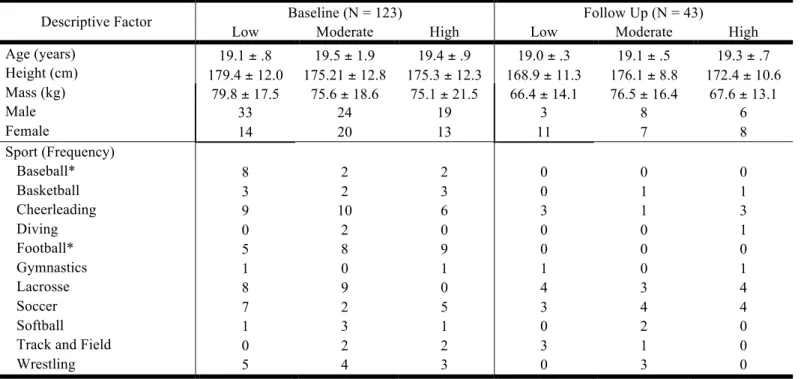
Table 4.1: Participant Demographic Information by Distress Grouping ...65
Table 4.2: Descriptive Statistical Results for Performance on Clinical Measures of Concussion Across High, Moderate, and Low Psychological Distress Groups ...66
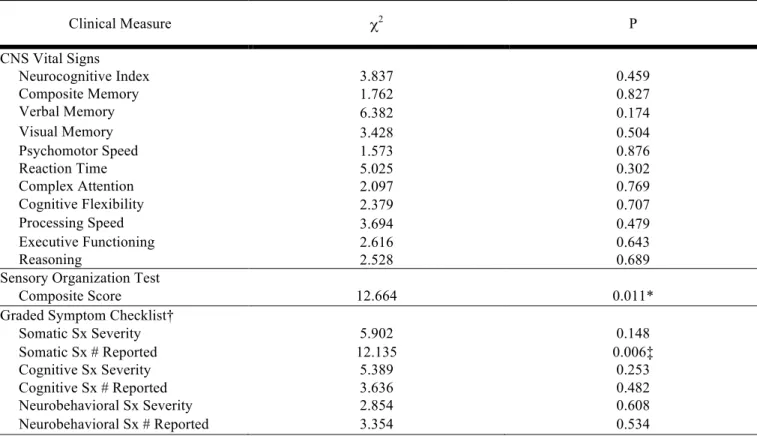
Table 4.3: Statistical Results for Chi-Square Analyses of Independence Between Change in Psychological Distress and Change in Clinical Measures from Baseline to 10-week Follow Up ...67
ix
LIST OF APPENDICES
Appendix A: Rank Ordered Life Event Means – Revised Social Readjustment
Rating Scale ...69
Appendix B: CNS Vital Signs Test Modules, Cognitive Domains Evaluated, and Overview of the Test Module ...70
Appendix C: Sensory Organization Test (SOT) Protocol ...71
Appendix D: Graded Symptom Checklist (GSC) Symptoms ...72
CHAPTER I
INTRODUCTION
Recent events in professional and collegiate athletics have caused an increase in awareness of concussion in the media. This has resulted in increased coverage and
scrutiny of the sports medicine team’s management of these injuries. Approximately 1.54
million brain injuries occur each year, and 20% of those injuries occur during sports or physical activity (Sosin, Sniezek, & Thurman, 1996). For every 100,000 cases of
sport-related concussion, 2.6 result in death or hospitalization. More recent data suggests that brain injuries result in about 1.1 million emergency room visits each year (Langlois, Rutland-Brown, & Wald, 2006). This increase may represent an increased awareness of
concussion in the community; however, these numbers may still be an underestimation of the true number of concussions that take place over a year.
Concussions are best evaluated and managed using a multifaceted approach that includes assessment of neurocognition, postural control, symptoms, and a thorough clinical evaluation (McCrory et al., 2009). Accurate baseline testing is useful during
post-injury evaluation by allowing comparison to an individualized pre-post-injury measurement. This comparison assists in determining a proper return to play progression. Recent
consensus statements recommend baseline examination for the management of
2 learning disabilities (Aubry et al., 2002; Guskiewicz et al., 2004; McCrory et al., 2005;
McCrory et al., 2009).
While 94% of institutions report conducting baseline neurocognitive exams, only
54% of those conducting these exams report checking the accuracy of their results. In general, an inaccurate baseline assessment may make it difficult to interpret post-injury
assessment data (Covassin, Elbin, Stiller-Ostrowski, & Kontos, 2009). Clinicians that use compare post-injury scores to inaccurately low baseline values may prematurely return an athlete to play before they have truly recovered. Effort, a previous history of concussion,
and learning disabilities can confound neurocognitive assessment (Collins et al., 1999; Green, Rohling, Lees-Haley, & Allen, 2001; Hunt, Ferrara, Miller, & Macciocchi, 2007).
Beyond the realm of neurocognitive testing, postural stability can be affected by low back pain, Alzheimer’s disease and Parkinson’s disease (Chong, Horak, Frank, & Kaye, 1999; della Volpe et al., 2006). The baseline evaluation process is further complicated because
symptoms commonly reported with concussion are not exclusive to only a diagnosis of concussion. Headaches, difficulty concentrating, and nausea may be common even
without the presence of a concussion (Piland, Motl, Guskiewicz, McCrea, & Ferrara, 2006). Baseline testing procedures often attempt to control for these variables to minimize the possibility of obtaining invalid test results.
Recently, depression has been introduced as an additional confounding factor in the differential diagnosis and baseline evaluation of concussion. Links have been
3
3
depression, is particularly prevalent in a collegiate population with 14.9% of college students reporting a diagnosis of depression in their lifetime (Gallagher, 2010; Orr & Ketcham, 2009). Entering college may be a stressful time for some students as they face
seemingly large-scale life changes. A new environment and a new social support system are among many new situations freshmen may face. Depression in college students is
theorized to be due to poor adaptation and coping techniques to this new environment. The overall link between life stress and depression is widely established throughout the literature, as increased levels of psychological distress are known to be a predictor for
depressive symptoms (Kelly, Roberts, & Bottonari, 2007; Lara, Klein, & Kasch, 2000; Miller & Chung, 2009). As students adapt to the collegiate setting, psychological distress
decreases and depressive symptoms decrease as well (Blimling, 1981; Dyson & Renk, 2006; Fisher & Hood, 1987; Lapsley, Rice, & Shadid, 1989). Thus, the adverse
psychological effects that present initially may only be apparent in the short term. After a
period of acclimation to college, psychological distress and depression symptoms tend to resolve both with and without treatment (Kelly et al., 2007; Lara et al., 2000; Miller &
Chung, 2009).
In the collegiate setting, concussion baseline testing is typically completed prior to an athlete’s season of play, which often occurs during the early transition phase into
the collegiate setting. This early transition phase is where the student-athlete is likely to experience the greatest amount of psychological distress. This increase in psychological
4 completing baseline testing during this transitional time would negatively influence
neurocognitive function, postural control, and symptom score. However, there is very limited literature available on psychological distress and its interaction with baseline
concussion evaluation to support this claim. A recent study limited to collegiate football players and neurocognitive testing did show a relationship between psychological distress
and scores at baseline, but did not evaluate any changes over time (Bailey, Samples, Broshek, Freeman, & Barth, 2010). Confounding factors such as psychological distress have significant implications on the validity of baseline neurocognitive evaluation.
Comparisons back to an invalid baseline that do not accurately represent an athlete’s full potential may promote clinicians to make premature, and potentially extremely
dangerous, return to play decisions. A potential consequence returning to play prematurely while the athlete is still symptomatic is sustaining a second impact and developing second impact syndrome. The increased intracranial pressure resulting from
this second impact causes herniation of the temporal lobes and the cerebral tonsils, brainstem compression, and potentially death (Bey & Ostick, 2009; Cantu & Gean, 2010;
Wetjen, Pichelmann, & Atkinson, 2010). The purpose of this study was to determine if psychological distress influenced measures of neurocognitive function and postural control, and symptom reporting at preseason baseline. A secondary purpose was to
5
5
Variables
Independent
1. Modified Holmes and Rahe Stress Index- Revised Social Readjustment Rating
Scale (SRRS-R)
a. High psychological distress tertile group: Participants with an SRRS-R
assessment score in the top 1/3 of the sample.
b. Moderate psychological distress tertile group: Participants with an SRRS-R assessment score in the middle 1/3 of the sample
c. Low psychological distress tertile group: Participants with an SRRS-R assessment score in the lowest 1/3 of the sample.
2. Time
a. Baseline
b. Post-test (10-weeks following baseline)
Dependent
1. CNS Vital Signs (CNSVS)
a. Neurocognitive Index Standard Score b. Composite Memory Standard Score c. Verbal Memory Standard Score
d. Visual Memory Standard Score e. Processing Speed Standard Score
6 i. Complex Attention Standard Score
j. Cognitive Flexibility Standard Score k. Reasoning Standard Score
2. Sensory Organization Test (SOT) a. Composite Score
3. Graded Symptom Checklist
a. Total Symptom Severity Score by Category i. Somatic
ii. Cognitive iii. Neurobehavioral
b. Total Number of Symptoms Reported by Category i. Somatic
ii. Cognitive
iii. Neurobehavioral
Research Questions
1. Is there a significant difference in performance on clinical measures of concussion between participants reporting high, moderate and low levels of psychological distress?
a. Is there a significant difference in neurocognitive performance, as measured by CNSVS, between participants reporting high, moderate
7
7
iii. Verbal Memory Standard Score iv. Visual Memory Standard Score
v. Processing Speed Standard Score
vi. Executive Function Standard Score vii. Psychomotor Speed Standard Score
viii. Reaction Time Standard Score ix. Complex Attention Standard Score
x. Cognitive Flexibility Standard Score
xi. Reasoning Standard Score
b. Is there a significant difference in postural control performance, as
measured by the SOT, between participants reporting high, moderate and low levels of psychological distress?
i. Composite Score
c. Is there a significant difference in self-reported symptom severity and number as measured by the graded symptoms checklist, between
participants reporting high, moderate and low levels of psychological distress?
i. Total Symptoms Reported by Category
ii. Total Symptom Severity by Category
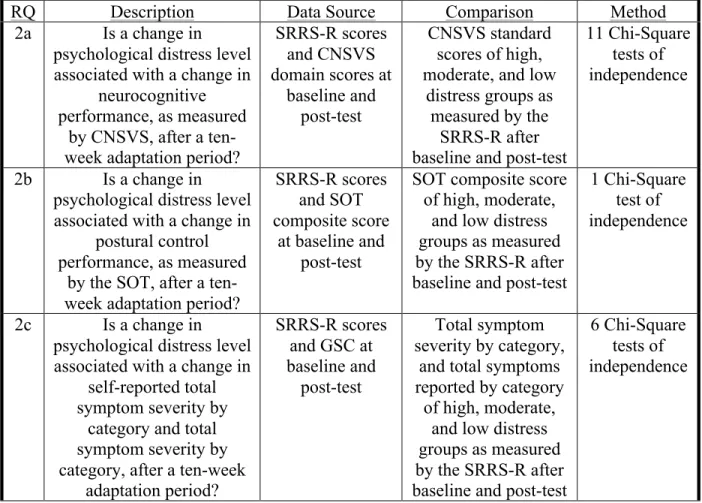
2. Is a change in psychological distress level associated with a change in
8 a. Is a change in psychological distress level associated with a change in
neurocognitive performance, as measured by CNSVS, after a ten-week adaptation period?
b. Is a change in psychological distress level associated with a change in postural control performance, as measured by the SOT, after a
ten-week adaptation period?
c. Is a change in psychological distress level associated with a change in total symptoms reported by category and total symptom severity by
category after a ten-week adaptation period?
Research Hypotheses
1. Participants reporting high levels of psychological distress will have significantly worse performances on clinical measures of concussion than athletes reporting low levels of psychological distress. Participants reporting moderate levels of
psychological distress will not have significantly different performances than those in the high and low group.
a. Participants reporting high levels of psychological distress will have significantly worse neurocognitive performances, as measured by CNSVS, than participants reporting low levels of psychological distress.
Participants reporting moderate levels of psychological distress will not have significantly different performances than those in the high and low
group.
9
9
SOT, than participants reporting low levels of psychological distress. Participants reporting moderate levels of psychological distress will not have significantly different performances than those in the high and low
group.
c. Participants reporting high levels of psychological distress will have
significantly higher self-reported symptom severity and frequency by category than participants reporting low levels of psychological distress. Participants reporting moderate levels of psychological distress will not
have significantly different results than those in the high and low group. 2. A change in psychological distress level is associated with a change in
performance on clinical measures of concussion after a ten-week adaptation period.
a. A change in psychological distress level will be associated with a change
in neurocognitive performance, as measured by CNSVS, after a ten-week adaptation period.
b. A change in psychological distress level will be associated with a change in postural control performance, as measured by the SOT, after a ten-week adaptation period.
c. A change in psychological distress level will be associated with a change in self-reported symptom severity and frequency by category after a
10
Operational Definitions
1. High Psychological Distress Group: Participants scoring in the top one-third of the sample on the SRRS-R.
2. Moderate Psychological Distress Group: Participants scoring in the middle one-third of the sample on the SRRS-R.
3. Low Psychological Distress Group: Participants scoring in the bottom one-third of the sample on the SRRS-R.
4. Baseline testing: Concussion testing that occurs prior to an athlete’s season in
order to establish an individualized “normal” value for that athlete. Typically completed within the first week of an athlete’s arrival on campus.
5. Post-test: Repeat baseline testing to take place approximately ten weeks after baseline. This will allow time for Participants to adapt to the collegiate setting.
Assumptions
1. Participants will perform the neurocognitive assessment and SOT to the best of their ability.
2. Participants will grade symptoms truthfully and accurately. 3. Participants will answer SRRS-R scale truthfully and accurately.
4. Participants will be adapted to the collegiate setting ten weeks following baseline
testing.
Limitations
11
11
2. High, moderate, and low psychological distress groups will show differences on SRRS-R however may not exhibit true pathological differences. Participants with high levels of psychological distress as measured on the SRRS-R may not be
clinically diagnosed with depression.
3. The SRRS-R is a measure of life-stress that correlates well to psychological
distress, however does not evaluate a participant’s ability to cope with
psychological distress. We will not be able to control for a participant’s coping ability.
Delimitations
1. Participants will be excluded if they have been diagnosed with a concussion 6
months prior to baseline testing or if they sustain a concussion between testing sessions.
2. Participants will include incoming student-athletes at a division I institution only..
Significance of the Study
The purpose of this study was to identify how psychological distress influences
baseline concussion measures in athletes. As freshmen athletes enter college they may experience difficulty adapting to college life. Poor adaptation and coping techniques can cause an increase in psychological distress and potentially lead to the development of
depression. This increased distress level may result in poorer performance on baseline measures of concussion including neurocognitive scores, postural stability, and
self-reported symptoms of concussion. The influence that psychological distress may have on baseline scores has significant implications on the validity of baseline concussion
12 are not an accurate representation of athletes full potential on baseline testing. This raises
the possibility that athletes are returning to play too soon based on invalid baseline scores and increasing their risk of sustaining a second impact prior to fully recovering from their
CHAPTER II
REVIEW OF THE LITERATURE
Recent events in professional and collegiate athletics have caused an increase in awareness of concussion in the media. Not only has this brought scrutiny to the overall health of the athlete, but also to the sports medicine team’s management of these injuries.
Part of the multifaceted approach to concussion management is a baseline testing battery. Included in this baseline testing battery are neurocognitive testing, measures of postural
stability, and a concussion symptom checklist. This battery of tests allows the sports medicine professional to compare an athlete’s scores following a concussive injury to his or her baseline measures.
As of late, the utility of baseline concussion testing in reducing an athlete’s risk for experiencing negative post-concussive outcomes has been called into question
(Randolph, 2011). There have been numerous attempts in the literature to identify variables that can affect baseline concussion measures and raises the question, does baseline testing provide an accurate representation of the athlete’s neurocognitive and
postural control capabilities? If our baseline measures are invalid, we cannot safely compare post-injury scores to baseline and use the results to aid in a return to play
decision.
The purpose of this review is to identify factors affecting baseline concussion measures. Furthermore, we will discuss available literature on the effect that
14 neurocognitive testing, postural stability, and concussion symptom scores.
Epidemiology
In the United States alone, traumatic brain injuries yield 1.1 million emergency
room visits each year resulting in 235,000 hospitalizations and 50,000 deaths (Langlois et al., 2006). Of all brain injuries, approximately 20%, or 300,000 were due to
sports/physical activity (Sosin et al., 1996). The consequences of sport related mild traumatic brain injury (TBI) could be particularly devastating. For every 100,000 cases of sport related mild TBI 2.6 will result in death or hospitalization ("Sports-related recurrent
brain injuries--United States," 1997). It is likely that this number has increased as a result of increased attention to the recognition, diagnosis and management of mild TBI. The
recognition of concussion as a serious injury may also contribute to the inflation of this statistic, but still may underrepresent the true number of injuries taking place.
The cost of concussion has been evaluated throughout the literature. A systematic
review conducted within the past ten years concluded that the cost of concussion is high, citing one study as finding the cost at $12.5 billion in 1982. Findings suggest that most of
the cost of concussion is associated with indirect expenses such as time lost from work and loss of productivity (Borg et al., 2004). Again, this statistic has likely increased with increased recognition and diagnosis of mild TBI, but still may be an underrepresentation
of the true cost of concussion on the health care system.
The increased recognition of concussion in the media likely results from coverage
15
15
practices in collegiate football (Dick et al., 2007). Overall, NCAA injury surveillance suggests that mild TBI accounts for 6% of all football injuries. Concussions, however, are not exclusive to football. NCAA injury surveillance has also found that concussion
accounts for 18.3% of injuries in women’s ice hockey, 7.9% of injuries in men’s ice hockey, and 6.3% of injuries in women’s lacrosse (Hootman, Dick, & Agel, 2007).
These incidence rates and resulting increased public interest and media attention have created a response within the medical community. A shift in focus towards
evaluation and management of mild TBI is apparent in the literature. Specifically, a
multifaceted approach is suggested for concussion evaluation including neurocognitive function, postural control, a symptom checklist, and clinical evaluation (McCrory et al.,
2009). In addition, a plethora of research exists that attempts to standardize concussion management (Aubry et al., 2002; Guskiewicz et al., 2006; Guskiewicz et al., 2004; McCrory et al., 2005).
Baseline Evaluation
A multifaceted concussion evaluation consists of neurocognitive testing, postural
control, a symptom checklist, and clinical evaluation. Baseline testing of these measures has been recommended to establish each individual athlete’s “normal” pre-injury scores (Guskiewicz et al., 2004). These baseline tests allow for an individualized comparison if
an athlete is to sustain a concussion. A comprehensive concussion history is also suggested to be included within baseline testing. This includes not only the number of
16
Neurocognitive Evaluation
Barth at the University of Virginia pioneered the concept of neurocognitive evaluation. The UVA Prospective Study of Mild Head Injury in Football examined 2350
athletes across ten universities. By examining baseline measures of neurocognitive function compared to post-injury data, it was found that concussion caused a measurable
deficit in cognitive processing. Furthermore, recovery trends were established that showed recovery occurred between five and ten days post injury (Barth et al., 1989). More specifically, cognitive deficits have been observed in subjects 24 and 48 hours
following a concussion (Echemendia, Putukian, Mackin, Julian, & Shoss, 2001; Lovell & Collins, 1998). These deficits have tend to decrease largely by five days post-injury and
are fully resolved by ten days post-injury (Iverson, Brooks, Collins, & Lovell, 2006). However, in order for post-injury data to have meaningful significance, it is
recommended that baseline testing take place for neurocognitive measures.
Concussion consensus statements released within the past ten years also suggest that baseline neurocognitive evaluation is necessary for athletes at risk for sustaining a
concussion (Aubry et al., 2002; Guskiewicz et al., 2004; McCrory et al., 2005). In addition, neurocognitive evaluation cannot be used as a standalone measurement to quantify concussion or make a return to play decision. This evaluative technique must be
paired with other means of assessment, including but not limited to postural stability, symptom checklists, and clinical examination (Grindel, Lovell, & Collins, 2001). As of
17
17
Based on these recommendations, many academic institutions in the United States have utilized neurocognitive testing in concussion evaluation and management.
Approximately 94% of institutions with access to neurocognitive testing utilize it in
baseline assessments of their athletes. Interestingly, only 55% of those institutions report checking the accuracy of their exams (Covassin et al., 2009).
Postural Stability
Postural stability has been well established as a method of evaluating athletes following a concussive injury utilizing both high technology and low technology
measures (Guskiewicz, 2011). A significant decrease in postural stability has been found in athletes one day following a concussion. Furthermore, measures that specifically
evaluate the three main sensory systems, visual, vestibular, and somatosensory, have suggested that there are significant sensory interaction problems following a head injury (Guskiewicz, Riemann, Perrin, & Nashner, 1997). In addition to decreased postural
stability one day following injury, a deficit in postural stability has been observed up to five days following injury. Despite this decrease, recovery in postural stability does occur
between days one and three (Guskiewicz, Ross, & Marshall, 2001). As with
neurocognitive testing, postural stability measures are not to be used as a stand alone method of evaluating concussed patients (Broglio, Ferrara, Sopiarz, & Kelly, 2008). Self
reported symptom scores and a clinical exam are also needed to obtain a complete picture of the concussed athlete.
Graded Symptom Checklist
18 symptom inventory was created to aid in quantifying an athletes concussive symptoms
(Lovell & Collins, 1998). This original graded symptom checklist includes 21 symptoms on a Likert scale from 0-6 where a higher score correlates to more symptoms. This scale
is subjective, however it is commonly used in sport concussion studies throughout the literature. Using this scale or slightly modified versions, it has been observed that most
concussive symptoms resolve between five and seven days with the average duration of symptoms being 3.5 days (Guskiewicz et al., 2003; McCrea et al., 2003). The validity of the graded symptom checklist has been established, however it is possible for healthy
subjects to report concussive symptoms at baseline due to confounding factors (Piland et al., 2006). Self-reported symptoms may be divided into categories of somatic, cognitive,
and neurobehavioral symptoms (Piland et al., 2006).
Summary
A multifaceted concussion assessment consists of neurocognitive testing, postural
control, a symptom checklist, and a clinical evaluation. Correct interpretation of these scores at baseline or following injury becomes challenging if the original baseline
measurements are not accurate and valid. Clinically, the significance of invalid baseline concussion measures may be devastating. Second Impact Syndrome, or the risk of sustaining a second impact while still symptomatic from a concussive injury has been
documented throughout the literature (Bey & Ostick, 2009; Wetjen et al., 2010). It is generally accepted that this second concussive impact prior to resolution of the first
19
19
tonsils, and brainstem compression. Brain stem failure occurs rapidly following impact with respiratory failure taking place between two to five minutes following impact. Numerous case studies have also been presented documenting this cascade of events
(Cantu & Gean, 2010). The consequences of returning to play prematurely clearly speak to the need for accurate baseline testing.
Confounding Factors in Concussion Evaluation
Neurocognitive Evaluation
A variety of factors have been identified as potential confounding variables in
neurocognitive testing. Poor effort has been seen to result in decreased scores on neurocognitive measures (Green et al., 2001). Specific deficits have been noted in the
areas of information processing, memory, attention/concentration, learning, and gross motor speed as a result of poor effort. The influence of effort on the outcome of neurocognitive evaluation has led authors to recommend the inclusion of an effort
assessment to increase the validity of these measures (Hunt et al., 2007).
In addition to effort, a previous history of concussion has been established as
causing decreased neurocognitive scores. A history of two or more concussions has been shown to result in decreased executive function and speed of information processing (Collins et al., 1999). Similarly, a history of learning disability has been established as
causing a decrease in neurocognitive scores. Specific deficits have been measured in executive functioning, speed of information processing, and speeded word fluency
20
Postural Stability
There is not a great deal of literature surrounding potential confounding factors in measures of postural stability, specifically in regards to computerized assessments of
postural stability. However, factors that may be common in an athletic population have been shown to cause a decrease in postural stability. For example, low back pain has been
shown to cause a decrease in measures of postural stability (della Volpe et al., 2006). Although the literature in this topic examined chronic low back pain in a non-athletic population, it is reasonable to assume that athletes experiencing low back pain may also
show decreased measures of postural stability. Other pathologies common to the athletic population have been examined in terms of postural stability. Interestingly, postural
stability does not seem to be significantly different in patients with a reconstructed anterior cruciate ligament compared to controls (Henriksson, Ledin, & Good, 2001; Mattacola et al., 2002). On the other hand, chronic ankle instability has been described to
negatively influence postural stability (Gribble, Hertel, Denegar, & Buckley, 2004). Moving away from the athletic population, decreased measures of postural stability have
also been observed in patients suffering from Alzheimer’s and Parkinson’s disease (Chong et al., 1999). Despite the fact that these pathologies are less common in an athletic population, the literature does speak to the sensitivity of postural stability
measures to certain pathologic conditions. The ability of postural stability tests to detect subtle, however significant, differences in subjects with these pathologies raises the
21
21
Graded Symptom Checklist
Concussion symptom checklists may be affected by a variety of factors, not only concussion. Healthy subjects may report concussive symptoms at baseline measurement
such as headache, difficulty concentrating, and drowsiness. However, these symptoms are not exclusive to those suffering from a concussion (Piland et al., 2006). Hydration status
also plays a role in concussion symptom reporting. Relative to a control group, acutely dehydrated subjects have been observed to report an increase in concussive symptoms and an increase in the severity of concussion symptoms (Patel, Mihalik, Notebaert,
Guskiewicz, & Prentice, 2007). A history of concussion has also been established as a variable affecting symptom reporting. A history of two or more concussions results in an
increase in symptom reporting relative to subjects who have not sustained a concussion (Collins et al., 1999).
Depression as a Confounding Factor in Concussion Evaluation and Management
Depression has recently been introduced as a confounding factor in the
differential diagnosis, evaluation, and baseline testing of concussion. When comparing
depression questionnaire scores to the results of neurocognitive tests, high depression scale scores have a significant moderate to large effect on neurocognitive test results (Iverson et al., 2009). Similarly, symptoms of depression and post-concussive symptoms
have also been linked. Subjects with no history of concussion who score high on
depression scales also report more post-concussive symptoms (Garden & Sullivan, 2010;
Lange et al., 2010). Depression alone has been observed to have a significant impact on post-concussive symptom reporting. Furthermore, subjects who suffer from both
22 TBI (Garden & Sullivan, 2010; Lange et al., 2010). The similar symptoms of concussion
and depression can potentially create problems in differentially diagnosing these conditions. This is especially true in an athlete with depression who is suspected of
sustaining a concussion.
A body of literature also exists that links the neural mechanisms of depression to
concussion. Symptoms common of mild TBI correlate to neural responses associated with major depression (Chen, Johnston, Petrides, & Ptito, 2008). In addition to neural responses, brain activity at specific anatomical landmarks has also been studied, most
recently in veterans suffering from blast related mild TBI. Veterans who suffer from blast related mild TBI show increased activity in portions of the brain responsible for
emotional regulation. This increased activity has resulted in averse emotional processing in these patients (Matthews et al., 2010). The similar presentation of concussion and depression not only makes differential diagnosis difficult, but may also affect baseline
concussion assessment.
The effect of recurrent head injuries on a variety of outcome measures has been
studied throughout the literature. Recurrent head injuries have been associated with increased risk of developing major depression. Retired National Football League players sustaining multiple head injuries show an increased prevalence of clinically diagnosed
depression later in life (Guskiewicz et al., 2007). It has also been established that those suffering from depression score poorer on tests of neurocognitive function than healthy
23
23
measured including memory, psychomotor speed, reaction time, complex attention and cognitive flexibility (Iverson et al., 2009).
In total, the literature suggests that concussion and depression are closely
intertwined and often present in a similar manner. This relationship and similarity to concussive symptoms not only makes differential diagnosis difficult, but may also
influence baseline concussion assessment. These potential confounding factors have significant implications on the validity of baseline concussion evaluation. Return to play decisions may be influenced by baseline scores that are too low and not an accurate
representation of athletes full potential on these assessments. Although links have been established between concussion and depression, depression has not been extensively
explored as a potential confounding factor in baseline concussion assessment.
Depression in the College Population
Depression is commonly reported as an extremely prevalent condition in the
adolescent and young adult population, specifically among those attending college. In a survey of directors of college/university counseling centers, 91% report a trend of
increasing number of students with severe psychological problems (Gallagher, 2010). While this does not speak only to depression, other studies have found depression alone to be a significant problem among college students with 14.9% of students reporting
having a diagnosis of depression in their lifetime. Of those reporting a diagnosis of depression, 32% of diagnoses occurred within the past school year (Orr & Ketcham,
2009).
24 athletes may or may not have increased incidence of depression. Athletic participation in
and of itself may decrease the risk of depression due to the health benefits of athletic participation and the stress relief involved with participation. On the other hand, the
pressure to perform well may increase the risk of depression (Proctor & Lenzo-Boan, 2010). The same authors also concluded that it is likely that an athletic population may
under-report depressive symptoms.
Psychological Distress as a Predictor of Depressive Symptoms
There are many proposed explanations for the increased prevalence of depression
in a collegiate population including poor adaptation and poor coping techniques. Unfamiliarity with college and high expectations from parents and the student
him/herself presents a great challenge to these students. This challenge often results in difficulty adapting to the new situation (Blimling, 1981; Lapsley et al., 1989). This “college change” stress is also a predictor of depressive symptoms (Dyson & Renk,
2006). Other forms of stress, such as major life events including moving to college, have adverse psychological effects in the short term. Major life events can also result in
increased psychological disturbance, particularly depression (Fisher & Hood, 1987). The overall link between life-stress, psychological distress and depression has been
established and widely reported throughout the literature. It has also been widely
accepted that psychological distress is a predictor for depressive symptoms (Mazure, 1998; Monroe, Slavich, & Georgiades, 2009).
As college students begin to adapt to their new environment, depressive
25
25
adaptation to college (Fisher & Hood, 1987; Lapsley et al., 1989). It is important to note that the majority of concussion baseline testing takes place during this short term and prior to any adaptation that may take place. Interestingly, the observed decrease in
symptoms is possible both with and without treatment for depression (Kelly et al., 2007; Lara et al., 2000; Miller & Chung, 2009).
Methodological Considerations
Neurocognitive Testing
CNS Vital Signs is a computerized neurocognitive assessment that uses a battery
of eight widely used and reliable neurocognitive tests. Using this battery, CNSVS has been shown to be sensitive to both the severity and degree of recovery of brain injuries
and is able to differentiate between healthy subjects and those suffering from a moderate concussion and those suffering from a severe concussion (Gualtieri & Johnson, 2008). This makes CNSVS a prime tool in the evaluation of sport concussion. Furthermore,
CNSVS has been observed to correlate well to both conventional and computerized versions of neurocognitive tests. Test-retest reliability and discriminate validity has also
been established and is comparable to similar, and more traditional, tests of
neurocognitive function. Normative data has also been established for CNSVS using a sample of 1069 subjects between the age of 7 and 90 (Gualtieri & Johnson, 2006, 2008).
Specifically regarding depression, neurocognitive deficits have been demonstrated in subjects with depression using the CNSVS system (Iverson et al., 2009).
Postural Stability Assessment
26 surrounding to measure a subject’s center of pressure during six varying conditions. In
conditions one and two both the surface and visual surrounding are stable, however eyes are closed in condition two. Condition three involves a moving visual surrounding with
the eyes open. Under condition four the surface is moving while the visual surrounding is stationary with the eyes open. Condition five involves a moving surface with the
subject’s eyes closed. Condition six involves movement of both the surface and visual surrounding with the subject’s eyes open.
Using these six conditions, contributions from the body’s three main sensory
systems: visual, vestibular, and somatosensory, can be calculated in addition to a composite score. The interaction of these systems and their contribution to overall
postural stability may also be assessed. Specifically, decreases in postural stability have been observed following concussion using the SOT. Significant declines in postural stability have been observed one day following injury, with recovery taking place within
the first three days. Typically, baseline postural stability measures are obtained between the third and fifth day post injury. (Guskiewicz et al., 1997; Guskiewicz et al., 2001). The
SOT has been utilized throughout the literature in sport concussion studies, but also in studies evaluating low back pain, and studies examining Alzheimer’s and Parkinson’s disease in a geriatric population. The SOT has shown decreases in postural stability in
patients suffering from low back pain, Alzheimer’s and Parkinson’s disease (Chong et al., 1999; della Volpe et al., 2006; Guskiewicz et al., 1997; Guskiewicz et al., 2001; Patel et
27
27
Symptom Reporting
The graded symptom checklist (GSC) was first established to aid in the
assessment of concussed collegiate football players. Our GSC uses a 18 item self report
checklist that examines symptoms common to concussion on Likert scale ranging from 0 to 6. This yields a total possible score of 108. Using this scale, a higher total score relates
to a greater number of reported and/or more severe symptoms (Lovell & Collins, 1998). The validity of the GSC has been established however it is possible for healthy subjects to report many of the symptoms in the absence of concussive injury, as some symptoms
are not exclusive to just concussion (Piland et al., 2006). The GSC has also been used throughout the sport concussion literature in quantifying symptoms both before and after
a concussive injury (Guskiewicz et al., 2003; Lovell & Collins, 1998; McCrea et al., 2003; Patel et al., 2007).
Stress Scales
The Revised Social Readjustment Rating Scale (SRRS-R) was devised in 1998 in response to many criticisms of the original Holmes and Rahe Stress Index (Holmes &
Rahe, 1967). Criticisms of the original scale that were addressed in the revision include: the size and composition of the original sample used by Holmes and Rahe to calculate weights for the original 43 items of the scale, overlapping of life events and symptoms of
stress and depression, ambiguity and bias in some items, subjectivity and variability of an individuals perception of stress, and the accuracy of the weighting of each item (Hobson
28 SRRS has been cited over 4000 times since its development in 1967 (Hobson et al.,
1998).
The SRRS-R is used as a measure of life stress to predict the probability that a
subject will develop an illness, including depression (Rahe, Mahan, & Arthur, 1970). Again, the overall link between life-stress, psychological distress and depression has been
established and widely reported throughout the literature. It has also been widely accepted that psychological distress is a predictor for depressive symptoms (Mazure, 1998; Monroe et al., 2009).
Subjects complete the scale by rating the frequency that each of the 51 items has happened to them in the past 12 months. These scores are multiplied by the weighted
“stressfulness” of each item and summed for all items to give a total score. Scores below 150 correlate to low stress, scores between 150-299 correlate to moderate stress, and scores above 300 correlate to high stress (Hobson & Delunas, 2001; Hobson et al., 1998).
Alternative stress measures were considered prior to selecting the SRRS-R. Our other options included the Zung Self-rating Depression Scale and the Personality
Assessment Index. The Zung scale is a 20 item self-report scale that attempts to quantify depression. Subjects are asked to rate the frequency that they experience depressive symptoms on a Likert scale from zero to four. Although the scale is very popular, widely
used throughout the literature, and correlated to Hamilton Rating Scale, Minnesota Multiphasic personality inventory, and a physicians global rating of depression; we were
29
29
The Personality Assessment Inventory was also examined to address concerns of finding a test sensitive enough to detect subtle changes in distress or depression level. Relative to the Zung scale, the Personality Assessment Index is much more complex and
consists of over 22 subscales. Subscales are derived from 344 items where subjects are asked to rate the frequency of feelings, thoughts, and symptoms on a four point Likert
scale. The test has been used throughout the literature, specifically in subjects suffering from traumatic brain injuries, and is sensitive enough to capture slight changes in depression or distress level (Demakis et al., 2007; Smith, Gorske, Wiggins, & Little,
2010; Till, Christensen, & Green, 2009). However, due to the complexity of the exam and its length, over 45 minutes to complete, we decided to avoid using this index.
Rationale for Study
Neurocognitive testing, postural stability assessment, and a graded symptom checklist are all important aspects in the proper management of concussion. Baseline
scores for these measures are key in the clinical management following a concussion. However, these baseline measurements may be confounded by a number of factors
including effort, previous history of concussion, and learning disabilities. Depression has recently been introduced as a potential confounding variable in the baseline testing of athletes. The link between concussion and depression has been established, as well as the
link between life stress and depression.
Despite these links in the literature, few studies have examined the effect of
30 et al., 2010). Although the authors did conclude that a significant and meaningful
relationship exists between psychological distress and baseline concussion testing, several aspects of this study must be examined. The sample for this study only included
collegiate male football players and did not examine any females or any sport other than football. The baseline concussion measurement in this study was a computerized
neurocognitive test that only yielded indices of simple reaction time, complex reaction time, and processing speed. There were no measures of postural stability, and no
symptom checklist scores. Regarding the measure of psychological distress, this measure
was not included in the baseline concussion assessment but was instead part of a separate academic screening. Subjects were selected retrospectively if they had completed both
the concussion and academic screening. The two screenings did not take place at the same time, however were obtained “typically” within one week of each other. Finally, this study did not retest subjects who scored “high” on psychological distress at a later
time to account for adaptation. To our knowledge there is no literature available that evaluates psychological distress and baseline concussion measures over time.
Confounding factors have significant implications on the validity of baseline concussion evaluation. Return to play decisions may be influenced by baseline scores that are too low and not an accurate representation of an athletes full potential on these
measures. A high prevalence of depression in a collegiate population and the link
between psychological distress and depression warrants the examination of psychological
31
31
CHAPTER III
METHODOLOGY
Participants
A convenience sample of 165 incoming freshman and transfer student-athletes at the University of North Carolina at Chapel Hill completed baseline concussion testing.
Of the 165 participants who completed baseline testing, 123 met our inclusion and exclusion criteria. All participants were part of a larger ongoing clinical concussion
management program. All participants signed an informed consent form approved by the Office of Human Research Ethics at The University of North Carolina at Chapel Hill. Athletes required to complete baseline concussion testing included athletes from baseball,
men’s and women’s basketball, men’s junior varsity basketball, junior varsity and varsity cheerleading, field hockey, football, gymnastics, men’s and women’s lacrosse, men’s and
women’s soccer, platform diving, softball, pole vault, wresting, and any other varsity athletes who may need baseline testing per orders from the team physician. Participants were excluded if they enrolled in the spring prior to the fall of their freshman year, had a
history of concussion within six months of baseline testing, sustained a concussion between baseline and post-testing, or scored less than 10% on the neurocognitive index
33
33
Measurements and Instrumentation
Holmes and Rahe Stress Index- Revised Social Readjustment Rating Scale (SRRS-R)
The Revised Social Readjustment Rating Scale (SRRS-R) is a self reported
measure of life-stress that has been used to predict the probability that a participant will develop a variety of illnesses, including depression (Rahe et al., 1970). Life-stress has
been linked throughout the literature to our variable of interest, psychological
distress(Mazure, 1998; Monroe et al., 2009). The scale consisted of 51 items of weighted life events. To complete the test, participants were asked to rate the frequency that each
of the 51 items has happened to them in the past 12 months. The most commonly
reported items, derived from normative value testing, may be categorized in five themes:
(1) death and dying, (2) healthcare issues, (3) crime and the criminal justice system, (4) financial/economic, and (5) family related. Frequency scores were multiplied by
weighted “stressfulness” of each item and summed for all items to give a total score.
Scores below 150 indicate low stress, scores between 150-299 indicate moderate stress, and scores above 300 indicate high stress (Hobson & Delunas, 2001; Hobson et al.,
1998). Despite many criticisms, the original SRRS has been widely accepted and used throughout the literature with over 4000 citations since its development in 1968 (Hobson et al., 1998; Holmes & Rahe, 1967). Criticisms of the original scale that were addressed
in this revision include: the size and composition of the original sample used by Holmes and Rahe to calculate weights for the original 43 items of the scale, overlapping of life
events and symptoms of stress and depression, ambiguity and bias in some items,
34 For the purpose of our study, we modified the SRRS-R by removing eight items
that healthy college aged athletes are unlikely to experience (Appendix A). These items included: (1) foreclosure on a loan/mortgage, (2) divorce, (3) adult child moving in with
parent/parent moving in with adult child, (4) child develops behavior or learning
problem, (5) failure to obtain/qualify for mortgage, (6) child leaving home, (7) obtaining
a home mortgage, and (8) retirement. The language of the items was also altered to be more specific to our target population. Finally, our targeted time frame included only the previous four weeks to capture acute psychological distress. Our SRRS-R and overall
testing protocol was pilot tested for feasibility of instrumentation on a group of athletes returning for re-baseline testing prior to the start of a non-traditional training season.
CNS Vital Signs (CNSVS)
CNS Vital Signs is a computerized neurocognitive assessment that generated eleven clinical domain scores from eight separate neurocognitive tests. These
neurocognitive tests include:
(1) Verbal Memory Test: Participants were shown 15 words and asked to
remember them. A longer list of 30 words containing the original 15 words randomized among 15 distracter words was then displayed and participants were asked to recognize the original 15 words. The test was repeated again at the end of
the testing battery to examine delay recognition of the word list. Scores were calculated by taking the correct amount of hits and passes, both delayed and
immediate.
35
35
30 shapes containing the original 15 shapes randomized among 15 distracter shapes were then displayed and participants were asked to recognize the original 15 shapes. The test was repeated again at the end of the testing battery to examine
delay recognition of the shapes. Scores were calculated by taking the correct amount of hits and passes, both delayed and immediate.
(3) Finger Tapping Test: Participants completed three trials on each hand where they were asked to press the space bar as many times as possible with their index finger within a ten second time frame. Scores were calculated by taking the
average number of taps for each hand.
(4) Symbol Digit Coding: Participants were presented with a key of eight
randomly selected symbols and matched to digits one through eight. Participants were then presented with a similar key, but with missing digits. Participants were instructed correctly match symbols to the digit designated by the key at the top of
the screen. Scores were calculated by summing the correct responses completed in two minutes.
(5) Stroop Test: The Stroop test consisted of three separate tests. The first test measured simple reaction time. Participants were asked to press the space bar as soon as any word appears on the screen. The words red, yellow, blue, and green in
black font appear in random order. In the second test, the same words were presented in color. Participants were to press the space bar when the font color
36 (6) Shifting Attention Test: This measured a participant’s ability to change from
one set of instructions to another both quickly and accurately. Participants were asked to match objects by either shape or color, however the rules for matching
changed randomly throughout the test. For any given rule, the subject was asked to match a shape on the top of the screen to one of two shapes on the bottom of
the screen. Scores from this test included the number correct, errors, and response time (ms).
(7) Continuous Performance Test: The Continuous Performance Test measured
the ability of a subject to maintain focus and attention over time. The subject was simply asked to press the space bar every time the letter “B” appears on the screen
among distracter letters. The test was scored by adding correct responses, commission errors, and omission errors.
(8) Non-verbal Reasoning Test: 15 puzzles were presented to the subject in
increasing degree of difficulty. The participant was asked to correctly identify a missing element or variable that completes a pattern. The test was scored using
the number of correct responses and the participant’s reaction time.
Eleven clinical domains were calculated from the results of these neurocognitive tests. We chose to utilize standard scores for all domains in our statistical analyses. The
CNS Vital Signs has been correlated well to both conventional and computerized
versions of neurocognitive tests. Also, test-retest reliability and discriminate validity has
been established and is comparable to similar, and more traditional, tests of
37
37
contains an overview of CNS Vital Signs test modules, cognitive domains evaluated, and a description of the test module.
Sensory Organization Test (SOT)
The Sensory Organization Test is a computerized assessment of postural stability that utilized measurements of a participant’s center of pressure to measure center of
gravity sway. The testing protocol consisted of six conditions. Each condition was
repeated three times, resulting in 18 total trials throughout the testing battery. Each trial is 20 seconds long. The six conditions included:
(1) Condition 1: Stable base of support with fixed visual field (eyes open). (2) Condition 2: Stable base of support with fixed visual field (eyes closed).
(3) Condition 3: Stable base of support with sway referenced movement of the visual field (eyes open).
(4) Condition 4: Sway referenced support surface with fixed visual field (eyes
open).
(5) Condition 5: Sway referenced support surface with fixed visual field (eyes
closed).
(6) Condition 6: Sway referenced support surface with sway referenced movement of the visual field (eyes open).
Measurements under these conditions allowed for an evaluation of the sensory, vestibular, and somatosensory system’s contribution to postural stability. A composite
38 contribute to postural stability. For the purposes of our study, we chose to use only the
composite score. Appendix C contains and overview of the SOT conditions.
The sensitivity and specificity of the SOT has been established at 80% and 57%
respectively using a 75% confidence interval (Broglio et al., 2008). The SOT has been widely used in the sports medicine literature, as well as balance research (Guskiewicz et
al., 1997; Guskiewicz et al., 2001; Patel et al., 2007).
Graded Symptom Checklist (GSC)
Graded symptom checklists have been used throughout the literature as means of
quantifying a patient’s symptoms following a concussion (Guskiewicz et al., 2003; Lovell & Collins, 1998; McCrea et al., 2003; Patel et al., 2007). The validity of a graded
symptom checklist has been established. Symptoms such as headache, difficulty concentrating, drowsiness, and others are not exclusive to concussion (Piland et al., 2006).
We used an 18-item graded symptom checklist built in the CNSVS software (Appendix D). Participants ranked each symptom using a seven-point Likert scale from 0
to 6 (0: not experiencing, 1-2:mild, 3-4:moderate, 5-6: severe). Since the purpose of the graded symptoms checklist is to determine how a participant feels on a regular basis, participants were told to grade their symptoms only if they experience them more than
three times per week. Higher scores were interpreted to mean more symptoms, or more severe symptoms. For the purposes of our study we utilized the total symptoms reported
39
39
Procedures
Participants reported to the Matthew Gfeller Sport-Related Traumatic Brain Injury Research Center in groups no larger than six for baseline concussion testing prior
to the start of their sport season. Upon arrival participants signed an informed consent form approved by the Office of Human Research Ethics at The University of North
Carolina at Chapel Hill and also indicated whether they would be interested in retesting after ten weeks. Each participant completed a predetermined specific test order that was outlined and recorded in his or her testing folder. This ensured that proper
counterbalancing took place between participants. Baseline testing consisted of CNSVS, SOT, GSC, and SRRS-R. The GSC and SRRS-R were built into the CNSVS software
and completed in a room with four computers separated by dividers. The GSC was completed prior the to the CNSVS test battery and the SRRS-R was completed following the test battery. Distractions were be minimized as much as possible by limiting noise.
Participants were not allowed to communicate with each other or use their cell phones during testing. A trained technician administered the neurocognitive testing. The SOT
was conducted in a separate room and operated by a technician trained in operating the equipment. In total, testing took approximately an hour and fifteen minutes for each participant to complete.
Following testing, participants were divided into high, moderate or low
psychological distress tertiles based on their SRRS-R scores. Participants were blinded to
40 on available literature demonstrating that a 10-week period of time is needed for
individuals to adapt to new social settings, we completed our post-testing ten weeks following baseline testing (Lapsley et al., 1989). Due to likely scheduling conflicts with
participants, we used a testing window of ten weeks ± 3 days from original baseline. We
also attempted to keep the time of day consistent within ± 2 hours of original baseline.
Ten weeks was chosen because major life events have been found to have adverse psychological effects in the short term, but adaptations have been observed after a six
week period (Fisher & Hood, 1987). A total of fifty-six participants returned for post-testing. Forty-three participants met our inclusion and exclusion criteria. Post-testing was
completed in the same manner as baseline testing and consisted of the CNSVS, SOT, GSC, and SRRS-R.
Data Reduction
Standard scores for CNSVS were calculated by utilizing raw z-scores by age. Standard Scores are computed by the CNSVS software from raw scores normalized to age matched scores relative to other people in a normative sample. CNS Vital Signs standard scores have a mean of 100 and a standard deviation is 15. Higher scores are always better. Domain raw scores for domains were interpreted and calculated as follows: (Gualtieri & Johnson, 2008)
(1) Neurocognitive Index: A mean score of the composite memory, psychomotor speed, reaction time, complex attention, and cognitive flexibility domain scores.
This domain provided a general overview of neurocognitive function.
(2) Composite Memory: Verbal and visual memory test scores were summed to
41
41
(3) Verbal Memory: Scores from the verbal memory test were used to interpret a participant’s ability to recognize, remember and retrieve words. The domain was calculated by summing correct hits immediate, correct passes immediate, correct
hits delay, and correct passes day.
(4) Visual Memory: Scores from the visual memory test were used to interpret a
participant’s ability recognize, remember and retrieve geometric shapes. The domain was calculated by summing correct hits immediate, correct passes immediate, correct hits delay, and correct passes day.
(5) Processing Speed: Scores from this test were used as a measure of how well one can perform cognitive tasks. Errors were subtracted from correct responses to
calculate this domain score.
(6) Executive Function: Scores were used to give a measurement of a participant’s mental flexibility, ability to recognize changes in rules and categories, and ability
to manage several tasks simultaneously. Incorrect responses were subtracted from correct responses to calculate this domain.
(7) Psychomotor Speed: Scores from both the finger tapping test and symbol digit coding test were summed to produce a measure of how well a participant recognized and processed information. Average taps from the left and right
finger-taping test were added to correct symbol digit coding responses to yield this domain score.
(8) Reaction Time: Results from the Stroop test were used to describe a
42 average reaction time score.
(9) Complex Attention: A combination of scores from the continuous
performance test, shifting attention test, and Stroop test yielded a measure of a
participant’s ability to both maintain focus and perform tasks quickly and accurately. Specifically, Stroop test commission errors, shifting attention errors,
continuous commission errors and continuous performance omission errors were summed to produce this domain score.
(10) Cognitive Flexibility: Scores from the Stroop test and shifting attention test
were combined to produce a measure of how well a participant can adapt to quickly changing and increasingly complicated sets of directions. Shifting
attention errors and Stroop test commission errors were subtracted from shifting attention correct responses to calculate this domain score.
(11) Reasoning: Scores from the non-verbal reasoning test were utilized to
calculate the reasoning domain score. This addressed the ability of a participant to perceive and understand the meaning of abstract visual information. Furthermore,
this addressed the ability to recognize the relationship between visual-abstract concepts.
The composite score for the SOT was calculated as follows utilizing the 18 total trials
from six different conditions:
(1) Composite Score: A weighted average of equilibrium scores from all 18 trials.
43
43
through six. The score was weighted towards the more difficult conditions because balance deficits can be more easily detected in those conditions.
Equilibrium scores were calculated as a percentage of the participant’s peak sway
with a theoretical limit of stability. The limit of stability was calculated using the participant’s height and size of base of support. High scores indicated better
postural control.
We categorized our symptoms into three separate groups: somatic, cognitive, and neurobehavioral (Table 3.1). These categories were previously described and adapted
from Piland et al (Piland et al., 2006). We examined the total symptoms reported for each category and the total symptom severity for each category. For our ten-week post-testing
we utilized the same dependent variables for all our measures (SRRS-R, CNSVS, SOT, and GSC). The same testing and data reduction procedures were used on our ten-week post-test data.
Data Analysis
We compared baseline dependent variablesbetween participants in the high,
moderate and low psychological distress tertiles to address our first research question (1a-1c). Separate one-way analyses of variance (ANOVA) were performed between the high, moderate and low psychological distress tertiles for all 18 dependent variables.
Dependent variables included eleven standard scores of CNSVS, the composite score of the SOT, total symptom severity by category, and total symptoms reported by category.
44 We utilized a Chi-Square test of independence to determine the association
between changes in psychological distress and changes in our 18 dependent variables following a ten-week adaptation period to address our second research question (2a-2c).
Our groups were stratified by whether they showed low, moderate, or high changes in psychological distress level. Change in psychological distress level was calculated by
subtracting each participant’s baseline SRRS-R score from his or her follow up score. These scores were then ranked in ascending order and divided into low, moderate, and high change tertiles. Change in our dependent variables was defined in a similar fashion
as psychological distress level. For each dependent variable, the baseline score was subtracted from the follow up score (change score = re-test score - baseline score). Scores
45
45
Table 3.1: Graded Symptom Checklist (GSC) Symptom Categories
Somatic Cognitive Neurobehavioral
Headache Sensitivity to noise Difficulty concentrating Trouble falling asleep
Nausea Ringing in the ear Feeling “in a fog” Drowsiness
Vomiting Sensitivity to light Difficulty remembering Fatigue
Dizziness Blurred vision Sadness