EXPLORING THE EFFICACY OF THE COMMUNITY ORGANIZATION HEALTH MODEL AS A TOOL FOR EVALUATING SPORT-FOR-DEVELOPMENT PROGRAMS: A QUALITATIVE CONTENT ANALYSIS OF THREE MODEL
PROGRAMS
A Thesis Presented to
The Faculty of California Polytechnic State University, San Luis Obispo
In partial fulfillment
of the Requirements for the Degree Master of Science in Kinesiology
By
COMMITTEE MEMBERSHIP
TITLE: Exploring the Efficacy of the Community
Organization Health Model as a Tool for Evaluating Sport-for-Development Programs: A Qualitative Content Analysis of Three Model Programs
AUTHOR: Lauren Faye Denman
DATE SUBMITTED: February 2013
COMMITTEE CO-CHAIR: Camille O’Bryant, Ph.D.
COMMITTEE CO-CHAIR: David Hey, Ph.D.
ABSTRACT
Exploring the Efficacy of the Community Organization Health Model as a Tool for Evaluating Sport-for-Development Programs:
A Qualitative Content Analysis of Three Model Programs Lauren Faye Denman
The HIV/AIDS pandemic is currently one of the most pressing world-wide
concerns regarding the health and well-being of our global population. Due to the lack of a cure, recent efforts have focused on prevention measures for the disease. HIV
prevention, particularly with the youth population, has spawned creative programs, such as the use of sport as an educational tool to equip youth with the skills to avoid
contracting HIV. Due to the potent effect sport-for-development efforts exhibit on both individual and cultural level change, it can be assumed that HIV prevention sport-for-development programs are worth maintaining. Within the use of sport-for-sport-for-development programs comes the problem under investigation: the need to establish a uniform method from which to evaluate HIV sport-for-development program effectiveness- specifically in regards to cultural relevance, level of community ownership, and sustainability through partnership resources. In order to address this problem, this analysis used qualitative content analysis to examine the promotional documents of three best practice football-for-development organizations- Grassroot Soccer, Mathare Youth Sports Association, and WhizzKids United. The purpose was to determine whether the Community
findings indicate that the tenets of the COHM are valued by best practice football-for-development organizations, which presents the opportunity for this model to be used in creating an evaluation procedure able to bridge cultural differences in programs.
ACKNOWLEDGMENTS
I would like to express a huge ‘thank you’ to my thesis committee- Dr. Camille O’Bryant, Dr. David Hey, and Dr. Pat Hosegood Martin. Each of these individuals played such a key role in my development. They helped me refine my skill as a
professional researcher and teacher, but more importantly they mentored and coached me through developing the leadership skills and knowledge it took to get me to this place. I am very grateful for the hours that they spent sacrificing to guide me and review
continuously late drafts and reiterations of this project. Their patience and
encouragement provided me with the ability to make mistakes and keep moving forward. I want to express gratitude to the friends and family who experienced me
“disappearing” for a good year and a half but remained willing to stand by me providing encouragement and laughter through the long hours of writing (and writer’s block). I also could not have made it through without my wonderful fiancé, who made dinner after dinner for me, even though he was working long hours to finish his graduate degree as well.
TABLE OF CONTENTS
Page
LIST OF TABLES ... x
LIST OF FIGURES ... xi
Chapter I. INTRODUCTION ...1
Background of Study ...1
Statement of Problem...6
Significance of the Study ...8
Delimitations...9
Definition of Terms...9
II. LITERATURE REVIEW ...13
History and Impact of Human Immunodeficiency Virus (HIV) and Acquired Immunodeficiency Syndrome (AIDS) ...13
HIV/AIDS in youth...14
HIV progress ...15
HIV progress: What works in engaging youth?...16
HIV, Youth and Cultural Change: A Possible Solution in Sport-for Development ...17
Sport, cultural relevance and community ownership...20
Football: A Culturally Relevant Sport for Africa and HIV ...21
Football-for-development and program sustainability: A global effort...23
A Call for Evaluation ...25
The Community Organization Health Model ...29
Using health models to create evaluation ...29
COHM and HIV prevention...34
TABLE OF CONTENTS (continued)
Chapter Page
Study Design...39
Methods for examining documents: Contents analysis ...39
Programs and criteria for inclusion...41
Organizations meeting inclusion criteria ...43
Data Collection ...44
Design of the Instrument...45
Establishing reliability of codebook ...49
Pilot testing results...51
Final codebook reliability results...53
Validity and triangulation ...54
Final coding procedures ...55
IV. RESULTS ...56
Description of Organizations ...56
Grassroot Soccer (GRS)...57
Mathare Youth Sports Association (MYSA)...58
WhizzKids United (WKU) ...59
Data Analysis ...60
Research Question #1: Presence of the COHM Tenets ...61
Quantitative presence of individual COHM tenets ...61
Qualitative reflection of COHM tenets...64
Empowerment ...64
Critical Consciousness ...68
Issue selection ...71
Social Capital ...73
Participation and relevance ...76
Community capacity ...80
Summary of COHM tenet presence...82
TABLE OF CONTENTS (continued)
Chapter Page
Research Questions #2-4: The COHM Tenets and Recommendations
for Standardizing Evaluation ...83
Relevance ...84
Ownership ...84
Sustainability...85
Summary of Results ...86
V. DISCUSSION ...88
Key Findings ...90
Limitations ...91
Practical Implications for Findings ...93
Recommendations for Future Research ...94
Conclusions...95
REFERENCES ...97
APPENDICES A Process for Developing a Content Analysis...105
B Pilot Codebook...107
C Codebook Instructions ...116
LIST OF TABLES
Table Page
1. Football-for-Development Organizations Meeting Inclusionary
Criteria ...44 2. Pilot Subcategories Created From A Priori Evaluation of Data ...48 3. Presence of the Community Organization Health Model (COHM)
LIST OF FIGURES
Figure Page
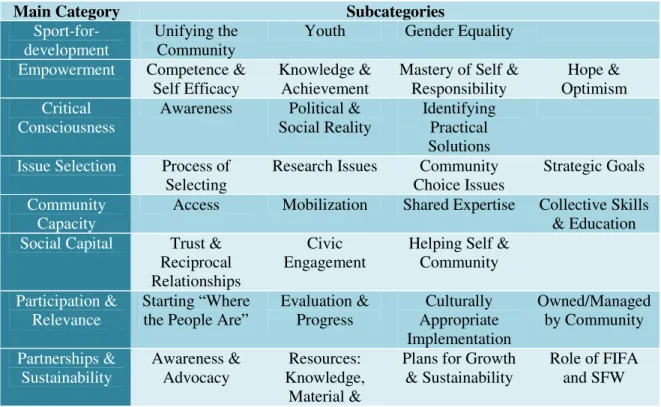
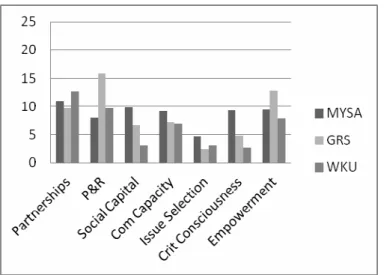
1. The Community Organization Health Model (COHM) Tenets ...31 2. Percent Presence of Individual COHM Tenets ...63 3. Percent Presence of Partnership Code Compared to the COHM Tenets ...83 4. Percent of Coded Documents Reflecting Areas of Recommended
Chapter 1 Introduction Background of Study
The impact of the human immunodeficiency virus (HIV). In the last three decades, international public health officials have directed their attention toward one primary health concern: the human immunodeficiency virus (HIV) pandemic. Since its introduction to the global community in 1981, medical practitioners have diagnosed roughly 60 million people as HIV positive, 25 million of whom have died from the virus (UNAIDS, 2010; World Health Organization, 2011a). While prevalence of the HIV virus, and its corresponding disease Acquired Immunodeficiency Syndrome (AIDS), peaked in 1999, its enduring presence is still a significant problem for the global
community- particularly in Sub-Saharan Africa, which currently houses two thirds of all HIV cases (UNAIDS, 2010; World Health Organization, 2011a).
HIV in youth. While doctors and researchers have made significant
prevalence, the number of new cases and the total number of cases respectively, of HIV in the youth population is a lofty goal; currently, 2.5 million children are infected with the virus, with 370,000 new cases resulting in the last year alone (UNAIDS, 2010; World Health Organization, 2011a).
Despite these statistics, children and youth are unique in many senses; they are the most vulnerable to the danger of HIV/AIDS; yet, they offer a unique opportunity to change the social order and awareness in their communities (Botcheva & Huffman, 2004; Human Rights Watch, 2005; Lindsey & Banda, 2010). Children also exhibit a unique resilience not often seen in their adult counterparts (Lindsey & Banda, 2010). For this reason, government and nongovernmental organizations (NGOs) have started to look toward interventions that uniquely engage youth in a more meaningful way.
HIV in youth, possible solution: The sport-for-development movement. Sporting events, from the Olympics to schoolyard pick up matches, help to define and shape cultures worldwide. By nature, sporting events bring communities together for a shared experience. In addition to its ability to bring a community together, sport presents a number of other positive characteristics which have made the UN, multiple NGOs, national governments and the corporate sector take notice and consider its use as a development tool (Brunelli & Parisi, 2011; Mintzberg, 2006). Sport, used for
development, is defined as “the utilization of sport as a tool to foster personal and social improvements of those people and communities most in need of development” (Houlihan & White, 2002, p. 48).
sport well suited for use as a development tool. The Task Force’s findings summarized the following as the most valuable effects of sport on the individual:
1) it teaches discipline, confidence, leadership, tolerance, cooperation and respect, 2) it exhibits the value of effort and managing victory and defeat,
3) it increases physical health, as well as raises awareness and respect for the individual’s body and the bodies around them,
4) it improves communication skills and more actively involves local community, 5) it helps provide normalcy and structure, and
6) it helps individual’s understand their identity, break stereotypes and value diversity.
On a broader societal level, sport provides a site for symbolic public acts crosses boundaries and breaks cultural barriers (President’s Council, 2006; United Nations, 2003). Due to recognition of the potential of sport as a developmental tool, the UN broadly promoted the use of sport across the global sector, including as a tool to promote the fulfillment of the UN's Millennium Development Goals (MDGs) (United Nations, 2003; 2006).
a particularly potent delay in sexual activity among youth females (Kay, 2009; Laub, Somera, Gowen, & Diaz, 1999).
The problem of sport-for-development. After roughly a decade of use within the developmental sector, the attention on sport-for-development programs has shifted away from promoting sport’s potential to calling for a uniform method of evaluating program effectiveness (Coalter, 2009; Coalter & Taylor, 2010c; Levermore, 2008). However, standardizing evaluation depends heavily upon the context and developmental focus for which sport is used (Right to Play, 2008; United Nations, 2003).
As stakeholders and partnership organizations consider future health development efforts, they are demanding a more rigorous evaluation of sport-for-development program efforts. Researchers and funders alike want to know whether these programs are truly a viable and valuable resource to keep supporting as a development tool. While sport-for-development programs have not gone un-evaluated for the last decade, the research has often been program specific and qualitative in nature, making it difficult to substantiate claims of causality (Right to Play, 2008). Many of the benefits, claimed to be associated with the use of sport are psychological and social in nature, making them both direct and indirect outcomes of the context and social interaction occurring at the time.
Through evaluating the characteristics of current best practices, researchers highlight three important factors that have been inconsistent across past evaluations:
3) exploring ways to further utilize resources through sustainable partnerships (Brunelli & Parisi, 2011; Coalter & Taylor, 2010c; Levermore, 2008; Right to Play, 2008).
Programs evaluators have not consistently explored these three elements together, in evaluation, due to the lack of a comprehensive and relevant standardized model from which to compare intra and inter-organizational efforts (Comic Relief, 2007; Right to Play, 2008).
The importance of creating a uniform method of evaluation for for-development programs cannot be over-emphasized, particularly within the use of sport-for-development in addressing HIV. Currently, thirty five worldwide organizations are using sport-for-development measures to deliver HIV prevention programs. In the effort to continue mitigating the impact of HIV/AIDS, it is valuable to determine an evaluation procedure that will continue to garner support for these HIV sport-for-development programs.
Solution to the problem of sport-for-development: Quantitative evaluation via the Community Organization Health Model. Within the field of public health
development, there has often been a challenge in quantifying the social and psychological benefits of a community health effort. The solution to this challenge has been to use health models/conceptual frameworks to create structured quantitative and qualitative evaluation measures that provide a well-rounded view of program efficacy (Glanz, Rimer & Viswanath, 2008). Conceptual frameworks provide clarity and direction when
for a health model's framework to be useful in creating evaluation tools, the program(s) in question should value and reflect the basic tenets of the model (Glanz et al., 2008).
Due to sport's positive social and psychological effect on both communities and individuals, the aims of this development tool seem to correspond well with the
framework of the Community Organization Health Model (COHM). The COHM framework attempts to help groups identify common problems or goals, mobilize
resources, and implement strategies for reaching their collective goals, including building valuable partnerships (Minkler & Wallerstein, 2002). The COHM seeks to meet the community where it is, ensuring relevance of efforts, rather than imposing external priorities in development. Finally, the model emphasizes community ownership to encourage sustainability and maintain development progress (Minkler & Wallerstein, 2002).
Given its natural focus on the grassroots community level, the COHM naturally addresses the three areas recommended for standardized evaluation: cultural relevance, local ownership and sustainability. In addition, its focus on the community and
harnessing cultural change makes it an appropriate model from which to highlight and amplify the positive effects of sport on the community and individual.
Statement of Problem
development programs in regards to: 1) cultural relevance of the program, 2) community ownership and 3) sustainability through partnership resources.
Given this problem, the purpose of this exploratory analysis was to examine whether the COHM would be a feasible model from which to design a relevant evaluation procedure. In order to examine the fit of this model, the content of the promotional and evaluation documents (video transcripts, website promotional materials and program training materials) of three best practice, HIV prevention,
sport-for-development programs were evaluated to examine the extent to which the organizations mirrored the basic concepts of the COHM. The extent to which they embodied, or failed to embody, the COHM tenets was used to determine the applicability of the model for creating evaluation procedures that could be standardized across HIV
sport-for-development programs.
While looking for the presence of the COHM tenets, the best practice data were also examined for emerging patterns or theories better suited to creating evaluation procedures reflecting program relevance, ownership and sustainability. As such, the content analysis was performed with a qualitative set of procedures and addressed the following research questions:
1) To what extent do the three organizations in question convey, or fail to convey, the tenets of the COHM in their promotional and evaluation documents?
Qualitative content analysis of the promotional and evaluation documents was used due to both the complexity of the problem and the exploratory nature of this analysis. The inherent social and cultural complexity of both the HIV disease and the impact of sport-for-development programs made a structuralism framework most appropriate for this study. Structuralism focuses on the social and physical institutions that help create meaning within the culture of local communities (Denzin & Lincoln, 2000; Patton, 2002). Within this framework, the researcher approached the analysis with an interpretivist paradigm, which aimed not to verify whether the COHM was a truth (e.g., correct or incorrect hypothesis) but rather looked for emerging patterns that either confirmed the feasibility of using the COHM or offered recommendations of other best fit theories or models (Denzin & Lincoln, 2000; Patton, 2002).
Significance of the Study
Due to the enduring presence of HIV worldwide, and the lack of a cure for the disease, world leaders have promoted a continued effort to refine effective prevention techniques. Non-governmental organizations (NGOs) and local leaders have continued to focus HIV prevention efforts toward youth, due both to the high prevalence within this age group and the fact that youth have the potential to create meaningful cultural change (Campbell, 2001; UNAIDS, 2010). However, in order to realign youth mentalities, HIV efforts must be addressed within the socio-cultural, economic and political realities of each individual culture (Coalter, 2010a, 2010b; United Nations, 2003).
relevant model from which multiple programs could be evaluated (Comic Relief, 2007; Levermore, 2008; Right to Play, 2008). A uniform evaluation procedure, based upon this model, would provide additional credibility to programs, as well as enhance each
program’s ability to continue growing a sustainable presence in its local community. It is in addressing this evaluation problem that researchers can compare current program strengths, streamline the use of resources, and realize both local and international health development goals regarding the prevention of HIV.
Delimitations
Due to the researcher’s location in San Luis Obispo, California, when undertaking this study, the scope of this analysis was limited to what was accessible via electronic communication from the organizations under study. Due to the physical separation from the programs, and the unique aspect of the evaluation problem, an evaluation of the actual efficacy of football-for-development programs was not within the scope of this analysis. Definition of Terms
Acquired Immunodeficiency Syndrome (AIDS). An autoimmune disease, in which the progressive failure of the body's immune system causes opportunistic infections and cancers to thrive (World Health Organization, 2006).
Center for Disease Control (CDC). A United States federal agency under the Department of Health and Human Services; it works to protect public safety and health through partnerships with various organizations (Center for Disease Control, 2011).
Community Capacity. Community characteristics affecting its ability to identify, mobilize, and address problems. One of the six tenets of the COHM (Minkler &
Wallerstein, 2002).
Community Organization Health Model (COHM). A health theory model that seeks to change health behavior by helping local communities identify common problems or goals, mobilize resources, and implement strategies for reaching collective goals (Minkler & Wallerstein, 2002).
Development. Process of enlarging peoples’ choices and increasing opportunities available to all members of society (United Nations, 2003).
Empowerment. Social action process for people to gain mastery over their lives and the lives of their communities. One of the six tenets of the COHM (Minkler & Wallerstein, 2002).
Federation Internationale de Football Association (FIFA). The international governing body for the sport of football. Its membership comprises 208 national associations (FIFA, 2011b).
The Global Fund. An organization created by a UN resolution to provide a funding source for prevention and treatment efforts for the world’s top three most debilitating diseases- malaria, tuberculosis and HIV (The Global Fund, 2011).
Human Immunodeficiency Virus (HIV). A retrovirus that is the cause/source of Acquired Immune Deficiency Syndrome (World Health Organization, 2006).
Issue Selection. Identifying winnable and specific targets of change that unify and build community strength. One of the six tenets of the COHM (Minkler & Wallerstein, 2002).
Non-government Organization (NGO). A term, originated by the UN, referring to organizations that do not form part of a government and are not conventional for-profit businesses (United Nations, 2011).
Participation and relevance. Community organizing should “start where the people are” and engage community members as equals. One of the six tenets of the COHM (Minkler & Wallerstein, 2002).
“Plus sport” Programs. Development programs focused primarily around sport, utilize sport program in parallel with other development, but sport is the primary means through which development efforts are expressed (Coalter, 2008).
Prevalence (of a disease). The total number of cases present in a population at a given time of measurement or across a period of time (World Health Organization, 2012).
The (RED) Campaign. A part of The Global Fund containing awareness events, including special performances and World AIDS Day events, and business partnerships offered through Product (RED), where corporations create (RED) products to sell, one half of the proceeds going to The Global Fund ((RED), 2011b).
“Sport plus” Programs. Development programs that are currently functioning that utilize sport’s popularity to attract young people to education/training (Coalter, 2008).
Sport. All forms of physical activity that contribute to physical fitness, mental well-being and social interaction (United Nations, 2003).
Sport-for-Development (SFD). The intentional use of sport, physical activity and play to attain specific development and peace objectives, including the Millennium Health Goals (Right to Play, 2008, p. 13).
United Nations (UN). An international organization aimed at facilitating
cooperation in international law, security, economic development, social progress, human rights and the achievement of world peace (United Nations, 2011).
World Health Organization (WHO). A specialized agency of the United Nations that acts as a coordinating authority on international public health (World Health
Organization, 2012).
Chapter 2 Literature Review
In the face of the HIV/AIDS pandemic, it is important to understand the way this disease influences the world’s population and the current action that world leaders are taking to mitigate its impact (UNAIDS, 2010; World Health Organization, 2011b). Due to the lack of a cure, the most recent efforts have shifted away from treatment alone and toward prevention, particularly in the at risk youth population (Botcheva & Huffman, 2004; UNAIDS, 2010; World Health Organization, 2011b). In focusing on youth, sport has been identified as a particularly relevant development tool, affecting both individual and cultural change (Brunelli & Parisi, 2011; United Nations, 2003; 2006). However, no means of develop is without its own weaknesses; sport-for-development programs, while broadly promoted, have not been effectively tracked and evaluated (Levermore, 2008; Coalter, 2009). Therefore, it is important to understand the impact of HIV/AIDS, the effect of sport-for-development programs and the challenges in creating meaningful evaluations. Hence, the purpose of this review is to twofold; to confirm the proposed relevance of using sport as a development tool for HIV prevention and to elucidate a possible solution to the evaluation problem.
History and Impact of the Human Immunodeficiency Virus (HIV) and Acquired Immunodeficiency Syndrome (AIDS)
devastation it would cause (Rambaut, Posada, Crandall & Holmes, 2004). In time, scientists determined the HIV virus was neither a contagion nor existing in isolated communities. Due to the general lack of knowledge about the pathology of the virus, HIV/AIDS had grown into a pandemic by the late 1990s (Rambaut et al., 2004; World Health Organization, 2006). Due to its complexity and rapid spread, HIV/AIDS quickly developed into one of the United Nations’ (UN) primary focuses of concern- classified as a health concern that could only be dealt with through a coordinated effort (The Global Fund, 2011; World Health Organization, 2006).
Since its introduction to the global community, roughly 60 million people have been identified as HIV positive, and AIDS has claimed the lives of roughly 25 million (UNAIDS, 2010; World Health Organization, 2011a). When the disease peaked in 1999, the World Health Organization (WHO) initiated recurring summits to develop a
comprehensive strategy for addressing prevention and treatment of HIV. These initial summits led to the development of the document now known as the Millennium Development Goals (MDGs). The MDGs, deemed to be of international importance, have shaped the UN and the WHO’s efforts at creating partnerships with local
governments and non-governmental organizations.
This new goal, paired with the facts that 2.5 million children are currently infected with HIV and 40% of the new cases come from individuals aged 15-24, has placed a distinct focus on HIV/AIDS prevention in youth (Botcheva & Huffman, 2004; UNAIDS, 2010; World Health Organization, 2011a). Within this youth population, females are at a greater risk of contracting the disease than males due to cultural norms and the opportunities afforded to them (UNAIDS, 2010; World Health Organization, 2011a). Children and youth are not only more susceptible to contracting the malady, but they often lose the last vestiges of childhood due to the burden of infected family
members. Fewer and fewer of these children, impacted by HIV, are receiving a primary education. The need to take on adult responsibilities often limits not only the quality of their own health but the opportunities afforded to them to live a healthy life (Botcheva & Huffman, 2004; Human Rights Watch, 2005).
HIV progress. Faced with these daunting statistics, it is often easy to overlook the progress world leaders have made in fighting HIV/AIDS. Past and current prevention and treatment efforts have successfully stabilized the pandemic, and in some cases, decreased the spread of the virus (World Health Organization, 2006). According to the UNAID’s 2010 Global Report, HIV prevalence- the total number of cases in the
population- decreased by over 25% in twenty two, high-risk African countries. Specifically, in regards to youth, there was a 24% drop in new cases developed by
children from 2004-2009. The UN also reported a decrease of 19% in HIV-related deaths in children, during this same time period. These improvements reflect a strong
grassroots NGOs and corporate awareness and contribution ((RED), 2011a; World Health Organization, 2011a).
The greater the effort the global community puts forth to stop the spread of HIV/AIDS to subsequent generations, the greater the possibility of substantially containing or eradicating the disease. In the effort to halt the progress of the disease, youth are a unique population; they offer an opportunity, during development and education, to not only protect themselves but to create a substantial change in the culture and awareness surrounding the disease (Botcheva & Huffman, 2004; Human Rights Watch, 2005; Lindsey & Banda, 2010). Youth also exhibit a unique resilience that is often not seen in their adult population counterparts (Lindsey & Banda, 2010). For these reasons, world leaders have recognized that youth seem to be the best population to target in the aim to reverse the ride of HIV/AIDS.
HIV progress: What works in engaging youth? Due to nearly three decades of research into HIV prevention and treatment, researchers have identified certain pillars of HIV programming that make prevention programs most effective with youth. These four pillars include:
1) knowledge- built through a trusting relationship with coaches, teachers and peer role models,
2) life skills- built through the development of character and opportunities afforded to youth,
3) a safe environment- including physical and emotional safety, and
disease and culture surrounding it (Botcheva & Huffman, 2004; United Nations, 2006).
For youth affected by HIV, a sense of normalcy and the opportunity to slow the process of maturation is often fleeting (Botcheva & Huffman, 2004; Human Rights Watch, 2005). The opportunity to include disadvantaged children, in a structured HIV prevention and treatment program, allows all of the above mentioned goals to have the potential to come to fruition.
HIV, Youth and Cultural Change: A Possible Solution in Sport-for-Development While a number of programs could encompass the previously mentioned characteristics, the avenue of sport possesses unique qualities that offer the potential to reach both youth and adults, as well as shape cultural change. Sport is a mainstay of societies worldwide. Stakeholders in sport have always acknowledged both the objective and subjective value of sport; however, in the early 2000s international leaders began recognizing sport’s potential use as a tool for development purposes (Burnett & Uys, 2000; Green, 2008).
Within all development work, it is critically important to unite the community and enlist active participation (Right to Play, 2008). Sport offers the possibility to achieve both. By nature, sport events bring community together on a variety of levels, bridging cultural divides and creating cooperation, tolerance, and respect (United Nations, 2003). The simple and enjoyable structure of sport also makes it particularly well suited for development efforts, especially when used with children or adolescents (Delva & Temmermen, 2006; Mintzberg, 2006; Tobisch & Preti, 2010).
Research within the sectors of sport sociology and sport psychology shows that sport can have a potent effect on a developing child's character and decisions (Bailey, 2005; President’s Council, 2006). The UN's Task Force’s evaluation of the use of sport-for-development programs highlighted the following characteristics as most valuable for youth:
1) teaching participants discipline, confidence, leadership, tolerance, cooperation and respect,
2) teaching the value of effort and learning how to manage both victory and defeat,
3) increasing physical health and in turn, increasing a child's awareness and respect for his/her body,
4) creating a greater awareness of the environment around them,
6) encouraging the understanding of a child's identity, including challenging stereotypes and emphasizing the importance of diversity (Right to Play, 2008; United Nations, 2003; 2006).
All of the above mentioned characteristics not only encouraged NGOs to start incorporating sport into their development efforts, but led the UN to acknowledge the potential power of using sport as a standalone development tool, not just a supplement (Burnett & Uys, 2000; Green, 2008; United Nations, 2003). To promote sport’s use as a developmental tool, the UN dedicated an entire year, the 2005 International Year of Sport and Physical Education, to advocate and fund sport-for-development programs (United Nations, 2006). The UN, WHO and several corporate funders, set aside special funding to continue supporting existing programs and to encourage the development of new programs. During this time, sport-for-development efforts branched out to include efforts for:
1) conflict resolution and intercultural understanding, 2) building new physical and social infrastructures, 3) raising awareness through education,
4) empowering disadvantaged individuals through vocational training, 5) directly impacting physical and psychological health, and
6) economic development and poverty alleviation (Levermore, 2008; United Nations, 2006).
1) promoting education, gender equality, HIV awareness and reduction of physical disease,
2) being a cost effective solution that mobilizes society, leading to a greater chance of sustaining the program, and
3) instilling the value of activity at a young age thereby promoting healthy development of motor skills (Right to Play, 2008).
The involvement of numerous sectors in a coordinated and cohesive effort, during this International Year of Sport, led to new partnerships among international
organizations, businesses, NGOs and local communities.
The most meaningful role models and coaches in sport programs are local heroes from the community (Botcheva & Huffman, 2004; Banda et al., 2008). When youth watch older members of the community invest in a program, it increases the likelihood both of the youth participating and of the youth investing in program maintenance as they mature (Eley & Kirk, 2002; Kay, 2009). Culturally relevant programs create not only sustainable programs but the potential for economic growth and job opportunities as these programs grow in nature (Coalter, 2009; United Nations, 2006). The involvement of the local community allows for the continued presence of these programs in Africa and increases the potential for change to take place within the culture surrounding HIV/AIDS (Coalter, 2009; Levermore, 2011; Locher, 2007).
Football: A Culturally Relevant Sport for Africa and HIV
It is clear that even within the use of sport, choosing a culturally relevant sport is critical to the success of sport-for-development programs addressing HIV/AIDS
participation. All of these characteristics combine to make football a cost effective and engaging sport with the capacity to reach a large population.
Due to football’s international presence, it also offers a unique opportunity for partnerships with key international organizations, including football’s international governing body, the Federation Internationale de Football Association or FIFA (FIFA, 2011b). FIFA’s connections to corporate responsibility programs, such as Nike, Adidas and Puma, expand access to equipment, monetary and advocacy resources (FIFA, 2011b; Giardina, 2010; Nike CR Report, 2008). To funnel these resources to appropriate
programs, FIFA created a partnership with a global football-for-development network called streetfootballworld (streetfootballworld, 2011). This partnership created a connection between local grassroots efforts, as coordinated by streetfootballworld, and international business corporations.
On a grassroots level, organizations within local communities have built sport infrastructures around football to enhance the availability of equipment, the
dissemination of health information, and to allow for the creation of economic
Football-for-development and program sustainability: A global effort. As is evidenced in the multitude of football partnership resources, partnerships are pivotal a piece in sustaining programs. Early UN summits, focused on creating action plans for HIV response, stressed the importance of international partnerships and cooperation to provide both an effective and sustainable answer to this problem (UNAIDS, 2010; World Health Organization, 2011b). These international partnerships included the melding of work from non-governmental organizations (NGOs), local governments, international peace organizations and corporate investment (Right to Play, 2008). Within this web of partnerships, international organizations such as the WHO, the UN, and the CDC seek to provide the structural framework for the large scale efforts, and individual NGOs create smaller, locally-focused efforts which allow for a closer partnership with local
communities. Both NGOs and global authorities seek to encourage corporate
responsibility and involvement in the sport-for-development effort (Banda et al., 2008; Beutler, 2008; FIFA, 2011a; The Global Fund, 2011; (RED), 2011a). Given that resource, monetary, knowledge-based and power, access is a large part of sustaining an effort, it merits a brief mention when discussing the value of partnerships.
currently provides a large portion of the funding for ongoing efforts (Coalter, 2009; The Global Fund, 2011; Levermore, 2011).
Moving out of the business sector, a variety of other knowledge-based and
advocacy opportunities arise from partnerships with international sport governing bodies, particularly FIFA, the Football for Hope program and the media exposure that can result from large sporting events such as the World Cup. In 2005, FIFA was one of the first sports federations to create an internal corporate social responsibility (CSR) department (FIFA, 2011b). The point of the CSR department was to dedicate .7% of revenues to projects that helped support “the utilization of football in the achievement of the United Nation’s MDGs” (FIFA, 2011b). Beyond simply providing corporate revenue, FIFA used the World Cup to help support grassroots organizations through advocacy, publicity and fundraising.
Apart from its partnership with FIFA, streetfootballworld’s original purpose was to provide a connection to programs utilizing football as a development tool. Its network currently connects over 80 organizations, in 50 different countries (streetfootballworld, 2011). Streetfootballworld’s three primary objectives include:
1) partnership for advocacy work, to bring about social, economic and political change,
2) creation of clinics, conferences and meetings to share expertise and programmatic ideas, and
3) development of an electronic “Knowledge Center” where organizations can access best practice methods from sister organizations in the network (streetfootballworld, 2011).
It is clear, from the resources devoted to developing global
football-for-development networks, that international and local leaders alike recognize the value of partnership. Whether partnerships are used for financial resources, policy advocacy or the dissemination of valuable program best practice procedures, the value in creating a reciprocal partnership is not to be overlooked.
A Call for Evaluation
It seems clear that sport-for-development programs, specifically those utilizing football
, offer the potential to produce a substantial effect on both youth development and the impact of HIV in Africa. Football appears to be effective due to its cultural
Due to all of the potential football-for-development offers, it seems appropriate that these programs begin to focus more effort on a way to uniformly evaluate program progress across cultural context. Indeed, sport-for-development stakeholders are
requesting a more rigorous evaluation of program development and progress, to capitalize on the best areas to invest resources. Standardizing an evaluation method would serve to enhance partnerships in three ways:
1) it would reduce the influence of funders on the development and implementation of program objectives,
2) it would help organizations accurately evaluate the type of resource support they need from potential partners, and
3) it would continue to reinforce the benefit of using sport as a development tool for HIV prevention (Coalter, 2009; Comic Relief, 2007; Levermore, 2008; Right to Play, 2008).
Aside from financial stakeholders, academic researchers in the field of sport-for-development also recommend that a uniform evaluation approach be developed to add legitimacy to the outcomes promoted by organizations. Sport-for-development initiatives are described as “still in their infancy, woefully underfunded, unregulated and isolated from mainstream development efforts” (Right to Play, 2008, p. 22) making it all the more imperative that rigorous backing is created to ensure the continued support of these programs. However, sport-for-development does not easily lend itself to a strictly
While a number of programs have met great success in providing culturally relevant programs, there still appears to be a number of sport-for-development programs that may be ignoring uncomfortable political and moral barriers to culture and
community change (Coalter, 2009; Right to Play, 2008). Within the initiation of new programs and the local expansion of others, evaluation is often seen as another burden rather than an opportunity to examine the cultural effect and organizational growth opportunities (Levermore, 2011). Evaluation offers a good indicator of whether the organization truly understands the needs of the community. Even the broadly promoted MDG’s can work against local organizations, if the community perceives the exchange of resources and time out of touch with their own local goals.
All development efforts need to focus on the community as the center of the approach in order to determine the correct allocation of resources (Coalter, 2010a). While international or nonlocal NGOs need to be aware of community needs, the
community should also acknowledge the value of partnerships in addressing macro-level structural obstacles to change (Coalter & Taylor, 2010c).
Due to the importance of evaluation procedures in addressing all of the above complexities, Levermore (2011), proposed that every organization, when discussing its implementation needs, address the following three questions:
1) Has evaluation of the program been undertaken?
2) If so, which method was used and was it conducted internally or externally? 3) How much of the results were made public?
implementation (Coalter & Taylor, 2010c). The method and design of evaluation can be indicative of the quality of the program. If the evaluation is performed internally, it is important that the staff member performing the evaluation is well trained in data and research methods, allowing for an unbiased and thorough evaluation (Levermore, 2008; Coalter & Taylor, 2010c). External evaluation is always recommended, as it can occur via an individual that is not a stakeholder in the success of the program. In addition, researchers recommend that an external evaluator not be associated with a funding organization, to reduce potential stakeholder bias. Finally, the last question addresses the willingness of an organization to make their findings, regarding program effectiveness, available to the public, promoting transparency and accountability in their programmatic efforts. Organizations that do not focus on evaluation efforts often cite the following reasons for bypassing this process: the expense, the time, the technical complexity, the lag behind behavioral and community change, and access to limited data (Levermore, 2008).
Beyond simply seeking to justify the existence and effectiveness of a single program, evaluation has the potential to serve a wider role within the global sport-for-development community by:
1) adding knowledge of the precise circumstances under which positive outcomes occur,
2) providing recommendations about how to achieve these outcomes in varying contexts, and
Due the global interest in organizations willing to partner with development efforts, best practice organizations should be evaluated under one consistent evaluation protocol to glean a comparative analysis of football-for-development outcomes in different cultural contexts.
In seeking to develop this type of evaluation procedure, it appears most logical to create a measurement tool that specifically addresses the promoted strengths of sport-for-development programs, and the areas that all programs should focus on to increase impact: cultural relevance, community ownership, and sustainability measures (Brunelli & Parisi, 2011; Coalter & Taylor, 2010; Levermore, 2008; Right to Play, 2008).
The Community Organization Health Model
Using health models to create evaluation. While it is feasible to create a rigorous evaluation that fits an individual program, it is often more difficult to create an evaluation that fits in a generalizable way across various programs and locations. This problem of generalizability is not a new one for the sector of health research. Public and community health researchers have sought to answer the problem of generalizability by using agreed upon health models and conceptual frameworks that fit multiple programs, to create standardized quantitative and qualitative evaluations (Glanz et al., 2008). Conceptual frameworks provide structural clarity and direction in evaluating both expected and actual outcomes of a program's efforts; however, for a health model's framework to be useful in creating evaluation tools, the program(s) in question should value and reflect the basic tenets of the model.
evaluation procedure for football-for-development programs. Since HIV prevention and sport-for-development programs are best implemented through a grassroots, bottom-up approach, it seems to most appropriate to use a health model for evaluation that
encompasses these traits as well. The Community Organization Health Model (COHM) is one such health model. The COHM emphasizes the ability to “start where the people are” in engaging community for health change (Minkler & Wallerstein, 2002, p. 280). This model seeks to assist the community in identifying common problems, creating collective goals and mobilizing resources to address those problems (Minkler & Wallerstein, 2002).
When examining the way in which the COHM works, it helps to understand how “community” is defined. While community can be defined in a variety of ways,
depending upon the cultural context, the COHM refers to it as individuals fitting into one of the following categories:
1) categorical community - based upon geographical location, occupation, or gender,
2) ecological systems community - based upon population characteristics (size, technology exposure etc.), or
3) social systems community - based upon social, political or economic interactions (Minkler & Wallerstein, 2002).
Figure 1. The Community Organization Health Model (COHM) Tenets. COHM tenets. Minkler and Wallerstein (2002), define empowerment as the “social action process for people to gain mastery over their lives and the lives of their community” (p. 288). This tenet promotes community equity and pushed for community members to build competency within the political sector (Minkler & Wallerstein, 2002). An empowered community, that lacks political competency, may be very good at
expressing what they need without the ability to obtain the necessary resources for change. Empowerment can and should occur on three levels: individual, organizational and community (Minkler and Wallerstein, 2002).
Empowerment can occur as an end goal, as a process or as both a process and an end goal. The concept of empowerment is primarily psychological in nature and revolves around internal resources (Tengland, 2007). These internal resources include:
1) Knowledge - academic in nature,
2) Self-esteem - viewing self as a person of worth,
3) Self-efficacy - belief in self in regards to completing a specific task, and 4) Self-confidence - a general belief in self to solve problems successfully in life
(Tengland, 2007).
To increase cultural relevance, community ownership and program sustainability
Issue Selection
Empowerment Social
Capital
Participation & Relevance Community
Capacity
When empowerment is viewed as a process, it takes primarily an individual focus; however, the end result of empowering organizations and institutions can often only be achieved as a result of the process of empowering individuals in the community
(Tengland, 2007). This process of empowering individuals creates opportunities to engage in the second tenet: a critical consciousness discussion of issues.
Critical consciousness refers to “consciousness based on reflection and action in making change” (Minkler & Wallerstein, 2002, p. 288). Critical consciousness is the engagement of dialogue that stems from empowered individuals (Minkler & Wallerstein, 2002). For this dialogue to occur individuals must be: 1) aware and educated about the issues under discussion, 2) willing to critically assess the roots and 3) motivated to
identify solutions to the problem (Minkler & Cox, 1980; Wallerstein & Bernstein, 1988). As the strength of a community grows, there will be expanded forums for discussion about the cause of societal problems and the action the community should take in order to address these concerns. Critical consciousness discussion can assist a community in selecting a relevant issue and organizing the effort to address that issue.
Issue selection becomes pivotal in guiding the success of a community effort. This tenet refers to the ability to “identify winnable and specific targets of change that unify and build community strength” (Minkler & Wallerstein, 2002, p. 288). These issues are primarily identified through the participation of the community, but a leader is often needed to focus attention on the few issues that are most feasible given the
for the community effort to move forward in unison there must be strong cohesion present with community members.
Social Capital refers to the “relationships between community members defined by trust, reciprocity and civic engagement” (Minkler & Wallerstein, 2002, p. 288). To build social capital, members of the society must perceive that the relationships they form to be horizontal in nature, with all individual working toward the betterment of the
community (Kreuger, Lezin & Koplan, 1997; Minkler & Wallerstein, 2002; Misener & Mason, 2006). For this reason, communities with social capital are defined by frequent supportive interactions between community members and a general feeling of
identification with the community as a whole (Campbell, 2001; Coalter, 2010a). This ensures that communities are better able to facilitate cooperation among community members for mutual benefit. The level of cooperation and civic participation garnered often reflect the relevance of programmatic efforts or community initiatives.
Relevant community programs start at the grassroots level and work to give community leaders the reigns in directing program direction and effect. To further
enhance ownership, all members of the community should have equal access to the power and resources meant to benefit the community (Goodman et al., 1998; Minkler &
Minkler & Wallerstein (2002) describe community capacity as the “characteristics of community affecting its ability to identify, mobilize, and address problems” (Minkler & Wallerstein, 2002, p. 288). A community’s capacity depends upon: 1) skills and resources, 2) a critical reflection of needs, 3) a sense of community, 4) understanding of history and culture and 5) clear articulation of values. Each of the needs build on the others, and all five must be present for a community to be at its full capacity.
Community capacity is dynamic in nature and develops in stages, including both an inventory of current skills and resources and developing a plan for cultivating new resources (Goodman et al., 1998). The greater the community capacity, the more likely the community members will feel satisfied with their contribution and satisfied with the program’s continued presence.
Each of the six COHM tenets is fluidly connected to the others, addressing multiple dimensions in the process of organizing and creating sustained involvement in a community-oriented health initiative.
In addition to the best practice research by UNAIDS, a number of individual case studies have examined the effectiveness of empowerment, critical consciousness and relevance in HIV prevention programs in youth and women (Campbell & McPhail, 2002; Campbell, Foulis, Maimane, & Sibiya, 2005; Gregson, Terceira, Mushati, Nyamukapa & Campbell, 2004; Piot, Bartos, Larson, Zewdie & Mane, 2008). Campbell et al.’s research (2005) concluded that grassroots organizations, offering low cost community events, were able to successfully bring together youth from varying social classes to engage in an interactive discussion about HIV. Aside from simply bridging the social barrier gap, Campbell & McPhail (2002) found the interactive discussion to show an improvement in the critical thinking capacity of the youth participants. Gregson et al., (2004) provided further confirmation that a critical consciousness discussion, resulting from repetitive contact of community groups, allowed for a clearer understanding of how HIV/AIDS impacted the community. Since no one individual's views develop in isolation from social networks and culture, programs should seek to use community connection as a way to enhance a community’s capacity and assist in cultural change efforts (Campbell & McPhail, 2002; Gregson et al., 2004; Coalter, 2009).
Literature Review Summary
Health models have often served as a solution to this same problem in other health initiatives, serving as the guiding framework for quantitative and qualitative evaluation development. For this reason and due to the unique complexity of HIV and sport-for-development as a tool, the COHM appears to be a potential fit for developing an evaluation protocol. It reflects HIV best practices in engaging community, and it
Chapter 3 Methods
Given the strong support of the sport-for-development movement and its apparent fit within addressing HIV in youth, this analysis functioned under the assumption that sport-for-development is an effective and valuable tool for addressing HIV prevention. Within the use of sport-for-development programs comes the problem under
investigation: the need to establish a uniform protocol from which to evaluate HIV sport-for-development program effectiveness, in regards to: 1) cultural relevance of the
program, 2) community ownership and 3) sustainability through partnership resources (Brunelli & Parisi, 2011; Coalter & Taylor, 2010c; Levermore, 2008; Right to Play, 2008).
Given this problem, the purpose of this study is to examine whether the
As such, I decided an emergent, qualitative design approach best fit the study problem. Due to both the complexity of the problem, and the exploratory nature of this analysis, I believed that a qualitative approach allowed for a more thorough examination of the research questions and fit of the health model to the data. The type of material used, promotional documents and evaluations, also justified a qualitative approach. This material should inherently reflect each organization’s dispositions and values; however, discerning and interpreting values of organizations, without confirming with
stakeholders, is both an objective and subjective process. Qualitative approaches allow for subjectivity as new relevant data emerges from the analysis; therefore, I also utilized an emergent design to allow the leniency of adjusting the study’s research questions if new themes and outcomes emerged from the data, even if they were not in alignment with the research questions (Mayring, 2000; Miles & Huberman, 1984; Saldana, 2009).
The inherent social and cultural complexity of both the HIV virus and the proposed benefits of sport-for-development programs make a structuralism framework, most appropriate for this analysis. Structuralism draws attention to the social and physical institutions that help create meaning within a culture (Denzin & Lincoln, 2000; Patton, 2002). Within this framework, I approached the study with an interpretivist paradigm, which aimed not to verify whether the COHM was a truth (e.g., a correct or incorrect hypothesis) but rather looked for emerging patterns that either confirmed the feasibility of using the COHM or offered recommendations of other best fit theories or models (Denzin & Lincoln, 2000; Patton, 2002). This paradigm assumes that the
promotional content. In order to counteract my subjectivity, I noted areas of potential bias in my interpretation throughout the process of both creating and editing the codebook, as well as in the actual process of coding the material.
Study Location
While the organizations examined in this analysis all implement their programs in Sub-Saharan Africa, this analysis took place in San Luis Obispo, California.
Study Design
Methods for examining documents: Content analysis. Due to the focus on evaluating written promotional documents, content analysis was chosen as the most appropriate methodology for this analysis. Patton (2002) describes content analysis as “any data reduction effort that attempts to make sense of a volume of written material, attempting to identify core consistencies and meanings (p. 453). Content analysis, as it relates to an academic discipline, is differentiated into two separate methods:
quantitative and qualitative (Krippendorff, 1980). Traditional quantitative analysis attempts to “quantify and analyze the presence, meaning and relationships of words and concepts” by examining 1) the frequency and 2) the length of time spent upon certain topics or themes in a body of literature (Krippendorff, 1980, p. 54). This analysis is presumed to allow the researcher to make inferences, based on numerical significance, about the intention and behavior of the individual and/or organization that produced the document. Quantitatively, content analysis is often used to verify or confirm
During the 1950s, researchers began to realize there was further benefit in
evaluating the relational component of textual content. This placed the focus not only on the frequency of a word but also the context in which the word appeared and its relational meaning to the rest of the document (Mayring, 2000). In order to explore this relational analysis, researchers developed a qualitative version of content analysis. Qualitatively, content analysis is still approached with a set of empirical coding categories, but it allows for the discovery of new and emerging patterns from the text (Altheide, 1996; Mayring, 2000). In this way, the documents are left open to significance that may not have been hypothesized prior to the beginning of the evaluation (Altheide, 1996; Reis & Judd, 2000).
Qualitative content analysis was chosen as the appropriate method of analysis for this study for two primary reasons: 1) due to the amount of contact with the programs in question and 2) to allow for a more exploratory analysis of the documents in question. First, due to time and location restrains, I was neither able to observe programs directly nor speak with program representatives. For this reason, there was a need for an
To increase the rigor of the analysis, as well as ensure some measure of reproducibility, the codebook used for sorting and analyzing data was validated using quantitative measures, with the process appearing in Appendix A (Neuendorf, 2002). This ensured the codebook was empirically sound, regarding the validity and reliability of its measures, allowing the potential for others to code the promotional material in a similar way. The empirical basis for coding allowed for a more accurate and trustworthy interpretation of the data, as it sought to reduce bias and inaccuracies in the procedure.
Programs and criteria for inclusion. The criteria for inclusion were based upon previous research into the best practices and methods of HIV prevention, as well as rational limitations for the scope of the study. Purposeful, criterion sampling was engaged in for the purposes of this study. This type of sampling narrowed the scope to best practice organizations that offered the greatest chance of reflecting successful and established program practices in the football-for-HIV development arena. An exhaustive search of organizations using football to address HIV development in Africa, via health and medical databases (Sport Discus, PubMed etc.), the streetfootballworld network and the United Nation’s sport-for-development database, produced 16 organizations. Of those organizations, the list was narrowed to three meeting the following criteria:
1) Organizations must be employing the use of soccer/football as the primary means of interacting with youth in the program. This criterion was included due to soccer’s high popularity and visibility worldwide (Mwaanga, 2010).
must dedicate a substantial part of their programs to focusing on HIV prevention in youth (Lindsey & Banda, 2010; UNAIDS, 2010; World Health Organization, 2011b).
3) The target population of their efforts must include females. This criterion was established, due to the exponentially higher rate with which young women are infected with HIV, compared to men, and due to the fact that they are less likely to engage in sport or be given the opportunity to participate (Human Rights Watch, 2005; UNAIDS, 2010). For this reason, only programs targeting female involvement (whether single gender or combined gender) were included.
4) Organizations must be involved with the streetfootballworld/FIFA network. This criterion was included due to FIFA’s work in expanding partnership opportunities between international organizations and local HIV prevention programs that use football as the primary means of engaging youth. In addition,
streetfootballworld’s partnership ties may further enhance individual organizations’ abilities to provide for their local program. FIFA and
streetfootballworld collectively offer the opportunity for expanded resources- such as FIFA’s Football for Hope Centers. Membership also recognizes that the organization recognizes the importance of these partnerships.
to the effect the organization plays on the community (Coalter & Taylor, 2010; Levermore, 2011; Right to Play, 2008).
6) Finally, organizations must have been in existence for at least five years prior to the initiation of this study. This criterion was put in place to eliminate programs that have not yet established community presence and ownership.
It is important to note that I left certain areas of uniformity intentionally uncontrolled. The goal of this research was to examine the potential the COHM offered for building a uniform evaluation tool for football-for-development programs. One of the problems cited with establishing a quality evaluation protocol is the issue of generalizability; therefore, there is a need to establish a protocol that can fit multiple cultural contexts effectively. From my literature review study of the problem, I determined the above criteria: 1) to be appropriate in narrowing the scope of the analysis in the ways
recommended by HIV researchers, and 2) to encompass organizations that have already established some measure of relevance, ownership and sustainability.
Table 1: Football-for-Development Organizations Meeting Inclusionary Criteria
Criteria Organizations
Grassroot Soccer (GRS)
Mathare Youth Sports Association (MYSA)
WhizzKids United (WKU)
Primary Sport Football Football Football
Developmental Focus HIV Prevention HIV Prevention & Education
HIV Prevention & Education
Gender Focus Both Both Both
Involved with FIFA/SFW?
Yes, Football for Hope Center Host
Yes, Football for Hope Center Host
Yes, Football for Hope Center Host
Published Evaluations Yes Yes Yes
Founding Year 2005 1987 2004
Data Collection
Data were gathered from the three organization websites to undergo content analysis. The documents that qualified for content analysis had to fall into one of the following categories:
1) pamphlets, promotional items or “toolboxes,” produced by the organization, for public or programmatic use,
2) research evaluations appearing on the promotional websites. This
specification was set up to filter the number of evaluative pieces that qualified for the analysis. I made the assumption that this would highlight the
evaluations each organization felt most relevant to its work. 3) all organizational background, mission and philosophy statements,
5) each organization’s self-developed evaluations, year-end reports and strategic plans
I included all items that were visible or linked to the organization’s website. I examined the documents, via content analysis, for connection to the concepts and themes of COHM. I remained open to all emergent patterns that indicated other, more relevant, health theories. Documents were analyzed until a thorough level of saturation was reached. After establishing the coding procedure, the coding and analysis of the material occurred simultaneously allowing for a proper evaluation of the points of saturation for each organization. Once saturation appeared to have been achieved, an additional three documents, per organization, were analyzed to ensure no new concepts or themes presented themselves (Neuendorf, 2002; Patton, 2002).
Design of the Instrument
Within qualitative content analysis, a study’s research questions guide the creation of coding units for analysis (Neuendorf, 2002). The following research questions (RQs) were explored in this analysis, all relating directly back to the three recommended areas of evaluation: cultural relevance, community ownership and sustainability through partnerships.
1) To what extent do the three organizations in question convey, or fail to convey, the tenets of the COHM in their comprehensive promotional material?
These research questions served as a guide for the coding categories in the initial pilot codebook. Since the three recommended aspects of evaluation- ownership,
relevance and sustainability- were intertwined within various aspects of the COHM’s tenets, these three items did not have their own separate coding categories during the analysis. I made this decision to establish a more empirical and reproducible codebook by reducing the overlap between coding categories. I revisited these three themes, at the end of the coding process, by performing a word count on key words relating to these three topics, to determine the frequency and contexts in which these concepts were emphasized. This key word search helped to reveal the relevant coding categories that encompassed each recommended evaluation area and highlighted the context in which they appeared.
From the research questions, each of the six tenets of the COHM was established as a main category code: “empowerment”, “critical consciousness”, “issue selection”, “community capacity”, “social capital” and “participation & relevance”. Aside from the purpose of examining the presence of the COHM, I chose the as main categories for coding based upon the recommendation from Neuendorf (2002) that past research theories can be a valuable technique for selecting coding variables, as it helps ensure the face validity of concepts and the clarity of codebook categories.
categories, “sport-for-development” and “partnership & sustainability” that showed a strong presence in the promotional material.
I chose “sport-for-development” as a relevant coding category, as each
organization referenced the proposed benefits of sport as one of the theoretical backings for program design. This coding category’s primary use in the final evaluation was to justify that each chosen organization did, in fact, fit the criteria of inclusion for the study; namely, that they are using football for HIV prevention, catering to youth and working toward the inclusion of both genders. It also provided a summary of the specific focus of each organization’s efforts, which added context to the presence of certain COHM tenets. I chose “partnerships” as a relevant coding category, as both an initial reading of the organizational documents and research pertaining to the problem emphasized the need for varying types of partnership and a coordinated effort to create effective sport-for-development programs. This code also justified that each chosen organization did, in fact, fit the criteria of inclusion for the study; namely, that the organizations reflected a connection to FIFA and streetfootballworld. Finally, this code merited addition, as the COHM does not encompass one specific tenet focusing on partnerships for sustainability; this concept was spread throughout multiple tenet categories.