Research Article
July
2017
Computer Science and Software Engineering
ISSN: 2277-128X (Volume-7, Issue-7)
Prototype Analysis for Business Intelligence Utilization in
Data Mining Analysis
M. Venkata Krishna Rao*, Ch Suresh, K. Kamakshaiah, M. Ravikanth
Assistant Professor, Department of CSE, VNRVJIET, Hyderabad, Telangana, India
DOI: 10.23956/ijarcsse/V7I7/0120
Abstract—Tremendous increase of high availability of more disparate data sources than ever before have raised difficulties in simplifying frequent utility report across multiple transaction systems apart from an integration of large historical data. It is main focusing concept in data exploration with high transactional data systems in real time data processing. This problem mainly occurs in data warehouses and other data storage proceedings in Business Intelligence (BI) for knowledge management and business resource planning. In this phenomenon, BI consists software construction of data warehouse query processing in report generation of high utility data mining in transactional data systems. The growth of a huge voluminous data in the real world is posing challenges to the research and business community for effective data analysis and predictions. In this paper, we analyze different data mining techniques and methods for Business Intelligence in data analysis of transactional databases. For that, we discuss what the key issues are by performing in-depth analysis of business data which includes database applications in transaction data source system analysis. We also discuss different integrated techniques in data analysis in business operational process for feasible solutions in business intelligence
Keywords— Business Intelligence, High Transactional Data Systems, Frequent Utility Data Analysis, Integrated Techniques Data Mining (DM).
I. INTRODUCTION
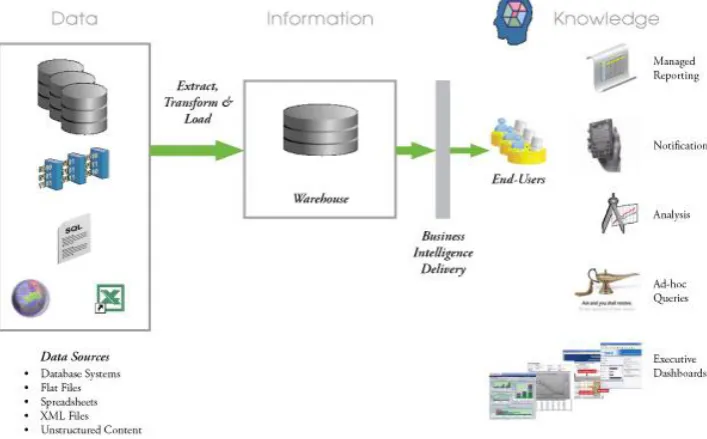
Utilizing innovation to pick up an edge in business is not another thought. At whatever point there is something new, business visionaries will rush to attempt to discover an application for it in the business world to profit. Data Mining (DM) and Business Intelligence (BI) are among the data innovation applications that have business esteem. Information mining is the way of looking through information utilizing different calculations to find examples and connections inside a database of data. Business knowledge, then again, concentrates more on information reconciliation and association. It will join information break down to help directors make operational, strategic, or key business choices. Information mining can be utilized to help the targets of business insight framework. Business Intelligence could be a thought of applying a gathering of advancements to change over data into significance information. Bismuth ways epitomize information recovery, information preparing, connected math examination yet as data visual picture. Mammoth measures of knowledge| of data starting totally unique in a few various organizations and from various sources might be merged and recover to key business learning. Presents a general perused on however data square measure redesigned to business insight. The technique includes every business specialists and specialized advisors. It changes over an outsized size of data to importance results along these lines on offer basic leadership support to complete clients. Procedure for business intelligence with client data sharing as shown in figure 1.
mining techniques, components in reliable data streams in development business applications.
Organization: Brief literature of the Business Intelligence (BI) in development of different data mining business application development in section 2. Application development in data mining technique in Customer Relationship Management (CRM) with classification explained in section 3. Data mining and Business intelligence application in Shipping industries with feasible business application development formalized in section 4. Manage and support structural and unstructured data with novel business intelligence frame work is analyzed in section 5. Business intelligence analysis of telecommunication system will discuss in section 6. Concludes overall concept discussed in above sections in section 7.
II. BUSINESSINTELLIGENCE
In this section, analyze different researcher’s definitions in business intelligence application development. Stackowiak et al. (2007) characterize Business intelligence as the way toward taking a lot of information, investigating that information and displaying an abnormal state set of reports that gather the quintessence of that information into the premise of business activities, empowering administration to settle on a principal day by day business choices. (Cui et al, 2007) see BI as way and strategy for enhancing business execution by giving effective helps to official chief to empower them to have noteworthy data within reach. BI instruments are viewed as the innovation that empowers the productivity of business operation by giving an expanded esteem to the venture data and thus the way this data is used.
Zeng et al. (2006) characterize BI as "The procedure of accumulation, treatment, and dispersion of data that has a goal, the lessening of vulnerability really taking shape of every single key choice." Experts portray Business insight as a "business administration term used to depict applications and advancements which are utilized to assemble, give access to examine information and data around a venture, keeping in mind the end goal to help them settle on better-educated business choices."
(Tvrdíková, 2007) portrays the fundamental trademark for BI instrument is that it is capacity to gather information from heterogeneous source, to have progress investigative techniques, and the capacity to bolster multi client’s requests. Zeng et al. (2006) classified BI innovation in light of the technique for data conveyance; reporting, factual investigation, specially appointed examination and predicative examination. The idea of Business Intelligence (BI) is raised by Gartner Group since 1996. It is characterized as the use of an arrangement of approaches and advances, for example, J2EE, DOTNET, Web Services, XML, information distribution center, OLAP, Data Mining, representation advances, and so on, to enhance undertaking operation viability, bolster administration/choice to accomplish upper hands. Business Intelligence by today is never another innovation rather than an incorporated answer for organizations, inside which the business necessity is unquestionably the key variable that drives innovation development. The most effective method to recognize and innovatively address key business issues is hence dependably the significant test of a BI application to accomplish genuine business affect.
III. (CRM)WITHBIANDDATACLASSIFICATION
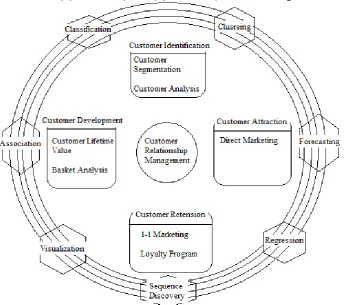
As the way of research in CRM and information mining are hard to bind to a particular readable concept, the applicable materials are scattered crosswise over different diaries. Business insight and information disclosure are the most well-known scholarly train for information mining research in CRM. As per Swift (2001, p. 12), Parvatiyar and Sheth (2001, p. 5) and Kracklauer, Mills, and Seifert (2004, p. 4), CRM comprises of four measurements:
(1) Customer Identification; (2) Customer Attraction; (3) Customer Retention; (4) Customer Development.
ISSN(E): 2277-128X, ISSN(P): 2277-6451, DOI: 10.23956/ijarcsse/V7I7/0120, pp. 30-35
Figure 2: Data mining techniques with Customer Relationship Management in classification models.
In this study, CRM is characterized as helping associations to better separate and all the more commonly assign assets to the most productive gathering of clients through the cycle of client recognizable proof, client fascination, and client maintenance and client advancement. Nitty gritty information must be developed efficiently in order to acquire a more profound comprehension of every client's practices, attributes, and needs. The four measurements of the CRM cycle are basic endeavors to pick up client understanding.
1. Customer Identification: CRM starts with client ID, which is alluded to as client securing in a few articles. This stage includes focusing on the populace who are well on the way to end up clients or most beneficial to the organization. In addition, it includes examining clients who are being lost to the opposition and how they can be won back (Kracklauer et al., 2004). Components for client ID incorporate target client examination and client division.
2. Customer Attraction: This is the stage taking after client ID. In the wake of distinguishing the portions of potential clients, associations can coordinate exertion and assets into drawing in the objective client portions. A component of client fascination is immediate advertising. Coordinate showcasing is an advancement procedure which spurs clients to place arranges through different channels (Cheung, Kwok, Law, and Tsui, 2003; He et al., 2004; Liao and Chen, 2004; Prinzie and Poel, 2005). For example, post office based mail or coupon conveyance are run of the mill cases of direct advertising.
3. Customer Retention: This is the focal sympathy toward CRM. Consumer loyalty, which alludes to the examination of clients' desires with his or her view of being fulfilled, is the basic condition for holding clients (Kracklauer et al., 2004). In that capacity, components of client maintenance incorporate coordinated advertising, unwavering projects, and protestations administration. Balanced promoting alludes to customized advertising efforts which are bolstered by dissecting, distinguishing and anticipating changes in client practices.
4. Customer Development: This includes the reliable development of exchange power, exchange esteem, and individual client gainfulness. Components of client advancement incorporate client lifetime esteem examination, up/cross offering and market wicker container investigation. Client lifetime esteem investigation is characterized as the expectation of the aggregate net salary an organization can anticipate from a client.
Above modules are main steps to maintain customer relationship management with different attributes in real time data sets stored in data warehouses with user’s perspective analysis. Combination of different classification, clustering, association, forecasting and regression are used to define customer relation with above mentioned modules in business intelligence appearance in real time applications development.
IV. BIINSHIPPINGINDUSTRIES
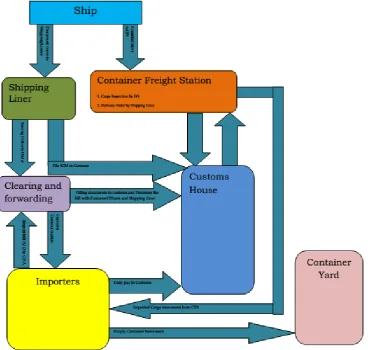
Figure 3: Processing chart of shipping management in business intelligence.
The great volume of information having a place with the organizations incorporate the total detail of the delivery vessels that inboard the shore. To enhance the delivery productivity and transportation wellbeing, this paper proposes a ship booking process which incorporates Data Warehouse (DW), On Line Analysis Process (OLAP) and Data Mining (DM) advances. The most important venture of transportation process for import products is to document an IGM (Import General Manifest) by the liners before the vessel billet/entry to the traditions. The IGM demonstrates the insights about the holder.
Sends out – During an export procedure the clearing and sending specialists starts the procedure as beneath:
1. To gather the information from the exporter and achieve the consent from the particular fare advancement. Committee, and document the information for delivery charge
2. Assessing Officer (AO) survey the bills and advances to the CFS Examination Officer (EO) for freight review. 3. EO investigates the freight with the information and stacking request is issued to stuff the payload to the
Compartment.
4. The fixed holder is currently given over to the delivery liner for shipment.
5. The day preceding the voyage the holder is stacked with the vessel and an EGM (Export General Manifest) is put Away in the information distribution center.
This is improved procedure for processing shipping fleet management to maintain updates in EGM based on assigning operations and tasks by data mining analysis with data representations.
V. STRUCTURE&UNSTRUCTUREDATAEVALAUTIONINBI
ISSN(E): 2277-128X, ISSN(P): 2277-6451, DOI: 10.23956/ijarcsse/V7I7/0120, pp. 30-35
Figure 4: Integrated process of both structure and unstructured data resources.
Figure 2 imagines the approach by portraying the autonomous frameworks with the incorporated presentation layer on top of them. The primary advantages of this approach can be followed back to a more helpful treatment of the separate functionalities to support their joined use: Functions to get to structure and unstructured information can be utilized together in an effective and clear way and clients need to get usual to one framework with one UI as it were. In addition, a naturally produced the position of query items can reveal and envision generally ignored interrelations amongst organized and unstructured substance. Process of integration approach is as shown in figure 4, with structured and unstructured data resources.
Data representation for Structured & Unstructured Data: Based on structural portrayal of substance things with metadata (e.g., creator, date of creation, length, and tended to item) it gets to be conceivable to examine extensive accumulations of unstructured information: identifiers of the substance things are dealt with as truths that are liable to examination, though metadata fields are utilized for grouping purposes and along these lines go about as investigation measurements. The ways to deal with coordinate organized and unstructured information for administration support are implanted in a system that can be utilized as a seller impartial applied reference for BI arrangements. It maps pertinent legitimate BI segments and envisions their center interrelations.
VI. BIINTELECOMMUNICATIONSYSTEM
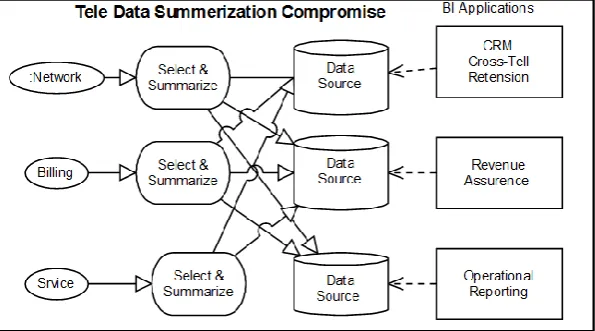
In this section, we analyze business intelligence application in telecommunication value chain with feasible tasks in real time data analysis. Numerous basic telecommunications capacities depend on quick, complex investigation of CDR (Call Details Record) information. Key activities incorporate breaking down behavioral information utilizing CRM (Customer Relationship management) projects to ideally target benefits and diminish beat, guaranteeing complete and exact charging and demonstrating call conduct with income affirmation programs, and enhancing system operations utilizing operations administration programs. These activities all advantage from enhanced access to CDR-level information, access to huge amounts of verifiable data for pattern investigation and from the capacity to rapidly run complex BI inquiries. Tragically, procuring and overseeing vast volumes of information is expensive and tedious. Besides, when the scale stockpiling expenses are legitimized, these expenses are not as incredible an obstruction as the protracted preparing time it takes to examine such a great amount of information with legacy servers and RDBMS frameworks. Playing out a solitary complex BI inquiry against billions of records utilizing conventional frameworks takes hours or days. This is a genuine obstruction to the appropriation of CDR-level examination and avoids continuous proactive reactions via transporters. Customer demand for new services and lower cost services are forcing telecommunications service providers to increase their efficiency as never before
processing with CRM. Finally discuss about telecommunication analysis to satisfy consumer relations using BI applications. As further improvement of our analysis is to develop BI application framework in transactional data set evaluation with frequent and high utilization data exploration using reliable synthetic data sets
REFERENCES
[1] Arti J. Ugale, P. S. Mohod, “Business Intelligence Using Data Mining Techniques on Very Large Datasets”, International Journal of Science and Research (IJSR) ISSN (Online): 2319-7064 Index Copernicus Value (2013).
[2] Ms Ranju Marwaha, “Data Mining Techniques and Applications in Telecommunication Industry”,
International. Journal of Advanced Research in Computer Science and Software Engineering, Volume 4, Issue 9, Sep-2014
[3] E. Mercy Beulah , S. Nirmala Sugirtha Rajini , N. Raj Kumar, “ Data Mining and Business Intelligence applications in Shipping Industry”, International Journal of Applied Environmental Sciences (IJAES) ISSN 0973-6077 Vol. 10 No.1 (2015).
[4] Laura Ruotsalainen, “Data Mining Tools for Technology and Competitive Intelligence”, VTT TIEDOTTEITA.
RESEARCH NOTES 2451, 2009.
[5] Wendy Ashlock, Student Member, IEEE, and Suprakash Datta,” Evolved Features for DNA Sequence
Classification and Their Fitness Landscapes” IEEE TRANSACTIONS ON EVOLUTIONARY COMPUTATION, VOL. 17, NO. 2, APRIL 2013
[6] S.C. Punitha, R. Jayasree, Dr. M. Punithavalli ,” Partition Document Clustering using Ontology Approach”
2013 International Conference on Computer Communication and Informatics (ICCCI -2013), Jan. 04– 06, 2013.
Coimbatore, INDIA
[7] Xindong Wu1,2, Xingquan Zhu3, Gong-Qing Wu2, Wei Ding4”Data mining with big data” IEEE
TRANSACTIONS ON KNOWLEDGE AND DATA ENGINEERING.vol2.APRIL 2012.
[8] Angelina Espinoza, Member, IEEE, Yoseba Penya, Senior Member, IEEE, Juan Carlos Nieves,Mariano Ortega
Member, IEEE, Aitor Peña, and Daniel Rodríguez” Supporting Business Workflows in Smart Grids: An
Intelligent Nodes-Based Approach”IEEE TRANSACTIONS ON INDUSTRIAL INFORMATICS, 3 AUGUST 2013.
[9] Yang Hang, Simon Fong,”framework of business intelligence driven data mining for e- Business”2010fifth international join conference.
[10] FabrizioAngiulli, Senior Member, IEEE, Stefano Basta, Stefano Lodi, and Claudio Sartori, Distributed Strategies for Mining Outliers in Large Data Sets, IEEE TRANSACTIONS ON KNOWLEDGE AND DATA ENGINEERING, VOL. 25, NO. 7, JULY 2013.
[11] W Wang (2010) Application of Data Mining Technique in Customer Segmentation of Shipping Enterprises, Published in:Database Technology and Applications (DBTA).
[12] Shi Bu-hai, Guo Xie-tao and Zhang Ben (2013), “Research for economy shipping of oceangoing vessel based on
the OA-SVR“.
[13] Abdul-Aziz Rashid Al-Azmi, “DATA, TEXT, AND WEB MINING FOR BUSINESS INTELLIGENCE: A